|
|
Home | Switchboard | Unix Administration | Red Hat | TCP/IP Networks | Neoliberalism | Toxic Managers |
| (slightly skeptical) Educational society promoting "Back to basics" movement against IT overcomplexity and bastardization of classic Unix | |||||||
| Recommended Links | |||||
| Solaris Versions History | Sun Hardware Timeline | Humor | Etc |
|
|
Sun's logo with interleaved copies of the word sun, was designed by Stanford University professor Vaughan Pratt. The initial version of the logo with sides oriented horizontally/vertically was later changed to the box appearing to stand on one corner.
|
|
Sun Microsystems - Wikipedia, the free encyclopedia
Sun originally used the Motorola 68000 CPU family for the Sun-1 through Sun-3 computer series. The Sun-1 employed a 68000 CPU, the Sun-2 series, a 68010. The Sun-3 series was based on the 68020, with the later Sun-3x variant using the 68030.
Starting with the Sun-4 line, the company used its own processor architecture, SPARC, a 32-bit RISC architecture which was later to become the IEEE 1754 standard for microprocessors. A 64-bit extension of the SPARC architecture (SPARC V9) was later introduced.
Sun has implemented multiple high-end generations of the SPARC architecture, including SPARC, SuperSPARC, UltraSPARC-I, UltraSPARC-II, UltraSPARC-III, and currently UltraSPARC-IV. Sun has developed several generations of workstations and servers, including the SPARCstation series, Sun Ultra series the Ultra Enterprise (later, simply "Enterprise") servers, the Sun Blade workstations and the Sun Fire servers. Sun also has a second line of lower cost processors meant for low-end systems which included the MicroSPARC-I, MicroSPARC-II, UltraSPARC-IIe, UltraSPARC-IIi, and UltraSPARC-IIIi.
Sun has had a difficult time keeping up with its competitors' processors' clock speed and computing power, but its customer base has been fairly loyal due to the popularity, and legendary stability, of its SunOS (and later Solaris) versions of Unix.
For the first decade of Sun's history, the company was predominantly a vendor of technical workstations, competing successfully as a low-cost vendor during the Workstation Wars of the 1980s.For a short period in the mid-1980s, 51% of Sun stock was held by AT&T as a partner in their computer business AT&T Computer Systems. UNIX System V Release 4 was jointly developed by AT&T and Sun, who named their version Solaris 2. The AT&T partnership later fell apart when the rival group OSF (Open Software Foundation) appeared. See UNIX wars.
For a short period in the late 1980s, they sold a hybrid Intel 80386-based machine, the Sun386i. An x86 port of Solaris for PC compatibles was introduced in 1993. Currently, Sun is again selling x86 and AMD64 hardware and has introduced a 64-bit version of Solaris for AMD64 systems.
In the mid-1990s, Sun acquired Diba and Cobalt Networks with the aim of building network appliances (single function computers meant for consumers). Sun also marketed a network computer (diskless workstation, as popularized by Oracle Corporation CEO Larry Ellison). None of these business initiatives were particularly successful.
In the late-1990s, as Sun's workstations were lagging in performance when compared to that of their competitors and especially to Wintel Personal Computers, the company successfully transformed itself to a vendor of large-scale Symmetric multiprocessing servers. This transition was enabled by technology that was acquired from Silicon Graphics and Cray Research. The Cray CS6400 server line was transformed into the very successful Sun Enterprise 10000 large-scale servers. Driven by the increased prominence of web-serving database-searching applications, blade servers (high density rack-mounted systems) were also emphasized.
The Sun 1 was shipped with Unisoft V7 UNIX. Later Bill Joy, the key figure of the Berkeley Software Distribution (BSD) and one of four founders of Sun produced a customized 4.1BSD UNIX called SunOS as an operating system for its workstations. Up through version 4.1.x (Solaris 1.x), SunOS remained a heavily BSD-influenced Unix implementation.
In the late '80s, Sun entered into a partnership with AT&T, which was then developing the other major Unix flavor, System V. The result was System V release 4 (SVR4), which incorporated BSD as well as SunOS extensions (e.g., NFS). Subsequently, with its version 5.x (Solaris 2.x) releases, SunOS shifted from its BSD origins to SVR4.
To confuse things Sun Solaris is sometimes called SunOS 5, while old version of SunOS up to 4 are referred as for Solaris 1). To further confuse the naming scheme, Sun now refers to Solaris by just its point release (e.g., Solaris 7, 8, or 9 instead of 2.7, 2.8, or 2.9).
For more information about SunOS and Solaris, including FAQs, white papers, upgrade, and purchasing information try Google.
History of Sun and Solaris from 1991 till 2001 is partially reflected in Sun under the Linux siege
You can also consult the following newsgroups:
comp.unix.solaris alt.solaris.x86 comp.sys.sun.* hierarchy Partially borrowed from Chronology of Workstation Computers
Sun 1's
These are the large black desktop boxes with 17" monitors. Used the original Stanford-designed video board. Uses a parallel microswitch keyboard and parallel mouse.
- 1/100
- Used design similar to original SUN (Stanford University Network) CPU, version 1.5 CPU could take larger RAMS. Pre-dates Sun's 4.2 port (ran Unisoft V7) (68010 CPU instead of SUN's 68000) 10Mhz.
- 1/100u
- "Brain transplant" for 100 series. Replaces CPU and memory card with first-generation Sun2 CPU and memory boards so original customers could run SunOS V1. (Still has parallel kb/mouse intf so old kbds would work.)
- 1/170
- Rack-mounted server. Slightly different chassis design than 2/170's
Sun 2's
SunOS 4.0.3 was the last release with Sun2 support.
- 2/120
- Multibus-based 68010 10Mhz. First machines that had desk-side chassis Serial Microswitch keyboard, Mouse Systems Optical mouse. 8Mb memory max. Cards are CPU, 1 or 4 meg memory board, ethernet board, SCSI board, 640 * 480 color board, monochrome video board, SMD controller, tape controller, 16 port serial mux (ALM-1)
Two variants of video board, one generated TTL-level video, on ECL. Later video boards ("2prime") could generate either levels. Early 19" mono monitors (philips or moniterm) could be switched as well.
- 2/170
- VME Sun2 style CPU 2 slot chassis. Optional SCSI board (model name is SCSI-2; 2'nd SCSI design.. first was for 2/1xx's) sat on mem expansion board in 2nd slot. CPU board had 1,2,or 4 megs mem, 10Mhz 68010 CPU, ethernet, two serial ports. Memory expansion boards are 1,2 or 4 megs as well. The (type-2) keyboard and mouse attached via an adapter that accepted 2 modular plugs and attached to the DB15 port.
- 2/160
- First machine to use 12 slot desk-side VME chassis. Many have CPU upgrades to 3/160's. Had 4 fan cooling tray instead of 6 in later machines, thus cooling problems with lots of cards. Also only had 4 P2 memory connectors bussed instead of 6.
2/1xx's with a monochrome display can only have 7megs max, since the frame buffer appears in the 8th meg
Sun 3's
- 3/160
- First 68020 based Sun machine. Uses "Carrera" CPU, which is used in lots of other Sun3 variants. 4Mb on-board memory. Sun's mem expansion goes on 4 Meg memory expansion boards; third parties had up to 32 megs on one card. SCSI was optional. One variant of the memory card held the 6u VME SCSI board, other version sat in slot7 of the backplane and ran the SCSI out the back of the backplane to the internal disc/tape. CPU has 2 serial, ethernet, kbd ports.
I, Cringely . September 9, 1999 - Terminal Condition PBS Why Sun's Aggressive New Workstations Are Really Just a Blast From the PastBy Robert X. Cringely
Each week, I have to decide a topic for this column. The problem is not finding a topic, but choosing one from the many obvious candidates. A few times, I've tried to cover more than one topic, but there is a firm nerd contingent among my readers who think we have a contract allowing only a single topic per week. I am not here to argue, so they win. But this week I am torn, since there are obvious developments in the news as well as the 30th anniversary of the first Arpanet node coming to life. Or I could even try to explain why last Week, I thought former Secretary of Defense Robert McNamara's first name was "George." The answer to this last mystery is easy — dementia. As for the Arpanet birthday, having done three hours of Internet history for television and written several columns on the subject already, this time I'll just congratulate all concerned with those events back at UCLA: It has been quite a ride.
That first Arpanet Interface Message Processor (IMP) was built from a Honeywell computer used by the military. In the early 1980s, the Internet building block of choice came to be logic boards for Sun workstations. The first Cisco routers, for example, were built from Sun logic boards designed by Andy Bechtolscheim when he was a graduate student at Stanford. So too, the first Silicon Graphics workstations were Sun workstations with extra 3D capability added-in by Jim Clark. All of these companies were founded in the same building and all are still on the scene, but this week, I'd say Sun has been making the most news, though in a disturbingly regressive manner.
Last week, I wrote about Sun's acquisition of Star Office, and how this would put a virtually free office suite up against Microsoft for both PC- and server-based versions. Well, this week the other shoe dropped as Sun introduced its candidate workstation for the server-based version. It is a funny little box called the Sun Ray 1 Enterprise Appliance, into which you attach a keyboard, mouse and screen, then use an Ethernet connection to the world. The Sun Ray looks to be a successor to Sun's own unpopular JavaStation and the logical heir to the network computing crown. Or is it?
The Sun Ray is great from a configuration standpoint, since it requires no configuration at all. You couldn't configure it if you wanted to. If the box breaks, you replace it with another. Plug it into power and Ethernet, and it is ready to go. This is all marketing talk here, but reading it I came to have an unsettling feeling. Then it came to me. The Sun Ray, for all its high design and ease of use, is not a computer at all or even a computing device. It is a computer terminal. Sun's answer to Microsoft is to take corporate America back to a souped-up version of 1970's minicomputing.
The only application that runs in the Sun Ray is whatever paints the screen and accepts keyboard and mouse input. That's a computer terminal where I come from. Presumably, there is a TCP/IP stack and something like an X-Window server, though Sun does an excellent job of not telling us that. What's definitely NOT happening in the box is anything like Java, which Sun has finally figured out isn't up to the task. Instead, all the real computing is done back on a hefty Sun server and only screen rendering happens in the Sun Ray.
There is another outfit called Network Computing Devices that makes boxes like this, which it calls X-terminals. NCD was founded by Bill Carrico and Judy Estrin, a husband and wife team who also founded Bridge Communications (later part of 3Com) and Precept Software (later part of Cisco). Judy is now the Chief Technical Officer at Cisco, which fits perfectly into my theory that there are really only 25 people in the computer business. They just keep changing jobs. I remember visiting Bill and Judy late in their tenure at NCD, a time that wasn't particularly happy since X-terminals were being rapidly replaced with cheap PCs running X-server software. In the world of X, what we would normally call a "client" — that part of the application that runs on the workstation rather than on that big box in the computer room — is called a "server." Go figure.
The wonderful thing about an X-terminal is that it does an end-run around user ego. NCD boxes were all connected through Ethernet to a Sun server. How many X-terminals could a Sun server serve? Lots. Typically 25-50 terminals could be run by a single server that cost a lot more than a PC, but sure didn't cost 25-50 times as much. Still, that day I visited Bill and Judy, they saw the end coming. Why? Because PCs were cheaper than X-terminals and they could run local applications, too. With PCs even cheaper today, what has changed to make Bill and Judy wrong and Sun happy to enter this new business?
Well NCD, which is still very much in business, didn't sell servers, and Sun does, so that's an enormous difference. Sun makes its dough on this deal not from the Sun Rays or from Star Office, but from the big iron it sells to support both. And in the last few years, the world of corporate computing has come to fixate on Total Cost of Ownership (TCO), which includes everything from the cost of training users to replacing busted boxes. In the grand scheme of TCO, the original purchase price of a PC is almost insignificant, dwarfed by the human cost of setting-up and shifting and training, etc., all of which are minimized by the Sun Ray/Star Office combo. On a TCO basis, the Sun Ray is damned cheap, and with Sun offering leases at under $10 per month, it is a good deal for many businesses.
But don't expect to run your Sun Ray at home because its sparkling performance has more than anything to do with that 100 megabits-per-second Ethernet connection. Running over a 56K modem won't work at all. And don't even think of using a Sun Ray unless you want at least 25 of them, because it's only at those scales that the costs begin to come into line. What this means, then, is that the Sun Ray is far from a Microsoft killer. Rather, it is a Microsoft annoyance. But for Sun, it is still a very good business.
The nerds will say this is obvious and that I'm again wasting their time, but most of the people who read this column aren't nerds. They'll say, "Now I get it."
1979 - Bill Joy introduces "Berkeley enhancements" as BSD 4.1.
1980
1982
- February
- Bill Joy, the inspiration behind BSD, leaves CSRG at Berkeley to co-found Sun Microsystems. Scott McNealy, Bill Joy, Andreas Bechtolsheim, and Vinod Khosla found Sun Microsystems. "SUN" originally stood for Stanford University Network. [47] [110.149,152] [217.163]
- Sun gets its name from the Stanford University Network (SUN) board. The workstation is based on the Motorola 68000 chip running SunOS based on 4.2BSD. It includes an optional local area network based on Ethernet. The commercial UNIX industry is in full gear.
- The company was incorporated in 1982 and 1986. Founders include Vinod Khosla, Scott McNealy, Bill Joy and Andy Bechtolsheim. Of these men, only McNealy and Bechtolsheim remain with Sun.Sun Microsystems is founded by Vinod Khosla, Andy Bechtolsheim, and Scott McNealy with $4 million in venture capital with four employees.
- May
- Sun Microsystems begins shipping the Sun 1 workstation computer. [110.152]
1983
Thompson and Ritchie receive ACM Turing award for their work on UNIX. Unix became a popular OS.
Sun Microsystems introduces SunOS. When someone who worked with Suns before the early 1990s mentions SunOS, they probably mean the old BSD-based OS which ended with SunOS version 4.1.4(the last true SunOS released in 1994). Unfortunately, Sun sort of renamed SunOS 4.1.3 and 4.1.4 to Solaris 1.1.1 and 1.1.2. So Solaris 1 is also SunOS.
1984
- February 14
- Scott McNealy is appointed president and chief operating officer of Sun Microsystems. [110.153] [218.D2]
- About 100,000 UNIX sites exist worldwide. Sun now has 400 employees and $39 million in annual sales.
- April
- Silicon Graphics begins shipping its first 3-D graphics workstations. [28]
- June
- Motorola introduces the 16 MHz 68020 processor, a 32-bit version of the 68000, in CMOS, with on-board cache. [1] [140] (1986 [20])
- (month unknown)
- MIPS Computer Systems is founded, and begins developing its RISC architecture. [29]
- Sun Microsystems co-founder Vinod Khosla resigns. [110.153]
- Silicon Graphics introduces its first workstation, IRIS 1400. [221.61]
1985 AT&T publishes the System V Interface Definition (SVID) in an attempt to standardize the UNIX interfaces, which was strongly influenced by the 1984 /usr/group standard. POSIX standard is introduced.
1986 - Sun went public in 1986
1988
1989
1990
1991
1992
The first x86 release of Solaris 2 on Intel was launched (SunOS 5.1). It became stable only with Solaris 5.4 for Intel 1994.
1993 - Novell buys UNIX from AT&T.
1994 - Solaris 2.4 is available.
1995
Santa Cruz Operation buys UNIXware from Novell. SCO and HP announce a relationship to develop a 64-bit version of UNIX. Solaris 2.5 is available -- the first stable version of Solaris 2
Bechtolsheim, 48, left Sun in 1995 to start Granite Systems, which built 1-gigabit-per-second networking technology and which Cisco acquired in 1996.
1997 - Solaris 2.6 is available. It soon became the most popular version of Solaris for the next three years
1998 - Solaris 7 is available. -- This was not very successful version. Few moved from 2.6 to 2.7
2000 - Solaris 8 is available. Became a considerable success and is still used as of 2011. Most Sun users moved from 2.6 directly to Solaris 8.
2002 - Solaris 9 is available. Became standard Solaris version until arrival of Solaris 10. Included iPlanet Directory Server, Resource Manager, extended file attributes, OpenWindows dropped, sun4d support removed. Most current update is Solaris 9 9/05.
2003
McNealy negotiated with Ray Noorda a rights equavalent to ownership with CEO of Novell, the company that bought the Unix trademark from AT&T along with Unix Systems Laboratories - the AT&T subsidiary formed out of AT&T's Bell Labs. McNealy said he telephoned Noorda, and in the course of a week negotiated a deal that gave Sun rights equivalent to ownership over Unix, and valued at $90m. Noorda left Novell a year later, and Novell transferred the Unix trademark to industry group X/Open whose members included Sun. Rights equivalent to ownership gave Sun more freedom to work with the code.
2004 February Nine years after leaving the server maker he co-founded in 1982, Andy Bechtolsheim is returning to Sun Microsystems.
2005 January - Solaris 10 is available. Intel version support AMD CPUs. Includes zones, ZFS (in Solaris 10 6/06 ("U2") ), NFSv4, Dtrace and other impressive staff. Became huge success. The last success of Sun as an independent company.
2010 November - Solaris 11 Express. First release of Solaris under Oracle ownership. Adds new packaging system (IPS=Image Packaging System) and associated tools, Solaris 10 Containers, network virtualization and QoS, virtual consoles, ZFS encryption and deduplication, updated GNOME. Removes Xsun, CDE.
|
|
Switchboard | ||||
| Latest | |||||
| Past week | |||||
| Past month | |||||
 |
 |
 |
The Register
By Gavin Clarke in San Francisco • Get more from this author
Posted in Software, 7th December 2010 01:30 GMT
Free whitepaper – How small business can harden their IT in achievable steps
Interview Let's forget the last few years ever happened - the last five, at least. Possibly 10. In the 1980s Sun Microsystems was on fire.Founded in 1982, Sun raked in so much money that it broke the psychologically important $1bn sales barrier in six years. It took Microsoft 15 years to hit $1bn - six if your starting point is the date Microsoft was incorporated. Oracle - up the road from Sun - took 14 years.
Sun was the fastest growing US company between 1985 and 1989, according to Forbes, and supplied the entire US government with more than half its workstations nine years after starting.
Sun was early to the 1980s PC revolution. It built powerful machines that people didn't need to share compute time on, and it did so using off-the-shelf components, and based on SunOS Unix, which was based on Berkeley's BSD from Bill Joy. The BSD code was essentially free to anyone who wanted it. The creation of Berkeley Unix is regarded by some as the "birth" of open source software.

Burning bright: McNealy's Sun sizzled in the 1980s
The Sun machines were cheap compared to computers of that time, but not that cheap - and it's easy to see how Sun soon busted the $1bn barrier. The Sun Sparc 10 workstation, 10 years into Sun's life, sold for $40,000. Bill Gates began selling Windows 1.0 at $99 a pop. No wonder Microsoft hit $1bn later in life. Today, $40,000 doesn't buy you a PC, it buys you a super computer with four teraflops of power - the Sparc 10 got you 10 Megaflops.
Still, stars that burn the brightest fade the fastest.
In the nearly 30 years since Sun started, Microsoft sold enough copies of Windows and diversified so broadly that it became the world's largest software company. Oracle became the number-one database supplier. Sun? It stumbled so badly that Oracle swooped in and bought it for a "mere" $5.6bn this year.
In a fitting memorial to the past, you'll now find a Sparc 10 behind glass as an exhibit at the Los Alamos National Laboratory museum in New Mexico. I saw one while on vacation there, right next to a Cray.
If Sun cofounder Scott McNealy has any regrets about the sale after those jet-fuelled early years, it's that he didn't get more of Oracle chief executive Larry Ellison's money for Sun's shareholders. "The week Larry closed the deal we were at the bottom of the Dow - we hadn't been that low for decades," McNealy told The Reg in a recent interview.
Sun was a group effort that became McNealy's charge. Stanford grads McNealy and Vinod Khosla founded Sun with Andy Bechtolsheim, who'd built the first workstations that first attracted McNealy, along with Joy. Khosla and Joy were long-gone by the end, while Bechtolsheim had left, been re-recruited and then slipped away again in 2008.
Having sold Sun to billionaire yacht-racer Ellison, McNealy is now doing unpaid work. He advises startups for no salary or retainer, he sits on the board of Curriki - a project he created to deliver free, open source educational materials for kids in the US up to college age - and he speaks at the odd event, such as last month's PostgreSQL West 2010, where I caught up with him.
McNealy might rue Sun's sale, but - truth be told - he probably had relatively little power over what went down. After a decade of red ink, and with Sun's market cap plummeting $5bn in four months to below $3bn, Sun's largest shareholder - Southeastern Asset Management - decided it was time for action, and they weren't taking any chances. The investors expanded the size of their stake in Sun to secure greater voting rights, and landed two extra bodies on Sun's board to force a strategy Southeastern said would find "opportunities to maximize the value of the company for all shareholders." Translation: sell Sun.
... ... ...
Is there, then, a teachable moment here? A moment that McNealy can impart to Ellison, given that McNealy is a career-long fan of marrying open source with commerce since he picked up BSD and ran with it in SunOS, and then teamed up with Unix's then-owner AT&T to sink SunOS into Unix System V Release 4 in 1990?
McNealy, after all, likes to boast how Sun donated an "enormous" amount of its R&D to the community, and he identifies Sun as the Red Hat of Berkeley Unix. Any lessons the old dog of open systems can teach the brash database king?
Sure, McNealy tells us: put your shareholders first.
Wait - what? That's the language of Ellison!
"We probably got a little too aggressive near the end and probably open sourced too much and tried too hard to appease the community and tried too hard to share," McNealy said. "You gotta take care of your shareholders or you end up very vulnerable like we got. We were a wonderful acquisition - we got stolen for a song at the bottom of the Dow."
"That's the message," McNealy tells us. "You gotta strike a proper balance between sharing and building the community and then monetizing the work that you do... I think we got the donate part right, I don't think we got the monetize part right.'
... ... ...
One of the issues I had with one of the other suitors was there was a complete overlap in what they did and what we did, and I could see 100 per cent of the Sun employees getting fired," McNealy told us. He didn't name names, but he was referring to IBM's bid for Sun. IBM had competed heavily with Sun for decades on processors, servers, Unix, Java tools, middleware, and open source. There weren't too many areas where they didn't overlap.
"At least with Oracle, they weren't in the hardware business, the operating systems business - the places and spaces where I saw chance for some Sun employees to keep their jobs, and that for me was an important consideration," McNealy said.
McNealy might not regret the act of selling to Oracle rather than IBM, and he might feel open source went too far by the end - but McNealy's biggest mistake? That would be Solaris.
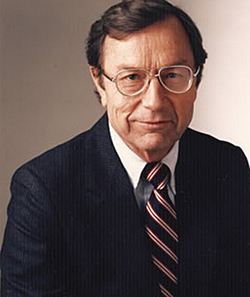
Noorda cut a $90m Unix rights deal with McNealy
Solaris could and would have eaten Linux's business, McNealy believes. The problem was that Sun didn't act fast enough. Sun didn't open source Solaris sooner - OpenSolaris started to release in 2005. Proud of Solaris' technology and performance, McNealy believes now - as he did back in the early 2000s when Linux was taking off - that Solaris is a superior operating system.
What allowed Linux to become established was the openness of the code - Solaris was still closed - with its marriage to x86, a platform more affordable than Sun's Sparc.
"We didn't really make a mistake with Linux or Solaris. We did System V Release 4 [1990] and that really blew the doors off IBM, HP, and DEC Unix by combining AT&T with Berkeley [BSD] SunOS," McNealy said.
"But AT&T forced us to encumber SunOS so it was no longer an open-source operating system, so we went six or seven years not being open source, which hurt us in the open community. It wasn't that we wanted to go closed, it was just AT&T had very last millennium perspectives on open source and they were protecting the source code like it was the corporate jewels."
McNealy decided to act in 1993, just before the only person holding the most influence over the matter prepared to step down from his position of power. Ray Noorda was CEO of Novell, the company that bought the Unix trademark from AT&T along with Unix Systems Laboratories - the AT&T subsidiary formed out of AT&T's Bell Labs. McNealy said he telephoned Noorda, and in the course of a week negotiated a deal that gave Sun rights equivalent to ownership over Unix, and valued at $90m. Noorda left Novell a year later, and Novell transferred the Unix trademark to industry group X/Open whose members included Sun. Rights equivalent to ownership gave Sun more freedom to work with the code.
In a 2003 interview, then–software executive vice president Schwartz told eWeek that Sun paid AT&T to get rights equivalent to ownership - Sun paid $100m, he said. We double-checked this with McNealy, and he is positive: there was an agreement with Novell in 1994. This would make more sense, given it was Novell that retained the Unix trademark.
Patience pays
Sun went on to use its Unix rights to open the code and create OpenSolaris, spending years and millions of dollars to engineer out patents held by various patent holders.
This was step one in making Solaris more accessible to the community. Step two, putting Solaris on x86, proved tougher, and McNealy faced opposition inside his own company from those who'd grown used to the non-x86 hardware at the heart of Sun's business.
Putting Solaris on Intel would take Sun's Unix to people outside of Sun's traditional customer base of high-spending telcos, financial services companies, and government. It might also give these same people a reason to no longer buy Sun's pricey Sparc servers.
"If we'd have just decided to release Solaris on metal instead of shrink wrapped, Solaris on Intel would have been a wild hit and nobody would have done Linux," McNealy told The Reg. "I could have told them: we'll open source Solaris eventually and the only reason they went to Linux was because Solaris wasn't available on Intel."
|
|
|
The Register
Schwartz goes all of a Twitter
He goes in style - oddly
By Chris Mellor • Get more from this author
Posted in Servers, 4th February 2010 10:20 GMT
Free whitepaper – BitDefender Business Solutions v3.5 at a Glance
Jonathan Schwartz, now the ex-CEO of Oracle-owned Sun, went in the same way as he ran the company, oddly: he tweeted a haiku to his followers.
With an impish sense of humour he wrote:
Today's my last day at Sun. I'll miss it. Seems only fitting to end on a #haiku. Financial crisis/ Stalled too many customers/ CEO no more
He'd previously written a blog which struck a profound note of farewell.
Schwartz was a Marmite(*) CEO; people either loved him or couldn't stand him. He could certainly talk the CEO talk, giving complex and logical presentations, and was never threatened in his role at Sun even though company revenues under his reign tumbled steadily downhill.
But doubts steadily grew about whether he could walk the CEO walk, especially now as Oracle's CEO Larry Ellison is taking an axe to Sun's back office processes and instituting order in what is beginning to look like chaos.
Schwartz's decisions to enter the open source software route, and rely on orders for IT systems using applications developed using free Sun software has been much criticised. The fact that Sun had to be bought to get out of its troubles is a great big critical judgement on his strategy. It was clearly wrong and Sun was far too big a company to prosper on the open source software-derived revenues, however great the technological expertise of its engineers - and with products like the 7000 Open Storage line and ZFS they could be very, very good indeed.
Ellison seems to want Scott McNealy - the Sun chairman - to stay on in some role at Oracle, but not the pony-tailed CEO that McNealy appointed to succeed himself as CEO.
It seems unlikely that Schwartz will write the following haiku:
Revenues Shrank/As I gave software away/ Customers right; me wrong. ®
* Marmite is a savoury spread in the UK, like Vegemite in Australia, which people find either disgusting or delicious.
|
|
|
October 17 | Slashdot
Oracle asked the founders of the Document Foundation and LibreOffice to leave the OpenOffice.org Community Council. Apparently there is a conflict of interest, which concerns the Oracle employees
Selected Comments
Anonymous Coward: Re: I'm shocked.
Well... Honestly, look at what the Document Foundation did.
They forked the project, and then asked Oracle to donate the name to them. While, at the same time, asking Oracle to join the "new" foundation.
Now, I know Oracle itself didn't put a lot of work into OO.org, but Sun did (something tells me OO.org's codebase is 90% the work of paid Sun employees - correct me if I'm wrong), and so now all that work is Oracle's by right.
So, say you spent 5 years making an awesome program, and made it GPL and everything. You did the vast majority of the work. Then, some guy says, cool, I'm gonna fork it. "Ok, fine, go for it." Oh, also, I'm gonna need the name...
How about... go fuck yourself, sir.
There is obvious financial value in the name, and that value was Sun's, and is now Oracle's.
hvm2hvm:
Yeah, it's their right to keep the name, if the open source people really want to prove that open source is better anyway they should just make the fork better and let the market decide. It was also pointed out that the name actually sucks so maybe this is really a good thing, as long as they don't use that gay LibreOffice name.
They should choose a name with more "zazziness" (Kaching Office, I dunno) or a really simple and straightforward one (like FreeOffice). Libre Office gives an air of smugness like the one that you get from <insert minority here> rights movement, or from vegans and other super ecofriendly people.
TheWanderingHermit:
Technically, remember, that OOo is basically a dressing up and improving of Star Office, started by a German company, so if you want to attribute 90% of the work to someone, I'd put it there, but I don't think, at this point, you can contribute 90% to one entity.
Granted, Star Office, both program and company, were bought by Sun, but a lot of the work was done well before Sun stepped in and bought it.
And, I know it's a small detail, but it can matter legally, it's not GPL, it's LGPL. There are differences.
micheas:
How much of the openoffice code was created by sun employees?
Can libreoffice stay relevant without coorperate backing?
No flames please. I ask because I want to know.
Nobody will know the answer to your question, because libreoffice has corporate backing of both Redhat (RHT:NYSE) and Canonical Ltd.
I would assume that Novell will merge oo-go into libreoffice and add their support to libreoffice.
kn: Clear Conflict of Interest
As a complete outsider, having read through the logs, it is hard for me to understand how this could possibly not be a conflict of interest.
I'm all for some Oracle bagging, as an ex-OpenSolaris user, but the comments so far seem rather unjustified in this case.
The board seems to be composed of Oracle Employees, and 3 independents (possibly more who were not present?). Comments are made that indicate that some of the Oracle employees have been involved in OpenOffice since before Sun's acquisition of Star Office. The 3 independents have all formed a competing project, and fail to understand how forming a separate project constitutes a conflict of interest. They justify this position by mentioning that they invited Oracle to join the board of their competing project. The concept of some mysterious cloud office is mentioned by one of the independents, seemingly indicating that there is no conflict. Most reasonable people would ordinarily conclude that the independents are crazy; however, due to Oracle's involvement it is apparently they who are in error.
Oracle may well have been uncooperative or something to bring forth a situation that necessitated a fork, but that hardly makes the current predicament anything less than a conflict of interest.
G3ckoG33k: Understandable move
Understandable move from Oracle. Anyone finding out that their wife/husband/life partner is having a side affair would ask them to move out.
It is really really sad, but I am not so sure about the ethical steps from Oracle's side up to this point.
- What made these guys create LibreOffice in the first place and why doesn't Oracle answer to that more constructively?
- Does LibreOffice really have the momentum already to withstand this move or is Oracle using the early stage?
At this stage we are not in a win-win situation, and things may get worse than the frustrated name calling of a bitter drama-queen feud.
|
|
|
V3.co.uk
Oracle has outlined its roadmap for the future development of Solaris and the company's server systems.
Solaris 11 will be released next year, and Oracle will concentrate on building fully integrated servers and applications for big iron systems.
"Complete, open and integrated has been Oracle's mantra for years," said John Fowler, executive vice president of systems at Oracle. "The Sun acquisition is about extending that."
Solaris 11 will represent the first major change in the operating system for six years. The new code will include better support for virtualization, scaling and the management of disparate systems, according to Fowler.
Updates to Solaris 11 will be issued every year until 2014, and Oracle will continue to support Solaris 10 users until they migrate.
|
|
|
Yahoo! News
Oracle said Thursday that it has sued Google for patent and copyright infringement over the use of Java in the Android operating system.
The terse, two-paragraph press release contained the following quote from Oracle spokeswoman Karen Tillman:
"In developing Android, Google knowingly, directly and repeatedly infringed Oracle's Java-related intellectual property. This lawsuit seeks appropriate remedies for their infringement."
A copy of the suit was posted by CNET. The suit was filed in the Northern Distict of California. At issue are seven patents, which Sun claims: numbers 6,125,447; 6,192,476; 5,966,702; 7,426,720; RE38,104; 6,910,205; and 6,061,520.
Oracle has asked the court to enjoin Google from further acts of infringement, which would possibly bar Google from shipping its Android operating system. Oracle has also asked for monetary damages, including treble damages for willful infringement.
The Android operating system uses Java both in its software development kit and a Java-like virtual machine, called Dalvik, in the runtime environment. It is both the SDK and Dalvik that Sun targeted with its suit, claiming that they infringed Sun's patents. Sun also claims that Google has infringed its trademarks, including code and documentation.
Re: [osol-discuss] Oracle sues Google over Java!
Posted: Aug 13, 2010 8:05 AM in response to: nachoWell considering how Google and other companies such as VMware tend to trample
over open-source software and monkey about with it, I'm not surprised that
Oracle is suing Google over Android. It's funny how no one complained about Sun
suing Microsoft over Java, but now that it's Oracle suing Google, people go
bananas. Hate to break it to the pro-open source crowd, but Google is not your
friend to begin with. Google patents things left and right to protect its IP as
well, so don't confuse Google with tree-hugging open source crowds. They are a
corporation like any other, looking for profits.Re: Oracle sues Google over Java!
Posted: Aug 13, 2010 5:32 PM in response to: jussi69
To: OpenSolaris " discuss
Reply
I find this a little comical in one respect. Google specifically tried to avoid paying Sun for the use of Java intellectual property, copyrights and such in Android. In the same breath Google is went after Augen for instance for using an "Unlicensed" version for Android which is partly based on the what they are not paying for.Isn't life grand.
|
|
|
Solaris Strategy
--------Solaris is the #1 Enterprise Operating System. We have the leading
share of business applications on Solaris today, including both SPARC
and x64. We have more than twice the application base of AIX and HP-UX
combined. We have a brand that stands for innovation, quality,
security, and trust, built on our 20-year investment in Solaris
operating system engineering.From a business perspective, the purpose of our investment in Solaris
engineering is to drive our overall server business, including both
SPARC and x64, and to drive business advantages resulting from
integration of multiple components in the Oracle portfolio. This
includes combining our servers with our storage, our servers with our
switches, Oracle applications with Solaris, and the effectiveness of
the service experience resulting from these combinations. All
together, Solaris drives aggregate business measured in many billions
of dollars, with significant growth potential.We are increasing investment in Solaris, including hiring operating
system expertise from throughout the industry, as a sign of our
commitment to these goals. Solaris is not something we outsource to
others, it is not the assembly of someone else's technology, and it is
not a sustaining-only product. We expect the top operating systems
engineers in the industry, i.e. all of you, to be creating and
delivering innovations that continue to make Solaris unique,
differentiated, and valuable to our customers, and a unique asset of
our business.Solaris must stand alone as a best-of-breed technology for Oracle's
enterprise customers. We want all of them to think "If this has to
work, then it runs on Solaris." That's the Solaris brand. That is
where our scalability to more than a few sockets of CPU and gigabytes
of DRAM matters. That is why we reliably deliver millions of IOPS of
storage, networking, and Infiniband. That is why we have unique
properties around file and data management, security and namespace
isolation, fault management, and observability. And we also want our
customers to know that Solaris is and continues to be a source of new
ideas and new technologies– ones that simplify their business and
optimize their applications. That's what made Solaris 10 the most
innovative operating system release ever. And that is the same focus
that will drive a new set of innovations in Solaris 11.... ... ...
Solaris Decisions
--------We will continue to use the CDDL license statement in nearly all
Solaris source code files. We will not remove the CDDL from any files
in Solaris to which it already applies, and new source code files that
are created will follow the current policy regarding applying the CDDL
(simply, that usr/src files will have the CDDL, and the very small
minority of files in usr/closed might not have it). Use of other open
licenses in non-ON consolidations (e.g. GPL in the Desktop area) will
also continue. As before, requests to change the license associated
with source code are case-by-case decisions.We will distribute updates to approved CDDL or other open source-
licensed code following full releases of our enterprise Solaris
operating system. In this manner, new technology innovations will
show up in our releases before anywhere else. We will no longer
distribute source code for the entirety of the Solaris operating
system in real-time while it is developed, on a nightly basis.... ... ...
We will continue active open development, including upstream
contributions, in specific areas that accelerate our overall Solaris
goals. Examples include our activities around Gnome and X11, IPS
packaging, and our work to optimize ecosystems like Apache, OpenSSL,
and Perl on Solaris... ... ...
We will have a Solaris 11 binary distribution, called Solaris 11
Express, that will have a free developer RTU license, and an optional
support plan. Solaris 11 Express will debut by the end of this
calendar year, and we will issue updates to it, leading to the full
release of Solaris 11 in 2011.
|
|
|
The RegisterThe co-creator of DTrace has seemingly erased all memory of Larry Ellison's Oracle from his mind, after quitting Sun Microsystems for an engineering veep role at Joyent last week.
Bryan Cantrill is the latest in a long list of Sun men to quit the firm, following its takeover by Oracle earlier this year.
His exit came just a week after Greg Lavender , the lead developer in charge of the Solaris operating system at Oracle, left the company. (he actually was not a lead developer, just a manager -- VP of engineering -- and was on and off at Sun from 2000; he moved to Cisco; the fact that he co-authored paper Design Patterns for Concurrent, Parallel, and Distributed Object-Oriented Systems, suggests that he is just an academic PHB --NNB)... ... ...
DTrace - developed by Cantrill, Adam Leventhal and Mike Shapiro - was of course added to Sun's Solaris 10 operating system way back in 2004. The software was seen as a gift to sysadmins because it granted them thousands upon thousands of ways to check on a system's performance and then tweak the server box while it was still running.
|
|
|
... ... ...Led by Nexenta Systems, the group forming this new distribution of OpenSolaris is trying solicit support from Oracle for its efforts. In the meantime, it's inviting developers of all types and classes to contribute to the project.
What's motivating Oracle's apparent intentions to take a more proprietary approach to OpenSolaris remains a little unclear. But clearly as Oracle gears up for a fight with Cisco, Hewlett-Packard and others over the future of convergence in the data center, the company may feel that a more proprietary approach that will allow the company to respond faster to competitive threats is required.
... ... ...
Garret D'Amore, technical lead for Illumos, says one of the primary focuses of new OpenSolaris distribution will be to optimize it on lower-end commodity hardware, partially in expectation that Oracle will pretty much ignore this segment of the market.
One of the challenges that the open source community contends with is the continued fragmentation of the market. There is virtually no binary compatibility across multiple distributions of Linux. And now it appears the OpenSolaris community will also fracture across two or maybe even more distributions.
None of this means that these operating systems are going away any time soon, but in terms of building applications that run on them, things don't appear to be getting any easier.
|
|
|
Oracle today announced Dell and HP will certify and resell Oracle Solaris, Oracle Enterprise Linux and Oracle VM on their respective x86 platforms.Customers will have full access to Oracle's Premier Support for Oracle Solaris, Oracle Enterprise Linux and Oracle VM running on Dell and HP servers. This will enable fast and accurate issue resolution and reduced risk in a company's operating environment.
Customers who subscribe to Oracle Premier Support will benefit from Oracle's continuing investment in Oracle Solaris, Oracle Enterprise Linux and Oracle VM and the resulting innovation in future updates.Supporting Quotes
"Oracle Solaris is the industry's #1 UNIX operating system, and is in demand across multiple x86 platforms," said Oracle President Charles Phillips. "Additionally, more and more customers are building virtual environments using Oracle Enterprise Linux and Oracle VM on x86 platforms. Today's announcement demonstrates Oracle's commitment to openness and will provide Dell and HP customers with new levels of support, and immediate access to deep product expertise, limiting risk in their IT environment.""Dell provides customers with choice and flexibility by offering Solaris, Oracle Enterprise Linux and Oracle VM as well as other operating systems on its x86 servers," said Joyce Mullen, Vice President of Global Alliances for Dell Inc. "Our joint customers will be able to leverage our award-winning servers and the software assets from Oracle to build out robust, dependable and optimized IT platforms, helping them be more competitive while maximizing ROI on technology investments."
"Customers need to instantly adjust to dynamic business demands, but many have hardwired stacks of applications and infrastructure that can't rapidly change," said Paul Miller, vice president, Solutions and Strategic Alliances, Enterprise Servers, Storage and Networking, HP. "The combination of Oracle infrastructure software and HP ProLiant servers delivers outstanding performance, scalability and virtualization capabilities on x86 servers. Our joint customers can have complete confidence to grow their businesses while also controlling their costs."
|
|
|
The Blog of Ben Rockwood
...Please remember, your right to use Solaris acquired as a download is limited to a trial of 90 days, unless you acquire a service contract for the downloaded Software."
That's the part that is that gets the interest... but here's the part that is more serious. Here is a line from the old license:
"In order to use the Solaris 10 Operating System for perpetual commercial use, each system running the Solaris 10 OS must have an entitlement to do so. The Entitlement Document is delivered to you either with a new Sun system, from Sun Services as part of your service agreement, or via e-mail when you register your systems through the Sun Download Center."
Notice the end of the line, "or via email when you register your systems through the SDC". Look at those 2 sentences in the new document:
"In order to use the Solaris operating system for perpetual commercial use, each system running Solaris must be expressly licensed to do so. An Entitlement Document comprises such license and is delivered to you either with a new Sun system or from Sun Services as part of your service agreement."
Notice something missing? Now the only entitlement docs come from a new "Sun System" or a service contract. This is the basis for the aforementioned "Please remember..."
Under the old agreement Solaris was only a 90 day trial if you failed to register... however, now its a 90 day trial only if you register. An important question to be answered is: What about agreements with other equipment makers such as HP and Dell? Previously those agreements didn't really matter much outside of marketing because you could buy a Supermicro and register it for an entitlement... but now?
Phobos:
@Jim what are you talking about???
There is nothing pointing to a demise of Solaris anywhere, Oracle is establishing a baseline from where to obtain more money from every Sun asset, including Solaris.
I commented something similar on a previous post by Ben. Oracle's POV is "you want premium? you have to pay.".
If you care to notice, Solaris is for Oracle what AIX/HP-UX is for IBM/HP. Let me further explain in case you don't get it.
Both IBM and HP resell Linux… but critical systems are still UNIX. In IBM's case it's AIX on Power, in HP's is HP-UX on Itanium (even if HP shoot HP-UX on the foot with that decision…).
What about Oracle?. Not only they resell Linux, they have their own distro (OEL, based on Red Hat), but they also have their own support plans for their distr(So far, only RHEL that I know of).
They are not a Linux shop, they are simply an anti-windows, anti-everybody else shop. They want to control everything and give support to it all, which is why they chose Linux, and particularly Red Hat, which for most is the enterprise representation of Linux.
What now that they have Solaris? They FINALLY have control over it all. They can offer Linux for small, low-end, x86 customers and they can offer their UNIX for the high end.
And do notice that, high end… Even if Solaris scales from small systems to hundreds of threads, Mr. Ellison clearly stated many times that Solaris belongs to the high end. The whole point is to be able to sell something to anyone… and to a point, MySQL also has it's purpose here.
Oracle, unlike Sun, doesn't care about Solaris market share or number of downloads… they care about the support contracts they have and the money.
On the Dtrace/ZFS point, you say "Nobody outside of Sun ever actually used dtrace, and ZFS is about to be beaten into ground by btrfs."... Which is something I had not seen for quite a while now.
How do you explain then that Dtrace is part of Mac OS X's Xcode?... ZFS and Dtrace already come with FreeBSD?... what about the on going projects to port ZFS to FUSE, Mac (native) and Linux (native.. disregarding licensing issues)?.
ZFS is used by many people, even if they don't know it. Just ask the Nexenta people. Sun's (oops, Oracle's) FISHworks is based on OpenSolaris (ZFS/Dtrace/SMF/FMA) to offer all of those capabilities to the series 7000 storage.
In fact, what has pushed IBM, Cisco and, in it's moment, Oracle to fund SystemTap and BTRFS was to be able to compete against Solaris. And neither of those are comparable to Dtrace or ZFS, not on features and not on stability. Many of my clients are using those features, and Containers (which BTW, finds almost no competition in the market), so please refrain from writing groundless remarks about Solaris usage…
Just as OpenSolaris, Solaris is not going anywhere. So please, stop spreading FUD.
@RJSmyth… If you are thinking about going to AIX or HP-UX, you might as well stay with Solaris… otherwise, you would be jumping from the frying pan into the fire.
@jeremy… I don't even know how to comment on that, typical Ubuntu fanboy answer… I would recommend you to read a bit about the differences between Solaris and Ubuntu, then comment back.
@Ben, I hope you don't get offended, but those open letters for me are useless… they increase fear to Solaris users, but achieve nothing… and Oracle is under no obligation to answer.
They are still planning what to do with Sun's stuff, so they probably do not even know how to answer yet… I think it's best to keep waiting a bit more and see what they do.
Phobos
@LGB, you are talking about Oracle 2 years ago.
They invested in BTRFS and SystemTap in a time where the only way they could be independent from other vendors was by selling Linux.
Fast forward to 2010, they are no longer tied to Linux and, as Larry states, Solaris is the most advanced OS there is. While BTRFS and SystemTap are still under development, ZFS and Dtrace are already stable and production ready.
There is no point for them to continue pushing BTRFS or SystemTap… Now it's mostly up to IBM, Red Hat and others who wish to compete with Linux against Solaris.
Jim
@phobos
Oracle very much are a linux shop:
"As we have already noted, Oracle Corporation has openly embraced Linux as their internal operating system and has announced that by the end of 2004 Linux will be the core platform for Oracle's internal systems. According to Oracle, this migration was driven out of a desire to standardize on an operating system and because they view Linux as a less expensive and faster option."
[[http://www.dba-oracle.com/t_linux_orac..]]"Solaris is for Oracle what AIX/HP-UX is for IBM/HP"
Ah, yes. Because HP/UX is such a popular OS. Hands up anyone that's bought an HP/UX license in the last 10 years. AIX is still clinging on for dear life, I'll grant you, but 'clinging on' is pretty close to 'dead'. I was at the IBM Power7 launch – Linux was clearly made out to be the OS of choice.Solaris is for Oracle what AIX/HP-UX is for IBM/HP. Yeah, that about sums it up, unfortunately.
Phobos
Only that it isn't, Jim.
Internally, Oracle uses Windows, Exchange and active directory… to the point they need Internet Explorer 7 on Windows XP to use some of their applications TODAY… Their Linux "embrace" only goes as far as developer's machines, not their core. Would you call them a Windows or Linux shop just for that?
HP almost killed HP-UX when they went all-in for Itanic, and IBM doesn't care if AIX isn't the most used OS in the world. They became a services company, they sell support for AIX and Linux, so they always win, it doesn't matter what they sell.
Which is a bit different for Oracle, when they say they will optimize Solaris for their applications… Meaning clients should feel compelled to go Solaris instead of Linux.
Also remember that neither Oracle nor IBM are Operating Systems companies, they sell the value of the whole solution, including the hardware and software stack and associated services.
Unlike AIX and HP-UX, Solaris is not tied to SPARC, even if it's the best architecture for it. Solaris has optimizations done by AMD and Intel that allows it to take advantage of their latest technologies and while Oracle isn't interested in volume systems sales, they are in large clusters, like Exadata, mostly build up of cheap x64 systems. Those kind of appliances based on Solaris and not on OEL are expected to come out once they iron out the details. And there are also the storage appliances, based on OpenSolaris… Solaris has already taken paths much too different to those of the other UNIX.
Sleeping_Menace
This really is a predictable, if poorly thought out move by Oracle. I spoke recently to some Oracle people I know, who have been told to aim only for the top 5% of the food chain – this clearly fits that as a business model.
As far as the rumblings about Solaris being dead.. it's about 20 years too early to say that. --and in response to the earlier comment by Jim regarding Dtrace and ZFS.. well I don't work for Sun, nor Oracle, never have, but i use Dtrace constantly while performance tuning some financial market apps I'm involved with. It gives you unmatched observability .. and IMHO, zfs is far and away, the best file system out there.. Nothing else even comes close. I run a few different Linux's, as well as Solaris 10 (on both X64 and Sparc) and OpenSolaris.. every day, both personally and professionally.. don't get me wrong, I love Linux.. and have used it since long before the 1.o kernels.. but Solaris is unmatched for stability, and scaleability, by anything else on the market.
The thing we need to keep an eye on now is Java.. .. look at the number of devices with Java as part of the package.. a 1eur per license.. would net Oracle hundreds of millions.. and at the end of the day.. just like Solaris.. the enterprise clients aren't going to stop using Java because of cost issues.
At the end of the day, I'll be very surprised if this isn't reversed or modified to allow an RTU without a support contract..
Brian Knoblauch
I've been a long time Solaris supporter, but I'm going to have to give it up if it's not free anymore. Would like to switch to OpenSolaris, but if it's not kept current, that's not an option. Guess I'm going to have to settle for GNU/Linux as it's about all that's left that meets the minimum criteria (even though it's painful to use in comparison to Solaris). :-/ BSD just isn't where I need it to be at all or I'd go that route… :-(
David Brodbeck
FreeBSD – I actually looked at ZFS on FreeBSD, when planning my file server installation. I ultimately went with ZFS on OpenSolaris, even though I have a much higher comfort level with administering FreeBSD. Mostly this was because NFSv4 mirror mounts weren't available yet on BSD. I consider mirror mounts a requirement for a practical ZFS deployment. I use ZFS for home directories, and listing every user's home directory in /etc/fstab on every client machine was just too ugly to consider.
Isolation
The future of Solaris/OpenSolaris is too uncertain at this point to continue considering it as part of an enterprise IT strategy; unless you like gambling. We were starting to transition our Linux systems to Solaris but now were heading back.
Jimmy - 01 April '10 - 16:38Solaris will be to Oracle what AIX is to IBM and HP-UX is to HP; i.e, old warhorses kept around for legacy deployments, with little to no new development and deployments. A sad development indeed, but not very surprising (it was one of the scenarios I conjured up in my head when I first heard Oracle was buying Sun).
ben a. kwyred
A lot of good and insightful comments by phobos, but I'd like to make one correction:
> Internally, Oracle uses Windows, Exchange and active directory…
Not true (not anymore).
First: I've been at a number of "shops" that were "windows-only", and at other which tried to be linux-friendly by going the "open" route (often instigated by a forward-thinking IT Director / CTO, frequently followed by a very strong backlash by upper mgmnt.) I'd say those are the two extremes: windows-only & "open" (read: open protocols / no vendor lock-in of any type).
An actual "linux shop" is an impossibility-if not an oxymoron. You can be an "open shop", but not a "linux shop" (i.e., which "linux"? why not a BSD-shop?). And, there certainly can be no "linux shop" as long as there is a need for a marketing department or even middle management. :-)
That being said, Oracle is very linux-friendly on the inside. The mail server isn't exchange, it's an Oracle-branded zimbra (beehive). (Much eating of own dogfood, so-to-speak, for better or worse.) And the mail clients are thunderbird; but many old-time outlook users can use a plugin to support exchange-free IMAP.
I use generic IMAP configuration for my iphone. Life is once again outlook-free. And the desktop standard for linux AND windows is OpenOffice (but many still use ppt & word, but it's not encouraged). The IM standard is pidgin. The helpdesk actually supports Oracle Linux on the desktop (most other companies I have been at either disallowed it, or (at VERY best) turned a blind eye.) ...Though, personally, I use Ubuntu, which is explicitly allowed albeit unsupported-but I get "support" just by collaborating with co-workers who also use the same OS as me.
Peace, :-)
|
|
|
Mar 29, 2010 | InfoWorld
The Wayback Machine documents the Sun Solaris 10 license as it was offered back in May 2005:
Obtaining an Entitlement Document is simple. On the Solaris 10 Get It page, select the platform and format you desire from the drop-down menus, and then click the Download Solaris 10 button. When you arrive at the Sun Download Center, either sign in or register, ensuring that a valid e-mail address is part of your Sun Download Center account to receive the Entitlement Document. Fill out the Solaris download survey, specifying the number of systems on which you are installing the software. Once you have completed the survey, you will be redirected to the Solaris 10 download page for downloading, and your Entitlement Document will be sent to your registered e-mail address.Simply put, register with a valid email address, download Sun Solaris 10, and receive an Entitlement Document to use Sun Solaris 10 without support and for as long as you wish. The terms and conditions were unchanged until at least June 2008, the final copy of the license found on the Wayback Machine.
Now, with its acquisition of Sun finalized, it seems that Oracle has appended this sentence to the license paragraph above:
Please remember, your right to use Solaris acquired as a download is limited to a trial of 90 days, unless you acquire a service contract for the downloaded Software.Actually, this is kinda significant. What isn't told in this story but is being told elsewhere:
- Oracle has discontinued the "patches only" support option. You could pay just to receive patch updates but no actual technical support. Not anymore. You have to purchase a full contract now. So there isn't even a "cheap" option for people who want to keep using Solaris legally.
- You can only get a support contract for supported hardware configurations. No more putting Solaris on your beige box. I am unsure if this affects vendors like Dell and HP who sell Solaris solutions. What this *does* affect are people who have virtualized infrastructure - unless Oracle makes some clarifications to their policy, Oracle will *not* allow you to have Solaris on a VMware ESX hypervisor past your 90 days because they will not support it.
That really sucks balls for people who are consolidating infrastructure. This situation actually affects me. I haven't been paying attention to the license changes and have been busy consolidating our UNIX infrastructure at work. Now it turns out that the Solaris instance I just installed on our ESX cluster will actually be illegal in a couple of month, and Oracle wont sell support for it.
|
|
|
Reuters
Ellison says he learned that Sun's pony-tailed chief executive, Jonathan Schwartz, ignored problems as they escalated, made poor strategic decisions and spent too much time working on his blog, which Sun translated into 11 languages.
"The underlying engineering teams are so good, but the direction they got was so astonishingly bad that even they couldn't succeed," said Ellison. "Really great blogs do not take the place of great microprocessors. Great blogs do not replace great software. Lots and lots of blogs does not replace lots and lots of sales."
Schwartz declined comment as did Sun co-founder and former Chairman Scott McNealy.
At the start, Ellison shut down one of Schwartz's pet projects -- development of the "Rock" microprocessor for Sun's high-end SPARC server line, a semiconductor that had struggled in development for five years as engineers sought to overcome a string of technical problems. "This processor had two incredible virtues: It was incredibly slow and it consumed vast amounts of energy. It was so hot that they had to put about 12 inches of cooling fans on top of it to cool the processor," said Ellison. "It was just madness to continue that project."
More infuriating, says Ellison, is that Sun routinely sold equipment at a loss because it was more focused on boosting revenue than generating profits.
The sales staff was compensated based on deal size, not profit. So the commission on a $1 million sale that generated $500,000 in profit was the same as one that cost the company $100,000, he said. "The sales force could care less if they sold things that lost money because the commission was the same in either case," he said. Ellison added that Sun also lost money when it resold high-end storage equipment from Hitachi Ltd, storage software from Symantec Corp and consulting services from other companies. Oracle is ending those deals.
Ellison has been pruning Sun's line of low-end servers, an area where it lost money as it tried to compete in volume with market leaders Hewlett-Packard Co and Dell Corp. Sun never gained enough share to make it price competitive, but Ellison says that Sun became so desperate to goose the unit's revenue the company would pay a fortune to charter planes during the last two days of a quarter so that it could book extra sales for the period.
|
|
|
Larry ranted about Sun's problems to Reuters recently. Perhaps the only surprise was this: "More infuriating, says Ellison, is that Sun routinely sold equipment at a loss because it was more focused on boosting revenue than generating profits." I think we all knew Sun was taking it in the shins to push sales, but apparently it was more widespread than I was aware. Larry added that Sun spent a fortune on airfaire the last days of a quarter to pack it in.But I, like many of you, am focused on where we are now. Right now Oracle isn't saying squat about the future of Solaris... just "its not dead, please wait."
Regarding Solaris 11. There is no word. I personally believe with complete confidence that Oracle will announce Solaris 11(g?) at OpenWorld this September. I have no proof or evidence, I just personal believe it to be consistent with how Oracle operates and the development pace in Solaris Engineering. I think they'll stay quiet until that release and then push Solaris forward with great gusto.
Regarding OpenSolaris 2010.03. It's now 2.5 months late. It could come this week, it could come in 3 months... there is no way to tell. OpenSolaris dev updates on pkg.opensolaris.org have stalled at snv_134, so we know that snv_134 is the target build for 2010.03, but thats about it. I know they are working hard toward it, but I don't know why or how or what precisely they are doing. Maybe they are vetting out all the compatability issues or fixing AI so it can get real adoption, but whats clear is that they are putting a lot of effort into something a lot of people think will be killed or sidelined.
A theory that just pops into my head is that Solaris 11 itself may be based on snv_134 as well and they are working on both to align them. Maybe that's possible. I don't know, its just a thought that comes to mind.
|
|
|
Mar 27, 2010 | Col's Tech Stuff
First off, let me make it clear that I don't know much more about this topic than you do and will only be commenting on what is public knowledge pulling in my experiences as a support engineer.
As you'll no doubt be hearing more of, Oracle seems to be taking an "All or nothing" approach to it's support offerings for Solaris and Sun hardware and with some pretty stringent penalties to try and keep customers going back to Oracle for support (details can be found in this PDF). My understanding is this isn't much different from they way they operate their support pricing for their other Oracle (ie not acquired with Sun) products.
To any previous Sun customer who is also an Oracle customer, this won't come as too much of a surprise and I suspect they may have been expecting this sort of approach to be taken. They may even be happier with this approach. For those who were exclusively Sun customers, this will come as a big surprise and they will not be happy, especially if they've come to rely on Sun's rather relaxed support policies.
The way I see it, this is something Sun should have done years ago when they first started noticing they weren't making the money they wanted to. Sun spent too much time trying to keep everyone happy whilst attempting to make some money from it.
Sadly Sun were too good at keeping customers happy "just in case they could make some money off them" than actually making the money. It is well known in and out of Sun that Sun's confusing support levels were open to abuse and were routinely abused by a lot of companies, big and small. This new "all or nothing" approach should take away this confusion, reduce the abuse, and make it very clear to everyone what their level of support is: you either have 24/7 support or you don't. Simple.
This new approach applies to patching too: no more free patches, though the number of free patches has been dropping significantly over the last few years anyway. Those Sun customers who were running Solaris without a support contract are going to be horrified by this and will threaten to switch to RedHat Enterprise Linux only to discover it's pretty much the same thing there: you don't get patches/updates for free for RHEL either. In fact, I believe Sun was the only *NIX OS provider that was giving away free patches for their commercial OS.
Now I'm not privy to the pricing policy for Oracle's Systems/OS support, but given Oracle's reputation for being expensive for support on their database products (remember, you can download Oracle DB for free, you just need to pay for support), I suspect this will be quite expensive and may prove too costly for smaller businesses and these customers may indeed switch to RedHat/Suse/Canonical/whoever. Time will tell.
Of course all is not lost. The most reliable way of patching a machine and ensuring all the patches have been tested and work together is via an OS update. I believe, though I can't promise it'll remain this way, these updates are still and will continue to be free to download and install.Alternatively, there is always the OpenSolaris route and if you want to keep relatively up-to-date, use the /dev repository.Update: Looks like I've been proven wrong. Looks like Oracle have changed the T&Cs governing the use of Solaris as picked up by InfoWorld.
So in summary, I think Oracle's approach is the right one and I'm not just saying this because they pay me. Sun spent too long making very little money at the expense of keeping everyone else happy. Some people won't be happy with this approach, but that's the way Oracle do business. They don't try to keep everyone happy and they're not going to start doing so now they've taken over Sun.
|
|
|
Yeah, since SysAdmin Magazine folded, there's been a vacuum in the Unix related magazine niche.
It mostly comes down to blogs now. There are any number of people that blog about Solaris/Unix/Linux, or in general about disaster recovery, performance tuning, etc.
Some that I follow are:
Derek Crudgington: http://hell.jedicoder.net
Blog'o'Matty: http://prefetch.net/blog
Colin Seymour: http://www.lildude.co.uk/
Brendan Gregg: http://blogs.sun.com/brendan/
Ben Rockwood: http://www.cuddletech.com/blog/There are a lot of others, too, but this will give you an idea.
The front page of http://blogs.sun.com is interesting. There are always good, informative posts there.
And http://blue.popurls.com is a great clearing house of IT related links, too.
And USENIX/SAGE both have a lot of resources online on their respective sites, as well.
|
|
|
September 2nd, 2009I recently had a NTFS volume go bad, so I thought easy to fix: Get the latest Knoppix, boot it from CD, and copy my shit off. Knoppix has had NTFS read support at least for quite some time.
Wrong.. gave me a hassle, errors, and couldn't get the volume mounted. Then I decided I'll update my SXCE to b121.. use some NTFS utilities on there. Had more progress (some NTFS utilities) but surprised that still no NTFS read support. So a quick search on blogs.sun.com for NTFS revealed these simple steps:
	# wget http://www.belenix.org/binfiles/FSWpart.tar.gz

	# wget http://www.belenix.org/binfiles/FSWfsmisc.tar.gz
Untar them, pkgadd them, and you are done. Then simply:
# mount -F ntfs /dev/dsk/c0d0pX /mnt
And nice command to view partitions:
# prtpart /dev/rdisk/c0d0p0 -ldevs
|
|
|
Author: dfed
Version: 1.3Nexenta is a project developing a debian user-land for the OpenSolaris kernel. This provides all of the advantages of apt as a package respoitory (based on the Ubuntu LTS apt repository, currently using 8.04) as well as the advantages of the ZFS filesystem. In the resulting setup every user can have his/her own home directory accessible via the SMB protocol or NFS with read-/write access.
1 Preliminary Note
A term you should be familiar with is a zpool. A zpool is similar to a logical volume group. ZFS volumes can have multiple zpools in them, as I will demonstrate. Some advantages of ZFS are built in compression and deduplication, as well as being easy to manipulate, create and destroy pools. OpenSolaris (and by proxy, Nexenta) has already integrated file-serving protocols such as NFS and Samba with the ZFS filesystem, so we won't need to install a Samba service. I have culled information about the zfs and zpool commands from various sources. All sources used for the creation of this article are linked at the end.
I'm using a system with the hostname server1.example.com and the IP address 192.168.0.100.
2 Installing Nexenta
You can obtain the ISO for Nexenta here: http://www.nexenta.org/projects/site/wiki/DownloadUnstable
I am using the unstable version of Nexenta 3.0 Beta2. The reason for this is that it is based on OpenSolaris build NV134, which has dedup and zfs compression capabilities. Dedup is a function that allows for deduplication of files within the filesystem, and zfs compression is a built-in comression algorithm to compress filesizes when possible.
Download and extract the ISO and burn to disk (or boot from ISO directly if you are installing this as a virtual machine.)
|
|
|
While Sun Microsystems may have struggled with making money from its OpenSolaris operating system prior to Sun's acquisition by Oracle (NASDAQ: ORCL), that doesn't mean that others haven't had better success. Storage startup Nexenta Systems is now celebrating its second year in business and its CEO is claiming a positive revenue trend for its system built using OpenSolaris and the Zettabyte File System (ZFS) file system.
Nexenta Systems is a commercial, venture-backed company that has its roots in the open source Nexenta operating system, a hybrid OpenSolaris operating system that includes components from the Debian GNU/Linux distribution. Rather than simply commercializing the operating system, Nexenta System has instead focused its efforts on the needs of enterprise data storage networks.
"Thanks to the input of some early users of Nexenta, we realized that what was really needed was actually a true storage solution that included a user interface and something more than what is available in OpenSolaris," Nexenta CEO Evan Powell told InternetNews.com. "We've been developing that -- something more -- and at this point we've been selling for two years."
Powell said that Nexenta Systems has already begun making money on the strength of its core product, the NexentaStor storage system. The offering now has over 1,000 commercial deployments and growing, according to Powell, with Nexenta's new customer wins increasing 31 percent during first quarter compared to a year earlier.
At the heart of Nexenta Systems business model is an "open core" approach that leverages open source technology and then layers commercial software on top. As a result, Nexenta also offers a freely available community edition of NexentaStor, which is limited to handling 12 terabytes of storage.
|
|
|
Here is an Email from "Voice in the Dark" about IBM and outsourcing. VID writes ...
Hello MishHello "Voice in the Dark".I read your blog every day. I do not comment much, but I think the MSM and most blogs are missing out on the greatest story not being told.
Large corporations are abandoning the US. I work for IBM. Here is a snapshot of IBM's US headcount:
2005 133,789
2006 127,000
2007 121,000
2008 115,000
2009 105,000
2010 98,000 estimateThese are all good paying jobs that can support a family and pay taxes.
Today, 75% of the total headcount is overseas. The overseas revenue is 65%. The company reported record profits last year. IBM decided to stop reporting their US headcount this year.
You know that many companies are moving their resources overseas. China is the new spot to build development centers. These incremental loses are adding up. But the saddest thing is that they are giving away the building blocks for innovation.
I just read a few weeks ago the Applied Material is planning to replace their US research center for a new one in China. That is another example of what is going on.
And no venture capitalist would attempt to build a solar panel factory from scratch in the US. The costs and the EPA will prevent that.
Please tell this story.
Sign me: Just Another Voice in The Dark
I covered the situation with Applied Materials in High Tech Research Moves From U.S. To China
Goodbye Silicon Valley, hello Xi'an China. Applied Materials will do new cutting edge research on solar panels in Xi'an. ...Please see Brain Drain as a followup.
Two Drivers For Outsourcing
Outsourcing jobs has been going on quite some time. Let's address why.
For starters, global wage arbitrage is one huge factor in play.
Unfortunately, wage equalization and standard of living adjustments between industrialized countries and emerging markets will be a long painful process for Western society.
On that score, there is little that can be done except reduce wages and benefits in the public sector and stop wasting money being the world's policeman. We simply can no longer afford it. Besides, neither of those things ever made any sense anyway.
US Tax policy is another reason for outsourcing, and that can easily be addressed, at least in theory.
US corporate tax policy allows deferment of profits overseas, but profits in the US have a tax rate of 35%. This policy literally begs corporations to move profits and jobs, overseas.
|
|
|
Slashdot
fm6:
Where did you hear that? I was working for Sun at the time, and there was nothing official about Oracle until after talks with IBM broke down. And then it was for the whole company. It's true that Sun restructured itself so that all the software businesses (minus Solaris, which was moved into the hardware division) could be sold. But there were no offers.
The sad truth is that Sun's software initiatives generated tons of press (even people who don't know what "high level language" or "virtual machine" mean have heard of Java) but not much in the way of revenue.
This acquisition was never about software. People assumed it was, because software is all they know about Sun. But most of the revenue came from selling hardware. Buying Sun for the software is as silly as buying Oracle for Larry Ellison's yacht.
swordgeek:
So I've been working with Unix vendors for wow--decades now--and have worked very closely with some of them, as a big customer and also as a 'strategic partner.' I've never been close enough to see the email in the company, but maybe that gives me a bit of neutrality to my knowledge. Anyways, here's what I see:
1) IBM? Nobody buys P-series. Oil/Gas doesn't buy them, telecom doesn't buy them, entertainment doesn't buy them, and that leaves financials. Maybe the banks are buying P-series, but to replace Sun gear? I doubt it. More likely, they're replacing VAX and S/390 gear. (Yeah, still.)
2) Sun's hardware (i.e. SPARC gear) has some very nice features, but is not in the same category for _general_ computing power. Massively multithreaded jobs belong on SPARC, small-thread number crunching belongs on the GHz-of-the-day winner, and that's x86-derived. Sun has also thrown away most of their competitive advantage in the x86 market by embracing Windows. If it weren't for Windows compatability, they could have had Open Boot Prom on every single box they sell, but instead we're stuck with a third-rate BIOS and ILOM (LOM designed by committee of middle managers).
3) Software ls really the most valuable asset that Sun had at the end, but the problem has always been monetizing software. Sun's model actually worked well (it was the follow-through they eventually fell apart on)! Sell hardware, give away software, include training credits with hardware purchases, and soak you for enterprise support. There aren't a lot of big companies unwilling to pay Sun's prices for great support on rock-solid products, but there are a lot who don't want to pay for CRAP support on flakey products, which is what Sun has been offering for two years now.
Oracle could make out like a bandit if they rationalised the SPARC lineup, maintained the model, and fixed the support issues. Instead, they're destroying the business model, breaking support EVEN MORE, and ignoring all Sun products. I'm afraid that Larry Ellison thinks he just bought a hardware monopoly to support his software monopoly, and is going to be in for a rude surprise when customers leave him in droves for Linux or Microsoft.
I don't like it, but I don't see much of an alternative. The egos are too big to keep good products alive and relevant, so they're all going to fall apart.
gig: Not just margins, also Apple quality, simplicity
If you create a complete solution, you can tune it for best performance, you can make it easier and cheaper to deploy, you can guarantee a certain level of quality, you can include a warranty, you can harden it in ways that software alone can't.
PhunkySchtuff: Sun vs Apple's margins on hardware
"I'm betting that they looked at Apple's margins on hardware, and saw potential in doing the same with Sun's hardware business."
Are you freaking crazy? Sun's margins on hardware make Apple's margins look like small change. Having sold both in my career, there are retail margins of 8% on Apple hardware and anywhere up to 20-30% on Sun hardware. That's just the margins that the resellers make.
Then there are the margins that Apple or Sun make themselves. Apple's are generally worked out to be around 30%, and I'd shit a brick of Sun's margins on hardware were anywhere less than this...
|
|
|
Solaris SAN Configuration and Multipathing Guide
Solaris ZFS Administration Guide
System Administration Guide: Basic Administration
System Administration Guide: Advanced Administration
System Administration Guide: IP Services
System Administration Guide: Network Services
System Administration Guide: Naming and Directory Services (DNS, NIS, and LDAP)
System Administration Guide: Security Services
System Administration Guide: Naming and Directory Services (NIS+)
System Administration Guide: Solaris Containers-Resource Management and Solaris Zones
System Administration Guide: Devices and File Systems
Solaris System Management Agent Administration Guide
Solaris Tunable Parameters Reference Manual
Solaris Volume Manager Administration Guide
Solaris Smartcard Administration Guide
Font Administrator User's Guide
System Administration Guide: Solaris Printing
|
|
|
February 16, 2010 | Computerworld Blogs
Submitted by UX-admin on February 19, 2010 - 11:10 A.M."Let me guess:
You are in the IT business from the mid 80's at least,...primarily using UNIX and in particular Suns flavor on Suns hardware."Mid-nineties of the past century, I was just a kid like you when I started out with SunOS 5.5.1 (Solaris 2.5.1). And I was lucky, because Linux was just starting out at that time; had I been stuck on it, I would be like you are today.
Having owned several Sun workstations and servers from Sun, I used to be "high" on their hardware, but nowdays I'm much happier running Solaris on generic i86pc server from TYAN, ASUS, SuperMicro, or Silicon Mechanics (I boycott DELL junk).
"If this is true, no wonder why you have so limited, dry, non creative and in general ridiculous opinion. I am not arguing about the quality of the Suns proprietary software, I am trying to point out that its usability have not improved much for the last 30 years."
Usability?
All we needed on Solaris was the same amount of freeware bundled and *INTEGRATED* into the OS as there is on Linux, so that *we* wouldn't have to invest our time porting, compiling, linking and packaging it. That was supposed to be the job of people at Menlo Park.
Instead, they went off on a tangent listening to people like yourself.
Solaris works beautifully and it is very, very cheap when he's used correctly, thanks to the Flash(TM) and JumpStart(TM) technology.
Linux people don't understand that "usability" is completely IRRELEVANT when the goal is to run huge, enormous data centers with tens of thousands of servers in lights out management; that's where the power of ALOM, Flash(TM), JumpStart(TM), Sun Cluster and SVR4 packaging really shines.
I'm not going to waste my time clicking on pretty little desktop icons on 22,000 servers. Sorry. This ain't Linux, it's something more advanced.
"I cannot even imagine how much lack of imagination and creativity , combined with an overwhelming feeling of self-importance and carelessness about the future of the OS world in general, would make someone to post a comment like that."
I know you can't, because it is quite obvious from your writing that you lack the necessary experience to do so. There are a lot of people like you out there. Thank you so very much for screwing up Solaris. Thank you. (Just so you understand, that was hardcore sarcasm and cynicism, dripping.)
"I am happy that people like you are not too many and are not in the key decision making positions now and for the last 30 -40 years, because if they were, we would still barely fit a computer in a large room and would need a million dollars in order to start a technology based business."
Actually, most of my servers are 1U units - we pack high density computing in the smallest possible space. That is my specialty, as far as hardware goes. This old dog still has a couple of tricks up his sleeve.
You'll learn in time, that no amount of knowledge can beat experience, and no amount of experience can beat knowledge + experience. So old dogs like me, admittedly a minority, will always have an edge over "me toos" like yourself.
"A bit about myself – I am a system engineer working primarily with Solaris and RHEL equally distributed on about 2000 sun, dell and hp systems. I also apologize if my English sounds a bit strange, but this is my 4th language, so I am still improving it."
A bit about myself - I was responsible for engineering a mission-critical run time platform which has capable of self-supervision and self-healing, based on Solaris 10, on a server farm which went from Asia to Europe to North America; we had 22,000 servers, and the platform handled them all. Only Solaris makes it possible. Since this was my job, I fluently speak four languages (not quite sure what effect you were hoping to achieve with that).
I currently spend my days working day in, day out on SuSE Linux enterprise server, trying to push the technology in it to the limit; not my first choice of operating system, but it was a worthy challenge trying to get it as close as possible to capabilities of Solaris.
You fall into the same trap as most Open Source fanatics by Anonymous
Funny, I don't apologize for MS, don't really care what model people use, so long as it meets their needs. MS was never mentioned in the original article or my original post.
But, whenever someone raises a question about the Open Source model and how businesses must take into consideration the uncertainty associated with depending on the "Community" some idiot raises the "MS" Card to divert attention from the real issues.
One standard criteria for any long term software decision should be the future ability of a vendor, whether Open Source or proprietary, to continue to support the business.
In this case, SUN died. With SUN went support for Open Solaris, Open Office and other bits and pieces that companies depend on.
It throws IT departments into a position of having to defend the Open Source decision to management. Those same IT departments must also beg for money to get out of this major hole. Sadly, it reinforces the safe decision of MS.
You can argue all you want about how little or how much MS has to do with the demise of SUN, but the real problem is the perception that Open Source isn't as able to provide long term support as proprietary.
Businesses are willing to pay for Long Term ability to support. If MS is perceived to be less bang for the buck, but more reliable, MS wins.
You might want to get out of the back room for a while and learn basic business related financial analysis. The reliability factor has scuttled many an Open Source project.
|
|
|
So why did Sun die? Partly it was their custom designed hardware that couldn't keep up with the immense commodity power of Intel and the x86 clones. Even in the early 1990's there were warning signs when Sun canceled the replacement for their early foray into x86 hardware, the Sun386i. Rumor had it that the Sun 486i was canceled when early benchmarks showed it out performing the Sun-designed SPARC chips of the time, which upset the "all the wood behind one arrowhead" slogan that was Sun's credo around their own SPARC processor design.... ... ...
David Miller wrote (at the end of a long email explaining how Sparc Linux used cache optimizations to beat Solaris on performance):"One final note. When you have to deal with SunSOFT to report a bug, how "important" do you have (ie. Fortune 500?) to be and how big of a customer do you have to be (multi million dollar purchases?) to get direct access to Sun's Engineers at Sun Quentin? With Linux, all you have to do is send me or one of the other SparcLinux hackers an email and we will attend to your bug in due time. We have too much pride in our system to ignore you and not fix the bug."
To which Bryan Cantrill replied with this amazing retort:
"Have you ever kissed a girl?"
|
|
|
January 25, 2010 | CNET News
Open-sourcing would not have saved Sun. Sun was a great company but its made a few fatal errors. One of these was charging too much for some things and charging too little for others... and it not leverage it's own intellectual property to produce technology that could compete with Oracle, IBM and Microsoft. It was too focused on infrastructure and platforms but not enough on selling to business and consumers. Furthermore, tying software to hardware might work for some vendors such as Apple... it was not a good strategy for Sun (in it's early days). In the end, it will limit your market and lower your ability to generate revenue. The strategy works for some companies when they have a monopoly such as IBM had with mainframes, or a market niche such as the one that Apple has. But when you have other competitors offering several alternatives to Solaris (Linux, BSD, HP-UX, SCO, HP Tru64 and AIX) tying it to the hardware was a huge mistake.
I also feel that Sun did not adapt very well partly because of the slow process of passing standards and having other vendors adopt them.
Java could have been much better on the client... but unless you have a good partner ecosystem and get the vendors to support it and optimize it on their platform (e.g. Microsoft, yeah good luck with that one), it will go nowhere.
|
|
|
With his pockets full. According to Sun's definitive proxy statement, Schwartz stands to earn about $12 million from the severance package he negotiated, plus another $5.1 million or so for the shares he still holds in the company."Go, Oracle," indeed.
Huh? did you read the article
He executed a 1:4 reverse stock split. That means that suddenly the stocks seemed to be worth more - but that was just because everyone now held on quarter of what they held before the split.
So in reality the company is now worth one half of what it were when he took over.
See, 1/4th of stock each with double value = 1/2.
He ran the company into the ground. Had he not sold to Oracle, they would have gone bust.
He believed in the open source (ideological) myth. That cost a great company its life.
No_Ax_to_Grind:
Yes, no and sort of. And there was much of the issue, Sun had a hard time deciding what it wanted to be when server sales (dot bomb) fell. From that sprang a list of mistakes that caused it to go under, the biggest being going open source with their software.I said for a very long time that Sun's fatal mistake was locking horns with Microsoft for absolutely no reason beyond egos. As an example, consider the law suit and settlement concerning Java. Instead of fighting MS over it, a partnership would have made a lot more since. If that wasn't doable, when they won the suit it was a perfect time to sit down with MS and hammer out an agreement for MS to provide a version of Office to run on Solaris. (It can't be that hard to port it if it runs on Apple BSD Unix.)
Imagine for a second how the landscape would been changed if Sun had the only *nix (Solaris) that could run MS Office. It would have been a massive game changer for Sun. Of course MS could have gained a lot in enterprise level server expertice from Sun. It would have been a win / win for both companies.
Sure the open source geeks are tickled to death they got all the software for nothing, but that didn't help Sun at all and certainly upset a lot of stockholders (who turned out to be right) that lost their shirts. In addition. Look at all the headaches (and millions of lost dollars) it has cost Oracle when they moved to buy Sun out. Again the stockholders took a beating for NOTHING.
All I can see is Shwartz was out to screw every stockholder from day one so he could walk away from the ruin a hero in the eyes of the open source geeks Either that or he was just plain stupid.
RE: Was Jonathan Schwartz a success or failure for Sun?
A Sun Good-Bye to the tune of American Pie by Don McLean A long, long time ago....
I can still remember when
Unix used to make them smile.
And we knew that if we had a chance
Sun could make those networks dance
And, maybe, they'd be happy for a while.But DEC and Apollo make us shiver
With every workstation they'd deliver.
Competition camped out on doorsteps
We had to fight for each step.I remember how hard we tried
To win each system that they buy
Yes, something touched me deep inside
The day Sun Microsystems died.So bye-bye, dear 'ole S--M--I
We drove those networks to the limit
And made applications fly!!
Them corporate boys have kissed Sun good-bye,
Singing, "Time to give Oracle a try.
Time to give Oracle a try!!"Have you heard of Solaris OS?
And do you believe in Open Source?
If the European Union tells you so.....
Do you have faith in MySQL?
Can Java save your mortal soul?
And, can you keep data from moving slow....Well, I know that Larry's in the groove
`cause I saw his keynote on You-Tube.
Oracle and Sun have hit the news!!
Man, I dig them targeting Big Blue.I was a great Sun Sales Rep kicking butt
With a SPARC based server and tons of spunk
But I knew I was out of luck
The day the Sun Microsystems died.So bye-bye, dear 'ole S--M--I
We drove those networks to the limit
And made applications fly!!
Them corporate boys have kissed Sun good-bye,
Singing, "Time to give Oracle a try.
Time to give Oracle a try!!"For nearly 27 years we've been on our own
Now our revenue's gone down and confidence is blown.
But, that's not how it used to be.
When Scott ruled with Ed and Joe,
And installed systems around the globe
With a OS that came from BSD....Oh, and while Scott was flying around,
The jester grabbed his SMI crown.
The stock-holders were concerned;
The SUNW brand was over turned.While Johnathan played his agenda in the dark,
IBIS ran in stops and starts,
We just kept selling Solaris and Sparc
The day Sun Microystems died.We were singing,
Bye-bye, dear 'ole S--M--I
We drove those networks to the limit
And made applications fly
Them corporate boys have kissed Sun good-bye.
Singing, "Time to give Oracle a try.
Time to give Oracle a try!!"Re-orgs and RIFs in a March disaster.
The IBM bid fell upon us in a news flash after
Analysts screamed high and then fell fast......
IBM's bid landed foul on the grass.
The players tried for an Oracle pass,
With the European Union looking on aghast.This acquisition news was sweet perfume.
The industry spun up many tunes.
The Stock holders all lined up to dance,
But...they never got the chance!
`cause when Oracle tried to take the field;
The European Union refused to yield.
Do you recall what was revealed
The day the day Sun Microsystems died?They started singing,
Bye-bye, dear 'ole S--M--I
You drove those networks to the limit
And made applications fly!!
Them corporate boys have kissed Sun good-bye.
Singing, "Time to give Oracle a try.
Time to give Oracle a try!!"So, now we are all here in one place,
An acquisition stuck in space
With no time left to start again.
So, Larry be nimble, Larry be quick!
Use your brains and might and wit,
'Cause profit is the market's only friend.As this plays out on the world stage
My hands are clenched in fists of rage.
Can this angel born in hell
Break those devils' spell?
Our company falls deeper every night
And crumbles under this burdensome rite,
I saw the competition laughing with delight
The day Sun Microsystems died.They were singing,
Bye-bye, dear 'ole S--M--I
You drove those networks to the limit
And made applications fly!!
Them corporate boys have kissed Sun good-bye,
Singing, "Time to give Oracle a try.
Time to give Oracle a try."I met a guy who wrote some code
And I asked him what the future bodes,
But he just smiled and typed away.
So, I went on to the Inter Net
Where I'd played with Sun years before,
But the sites there said that Sun had gone away.And in the streets: the customers screamed,
The partners cried, and the programmers dreamed.
But not a word was spoken;
The systems all were broken.
And those groups I admire most:
The Engineers, Sales Reps and Service folks,
They caught the last train for the coast
The day Sun Microsytems died.They were singing,
Bye-bye, dear 'ole S--M--I
We drove those networks to the limit
And made applications fly!!
Them corporate boys have kissed Sun good-bye,
Singing, "Time to give Oracle a try.
Time to give Oracle a try."So.......
Bye-bye, dear 'ole S--M--I
We drove those networks to the limit
And made applications fly!!
Them corporate boys have kissed Sun good-bye,
Singing, "Time to give Oracle a try.
Time to give Oracle a try."
|
|
|
February 5, 2010
bergsten:
CEO no more
Still, made shitloads of money
Larry can pound saltadvocatusdiaboli:
JS made a lot of money when he joined Sun as it purchased his startup Lighthouse Design for it's crappy application that never worked nor saw the light of day. IIRC, he pulled in North of $20M and bought himself a nice mansion in Pacific Heights.
He was a No-Op then and still is. But a rich one for sure and in the end, getting rich is what counts in America. I'd take either of his deals in a NY minute. Now Samurai Larry has a big albatross around his neck just so he can control Oracle RAC HW and MySQL. Hope he has lots of sake and a sharp katana and wakizashi–he'll need them for the fight ahead. remeber Larry sheath it with the blade up for fast action.
bergsten:
@alfred - BSD (Berkeley Software Distribution (of UNIX)) wasn't exactly original either, and was arguably distributed in violation of their contract with AT&T, and involved some plagiarism of DEC's source code. Sun (Stanford University Network) Microsystems was highly leveraged by taking Berkeley's work.
It's Good to be the King (especially when you get to write the history).
And anyway (since nobody's here to read this on a snowy Friday night), the only way you make money in technology is to wait for somebody else to do it first, then steal the idea if it works.
MS learned this from IBM. So has Apple. Xerox didn't.
Mark E Hoffer:
"Hope Is a Lousy Defense."
Sun refugee Bill Joy talks about greedy markets, reckless science, and runaway technology. On the plus side, there's still some good software out there.
By Spencer Reiss
There are geeks and then there's Bill Joy – 49-year-old software god, hero programmer, cofounder of Sun Microsystems and, until he quit in September, its chief scientist. Beginning in 1976, he spent zillions of hours in front of a keyboard, coding the now-ubiquitous Berkeley strain of the Unix operating system; then he godfathered Sun's Java programming language and helped design servers that were the Internet's heaviest artillery. In the early 1990s, he kept his job but bolted Silicon Valley, "leaving the urgent behind to get to the important," he says. In 2000, he wrote the Wired cover story "Why the Future Doesn't Need Us," a Cassandra cry about the perils of 21st-century technology and a striking display of ambivalence from a premier technologist. Now, at home 8,000 feet up in Aspen, Colorado, Joy talks about building a technological utopia while worrying about a techno-apocalypse…
http://www.wired.com/wired/archive/11.12/billjoy.htmldifferently, something happenes to your 'Enterprise Value' when one of your Founders, correctly, questions the current path of the industry–as Joy did, here: In 2000, he wrote the Wired cover story "Why the Future Doesn't Need Us," ...
|
|
|
Sun Microsystems CEO Jonathan Schwartz, an advocate of Web 2.0, used Twitter early Thursday to announce his resignation. He was named CEO in 2006 as Sun faced a switch in strategic direction away from proprietary systems and toward open source code, including its valued Solaris 10 operating system."Today's my last day at Sun. I'll miss it," he said in a tweet to his followers, reported the New York Times on its Web site at 1:12 a.m. Thursday. He added a bit of haiku: "Financial crisis, Stalled too many customers, CEO no more."
RandomCommentGuy:
As an former 8-year employee of Sun, let me say, thank goodness and good ridden. Jon was a looser and desperately needed to go. Unfortunately it took the sale of the company to make it happen.
It will be sad to see Sun be no more, but its a happy day to learn that ol' Jon is no longer wasting precious air for the company or the employees that survive the transition.
|
|
|
Jan 27, 2010
You've probably seen the news - the Sun/Oracle transaction has closed. With the passing of that milestone, I can once again speak freely.
Having had nine months to accelerate down the runway, there's not a doubt in my mind Oracle's takeoff and ascent will be fast and dramatic. I wish the combined entity the best of luck, and have enormous confidence in the opportunity.
Greg Papadopoulos, one of the brightest people I've ever known, once made a very interesting statement - all technology ultimately becomes a fashion item. It was true for timekeeping, and it's definitely true of computing and telecommunications. To that law, I'd like to add a simple corollary: the technology industry only gets more interesting. It's been true my entire life.
As for where life takes me next, you should follow me via Twitter at openjonathan to find out. I'll also be rehosting this blog (and again, stay tuned to Twitter by following me here). I expect to do my part to keep things interesting.
Thank you for your support and commitment. I wish you all the best of luck building, taking advantage of (and likely wearing) the future!
Jonathan Schwartz
CEO, Sun Microsystems, Inc.
A Wholly Owned Subsidiary of Oracle Corporation.
|
|
|
|
|
|
The Register
Oracle, Ellison said, plans to sell to and service the top 4,000 Sun customers directly. Customers, however, still can buy Oracle software to run on non-Sun hardware, he noted.
"If you want to run our database on HP, we'll sell you that," said Ellison.
Ellison also stressed Oracle's commitment to the Solaris Unix OS acquired with Sun and also to Linux.
"I love Linux. We're a big supporter of Linux. Solaris is an older and more capable OS," said Ellison.
Additionally, he stressed MySQL, the open source database that Sun owned, fits in with the company's strategy of offering different databases for different uses.
Ellison, a self-confessed Linux fan, pitched Solaris as the operating system for a cluster of machines in the high-end datacenter running clouds while Linux is catching up. Where Solaris is running on x64, it'll be on clusters of machines connected by high-speed InfiniBand link."Solaris is an older and more capable operating system, I think in the high end Solaris is going to be very competitive for a very long time," Ellison said. "It will be a long time before Linux ever catches up."
|
|
|
Fewer than 2,000 employees will lose their jobs in the wake of the merger–significantly fewer than had been feared. What's more, Oracle plans to hire 2,000 new employees in engineering, sales and other roles as it gears up to push Sun's products. As Ellison remarked this afternoon, "We're not cutting Sun to profitability, we're growing Sun to profitability."
Nice to hear. It's worth noting, though, that Sun (JAVA) did a lot of cutting on its own. It sacked 6,000 employees in November 2008 and another 3,000 last October.
|
|
|
System News for Sun UsersThe European Commission has issued regulatory approval for Oracle's acquisition of Sun Microsystems, Inc. for $7.4 billion. Oracle announced the news Jan. 21, and revealed it also expects unconditional approval from China and Russia. It intends to close the transaction shortly. Oracle CEO Larry Ellison has scheduled a live event set to take place January 27, to lay out the plans for combining the two companies and their products. Registration for the event, which will be broadcast globally, is currently underway.
|
|
|
In this article, MP means Monty Program AB, which I believe is the name of the commercial entity behind the campaign to get the EC to stop Oracle buying MySQL as part of the Sun acquisition].
(Disclaimer: I have no connection of any kind with Oracle, MySQL, MP, Sun, or Postgres. I use none of their products myself, although some open source software I use may be using Pg or MySQL underneath. I work for an IT services company that probably has partner agreements with every major vendor of anything, hardware or software, but it's a pretty large company, and I have no visibility into those things. This article has nothing to do with my employer, and I do not speak for my employer. It is the point of view of an individual who is an open source user/enthusiast/evangelist of 15 years standing, has some strong opinions on what is going on and is using blogspot as a pulpit to stand up on and rant).
[Anonymous comments are ok, but please do sign off with a name. If you find any *factual* errors, please also cc [email protected] so I might see it faster.]
NQOSS
"infrastructure", vendor lock-in, and fungibility
emulating a US bank :-)
true open source
an open question to MP
the last word
MP is appealing to the EC to block the sale of MySQL to Oracle, with arguments of various kinds, all built around the idea that Oracle will have the power to kill MySQL.
Here're my thoughts on this, for what they are worth.
NQOSS
MySQL is an open source product, but the development model is not quite what one normally associates with other OSS products. Everyone is not equal. One single commercial entity holds all the copyrights to MySQL, and requires all contributions to be copyright-assigned to them.
(The word "commercial" is in there to differentiate entities like the FSF, ASF, etc., who have requirements that sound similar, but whose terms are actually much more consistent with the open source ethos, and thus much more palatable to individual contributors).
I call this NQOSS ("not quite open source software") because such products have no (or very few) contributors from the outside world. MP have themselves said (see section 5.3 of this pdf):
[...] MySQL was almost fully developed by employees of MySQL Ab and later Sun's MySQL division.
In fact, from that statement I would even say MySQL has a closed source development model, even if the code is open source.
However, as far as I can find, no one in MP has ever admitted that it is the copyright assignment clause that keeps external contributors away, thus necessitating development to be internal.
As Jon Corbet (whose general clarity of thought and articulation, as seen in his LWN articles, has earned him innumerable fans) says here:
Agreements like Sun's and SugarCRM's are common when dealing with corporate-owned projects; they clearly prioritize control and the ability to take things proprietary over the creation of an independent development community.
That LWN article is more about Canonical, however. For more on the general issue of copyright assignment, see this rather long piece from Michael Meeks. A couple of quotes from that page:
I am not aware of a single project that mandates copyright assignment to a corporation that has a diverse, and thriving developer community.
and
some of the most successful open source projects require no copyright assignment: Linux, Busybox, Xorg, Mozilla/Firefox, GNOME, KDE, GStreamer, and a whole clutch of others too many to mention; indeed this is arguably the normal state of Free software projects
To put it bluntly, there isn't sufficient developer mindshare for MySQL to be a proper open source project because they wanted it that way -- they wanted to be the only one to be able to make money off of it.
infrastructure, vendor lock-in, and fungibility
There is a tacit assumption in all of MP's arguments that people who use MySQL cannot easily migrate to Postgres or something else. That's usually called vendor lock-in. Doesn't matter if it was intentional (as it often is with some other companies one could name) or otherwise. In fairness in this case it was probably unintentional; I have no way of knowing.
Meanwhile, Monty says "MySQL is not an end user application, but an infrastructure project that is quite deep in the system stack".
I don't know about you, but I've always felt that infrastructure should be fungible. You should be able to replace one for another with not too high an effort, for the vast majority of apps using a database.
[There will always be apps that require specific feature(s) and are therefore locked-in to one product; this discussion does not pertain to them. It's not "vendor lock-in" if you walked into it with your eyes open because you like/need something special that only that product has. That's a genuine competitive advantage being used the way it was intended to be. My point is simply that this is not needed for the majority of apps.]
For most apps, though, if you needlessly locked yourself into MySQL, you do have a problem, and sooner or later you'll have to deal with it. Remember that the code is the most important thing -- don't worry about the backend tools; migrating those is likely to be an O(1) effort compared to migrating your application code itself. Keeping your code as db-neutral as possible would make that even easier.
Personal note: Years ago, I used to convert Burroughs DMS-II (a hierarchical database!) apps to IBM DB2 or DB/400, including all the COBOL programs of course. Each of them was a challenge, made worse by the fact that, unlike modern languages like perl or php or even C++ or Java, each COBOL is different in innumerable subtle ways from another -- even within the same manufacturer there would be huge differences between one COBOL and another! I also wrote/maintained tools to convert almost any type of COBOL+ISAM files to OS/400, DB/400, and COBOL/400.
Thankfully those days are gone, and by and large this sort of lock-in has disappeared. I'd expect this to be much simpler today, but I don't have direct, recent, experience of writing an app that uses a db.
emulating a US bank :-)
Consider:
- MySQL creates an open source product
- they make lots of money selling licenses for a few years
- they make even more money selling the whole thing to Sun at some point
- and now they want to prevent Sun from selling it to whomever they want to
Regardless of how you look at it, this is crazy. Once I sell you something, I should not be able to dictate what you get to do with it, should I?
And in this case it's not even anti-trust. Even after they buy it, Oracle is far from being a monopoly in databases.
MP are essentially asking for a bailout. From the effects of their own choices and decisions. Not in direct financial terms, but indirectly, via policy!
true open source
Let's consider what would happen if Oracle bought it, and -- as MP fears -- kills it off:
- someone takes the last GPL version and forks it
- since they do not own the copyright on this, demanding (or even getting) copyright assignment does no good -- they can't dual license anyway.
- Oracle can't demand copyright assignment either, because it's a fork, not their version being changed
- now the external developer community starts trickling in, because it finally makes sense for them to contribute
- all the supposedly great stuff currently being done by MySQL's partners (see that same URL above) comes out into the open, and gets done by the real open source community. Some of it will be slow, some will be fast, but it will happen.
Wait a minute -- am I actually saying that Oracle "killing" MySQL will be a good thing for... MySQL?
Yes :-)
It'll become like Linux. No single company stranglehold. A vibrant, open, development community. And lots of money to be made still, just in a different model, that's all.
Anyone who claims to be an open source evangelist should be happy ;-)
an open question to MP
Feel free to assume the worst that Oracle can do, and analyse the effects on a real, pure open source, project that uses MySQL (and can only use MySQL, for technical reasons). Show how such a project is harmed by this sale. Post the analysis on your site and a link to it as a comment here. (Don't post the analysis here).
That could help your case far more than all the rest of your efforts, as far as I am concerned.
Or... don't...! You don't really have to care what I say and react to it; I'm not really a big fish in any way, luckily for you.
the last word
I'll let Michael Meeks have the last word:
There is, of course hope - that individuals, smaller corporations and consultants will see the dangers, rebel against them and invest and adopt only the truly open technologies.
Amen to that...
at
11:26

|
|
|
----
ok that was a joke, I don't really mean it. Just some New Years Day humour...

Then Sun would have given them less money for it. These people want *everything*, make no mistake.
For some reason I missed the fact that they're asking for a license change from GPL to Apache. That basically gives them back commercial control (albeit not exclusive)! Other comments on LWN indicate that they even lied about it [I have to look it up to be sure].
I've gone from scepticism, to cynicism, to (now) disgust.
I recently commented on this blog on the related LWN thread. (Summary: It is nice to see that you have most of your facts straight.)
I just wanted to comment here also on the accusation of us lying. Although the commenter on LWN didn't cite a source, I believe he refers to that accusation made by Groklaw's Pamela Jones.
My personal reply to that would simply be:
We have consistently said that spinning MySQL off to some independent owner that can continue to compete strongly with Oracle is the best outcome of this process. At MP we don't have anything to gain from that, but it would be great for current and future MySQL users and customers. In fact, Oracle getting MySQL will probably be great for MP businesswise! (Some bloggers other than PJ also speculated that Monty wants to buy back MySQL, this is silly when you realize that Monty got less than 5% of the money when MySQL ab was sold to Sun, but people believe all kinds of things.)
Initially a lot of Oracle's case depended on "MySQL is open source and can be forked". We did indeed explain to the EU about MySQL's dual licensing business model and that a GPL only fork is not a satisfactory solution to all MySQL users, and that the situation would be different if MySQL had been under a different license. Saying that we "ask for license change" is overstating it though. It's also not something we could ask for anyway, we just provide information to the EU when they ask. Formally, it's not even something the EU can ask for either.
Unlike you, PJ is not familiar with how the dual licensing thing works for MySQL, and unfortunately I failed to educate her on that topic in our emails. (If you read the newest article on Groklaw, you can see that she only later finds out about the "FOSS exception" MySQL has, but still fails to understand how it relates to this issue.) In her mind anybody suggesting that the GPL isn't the perfect license for everything, is a bad person. Trying to explain that even the FSF doesn't use GPL for libraries didn't help.
Finally I should point out that at MP we are committed to open source, so even if MySQL was available under a more permissive license, we would not ourselves make any closed source versions of it. Ie we would not do for MySQL what EntepriseDB is for PostgreSQL, because we don't want to produce closed source software.
henrik
(Yes, I work for MP and have been involved in this)
> Saying that we "ask for license change" is overstating it though. It's also not something we could ask for anyway, we just provide information to the EU when they ask. Formally, it's not even something the EU can ask for either.
http://helpmysql.org/en/petition has 3 choices, the last of which says:
"Oracle must release all past and future versions of MySQL (until December 2012) under the Apache Software License 2.0 or similar permissive license so that developers of applications and derived versions (forks) have flexibility concerning the code."
The language of that choice, including the word "must", belies your claims of just providing information and not asking for anything. I find it quite galling that you would *attempt* to suggest how the owner of some IP should license it, even if it is the last of 3 choices.
Whether Monty lied about it or not I can not say, but if PJ indicated that he lied, I'd tend to believe it -- in my experience she does her homework. (I have not visited her site lately due to lack of time, so I will not comment on this further; I hope you understand).
> Finally I should point out that at MP we are committed to open source, so even if MySQL was available under a more permissive license, we would not ourselves make any closed source versions of it. Ie we would not do for MySQL what EntepriseDB is for PostgreSQL, because we don't want to produce closed source software.
As far as the core db is concerned, there's only one version of Pg, AFAICT. EntepriseDB's extras seem to be non-core stuff like testing, tuning, compatibility for Oracle, migration, and of course support. Are you telling me there are no 3rd party addons for MySQL that are proprietary? Even some of your storage engines are proprietary, no?
Sitaram
>"Oracle must release all past and future versions of MySQL (until December 2012) under the Apache Software License 2.0 or similar permissive license so that developers of applications and derived versions (forks) have flexibility concerning the code."
>The language of that choice, including the word "must", belies your claims of just providing information and not asking for anything. I find it quite galling that you would *attempt* to suggest how the owner of some IP should license it, even if it is the last of 3 choices.
Ok, we are talking about different things then. The petition offers different options people can "vote" for. These were picked among the ones that people have discussed. (For instance, the FAQ also comments on the "MySQL should belong to a non-profit foundation" alternative.) Monty Program Ab as a company always has held that the spin off alternative would be best for MySQL and its users. But like I said, license change has been discussed a lot, even we have commented on it. (Btw, the percentages on the petition seem to agree, with spin off being more popular than the other alternatives.) Discussing license change or other conditions is not entirely pointless though, since the EU and Oracle have been discussing various compromise solutions, it is worthwile to differentiate good compromises from bad compromises. It doesn't mean that a compromise is the preferred outcome.
> Whether Monty lied about it or not I can not say, but if PJ indicated that he lied, I'd tend to believe it -- in my experience she does her homework. (I have not visited her site lately due to lack of time, so I will not comment on this further; I hope you understand).
Actually, the submissions were mostly written by me and a couple of them co-authored by Florian. I re-read what PJ says, and it seems PJ doesn't actually say Monty or anyone lied, that was just the commenter on LWN. (PJ is being harsh on us though, no doubt, and has some interesting theories on what Monty wants and what our business models are, etc.)
>As far as the core db is concerned, there's only one version of Pg,
AFAICT. EntepriseDB's extras seem to be non-core stuff like testing,
tuning, compatibility for Oracle, migration, and of course support.
Are you telling me there are no 3rd party addons for MySQL that are
proprietary? Even some of your storage engines are proprietary, no?
There are 3rd party proprietary addons/utilities/engines and even MySQL
Ab produced some of those (Monty was one of many who opposed that direction).
I was just saying that Monty Program won't produce proprietary software
(but we are being accused of having that as our main motive by PJ).
|
|
|
December 22, 2009 | InternetNews.com
Oracle, as it turns out, is very keen on Solaris but looks to be ready to cut the OpenSolaris project loose. The exact details are not clear, but it looks like the current build on the Web today would be it, and Oracle would return Solaris development back to its pre-CEO Jonathan Schwartz days when it was closed source and not used as an experiment for new technologies.
Oracle's plans for Java are unclear, but most of the team, both marketing and engineering, working on the OpenJDK project have been cut loose already.
Sun's GlassFish is a priority for Oracle, so that team is still pretty much in place. The Sparc processor family will stay, as Oracle promised in a Wall Street Journal advertisement several months ago, and, perhaps not surprising for a database company, Oracle is also keeping the storage business intact.
But the rumors of Rock's demise are indeed true, said the source. Several months back, The New York Times reported that Sun killed Rock, the codenamed next-generation processor that has been mostly vapor for a few years.
Rock is indeed dead but Sun will continue with its evolutionary UltraSparc development. On the earnings call last week, Ellison said Oracle would focus on the high-end server market with Sparc and x86 and not bother with the low-end or mid-range markets.
None of this surprises Martin Reynolds, research vice president with Gartner. "You have to look at Sun financials to see there's a whole lot of spending going on that doesn't go to the bottom line. Usually you try to get things sorted out before a merger is completed, so this is a good sign Sun believes things are coming to a conclusion," he told InternetNews.com.
As part of the merger deal, Sun has to clean itself up in advance of the deal closing, and Oracle can't influence Sun's business during this period. And Reynolds doubts Sun would make a mess for its new owner.
"It would be strange for Sun to do things that would make it difficult for Oracle to keep its commitments. So I wouldn't read too much into that," he said.
But Reynolds is not surprised at the prospect of a number of cuts. Sun had a lot of projects it funded that didn't make money, and it has little to show for its open source efforts. For example, OpenSolaris got lots of accolades and little else to show for it, he notes. Reynolds added he would not be surprised if future versions of Solaris and Java are not released as open source
Selected comments
Milan Jurik
Dear Mr. Reynolds, your comments about Open Source shows that you have no idea about software market these days. Opensourcing of Solaris was one of the key things which brought Solaris back from clinical death and gave chance to Sun keep it and improve it. It brought attention of customers (wider market, additional level of safe investment in future etc.). It brought attention of future decision makers (students) also. And forAndy Patrizio, maybe you should ask your "contacts" where did they receive such wrong info. Improve quality of your sources or stop to spread lies.
shinsui:
It often seems to me that our software world is made out of windows, mac or linux OS. Although I do not dislike linux I'm very happy (Open)Solaris exists. It turned out to be much more scalable and stable than linux ever was. I do not believe SUN will come back on its open source commitments.
NotACultFollower:
The open source "business model" has some intrinsic problems. It goes something like this: We give it away free, and you only pay for service. Where is the incentive for the vendor to deliver a quality product with this model? I would much rather pay for a product up front, and have it in the vendor's best interest to make the quality so good that I don't need service. If you flip the model upside down, the vendor gets penalized every time I find a bug.
Compare this to hardware where the cheap junk is much more likely to break and need service. The best products have a much longer mean time to failure. If you are a professional who is serious about what you do, you could easily be willing to pay an additional 2x in price for a product for each additional 9 in uptime you get.
|
|
|
What swayed the EU was Oracle's proposed ten-point plan for MySQL. In that plan, Oracle promised, among other things, to invest more on research and development for the MySQL Global Business Unit than Sun did in its most recent fiscal year, which was $24 million, and to do so for at least three years.
It promised commitment to future GPL releases, synchronized releases of the Community and Enterprise versions of MySQL and a five year moratorium on legal action against any third party that chooses to implement MySQL's Pluggable Storage Engine (PSE) architecture without distributing code for that implementation under the GPL.
The latter promise really went over well with the EU and Kroes reaffirmed her statement that she is optimistic that the case will have a satisfactory outcome, while ensuring that the transaction will not have an adverse impact on effective competition in the European database market.
So while the EC is "comfortable with the assertions Oracle made," as the source put it, the deal is still not done until the paperwork is filed.
The Oracle-Sun combo has potential
"I think what we see here is the idea of fighting was a bad one," commented Martin Reynolds, research vice president with Gartner. "This doesn't sound like fighting to me. If we can see this go through, it's about time because it's costing a lot of money."
Dimiter :
As someone in The Life of Brian says, "There's just no pleasing some people." They're always smarter than the regulators, know more about the companies than those who have run them for years, and were "just born mad." Ah, God, they're so tiresome.
|
|
|
Gabriele Bulfon:Sorry, I do not agree with your point of view.
Sun is going to die if EU does not free Oracle's intentions.
MySql is the last of the issues in this situation, as it is an open source project that will always exist.
We will loos much more if Sun dies without being saved by Oracle.
There is much more technology than just MySql behind Sun.
Oracle should not be stopped.
This is my opinion.Detlef Müller :
"..When MySQL was sold to Sun, I had no possibility to affect the contract.."
Someone must have sold it to SUN. You cannot sell anything that belongs to public. So someone owned rights he could sell."...I was not then concerned about the freedom of MySQL as Sun has every reason in the world to continue to develop as an Open Source project...."
"... It's not a question of what happened in the past...."
Isn't it quite naive? Come on, there's a thing called market, whether I like it or not - but that's not my point. If you step into market you have to accept the rules. So, in this case, I think it is quite important to look at the past. As I said, someone must have sold MySQL to SUN and obviously he had the right to do so.
But my main point is that
1) Everybody here seems to believe that Oracle acquired SUN because of MySQL. This is rubbish
2) Everybody here seems to believe that only MySQL will guarantee the freedom of choice. I'd like to mention that Oracle's competitors are mainly IBM and MSFT in the enterprise market. Don't get me wrong, that does not imply that MYSQL is not a competitor in certain areas, but not in general as many of the commentators implicate.Everyone can do whatever he wants (of course as long he keeps the laws :-) ), so everyone is free to choose the right software for his needs. MySQL is Open Source right? So the source is open to everybody. Did Oracle say that it will close the code base?
See http://www.marketwire.com/press-release/Oracle-Corporation-NASDAQ-ORCL-1090000.html chapter 4.
So, what's the problem ?
Final words before everyone will open the fire. I do not have any interests in losing the freedom of choice. But I'd like to plead for accepting reality and to get onto a certain level of objectiveness. No one in this form (including me) really knows what strategies are planned behind the scenes so everyone can only speculate what will come. I mainly see very subjective argumentation here so this discussion seems to be more "religious" driven. The argumentation will loose power if you're on a level of speculations and subjectivity or even ideology.
Javier :
Sorry Monty, I don't agree with you at all.
Being european, a former Sun employee and an Open Source Software enthusiast I think EU's position here is effectively killing Sun and is not making any good to MySQL either. Sun employees are now desperate; layoffs are happening with increasing frequency and Sun competitors are ripping them apart taking advantage of this weird position.
Besides, I personally think you lost all credit and credibility here when you decided to sell in the first place. By criticising Oracle's Sun buyout and its consequences for MySQL you're swimming here in the dangerous waters of hypocrisy.
This is not about protecting MySQL or Open Source. This is about the EU giving protection to other interests and lobbyists and pissing off the US government for not good enough reason.
I hope Oracle gets clearance to go ahead soon enough. They have a better trajectory of maintaining whatever they acquire than other companies (and way better than Sun).
|
|
|
In an unusual move for a merger investigation, the Commission issued a statement Monday saying the fact that Oracle had committed to "a series of undertakings to customers, developers and users of MySQL is an important new element to be taken into account in the ongoing proceedings."
|
|
|
Dec 14, 2009 | PC World IDG News Service
Oracle made the new commitments during negotiations with Commission merger officials believed to have taken place over the weekend.They include "binding contractual undertakings to storage engine vendors regarding copyright nonassertion and the extension over a period of up to 5 years of the terms and conditions of existing commercial licenses," the Commission said, describing the new undertakings as "significant new facts".
Among those dismissive of the database giant's promises was Mueller, who once worked for MySQL and is close to Michael "Monty" Widenius, a founder of the open source database company who objects to it being owned by Oracle.
Mueller described Oracle's proposals in an email as "purely cosmetic and totally ineffectual, not preventing the near-instantaneous cessation of innovation in and around MySQL because neither enterprise users nor storage engine vendors nor forkers -- developers of products derived from the MySQL code base -- would have a secure future and real incentive to invest."
The five-year extension of terms and conditions of existing MySQL licensees is insufficient, he added in a follow-up phone conversation.
"Five years isn't long enough because people wouldn't have a basis to make long-term investment decisions," he said. "The duration [of the extension of terms and conditions] is a big problem."
Oracle made ten promises, all of which will be withdrawn five years after the deal is sealed:
1. Continued Availability of Storage Engine APIs. Oracle shall maintain and periodically enhance MySQL's Pluggable Storage Engine Architecture to allow users the flexibility to choose from a portfolio of native and third party supplied storage engines.
MySQL's Pluggable Storage Engine Architecture shall mean MySQL's current practice of using, publicly-available, documented application programming interfaces to allow storage engine vendors to "plug" into the MySQL database server. Documentation shall be consistent with the documentation currently provided by Sun.
2. Non-assertion. As copyright holder, Oracle will change Sun's current policy and shall not assert or threaten to assert against anyone that a third party vendor's implementations of storage engines must be released under the GPL because they have implemented the application programming interfaces available as part of MySQL's Pluggable Storage Engine Architecture.
A commercial license will not be required by Oracle from third party storage engine vendors in order to implement the application programming interfaces available as part of MySQL's Pluggable Storage Engine Architecture.
Oracle shall reproduce this commitment in contractual commitments to storage vendors who at present have a commercial license with Sun.
3. License commitment. Upon termination of their current MySQL OEM Agreement, Oracle shall offer storage vendors who at present have a commercial license with Sun an extension of their Agreement on the same terms and conditions for a term not exceeding December 10, 2014.
Oracle shall reproduce this commitment in contractual commitments to storage vendors who at present have a commercial license with Sun.
4. Commitment to enhance MySQL in the future under the GPL. Oracle shall continue to enhance MySQL and make subsequent versions of MySQL, including Version 6, available under the GPL. Oracle will not release any new, enhanced version of MySQL Enterprise Edition without contemporaneously releasing a new, also enhanced version of MySQL Community Edition licensed under the GPL. Oracle shall continue to make the source code of all versions of MySQL Community Edition publicly available at no charge.
5. Support not mandatory. Customers will not be required to purchase support services from Oracle as a condition to obtaining a commercial license to MySQL.
6. Increase spending on MySQL research and development. Oracle commits to make available appropriate funding for the MySQL continued development (GPL version and commercial version). During each of the next three years, Oracle will spend more on research and development (R&D) for the MySQL Global Business Unit than Sun spent in its most recent fiscal year (USD 24 million) preceding the closing of the transaction.
7. MySQL Customer Advisory Board. No later than six months after the anniversary of the closing, Oracle will create and fund a customer advisory board, including in particular end users and embedded customers, to provide guidance and feedback on MySQL development priorities and other issues of importance to MySQL customers.
8. MySQL Storage Engine Vendor Advisory Board. No later than six months after the anniversary of the closing, Oracle will create and fund a storage engine vendor advisory board, to provide guidance and feedback on MySQL development priorities and other issues of importance to MySQL storage engine vendors.
9. MySQL Reference Manual. Oracle will continue to maintain, update and make available for download at no charge a MySQL Reference Manual similar in quality to that currently made available by Sun.
10. Preserve Customer Choice for Support. Oracle will ensure that end-user and embedded customers paying for MySQL support subscriptions will be able to renew their subscriptions on an annual or multi-year basis, according to the customer's preference.
|
|
|
Nov 10, 2009 | FT Alphaville
Oracle on Monday mounted a strident attack on Europe's competition authorities as it confirmed it had received an official objection from Brussels to its proposed $7.4bn acquisition of Sun Microsystems. The US software company also said it would "vigorously oppose" the European Commission's position.
The official statement of objections, which has been sent to Oracle and not made public, comes two months after EU regulators first revealed they might have concerns. A formal objection is the first step towards possible action to block a deal.
This entry was posted by Gwen Robinson on Tuesday, November 10th, 2009 at 4:41 and is filed under M&A, Capital markets. Tagged with oracle, sun microsystems.
|
|
|
November 5, 2009 | NYTimes.com
If Oracle decides to walk away from its $7.4 billion bid to buy Sun Microsystems, it may be no big deal for Oracle, but it could end up being a big problem for Sun, Forbes notes.
|
|
|
October 22, 2009 | NYTimes.com
The European Union's competition commission is busy reviewing Oracle's acquisition of Sun Microsystems and has said it may not rule until Jan. 19, 2010. Sun is not doing well in the meantime, and this week it announced it would lay off up to 3,000 workers. Sun's stock price is also rapidly imploding in light of the failure of progress in the Oracle acquisition and from Sun's own difficulties.
This is a time when the regulatory covenants section of an acquisition agreement matter. These spell out what a buyer must do to obtain regulatory clearance for an acquisition. Sun's lawyers are no doubt rereading the section carefully to see how they can force Oracle to obtain an earlier clearance from the European Union, if at all. Unfortunately, Sun and its lawyers should have pushed the negotiation much, much harder.
Here are four weak points in the agreement on this matter that are likely now haunting Sun:
... ... ...
|
|
|
Nov 05 | FT Alphaville
At the end of October, FT Alphaville came across some strange goings on in Oracle's pending $7bn acquisition of Sun Microsystems.
Oracle had withdrawn its Russian antitrust filing, an unexplained move prompting speculation the deal was about to unravel.
With proceedings snagged in Brussels after EU Competition Commissioner Neelie Kroes voiced monopoly concerns, there was understandable investor unease at the withdrawal of the filing to the Russian anti-monopoly regulator.
Oracle, however, declined to offer a formal explanation to its shareholders or to the media. Days later, the FT reported that Oracle was braced for a formal objection from the European Commission.
And when that objection comes, shareholders of both companies, but especially those of Sun, would do well to examine the various caveats attached to the deal.
The Sun-Oracle acquisition agreement makes it clear that Oracle is not required to complete the deal unless it has specific approval from the EC, along with a string of other competition authorities.
And while both companies are left sweating over what, for example, the Turkish antitrust regulators are thinking, the agreement leaves Oracle under no obligation to dispose of any assets in order for the deal to be passed. Sun is effectively left blowing in the wind.
Both companies have a lot to lose if the situation drags on. Oracle has said it is losing $100m a month during the hold up as rivals such as HP and IBM exploit the uncertainty to poach its customers. Sun meanwhile has its own problems, recently laying off 3000 people.
It is difficult to avoid the conclusion that Sun's lawyers should have pressed Oracle for far tighter conditions on the competition clearance front. Sun shareholders would be feeling rather more comfortable now if the risk of forced disposals rested with Oracle - rather than Oracle retaining the option of simply walking away.
|
|
|
Computerworld - A number of influential members of the open-source community are raising their voices about Oracle Corp.'s pending takeover of the open source MySQL database. Surprisingly, many are not opposing the shift in MySQL ownership that would come with the close of Oracle's $7.4 billion deal to acquire current owner Sun Microsystems Inc., contending that it would not wound the open source database.
Those supporters say that MySQL co-founder Monty Widenius, free software advocate Richard Stallman, and others are whipping up unfounded fears about the future of MySQL in order to get the European Commission to either quash the entire deal or at least force Oracle to sell off MySQL. The EC launched an in-depth investigation into the planned merger this fall, citing "serious concerns" about how the deal would affect database competition.
"I may be a contrarian on this, but I don't think Oracle will have any dramatically-enhanced market power," said Mark Shuttleworth, founder and CEO of Canonical Ltd., maker of the Ubuntu distribution of Linux. The latest Ubuntu Server 9.10 version includes a copy of MySQL. "The EU's sophistication on open-source matters may make them inclined to overreact. In fact, they have little to worry about."
Opponents like Widenius and Stallman argue that whatever Oracle and it's CEO Larry Ellison may claim, the acquirer would either weaken or bury the widely-used MySQL in order to protect its proprietary database, which generates more than $8.5 billion in revenue a year for the company.
They also contend that what supporters of the deal call MySQL's salvation -- its open-source status, which allows anyone to download, modify and even sell their own versions of MySQL -- is just a mirage.
However, open-source veterans such as Carlo Piana, a lawyer for the Free Software Foundation Europe who successfully sued Microsoft to open its Windows networking protocols, maintain that Oracle's ownership wouldn't hurt the future of MySQL.
"If Oracle were hypothetically to bend the project away from competition in the high end or simply make it a stale project, it is clear to me that the declining fortunes of the original work would leave (disgruntled developers) room to further the success of the fork(s)," -- new software created from open source code, wrote Piana.
Matthew Aslett, an analyst at research firm The 451 Group, argue that opponents are "spreading what can only be described as fear, uncertainty and doubt. The only possible argument in favor of the EC blocking Oracle's acquisition of MySQL is that it is damaging to competition, not that it is damaging to MySQL itself," which is the primary arguments of opponents like Widenius and Stallman, Aslett wrote in a 451 Group blog post earlier this month.
|
|
|
Sun Microsystems
Jonathan I. Schwartz
- 2008 11.1
- 2007 7.7
|
|
|
The European Commission now has until Jan. 19 before it makes a final decision to clear the deal or block it. In some cases, such as with Intel Corp., the EU has been a stricter antitrust regulator than the U.S., and often presses companies to make changes that eliminate antitrust worries, such as selling off parts of their business.
Oracle is the database leader with 37 percent of the overall market, followed by IBM Corp. and Microsoft Corp., according to the IDC research firm.
MySQL, a Swedish company that Sun bought for $1 billion last year, is a tiny player, with just 0.2 percent market share, but is the reason European regulators are worried.
The EU officials claim that MySQL, already popular among Web-based companies, will increasingly threaten Oracle's database software as it adds features and attracts more customers. The regulators questioned "Oracle's incentive to further develop MySQL as an open source database."
"In the current economic context, all companies are looking for cost-effective (information-technology) solutions, and systems based on open-source software are increasingly emerging as viable alternatives to proprietary solutions," Kroes said. "The commission has to ensure that such alternatives would continue to be available."
|
|
|
04/24/2009 | Network World
Dot-com bust, failure to embrace x86 processors ended Sun’s life as an independent company, analysts say
Oracle's surprising $7.4 billion deal to purchase Sun this week gives Larry Ellison and crew a big stake in the hardware market as well as control over Java and other well-known open source technologies. But it also spells the end of an independent Sun Microsystems, one of Silicon Valley's most prominent companies.
How did it all come to this for Sun, often regarded as one of IT's great innovators during its 27-year lifespan? The dot-com crash at the start of this decade is frequently cited as the beginning of the end for Sun, and for good reason. Acquisition missteps and a failure to monetize key products such as Java also hastened Sun's descent.
"The dot-com bust hurt everybody but it's arguable that Sun was hurt most of all because it had profited so much in the run up to the boom in the first place, and hadn't grown its business out as deeply as IBM and some others had," says Pund-IT analyst Charles King.
Sun's Sparc servers with the Solaris operating system were snatched up by dot-com start-ups because of their stability and flexibility in deploying various applications at affordable prices, King says.
"In the months following the bust, there was a huge amount of Sun product that was out on the street and it precluded the need for people to upgrade or purchase new equipment," King says.
Sun prized its Sparc architecture so much that it missed the industry-wide transition to x86 processors, analysts say. Sun actually did sell x86-based systems in the 1980s, but concentrated its efforts on Sparc for most of the 90s. In King's view, Sun treated x86 systems as nice toys, but not platforms that could be used to power a serious corporate data center. Sun did increase its presence in the x86 market in the years following the dot-com bust with AMD- and Intel-based servers, but it seems to have been too little, too late.
The biggest reason for Sun's downfall is "the inability to recognize the x86 open architecture, as opposed to what they were selling with the Sparc processors," says Enterprise Strategy Group analyst Brian Babineau.
Babineau also faults Sun for pursuing a "non-capitalistic strategy" by emphasizing open source, yet failing to monetize key products such as Java.
King and Babineau both point to failed acquisitions. King notes Sun's $2 billion purchase of Cobalt Networks, a server appliance vendor that was gobbled up by Sun in 2000 but never produced any real dividends for its owner.
Sun has attempted to compete in many different hardware and software markets, but is too often in third or fourth place, Babineau says. Sun bought MySQL for $1 billion in 2008, for example, challenging the database market where Oracle was already king. Sun also executed poorly in the storage market after purchasing the vendor StorageTek for $4.1 billion in 2005, Babineau says.
"There was just mismanagement," Babineau says. "They purchased so many different things over the years. It was panic and frantic at the end."
Following the dot-com crash, Sun's profits took an immediate dive. After reporting net income of $1.85 billion in fiscal 2000, that number was halved to $927 million in 2001. Sun lost $628 million in fiscal 2002 and a whopping $2.4 billion in fiscal 2003. It returned to profitability in fiscal 2007, but ultimately the company reported net losses in three of the four most recent quarters, and the sharks started circling, in a manner of speaking. IBM offered $7 billion to buy Sun, only to be rebuffed. Several analysts doubted that Sun could find another buyer after rejecting IBM, but then Oracle came calling.
One reason Sun couldn't go on in its present form is that the company had a core group of loyal customers but wasn't able to win many new accounts, King says. And for many years, when Sun's customers wanted a reliable x86 platform they had to turn to Sun's competitors.
- Related Content
"The history of the Valley is littered with the dried husks of companies that had great technology but didn't understand the dynamics of the commercial market they were trying to compete in," King says.
That's not to say Oracle won't be able to gain success with Sun's technology. While Sun has failed to maintain profitability, the company did pull in more than $3 billion in revenue in the most recent quarter.
Oracle is touting Java and Solaris as two key software assets that will help Oracle and Sun turn a larger profit than they could separately. Oracle, which is expected to significantly reduce Sun's expenses, predicted that Sun will bring $1.5 billion in operating profit in its first year as part of the combined company.
"Java is one of the computer industry's best-known brands and most widely deployed technologies, and it is the most important software Oracle has ever acquired," Oracle said in a statement announcing the acquisition. "The Sun Solaris operating system is the leading platform for the Oracle database, Oracle's largest business, and has been for a long time. With the acquisition of Sun, Oracle can optimize the Oracle database for some of the unique, high-end features of Solaris."
With Oracle seemingly most excited about Sun's software platforms, Babineau speculates that Oracle might ultimately sell off the hardware business. Other analysts, such as Forrester Research's James Kobielus, say Oracle should leverage its new hardware capabilities with data warehousing appliances that integrate MySQL and other Oracle databases into Sun servers.
On the whole, Oracle's announcement of the purchase was "remarkably devoid of detail," King says, so it's tough to say what the combined company will look like one or two years from now. Oracle and Sun had such tight partnerships already that dramatic changes may be the exception rather than the rule, he says.
"Frankly Oracle and Sun have worked very closely for the better part of two decades and I don't really see what the companies will be able to do as a single organization that they haven't already done as close strategic innovative partners," King says.
Selected Comments
Synergy and Proven Management By Vic W. on Fri, 04/24/2009 - 8:02amIt's clear that Oracle is driven to succeed, their history and leadership offer continuous evidence of that. Looking from the outside as a competitor: They are a very well managed company, taking as much of the revenue of any contract or sale as they possibly can. In business, a true predator.
Sun has been a engineering company first and foremost, innovation and engineering brilliance are what make Sun standout among the surviving computer companies. (To be fair, Apple is much the same -- but Apple is in a very different market and Apple is very well managed these days). Sun has not been well managed for a long time.
Sun had so much engineering and product DNA that Oracle can easily manage these pieces for many years to come, reaping profit off of what Sun itself failed to monetize to the scope of where Oracle will surely take it.
With this Sun DNA, Oracle will be competing directly with IBM and HP. Of these companies, Oracle has the predatory business edge. IBM and HP seem hell bent on supporting their bottom line with excessive services revenue -- which can easily fall under the cost benefits of automation and better composed product suites.
The Sun DNA will be seen in Oracle's products for at least the next decade. This acquisition is a brilliant move by a well run company that not only wants to grow but that also has huge ambitions and
|
|
|
BSD license vs. copyright assignment
Posted Jan 3, 2010 5:38 UTC (Sun) by JoeBuck (subscriber, #2330) [Link]
I'm not convinced. After all, the egcs developers successfully forked and then took over gcc development, even though the copyrights were assigned to the FSF the whole time.It certainly made matters delicate, in that relations had to be maintained with the FSF during a very tense time. But a group of people who didn't own the copyright successfully put out releases that became the dominant branch of development for a couple of years.
For that reason, I'm confident that Oracle can't kill MySQL. It's true that Monty can't make money on non-GPL commercial licensing of the code or a derivative of the code, and maybe that's his angle.
The ongoing MySQL campaign
Posted Jan 3, 2010 2:04 UTC (Sun) by sitaram (subscriber, #5959) [Link]
> 3) You seem to belong to the people who more or less think "who cares about proprietary software anyway", which is a valid opinion, but we on theIn my other life, I do care about proprietary software, so that is not a valid interpretation of what I think.
I'm saying that (1) people who have commercial licenses should have factored in that risk [of owner, and therefore terms/cost, changing] when they decided to go for MySQL [I would have...], and (2) please stop pretending this affects OSS users because it doesn't.
> If because of (2) it wouldn't be possible or attractive to use MySQL also for proprietary software, MySQL becomes a less interesting option also for open source software. This is because often organizations want to standardize on as few options as possible, so they would be reluctant to pick an option that even potentially couldn't serve all their needs.
How many organisations do you know that have both proprietary products and open source products? Offhand I can't think of any, and even if you name a few, they're the exception. You don't mount worldwide campaigns to influence the EC on the basis of exceptions and rare cases.
> currently is GPLv2 and therefore incompatible with GPLv3 software and only Sun/Oracle can fix that. In other words Oracle could severely limit MySQL usage also on the open source side.
This is about the only valid point in the whole deal, but I chose to ignore it in all my writing because Monty himself (in http://monty-says.blogspot.com/2009/10/importance-of-lice...) says that "This is a problem, but less severe than the problem of economics." I will continue to ignore it for now, except for saying that if that was *all* the petition had, I'd have been with you.
> But the EU can regulate the merger event, if it thinks that it would be harmful to competition overall.
Again, if you want to play this as "commercial interests currently depending on MySQL will be harmed", fine. But Monty keeps saying "open source is affected", which I certainly do not agree with.
> As for the open question, don't take this as any official response, but the answer has already been given above: 1) The primary concern was always the MySQL customers that use MySQL for proprietary SW, not according to Monty, who has made this out to be a serious problem for open source and that he is trying to save the world for all of *us*.
> which is a significant part of the MySQL universe. (We have them to thank for funding most of the development work that is in MySQL
Circular reasoning, or confusing cause and effect. You used the GPL (and dual licensing) to force most of that revenue generation in the first place. The development model was closer to closed source than open source, so any 3rd party development would naturally gravitate that way. Now it wants to perpetuate itself.
Once again, nothing wrong with that, but please don't keep saying this affects the OSS world. That's the dishonest part, from my p.o.v.
The ongoing MySQL campaign
Posted Jan 3, 2010 6:36 UTC (Sun) by jjs (guest, #10315) [Link]
1. This does NOT affect commercial software. It affects Proprietary software versions of MySQL. Anyone (including Monty) can sell the GPL'd version of MySQL, and provide support. Anyone. This only affects those who want to sell a PROPRIETARY version of MySQL. Any customer of a proprietary version, just like any customer of ANY proprietary software, should have figured that into their decision to buy the software. That's a risk of proprietary software. They are free to change to Open Source, or to change to another database. Yes, it may be hard to move to another database, but that's a risk they should have factored in when they decided to use proprietary software. Companies selling proprietary software go out of business all the time, and their customers have to adapt. Again, this is a RISK of proprietary software, and their customers should have factored that risk into their decisions. If they did not, that is a bad business decision on THEIR part. NOT EU. NOT Oracle. NOT Sun. NOT Monty. NOT the F/LOSS Community.2. Monty sold his right to sell proprietary versions when he sold to Sun. He got considerable money for it.
3. Anyone, including Monty, can choose to bid for MySQL - try and convince Oracle to sell it to him. Instead, Monty wants EU to dictate that Oracle GIVE him the code and right to proprietarize the software, WITHOUT paying for it.
4. Red Hat. IBM. Novell. Zope. Numerous companies have built successful business models around Open Source WITHOUT the dual licensing scheme. Dual Licensing is a business model. It's not the only business model.
5. Monty HAS stated that it's about Open Source. See 1 above - it is NOT about Open Source. It's about Monty wanting to have a proprietary business WITHOUT paying for it. He wants his cake and eat it too. EU should tell him flat out - you want the code, fork over the money. Monty (like every one else, since MySQL is GPLv2) is free to take the current code and support it for money. Whether or not he manages to make money is his problem. NOT Oracle's. NOT Sun's. NOT EU's. NOT US's
The ongoing MySQL campaign
Posted Jan 4, 2010 4:37 UTC (Mon) by jjs (guest, #10315) [Link]
1. How many were moving from Oracle to GPL MySQL? And, since the GPL version is and always will be around, and Monty (and many others can support), why did they stop the migration?2. If they are moving to proprietary MySQL - see my comment. This is a known risk with proprietary software. If they didn't factor in they company could go out of business / discontinue the product, that's their problem for not being good businessmen.
3. How many are in the SW distribution business? If they merely use the software, they can use the GPL version with no restrictions. GPL only affects distribution.
4. They submitted their own papers - that's good, because THEY'RE the ones affected. You and Monty are NOT speaking for them, CANNOT speak for them (because they are NOT your customers).
5. Regarding funding. I know how you used to fund MySQL development. That's not the only model. Many others are funded differently (to include Linux by various entities funding development of a GPL product). Just because something worked in the past is no reason for the government to guarantee to you it will work in the future.
6. Read the top of this article. Monty presents this as an Open Source issue. EVERYTHING you have presented has to do with the proprietary version of MySQL. Nothing against that, but it is NOT an Open Source issue - you are misrepresenting it (or you're not being truthful here), and as such, I will now have to discount EVERYTHING you present (because of your known misrepresentation - if I can't trust your word on one thing, why should I trust it on another thing?).
Again, if you want to sell proprietary products, fine. But, having sold the company, don't expect or demand EU to GIVE you the company/business back for nothing. And don't represent your desire to have a proprietary business as being an "Open Source" issue.
|
|
|
A week ago I was presenting A Brief History Of Solaris at the Sun HPC Consortium in Dresden. My slideware is pretty minimalist (audiences generally don't respond well to extended lists of bullet points), but it should give you a flavour of my presentation style and content. For more, see Josh Simon's writeup.
My main point is that although Solaris is a good place to be because it has a consistent track record of innovation (e.g. ONC, mmap, dynamic linking, audaciously scalable SMP, threads, doors, 64-bit, containers, large memory support, zones, ZFS, DTrace, ...), the clincher is that these innovations meet in a robust package with long term compatibility and support.
Linus may kid himself that ZFS is all Solaris has to offer, but the Linux community has been sincerely flattering Sun for years with its imitation and use of so many Solaris technologies. Yes, there is potential for this to work both ways, but until now the traffic has been mostly a one way street.
As a colleague recently pointed out it is worth considering questions like "what would Solaris be without the Linux interfaces it has adopted?" and "what would Linux be without the interfaces it has adopted from Sun?" (e.g. NFS, NIS, PAM, nsswitch.conf, ld.so.1, LD_*, /proc, doors, kernel slab allocator, ...). Wow, isn't sharing cool!
Solaris: often imitated, seldom bettered.
|
|
|
Phil Harman from Sun's Solaris group gave an informative and amusing talk at the HPC Consortium meeting in Dresden this week titled, "A Brief History of Solaris." I'm hoping the full talk will be posted on the Consortium site at some point.Phil began his history of Solaris by reminding us of some of the "prehistoric" innovations in SunOS. For example, who but Sun was doing open network computing back in the 1980s with innovations like NFS, NIS, the automounter, XDR, and RPC? How about the STREAMS abstraction? mmap? ld.so?
He then moved to innovations done by Sun "within living memory." His list included loadable, configurable kernels; dynamic system domains; /proc; truss; the p-tools; and /etc/nsswitch.conf. Not to mention "audacious" SMP scalability, and a compatible 32/64 bit transition strategy that maintained binary investments through our transition to 64-bit computing. Oh yes, and there was that Java thing as well...
Innovations done "just yesterday" included Hierarchical Lgroup Support (HLS), Multiple Page Size Support (MPSS), containers, Service Management Facility (SMF), zones, BrandZ, ZFS, and DTrace.
He finished with some comments on ZFS, which he motivated with the graphic I've placed at the top of this blog post. It illustrates the problems of single-bit errors. In this case, a printer was fined by the King of England for what amounted to a life's wages for making this error in a 1631 edition of the King James bible (known as the Wicked Bible). "Got checksums?", asks Phil as he noted that ZFS protects the datapath all the way from the rotating rust (the disk) to memory.
Does the "I" in RAID mean "Inexpensive" or "Independent"? The former is correct, so why do some in our industry prefer the "independent" interpretation? Phil explained why during his talk and also in this blog entry.
|
|
|
Jan 12, 2006 (ZDNet) MOUNTAIN VIEW, Calif.--Sun Microsystems CEO Scott McNealy had to be wined and dined at a Silicon Valley McDonald's before he gave up his reluctance to help launch the workstation maker in 1982, according to one of many tales the company co-founders recounted on Wednesday.McNealy joined Sun's other co-founders, Vinod Khosla, Andy Bechtolsheim and Bill Joy, at a panel discussion at the Computer History Museum here to reminisce about the server specialist's past and prognosticate about the future.
Khosla said the McDonald's meal took place just after he and McNealy met with venture capitalists and got Sun's first funding commitment. "We went out and sat in the parking lot. Scott said to me, 'I don't know if I really want to do it.' So I took him to an upscale dinner at McDonald's on Page Mill Road" in Palo Alto, Calif., he said, where he put the screws on McNealy to resign from his $40,000-a-year job at Onyx Systems.
"Vinod asked me, 'When are you quitting?'" McNealy recounted. When McNealy balked, Khosla countered, saying: "'You can't back out on me now. You're a founder.' "I said, 'Oh, OK.' It was that quick," McNealy said.
Khosla left Sun in 1986 to become a general partner at venture capitalist firm Kleiner Perkins Caufield & Byers, and Joy followed suit in 2005. Bechtolsheim left Sun in 1995 to found gigabit Ethernet start-up Granite Systems, later acquired by Cisco Systems. But he rejoined the company in 2004, when Sun bought his next start-up, Kealia, to provide the foundation of its new Intel-based Macs).
"We got very close to having Apple use Sparc. That almost happened," Joy said.
In total, "there were six very, very close encounters" with Apple, he noted. That none of them worked out was a "personal disappointment" said Joy, who spent years as Sun's chief technology officer.
McNealy added that he went to Steve Jobs' house to try to hammer out the user interface agreement. The Apple co-founder and CEO was "sitting under a tree, reading 'How to Make a Nuclear Bomb,'" with bare feet and wearing jeans with holes torn in the knees, McNealy said. The interface work, though, "never went anywhere," he said.
Khosla also lavished praise on Jobs, who he said was a role model, along with Oracle CEO Larry Ellison and Intel's former CEO Andy Grove. Jobs is the kind of person "who passionately, religiously believes his own ideas. No matter what anybody else says, he's going to push them through," and that determination and self-confidence is in large part why he succeeds in doing so, Khosla said.
McNealy has praised Jobs on occasion, but he acknowledged on Wednesday that he doesn't have time to listen to his own iPod and forecasted doom for the popular digital music player. The right place to store music is on the network, where it can be accessed by many devices, he said, much like the right place to store voice mail is on a central server.
"Your iPod is like your home answering machine. It's a temporary thing," McNealy said. "It's going to be hard to sell a lot of iPods five years from now, when every cell phone is going to be able to automatically access your library wherever you are."
|
|
|
|
|
|
Andy Bechtolsheim, who left Sun in 1995 to pursue other business opportunities, currently leads Kealia Inc., which develops advanced server technologies. Sun's acquisition of Kealia is expected to close later this year, the companies said Tuesday. Sun spokeswoman May Petry declined to disclose terms of the deal.
Google matched content |
Sun Microsystems - Wikipedia, the free encyclopedia
The initial design for Sun's UNIX workstation was conceived when the founders were graduate students at Stanford University in Palo Alto, California. The company name SUN originally stood for Stanford University Network (which is reflected in the company's stock symbol, SUNW). The company was incorporated in 1982 and went public in 1986. Founders include Vinod Khosla, Scott McNealy, Bill Joy and Andy Bechtolsheim. Of these men, only McNealy and Bechtolsheim remain with Sun.
Other Sun luminaries include early employees John Gilmore and James Gosling. Bill Joy was invited to join when he was developing the BSD in UC Berkeley under the aegis of Ken Thompson initially. Sun was an early advocate of Unix-flavor of networked computing, promoting TCP/IP and especially NFS, reflected in the company's motto "The Network Is The Computer". James Gosling and his fellows developed the Java programming language. Most recently, Jon Bosak led the creation of the XML specification at W3C.
Sun's logo, which features four interleaved copies of the word sun, was designed by professor Vaughan Pratt, also of Stanford University. The initial version of the logo was shown with its sides oriented horizontally and vertically, but it was subsequently altered to feature the logo appearing to stand on one corner.
Sun 3/3x Archive warmed our hearts and made us remember the "good ole days". Get all the info for these Motorola 68020- and 68030-based systems. FAQs, part numbers, benchmarks, error codes, patches, and more.
OpenBoot Questions & Answers [1995] is good for diagnosing hardware
problems, reading device trees, and understanding Sun's OpenBoot (boot prom)
in general.
The
Sun Voyager FAQ has everything you want to know about the hardware and
software of this machine.
Using SPARCPrinter with Ghostscript covers the basics of getting this working on Solaris 2.6.
SunOS & Solaris Version History
| SunOS version | Solaris version | Release date | Supported platforms |
|---|---|---|---|
| 4.0.2 | none | Sep. 89 | 386i |
| 4.0.3 | none | May 89 | sun2, sun3/3x, sun4 |
| 4.0.3c | none | June 89 | Sparc 1 |
| 4.0.3 PSR_A | none | July 89 | Sun 4/470, 4/490 |
| 4.1 | none | Mar. 90 | sun3, sun4 |
| 4.1e | none | Apr. 91 | sun4e |
| 4.1.1 | none | Mar. 90 | sun3/3x, sun4 |
| 4.1.1B | 1.0 | Feb. 91 | sun4 |
| 4.1.1.1 | 1.0 | Jul. 91 | sun3/3x |
| 4.1.1_U1 | 1.0 | Nov. 91 | sun3/3x |
| 4.1.2 | 1.0.1 | Dec. 91 | sun4, sun4m |
| 4.1.3 | 1.1A | Aug. 92 | sun4, sun4c, sun4m |
| 4.1.3C | 1.1c | Nov. 93 | Sparc LX/Classic |
| 4.1.3_U1 | 1.1.1 | Dec. 93 | sun4, sun4c, sun4m |
| 4.1.3_U1B | 1.1.1B | Feb. 94 | sun4, sun4c, sun4m |
| 4.1.4 | 1.1.2 | Nov. 94 | sun4, sun4c, sun4m |
| 5.0 | 2.0 | Jul. 92 | sun4c |
| 5.1 | 2.1 | Dec. 92 | sun4, sun4c, sun4m, x86 |
| 5.2 | 2.2 | May 93 | sun4, sun4c, sun4m, sun4d |
| 5.3 | 2.3 | Nov. 93 | sun4, sun4c, sun4m, sun4d |
| 5.4 | 2.4 | Aug. 94 | sun4, sun4c, sun4m, sun4d, x86 |
| 5.5 | 2.5 | Nov. 95 | sun4c, sun4m, sun4d, sun4u, x86 |
| 5.5.1 | 2.5.1 | May 96 | sun4c, sun4m, sun4d, sun4u, x86, ppc |
| 5.6 | 2.6 | Aug. 97 | sun4c, sun4m, sun4d, sun4u, x86 |
| 5.7 | 7 | Oct. 98 | sun4c, sun4m, sun4d, sun4u, x86 |
| 5.8 | 8 | 2000 | sun4m, sun4d, sun4u, x86 |
Society
Groupthink : Two Party System as Polyarchy : Corruption of Regulators : Bureaucracies : Understanding Micromanagers and Control Freaks : Toxic Managers : Harvard Mafia : Diplomatic Communication : Surviving a Bad Performance Review : Insufficient Retirement Funds as Immanent Problem of Neoliberal Regime : PseudoScience : Who Rules America : Neoliberalism : The Iron Law of Oligarchy : Libertarian Philosophy
Quotes
War and Peace : Skeptical Finance : John Kenneth Galbraith :Talleyrand : Oscar Wilde : Otto Von Bismarck : Keynes : George Carlin : Skeptics : Propaganda : SE quotes : Language Design and Programming Quotes : Random IT-related quotes : Somerset Maugham : Marcus Aurelius : Kurt Vonnegut : Eric Hoffer : Winston Churchill : Napoleon Bonaparte : Ambrose Bierce : Bernard Shaw : Mark Twain Quotes
Bulletin:
Vol 25, No.12 (December, 2013) Rational Fools vs. Efficient Crooks The efficient markets hypothesis : Political Skeptic Bulletin, 2013 : Unemployment Bulletin, 2010 : Vol 23, No.10 (October, 2011) An observation about corporate security departments : Slightly Skeptical Euromaydan Chronicles, June 2014 : Greenspan legacy bulletin, 2008 : Vol 25, No.10 (October, 2013) Cryptolocker Trojan (Win32/Crilock.A) : Vol 25, No.08 (August, 2013) Cloud providers as intelligence collection hubs : Financial Humor Bulletin, 2010 : Inequality Bulletin, 2009 : Financial Humor Bulletin, 2008 : Copyleft Problems Bulletin, 2004 : Financial Humor Bulletin, 2011 : Energy Bulletin, 2010 : Malware Protection Bulletin, 2010 : Vol 26, No.1 (January, 2013) Object-Oriented Cult : Political Skeptic Bulletin, 2011 : Vol 23, No.11 (November, 2011) Softpanorama classification of sysadmin horror stories : Vol 25, No.05 (May, 2013) Corporate bullshit as a communication method : Vol 25, No.06 (June, 2013) A Note on the Relationship of Brooks Law and Conway Law
History:
Fifty glorious years (1950-2000): the triumph of the US computer engineering : Donald Knuth : TAoCP and its Influence of Computer Science : Richard Stallman : Linus Torvalds : Larry Wall : John K. Ousterhout : CTSS : Multix OS Unix History : Unix shell history : VI editor : History of pipes concept : Solaris : MS DOS : Programming Languages History : PL/1 : Simula 67 : C : History of GCC development : Scripting Languages : Perl history : OS History : Mail : DNS : SSH : CPU Instruction Sets : SPARC systems 1987-2006 : Norton Commander : Norton Utilities : Norton Ghost : Frontpage history : Malware Defense History : GNU Screen : OSS early history
Classic books:
The Peter Principle : Parkinson Law : 1984 : The Mythical Man-Month : How to Solve It by George Polya : The Art of Computer Programming : The Elements of Programming Style : The Unix Hater’s Handbook : The Jargon file : The True Believer : Programming Pearls : The Good Soldier Svejk : The Power Elite
Most popular humor pages:
Manifest of the Softpanorama IT Slacker Society : Ten Commandments of the IT Slackers Society : Computer Humor Collection : BSD Logo Story : The Cuckoo's Egg : IT Slang : C++ Humor : ARE YOU A BBS ADDICT? : The Perl Purity Test : Object oriented programmers of all nations : Financial Humor : Financial Humor Bulletin, 2008 : Financial Humor Bulletin, 2010 : The Most Comprehensive Collection of Editor-related Humor : Programming Language Humor : Goldman Sachs related humor : Greenspan humor : C Humor : Scripting Humor : Real Programmers Humor : Web Humor : GPL-related Humor : OFM Humor : Politically Incorrect Humor : IDS Humor : "Linux Sucks" Humor : Russian Musical Humor : Best Russian Programmer Humor : Microsoft plans to buy Catholic Church : Richard Stallman Related Humor : Admin Humor : Perl-related Humor : Linus Torvalds Related humor : PseudoScience Related Humor : Networking Humor : Shell Humor : Financial Humor Bulletin, 2011 : Financial Humor Bulletin, 2012 : Financial Humor Bulletin, 2013 : Java Humor : Software Engineering Humor : Sun Solaris Related Humor : Education Humor : IBM Humor : Assembler-related Humor : VIM Humor : Computer Viruses Humor : Bright tomorrow is rescheduled to a day after tomorrow : Classic Computer Humor
The Last but not Least Technology is dominated by two types of people: those who understand what they do not manage and those who manage what they do not understand ~Archibald Putt. Ph.D
Copyright © 1996-2021 by Softpanorama Society. www.softpanorama.org was initially created as a service to the (now defunct) UN Sustainable Development Networking Programme (SDNP) without any remuneration. This document is an industrial compilation designed and created exclusively for educational use and is distributed under the Softpanorama Content License. Original materials copyright belong to respective owners. Quotes are made for educational purposes only in compliance with the fair use doctrine.
FAIR USE NOTICE This site contains copyrighted material the use of which has not always been specifically authorized by the copyright owner. We are making such material available to advance understanding of computer science, IT technology, economic, scientific, and social issues. We believe this constitutes a 'fair use' of any such copyrighted material as provided by section 107 of the US Copyright Law according to which such material can be distributed without profit exclusively for research and educational purposes.
This is a Spartan WHYFF (We Help You For Free) site written by people for whom English is not a native language. Grammar and spelling errors should be expected. The site contain some broken links as it develops like a living tree...
|
|
You can use PayPal to to buy a cup of coffee for authors of this site |
Disclaimer:
The statements, views and opinions presented on this web page are those of the author (or referenced source) and are not endorsed by, nor do they necessarily reflect, the opinions of the Softpanorama society. We do not warrant the correctness of the information provided or its fitness for any purpose. The site uses AdSense so you need to be aware of Google privacy policy. You you do not want to be tracked by Google please disable Javascript for this site. This site is perfectly usable without Javascript.
Last modified: March 12, 2019

