From Military-Industrial Complex to Media-Military-Industrial Complex: Review of literature
The mainstream media of the US is owned lock, stock, and barrel by the military
industrial complex.
If you want to call it anything, you can call it the ‘military [industrial] media,’ The
military makes money by making war;
they buy the media to promote war... The military industrial media in the United States is depending
on being able to speak
to a captive audience of uninformed viewers… The military controls the media because they own them.-
John Bosnitch
Due to the size the introduction was moves to a separate page
Abstract
If the ability to anticipate future dangers for the nation is the mark of a truly great president
then Dwight D. Eisenhower would be the greatest president of the XX century. But because he appointed such a devious person as
Allen Dulles as the head of CIA and supported covert actions his record is very mixed and contradictory. He was addicted to
"covert actions" and did not have a clear understand of the concept of "blowback"
In any case, he was the last Republican
president to deliver broad-based prosperity. During his presidency, the gains from growth were widely
shared and the incomes of the poorest fifth actually grew faster than the incomes of the top fifth.
As a result, America became more equal than ever before or since. Under Ike, the marginal tax rate on
the richest Americans reached 91%. Eisenhower also presided over the creation of the interstate
highway system – the largest infrastructure project in American history — as well as the nation’s
biggest expansion of public schools. It’s no coincidence that when Eisenhower was president, over a
third of all private sector workers were unionized. Ike can’t be credited for this but at least he didn’t
try to stop it or legitimize firing striking workers, as did Ronald Reagan.
At the same time Dwight D. Eisenhower was an architect of the USA "deep state" and subverting by
deep state of the remnants of constitutional republic that survived WWII. As part of his own
contribution to the creation of military-industrial complex, Eisenhower had overseen the creation of
both the National Aeronautics and Space Administration, or NASA, and a "high-risk, high-gain"
research unit called the Advanced
Research Projects Agency, or ARPA, that later added the word "Defense" to its name and became
DARPA.
The backbone of military industrial complex is not Pentagon
(although it is definitely the important part of it). It is three letter agencies such as CIA, FBI, NSA and ONI.
David Talbot's book The Devil’s Chessboard: Allen Dulles, the CIA, and the Rise of America’s Secret Government fingers
CIA director Allen Dulles as the person who plotted and directed the
JFK assassination, and portrays him as a psychopath
who managed to rise to the high echelons of power. Unfortunately, the book has problems with history,
as explained by David M. Barrett
in this review. And the story of rise of power and influence of CIA,
FBI and NSA is the key part of the story of the US military industrial complex. With the key personal role of Eisenhower in
this rise. In other words he was the actual creator of "regime change" machine within the CIA (America's Legacy
of Regime Change by Stephen Kinzer):
It was not only the Dulles brothers, however, who brought the United States into the
regime-change era in the early 1950s. Eisenhower himself was a fervent advocate of covert
action. Officially his defense and security policy, which he called the "New Look," rested on
two foundations, a smaller army and an increased nuclear arsenal. In reality, the "New Look"
had a third foundation: covert action. Eisenhower may have been the last president to believe
that no one would ever discover what he sent the CIA to do. With a soldier's commitment to
keeping secrets, he never admitted that he had ordered covert regime-change operations, much
less explained why he favored them.
BTW it was Dwight D. Eisenhower who appointed Dulles brothers to CIA and State Department creating
the most dangerous and reckless tandem the USA history ever known and putting the last nail into the
coffin of constitutional republic. It was his administration that organized coupe on Iran deposing
legitimate government and installing a puppet regime, the prolog of many color revolutions accomplished
the USA ever since (including Chile, and many other Latin American republics, and later the xUSSR space).
See The Brothers John Foster Dulles, Allen Dulles, and Their Secret World War Stephen Kinzer.
"All democracies turn into dictatorships - but not by coup. The people give
their democracy to a dictator, whether it's Julius Caesar or Napoleon or Adolf Hitler. Ultimately,
the general population goes along with the idea... That's the issue that I've been exploring:
How did the Republic turn into the Empire ... and how does a democracy become a dictatorship?
"
Johnson reversed that memorandum within a few days of Kennedy's assassination. Johnson
was just another front man for the MIC.
radio man 15 hours ago
What a load. Visited the 6th floor and the grassy knoll back in the eighties and all
doubts were confirmed. Like Trump, JFK was clueless about the real enemy. The true enemy is
a central banking cartel that knew a Military Industrial Complex could and would serve as a
Fountain of Youth.
Taxpayers are semi-living proof that bloodletting is still in vogue and the Oswald hoax
was simply the cost of doing business.
eatapeach 14 hours ago (Edited)
Pretty clear, just from the cui bono, that it was a coup: LBJ got the White House, the
MIC got more Vietnam, and Israel's American arm AIPAC did not have to register as a foreign
agent.
Baron Samedi 15 hours ago
(((They))) had/have long since planned a world-spanning post-modern, neo-feudal (ref.
Quigley T&H) bankster aristocracy with a pseudo-Marxist face ... and were/are not about
to let anyone interfere with that. The most wonderfully compact expression of this is to be
found in a speech by Ned Beatty in the 1976 (!) film NETWORK:
(Seeing Old Sam playing chicken simultaneously (!) with two nuclear-armed peers and
quite apparently indifferent to the fate of 7-8 billion peasants (anyone with assets of
less than 1 B U$D) should be informative enough. But his continued frenetic drive for
apparent hegemony also suggests Sam believes he is alone in having an ace up his sleeve
(e.g. ZPE/antigrav/DEW++) to achieve it.)
bobdog54 15 hours ago
What happened to that kind of sensible democrat?
Corn Pops brother, Pop Corn 14 hours ago
He made a deal with the devil, known as the mob in Chicago, then burned the CIA by
backing out of the Cuban invasion.
The rest is history, as they say
radio man 14 hours ago
Then, Bobby goes after the mob. Brilliant!
consistentliving PREMIUM 10 hours ago
becuz Mob, CIA basically the same thing, different day
Able Ape 4 hours ago
JFK did NOT give the generals the nuclear war they wanted [Cuban Missile Crisis]; for
that, he was a great man...
Don Cherry 3 hours ago (Edited)
And for that he was assassinated
Ms No PREMIUM 1 hour ago (Edited)
He was assassinated for saying he would break the CIA I to a thousand pieces and
demanding Inspections of Israel's Dimona. His father also made comments proving they were
wise to the Zio mafia.
Five years ago, it seemed to many observers that something called "nationalism" had returned to U.S. politics and culture. After a
period stretching from the end of the Cold War to the election of
Donald
Trump
when Americans, or at least the elite, had been confident about economic globalization, internationalist foreign policy,
and mass immigration, it appeared that much of the Right was now rejecting that consensus. Crucial to this perceived shift was the
revival of the idea of America as a "nation," a specific place and distinct people whose values and political projects are not
necessarily addressed to the rights and needs of humanity as a whole.
After
Nationalism: Being American in an Age of Division
, by Samuel Goldman. University of Pennsylvania Press, 208 pp., $24.95.
Half a decade later, it is much harder to believe that nationalism is, or ever was, resurgent, or that it offers a way forward for
conservatives. Many Republican voters and politicians continue to support Trump, who has largely taken leave of his earlier
nationalist orientation in favor of railing against the 2020 election. A handful of think tanks and small magazines, such as
American
Affairs
, have separated themselves from the former president while persisting in efforts to sketch the possibilities for a
conservative nationalism after Trump. Other intellectuals on the Right are trying to imagine what comes, as political theorist
Samuel Goldman puts it, "after nationalism."
In his short new book,
After Nationalism
:
Being American in
an Age of Division
, Goldman argues that a renewal of nationalism is neither possible nor desirable. He supports this argument
with a historical account that distinguishes among three different understandings of "nation" that have shaped politics over the
past four centuries. The one closest in time to us -- and closest to the values of the centrist, anti-Trump conservative intellectual
class -- is "creedal nationalism," in which American identity is based on agreement with a "creed," a set of values derived from
founding documents such as the Declaration of Independence and the Bill of Rights.
Creedal nationalism, which flourished in the mid-20th century, emphasized legal equality and some degree of economic equality. Its
adherents connected this egalitarianism to an interpretation of American history according to which our founding values, at first
applied only partially or even hypocritically, were over the course of many political struggles wrested from the control of white
land-owning elites and extended to all. As Goldman observes, that creedal account of identity as both a philosophical commitment to
certain ideas and the historical process of their realization was a powerful force for collective action. It told people that who
they were depended on what they believed and assured them that their beliefs had been, and therefore could continue to be, not
merely an abstract ideal or a vision of the past but a program for political change. They had an identity, an ideology, a history,
and a program for the future.
Goldman claims that the creedal form of nationalism was a "failure" and disappeared during the crisis of the 1960s and 1970s.
According to him, activists from racial, sexual, and other minorities contested its interpretation of American history, which they
came to see not as the gradual expansion of the democratic promise of our founding but as a series of conflicts between oppressors
and oppressed. Undermining faith in America's basic goodness, understood as its capacity to integrate an ever-widening circle of
people into an ever-expanding notion of freedom and equality, these activists also overloaded narratives of national history with
demands for inclusion of "their" perspectives. Histories written in the aftermath of this cultural revolution tended to be either
polemically "anti-American," a confusing muddle of multicultural perspectives, or both. But conservatives and old-fashioned liberals
have failed to produce a cohesive new narrative, resorting instead to unconvincing arguments about the need for politically useful,
if historically false, national myths that can generate consensus.
Creedal nationalism, however, may neither be as obsolete nor as opposed to multiculturalism and activist politics as Goldman
suggests. We seem, in fact, to be witnessing the emergence of a new form of woke creedalism: a historical account of American
identity organized around the efforts of minorities to overcome white supremacy, patriarchy, and other evils. Unlike the earlier
form of creedalism, this new iteration does not present America's founding ideals as essentially good -- it is more likely to see
them as irredeemably tainted by the original sins of slavery and colonialism. It does, however, have the same structure and purpose
as the earlier creedalism. It offers adherents a sense of who they are (victims of America), what they believe (a particularly
strident sort of American egalitarianism), where they have been (oppression), and what they must do (defeat, rule over, and
eventually assimilate or annihilate their oppressors). The identitarian Left does not operate in an era "after nationalism." Rather,
it promotes a form of creedal nationalism that defines itself against a certain understanding of America.
If the Left has not moved beyond nationalism, one may doubt that the Right will. Goldman calls on readers to imagine a new kind of
American identity divorced from any "coherent and enduring sense of shared identity and purpose." Such commitments, he insists, can
only fuel the culture wars by stoking debates about who Americans are and what they value. He urges us instead to move toward a
minimal loyalty to the liberal democratic process, which we should appreciate as a means of diffusing our political, cultural, and
ethical divisions and allowing us to live decently together.
This proposal, which amounts to an appeal to fellow conservative intellectuals to distance themselves further from nationalism, has
at least two problems. First, Goldman hopes people will stop looking to politics to express their cultural identities and turn
instead toward "associational" life: unions, churches, etc. But the associational life of much of working- and middle-class America
has been hollowed out in the last two generations, largely because of economic policies that have left average people facing lives
that are ever more isolated, precarious, and brief. Second, although he briefly acknowledges in his introduction the "impulses" and
"grievances" that lead the Republican Party to shift away from "globalism," Goldman seems by his conclusion to have forgotten that
Americans face serious material problems that cannot be solved without collective action through the state. Pursuing this collective
action will require a long and intense process of political mobilization that seems implausible if people are not united by a shared
belief similar in intensity to the creedal nationalism of the past -- and counter to the creedal nationalism of the contemporary
Left.
Blake Smith is a historian of modern France and a literary translator.
From Peter the Great to Catherine the Great to Alexander I, Nicholas I, Alexander II,
Alexander III and Nicholas II in 1917, Romanov czars ruled Russia. After 1917 came Vladimir
Lenin, Joseph Stalin, Nikita Khrushchev, Leonid Brezhnev, Mikhail Gorbachev, Boris Yeltsin
and Vladimir Putin.
Pat was doing so well up until this set of sentences... when Pat Buchanan horribly erred
in including the shifty and ne'er-do-well Boris Yeltsin as such person was an idiot & a
crook so much more so than an autocrat... He was too dumb, crooked, naive, drunken, and out
of touch with reality to be an autocrat... Yeltsin was just a fool, a lost fool, a forlorn
fool, and a weakling... Much like the Czar that came under the spell of Rasputin... Yeltsin
bought into all the Western Elites malarkey and foolishness about economic reforms that came
close to ruining Russian civilization and destroying Russia as a society and a nation...
Thereafter God upon feeling guilty for having allowed the worthless Yeltsin onto power...
then God sent the Angel St. Vladimir to save Russian civilization from destruction and to
save the Russian people... and the Holy Putin worked his magic and Russia was not destroyed,
the Russians were saved, and Russian civilization preserved for the future and spared its
demise...
CovidBannedTard 12 hours ago (Edited) remove link
The CCP loving corporate western bankers who sold American manufacturing to the CCP almost
had Russia on its knees with Yeltsin.They were asset stripping it.
Then Putin slammed their tally whackers in a door.
And booted them out.
The same CCP loving corporate bankers are still asset stripping America 21 years and
counting since Putin kicked them out.
Henry Kissinger has said, not unreasonably, that we are in "the foothills" of a cold war
with China. And Vladimir Putin, who nurses an unassuageable grudge about the way the Cold
War ended, seems uninterested in Russia reconciling itself to a role as a normal nation
without gratuitous resorts to mendacity. It is, therefore, well to notice how, day by day,
in all of the globe's time zones, civilized nations are, in word and deed, taking small but
cumulatively consequential measures that serve deterrence.
If arrogance were a deadly disease, George Will would be dead.
George Will has been an
ass clown since I first had the displeasure of watching him in the 1970s. Age has not brought
an ounce of wisdom. Nevertheless, this total lack of self reflection and ability to project
American sins on others is unfortunately not unique to our man George. It seems a habit
throughout the entire US political spectrum. The ability to view, for example, the invasion
of Iraq as perfectly normal behavior, while viewing any resistance to US/Israeli dominance as
beyond the pale is the character of the decaying American superpower. George Will is but one
manifestation of it. It was once infuriating. But now it's simply like listening to the
ravings of a schizophrenic. More pathetic than anything else.
What do you expect from George Swill? He is a pathetic, disoriented refugee from his home in
Victorian England, when barbarism never set for a single instant on the British Empire.
There's a way to get the truth, the whole truth, and nothing but the truth from the
mainstream news media. Just look at their propaganda and ask yourself, "Why do they want me
to believe this particular lie?" If you can figure that you, you will have the truth.
Well, you know, the white man's burden...
The funny thing is that they seriously consider themselves a "superior race", while behaving
like wild barbarians.
Such opinions/articles of "Western civilized people" cause only a condescending smile,
nothing more. So let's let George Will entertain us.
I find it pretty bizzarre how western media obsessively try to portray the Defender
incident as a some sort of "victory" for "civilized nations".
What exactly is the victory here? The fact that Russia only resorted to warning fire and
didn't blow up the ship?
Decades of propaganda masquerading as news has led most "educated" Americans into a Matrix
of false narratives. Should you dare mention election fraud or question the safety of COVID
vaccines in the presences of anyone who considers the NY Times and Wash Post as the "papers
of record", they will be happy to inform you that you are "captured" by false news. Dialogue
with these true believers has become almost impossible. We are the indispensable, civilized
nation, don't you understand basic facts?
My sister, who is truly a good-hearted person, unfortunately keeps CNN and MSNBC on most
of the day in her small apartment, and lives for The NY Times, which she pours over,
especially the weekend edition. She knows that Putin is evil and Russia is a bad place to
live, etc etc. I got rid of my TV ten years ago and started looking elsewhere for my
information. I live in a rural area of a Red state, she lives in Manhattan. We have to stick
to topics that revolve around museums, gardening, and food.
This is precisely the type of arrogance that has led to US leaving Afghanistan with their
pants down - having spent untold Trillions of dollars and having nothing to show for it. And
soon, leaving Iraq and Syria too. It reminds me of how the US left Vietnam and Cambodia.
The 'White' establishment in Washington and across the US military industrial complex, has
an air of superiority and always seem to feel that they can subjugate via throwing money at
people! This in effect turns everyone they deal with into Whores (yes, prostitutes). Its
fundamentally humiliating, and sews the seeds of corruption - both economic and moral. Then,
they are shocked that there's a back clash!
The Taliban succeeded not with arms - but by projecting a completely different narrative
of "Morality (i.e. non-corruption), honor, and even intermingled nationalism with their
narrative". They projected a story that suggested that new Afghan daughters would not turn
into Britney Spears or porn stars.
And, believe it or not, the Chinese see themselves as having been fundamentally humiliated
by the West and couch their efforts as a struggle for their civilization (its not ideological
or even economic) - they are fighting for honor and respect.
Western Civilization (and western elite) on the left and right are fundamentally
materialistic. They worship money, and simply don't understand it when others don't. When
they talk about superiority, they are basically saying the worship of money rules supreme.
You sort of become dignified in the west if you have a lot of wealth. They want to turn the
whole world into prostitutes. Policy and laws are driven by material considerations.
Now, I am not saying that spirituality or religion is good; and in fact, the Chinese are
not driven by religious zeal (they are, on the whole, non-religious). What I am saying is
that - no matter how its expressed - be it through religion, through culture, through
rhetoric, etc. - all this back clash is really a struggle for respect, 'honor' and thus a
push back to Western Arrogance, and the humiliation it has caused. The West simply doesn't
understand that there are societies - especially in the east, that value honor over other
things.
When Trump calls other people losers, he is basically saying he is richer, they are
poorer. In his mind, winning, is all about money. When people write articles about the
superiority of a civilization - they are implicitly putting other people down. That's not
just arrogant, its rude and disrespectful. Its basically like a teenager judging their
parents. How dare a newly formed nation (the US), judge or differentiate or even pretend to
be superior to the Chinese, Persians etc.?
Our foreign policy (and rhetoric) in the West has to completely change. We have to be
really careful, because, (honestly), it won't be very long before these other (inferior)
civilizations actually take over global leadership. Then how will we want to be treated?
Don't for a second think these folks can't build great gadgets that go to Mars! Oh, did China
just do that? Does Iran have a space program? Did they just make their own vaccines? Once
they start trading among themselves without using the USD greenback, we are finished.
Some notable recent achievements of 'civilised' nations include:
-Illegal invasion and bombing of multiple non-aggressor nations
-Overthrowing of democratically elected Governments
-Support of extremist and oppressive regimes
-Sponsoring of terrorism, including weapon sales to ISIS
-Corruption of once trusted institutions like the UN and OPCW
...when all she did was offer slight resistance to Western aggression? The key event was
the August 2013 false-flag
gas attack and massacre of hostages in Ghouta in Damascus.
What really angered the West was the Russian
fleet in the Mediterranean that prevented the NATO attack on Syria. (You will not find a
single word of this in Western media.) This is why Crimea needed to be captured by the West.
As revenge and deterrence against the Russian agression.
The standoff was first described by Israel Shamir in
October 2013:
"The most dramatic event of September 2013 was the high-noon stand-off near the Levantine
shore, with five US destroyers pointing their Tomahawks towards Damascus and facing them -
the Russian flotilla of eleven ships led by the carrier-killer Missile Cruiser Moskva and
supported by Chinese warships.
Apparently, two missiles were launched towards the Syrian coast, and both failed to
reach their destination."
A longer description was published by Australianvoice in
2015:
"So why didn't the US and France attack Syria? It seems obvious that the Russians and
Chinese simply explained that an attack on Syria by US and French forces would be met by a
Russian/Chinese attack on US and French warships. Obama wisely decided not to start WW III
in September 2013." Can Russia Block Regime Change In Syria Again?
In my own comments from 2013 I tried to understand the mission of the Russian fleet. This
is what I believed Putin's orders to the fleet were:
To sink any NATO ship involved in illegal aggression against Syria.
You have the authority to use tactical nuclear weapons in self-defense.
I am sure NATO admirals understood the situation the same way. I am not sure of the
American leadership in Washington.
Insulting language aside, the narrative they are trying to create is that there is an
anti-Russia, anti-China trend developing and that those sitting on the fence would be wise to
join the bandwagon.
This will be particularly effective on the majority of folks who barely scan headlines and
skim articles. Falun Gong/CIA mouthpiece Epoch Times is on board with this, based on recent
headlines.
Wikipedia has a list of reliable
and unreliable sources . "Reliable" are those sources that are under the direct control
of the US regime. Any degree of independence from the regime makes the source "unreliable."
WaPo and NYT are at the top of the list of reliable sources.
This is the diametric opposite of how Wikispooks defines reliability.
Reliability of sources is directly proportional to their distance *from* power.
At A Closer Look on Syria (ACLOS) we only trust primary sources.
Makes me remember the cornerstone work from former Argentine president DF Sarmiento, who
dealt with "Civilization or Barbarism" in his book "Facundo". Of course, his position was the
"civilized" one.
Those "civilized" succeeded in creating a country submitted to the British rule, selling
cheap crops and getting expensive manufactures, with a privileged minority living lavishly
and a great majority, in misery.
Also, their "civilized" methods to impose their project was the bloody "Police War"
This article is fundamentally about propaganda and "soft power".
Soft power in foreign policy is usually defined when other countries defer to your
judgement without threat of punishment or promise of gain.
In other words, if other countries support your country without a "carrot or stick"
approach, you have soft power.
For years, the US simply assumed other "civilized" of the western world would dutifully
follow along in US footsteps due to unshakeable trust in America's moral authority. The
western media played a crucial role by suppressing news regarding any atrocities the western
powers committed and amplifying any perceived threats or aggressions from "enemies".
Now, with the age of the internet, western audiences can read news from all over the world
and that has been a catastrophe for western powers. We can now see real-time debunking of
propaganda.
In the past, the British would have easily passed off the recent destroyer provocation as
pure Russian aggression and could expect outrage from all western aligned countries. The EU
and US populations could have easily been whipped into a frenzy and DEMANDED reprisals
against Russia if not outright war. Something similar to a "Gulf of Tonkin" moment.
But, that did not happen. People all over the world now know NOTHING from the US or
British press is to be trusted. People also now know NATO routinely try to stir up trouble
and provoke Russia.
So, Americans and even British citizens displayed no widespread outrage because they
simply did not believe their own government's and compliant media's side of the story.
US and British "soft power" are long gone. No one trusts them. No one wants to follow them
into anymore disastrous wars of aggression.
Western media still do not understand this and cannot figure out why so many refuse
western vaccines or support the newest color revolutions.
They cast Germany as a victim or potential victim of foreign aggressors, as a peace-loving
nation forced to take up arms to protect its populace or defend European civilization
against Communism.
I remember a tv history program that had interviews with German soldiers.
I recall one who had seen/participated in going from village to village in the USSR
hanging local communist leaders. He said they had been taught that by doing this
they were "protecting civilization".
Arrogance is not a deadly disease or even a hindrance for mainstream presstitutes; it is a
job qualification, making them all the more manipulable and manipulative. And so, as with
Michael Gordon, Judith Miller, Brett Stephens and David Sanger (essentially all of them
pulling double duty for the apartheid state), people will die from their propaganda, but they
will advance.
Name a leader with moral courage and integrity among suzerainties (private plantations).
Nations without integrity and filled with Orcs (individuals without conscience), can't be
civilized. They're EVIL vassals of Saruman & Sauron, manipulated by Wormtongue.
"The true equation is 'democracy' = government by world financiers."
– J.R.R. Tolkien
Henry Kissinger, in his interview with Chatham House stated, "the United States is in a
CRISIS of confidence... America has committed great moral wrongs." What are U$A's core
values?
According to a CFR member :
"How lucky I am that my mother studied with JRR Tolkien and CS Lewis and WH Auden and that
she passed on to me a command of language that permits me to "tell the story" of the world
economy in plain English. She would have been delighted that I managed to show that the evil
Gollum from Tolkien's tales lives above the doorway in the Oval Office, which he
certainly does. I saw him there myself. He may have found a new perch over at The Federal
Reserve Bank as well."
– Excerpt From, Signals: The Breakdown of the Social Contract and the Rise of
Geopolitics by Dr Philippa Malmgren
The Financial Empire has ran out of LUCK. "In God We Trust"
I thought moral superiority was the official position of NATO. The explicit intent is to
weaponize human rights and democracy . So it is not merely the mundane 'our group is better'
or the somewhat nostalgic western form of moral superiority, it's weaponized moral
superiority.
George Will looking good I tellya. Anybody know who does his embalming?
Doesn't Will's article reek of Nazi propaganda against the Russians as a mongrel Asiatic
uncivilized people? Of course to attack the Chinese as uncivilized? China uncivilized? 5,000
years of continuous culture? The Russians and Chinese must join up with civilization.
Unfortunately at least in the West race is only about skin color. It certainly wasn't the
case with the original Nazis. Will's piece is blatantly racist out of the tradition of
Nazism.
Oxford and the Ivy League. The training grounds for the Anglo American deep state and the
cheerleaders of the empire. Expect nothing more of these deeply under educated sudo
intellectuals.
Plenty of people who work for the MIC and in various policy circles/think tanks have
plenty "to show for it" where all these wars are concerned. Many billions of dollars were
siphoned upwards and outwards into the bank accounts and expensive homes of the managerial
and executive classes (even the hazard pay folks who actually went to the places "we" were
bombing) not just at Lockheed Martin, Raytheon, Booz Allen, etc. but plenty of lesser known
"socioeconomically disadvantaged" Small Businesses (proper noun in this context) companies
who utilized the services of an army of consultants to glom onto the war machine. In most
cases of the larger firms, Wall Street handled the IPOs long ago, and these companies have
entire (much less profitable) divisions dedicated to state and local governments to
"diversify" their business portfolios in case the people finally get sick of war. But that
rarely happens in any real sense because the corporate establishment "legacy media" makes
sure that there's always an uncivilized country to bomb or threaten....and that means the
"defense" department needs loads of services, weapons, and process improvement consultants
all the time. War is a racket; always has been, always will be.
Unfortunately, it seems that truly large segments of the population in the developed
western countries and especially in the Anglo-sphere believe the propaganda emanating from
the imperial mouthpieces. The US citizenry is a case study in manipulating the public.
Indeed, the DNC liberals are effectively the vanguard of the pro-war movement, espouse
racist Rusophobia and conitnue Trump's hostility to China. The so-cslled conservatives follow
their own tradition of imperial mobilization behind the Washington regime: Chin,Latin
America, the very people who berated the 'Deep State' now paise its subversive activities
against the targeted left-wing governments.
As for the moribund left - it would be better described as leftovers - it is often taken
for a ride as long as the imperial messaging is promoted by the liberal media. The excuses
for imperialism are a constant for many of them (even as they call themselves
anti-imperialists) and the beleaguered voicesfor the truth are far and few. The latter often
face silencing campaigns not just from the establishment hacks, but from their own supposed
ideological comrades, who are, of course, in truth nothing of the sort.
All in all, despite the consistent record of manipulative propaganda and utter criminality
the imperial regime never loses the support of the critical masss of the citizenry.
All in all, despite the consistent record of manipulative propaganda and utter criminality
the imperial regime never loses the support of the critical masss of the citizenry.
Maybe 50% of the people here bother to vote, in IMPORTANT elections. Can be a lot less if
the election is not important. The only people still engaged politically here at all are the
people with good jobs. The American people have given up. And there are a lot of angry people
running around, with guns. Claiming the citizenry here support the government is imperial
propaganda. Why do you think they like mercenaries and proxies so much? And this is all in
great contrast to when I was young 50 years ago.
A number of international papers
report today on the Israeli hacking company NSO which sells snooping software to various
regimes. The software is then used to hijack the phones of regime enemies, political
competition or obnoxious journalists. All of that was already well known but the story has
new legs as several hundreds of people who were spied on can now be named.
The phones appeared on a list of more than 50,000 numbers that are concentrated in
countries known to engage in surveillance of their citizens and also known to have been
clients of the Israeli firm, NSO Group, a worldwide leader in the growing and largely
unregulated private spyware industry, the investigation found.
The list does not identify who put the numbers on it, or why, and it is unknown how many
of the phones were targeted or surveilled. But forensic analysis of the 37 smartphones
shows that many display a tight correlation between time stamps associated with a number on
the list and the initiation of surveillance, in some cases as brief as a few seconds.
Forbidden Stories, a Paris-based journalism nonprofit, and Amnesty International, a
human rights group, had access to the list and shared it with the news organizations, which
did further research and analysis. Amnesty's Security Lab did the forensic analyses on the
smartphones.
The numbers on the list are unattributed, but reporters were able to identify more than
1,000 people spanning more than 50 countries through research and interviews on four
continents.
Who might have made such a list and who would give it to Amnesty and Forbidden
Stories?
NSO is one of the Israeli companies that is used to monetize the work of the Israel's
military intelligence unit 8200. 'Former' members of 8200 move to NSO to produce spy tools
which are then sold to foreign governments. The license price is $7 to 8 million per 50
phones to be snooped at. It is a shady but lucrative business for the company and for the
state of Israel.
NSO denies the allegations that its software is used for harmful proposes with
a lot of bullshittery :
The report by Forbidden Stories is full of wrong assumptions and uncorroborated theories
that raise serious doubts about the reliability and interests of the sources. It seems like
the "unidentified sources" have supplied information that has no factual basis and are far
from reality.
After checking their claims, we firmly deny the false allegations made in their report.
Their sources have supplied them with information which has no factual basis, as evident by
the lack of supporting documentation for many of their claims. In fact, these allegations
are so outrageous and far from reality, that NSO is considering a defamation lawsuit.
The reports make, for example, the claim that the Indian government under Prime Minister
Narendra Modi has used the NSO software to spy on the
leader of the opposition party Rahul Gandhi.
How could NSO deny that allegation? It can't.
Further down in the NSO's statement the company
contradicts itself on the issues:
How do you explain the
suspiciously-timed, and simultaneous, Five Eyes denunciation of China for alleged hacking of
Microsoft? Is it a way of deflecting too much wrath on Israel? Or, is b wrong and the China
story serves as real distraction.
thanks b.. it is an interesting development which seems to pit the usa against israel... i am
having a hard time appreciating this... maybe... interesting conundrum snowden paints himself
into... @ 1 prof... there are plenty of distractions to go around.. hard to know...
In our day-and-age, all "Spectacular Stories" serve as distractions, although some are
genuine scoops illuminating criminal behavior involving state actors. Ultimately, this scoop
provides much more leverage for Putin's ongoing insistence that an International Treaty
dealing with all things Cyber including Cyber-crime be convened ASAP.
"Who has an interest in shutting NSO down or to at least make its business more
difficult?
The competition I'd say. And the only real one in that field is the National Security Agency
of the United States."
There is at least one other possibility.
The leak could be from a highly sophisticated state actor that needs to "blind" US and
especially Israeli intelligence services temporarily.
That could very easily be China, Russia or even Iran. Some of their assets could be on the
list.
Exposing the service weakens, or possibly destroys, it until another workaround is
found.
China might do this to push customers towards some of their cellphones that are supposedly
immune to this.
Russia and Iran might need to blind Mossad, NSA and CIA or upcoming operations in Syria,
Iraq and possibly Afghanistan.
Weird to have the US burn an Israeli spy operation (I'd be surprised if they didn't build
back doors into their own software) in such a public manner.
The only reason I can think of for the US to shut NSO down is if they refused to share
information they had gathered with the NSA and so they were put out of business.
Snowden didn't have a problem with the NSA et al spying on foreign adversaries. He had a
problem when the NSA was spying illegally on US citizens.
The 'West' could be using it as a weapon to rein in Israel, which it sees as getting more
and more out of control. Netanyahu might be gone but the policies that he represents will not
just disappear.
The mass media didn't like Israel's destruction of the building in Gaza where the
Associated Press had its offices. How are the media supposed to publish reports from places
where they don't have anywhere to work?
Western governments are exasperated that Israel doesn't even pretend to have any respect
for international law and human rights. Nobody in power in the West cares about those things
either, and they really want to support Israel, but doing that is a lot harder when Israel
makes it so obvious that it is a colonial aggressor.
As the Guardian reported yesterday, "The Israeli minister of defence closely regulates
NSO, granting individual export licences before its surveillance technology can be sold to a
new country."
The attack on NSO looks like a message to the Israeli state.
I think you are very wrong in your assessment that this is about business and getting rid
of the competition. Information isn`t about money. It is about power.
The people at MoA might not have noticed it because of ideological bias but Netanyahu and
Biden (and before him Obama) were quite hostile towards each other. To a degree they were
almost waging a kind of undercover cold war against each other (culminating in United Nations
Security Council Resolution 2334).
In this context I don`t believe the "former" Israelis spies at NSO are just Isrealis. They
are a specific kind of Israelis. Namely extreme-right Israelis/Likud loyalists. Netanyahu
created his own private unit 8200 - outside of the Israeli state. The profit that NSO made
were just the "former" spies regular payment.
The USA - with the consent and probably active assistance of the new Israeli government -
took Netanyahus private intelligence service down.
The US has found out that the NSO spyware can be used BY the "other regimes" against US
leaders. Or at least against US assets.
The Israelis would sell their wares to anyone with a buck (or shekel, as the buck is
getting rather uncertain as a money).
IE. Saudi buys a section of numbers and then decides to track and eliminate "opposants".
BUT if there are CIA personnel implanted with a good cover story, then OOOPS, "another one
bites the dust".
What laws exist in your nation to prevent illegal snooping?
How about profiling by the digital companies? Nations need to pass laws making it a
CRIMINAL offense to conduct snooping or hacking without a warrant. What happened to Apple's
claims about its devices' superior security and privacy?
Let's see what sanctions or criminal ACTIONS are taken against NSO, its executives and
other companies. Is any of the information captured by NSO shared with Israel &/or Five
Eyes? Are their financial accounts frozen? Let's see how they're treated compared to
Huawei.
Are Dark web sites linked to the REvil ransomware gang operating? Shutdown all illegal
snooping and cyber crimes entities.
A rule or law isn't just and fair if it doesn't applies to everyone, and they can't be
applied at the whims of powerful. Laws and rules applied unequally have no credibility and
legitimacy.
"Injustice anywhere is a threat to justice everywhere."
– Martin Luther King Jr.
"A rule or law isn't just and fair if it doesn't applies to everyone, and they can't be
applied at the whims of powerful. Laws and rules applied unequally have no credibility and
legitimacy."
Max, are you sure you have got your feet on this planet earth? If there is one factor that
is common to his era, is that "Justice" is no longer blindfolded, but is looking out for the
best interests of "friends".
Can you name a few countries where your ideal is the norm?
*****
PS. Don't bother, as I won't reply, I'm off to bed to dream of a perfect world. Much easier,
and I can do it lying down.
Another possible scenario is that the NSO has been poaching people and/or techniques from US
intel agencies for use in its for-profit schemes.
That is one thing which is guaranteed to get a negative reaction - regardless of who is doing
it and which party is in power.
We do know that NSO has been very active on the exploit buying dark webs since their
inception...
The above article also notes that NSO was acquired by Francisco Partners in 2010...
Thus maybe all this is purely a capability play: The US is falling behind and so wants to
bring in house, more capability. One way is to squeeze an existing successful player so that
they have to cooperate/sell out...
All I can be sure of, is that none of the present foofaraw has anything to do with the
truth.
"In fact, these allegations are so outrageous and far from reality, that NSO is
considering a defamation lawsuit."
Ya..Right. That's not remotely gonna happen!
The NSO 'Group" would have to provide a substantial amount of their very sensitive
'operational' & 'proprietary' internal documents - which would most certainly be
requested in discovery - to any of the possible defendants should NSO be stupid/arrogant
enough to actually file a formal suit of "defamation" in a any US court.
Talk about a "defamation" legal case that would get shut down faster than Mueller's show
indictment of 13 'Russian' agents and their related businesses that were reportedly part of
the now infamous "Guccifer 2.0" "Hack"
When these "Russian" hackers simply countered by producing a surprise Washington based
legal team that publically agreed to call Mueller's bluff and have the all of the 'indicted'
defendants actually appear in court, they immediately "requested" - via the discovery process
- all relevant documents that the Mueller team purportedly had that confirmed that their was
any actual or attempted (hacking) criminality.
VIA POLITICO:
The 13 people charged in the high-profile indictment in February are considered unlikely to
ever appear in a U.S. court. The three businesses accused of facilitating the alleged
Russian troll farm operation -- the Internet Research Agency, Concord Management, and
Concord Catering -- were also expected to simply ignore the American criminal proceedings.
Last month, however, a pair of Washington-area lawyers suddenly surfaced in the case,
notifying the court that they represent Concord Management. POLITICO reported at the time
that the move appeared to be a bid to force Mueller's team to turn over relevant evidence
to the Russian firm and perhaps even to bait prosecutors into an embarrassing dismissal in
order to avoid disclosing sensitive information.
The NSO Group is never going to even considering this "defamation" route, but their
threatening legal bluster is pure... Hutzpa!
In a world in which this can be done, the worst of governments will do it, and in the worst
ways.
The US and other governments have promoted this. Their own intelligence services use it.
They actively oppose efforts to block it, as happened with private encryption ideas.
We can't both make it possible and prevent the bad guys from doing it.
We have deliberately made it possible, and opposed serious efforts to protect private life
against it. Now we are surprised?
@ Stonebird (#17), you missed the pun in those words. Maybe you're sleeping while reading.
The Financial Empire and its lackeys want a "rules-based international order" and
China-Russia... want a "rule of international laws". Both are meaningless and worthless as
they're applied unequally. I am awake and in sync with REALITY. Just playing with these two
ideas. We have the law of the jungle. However, Orcs (individuals without conscience –
dark souls) are worse than animals in greed, deceits and killing.
"The Black Speech of Mordor need to be heard in every corner of the world!"
Interesting story but I agree that the hype is overblown because nothing much will change
even if this NSO outfit has a harder time flogging its spyware to all and sundry.
The NSA, CIA, MI5/6, Mossad and the 5 Lies spies will continue spying on friend and foe
alike and tech companies like Amazon, Facebook and Google will likewise continue their
unethical surveillance practices and will keep passing on private citizen's data to
government spy agencies. So it goes.
For a dissident Snowden is a lightweight. His beef wasn't, as b points out, with the NSA
itself, he just didn't like them spying on Americans within the USA. He had no problem spying
on people in other countries as long as the proper 'rules' were followed. That, almost by
definition, makes him a limited hangout.
The AI report notes that this software was abandoned in 2018 for cloud implementations to
help hide responsibility;
Having Amazon AWS dump services naming NSO probably has no effect at all, as NSO will just
use other names;
" However, Orcs (individuals without conscience – dark souls) are worse than animals
in greed, deceits and killing."
Non-human animals operate on a genetically programmed autopilot and are not responsible
for their actions.
Humans are partially engineered by genetics but unlike the "lower" animals they have the
power to choose which actions they will take and they are therefore responsible for their
choices.
A bear or a mountain lion will attack a human when it is injured or when protecting its
young, but one can't blame these animals for exercising their survival instincts.
Human beings are the only mammal, indeed the only animal, that is capable of evil, i.e.
deliberately choosing to harm or kill other humans for profit or personal gain.
On this subject, I suggest barflies read the excellent post on the previous MoA Week in
Review thread by:
Posted by: Debsisdead | Jul 19 2021 1:36 utc | 71
My reply @167 and Uncle T's further comment.
The book on this criminal conduct is called 'Murdoch's Pirates.' The detestable Amazon
have it at 'unavailable' however it is available at Australian bookseller Booktopia.
How do you explain the suspiciously-timed, and simultaneous, Five Eyes denunciation of
China for alleged hacking of Microsoft? Is it a way of deflecting too much wrath on Israel?
Or, is b wrong and the China story serves as real distraction.
Posted by: Prof | Jul 19 2021 18:09 utc | 1
If the US navy were to purchase leaky boats would it not be absurd for it to then blame
Russia or China for the influx of water?
If the US government, and US industry, purchase software full of holes is it not equally
absurd for them to blame a foreign entity for any resulting leaks?
In answering these questions it is worthwhile to remember that US government entities
support the insertion of backdoors in US commercial software. Such backdoors can be
identified and exploited by 3rd parties.
If this somewhat limp-wristed takedown of NSO did not have the support of apartheid Israel's
intelligence services, the graun would not be pushing the story.
It is that simple, the guardian is run by rabid zionists such as Jonathon Freedland deputy
editor, who retains editorial control from the second seat rather than #1 simply because the
zionist board wanted to stroke the fishwrap's woke credentials by having a female editor.
Foreign news and england news all have many zionist journos.
Now even the sports desk features stories by a bloke called Jacob Steinberg 'n sport is not
generally an interest of jews.
Also if NSO a corporation born to advance particular media interests were in fact a tool of
apartheid israel's intelligence establishment, it is unlikely that it would have tried to
sue the graun back in 2019.
None of that precludes Mossad plants working at NSO, in fact the move against it would
suggest that zionist intelligence has wrung the organisation dry.
This 'takedown' suggests to me that these services will continue, but not for everyone as
before. ME governments will never again gain full access, no matter how friendly they may
claim to be. All future contracts with whatever entity follows will only proceed if permitted
by FukUSi.
div> Since the software is licensed by the number of phones it's installed
on, NSO must have a means of determining the device ID/phone number of each phone (You wouldn't
trust some shady third-world regime to be honest, would you?
Since the software is licensed by the number of phones it's installed on, NSO must have a
means of determining the device ID/phone number of each phone (You wouldn't trust some shady
third-world regime to be honest, would you?
The Israeli connection just read an account on AC by Rod Dreher and so far, writers
are downplaying the connection to Israel. If it was a Chinese or Russian company we would be
blaming Putin.
We blame Putin for every criminal in Russia but I don't see anyone blaming Israel for a
product they they authorized for export. Wow.
It does take two to tango, so I do understand talking about the clients who bought the
product but if they have the export version of the spyware the it's obvious that Israel has
the super-duper lethal version but that's okay. No biggie. But Iran having any weapons to
defend their own country is a scandal.
US taxpayers subsidize the Israeli military industry. The zionists then developed tools which
they use against palestinians and their adversaries. The same technologies are later sold at
a profit to various United states security agencies. A wonderful self licking ice cream cone
of christian zionism, so much winning... Paying up the wazoo for our own eslavement. Last I
checked, the chosen one's were never held accountable for their role prior to 911 operations.
The Amerikastani Con-serve-ative manages to write a whole article about this without
mentioning the name of the "country" that created and exported this software.
This same Amerikastani Con-serve-ative pretends to champion free speech but doesn't permit
the slightest criticism of this same "nation", the racist fascist apartheid zionist settler
colony in Occupied Palestine. In fact the very mention of the word "zionist" will get your
comment removed.
I'm of the school of thought that Snowden is still an active CIA asset used to assist in
discrediting government agencies, such as the NSA, to allow private corporations to take
their place in data collection and dissemination. Alphabet, and it's AI/quantum computers
should not be ignored in this particular scenario
Human beings with conscience are INNER directed. Those without strong conscience (Orcs)
are OUTER directed and thereby easily captured, corrupted and controlled. Human beings with
great conscience (soul/spirit), strong mind and healthy body are PARAGONS.
Orcs were once elves. They got programmed by the dark forces of Saruman & Sauron
(Sin). Sauron's EYE is for intimidation. Seeing it sends fear into the hearts of people and
sucks away their courage. "When did we let evil become stronger than us?" Communicate
reality, truth and expose power freely!
There is still light to defeat the darkness. May your light light others
🕯🕯🕯
Ultimately, this scoop provides much more leverage for Putin's ongoing insistence that an
International Treaty dealing with all things Cyber including Cyber-crime be convened ASAP.
Israel and the UK will never sign such a protocol. The USA? only if it is worthless.
Mar man #4
The leak could be from a highly sophisticated state actor that needs to "blind" US and
especially Israeli intelligence services temporarily.
That could very easily be China, Russia or even Iran. Some of their assets could be on
the list.
"Snowden's opinion on this is kind of strange". Snowden's task, almost a decade ago now,
was to facilitate the passage of CISPA. Greenwald was the PR guy. Remember Obama saying we
need to have a conversation about privacy versus security? Well, Snowden and Greewald helped
him to have the conversation on his terms. And the media giants will be forever grateful.
Greenwald even got his own website. So no, nothing strange about what Snowden said. It was in
his script. Was, is and always will be an asset.
In a broader context:
"In a corporatist system of government, where there is no separation between corporate power
and state power, corporate censorship is state censorship. The actual government as it
actually exists is censoring the speech not just of its own people, but people around the
world. If US law had placed as much emphasis on the separation of corporation and state as it
had on the separation of church and state, the country would be unrecognizably different from
what we see today."
"It's A Private Company So It's Not Censorship"
Sanctions? Sanctions, did anybody mention sanctions for those carrying out Cyber attacks?
(Particularly ones that target "Freedom of speech" and Journalists.)
Apple is also zionist controlled, so not surprising that NSO had all internal details to
hack their iPhones, via tribal leakers or approved connections. So is Amazon, so their cloud
service for NSO continues under other cover.
Those in danger should not use Apple or Amazon-based or other zionist-controlled products
or services. A catalog of those might help.
I don't buy it. It doesn't sound plausible to me as presented.
One possibility is that it is a camouflaged operation to take down non-attributably spy
software that has fallen into the wrong hands, and thereby contrary to US interests. For
example, the new Myanmar government is sure to be using the software to observe the
US-sponsored miscreants from the Aung San Su Kyi regime who are bombing schools, hospitals
and government offices, and to seek out wanted criminals in hiding. The NSO take-down could
be an operation to take those licences out of operation. In that scenario those NSO customers
who are not anti-US might get support to continue operations as usual. As another example it
could also be used as a warning to the Saudis not to get too close to the Russians and
Chinese or ditch the US dollar, and not to accommodate to Iran.
Or maybe NSO just had the wrong political connections in the USA.
Whatever it may seem on the surface, that is what it surely is not.
div> I certainly can't compete on tech savvy as I have none, but doesn't
this perhaps line up with the summit decision between Putin and Biden to cooperate in terms of
policing cybercrime? Maybe that's too obvious, but I don't see that Snowden is contradicting
his own positions in that case. And of course, b, you are correct that the main culprit on
these matters is the US. Throwing the spotlight elsewhere however, doesn't mean it can't circle
around. Spotlights have a way of doing that.
I certainly can't compete on tech savvy as I have none, but doesn't this perhaps line up with
the summit decision between Putin and Biden to cooperate in terms of policing cybercrime?
Maybe that's too obvious, but I don't see that Snowden is contradicting his own positions in
that case. And of course, b, you are correct that the main culprit on these matters is the
US. Throwing the spotlight elsewhere however, doesn't mean it can't circle around. Spotlights
have a way of doing that.
The interesting backdrop to all this is that Israel has a *huge* presence in all things
associated with cybersecurity and have for years. The IDF's Talpiot plan no doubt enviously
eyed the NSA tapping into everyone's internet/cellphone traffic and wanted a piece of the
action. The financial intelligence alone would make it hugely valuable, not to mention
blackmail opportunities and the means to exercise political control.
I wonder if the Intel's Haifa design bureau was behind the infamous "management engine"
installed on *every* Intel chip since 2008 (to, of course, "make administration easier")?
The discover of this "feature" precipitated a huge scandal not too many years back if you
recall...
This "feature" gave anyone who could access it the ability to snoop or change the code
running on the main CPU... anyone want to guess whether the Mossad knows how to get to
it?
@Simplicius | Jul 20 2021 15:15 utc | 57
"I wonder if the Intel's Haifa design bureau was behind the infamous "management engine"
installed on *every* Intel chip since 2008 (to, of course, "make administration easier")?"
I remember 30 years ago there was controversy over the NSA requiring hardware backdoors in
all phones. At the time, it was called the "Clipper chip". Reportedly, the program failed and
was never adopted. Apparently, as this article exposed, that is false and something like it
is installed in all phones and possibly computers manufactured for sale in the western
world.
Supposedly, the real story behind Huawei sanctions and kidnapping of their executive, is
Huawei phones have no NSA backdoor since the Chinese flatly refuse to cooperate with NSA.
Turns out the Microsoft hacking accusation against China wasn't a distraction against the
NSO scandal, but a capitalist reaction against the CPC's growing containment of their own big
tech capitalists:
For people who don't know: this Kara Swisher is clearly an USG asset (or behaves exactly
like one). Every column she writes is an unashamed apology to all the USG policies on big
tech and on all decisions of American big tech.
@ vk (#59), Your conclusion about Kara Swisher is good one. However, cast the net wider to
understand the NETWORK that she represents and find additional media
Orcs. Most likely she is an asset of the Global Financial Syndicate, acting as a
gatekeeper/porter/lobbyist in the technology arena. Her mentor Walter Mossberg was an asset
too? It is easy to identify Orcs!
Work Experience: WSJ, The Washington Post, New York Times, ... Who did she sell Recode to?
Who are financiers of Vox Media?
Education: Georgetown, Columbia University (many assets come from here)
While the theory from m at #13 about it being a personal tiff between Biden and Netanyahu has
some appeal I tend to believe it is more complex than that.
While Dems could accumulate some grudges against Netanyahu, they can be pretty thick
skinned on that. On the other hand, if Netanyahu used his budget to dig the dirt against his
opponents like Bennet, with NSO as the took, the grudge against NSO could be very strong on
the side of the current government of Israel. Internal strife between Likudniks is intense.
And the mantle of the ruler of Israel comes with perks, like the ability to plant stories in
WP and NYT.
The Government said the reform was needed as the existing acts, with the last update in
1989, are no longer enough to fight the "discernible and very real threat posed by state
threats".
The Home Office said it does "not consider that there is necessarily a distinction in
severity between espionage and the most serious unauthorised disclosures, in the same way
that there was in 1989".
[More at the link.]
If it was Russia or Iran that was selling such spyware, would FUKUS react with measures
against the press or with sanctions and efforts to protect the press?
On the other hand, if Netanyahu used his budget to dig the dirt against his opponents like
Bennet, with NSO as the took, the grudge against NSO could be very strong on the side of the
current government of Israel. Internal strife between Likudniks is intense. And the mantle of
the ruler of Israel comes with perks, like the ability to plant stories in WP and NYT.
Posted by: Piotr Berman | Jul 20 2021 19:05 utc | 64
@64 Piotr Berman
This goes much deeper than just personal animosity.
For several years now there had been some kind of cultural war waging in Israel with the
populist leader - Netanyahu - on the one side and and most of the Israeli establishment - the
Mossad, the generals and the High Court - against him. The generals eventually acted by
founding their own party (with the former TV presenter Lapid at it`s head) and deposed
Netanyahu.
This cultural war in Israel is not only very similar to the cultural war in the USA. The
two countries are so intervened with one another that both conflicts have kind of merged.
"This cultural war in Israel is not only very similar to the cultural war in the USA.
The two countries are so intervened with one another that both conflicts have kind of
merged."
Posted by: m | Jul 21 2021 9:41 utc | 67
Yes, not unrelated to the purge Biden seems to be planning here. Bibi made a big mistake
getting so cozy with Trump. I would wager Trump is going to be in the crosshairs too. And
that is likely to be divisive, in both places.
Update (2130ET): Tucker Carlson responded to today's 'unmasking' - namely an Axios report
which accuses him of trying to set up an interview with Russian President Vladimir Putin.
"I'm an American citizen, I can interview whoever I want - and plan to," said the Fox News
host.
Presented without further comment, along with Carlson's sit-down with journalist Glenn
Greenwald, who broke the Edward Snowden revelations about domestic spying and other illicit
activities conducted by the US government.
Last week, Fox News host Tucker Carlson said in a bombshell broadcast that an NSA
whistleblower had approached him with evidence that the National Security Agency
has been spying on his communications , with the intent to leak his emails to the press and
'take this show off the air.'
Today, Carlson told Fox Business' Maria Bartiromo that the emails have in fact been leaked
to journalists - at least one of whom has contacted him for what we presume is an upcoming
article on their contents.
"I was in Washington for a funeral last week and ran into someone I know well, who said '
I have a message for you ,' and then proceeded to repeat back to me details from emails and
texts that I sent, and had told no one else about. So it was verified. And the person said
'the NSA has this,' and that was proven by the person reading back the contents of the email,
'and they're going to use it against you.'
To be blunt with you, it was something I would have never said in public if it was wrong,
or illegal, or immoral. They don't actually have anything on me, but they do have my emails.
So I knew they were spying on me, and again, to be totally blunt with you - as a defensive
move, I thought 'I better say this out loud.'"
"Then, yesterday, I learned that - and this is going to come out soon - that the NSA
leaked the contents of my email to journalists in an effort to discredit me. I know, because
I got a call from one of them who said 'this is what your email was about.'
So, it is not in any way a figment of my imagination. It's confirmed. It's true. They
aren't allowed to spy on American citizens - they are. I think more ominously, they're using
the information they gather to put leverage and to threaten opposition journalists, people
who criticize the Biden administration. It's happening to me right now..."
" This is the stuff of banana republics and third-world countries ," replied Bartiromo.
So even in 1971 corporate American understood usefulness of critical race theory and "black
bolshevism" for their needs. Otherwise Bell would never get a tenure in Harvard -- the bastion of
neoliberalism and corporatism.
As the theory is a typical pseudoscience in the best style of Academician Lysenko, it is
natural that " Far more Americans have learned about critical race theory from its opponents
than from the theorists themselves."
The idea that "struggle for racial equality is worthwhile even though it will never succeed."
remiinds me Eduard Bernstein's "movement toward goal is everything; goal is nothing" see
Eduard Bernstein's
Revisionist Critique of Marxist Theory and Practice Bernstein was a member of the German
Social Democratic party which was a particularly strong and important member of the Second
International conference. Bernstein's thoughts are encapsulated in his book, Evolutionary
Socialism, published in 1899.
Notable quotes:
"... ...Far more Americans have learned about critical race theory from its opponents than from the theorists themselves. ..."
"... The political scientist Adolph Reed, Jr., whose work focuses on race and inequality, wrote about a conference he attended at Harvard Law School in 1991, where "I heard the late, esteemed legal theorist, Derrick Bell, declare on a panel that blacks had made no progress since 1865. I was startled not least because Bell's own life, as well as the fact that Harvard's black law students' organization put on the conference, so emphatically belied his claim." Mr. Reed dismissed the idea as "more a jeremiad than an analysis." ..."
"... Like the French existentialist Albert Camus, who saw Sisyphus's eternal effort to roll a boulder uphill as a symbol of human endurance in an absurd world, Bell demands "recognition of the futility of action" while insisting "that action must be taken." ..."
"... To the journalist and historian James Traub, who profiled Bell for the New Republic magazine in 1993, this amounted to a recipe for paralysis: "If you convince whites that their racism is ineradicable, what are they supposed to do? And what are blacks to do with their hard-won victim status?" ..."
In their book "Critical Race Theory: An Introduction," Mr. Delgado and Jean Stefancic list
several of its core premises, including the view that "racism is ordinary, not aberrational,"
and that it "serves important purposes, both psychic and material, for the dominant group,"
that is, for white people. In recent years, these ideas have entered the mainstream thanks to
the advocacy of the Black Lives Matter movement, which was catalyzed by several high-profile
cases of police violence against Black people, as well as the New York Times's 1619 Project and
bestselling books like Robin DiAngelo's "White Fragility" and Ibram X. Kendi's "How to Be an
Antiracist." Critical race theory also informs instruction at some schools and other
institutions.
...Far more Americans have learned about critical race theory from its opponents than
from the theorists themselves. That may be inevitable, since their writing was mostly
aimed at other scholars. But at least one major work is more accessible: "Faces at the Bottom
of the Well," the 1992 book by Derrick Bell, who is often described as the founder or godfather
of critical race theory.
Bell died in 2011, but the response to his work foreshadows today's controversies. In
"Faces," he blends the genres of fiction and essay to communicate his powerfully pessimistic
sense of "the permanence of racism" -- the book's subtitle. Bell's thought has been an
important influence on some of today's most influential writers on race, such as Ta-Nehisi
Coates and Michelle Alexander.
Derrick Bell was born in Pittsburgh in 1930, and after serving in the Air Force he went to
work as an attorney in the Civil Rights Division of the Eisenhower Justice Department. He left
the job in 1959 after being told that he had to resign his membership in the NAACP to avoid
compromising his objectivity. That experience reflects a major theme in Bell's work: Can
traditional legal standards of objectivity and neutrality lead to justice for Black Americans,
or does fighting racism require a more politically engaged, results-oriented approach to the
law?
In 1971, Bell became the first Black professor to receive tenure at Harvard Law School. As
he writes in "Faces," "When I agreed to become Harvard's first black faculty member I did so on
the express commitment that I was to be the first, but not the last, black hired. I was to be
the pioneer, the trailblazer." But the school was slow to hire more Black faculty, leading Bell
to leave in protest in 1990. He ended up spending the last part of his career at NYU Law
School.
... ... ...
The political scientist Adolph Reed, Jr., whose work focuses on race and inequality,
wrote about a conference he attended at Harvard Law School in 1991, where "I heard the late,
esteemed legal theorist, Derrick Bell, declare on a panel that blacks had made no progress
since 1865. I was startled not least because Bell's own life, as well as the fact that
Harvard's black law students' organization put on the conference, so emphatically belied his
claim." Mr. Reed dismissed the idea as "more a jeremiad than an analysis."
In the conclusion to "Faces," Bell argues that the struggle for racial equality is
worthwhile even though it will never succeed. Like the French existentialist Albert Camus,
who saw Sisyphus's eternal effort to roll a boulder uphill as a symbol of human endurance in an
absurd world, Bell demands "recognition of the futility of action" while insisting "that action
must be taken."
To the journalist and historian James Traub, who profiled Bell for the New Republic
magazine in 1993, this amounted to a recipe for paralysis: "If you convince whites that their
racism is ineradicable, what are they supposed to do? And what are blacks to do with their
hard-won victim status?"
... ... ...
These experiences inform "Faces at the Bottom of the Well," which is made up of nine fables,
some with a science-fiction twist. In one story, a new continent emerges in the Atlantic Ocean,
with an atmosphere that only African-Americans can breathe. In another, the U.S. institutes a
system where whites can pay for permission to discriminate against Blacks -- a kind of
cap-and-trade scheme for bigotry.
Having been caught delivering some fact-base 'science' that does not
jibe with the establishment's message that all kids should be jabbed immediately, The WHO has
rapidly 'adjusted' its science-based recommendations for whether children should get
vaccinated... or not...
Gone is the big headline - "Children should not be vaccinated for the moment."
The new guidance is as follows: (emphasis ours... in case you are confused by their
guidance)
Children and adolescents tend to have milder disease compared to adults, so unless they
are part of a group at higher risk of severe COVID-19, it is less urgent to vaccinate them
than older people, those with chronic health conditions and health workers.
More evidence is needed on the use of the different COVID-19 vaccines in children to be
able to make general recommendations on vaccinating children against COVID-19.
WHO's Strategic Advisory Group of Experts (SAGE) has concluded that the Pfizer/BionTech
vaccine is suitable for use by people aged 12 years and above. Children aged between 12 and
15 who are at high risk may be offered this vaccine alongside other priority groups for
vaccination.
Vaccine trials for children are ongoing and WHO will update its recommendations when the
evidence or epidemiological situation warrants a change in policy.
So to clarify... children aren't really at risk of this virus so no hurry on the jab... more
evidence is needed on its usefulness in kids... oh but the Pfizer vax is suitable?
So is there evidence or not? Is the vaccine worthwhile for kids? If you have to ask, you
aren't following the science.
Color us not entirely surprised at this farce... but one thing we are sure of, this will
simply be dismissed as a coincidence and WHO had planned on adjusting its guidance the whole
time (it was just waiting to get caught in a disagreement with Fauci and friends).
* * *
As The Ron Paul Institute for Peace & Prosperity's Adam Dick noted yesterday, in
America, national, state, and local governments are pulling out all the stops to advance giving
experimental coronavirus shots to children down to the age of 12.
Up next, babies and children up to age 11.
The shots are "safe and effective," the propagandists proclaim.
Meanwhile, the World Health Organization (WHO) has a different approach. The WHO says do not
vaccinate children, at least not yet.
At its website, the WHO offers this advice regarding giving experimental coronavirus
vaccines, some of which are not even vaccines under the normal meaning of the term, to
children:
Children should not be vaccinated for the moment. There is not yet enough evidence on the
use of vaccines against COVID-19 in children to make recommendations for children to be
vaccinated against COVID-19.
Children and adolescents tend to have milder disease compared to adults.
However, children should continue to have the recommended childhood vaccines.
Choose accordingly.
Kugelhagel 18 hours ago
Conspiracy theorist = heretic ... they couldn't use that word anymore, because everyone
would understand that this is about silencing the truth.
Ride_the_kali_yuga 17 hours ago
Nice analogy.
JimmyJones 17 hours ago remove link
Yep, women with their periods messed up, their babies allergic to their breast milk,
young people with heart inflammation, people having partial paralyzed limbs. I know there's
more.
We don't even know what 6-12 months has in-store or 1-2 years.
Alice-the-dog 13 hours ago
I'm always on the look out for new conspiracy theories, because my old ones all turned
out to be accurate.
It was a brilliant psyop by the CIA to invent the term to cover up the murder of JFK.
But if one takes a cursory look at it, how is a conspiracy ever to be exposed without a
theory that there is one? If every time someone proposes a theory regarding this or that
possible conspiracy, they are swept into the kook dust bin, how will any conspiracy ever be
exposed? Hence they aren't, unless iron clad evidence of their existence is encompassed by
the theory.
WarrenLiz 15 hours ago
Over 15,472 dead from Jab in 27 EU countries, about half of Europe's 50 countries.
The EudraVigilance database reports that through June 19, 2021 there are 15,472 deaths
and 1,509,266 injuries reported following injections of four experimental COVID-19
shots:
...Too many people are stuck in normalcy bias and are too trusting of the modern elite
class. You don't have to look back very far to see the unspeakable atrocities powerful
people are willing and able to commit.
Ride_the_kali_yuga 17 hours ago (Edited) remove link
My guess was depopulation due to lower EROIE on petroleum. Deathcross of the fossil
energy (oil) available was near to us, maybe we already are behind peak oil. Eolians, solar
panels and EV are an energical leftist joke and will never be an alternative to nuclear/
charchoal power plants and thermic motors.
I was thinking about it for quite some time. Why all this Covidian Cult was necessary
for? What does it produce? Lockdowns was a main response worldwide.
Was it usefull? absolutely not. No more planes in the sky, economic slowdown, a lot less
of enegy used . I guess this sanitary madness was all about cheap energy we can get from
oil. The human population exploded due to the industrial revolution, the machines, their
capacities and -in fine- oil made it possible. If you do not have enough cheap oil and the
EROIE is way to high, then the industrial technology we live in can no longer be.
The Covidian Cult produced what an energy crisis would have made...
The_Dude 16 hours ago
Evil is narcissism run amok...
Rose Marie PREMIUM 15 hours ago
Intelligence without wisdom. Always looking at what, how, when, where, but no interest
in asking why. Running thought processes without examining the meaning.
uncle_duke 18 hours ago remove link
An age of unlimited information, and a population too dumb and lazy to do anything with
it. Reality has become Pythonian.
DAVOS-19 14 hours ago
Not so fast. Remember, they lie, probably also about history.
Now Voyager 14 hours ago
What happens when you stop natural selection and substitute unnatural selection.
Ride_the_kali_yuga 13 hours ago
Yeah, the gene pool is over crowded with genetics defects. See diabetics, i mean
"genetical" ones since a young age. Insuline was a great discovery, it saves a lot of
people at some point. Then without the natural selection they had kids of their own and has
a consequence they spread their genetic defect in the gene pool. Sometimes great inventions
make unintended results.
Diseases are a way for nature to get rid of the olders and the weak. It is not moral,
there is no justice in this, this is just the way nature works. Human tried damn hard to
break nature's law, the thing is, there is consequences playing god.
There's a growing cottage industry at the nexus of consumer research and government
surveillance.
In a report published Friday, the Wall Street Journal explored the world of Premise Data
Corp., an innocently-named firm that uses a network of users, many in the developing world, who
complete basic tasks for small commissions. Assignments can range from snapping photos of
competitors' stores, to counting the number of ATMs in a given area, to reporting on the price
of consumer goods on the shelf.
Roughly half of the firm's clients are private businesses seeking "commercial information"
(mostly reporting on competitors' operations), both the US government and foreign governments
have hired the firm to do more advanced reconnaissance work while gauging public opinion.
According to
WSJ , Premise is one of a growing number of companies that are straddling "the divide
between consumer services and government surveillance and rely on the proliferation of mobile
phones as a way to turn billions of devices into sensors that gather open-source information
useful to government security services."
Premise's CEO even hinted that the company had been tapped by foreign governments to help
with setting policy about how to deal with "vaccine hesitancy".
"Data gained from our contributors helped inform government policy makers on how to best
deal with vaccine hesitancy, susceptibility to foreign interference and misinformation in
elections, as well as the location and nature of gang activity in Honduras," Premise Chief
Executive Officer Maury Blackman said. The company declined to name its clients, citing
confidentiality.
Premise launched in 2013 as a tool meant to gather data for use in international development
work by governments and non-governmental organizations. In recent years, it has also forged
ties to the American national-security establishment and highlighted its capability to serve as
a surveillance tool, according to documents and interviews with former employees. As of 2019,
the company's marketing materials said it has 600K contributors operating in 43 countries,
including global hot spots such as Iraq, Afghanistan, Syria and Yemen.
Federal records show Premise has received at least $5MM in payouts from the government since
2017 on military projects -- including from contracts with the Air Force and the Army and as a
subcontractor to other defense entities. The company's key utility was, again, gathering
information: It would use civilian users in Afghanistan and elsewhere to map out "key social
structures such as mosques, banks and internet cafes; and covertly monitoring cell-tower and
Wi-Fi signals in a 100-square kilometer area."
In a presentation prepared last year for the Combined Joint Special Operations Task
Force-Aghanistan, Premise shared some details about its global operation which showed that it's
mostly active outside the US.
It also showed how its "users" stationed around Kabul helped it collect data that are
valuable to the US and Afghan military.
As the WSJ explained, data from Wi-Fi networks, cell towers and mobile devices could be
valuable to the military for "situational awareness, target tracking and other intelligence
purposes."
There is also tracking potential in having a distributed network of phones acting as
sensors, and knowing the signal strength of nearby cell towers and Wi-Fi access points can be
useful when trying to jam communications during military operations.
Users of Premise's data-collection app typically aren't told for whom they are truly
working. This is all laid out in its privacy policy, of course. The app currently assigns about
five "tasks" per day to its active users in Afghanistan.
When
WSJ caught up with Afghani users of the app, they were told that the users were typically
paid about 25 cents per task (about 20 Afghani). And that lately, some of the tasks had struck
him as "potentially concerning." Premises claims that none of its users have ever been harmed
while completing tasks.
In this way, many of the app's users are effectively being used as unwitting spies for the
military.
But it's just one more thing to look out for. Next time you're traveling abroad and you see
somebody taking a photo of a mosque or a bank, just remember, it might be part of an officially
sanctioned intelligence operation.
What is the fastest way to create lots of DEBT (money)? Wars, civil war, technological
waves, credit bubbles (speculative, housing,...), infrastructures...
What is the real purpose of war? To capture & control more areas for EXPLOITATION? War
is the fastest way to create lots of debt for all parties.
"the real value of a conflict, the true value, is in the debt it creates. You control the
debt, you control everything."
Money Power = Land x Lives x Loans
Putting Afghanistan in further debt, enables it to be exploited... What are its revenue
sources? Who pays for its security and infrastructure? Will NATO leave by September?
Who wants to make us all, whether we be nations or individuals, slaves to debt?
Those Uyghur jihadists stuck in Idlib province in Syria and in refugee camps in Turkey are
bound to get a warm welcome from the Taliban when Ankara finally ships them off to Kabul as
part of this proposed "security force" to protect the airport so the CIA can continue to ship
out its heroin.
The US MSM is ablaze with "Taliban against Afghan forces" headlines, conveniently forgetting
that the Taliban are Afghan forces too, in fact they preceded the current "Afghan forces" in
government until the US intervention.
So why do their guys always beat our guys? Because their guys fight for their country and our
guys fight for us.
@ ToivoS, why did the U$A withdraw from Vietnam? There was conscription in the U$A, thereby
the rich were at risk. Also, the U$A was being constrained by money creation due to the gold
standard. Both of these issues have been addressed.
Name a nation that the U$A has WITHDRAWN its military after occupying it, other than
Vietnam. Aren't we still in Germany, Japan, South Korea, ...?
It ain't over 'til it's over.
How much DEBT has the Afghanistan conflict created so far? In trillions? Who got that
money?
@ CJC #10
re: . . . Turkey to retain control of airport after NATO withdraws
It's more than NATO.
The US-Taliban agreement:
The United States is committed to withdraw from Afghanistan all military forces of the United
States, its allies, and Coalition partners, including all non-diplomatic civilian personnel,
private security contractors, trainers, advisors, and supporting services personnel within
fourteen (14) months following announcement of this agreement. . .
here
@ Max
re: . . . why did the U$A withdraw from Vietnam?
The US had no choice because the conscription-based US Army was broken, with troops refusing
to obey orders and fragging their superiors etc. . .So Washington pulled out the troops and
ended the draft.
The US "experts" who are crying about a possible, or inevitable, return to Talban
government haven't read the agreement.
The US-Taliban Agreement of Feb 29, 2020 called for all foreign forces to leave Afghanistan
by May 2021, and recognized that the outcome would be a return to a Taliban government. For
example one agreement condition, II-5:: "The Taliban will not provide visas, passports,
travel permits, or other legal documents to those who pose a threat to the security of the
United States and its allies to enter Afghanistan." . .
here
re: Why is the US in Afghanistan?
Decades ago Washington had its own "Silk Road" strategy, to move into the -Stans in Central
Asia after the uSSR breakup. There was a large interest in Kazakhstan up north, as well as
the other -Stands including Afghanistan. It was of course a road to nowhere but as we know
the creeps in Washington ain't too bright. There were no seaports to accommodate this road,
for one thing. There were some other considerations, like an energy pipeline, but it was all
just going nowhere until 9-11 came along, giving the US to do what it does worst, employ its
military.
@ Abe 32
re: This simplistic "views" are as inaccurate as insulting.
You need to get out more.
. . .from Fragging: Why U.S. Soldiers Assaulted Their Officers in Vietnam
During its long withdrawal from South Vietnam, the U.S. military experienced a serious
crisis in morale. Chronic indiscipline, illegal drug use, and racial militancy all
contributed to trouble within the ranks. But most chilling of all was the advent of a new
phenomenon: large numbers of young enlisted men turning their weapons on their superiors.
The practice was known as "fragging," a reference to the fragmentation hand grenades often
used in these assaults. . . here
Glad to hear that Pakistan's Prime Minister Imran Khan is not letting the US use Pakistan
as a base for its continued machinations, in spite of heavy US pressure, and that Pakistan as
a whole was saying #AbsolutelyNot. Kudos Pakistan.
According to M. K. Bhadrakumar:
"Washington is now considering the hiring of Pentagon contractors (mercenaries) to secure
Kabul airport. But that will be a hugely controversial step with grave consequences, as
apparent from Pakistan Prime Minister Imran Khan's brusque rejection of the very idea of
American military presence on Pakistani soil in relation to the Afghan situation."
MKB also places all this into the context of "the US' grand project to create rings of
instability in [Russia and China's] adjacent regions -- Ukraine, Belarus, Moldavia, Hong
Kong, Myanmar, Afghanistan."
You forget the ISIS group that magically appeared in Afghanistan a few years ago. The same
group that immediately attacked the Taliban, forcing the Taliban to dedicate its best forces
to countering the threat instead of fighting the puppet child sex slaver Quisling warlord
regime. What's more likely than continuing the occupation in the name of "fighting ISIS"?
Just like Iraq was reinvaded and reoccupied in the name of "fighting ISIS" and continues to
be occupied to this day?
The National Security Agency ( NSA ) has agreed to release records on the FBI 's improper spying on thousands of
Americans , the secretive agency disclosed in a recent letter.
The agreement may signal a rift between the NSA and the FBI, according to attorney Ty
Clevenger.
Clevenger last year filed a Freedom of Information Act (FOIA) request on behalf of The
Transparency Project, a Texas nonprofit, seeking information on the FBI's improper searches of
intelligence databases for information on 16,000 Americans.
The searches violated rules governing how to use the U.S. government's foreign intelligence
information trove, U.S. District Judge James Boasberg, an Obama nominee who currently presides
over the Foreign Intelligence Surveillance Court, wrote in a
2019 memorandum and order that was declassified last year.
The FBI insisted that the queries for all 16,000 people "were reasonably likely to return
foreign-intelligence information or evidence of a crime because [redacted]," Boasberg wrote.
But the judge found that position "unsupportable," apart from searches on just seven of the
people.
Still, Boasberg allowed the data collection to continue, prompting Elizabeth Goitein,
co-director of the Liberty and National Security Program at the Brennan Center for Justice,
to
lament that court's decision on the data collection program, authorized by Section 702 of
the Foreign Intelligence Surveillance Act (FISA), "is even more inexplicable given that the
opinion was issued shortly after the government reported submitting FISA applications riddled
with errors and omissions in the Carter Page investigation."
After the judge's order was made public, Clevenger filed FOIA requests for information on
the improper searches with both the FBI and the NSA.
The FBI rejected the request .
In a February letter ( pdf ), an
official told Clevenger that the letter he wrote "does not contain enough descriptive
information to permit a search of our records."
The NSA initially declined the request as well, but later granted an appeal of the decision
, Linda Kiyosaki, an NSA official, said in a letter ( pdf )
this month.
"You had requested all documents, records, and other tangible evidence reflecting the
improper surveillance of 16,000 individuals described in a 6 December, 2019, FISC Opinion,"
Kiyosaki wrote.
Clevenger believes the NSA's new position signals a rift between the two agencies,
potentially because the FBI
has repeatedly
abused rules
governing searches of the intelligence databases while the NSA has largely not.
"There's been a battle between them, for example, Mike Rogers tried to shut off FBI access
to the NSA database back in 2016," Clevenger told The Epoch Times, referring to how Adm. Mike
Rogers, the former NSA director,
cut out FBI agents from using the databases in 2016 .
"And so there's been some history of the NSA trying to limit the FBI's access because they
know that the FBI is misusing the data intercepts," he added.
The NSA and FBI did not respond to requests for comment.
Hundreds of suspected members of criminal networks have been arrested by authorities around
the world after being duped into using an encrypted communications platform secretly run by the
FBI to hatch their plans for alleged crimes including drug smuggling and money laundering.
In the global sting operation dubbed "Operation Trojan Shield," an international coalition
of law-enforcement agencies led by the Federal Bureau of Investigation covertly monitored the
encrypted communications service Anom, which purported to offer a feature cherished in the
criminal underworld: total secrecy.
The sting was revealed this week in a series of news conferences by authorities in the U.S.,
Europe, Australia and New Zealand. Alleged members of international criminal organizations
adopted the platform as a means to communicate securely, unaware that authorities were covertly
monitoring 27 million messages from more than 12,000 users across more than 100 countries,
officials said.
The takedown involved more than 9,000 law-enforcement offices around the world that had
searched 700 locations in the previous 48 hours alone, U.S. and European officials said early
Tuesday. Police forces had in recent days carried out more than 800 arrests in 16 countries and
seized more than 8 tons of cocaine, 22 tons of cannabis and 2 tons of synthetic drugs, as well
as 250 firearms, 55 luxury vehicles and over $48 million in various currencies. More than 150
threats to human life were also disrupted, officials said.
In the U.S., the FBI charged 17 foreign nationals operating in places including Australia,
the Netherlands and Spain with distributing encrypted Anom communications devices, saying they
violated federal racketeering laws typically used to target organized-crime groups, officials
said. Eight of those individuals are in custody and nine remain at large, they said.
The global effort put any other companies offering such services on notice that
law-enforcement agencies world-wide consider developing and selling technology aimed at
defeating their ability to monitor and intercept communications to be unlawful""the latest
salvo in a debate unfolding globally about how to balance security and privacy on technology
platforms.
Authorities, who see encrypted platforms like Anom as providing a haven for illicit activity
beyond the reach of government monitoring, signaled that intelligence agencies and law
enforcement would aggressively seek to infiltrate platforms designed in such a way that they
can be used by terrorists and criminal gangs to evade detection.
"The immense and unprecedented success of Operation Trojan Shield should be a warning to
international criminal organizations""your criminal communications may not be secure; and you
can count on law enforcement world-wide working together to combat dangerous crime that crosses
international borders," said Suzanne Turner, the special agent in charge of the FBI's San Diego
field office.
... ... ...
Trojan Shield grew from when the FBI developed a confidential human source involved in the
development of Anom and used that access to make, market and distribute the devices around the
world, according to an affidavit unsealed in U.S. federal court this week. The source, who had
been involved in selling other secure devices to criminal networks before trying to develop
Anom, agreed to cooperate with the bureau in order to reduce his or her own criminal exposure
and lessen a potential sentence, court documents say.
With the source's cooperation, the FBI and its law-enforcement partners secretly built into
Anom the ability to covertly intercept and decrypt messages. The FBI relied on the source's
relationships with criminal gangs in Australia to help distribute the first batch of devices,
with word of the service spreading organically after that, documents say.
Europol said Anom was used by more than 300 criminal groups in more than 100 countries,
including Italian organized crime, outlaw motorcycle gangs and international drug-trafficking
organizations. In court filings, the bureau detailed extensive conversations about narcotics
trafficking, cryptocurrency transactions, cash smuggling, corruption and other illicit activity
flowing through Anom's systems.
My good friend in Canada says that it seems to be a "BioSecurity Fascist State" forming
also. And it's not against Cuba , it's against the populace of Canada. Worse than anything in
the US. <
>
The FBI and Australian Federal Police
ran an encrypted chat platform and intercepted secret messages between criminal gang
members from all over the world for more than three years. From a report: Named Operation
Ironside (AFP) / Trojan Shield (FBI, Interpol) on Monday, law enforcement agencies from
Australia, Europe, and the US conducted house searches and arrested thousands of suspects
across a wide spectrum of criminal groups, from biker gangs in Australia to drug cartels across
Asia and South America, and weapons and human traffickers in Europe.
In a press conference on Monday, Australian police said the sting operation got underway
in 2018 after the FBI successfully seized encrypted chat platform Phantom Secure. Knowing that
the criminal underworld would move to a new platform, US and Australian officials decided to
run their own service on top of Anom (also stylized as AN0M), an encrypted chat platform that
the FBI had secretly gained access to through an insider. Just like Phantom Secure, the new
service consisted of secure smartphones that were configured to run only the An0m app and
nothing else.
According to a commenter at SANS "Part of the decision to stop monitoring and making arrests
was a blog posting (since deleted) detailing the behavior of the ANoM app, this March, which
didn't correctly attribute the backdoor to the FBI."
Well, now the criminals can't trust any encryption. That means that it can slow them down
quite a bit for a while.
Meanwhile most of the ransom for the pipeline ransomware is also recovered, which likely
means that it's possible to track Bitcoin.
Governments may be slow, but they can be relentless in pursuing their targets if they really
want. Re:STFU! (
Score: 4 , Insightful) by Anonymous Coward on Tuesday June 08, 2021 @03:40PM (
#61466816 )
Anyone can track Bitcoin transactions from wallet to wallet. The paydirt is that the LEOs
know which wallets to watch and can follow the trail.
Tainted Bitcoins are a big thing, and even tumbled coins just mean more tainted coins that
currency exchanges will not accept. You might be able to find an individual to trade, and maybe
an escrow service so you can do a multisig transaction so the other party doesn't rob you blind
when trading to something like XMR to the ill-gotten gains.
It was a closed-source black-box proprietary encryption system.
As we've pointed out time and again: You can't trust it if you can't check it. Your security
is totally at the mercy of the system's authors and operators.
But crooks are apparently no smarter than Pointy Haired Bosses. (Thank goodness.)
On June 6, 1968, Robert Kennedy had just won the California Democratic presidential primary,
when he was shot dead, five years after his brother. David Talbot has shown in his book
Brothers: The Hidden History of the Kennedy Years , published in 2007 by Simon &
Schuster, that Robert had never believed in the conclusion of the Warren Commission Report, and
that, had he succeeded in becoming the next American president, he would have done his utmost
to set up a new investigation. Whether he would have been able to get to the bottom of it is
another matter. But it is a reasonable assumption that the forces that had killed John were the
same that killed Robert on his way to reclaim the White House. After all, as Laurence Leamer
writes in Sons of Camelot : "Bobby had been the president's alter ego and protector. . .
. He had loved his brother so intensely and served him so well that within the administration
it was hard to tell where one man ended and the other began."
[1] After 1963, Robert was still his brother's continuation. He was the heir and the
avenger.
That is why I have argued before -- and I repeat in
my new book -- that the ultimate key to the JFK whodunit is in RFK's assassination, which
has a very clear, unmistakable Israeli signature. RFK's assassination is a masterwork of false
flag operation, designed by a supremely intelligent, Machiavellian, and organized cabal, the
same that orchestrated one year earlier, with Johnson's complicity, the attempted false flag
attack on the USS Liberty (watch the new groundbreaking four-part documentary film
Sacrificing
Liberty ).
What is truly extraordinary, and demonstrates an unmatched expertise in the industry of
lies, is that the conspirators succeeded to get rid of Robert Kennedy while at the same time
blaming the assassination on their enemies -- the Palestinians -- and thereby giving themselves
both an alibi and a victim's role: through RFK, Israel was the target, they claim.
Sirhan Sirhan, the "virulent anti-Semite"
Just hours after Robert's assassination, the press informed the American people, not only of
the identity of the assassin, but also of his motive, and even of his detailed biography.
[2] Twenty-four-year-old Sirhan Bishara Sirhan was born in Jordan, and had moved to the
United States when his family was expelled from West Jerusalem in 1948. After the shooting, a
newspaper clipping was found in Sirhan's pocket, quoting Robert's following statement: "The
United States should without delay sell Israel the 50 Phantom jets she has so long been
promised." Handwritten notes by Sirhan found in a notebook at his home confirmed that his act
had been premeditated and motivated by his hatred of Israel.
That became the mainstream storyline from day one. Jerry Cohen of the Los Angeles
Times wrote a front page article, saying that Sirhan is "described by acquaintances as a
'virulent' anti-Israeli" (Cohen changed that into "virulent anti-Semite" in an article for the
Salt Lake Tribune ), and that: "Investigation and disclosures from persons who knew him
best revealed [him] as a young man with a supreme hatred for the state of Israel." Cohen infers
that "Senator Kennedy . . . became a personification of that hatred because of his recent
pro-Israeli statements." Cohen further revealed that, about three weeks before the shooting,
Sirhan wrote "a memo to himself" that said, "Kennedy must be assassinated before June 5, 1968,"
that is, Cohen notes, "the first anniversary of the six-day war in which Israel humiliated
three Arab neighbors, Egypt, Syria and Jordan."
[3]
After September 11, 2001, the tragedy of Robert's assassination was rewritten and installed
into the Neocon mythology of the "Clash of Civilizations" and the "War on Terror." A book
entitled The Forgotten Terrorist, by Mel Ayton (2007), purports to present "a wealth of
evidence about [Sirhan's] fanatical Palestinian nationalism," and to demonstrate that
"[Sirhan's] politically motivated act was a forerunner of present-day terrorism."
In 2008, on the occasion of the 40 th anniversary of Bobby's murder, Sasha
Issenberg of the Boston Globe recalled that the death of Robert Kennedy was "a first
taste of Mideast terror." He quotes Harvard professor Alan Dershowitz saying: "It was in some
ways the beginning of Islamic terrorism in America. It was the first shot. A lot of us didn't
recognize it at the time."
[4] That Sirhan was from a Christian family was lost on Dershowitz.
Rabbi Jeffrey Salkin took care to mention it
in TheForward , only to add that Islamic fanaticism ran in his veins anyway:
"But what he shared with his Muslim cousins -- the perpetrators of September 11 -- was a
visceral, irrational hatred of Israel. It drove him to murder a man whom some still believe
might have been the greatest hope of an earlier generation. . . . Sirhan hated Kennedy because
he had supported Israel."
And so, the Forward insists: "One cannot help but note the parallel between [Robert]
Kennedy's assassination and the terrorist attacks of September 11, 2001. In both tragic cases,
Arab fanaticism reared its ugly head on American soil, irrevocably changing the course of
events in this country."
[5] And the lesson: "In remembering Bobby Kennedy, let us remember not just what he lived
for, but also what he died for -- namely, the precious nature of the American-Israeli
relationship."
[6] In other words: let's propagate the narrative, for it is good for Israel.
On the fiftieth anniversary, the narrative was
well rehearsed : Robert got killed because he was "pro-Israel".
[7] Therefore his murder was a crime against Israel.
For anyone familiar with the history of the Kennedy clan, there is something odd in the
notion that the assassination of Robert Kennedy was a crime against Israel. Robert had not
been, in his brother's government, a pro-Israel Attorney General. He had infuriated Zionist
leaders by supporting an investigation led by Senator William Fulbright and the Committee on
Foreign Relations, aimed at registering the American Zionist Council as a "foreign agent",
which would had considerably hindered its efficiency.
[8]
In 1968, Robert Kennedy had not suddenly turned pro-Israel. He was simply trying to attract
Jewish votes, as everyone else. Robert's statement in an Oregon synagogue, mentioned in the May
27 Pasadena Independent Star-News article found in Sirhan's pocket, didn't exceed the
minimal requirements. Its author David Lawrence had, in another article entitled "Paradoxical
Bob," underlined how little credit should be given to such electoral promises: "Presidential
candidates are out to get votes and some of them do not realize their own inconsistencies."
[9] In fact, as Arthur Krock has noted, the supposed motive for RFK's murder is itself
paradoxical: "If this motive was his position that the United States was committed to preserve
Israel as a nation, his statement was made with more moderation than that of other important
political persons who said the same thing."
[10]
All things considered, there is no ground for believing that Robert Kennedy would have been,
as president of the U.S.A., particularly Israel-friendly.
Did Sirhan kill Robert Kennedy?
If we trust official statements and mainstream news, the assassination of Robert Kennedy is
an open-and-shut case. The identity of the killer suffers no discussion, since he was arrested
on the spot, with the smoking gun in his hand.
In reality, ballistic and forensic evidence shows that none of Sirhan's bullets hit Kennedy.
According to the autopsy report of Chief Medical Examiner-Coroner Thomas Noguchi, Robert
Kennedy was hit by three bullets, while a fourth went through his coat. All these bullets were
shot from behind Kennedy: two of them under his right armpit, following an upward angle, and
the third, the fatal bullet, behind his right ear, at point blank range. Dr. Noguchi reaffirms
his conclusion in his memoirs, Coroner (1983) . Yet the sworn testimonies of
twelve witnesses established that Robert had never turned his back on Sirhan and that Sirhan
was five to six feet away from his target when he fired. Moreover, Sirhan was physically
overpowered by Karl Uecker after his second shot, and, although he continued pressing the
trigger mechanically, his revolver was not directed towards Kennedy anymore.
By tallying all the bullet impacts in the pantry, and those that wounded five people around
Kennedy, it has been estimated that at least twelve bullets were fired, while Sirhan's gun
carried only eight. On April 23, 2011, attorneys William Pepper and Laurie Dusek gathered all
this evidence and more in a 58-page file submitted to the Court of California, with a request
that Sirhan's case be reopened. They pointed out major irregularities in the 1968 trial,
notably that the serial number of Sirhan's pistol did not match the serial number of the pistol
by which were test fired the bullets compared with those extracted from Robert's brain.
[11] Pepper also provided a computer analysis of audio recordings during the shooting, made
by engineer Philip Van Praag in 2008, which confirms that two guns are heard.
[12] Paul Schrade, a Kennedy confidant who was behind Robert during the shooting and
received one of Sirhan's bullets, has long believed there was a second shooter. He
testified at Sirhan's 2016 parole hearing, and told him: "the evidence clearly shows that
you were not the gunman who shot Robert Kennedy."
[13] Robert F. Kennedy Jr. and his sister Kathleen have joined Schrade and
support the call for a reinvestigation of the assassination.
[14]
The presence of a second shooter was mentioned by several witnesses and reported on the same
day by a few news outlets. There are strong suspicions that Robert's real assassin was Thane
Eugene Cesar, a security guard hired by the Hotel Ambassador, property of Zionist businessman
Myer Schine. Cesar was stuck behind Kennedy at the moment of the shooting, and some people saw
him draw his pistol. One of them, Don Schulman, positively saw him fire.
[15] Incredibly, Cesar's weapon was never examined, and he was never interrogated, even
though he did not conceal his hatred for the Kennedys.
[16]
Even if we assumed that Sirhan did kill Robert Kennedy, a second aspect of the case raises
question: Sirhan seemed to be in a state of trance during the shooting, and of disorientation
just after. More importantly, Sirhan has always claimed that he has never had any recollection
of his act. Fifty years after the facts, he continues to declare: "I was told by my attorney
that I shot and killed Senator Robert F. Kennedy and that to deny this would be completely
futile, [but] I had and continue to have no memory of the shooting of Senator Kennedy." He also
claims to have no memory of "many things and incidents which took place in the weeks leading up
to the shooting."
[17] Some repetitive lines written of a notebook found in Sirhan's bedroom, which Sirhan
recognizes as his own handwriting but does not remember writing, are reminiscent of automatic
writing: there is a whole page of fifteen repetitions of "RFK must die, Robert F. Kennedy
must be assassinated, assassinated, assassinated, assassinated," suddenly turning to "I
have never heard please pay to the order of of of of of."
[18]
Psychiatric expertise, including lie-detector tests, has confirmed that Sirhan's amnesia is
not faked. Therefore, experts in hypnosis and mental manipulation believe that Sirhan has been
submitted to hypnotic programming. "It was obvious that he had been programmed to kill Robert
Kennedy and programmed to forget that he had been programmed," stated Dr. Robert Blair.
[19] In 2008, Harvard University professor Daniel Brown, a noted expert in hypnosis and
trauma memory loss, interviewed Sirhan for a total of 60 hours, and concluded that Sirhan, whom
he classified among "high hypnotizables," acted involuntarily under the effect of hypnotic
suggestion: "His firing of the gun was neither under his voluntary control, nor done with
conscious knowledge, but is likely a product of automatic hypnotic behavior and coercive
control." During his sessions with Dr. Brown, Sirhan could remember having been accompanied by
an attractive woman, before suddenly finding himself at a shooting range with a weapon he did
not know. According to Brown's report, "Mr. Sirhan did not go with the intent to shoot Senator
Kennedy, but did respond to a specific hypnotic cue given to him by that woman to enter 'range
mode,' during which Mr. Sirhan automatically and involuntarily responded with a 'flashback'
that he was shooting at a firing range at circle targets." Later, attorney William Pepper found
an entry in the police file that showed that, just days before the assassination, Sirhan had
visited a firing range, accompanied by an unknown instructor.
[20]
Mossad, Mental control, and false-flag terrorism
We know that in the 1960s, American military agencies were experimenting on mental control.
Dr. Sidney Gottlieb, son of Hungarian Jews, directed the infamous CIA MKUltra project, which,
among other things, were to answer questions such as: "Can a person under hypnosis be forced to
commit murder?" according to a declassified document dated May 1951.
[21] As Larry Romanoff has pointed out , MKUltra was an
overwhelmingly Jewish enterprise, with people like Dr. John Gittinger, Harris Isbell, James
Keehner, Lauretta Bender, Albert Kligman, Eugene Saenger, Chester Southam, Robert V. Lashbrook,
Harold Abramson, Charles Geschickter, and Ray Treichler.
[22]
In his book Rise and Kill First: The Secret History of Israel's Targeted
Assassinations (2018), Israeli journalist Ronen Bergman has revealed that, in May 1968, the
month preceding Robert Kennedy's assassination, the Israeli Military Intelligence (AMAN) was
planning to assassinate Yasser Arafat by hypnotically programming a Palestinian. The idea was
proposed by a Navy psychologist named Binyamin Shalit, who claimed that, "if he was given a
Palestinian prisoner -- one of the thousands in Israeli jails -- with the right
characteristics, he could brainwash and hypnotize him into becoming a programmed killer. He
would then be sent across the Jordan, join the Fatah there, and, when the opportunity arose, do
away with Arafat." The proposal was approved. Shalit selected a 28-year-old Palestinian from
Bethlehem, whom he deemed easily suggestionnable. The operation failed, but it proves that, in
1968 precisely, Israel was practicing a method of assassination identical to the one used
against Robert Kennedy.
[23]
Moreover, manipulating Palestinians to make them commit crimes, or committing crimes and
blaming Palestinians for them, bears the signature of Israel. According to former Mossad agent,
Victor Ostrovsky, in 1991 elements of the Mossad were plotting an attempt on the life of
President George H. W. Bush. Bush had resisted an unprecedented pro-Israel lobbying campaign
that called for $10 billion to help Jews immigrate from the former Soviet Union to Israel,
complaining in a televised press conference on September 12 that "one thousand Jewish lobbyists
are on Capitol Hill against little old me."
[24] Worse, there was his policy of pressuring Israel to the negotiating table at the
Madrid Conference by freezing their loan guarantees. Israel had had enough of him. The plan was
to leak words to the Spanish police that terrorists were on their way, kill Bush and, in the
midst of the confusion, release three Palestinians captured earlier and kill them on the spot.
[25]
It is well known that Israel has a long history and a grand expertise in false flag
terrorism. A report of the U.S. Army School for Advanced Military Studies (SAMS), quoted by the
Washington
Times on September 10, 2001, described the Israeli Intelligence agency as: "Wildcard.
Ruthless and cunning. Has capability to target U.S. forces and make it look like a
Palestinian/Arab act."
[26] That statement was made public on the day before 9/11.
The pattern dates from before the creation of the Jewish State, with the bombing of the King
David Hotel, headquarter of the British authorities in Jerusalem, in the morning of July 22,
1946. Six terrorists of the Irgun dressed as Arabs brought 225 kg of explosives hidden in milk
churns into the building. When a British officer became suspicious and gunshot ensued, the
Irgun members fled after igniting the explosives. The explosion killed 91 people, mostly
British, but also 15 Jews.
The strategy was repeated in Egypt during the summer of 1954, with Operation Susannah. The
goal was to compromise the British's withdrawal from the Suez Canal, demanded by Colonel Abdul
Gamal Nasser with support from President Eisenhower. Egyptian Jews trained in Israel bombed
several British targets, then put the blame on the Muslim Brotherhood. The accidental
detonation of an explosive device allowed the exposure of the conspiracy, which led to the
"Lavon Affair", from the name of the Defense Minister who was held responsible.
There are more of the same stories in Gordon Thomas's Gideon's Spies: the Secret History
of the Mossad (2009).
[27] By definition, false-flagged Arab terrorism is only exposed when it fails, and we
cannot know how many such operations have been set up by the Mossad. But from the revelations
of Ronen Bergman in Rise and Kill First, Sirhan sure looks like a typical made-in-Mossad
Palestinian patsy.
There are still, of course, unanswered questions, such as: How did Sirhan find himself in
the kitchen pantry of the Ambassador Hotel at midnight on June 6, 1968, with a pistol in his
pocket? Sirhan himself declared it was by accident, or by mistake, but then he doesn't remember
much of that evening. Another question is: Why did Kennedy, after finishing his speech, exit
the ballroom through the kitchen pantry, instead of walking through the crowd of his
supporters, as he usually did? To this question, there is an answer: according to a campaign
volunteer present at the scene and interviewed by Michael Piper, it was Frank Mankiewicz who
insisted that Robert go this way.
[28] Now, isn't it awkward that Mankiewicz had started his career in public relations "as
civil rights director for the western branch of the Anti-Defamation League of B'nai B'rith," as
he mentions in his autobiography.
[29] (The ADL, remember, was founded in 1913 by the B'nai B'rith to defend the
convicted child rapist and murderer Leo Frank .)
[30] In 1991, Mankiewicz handled publicity for Oliver Stone's film JFK .
Bobby Kennedy was killed by a single shot to the back of his head. The shot was fired at a
range close enough to singe the hair on the back of his neck.
Sirhan was of course standing IN FRONT of Bobby, firing BLANKS. The reason for firing
those blanks was to cover up the sound of the OTHER gun.
The ONLY person who could have fired such a shot was one of the FBI "bodyguards".
Bobby was murdered because he had a good chance to be elected Prez o' US. And if Bobby
EVER became Prez, he would have re-opened the investigation of the murder of his brother,
JFK. So RFK was killed by the same people who killed JFK.
Although NO ONE talks about the "plane crash" that killed JFK, Jr., that was also an
assassination for the purpose of ensuring that NO ONE EVER made an honest investigation of
the murder of JFK, Sr.
My understanding is that Maheu was the conduit between the CIA and the Mafia
in at least the JFK assassination. Mafia includes both Italian and Jewish/Israeli groupings.
But the order and primary coverup was from the CIA (or acting former CIA). You don't usually
hear about military generals, but they had to be in on it too. LBJ was clearly not a
mastermind though must have been involved to a degree. Same with Hoover.
I was a college student in LA at the time of the RFK assassination,
not that it makes me an expert, but it made me aware then and concerned and
investigating ever since.
I have read all of Laurent Guyenot's works and most of it was powerfully eye opening,
especially about the history and "purpose" of the Old Testament Bible. I am grateful to him
for this work.
He seems to me on less solid ground when it comes to who can control things in the US.
m.k.ultra/cia/mossad cannot be separated. creating unwitting assassins is a major part of
why the program was created. sirhan sirhan's handler "the girl in the polka dot dress" was
seen by 25 witnesses but dismissed as a figment of the imagination of an overwrought campaign
worker who claimed she heard her say "we shot him, we shot him". the camel faced woman of the
joe/camel administration refused to allow sirhan sirhans parole even though bobby kennedy jr.
requested it. guess that handlers have to have to watch out for each other.
And he attacked the Israel A-bomb program and wanted to end the Federal Reserve, that
financial yeshiva. They were lining up to top him, then his brother.
I agree that it's a mystery he is still alive. Other than it would need someone in the DOJ
with the determination to see that he was carefully assassinated. You know there was a recent
attempt on his life, don't you? Right around the time Epstein died. As long as Barr was head
of DOJ I was extremely concerned about Sirhan.
Of course, originally they expected him to be executed and the California had the audacity
to eliminate the death penalty.
To understand Robert Kennedy's support for Israel, we have to enter the mental world of
post World War Two. Robert wanted Israel' s nuclear programme ended because the Cold War
required a bi polar between nuclear powers, US and USSR. A nuclear Israel would make Israel a
super power as has indeed happened. Otherwise Robert, a war vet, loved Israel as an epitome
of frontier America. Also Israel's social programme as contrasted with America's predatory
capitalism greatly appealed. Robert's visit to Israel and deprecation of the Arabs fitted
that era. The Arabs and Islam were not popular as backward peoples except for some Arabian
Nights nostalgia. I have read a book that Iranian agents were also involved in his
assassination. This was the era of the Shah who was covertly allied to Israel
I once read of a security expert who had been around during the 60's who believed RFK's
assassination was almost inevitable as RFK routinely disregarded security protocols regarding
his exposure to large crowds.
That others were involved is a given and the 'system' has protected them for decades,
just as it protected the assassins who killed JFK.
Since a president Robert would have been determined to get to who killed his brother, it
is practically a foregone conclusion they were both killed by the exact same crew.
Sirhan Sirhan wasn't a Muslim he was Christian Greek Orthodox variety. In 1948 When he was
4 years old armed Israeli troops cane to his family's 10 room house and gave them one hour to
pack up what they could carry and get out. His father was fired from his city of Jerusalem
water department job as soon as Zionists bribed blackmailed and threatened United Nations
delegates to declare Israel a nation.
The family went to live in a Greek Orthodox pilgrim hostel. 7 kids mostly boys youngest 4
how'd you like that. One of the boys was killed in a Zionist terrorist bombing at a crowded
rush hour intersection about a year before. The Church refugee program brought the Sirhan to
Pasadena Ca. They bought a house and settled in.
Having been kicked out of his home at age 4 by armed troops Sirhan was righteously
resentful of the Zionists. He grew more anti Zionist at Pasadena community college because of
pro Israel Jewish professors.
Kennedy ran in the California primary. He promised arms and support to Israel. So Sirhan
shot him.
Robert Kennedy was as anti White as his brothers. He lobbied for the 1965 and 1968
unlimited non White immigration and affirmative action bills. He marched at the head of MLK's
funeral, practically shoving the widow out of the way for photo opportunities. He also
massively supported the Hispanic cause and was one of the first anti White Democrats to lobby
for Hispanics to get affirmative action benefits. Although that didn't happen until 1970. By
the time JFK was elected, Robert was a hard core anti White.
He's dead. Sirhan Sirhan confessed to shooting Kennedy because of Kennedy's support for
Israel and the Israelis who stole his family's home.
If you're pro Israel and love the American politicians who give more to Israel than to the
American taxpayers, you would have lived Kennedy at the time.
If you're anti White and pro black and brown you should mourn Kennedy as an anti White,
pro black and brown pro black on White crime and pro affirmative action discrimination
against White Americans dead martyr.
If you are pro White and against affirmative action discrimination against White Americans
you are a misinformed ignoramus if you mourn Robert Kennedy.
If you are pro Palestinian and anti the Israeli property grabbers you are a misinformed
ignoramus if you mourn the pro Israel Kennedy.
All 3 Kennedy brothers were anti White. March 1961 less than 2 months after he became
President JFK issued executive order 10925 I believe it was mandating that all federal
agencies SHALL take affirmative action to hire blacks over Whites.
Ted lobbied for the 64 civil rights for all but Whites act, the 65 unlimited non White
immigration act. The 68 affirmative action act and every anti White law and judicial
appointment in his long career.
And Robert disdained Whites and slobbered over MLK Jesse Jackson Cesear Chavez and every
black and brown activist in existence. And he was a vociferous supporter of Israel and the
anti White Jewish organizations in America.
Someone shot him. Sirhan Sirhan claimed he shot Robert Kennedy. Robert was as much an
enemy of Whites and Palestinians as Johnson was.
Had Robert Kennedy become President he would have been as anti White as Nixon or
worse.
Sirhan Sirhan had an excellent motive; revenge. The Jews didn't. Robert Kennedy was a
puppet of jews both in domestic ( anti White) and foreign affairs.
Robert Kennedy was pro school de segregation and bussing , pro affirmative action, pro
Hispanic pro black soft on black crime and anti White.
Any White man who mourns the Kennedys is anti White negro lover and Zionist.
Israel does indeed have a history of unmasked false-flag operations: the Lavon Affair, the
attack on the Liberty, their proven awareness beforehand that the 9/11 attacks were going to
happen, where, and how.
So unless we're to assume they're invariably incompetent, it follows that there must also
have been false-flag operations that were never uncovered. Like, say, the assassination of
Robert Kennedy. But this is hardly proof that this was in fact what happened. It merely
demonstrates that it's not inconceivable.
Then there's Sirhan Sirhan himself. What was he like? Had he had similar episodes in the
past: committing violent acts and having no memory of them? Was he deranged in some way that
suggested such behavior was possible? We know, for example, that the young Adolf Hitler was
transported when he saw Wagner's Rienzi -- the story of a man who rises to become the
savior of his people. Obviously, this prefigured Hitler's later career. Was there anything in
Sirhan's life that prefigured an assassination attempt?
Was there other evidence that Sirhan was worked up about Kennedy and Israel? Surely there
should have been more than reading a clipping that Kennedy was for an arms sale. What was he
saying to people? What had he been reading? Was Sirhan even aware of who was running for
President?
If Israel was in fact behind the killing, how were they sure they would benefit? Was it,
in June, clear that if Kennedy lived, he would get the nomination and beat the Republican
nominee, and that if he did, that he would be dramatically worse for Israel than the apparent
alternatives at that point?
Sirhan doesn't remember anything (because of his hypnosis), therefore he is not
dangerous.
The Jews made a mistake by choosing a Christian Palestinian as their "typical
fanatical Muslim terrorist", but they hoped the gullible American public would not notice,
which of course was the case.
' On February 10, 2016, at his 15th parole hearing, he [Sirhan] was denied
parole again. One of Sirhan's shooting victims from that night, Paul Schrade, aged 91 at the
time of the hearing, testified in his support, stating his belief that a second shooter
killed Kennedy and that Sirhan was intended to be a distraction from the real gunman by an
unknown conspiracy '
Kennedy had been shot three times. One bullet was fired at a range of perhaps 1 inch (3
cm) and entered behind his right ear, dispersing fragments throughout his brain.[41] The
other two entered at the rear of his right armpit; one exited from his chest and the other
lodged in the back of his neck.[4
Wiki
Five other people were wounded by the "blanks" that SS fired after RFK had been shot.
Five other people were wounded: William Weisel of ABC News, Paul Schrade of the United
Automobile Workers union, Democratic Party activist Elizabeth Evans, Ira Goldstein of the
Continental News Service, and Kennedy campaign volunteer Irwin Stroll.[24]
@Triteleia Laxa g seems to point in a certain obvious direction, but Bergman's recent
book also includes a major new revelation. At exactly the same moment that Sirhan was being
wrestled to the floor of the Ambassador Hotel ballroom in Los Angeles, another young
Palestinian was undergoing intensive rounds of hypnotic conditioning at the hands of Mossad
in Israel, being programmed to assassinate PLO leader Yasir Arafat; and although that effort
ultimately failed, such a coincidence seems to stretch the bounds of plausibility.
Had a sinister grouping discovered how to create hypnotised assassins a half a century ago,
there is no interest of theirs that they would not be able to achieve by now.
Yet the group you accuse has not even been able to deal with the Palestinians. In the
meantime, countless peace settlements, successful ethnic cleansings, large scale massacres, and
more, have taken place around the world, ignored and/or forgiven.
My impression is that you paint the Israelis/"deep state neocons"/Jews as Saturday morning
cartoon villains. They are all powerful, utterly ruthless, constantly scheming, and yet somehow
never achieve more than the most ordinary of their aims. This is too funny.
And that made them bold enough to pin 9/11 on a bunch of Islamic terrorists. The system is
superb; when discussing 9/11 in 2011 with one of my American cousins, he looked at me like I
had come from Mars when I asked him about the the third building (7) falling down without being
hit. His answer was " what building you are talking about". That got me curious and I
researched to find out if my cousin's reaction was a rarity and to my big surprise it turned
out that up to that date only 25% of the American public were aware of the fall of three
buildings all in all. Free US media indeed!
@Godfree Roberts After all, whatever else you might say of him, long-reigning Erdogan, is
the poster boy for leader hubris yet he's still there.
Though if you make too many powerful enemies eventually someone is going to take a shot.
Think of it as the coalition of the willing.
We all crave and grow comfortable with the coutours of what did and didn't happen as if was
ordained. Thus Kerry made fun of W. Bush for sitting in that elementary school classroom on
live TV as if, regardless of what he (W) and those protecting him knew, he was safe as a
kitten.
I've mentioned the Vincennes/Lockerbie as elucidating in terms of the functionality of the
resolve. With the US and Iran, the two indisputable moving parties, conspiring to make Libya
the dirty dog.
Richard Nixon, via Henry Kissinger, was very good for the Israelis. Would mystery votes in
Illinois and Texas happen for Bobby like they did for John? We will never know. Joe Kennedy was
a ruthless, power driven man, which is why the Kennedy mystique has always been both amusing
and a mystery. Perhaps Joe could have pulled another presidential election off for another
son.
According to campaign workers at the scene, RFK wanted to exit the ballroom through the
crowd, but his press secretary, Frank Mankiewicz insisted that he leave through the pantry,
having arranged a midnight press briefing in a nearby room. Kennedy was told that he needed to
hold the briefing so that he could appear on the morning news the following day. Oddly,
Mankiewicz later denied having played this role, contradicting the accounts of Kennedy's staff.
As Guyenot points out, Mankiewicz was formerly a publicist for the Zionist ADL. Collins Piper,
by the way, goes off on a tangent suggesting that Iran somehow had a hand in the RFK
assassination.
Another loose end is of course the girl with the polka dot dress. Who was she? where did she
go? Here is one authors novel assessment: http://www.surfs-up.net/Downloads/RFK.pdf If
this writer is correct, the ADL also played a role in the silencing of the polka dot dress
girl.
@Triteleia Laxa ts. "Confused" was an oft repeated adjective to describe the victims state
of mind.
Vice made a documentary years ago that can easily be found on the internet, "worlds scariest
drug" was titled if memory serves me. Here's also some safety advice for travelers to Colombia,
proof of how common this is:
Now could someone be ordered to kill someone else while high on scopolamine? I have read of
no reports. But one thing is clear, a hypnotized like state – in which victims blindly
follow directions from strangers – can be induced chemically.
US Troops Die for World Domination, Not Freedom May 31, 2021 Save
On Memorial Day, Caitlin Johnstone says it's important to block the propaganda that helps
feed a steady supply of teenagers into the imperial war machine.
Airman placing U.S. flags at military graves, May 27. (Arlington National Cemetery,
Flickr)
V ice President Kamala Harris spent
the weekend under fire from Republicans, which of course means that Kamala Harris spent the
weekend being criticized for the most silly, vapid reason you could possibly criticize Kamala
Harris for.
Apparently the likely future president tweeted "Enjoy the long weekend,"
a reference to the Memorial Day holiday on Monday, instead of gushing about fallen troops and
sacrifice.
That's it, that's the whole entire story. That silly, irrelevant offense by one of the
sleaziest
people in the single most corrupt and murderous government on earth is the whole entire
basis for histrionic headlines from conservative media outlets like this :
Harris, the born politician, was quick to course correct.
"Throughout our history our service men and women have risked everything to defend our
freedoms and our country," the veep tweeted . "As we prepare to honor
them on Memorial Day, we remember their service and their sacrifice."
Which is of course complete bullshit. It has been generations since any member of the U.S.
military could be said to have served or sacrificed defending America or its freedoms, and that
has been the case throughout almost the entirety of its history. If you are reading this it is
statistically unlikely that you are of an age where any U.S. military personnel died for any
other reason than corporate profit and global domination, and if you are it's almost certain
you weren't old enough to have had mature thoughts about it at the time.
Whenever you criticize the U.S. war machine online within earshot of anyone who's
sufficiently propagandized, you will invariably be lectured about the second World War and how
we'd all be speaking German or Japanese without the brave men who died for our freedom. This
makes my point for me: the fact that apologists for U.S. imperialism always need to reach all
the way back through history to the cusp of living memory to find even one single example of
the American military being used for purposes that weren't evil proves that it most certainly
is evil.
But this is one of the main reasons there are so very many movies and history documentaries
made about World War II: it's an opportunity to portray U.S. servicemen bravely fighting and
dying for a noble cause without having to bend the truth beyond recognition. The other major
reason is that focusing on the second World War allows members of the U.S. empire to escape
into a time when the Big Bad Guy on the world stage was someone else.
From the end of World War II to the fall of the U.S.S.R., the U.S. military was used to
smash the spread of communism and secure geostrategic interests toward the ultimate end of
engineering the collapse of the Soviet Union. After this was accomplished in 1991, U.S. foreign
policy officially shifted to preserving a unipolar world order by preventing the rise of any
other superpower which could rival its might.
"In a broad new policy statement that is in its final drafting stage, the Defense
Department asserts that America's political and military mission in the post-cold-war era
will be to insure that no rival superpower is allowed to emerge in Western Europe, Asia or
the territory of the former Soviet Union.
A 46-page document that has been circulating at the highest levels of the Pentagon for
weeks, and which Defense Secretary Dick Cheney expects to release later this month, states
that part of the American mission will be 'convincing potential competitors that they need
not aspire to a greater role or pursue a more aggressive posture to protect their legitimate
interests.'
The classified document makes the case for a world dominated by one superpower whose
position can be perpetuated by constructive behavior and sufficient military might to deter
any nation or group of nations from challenging American primacy."
This is all U.S. troops have been fighting and dying for since the Berlin Wall came down.
Not "freedom", not "democracy" and certainly not the American people. Just continual
uncontested domination of this planet at all cost: domination of its resources, its trade
routes, its seas, its air, and its humans, no matter how many lives need to risked and snuffed
out in order to achieve it. The U.S. has
killed millions and
displaced tens of millions just since the turn of this century in the reckless pursuit of
that goal.
And, as Smedley Butler spelled out 86 years ago in his still-relevant book War is a Racket , U.S.
military personnel have been dying for profit.
Nothing gets the gears of industry turning like war, and nothing better creates chaotic Wild
West environments of shock and confusion during which more wealth
and power can be grabbed. War profiteers pour immense resources into lobbying ,
think tanks and campaign donations to manipulate and bribe policy makers into making decisions
which promote war and military expansionism,
with astounding success . This is all entirely legal.
It's important to spread awareness that this is all U.S. troops have been dying for, because
the fairy tale that they fight for freedom and for their countrymen is a major propaganda
narrative used in military recruitment. While poverty plays a
significant role in driving up enlistments as predatory recruiters target poor and middle
class youth promising them a future in the nation with the worst income
inequality in the industrialized world, the fact that the aggressively propagandized
glorification of military "service" makes it a more esteemed career path than working at a
restaurant or a grocery store means people are more likely to enlist.
Without all that propaganda deceiving people into believing that military work is something
virtuous, military service would be the most shameful job anyone could possibly have; other
stigmatized jobs like sex work would be regarded as far more noble. You'd be less reluctant to
tell your extended family over Christmas that you're a janitor at a seedy massage parlor than
that you've enlisted in the U.S. military, because instead of congratulating and praising you,
your Uncle Murray would look at you and say, "So you're gonna be killing kids for crude
oil?"
And that's exactly how it should be. Continuing to uphold the lie that U.S. troops fight and
die for a good cause is helping to ensure a steady supply of teenagers to feed into the gears
of the imperial war machine. Stop feeding into the lie that the war machine is worth killing
and being killed for. Not out of disrespect for the dead, but out of reverence for the
living.
The views expressed are solely those of the author and may or may not reflect those
of Consortium News .
Em , June 1, 2021 at 09:52
Instead of annually memorializing those dead youth, who were, in one way or the other,
coerced to go off to foreign lands to kill or be killed, by other youth, in the name of a
piece of dead symbolic cloth, wouldn't it be a better idea to honor them, while alive in the
prime of living (the world over) by affording them the means to learn, leading by example, to
discover for themselves – how to think critically as to what the real options are,
collectively as well as individually, for survival and thriving.
CNfan , June 1, 2021 at 04:06
"Global domination" for the benefit of a predatory financial oligarchy.
Peter Loeb , June 1, 2021 at 09:11
Read William Hartung's "Prophets of War " to understand the dynamics.
Thank you all for speaking your truth in this dystopian human universe so apparently
lacking human reason and understanding. As is so wisely introduced and recognized herein, the
murderous depravity of the "Wolfwitz Doctrine" being and remaining the public policy
formulation of our national governance, both foreign and domestic, is a fact that every U.S.
citizen should consider and understand on this Memorial Day.
As Usual,
EA
Realist , May 31, 2021 at 17:27
Well stated, perfectly logical again on this subject as always, Caitlin. You out the
warmongers for their game to fleece the public and rape the world all so a handful of already
fat, lazyass but enormously wealthy and influential people can acquire, without the slightest
bit of shame, yet more, more and more of everything there is to be had. You and General
Butler.
Will this message get through, this time? Maybe the billionth time is the charm, eh? Can
the scales suddenly fall from the eyes of the 330 million Americans who will then demand an
immediate end to the madness? On the merits, it's the only conclusion that might realise any
actual justice for our country and the rest of the world upon whose throat it keeps a knee
firmly planted.
Sorry, nothing of the sort shall ever happen, not as long as the entire mercenary mass
media obeys its corporate ownership and speaks nothing but false narratives every minute of
every day. Not as long as the educational system is really nothing more than a propaganda
indoctrination experience for every child born in the glorious USA! Not as long as every
politician occupying any given office is just a bought and paid for tool of the Matrix with
great talents for convincing the masses that 2 + 2 = 3, or 5, or whatever is convenient at
the time to benefit the ledgers of their plutocrat masters.
What better illustrates the reality of my last assertion than the occupancy of the White
House by Sleepy/Creepy Joe Biden who, through age alone, has been reduced to nothing more
than a sack of unresponsive meat firmly trussed up with ropes and pulleys that his handlers
pull this way or that to create an animatronic effect apparently perfectly convincing to the
majority of the American public? Or so they say, based upon some putative election
results.
Truly, thanks for the effort, Caitlin. I do appreciate that some have a grasp on the
truth. I look forward to its recapitulation by yourself and many others to no effect on every
Memorial Day in the USA. It would be unrealistic of me to say otherwise.
Rael Nidess, M.D. , May 31, 2021 at 12:54
Kudos for being one of a very few to mention the central driving ethic behind U.S. foreign
policy since the demise of the USSR: The Wolfowitz Doctrine. As central today as it was when
first published.
The author is a very fuzzy way comes to the idea that neoliberalism is in essence a Trotskyism for the rich and that
neoliberals want to use strong state to enforce the type of markets they want from above. That included free movement of
capital goods and people across national borders. All this talk about "small government" is just a smoke screen for naive fools.
"... The second explanation was that neoliberal globalization made a small number of people very rich, and it was in the interest of those people to promote a self-serving ideology using their substantial means by funding think tanks and academic departments, lobbying congress, fighting what the Heritage Foundation calls "the war of ideas." Neoliberalism, then, was a restoration of class power after the odd, anomalous interval of the mid-century welfare state. ..."
"... Here one is free to choose but only within a limited range of options left after responding to the global forces of the market. ..."
"... Neoliberal globalism can be thought of in its own terms as a negative theology, contending that the world economy is sublime and ineffable with a small number of people having special insight and ability to craft institutions that will, as I put it, encase the sublime world economy. ..."
"... One of the big goals of my book is to show neoliberalism is one form of regulation among many rather than the big Other of regulation as such. ..."
"... I build here on the work of other historians and show how the demands in the United Nations by African, Asian, and Latin American nations for things like the Permanent Sovereignty over Natural Resources, i.e. the right to nationalize foreign-owned companies, often dismissed as merely rhetorical, were actually existentially frightening to global businesspeople. ..."
"... They drafted neoliberal intellectuals to do things like craft agreements that gave foreign corporations more rights than domestic actors and tried to figure out how to lock in what I call the "human right of capital flight" into binding international codes. I show how we can see the development of the WTO as largely a response to the fear of a planned -- and equal -- planet that many saw in the aspirations of the decolonizing world. ..."
"... The neoliberal insight of the 1930s was that the market would not take care of itself: what Wilhelm Röpke called a market police was an ongoing need in a world where people, whether out of atavistic drives or admirable humanitarian motives, kept trying to make the earth a more equal and just place. ..."
"... The culmination of these processes by the 1990s is a world economy that is less like a laissez-faire marketplace and more like a fortress, as ever more of the world's resources and ideas are regulated through transnational legal instruments. ..."
Hardcover: 400 pages
Publisher: Harvard University Press (March 16, 2018)
Language: English
ISBN-10: 0674979524
ISBN-13: 978-0674979529
From introduction
...The second explanation was that neoliberal globalization made a small number of people very rich, and it was in the interest of
those people to promote a self-serving ideology using their substantial means by funding think tanks and academic departments, lobbying
congress, fighting what the Heritage Foundation calls "the war of ideas." Neoliberalism, then, was a restoration of class power after
the odd, anomalous interval of the mid-century welfare state.
There is truth to both of these explanations. Both presuppose a kind of materialist explanation of history with which I have no
problem. In my book, though, I take another approach. What I found is that we could not understand the inner logic of something like
the WTO without considering the whole history of the twentieth century. What I also discovered is that some of the members of the
neoliberal movement from the 1930s onward, including Friedrich Hayek and Ludwig von Mises, did not use either of the explanations
I just mentioned. They actually didn't say that economic growth excuses everything. One of the peculiar things about Hayek, in particular,
is that he didn't believe in using aggregates like GDP -- the very measurements that we need to even say what growth is.
What I found is that neoliberalism as a philosophy is less a doctrine of economics than a doctrine of ordering -- of creating
the institutions that provide for the reproduction of the totality [of financial elite control of the state]. At the core of the strain I describe is not the idea that we
can quantify, count, price, buy and sell every last aspect of human existence. Actually, here it gets quite mystical. The Austrian
and German School of neoliberals in particular believe in a kind of invisible world economy that cannot be captured in numbers
and figures but always escapes human comprehension.
After all, if you can see something, you can plan it. Because of the very limits to our knowledge, we have to default to ironclad
rules and not try to pursue something as radical as social justice, redistribution, or collective transformation. In a globalized
world, we must give ourselves over to the forces of the market, or the whole thing will stop working.
So this is quite a different version of neoliberal thought than the one we usually have, premised on the abstract of individual
liberty or the freedom to choose. Here one is free to choose but only within a limited range of options left after responding to
the global forces of the market.
One of the core arguments of my book is that we can only understand the internal coherence of neoliberalism if we see it as a
doctrine as concerned with the whole as the individual. Neoliberal globalism can be thought of in its own terms as a negative theology,
contending that the world economy is sublime and ineffable with a small number of people having special insight and ability to craft
institutions that will, as I put it, encase the sublime world economy.
To me, the metaphor of encasement makes much more sense than the usual idea of markets set free, liberated or unfettered. How
can it be that in an era of proliferating third party arbitration courts, international investment law, trade treaties and regulation
that we talk about "unfettered markets"? One of the big goals of my book is to show neoliberalism is one form of regulation among
many rather than the big Other of regulation as such.
What I explore in Globalists is how we can think of the WTO as the latest in a long series of institutional fixes proposed
for the problem of emergent nationalism and what neoliberals see as the confusion between sovereignty -- ruling a country -- and
ownership -- owning the property within it.
I build here on the work of other historians and show how the demands in the United Nations
by African, Asian, and Latin American nations for things like the Permanent Sovereignty over Natural Resources, i.e. the right to
nationalize foreign-owned companies, often dismissed as merely rhetorical, were actually existentially frightening to global businesspeople.
They drafted neoliberal intellectuals to do things like craft agreements that gave foreign corporations more rights than domestic
actors and tried to figure out how to lock in what I call the "human right of capital flight" into binding international codes. I
show how we can see the development of the WTO as largely a response to the fear of a planned -- and equal -- planet that many saw
in the aspirations of the decolonizing world.
Perhaps the lasting image of globalization that the book leaves is that world capitalism has produced a doubled world -- a world
of imperium (the world of states) and a world of dominium (the world of property). The best way to understand neoliberal globalism
as a project is that it sees its task as the never-ending maintenance of this division. The neoliberal insight of the 1930s was that
the market would not take care of itself: what Wilhelm Röpke called a market police was an ongoing need in a world where people,
whether out of atavistic drives or admirable humanitarian motives, kept trying to make the earth a more equal and just place.
The culmination of these processes by the 1990s is a world economy that is less like a laissez-faire marketplace and more like
a fortress, as ever more of the world's resources and ideas are regulated through transnational legal instruments. The book acts
as a kind of field guide to these institutions and, in the process, hopefully recasts the 20th century that produced them.
This is a rather
interesting look at the political and economic ideas of a circle of important economists, including Hayek and von Mises, over
the course of the last century. He shows rather convincingly that conventional narratives concerning their idea are wrong. That
they didn't believe in a weak state, didn't believe in the laissez-faire capitalism or believe in the power of the market. That
they saw mass democracy as a threat to vested economic interests.
The core beliefs of these people was in a world where money, labor and products could flow across borders without any limit.
Their vision was to remove these subjects (tariffs, immigration and controls on the movement of money) from the control of the
democracy-based nation-state and instead vesting them in international organizations. International organizations which were by
their nature undemocratic and beyond the influence of democracy. That rather than rejecting government power, what they rejected
was national government power. They wanted weak national governments but at the same time strong undemocratic international organizations
which would gain the powers taken from the state.
The other thing that characterized many of these people was a rather general rejection of economics. While some of them are
(at least in theory) economists, they rejected the basic ideas of economic analysis and economic policy. The economy, to them,
was a mystical thing beyond any human understanding or ability to influence in a positive way. Their only real belief was in "bigness".
The larger the market for labor and goods, the more economically prosperous everyone would become. A unregulated "global" market
with specialization across borders and free migration of labor being the ultimate system.
The author shows how, over a period extending from the 1920s to the 1990s, these ideas evolved from marginal academic ideas
to being dominant ideas internationally. Ideas that are reflected today in the structure of the European Union, the WTO (World
Trade Organization) and the policies of most national governments. These ideas, which the author calls "neoliberalism", have today
become almost assumptions beyond challenge. And even more strangely, the dominating ideas of the political left in most of the
west.
The author makes the point, though in a weak way, that the "fathers" of neoliberalism saw themselves as "restoring" a lost
golden age. That golden age being (roughly) the age of the original industrial revolution (the second half of the 1800s). And
to the extent that they have been successful they have done that. But at the same time, they have brought back all the political
and economic questions of that era as well.
In reading it, I started to wonder about the differences between modern neoliberalism and the liberal political movement during
the industrial revolution. I really began to wonder about the actual motives of "reform" liberals in that era. Were they genuinely
interested in reforms during that era or were all the reforms just cynical politics designed to enhance business power at the
expense of other vested interests. Was, in particular, the liberal interest in political reform and franchise expansion a genuine
move toward political democracy or simply a temporary ploy to increase their political power. If one assumes that the true principles
of classic liberalism were always free trade, free migration of labor and removing the power to governments to impact business,
perhaps its collapse around the time of the first world war is easier to understand.
He also makes a good point about the EEC and the organizations that came before the EU. Those organizations were as much about
protecting trade between Europe and former European colonial possessions as they were anything to do with trade within Europe.
To me at least, the analysis of the author was rather original. In particular, he did an excellent job of showing how the ideas
of Hayek and von Mises have been distorted and misunderstood in the mainstream. He was able to show what their ideas were and
how they relate to contemporary problems of government and democracy.
But there are some strong negatives in the book. The author offers up a complete virtue signaling chapter to prove how the
neoliberals are racists. He brings up things, like the John Birch Society, that have nothing to do with the book. He unleashes
a whole lot of venom directed at American conservatives and republicans mostly set against a 1960s backdrop. He does all this
in a bad purpose: to claim that the Kennedy Administration was somehow a continuation of the new deal rather than a step toward
neoliberalism. His blindness and modern political partisanship extended backward into history does substantial damage to his argument
in the book. He also spends an inordinate amount of time on the political issues of South Africa which also adds nothing to the
argument of the book. His whole chapter on racism is an elaborate strawman all held together by Ropke. He also spends a large
amount of time grinding some sort of Ax with regard to the National Review and William F. Buckley.
He keeps resorting to the simple formula of finding something racist said or written by Ropke....and then inferring that anyone
who quoted or had anything to do with Ropke shared his ideas and was also a racist. The whole point of the exercise seems to be
to avoid any analysis of how the democratic party (and the political left) drifted over the decades from the politics of the New
Deal to neoliberal Clintonism.
Then after that, he diverts further off the path by spending many pages on the greatness of the "global south", the G77 and
the New International Economic Order (NIEO) promoted by the UN in the 1970s. And whatever many faults of neoliberalism, Quinn
Slobodian ends up standing for a worse set of ideas: International Price controls, economic "reparations", nationalization, international
trade subsidies and a five-year plan for the world (socialist style economic planning at a global level). In attaching himself
to these particular ideas, he kills his own book. The premise of the book and his argument was very strong at first. But by around
p. 220, its become a throwback political tract in favor of the garbage economic and political ideas of the so-called third world
circa 1974 complete with 70's style extensive quotations from "Senegalese jurists"
Once the political agenda comes out, he just can't help himself. He opens the conclusion to the book taking another cheap shot
for no clear reason at William F. Buckley. He spends alot of time on the Seattle anti-WTO protests from the 1990s. But he has
NOTHING to say about BIll Clinton or Tony Blair or EU expansion or Obama or even the 2008 economic crisis for that matter. Inexplicably
for a book written in 2018, the content of the book seems to end in the year 2000.
I'm giving it three stars for the first 150 pages which was decent work. The second half rates zero stars. Though it could
have been far better if he had written his history of neoliberalism in the context of the counter-narrative of Keynesian economics
and its decline. It would have been better yet if the author had the courage to talk about the transformation of the parties of
the left and their complicity in the rise of neoliberalism. The author also tends to waste lots of pages repeating himself or
worse telling you what he is going to say next. One would have expected a better standard of editing by the Harvard Press.
Read less 69 people found this helpful
Helpful
Comment
Report abuse
Anybody interested in global trade, business, human rights or democracy today
should read this book.
The book follow the Austrians from the beginning in the Habsburgischer empire to the beginning rebellion against the WTO. However,
most importantly it follows the thinking and the thoughts behind the building of a global empire of capitalism with free trade,
capital and rights. All the way to the new "human right" to trade. It narrows down what neoliberal thought really consist of and
indirectly make a differentiation to the neoclassical economic tradition.
What I found most interesting is the turn from economics to law - and the conceptual distinctions between the genes, tradition,
reason, which are translated into a quest for a rational and reason based protection of dominium (the rule of property) against
the overreach of imperium (the rule of states/people). This distinction speaks directly to the issues that EU is currently facing.
"She's done as a member of leadership. I don't understand what she's doing," one former
House GOP lawmaker told The Hill of Cheney's ongoing attacks on former President Trump. " It's
like political self-immolation. You can't cancel Trump from the Republican Party; all she's
done is cancel herself. "
Cheney has repeatedly attacked Trump for 'inciting' the Jan. 6 'insurrection' despite
telling supporters to protest peacefully and then go home following the breach of the
Capitol.
GOP leaders hope that purging Cheney from the leadership ranks will move Republicans
beyond their civil war over Trump" one that's raged publicly since the Jan. 6 attack on the
Capitol" and allow the party to unite behind a midterm campaign message that President Biden
and the Democrats are too liberal for the country. - The
Hill
"There are still a few members that are talking about things that happened in the past, not
really focused on what we need to do to move forward and win the majority back next year,"
according to Rep. Steve Scalise (R-LA), the minority whip. "We're going to have to be unified
if we defeat the socialist agenda you're seeing in Washington."
A victory by Stefanik would mark a symbolic shift back towards Trump by leading Republicans
- as the former president remains highly engaged this election cycle and has threatened to
politically obliterate any remaining GOP opposition.
"By ousting her, what we're saying is: We are repudiating your repudiation of the Trump
policies and the Trump agenda and her attacks on the president," according to Rep. Andy Biggs
(R-AZ), adding " President Trump is the leader of the Republican Party. And when she's out
there attacking him, she's attacking the leader of the Republican Party ."
Cheney has already survived one challenge to her leadership post, in February, after she
infuriated conservatives by voting to impeach Trump for inciting the Capitol rampage on Jan.
6. With the backing of Minority Leader Kevin McCarthy (R-Calif.), she easily kept
her seat as conference chair, 145 to 61 by secret ballot.
With McCarthy and Scalise fed up with Cheney and now backing Stefanik, the 36-year-old New
Yorker is expected to prevail in Wednesday's contest" a would-be victory for leaders who have
failed to unite the conference behind a post-Trump strategy in the early months of the Biden
administration. - The
Hill
... ... ...
Cheney isn't the only House Republican facing backlash for taking on Trump. Earlier in the
week, Sen. Mitt Romney (R-Utah), one of seven Republican senators who voted this year to
convict Trump, was booed and called a traitor at the Utah GOP state convention, where he
narrowly beat back an effort to censure him.
On Friday, the Ohio Republican Party Central Committee voted to censure Rep. Anthony
Gonzalez (R-Ohio), Cheney and the eight other House Republicans who backed Trump's
impeachment in January. The Ohio GOP also formally called for Gonzalez's resignation.
... ... ...
Catullus 51 minutes ago
I don't care if Trump runs again just as long as these gross establishment Republicans
are thrown out on their asses
JoeyChernenko PREMIUM 39 minutes ago (Edited)
Romney is a real traitorous worm. Did you hear him say Biden is a good man with good
intentions when the Utah crowd was booing his worthless hide? And we need to make sure the
Bush dynasty remains out of power.
Anath 51 minutes ago remove link
the cheney family is pure evil. that is all.
chinese.sniffles 52 minutes ago
Why Would Wyoming choose Chenney, after all that evil that **** brought upon America. If
there was no ****, Obama would never get elected.
chunga 47 minutes ago remove link
Cynics suspect primaries are also rigged.
Basecamp3 PREMIUM 50 minutes ago
Comstock is a traitor that never read the Navarro Report which goes into detail of
how the election was stolen. Also, ousting Cheney has zero risk. She is stupid, weak, and
her own constituents hate her.
overbet 50 minutes ago
which has caused some GOP leaders to fear alienating female Republican voters,
particularly educated suburbanites who will be key votes in the 2022 elections.
The female republicans I know are smarter than that. All of them
Grave Dancer 22 38 minutes ago remove link
Liz's sociopath dad **** got hundreds of thousands killed based on a total fraud lie of
a war. And Liz has a problem with Trump because he tweets some unfiltered stuff once in a
while? Freaking kidding me? ay_arrow
GhostOLaz 37 minutes ago
Don't blame Liz, she has a legacy of treason to protect, Daddy removed the only secular
anti Communist govt in the middle East which protected Christains and religious
minorities...
gaaasp 20 minutes ago (Edited)
Women could wear pants and not be burkahed up in Syria and Libya and Iraq before
Bush/Clinton/Obama/Trump sent troops.
chunga 49 minutes ago
I don't want to give up on the process but the GOP has a lot of work to do.
nmewn 39 minutes ago
The thing about "us" is, when we find them we jettison them. Cantor was another one. She
voted to impeach an outgoing President who's trial she knew would be held AFTER he was out
of office and again just an average American citizen holding no federal office at all.
She is either incompetent, stupid (or both) or a cancer the GOP can live with excised
from the body.
Make_Mine_A_Double 40 minutes ago
Peggy Noonan really came out the closet in this weekend's WSJ with editorial of Liz
Chaney against the House of Cowards.
They are 2 of the same. We've had these demsheviks in the ranks for decades. Noonan
takes it in the anoose at dem cocktail parties and is Team Mascot for the RINOs.
Tucker finally exposed that filth Luntz. McCathry is actually living with him in one of
his apartments - I assume it's not platonic in nature.
This is why Trump could never even the bottom of the swamp....g.d. RINOs need to purged
with the extreme prejudice.
the Mysterians 40 minutes ago
War pig.
in deditionem acceptos 48 minutes ago
Liz will survive the vote. Too much graff from the MIC to get her out. McCarthey could
of got her out in Feb if he wanted. Wonder what honey pot he's dipping into?
A Girl In Flyover Country 43 minutes ago
She won't survive the Wyoming voters, though.
Cogito_ergosum 52 minutes ago (Edited)
She is protecting her dad who was part of the inside gang that carried out the...
demolition of the twin towers on 911...
Flying Monkees 37 minutes ago (Edited)
BS. The tribe's fingerprints were all over 9/11 as documented in extensive detail by
Christopher Bollyn.
JoeyChernenko PREMIUM 53 minutes ago
Don't any of these evil families ever just fade into oblivion? Bush, Cheney, Clinton,
Obama, etc.
beavertails 50 minutes ago
Extending and pretending there are choices when there aren't any. The MIC got this. The
"Prez" is just show to sell ads and steal, I mean raise fiat from the gullible.
. . . which has caused some GOP leaders to fear alienating female Republican voters, particularly educated suburbanites
who will be key votes in the 2022 elections.
When I first met my wife, she told me women shouldn't have the right to vote. It was instant love.
A Girl In Flyover Country 59 minutes ago
[in case of Cheney] The war monger doesn't fall far from the tree.
Rise21 42 minutes ago remove link
Amazing how the liberal news outlets are now supporting a Cheney. But they know more war equals more rating
yochananmichael 51 seconds ago
its time for the republicans to rid itself of chicken hawk warmongers like Cheney.
He father disbanded there Iraqi Army which was supposed to provide security, causing an insurgency and 5000 dead American boys
and countless maimed.
vic and blood PREMIUM 4 minutes ago
Cheney's benefactors have erected massive billboards all over the state, 'thanking her for defending the Constitution.'
She has an incredible war chest, and sadly, money and advertising decides a lot of elections.
Robert would have become president, and then reopen the investigation into his brother's
murder.
A generation later, JFK's son, John F. Kennedy, Jr, who was also undoubtedly heading
toward the presidency or at least high politics, died when his small plane suddenly
nose-dived into the ocean. The chain of potential justice has been successively cut off.
The Mossad fingerprints are all over Robert's death and also Oswald's. And the Israeli
connection is conspicuously absent from the decades of conspiracy investigations that seem to
have been deliberately led to the CIA - Michael Collins Piper being the notable exception who
linked to Israel.
Dimona was the principal reason, says Guyénot, and shows that Lyndon Johnson put
paid to all opposition to Dimona coming from the US.
~~
I am not a student of this affair, but I've never seen much made of the fact that JFK was
already embarked upon issuing US currency directly - the USA Note rather than the Federal
Reserve Note that we call dollars today. This was canceled under Johnson, of course.
Presidents don't get to issue greenbacks. We had already seen how that worked out for
Lincoln.
Not a student of this, as I say. But I tend to see the world's power pyramid with
debt-issuers at the top, and all the other factions on lower steps. So, Dimona, yes, the main
incentive for Israel, and all the lesser motivations that caused rejoicing in many other
groups - but the money control at the top, in my view, is the force that gives the nod to
these various factions and approves the hit.
No one has asked but the most fascinating suspect in Dealey Plaza that fateful day was
Lamar Hunt.
Yes, that Lamar Hunt. The Lamar Hunt Trophy is in honor of that very guy.
He was the son of H.L. Hunt the billionaire oilman who had his main offices in Dealey
Plaza. Lamar Hunt was in his thirties at the time (31) and flew to Mexico minutes after the
shooting (this is a matter of record).
Lamar was escorting two men around Dealey Plaza that day. One was arrested coming out of a
building, arrested because he was reported/fingered as suspicious, someone that didn't belong
there.
The guy said he was looking for a phone booth to call his mother. This was James Braden a
known mafia hit man (who, by the way, was in the vicinity of the hotel where RFK was
assassinated). Braden was detained and then released. The other person, that had arrived with
Braden, checked out of his hotel minutes after the assassination and was gone.
Skiming through the JFK chapter of Guyenot's book, 'From Yahweh to Zion' it is obviously a
number of compelling 'reasons' JFK and his brother were despised by the Zionists.
First was their father Joe Kennedy. Out with the Swiss Army Knife of words, again.
Dimona also figured large. This was also covered by Seymour Hirsh in, 'The Sampson
Option., Israel's Nuclear Arsenal and American Foreign Policy.' Note, Hersh writes in the
introduction, he refused to travel to the Bandit State because of the wall to wall censorship
imposed on ALL journalists.
Importantly, JFK visited a Palestinian refugee camp in 1956 and 'expressed sympathy' for
the Palestinians. The Zionists worst fears were his proposals to have them registered a
Foreign Agents.
KFK also advocated UN resolution 194, The Right of Return.
Posted by: Paul | May 24 2021 6:01 utc | 118 - and others on the JFK thing
I think it was the detente he intended to enter into with the USSR in addition to a few
other things.
For one, he wasn't murdered in Dallas, TX for no reason. That was the city where big oil
co-joined with the newly powerful "intelligence" community of the Dulles and Bush families.
The depletion allowance was a big deal and JFK was one of, if not the, first to suggest he
might end it.
Then there was the Cuba situation.
Finally there was the infamous quote about rendering the CIA into a thousand shards and it
blowing into the wind or something of that nature.
He managed to piss off and threaten all the main powers that be, including those with very
high level mafia connections.
If anyone gets the chance to visit it, the museum in Dallas in the former book repository
on the fifth (?) floor of that building is quite worth a visit. I thought I'd be bored as
hell when my wife and her younger sister dragged me and the family there one Saturday
afternoon, but it ended up being fascinating. That said, if I were a left-leaning or
anti-corporate/oil president to this day I'd stay TF away from Dallas or Houston, TX save for
an airfield-only visit. Well, until Iran can create the capability to murder our
politicians/diplomats from the air with no repercussions (still, anyone heard from Ayatollah
Mike in the last 6 months? Asking for a friend).
Starter's reading list (a must list IMO for every American) for you in order to understand
the Kennedy assassination (no, Israel had nothing to do with it):
James W. Douglass - JFK and the Unspeakable
David Talbot - Devil's Chessboard
James DiEugenio - Destiny Betrayed/ The JFK Assassination
Mark Lane - Rush to Judgement
Peter Dale Scott - Deep Politics and the Death of JFK
For more literature go to Our
Hidden History which is a treasure trove of all things US Deep State politics from Heroin
Trade in the Golden Triangle to Vietnam to JFK, to Watergate, Iran-Contra etc...
Strange news of the fatherland... knowing what is going on in Germany right now is helpful
to understanding the strange goings on in the USAi and its dreams of eternal empire. It ain't
clear sailing yet for NS2!
If your country is part of an international empire, the domestic politics of the country
that rules yours are your domestic politics too. Whoever speaks of the Europe of the EU
must therefore also speak of Germany. Currently it is widely believed that after the German
federal elections of 24 September this year, Europe will enter a post-Merkel era. The truth
is not so simple.
In October 2018, following two devastating defeats in state elections in Hesse and
Bavaria, Angela Merkel resigned as president of her party, the CDU, and announced that she
would not seek re-election as Chancellor in 2021. She would, however, serve out her fourth
term, to which she had been officially appointed only seven months earlier.
Putting together a coalition government had taken no less than six months following the
September 2017 federal election, in which the CDU and its Bavarian sidekick, the CSU, had
scored the worst result in their history, at 32.9 percent (2013: 41.5 percent). (Merkel's
record as party leader is nothing short of dismal, having lost votes each time she ran. How
she could nevertheless remain Chancellor for 16 years will have to be explained elsewhere.)
In the subsequent contest for the CDU presidency, the party's general secretary, Annegret
Kramp-Karrenbauer, appointed by Merkel only in February 2018, narrowly prevailed over two
competitors.
After little more than a year, however, when Merkel publicly dressed her down for a lack
of leadership, Kramp-Karrenbauer resigned and declared that she would not run for
Chancellor in 2021 either. A few months later, when von der Leyen went to Brussels,
Kramp-Karrenbauer got Merkel to appoint her minister of defense. The next contest for the
party presidency, the second in Merkel's fourth term, had to take place under Corona
restrictions; it took a long time and was won in January 2021 by Armin Laschet, Prime
Minister of the largest federal state, North Rhine-Westphalia (NRW). To prevent the
comeback of an old foe of hers, Friedrich Merz, Merkel allegedly supported Laschet behind
the scenes.
While Laschet – a less-than-charismatic Christian-Democratic middle-of-the-roader
and lifelong Merkel loyalist – considered the party presidency to be a ticket to the
CDU/CSU candidacy for Chancellor, it took three months for this to be settled. As CDU/CSU
politics go, the joint candidate is picked by the two party presidents when they feel the
time has come, under four eyes; no formal procedure provided.
Thus Laschet needed the agreement of Markus Söder, Prime Minister of Bavaria, who
didn't keep it a secret that he believed himself the far better choice. In the background,
again, there was Merkel, in the unprecedented position of a sitting Chancellor watching the
presidents of her two parties pick her would-be successor in something like a semi-public
cock-fight. After some dramatic toing-and-froing, Laschet prevailed, once more supported by
Merkel, apparently in exchange for his state's backing for the federal government imposing
a 'hard' Covid-19 lockdown on the entire country...
...There will also be differences on the Eastern flank of the EU, where Baerbock,
following the United States, will support Ukrainian accession to NATO and the EU, and
finance EU extension in the West Balkans. That she will also cancel North Stream 2 will
be a point of contention in a Baerbock/Scholz government.
Laschet will be more inclined towards France and seek some accommodation with Russia, on
trade as well as security; he will also hesitate to be too strongly identified with the US
on Eastern Europe and Ukraine. But then, he will be reminded by his Foreign Minister,
Baerbock, as well as his own party that Germany's national security depends on the American
nuclear umbrella, which the French cannot and in any case will not replace. (my
emphasis)
France is was denying any discomfort with Zionism for 52 years. but since yesterday
effect of
Plate tectonics are perceptible.
French Foreign Minister Jean-Yves Le Drian warned on Sunday of the risk of
"long-lasting apartheid" in Israel. The veteran politician [and high rank French official
for 40 years with solid connection to French weapons trade] made the remarks in an interview
with LCI TV NewsChannel, RTL radio and Le Figaro newspaper [ three major MSM]
French Foreign Minister Jean-Yves Le Drian warned on Sunday of the risk of "long-lasting
apartheid" in Israel in the event the Palestinians fail to obtain their own state. Le Drian is one of the first senior French officials to use the term "apartheid" in
reference to Israel , which has angrily denied any policy of racial discrimination.
The veteran politician made the remarks in an interview with RTL radio and Le Figaro
newspaper in reference to the clashes between Jews and Arabs that erupted in several
Israeli cities during the latest conflict.
The violence, which revealed simmering anger among Israeli Arabs over the crackdown on
Palestinians in Jerusalem, shattered years of peaceful coexistence within Israel. "It's the first time and it clearly shows that if in the future we had a solution other
than the two-state solution, we would have the ingredients of long-lasting apartheid,"
Le Drian said, using the word for the white supremacist oppression of blacks in South
Africa from 1948 to 1991.
Le Drian said the "risk of apartheid is high" if Israel continued to act "according to a
single-state logic" but also if it maintained the status quo.
"Even the status quo produces that," he said.
He added that the 11-day conflict between Hamas and Israel had shown the need to revive the
moribund Middle East peace process. https://guardian.ng/news/france-sees-risk-of-apartheid-in-israel-paris-france/
"We have take one step at a time," he said, expressing satisfaction that US President Joe
Biden had reiterated support for creating a Palestinian state alongside Israel.
Israel's latest offensive against Hamas killed 248 people in the Gaza Strip, including 66
children, and wounded over 1,900, the Hamas-run health ministry said.
Meanwhile, rockets fired by Palestinian armed groups into Israel killed 12 and wounded
around 357 others, Israeli police said.
@120 m - "Iron Dome system according to Israeli sources..."
The point is not the numbers taken from the sales brochure of the system. The point is,
what does the penetration of the fantasy shield do to the Israeli psyche?
Israel initiated the ceasefire, without conditions. After 11 days, it could take no
more.
Israel has failed to protect itself from the indigenous population that it was oppressing.
Palestine has won a victory that changes the game and changes the world.
The entire regional Resistance now knows that Palestine alone can hold the enemy in check.
And all the Palestinians everywhere are completely united with only the Resistance as their
leader.
Over at the Saker just now, a speech from Hezbollah acknowledges proudly that Palestine
itself is now the leading edge of the struggle to remove Israel from the Middle East, and
that Hezbollah yearns for the day when it joins side by side with the Palestinians to drive
the oppressor from the land.
Palestine as it says could keep up this barrage against Israel for six months - just
Palestine alone. And the damage from such a thing would not be measured in how few or how
many individual persons were killed by those rockets. The damage would be measured by the
scream of madness and defeat from the Zionist oppressor, thrown down by the indigenous
populace and cast out of the land in abject fear.
As barflies can see, There may be an undefined 'ceasefire' but the 100 year old ethnic
cleansing project in the rest of Palestine continues:
Israel's Daily Toll on Palestinian Life, Limb, Liberty and Land
(Compiled by Leslie Bravery, Palestine Human Rights Campaign, Auckland, New Zealand)
18 May 2021 {Main source of statistics: Palestinian Monitoring Group (PMG): http://www.nad.ps/ NB:The period covered by this
newsletter is taken from the PMG's 24-hour sitrep ending 8am the day after the above
date.}
We shall always do our best to verify the accuracy of all items in these IOP
newsletters/reports wherever possible [e.g. we often suspect that names of people and places
that we see in the PMG sitreps could be typos; also frequently the translation into English
seems rather odd ~ but as we do not speak Arabic, we have no alternative but to copy and
paste these names from the PMG sitreps!] – please forgive us for any errors or
omissions – Leslie and Marian.
206 projectiles
launched from Gaza
82 air strikes (157)
Very many
Israeli attacks
158 Israeli
ceasefire violations
21 raids including
home invasions
11 killed – 261 injured
Economic sabotage
43 taken prisoner
Night peace disruption
and/or home invasions
in 6 towns and villages
Home invasions: 09:20, Nazlet al-Sheikh Zaid - 09:20, al-Arqa - 04:00, Anabta - 03:30, Madama
- 03:30, Tel.
Peace disruption raids: 14:40, Beitunya - 16:05, Um Safa village - 03:20, Bir Zeit - dawn,
Bil'in - 17:40, Tura village - 18:55, Ya'bad - 19:45, Zububa - 06:30, Tubas - 18:05, Quffin -
04:00, Tulkarem - 20:00, Aqraba - 13:45, al-Azza UN refugee camp - 13:45, Aida UN refugee
camp - 18:10, al-Khadr - 18:10, Janata - 20:15, Tuqu - 03:00, al-Ubeidiya - dawn, Husan -
dawn, al-Ubeidiya.
Ceasefire violations – Palestinian missile attacks: Gaza enclave: From 07:00 until
07:00 the following day 206 projectiles were launched towards the Green Line from Northern
Gaza, Gaza City, Central Gaza and Khan Yunis.
Ceasefire violations – Palestinian missile attacks: Gaza enclave: From 07:00 until
07:00 the following day, 206 projectiles were launched towards the Green Line from Northern
Gaza, Gaza City, Central Gaza and Khan Yunis.
Ceasefire violations – Palestinian missile attacks: Northern Gaza – 53
projectiles launched towards the Green Line.
Ceasefire violations – Palestinian missile attacks: Gaza – 81 projectiles
launched towards the Green Line.
Ceasefire violations – Palestinian missile attacks: Central Gaza – 17 projectiles
launched towards the Green Line.
Ceasefire violations – Palestinian missile attacks: Khan Yunis – 38 projectiles
launched towards the Green Line.
Ceasefire violations – Palestinian missile attacks: Khan Yunis – 17 projectiles
launched towards the Green Line.
Ceasefire violations – air strikes: Gaza enclave – from 07:00 until 07:00 the
following day, Israeli warplanes carried out 82 air strikes, launching 157 missiles onto
Gaza. There were 7 killed, 50 injured, 35 homes destroyed and much damage caused.
Ceasefire violations – air strikes: Northern Gaza – Israeli warplanes launched 21
air strikes – 35 missiles: 16 injured and 10 homes destroyed.
Ceasefire violations – air strikes: Gaza – Israeli warplanes launched 17 air
strikes – 27 missiles: 6 killed (including a child), 15 injured (including women and
children) and 7 homes destroyed.
Ceasefire violations – air strikes: Central Gaza – Israeli warplanes launched 14
air strikes – 20 missiles: 11injured and 6 homes destroyed.
Ceasefire violations – air strikes: Khan Yunis – Israeli warplanes launched 13
air strikes – 46 missiles: 1 killed, 14 injured and 10 homes destroyed.
Ceasefire violations – air strikes: Rafah – Israeli warplanes launched 17 air
strikes – 29 missiles. 3 injured and 2 homes destroyed.
Ceasefire violations – Israeli attacks: Gaza enclave: From 07:00 until 07:00 the
following day, the Israeli Army and Navy pounded Central Gaza, Khan Yunis and Rafah.
Israeli Army attacks – 18 wounded: Jerusalem – Israeli Occupation forces opened
fire, with live ammunition, rubber-coated bullets, stun grenades and tear gas canisters on
protesters in Shuafat, al-Zaim, al-Jib, Beit Ijza, Qalandiya, near the villages of Qatanna
and al-Issawiya, as well as in Abu Dis, al-Eizariya and at the entrances to Hizma,
al-Sawahrah al-Sharqiya, Anata, the al-Ram road junction, Bab al-Amoud area and al-Wad Street
in Jerusalem Old City. 18 protesters were wounded.
Israeli Army attack: Jerusalem – 18:00, Israeli Occupation forces opened fire on
Palestinian motor vehicles in the Sheikh Radwan neighbourhood.
Israeli Army attacks – 3 killed – 72 wounded: Ramallah – Israeli forces in
or near al-Bireh, Sinjil, Aboud, Ni'lin, al-Mughayer, Deir Jarir, Kafr Malik, Nabi Salih, Ein
Qiniya, Ras Karkar, Kharbatha Bani Harith, Beit Sira, al-Jalazoun refugee camp, fired live
ammunition, rubber-coated bullets, stun grenades and tear gas canisters towards protesters,
killing 3 people, Muhammad Mahmoud Hamid (24), Adham Fayez Al-Kashef (20) and Islam Wael
Fahmy Barnat, and wounding 72. There were many tear gas casualties.
Israeli Army attacks – 4 wounded: Jenin – Israeli troops, manning the Jalamah and
Dotan checkpoints and at the southern entrance to Silat al-Dahr, fired live ammunition,
rubber-coated bullets, stun grenades and tear gas canisters towards protesters, wounding 4
people and causing several tear gas casualties.
Israeli Army attacks – 7 wounded: Tulkarem – Israeli forces, manning the Einav
checkpoint and troops in Tulkarem, Quffin, Zit and at the entrance to Beit Lid, fired live
ammunition, rubber-coated bullets, stun grenades and tear gas canisters towards protesters,
wounding 7 and causing several tear gas casualties.
Israeli Army attacks – 8 wounded: Qalqiliya – Israeli Occupation forces, at the
entrances to Azun, Hajjah, and Kafr Qaddum as well as near Jayus, Hablat and at the Eyal
crossing, fired live ammunition, rubber-coated bullets, stun grenades and tear gas canisters
towards protesters, wounding 8 people and causing several tear gas casualties.
Israeli Army attacks – 33 wounded: Nablus – Israeli Army positions, near the
Huwara checkpoint, the intersection of Osirin and Sarra villages and near the entrances to
Qusra, Beta, Jama'in, Naqoura, Deir Sharaf, Burin, Madama, Asirah al-Qibliya, Yutma,
al-Labban al-Sharqiya, Odla, al-Sawiyah and the village of Tal, fired live ammunition,
rubber-coated bullets, stun grenades and tear gas canisters towards protesters, wounding 33
people and causing several tear gas casualties.
Israeli Army attacks: Salfit – Israeli troops, near the entrances to Deir Istiya,
Qarawat Bani Hassan, al-Zawiya and the northern entrance to Salfit, fired live ammunition,
rubber-coated bullets, stun grenades and tear gas canisters towards protesters. There were
several tear gas casualties.
Israeli Army attacks – 18 wounded: Bethlehem – Israeli forces, present at Bilal
Bin Rabah Mosque, the Aida refugee camp, northern entrance to Tuqu', western entrance to Beit
Fajar, Um Rakba area of al-Khadr and entrance to Husan, fired live ammunition, rubber-coated
bullets, stun grenades and tear gas canisters towards protesters, wounding 18 people and
causing several tear gas casualties.
Israeli Army attacks – 1 killed: Hebron – morning, Israeli Occupation forces,
positioned in the Old City, opened fire on and killed a resident: Islam Fayyad Zahida
(32).
Israeli Army attacks – 30 wounded: Hebron – the Israeli Army, positioned in the
Bab al-Zawiya area of Hebron and in the Old City, as well as near the entrances to Beit
Ummar, Bani Naim, Tarqumiya, Khurasa village, the al-Aroub refugee camp and on Halhul Bridge,
fired live ammunition, rubber-coated bullets, stun grenades and tear gas canisters towards
protesters, wounding 30 people and causing several tear gas casualties.
Economic sabotage: Gaza -- the Israeli Navy continues to enforce an arbitrary fishing
limit.
Home invasion: Jenin – 09:20, Israeli Occupation forces raided the villages of Nazlet
al-Sheikh Zaid and al-Arqa, and invaded a house.
Home invasion – boy (aged 15) abducted : Tulkarem – 04:00, Israeli troops raided
Anabta and abducted 15-year-old Muhammad Salam Wajih Rasheed.
Home invasions: Nablus – 03:30, Israeli forces raided Madama and Tel villages and
invaded a number of homes.
Israeli police and settlers' mosque violation: 23:00, Israeli Occupation police invaded the
courtyards of Al-Aqsa Mosque, filming the Mosque and its facilities.
Israeli Army – 7 wounded – rubber-coated bullets, stun grenades and tear gas
canisters: Tubas – Israeli Occupation forces, manning the Tayasir checkpoint and in the
village of Atouf, fired rubber-coated bullets, stun grenades and tear gas canisters towards
protesters, wounding 7 people and causing several tear gas casualties.
Israeli Army – 5 wounded – rubber-coated bullets, stun grenades and tear gas
canisters: Jericho – Israeli forces, at the northern and southern entrances to Jericho,
as well as outside the Aqbat Jaber refugee camp, fired rubber-coated bullets, stun grenades
and tear gas canisters towards protesters, wounding 5 people and causing several tear gas
casualties.
Occupation settler violence: Jerusalem – 18:00, Israeli settlers stoned a family home,
on the outskirts of the village of Beit Ijza.
Occupation road casualties: Bethlehem – 16:40, an Israeli settler drove his motor
vehicle over and hospitalised a 19-year-old Abdullah Saqr Saad, near Khalet Iskarya.
Raid: Ramallah – 14:40, Israeli Occupation forces raided and patrolled Beitunya.
Raid: Ramallah – 16:05, Israeli forces raided and patrolled Um Safa village.
Raid – 1 taken prisoner: Ramallah – 03:20, Israeli troops raided Bir Zeit, taking
prisoner one person.
Raid – 1 taken prisoner: Ramallah – dawn, the Israeli Army raided Bil'in village,
taking prisoner one person.
Raid: Jenin – 17:40, Israeli troops raided and patrolled Tura village.
Raid: Jenin – 18:55, Israeli soldiers raided and patrolled Ya'bad.
Raid: Jenin – 19:45, Israeli Occupation forces raided and patrolled Zububa village.
Raid: Tubas – 06:30, Israeli forces raided and patrolled Tubas.
Raid: Tulkarem – 18:05, the Israeli Army raided and patrolled Quffin.
Raid: Tulkarem – 04:0 Israeli troops raided Tulkarem.
Raid: Nablus – 20:00, Israeli soldiers raided and patrolled Aqraba.
Raid – UN refugee camps: Bethlehem – 13:45, Israeli Occupation forces raided and
patrolled the al-Azza and Aida UN refugee camps in Bethlehem.
Raid: Bethlehem – 18:10, Israeli forces raided and patrolled al-Khadr and Janata.
Raid – 2 abductions: Bethlehem – 20:15, Israeli troops raided Tuqu and abducted
two 16-year-old youths: Muhammad Khaled Nasrallah and Sind Talal Al-Amor.
Raid: Bethlehem – 03:00, Israeli soldiers raided and patrolled al-Ubeidiya.
Raid – 2 taken prisoner: Bethlehem – dawn, the Israeli Army raided Husan village,
taking prisoner two people.
Raid – 2 taken prisoner: Bethlehem – dawn, Israeli Occupation forces raided
al-Ubeidiya, taking prisoner twopeople.
Restrictions of movement (14): 11:30, entrance to Turmusaya- 11:20, tightened procedures at
Huwara - 12:00, tightened procedures at Kifl Haris - 12:50, entrance to al-Zawiya -
11:25-12:30, al-Nashash road junction - 14:10, entrance to al-Walaja village - midnight,
entrance to Marah Mualla - 09:15, entrance to the Fahs area, south of Hebron - 18:45,
entrance to Sa'ir - Beit Hanoun (Erez) crossing closed - al-Mantar-Karni crossing closed -
al-Shujaiyeh crossing (Nahal Oz) closed - Sufa crossing closed - al-Awda Port closed.
[NB: Times indicated in Bold Type contribute to the sleep deprivation suffered by Palestinian
children]
~~~~~~~~~~~~~~~~~~~
If any of our subscribers should like to reproduce complete, in full and unedited, these In
Occupied Palestine daily newsletters that would be very welcome!
If you no longer wish to receive these emails, please let us know and if you have friends or
family who would like to receive them ask them to contact us at [email protected]
...
@ Paul, "100 year old ethnic cleansing project in the rest of Palestine continues",
but Tectonic plates still moving, collapse of an edifice of complacency
David Horovitz is the founding editor of The Times of Israel. He previously edited The
Jerusalem Post (2004-2011) and The Jerusalem Report (1998-2004).
"It doesn't matter that Hamas is a repressive, misogynistic, homophobic, Islamist terrorist
organization that fires thousands of rockets indiscriminately at innocent civilians all
over the State of Israel...
[...]
It doesn't matter...
[...]
Again, it doesn't matter, because we are no longer avowedly seeking, even in principle, a
two-state solution to the Israeli-Palestinian conflict -- the currently and foreseeably
insoluble Israeli-Palestinian conflict. And since we no longer avowedly aspire to be part
of the solution, we are increasingly perceived as part of the problem, as
rejectionists.
[...]
Israel still has plenty of friends, and plenty of support, including crucially in the US.
Three EU foreign ministers chose to make a solidarity visit to bombed Israeli homes at the
height of the conflict. But the ground is shifting dangerously.
Many of us, this writer emphatically included, regard a two-state solution as essential
if we are not to lose either our Jewish majority, or our democracy, or both, forever
entangled among millions of hostile Palestinians. Many of us, this writer emphatically
included, cannot currently see a safe route to such an accommodation.
For the last time, it doesn't matter. So long as Israel does not place itself firmly and
distinctly on the side of those seeking a viable framework for long-term peace and security
for ourselves and for the Palestinians, we will be regarded as blocking that framework. And
even when facing an enemy so patently cynical, amoral and intransigent as Hamas, militarily
strong Israel will be held responsible for the loss of life on both sides of the
conflict. We may keep on winning the battles, though they will get harder if fighting spreads to
and deepens on other fronts. But we will be gradually losing the war.
4.0 out of 5 stars
The
roots of National Socialism in cultural criticism
Reviewed in the United States on November 30, 2019
Verified Purchase
Written originally in 1961 as part of venerable scholar Fritz Stern's doctoral thesis
The Politics of Cultural Despair is a classic study of the cultural criticism and irrational ideologies of three 19th and
early 20th century German writers that helped pave the way for the rise of the Third Reich and the triumph of national
socialism. The book traces the lives and works of the obscure German writers and scholars Lagarde, Langbehn, and Moeller to
illuminate how ideas conducive to national socialism, including antisemitism, extreme German nationalism (volk movement),
anti-liberalism, anti-intellectualism, the desire for an authoritarian Caesar or "Fuhrer", and the primacy of "the will",
became pervasive in 19th and early 20th century Germany.
All three authors relentlessly attacked liberal democracy, the enlightenment tradition, and the modern industrial society
that had separated the German people from their "spiritual" and "pure" connection with the Germany's ancestral forests and
countryside. They were, as Stern puts it, "Conservatives with nothing left to conserve". They viewed Germany's unification
and the advancement of liberal democracy and modernity as a disastrous development that divided Germany's people and
drained them of their spiritual essence. Their criticism also took on extreme antisemitism that egregiously blamed the
Jewish people and portrayed them as conspiratorial outsiders who promoted capitalism and diluted Germany's ethnic purity.
They also felt that traditional sources of authority, such as religion and the Bismarck nation state, were entirely
inadequate and stale in the age of Nietzsche. Seeing Germany in crisis, and with no traditional political or cultural
forces to turn to, all three authors became their own prophets of change. They expounded vague and irrational theories that
found salvation in nationalists myths and desired a return to a illusory past where the German people lived in unified
harmony and prosperity in their ancestral lands. The authors took on the delusional path from cultural critics to
Nihilistic prophets. Starting from somewhat credible attacks on Germany's political and cultural shortcomings and
transforming them into irrational and delusional political programs with little grasp on reality and dangerous support for
authoritarian policies. Tragically, their works enjoyed a consistent level of support among Germany's population and
influenced many philosophers and political theorists, such as Alfred Rosenberg, that would formulate the National Socialist
ideology. While none of the three were Nazis, all of them clearly proliferated ideas central to the National Socialist
program and advocated for a dangerous and authoritarian cultural regeneration.
Stern's work is classic in the sense that it represents the mid 20th century political and historical scholarly work that
focuses on the impact of political ideologies and political ideas. While this focus on "ideas" is far less emphasized today
in modern political science scholarship, the book reminds us that the rise of National Socialism and Fascism was far more
than a reaction to Germany's disastrous defeat in World War I and the impact of the Versailles Treaty. Instead, the ideas
of national socialism were deeply embedded in German society and represented a dangerous undercurrent acting against the
forces of democratic liberalism, industrialization, and the enlightenment. In advocating a "politics of cultural despair"
all three turned towards delusional, dangerous, and authoritarian solutions that could have only supported a political
program as appalling and devastating as national socialism. As Stern reminds us, "the politics of cultural despair" can
come from any region of the political spectrum where the most unwavering cultural critics can become "nihilistic" prophets
who desire not just cultural change, but cultural and political regeneration based on a mythic and nonexistent past or
promise a millenarian utopia . A statement that applies not only to Germany's lost 19th and 20th century conservatives, but
to idealistic leftist terrorist groups in the 60s and 70s, and Islamic and right wing terrorist groups today. In summary,
Stern reminds us not only that Fascism and National Socialism had deep roots in 19th and 20th century Germany, but also of
the dangers of irrational and delusional political programs that depart from reality.
However, like any good skeptic, one has to wonder how important the cultural and political critiques and ideas of Stern's
three authors really were. Modern political science has mostly moved beyond the focus on political ideas found in Stern's
work and without concrete quantitative data, it is close to impossible to determine the impact of their work. The book also
suffers from a narrow focus that makes it less approachable for the casual reader. Unlike other introductory works on
Fascism and National Socialism, Stern writes for an expert audience that is expected to be well versed in 19th and 20th
century German political, philosophical, and intellectual history. Readers less versed in these subjects may find the book
less enjoyable and insightful. Although this work has probably been superseded by more modern works, it remains a classic
in the field of intellectual and political history and represents classic political and cultural history at its best. I
also recommend George Mosse's 1964 work "The Crisis of the German Ideology" that covers very similar ground, as well as
Zeev Sternhell's "The Birth of Fascist Ideology" on the intellectual origins of Italian Fascism.
>
Paul de Lagarde was a biblical scholar and a master of oriental languages like Aramaic and Persian. He was also a rabid Jew
hater who openly called for extermination. He loathed classical Western liberalism, science, and capitalism. For him, these
were all spiritless abstractions. For Lagarde, Western liberalism, capitalism, science, and the Jews where the monstrous
embodiment of all he hated. He had a romantic notion of a mythical Germanic past, and he believed the Jews and the modern
society of the West were conspiring to pollute and corrupt this pure German spirit. He advocated a Great Leader, a "purge
the Jew" program, and a divinely inspired expansionist foreign policy to rekindle an authentic and noble Germanic way of
life.
Lagarde despised bourgeois 19th century German Christianity, and he called for a "new" German religion that would purge all
the Jewish elements of Christianity and become the unifying spiritual basis and justification for the new German state.
This new religion would fuse the squabbling German factions and sects into a unified people and nation with one single will
.... embodied in the form a "Great Leader."
Lagarde rejected the premise of general education, and instead, he proposed a totally new education system based on social
status and intellectual promise. This new, state-run authoritarian education system would mold the leaders of the new
German nation.
Julius Langbehn wrote a book that extolled the Dutch artist Rembrandt as an authentic "German man". If this sounds
confusing, well ... it is ..., but recall that many years later the Nazis attempted to use Rembrandt as a cultural symbol
to force a Dutch-German alliance after they occupied Holland during the war.
Like Lagarde, Langbehn hated the modern liberal society because of its mechanization, realism, bourgeois lifestyle, and
commercialism. Like Hitler, Langbehn was an "artist"; he was anti-scientific, anti-Western, and anti-rational. He
postulated a "cult of the young" (think Hitler Youth) and a "Hidden Emperor" (think Führer) who would emerge to unite the
German people. Again like Lagarde, Langbehn hated the U.S.A because it was the embodiment of all he despised. He warned
that Jews were destroying the German "Volk" by "worming" their way into German life. For Langbehn, modernity itself was the
ultimate cause of German decay, and the Jews were to blame for bringing this modernity to German society. For Langbehn, the
Jews were "democratically inclined; they have an affinity for the mob," and like Lagarde, Langbehn called for extermination
of the Jews.
I won't go on about Moeller van den Bruck, because it is similar to Lagarde and Langbehn. One important footnote: The
Nazi's got the term "The Third Reich" from one of Moeller's books.
In summary, we find a set of three German intellectual romantics who were alienated by modernism and who abhorred all that
was new. They suffered from "cultural despair." For these three, the "Jews" were the immediate agents of corrupting change,
and it was America that was the colossal embodiment of all they detested. For them, a pure and authentic German way of life
was lost due to the conspiracy and confluence of these horrible forces of modernism. All of the ills and fractiousness and
faithlessness of German society were attributable to Jews and liberal modernism (as exemplified by America).
These three sought to annihilate the bourgeois modern society they found themselves in and they sought to replace it with a
utopian dream. Their utopia was a unified and harmonious German people -- purged of Jews -- who would be orderly,
hierarchical, and authentic. This unified German nation would be led by a strong emperor who would perfectly embody the
unified will of the people. They sought a "New German religion", free of Jewish influence, that would provide a unifying
framework for this new society. They proposed state-controlled education and propaganda, leadership by a small elite,
annexation and conquest of middle Europe, and they called for the extermination of Jews.
In short - these three "culturally despairing" egg heads predicted much of the horror of the Nazis. All three were widely
read in German society at various points in time leading up to the rise of National Socialism.
We know that Hitler emphatically read Lagarde. For more on this, see "Hitler's Forgotten Library" in the May 2003 issue of
The Atlantic Monthly, by Timothy W. Ryback. On p.295, Stern shows how Lagarde, Langbehn, and van den Bruck influenced other
key Nazi ideologists like Alfred Rosenberg.
The book contains extensive footnotes and end notes, a large bibliography, and a good index. I have one gripe with the
book. There are several book titles, quotes, and passages that are in German without English translation. I could not work
them out with my meager German. I wish translations were provided. I also wish pictures or portraits of Lagarde, Langbehn,
and van den Bruck were provided.
Finally, I'd like to add that many of the themes we see having emerged from Lagarde, Langbehn, and van den Bruck are
similar to what is found the more recent work of the influential Islamic radical Sayyid Qutb. I strongly recommend the Paul
Berman book "Terror and Liberalism" for a very readable and enlightening treatment of Qutb.
Pretty explosive set of interview arguing from artificial origin of COVID-19...
Includes C-span footage of confrontation of Ron Paul and Fauci as well very interesting
interview of Dr. Richard M. Fleming as well as pretty reveling interview of Dr. Peter Daszak - EcoHealth
Alliance who was financed mainly by the Department of Defense and serve as intermediary for
Wuhan labs financing from Fauci.
This one-to-one replay of Red Guards - Wikipedia but with quite
different sponsors ;-) "Hóng Wèibīng was a mass student-led paramilitary social movement mobilized and guided by Chairman Mao
Zedong in 1966 through 1967, during the first phase of the Chinese Cultural Revolution
Notable quotes:
"... there is an on-going effort to create fads/movements in which the public becomes caught-up and distracts the from reality. ..."
"... The more binary and controversial the better. Red/Blue. I used to be a big fan of sports but have the opinion it is a pointless waste of time and my life is better for that realization. ..."
"... Characteristics of the Woke: They always attack, especially with insults, like "paranoia nonsense". They never address the actual point made, instead they reinterpret the point to make it appear pure evil. Which allows them to attribute the worst possible motivations on the person they are attacking. Naturally they invent things the other person hadn't even mentioned, like climate change. ..."
"... Again the whole woke 'identity' culture that cancels dissent and promotes 'minorities' in positions of power is simply woke fascism. Just as military recruitment is about turning violent video games real for young men, so too is CIA recruitment about inviting the 'woke' for murder and mayhem in the name 'freedom' without which the woke could not wake. ..."
I think that there is an on-going effort to create fads/movements in which the public
becomes caught-up and distracts the from reality.
The more binary and controversial the
better. Red/Blue. I used to be a big fan of sports but have the opinion it is a pointless
waste of time and my life is better for that realization.
Additionally/tangentially, I feel there is a habit in the English language in particular
to create new words to describe things these words are not well define and generate a lot of
discussion and heat about things that nobody knows what they are actually talking about and
end up arguing the meaning of the words.
People who don't know the new words must try to catch
up or be left out of the discussion. I don't direct this at your discussion. I just wonder how
we might see things if we were constrained to a limited vocabulary - as I am as a programmer
of sorts.
Characteristics of the Woke: They always attack, especially with insults, like "paranoia
nonsense". They never address the actual point made, instead they reinterpret the point to
make it appear pure evil. Which allows them to attribute the worst possible motivations on
the person they are attacking. Naturally they invent things the other person hadn't even
mentioned, like climate change.
Again the whole woke 'identity' culture that cancels dissent and promotes 'minorities' in
positions of power is simply woke fascism. Just as military recruitment is about turning
violent video games real for young men, so too is CIA recruitment about inviting the 'woke'
for murder and mayhem in the name 'freedom' without which the woke could not wake.
I will believe that any of this is worth a shit when Snowden wades in with his
opinion...until then its just another distraction
The CIA is why we can't have "wokeism" about the right issue like global private/public
finance.....where is Occupy 2.0?
The current wokeism is like the pet rocks of old days.....would want folks to focus that
woke on the inherited class structure of the private property West, would we?
Several previous studies have examined the risks across generations of radiation exposure
from events such as this, but have yielded inconclusive results. In this study, the
investigators analyzed the genomes
of 130 children and parents from families where one or both parents were exposed to
radiation due to the Chernobyl accident, and where children were conceived afterward and born
between 1987 and 2002.
There was no increase in gene changes in reproductive cells of study participants, and
rates of new germline mutations were similar to those in the general population, according to a
team led by Meredith Yeager of the U.S. National Cancer Institute, in Rockville,
Md.
Yves here. Mark Blyth is such a treat. How can you not be a fan of the man who coined "The
Hamptons are not a defensible position"? Even though he's not always right, he's so incisive
and has such a strong point of view that his occasional questionable notions serve as fodder
for thought. And I suspect he'll be proven correct on his topic today, the inflation bugaboo.
Yves here. Mark Blyth is such a treat. How can you not be a fan of the man who coined "The
Hamptons are not a defensible position"? Even though he's not always right, he's so incisive
and has such a strong point of view that his occasional questionable notions serve as fodder
for thought. And I suspect he'll be proven correct on his topic today, the inflation bugaboo.
Even though he's not always right, he's so incisive and has such a strong point of view that
his occasional questionable notions serve as fodder for thought. And I suspect he'll be proven
correct on his topic today, the inflation bugaboo. Even though he's not always right, he's so
incisive and has such a strong point of view that his occasional questionable notions serve as
fodder for thought. And I suspect he'll be proven correct on his topic today, the inflation
bugaboo. By Paul Jay.
... ... ...
Paul Jay
And is the idea that inflation is about to come roaring back one of the stupid
ideas that you're talking about? And is the idea that inflation is about to come roaring back
one of the stupid ideas that you're talking about?
Mark Blyth
I hope that it is, but I'm going to go with Larry on this one. He says it's
about one third chance that it's going to do this. I'd probably give it about one in ten, so
it's not impossible.
So, let's unpack why we're going to see this. Can you generate inflation? Yeah. I mean, dead
easy. Imagine your Turkey. Why not be a kind of Turkish pseudo dictator?
Why not fire the head of your central bank in an economy that's basically dependent on other
people valuing your assets and giving you money through capital flows? And then why don't you
fire the central bank head and put in charge your brother-in-law? I think it was his
brother-in-law. And then insist that low interest rates cure inflation. And then watch as the
value of your currency, the lira collapses, which means all the stuff you import is massively
expensive, which means that people will pay more, and the general level of all prices will go
up, which is an inflation. So, can you generate an inflation in the modern world? Sure, yeah.
Easy. Just be an idiot, right? Now, does this apply to the United States? No. That's where it
gets entirely different. So, a couple of things to think about (first). So, you mentioned that
huge number of 20 trillion dollars. Well, that's more or less about two thirds of what we threw
into the global economy after the global financial crisis, and inflation singularly failed to
show up. All those people in 2010 screaming about inflation and China dumping bonds and all
that. Totally wrong. Completely wrong. No central bank that's got a brass nameplate worth a
damn has managed to hit its inflation target of two percent in over a decade. All that would
imply that there is a huge amount of what we call "˜slack' in the economy. (Also) think
about the fact that we've had, since the 1990s, across the OECD, by any measure, full
employment. That is to say, most people who want a job can actually find one, and at the same
time, despite that, there has been almost no price pressure coming from wages, pushing on into
prices, to push up inflation. So rather than the so-called vertical Phillips curve, which most
of modern macro is based upon, whereby there's a kind of speed bump for the economy, and if the
government spends money, it can't push this curve out, all it can do is push it up in terms of
prices. What we seem to actually have is one whereby you can have a constant level of
inflation, which is very low, and any amount of unemployment you want from 2 percent to 12
percent, depending on where you look and in which time-period.
All of which suggests that at least for big developed, open, globalized economies, where
you've destroyed trade unions, busted up national product cartels, globally integrated your
markets, and added 600 million people to the global labor supply, you just can't generate
inflation very easily. Now, we're running, depending on how much actually passes, a two to five
trillion-dollar experiment on which theory of inflation is right. This one, or is it this one?
That's basically what we're doing just now. Larry's given it one in three that it's his one.
I'd give it one in ten his one's right. Now, if I may just go on just for a seconds longer.
This is where the politics of this gets interesting. Most people don't understand what
inflation is. You get all this stuff talked by economists and central bankers about inflation
and expectations and all that, but you go out and survey people and they have no idea what the
damn thing is. Think about the fact that most people talk about house price inflation.
There is no such thing as house price inflation. Inflation is a general rise in the level of
all prices. A sustained rise in the level of prices. The fact that house prices in Toronto have
gone up is because Canada stopped building public housing in the 1980s and turned it into an
asset class and let the 10 percent top earners buy it all and swap it with each other. That is
singularly not an inflation. So, what's going to happen coming out of Covid is there will be a
big pickup in spending, a pickup in employment. I think it's (going to be) less than people
expect because the people with the money are not going to go out and spend it because they have
all they want already. There are only so many Sub-Zero fridges you can buy. Meanwhile, the
bottom 60 percent of the income distribution are too busy paying back debt from the past year
to go on a spending spree, but there definitely will be a pickup. Now, does that mean that
there's going to be what we used to call bottlenecks? Yeah, because basically firms run down
inventory because they're in the middle of a bloody recession. Does it mean that there are
going to be supply chain problems? Yes, we see this with computer chips. So, what's going to
happen is that computer chips are going to go up in price.
So, lots of individual things are going to go up in price, and what's going to happen is
people are going to go "there's the inflation, there's that terrible inflation," and it's not.
It's just basically short-term factors that will dissipate after 18 months. That is my bet. For
Larry to be right what would have to be true?
That we would have to have the institutions, agreements, labor markets and product markets
of the 1970s. We don't.
... ... ...
So, I just don't actually see what the generator of inflation would be. We are not Turkey
dependent on capital imports for our survival with a currency that's falling off a cliff. That
is entirely different. That import mechanism, which is the way that most countries these days
get a bit of inflation. That simply doesn't apply in the U.S. So, with my money on it, if I had
to bet, it's one in 10 Larry's right, rather one in 3.
Paul Jay
The other point he raises, and we talked a little bit about this in a previous
interview, but let's revisit it, is that the size of the American debt, even if it isn't
inflationary at some point, creates some kind of crisis of confidence in the dollar being the
reserve currency of the world, and so this big infrastructure spending is a problem because of
that. That's part of, I believe, one of his arguments. The other point he raises, and we talked
a little bit about this in a previous interview, but let's revisit it, is that the size of the
American debt, even if it isn't inflationary at some point, creates some kind of crisis of
confidence in the dollar being the reserve currency of the world, and so this big
infrastructure spending is a problem because of that. That's part of, I believe, one of his
arguments.
Mark Blyth
The way political economists look at the financial plumbing, I think, is
different to the way that macro economists do. We see it rather differently. The first thing
is, what's your alternative to the dollar unless you're basically going to go all-in on gold or
bitcoin? And good luck with those. If we go into a crushing recession and our bond market
collapses, don't think that Europe's going to be a safe haven given that they've got half the
US growth rate. And we could talk about what Europe's got going on post-pandemic because it's
not that good. So what's your alternative (to the Dollar)? Buy yen? No, not really. You're
going to buy Chinese assets? Well, good luck, and given the way that their country is being run
at the moment, if you ever want to take your capital out. I'm not sure that's going to work for
you, even if you could. So you're kind of stuck with it. Mechanically there's another problem.
All of the countries that make surpluses in the world make surpluses because we run deficits.
One has to balance the other. So, when you're a Chinese firm selling to the United States,
which is probably an American firm in China with Chinese subcontractors selling to the United
States, what happens is they get paid in dollars. When they receive those dollars in China,
they don't let them into the domestic banking system. They sterilize them and they turn them
into the local currency, which is why China has all these (dollar) reserves. That's their
national savings. Would you like to burn your reserves in a giant pile? Well, one way to do
that would be to dump American debt, which would be equivalent to burning your national
savings. If you're a firm, what do you do? Well, you basically have to use dollars for your
invoicing. You have to use dollars for your purchasing, and you keep accumulating dollars,
which you hand back to your central bank, which then hands you the domestic currency. The
central bank then has a problem because it's got a liability " (foreign) cash rather than an
asset. So, what's the easiest asset to buy? Buy another 10-year Treasury bill, rinse and
repeat, rinse and repeat. So, if we were to actually have that type of crisis of confidence,
the people who would actually suffer would be the Germans and the Chinese, because their
export-driven models only makes sense in terms of the deficits that we run. Think of it as kind
of monetarily assured destruction because the plumbing works this way. I just don't see how you
can have that crisis of confidence because you've got nowhere else to take your confidence.
Paul Jay
If I understand it correctly, the majority of American government debt is held
by Americans, so it's actually really the wealth is still inside the United States. I saw a
number, this was done three or four years ago, maybe, but I think it was Brookings Institute,
that assets after liabilities in private hands in the United States is something like 98
trillion dollars. So I don't get where this crisis of confidence is going to come any time
soon. If I understand it correctly, the majority of American government debt is held by
Americans, so it's actually really the wealth is still inside the United States. I saw a
number, this was done three or four years ago, maybe, but I think it was Brookings Institute,
that assets after liabilities in private hands in the United States is something like 98
trillion dollars. So I don't get where this crisis of confidence is going to come any time
soon.
Mark Blyth
Basically, if your economy grows faster (than the rest of the world because
you are) the technological leader, your stock markets grows faster than the others. If you're
an international investor, you want access to that. (That ends) only if there were actual real
deep economic problems (for the US), like, for example, China invents fusion energy and gives
it free to the world. That would definitely screw up Texas. But short of that, it's hard to see
exactly what would be these game-changers that would result in this. And of course, this is
where the Bitcoin people come in. It's all about crypto, and nobody has any faith in the
dollar, and all this sort of stuff. Well, I don't see why we have faith in something (like that
instead . I think it was just last week. There wasn't much reporting on this, I don't know if
you caught this, but there were some twenty-nine-year-old dude ran a crypto exchange. I can't
remember where it was. Maybe somewhere like Turkey. But basically he had two billion in crypto
and he just walked off with the cash. You don't walk off with the Fed, but you could walk off
with a crypto exchange. So until those problems are basically sorted out, the notion that we
can all jump into a digital currency, which at the end of the day, to buy anything, you need to
turn back into a physical currency because you don't buy your coffee with crypto, we're back to
that (old) problem. How do you get out of the dollar? That structural feature is incredibly
important.
Paul Jay
So there's some critique of the Biden infrastructure plan and some of the
other stimulus, coming from the left, because, one, the left more or less agrees with what you
said about inflation, and the critique is that it's actually not big enough, and let me add to
that. I'm kind of a little bit surprised, maybe not anymore, but Wall Street on the whole, not
Larry Summers and a few others, but most of them actually seem quite in support of the Biden
plan. You don't hear a lot of screaming about inflation from Wall Street. Maybe from the
Republicans, but not from listening to Bloomberg Radio. So there's some critique of the Biden
infrastructure plan and some of the other stimulus, coming from the left, because, one, the
left more or less agrees with what you said about inflation, and the critique is that it's
actually not big enough, and let me add to that. I'm kind of a little bit surprised, maybe not
anymore, but Wall Street on the whole, not Larry Summers and a few others, but most of them
actually seem quite in support of the Biden plan. You don't hear a lot of screaming about
inflation from Wall Street. Maybe from the Republicans, but not from listening to Bloomberg
Radio.
Mark Blyth
You don't even hear a lot of screaming about corporate taxes, which is
fascinating, right? You'd think they'd be up in arms about this? I actually spoke to a business
audience recently about this, and I kind of did an informal survey and I said, "why are you
guys not up in arms about this?" And someone that was on the call said, "well, you know, the
Warren Buffet line about you find out who's swimming naked when the tide goes out? What if a
lot of firms that we think are great firms are just really good at tax optimization? What if
those profits are really just contingent on that? That would be really nice to know this
because then we could stop investing in them and invest in better stuff that actually does
things." You don't even hear a lot of screaming about corporate taxes, which is fascinating,
right? You'd think they'd be up in arms about this? I actually spoke to a business audience
recently about this, and I kind of did an informal survey and I said, "why are you guys not up
in arms about this?" And someone that was on the call said, "well, you know, the Warren Buffet
line about you find out who's swimming naked when the tide goes out? What if a lot of firms
that we think are great firms are just really good at tax optimization? What if those profits
are really just contingent on that? That would be really nice to know this because then we
could stop investing in them and invest in better stuff that actually does things."
Paul Jay
And pick up the pieces of what's left of them for a penny if they have to go
down. And pick up the pieces of what's left of them for a penny if they have to go down.
Mark Blyth
Absolutely. Just one thought that we'll circle back, to the left does not
think it's big enough, etc. Well, yes, of course they wouldn't, and this is one of those things
whereby you kind of have to check yourself. I give the inflation problem a one in ten. But what
I'm really dispassionately trying to do is to look at this as just a problem. My political
preferences lie on the side of "˜the state should do more.' They lie on the side of
"˜I think we should have higher real wages.' They lay on the side that says that
"˜populism is something that can be fixed if the bottom 60 percent actually had some kind
of growth.' So, therefore, I like programs that do that. Psychologically, I am predisposed
therefore to discount inflation. I'm totally discounting that because that's my priors and I'm
really deeply trying to check this. In this debate, it's always worth bearing in mind, no one's
doing that. The Republicans and the right are absolutely going to be hell bent on inflation,
not because they necessarily really believe in (inevitable) inflation, (but) because it's a
useful way to stop things happening. And then for the left to turn around and say, well, it
isn't big enough, (is because you might as well play double or quits because, you know, you've
got Biden and that's the best that's going to get. So there's a way in which when we really are
trying to figure out these things, we kind of have to check our partisan preferences because
they basically multiply the errors in our thinking, I think.
Paul Jay
Now, earlier you said that one of the main factors why inflation is
structurally low now, I don't know if you said exactly those words. Now, earlier you said that
one of the main factors why inflation is structurally low now, I don't know if you said exactly
those words.
Mark Blyth
I would say that yes. I would say that yes.
Paul Jay
Is the weakness of the unions, the weakness of workers in virtually all
countries, but particularly in the U.S., because it matters so much. That organizing of workers
is just, they're so unable to raise their wages over decades of essentially wages that barely
keep up with inflation and don't grow in any way, certainly not in any relationship to the way
productivity has grown. So we as progressives, well, we want workers to get better organized.
We want stronger unions. We want higher wages, but we want it without inflation. Is the
weakness of the unions, the weakness of workers in virtually all countries, but particularly in
the U.S., because it matters so much. That organizing of workers is just, they're so unable to
raise their wages over decades of essentially wages that barely keep up with inflation and
don't grow in any way, certainly not in any relationship to the way productivity has grown. So
we as progressives, well, we want workers to get better organized. We want stronger unions. We
want higher wages, but we want it without inflation.
Mark Blyth
And it's a question of how much room you have to do that. I mean,
essentially, if you quintuple the money supply, eventually prices will have to rise"¦but
that depends upon the velocity of money which has actually been collapsing. So maybe you'd have
to do it 10 times. There's interesting research out of London, which I saw a couple of weeks
ago, that basically says you really can't correlate inflation with increases in the money
supply. It's just not true. It's not the money that's doing it. It's the expectations. That
then begs the question, well, who's actually paying attention if we all don't really understand
what inflation is? So I tend to think of this as basically a kind of a physical process. It's
very easy to understand if your currency goes down by 50 percent and you're heavily dependent
on imports. You're import (prices) go up. All the prices in the shops are going to go up.
That's a mechanism that I can clearly identify that will generate rising prices. If you have
big unions, if you have kind of cartel-like vertically integrated firms that control the
national market, if you have COLA contracts. If you have labor able to do what we used to call
leapfrogging wage claims against other unions, if this is all institutionally and legally
protected, I can see how that generates inflation, that is a mechanism I can point to. That
doesn't exist just now. Let's unpack this for a minute. The sort of fundamental theoretical
assumption on this is based is some kind of "˜marginal productivity theory of wages.' In
a perfectly free market with free exchange, in which we don't live, what would happen is you
would hire me up to the point that my marginal product is basically paying off for you, and
once it produces zero profits, that's kind of where my wages end. I'm paid up to the point that
my marginal product is useful to the firm. This is not really a useful way of thinking about it
because if you're the employer and I'm the worker, and I walk up to you and say, hey, my
marginal productivity is seven, so how about you pay me seven bucks? You just say, shut up or
I'll fire you and get someone else. Now, the way that we used to deal with this was a kind of
"˜higher than your outside option,' on wages. The way we used to think about this was
"why would you pay somebody ten bucks at McDonald's?" Because then you might actually get them
to and flip the burgers because they're outside option is probably seven bucks, and if you pay
them seven bucks, they just won't show up. So we used to have to pay workers a bit more. So
that was, in a sense, (workers) claiming (a bit of the surplus) from productivity. But now what
we've done, Suresh Naidu the economist was talking about this the other day, is we have all
these technologies for surveilling workers (instead of paying them more). So now what we can do
is take that difference between seven and ten and just pocket it because we can actually pay
workers at your outside option, because I monitor everything you do, and if you don't do
exactly what I say I'll fire you, and get somebody else for seven bucks. So all the mechanisms
for the sharing of sharing productivity, unions, technology, now lies in the hands of
employers. It's all going against labor. So (as a result) we have this fiction that somehow
when the economy grows, our productivity goes up, and workers share in that. Again, what's the
mechanism? Once you take out unions and once you weaponize the ability of employers to extract
surplus through mechanisms like technology, franchising, all the rest of it, then it just tilts
the playing field so much that we just don't see any increase in wages. (Now) let's bring this
back to inflation. Unless you see systematic (and sustained) increases in the real wage that
increases costs for firms to the point that they need to push on prices, I just don't see the
mechanism for generating inflation. It just isn't there. And we've underpaid the bottom 60
percent of the U.S. labor market so long it would take a hell of a lot of wage inflation to get
there, with or without unions.
Paul Jay
Yeah, what's that number, that if the minimum wage was adjusted for inflation
and it was what the minimum wage was, what, 30 years ago, the minimum wage would be somewhere
between 25 and 30 bucks, and that wasn't causing raging inflation. Yeah, what's that number,
that if the minimum wage was adjusted for inflation and it was what the minimum wage was, what,
30 years ago, the minimum wage would be somewhere between 25 and 30 bucks, and that wasn't
causing raging inflation.
Mark Blyth
And there is that RAND study from November 2020 that was adeninely entitled, "˜Trends
in Income 1979 to 2020,' and they calculated, and I think this is the number, but even if I'm
off, the order of magnitude is there, that transfers, because of tax and regulatory changes,
from the 90th percentile of the distribution to the 10 percentile, totalled something in the
order of $34 trillion. That's how much was vacuumed up and practically nothing trickled down.
So when you consider that as a mechanism of extraction, why are worrying about inflation
(from wages)? The best story on inflation is actually Charles Goodhart's book that came out
last year. We got a long period of low inflation because of global supply chains, and because
of demographic trends. It's a combination of global supply chains, Chinese labor, and
demographics all coming together to basically push down labor costs, and that's why you get
this long period of deflation, which leads to rising profits and zero inflation. A perfectly
reasonable way of explaining it. And his point is that, well, that's coming to an end. The
demographics are shifting, or shrinking. We're going back to more closed economies. You're
going to create this inflation problem again. OK, what's the timeline on that? About 20
years? A few years ago, we were told we had 12 years to fix the climate problem or we're in
deep shit. If we have to face the climate problem versus single to double-digit inflation,
I'm left wondering what is the real problem here? And there is that RAND study from November
2020 that was adeninely entitled, "˜Trends in Income 1979 to 2020,' and they
calculated, and I think this is the number, but even if I'm off, the order of magnitude is
there, that transfers, because of tax and regulatory changes, from the 90th percentile of the
distribution to the 10 percentile, totalled something in the order of $34 trillion. That's
how much was vacuumed up and practically nothing trickled down. So when you consider that as
a mechanism of extraction, why are worrying about inflation (from wages)? The best story on
inflation is actually Charles Goodhart's book that came out last year. We got a long period
of low inflation because of global supply chains, and because of demographic trends. It's a
combination of global supply chains, Chinese labor, and demographics all coming together to
basically push down labor costs, and that's why you get this long period of deflation, which
leads to rising profits and zero inflation. A perfectly reasonable way of explaining it. And
his point is that, well, that's coming to an end. The demographics are shifting, or
shrinking. We're going back to more closed economies. You're going to create this inflation
problem again. OK, what's the timeline on that? About 20 years? A few years ago, we were told
we had 12 years to fix the climate problem or we're in deep shit. If we have to face the
climate problem versus single to double-digit inflation, I'm left wondering what is the real
problem here? The best story on inflation is actually Charles Goodhart's book that came out
last year. We got a long period of low inflation because of global supply chains, and because
of demographic trends. It's a combination of global supply chains, Chinese labor, and
demographics all coming together to basically push down labor costs, and that's why you get
this long period of deflation, which leads to rising profits and zero inflation. A perfectly
reasonable way of explaining it. And his point is that, well, that's coming to an end. The
demographics are shifting, or shrinking. We're going back to more closed economies. You're
going to create this inflation problem again. OK, what's the timeline on that? About 20
years? A few years ago, we were told we had 12 years to fix the climate problem or we're in
deep shit. If we have to face the climate problem versus single to double-digit inflation,
I'm left wondering what is the real problem here? The best story on inflation is actually
Charles Goodhart's book that came out last year. We got a long period of low inflation
because of global supply chains, and because of demographic trends. It's a combination of
global supply chains, Chinese labor, and demographics all coming together to basically push
down labor costs, and that's why you get this long period of deflation, which leads to rising
profits and zero inflation. A perfectly reasonable way of explaining it. And his point is
that, well, that's coming to an end. The demographics are shifting, or shrinking. We're going
back to more closed economies. You're going to create this inflation problem again. OK,
what's the timeline on that? About 20 years? A few years ago, we were told we had 12 years to
fix the climate problem or we're in deep shit. If we have to face the climate problem versus
single to double-digit inflation, I'm left wondering what is the real problem here? OK,
what's the timeline on that? About 20 years? A few years ago, we were told we had 12 years to
fix the climate problem or we're in deep shit. If we have to face the climate problem versus
single to double-digit inflation, I'm left wondering what is the real problem here? OK,
what's the timeline on that? About 20 years? A few years ago, we were told we had 12 years to
fix the climate problem or we're in deep shit. If we have to face the climate problem versus
single to double-digit inflation, I'm left wondering what is the real problem here? A few
years ago, we were told we had 12 years to fix the climate problem or we're in deep shit. If
we have to face the climate problem versus single to double-digit inflation, I'm left
wondering what is the real problem here? A few years ago, we were told we had 12 years to fix
the climate problem or we're in deep shit. If we have to face the climate problem versus
single to double-digit inflation, I'm left wondering what is the real problem here?
Great piece. He put to words something I've thought about but couldn't articulate: if
wages are stagnant, how could you possibly get broad based inflation?
There is no upward pressure on labor costs anywhere in the economy. The pressures are
all downward.
You would need government spending in the order of magnitudes to drive up wages. Or
release from a lot of debt, like student loan forgiveness or what have you.
I'm not sure you need wage growth to get inflation. As Blyth notes, most of the time
inflation is a currency or a monetary issue. In the 70s, it was initially an oil thing " and
oil flows through a lot of products " and then really went crazy only when Volker started
raising interest rates. I don't think there is an episode of "wage-push" inflation in
history. (The union cost-of-living clauses don't "cause" inflation, they only adjust for past
inflation. If unions can cause wage-push inflation, someone needs to explain how they did
this in the late 70s, when they were much less powerful and unemployment was substantially
higher, than in the 1950s.) One could argue that expansive fiscal policy might drive
inflation but, even then, the mechanism is through price increases, not wage increases. You
do need consumption but that can always come from the wealthy and further debt immiseration
of the rest of us.
Blythe is one of those guys who is *almost* correct. For example he declares that
expectations drive inflation. What about genuine shortages? The most recent U.S. big inflation
stemmed from OPEC withholding oil"a shortage we answered by increasing the price ($1.75/bbl in
1971 -> $42/bbl in 1982). In Germany, the hyperinflation was driven by the French invading
the Ruhr, something roughly like shutting down Ohio in the U.S. A shortage of goods resulted.
Inflation! In Zimbabwe, the Rhodesian (white) farmers left, and the natives who took over their
farms were not producing enough food. A shortage of food, requiring imports, resulted.
Inflation!
I guess you could say people in Zimbabwe "expected" food"¦but that's not standard
English.
JFYI, Blythe is not a fan of MMT. He calls it "annoying." Yep, that's his well-reasoned
argument about how to think about it.
As a *political* economist, he may have a point in saying MMT is a difficult political sell,
but otherwise, I'd say the guy is clueless about it.
Inflation isn't caused by the amount of money in the economy but by the amount of
*spending*.
Like the other commenter, I've wondered this too"if wages have been stagnant for a
generation, then how are we going to get inflation? By what mechanism? It seems like almost all
of the new money just adds a few zeros to the end of the bank account balances of the already
rich (or else disappears offshore).
Still, you just cannot people to understand this because of houses, health care and
education. One might even argue that inflated house and education prices are helping keep
inflation down. If more and more of our meager income is going to pay for these fixed
expenditures, then there's no money left over to pay increased prices for goods and services.
So there's no room to increase the prices of those things. As Michael Hudson would point out,
it's all sucked away for debt service, meaning a lot of the "money printing" is just
subsidizing Wall Street.
But if you pay attention to the internet, for years there have been conspiracy theories all
across the political spectrum that we were really in hyperinflation and the government just
secretly "cooked the books" and manipulated the statistics to convince us all it wasn't
happening. Of course, these conspiracy theories all pointed to the cost of housing, medicine
and education as "proof" of this theory (three things which, ironically, didn't go up
spectacularly during the Great Inflation of the 1970's). Or else they'd point to gas prices,
but that strategy lost it's potency after 2012. Or else they'd complain that their peanut
butter was secretly getting smaller, hiding the inflation (shrinkflation is real, or course,
but it's not a vast conspiracy to hide price increases from the public).
I'm convinced that this was the ground zero for the kind of anti-government conspiratorial
thinking that's taken over our politics today. These ideas was heavy promoted by libertarians
like Ron Paul starting in the nineties, helped by tracts like "The Creature from Jekyll
Island," which argued that the Fed itself was one big conspiracy. I've seen plenty of people
across the political spectrum"including on the far Left"take all of this stuff as gospel.
So if the government is secretly hiding inflation and the Fed itself is a grand conspiracy
to convince us that paper is money (rather than "real" money, aka gold), then is it that hard
to believe they're manipulating Covid statistics and plotting to control us all by forcing us
all to wear masks and get vaccinated? In my view, it all started with inflation paranoia.
Blyth explains why housing inflation isn't really a sign of hyperinflation. But the average
"man on the street" just doesn't get it. To Joe Sixpack, not counting some of the things he has
to pay for is cheating. So are "substitutions" like ground beef when steak gets too pricey, or
a Honda Civic for a Toyota Camry, for example. The complexity of counting inflation is totally
lost on them, making them vulnerable to conspiratorial thinking. Since Biden was elected, the
ZOMG HyPeRiNfLaTiOn!!&%! articles are ubiquitous.
Does anyone have a good way of explaining this to ordinary (i.e. non-economically literate)
people? I'd love to hear it! Thanks.
"There is no such thing as house price inflation. Inflation is a general rise in the level
of all prices. A sustained rise in the level of prices. The fact that house prices in Toronto
have gone up is because Canada stopped building public housing in the 1980s and turned it into
an asset class and let the 10 percent top earners buy it all and swap it with each other. That
is singularly not an inflation."
Maybe I am totally off but, I would say"¦. By your definition, inflation does not exist
in the economic terminology as inflation only exists if generally all prices go up and a
singularity of soaring house prices and education and healthcare do not constitute an inflation
because the number of things inflating do not meet some unknown number of items needed for a
general rise in all prices to create an inflation.
What I read you to say is that if Labor prices go up " that could lead to inflation " but if
house prices go up (as they have) that is not inflation.
Hypothetically " if labor prices do not go up and the "˜nessesities of living' prices go
up (Housing and Med) " would you not have an inflation in the cost of living? " I am convinced
that economists and market experts try to claim that the economy and markets are seperate and
distinct from humans as a science " and that Political science has nothing to do with what they
present. Yet, humans are the only species to have formed the markets and money we all
participate and, the only species, therefore, to have an exclusive asset ownership, indifferent
to any other species " IE " if you can't pay you can't play and have no say.
I submit that one or a few asset price increases that are combined with labor price stasis(the
actual money outlayed for those asset price increased products not moving up) " especially one
that is a basic to living (shelter) and not mobile (like money) is inflation " Land prices
going up will generally increase the prices of all products created thereon.
I think there's two things going on here. There's different inflation indicators, and asset
prices are by definition never a part of inflation
The main indicator of CPI has so many different things in it that the inflation of any one
item is going to have little effect on it. But you can look up BEA's detailed GDP deflator to
see inflation for more specific things like housing expenses (rent) or transportation.
So back to real estate/land: real estate and land are like the stock market. They aren't
subject to inflation. They are subject to appreciation. There is somewhat of a feedback effect
for sure though: Increased real estate prices can drive up inflation. Rent for sure gets driven
up, but also any other good that's built domestically if the owners of capital need to pay more
to rent their factories/farms etc.
As noted in the article though, capitalists can simply move their production overseas so
there's a limit to how much US land appreciation can filter into inflation. Its definitely
happening with rent as housing can't be outsourced. But rent is only one part of overall
inflation
The point he was making is that the price change in housing is the result of a policy
restructuring of the market: no new public housing and financial deregulation.
The price of food is similarly a response to policy changes: industry consolidation and
resulting price setting to juice financial profits.
The point is distinguishing between political forces and market forces. The former is
socially/politically determined while the latter has to do with material realities within a
more or less static market structure.
This is a distinction essential to making good policy but useless from a cost of living
perspective.
One could prevent crossover for awhile, but eventually certain policies are going to affect
certain markets. The policy of giving the rich money drives up asset prices, real estate is a
kind of asset, eventually rising real estate costs affect the market the proles enter when they
have to buy or rent real estate.
If state institutions tell them there is no inflation, the proles learn that the state
institutions lie because they know better from direct experience. Once that gap develops, it's
as with personal relationships: when trust is broken, it is very hard to replace. Once belief
in state institutions is lost, significant political effects ensue. Often they are rather
unpleasant.
Blyth pointed to the lack of systemic drivers of price increases, and how the traditional
ones have disappeared. I think one that he missed, that results in a disconnect with the
evidence of price increases across multiple sectors, is the neoliberal infestation.
Rent-sucking intermediaries have imposed themselves into growing swaths of the mechanisms of
survival, hollowed out productive capacity, and crapified artifacts to the extent that their
value is irredeemably reduced. This is a systemic cause for reduced buying power, i.e.
inflation, but it is not a result of monetary or fiscal policy, but political and ideological
power.
> . . . The fact that house prices in Toronto have gone up is because Canada
stopped building public housing in the 1980s and turned it into an asset class and let the 10
percent top earners buy it all and swap it with each other.
That is a total load of baloney. The eighties were a time when the Conservative government
came up with the foreign investor program and it was people from Hong Kong getting out before
the British hand over to China in 1997.
I was there, trying to save for a house and for every buck saved the houses went up twenty.
I finally pulled the plug in 89 when someone subdivided a one car garage from their house and
sold it for a small fortune. The stories of Hong Kongers coming up to people raking their yard
and offering cash well above supposed market rates and the homeowner dropping their rakes and
handing over the keys were legendary.
It's still that way except now they come from mainland China, CCP members laundering their
loot.
Any government that makes domestic labor compete with foreign richies for housing is
mendacious.
When a Canadian drug dealer "saves up" a million to buy a house and the RCMP get wind of it,
they lose the house. When a foreigner show up at the border with a million, it's all clean.
Many people who talk about avoiding inflation are speaking euphemistically about preventing
wage growth, and only that; dog whistles, clearly heard by the intended audience. Yet they are
rarely confronted directly on this point. Instead we hear that they don't understand what the
word inflation means, and Mark seems to be saying these euphamists (eupahmites?) needn't be so
concerned because wages will not go up anyway. If so, what we are talking about here is merely
helping workers stay afloat without making any fundamental changes. Well, both sides can agree
to that as usual. Guess I'm just worn out by this kind of thing.
The thing that I like about Mark Blyth is how he cuts to the chase and does not waffle. Must
be his upbringing in Scotland I would say. The revelation that the US minimum wage should be
about $25-30 is just mind-boggling in itself. But in that talk he unintentionally put a value
on how much is at stake in making a fairer economic system and it works out to be about $34
trillion. That is how much has been stolen by the upper percentile and why workers have gone
from having a job, car, family & annual vacation to crushing student debt, a job at an
Amazon fulfillment center and a second job being an Uber driver while living out of car.
That $25-30 wage was keeping up with inflation , if it were keeping up with
productivity it would be, IIRC, nearly twice that. It is interesting to see a dollar
figure put on the amount you can reap after a generation or two of growing a middle class, by
impoverishing it.
But now what we've done, Suresh Naidu the economist was talking about this the other day,
is we have all these technologies for surveilling workers (instead of paying them
more) . So now what we can do is take that difference between seven and ten and just
pocket it because we can actually pay workers at your outside option, because I monitor
everything you do, and if you don't do exactly what I say I'll fire you, and get somebody
else for seven bucks.
Praise be the STEM workers. Without them where would the criminal corporate class be?
Every time I listen to the news (without barfing) the story is, we need moar STEM workers,
and I ask myself, what do they do for a living?
If that kind of tidbit excites you:
Before going into economics, Alan Greenspan was a sax and clarinet player who played with the
likes of Stan Getz and Quincy Jones.
And Michael Hudson studied piano and conducting .
Do failed musicians gravitate to economics? Perhaps for the same reason as my bank manager, a
failed bass player (honors graduate from Classy Cdn U in double bass), they see the handwriting
on the wall. He told me his epiphany came when he and his band-mates were trying to make
cup-o-noodles with tap water in a room over the pub in Thunder Bay where they were playing.
The mental gymnastics to get to "everything needed to survive costs more but wages have not
gone up in decades so therefore its all transitory and inflation does not exist" must be
painful. How high does the price for cat food have to get before we stop eating?
Yes! "The Hamptons are not a defensible position" ranks right up there with "It is easier to
imagine the end of the world than the end of (neoliberal) capitalism" by Mark Fisher (and F.
Jameson?).
Very good, Mark. This leads to the next Q. How do we maintain aggregate demand? The rich
guys increasingly Hoover everything up and pay no taxes. So, there is no T. Is the only way to
get cash and avoid deflation deficit spending by the G? There is no I worth a damn. (X-M) is a
total drain on everything since it's all M in the US and no X. The deficits will have to go out
of sight in the future.
You say that there is no velocity of money. Is this because the more money pored into the
economy by the G, the more money the rich guys steal? So, there is a general collapse in C.
Maybe the work around for the rich guy theft is a $2,000 (sorry, $1,400) check every now and
then to the great unwashed. The poors can circulate it a couple of times before the rich guys
steal it. Seems like the macro-economists have a lot of "˜splainin' to do. Oh, right,
they are busy right now measuring the output gap.
I'd like to see Mark go into a discussion on the velocity of money. I remember the old timey
Keynesians lecturing about it, and that's all I remember. I'm guessing that it's related to the
marginal propensity to consume.
I may be getting a bit out over my skis, but the St. Louis Fed calculates the velocity of
money ( https://fred.stlouisfed.org/series/M2V ). It is
defined as
The velocity of money is the frequency at which one unit of currency is used to purchase
domestically- produced goods and services within a given time period. In other words, it is the
number of times one dollar is spent to buy goods and services per unit of time. If the velocity
of money is increasing, then more transactions are occurring between individuals in an
economy.
So as velocity slows, fewer transactions happen. Based on the linked chart, the peak
velocity was 2.2 in mid-1997. In Q1 2021, it was 1.12. By my understanding, although the money
supply continues to increase, the money isn't flowing through the economy in the way it was
over the last 30 years (or even 10 years ago).
It's beyond my level of understanding to say with any certainty as to why the slowdown in
velocity has occurred, but I speculate it's directly related to the ever-growing inequality in
the US economy and the ongoing rentier-ism that Dr. Hudson discusses. [simplistically, if Jeff
Bezos has $1.3 billion more on Monday than on Friday, that money will flow virtually nowhere.
If each of Amazon's employees equally shared that $1.3 billion (about $1,000 each), the
preponderance of the money would flow into the economy in short order].
I've always speculated that money velocity is one of the key indicators of the stagnant
economy since 2008. It certainly has coincided with the dramatic increase in wealth in the top
fraction (not the 1% but the 0.001%) of the US population.
What Blythe has laid out is not a tale about inflation or money, but a tale about power.
If money goes to the non-elite, you get inflation. If it goes to the elite, you don't get
inflation.
If you are a country with little control of your resources (not lack of resources, but control)
and/or loans (think IMF)/debt (think war reparations) that give people with little interest in
whether you live or die control over your countries' finances, you can be prone to inflation or
even hyperinflation.
Yeah, I figured out a long time ago that none of this is any "natural economic law" because
there is no such thing as "nature" in economics. Inflation is all about political decisions and
perceptions.
And I saw this on YouTube a couple of days ago"¦and I still can't think of anything
around me that hasn't gone up on price.
This is a good response to Summers. But I have a quibble and a concern.
My quibble is that he offers no theory of inflation except implicitly aggregate supply
exceeding aggregate demand and there is nothing but hand-waving regarding what he is referring
to that he feels has a one chance in ten of happening versus Summers one in three. A second
part of this quibble is: what does it mean for inflation to "come roaring back." I assume it
means more than just a short-term adjustment to a shot of government spending and gifting. I
believe if he thought this through he would have to conclude that without changes in the
current structure of the global economy there is no way for this to happen. That really is the
case he has made. With labor beaten down not only in the US but worldwide inflation will not
come roaring back, period. That is unless there is a chance either that a labor renewal is a
near-term possibility. I doubt he believes this. Or does he believe there is another way for
inflation to roar back? If so, what is that way, what is the theory behind it?
A more fundamental concern is the part where he relies on marginal productivity theory when
discussing employment and exploitation. Conceptually that far from Marx's fundamental
distinction between labor and labor power.
Hyperinflation doesn't seem to be possible in this age of digital money no matter how much
you conjure up because nobody notices the extreme amount of monies around all of the sudden as
the average joe isn't in the know.
Used houses are always appreciating in value, but none dare call it inflationary, more of a
desired outcome in income advancement if you own a domicile.
There were no shortages of anything in the aftermath of the GFC, and now for want of a
semiconductor, a car sale was lost. Everything got way too complex, and we'll be paying the
price for that.
I think the inflation to come won't be caused by a lack of faith in a given country's money,
but the products and services it enabled us to purchase.
""¦and now for want of a semiconductor, a car sale was lost"¦."
Sometimes car sales are lost because the price of cars has gone up (new and used)"¦just
don't call it inflation"¦
I'm going to let some more time pass, but stimulus or not, we went from all economic
problems being laid at the feet of Covid to now moving on to "shortages"
everywhere"¦
Just enought to make you go"¦hmmmm"¦.unti more time passes.
Used houses always appreciate " or is it that they appreciate due to a combination of
inflation in income over time and the dramatic decrease in interest rates over the last 20
years?
A very quick back of the envelope calc (literally " and all number are approximate):
In June 2000, median US income was $40,500; 30 yr mortgage rate was 8.25%. 28% of monthly
income = $945. That supports a mortgage (30 yr fixed, P&I only " no tax, insurance, etc) of
roughly $125,000.
In June 2005, median US income was $44,000; 30 yr mortgage rate was 5.5%. 28% of monthly
income = $1026. That supports a mortgage (30 yr fixed, P&I only " no tax, insurance, etc)
of roughly $180,000.
In June 2010, median US income was $49,500; 30 yr mortgage rate was 4.69%. 28% of monthly
income = $1155. That supports a mortgage (30 yr fixed, P&I only " no tax, insurance, etc)
of roughly $225,000.
In June 2015, median US income was $53,600; 30 yr mortgage rate was 4.00%. 28% of monthly
income = $1250. That supports a mortgage (30 yr fixed, P&I only " no tax, insurance, etc)
of roughly $260,000.
Finally, In June 2020, median US income was $63,000; 30 yr mortgage rate was 3.25%. 28% of
monthly income = $1470. That supports a mortgage (30 yr fixed, P&I only " no tax,
insurance, etc) of roughly $340,000.
And for fun, if you went to 40% of income in 2020 (payment only), a $2100 monthly payment
will cover nearly a $500,000 mortgage in 2020.
For the vast majority of home buyers, the price isn't the main consideration " it's how much
will it cost per month. So a small increase in median income (roughly 2% per year) combined
with dramatically lower interest rates can drive a HUGE increase in a mortgage " and ultimately
the price that can be paid for a house.
Can't say I really understand this sort of thing but saying rocketing house-prices is
"˜a singularity' rather than "˜house-price inflation' has to me echoes of the
Bourbon's "Bread too expensive? Let them eat cake." And Versailles wasn't a defensive position
either.
In my version of economics-for-the-under-tens you get inflation in two situations. First is
where enough folk have enough cash in their pockets for producers/manufacturers/retailers to
hike their prices without hitting their sales too much and secondly where there's a shortage of
stuff people want and/or need which leads to a bidding war. However I'd agree with Blyth that
neither condition exists now or seems likely to arise for a while, making a "˜spike' in
inflation unlikely.
I am a non-economist, and so my thoughts below may be wrong. However, here goes.
I would say we have had inflation. Roaring inflation. For the past 20 years of so.
Inflation in wages and ordinary costs of living? No, wages have been stagnant. Health care
has led the charge in cost of living increases, but most other living expense increases have
been low.
Inflation in asset prices? We have had massive inflation in the costs of residential housing
where I live.
20 years ago I could buy a 5 br, 3 bath home on a decent block in a good area close to
everything for $270,000 dollars. Sure it needed some renovation, but still"¦. Now to buy
that home it would cost me around $1,250,000. So that home has gone up in value by 500%. Man,
that is inflation.
As I understand it, asset inflation is not counted by governments in the GDP or CPI. It
appears that those who have most of the assets don't want this to be counted, by the very fact
that they control the politicians who control what is counted, and asset inflation isn't
counted in the economic data that the politicians rely upon to prove how prudent they are.
So if you want a day to day example of where all this free money is going, look at housing.
And also have a quick look at the insane increases in the worth of billionaires. They love all
this government spending which magically? seems to end up, via asset purchase and asset price
inflation, in their pockets.
Price is what one pays, value is what one gets. That house is roughly the same, so the value
has not changed, but the price has gone up by a factor of 5
Same with stawks. One share of Amazon stawk is $3,467.42 as of yesterday.
What is its value? If Bezos can work his tools ever harder, monitor them down to the
nanosecond and wring ever moar productivity out of them before throwing them in the tool
dumpster behind every Amazon warehouse, the value proposition is that someone else will believe
the stawk price should be even higher, at which point one can sell it at greater price for a
profit.
What is inflation? Good question. I'd say inflation is fear of monetary devaluation. Not
devaluation, just the fear of it. We'll never overcome this unease if we always deal in
numbers. Dollars, digits, whatever. We need to deal in commodities " let's call just about
everything we live with and use a "commodity". Including unpaid family help/care; and the more
obvious things like transportation. If we simply took a summary of all the necessary things we
need to live decent lives " but not translated into dollars because dollars have no sense " and
then provided these necessities via some government agency so that they were not "inflated" in
the process and thereby provided a stable society, then government could MMT this very easily.
Our current approach is so audaciously stupid it will never make sense let alone balance any
balance sheets. That's a feature, not a bug because it's the best way to steal a profit. The
best way to stop demand inflation or some fake scarcity or whatever is to provide the necessary
availability. That's where uncle Joe is gonna run headlong into a brick wall. He has spent his
entire life doing the exact opposite.
The figure for the upward transfer of wealth from the Rand Study was $50 trillion between
1975-2018. It was adjusted up by the authors from $47 trillion to bring it up to 2020
trends.
Now the interesting thing to me is this " look at the date of the publication in Time
magazine: Sept. 14, 2020, so right in the heart of campaign fever, and it never came up in the
debates, in the press"¦I didn't hear about it until Blyth made one of his appearances on
Jay's show with Rana Foroohar. Long after the election.
As long as 80% of Americans are head over heels in debt and 52% of 18-to-29-year-olds are
currently living with their parents, there never will be the wage inflation of the 1970s. A
majority of the people arrested for the Capitol riot had a history of financial trouble. The
elite blue zones in Washington State and Oregon that prospered from globalism are seeing a
spike in coronavirus cases. North American neoliberal governments have failed dismally. It is
intentional in order to exploit more wealth for the rich from the natural resources and
workers. If the mRNA vaccines do not control coronavirus variants, and a workable national
public health system is not implemented; succession and chaos will bring on Zimbabwe type
inflation.
There is a reason why Portland Oregon has been a center of unrest for the past year. The
Elite just do not want to see it. How can Janet Yellen deal with this? She can't. She is an
Insider. She was paid 7.2 million dollars in speaker and seminar fees in the last two years not
to.
These folks have had it with the constant stream of baseless propaganda U.S. intelligence is spilling over the world:
Dear Director of National Intelligence,
we, the the 4-star Generals leading U.S. regional commands all over the world, are increasingly concerned with about
the lack of evidence for claims you make about our opponents.
We, as true believers, do not doubt whatever judgment you make about the harmful activities of Russia, Iran and China.
However - our allies and partners do not yet subscribe to the bliss of ignorance. They keep asking us for facts that support
those judgments
Unfortunately, we have none that we could provide.
Media reports have appeared in which 'intelligence sources' claim that Russia, China and Iran are all paying bounties
to the Taliban for killing U.S. soldiers. Fortunately
no soldier got hurt
by those rumors.
Our allies and partners read those and other reports and ask us for evidence. They want to know how exactly Russia, Iran
and China are doing these things.
They, of course, hope to learn from our experience to protect their own countries.
Currently we are not able to provide them with such information. Your people keep telling our that all of it is SECRET.
We therefore ask you to declassify the facts that support your judgments. *
Sincerely
The Generals
---- PS: * Either that or shut the fuck up.
Look, The generals and the intelligence agencies haven't won a war for a long time. So now they will fight each other
. At least ONE of them will win this time ! Success.
"... Don't deny W his agency. As I followed the horrors, from Vietnam to Iraq to Syria to Central America and elsewhere, the full list that was visible anyway, of the W regime, it sure seemed clear to me that W played the bumbling yuk very well. ..."
"... the dumb cluck thing was mostly an act. he was deliberately talking that way not only to paint himself as stupid, but also because those in power assume we must be spoken to as children (they've studied president speeches since JFK have decreased from high school level to 6th grade in complexity, word usage etc). ..."
"... In our kayfabe duoparty system, it also gave the "opposing" side the "W is a Chimp" talking point to harp on (dress rehearsal for the same stuff against tRUMP). ..."
"... Abu Ghraib was not an anomaly, Con Son Island served the same purpose during the Vietnam War. When I was young I was proud to be an American Citizen, we had the Bill of Rights, the Military was controlled by Civilians and their oath was to defend the Constitution from "All Enemies Foreign and Domestic.". I have been horrified, ashamed and deeply saddened by what has happened in the US over the last half Century or so. ..."
"... I view the 2008 election as the major failing-to-turn-back-when-we-had-the-chance point. Obama could have undone Bush's worst policies, but instead he cemented them into place forever. ..."
"... Our elites are both stupid and evil, but Bush is more stupid and Obama is more evil ..."
"... you are 40 years off the mark-It was Reagan who's brand of avuncular fascism, celebrating stupidity as a virtue who paved the way. ..."
"... albrt: I agree with your take. Obama campaigned as an anti-war candidate (at least wrt Iraq). He then proceeded to "˜surge' into Afghanistan and added Libya, Syria, and Yemen, to the regime change mix. Never a thought given to prosecuting the war criminals: Bush, Cheney, Rumsfeld, Rice, Tenet, Feith, Wolfowitz, Powell, et al; much less even consider a truth and reconciliation commission. ..."
"... Obama was equally complicit in this never ending horror show and, I am hopeful, history will hold him equally accountable. ..."
"... Is it not written that Margaret Thatcher's true legacy was Tony Blair? If that is true, then the true legacy of Dubya is Obama. ..."
"... As far as harm that George W. Bush did and launched (illegal/immoral wars, domestic surveillance, tax cuts for the wealthy"¦.) Bush should take the award. ..."
"... When Obama deliberately and with malice aforethought turned all the admitted (and in fact proudly self-avowed) war-criminals and criminals-against humanity loose, free and clear under "look forward not back", he routinised and permanentized the up-to-that-very-minute irregular and extra-constitutional novel methods of governance and practice which the Cheney-Bush Administration had pioneered. Obama deliberately made torture, aggressive war, etc. "legal" when America does it and "permanent" as long as America is strong enough to keep doing it. ..."
"... The Greatest Disappointment in History. No-one else comes close, in terms of the sheer numbers of people globally who he let down. The Bait and Switch King, The Great Betrayer. After the nightmare of Bush we got him and his "˜eloquence', pulling the wool over the dazzled sheeple's eyes while he entrenched the 1% and the neocon MI complex, his paymasters, and sponsors for his entry into the overclass. ..."
"... Lambert, you forgot this one" Biden presents Liberty Medal to George and Laura Bush Instead of a war crimes trial at the Hague, Biden gave him a (family bloging) medal! ..."
"... A Clean Break: A New Strategy For Securing the Realm ..."
"... It's really sickening to see George W being "rehabilitated" and made to look like some kind of a senior statesman, when he should be hauled off to the Hague to spend the rest of his life in prison for war crimes. For me, his election in 2000 was mostly the beginning of the end of the rule of law in this country. As a result, the U.S. has Guantanamo, the Patriot Act, in addition to all the other events mentioned, and don't forget he tried to privatize Social Security. ..."
"... and welfare "reform", the crime bill. Talk of privatizing SSI made commonplace acceptable. Repeal of Glass Steagall. They were going to do to healthcare what oBLAM succeeded at, 20 years before him but got sidelined by Lewinsky's blue dress stains. Clintoon is a criminal and so is his spouse, and he did his share of damage everywhere. people who think otherwise might be looking back with nostalgia on a simpler (pre 9.11) time. ..."
"... Jeff Wells wrote some interesting essays in the Bush years, though many of his connections were a bit too far out, even for me. He had some striking collateral evidence for his concept of High Weirdness in high places "" sex abuse, torture and magick figuring prominently, juxtaposed with political skulduggery, and financial crimes and misdemeanours. The Gannon/Guckert affair, the Franklin ring and Gary Caradori were the sort of thing that laced his quite penetrating analyses of events. Facts were jumping off points for speculations, but given our lack of facts his imaginings were a nourishment of sorts, though often very troubling indeed. ..."
"... People have been brain washed by the glossed over history of the US they are taught. It gives people a false belief of our past. The phrase American Exceptionalism comes to mind. It is a myth. The real history is out there but you have to search it out. From it's beginning continuing to today our government is responsible for bad behavior. ..."
"... We Americans have this thing called exceptionalism which among other things creates the idea that our government is more virtuous than others. ..."
"... We are not at Hitler/Stalin/Mao standards ""yet"" but who's to say that could never happen here? One of the bafflements of the 20th century was how a civilized people descended into the dark barbarism of Nazi Germany. ..."
"... Noam Chomsky observed some thirty years ago that if the Nuremberg standards were applied to all the post-war American Presidents, then all of them would hang. ..."
"... We have such a dismal record. Little George was the most audacious of all our criminal presidents, but he has plenty of company. My question is now, looking back, why was the USA incapable of organizing a peaceful world after WW2? I start there. 1945. ..."
Bush became President in the year 2000. That was "" let me break out my calculator "" 2021 "" 2000 = 21 years ago. It occurs to
me that our younger readers, born in 2000, or even 1990, may not know how genuinely horrid Bush was, as President.
I was blogging even back then, and I remember how horrid Bush was; certainly worse than Trump, at least for Trump's first three
years in office, until the Covid pandemic. To convey the full horror of the Bush years would not a series of posts, but a book. The
entire experience was wretched and shameful.
Of the many horrors of the Bush years, I will pick three. (I am omitting many, many others, including
Hurricane Katrina , the
Plame Affair
, Medicare Part D, the Cheney Energy Task Force
, that time
Dick Cheney shot an old man in the face ,
Bush's missing
Texas Air National Guard records , Bush gaslighting the 2004 Republican National Convention with terror alerts, and on and on
and on. And I didn't even get to 9/11, "
You've covered your ass ," WMDs, and
the AUMF. Sorry. It's exhausting.) I'm afraid my recounting of these incidents will be sketchy: I lived and blogged in them, and
the memories of the horror well up in such volume and detail that I lose control of the material. Not only that, there was an actual,
functioning blogosphere at that time, which did great work, but unfortunately most of that work has succumbed to link rot. And my
memory of events two decades ago is not as strong as it could be.
The White House Iraq Group
Here I will rely on excerpts from Colonel Sam Gardiner's (PDF) "Truth from These Podia: Summary of a Study of Strategic Influence,
Perception Management, Strategic Information Warfare and Strategic Psychological Operations in Gulf II" (2003), whose introduction
has been saved from link rot by the
National Security Archive and
a full version
by the University of Leeds . I would bet, long forgotten even by many of those who blogged through those times. ("Gulf II" is
what we refer to as the "War in Iraq.") Quoting from the full version:
You will see in my analysis and comments that I do not accept the notion that the first casualty of war is truth. I think we
have to have a higher standard. In the most basic sense, Washington and London did not trust the peoples of their democracies
to come to right decisions. Truth became a casualty. When truth is a casualty, democracy receives collateral damage.
Seems familiar. (Gardiner's report can be read as a brilliant media critique; it's really worth sitting down with a cup of coffee
and reading it all.)[2] More:
My research suggests there were over 50 stories manufactured or at least engineered that distorted the picture of Gulf
II for the American and British people . I'll cover most in this report. At the end, I will also describe some stories that
seem as if they were part of the strategic influence campaign although the evidence is only circumstantial.
What becomes important is not each story taken individually. If that were the case, it would probably seem only more of the
same. If you were to look at them one at a time, you could conclude, "Okay we sort of knew that was happening." It is the pattern
that becomes important. It's the summary of everything. To use a phrase often heard during the war, it's the mosaic. Recognizing
I said I wouldn't exaggerate, it would not be an exaggeration to say the people of the United States and UK can find out more
about the contents of a can of soup they buy than the contents of the can of worms they bought with the 2003 war in the Gulf.
The White House was, naturally, at the center of the operation:
One way to view how the US Government was organized to do the strategic communications effort before, during and after the
war is to use the chart that was used by the Assistant Deputy Director for Information Operations. The center is the White House
Office of Global Communications, the organization originally created by Karen Hughes as the Coalition Information Office. The
White House is at the center of the strategic communications process"¦.
Handy chart:
And:
Inside the White House there was an Iraq Group that did policy direction and then the Office of Global Communications itself.
Membership of the White House Iraq Group:
So, in 2020 Bush's write-in vote for President was Condi Rice, the [x] Black [x] woman who helped run a domestic disinformation
campaign for him in 2003, to sell the Iraq War to the American people. Isn't that"¦. sweet?
Of course, I was very naive at that point. I had come up as a Democrat, and my first real political engagement was the Clinton
impeachment. Back in 2003, I was amazed to discover that there was a White House operation that was planting fake stories in the
press "" and that I had been playing whackamole on them. At a higher level, I was disturbed that "Washington and London did not trust
the peoples of their democracies to come to right decisions." Now it all seems perfectly normal, which is sad.
Torture at Abu Ghraib
There are a lot of images of our torture prison in Iraq, Abu Ghraib. This one (
via ) is not the
most famous , but to me it is the most shocking:
What kind of country sets dogs on a naked prisoner? Well, my kind of country, apparently. (Later, I remember discussing
politics with somebody who came from a country that might be considered less governed by the rule of law than my own, and they said:
"Abu Ghraib. You have nothing to say." And they were right.)
For those who came in late, here's a snapshot (the detail of the story is in fact overwhelming, and I also have pity for the poor
shlubs the brass tossed into that hellhole[3].) From the Los Angeles Times, "
Few have faced consequences
for abuses at Abu Ghraib prison in Iraq " (2015):
[A] 44-year-old Al Jazeera reporter named Salah Ejaili, said in a phone interview from Qatar that he was arrested in 2003 while
covering an explosion in the Iraqi province of Diyala. He was held at Abu Ghraib for 48 days after six days in another facility,
he said.
"Most of the pictures that came out in 2004, I saw that firsthand "" the human pyramid where men were stacked up naked on top
of each other, people pulled around on leashes," he said in the interview, with one of his attorneys translating. "I used to hear
loud screams during the torture sessions."
Ejaili says he was beaten, left naked and exposed to the elements for long periods, and left in solitary confinement, among
other acts.
"When people look at others who are naked, they feel like they're animals in a zoo, in addition to being termed as criminals
and as terrorists," he said. "That had a very strong psychological impact."
The plaintiffs also say they suffered electric shocks; deprivation of food, water and oxygen; sexual abuse; threats from dogs;
beatings; and sensory deprivation.
Taha Yaseen Arraq Rashid, a laborer, says he was sexually abused by a woman while he was cuffed and shackled, and also that
he was forced to watch a female prisoner's rape.
Ejaili said that his face was often covered during interrogations, making it difficult for him to identify those involved,
but that he was able to notice that many of the interrogators who entered the facility wore civilian clothing.
His attorneys, citing military investigations into abuses at Abu Ghraib and other evidence, say the contractors took control
of the prison and issued orders to uniformed military.
"Abu Ghraib was pretty chaotic," said Baher Azmy, legal director for the Center for Constitutional Rights, which brought suits
against CACI and L-3 Services. "They were involved in a conspiracy with the military police to abuse our clients.""¦. Eleven U.S.
soldiers were convicted in military trials of crimes related to the humiliation and abuse of the prisoners.
The right of the people to be secure in their persons, houses, papers , and effects, against unreasonable searches
and seizures, shall not be violated, and no Warrants shall issue, but upon probable cause, supported by Oath or affirmation, and
particularly describing the place to be searched, and the persons or things to be seized.
If our legal system had the slightest shred of integrity, it would be obvious to the Courts, as it is to a six-old-child, that
what we laughingly call our "personal" computers and cellphones contain "paper," not in the tediously literal sense of a physical
material made from wood fibre, but in the sense of content . Bits and bytes are 20th Century paper, stored on silicon and
hard disk platters. Of course a warrant should be needed to read what's on my phone, ffs.
That Fourth Amendment common sense did not prevail is IMNSHO due in large part to Bush's program of warrantless surveillance,
put in place as part of the Global War on Terror. Here again, the complexity is overwhelming and took several years to unravel. I'm
afraid I have to quote Wikipedia on
this one :
A week after the 9/11 attacks, Congress passed the Authorization for Use of Military Force Against Terrorists (AUMF), which
inaugurated the "War on Terror". It later featured heavily in arguments over the NSA program.
Soon after the 9/11 attacks President Bush established the President's Surveillance Program. As part of the program, the Terrorist
Surveillance Program was established pursuant to an executive order that authorized the NSA to surveil certain telephone calls
without obtaining a warrant (see 50 U.S.C. § 1802 50 U.S.C. § 1809). The complete details of the executive order are not public,
but according to administration statements, the authorization covers communication originating overseas from or to a person suspected
of having links to terrorist organizations or their affiliates even when the other party to the call is within the US.
In October 2001, Congress passed the Patriot Act, which granted the administration broad powers to fight terrorism. The Bush
administration used these powers to bypass the FISC and directed the NSA to spy directly on al-Qaeda via a new NSA electronic
surveillance program. Reports at the time indicate that an "apparently accidental" "glitch" resulted in the interception of communications
that were between two U.S. parties. This act was challenged by multiple groups, including Congress, as unconstitutional.
The precise scope of the program remains secret, but the NSA was provided total, unsupervised access to all fiber-optic
communications between the nation's largest telecommunication companies' major interconnected locations, encompassing phone conversations,
email, Internet activity, text messages and corporate private network traffic .
Of course, all this is perfectly normal today. So much for the Fourth Amendment, good job. (You will note that the telcos had
to be in on it; amusingly, the CEO of Qwest, the only telco that refused to participate, was charged and convicted of insider trading,
good job again.) The legal aspects of all this are insanely complex, but as you see from my introduction, they should be simple.
Conclusion
Here's a video of the Iraqi (now in Parliament) who threw shoes at Bush (who got off lightly, all things considered):
We should all be throwing shoes at Bush, seriously if not literally. We should not be accepting candy from him. We should not
be treating him as an elder statesman. Or a "partner in crime." We should not be admiring his paintings. Bush ran a bad, bad, bad
administration and we are living with the consequences of his badness today. Bush is a bad man. We are ruled by bad people. Tomorrow,
Obama!
NOTES
[1] Indeed.
[2] For example, I vividly remember playing whack-a-mole as a blogger with the following WMD stories: Drones, weapons labs, WMD
cluster bombs, Scuds, nuclear materials from Niger, aluminum tubes, and dirty bombs. They one and all fell apart on close inspection.
And they were only a small part of the operation, as Gardiner shows in detail.
[3] My personal speculation is that Dick Cheney had a direct feed from the Abu Ghraib torture chambers to the White House, and
watched the proceedings live. Some of the soldiers burned images of torture onto CDs as trophies, and the prison also had a server,
whose connectivity was very conveniently not revealed by the judge in a lawsuit I dimly remember being brought in Germany. So it
goes.
Does anyone believe that W, son of H. W. Bush, H. W. son of Senator Prescott Bush, would have been been pres without that familial
lineage and its important govt connections? The pity is W wasn't smart enough to grasp world politics and the US's importance
as an accepted fulcrum in same beyond his momentary wants. imo. Brent Scowcroft and others warned him off his vain pursuits. The
word "squander" come to mind, though I wish it did not.
See for example Kevin Phillips' book American Dynasty: Aristocracy, Fortune and the Politics of Deceit in the House of Bush
. ( Kevin Phillips is a great
modernist American historian, imo, who saw the rise of Nixon before anyone else.)
Don't deny W his agency. As I followed the horrors, from Vietnam to Iraq to Syria to Central America and elsewhere, the
full list that was visible anyway, of the W regime, it sure seemed clear to me that W played the bumbling yuk very well.
He did what he set out to do, no doubt with careful guidance from that sh!t of a father (magically turned into a laid-in-state
"statesman") and mother-of-string-of-pearls, and of course Cheney and the rest of the corpo-gov policy gang.
The Consent Manufacturers are whitewashing an evil man and his slicker but equally evil successor and his glamorous spouse.
Helluva job, Georgie! Full marks for kicking the world a long way down a dark road.
the dumb cluck thing was mostly an act. he was deliberately talking that way not only to paint himself as stupid, but also
because those in power assume we must be spoken to as children (they've studied president speeches since JFK have decreased from
high school level to 6th grade in complexity, word usage etc).
see Pelosi's daughter's film of his campaign trail. He's no Angel Merkel, but sly enough for politics in this country
and most third world corruptocracies.
In our kayfabe duoparty system, it also gave the "opposing" side the "W is a Chimp" talking point to harp on (dress rehearsal
for the same stuff against tRUMP).
Abu Ghraib was not an anomaly, Con Son Island served the same purpose during the Vietnam War. When I was young I was proud
to be an American Citizen, we had the Bill of Rights, the Military was controlled by Civilians and their oath was to defend the
Constitution from "All Enemies Foreign and Domestic.". I have been horrified, ashamed and deeply saddened by what has happened
in the US over the last half Century or so.
And it's going to get a lot worse before it gets better.
You actually "˜blogged' back when we had to use punch cards to program our PCs? How oh how did you clamber on up out of "the
Well" so many times a week? I am somewhat convinced that the Hollerith Cards Protocol was the origin of the Twitter 140 character
limit.
I also "lived through" the "˜Reign of "W""˜ and see it as a Time of Prophecy. Most of the things we are now staring down the
barrel of were effectuated then.
I may be foilly, (may be? who am I kidding,) but I view the 2000 election as a major turning point of American history.
I view the 2008 election as the major failing-to-turn-back-when-we-had-the-chance point. Obama could have undone Bush's worst
policies, but instead he cemented them into place forever.
Our elites are both stupid and evil, but Bush is more stupid and Obama is more evil.
All the pomp and circumstance surrounding the personage of the President serves to conceal the people behind the scenes who
vetted and groomed said president, and actively advise him while in office. It's in this way that a Jimmy Carter may be viewed
as a gentle soul so far as presidents go, but he was actually vetted by Brzezinski on behalf of the CFR goons. Once in office
he was then advised by Brzezinski and Volcker, among other assorted lunatics. And he gladly took their advice the entire time.
That's how he came to be president in the first place. And so it goes.
albrt: I agree with your take. Obama campaigned as an anti-war candidate (at least wrt Iraq). He then proceeded to "˜surge'
into Afghanistan and added Libya, Syria, and Yemen, to the regime change mix. Never a thought given to prosecuting the war criminals:
Bush, Cheney, Rumsfeld, Rice, Tenet, Feith, Wolfowitz, Powell, et al; much less even consider a truth and reconciliation commission.
Obama was equally complicit in this never ending horror show and, I am hopeful, history will hold him equally accountable.
Could you explain your view that Obama and Trump are "worse than that" (Bush-Cheney).?
As far as harm that George W. Bush did and launched (illegal/immoral wars, domestic surveillance, tax cuts for the wealthy"¦.)
Bush should take the award.
Obama did push for military action in Libya, but at least held back from Syria.
The administrations after Bush "kicked the can down the road" but he initiated the events they simply continued. And Trump
did attempt to pull troops back from Bush initiated wars. How is Trump worse than Bush? What are your metrics?
I am just a commenter here, but I would say that . . .
When Obama deliberately and with malice aforethought turned all the admitted (and in fact proudly self-avowed) war-criminals
and criminals-against humanity loose, free and clear under "look forward not back", he routinised and permanentized the up-to-that-very-minute
irregular and extra-constitutional novel methods of governance and practice which the Cheney-Bush Administration had pioneered.
Obama deliberately made torture, aggressive war, etc. "legal" when America does it and "permanent" as long as America is strong
enough to keep doing it.
He did some other things like that which I don't have time to mention right now. Maybe others will beat me to it.
Most of all, by slickly conning or permitting to self-con numbers of people about "hope and change" to come from an Obama Administration,
he destroyed all hope of hope. He destroyed hope itself. Hope is not a "thing" any more in this country, thanks to Obama.
He may also have destroyed black politicians' dreams of becoming America's " Second Black President" for several decades to
come. Been there, done that. Never Again. But since I am not Black, that is not my problem. That is something Black America can
thank Obama for, if they decide to wake up to the fact of that reality.
Of course , if the Evil Countess Draculamala becomes President after Biden, then I guess I will be proven wrong about that
particular observation.
The Greatest Disappointment in History. No-one else comes close, in terms of the sheer numbers of people globally who he let
down. The Bait and Switch King, The Great Betrayer. After the nightmare of Bush we got him and his "˜eloquence', pulling the wool over the dazzled sheeple's eyes while he entrenched
the 1% and the neocon MI complex, his paymasters, and sponsors for his entry into the overclass.
Last, does any single person with the possible exception of Hillary Clinton, bear so much responsibility for the election of
Trump?
Remember that Obama voted in favor of FISAA, the bill that immunized Bush and his flunkies from prosecution for their felony
FISA violations, as a senator, not long before the presidential election. It was impossible to make myself vote for him after
that.
Thanks Lambert. I'd add that the intelligence being sent to the "White House Iraq Group" was being manufactured by the Office
of Special Plans (OSP) which was set up and run by Douglas Feith and Paul Wolfowitz. Following Feith's history and connections
alone is a fruitful endeavor for those so inclined.
Among other things, Feith co-authored, along with Richard Perle and David Wurmser, the A Clean Break: A New Strategy For
Securing the Realm paper prepared for the prime minister of a certain foreign country. This is back in 1996. Around the same
time the PNAC boys were formed by Kagan and Kristol and started selling the same policy prescriptions vis a vis Iraq to the pols
and public here.
Feith was also fired from the NSC back in the early 80's for passing classified information to some little country. Fast forward
to his OSP days and, lo and behold, his employee Larry Franklin is convicted of the same thing, along with Steve Rosen and Keith
Weissman of AIPAC.
This stuff has gone on forever. What amount of ventilation is needed to blow this kind of dung out of the Augean stables of
geopolitics? Not much chance of that anyway, given all the incentives and and interests"
Is it luck that Putin and Xi might be a little less monstrous?
It's really sickening to see George W being "rehabilitated" and made to look like some kind of a senior statesman, when he
should be hauled off to the Hague to spend the rest of his life in prison for war crimes. For me, his election in 2000 was mostly
the beginning of the end of the rule of law in this country. As a result, the U.S. has Guantanamo, the Patriot Act, in addition
to all the other events mentioned, and don't forget he tried to privatize Social Security.
His eight years as president, for me, was a horror show. What really bothers me is that he got away with all of it "" and now
he's hailed as an eminence gris. I can't help but think that his rehabilitation is to remind us all of how bad Orange Man was
"" Obama was just as bad because he cemented everything W did "" and more.
That is an assignment, which is a violation of our written site Policies. This applies to reader comments when you could easily
find the answer in less than 30 seconds on Google rather than being a jerk and challenging a reader (or even worse, me derivatively)
on bogus grounds.
> For me, [W's] election in 2000 was mostly the beginning of the end of the rule of law in this country.
At this moment I'm writing it is still early days for this thread: there are only 24 comments. In these comments are named
many bad people. However, one name that does not (yet) appear is "˜Clinton'. W was a monster as president (and likely remains
a monster as a human being) but surely Billy Jeff needn't yield to him in his contempt for the rule of law.
Quite right, of course. My comment was specifically in regard to his disdain for and abuse of the rule, and rôle, of law in
the American polity, e.g., his perjury > disbarment. Sort of like the famous photograph of Nelson Rockefeller who, while serving
as VP, was captured giving the finger to a group of protestors; Clinton also oozed that kind of hubristic impunity.
Regarding Clinton, the damage he caused to his own country and the world was substantial. The destruction of Yugoslavia caused
considerable mayhem "" in addition to bombing and breaking apart a sovereign nation, it enabled "liberals" to feel good about
war again, and paved the way for the invasions of Afghanistan, Iraq, Libya, etc.
And the damage done by NAFTA was enormous "" in terms of leading to deaths of despair in both the US and Mexico I suspect NAFTA
has a higher domestic "body count" than any of the subsequent forever wars.
and welfare "reform", the crime bill. Talk of privatizing SSI made commonplace acceptable. Repeal of Glass Steagall.
They were going to do to healthcare what oBLAM succeeded at, 20 years before him but got sidelined by Lewinsky's blue dress
stains. Clintoon is a criminal and so is his spouse, and he did his share of damage everywhere. people who think otherwise might be
looking back with nostalgia on a simpler (pre 9.11) time.
little known covered up crime from his ARK days is the selling of HIV tainted blood (taken from prisoners) to Canada, among
other things.
yet another who had credible rape allegations. which damages our image at home and abroad.
I read that for the very briefest time, somebody or other was selling Total Information Awareness memorabilia with the Total
Information Awareness symbol on it. I wish I had thought to buy a Total Information Awareness mug.
I imagine knockoffs and parodies exist, but I am not sure the real thing is findable any more.
After Dennis Rader, the Wichita serial killer, murdered someone, the cops always found his semen on the floor next to the mutilated
victim. He got sexual pleasure out of gruesome murder. This is how I always pictured Cheney's attitude toward torture. Well. I
tried not to actually picture it.
Talk about your target rich environment. Where do you even start? Where do you begin? A serial business failure, draft dodger,
military deserter, drunk driver "" and all that was before he became President. A man so incurious about the world "" just like
Trump "" that he never even owned a passport until he actually became President and who never knew that Islam (prior to the Iraq
invasion) , for example, was just not one religion but was divided into Sunni and Shia in the same way Christianity is divided
into "" mostly "" Protestant and Catholics. But to me he was always the "Frat Boy President". His family always protected him
from his many flaws and he never had to grow up like his father had to in WW2. Even as President he never grew into the job, again,
just like Trump.
Lambert gives a few good reminders but there were many others and these are just the top of my head. He cared little for the
US Constitution and called it nothing more than a goddamn scrap of paper. He officially made the US a torture nation, not only
by pretending that US laws did not apply in Guantanamo bay but also aboard US Navy ships for which laws definitely did apply.
As part of a movement to make America an oil-fueled hegemony for the 21st century, he invaded Iraq with the firm intention on
invading Iran next so that Washington would have a firm grip on the fuel pump of the world. As he said "" "America is addicted
to oil." He dropped the ball on 9/11 through over-obsessing on Iraq and in the immediate aftermath sent jets around the country
"" when all jets were grounded "" to fly Saudi royalty back to Saudi Arabia before the FBI could interrogate them about all their
knowledge of the attack. All this to hide his very deep connections with the Saudis.
I could go on for several more paragraphs but what would be the point? For the neocons he was a great fronts-man to be followed
by a even greater one. I sometimes think that if Biden was a "˜real' Republican, then he would have been a great vice-president
for Bush. And now the establishment and their trained seals in the media are trying to make him out as "America's Favourite Uncle"
or something so that when he dies, he will have the same sort of funeral as John McCain did. And I predict that tens of thousands
of veterans around the country will then raise their glasses to him "" and then pour the contents on the ground.
W's rehab continues in the UK MSM, not just the Independent. The worst offenders are probably the Grauniad and Channel 4, both
Blairite.
The rehab mirrored the rise of Trump. His lack of interest in war upset these preachy imperialists.
Using Michelle Obama to facilitate the rehab brought id pol into the equation and made it easier. It was remarkable how often
the above photo is used in the neo liberal and neo con media.
Thank you, Colonel. That foto is remarkable and I suspect that the origins for the idea for it may lay on the other side of
the pond as it seemed so familiar-
There is a blog called Rigorous Intuition 2.0. Many of its blogposts are about the Bush period and Bush related subjects and
events. ( Many others are not). The sections on 9/11, Iraq, and Katrina probably have the highest percent of Bush-related blogposts,
in case one is interested.
Jeff Wells wrote some interesting essays in the Bush years, though many of his connections were a bit too far out, even for
me. He had some striking collateral evidence for his concept of High Weirdness in high places "" sex abuse, torture and magick
figuring prominently, juxtaposed with political skulduggery, and financial crimes and misdemeanours. The Gannon/Guckert affair,
the Franklin ring and Gary Caradori were the sort of thing that laced his quite penetrating analyses of events. Facts were jumping
off points for speculations, but given our lack of facts his imaginings were a nourishment of sorts, though often very troubling
indeed.
Who needs to make shit up during those years?
The facts"¦the shit he actually did, was glossed over or simply forgotten.
If shit was made up about his sorry ass i didn't bother checking, Sir.
I just assumed it was true.
Bushies destroyed the country. If there's a country in 100 years they'll be paying for those years.
And then came obama and big Mike
People have been brain washed by the glossed over history of the US they are taught. It gives people a false belief of our
past. The phrase American Exceptionalism comes to mind. It is a myth. The real history is out there but you have to search it out. From
it's beginning continuing to today our government is responsible for bad behavior.
Some scholars like Noam Chomsky write about
our real history. Unfortunately most people don't read this material. They are content with our glossed over shining star version
of US history that unfortunately continues to be taught in our educational system , starting in elementary school continuing through
a 4 year college education. Our system of government is so corrupted , I don't believe it can be fixed.
Nixon was rehabbed so he could open China, Kissinger got to keep his mantle. W portrayed by Josh Brolin pretty good take. Nice
to see dunking on GW, but the cycle of rehabilitation is due. The question is can he do some good or is there too much mud on
his boots. Can't see W as a new Jimmy Carter. Glossing over history begins the moment it's made. Makes me miss LBJ
Between 1998 and 2000, under the rule of Saddam Hussein, about 1000 prisoners from Abu Ghraib prison were executed and buried
in mass graves.
Source: https://en.wikipedia.org/wiki/Abu_Ghraib_prison
How many Abu Ghraib prisoners did the US army execute?
Tell me again how many Iraqis were killed by the US Army because they were doing their own version of "Red Dawn"? And that
tens if not hundreds of thousands of Iraqis would still be alive if Saddam was simply left in place. Here is a video to watch
while you have a little think about it-
We Americans have this thing called exceptionalism which among other things creates the idea that our government is more virtuous
than others. It's a useful idea in that it calls us to be different and better than the average nation, and certainly different
and better than a cruel dictatorship. But it's also a dangerous idea because too many of us actually believe it to be true. Our
atrocities are different in kind, but the scale is the same.
We are not at Hitler/Stalin/Mao standards ""yet"" but who's to say
that could never happen here? One of the bafflements of the 20th century was how a civilized people descended into the dark barbarism
of Nazi Germany.
"(I am omitting many, many others, including Hurricane Katrina, the Plame Affair, Medicare Part D, the Cheney Energy Task Force,
that time Dick Cheney shot an old man in the face, Bush's missing Texas Air National Guard records, Bush gaslighting the 2004
Republican National Convention with terror alerts, and on and on and on. An I didn't even get to 9/11, "You've covered your ass,"
WMDs, and the AUMF. Sorry. It's exhausting.)"
Agree with all the criticism of Bush, Cheney, Obama. On a lighter note, my father-in-law is a high tech oil prospector in W
Texas, much of it in Midland, overlapping in time with W. Both members of the Petroleum Club (been there once, very stuffy) and
worked out at the same gym. Naturally, my wife asked if he had ever seen W naked. Her dad wouldn't answer, but did turn beet red.
We take this as confirmation.
Noam Chomsky observed some thirty years ago that if the Nuremberg standards were applied to all the post-war American Presidents,
then all of them would hang. Chomsky could not have imagined the future sequence of presidents from that point forward, but certainly
they did not break the chain of criminality. My point is that Bush is not unique in the type of crimes, just the enormity of them.
But I also believe he set new standards (lower) for shamelessness. Remember his smirk?
But also remember Obama joking about killing people.
Remember the comedy skit in which GWB "looked" for Iraq WMD's in the Oval office as part of the White House Correspondent's
dinner?
Anyone with any sense of decency would have refused to do this skit, but Bush apparently followed his handlers' advice to get
some laughs. That the USA was led by someone of such limited talent for 8 years speaks volumes. Years ago, a New York Times reader wrote that Hillary Clinton is a "well-connected mediocrity".
That comment may be true for ALL of the recent political candidates, from both parties, for a great many years.
LBJ was definitely not mediocre (civil rights/war on poverty), and would be viewed far more favorably, maybe as great, if he
had pulled out of Vietnam rather than escalating. Carter in his post presidency has much to recommend. Post presidency Bush is painting his portraits rather than having any retrospective regrets for the harm he did.
We have such a dismal record. Little George was the most audacious of all our criminal presidents, but he has plenty of company.
My question is now, looking back, why was the USA incapable of organizing a peaceful world after WW2? I start there. 1945. How
did our ideology become so inept? And everything I have read about our failures over the years is contrasted with what might have
been. We have operated under a system that could not function without extraction. There was always a sell-by date on the cover;
one that we tried to ignore. There's no doubt in my mind that it has finally failed completely. Ignominiously. But we have also
learned and come to admit certain realities. The most important one is that there can be no more war; civilization cannot survive
a modern war. So, ironically, our advanced warfare might well bring a peaceful world without world war. And our advances in science
(mostly militarily inspired) will help us now survive.
Lambert, thank you for this piece. I won't repeat what others have opined. I've had a real problem with Michelle Obama being
the rehabilitation cheerleader leader for Dubya. Imho, we lost all of our rights under the odious Patriot Act, which was pre-written.
Russ Feingold was the lone Senate holdout. And I recall Byrd's ire and rant at the tome they had no time to read, but he caved.
It went downhill from there. The links below, (apologies, I don't know how to fashion a hot link..) are about Bush's crimes and
Amnesty International's exhaustive investigation of them.
I don't have the citation anymore, and I've knocked myself out trying to find it. But there exists a UN human rights commission
memo suggesting (?) Obama to do a number of things: hold Bushco accountable for war crimes etc, as well as address what is termed
as "systematic racism" in incarceration (and more). I had printed it out a number of years ago and can't find it.)
I'm not buying that Bush fils is any elder statesman. He and his cronies used torture, extreme rendition, hired mercenaries and
completely destabilized the Middle East. We still don't have our rights back, and I'm betting the Patriot Act will never go away.
(Nor will data mining under the guise of "targeted advertising" and sold to..the military.) The NYT's link is how Obama elected
to rug sweep and just move ahead! I look forward to Lambert's take on the Obama administration..
Finally, someone has the courage to point out the obvious. An excellent article, well researched and nicely nuanced.
I'm disappointed with the remedy proposed, however. Throwing shoes is not enough; it's merely symbolic. The potential crimes
committed here, including lying us into war, the extent of torture committed, and practices that violate international military
norms and intelligence require a transparent and impartial investigation. One possible venue is the International Criminal Courts
in the Hague.
I've been told many times that sunlight can be an effective deterrent against disease.
Ditto. I am sure the CIA will be grinding the generals as we speak. Even the letter in
Politico could well be one of their strategies. I posted a piece in the open thread yesterday
from The HILL that was
pure propaganda.
USA is not alone in losing guerrilla warfare.
Watch for Biden announcing a 'shake up' of the military command in the next few
weeks/months.
The US military 2021 retreat from Kabul will result in a slaughter in the USA.
I see the Pentagon pulling the plug on the opium income for the CIA. Now THAT is the real
war. So the CIA now has to pay its mercenary army to defend the harvest and extraction. That
added cost to the CIA will not be taken lightly.
"... By Tom Engelhardt. Originally published at TomDispatch ..."
"... New York Times ..."
"... I supported the rule of law and human rights, not to mention the United States Constitution and the Bill of Rights. ..."
"... In these years, one key to so much of this is the fact that, as the Vietnam War began winding down in 1973, the draft was ended and war itself became a “voluntary†activity for Americans. In other words, it became ever easier not only to not protest American war-making, but to pay no attention to it or to the changing military that went with it. And that military was indeed altering and growing in remarkable ways. ..."
"... “The dislike of government spending, whether on public investment or consumption, is overcome by concentrating government expenditure on armaments†..."
"... “The dislike of government spending, whether on public investment or consumption, is overcome by concentrating government expenditure on armaments†..."
"... “Large-scale armaments are inseparable from the expansion of the armed forces and the preparation of plans for a war of conquest. They also induce competitive rearmament of other countries.†..."
Yves here. Englehardt describes how US war-making has been a continuing exercise starting
with World War II. It’s important to recognize that before that, US military
budgets were modest both in national and global terms. But with manufacturing less specialized,
the US was able to turn a considerable amount of its productive capacity to armaments in fairly
short order.
A second point is as someone who was in Manhattan on 9/11, I did not experience the attacks
as war. I saw them as very impressive terrorism. However, I was appalled at how quickly
individuals in positions of authority pushed sentiment in that direction. The attack was on a
Tuesday (I had a blood draw and voted before I even realized Something Bad had happened). I was
appalled to see the saber-rattling in Bush’s speech at the National
Cathedral on Friday. On Sunday, I decided to go to the Unitarian Church around the corner. I
was shocked to hear more martial-speak. And because the church was packed, I had to sit in the
front on the floor, which meant I couldn’t duck out.
Here’s the strange thing in an ever-stranger world: I was born in July
1944 in the midst of a devastating world war. That war ended in August 1945 with the atomic
obliteration of two Japanese cities, Hiroshima and Nagasaki, by the most devastating bombs in
history up to that moment, given the sweet code names
“Little Boy†and “Fat Man.â€
I was the littlest of boys at the time. More than three-quarters of a century has passed
since, on September 2, 1945, Japanese Foreign Minister Mamoru Shigemitsu and General Yoshijiro
Umezu
signed the Instrument of Surrender on the battleship U.S.S. Missouri in Tokyo Bay,
officially ending World War II. That was V-J (for Victory over Japan) Day, but in a sense for
me, my whole generation, and this country, war never really ended.
The United States has been at war, or at least in armed conflicts of various sorts, often in
distant lands, for more or less my entire life. Yes, for some of those years, that war was
“cold†(which often meant that such carnage, regularly sponsored
by the CIA, happened largely off-screen and out of sight), but war as a way of life never
really ended, not to this very moment.
In fact, as the decades went by, it would become the
“infrastructure†in which Americans increasingly invested their
tax dollars via aircraft
carriers , trillion-dollar jet fighters, drones armed
with Hellfire missiles, and the creation and maintenance of hundreds of military garrisons
around the globe, rather than roads, bridges, or
rail lines (no less the high-speed
version of the same) here at home. During those same years, the Pentagon budget would grab
an ever-larger percentage of
federal discretionary spending and the full-scale annual investment in what has come to be
known as the national security state would rise to a staggering $1.2
trillion or more.
In a sense, future V-J Days became inconceivable. There were no longer moments, even as wars
ended, when some version of peace might descend and America’s vast military
contingents could, as at the end of World War II, be significantly demobilized. The closest
equivalent was undoubtedly the moment when the Soviet Union imploded in 1991, the Cold War
officially ended, and the Washington establishment declared itself globally triumphant. But of
course, the promised “peace dividend†would never be paid out as
the first Gulf War with Iraq occurred that very year and the serious downsizing of the U.S.
military (and the CIA) never happened.
Never-Ending War
Consider it typical that, when President Biden recently
announced the official ending of the nearly 20-year-old American conflict in Afghanistan
with the withdrawal of the last U.S. troops from that country by 9/11/21, it would functionally
be paired with the news that the
Pentagon budget was about to rise yet again from its record heights in the Trump years.
“Only in America,†as retired Air Force lieutenant colonel and
historian William Astore wrote recently,
“do wars end and war budgets go up.â€
Of course, even the ending of that never-ending Afghan War may prove exaggerated. In fact,
let’s consider Afghanistan apart from the rest of this
country’s war-making history for a moment. After all, if I had told you in
1978 that, of the 42 years to follow, the U.S. would be involved in war in a single country for
30 of them and asked you to identify it, I can guarantee that Afghanistan
wouldn’t have been your pick. And yet so it’s been. From
1979 to 1989, there was the
CIA-backed Islamist extremist war against the Soviet army there (to the tune of billions
and billions of dollars). And yet the obvious lesson the Russians learned from that adventure,
as their military limped home in defeat and the Soviet Union imploded not long after
â€" that Afghanistan is indeed the “graveyard of
empires†â€" clearly had no impact in Washington.
Or how do you explain the 19-plus years of warfare there that followed the 9/11 attacks,
themselves committed by a small Islamist outfit, al-Qaeda, born as an American ally in that
first Afghan War? Only recently, the invaluable Costs of War Project
estimated that America’s second Afghan War has cost this country almost
$2.3 trillion (not including the price of lifetime care for its vets) and has left at least
241,000 people dead, including 2,442 American service members. In 1978, after the disaster of
the Vietnam War, had I assured you that such a never-ending failure of a conflict was in our
future, you would undoubtedly have laughed in my face.
And yet, three decades later, the U.S. military high command still seems not faintly to have
grasped the lesson that we “taught†the Russians and then
experienced ourselves. As a result, according to recent reports, they have uniformly
opposed President Biden’s decision to withdraw all American troops from
that country by the 20th anniversary of 9/11. In fact, it’s not even clear
that, by September 11, 2021, if the president’s proposal goes according to
plan, that war will have truly ended. After all, the same military commanders and intelligence
chiefs seem intent on organizing long-distance versions of that conflict or, as the New
York Timesput
it , are determined to “fight from afar†there. They are
evidently even considering
establishing new bases in neighboring lands to do so.
America’s
“forever wars†â€" once known as the Global War on
Terror and, when the administration of George W. Bush launched it, proudly aimed at 60 countries â€"
do seem to be slowly winding down. Unfortunately, other kinds of potential wars, especially new
cold wars with China and Russia (involving new kinds of
high-tech weaponry) only seem to be gearing up.
War in Our Time
In these years, one key to so much of this is the fact that, as the Vietnam War began
winding down in 1973, the draft was
ended and war itself became a “voluntary†activity for
Americans. In other words, it became ever easier not only to not protest American war-making,
but to pay no attention to it or to the changing military that went with it. And that military
was indeed altering and growing in remarkable ways.
In the years that followed, for instance, the elite Green Berets of the Vietnam era would be
incorporated into an ever more expansive set of Special Operations forces, up to 70,000 of
them (larger, that is, than the armed forces of many countries). Those special operators would
functionally become a second, more secretive American military embedded inside the larger force
and largely freed from citizen oversight of any sort. In 2020, as Nick Turse reported, they
would be stationed in a staggering 154 countries
around the planet, often involved in semi-secret conflicts “in the
shadows†that Americans would pay remarkably little attention to.
Since the Vietnam War, which roiled the politics of this nation and was protested in the
streets of this country by an antiwar movement that came to include significant numbers of
active-duty soldiers and veterans, war has played a remarkably recessive role in American life.
Yes, there have been the endless thank-yous
offered by citizens and corporations to “the troops.†But
that’s where the attentiveness stops, while both political parties, year
after endless year, remain remarkably
supportive of a growing Pentagon budget and the industrial (that is, weapons-making) part
of the military-industrial complex. War, American-style, may be forever, but â€"
despite, for instance, the militarization
of this country’s police and the way in which those wars came home
to the Capitol last January 6th â€" it remains a remarkably distant reality for most
Americans.
One explanation: though the U.S. has, as I’ve said, been functionally at
war since 1941, there were just two times when this country felt war directly â€" on
December 7, 1941, when the Japanese attacked Pearl Harbor, and on September 11, 2001, when 19
mostly Saudi hijackers in commercial jets struck New York’s World Trade
Center and the Pentagon.
And yet, in another sense, war has been and remains us. Let’s just
consider some of that war-making for a moment. If you’re of a certain age,
you can certainly call to mind the big wars: Korea (1950-1953), Vietnam (1954-1975)
â€" and don’t forget the brutal bloodlettings in neighboring Laos
and Cambodia as well â€" that first Gulf War of 1991, and the disastrous second one,
the invasion of Iraq in 2003. Then, of course, there was that Global War on Terror that began
soon after September 11, 2001, with the invasion of Afghanistan, only to spread to much of the
rest of the Greater Middle East, and to significant parts of Africa. In March, for instance,
the
first 12 American special-ops trainers
arrived in embattled Mozambique, just one more small extension of an already widespread
American anti-Islamist terror role (
now failing ) across much of that continent.
And then, of course, there were the smaller conflicts (though not necessarily so to the
people in the countries involved) that we’ve now generally forgotten about,
the ones that I had to search my fading brain to recall. I mean, who today thinks much about
President John F. Kennedy’s April 1961 CIA disaster at the Bay of Pigs in
Cuba; or President Lyndon Johnson’s sending of 22,000 U.S. troops to the
Dominican Republic in 1965 to “restore orderâ€; or President
Ronald Reagan’s version of “aggressive
self-defense†by U.S. Marines sent to Lebanon who, in October 1983, were attacked
in their barracks by a suicide bomber, killing 241 of them;
or the anti-Cuban invasion of the tiny Caribbean island of Grenada that
same month in which 19 Americans were killed and 116 wounded?
And then, define and categorize them as you will, there were the CIA’s
endless militarized attempts (sometimes with the help of the U.S. military) to intervene in the
affairs of other countries, ranging from taking the nationalist side against Mao
Zedong’s communist forces in China from 1945 to 1949 to stoking a small ongoing
conflict in Tibet in the 1950s and early 1960s, and overthrowing the governments of Guatemala
and Iran, among other places. There were an
estimated 72 such interventions from 1947 to 1989, many warlike in nature. There were, for
instance, the proxy conflicts in Central America, first in Nicaragua against the Sandinistas
and then in El Salvador, bloody events even if few U.S. soldiers or CIA agents died in them.
No, these were hardly “wars,†as traditionally defined, not all
of them, though they did sometimes involve military coups and the like, but they were generally
carnage-producing in the countries they were in. And that only begins to suggest the range of
this country’s militarized interventions in the post-1945 era, as journalist
William Blum’s “
A Brief History of Interventions †makes all too clear.
Whenever you look for the equivalent of a warless American moment, some reality trips you
up. For instance, perhaps you had in mind the brief period between when the Red Army limped
home in defeat from Afghanistan in 1989 and the implosion of the Soviet Union in 1991, that
moment when Washington politicians, initially shocked that the Cold War had ended so
unexpectedly, declared themselves triumphant on Planet Earth. That brief period might almost
have passed for “peace,†American-style, if the U.S. military
under President George H. W. Bush hadn’t, in fact, invaded Panama
(“Operation Just Causeâ€) as 1989 ended to get rid of its
autocratic leader Manuel Noriega (a former CIA asset, by the way). Up to 3,000 Panamanians
(including many civilians) died along with 23 American troops in that episode.
And then, of course, in January 1991 the First Gulf War began . It
would result in perhaps 8,000 to 10,000 Iraqi deaths and “onlyâ€
a few hundred deaths among the U.S.-led coalition of forces. Air strikes against Iraq would
follow in the years to come. And let’s not forget that even Europe
wasn’t exempt since, in 1999, during the presidency of Bill Clinton, the
U.S. Air Force launched a destructive 10-week bombing
campaign against the Serbs in the former Yugoslavia.
And all of this remains a distinctly incomplete list, especially in this century when
something like 2
00,000 U.S. troops have regularly been stationed abroad and U.S. Special Operations forces
have deployed to staggering numbers of countries, while American drones regularly attacked
“terrorists†in nation after nation and American presidents
quite literally became assassins-in-chief . To this day,
what scholar and former CIA consultant Chalmers Johnson called
an American “empire of bases†â€" a historically
unprecedented 800 or more of them â€"
across much of the planet remains untouched and, at any moment, there could be more to come
from the country whose military budget
at least equals those of the next 10 (yes, that’s 10!) countries
combined, including China and Russia.
A Timeline of Carnage
The last three-quarters of this somewhat truncated post-World War II American Century have,
in effect, been a timeline of carnage, though few in this country would notice or acknowledge
that. After all, since 1945, Americans have only once been “at
war†at home, when almost 3,000 civilians died in an attack meant to provoke
â€" well, something like the war on terror that also become a war of terror and a
spreader of terror movements in our world.
As journalist William Arkin recently argued , the U.S. has created a
permanent war state meant to facilitate “endless war.†As he
writes, at this very moment, our nation “is killing or bombing in perhaps 10
different countries,†possibly more, and there’s nothing
remarkably out of the ordinary about that in our recent past.
The question that Americans seldom even think to ask is this: What if the U.S. were to begin
to dismantle its empire of bases,
repurpose so many of those militarized taxpayer dollars to our domestic needs, abandon this
country’s focus on permanent war, and forsake the Pentagon as our holy
church? What if, even briefly, the wars, conflicts, plots, killings, drone assassinations, all
of it stopped?
What would our world actually be like if you simply declared peace and came home?
Here in Asia, many people think the dropping of atomic bombs on Japan was an act of
flaying the dying horse, since Japan was staring at defeat even without the bombs. It was a
totally callous act of the USA to drop the bombs just to “test their
efficacyâ€.
Why then the bombs could not have dropped on Germany that was still waging war at that
time? Asians smirk and say one) the “collateral†damage of
radiation etc., to neighbours like France who were Allies and two) they were (and are)
‘whites’; unlike Japan and its neighbours.
I think that you have the dates mixed up. The war against Germany in Europe ended on May
7th and the testing of the first atom bomb was not until 16th July when the first bomb went
off at Alamogordo in New Mexico. The following month the two remaining atom bombs that the US
had were dropped on Japan. In short, the bombs arrived too late to use in Europe.
The bomb was built with Berlin being the first target, but because the war ended a year
sooner than what everyone thought it would and making the very first bombs took longer than
planned, it was used on Japan. It was probably used as a demonstration for the Soviets, but
considering that sixty-six other large Japanese cities had already been completely destroyed
by “conventional†firebombing, and in
Tokyo’s case, with greater casualties than either nuclear bombing, the
Bomb wasn’t really needed. The descriptions and the personal accounts of
the destruction of Tokyo (or Dresden and Hamburg) are (if that is even possible) worse than
of Hiroshima and Nagasaki.
Honestly, just what new and excitingly horrific ways of killing people the atom bomb used
was not clearly understood. They generally thought of it as a bigger kaboom in a smaller
package. And honestly, being pre-cremated during an entire night with your family and
neighbors in the local bomb-shelter or dying after a few days, weeks, or even a month from
radiation poisoning, is not really a difference is it?
“FOR 20 years after Harry Truman ordered the atomic bomb dropped on
Japan in August 1945, most American scholars and citizens subscribed to the original,
official version of the story: the President had acted to avert a horrendous invasion of
Japan that could have cost 200,000 to 500,000 American lives. Then a young political
economist named Gar Alperovitz published a book of ferocious revisionism,
“Atomic Diplomacy: Hiroshima and Potsdam†(1965). While
acknowledging the paucity of evidence available at the time, he argued that dropping the
atomic bomb “was not needed to end the war or to save livesâ€
but was Truman’s means of sending a chastening message to the Soviet
Union.â€
If we accept that at face value, then certainly the second bombing was unecessary. The
threat would have been enough. But the US had a second bomb design to
test…
Few things working here. The US needed Japan to surrender quickly before Stalin invaded
(which they asked him to do) so he couldn’t get his forces onto the island
where the Allies couldn’t stop him. Most Japanese feared Stalin and
preferred surrendering to the US but the Japanese government was trying to use talks with the
USSR to get better terms than unconditional surrender (little did they know Stalin was
licking his chops for more territory under his iron curtain).
The first bomb design (little man) was significantly less ambitious, it was so certain to
function they never tested it because a study had proven there was almost no chance it would
fail.
Fat boy was the scientific leap in technology needing to be demonstrated. Building little
man was mostly a matter of enriching Uranium vs Fat boy Plutonium enrichment harder and
detonation mechanism more complicated. However the end result was a bomb that could produce
significantly higher yields with smaller amounts of fissionable material where both the size
of the bomb could be significantly reduced and the yield of the device could be significantly
scaled up at the same time.
Fat boy demonstrated the USA could someday be putting nukes on V2 rockets recently
smuggled out of Germany. Even more important Fat boy is a precursor to the mechanism that
initiates the H bomb fusion devices that Edward Teller would soon be Dr Strangloving.
Even after Trinity Fat boy still had very high odds of failure. They feared looking like
fools if it failed and the USSR ended up with the Plutoniumt. As a result the US Air Force
dropped little man first because it was certain to work. After the 1st bomb dropped, the
Soviets declared war and began their invasion of Japan which forced
Truman’s hand to drop Fat boy too. Even after Fat Boy, war mongers in
Japan still refused to surrender where Emperor Hirohito finally overruled them and although
there was a military coupe attempted, it failed.
Thus ended the most bloody conflict in the history of human kind.
I’m not saying it isn’t true, but is there any
actual evidence that the bombs were dropped as “a message to the Soviet
Union†and not to speed the end of the war?
Also, who exactly wanted to send this “message� The US
generals were against it, I understand.
“What would our world actually be like if you simply declared peace and
came home?â€
a. All those families whose livelihood is based on waging war would have to find a new
job. These people will fight tooth and nail to avoid change
b. The resource grabs by the rich people behind the Oz-like curtain would fail. Their fate
would be that of the English aristocrats who have to rent out their castles in order to
maintain a roof over their head. These people will fight tooth and nail to avoid change
c. The general public would have a fire-hose of newly-available resources to direct toward
activities which benefit all the rest of the families outside A and B above
d. Fear-based leverage by the few over the many would be diminished. Attention would be
re-directed toward valid problems we all face
=====
There’s an interesting question which I see posed from time to time,
and often ask myself. It runs thus:
“Who decides who our “enemies†are, and
why they are “enemies�
This is a fundamental question which I believe very few of us can currently answer
accurately. Yet this question carries a $1.2T per year consequence. That’s
a lot of money to allocate toward something we know nothing about.
One time I asked an acquaintance â€" who spent a career at CIA â€"
that question. His reply was “Why, Congress decides who our enemies are,
and why. Congress then tells the CIA what to doâ€.
I wasn’t sure if he truly believed that. It’s quite
possible he did, of course, and I’m sure many of the people in group A
above surely do think they’re doing honorable and patriotic work.
Group B above â€" the people who are actually moving the chess pieces of
“the Great Game†â€" they are pretty clear on who
defines our “enemies†and why they are
“enemiesâ€. And they wisely don’t stand in
front of podiums and explain their actions. These people aren’t visible,
or explained, or known because it’s better for them not to be.
The way to combat manipulation by these predators is to:
a. Know them by their actions. Predators predate.
b. Don’t participate. In order for them to predate, they need minions.
Don’t be a minion. Instead…
c. Be the giver, the creator and the constructor of things that are of no use to
predators
It’s not the soldiers but the contractors who live in dumpy overpriced
holes like Northern Virginia.
As to your acquaintance, my godfather was in the CIA in the 60’s and a
bit into the 70’s, and he might not say Congress as much as the
President’s Chief of Staff as threat they choose what the President sees.
You have to remember it’s primarily an organization of boring paper
pushers looking to get promoted which requires political patronage. Imagine getting the
Canada desk. You’ll be at a dead end unless you paint it as a grave
threat. Then there is information overload and just the sheer size of the US. They would file
reports, he mentioned an incident in Africa in the wake of decolonization when y godfather
was stationed there that maybe warranted the President’s attention, but to
get information to the President’s CoS took so long, it was in the
President’s daily newspaper before the report could be handled. By then,
why care, given the size of the US? Who can get to the Chief of Staff? Congress, so everyone
else lobbies them. The CIA director is an appendage of the CoS.
When the President wants something, everyone jumps, but when the President
doesn’t care, everyone is jockeying get for patronage.
The war machine is sustained by plutocrats and their sociopathic flunkies in the national
security state. How this works is clearly depicted in “The
Devil’s Chessboard,†by David Talbot, a deeply depressing
chronicle of how Allen Dulles and his brother John Foster Dulles did the dirty work of US
corporations worldwide. The arrogance, impunity, and irresponsibility of these men
established the framework of our secret government, which remains intact to this day.
It would be pleasant to believe that this evil persists because of public ignorance, but
like the good Germans of the Nazi era, Americans accept that deception, torture, and murder
are routinely practiced on our behalf to maintain our high standard of living and to keep us
“safe.†The reverence for the operatives of the US national
security state is evident throughout our popular culture, and that is a damning judgment on
the American people.
Of course the core problems are stationed at the place hardest to get to: right between
our ears. This complicity disease runs deep and wide.
While I often succumb to that same despondency you mentioned, occasionally I interrupt the
doom tape to notice that there’s a lot of people who are paddling hard
toward a new ethos…like the posters here @ NC, for ex.
So today I’m going to indulge in a little happiness. Plant a tree. Do
something good, something durable, something hopeful.
Something that offers no real hope of rent extraction potential.
It was nice being accused of supporting the terrorists because I supported the rule of
law and human rights, not to mention the United States Constitution and the Bill of
Rights.
WTF do some people think that the Founders wanted an extremely small army, a large
organized militia, and passed the Bill of Rights? It was a reaction to what the British Army
did to them (using much of the same tactics as the current
“justice†system does today.) The ignorance and lack of
thinking is really annoying.
Much of what the British military did was not good. Even now some of it would not be
allowed in a court of law, but I do not recall them being nearly as violent, brutal, or
deadly in their tactics while enforcing the King’s Law as the current
regime or the local police are. That the milder British tactics caused a civil war with in a
decade, and that the people then had less to fear from an occupying army as we do from
“our†police is disturbing to think on.
But wars always come home, don’t they? Faux toughness on the supposed
baddies here with claims of treason and insurrections on protests and riots now that often
would hardly be in the news fifty years ago, so great was the protests and riots happening
then. The cry to use the same tactics that did not work overseas to be used here at home.
“To keep us safe.â€
There’s truth to this, but once the war was really on, British and
Tory/Loyalist brutality had decisive effects on public opinion, putting lots of people into
the Whig/Patriot camp. Tom Paine makes great efforts to publicize British sexual assaults,
looting, and general thugishness as they chase the Continental Army across New Jersey in
1776; the cruelty of backcountry British cavalry officers and Tory rangers in the Carolinas
was legendary as the war reaches its latter phases.
And there was brutality on the other side, too, especially for Loyalist elites who faced a
kind of “social death.†It was a war, after all, as well as a
social revolution. It wasn’t France in 1789 or Russia in 1917, but it was
rough, especially given the small population size.
Except as Engelhardt just pointed out, the national security state does not
“maintain our high standard of livingâ€.
It’s an immense net drain on our standard of living. The only Americans
made well-to-do or wealthy by it are those who are directly involved in supplying contract
goods and services to the system.
I don’t know if Americans “accept†it as
opposed to taking a dim view of being able to affect change.
The levers the average person has to change the behavior of the state is infinitesimal.
Add to that the scope of action and Overton window mediated by the hypernormalized press
ecosystem just means those in power get to act without restraint.
Hell, Obama literally said “We tortured some
folks†and the media and government barely shrugged. To my knowledge, no one went
to jail, no one was brought up in the Hague, and some of the same ghouls that perpetrated
such crimes got cushy commenter jobs in the media.
Right now, localities can’t even keep their police from regularly
killing citizens.
What does the average person do in the face of such things?
Hell, Obama literally said “We tortured some folks†and
the media and government barely shrugged. To my knowledge, no one went to jail, no one was
brought up in the Hague, and some of the same ghouls that perpetrated such crimes got cushy
commenter jobs in the media.
No one went to jail. Certainly no one went before the Hague. No bankers went to jail
either. Even during the nutty Reagan administration, people went to jail for financial
shenanigans. Some got long sentences. Hell, the Iran-Contra stuff was at least covered and
people were indicted, even if they all got pardoned. Not anymore. These shenanigans are the
norm and happen right out in the open. I’d imagine some of
it’s been given legal cover. It seems like it’s become
the expected behavior within these circles. To act otherwise â€" to attempt to be
honest, in other words â€" is seen as weak and is mocked as fiercely as a weaker
child on the playground might be.
It’s just a continuing regression. And as you note,
it’s an excellent career builder:
“Looking for a job in mainstream media? Research has shown that
reducing your sense of ethics and morality actually helps you get ahead.â€
Doubtless, Ms. Smith and Ms. Engelhardt have provided a key public service here. And I
speak as a veteran, decorated for service in the War Over Oil (a.k.a. the
“Persian Gulf Warâ€).
Between the vast economic inequality currently raging in our country, the social
stratification enabled by access to colleges and universities accepted as
“eliteâ€, the trashing of Constitutional protections (e.g. the
4th Amendment, now thoroughly eviscerated owing to the “PATRIOT
ACTâ€), and the rampaging rule by “intelligence
agencies†over foreign policy, I see no reason why any father should tell his
children that this is a country worth fighting and dying for. [Think: China] Of course, the
Empire â€" just as Rome did in its dying days â€" will be able to find
enough desperately poor who will take the king’s shilling and don the
uniform.
If anyone wishes to prove me wrong, let them work for a substantive
“peace dividend†for a 2-3 years. Then we can sit down and
talk; I’ll buy the ale.
In these years, one key to so much of this is the fact that, as the Vietnam War began
winding down in 1973, the draft was ended and war itself became a
“voluntary†activity for Americans. In other words, it became
ever easier not only to not protest American war-making, but to pay no attention to it or to
the changing military that went with it. And that military was indeed altering and growing in
remarkable ways.
Because, imo,
Since the Vietnam War, which roiled the politics of this nation and was protested in the
streets of this country by an antiwar movement that came to include significant numbers of
active-duty soldiers and veterans, war has played a remarkably recessive role in American
life.
Despite having already ‘pledged’ at my Uncles
Invitation, with the Draft’s End, I had great hope my future would see the
great Peace Dividand rather than 9 more Opportunity Conflicts.
Little did that then 21 year old see the brilliance in that Pentagon Strategy.
I Now firmly support a No Exemption Draft for all post HS.
Military Service being only one, and a restricted one, of many counter-balancing options
available for Public Service for that cohort.
This article reminded me of one of the best Congressional Research Service reports that
I’ve read: Instances of Use of United States
Armed Forces Abroad, 1798-2020 . Despite being just a list of dates and locations with a
brief description, it comes in at around 50 pages, which I think is a testament to how
important foreign military engagement has been to the growth of the US even before 1945.
Between these foreign wars and the genocidal war against the indigenous people of the
continent I think it’s fair to say this country has been at war since its
founding.
Correct. Even the so called Louisiana Purchase was not really a purchase of land, but a
faux “option†to engage in land treaties with the native
Americans;.the US chose Indian Wars and relocation treaties that have been violated
repeatedly. (This territory is now known as the Red States.)
The rest of the land extending to the west coast was acquired through conquest with the
new nation of Mexico. I guess the only real honest acquisition would be
Seward’s Icebox.
>>I guess the only real honest acquisition would be Seward’s
Icebox.
Alaska has only been inhabited for a few tens of thousands of years. I would think that
the natives should have some say about who “owns†the land
even though the Russian Empire did say that they did. The reasons sometimes included the use
of guns. As for stealing Mexico’s territory, again that was, and in some
areas still is, inhabited by natives who somehow became under the
“governance†of New Spain or the country of Mexico despite not
being asked about it and often still a majority part of the population in many areas when
Mexico lost control.
Often, Europeans or Americans would show up somewhere, plant a flag, and say that they
claimed or owned the very inhabited land, sometimes with farms and even entire cities. Rather
arrogant, I would say.
I agree. Seward’s Icebox was not empty at time of sale. My
understanding is that Seward thought it was. So faraway, so cold; no one would be living
there, right?
As I’ve commented here many times, it was small pox not small bullets
that allowed the Old World to take the New. There were estimates of 20 million native
Americans living on the land now known as Mexico and the US. 90% were felled by Old World
disease before Custer lost his scalp to the northern Plains Indians. In a fair fight the
Indians would be enforcing the treaties.
It is amazing how the US continues to engage in war and still lose: Korea, Vietnam,
Afghanistan, Iraq. . .Ukraine?
For nearly a decade now every time I’ve read about the war in
Afghanistan I’ve thought about Tim Kreider’s mordant
2011 cartoon We
Could’ve Had The Moon, Instead We Get Afghanistan . Ten years later,
that $432 billion has ballooned to $2.3 trillion (and more) and every word he wrote still
stands. :-(
The author has retired from cartooning and now focuses on essay writing.
We are going to have to halt the production lines.
The warehouses are full of bombs already, there is no more room.
Biden to the rescue; he’s started dropping bombs already.
When you have a large defence industry, you need war.
The only purpose is to use up the output from the defence industry.
“The dislike of government spending, whether on public investment
or consumption, is overcome by concentrating government expenditure on
armamentsâ€
“Large-scale armaments are inseparable from the expansion of the
armed forces and the preparation of plans for a war of conquest. They also induce competitive
rearmament of other countries.â€
These were the lessons they learnt from the 1930s.
So now, here we are. And how do we create a peaceful world? Refit the US military for a
sustainable world. It will prove to be very useful. We and other advanced nations still have
the advantage for prosperity but we should not abuse it. The whole idea back in 1945 was for
the world to prosper. So I’ll just suggest my usual hack: Get rid of the
profit motive. It’s pure mercantilism. And totally self defeating in a
world seeking sustainability for everyone.
The Manhattan Project was an enormously expensive enterprise with two components
â€" the development of a uranium bomb (Oak Ridge) and a plutonium bomb (Hanford,
WA).
If no bomb had been used, the project would have been considered a waste of time, and
there would have been a congressional investigation. If only one bomb had been used, half the
cost would have been considered a waste.
I’m not saying these were the only reasons for dropping the bombs. The
event was, as they say, “overdetermined.â€
Biden is privatising the war in Afghanistan. 18,000 private contractors will stay behind
to maintain a landing area for U.S. aircraft should the need arise. According to war monger
Lynn Cheney the "troops will never leave". The U.S. National Guard has been fighting
undeclared wars all over the ME for twenty years and legislation is being proposed at the
state level to end the abuse. I personally know one man who has done three tours in Iraq as a
National Guardsman.
I totally agree with your comments concerning the U.S. government here at home. It is
Bolshevism 2.0.
"... we, the the 4-star Generals leading U.S. regional commands all over the world, are increasingly concerned with about the lack of evidence for claims you make about our opponents. ..."
"... We, as true believers, do not doubt whatever judgment you make about the harmful activities of Russia, Iran and China. However - our allies and partners do not yet subscribe to the bliss of ignorance. They keep asking us for facts that support those judgments ..."
"... Unfortunately, we have none that we could provide. ..."
"... You say that Russia thought to manipulate Trump allies and to smear Biden , that Russia and Iran aimed to sway the 2020 election through covert campaigns and that China runs covert operations to influence members of Congress . ..."
"... Media reports have appeared in which 'intelligence sources' claim that Russia, China and Iran are all paying bounties to the Taliban for killing U.S. soldiers. Fortunately no soldier got hurt by those rumors. ..."
"... Our allies and partners read those and other reports and ask us for evidence. They want to know how exactly Russia, Iran and China are doing these things. ..."
"... They, of course, hope to learn from our experience to protect their own countries. ..."
"... Currently we are not able to provide them with such information. Your people keep telling our that all of it is SECRET. ..."
"... We therefore ask you to declassify the facts that support your judgments. * ..."
These folks have had it with the constant stream of baseless propaganda U.S. intelligence is
spilling over the world:
Dear Director of National Intelligence,
we, the the 4-star Generals leading U.S. regional commands all over the world, are
increasingly concerned with about the lack of evidence for claims you make about our
opponents.
We, as true believers, do not doubt whatever judgment you make about the harmful
activities of Russia, Iran and China. However - our allies and partners do not yet subscribe
to the bliss of ignorance. They keep asking us for facts that support those
judgments
Unfortunately, we have none that we could provide.
Media reports have appeared in which 'intelligence sources' claim that Russia, China
and Iran are all paying bounties to the Taliban for killing U.S. soldiers. Fortunately
no soldier got
hurt by those rumors.
Our allies and partners read those and other reports and ask us for evidence. They
want to know how exactly Russia, Iran and China are doing these things.
They, of course, hope to learn from our experience to protect their own
countries.
Currently we are not able to provide them with such information. Your people keep
telling our that all of it is SECRET.
We therefore ask you to declassify the facts that support your judgments.
*
Sincerely
The Generals
---- PS: * Either that or shut the fuck up.
The above may well have been a draft for the letter behind
this report :
America’s top spies say they are looking for ways to declassify and
release more intelligence about adversaries’ bad behavior, after a group
of four-star military commanders sent a rare and urgent plea asking for help in the
information war against Russia and China.
The internal memo from nine regional military commanders last year, which was reviewed by
POLITICO and not made public, implored spy agencies to provide more evidence to combat
"pernicious conduct."
Only by "waging the truth in the public domain against America’s 21st
century challengers†can Washington shore up support from American allies, they
said. But efforts to compete in the battle of ideas, they added, are hamstrung by overly
stringent secrecy practices.
“We request this help to better enable the US, and by extension its
allies and partners, to win without fighting, to fight now in so-called gray zones, and to
supply ammunition in the ongoing war of narratives," the commanders who oversee U.S. military
forces in Asia, Europe, Africa, Latin America, as well as special operations troops, wrote to
then-acting Director of National Intelligence Joseph Maguire last January.
“Unfortunately, we continue to miss opportunities to clarify truth,
counter distortions, puncture false narratives, and influence events in time to make a
difference," they added.
The generals must have been seriously miffed to write such a letter. There have been a
number of published intelligence judgments where the NSA had expressed
low confidence in conclusions made mainly by the CIA. The NSA is part of the military.
Between two bureaucracies such an accusing letter or internal memo is the equivalent of a
declaration of war. It is doubtful that the intelligence folks would win that fight.
That gives some hope that the Office of the DNI and the agencies below it will now lessen
their production of nonsensical claims.
Posted by b on April 28, 2021 at 15:49 UTC | Permalink
Thanks for that b....is it rubber meets the road time?
I just read that the US is getting all its ambassadorial folk out of Afghanistan....maybe
somebody is believing May 1 is a firmer deadline than the Biden 9/11 myth.
The shit show is about to crash, IMO, but if it is in slow motion, this crazy could go on
for a while....what geo-political straw will break the camel's back?
Lewis Black, a pretty good US comedian, used to have a bit in the mid-2000's where he would
ask the W administration flacks why they didn't just make up evidence about the Iraq WMDs
after they "found out" that there were no weapons in the country. Black would tell them just
make it up; we're used to it. Just give us an excuse to believe in the BS for God's sake;
we'll do it!
I feel it's the same with our satrap nations around the world. At this time, is there
anyone who does not understand that US foreign policy is conducted for and by MICIMATT (look
it up)? So the generals have got nothing to worry about: keep pounding out that BS; there's a
willing, able, and ready corps of salesmen and women in the media who will make enough of the
public believe it for "democracy's" purposes.
General Mackenzie who testified before the US House Armed Services Committee said
Iran’s widespread use of drones means that the US is operating without
complete air superiority for the first time since the Korean War.
Iran has time and again stated that its military capabilities are merely defensive and are
designed to deter foreign threats.
General Flynn had been head of the Defense Intelligence Agency (military).
The CIA was out to get him. It took a while but they eventually hamstrung him good.
"Dear Generals, who haven't won a war in 75 years, so much for the DIA huh? We'd love to
share our intelligence with you, our evidence showing the overwhelming and egregious misdeeds
of our hateful, spiteful disgusting enemies, whose questioning of our Word should be met with
charges of treason, but to give you evidence on top of our own unquestionable and 100%
correct threat estimations, would compromise our Intelligence Gathering Methods which are of
the strictest security and would threaten the ongoing ability of this Agency to gather and
disseminate the unquestionable facts that without fear of contradiction we know is the truth.
In short, dear Generals - work on winning a war, any war, and don't meddle in places that
befuddle your ability to follow orders. Hooah! The CIA."
Intel Wars: DIA, CIA and Flynn’s Battle to Consolidate Spying
The Defense Department wants in on the spying game. But will the CIA block their
efforts?
The CIA essentially absorbed the Pentagon’s only military-wide spying
agency seven years ago [2006]
when the Defense HUMINT Service was dismantled -- and now, the Pentagon wants it back.
The CIA is quietly pushing the Armed Services committees along, hoping that
Flynn’s DCS will be remembered by history as a failed power
grab.
The CIA/FBI/17+ known/unknown agencies are clearly a security apparatus that's gone out of
control when even the USA's "nine regional [four-star general] military commanders" are out
of the loop and pleading to be better informed. Worryingly, though, they ask for "ammunition
in the ongoing war of narratives," which they apparently are ready to go right along
with.
Western news media, of course, has become but a compliant weaponized appendage of that
security apparatus, and democracy, which depends on informed voters, is nowhere in control of
any of this.
I do not see how this is possible. Every major event, from Vietnam, to JFK, to 9-11, and a
myriad of others, had US lies baked into the cake. If the US ceased to lie, it would cease to
function as America functions today. It would be incapable of empire.
The US establishment, from the President on down, is based on lies. They cannot survive on
truth.
b ended his post with: " lessen their production of nonsensical claims."
"Nonsensical" misses the mark. They are *agenda-driven* claims.
I don't believe the Generals care one whit whether the spineless jellyfish pols
in other countries see through our lies. The Generals want the Pentagon to
have more participation in shaping the agenda and it's attendant narrative.
The military used to be that part pf the US government apparatus ("deep state") that
emphasized the value and importance of allies the most.
IMHO what is happening here is that the generals sense the imcreasing cracks in the
US-centered alliance system. They attribute it to the work of the intelligence community,
which is certainly a contributing factor, but thr real cause is the relative decline in US
power and general unreliability due to political instability. The USA is less and less
attractive as a partner. When the generals ask another country for a favour as they had been
used to for decades they increasingly often get just questions and excuses in return.
Is this a sign of a struggle between the CIA and Pentagon as to who is the boss of foreign
and war policy? Anybody remember when CIA supported jihadists were fighting Pentagon
supported groups (were they jihadists?) in Syria. Seems like the Pentagon is the one deciding
on relations with the Syrian Kurds, and not the CIA. Flynn was actively helping the Damascus
with info about the CIA backed jihadists.
I would rather have the Pentagon win as they are not all that hot-to-trot for actual wars.
The CIA should just go back to running US media, law makers, corporation and ruining civil
liberties.
Isn't it safe to assume that *anything* the CIA says publicly, either through direct
channels or their co-opted corporate media, is false? Cue the Mike Pimpeo quote: "We lied, we
cheated, we stole..." and of course the entire history of that useless agency, lol.
Don't make simple things complicated the irony of starting this way for this post lol :D
(of course everything is complicated as well as simple, language betrays us all).
· The people of the Warsaw pact and then the Russians did what they did for
themselves and not for others, and they did it by themselves. It went well as long as the
people were in charge (ie. the initial actions) but the politicians then soon messed it up as
politicians anywhere are bound to do.
Gorbachev and Yeltsin didn't want or wish for disasters due to the results they got (and
maybe their tasks were impossible in their context). Clear mistakes were made and crimes
"allowed", far too much was rushed and ill thought out. The politicians had no way of being
prepared any more than they would be in the US right now.
· The US is out-competed, dysfunctional, and trapped in a cycle of excuses
in order to shoehorn their labyrinth of lies into their current reality. All people lie
despite this clear lesson as to why no one should, it is the lies one tells without realizing
they are lies that are the worst. This is much like the USSR was but easily even worse.
Will people in Europe and the US manage to duplicate the fall of the Warsaw pact and the
USSR? Right now it looks unlikely but remember or be aware that no one predicted the fall of
the Iron Curtain or the Politburo and most if not all outsiders in "the west" had trouble
believing it and understanding it when it happened or even now (and especially people
on both/all sides that are running on ideological biases as fuel).
(Our systems and models do not capture reality and can not, not even theoretically, a
different bigger discussion which boils down to the Shannon limit in the end (but I notice
thermodynamics is contentious among some so why would I invite that much work?)).
A repeat of history is not necessary nor automatic; the US isn't doing anything to stop
its own ongoing fall, at least not anything that I have noticed.
Because b is right.
(I really hope the CPC has a better grasp on this than that article vk posted hints at
because I want a stable prosperous China and that includes/demands the continuation of the
CPC and the way they have shaped and structured the Chinese system which is noticeable for
not taking the USSR approach that worked itself into a blind alley despite decades of
repeated attempts at reform (hell even Stalin tried)).
Interesting interview. Apparently, Yuri Andropov had a contingency plan on the event of
the disintegration of the USSR - and yes, it included the partition of the Ukraine into two
("east bank Ukraine" and "west bank Ukraine" - probably West of the Dnieper, East of the
Dnieper). It's in Russian, so maybe inconsistencies with automatic translation may exist:
The interview is with Russian neoliberal banker (of the circle of Yeltsin and Gaidar, St.
Petersburg intelligentsia) Viktor Loshak, from "Alfa-Bank group" (machine translation). He
was a working under Shatalin in the 1980s, so he's allegedly an eye witness (primary source)
of the alleged plans.
He also claims that the St. Petersburg neoliberals never intended to end the Union, and
that what really happened in the 1990s wasn't intended. Smells like revisionism to me, but
ok, the St. Petersburg circle was never known for their intellectual prowess, so it's
possible.
--//--
@ Posted by: Mao Cheng Ji | Apr 10 2021 21:07 utc | 51
It has in the sense that the Ukraine wants to restore its entire territory, not just some
part of it. There is no scenario where, it being able to reconquer LPR-DPR, it would leave
Crimea with Russia.
The globalists are behaving just like the Bolsheviks of old. It is down right scary to see
this happen in America. We lost the major cities 40 or 50 years ago and now the entire
country (except that 1 percent stealing all the money) is on the verge of going 3rd world
banana republic.
drjd 6 hours ago
If this was truly "communism", would 1% be stealing all the money? Why don't we just call
it what it really is: "globalist crony capitalism."
YuriTheClown 2 hours ago
The internationalists are behaving just like the Bolsheviks of old.
You must not know your history. High powered US bankers prop up the big Bolshevik names in
New York until it was time to loose them on Russia. Then they financed the whole
operation.
And who is financing the Bolsheviks in the USA now???
artless 1 hour ago remove link
The word you are looking for is fascism. This use of "crony this" and "crony that" along
with ANY use of the word capitalism-because their is nothing capitalist about any of this-
needs to stop. It is fascism. Not communism, not socialism...
To be fair, the neocon's feel that way about everyone - they embrace the role of paranoid
imperialist because that's a relatively accessible way to get funded in the DC policy world.
The striking thing is the hubris - they're just going to fight everyone all at the same time
and it will somehow be okay in the end, no cost to them.
"To be fair, the neocon's feel that way about everyone"
Did you consider the article linked to @59?
Michael Hudson quote from the article, for your consideration.
(take it or leave it)
The Americans want war. The people that Biden has appointed have an emotional hatred of
Russia. I've spoken to government people who are close to the Democratic Party, and they've
told me that there's a pathological emotional desire for war with Russia, largely stemming
from the fact that the Tzars were anti-Semitic and there's still the hatred about their
ancestors: "Look what they did to my great-grandfather." And so they're willing to back the
Nazis, back the anti-Semites in Ukraine. They're willing to back today's anti-Semites all
over the world as long as they're getting back at this emotional focus on a kind of post
19th-century economy.
"...And this is because Zbig [Brezinski] is a Polish aristocrat with lost family estate on
outskirts of Lvov. Any fool knows emigre info is useless and emigre aristocrat most useless
of all."
Brezinski's keyboard was hacked before age 3; its output foreordained by unknown sources
he mis-owned as "self". A well-oiled robot producing brilliant compositions of high-quality,
effective communication promoting madness and contagious ruin of non-aristos.
Ghost Ship: That same Nazi scum that the OSS/CIA brought into the US after WW2 was also
involved in the assassinations of JFK, MLK, RFK, and probably Malcolm X.
In the last several years the CIA and other intel agencies have cemented their control of
the US that is now a fascist rogue state that is marching the American people into a war with
peer powers. As usual the American people will believe US elites telling them the war is
started by a foreign power. Americans around me are blind as bats. And they think I'm dumb
for not taking experimental mRNA vaccines.
@ptb (63) "...they're just going to fight everyone all at the same time and it will
somehow be okay in the end, no cost to them."
Correct, there will be no personal physical cost to them, as in getting maimed or killed
in a war. But on the other side of the ledger, the profits that flow to the MIC are massive,
and many, if not most of the neocons are in some way connected to it, either by consultancy,
think-tank positions, corporate board positions, TV sinecures, etc. In other words, they are
cashing in big-time on their political views and policy recommendations.
@ptb (63) "...they're just going to fight everyone all at the same time and it will
somehow be okay in the end, no cost to them."
Correct, there will be no personal physical cost to them, as in getting maimed or killed
in a war. But on the other side of the ledger, the profits that flow to the MIC are massive,
and many, if not most of the neocons are in some way connected to it, either by consultancy,
think-tank positions, corporate board positions, TV sinecures, etc. In other words, they are
cashing in big-time on their political views and policy recommendations.
Even before the targets in Yemen had been "legally" designated as
a Foreign Terrorist Organization Obama used cluster bombs to shred
dozens of women and children in a failed attempt to hit members of
"al Qaida in Yemen (AQY)".
.
The war crime immediately became a dirty Obama secret, covered up
with the help of the MSM, in particular ABC.
.
An enthusiastic White House had leaked to their contacts at ABC that
Obama had escalated the War on Terror, taking it to another country,
Yemen. This was December 17, 2009 only days after Obama had returned
from his ceremony in Oslo where he proudly accepted the Nobel Peace
Prize.
.
ABC was thrilled with their scoop and in manly voices announced
the escalation in the War on Terror.
.
The very next day ABC went silent forever about it, joining the cover up
of a war crime.
.
Hillary Clinton, by the way, committed her own act of cover up.
Covering her butt by backdating a memo.
.
The designation of a organization as a FTO (Foreign Terrorist Organization)
is not official nor legal until it is published in the Federal Register.
An oversight? Obama attacked Yemen before Secretary of State Hillary Clinton
had done the paperwork to make the killing legal?
.
The designation was not published until a month later, January 19, 2010.
Hillary Clinton back dated the memo she published in the Register with the date of
December 14, 2009, to somewhat cover her butt.
.
Obama's acceptance speech in Oslo for the Nobel Peace Prize was December 10th.
.
Yemen leaders agreed to participate in Obama's coverup saying it was their
own Yemen forces that had accidentally shredded dozens of women and children.
.
Obama was grateful to the Yemen leaders. The Yemen leaders were not
honored in Oslo. But, ironically, Obama ended his speech honoring women
and children, days before he ordered their slaughter.
.
Obama in Oslo, December 10, 2009:
.
"Somewhere today, a mother facing punishing poverty
still takes the time to teach her child, scrapes together what
few coins she has to send that child to school -- because she
believes that a cruel world still has a place for that child's
dreams.
.
Let us live by their example. We can acknowledge that oppression will
always be with us, and still strive for justice. We can admit the
intractability of deprivation, and still strive for dignity. Clear-eyed,
we can understand that there will be war, and still strive for peace.
We can do that -- for that is the story of human progress; that's the
.
hope
.
of all the world; and at this moment of challenge,
that must be our work here on Earth.
.
Thank you very much.
(Applause.)
.
One week later Obama shredded dozens of women and children in Yemen
and covered it up.
.
Here is ABC's Brian Ross using his most masculine voice to boast about Obama's attack: https://www.youtube.com/watch?v=bHcg3TNSRPs
.
Wikileaks cable corroborates evidence of US airstrikes in Yemen (Amnesty Intl)
https://www.amnesty.org/en/press-releases/2010/12/wikileaks-cable-corroborates-evidence-us-airstrikes-yemen/
.
Actual cable at Wikileaks: https://search.wikileaks.org/plusd/cables/10SANAA4_a.html
.
More at ABC [12/18/2009]: https://abcnews.go.com/Blotter/cruise-missiles-strike-yemen/story?id=9375236 https://web.archive.org/web/20190624203826/https://abcnews.go.com/Blotter/cruise-missiles-strike-yemen/story?id=9375236
">https://abcnews.go.com/Blotter/cruise-missiles-strike-yemen/story?id=9375236">https://web.archive.org/web/20190624203826/https://abcnews.go.com/Blotter/cruise-missiles-strike-yemen/story?id=9375236 https://web.archive.org/web/20190725171012/https://abcnews.go.com/Blotter/cr
">https://abcnews.go.com/Blotter/cr">https://web.archive.org/web/20190725171012/https://abcnews.go.com/Blotter/cr
History doesn't repeat, but it sure as hell rhymes.
The Revolutionary and Civil war was fought against finance capital; where said capital
emanated mostly from London. By 1912 the U.S. was no longer Industrial Capitalist, but had
been usurped by Finance Capitalism, and of course the (((usual suspects))) were pulling
strings in the background.
WW2 was the now finance capitalist allies against the industrial capitalist axis
powers.
The run up to WW2 had the axis "industrial capitalist" powers exit the London based
finance capitalist "sterling" system. Churchill even admitted to the reason why the allies
attacked.
Germany's most unforgivable crime before the Second World War was her attempt to
extricate her economic power from the world's trading system and to create her own exchange
mechanism which would deny (((world finance))) its opportunity to profit.
Finance capital exported jobs from the U.S. and the West toward China; this in order to
take wage arbitrage. China then rope-a-dopes the dummies from the west, and uses its state
credit and industrial capitalist system to acquire intellectual know-how, and climb the
industrial curve.
Finance capitalist are slowly being cut-out of taking wage arbitrage from China and
realize that their "assets" over there, can be taken by the Chinese state at any time. Now
they want war to secure their asset position, and to buy more of China at a war time fire
sale price.
Finance capital runs the same playbook over and over. The bad guys won in WW1 and 2. The
(((international))) finance class works behind the scenes to take sordid gain on humanity,
including mass death.
If your government is festooned with ne0-con Jews, then that should be strong signal that
your country is not sovereign, but instead is operated by stealth with finance capital and
its oligarchs.
This time around is different, China and Russia will exit the dollar system, and the
western finance capitalist class can do nothing but make idle threats. Some will argue that
the West will resort to nukes.
Maybe? I'm assuming that our (((friends))) are not completely insane, as they would lose
their capital and asset position. Their greed will stop them from destroying themselves, and
us.
"If your government is festooned with ne0-con Jews, then that should be strong signal
that your country is not sovereign, but instead is operated by stealth with finance capital
and its oligarchs. "
You are a wise man Mefobills
If your government is festooned with ne0-con Jews, then that should be strong signal
that your country is not sovereign, but instead is operated by stealth with finance capital
and its oligarchs.
"When the law no longer protects you from the corrupt, but protects the corrupt from you
– you know your nation is doomed."
Actually, it is the ***American people*** who are fucked. The little people that is.
Fucked on behalf of Israel/Neocons, the MIC, the Neolibs, and the other "owners" of the
country.
The good news is that when the above have thoroughly looted the country, and the rest of
the world sheds the by then worthless US dollar, and the City on the Hill becomes the
Toothless Slum on the Hill,
@Anonymous that a strong American military and national security posture is the best
guarantor of peace and the survival of our values and civilization.
Stavridis has been at the forefront of the mass slaughter known as the implementation of the
Oded Yinon Plan for Eretz Israel:
From 2002 to 2004, Stavridis commanded Enterprise Carrier Strike Group, conducting combat
operations in the Persian Gulf in support of both Operation Iraqi Freedom and Operation
Enduring Freedom.
Stavridis "oversaw operations in Afghanistan, Libya, Syria." In short, this prominent
racketeer is dripping with the blood of hundreds of thousands of the victims.
I'm in the middle of Armstrong's
essay and am at the first reference to Kagan's vision:
"What should that role be? Benevolent global hegemony. Having defeated the 'evil empire,'
the United States enjoys strategic and ideological predominance. The first objective of
U.S. foreign policy should be to preserve and enhance that predominance by strengthening
America's security, supporting its friends, advancing its interests, and standing up for its
principles around the world .'
It's absolutely clear that Kagan has no clue as to the reality of what is actually the
objective of the Neoliberal Parasites running the Outlaw US Empire; for aside from "advancing
its interests," the Parasites have zero motivation to do any of that as their sole
ambition/goal is to vacuum up all the wealth they can and leave a shell just as they planned
and failed with Russia, but have succeeded elsewhere. And as for principles, the reality is
it has none, nor does it have any friends, just vassals and victims. This analogy by
Armstrong's excellent:
"The U.S. is sitting on a dragon and it daren't get off or the dragon will kill it. But
because it can't kill the dragon, it must sit on it forever: no escape. And dragon's eggs are
hatching out all around: think how much bigger the Russian, Chinese and Iranian dragons are
today than they were a quarter-century ago when Kagan & Co so confidently started PNAC;
think how bigger they'll be in another....
"But the more sanctions, the stronger Russia gets: as an analogy, think of sanctions on
Russia as similar to the over-use of antibiotics – Russia is becoming immune."
And tying it all up is this excellent summation:
"Has there ever been a subject on which people have been so wrong for so long as Russia?
How many times have they said Putin's finished? Remember when cheese was going to bring him
down? Always a terminal economic crisis. A year ago they were sure COVID would do it. A U.S.
general is in Ukraine and Kiev's heavy weapons are moving east but, no, it's Putin who, for
ego reasons – and his "failing" economy – wants the war. Why do they keep doing
it? Well, it's easy money – Putin (did we tell you he was in the KGB?) wants to expand
Russia and rule forever; therefore, he's about to invade somebody. He doesn't, no problem,
our timely warning scared him off; we'll change the date and regurgitate it next year. In the
meantime his despotic rule trembles because of some-triviality-of-the-moment. These pieces
write themselves: the anti-Russia business is the easiest scam ever. And there's the
difficulty of admitting you're wrong: how can somebody like Kagan, such a triumphantasiser
back then, admit that it's all turned to dust and worse, turned to dust because they took his
advice? Much better to press on – it's not as if anybody in the lügenpresse will
call him out or deny him space. Finally, these people are locked in psychological projection:
because they can only envisage military expansion, they assume the other guy is equally
obsessed and so they must expand to counter his expansion. They suspect everybody of
suspecting them. Their hostility sees hostility everywhere. Their belligerence finds
belligerence. The hyperpower is forever compelled to respond to lesser powers. They look
outside, see themselves and fear; in their mental universe the USA is arrogantly strong and
fearfully weak at the same time."
The Walking Dead is finally becoming a metaphor for the Outlaw US Empire, its
policies, and what it terms values--which aren't values but vices. But TWD was fiction and
was thus capable of reforming itself. The Empire's goals and polices are essentially the same
as in 1940 and even further back to 1913, and haven't changed very much, being just as
illegal and immoral then as now. What's different are the "Dragons" which didn't exist in
1918 or 1944, and the Parasites have almost total control that's finally seeing domestic
pushback.
It's absolutely clear that Kagan has no clue as to the reality of what is actually the
objective of the Neoliberal Parasites running the Outlaw US Empire.
Why do you give him the benefit of the doubt?
Are we really to believe that Kagan, and others like him, talk of these things for DECADES
and yet aren't aware of the ramifications?
IMO it is absolutely clear that he knows the neoliberal reality as well as the neocon and
neocolonial realities.
But we are supposed to avoid cynicism and be polite so as to not be thought a
malcontent?
=
@karlof1 The need for more cynicism is a theme of mine (which I've written about at moa
many times) so please don't respond in a knee-jerk way.
Because the $31Bn (which is probably understated) would primarily have gone to the lower
classes in which the U.S. caused humanitarian disaster is most prevalent. Rich, formerly
colonial Venezuelan families don't give a shit. The and their ex-pat kids live most of the
year in Miami or Vancouver or Madrid. The white upper class in Venezuela is the exact group
from which Mr. Random Guy-do emanates and who he represent. They live in gated communities
including in the hills around Caracas and their stores are likely fully stocked (as reported
by Max Blumenthal last year). However, they are a small minority compared to the indigenous
peoples who these sanctions are DESIGNED to hurt. The bank accounts of the colonials are safe
while a small number, relatively speaking, of pro-Chavista/Maduro operatives are completely
cut off by the Empire.
Same thing in ANY country that the USA is sanctioning. Have a look at Biden's Iran envoy's
statements about everyday Iranian people.
In response to online criticism, Nephew has claimed that "the main target" of the sanctions
regime he designed was "the oligarchs." But his book on "The Art of Sanctions" tells
another story.
Nephew fondly recalls how he structured sanctions to sabotage Iranian economic reforms
that would have improved the purchasing power of average people. The Obama administration
destroyed the economic prospects of Iran's working-class majority while ensuring that "only
the wealthy or those in positions of power could take advantage of Iran's continued
connectedness," he wrote. As "stories began to emerge from Iran of intensified income
inequality and inflation," Nephew pronounced another success.
As he made clear, the rising inequality "was a choice" that Washington "made on the
basis of helping to drive up the pressure on the Iranian economy from internal sources."
Nephew went on to claim credit for October 2012 protests brought on by the devaluation of
Iran's currency.
So these sanctions and the loss in $31Bn for Venezuela was designed to and in fact did
hurt the poorest of the poor and the working 'middle' class in that country.
here's a snippet, about Venezuela and the US supported/directed economic terrorism, which
has obviously caused much economic mayhem and dislocation, humanitarian disaster, and a large
number of deaths (I have seen figures up to hundred thousand or more, from the food and
medicine sanctions etc. Not to mention England stealing Venezuela's gold. I would imagine the
real death toll is quite a bit larger)
"......Subversion in Venezuela, by contrast, might not require as much 'engagement'. In
Cuba the government is stable and the opposition isolated. In Venezuela, by contrast, the
Maduro government faces a deep economic crisis (dramatically and intentionally exacerbated by
US sanctions) and major public discontent. Betting on Maduro's vulnerability, Biden continues
to recognize the self-appointed 'president' Juan Guaidó. Under Obama, Biden courted
Guaidó ally Leopoldo López – a so-called political prisoner arrested for
inciting violent protests that killed dozens of people – who is now calling for Biden
to lead a renewed international effort to topple Maduro. US support for the far-right forces
of Guaidó and López is intended to prevent a deal between Maduro and the more
pragmatic elements of the opposition. Such a deal might alleviate Venezuela's economic
crisis, but it could leave Maduro in power and thus derail the US's regime change agenda.
In late 2018 Biden complained that Trump's 'intensified sanctions on Venezuela have been
clouded by sabre-rattling' and 'clunky sloganeering'. At that time, those intensified
sanctions had already killed an estimated 40,000 civilians, with an unknown number of
additional deaths after Trump imposed harsher measures in 2019. But the goal of regime change
had not succeeded. Trump's crime in Venezuela was not his lethal denial of food and medicine
to the population, but rather his 'faulty execution' of the policy. This critique informs
Biden's current roadmap for Venezuela, which hinges on refining the sanctions to inflict
maximum political damage. Secretary Blinken argues that sanctions must be honed 'so that
regime enablers really feel the pain', while González favours a 'smart' use of
'multilateral sanctions' over Trump's go-it-alone programme...."
One of the favourite tropes of the transparent cabal who have seized power in the US and
other captive nations is that the solution to the Palestine/Israel problem is "the path to
peace is through direct negotiations.'
This proposition requires the occupied bartering away their land and amending their
borders, always for the benefit of the illegal occupier. These 'negotiations' are expressly
forbidden by the Geneva Conventions. Every functioning government in the world knows
this.
The alien invaders are under an obligation to simply get out. Every 'agreement' is null
and void.
The New Zealand government and the NZ superannuation fund has recently decided to divest
their investments in Israeli banks citing international law, the Geneva Conventions and
reputation damage as key factors.
It is sheer hypocrisy for the usual suspects to talk about human rights, rules based
international law, democracy and our values, while advocating the opposite policies in the
middle east.
Is it possible they actually believe their own propaganda and their own lies through
Bernays like repartition?
Soviet leaders were of the people as you say, yes, but when you drill into the details of
their careers before they became General Secretaries of the Communist Party of the Soviet
Union, you find they had careers as political administrators and propagandists. Only Leonid
Brezhnev had a technical background. They were the early equivalents of people like former UK
Prime Minister David
Cameron who went straight into the British Conservative Party after leaving Oxford
University with typical graduate qualifications for a career party hack and who for a time
worked for a media communications company; or like current Australian Prime Minister
Scott Morrison
who worked in marketing executive roles in which his most outstanding qualities were his
sheer ineptitude and flouting procurement guidelines.
From Nikita Khrushchev onwards, all General Secretaries with the exceptions of Yuri
Andropov and Konstantin Chernenko (neither of whom lasted long as leaders) had some personal
or family connection with the Ukrainian SSR. This may not have been coincidence: it may
suggest that there was a network of individuals selecting future leaders for promotion based
on close personal career connections.
Until recently most people in the most senior
levels of the Communist Party of China , from whom China's leaders are drawn, had
technical, engineering or scientific backgrounds. Current members are now drawn from most
walks of life though several of them have worked in factories or done manual labour at some
point in their working lives.
As a south east asian myself, I do think the east asians really aren't the way forward,
not until Korea is united, Vietnam and China rid themselves of "to be rich is to be glorious"
Dengists, Japan free of LDP and American sock puppetry. I'm also VERY wary of chinese
reactionaries who speak of Confucianism.
Maybe the grass is always greener on the other side, but I look favorably to the slavs and
their culture, and of course the shining beacon that was the USSR and the 2nd world until
1991 fucks everything up.
Taoism nowadays is basically superstitions. The historical taoist practiced by the ancient
and medieval chinese political class is basically free market libertarianism "just let the
market regulates itself bruh".
There's a reason that most of the greatest chinese emperors practice legalism (Qin Shi
Huang, Liu Bang, Han Wudi), which is direct government intervention in all matters,
especially in market and infrastructure, while the Taoist-leaned dynasty (i.e. the Song)
resulted in mysticism and the take-over of China by the khitdan and then mongols.
In the West, "Taoism" and "Buddhism" are rebranded as some kind of new age exotic
philosophies, but in Asia proper, Taoism is kookery and Buddhism is militarist/nationalist
state religion, see Myanmar and Thailand.
I see you qualify your comment by specifying Hong Kong Chinese. They most certainly are
not Mainlanders and have a culture polluted by British Imperialism that's closer to the
Gangsterism of Chiang Kai-shek than Mao's Collectivism.
You may recall the book and video Affluenza that does a good job of explaining how
traditional conservative mores are assaulted and trampled by affluent modernity. Such
outcomes aren't restricted to North America but are global thanks to human similarity.
If one were to develop a moral equivalency chart evaluating all global cultures and major
sub-cultures, you'd see a majestic hodge-podge with very little uniformity, which also
relates to the very uneven state of human development in all its facets. The great task of
humanity over the next several centuries is to peacefully level out those disparities. But as
I wrote on the Shia thread, the remaining Imperialist nations are a very large impediment in
attaining that goal and need to be removed so humanity can evolve.
There is no reason to speculate. Chinese culture, history, stories, have the answers.
The Romance of the Three Kingdoms, for example, has:
3 brothers who are put forwards as "godly". There is a celebrated image of the three of
them making the vow of brotherhood in an orchard. The leader, Liu Bei, is a prince of the
declining dynasty. He basically constantly virtue signals, but basically mostly does as the
rest, which is fight, kill, and grab other people's territories. His two other brothers
include a psycho drunk and a supremely self satisfied other. They look good next to a
character like Cao Cao;
the intelligentsia are basically bunch of self satisfied gurus of varying degrees of
competence that compete with devising deception schemes against other kingdoms.
the military is hardcore, brutal. also stuck on formations, aesthetics, which can be a
weakness.
the general population are docile cattle.
What the world hasn't seen for 2 centuries is the famous Chinese arrogance that was their
reputation until they truly pooped the pooch of their country with the arrival of Jews and
Europeans.
A certain fragrance of superstition and sentimentality also is always present, at various
degrees.
Obsequious to superiors, inhuman to inferiors. This is what you can expect from a world
order with Chinese characteristics.
Lurking Dragon 66
Obsequious to superiors, inhuman to inferiors. This is what you can expect from a world order
with Chinese characteristics.
Well, this is what we are seeing from our western "partners" as was bestowed upon the
globe by so many self righteous defenders of human rights, democracy and the "white man's
burden"
See for an example Halliburton's mercenaries, ISIS and other creepy creatures invented and
bestowed upon civilisation by people that believe that if you are not jewish, you are not
human and, therefore, can be dispensed at will if of no use to the chosen ones.
Yes, the western hippie generation is very fueled by drugs and new age philosophies. But
note that these rebranded exotic religions do not resemble the native ones.
For example in Asia proper, you have actual deities to worship in Taoism, and it's not
just a philosophy waxing about the Dao like in the west. https://en.wikipedia.org/wiki/Daode_Tianzun
And Taoist priests are still an actual thing, and you can hire them to check Feng Shui and
even exorcism.
Still, it's superstitions and money making schemes, and I wouldn't put much trust in
them.
Obsequious to superiors, inhuman to inferiors. This is what you can expect from a world
order with Chinese characteristics.
Posted by: LurkingDragon | Mar 6 2021 1:17 utc | 66
That sounds pretty much like every job I have had here in the USA all of my life. (Except
the union jobs.) There is a reason they hate unions, especially ones that have not been
domesticated yet.)
Hong Kong culture is very different from the culture of Mainland China, thanks in no small
part to HK having once been a link between China and the rest of the world for a long time
and becoming very wealthy as a manufacturing and financial services centre as a result. HK
people are very materialistic and status-conscious, and look down on other Chinese (to say
nothing of what they think of other Asians and other non-white people) who do not speak HK
Cantonese. The only people HK people respect are English-speaking white British and
Americans.
My parents visited HK back in the 1990s and my mother tried speaking Taishanese (our
native language: it is related to Cantonese and is spoken just west of the Pearl River delta
not far from Macau, in Guangdong province) to shop assistants. They ignored her and it was
only when she switched to English that their attitude changed dramatically and fell over one
another to help.
Before the 1980s, huge numbers of Cantonese people living in English-speaking countries
were actually Taishanese speakers. My parents visited San Francisco's Chinatown in 1988 and
nearly everyone they came across spoke Taishanese. It was the dominant language there.
My dad's second (and current) wife is Chinese. He met her online in the late 90's, and she
moved with her young son to Wisconsin and married him around 2000.
I think my dad was looking for a docile women after his previous marriage and girlfriends,
and on the surface, Xue Lin seemed docile...in reality she is not docile, but subtle, a
characteristic I found true of her, her son and the Chinese people I have met thru them.
Nobody ever got my dad to work as hard or be as frugal as she!
They came over with money and bailed my dad out of a tax mess. She still owns apartment
buildings in China. Both are very hard working, smart and frugal, but not materialistic.
Jake (her son) and I ended up being pretty close. He received an MBA from the University
of Wisconsin and worked in the natural gas business in Texas before moving back to China
where I've had the pleasure of visiting him.
My impression of China and the Chinese is largely positive, the extreme work ethic can be
a bother given I am a pothead hippy slacker. There is a lot of optimism and energy there, it
makes the USA feel like a barbaric backwater country whose best days are past.
@66
Sounds like projection. You have nicely described my experience in the USA! Aside from my
union jobs, it has been kiss up and kick down...even self-employed.
"A certain fragrance of superstition and sentimentality also is always present, at various
degrees." Growing up in a small, conservative religious town, this is a great description of
my experience.
I will say, the general American population isn't docile, but are herded about like cattle
none the less. I'd also say the Chinese aren't so much docile as they are subtle, which I
believe is far more effective than rowdy but dumb.
The stereotype of the Chinese as the greedy merchant in SE Asia comes from the colonial
era. Western colonization of China created a Chinese comprador elite who was allowed many
commercial privileges within the Mainland (as middlemen) but also in the SE Asian region. As
every Latin American well know, comprador elites are the worst of the worst. No wonder the
peoples of Indonesia, Philippines etc. etc. see the Chinese as a negative force in their
countries.
The same is true for the stereotype of the Chinese as a mafioso in Latin America: the
Chinese who emigrated to Latin America are mainly triad and hyper-capitalists from Taiwan or
pre-communist China (who may or may not have indirectly come from Taiwan in later
decades).
The same is true for the stereotype of the Chinese as the arrogant, pro-laissez faire
upper middle class individualist in Canada, USA, Australia and Western Europe in the modern
times. They are most tourists and/or a selected bunch of upper middle class Chinese who are
lured into real estate schemes in those countries (Australia, Vancouver etc.).
As we can see, peoples make up stereotypes of other peoples based on small and heavily
skewed samples. That's why we have statistics, and they tell us the Chinese are one of the
most if not the most down-to-Earth, non-religious, socialist and tolerant peoples of the
world today.
The important fact that emerges is that Antifa is state sponsored group (or at least some
government agencies sponsored group) not unlike NSDAP was in Germany.
Andy Ngo's new book Unmasked: Inside Antifa's
Radical Plan to Destroy Democracy is as important to understanding where we are today
as Ann Coulter's
Adios America! was before Donald Trump election. Ngo
shows that far from being just an "idea," as President Joe Biden
would have us believe , Antifa comprises highly organized groups of dedicated activists
with an extreme political agenda and a commitment to violence. But Ngo also shows, perhaps less
consciously, that Antifa operates with de-facto backing from the Ruling Class, including
Main Stream Media journalists, the principal enforcers of the current order. Ngo suggests
Antifa are a revolutionary threat to the power structure and could overthrow it. But the truth
is much worse -- Antifa are simply the System's militant wing.
What makes Unmasked so remarkable is that Ngo doesn't limit himself to anecdotal
reporting, nor does he retreat to abstract theorizing. Instead, like a great historian, he
seamlessly integrates his experiences and other primary sources with political theory. He
shows, often literally with chapter and verse, what motivates Antifa, how they are organized,
how they are trained, and how this is turned into concrete action:
Where there is no single capital A 'Antifa' organization with one leader, there are indeed
localized cells and groups with formalized structures and memberships. Though officially
leaderless, these are organizations by every definition.
The [
Rose City Antifa ] curriculum is modeled on a university course. Yet it includes training
on how to use guns and do reconnaissance against enemies.
Ngo also helpfully reports on the history the Antifa brand, especially its origins in the
Red Front
Fighters' League of the pre-Hitler German Communist Party. He's especially astute to note
that "the German Communist Party [KPD] and its various offshoots viewed social democrats and
liberals as 'social fascists' no different from Nazis." Needless to say, KPD leader Ernst Thälman 's
strategy of fighting the more moderate Social Democrats ahead of the Nazis was glossed over by
Communist propaganda after World War II.
East German hagiographies of Thälman, like Sohn Seiner Klasse and
Führer Sonne Klasse ("Son of His Class," "Leader of His Class") portray him as
fighting the Nazis above all else.
When Ngo describes the Communist takeovers of East Germany and Vietnam, the latter of which
his family fled, he's warning Americans that we face a
Communist coup . Historically, "anti-fascism" was created by, and has always been a front
for, Communist or Communist-adjacent groups.
(I don't dispute Ngo's characterization of the movement as "anarchist-communist." It sounds
clumsy, but anarcho-communism is a venerable Leftist tradition that goes back to Marx's great
rival Mikhail Bakunin. I was surprised, though, that Ngo didn't mention that the three-arrow "Iron Front" symbol
widely used by Antifa today actually came from the German Social Democratic Party (SPD.) The
SPD opposed the Communists just as much as they did monarchists and the National
Socialists.
He's right, but when looking at what Antifa
prioritize today, it does seem preoccupied with boutique progressive causes like
transgenderism and policing speech. While physical attacks are common, doxing and
complaining to
capitalist employers are what Antifa do best of all.
Indeed, it's hard to imagine East Germany or the USSR tolerating the cultural degeneracy
championed by today's Antifa. The Soviet Bloc was positively social-conservative compared to
2021 post-America.
Ngo's reporting on the specific individuals, curriculum, tactics, and operational plans of
Antifa are a testament to his skill as a researcher (not mention his guts.) However, one thing
jumps out of the book repeatedly. Despite all their emphasis on "OpSec" and paranoia about law
enforcement, Antifa aren't actually especially secret. Like illegal aliens who lecture us on
television about their lives "
in the shadows ," it's not a huge mystery who is in Antifa. We know what groups exist,
where they operate and what they are doing. They openly operate on Twitter, Facebook etc.
In contrast to the Proud Boys or bewildered Boomers who wandered into the Capitol last
month, Antifa can operate openly because it has the tacit approval of law enforcement and
Main Stream Media outlets . Thus Ngo describes in shocking detail Antifa groups' training
workshops, including combat training. Right-wing
activity even at this level would be
shut down by the
government instantly.
It's an obvious point but bears repeating -- how radical are your
opinions when you have police, the military, corporate America, and the media all supporting
you? Antifa violence exists because it is permitted, arguably encouraged, to exist. Despite
President Trump's blustering promises, these Antifa groups were never labeled "terrorists" nor,
inexplicably, was systematic federal law enforcement action ever taken against them.
During
the CHAZ insurrection , Antifa was allowed to more or less claim sovereignty in a major
American city for a period of weeks. If nationalists had tried that, it would have ended in
drone strikes. The glee with which progressives hailed the execution
of Ashli Barrett tells us what they're willing to do. The "Capitol Insurrection" would have
been heralded as another Bastille Day
had it come from the other side .
Ngo points out repeatedly that Antifa conduct themselves to present a certain media image.
Yet this is a two-way relationship. While Antifa are eager to make sure only their narrative
gets out, Regime journalists willingly collaborate. It's a mistake to even speak of journalists
or Antifa as being separate categories of people.
Perhaps she was told such tweets would be career-ending or maybe she figured that out on her
own. She deleted them and joined the winning team.
The rest is history. Lorenz has made a career doxing
random people, notably Pamela Geller's daughters.
This also explains why Regime "journalists" -- make that
Journofa -- seem to
hate Ngo so much. Ngo provides many examples of independent journalists like himself
recording and livestreaming footage that provide "the up-close, raw, and uncensored look into
Antifa's extremism." Such raw footage strips Regime Media reporters of the ability to craft the
Narrative.
Ngo writes that Antifa "have made it a priority to keep out journalists like myself, even
releasing manuals on how to obstruct to the work of unapproved press." However, the critical
point is what he says next:
"[T]hey've [Antifa] made key allies in the media to counter negative coverage,
amplify their propaganda messaging, and discredit their shared opponents. The American public
has been inundated with n onstop propaganda that obfuscates and lies about Antifa ,
simultaneously presenting them as anti-fascists righting racism, and a figment of the
right's imagination ." [Emphases added]
Thus Ngo accuses corporate journalists, quite rightly, of knowingly spreading propaganda or
being "actually members of the militant Antifa movement."
Ngo's guide on how to "identify Antifa press" is important. If you see a reporter freely
videoing protests without being attacked, "that is a good sign the journalist produces
Antifa-approved content."
But I must take issue with Ngo's conclusion that the "movement is made of organized networks
of anarchist-communists who have the goal, training, and determination to overthrow the US
government." Is that what Antifa actually fights for in the real world?
For example, CHAZ didn't end with a heroic last stand. It ended after bored city workers
scattered some riffraff without much effort. It existed as long as Left-wing city politicians
defended it against then-President Donald Trump. It vanished the moment that city authorities
decided to regain control.
Insofar as Antifa have a real impact, it's not in organizing rent strikes or fighting banks.
Instead, they are most effective when calling up oligarchs to get working-class people fired.
Is such a group really a threat to the US government or something of a partner?
As Ngo himself points out early in his book, the United States government is tremendously
powerful. Anarcho-communists hardly seem a credible threat to its legitimacy. Rather than
wanting to crush them, at least some Democrats favor what Antifa are doing -- and certainly
want to downplay it.
Thus the presumptive next Attorney General, Merrick Garland, blithely dismissed an
attack on a
federal courthouse because it happened at
night. If anything, the new administration seems determined to put the power of the state
behind these "anarcho-communists."
And rather than trying to create a Workers' Paradise, what Antifa actually do is make the
world safe for
Woke Capital .
While Antifa violence is real, the danger to ordinary people is not so much that some
rampaging mob will come into their house at four in the morning. The danger is that Antifa will
see a Politically Incorrect tweet and render a person unemployable, with an assist from
"journalist" allies.
Ngo's book is essential reading. However, he may not fully understand the threat. The
problem isn't that Antifa is trying to overthrow the state. The problem is that the state and
Antifa are working together against ordinary Americans.
What we're living under is something far worse than Antifa's imagined "
anarcho-communism ." It's what the late Sam Francis presciently called anarcho-tyranny ,
with the worst features of lawlessness and autocracy combined.
This is why our situation is not as bad as Ngo suggests. It's far, far worse.
The Afghans (including the Taliban) do not want the US to leave their country. The flow of
US$ into the country (including the flow of heroin$) is what the Afghans have lived on for
many decades. Its not like the Afghans don't have control of their own country. They have
complete control of all the parts of the country that they want to control. They are
perfectly happy to allow Americans to control small parts of the country as long as the $$$
keep flowing into the whole country.
The US power elite may have figured out that just like every other power that has ever
tried to occupy Afghanistan that it is a black hole that sucks the life out of the power
trying to conq
@76 Tom
Interesting! Been too busy for reviewing the new military appointees until I read your post.
It looks like this is a last ditch attempt by Trump to get troops out of Afghanistan and
Syria...
"withdrawing troops from Afghanistan may well be exactly what TPTB want."
Posted by: jinn | Nov 12 2020 23:34 utc | 81
Well, they have had, what 19 years years to do that and now that President Trump makes
another push for it, all hell breaks loose from the forever war team, you know that team of
Democrats and RINO's who are now vying for a spot on Biden's team of psychopaths for war. The
we came, we saw and aren't leaving team.
"withdrawing troops from Afghanistan may well be exactly what TPTB want."
Anything is possible, but given the pushback that is taking place (quietly of course, lest
the masses get awoken) that is seriously doubtful.
Afghanistan can be likened to one of the central squares on a chessboard...control of
central squares is vital as it reduces the mobility of your opponent and lays ground for
offensive action.
China has a border with Afghanistan, as does Iran...were Afghanistan to free itself from
USA occupation, it would make a great conduit for the BRI.
That is without getting into Afghanistan's role in opium trade and the related black
budget, nor its wealth in rare minerals. One might say for the Hegemon to remain the Hegemon
it needs to control Afghanistan.
The problem for the hegemon is Afghanistan is expensive to hold on to...and this is
without Russia, Iran or China putting any effort in to chase US troops out via arming and
training proxies...that could be done quickly, and I am guessing the groundwork is already in
place.
Well, they have had, what 19 years years to do that
_________________________________________
Well sure but you need to remember the story of why we were there in the first place.
They can't just dump all the BS that they have been feeding us for nineteen years and say
"never mind" like Roseanne Roseannadanna.
As for the warmongers who support attacking Libya, Iraq, Syria, etc that was done to send
a message to any country that does not want to knuckle under to the $$$ hegemony and thinks
about trying to escape it.
That messaging does not apply to the Afghan war. That war sends the exact opposite
message.
There is no such thing as "liberal-fascist." "Liberal" has never meant any sort of
quasi-anarchist commitment to untrammeled individual rights. It has always meant the freedom
of the press. The thing is, the real meaning of freedom of the press for the liberal is the
freedom of the owners of the press to do what they want. The fact that customarily a
free-for-the-owners'-press happen to produce the right kind of news suitable for owners and
the advertisers is seen as the benefit of a free press. As for "fascist," no concept of
fascism that doesn't include legal and illegal restrictions on freedom and government
propaganda mobilizing the citizens to sacrifice for recovery from defeat/further conquest is
not a serious concept of fascism at all. Both liberalism and fascism revere property but will
compromise for necessity, liberalism for a certain degree of class peace, fascism for war,
but if anybody is determined to indoctrinate the masses it is fascism. The implicit notion
here that people daring to think or worse, live, differently than tradition may inspire rage
in mad dog reactionaries. But this is at bottom the same rage that led Catholics and
Protestants to murder each other or for witches to be killed by the thousands (yes, they
were,) or for monarchists to kill republicans or for one ethnic/religious/national group to
murder another. Modern society is not a genuine offense, no matter how bigoted you are. The
keyboard has a hyphen but hitting it between "liberal" and "fascist" is just more
crypto-fascist BS. It doesn't matter how many times you type it, it's not a thing.
It seems to me, they make it sound more difficult than it really is.
Think of thepiratebay. It gets banned, blocked, raided, sued - from 2006 at least - and
yet it lives. It changes from .org to .whatever, it finds registrars and infrastructure
somehow.
And you don't really need google/apple store all that much: a browser will suffice.
And search? paypal, bank - what is this all about? I'm sure thepiratebay works with
advertisers somehow (definitely with VPN companies), and somehow it gets paid. And that's all
there is to it. Imo.
The term liberal-fascist refers to people who consider themselves liberals, but in
reality are not; in fact, these people resemble fascists more and more with each passing day.
A more precise term would be "liberal"-fascist (with the quotes). It's not so much
about SJW witchhunts as about absolute faith in everything the state says and hysterical
demands to censor any dissenting opinion.
...In short, anywhere it deems convenient, liberals support fascists, cannibals and other
charming characters. As it goes for a while, liberals acquire fascistic values and try them
in their home countries. Show trials and corporate censorship for now.
Undermining faith in the North American Terrorist Organization (NATO) is a Thought Crime
of the highest order!
The punishment for this crime is being forced to watch a conga line of Anglo-American
media mouthpieces blather about whatever is their Moral Outrage of the Month--Clockwork
Orange style.
..I suspect that the term "liberal-fascist" derives partly from the term Islamofascist,
meaning a Muslim who does not bow to Washington six times a day, and partly from the term
"social-fascist", a Stalinist term for a socialist who did not bow to Moscow six times a
day.
The liberalism which is referred to here is the economic liberalism which was adopted in
the United Kingdom in the 1840s after the "reform" of the Corn Laws, which permitted free
trade in grain and therefore brought down both the price of wheat and the small farming
community in the UK, as it was intended to do. Later these liberal policies (largely modelled
on the "comparative advantage" economic theory, which had already been refuted by the time it
was developed by David Ricardo) were used to justify the Irish genocide of 1847-9.
This policy was eventually abandoned later in the nineteenth century, except for places
like India, of course. It was restored in the West in the 1970s, under the name of "free
trade", and therefore is called neoliberalism, or new liberalism in the economic sense.
The term is not a compliment.
I suspect that the term "liberal-fascist" derives partly from the term Islamofascist,
meaning a Muslim who does not bow to Washington six times a day, and partly from the term
"social-fascist", a Stalinist term for a socialist who did not bow to Moscow six times a
day.
Most Americans consider Kissinger a war criminal too, and informed Americans know that
Zbignue Brzenski has lost all credibility. He was a cold war era Anti-Russian. He has said
little if anything relevant since the collapse of the USSR.
Informed Americans would prefer a doplomatic relationship with their neighbors south of
the border. It would be much more economically and environmentally sustainable to have a
cooperative agreement with Venezuela, rather than the KXL advocates north of the border, that
Biden thankfully banned. It may be the only thing tbat he ends up doing correctly. I hope
not. I did not vote for him, Trump, or anyone else. Biden, Blinken, and Austin speak about
wanting to go back to the JCPOA and START, but whether they are willing to give up their
policy errors of force through sanctions, and falsely blaming Iran for the attack on the
Irbil Iraq airport will probably determine whether they can do this successfully or not.
Everyone is sick of the bullshit from the American government, including American citizens!
The government does what they Globzi investors demand from them. They really do not give a
damn about anyone else. Everyone is just a means to an end to them, and unkess someone is
exceptionally wealthy, they are an irrelevant pain in the ass to the government, unless they
are willing to sell out their own interest in order to elevate the corrupt government.
That's true. As a barometer of establishment thinking, Foreign Affairs is indeed
useful. I would just make a distinction of using it to understand establishment thinking
versus using it as a source for good policy, which is evidently questionable if its editors
still think Robert Kagan has anything useful to propose.
Escobar: The Art Of Being A Spectacularly Misguided Oracle
Peace is Forever War
Now let's move to another oracle, a self-described expert of what in the Beltway is
known as the "Greater Middle East": Robert Kagan, co-founder of PNAC, certified
warmongering neo-con, and one-half of the famous Kaganate of Nulands – as the joke
went across Eurasia – side by side with his wife, notorious Maidan cookie distributor
Victoria "F**k the EU" Nuland, who's about to re-enter government as part of the
Biden-Harris administration.
Kagan is back pontificating in – where else – Foreign Affairs, which
published his latest superpower manifesto. That's where we find this absolute
pearl:
That Americans refer to the relatively low-cost military involvements in Afghanistan and
Iraq as "forever wars" is just the latest example of their intolerance for the messy and
unending business of preserving a general peace and acting to forestall threats. In both
cases, Americans had one foot out the door the moment they entered, which hampered their
ability to gain control of difficult situations.
So let's get this straight. The multi-trillion dollar Forever Wars are "relatively
low-cost"; tell that to the multitudes suffering the Via Crucis of US crumbling
infrastructure and appalling standards in health and education. If you don't support the
Forever Wars – absolutely necessary to preserve the "liberal world order" – you
are "intolerant".
"Preserving a general peace" does not even qualify as a joke, coming from someone
absolutely clueless about realities on the ground. As for what the Beltway defines as
"vibrant civil society" in Afghanistan, that in reality revolves around millennia-old
tribal custom codes: it has nothing to do with some neocon/woke crossover. Moreover,
Afghanistan's GDP – after so much American "help" – remains even lower than
Saudi-bombed Yemen's.
"... Slobodan's "The Globalists" is a great look at Von Mises and Hayek peddling NeoLiberalism to the last hereditary aristocracy standing in Europe in the interwar years. ..."
"... To my mind, this set up a deracinated pseudo-nazism ..."
The thing is, the UK has long been captured by neoliberalism (arguably, they invented it).
The UK was the Trojan horse for the worst forms of neoliberalism in the EU. Which is why I
thought it was ideal for neoliberals wherever they were based for the UK to be in the EU. I
think one problem is that the UK somehow regressed from neoliberalism to a dream of some form
of old style 19th Century liberalism.
My reading attributes the term (aside from an obscure French usage) and the ideology to
Friedman and Austrian ex-pats Hayek and von MIses. When I think UK in the context of
neoliberalsim, naturally I think Thatcher. So yes, at least since Thatcher neoliberalism has
been the prevailing wind in the UK for which – imho – Brexit is both a symptom
and a solidifier.
Slobodan's "The Globalists" is a great look at Von Mises and Hayek peddling NeoLiberalism
to to the last hereditary aristocracy standing in Europe in the interwar years.
The Charlatan and Saint of NeoLiberalism didn't really get traction until the US set up
the BIS to help the Germans keep the debt cycle of dependence from the Versailles treaty
liquid, with German payments through France and the UK back to the US.
To my mind, this set up a deracinated pseudo-nazism, a comfortableness with exterminatory
exploitation so long as it's exercised though debt contracts, that has persisted to this day
in Western finance, where debt is absolute but lives are fungible.
Slobodan's "The Globalists" is a great look at Von Mises and Hayek peddling
NeoLiberalism to the last hereditary aristocracy standing in Europe in the interwar
years.
It's Slobodian, Quinn.
To my mind, this set up a deracinated pseudo-nazism
So you're on to something.
Hayek is the Grandfather of neoliberalism and the primary influence on Hayek's thought was
the Vienna of his youth: the go-go years after Franz Josef surrendered to the Hungarians,
created the dual monarchy, and there was the great cultural efflorescence of Vienna that
preceded the Austro-Hungarian empire's collapse.
Two ideologies emerged after WWI from Austria in reaction to the traumatic experience of
that collapse -- ideologies formulated by Austrians that then deeply damaged the rest of the
world.
Neoliberalism was one, of course. The other? Well, someone once asked Ernst Hanfstaengl
aka Putzi, Hitler's confidant, what caused Hitler's antiSemitism.
Hanfstaengl replied: 'Anyone who did not know Vienna before 1914 cannot understand.'
Hanfstaengl then explained that before WWI Vienna was full of beautiful people, the soldiers
in their uniforms, the Hapsburg Empire's citizens in their local traditional clothes etc and
'then these strange people came from the East all dressed in black and speaking a strange
kind of German'. These were the Orthodox Jews who came from Silesia, a part of the
Austro-Hungarian Empire. Kaiser Franz Josef had done much to emancipate and help the Jews, so
many crossed over to Vienna to start a new life.
Now, to further put Hitler and Nazism's policies in their historical context, it's
necessary to understand the situation in Germany prior to their appearance.
In 1871, Bismarck had nationalized healthcare, making it available to all Germans, then
provided old-age pensions as public social security. Child labor was abolished and public
schools were provided for all children. The Kaiser implemented worker protection laws in
1890. After WW I, the Social Democrats' influence had remained strong. Germany had an active
union membership. An official "Decree on Collective Agreements, Worker and Employees
Committees and the Settlement of Labor disputes" enabled collective bargaining, legal
enforcement of labor contracts as well as social security for disabled veterans, widows, and
dependents. In 1918, unemployment benefits were given to all German workers.
In the 1932 elections, the Nazi Party didn't have an outright majority. According to the
Nuremberg Trial transcripts, on January 4, 1933, German bankers and industrialists had a
secret backroom deal with then-Chancellor Von Papen to make Hitler the Chancellor of Germany
in a coalition.
"In February 1933, as Chancellor, Hitler met with the leading German industrialists at the
home of Hermann Goring. There were representatives from IG Farben, AG Siemens, BMW, coal
mining magnates, Theissen Corp, AG Krupp, and others bankers, investors, and other Germans
belonging to the top 1%. In this meeting, Hitler said, "Private enterprise cannot be
maintained in the age of democracy.'"
In 1934 the Nazis outlined their plan to revitalize the German economy with the
reprivatization of significant industries: railways, public works project, construction,
steel, and banking. Hitler guaranteed profits for the private sector; many American
industrialists and bankers flocked to Germany to invest.
The Nazis had a thorough plan for deregulation. The Nazi's chief economist stated," The
first thing German business needs is peace and quiet. It must have a feeling of absolute
legal security and must know that work and its return are guaranteed." Likewise, businesses
weren't to be hampered by too much "regulation." On May 2, 1933, Hitler sent his Brown Shirts
to all union headquarters. Union leaders were beaten, and sent to prison or concentration
camps. The Nazi party expropriated union funds -- money workers paid for union membership --
for itself.
On January 20, 1934, the Nazis passed the Law Regulating National Labor, abrogating the
power of the government to set minimum wages and working conditions. Employers lowered wages
and benefits. Workers were banned from striking or engaging in other collective bargaining
rights, and worked longer hours for lower wages. Their conditions so deteriorated that when
the head of the AFL visited Nazi Germany in 1938, he compared an average worker's life to
that of a slave. .
The Nazis also privatized medicine. One of Hitler's economists was the head of a private
insurance company. These private for-profit health insurance companies immediately started to
profit from Anti-Semitism. In 1934, they eliminated reimbursements for Jewish physicians,
which allowed them to profit further.
And so on.
Philip K. Dick once wrote a novel whose particular ontological riff was that the Roman
empire never really ended and in the 20th century people lived in an imposed illusion under
the same elite, or their heirs, that had headed the Roman empire.
That sort of science-fictional novel could be written based on our own reality, riffing on
the theme: The Nazis won.
Reading Blacks biography of Roosevelt, Hudson's work, Talbot's "The Devil's Chessboard"
and Douglas's "JFK and the Unspeakable" one discerns a clear line between the UK interwar
Foreign Office, military intelligence and rentier class and the Dulles brother's post war
ascent to the pinnacles of back room power.
Before the war the brothers arranged IP shares between the soon to be contending German
and Anglo-sphere industries, during the war they tried to arrange a separate peace with post
Hitler Germany, after Roosevelt's death and particularly in their con job on Truman, they
made the CIA the collective tool of the transatlantic financial elite, David Rockefeller
explicitly included.
These books all rely extensively on previously lightly touched primary sources.
The head of US Strategic Command (STRATCOM)
warned that a nuclear war with Russia or China is a "real possibility" and is calling for a
change in US policy that reflects this threat .
"There is a real possibility that a regional crisis with Russia or China could escalate
quickly to a conflict involving nuclear weapons, if they perceived a conventional loss would
threaten the regime or state," Vice Adm. Charles Richard wrote in the February edition of the
US Naval Institute's monthly magazine .
Richard said the US military must "shift its principal assumption from 'nuclear employment
is not possible' to 'nuclear employment is a very real possibility,' and act to meet and deter
that reality."
The STRATCOM chief said Russia and China "have begun to aggressively challenge international
norms and global peace using instruments of power and threats of force in ways not seen since
the height of the Cold War."
Richard hyped up Russia and China's nuclear modernization, calling for the US to compete
with the two nations. When it comes to China's nuclear weapons, the US and Russia have vastly
larger arsenals. Current estimates put
Beijing's nuclear arsenal at about 320 warheads, while Washington and Moscow have about 6,000
warheads each .
Even if Beijing doubles its arsenal over the next decade, as the China hawks are predicting,
it will still be small compared to Washington's. The US would have to eliminate a good amount
of its arsenal to convince Beijing to participate in arms control agreements.
Since STRATCOM is the command post that oversees Washington's nuclear arsenal, its
commanders are always overplaying the risk of nuclear war and asking for more money to
modernize the stockpile. But with the US prioritizing so-called "great power competition" with
China and Russia and an increased US military presence in places like
the South China Sea ,
the Arctic , and
the Black Sea , the threat of nuclear war is rising.
Le Carré feuded with Salman Rushdie over The Satanic Verses , stating
that "nobody has a God-given right to insult a great religion and be published with impunity".
[35]
In January 2003, two months prior to the invasion, The Times published le Carré's essay
"The United States Has Gone Mad" criticising the buildup to the Iraq War and President George W. Bush 's
response to the 11
September 2001 terrorist attacks , calling it "worse than McCarthyism , worse than the Bay of Pigs and in the long term
potentially more disastrous than the Vietnam War " and "beyond anything Osama bin Laden could have
hoped for in his nastiest dreams". [36][37] Le
Carré participated in the London protests against the Iraq War
. He said the war resulted from the "politicisation of intelligence to fit the political
intentions" of governments and "How Bush and his junta succeeded in deflecting America's anger
from bin Laden to Saddam
Hussein is one of the great public relations conjuring tricks of history". [38][39]
He was critical of Tony
Blair 's role in taking Britain into the Iraq War, saying "I can't understand that Blair
has an afterlife at all. It seems to me that any politician who takes his country to war under
false pretences has committed the ultimate sin. I think that a war in which we refuse to accept
the body count of those that we kill is also a war of which we should be ashamed".
[38]
Le Carré was critical of Western governments' policies towards Iran. He believed
Iran's actions are a response to being "encircled by nuclear powers" and by the way in which
"we ousted Mosaddeq through the CIA and the Secret
Service here across the way and installed the Shah and trained his ghastly secret
police force in all the black arts, the SAVAK ". [38]
In 2017, le Carré expressed concerns over the future of liberal democracy , saying "I think of
all things that were happening across Europe in the 1930s, in Spain, in Japan, obviously in
Germany. To me, these are absolutely comparable signs of the rise of fascism and it's contagious, it's infectious.
Fascism is up and running in Poland and Hungary. There's an encouragement about".
[40] He later wrote
that the end of the Cold War had left the West without a coherent ideology, in contrast to the
"notion of individual
freedom , of inclusiveness, of tolerance – all of that we called anti-communism " prevailing during that
time. [41]
... ... ...
Le Carré was an outspoken advocate of European integration and sharply
criticised Brexit .
[45] Le Carré
criticised Conservative politicians such as
Boris Johnson (whom
he referred to as a "mob orator"), Dominic Cummings , and Nigel Farage in interviews, claiming that
their "task is to fire up the people with nostalgia [and] with anger". He further opined in
interviews that "What really scares me about nostalgia is that it's become a political weapon.
Politicians are creating a nostalgia for an England that never existed, and selling it, really,
as something we could return to", noting that with "the demise of the working class we saw also the demise of an
established social order, based on the stability of ancient class structures". [44][46] On the other
hand, he said that in the Labour Party "they have this Leninist element and they have this
huge appetite to level society."
The story I heard here in Australia was that George W Bush nearly met his maker courtesy
of a pretzel stuck in his craw early in his 8-year Presidency.
John
F Kennedy had Addison's disease and various other health issues: spinal problems and back
pain caused by college football injuries, compounded by osteoporosis caused by drugs to treat
his other afflictions; symptoms suggestive of irritable bowel syndrome or spastic colitis;
urinary tract infections; and a stomach ulcer. He contracted malaria
while serving during WWII.
Speaking about rich families who own the world. There is one unique feature of german
oligarchy, they don't change. More than half of the hundred richest families now have already
been rich before ww1. They made the crazy history of last century possible. Please just go
for a second in the perspective they have.
T here's a
news story about a U.S. military convoy entering Syria being shared around social media
with captions claiming that President Joe Biden is already "invading" Syria which is getting
tons of shares in both right-wing and left anti-imperialist circles.
But if you read the original report everyone jumped on, accurately titled "U.S. military
convoy enters northeast Syria: report," you don't have to read too far to get to this line :
"Other local media report that such maneuvers are not unusual as the U.S. often moves
transfers equipment between Iraq and Syria."
So, while this is a movement of troops between illegitimate military occupations which have
no business existing in either country, it is nothing new and would have been happening
regardless of which candidate had won the last U.S. presidential election.
Another inaccurate narrative that's gone completely viral is the claim that Biden is sending
more troops to Iraq. This one traces back to a single Twitter post by some Trumpy
account with the handle "@amuse" who shared a Jerusalem Post article with the caption
"BREAKING: President Biden is considering reversing Trump's drawdown in Iraq by adding
thousands of troops to combat growing terror threats in the region as evidenced by Thursday's
attack near the U.S. embassy."
If you read the actual JPost article titled "
Baghdad bombing could be the Biden admin's first challenge " you will see that it contains
no such claim, and if you were to search a bit you would find @amuse claiming that they
were sharing something they'd learned from "sources" in D.C. instead of accurately summarizing
the contents of the article.
Unless you know this person and know them to be consistently trustworthy, there is no valid
reason to believe claims allegedly said by alleged anonymous sources to some openly partisan
anonymous account on Twitter.
But the bogus tweet was amplified by many influential accounts, most notably by Donald Trump
Jr with the caption "Getting back into wars on the first full day. The Swamp/War Inc. is
thrilled right now."
Its virality then caused it to work its way outward to dupe many well-meaning
anti-imperialists (myself included until I looked into it) who are vigilant against
Biden's notorious warmongering , and now there's a widespread narrative throughout every
part of the ideological spectrum that Biden is escalating warmongering in both Syria and
Iraq.
It is entirely possible – probable even – that reliable warmonger
Joe Biden will end up sending more U.S. troops to Iraq and Syria at some point during his
administration. But if the antiwar community keeps staring at the movement of ground troops
with hypervigilant intensity, they won't be paying enough attention to the areas where the more
deadly aspects of Biden's hawkishness are likely to manifest.
Jan. 28, 2019: The Trump administration's U.S. National Security Advisor John R. Bolton,
left, and Treasury Secretary Steven Mnuchin announce sanctions of the Venezuela oil company
PDVSA. (The White House, Wikimedia Commons)
Trump may not have started any "new wars," but he kept the old ones going and inflamed
some of them. Just because you don't start any new wars doesn't mean you're not a
warmonger.
Rather than a throwback to "new wars" and the old-school ground invasions of the Bush era,
the warmongering we'll be seeing from the Biden administration is more likely to look like
this. More starvation sanctions. More proxy conflicts. More cold war. More coups. More special
ops. More drone strikes. More slow motion strangulation, less ham-fisted overt warfare.
It is certainly possible that Biden could launch a new full-scale war; the empire is in
desperate straits right now, and it could turn out that a very desperate maneuver is needed to
maintain global domination. But that isn't the method that it has favored lately.
The U.S. empire
much prefers nowadays to pour its resources into less visible acts of violence like
economic siege warfare and arming proxy militias; the Iraq invasion left Americans so bitter
toward conventional war that any more of it would increase the risk of an actual antiwar
movement in the United States, which would be disastrous for the empire.
So rather than tempt fate with the bad publicity of flag-draped coffins flying home by the
thousands again imperialism is now served up with a bit more subtlety, with the military
playing more of a backup role to guard the infrastructure of this new approach.
It appears clear that this would be the Biden administration's preferred method of
warmongering if given the choice.
The incoming Secretary of State Tony Blinken now advocates replacing the
old Bush model of full-scale war with "discreet, small-scale sustainable operations, maybe led
by special forces, to support local actors." Biden's nominee for CIA Director William Burns
urged caution in the lead-up to the Iraq
invasion and later expressed regret that he didn't push
back against it.
Antiwar protest in San Francisco, Aug. 29, 2013. (Steve Rhodes, Flickr, CC BY-NC-ND 2.0)
Too much of the antiwar community is still stuck in the early 2000s. The Western war machine
just doesn't generally kill that way anymore, and we need to adjust our perspectives if we want
to address the actual murderousness as it is actually showing up. If you keep looking out for
obsolete ground invasions, you're going to miss the new form of warmongering completely.
Trump supporters who claim to oppose war missed this completely throughout the entirety of
his presidency, confining the concept of "war" solely to its most blatant iterations in order
to feel like their president was a peacemaker instead of a warmonger.
One of the few positive developments that could potentially arise from the Biden
administration is helping such people to recognize acts of violence like starvation sanctions
as war, since they will be opposing Biden and that is how this new administration will be
manifesting much of its murderousness.
The political/media class likes to keep everyone focused on the differences between each
president and his immediate predecessor, but we can learn a whole lot more by looking at their
similarities. Biden's warmongering is going to look a lot like Trump's -- just directed in some
different directions and expressing in slightly different ways -- despite all the energy that
has been poured into painting them as two wildly different individuals.
Once you see beyond the partisan puppet show, you see a single oligarchic empire continuing
the same murderous agendas from one sock puppet administration to the next.
It's part & parcel here especially from DUP types who sometimes appear to be living in
a fantasy world – Shinners not so much but I imagine that SF dissidents have similar
extreme positions & all of this comes from some intelligent & professional people not
just the malleable mobs. Meanwhile there is a turf war for the gangster versions of both UVF
& UDA hitting the streets in Belfast.
I recall a few years back reading an account from a British Army general who was familiar
with both Northern Ireland & the former Yugoslavia before they blew up, who in both
instances was shocked by how people who had for the most part lived happily side by side
within a relatively short space of time became sworn enemies. All of that had a religious
background with the latter including ethnicity, but to him both sides in both cases spiraled
down through negative reactions into extremes, becoming in the end each others sworn
enemies.
Politics & Class have I believe caused the same fractures & after all the
successful & presumably intelligent PMC also have their deplorable others that are
largely a construction based on generalisations & stereotypes, while sadly peace &
reconciliation efforts as far as I can tell always appear to arrive as an epilogue to a very
bad book.
Yugoslavia definitely didn't live happily side by side. Its tensions were hidden under
Tito, but existed before (cf WW2 Croats vs Serbs, as most visible example), and blew up
after, to a great extent because they were so supressed before w/o any reasonable outlet. It
might have given a semblance of "happines", but it wasn't really there.
I was only in Yugoslavia once for about a week in 1982, and you could see what a mess it
was in the making. I'm used to Europeans drinking, but Belgrade made em' look like
teetotalers. Add in age old tensions and kaboom!
One of the biggest hyperinflationary episodes came out of their civil war, only to be
eclipsed in the numbers game by Zimbabwe after the turn of the century.
I was going through Yugoslavia by train in 1981 and the one thing that struck me looking
out the windows was flags. You had Yugoslavian flags everywhere you looked to the point that
it was almost a fetish. It was only years later that I wondered if the point of those flags
was to encourage the different groups to think of themselves as Yugoslavians first and
foremost.
> to a great extent because they were so supressed before w/o any reasonable
outlet.
But this seems to excuse the fighting? If everybody was "suppressed" then why did they
kick sideways, rather than up? As I think I said once before, my friend from Serbia would say
"I'd be on "my" side of the street and "they" would be shooting at me, and then I'd cross the
street and "my" people would be shooting at me".
He, like so many nowadays, came to the US not because this was some beacon of hope but
because where he lived, a place he loved for many reasons, was that messed up.
Reading Wikipedia I come across this tiresome sentence: "The Croat quest for independence
led to large Serb communities within Croatia rebelling and trying to secede from the Croat
republic. Serbs in Croatia would not accept a status of a national minority in a sovereign
Croatia, since they would be demoted from the status of a constituent nation of the entirety
of Yugoslavia."
Croats? Serbs? Like they are fundamentally different species? It's as bad as the
Reconstruction South, but per my example above people didn't even have different colored
skin, heck they were physically indistinguishable. They just wanted something they themselves
couldn't even describe without foaming at the mouth.
To be considered above somebody else by birth was what it really was.
Oh, and another head-banging quote: "the "Croatian Spring" protest in the 1970s was backed
by large numbers of Croats who claimed that Yugoslavia remained a Serb hegemony and demanded
that Serbia's powers be reduced .Tito, whose home republic was Croatia,"
An iron-fisted dictator runs the country, he is from Croatia, yet the country is
considered by Croatians to be "Serb hegemony". Ok whatever, hey it does make more sense than
following a normal-height dark-haired dark-eyed man because he says that tall blond-haired
blue eyed people are superior. And that was a short-by-American-standards drive away
We can give the globe a spin and find the same idiocy in Asia, where "they all look alike"
to western eyes but oh boy they slaughter each other just as regularly as we do.
Ok I'm done ranting. What a plague on the planet this species is.
Kicking sideways (or downwards) is always easier than kicking upwards, especially if
people were doing it for years.
Otherwise, you're just accentuating my point – and I agree with you. It was
incredible watching people in pub who were getting on very well until one of them asked where
the other was from, and that has changed the whole atmosphere.
My cousin from Prague came to America in the late 90's to live on a genuine ranch for a
spell and go on a long roadtrip in search of
So he gets pulled over for speeding in a red state and gives the officer his Czech drivers
license, and he told me the officer went into a harangue over all the ethnic cleansing that
was going on in his country, and how sorry he was about it, and let him off.
Cousin was torn between telling the copper, nah that's a few countries over, but went for
the victim card instead.
Hah, do you know the Western press brain-melt induced by having Slovakia and Slovenia
(which, moreover have very similar flags..) in the same World Cup (soccer) 2022 qualification
group?
Croats? Serbs? Like they are fundamentally different species?
Not different species, but different religions; Roman and Orthodox Catholicism,
respectively. Think German-speaking Europe during the Thirty Years War.
The irony of course is that, in 1992, Croats for the most part didn't go to mass, Serbs
did go to Liturgy, and Bosniak Muslims thought beer went well with their pork chops.
Think of it not as a religious war, but a re-hash of WWII.
Diana Johnstones "Fools Crusade" goes into the destabilization efforts made by various EU
and Nato entities to precipitate the break up. It's where the Clintons beta tested the nation
breaking tools Bush/Cheney began deploying around the world.
Karl Von Hapsburg and the Pope were both involved in prying the Catholic portions loose
from the Yugoslav federation and bringing them back into the Mont Pelerin orbit of the former
Habsburg empire.
The Orthodox regions have been left to the Russians with black markets to everyone's
benefit and the Bosnians given the standard settler/colonial treatment of designated
"races."
Vlade – perhaps I should not have used the word happily but basically neighbours
were not killing each other as was also mainly the case in NI, although there were tensions
gradually building up in tandem with the Civil Rights movement based on the MLK. model.
I don't know what the tipping point was in the Balkans, but in NI it was the treatment
received by the marchers & the likes of the Bogside at the hands of the B specials &
RUC in Derry which gradually spread elsewhere in mass battles between mobs from both sides
& the above armed cops. All of this capped off in 72 by the Provos most successful
recruiting campaign courtesy of the Parachute regiment on Bloody Sunday, while about that
time around 10,000 Catholic refugees crossed into the Republic.
If the General thought that people in NI lived happily side by side before the Troubles,
then he was sorely misinformed. Tensions were always very strong, although not just religious
ones. In Dublin growing up I had neighbours who were Belfast protestants but had been driving
out of Belfast because their grandfather was involved in a shipyard trade union and that was
sufficient for him to have been labeled as a communist and Taig lover.
Yes happily was the wrong word but in the North outside of the cities there was mixing
& occasionally mixed marriages.
You are very correct in relation to the troubles in the shipyards, which I read a few
books about in prep for a statue. Funny thing is that during my 2 stints at the Titanic
studios for GoT I was informed by the top man that many of the tradesmen were ex
paramilitaries from both sides who managed to work well together for a decade, but in
separate teams. That was also tjhe case during the yearly Wraps where they all took full
advantage of the free bars but besides a few scuffles, there was never any real trouble.
A lot of the work would have been carried out in the original paint hall.
You have lost me there Vlade ( If you were indeed commenting on my post ) as I don't know
the book, but you have reminded me of one very violent incident on location in Spain between
2 Catholics in a bar. It was due to one of them being a member of another group of savages
that plagued Belfast as the other 2 wound down.
They were called the Hoodies who were part of the huge crime wave that hit Belfast as a
consequence of the Troubles. It was cleaned up in Catholic areas over about 7 years under the
command of Bobby Storey.
"Blinken has said that America's foreign policy must be conducted with 'humility and
confidence', which may sound refreshingly modest. But it's not. Underlying this 'quiet
American' is the same old arrogance about U.S. imperial might-is-right and Washington's
presumed privilege of appointing itself as the 'world's policeman'.
"If Blinken's record is anything to go on, his future role as America's top diplomat is
foreboding.
"Previously, he was a senior member in the Obama administrations serving as national
security advisor to both the president and Joe Biden who was then vice-president. Blinken
rose to become deputy Secretary of State in the final years of the second Obama
administration. In those roles he was a key player in a series of foreign interventions which
turned out to be utterly disastrous."
The once upon a time manufactured aura of Virtue projected by the Outlaw US Empire that
was swallowed by so many naïve nations has vanished with nothing other than its stark
ugliness as a replacement. Refusal to see that reality is what Xi just referred to again as
"arrogance" which puts Blinken into the same ideological camp as Pompeo. As Global Times notes
, if the Outlaw US Empire's attitude's not going to change, than why should China's as
Pompeo's constant lying is replaced by Psaki's:
"When White House Press Secretary Jen Psaki responded to a question Monday about US-China
relations, she said that 'China is growing more authoritarian at home and more assertive
abroad,' adding that China 'is engaged in conduct that hurts American workers, blunts [US]
technological edge, and threatens [US] alliances and [US] influence in international
organizations.' She also noted that Washington is 'starting from an approach of patience as
it relates to [its] relationship with China.'"
The editor's response to such inanity:
"Psaki's statement shows that the Biden administration's view and characterization of
China is virtually identical to those of the Trump administration. Psaki stressed that 'We're
in a serious competition with China. Strategic competition with China is a defining feature
of the 21st century,' reflecting that the Biden administration only cares about a "new
approach" to holding China accountable."
And Psaki's words are the same as Blinken's, which were the same as Pompeo's and Trump's.
In other words, the hole digging by the Outlaw US Empire in its relations with the rest of
the world will continue, which will cause further deterioration of its domestic Great
Depression 2.0. Yesterday I posted a comment that highlighted Putin's expounding on the
further enhancement of the educational component of Russia's Social Contract that is
impossible for Navalny's backers to match. On the previous thread, a good comparison was made
between the Yeltsin years and the ongoing drowning of the Outlaw US Empire. The Reset that's
in the works isn't the one envisioned by Global Neoliberals like Klaus Schwab of the
WEF/Davos crew. It's what Xi spoke of yesterday that I commented upon and Escobar reported on
today. The Winds of Change are blowing again, but there's a gaping hole in the USA's wind
sock so it can't see in which direction it's blowing.
blinken is bad news.. i think that is very obvious from a superficial read on him.. the usa
can't get out of the ditch it has made for itself.. nothing is gonna change...
'liberal interventionism' has always been the hallmark of the US Liberal Class and its
foreign policy Establishment, especially since at least Wilson's jumping into WWI.
Has the US ever not intervened in Latin America whenever it felt like it or thought its
"interests" were at stake?
I think Caitlan J. has a good grasp on what to expect from the Biden war mongering crowd
that has recently moved into DC once again:
"....Trump's base has been forcefully pushing the narrative that the previous president
didn't start any new wars, which while technically true ignores his murderous actions like
vetoing the bill to save Yemen from U.S.-backed genocide and actively blocking aid to its
people, murdering untold tens of thousands of Venezuelans with starvation sanctions, rolling
out many world-threatening Cold War escalations against Russia, engaging in insane
brinkmanship with Iran, greatly increasing the number of bombs dropped per day from the
previous administration, killing record numbers of civilians, and reducing military
accountability for those airstrikes....
....Rather than a throwback to "new wars" and the old-school ground invasions of the Bush
era, the warmongering we'll be seeing from the Biden administration is more likely to look
like this. More starvation sanctions. More proxy conflicts. More cold war. More coups. More
special ops. More drone strikes. More slow motion strangulation, less ham-fisted overt
warfare...."
---
Simply put, more small scale wars/ops mostly by proxy, more support for local wankers
(like Guaido in Venezuela, who has incredibly little popular support), and more of these
killing sanctions, which are especially pernicious to the civilian populations in vulnerable
countries like Yemen, Syria, Lebanon, Nicaragua and Venezuela, etc.
"... Almost immediately after taking command at CENTCOM in March 2019, McKenzie launched his campaign of political manipulation. By requesting additional forces to contain a supposedly urgent Iranian threat, McKenzie triggered the dispatch of an aircraft carrier strike group and a bomber task force to the Middle East. A month later, he told reporters he believed the deployments were "having a very good stabilizing effect," and that he was in the process of negotiating on a larger, long-term U.S. military presence. ..."
A four-star general who previously served as director of the Joint Staff at the Pentagon,
McKenzie is regarded as the most politically astute commander ever to lead Middle East
Command, according to journalist Mark Perry. He has also shown himself to be exceptionally
brazen in scheming to defend his interests.
Almost immediately after taking command at CENTCOM in March 2019, McKenzie launched his
campaign of political manipulation. By requesting additional forces to contain a supposedly
urgent Iranian threat, McKenzie triggered the dispatch of an aircraft carrier strike group
and a bomber task force to the Middle East. A month later, he told reporters he believed
the deployments were "having a very good stabilizing effect," and that he was in the
process of negotiating on a larger, long-term U.S. military presence.
As a result of his maneuvering, McKenzie succeeded in acquiring 10,000 to 15,000 more
military personnel, bringing the total in his CENTCOM realm to more than 90,000. The rapid
increase in assets under his command was revealed in a Senate hearing in March 2020.
Now, flipping through printout cards of his speech in Paris, McChrystal wonders aloud
what Biden question he might get today, and how he should respond. "I never know what's
going to pop out until I'm up there, that's the problem," he says. Then, unable to help
themselves, he and his staff imagine the general dismissing the vice president with a good
one-liner.
"Are you asking about Vice President Biden?" McChrystal says with a laugh. "Who's
that?"
"Biden?" suggests a top adviser. "Did you say: Bite Me?"
From the start, McChrystal was determined to place his personal stamp on Afghanistan, to
use it as a laboratory for a controversial military strategy known as counterinsurgency.
COIN, as the theory is known, is the new gospel of the Pentagon brass, a doctrine that
attempts to square the military's preference for high-tech violence with the demands of
fighting protracted wars in failed states. COIN calls for sending huge numbers of ground
troops to not only destroy the enemy, but to live among the civilian population and slowly
rebuild, or build from scratch, another nation's government – a process that even its
staunchest advocates admit requires years, if not decades, to achieve. The theory
essentially rebrands the military, expanding its authority (and its funding) to encompass
the diplomatic and political sides of warfare: Think the Green Berets as an armed Peace
Corps. In 2006, after Gen. David Petraeus beta-tested the theory during his "surge" in
Iraq, it quickly gained a hardcore following of think-tankers, journalists, military
officers and civilian officials. Nicknamed "COINdinistas" for their cultish zeal, this
influential cadre believed the doctrine would be the perfect solution for Afghanistan. All
they needed was a general with enough charisma and political savvy to implement it.
quote from an article i am reading on alex ross interview...Alex Ross is the music critic
of The New Yorker, among other things.. its a bit of a controversial comment which i why i am
sharing it..
"America -- people have said this in so many ways -- is in need of the kind of
self-examination that has become widespread in Germany. For all of its problems, the culture
of working through the past is very strong in Germany. Susan Neiman recently wrote a
brilliant book, Learning from the Germans, drawing a line between the German examination of
the Nazi past and the Holocaust and America's, to put it mildly, very incomplete reckoning
with racism, slavery, the Native American genocide, and everything else. As I say in the
book, Germany becomes a sort of alibi for us -- no matter how bad things are here, we're not
that bad. We're not as bad as the Germans. That undertow exists whenever German history and
German culture are discussed in America. Consider the incredible profusion of books on the
Nazi period that you see in bookstores -- there's always an element of wanting to go back
this period when America seemed to be purely on the side of good and the Germans were
absolute evil. It makes us feel better about ourselves. And so we have these Nazi characters
in movies over and over -- good down-to-earth Americans out there battling evil Germans who
are playing Wagner on their Victrolas, which is literally something that happens in one of
the Captain America movies. It's a comforting myth, one that needs to be shaken up a
bit."
Now Trump has shafted DR Congo because the money was well appreciated by Dan Gertler as
documented by Dershowitz.– "Letting Dan Gertler off the hook sends a message to the world's
most corrupt businesspeople that the U.S. will let them walk free after a bit of
lobbying,"-NYTimes
Notable quotes:
"... Trump's most pervasive foreign policy initiatives have involved Israel, encouraging the Jewish state's attacks on Palestinian, Iranian, Lebanese and Syrian targets with impunity, killing thousands of civilians on his watch. Trump has given Israel everything it could possibly ask for, with no consideration for what the U.S. interests might actually be. The only thing he did not do for the Jewish state was to attack and destroy Iran, and even there, reports suggest that he sought to do just that in the waning days of his administration but was talked out of it by his cabinet. ..."
"... But even given all that, Trump the panderer clearly wanted to give one last gift to Israel, and he saved it for his last day in office, when he issued more than 140 pardons and commutations. Though other presidents have issued controversial pardons, no other head of state has so abused the clemency authority to benefit not only friends and acquaintances but also celebrity defendants including rappers, some advocated by the likes of the Kardashians, and also those promoted by monied interests. Most of the pardons went to cronies and to supplicants who were willing to pay in cash or in kind to be set free. It was suggested that Trump son-in-law Jared Kushner was engaged in the selection process and money was often a key element. Some might describe that as corruption. ..."
"... Elliott Broidy, former finance chair of the Republican National Committee, had no less than five Rabbis vouching for him. Last year Broidy had pleaded guilty to acting as an "unregistered foreign agent," part of a larger investigation into the Malaysian "1MDB Scandal" in which Prime Minister Najib Razak stole more than $700 million dollars from his country's state-run 1Malaysia Development Berhad (1MDB). Broidy worked on behalf of Razak and was offered $75 million if he could get the U.S. Justice Department to drop its own investigation into the scandal. ..."
"... Another clemency beneficiary who exploited his Jewish links was Philip Esformes, a former nursing home executive who executed one of the biggest Medicare frauds in U.S. history. Just days after being released after serving four years of his 20-year sentence, Esformes celebrated his daughter's wedding in a lavish party held at his multi-million dollar Florida home. He benefited from a lobbying campaign by the Hasidic Chabad-Lubavitch Aleph Institute, a group advised by the ubiquitous former Trump lawyer Alan Dershowitz. The movement reportedly has connections to Trump son-in-law Jared Kushner. ..."
"... Another person pardoned by Trump was Sholam Weiss, a Hasidic businessman from New York who was sentenced to more than 800 years in prison in 2000 for racketeering, wire fraud and money laundering connected to a huge fraud scheme that stole $125 million from the National Heritage Life Insurance Company, leading to its bankruptcy. He fled the country but was subsequently arrested in Austria and extradited to the United States. Weiss had reportedly received the endorsement of from Dershowitz, who also recently has been involved in the Jeffrey Epstein/Ghislaine Maxwell espionage case. ..."
"... Trump gave a full pardon to Aviem Sella, a seventy-five year old former Israeli Air Force officer, who was indicted in the U.S. in 1987 for espionage in relation to the Jonathan Pollard spy case. Sella fled to Israel days before Pollard was arrested outside the Israeli embassy in Washington D.C. and the Israeli government refused to extradite him. Sella, at the time doing a degree course at New York University, was Pollard's initial contact. He had started working part-time for the Mossad intelligence agency in the early 1980s and received some of the classified top-secret documents provided by Pollard in exchange for money and jewelry. ..."
One keeps hearing that former President Donald Trump will be judged well by the history
books because he was the only American head of state in recent memory who did not start any new
wars. Well, the claim is itself questionable as Jimmy Carter, for all his faults, managed to
avoid entering into any new armed conflict, and Trump can hardly be described as a president
who eschewed throwing his weight around, both literally and figuratively. He attacked Syria on
two occasions based on fabricated intelligence, assassinated an Iranian general, withdrew from
several arms and proliferation agreements, and has been waging economic warfare against Iran,
Syria, Venezuela and Iraq. He has sanctioned individuals and organizations in both China and
Russia and has declared Iranian government components and Yemeni Houthi rebels to be
terrorists. He has occupied Syria's oil producing region to "protect it from terrorists" and
has generally exerted "maximum pressure" against his "enemies" in the Middle East.
So no, Donald Trump is no antiwar activist. But Trump's most pervasive foreign policy
initiatives have involved Israel, encouraging the Jewish state's attacks on Palestinian,
Iranian, Lebanese and Syrian targets with impunity, killing thousands of civilians on his
watch. Trump has given Israel everything it could possibly ask for, with no consideration for
what the U.S. interests might actually be. The only thing he did not do for the Jewish state
was to attack and destroy Iran, and even there, reports suggest that he sought to do just that
in the waning days of his administration but was talked out of it by his cabinet.
Trump's pander to Israel started out with withdrawing from the nuclear monitoring agreement
with Iran, followed by his shutting down the Palestinian offices in the United States, halting
U.S. contributions for Palestinian humanitarian relief, moving the U.S. Embassy to Jerusalem,
recognizing Israeli sovereignty over the Syrian Golan Heights, giving a green light for Israel
to do whatever it wishes on the formerly Palestinian West Bank, and, finally permitting paroled
former Israeli spy Jonathan Pollard to go "home" to Israel where he received a hero's welcome.
Trump, to be sure, was aided in his disloyalty to his own country by former bankruptcy lawyer
Ambassador David Friedman in place in Israel, an ardent Zionist and a cheerleader for whatever
atrocities Prime Minister Benjamin Netanyahu decided to commit. Couple that with a Congress
that gives billions of dollars to Israel annually while bleating that the Jewish state has a
"right to defend itself" and a media that self-censors all the human rights violations and war
crimes that Netanyahu unleashes, and you have a perfect love fest for Israel expressed daily
throughout the United States.
But even given all that, Trump the panderer clearly wanted to give one last gift to Israel,
and he saved it for his last day in office, when he issued more than 140 pardons and
commutations. Though other presidents have issued controversial pardons, no other head of state
has so abused the clemency authority to benefit not only friends and acquaintances but also
celebrity defendants including rappers, some advocated by the likes of the Kardashians, and
also those promoted by monied interests. Most of the pardons went to cronies and to supplicants
who were willing to pay in cash or in kind to be set free. It was suggested that Trump
son-in-law Jared Kushner was engaged in the selection process and money was often a key
element. Some might describe that as corruption.
Those of us in the actual antiwar plus anti-surveillance-state movement had been hoping that
Trump would actually do something good at no cost to himself, pardoning whistleblowers Edward
Snowden, John Kiriakou, Reality Winner, and Chelsea Manning as well as journalist Julian
Assange. Kiriakou
has reported that when he petitioned for a pardon through one of Trump lawyer Rudi
Giuliani's aides, he was told that such an arrangement would cost $2 million.
Bribes for pardons aside, it would have cost Trump nothing to pardon the whistleblowers and
it would be a vindication of those who had put themselves at risk to attack the machinations of
the Deep State, which Trump had blamed for the coordinated attacks against himself. This was
his relatively cost-free chance to get revenge. Admittedly,
there is speculation that Senator Mitch McConnell may have warned Trump against pardoning
Julian Assange in particular, threatening to come up with enough GOP votes to convict him in
his upcoming impeachment trial if he were to do so. Be that as it may, not a single
whistleblower was pardoned though there was room on the ship for plenty of heinous white collar
criminals. Former Dr. Salomon Melgen, for example, had his sentence commuted. Melgen, a close
friend of the seriously corrupt Senator from New Jersey Robert Menendez got into
trouble in 2009 when the Centers for Medicare and Medicaid Services (CMS) discovered that
he had overbilled Medicare for $8.9 million for a drug called Lucentis. Two years later
Melgen's business was hit with a $11 million lien from
the IRS and four years after that he was charged and convicted over more than 76 counts of
health care fraud and making false statements.
Some of those pardoned had Jewish organizations going to bat for them. Elliott Broidy,
former finance chair of the Republican National Committee, had
no less than five Rabbis vouching for him. Last year Broidy had pleaded guilty to acting as
an "unregistered foreign agent," part of a larger investigation into the Malaysian "1MDB
Scandal" in which Prime Minister Najib Razak stole more than $700 million dollars from his
country's state-run 1Malaysia Development Berhad (1MDB). Broidy worked on behalf of Razak and
was offered $75 million if he could get the U.S. Justice Department to drop its own
investigation into the scandal.
Another clemency
beneficiary who exploited his Jewish links was Philip Esformes, a former nursing home
executive who executed one of the biggest Medicare frauds in U.S. history. Just days after
being released after serving four years of his 20-year sentence, Esformes celebrated his
daughter's wedding in a lavish party held at his multi-million dollar Florida home. He
benefited from a lobbying campaign by the Hasidic Chabad-Lubavitch Aleph Institute, a group
advised by the ubiquitous former Trump lawyer Alan Dershowitz. The movement reportedly has
connections to Trump son-in-law Jared Kushner.
Another person pardoned by Trump was Sholam Weiss, a Hasidic businessman from New York who
was
sentenced to more than 800 years in prison in 2000 for racketeering, wire fraud and money
laundering connected to a huge fraud scheme that stole $125 million from the National Heritage
Life Insurance Company, leading to its bankruptcy. He fled the country but was subsequently
arrested in Austria and extradited to the United States. Weiss had reportedly received the
endorsement of from Dershowitz, who also recently has been involved in the Jeffrey
Epstein/Ghislaine Maxwell espionage case.
And, of course, there was also the Israel factor. For no plausible reason whatsoever and
contrary to actual American interests, Trump
gave a full pardon to Aviem Sella, a seventy-five year old former Israeli Air Force
officer, who was indicted in the U.S. in 1987 for espionage in relation to the Jonathan Pollard
spy case. Sella fled to Israel days before Pollard was arrested outside the Israeli embassy in
Washington D.C. and the Israeli government refused to extradite him. Sella, at the time doing a
degree course at New York University, was Pollard's initial contact. He had started working
part-time for the Mossad intelligence agency in the early 1980s and received some of the
classified top-secret documents provided by Pollard in exchange for money and jewelry.
Sella had passed on the Pollard contact to Mossad's agent handler Rafi Eitan, who continued
to "run" Pollard until he was arrested. Sella's indictment was essentially meaningless theater,
as is generally true of nearly all Israeli spy cases in the U.S., as Tel Aviv refused to
extradite him to the United States and the Justice Department made no attempt to arrest him
when he was traveling outside Israel. Trump's pardon for Sella as a favor to Netanyahu sends
yet another signal that Israel can spy against the U.S. with impunity. The request to Trump for
clemency came from the Israeli government itself and was reportedly endorsed by Netanyahu,
Israeli Ambassador to the United States Ron Dermer, the United States Ambassador to Israel
David Friedman, and Miriam Adelson. According to the White House statement on the pardon, "The
state of Israel has issued what a full and unequivocal apology, and has requested the pardon in
order to close this unfortunate chapter in U.S.-Israel relations."
Was it a gift or merely a pander? Note particularly the inclusion of David Friedman, who as
U.S. Ambassador to Israel is supposed to defend the interests of the United States but never
does so. Once upon a time it was considered a potential conflict of interest to send a Jewish
Ambassador to Israel. Now it seems to be a requirement and the Ambassador is apparently
supposed to be an advocate for Israel as part of his or her mission. Friedman will no doubt be
replaced by a Democratic version to deliver more of the same. And then there is Miriam Adelson.
Good old Sheldon is hardly cold on the ground and his wife has taken up the mantle of
manipulating players in Washington on behalf of the Jewish state.
Money talks and so the drama in Washington continues to play out. Trump manages to make
himself look even worse with his last round of pardons and commutations on his ultimate day in
office. No one who deserved clemency got it and a lot of well-connected rogues who were willing
to fork over money in exchange for mercy benefited. Business as usual delivered by the
so-called Leader of the Free World.
Philip M. Giraldi, Ph.D., is Executive Director of the Council for the National Interest,
a 501(c)3 tax deductible educational foundation (Federal ID Number #52-1739023) that seeks a
more interests-based U.S. foreign policy in the Middle East. Website is https://councilforthenationalinterest.org
address is P.O. Box 2157, Purcellville VA 20134 and its email is[email protected]
While I whole heartily agree with Dr Giraldi, I strongly believe that Trump was a hostage
of wealthy Jews and Zionists. It is most likely that he has committed misdemeanour while he
was involved (friendship) with Jeffrey Epstein/Ghislaine who operated an elitist paedophilia
criminal enterprise. The criminal enterprise was to advance the interests of Israel and Jews.
It was used as a honey trap. Remember, Trump was under constant threat by wealthy Jews and by
right-wing Zionists like Senators Mitch McConnell, Robert Menendez, etc. Trump was not a
smart president. He committed heinous crimes on behalf of Israel and wealthy Jews.
All Shabbos goys. Our nation is truly Zionist occupied territory. It has been for a long
time, but under trump it became overt, and will continue to be under Biden.
Our whole reality, in a sense, has become a Talmudic dialectic. The rabbinate's
mouthpiece, our media, disseminates the two sides of that demonic dialectic. The education
system and academia train and mold Shabbos goys and Noahides. We work for them and they see
us as beasts of burden.
Our citizenry likes the slavery they have been placed in. They are content.
So, the Populist is a shill for Israel and Qanon is probably a psy-op run from Tel Aviv. I
wanted to believe there was hope for the USA. I really did. Now we have Biden "I am a
Zionist" with an Israeli cabinet. Was there really election fraud? Will we ever know?
What's next?
I pity those people, probably otherwise good folks, that were conned by this character.
Was a blanket pardon for all Jews and BLACKS just not possible? I'm confident Alan Dershowitz
could have worked through the complex legalities of such a "comprehensive" pardon.
What are a few yid pardons when, unbelievably, Americans routinely mutilate the sex organs
of their male offspring at birth to demonstrate total fealty to the vile Cock Cutter Cult
that rules them ..a practice so bizarre even an equatorial pygmy would laugh at the
practitioners. Of course, the practitioners claim hygienic as well as spiritual benefits look
ma, no dick cheese!
Trump is a crypto Jew. Well at least all his grandkids are ..real Jews. So is Hillary's
grandkid. So corrupted on both side. What's new? Nothing. The only thing remarkable is that
red necks still believe in Trump, hence the white race is doomed.
Agree with most of the article, but calling Jimmy Carter a recent president is more than
just a bit of a stretch.
Carter exited office 40 years ago. The current median age in the US is about 38.4
(2019).
So in the lifetime of a very large portion of Americans there has not been a president that
hasn't started a new war.
Frankly, I don't see why presidents should have the power to pardon. It has been abused so
much that perhaps it's time to strip presidents of that power, or at least there should be an
appeals process or some sort of oversight when that abuse becomes so egregious. Aside from
all the financial criminals, he pardoned actual war criminals, men who murdered innocent
civilians in Iraq. Pardons weren't meant for this.
Of course, leave it to Trump to take it to new levels of corruption as well as abuse. If
John Kyriakou's allegation of Trump's directly selling pardons is true, that should be a
first.
Carter kickstarted funding the Taliban 6 months before the Russians intervened.
I'm nor surprised by Trump's graft, but the whole system of making laws in Congress
includes bribery so nothing new here to see.
Aside from being a bad manager, he is no strategist it seems. Not pardoning Assange means
the GOP are going to vote not to impeach you? How gullible is he? He is getting impeached
whatever he does, he could jump on a literal sword and they'd still impeach him because they
are so offended by the prols.
The sight of Dersh rubbing his hands in the pic is nearly enough to induce this commenter
to say good riddance despite the obviously stolen election and the incoming disaster. I got
the Apolitical Blues.
It would not have mattered whether Donald Trump had pardoned any whistleblowers.
As we can see, the Harris administration is dismantling as much of his legacy as they can,
as fast as they can.
The parts that offend, that is.
It only matters if the CIA pardon Snowden or Assange, else they will forever be looking
over their shoulders, wondering when something will be slipped into their tea, or over their
doorknob..
@Z-man ing
back.
Therefore: stop bad-speak. Stop unauthorized thinking. For the love of God: eradicate
anti-Semitism!
Has Israeli dominance of Zio-Washington and US 'news' ever been greater? Nah. And it may
even be growing. OK, Trump blew the whistle on 'fake news'. But that teaser was pretty much
far as it went.
For all his boldness, Trump realized that–when it came to Israel and the deep
state– he met is match. Time to retreat.
Meanwhile, Israel and Zionist America have basically merged. In the dark of night, no
less.
This article is a full on demolition of the idea that Trumpstein is any sort of patriot. I
can not imagine any patriotic figure in all of human history doing a tenth of what this
shabas goy has done for another country – and one so universally despised as Israel
– and not only getting away with it, but still being praised in certain circles for
standing up for his "motherland". Bonkers.
Go back to the preposterously optimistic article and comments under "A Pardoning Time of
Year," December 29, 2020.
Will his supporters who thought that Mr. Trump would do right, even if only on his way out
the door, now admit that they were duped?
A few, maybe. But there will still be plenty like them for the next Most Important
Election Ever, their dissent channeled into naive, participatory assent to more
Red+Blue governance from Washington.
Amerimutts are either kikes or kike slaves. There is no other places on earth (except
semitic hell, of course), where "huwhites" cut children's foreskin against their will, as
good "Christians".
Disgusting nation of heretics, quadroons, subhumans, kike lovers and yids.
No surprise here, coming from "the best president Israel ever had". Expect more of the
same from the new administration of Israeli stooges. I was hopeful the orange bastard would
pardon Snowden and Assange, oh well.
Pedo Joe is wasting no time showing Jews & Israel he can pander and grovel to Israel
and Jew Inc better than Zion Don.
Look at 10 of his high-level Cabinet appointments..ALL Jews. If they had been all Muslims
or all Chinese, it would've hit the fan and by now, most would have dropped out from that
spot.
But since their Jews, well look the other way you Silly Goyim.
I thought Diversity was our strength?
All 10 of Biden's High Profile Appointees Are Jews
Anthony Blinken, Secretary of State
David Cohen, CIA Deputy Director
Merrick Garland, Attorney General
Avril Haines, Director of National Intelligence
Ronald Klain, Chief of Staff
Eric Lander, Office of Science and Technology Policy director
Rachel Levine, deputy health secretary
Alejandro Mayorkas, Secretary of Homeland Security
Anne Neuberger, National Security Agency cybersecurity director
Idiocracy, the director's cut. Trump grabs himself by the pussy in a surprise ending!
Remember, the Phoenix cannot rise from the fire, it has to rise from the ashes. Only then
can the real MAGA begin. See if its true that Bismarck (allegedly) stated that " there is a
special providence for drunkards, fools and the United States of America".
It's pretty fascinating for anyone who knows what's happening to see Jews utterly destroy
and evacuate yet another great civilization by using the same corrupting forces and patterns
used in their clearly deliberate rotting out of Rome, the destruction of the Holy Roman
Empire, then Russia, and now the USA. It's like Jews are a kind of human parasitoid that will
always kill its host as part of its lifecycle after it has drained all energy and resources
from within.
Remember that movie Alien, there the larva like offspring attaches to inject its seed into
humans and then clearly affects the human's nervous system to make them kind of forget that
ever happened as they carry the parasitoid in them that develops and feeds on their body
until the day it bursts from their chest in the form of the beast we know as the alien.
As stated about our in the movie, something along the lines of "pure survival instinct
burned by the limitations of delusions of morality"; pretty much describes how Jews operate
and act, and how they keep infecting and then destroying the very societies and civilizations
they feed on until they burst from their victims' chest.
I wish China all the luck it needs to see this threat from this parasitoid and freed
themselves of it before it infiltrates and infests and feeds on their society out too. By all
indications it is already too late for them too and they just don't realize it yet. The
recent video of the Chinese academic bragging about the control of American officials would
indicate as much, judging by the section of the video that was totally ignored, about the
Jewish woman executive of an American bank who is thick as thieves with the Chinese communist
party who manipulated things for the Chinese in America.
Jimmy Carter, for all his faults, managed to avoid entering into any new armed
conflict
What about Iran. Carter must take responsibility for the mishandling of Iran by letting
the Shah into the US, and failing to withdraw the embassy when it became obvious Iranian
internal politics meant US diplomats were becoming targets.
He attacked Syria on two occasions based on fabricated intelligence.
Russian forces fought a whole war in Syria on a correct appreciation of what could be
gained for Russia.
Trump, to be sure, was aided in his disloyalty to his own country by
America has to come to the aid of its allies, right or wrong, otherwise it will have no
allies.
[J]ournalist Julian Assange
Assange didn't describe himself as simply such until after his legal troubles started.
As for Snowden he wasn't drafted but rather was sought the job. He knew it was was not in
a boy scout group, and the secrets he was swearing an oath to keep were not going to be about
thoroughly wholesome activities such as training guide dogs for the blind. No more than
someone who becomes a made member of the mafia could Snowden be shocked at what the
organization he was associated with was doing.
Business as usual delivered by the so-called Leader of the Free World.
He never claimed to be a global Santa for those who brought nothing to the table.
Trump is pathetic. Anyone still making excuses for him is a battered wife and a sycophant.
I hope they continue to humiliate him now that he's out of office, because it's exactly what
he deserves.
Trump, just like his Republican counterparts, are more despicable than shitlibs and the
radical left, because they lie and stab you in the back every single time. At least the
shitlibs and radical leftists don't pretend they don't absolutely hate us.
If bribe money was paid, how was it spread around, and what besides money can be extracted
in return? A "no" vote on inpeachment? Pardons to Mossad/Israeli connected cases in return
for their pressure on certain politicians on whom they have compromising photos, etc?
A pardon for Assange and Kiriakou takes the pressure off Biden to do so, and these are
Obama political persecutions. And Winner was arrested in what, June 2017, by the FBI for
leaking classified info feeding the feeble Russian election interference narrative? She
posted numerous anti-Trump diatribes.
Sure, they and Snowden deserve pardons, but now the Dems will face dissension, criticism,
and sniping within their own ranks on these matters.
Trump might as well be more corrupted than Joe Biden at this point.
I'm convinced the American deep state removes him because he's actually an Israeli agent
which would make the Zionist scene in USA look bad, like holy hell, is there any zionist jew
he doesn't suck off? That's disgusting.
The hierarchy that controls our government and moral/social values, in order, goes as
follows:
Yids
Nigs
Spics
Trump, loved with under-educated and redneck whites, was an all-out Shabbos goy, not to
mention he was greedy, egotistical/egoistical and a self-serving liar.
In many ways Trump has been like a Terminator sent by the Jewish Establishment to
completely derail, discredit and destroy the Patriot movement in America. Now any American
Patriot who is against the U.S. Establishment and says CNN is fake news is automatically
associated with Trump and deemed an enemy of America. Can you say Mission Accomplished? The
Jewish Snake must be patting itself on the back for its brilliant move to hurt the greatest
threat to it in a long time.
Unfortunately there are many people who still believe that Trump was a great President
sent by God to save America. It makes me sad to see so many people so clueless. I wish that
all those still supporting Trump will wake up and recognize as so many others have that the
man is nothing but a Snake who knows how to speak your language while totally betraying your
cause. How can you support a two faced man like this who has hurt your cause more than anyone
else possibly could?
EDIT TO ADD: Trump left office in disgrace just as was intended but the real disgrace is
not on Trump but on the American Patriot movement. Now the American Patriot movement is in a
far worse position than it was in 2016 before it accepted Trump as its leader. We were
greatly deceived but in 2020 there is no excuse for anyone to still be deceived about Trump.
He completely betrayed our cause and it was all by design. His entire purpose for becoming
POTUS was, outside of giving Jerusalem and the Golan Heights to Israel (his true loyalty), to
turn our cause into something that the American public would perceive as ugly and to be
shunned when in reality our cause is very noble. We were played by Trump and his Jewish
backers but that is now in the past. Let us stop talking about this man once and for all. He
is nothing but a distraction away from what it is important to us. I consider anyone still
supporting Trump at this point or in the future to be an enemy. http://www.chuckmaultsby.net/id55.html
Providing mucho fertilizer for excellent articles like this which expose the hideous and
disgusting perfidy of the Zionist sewer and its catamites is only worth of the Chrumpster and
his time as Netanyahu's orifice.
@Ron G , just
get me into the WH.
Which will happen, we'll have a power-mad prez that has never won any primaries doing
Israel's blood work.
THERE'S A WAR GOING ON OVER KAMALA HARRIS'S WIKIPEDIA PAGE, WITH UNFLATTERING
ELEMENTS VANISHING
A line about Harris traveling to Israel and the West Bank in November 2017, where she
met with Israeli Prime Minister Benjamin Netanyahu, was removed altogether.
My comment a few days ago on transgenerational hate got a lot of negative feed back. You
are correct though, boomers and church goers worship the yids, despite what Jesus said about
them and later Martin Luther.
"I've never seen a President -- I don't care who he is -- stand up to them. It just
boggles the mind. They always get what they want. The Israelis know what is going on all the
time. I got to the point where I wasn't writing anything down. If the American people
understood what a grip these people have on our government, they would rise up in arms. Our
citizens certainly don't have any idea what goes on." – Admiral Thomas Moorer, head of
the Joint Chiefs of Staff, interview, 24 Aug. 1983
Now that "Zion Don" appears to be out of the way, we can get back to encouraging illegals,
giving them their rights, setting our sights on the another Hitler in Syria, globalizing
what's left of the industrial base, getting trannies more judgeships, queering history, and
on and on cuz all dem ideas are homegrown and strictly non-kosher.
I thought the pardons were great. Who knew there were so many criminal Jews who have been
actually convicted? Its almost like the Jewish stereotypes are really true. Does that mean no
one can be anti Semitic? Also the way black rappers get killed off, supply and demand
dictates jailed ones need to be free. Very Reaganesque.
Sarcasm aside I think Jews tended to hate Trump because in sucking up to them, The Donald
wound up revealing many ugly truths. Outside of Trump's energy and environmental policies,
its a good riddance from me. Unfortunately the looming costs related to energy and taxes,
I'll eventually and unfortunately will wind up missing the weak and Ivanka sniffing SOB.
Run for president in 2024. Ya' got one vote here. You can use the catchphrase, "Make
America Independent Again". Red, White, and Blue hats, etc. Your campaign rally speeches
would be epically entertaining in the gnashing of establishment journo's teeth as they
described them.
Drumpf the rancid orange golem played you all to the very last coda, pissing in your eyes
as he pardoned a most rancorous group of bent buddies and chosen criminal diversities . maga
men hung to dry, swinging in the wind.
Half of america shafted and stockholm syndromed, as the fake fat narcissist waltzes of to
play golf and hide the ginger squirrel with the reanimated frank-epstein and his
transhumanised teenage sorority clones in tel-aviv.
by the way see where this link leads: antifa.com .
hint: the whitehouse.
@LarryS nd
its American friends get what they want, no matter what.
Trump was terrible and I'm glad to see him gone. Problem is Biden & Co. will probably
be worse, letting in countless third worlders and pandering to BLM, trannies and countless
other perverts and sexual curiosities.
Neither party represents the interests of the American people. Did we really want 14
million illegals here and $6 trillion spent on failed adventures in Iraq, Syria, Afghanistan,
etc.?
I harken back to H L Mencken who said both parties spend their time proving the other is
unfit to govern and are both right.
The pardoning of the Blackwater scum has fascinating implications for any country with a
Status of Forces Agreement /Visiting Forces Agreement, which is what, 80% of the world?
A host country might want to revisit these terms if it means that their women &
children could be raped, killed, mutilated whilst the perpetrators walk free.
This is beyond belief. Are Americans blind? Is there something in the water they
drink?
A whole population bent over with their posteriors pointed at the sky, willingly accepting
the abuse by the zionists.
Love them or hate them, these jews dream big. Bravo
Another on target Giraldi article. The ultimate blame for our being occupied and used
without a shot being fired is with American gullibility and blindness. How does a global
power, in almost every way, become the lap dog, errand boy, bully and financier for such an
ungrateful, blood sucking little country? We have created a Frankenstein Monster for the
world.
@SolontoCroesus
ight Palestinians were there even if there was strong Israel Lobby domestic pressure. But in
1979 Carter–distracted by the fall of the Shah–merely brokered a Egyptian-Israeli
peace treaty deal that eliminated Egypt from the conflict, and the lack of the deterrent they
represented meant meant hat Israel was free to do what it liked in the West Bank and attack
Lebanon. The Palestinians will never get another US president like Carter. Israel does not
want an agreement, the current situation suits them very well. So Iran is not deterring
Israel from doing anything it wants to do. Moreover, Israel likes having a pseudo threat like
Iran.
Well I have to say this comes as a surprise. To think that American politicians take
bribes, favour one particular group etc etc is news to me. However, Trump catering to the
foreskin modifiers and the dick cheese eliminators is the good news.
The bad news is the new team is already in bed not only with the foreskin challenged
sticks, but with the chopsticks and every other stick with a dollar bill wrapped around the
head. When the 25th collides with Joe's worn out pecker and Kamala takes over that will be
the sign that circumcised or not we are all fucked.
As some readers commented on UR, honesty is the best policy, turn the other cheek and love
conquers hate. All good advice I am sure but redundant and inapplicable in the world we live
in.
The ruled live by these rules but the rulers live by their own !
Globalists tell the people they are for mankind and Mother Earth, against corporate
exploitation. Once in control after a year of planpanic and the Great Reset, globalists will
operate for the benefit of those in control of the world's largest corporations.
In all three "different" systems, the people begin to wake up too late. The only way for
those who have seized control to stay in control is to suppress the "have nots." This leads
inevitably to totalitarian control and tyranny.
Thus, communism, fascism and globalism differ only in rhetoric. In all things that matter
they are identical. It's all totalitarianism.
A hallmark of totalitarian societies is that there's no escape from politics and the
dominant state ideology. Recent events demonstrate that we've now sadly reached that point in
Britain, the US and other Western countries.
...In the choice between the personal and the political, between listening to the
politician, or romancing (even if only in his imagination), the poet chooses the personal. He
is right to do so. Totalitarian societies come about when people do the opposite. They put
politics before the personal. They betray old friendships for 'the cause', or put 'following
the party line' before family and loved ones.
...Things that used to be apolitical have become completely politicised. There is no
'ring-fencing' any more. I have to say, even as someone who makes my living as a political
commentator, I'm absolutely sick of the way politics has infected every aspect of our lives
...While the US presidential inauguration was being televised, and viewers were no doubt
being told repeatedly what a 'great day for democracy' it was, I was doing a jigsaw puzzle.
Believe me, it was far more rewarding.
Neil Clark is a journalist, writer, broadcaster and blogger. His award winning blog
can be found at www.neilclark66.blogspot.com. He tweets on politics and world affairs
@NeilClark66
sarcastictruth 17 hours ago 24 Jan, 2021 06:38 AM
Political correctness is the means by which the powers that be/the elite/the globalists
control the masses. Why do people demonstrate political correctness? To show what a "good
person" they and how they are aware of "social issues". That's why people strive to be
politically correct. Its the reason we are in the lockdown situation, people accept the
lockdown because you are deemed politically incorrect (a bad person) if you don't. People
mistake that politically correctness is about fighting racism, whilst racism against black
people is condemned, racism against white people is actively encourage. This shows
political correctness has nothing to do with fighting racism, fighting gender inequality,
or about being a good person. It has everything to do with fostering division amongst
people and controlling the opinion of the masses.
Cl K-berg 13 hours ago 24 Jan, 2021 10:33 AM
100%. Here's a great extract for essay quotation: ''We should turn off television
programmes masquerading as 'drama' or 'comedy' that are really political sermons dolled up
in entertainment's clothing and provide no enjoyment whatsoever.'' Wow! how totally spot
on.
Journalist Andy Ngo, whose parents fled to the US from Vietnam in 1978, has become a
political refugee himself, fleeing to London, saying he received death threats from Antifa over
his coverage of the movement.
"For a number of months now, there's just been increasing threats of violence against me,
promises by Antifa extremists to kill me," the Portland native said Saturday night in a Sky
News interview. Local law enforcement authorities did nothing about the alleged threats, even
when Ngo provided names of the suspects, he said.
"It's pained me a lot, temporarily having to leave the country and home that settled my
parents who came there as political refugees," Ngo added.
Ngo came to increased prominence after he was attacked by a mob of Antifa protesters in
2019. There have been no arrests in connection with that attack – in which Ngo was
beaten, robbed and hospitalized with a brain injury – even though it was caught on camera
from various angles and the journalist's lawyer provided names of suspects to police.
Some Antifa members have condemned Ngo for "enabling fascism" and exposing them to
danger by reporting their names and posting their arrest photos. He was vilified by
Rolling Stone magazine, which branded him as a "right-wing troll" and said he tries
to "demonize" Antifa.
Hatred towards Ngo apparently escalated even further with the upcoming publication of his
book, 'Unmasked', which chronicles Antifa's history of violence and its "radical plan
to destroy democracy."
The protests, which some observers called "modern-day book burning," may have had an
unintended consequence by bringing more attention to 'Unmasked'. The book, which is
scheduled for release on February 2, is already the No. 1 seller in several political
categories on Amazon.com. At one point earlier this month, it was the
overall top seller by the online behemoth.
Ngo said the same Democrat politicians who have condemned and magnified the January 6 US
Capitol riot were silent "at best" when Antifa and Black Lives Matter plagued Portland
with 120 days of riots, including violent attacks on a federal courthouse, last year. He said
some even promoted crowdfunding efforts to get rioters out of jail, while others described
federal law enforcement officers as "Trump's Gestapo and secret police."
Rioting in Portland was so bad on President Joe Biden's Inauguration Day that 15 Antifa
activists were arrested, nearly half of whom had been busted and released for similar crimes
last year, Ngo said. "This is a nightmare version of Groundhog Day," he added.
Reminded that Biden had called Antifa "an idea, not an organization" during last year's
presidential campaign, Ngo pointed out that documents leaked to him show Antifa's
organizational setup, including processes for recruiting, radicalizing and vetting new
members.
"Very sad," author Julia Smith said of Ngo's fleeing to London. "This is not the
America his parents sought."
"... Not surprisingly, Blinken is a favorite of the AIPAC-bankrolled Foundation for the Defense of Democracies, which, as Phil Giraldi reported , Tweeted that Blinken would be part of a " superb national security team. The country will be very fortunate to have them in public service." ..."
"... We have Senator Rand Paul (R-KY) to thank for at least bringing up the fact that Blinken has blundered from foreign policy disaster to foreign policy disaster – which only gets you promoted in Washington DC. In Blinken's confirmation hearing, Paul reminded Blinken of his addiction to intervention in the Middle East and how that has worked out for everyone. ..."
"... Yes, Senator Paul is right. "Regime change" doesn't work. It kills or destroys the lives of the most vulnerable. The poor and the innocent. The US enemies may occasionally find themselves on the wrong end of a noose or a knife rape , but it is the civilians who always suffer when they are "liberated" by Washington. ..."
"... Buckle up, as incoming Senate Majority Leader Schumer advised, there's a whole lot of interventionism in the queue. There's a whole lot of death and destruction to be unleashed by Biden, Blinken, and their gang of " humanitarians ." ..."
While the saccharine continues to ooze from the mainstream media for the incoming Biden
Administration, the real iron fist of what will be the Biden foreign policy is starting to
materialize. As if on cue, major bombings in Baghdad – by ISIS remember them? –
have
opened the door for the Biden Administration to not only cancel President Trump's troop
drawdown from Iraq but to actually begin sending troops back into Iraq.
Is this to be Iraq War 4.0? 3.7? 5.0? Anybody's guess.
If Biden uses this sudden – and convenient – unrest in Iraq as a trigger to
return US troops (and bombs), it should not surprise anyone. As Professor Barbara Ransby points
out in this video , Biden did much
more to make the disastrous 2003 attack on Iraq happen than just vote "yes" on the
authorization to use force. As Professor Ransby reminds us, Biden used the full power of his
position as chair of the Senate Foreign Relations Committee to ensure the Senate approved
George W. Bush's lie-based war on Iraq. Biden prevented any experts who challenged the "Saddam
has WMDs and he's about to use them" narrative from being heard by Members of Congress,
guaranteeing that only the pro-war narrative was heard.
As much as Bush or Cheney, Biden owns the 2003 US invasion of Iraq, which killed a million
Iraqi civilians. And he may well be taking us back.
One figure in the Biden Administration who will play a pivotal role in returning the US to
its hyper-interventionism in the Middle East is Secretary of State nominee Anthony Blinken . As
a Biden Senate staffer in 2003, he helped the then-Foreign Relations Committee Chairman put
together a pro-war coalition in the Democratic Party to support President Bush's Republican
push for invasion.
Later on Blinken was Obama's Deputy National Security Advisor, where he successfully made
the case that destroying both Libya and Syria were fantastic ideas. Both countries drowned in
the Obama Administration's "liberation" bloodbath and neither country has recovered from the
"democracy" brought by Washington, but being a neocon foreign policy ideologue means never
having to say you're sorry.
And Blinken isn't.
Not surprisingly, Blinken is a favorite of the AIPAC-bankrolled Foundation for the Defense
of Democracies, which, as Phil Giraldi reported ,
Tweeted that Blinken would be part of a " superb national security team. The country will be
very fortunate to have them in public service."
We have Senator Rand Paul (R-KY) to thank for at least bringing up the fact that Blinken has
blundered from foreign policy disaster to foreign policy disaster – which only gets you
promoted in Washington DC. In Blinken's confirmation hearing, Paul reminded Blinken of his
addiction to intervention in the Middle East and how that has worked out for everyone.
Paul reminded the Secretary of State nominee that his only criticism of the Syria "regime
change" plan was that the US did not successfully overthrow Assad. But the US was using
jihadist proxies to overthrow the
secular Assad , so what does this say about Blinken's judgement?
"The lesson of these wars," said
Paul , is that 'regime change' doesn't work!"
Paul added:
Even after Libya you guys went on to Syria wanting to do the same thing again it's a
disaster.
You got rid of one 'bad guy' and another 'bad guy' got stronger.
Yes, Senator Paul is right. "Regime change" doesn't work. It kills or destroys the lives of
the most vulnerable. The poor and the innocent. The US enemies may occasionally find themselves
on the wrong end of a
noose or a
knife rape , but it is the civilians who always suffer when they are "liberated" by
Washington.
Buckle up, as incoming Senate Majority Leader Schumer advised, there's a whole lot of
interventionism in the queue. There's a whole lot of death and destruction to be unleashed by
Biden, Blinken, and their gang of " humanitarians ."
*
Note to readers: please click the share buttons above or below. Forward this article to your
email lists. Crosspost on your blog site, internet forums. etc.
"... "The debate over whether or not there was fraud should occur. We never had any presentation in court where we ever looked at the evidence..." ..."
"... '75% of Republicans want to look at election integrity,' Paul responds. Stephanopoulos responds by saying that those 75% agree with him because they were "fed a big lie" from the President. ..."
"... Paul pushed back, telling Stephanopoulos: "You immediately say everything's a lie instead of saying there's two sides to everything. Historically what would happen is if I said I thought there was fraud, you'd interview someone else who said there wasn't. But now you insert yourself in the middle and say that the absolute fact is that everything I'm saying is a lie." ..."
"... You gotta ask the question of Rand here though, even as a lone voice of reason that Rand Paul is he and the Trump supporting Senators failed the Republic. They needed to push forward and introduce the Election Fraud evidence after the Jan. 6 planned interruption of the evidence hearing. Why didn't the Election fraud evidence get its day in front of Congress? The Fraud needed to be part of the historical record, and it was not. ..."
"... South Philly judge of elections admits he took bribes to stuff the ballot box for Democratic candidates ..."
"... The problem is that there are only a few decent human beings in the Republic leadership who are not entirely in the pocket of the RNC, which is entirely in the pocket of the globalists. ..."
"... The MSM has given up the pretense of being journalists. They are full-fledged propagandist attack dogs and proud of it. ..."
Senator Rand Paul (R-KY) took to ABC on Sunday morning with George Stephanopoulos to discuss
election integrity of the 2020 election, in a discussion which immediately devolved into an
inquisition during which Paul was repeatedly pressed to disavow clams that the election was
stolen.
Paul not only pushed back -- he put Stephanopoulos in his place, accusing the host of
'inserting yourself in the middle' and 'forgetting who you are as a journalist.'
Stephanopoulos began by asking Paul to admit the "election was not stolen" -- to which Paul
responded by saying "The debate over whether or not there was fraud should occur. We never had
any presentation in court where we ever looked at the evidence..."
Paul continued: "There were several states in which the law was changed by the Secretary of
State and not the state legislature. To me those are clearly unconstitutional and I think
there's still a chance those do finally work their way up to the Supreme Court."
"No election is perfect," Stephanopoulos shot back , telling Paul there were "86 challenges
filed by President Trump, all were dismissed". As Paul tries to argue that many cases were
dismissed for lack of standing and not due to examination of evidence, Stephanopoulos responds:
" Can't you just say the words 'this election wasn't stolen'? "
'75% of Republicans want to look at election integrity,' Paul responds. Stephanopoulos
responds by saying that those 75% agree with him because they were "fed a big lie" from the
President.
Paul pushed back, telling Stephanopoulos: "You immediately say everything's a lie instead of
saying there's two sides to everything. Historically what would happen is if I said I thought
there was fraud, you'd interview someone else who said there wasn't. But now you insert
yourself in the middle and say that the absolute fact is that everything I'm saying is a
lie."
"You're saying there's no fraud and it's all been investigated and that's just not true,"
Paul continues, with Stephanopoulos arguing at the same time. Paul then goes into specifics,
detailing irregularities in states in like Wisconsin. "I plan on spending the next two years
going around, state to state, fixing these problems," Paul continues. "Let's have an open
debate. It's a free country!"
"There has been no thorough examination of all states to see what problems we had and see if
we could fix them," Paul says, responding to Stephanopoulos' claims that Bill Barr pronounced
there was "no widespread election fraud".
"There's two sides to every story," Paul says. "Interview someone on the other side, but
don't insert yourself into the story to say we're all liars."
"You're forgetting who you are as a journalist if you think there's only one side," Paul
says. "A journalist would hear both sides and there are two sides to this story."
Election integrity aside, Paul has been a vocal critic of the Biden administration in recent
days . On Saturday,
we noted Paul's interview with Fox host Sean
Hannity, where he pummeled the Biden administration's decision to push for a $15 minimum wage
increase that could put 4 million people out of work - leading the Kentucky Republican to
exclaim:
"'Why does Joe Biden hate Black teenagers?' ... Why does Joe Biden want to destroy all of
these jobs?"
Paul comments come amid ramblings from various leftist economists who insist that there's no
impact on employment from such a drastic minimum wage hike...
...common sense (and historical experience) for anyone who has ever run an actual business
is that raising costs on the lowest-skilled workers in your organization will ripple all the
way up, forcing either higher prices to the end-user (eradicating the 'living wage'
improvement) and or forcing layoffs as management hold margins and reduce costs (the
least-skilled first).
Historically speaking, the black unemployment rate is twice that of whites , while minimum
wage increases - as we've shown repeatedly over the last week - correlate with spikes in job
losses just about every single time.
That's not an "alternative" fact, that's the awkward reality of 'unintended consequences'
from nanny-state intervention write large for the last 70 years.
Paul also blasted Biden for
canceling the Keystone XL oil pipeline:
"It's kind of a strange beginning to an administration," Paul said. "You're going to put your best foot forward and the first thing you say is, 'This is how
I'm going to kill jobs' ... 'I'm going to kill thousands of jobs of the Keystone pipeline
with ending it.'"
Explanation : There are multiple ways to commit election fraud using Dominion systems but
the most efficient manner is the full spectrum two-step process.
First at the adjudication step -- effectively covered in the data scientists' presentation
on Georgia video -- massive ballot flipping and with the previous ballot images deleted, no
trail remains.
Secondly at the tabulator stage (GEMS software, covered in detail in the Fractional Magic
video) ----- so ballots which were not adjudicated, and in some counties 90% went to the
adjudication process, proceeded to the tabulation step where they could be
fractionalized.
Boing_Snap 20 minutes ago
You gotta ask the question of Rand here though, even as a lone voice of reason that Rand
Paul is he and the Trump supporting Senators failed the Republic. They needed to push forward
and introduce the Election Fraud evidence after the Jan. 6 planned interruption of the
evidence hearing. Why didn't the Election fraud evidence get its day in front of Congress? The Fraud needed to be part of the historical record, and it was not.
nmewn 2 hours ago (Edited)
George Stephanopoulos: "There was not enough fraud to..."
Oh. So thats how the Leftardian brain works! Thank you Georgie boi. You now admit to voter fraud whereby legitimate votes were cancelled out by the fraud but
it is your opinion that there was not enough fraud for it to matter. Never again do I want to hear this little runt of the litter yapping "Every vote
matters!"
Feck Weed 2 hours ago
That's the fallback, the "widespread" qualifier.
Cheapie 1 hour ago
Yes, "Mostly honest election."
dark_matter 15 minutes ago
Just like mostly peaceful protestors as the buildings burn.
Zero-Hegemon 2 hours ago
Yes, "just enough" fraud to cover for Traitor Joe, but NOT ENOUGH to warrant a look into
the allegations. You got his number.
Samual Vimes 2 hours ago
South Philly judge of elections admits he took bribes to stuff the ballot box for
Democratic candidates
Public schools have zero tolerance for 'bullying' (that definition has been broadened to
irrelevance) or acting out for grade schools kids who barely have the ability to control
themselves... but SOME election fraud is ok. Shining examples of values-driven integrity.
FluTangClan 2 hours ago
Stephanopoulos is Bill Clinton's lapdog. He's not a journalist. He's a democratic party
operative and always has been. He's a warmonger dwarf. He was there for banging interns with cigars. He was there for Vince
Foster...
I would say Rand Paul is one of the few Republicans who is not corrupted. He's not perfect
either, but he seems to be one of a handful who tries to do something he promised to his
voters. As you point out, the problem isn't that there are a few RINOs. The problem is that
there are only a few decent human beings in the Republic leadership who are not entirely in
the pocket of the RNC, which is entirely in the pocket of the globalists.
Wards 1 and 2, all districts, 'normal' results with Trump around 5-15% (he officially won
12% of the black vote and 18% of the black male vote nationwide).
Ward 3 district 1.....and the next few hundred districts in Wards 3, 4, 5, etc.....98%+
D.
Stolen votes. Mostly black men's votes.
Then do Detroit. Same thing, a 'buffer page' or two of normal looking results and then bam
98+% D.
Simple corruption, simple cheating.
NOW we can talk about the chain of custody of the mail-in 'thingies' and the security of
the electronic systems.....but only if you can admit the bald truth in the DNC machine
cities.
The MSM has given up the pretense of being journalists. They are full-fledged propagandist attack dogs and proud of it.
Handful of Dust 2 hours ago (Edited)
One problem Georgie and his Demorat pals have, is the 100 million people who listened to
the State Legislative hearings with Rudy where hundreds of witnesses came forward with
credible evidence of fraud. Then there are the video segments of evidence of fraud. Then you have a dozen of the world's top forensic data people coming from all over
including forensic teams from Wall Street who testified "there is zero probability Biden
could have gotten those numbers."
Inconvenient facts that provide overwhelming proof of fraud. That's why Dems are still in
a tizzy and have 50,000 soldiers and police protecting His Majesty Biden...but this is not
going away from what Rand Paul says.
"Da peeples love me so much I need 15 platoons of soldiers for protection," Pol Pot yelled
to the rabble below his bullet-proof, bomb-proof balcony.
Rattling Bones 2 hours ago
How come Stephanopoulos can't say the words 'there was no Russian collusion'?
Demologos 2 hours ago
He enjoys his nice fat paycheck for looking the other way.
That Old Magic 2 hours ago
It is difficult to get a man to understand something, when his salary depends on his not
understanding it ." ― Upton Sinclair
philmannwright 2 hours ago
George is not a journalist puhlease everyone knows that. He is the el chapito of the dem
media
FluTangClan 2 hours ago
Thank you. He was on Bill Clinton's staff. He was a happy part of bombing Iraqi babies,
bombing Yugoslavia, bombing phkn Sudan based on internet searches. He has zero credibility.
His credibility is buried with Vince Foster.
adr 2 hours ago (Edited)
They can never allow the evidence to be presented because it is overwhelming proof of
fraud. If there was no fraud, then there would be no harm in having evidence presented in
court. The absolute proof of fraud is the number of adjudicated ballots. Were 68% of people in
Georgia really incompetent enough to not know how to fill out a ballot.
The other irrefutable fact is that the state of PA did not follow an order from the US
supreme court to separate ballots received after election day. Also in Philadelphia election
officials destroyed the envelopes so they could not be matched with ballots.
Even if Biden really did win those two states, which he didn't, the actions of the
election supervisors invalidated the election. The only recourse was to have a new election
in disputed states.
headless blogger 1 hour ago (Edited)
Plus, Paul is not the best person to make the case for the American people on election
integrity, as he isn't even an attorney. He can't debate the issue properly which allows the
Psy-ops operators like Steph to out maneuver him.
People need FACTS, which so far the election integrity researchers are not providing in a
logical and chronological format. The PSY OPS operation that pulled off the Coup, are smooth
operators and are now able to clean up any loose ends with their media.
What needs to happen is an independent investigation that can present the findings in a
way that people understand. As it is, they keep screaming election fraud, but aren't providing details in an orderly
manner so nobody can really get a grip on what happened.....
....which is the hallmark of a psy-ops operation; they don't want you to be able to
process what happened logically and chronologically.
yerfej 43 minutes ago
No, they have implemented a very good long term strategy to take over the positions of
power. Academia is a good example where they own it and now have the ability to pollute minds
rather than get students to look at all sides of the equation. That doesn't do anyone outside
of the elites any good. Reality is its not a left vs. right thing, its the common people vs.
the elites.
rkb100100 2 hours ago
"No election is perfect" - that'll be carved on the countries tombstone.
Lost in translation 1 hour ago
Blows my mind that people forget so quickly how he turned - or just overlook it - and
continue in the foolish belief "Rand is one of the good guys!"
People reveal themselves in a crisis. Rand certainly did...
TruthAbsolute 1 hour ago
of course there was election fraud...and the democrats have set up a system that protects
them well. All the way up to the judicial system and if not their judge then families are
threaten. There is is no integrity in politics, these people are not honest or very, very few
of them! They are not working for the people but ultimately for themselves and their life
treasure chess! USA has become very Evil minded!
Jam 1 hour ago remove link
Nice to see Paul not backing down, someone in politics still has a backbone and can tell
it like it is besides Trump.
"... "You have such a fervent, passionate, evangelical faith in this country why in the name of God don't you have any faith in the system of government you're so hell-bent to protect? You want to defend the United States of America, then defend it with the tools it supplies you with -- its Constitution. You ask for a mandate, General, from a ballot box. You don't steal it after midnight, when the country has its back turned." -- Seven Days in May (1964) ..."
"... That January 6 attempt by so-called insurrectionists to overturn the election results was not the real coup, however. Those who answered President Trump's call to march on the Capitol were merely the fall guys, manipulated into creating the perfect crisis for the Deep State -- a.k.a. the Police State a.k.a. the Military Industrial Complex a.k.a. the Techno-Corporate State a.k.a. the Surveillance State -- to swoop in and take control. ..."
"... It took no time at all for the switch to be thrown and the nation's capital to be placed under a military lockdown, online speech forums restricted, and individuals with subversive or controversial viewpoints ferreted out, investigated, shamed and/or shunned . ..."
"... Friendly Fascism: The New Face of Power in America ..."
"... Seven Days in May ..."
"... Seven Days in May ..."
"... domestic right-wing extremism ..."
"... Battlefield America: The War on the American People ..."
"... This article was originally published on The Rutherford Institute . ..."
"You have such a fervent, passionate, evangelical faith in this country why in the name
of God don't you have any faith in the system of government you're so hell-bent to protect? You
want to defend the United States of America, then defend it with the tools it supplies you with
-- its Constitution. You ask for a mandate, General, from a ballot box. You don't steal it
after midnight, when the country has its back turned." -- Seven Days in May
(1964)
No doubt about it: the coup d'etat was successful.
That January 6
attempt by so-called insurrectionists to overturn the election results was not the real
coup, however. Those who answered
President Trump's call to march on the Capitol were merely the fall guys, manipulated into
creating the perfect crisis for the Deep State -- a.k.a. the Police State a.k.a. the Military
Industrial Complex a.k.a. the Techno-Corporate State a.k.a. the Surveillance State -- to swoop
in and take control.
It took no time at all for the switch to be thrown and the nation's capital to be placed
under a military lockdown, online speech forums restricted, and individuals with subversive or
controversial viewpoints
ferreted out, investigated, shamed and/or shunned .
This new order didn't emerge into being this week, or this month, or even this year,
however.
Indeed, the real coup happened when our government "of the people, by the people, for the
people" was overthrown by a profit-driven, militaristic, techno-corporate state that is in
cahoots with a government "of the rich, by the elite, for the corporations."
We've been mired in this swamp for decades now.
Every successive president starting with Franklin D. Roosevelt has been bought lock, stock
and barrel and made to dance to the Deep State's tune.
Writing in 1980, Gross predicted a future in which he saw:
a new despotism creeping slowly across America. Faceless oligarchs sit at command posts of
a corporate-government complex that has been slowly evolving over many decades. In efforts to
enlarge their own powers and privileges, they are willing to have others suffer the intended
or unintended consequences of their institutional or personal greed. For Americans, these
consequences include chronic inflation, recurring recession, open and hidden unemployment,
the poisoning of air, water, soil and bodies, and, more important, the subversion of our
constitution. More broadly, consequences include widespread
intervention in international politics through economic manipulation, covert action, or
military invasion
This stealthy, creeping, silent coup that Gross prophesied is the same danger that writer
Rod Serling envisioned in the 1964 political thriller Seven Days in May ,
a clear warning to beware of martial law packaged as a well-meaning and overriding concern for
the nation's security.
Incredibly enough, almost 60 years later, we find ourselves hostages to a government run
more by military doctrine and corporate greed than by the rule of law established in the
Constitution. Indeed, proving once again that fact and fiction are not dissimilar, today's
current events could well have been lifted straight out of Seven Days in May , which
takes viewers into eerily familiar terrain.
With the Cold War at its height, an unpopular U.S. President signs a momentous nuclear
disarmament treaty with the Soviet Union. Believing that the treaty constitutes an unacceptable
threat to the security of the United States and certain that he knows what is best for the
nation, General James Mattoon Scott (played by Burt Lancaster), the head of the Joint Chiefs of
Staff and presidential hopeful, plans a military takeover of the national government. When Gen.
Scott's aide, Col. Casey (Kirk Douglas), discovers the planned military coup, he goes to the
President with the information. The race for command of the U.S. government begins, with the
clock ticking off the hours until the military plotters plan to overthrow the President.
Needless to say, while on the big screen, the military coup is foiled and the republic is
saved in a matter of hours, in the real world, the plot thickens and spreads out over the past
half century.
We've been losing our freedoms so incrementally for so long -- sold to us in the name of
national security and global peace, maintained by way of martial law disguised as law and
order, and enforced by a standing army of militarized police and a political elite determined
to maintain their powers at all costs -- that it's hard to pinpoint exactly when it all started
going downhill, but we've been on that fast-moving, downward trajectory for some time now.
The question is no longer whether the U.S. government will be preyed upon and taken over by
the military industrial complex. That's a done deal, but martial law disguised as national
security is only one small part of the greater deception we've been fooled into believing is
for our own good.
How do you get a nation to docilely accept a police state? How do you persuade a populace to
accept metal detectors and pat downs in their schools, bag searches in their train stations,
tanks and military weaponry used by their small town police forces, surveillance cameras in
their traffic lights, police strip searches on their public roads, unwarranted blood draws at
drunk driving checkpoints, whole body scanners in their airports, and government agents
monitoring their communications?
Try to ram such a state of affairs down the throats of the populace, and you might find
yourself with a rebellion on your hands. Instead, you bombard them with constant color-coded
alerts, terrorize them with shootings and bomb threats in malls, schools, and sports arenas,
desensitize them with a steady diet of police violence, and sell the whole package to them as
being for their best interests.
This is not the language of a free people. This is the language of force.
Still, you can't say we weren't warned.
Back in 2008, an Army
War College report revealed that "widespread civil violence inside the United States would
force the defense establishment to reorient priorities in extremis to defend basic domestic
order and human security." The 44-page report went on to warn that potential causes for such
civil unrest could include another terrorist attack, "unforeseen economic collapse, loss of
functioning political and legal order , purposeful domestic resistance or insurgency,
pervasive public health emergencies, and catastrophic natural and human disasters."
In 2009, reports by the Department of Homeland Security surfaced that labelled right-wing
and left-wing activists and military veterans as extremists (a.k.a. terrorists) and called
on the government to subject such targeted individuals to full-fledged pre-crime surveillance.
Almost a decade later, after spending billions to fight terrorism, the DHS concluded that the
greater threat is not ISIS but domestic right-wing extremism .
Meanwhile, the police have been transformed into extensions of the military while the nation
itself has been transformed into a battlefield. This is what a state of undeclared martial law
looks like, when you can be arrested, tasered, shot, brutalized and in some cases killed merely
for not complying with a government agent's order or not complying fast enough. This hasn't
just been happening in crime-ridden inner cities. It's been happening all across the
country.
Rounding out this profit-driven campaign to turn American citizens into enemy combatants
(and America into a battlefield) is a technology sector that has been colluding with the
government to create a Big Brother that is all-knowing, all-seeing
and inescapable . It's not just the drones,
fusion centers , license plate readers, stingray devices and the NSA that you have to worry
about. You're also being tracked by the black boxes in your
cars , your cell phone, smart devices in your home, grocery loyalty cards, social media
accounts, credit cards, streaming services such as Netflix, Amazon, and e-book reader
accounts.
So you see, January 6 and its aftermath provided the government and its corporate
technocrats the perfect excuse to show off all of the powers they've been amassing so
assiduously over the years.
Mind you, by "government," I'm not referring to the highly partisan, two-party bureaucracy
of the Republicans and Democrats.
I'm referring to "government" with a capital "G," the entrenched Deep State that is
unaffected by elections, unaltered by populist movements, and has set itself beyond the reach
of the law.
I'm referring to the corporatized, militarized, entrenched bureaucracy that is fully
operational and staffed by unelected officials who are, in essence, running the country and
calling the shots in Washington DC, no matter who sits in the White House.
This is the hidden face of a government that has no respect for the freedom of its
citizenry.
Brace yourself.
There is something being concocted in the dens of power, far beyond the public eye, and it
doesn't bode well for the future of this country.
Anytime you have an entire nation so mesmerized by the antics of the political ruling class
that they are oblivious to all else, you'd better beware.
Anytime you have a government that operates in the shadows, speaks in a language of force,
and rules by fiat, you'd better beware.
And anytime you have a government so far removed from its people as to ensure that they are
never seen, heard or heeded by those elected to represent them, you'd better beware.
All of those dastardly seeds we have allowed the government to sow under the guise of
national security are bearing demon fruit.
The gravest threat facing us as a nation is not extremism but despotism, exercised by a
ruling class whose only allegiance is to power and money.
*
Note to readers: please click the share buttons above or below. Forward this article to your
email lists. Crosspost on your blog site, internet forums. etc.
The January Sixth events in Washington D.C., depicted in the corporate media as Donald
Trump's criminal "incitement to insurrection", were predictably greeted by Democrats and their
media as the worst tragedy to ever befall American democracy, the heinous plot to establish a
police state -- a coup d'etat, the final desperate act of a deranged tyrant. That might be
considered something akin to surface discourse. Framed differently, those events could not have
made the Dems happier, for by the time the last demonstrator left the Capitol the political
floodgates were opened: total war against an entire nation of seditious Republicans, now
demonized as "domestic terrorists", could finally be adopted as full-fledged strategy. The
perfect Dems scenario for gaining unchallenged power had been laid.
Beyond the moment of Capitol disorder the Dems would find, without much difficulty, that
most precious of all gifts -- a political godsend. Like Pearl Harbor and 9/11, national trauma
would give the power elite just what it coveted – in this case the greatest of all
opportunities to frame Trump and much of the Republican party as enemies of the state,
collectively damned to ideological purgatory. January Sixth, like December Seventh before it,
would serve as political code for converting national chaos into its very opposite: relief. The
Dems, already beginning to solidify power in the White House, Congress, the media, and Big
Tech, could now move toward a scorched-earth policy – war of annihilation.
In his book Cultures of Militarism, historian John Dower describes the Japanese
attack on Pearl Harbor as "political godsend", a moment when humiliating military defeat ("day
of infamy") would allow president Franklin Roosevelt to do what he desperately wanted to do but
could not in the face of an "isolationist" American public opinion -- bring the U.S. into World
War II. Pearl Harbor turned out to be a wonderful blessing in disguise for FDR, whose infamous
eight-point program effectively provoked the Japanese into attacking the Pacific fleet in
Hawaii. In the end, after four difficult years, victory would be heroically wrestled from
defeat.
After what was portrayed as a "sneak attack" (military operations were supposed to be
advertised in advance?), the New York Herald Tribune could exalt: "Since the clash now
appears to have been inevitable, its occurrence brings with it a sense of relief. The air is
clearer. Americans can now get down to their task [of waging war] with the old obstacles
finally removed, forgotten." Public opposition to U.S. entry into the war vanished in two hours
one early Sunday morning. Democratic politicians, joined by a good many Republicans, were now
ready to take military combat to Japan (and then Germany), as the attack had given FDR all the
power, not to mention legitimacy, any president could possibly desire. Since 1941 Pearl Harbor
has been ideological code for unlimited executive freedom, and Roosevelt energetically took
advantage.
In the aftermath of Pearl Harbor, shock turned to resolve, momentary defeat to righteous
commitment. Victim status would be transformed into its opposite. Roughly the same dynamic
would be repeated in the case of the 9/11 terrorist attacks, which gave president George W.
Bush "permission" to do what he and the neocons were already hellbent on doing – invading
Iraq and "finishing the job" of overthrowing Saddam Hussein. In both cases – Pearl Harbor
and 9/11 – national humiliation was mobilized to "reset" U.S. foreign policy.
For the present-day ensemble of Democratic elites – Joe Biden, Kamala Harris, Nancy
Pelosi, et. al. – January Sixth at the Capitol could not have been more timely, more
opportune. Truly another godsend. A jolt to the system, however feeble, partial, and ill-fated,
would justify sustained authoritarian force across the public landscape. Seen as vile agents of
treachery, Republicans would be thrown onto the defensive, immobilized. Pelosi, ready as ever
for vengeful action, would say: "The situation of this unhinged president could not be more
dangerous. He chose to be an insurrectionist." Trump's behavior (in riling up demonstrators)
would demand immediate and harsh retribution. Other Dems quickly followed Pelosi's lead,
amplified by a monolithically frenzied media. Rep. Alexandria Ocasio-Cortez, shrill as ever and
clearly speaking for the "progressive" squad, said: "I do believe we should exercise every
avenue possible because the president has shown that his mental status and his actions are
wildly eroding at a rapid pace." Trump represents a "clear and present danger to our
democracy", she blustered, and must be removed from office as soon as possible.
Not to be overshadowed, Senator Chuck Schumer, reprising "Pearl Harbor" no less, would
state: "I have never lived through or even imagined an experience like the one we have just
witnessed in this Capitol. President Franklin Roosevelt set aside December 7, 1941 as a day
that will live in infamy. Unfortunately, we can now add January 6, 2021 to that very short list
of dates in American history that will live forever in infamy." Oblivious to months of fire
bombings, lootings, beatings, and killings across the streets and buildings of dozens of
American cities (criminality that persists to this day) – all encouraged by the Dems --
Schumer would add, hypocritically: "The temple of democracy was desecrated, its windows
smashed, our offices vandalized."
The authoritarian, virtually fascistic reaction of the media and political establishment was
swift and, well, unhinged: the House would quickly move to impeach the president, again, Trump
was permanently banned from Twitter and other social-media outlets, Republicans (even those far
removed from the Capitol violence) were facing censorship, blacklisting, job loss, and
thoroughly dishonest smears. Within a week the silencing of conservatives across the Internet
had reached new heights. The long-cherished Beltway goal to destroy Trump, his family, and
associates was in sight: any Trump hope for the presidency in 2024 would be smashed. Hysterical
threats of "domestic terrorism" would mean, as always, a drastic Hobbesian response: maximum
state power, strengthened ideological controls, the crushing of political opposition.
As Dower noted, the ideological code emanating from "Pearl Harbor" included yet another
motif: the familiar stereotype of Asians (at that time) as sneaky, backstabbing, and irrational
would be affirmed on December Seventh. Who else could carry out such a dastardly attack? The
same code would naturally apply to millions (tens of millions) of deplorable Trump supporters
– a motley assemblage of gun-toting racists and neo-Nazis. Didn't those sanctimonious CNN
pundits always warn about the backward white-supremacists seduced by the guile of the Orange
Menace? Indeed. The truth was finally illuminated for every Beltway dweller to seize upon and
embellish: Trump followers would now have to pay, their collective guilt revealed beyond doubt
amidst the ashes of January Sixth.
So when all the enlightened Dems repeat their heartfelt sadness over the fate of the
Republic, over Trump's evil subversion of "our democracy", it might be time to look more
closely beneath the surface – or maybe head for the hills. If there were any bars open in
the woke Democratic neighborhoods, that is probably where Pelosi, AOC, Adam Schiff, and other
sad victims of the Orange Menace might be found gathering to celebrate, toasting to their
unbelievably good fortune. Whether such celebrations might be long-lived, however, would be
another matter. Fascistic politics has a tendency to devour its own ruthless protagonists.
Thank you for writing this. I am still trying to figure out why Ashli Babbit, the only
person shot on 1/6, was surrounded by cops at the time, with John Sullivan filming the
incident, along with a Chinese videographer from the CIA's Epoch Times. Sullivan's footage of
the event focuses lovingly on the hand of the shooter, until he steps forward and shoots. The
shooter makes a very exaggerated movement before he fires, despite having his gun trained on
Babbitt already. I believe this movement was a necessary signal to Babbitt, so that could
fall backward in sync with the gunshot. She could have been easily restrained and arrested by
the cops on her side of the window, but instead she was "shot" by a conveniently disembodied
arm. And the only evidence of injury is a very small amount of blood coming out of her
mouth.
@Sue Dunham ng
out of her neck and all over the Capital steps.
After I saw the video of Ashli Babbit's rant on gewtube I came to the conclusion it was
just another manufactured event. I was reminded of the woman Astronaut that drove all the way
from the Johnson Space Center down to the Space Coast in Florida to be with her unrequited
love. All the while wearing diapers the whole time so she wouldn't have to take potty breaks
on the drive down.
If anyone else has seen a video of blood spurting out of Ashli's neck and pooling all over
the floor please provide a link.
You know, I want to see a video where the blood is really spurting out like in the
movies.
1/6 was a nothingburger that is being jewed out of all proportion.
In reality, 1/6 did about ..1/10000000000000 as much damage as the Antifa and BLM
shitheads did in nine months of REAL insurrection.
The jewish owned MSM lies about everything, turns ANY event into an opportunity to SHIT on
innocent white people to demonize them and instill desire in non-whites to MURDER white
people.
The jew media narrative distilled is blood libel against white people.
In his book Cultures of Militarism, historian John Dower describes the Japanese attack
on Pearl Harbor as "political godsend", a moment when humiliating military defeat ("day of
infamy") would allow president Franklin Roosevelt to do what he desperately wanted to do
but could not in the face of an "isolationist" American public opinion -- bring the U.S.
into World War II. Pearl Harbor turned out to be a wonderful blessing in disguise for FDR,
whose infamous eight-point program effectively provoked the Japanese into attacking the
Pacific fleet in Hawaii.
Roosevelt also knew a Japanese fleet was enroute to attack Pearl Harbor, but withheld this
intel from commanders in Hawaii.
@Beavertales act,
the draconian over-reaction of the elite may prove to be a godsend rallying event for the
oppressed.
Indeed, when I read the title, "January Sixth as Godsend," I thought this article was going
in the direction you indicate.
Events, like arguments, often comprise two, opposing poles. The question is, what will be
the result, the aufheben , this time?
In the near term, clearly it will be further erosion of civil liberties and continued
"American Pravada" fakery. In the long run, however, anything is possible, even things we can't
imagine, because this is now an irrational, complex, disturbed system.
Who will play the role of the Philip Zelikow in the "Insurrection Commission," in the
extension of the 9/11 Commission into the forthcoming 1/6 Commission?
https://www.youtube.com/embed/RFpw-ioM3dk?feature=oembed 44:00
" a shift of the tectonic plates. It is happening before our eyes, this gathering of the elites
."
I forget the name of the incident, but several years ago there was a very obvious fake
female getting shot incident in an attempted color revolution in Iran. It had cia/mi6/Mossad
written all over it, as usual. However, I think they ended up killing the "useful idiot" a few
hours later when the plan failed. This incident is very similar. If someone knows the incident
I am talking about please remind me/us.
Please don't besmirch fascists by mentioning Pelosi as a representative. A better
description of her would be a plutocratic cypriot. No self respecting fascist would be caught
within a stone's throw of her for fear of catching the backdoor trots.
Quite tame, but Schumer, Pelosi and the rest of the gang are going to work it up into The
Reichstag Fire and would, if they could use it to get an enabling act.
Goebbels would be so proud of all the Dems, especially of Schumer.
We can take this Pearl Harbor analogy a little further. The Japanese Americans were also
stripped of their property in a very planned and devious manner immediately after December 7.
Jews picked up most of this property at fire sale prices and benefitted immensely.
The full effects of how this faked January 6 "insurrection" was "good for the jews" will
become clear in the months ahead. But one thing is clear, the take down of Parler directly
benefitted jew owned Facebook (((Zuckerberg))) and the gaggle of jew controlled social media
outfits like Twitter and Instagram.
The Japanese Americans were stripped of thousands of acres of valuable farmland in central
California. Shortly after the January 6 insurrection it came out the Bill Gates is the largest
owner of farmland in the US. Covid and Climate Engineering has impacted farmers across the US
(derechios). I think there may be some correlation here too.
There is also the issue of the 25,000 National Gaurd called in for the innauguration.
Washington mobilized for war.
They can wear tailored suits that cost five or ten thousand. They can get hair colouring
that cost maybe two grand. They can spend as much as they can spend, but the brutal truth is
they are not getting out of this place alive, no matter how much they spend, no matter how much
political power they have, no matter who they know. They are going to be just as dead as the
rest of us. LOL.
The people pictured above, are hands down, the craziest of the crazies. These comrades make
the Trump administration look like boy scouts by comparison.
The problem is, they weren't carrying guns. No one was really threatened. They stayed
between the purple ropes, those folks with canes and walkers and only a few reached the "inner
sanctum", which looks like a library and there ANTIFA members instigated the usual window
breaking and were actually scolded by some of the Trump supporters telling them to stop it,
when finally an unarmed woman, a Trump supporter was murdered by the police. Only the biggest
dupes and people wanting to believe an absurd narrative were shocked. Thinking people were
not.
Interesting that the troops in DC are STAYING, their active duty orders extending AT LEAST
through 16 February which MAY BE EXTENDED military document below on this
Some say these are Trump troops who will still help 'stop the steal', arrest Biden etc LOL
others say that Biden-Harris are preparing martial law scenarios after possible false flag
terror attack, or some kind of new economic or pandemic crisis Given Biden's USA troops invaded
northern Syria on Biden's first full day in office Thursday, it seems the USA war machine is
back in gear and happy to be ridin' wit' Biden
As is widely noted, the new Biden gov seems to be poking ordinary Americans with a
stick:
– Biden's tranny orders destroying women's sports and that all bio-males 'identifying as
female' be welcome in women's locker rooms & rest rooms
– Biden 'critical race theory' order for white-humiliating 'training', all non-Jew whites
to confess to being inherently 'racist' as price to keep gov etc jobs
– Amnesty & citizenship for 11 million & maybe 30-40 million migrants inside US,
end to deportations & border security
Great summary, though the word 'godsent' implies a passivity which seems misapplied in
describing the actions of the beneficiaries of this deep state instigation.
This type of event, perfunctorily (and rather clumsily) tracing a number of transparent
stages, which are then blasted incessantly through propaganda megaphones, is absolutely
standard practice in all foreign coups.
This dynamic is used to give all the partisans a fig leaf to cover their actions and to
provide the next level actors a cue to start their intervention.
"You know, I want to see a video where the blood is really spurting out like in the
movies."
Fair enough.
But -- if she died instantly there'd be very little blood .
I have no idea what really happened, but I'm willing to provisionally accept she was shot dead
by an unidentified shooter.
"The temple of democracy was desecrated, its windows smashed, our offices vandalized."
Most of the Dem' – Establishment reaction to 6.1.21 has been spew inducing, but the above
quote is just perfectly -- funny.
It is SO over the top, SO cynical, self serving & lacking in irony that hilarity is the
only natural response.
There are said to be 2300 Capitol police answerable to Pelosi etc. So when the remarkably
few police actually there conveniently moved the barriers aside to let protestors into the
building, its obvious that the Democrat gerontocracy was still thinking well ahead of the dumb
Trumpstein rabble.
@Sue Dunham staged
"incidents" along the path to Lexington, just like Charlottsville in 2017 was part of the lead
up to the "insurrection" of January 6, 2021.
Samuel Adams and his Masonic Brothers had been planning and inciting the rebellion (Tea
Party, Boston Massacre) from the Green Dragon Tavern.
Boston's Green Dragon Tavern, headquarters of both the Sons of Liberty and St. Andrew's
Lodge
I thought from the title the theme was going to be a far subtler one, not the 'what a gimme
for The Left', the line which everyone still able to publish has taken. I'd argue that 6 Jan
brings peak Democrat hubris forward so pulls nemesis – the revelation of the red tooth
and claw of unhinged, vote-losing socialism – much nearer (say 2022).
Good points. Flip the script tell the truth make it happen.
Yet people still don't believe in Karma?????????
What we need to do is stop tolerating/subsidizing evil.
Easier said than done you say?You're probably right.
Hard to get it out there though,most seem TOO invested in
continuing their blissful expertise .
Looks to me that it's finally beginning to end or not
Yes, and there is also the clear evidence of capitol police standing aside, waving
protestors toward the building, lining the halls to get out of their way as they entered, and
leading them up the correct set of stairs. It was a set up, like what Roosevelt achieved at
Pearl Harbor.
The writer does not say so though it is implied .this 'event' screamed it was STAGED.
Beginning with the most obvious why were the crowd allowed in at all? It's just another of
these 'hoaxes' and with Biden in charge look for many more. Didn't the whole 'hoax' method
(Sandy Hook, Boston Bombing, etc etc) take off during the Obama/Biden years? As Chuck Shumer
said recently "Buckle Up"
1/6 was a false flag attack following the theft of the 2020 election. The purpose? To
establish Chinese style Totalitarianism on behalf of what Pepe Escobar refers to as Techno
Feudalism.
Nothing good can come from Democrats and/or Republicans. Democrats and Republicans have
ruined our Country. Why is Orange Man Bad? Becuase the Deplorables defeated both Parties in
2016. It won't happen again. Nothing good can come from the District of Corruption. Separation
is the ONLY way forward. Why is anyone still talking about future elections?
@Sue Dunham as a
cue to pretend you were shot, if you are, in fact, pretending. So, if the "exaggerated
movement" is your proof that it was "acting," then it was not acting but real. That it was
otherwise a set-up, and "an inside job" by the same people who run Antifa is obvious. That the
police removed the barricades and waved the people to come in, led by bussed in Antifa Judas
goats, is also obvious and well documented. You could say all of America, white and black, was
shot at that moment. Just because all of the fake killings the last few years by white people
are a staged show to incriminate the innocent and create the illusion of "White Supremacy,"
does not mean that the Deep State does not kill when it serves their interest.
Chucky wants to take your guns away, but he knew how to shoot and somewhere on the net is
a
better phrenic matchup than this would suggest, but hairlines do speak as well
"For the present-day ensemble of Democratic elites – Joe Biden, Kamala Harris, Nancy
Pelosi, et. al. – January Sixth at the Capitol could not have been more timely, more
opportune. Truly another godsend. A jolt to the system, however feeble, partial, and ill-fated,
would justify sustained authoritarian force across the public landscape. Seen as vile agents of
treachery, Republicans would be thrown onto the defensive, immobilized. "
The author does not seem to be aware yet that the whole invasion was a
CIA/FBI/Antifa/BLM/Q-Anon staged, planned false flag event, [complete with a staged shooting],
with the intent to demonize Trump and his supporters [and to arrest some of them on the spot,
eg Alex Jones and Roger Stone].
A set up from the git go.
SWAT teams came to Roger Stones D.C. hotel room [luckily he'd already left town after
smelling something rotten in the air]. Since then his 70 yr old wife was viciously attacked in
FL. by an anonymous bike rider [Antifa?] who deliberately ran over her body at least 3 times
[she's now under intensive care in a FL hospital, and Stone himself has gone into hiding,
apparently].
A SWAT team also came for Jones in DC [apparently], but local police refused to co-operate
with Feds to the best of my knowledge at present, so that take down didn't go as planned for
the Fed goons either.
Ashli died very quickly, You can see her hands going into tetanic contractions within a very
few seconds of her collapse. She was bleeding internally through her esophagus or wind pipe and
the blood was coming out her mouth. As your heart stops, so does the bleeding.
Curiously this is the second time you have posted this exact same comment, even with the
exact same "Thank you for writing this" to start. Even more curious, your first reply and
agreement comes from the exact same person who agreed with you then (Jan. 15). Who curiously
posted the exact same response he posted then. Are you posing as both? Very convenient, if
true.
I think that they are afraid that old Jubal Early is pissed off about all the Confederate
statues being desecrated and that he is going to rise from the dead, whoop those useless
Yankees and threaten Washington once more
General Early and the Army of the Valley Movements Map
I think most of you are missing the point about the events of 1-6. The only really relevant
photos of that day are the ones of US Congress"men" cowering in abject terror under their
desks, or running in abject terror to their precious "safe" location away from the Capitol
building.
This is the very public demonstration of true sniveling cowardice in a manner that cannot be
naysayed or denied in any way. And now the entire world knows it. Having been so publicly outed
as low grade cowards, we can now expect, going forward, that every reaction of the US Congress
will be a grotesque, and violent, overreaction.
There is also the issue of the 25,000 National [Guard] called in for the [inauguration].
They did give cover for the abysmally small crowd attending the inauguration. From the pics,
it hardly looked to be more than a thousand. Trump had more than that lining the streets when he
returned to Mar-a-Lago.
So of course, the "threat" of further horrendous violence from those oh so vicious Trump
supporters still hiding in the city since Jan. 6 deterred a full half million of those
enthusiastic Biden supporters who so wanted to see him take the oath.
@Schuetze Why would
he shoot with Capitol police standing in the line of fire back in the stairwell?
Winter also tries to make the case that John Sullivan was inciting the riot when there is no
footage yet produced of Sullivan doing anything more than recording events as he saw them, which
is what he said he was doing. He published an hour-long video and nothing there shows him doing
anything physical. He did say things like "Let's burn that shit down" but it could not have been
heard by many (if any) people near him and there is no indication anyone else was paying
attention to him. He was, it seems, simply narrating and role-playing.
I only learned in the last 4 to 5 years what despicable old hags Pelosi and Hillary are.
They compete for being the most despicable with Hillary suggesting Trump was in contact with
Russian President Putin on January 6 to keep him updated on the so called "insurrection". For
over 75 years Americans, most often Jews, have called Germany's Josef Goebbels a liar but I
can't recall the last time they said what he supposedly lied about. No one can compete with
Americans like Hillary Clinton and American Jews like Adam Schiff for being the most unabashed
liars in the world. And it's the Lying Jewish media with mini-mes like CNN's head Jeff Zucker
that create these deliberately false narratives for their stooges Pelosi and Clinton to
propagate. As former Congressman Ron Paul suggested yesterday, no country has interfered in
more foreign elections than the USA.
It would be glorious if Trump ran for President again. I don't expect it and I would think
he would not want to become a human punching bag again, but I believe he would win if his
forces could prevent another fraudulent election. There is no force in the USA as powerful as
the media and it's the same in most "democratic" countries. How glorious it would be too if the
old hags had enough of letting themselves be used by people like Zucker and Twitter's Jack
Dorsey and turned on them and had the justice department put those despicables in jail. Oh, how
glorious. One can dream. But that is unlikely and what is more likely is that within the next
ten years the world won't care much what is happening in the USA, for the USA is in for a big
fall which will reduce its power and influence greatly.
That said, Republicans control the legislatures in quite a few states, and the Constitution
gives those states plenary power over election law, particularly for President and the
Congress. Changing the law to mandate paper ballots and voter ID while eliminating the machines
and mail-in ballots would probably expose the fraud and regain the House and Senate in the
mid-terms.
I remember the film of the vc prisoner, who while being held by guards was shot suddenly in
the temple. The amount of blood forcefully streaming from the hole in his head was both
astonishing and gruesome. I don't know if happened because of being shot in the head though, as
opposed to being shot in the body. Or maybe the bullet hit the artery.
That was a concise truthful account of what we are up against again, Mr. Boggs. Thank
you.
Even the pundit Ann Coulter, someone I've appreciated being on my side for more than a
decade, has fallen for some of this bullshit out of the Lyin' Press in their ceaseless
Infotainment. From her latest column (otherwise, one I agree with):
The raid was disgusting, appalling, sickening, but it's not a license for concocting
imaginary accusations. Trump is bad. The thugs who stormed the Capitol are bad. You don't
need to manufacture evidence against them, media.
Peak Stupidity notes that she lied by using the terms "raid", "disgusting",
and "thugs", in the post "Et tu, Ann?"
Will Ann Coulter, even, be suckered into supporting anti-"domestic-terrorism" laws, just as
she went for the "fight them over there " crap after 9/11? There are cooler heads that don't
get emotionally suckered in by the Lyin' Press narrative. We are the ones they are aiming at
with the new round of oppression to come.
" Fascistic politics has a tendency to devour its own ruthless protagonists."
It has already done .Bush or more precisely Cheney to Tea Party to MAGA false prophet of Trump
is linear and traces only a tiny distance.
False hope is entertained because desperation and anger demand it . Obama and Trump are two
sides of the same coin , Both hurt the believers and the faithful most and did
intentionally.
"Since the clash now appears to have been inevitable, its occurrence brings with it a
sense of relief. The air is clearer. Americans can now get down to their task [of waging war]
with the old obstacles finally removed, forgotten."
This would apply equally well to a US civil war . It would clear the air,
people/organizations commit to one side or the other and get on with it.
Agreed. It was truly satisfying to watch uniparty kleptocrat cowards, who torture us daily
with bad laws and invitations for invading hordes, scrambling for their escape choo-choo
train.
@Peripatetic Itch
on in Syria, preceded by waves of Iraeli bombings and missile strikes. Iraq has also been under
the zio-genocide hammer.
Clearly, the next move in the US is going to be the gun grab, and they will try to focus it
on "white supremacists". This is the narrative construction we see going on, of which Babbit
likely was part of. During the Trump administration there seemed to be far fewer false flags. I
would bet that we are about to see a flurry of "white supremacists" shooting up various
synogogues, jewish graveyards, black churches, and I would not be at all surprised if the grand
climax was the bombing of a "holocaust" museum.
Hitler was the only leader in history that knew exactly what must be done with communists.
If you allow even one communist to live in your land, your freedom is at risk. In my view, the
only thing that will remove them now and thus save America is for a Hitlarian type figure to
rise up and ruthlessly deal with the communists in politics, the Judeo media complex, the
courts, and academia. He rounded them up in the 1930's and that is the only way to stop them
now. If that isn't done soon, they will be rounding us up which they are making very clear.
How about all those available resources to fortify the capital since the Big Capital Walk
Thru? Were concrete and metal fence producers considered essential during all our lockdowns?
Did they miraculously have inventory waiting for DC to come beckoning?
@Schuetze every
possible misdemeanor in her life, from accusations of deliberate assault by car to restraining
orders, to adultery, to her "fanatical" propensity to rant, to living in a threesome, as you
say. Her death, on the other hand, is treated matter-of-factly, as if to say, What else would
you expect for such a flaky dumb-ass? No mention that she was not armed.
Compare that to what they did for George Floyd. He came out as a saint who had only wanted
to be president as a kid. Gone to Minneapolis to start a "new life" as I recall. Barely a
mention of his home invasion, holding a gun to the belly of a pregnant woman, possibly raping
her.
__________________
* Hitler and Germans were lucky that Russians/Slavs were not as vengeful as Germans'
Anglo-Saxon kin, who burned about 100,000 or so German civilians – old men, women,
children – just to show what they are capable of. Stalin could have created 100s of
Dresdens, and nobody could have stopped him.
** I understand there is an organized, decades long effort to erase that wonderful
trait.
@GeneralRipper
especially since the servile House democrats don't have the guts to vote her out as Speaker?
And she will continue to be easily re-elected in her far-left district, no matter how senile
and delusional she is.
Think Strom Thurmond in his last years. He lived to be 1oo, dying in office. In fact, since
women live longer than men, Pelosi may finally collapse for the last time when she is 110,
still firmly clutching her gold-plated gavel that she refused to give up. After rigor mortis
sets in, they won't be able to pry it out of her cold dead hand, so she'll be buried with it,
and will lie in State in the Capitol Rotunda for a month.
It should be shocking to Republicans and Democrats alike that the Commander-in-Chief of the
United States is banished from all of the main social media platforms – Twitter, Facebook
and YouTube – denying him the ability to communicate with his 75 million constituents, or
one half of the electorate. This is real and unprecedented violence being committed against the
body politic and far more worrisome than any breach of federal property, as loathsome as such
an act may be.
The Capitol building is, after all, ultimately a mere symbol of our freedoms and liberties,
whereas the rights laid down in the U.S. Constitution –the First Amendment not least of
all – are fragile and coming under sustained assault every single day. Why does the left
refuse to show the same concern for an aging piece of parchment, arguably the greatest
political document ever written, as it does for a piece of architecture? The answer to that
riddle is becoming increasingly obvious.
Big Tech began its slide towards marked fascist tendencies thanks to one of the greatest
hoaxes ever foisted upon the American public, known as Russiagate. One after another, Silicon
Valley overlords were called before Congressional committees to
explain "how and why Russian operatives were given free rein to tamper with 2016 U.S.
election," in favor of the populist Donald Trump, no less.
After this made for television 'dressing down', the Big Tech executives at Google, Facebook,
Twitter and others got busy reconfiguring their software algorithms in such a way that
thousands of internet creators suddenly lost not only a lifetime of hard work and their
sustenance, but their voice as well. This is the moment that Big Tech and the Democrats began
to really march in lockstep. A new dark age of 'McCarthyism' had settled upon the nation,
which gave the left unlimited powers for blocking user accounts they deemed "suspicious," which
meant anyone on the right. Now, getting 'shadow banned,' demonetized and outright banned from
these platforms has become the new dystopian reality for those with a conservative message to
convey. And the fact that the story of 'Russian collusion' was finally exposed as a dirty
little lie did nothing to loosen the corporate screws.
Incidentally, as a very large footnote to this story, Big Tech and Big Business have not
dished out the same amount of medieval-style punishment to other violators of the public peace.
The most obvious example comes courtesy of Black Lives Matter, the Soros-funded social-justice
movement that has wreaked havoc across a broad swath of the heartland following the death of
George Floyd during an arrest by a white police officer.
Both BLM and Trump supporters believe they have a very large grudge to bear. The former
believes they are being unfairly targeted by police due to the color of their skin, while the
latter believes they are not getting fair treatment by the mainstream media due to 'Trump
Derangement Syndrome', and possibly also due in part to their skin color. But at this point the
similarities between BLM and Trump voters come to a screeching halt.
Taking it as gospel that America suffers from 'systemic racism' (it doesn't, although that
is not to say that pockets of racism against all colors and creeds doesn't exist), dozens of
corporations jumped on the woke bandwagon to express their support for Black Lives Matter at
the very same time the latter's members were looting and burning neighborhoods across the
nation. Strangely, violence has never shocked the progressive left, so long as the violence
supported its agenda.
Here are just some of the ways the corporate world responded to charges that America was a
racist cauldron ready to blow, as reported by The Washington Post: "Jamie Dimon, chief
executive of JPMorgan Chase, knelt
alongside employees during his visit to a Chase branch. Bank of America
pledged $1 billion to fight racial inequality in America. Tech companies have
invested big dollars in Black Lives Matter, the Center for Policing Equity, Colin
Kaepernick's Know Your Rights Camp and other entities engaged in racial justice efforts " And
the list goes on and on.
Of course, private corporations are free to express their solidarity with whatever group
they wish. The problem, however, is that these monopolistic monstrosities have an overwhelming
tendency to pledge allegiance to liberal, progressive values, as opposed to maybe steering
clear of politics altogether. Nowhere was Corporate America's political agenda more obvious
than in the aftermath of the siege of the Capitol building on January 6, which led to the death
of five people.
Corporate America missed a very good opportunity to keep quiet and remain neutral with
regards to an issue of incredible partisan significance. Instead, it unleashed a salvo of
attacks on Trump supporters, even denying them access to basic services.
Aside from the most obvious and alarming 'disappearing act,' that of POTUS being removed
from the major social media platforms, were countless lesser names caught up in the
'purge.'
One such person is conservative commentator and former baseball star Curt Schilling, who
says that AIG terminated his insurance policy over his "social media profile," which was
sympathetic to Donald Trump,
according to Summit News. "We will be just fine, but wanted to let Americans know that
@AIGinsurance canceled our insurance due to my "Social Media profile," tweeted Schilling.
"The agent told us it was a decision made by and with their PR department in conjunction
with management," he added.
While all forms of 'cancel culture' (which seems to be part of a move to build American
society along the lines of the Chinese 'social credit system,' which rewards those who toe the
party line, and punishes those who fall out of favor) are egregious and counterintuitive to
American values, perhaps the most astonishing was the cancellation of Republican Senator Josh
Hawley's book deal with Simon and Shuster.
"We did not come to this decision lightly," Simon & Schuster said in a statement over
Twitter. "As a publisher it will always be our mission to amplify a variety of voices and
viewpoints: At the same time we take seriously our larger public responsibility as citizens,
and cannot support Senator Hawley after his role in what became a dangerous threat."
The so-called "threat" was a photograph of Hawley raising a fist to the crowd that had
assembled outside of the Capitol building before it had breached the security perimeter. It
seems that corporations may now serve as judge, jury and executioner when it comes to how
Americans behave in public. Is it a crime that Hawley acknowledged a crowd of supporters who
were at the time behind the gates of the Capitol building? Apparently it is.
By the way, the name of the Hawley's book? 'The Tyranny of Big Tech'. How's that for
irony?
In conclusion, it would be a huge mistake for the Democrats to believe that they are safe
from the same sort of corporate and government behavior that has now dramatically silenced the
conservative voice across the nation. The United States has entered dangerous unchartered
waters, and by all indications it would appear that the American people have inherited a 'soft'
form of fascism.
Although there may not be troops and tanks on the streets and a dictator inciting crowds
from his bully pulpit, the end result has been pretty much the same: the brutal elimination of
one half of the American population from all of the due protections provided by the U.S.
Constitution due to an unholy alliance between corporate and government power, which is the
very definition of fascism. Democrats, you may very well be next, so enjoy your victory while
you still can.
H ard as it is to believe in this time of
record pandemic deaths, insurrection, and an unprecedented
encore impeachment, Joe Biden is now officially at the helm of the U.S. war machine. He is,
in other words, the fourth president to oversee America's unending and unsuccessful post-9/11
military campaigns.
In terms of active U.S. combat, that's only happened once before, in the , America's
second-longest (if often forgotten) overseas combat campaign.
Yet that conflict was limited to a single Pacific archipelago. Biden inherits a global war
-- and burgeoning new Cold War -- spanning
four continents and a military
mired in active operations in dozens of countries, combat in some 14 of them, and bombing
in at least seven.
That sort of scope has been standard fare for American presidents for almost two decades
now. Still, while this country's post-9/11 war presidents have more in common than their
partisan divisions might suggest, distinctions do matter, especially at a time when the White
House almost unilaterally drives foreign policy.
So, what can we expect from Commander-in-Chief Biden? In other words, what's the forecast
for U.S. service-members who have invested their lives and limbs in future conflict, as well as
for the speculators in the military-industrial complex and anxious foreigners in the countries
still engulfed in America's war on terror who usually stand to lose it all?
Many Trumpsters, and some libertarians, foresee
disaster : that the man who, as a leading senator facilitated and cheered on
the disastrous Iraq War, will surely escalate American adventurism abroad. On the other hand,
establishment Democrats and most liberals, who are desperately (and understandably) relieved to
see Donald Trump go, find that prediction preposterous.
Clearly, Biden must have learned from past mistakes, changed his tune, and should
responsibly bring U.S. wars to a close, even if at a time still to be determined.
In a sense, both may prove right -- and in another sense, both wrong. The guess of this
long-time war-watcher (and one-time war fighter) reading the tea leaves: expect Biden to both
eschew big new wars and avoid fully ending existing ones.
At the margins (think Iran), he may improve matters some; in certain rather risky areas
(Russian relations, for instance), he could worsen them; but in most cases (the rest of the
Greater Middle East, Africa, and China), he's likely to remain squarely on the status-quo
spectrum. And mind you, there's nothing reassuring about that.
Sgt. John Hoxie watches 82nd Airborne Division's All American Week celebration May 18, 2009.
Hoxie returned to Fort Bragg for the first time since he was injured during a 2007 deployment
to Iraq. (U.S. Army/Flickr)
It hardly requires clairvoyance to offer such guesswork. That's because Biden basically is
who he says he is and who he's
always been , and the man's simply never been transformational. One need look no further
than his long and generally interventionist
past record or the nature of his current national-security picks to know that the safe
money is on more of the same.
Whether the issues are war,
race , crime , or economics ,
Uncle Joe has made a career of bending with the prevailing political winds and it's unlikely
this old dog can truly learn any new tricks.
Furthermore, he's filled his foreign policy squad with Obama-Clinton retreads, a number of
whom were
architects of -- if not the initial Iraq and Afghan debacles -- then disasters in Libya,
Syria, West Africa, Yemen, and the Afghan surge of 2009. In other words, Biden is putting the
former arsonists in charge of the forever-war fire brigade.
There's further reason to fear that he may even reject Trump's "If Obama was for it, I'm
against it" brand
of war-on-terror policy-making and thereby reverse The Donald's very late, very modest troop
withdrawals in Afghanistan, Iraq, and Somalia.
Yet even if this new old hand of a president evades potentially existential escalation with
nuclear Russia or China and offers only an Obama
reboot when it comes to persistent low-intensity warfare, what he does will still matter --
most of all to the global citizens who are too
often its victims.
So, here's a brief region-by-region flyover tour of what Joe's squad may have in store for
both the world and the American military sent to police that world.
The Middle East: Old Prescriptions for Old Business
It's increasingly clear that Washington's legacy wars in the Greater Middle East -- Iraq and
Afghanistan, in particular -- are generally no longer on the public's radar. Enter an elected
old man who's charged with handling old business that, at least to most civilians, is old
news.
Odds are that Biden's ancient tricks will amount to safe bets in a region that past U.S.
policies essentially destroyed. Joe is likely to take a middle path in the region between
large-scale military intervention of the Bush or Obama kind and more prudent full-scale
withdrawal.
As a result, such wars will probably drag on just below the threshold of American public
awareness, while avoiding Pentagon or partisan charges that his version of cutting-and-running
endangered U.S. security. The prospect of "victory" won't even factor into the equation (after
all, Biden's squad members aren't stupid), but political survival certainly will.
Here's what such a Biden-era future might then look like in a few such sub-theaters.
"Wars will probably drag on just below the threshold of American public awareness."
The war in Afghanistan is hopeless and has long been failing by every one of the U.S.
military's own measurable metrics, so much so that the Pentagon and the Kabul government
classified them all as secret information a few years back.
Actually dealing with the Taliban and swiftly exiting a disastrous war likely to lead to a
disastrous future with Washington's tail between its legs is, in fact, the only remaining
option. The question is when and how many more Americans will kill or be killed in that
"graveyard of empires" before the U.S. accepts the inevitable.
U.S. Army helicopter pilots fly near Jalalabad, Afghanistan, April 5, 2017. (U.S. Army,
Brian Harris, Wikimedia Commons)
Toward the end of his tenure, Trump signaled a serious, if cynical, intent to so. And since
Trump was by definition a monster and the other team's monsters can't even occasionally be
right, a coalition of establishment Democrats and Lincoln-esque Republicans (and Pentagon
officials) decided that the war must indeed go on. That culminated in last July's obscenity in
which Congress officially
withheld the funds necessary to end it.
As vice president, Biden was better than most in his Afghan War
skepticism , but his incoming advisers weren't
, and Joe's nothing if not politically malleable. Besides, since Trump didn't pull enough
troops out faintly fast enough or render the withdrawal irreversible over Pentagon objections,
expect a trademark Biden hedge here.
Syria has always been a
boondoggle , with the justifications for America's peculiar military presence there
constantly shifting from pressuring the regime of Bashar al-Assad, to fighting the Islamic
State, to backing the Kurds, to balancing Iran and Russia in the region, to (in Trump's case)
securing that country's meager oil supplies.
As with so much else, there's a troubling possibility that, in the Biden years, personnel
once again may become destiny. Many of the new president's advisers were bullish
on Syrian intervention in the Obama years, even wanting to take it further and topple
Assad.
Furthermore, when it comes time for them to convince Biden to agree to stay put in Syria,
there's a dangerous existing mix of motives to do just that: the emotive sympathy for the Kurds
of known gut-player Joe; his susceptibility to revived Islamic State (ISIS) fear-mongering; and
perceptions of a toughness-testing proxy contest with Russia.
When it comes to Iran, expect Biden to be better than the Iran-phobic Trump administration,
but to stay shackled "inside the box."
First of all, despite Joe's long-expressed desire to reenter the Obama-era nuclear deal with
Iran that Trump so disastrously pulled out of, doing so may prove harder than
he thinks. After all, why should Tehran trust a political basket case of a negotiating partner
prone to significant partisan policy-pendulum swings, especially given the way Washington has
waged nearly 70 years of interventions against
Iran's politicians and people?
In addition, Trump left Biden the Trojan horse of Tehran's hardliners, empowered by dint of
The Donald's pugnacious policies. If the new president wishes to really undercut Iranian
intransigence and fortify the moderates there, he should go big and be transformational -- in
other words, see Obama's tension-thawing nuclear deal and raise it with the carrot of
full-blown diplomatic and economic normalization. Unfortunately, status-quo Joe has never been
a transformational type.
Though it garners far less public interest than the U.S. military's long-favored Middle
Eastern playground, Africa figures significantly
in the minds of those at the Pentagon, in the Capitol, and in Washington's influential
think-tanks.
For interventionist hawks, including liberal ones, that continent has been both a petri dish
and a proving ground for the development of a limited power-projection paradigm of drones,
Special Operations forces, military advisers, local proxies, and clandestine intelligence
missions.
It mattered little that over eight years of the Obama administration -- from Libya to the
West African Sahel to the Horn of East Africa -- the war on terror proved, at best, problematic
indeed, and even worse in the Trump years.
There remains a worrisome possibility that the Biden posse might prove amenable yet again to
the alarmism of U.S. Africa Command (AFRICOM) about the rebirth of ISIS and the spread of other
al-Qaeda-linked groups there, bolstered by fear-mongering
nonsense masquerading as sophisticated scholarship from West Point's Combating Terrorism
Center, and the Pentagon's perennial promises of low-investment, low-risk, and high-reward
opportunities on the continent.
So, a savvy betting man might place chips on a Biden escalation in West Africa's Sahel and
the Horn of East Africa, even if for different reasons.
American Special Forces and military advisers have been in and out of the remote borderlands
between Mali and Niger since at least 2004 and these
days seem there to stay. The French seized and suppressed sections of the Sahel region
beginning in 1892, and, despite granting nominal independence to those countries in 1960, were
back by 2013 and have been stuck in their own forever
wars there ever since.
American war-on-terror(izing) and French neo-colonizing have only inflamed regional
resistance movements, increased violence, and lent local grievances an Islamist resonance.
Recently, France's lead role there has truly begun to
disintegrate -- with five of its troops killed in just the first few days of 2021 and
allegations that it had bombed another wedding party. (Already such a war-on-terror cliché
.)
Don't be surprised if French President Emmanuel Macron asks for help and Biden agrees to
bail him out. Despite their obvious age gap, Joe and Emmanuel could prove the newest and best
of chums. (What's a few hundred extra troops between friends?)
Especially since Obama-era Secretary of State Hillary Clinton and her then-favored errand
boy, inbound national security adviser Jake Sullivan, could be said to have founded the current
coalition of jihadis in Mali and Niger.
That's because when the two of them championed a heavy-handed regime-change intervention
against Libyan autocrat Muammar Gaddafi in 2011, thousands of his Tuareg fighters
blew back into that region in a big way with more than just the clothes on their backs.
They streamed from post-Gaddafi Libya into their Sahel homelands loaded with arms and
anger.
It's no accident, in other words, that Mali's latest round of insurgency kicked off in 2012.
Now, Sullivan might push new boss Biden to attempt to clean up his old mess.
Jake Sullivan, second from left, as deputy chief of staff to the secretary of state, with
his boss Hillary Clinton and President Barack Obama, Nov. 20, 2012. (White House, Pete
Souza)
On the other side of the continent, in Somalia, where Trump began an 11th-hour withdrawal
of a long-failing and aimless U.S. troop presence (sending most of those soldiers to
neighboring countries), there's a real risk that Biden could double-down in the region, adding
soldiers, special operators, and drones.
After all, if Trump was against it, even after exponentially increasing bombing in the area, then any
good Democrat should be for it, especially since the Pentagon has, for some time now, been
banging the drum about Somalia's al-Shabaab Islamist outfit being the biggest
threat to the homeland.
However, the real selling point for Biden might be the fantasy that Russia and China are
flooding into the region. Ever since the 2018 National
Defense Strategy decisively shifted the Pentagon's focus from counterterror wars to "great
power competition," or GPC, AFRICOM has opportunistically
altered its own campaign plan to align with the new threat of the moment, homing in on
Russian and Chinese influence in the Horn region.
As a result, AFRICOM'S come-back-to-the-Horn pitch could prove a relatively easy Biden
sell.
Russian Bears & Chinese (Sea) Dragons
Chinese President Xi Jinping, left, with Russian President Vladimir Putin during visit to
Moscow for state visit, Xi Jinping. (Kremlin)
With that new GPC national security obsession likely to be one Trump-era policy that remains
firmly in place, however ill-advised it may be, perhaps the biggest Biden risk is the
possibility of stoking up a "new," two-theater, twenty-first-century version of the Cold War
(with the possibility that, at any moment, it could turn into a hot one).
After making everything all about Russia in the Trump years, the ascendant Democrats might
just feel obliged to follow through and escalate tensions with Moscow that Trump himself
already brought
to the brink (of nuclear catastrophe). Here, too, personnel may prove a key policy-driver.
Biden's nominee for secretary of state, Anthony Blinken, is a resident
Russia hawk and was an early " arm-Ukraine "
enthusiast. Jake Sullivan already has a tendency to make mountains out of molehills on the
subject, as when he
described a minor road-rage incident as constituting "a Russian force in Syria aggressively
attack[ing] an American force and actually injur[ing] American service members."
Then there's the troubling signal of Victoria Nuland, the recent
nominee for undersecretary of state for political affairs, a pick that itself should be
considered a road-rage-style provocation. Nuland has a history of hawkish antagonism toward
Moscow and is reportedly despised
by Russian President Vladimir Putin. Her confirmation will surely serve as a conflict
accelerant.
Nevertheless, China may be the lead antagonist in the Biden crew's race to risk a foolhardy
cataclysm. Throughout the election campaign, the new president seemed set on out-hawking Trump
in the Western Pacific, explicitly writing about "getting tough" on China in a March 2020 piece
he penned
in Foreign Affairs .
Joe had also previously called Chinese President Xi Jinping " a thug ." And while Michèle Flournoy
may (mercifully) have been passed over for secretary of defense, her aggressive posture toward
Beijing still infuses the thinking of her fellow Obama alums on Biden's team.
As TomDispatch regular Andrew Bacevich pointed out last
September, a Flournoy Foreign Affairsarticle
illuminated the sort of absurdity she (and assumedly various Biden appointees) think necessary
to effectively deter China.
She called for "enhancing U.S. military capabilities so that the United States can credibly
threaten to sink all of China's military vessels, submarines, and merchant ships in the South
China Sea within 72 hours." Consider that Dr. Strangelove -style strategizing retooled
for an inbound urbane imperial presidency.
Endgame: War as Abstraction
Historically, foreign-policy paradigm shifts are exceedingly rare, especially when they tack
toward peace. Such pivots appear almost impossible once the immense power of America's
military-industrial complex, invested in every way in endless war, as well as endless
preparations for future Cold Wars, has reached today's grotesque level.
This is especially so when each and every one of Biden's archetypal national security
nominees has, metaphorically speaking, had his or her mortgage paid by some offshoot of that
war industry. In other words, as the muckraking novelist Upton Sinclair used to say : "It is difficult to
get a man to understand something when his salary depends upon his not understanding it!"
Count on tactics including drones, commandos, CIA spooks, and a mostly amenable media to
help the Biden administration make war yet more invisible -- at least to Americans. Most
Trump-detesting, and domestically focused citizens will find that just dandy, even if exhausted
troopers, military families, and bombed or blockaded foreigners won't.
More than anything, Biden wishes to avoid overseas embarrassments like unexpected American
casualties or scandalous volumes of foreign civilian deaths -- anything, that is, that might
derail his domestic agenda or hoped-for restorative leadership legacy.
That, unfortunately, may prove to be a pipe dream and leads me to two final predictions:
formulaic forever war will never cease boomeranging back home to rot our
republican institutions, and neither a celestial God nor secular History will judge
Biden-the-war-president kindly.
Danny Sjursen is a retired U.S. Army officer and contributing editor at antiwar.com . His work has appeared in the LA Times ,
The Nation , Huff Post , T he Hill , Salon , Truthdig ,
Tom Dispatch , among other publications. He served combat tours with reconnaissance
units in Iraq and Afghanistan and later taught history at his alma mater, West Point. He is the
author of a memoir and critical analysis of the Iraq War, Ghostriders
of Baghdad: Soldiers, Civilians, and the Myth of the Surge . His latest book is
Patriotic Dissent: America in the Age of Endless War. Follow him on Twitter at
@SkepticalVet . Check out his
professional website for contact info,
scheduling speeches, and/or access to the full corpus of his writing and media appearances.
Fascism is opposed to usury and the power of the international banking cartel. Whether
Italy, Spain, or Portugal, the bankers were squeezed. The US "fascism" is a product of the
banks, not an opponent.
For many years, a handful of people have postulated that those who control industry, finance
and governments are essentially the same people – a cabal of sorts that have, over
generations, solidified their relationships in order to gain greater wealth and power, whilst
systematically making things ever more difficult for the free market to exist.
But why should this be? Surely, corporate leaders are more ardently capitalist than anyone
else?
Well, on the surface, that might appear to make sense, but once a significant position of
power has been achieved, those who have achieved it recognize that, since they've already
reached the top, the primary concern changes. From then on, the primary concern becomes the
assurance that no others are able to climb so high as they have.
At that point, they realise that their foremost effort needs to be a push toward corporatism
– the merger of power between government and business. This is a natural marriage. The
political world is a parasitic one. It relies on a continual flow of funding. The world of big
business is a study in exclusivity – the ability to make it impossible for pretenders to
the throne to arise. So, big business provides the cash; government provides protective
legislation that ensures preference for those at the top.
In most cases, this second half of the equation does not mean a monopoly for just one
corporation, but a monopoly for a cabal – an elite group of corporations.
This corporatist relationship has deep roots in the US, going back over one hundred years.
To this day, those elite families who took control of oil, steel, banking, motor vehicles and
other industries a century ago, soon created a takeover of higher learning (universities),
health (Big Pharma) and "Defense" (the military-industrial complex).
Through legislation, the US was then transformed to ensure that all these interests would be
catered to, creating generations of both control and profit.
Of course, "profit" should not be an evil word, but under crony capitalism, it becomes an
abomination – a distortion of the free market and the death of laissez faire
economics.
Certainly, this sort of collectivism is not what Karl Marx had in mind when he daydreamed
about a workers' paradise in which business leaders retained all the risk and responsibility of
creating and building businesses, whilst the workers had the final word as to how the revenue
would be distributed to the workers themselves.
Mister Marx failed in being objective enough to understand that if the business creator took
all the risk and responsibility but gave up the ability to decide what happened to the revenue,
he'd never bother to open a business. Even a shoeshine boy would reject such a notion and elect
to go on the dole, rather than work.
Mister Marx sought more to bring down those who were successful than to raise up those who
were not, yet he unwittingly created a new idea – corporate collectivism – in which
the very people he sought to debase used the appeal of collectivist rhetoric to diminish both
the freedoms and wealth of the average worker.
On the surface, this might appear to be a hard sell – to get the hoi polloi into the
net – but in fact, it's quite easy and has perennially been effective.
Hitler's New Order was such a construct – the promise to return Germany to greatness
and the German people to prosperity through increasingly draconian laws, warfare and an
economic revolving door between government and industry.
Of course, a major influx of capital was required – billions of dollars – and
this was eagerly provided by US industry and banks. Heads of New York banks not only funded
Nazi industry; families such as the Fords, Rockefellers, Morgans, etc., sat on the boards of
German corporations.
The Nazi effort failed, as they underestimated the Russian will to fight to the death.
(Eighty percent of all German Army deaths were due to the Russian campaign.)
But those in New York were able to regroup and be first in the queue for the restructuring
of German industry after the war and, ultimately, profited handsomely.
But most significantly, the idea of corporatist collectivism did not die. Even before the
war, the same group of families and corporations had drawn up the plan for Franklin Roosevelt's
New Deal.
Mister Roosevelt was a dyed-in-the-wool Wall Street man and a director of New York banks. In
the 1930s and early 1940s, he created, as president, a revolving door that favoured large
corporations, whilst the average American was consciously kept at the subsistence level through
government entitlements.
The scam worked. Shortsighted Americans not only were grateful; they deified him for it.
Likewise, John Kennedy's New Frontier sought to revitalize the concept, as did Lyndon
Johnson's Great Society: Give the little people entitlements that keep them little. Tax smaller
businesses and create a flow of tax dollars to the elite industries, who, in turn, provide
monetary favours to the political class.
The Green New Deal is merely the latest corporate collectivist scheme on the list.
Corporate collectivism can be defined as a system in which the few who hold the legal
monopolies of finance and industry gain an overriding control over all others, and in so doing,
systematically extract wealth from them.
Today, this system has become so refined that, although the average American has a flat
screen TV and an expensive smartphone, he cannot raise $400 to cover an emergency that occurs
in his life. He is, for all practical purposes, continually bankrupt, but still functioning in
a zombie-like existence of continual dependency.
This, on the surface, may not seem all that dangerous, but those who cannot buy their way
out of a small emergency are easily controlled. Just create an emergency such as an uber-virus
and that fact will be illuminated quickly.
In order to maximise compliance in a population, maximise their dependence.
As stated above, this effort has been in play for generations. But it is now reaching a
crescendo. It's now up to speed in most of the former Free World and those who hold the strings
are ready for a major step forward in corporate collectivism.
In the coming year, we shall see dramatic changes appearing at a dizzying rate. Capital
controls , migration controls, internal movement controls, tax increases, confiscation of
assets and the removal of "inalienable" rights will all be coming into effect – so
quickly that before the populace can even grasp the latest restrictions, new ones will be
heaped on.
As this unfolds, we shall witness the erosion of the nation-state. Controls will come from
global authorities, such as the UN, the IMF and the WEF. Organisations that have no formal
authority over nations will increasingly be calling the shots and people will wonder how this
is possible. Elected officials will increasingly become mere bagmen, doing the bidding of an
unelected ruling class.
The changes that take place will be not unlike a blanket that is thrown over humanity.
The question then will be whether to, a) give in to this force, b) to fight it and most
likely fall victim to it, or c) seek a means to fall outside the perimeter of the blanket.
* * *
Unfortunately most people have no idea what really happens when a government goes out of
control, let alone how to prepare The coming economic and political crisis is going to be much
worse, much longer, and very different than what we've seen in the past. That's exactly why New
York Times best-selling author Doug Casey and his team just released an urgent video.
Click
here to watch it now .
"... "We will never give up. We will never concede, it doesn't happen. You don't concede when there's theft involved", ..."
"... "We will never give up. We will never concede, it just doesn't happen." ..."
"... " Biden's America Would Be A Dystopian Hellhole ", ..."
"... Trump has not signed the Insurrection Act. ..."
"... 'trust the plan' is a never ending story psyop ..."
"... 'best is yet to come' .. ..."
"... to beam back to the mothership. ..."
"... the humans are out to get them ..."
"... it happening you watch just donate ..."
"... without symptoms. ..."
"... Amnesty run by US State Department representatives, funded by convicted financial criminals, and threatens real human rights advocacy worldwide. ..."
"... Yes yes yes – as if we didn't fucking know! ..."
"... YOU MEAN TO DESTROY THE NHS AND YOU WILL REPEAT THIS OVER AND OVER AND OVER UNTIL IT IS DONE! ..."
The Trump Era is over after the incumbent announced in the day after
Wednesday's storming of the US Capitol that "My focus now turns to ensuring a smooth, orderly
and seamless transition of power", which was widely interpreted by friends and foes alike as
the tacit concession that he previously promised never to provide a little more than 24 hours
prior during his speech at the
Save America Rally .
At that event, he literally said that "We will never give up. We will never concede, it
doesn't happen. You don't concede when there's theft involved", yet completely changed his
tune following the day's tumultuous events and after mysteriously "going dark" for over 24
hours, during which time some speculate that he was forced by his enemies in the permanent
military, intelligence, and diplomatic bureaucracies (" deep state ") to give
up the fight.
BETRAYING HIS BASE
This totally devastated his supporters who elected him primarily
for the purpose of executing his chief promise to "drain the swamp" that all of them so
deeply despise. They truly believed that he could irreversibly effect significant long-term
change to the way that America is run, something which Trump himself also sincerely thought he
could do as well, but he ultimately lacked the strength time and again to take the decisive
steps that were necessary in order to do so.
Thus, he ended up getting swallowed by the same "swamp" that he attempted to drain, which is
licking its lips after feasting on the political carcass that he's since become as a result of
his capitulation. For as much hope as he inspired in his supporters and the respect that many
of them still have for him, most of them are profoundly disappointed that he gave up and didn't
go down fighting.
That's not to say that the vast majority of them expected him to forcefully resist Biden's
impending inauguration, but just that they never thought they'd see the day where he publicly
capitulated after carefully cultivating such a convincing reputation among them as a fighter
who literally said a little more than 24 hours prior that "We will never give up. We will
never concede, it just doesn't happen."
This prompted an ongoing soul-searching process among the most sober-minded of them who
aren't indoctrinated with the cultish Q-Anon claims that Trump still has a so-called "master
plan" that he's preparing to implement after this latest "5D chess" move. It's over, the Trump
Era has ended, and the "Make America Great Again" (MAGA) movement that he inspired is now at
risk of being declared a "
domestic terrorist " organization in the coming future.
TRUMP'S MOST FATAL POLITICAL
MISCALCULATION
" Biden's America Would Be A
Dystopian Hellhole ", like the author predicted a few months ago, and all of Trump's
supporters know that. Some had already resigned themselves to its seeming inevitability after
his efforts to legally reverse the contested results of the latest elections failed for a
variety of reasons that most of them attribute to the "swamp's" corruption, but they
nevertheless remained as positive as possible after having believed that their hero would go
down with them to the end.
None ever thought twice about his promise to "never give up, never concede", and they even
expected him to have to be escorted from the White House on 20 January, yet his tacit
concession is forcing many of them to re-evaluate their views about him in hindsight. Not only
is he going out with a whimper on the "deep state's" terms, but he never fully "drained the
swamp".
Trump's most fatal political miscalculation is that he thought that he could change the
system from the "inside-out" after symbolically -- yet importantly, not substantively -- taking
control of it as America's first modern-day "outsider" President. He immediately switched from
an "outsider" to an "insider" shortly after his inauguration by capitulating to the "deep
state's" demands that he fire former National Security Advisor Flynn, which was his "original
sin" that paved the way for all that would later follow.
Trump the self-professed "deal-maker" thought that he could strike a "compromise" with his
enemies through these means, but all that he did was embolden them to intensify their fake
news-driven efforts to oust him and continue sabotaging him from within through many of the
same "swamp" creatures that he naively continued to surround himself with.
RINOS + MSM =
TRUMP'S DEFEAT
The most reviled among them in the eyes of his base is "Javanka", the popular portmanteau of
Trump's son-in-law Jared Kushner and his daughter Ivanka. He continued listening to these
"Republicans In Name Only", or RINOs as many MAGA members describe them, as well as many others
such as those who still sit in Congress but pretended to be his friend just to win
re-election.
Furthermore, the influence that his former reality TV career had on him resulted in Trump
remaining obsessed with how his enemies might malign him in the Mainstream Media (MSM) for any
decisive moves that he took to smash the "deep state". This weakness of character proved to be
his greatest personal flaw since he should have followed his instincts instead of submitting to
the egoistic desire to be "liked" by his foes.
So influenced was he by the MSM that his enemies were able to employ the most basic
"reverse-psychology" tricks to manipulate him into "playing it safe" in his struggle against
the "deep state". They fearmongered since even before he entered office that he'd turn into a
so-called "dictator", yet he never seriously contemplated any such authoritarian moves in that
direction despite always having the possibility of utilizing the immense powers vested in him
by the Constitution to do so if he sincerely wanted.
His MAGA supporters passionately pleaded that he should have turned into his enemies' worst
nightmare by declaring at least limited martial law in response to the decades-long Hybrid War
of Terror on America finally going kinetic last summer after Antifa and "Black Lives
Matter" (BLM) orchestrated nationwide riots to oust him.
TRUMP'S THREE GREATEST
FAILURES
Bewildering his base, Trump also failed to revoke Article 230 despite now-proven fears that
it would empower Big Tech to censor him and
his supporters , nor did he thwart the Democrats' mail-in ballot and Dominion voting system
schemes which they argue ultimately led to them stealing the election.
Just as concerning was his decision to not stop the Democrat Governors from locking down
their populations for political reasons under the convenient pretext of COVID-19. The author
addressed all of these issues in his analysis published shortly after the election about why "
The Anti-Trump Regime
Change Sequence Is Worthwhile Studying ". Trump could have legally exercised
near-"dictatorial" powers to avert all of this and thus save America as his supporters see it,
yet time and again he failed to gather the strength needed to do so due to his deep personal
flaws.
THE HYBRID WAR ON AMERICA IS OVER
While Trump was unquestionably victimized by the "deep state" during his entire time in
office, he's no longer as much of a martyr as he used to be after suddenly giving up the fight
following Wednesday's storming of the US Capitol. He surrendered to the shock of his base, was
subsequently swallowed by the "swamp", and is now being mercilessly destroyed in an ominous
sign of what awaits the rest of the MAGA movement in the Biden-Kamala era.
Had he gone down fighting to the end and "never gave up" like he promised, then it would be
an altogether different story, but instead his over-hyped "deal-making" instincts got the best
of him at the very last minute and he foolishly thought that he could save himself by
capitulating to their demands. The "deep state" is now showing their "thanks" by censoring him
from social media and pushing for his impeachment.
The MAGA movement always believed that the country has already been at "war" for years even
though most couldn't articulate the hybrid nature of it like the author did in his piece last
summer about how " The Hybrid War Of Terror
On America Was Decades In The Making ".
They truly felt that Trump shared their threat assessment after he was viciously attacked by
the "deep state" from the second that he stepped onto the campaign trail, but it turned out
that he underestimated the threat even though his enemies never did. To the "deep state" and
their public Democrat proxies, this was always a "war" in its own way, which they never shied
away from expressing.
The supreme irony is that while Trump lambasted the "weak Republicans" in his Save America
Rally speech, he himself ultimately epitomized that very same weakness by later
surrendering.
THE "DEEP STATE" WON
His opponents know no limits and believe in classic Machiavellian fashion that "the ends
justify the means", whereas he thought that he could play by the rules -- and not even all of
them as was early explained by pointing out his refusal to employ the near-"dictatorial" powers
vested in him by the Constitution -- and still come out on top.
His naïveté will go down in history since it's what's most directly responsible
for him failing to fully recognize the seriousness of the "deep state's" no-holds-barred war on
him and the rest of America.
As a born-and-raised New Yorker, Trump perfected the art of slick talking, so much so that
he even managed to dupe his base into believing that he shared their threat assessment about
the decades-long Hybrid War of Terror on America. They fell for this charade since they
desperately wanted to believe that there was still some hope left.
There isn't, though, since the war is over and the "deep state" won once and for all. The "
Great Reset "/"
Fourth Industrial Revolution " brought about by
World War C is
barreling forward at full speed ahead, and practically every domestic accomplishment that Trump
has to his name will likely be reversed by Biden-Kamala during their first year in office,
especially since the "deep state's" Democrat proxies control all branches of government now
(remembering that the Supreme Court's supposed "conservative supermajority" really just
consists of RINOs as was proven by their refusal to hear his team's convincing election fraud
cases).
In fact, the only real "master plan" was that of the "deep state", which effectively
thwarted every one of Trump's moves and ultimately turned his supporters' "last hurrah" of a
mostly peaceful rally into the nail that'll now be hammered into the MAGA movement's
coffin.
It's extremely suspicious that the US Capitol was so poorly defended despite there being an
ongoing session of Congress on such an historic day and after weeks of preparation to ensure
the site's safety ahead of Trump's long-planned Save America March.
It's even more baffling that some of the police officers removed
the barricades and even
opened the doors to some of the protesters, which in hindsight suggests that the "deep
state" wanted to tempt the most "overly passionate" among them (to say nothing of suspected
provocateurs) into storming the site as the pretext for what followed.
The whole point in passively facilitating this scenario through the masterful exploitation
of crowd psychology was to lay the basis for a comprehensive nationwide crackdown against the
MAGA movement on the grounds that it's now "proven" to be a "domestic terrorist" group.
That explains the push behind impeaching Trump less than two weeks before he himself
acknowledged just the other day that he'll be leaving office after ensuring the "transition of
power".
Had he not surrendered, then he probably would still be a martyr to most of the MAGA
movement, but now he's just a palace hostage awaiting his highly publicized political execution
as the opening salvo of the "deep state's" Democrat-driven reprisals against his supporters in
the name of "defending against domestic terrorism". That, not whatever Q-Anon imagines, is the
real "master plan", and it succeeded.
CONCLUDING THOUGHTS
Trump was swallowed by the "swamp" because he lacked the strength to drain it. Every MAGA
member needs to accept this harsh truth no matter how painful it might be. Time and again, he
failed to muster up the strength needed to meaningfully fulfill what many sincerely believed to
be his destiny.
This was due to his fatal political miscalculation of transforming from an "outsider" into
an "insider" in a doomed-to-fail attempt to change the system from within. He continued relying
on RINOs despite their proven unreliability. Trump's obsession with how his foes portrayed him
in the MSM also led to him never seriously countenancing the use of the near-"dictatorial"
powers vested in him by the Constitution to save America.
He pathetically surrendered after the "deep state's" "master plan" succeeded, and now he
can't even go down in history as a martyr.
Originally published on One World Press Jan
20, 2021 2:08 PM
Trump was part of the show nothing more nothing less. They had the goods on him for decades.
He made Izzrail grate again. That was about it. Notice Jizzlaid Maxwell, the Mossad kiddy
victim procurer watching her mark in the background of the video below from 92 as the king of
bankruptcy eyes the broads and "struts" his stuff.
Meanwhile Kill Bill Gates gets to poison Planet Sheeple and nobody ever questions his
association with Mossad kiddy porn snuff director, Epstein or Kill Bill's sojourns on Pedovore
Island. Anyone remember the CIA Operation Brownstone"? It's global and it's Satanic.
How could Trum 'drain the swamp' when he lives in the swamp. contributes to the swamp and
essentially is part of the swamp.
This story is sh!te. Trump is a swamp dweller.
Trump is just the same as all the other oligarchs and would be oligarchs. He is a rich,
privileged, white entrepreneur. His propaganda campaign in which he claimed to be on the side
of the poor and unemployed whites is just about the biggest lie which has been swallowed
wholesale since Goebbles was whitewashing the Nazi regime.
How you fools here can fall for this tripe has me absolutely beat.
Aethelred , Jan 13, 2021 10:17 AM
Trump in his political ineptitude resembles Jimmy Carter, an idealist incapable of
wielding power. Neither man had the gumption, nor the charisma (much the same thing) to win
over the apparatchiki. Both vain and selfish men (like all politicians), neither inspired
sufficient love nor fear to gather support, unlike Reagan or Clinton, both of whom exuded
calm confidence. Trump differs from Carter in that Trump's social incapacity manifests in
bombast, and Carter's in staged humility. Neither could convince the ruling classes, and so
were ushered away.
The elevation of Biden, an aged hack, is a signal the republic is finally overturned. The
feds not only can convict but now can elect and govern through a ham sandwich.
Blather , Jan 13, 2021 8:21 AM
Does the author know how to read Trump's speech or is he so BIAS as not to see?
Trump DID NOT capitulate. Read careFOOLY. It can go both waze.
ZenPriest , Jan 12, 2021 8:50 PM
Trump was never going to drain the swamp. He was a clown put in place by America's
masters, to keep an endless supply of material for their media and to stir up hatred among
citizens.
It's funny because citizens should be uniting against the puppeteers. Or they would be if
they knew they even existed, or knew they were being played.
S Cooper , Jan 13, 2021 2:47 AM Reply to
ZenPriest
"Quite a number already know this. That number keeps growing with each passing day. Got
Debs?"
"The nine most terrifying words in the English language are: I'm from the government and
I'm here to help." Remember that line? That was Ronnie Raygun back in 1986, with one of his
(or his ghost writers') versions for 'draining the swamp' then, getting government off our
backs, and blah, blah, blah. Agitprop thrown the masses so the corporate state could get down
to bizzness as usual in dispossessing 'we the people' by rolling back government programs for
social welfare and building up wealth and power for elites via the MIC and Wall Street
(complementary to Iron Bitch Thatcher's neoliberal programs for a greater fascism in
Britain).
Hardly anything original, such marketing ads. Politricking fronts of the ruling class have
been campaigning before and after getting into office with noble lies of populism covering
for their brands of treachery as long as the fraudulence of capitalist democracy and
representative government have been around. In the post-WWII era of Pox Americana, the U$
CEOs for the Fortune 500 routinely have disguised their institutional role in managing the
empire under cover of brands of reform that keep promising power to the people with one hand
while taking it away with the other.
But when it comes to the greatest show on earth, it's the words attributed to P.T. Barnum
that there's a sucker born every minute (or at least every election season) which ring
truest. So now we've got the ringmasters retiring the Donald and installing good ole Creepy
Joe to 'build back better' on behalf of the Great Reset. That's after Swamp Thang has played
his part as dictator of distraction overseeing such achievements as the greatest robbery of
the commons in human history and launch of technofascism under Operation Warp(ed) Speed, all
thanks to a global coup with which he's been entirely complicit. And his manufactured base of
true believers still carry on with the covidiocy as much as the controlled opposition of the
faux left.
The more things change, the more they stay the same (only worse!).
Chris , Jan 12, 2021 5:14 PM
The Q group are patriots with access to a quantum computer able to untangle timelines from
a possibility/probability vortex.
Their movement was designed to awaken many individuals with key roles to play in the real
Operation Warpspeed.
The majority of these folks had some connection to the military or other branches of
government including the police.
In 2012 nearly all technology, ancient or more modern, was suddenly rendered non
functional.
The Mayans were obviously dead right with their calender.
The race was on to gain absolute supremacy in the prediction game.
All major stakeholders have access to quantum computing, but the US has the upper hand.
The true value of quantum computers lies not in the task of pure number crunching, but in its
ability to predict probabilities of complex situations.
The quantum computer exposes the most probable timelines and delivers the results in
numerical form that correspond to actual events and dates/times .
Igby MacDavitt , Jan 12, 2021 3:43 PM
"The only kinds of fights worth fighting are those you're going to lose, because somebody
has to fight them and lose and lose and lose until someday, somebody who believes as you do
wins."
― I.F. Stone
Laurence Howell , Jan 12, 2021 12:42 PM
President Trump has declared a State of Emergency in the District of Columbia.
White House
OW look the fruitcakes and cult follower spent another new moon being juiced , Trump
has not signed the Insurrection Act. BUT BUT BUT
Cult of BIG disclosure keep watching.donate huge Arrests and stay tuned keep watching
it happening – keep watching- it happening soon, BIG disclosure huge Arrests . it
Happening soon psyop AND distraction
Simple simon and Q nonsense told another lie to the sheep
Laurence Howell , Jan 12, 2021 12:16 PM
President Trump has signed the Insurrection Act.
YouDontCareAboutGrandma , Jan 12, 2021 12:47 PM Reply to
Laurence Howell
Proof? And don't link to Simon Parkes' YouTube channel. He's provided no evidence
whatsoever for his claims. He says he talks to aliens and "Q" on the telephone.
Gosh, evrn more baffling and scarey and reminescent of 1963, never seen footage of the
murder of Ms. BABBIT showing collusion between police and antifa agitators, taken by an
independent Japanese reporter!
Great article but consider how many thousands of people the Islamist extremist, Erdogan of
Turkey, had to fire and imprison, to dismantle the positive Deep State structure Attaturk put
in place to keep that country secular? Functioned admirably for many years.
DimlyGlimpsed , Jan 12, 2021 1:06 AM
Dems enthusiatically voted from Bill Clinton, Obama, Hillary and Biden. All corrupt and
compromised. Repubs voted for Bush Jr., Romney, and Trump. All corrupt and compromised. Both
accuse the other of corruption, dishonesty and hypocrisy. Both are right, of course.
Reality, though, is not possible to perceive when limited to a diet of mainstream news.
Neither is it a trivial task to navigate the rough seas online disinformation.'
Unless one is privy to big-picture high-level (and secret) information, one is left to
attempt to identify and assemble a complex jigsaw puzzle using one's own sleuthing and
intuition skills.
Common people without inside knowledge can still interpret the world, however. War is evil,
and those who advocate war have been seduced by evil. Kindness and generosity are among the
highest values. On the other hand, those who are selish and cruel pollute our world. Etc,,
etc.
Let us keep in mind that the most evil cloak themselves in the garb of peace, kindness and
generosity, in order to dine on sheep who wishfully and willfully refused to judge behavior
rather than be seduced with addictive slogans. Let us also keep in mind that no leaders can
remain in power without the compliance of the rest of us.
Any of should be able to recognize Joe Biden as evil. His "track record" is one of
corruption, budget cutting, war and authoritarian legislation. And Trump? One of the great
mysteries of human civilization is that Trump, the ultimate swap creature, was elected by
promising to "clean the swamp".
That is fairly accurate but Trump did push back against America's China Class and the CCP
-- more than you can say for commies like the Bidens, Obamas, Clintons, Bushes, etc.
Trump's America First Hoax: Trump is an Israeli agent. He put #Mossad asset #JaredKushner
in charge of infiltration of US Intelligence and Defense. Bidens are Chinese agents? Charles
Kushner (Jared's father), is an agent of #AnbangInsurance, a Chinese Communist front
group.
Jams O'Donnell , Jan 13, 2021 6:54 PM Reply to
REvail
All US presidents, vice-presidents, chiefs of staff, etc are Israeli agents, or more
accurately, are in effect the same thing.
Jams O'Donnell , Jan 13, 2021 6:53 PM Reply to
Sgt_doom
"commies like the Bidens, Obamas, Clintons, Bushes, etc."
If you think that the above mentioned capitalist clowns are "commies", then you really,
REALLY, need to get an education, because clearly you don't know your arse from your
elbow.
Igby MacDavitt , Jan 12, 2021 3:46 PM Reply to
DimlyGlimpsed
"Trump, the ultimate swap creature " I do not think you have any idea what the 'swamp' is
to make such a claim.
Otherwise, a great post.
Lost in a dark wood , Jan 12, 2021 12:40 AM
Note: I drafted this as a response, but the person is not worthy of a reply, so I'll post
it here instead.
--
I've always said that Q is a deep-state operation. It's the NSA, military intelligence,
etc. It's just a different deep state to the CIA/MI6 deep state. And I've always said that
people should at least know what "the plan" is. They should know what it is because it's by
far the most coherent explanation for what is happening now, and for what has happened over
the last four years.
A couple of years ago I thought a deal had been struck between the opposing factions, and
it was all going to be wound down. But I changed that view after the Covid911, attempted
colour revolution. The overwhelming view on this site, from contributors and posters, was
that Trump would fall in June 2020. I was one of only a handful of people saying Trump would
survive.
I can't predict the details of what's happening now, but I think Trump will survive this
because:
a) he has the ammunition
b) it would make no sense to go this far and not see it through
c) even though it seems to be going to the precipice, it still fits a coherent plan
I've only recently started following Simon Parkes, but in his latest update he claims to
have spoken to the real Q. Of course, as anybody who's been following Q posts would know,
this would breach the "no outside comms" principle.
I'm not at all impressed. Appeared on the scene coincidental with Gen McInerney and all
the misinformation about "hammer and scorecard" which was a blatant distraction from clear
and convincing evidence of election fraud.
Parkes does far too much, "I could have told you beforehand but then I'd have had to kill
you."
Your on the ball wow from 1 psyop to another Now your following simon charlatan
parkes.
HE gets excepted into the Q nonsense and trump Savior psyop and becames one of there star
leaders over night.
Do you not do basic checks on who you start to worship?? or do they have to say code words
like Q and trump maga and its like there chosen to lead you.
Negative, far too silly and cartoonish and tracks back to a Filipino Maoist group directed
by the CCP!
Asylum , Jan 11, 2021 7:34 PM
We've been manipulated into fighting against each other over trivial differences to divert
us from the fact that we're all in the same boat.
Lost in a dark wood , Jan 11, 2021 6:33 PM
Andrew Korybko: "That, not whatever Q-Anon imagines, is the real "master plan", and it
succeeded."
Okay, I'm trying to figure this out. With regard specifically to this thread, are we
allowed to post direct links to Q posts? For instance, Q has stated explicitly that there is
no "Qanon" (#4881). Instead, there is Q and there are anons. I personally think this is
debatable, and that Qanon is a collective name for a highly amorphous movement and method of
enquiry. Furthermore, that movement and method predates Q and was to some extent co-opted by
Q. The movement will also outlive Q, though it may retain the name. As a movement, Qanon
stands in opposition to the hierarchical, hive-mind vacuity of the Rationalists and
Neo-Platonists. In short, Qanon is Blakean. Welcome to Jerusalem!
We do not want either Greek or Roman models if we are but just & true to our own
imaginations, those Worlds of Eternity in which we shall live forever; in Jesus our Lord.
– William Blake https://en.wikisource.org/wiki/Milton_(excerpts)/Preface
Q Alerts is back up so I'll try again. The following is a critical part of "the plan".
--
Q (Oct 17, 2020):
I'm going to bring the whole diseased, corrupt temple down on your head. It's gonna be
Biblical.
Enjoy the show! https://qalerts.app/?n=4884
Please – can we have more of Andrew Karybko. I've seen him on Peter Lavelle. For
such an acutely well informed young chap about international politics, he demonstrates an
equally rigorous understanding about Trumps psyche.
Andrew Korybko is probably one of the best geo-political analysts I've come across and his
depth of knowledge across all continents shines through. A very warm and engaging person.
He runs a site called OneWorld Press. Recently accused by mainstream media and The Daily
Beast of being GRU agents. Well if it is, they are most measured and balanced in the history
of intelligence services.
Your be saying that on the way to the concentration camps!!! 'trust the plan' is a never ending story psyop
Similar to the 'best is yet to come' ..
you trumpsters have your own Down Syndrome language.
WWG1WGA, another bunch of devotees similar to a cult who will not except there guru is a
oppressor
mikael , Jan 11, 2021 1:09 PM
Grant me the serenity to accept the things I cannot change, the courage to change the
things I can, and the wisdom to know the difference."Reinhold Niebuhr
Pardon moi for the lenght.
I dont know whats with people this days, the shere avalange of bollocks is baffling, the
inability to conect the dots to what was, the past, to the present is making me think there
must be something, hehe, with the narrative, or should we say in this uh . conpiracy tinfoil
hat wearing days, in the tap water, and the rethotic, about Trump, I have my issues, and I
have never been quiet about them, but then to whine about things when most of it have been
inplace before Trump came into the WH, incl children in gages to wars, Obamalama started more
wars than any other American president ever, with Hitlary the Beast from Little Rock beside,
after Her husband stole Social sec and now, witch could be massive, is completely eradicated
out of existence, and the sactions, etc, most of them are just continuations of existing
systems, we can always blame Trump for something, but please, do know the difference and dont
just throw bollocks because of the people whom wanted change, when Obamalama said it, you
belived, and what happened, again, he pissed upon you all, and have since laughed all the way
to the bank, the economic crashes, the insane austeritys, the bailins and outs, you name it
to color revolutions.
This isnt to defend Trump, for me, He was more an castrat, singing but otherwise balless, but
also tied, unable to move, and been relentlessly attacked by those that defenses the past
witch in no way was better.
Then we have the eh .. storming?, and if you look at videos, what sticks out is, what
storming, some gass clouds, yea, means what, an Cop throving an gass can, but take an look
for your self, it was never in any way what the MSM wants you to belive, and the army of
people crawling all over the sites wants you to persive, along with profanitys about people
whom did suported Trump, because they hoped for change, you cant attack them, maybe for been
a bit naive, but one thing shal be the thing Trump did, exposed them all, in an way witch is
unpresedented despite His flaws, nobody have done that in this level, He exposed them all,
and if you havent gotten it yet, you have an problem, nobody else, incl the people whom did
their duty as free citizens of the USA, did the protesting.
Rioting, again, what riot, the worst thing I can come up with, after watching some videos, is
minore, a window, probably by the AntiFags/BLMs/eh leftards?, and one man whom ran off with
an piece of the furiture, nothing else, and if I drag that further, maybe the stormers should
have wiped their shoos off before entering the Hill, stepping on the fine carpets on the
floor in the hallway, what an horrible crime, right.
What storming, do you see anything, do enlighten us.
So, I know I am pushing the attention span to the limit.
BUT, I have thru the years found out that Americans, not that I want to call em stupid, but
regarding world poltics, more infantile, naive, brainwashed to such an extent thru the
decades/centurys of propaganda, where the various Gov always have had an enemy, it have
variated, from muslims etc to what it have become to day, domestic terrorism aka
conservatives whatever that means, and not only in the MSM but also thru an army of so called
Alternative MSM, witch have feed upon this narratives and played upon this, but overall, gone
the same erant as the Gov wanted them to go, and witch have resulted in wars upon wars, and
stil some want more wars, like the broad attack line on Iran, just to give you one ex to the
strangling of others, like western sahara to the Palestinians.
Then we have the new enemy, in mainly the so called alternative ugh .. rightwinged? whatever
whom sommehow manages to blame everything on socialism, yea, apart from the weather because
thats Putins fault, despite that, I found Putin to be an scoundrel, the Russian Gov rotten to
its core, that dont mean I hate Russians but there will always be those that cant
differentiate at all.
Whom is the "enemy" Americans, socialism, China, Russia, Iran, huh.
I have saxed this from P. L. Gonzalez.
Social media networks, payment processors, airlines, hotels, streaming services, and online
vendors are strangling people based on ideology but TPUSA is still complaining about
"socialism." Burn your money or donate it to TPUSA, it's the same thing.
Yup, briliantly summarised everything in some few lines, and why, do you refuse to see
them when they are right infront of your very own eyes, and yet, you blame some imaginary
enemy witch have nothing to do with this coup, its an class war, its the oligarcs, the robber
barons, witch have an army of buttspreaders in the capitol Hill to their abuse, and this
bitches do whatever they are told, do notice how the RepubliCONs threw you under the buss, is
that to the Chines fault.
So, I hope the Americans whom stil have some parts of their bran fuctional, can notice the
difference, in Norway we have the same problem, but we are an so called socialistic nation,
but we are held hostages by the same pack of scums that is plundering your nation and
resources, and have nothing but contempt for everyone of us, and an Gov that do whatever they
want and whom are we then to blame, the Hottentots, Maoris, communism is an tool for social
unrest, and when they have done their job, thrown under the buss, because the PTB wants us to
fight each others, as long we do, they will win.
Unite and you have an chanse, if not, well, I am old, and my life span expectanse isnt that
long anymore and I will not have to live in the totalistaian regime that comes, but the sole
reason for me to even bother, is for our children, and their children.
And to all of you whom went to the protest, you have my deepest respect.
It truly is an war, against the dark forces.
You all need to take an stand.
Be the light.
peace
Igby MacDavitt , Jan 12, 2021 3:53 PM Reply to
mikael
We have the same problem worldwide. Singling out and scorning the Americans is simply
divisive. It has always been the People against the Oppressors. The Americans are people and
have Oppressors bearing down on them like the rest of us. There is a cancer that needs to be
removed lest it devour us all.
Chris , Jan 11, 2021 10:57 AM
The overtone of Korybko's writing is excessively defeatist. When the "Deep State" applies
such overt tools to steal the U.S. election, imposes censorship, labels millions of American
citizens as potential "domestic terrorists", silences the still incumbent U.S. President,
resorts to provocation, deprives Americans of essential liberties through Covid, curfews or
other bogus emergencies, then it means that the establishment behind the "Deep State" is
scared. Scared not as much of Donald Trump as scared of You – the People. I know it
since I live in a central European country with a very bitter experiences with dicatorship.
When the power starts to resort to an open forgery and uses coercion or force it reveals its
weakness, not strength. Its power derives only from the passive attitude of majority of
population, nothing more. What this so called 'liberal elite' in America hopes for is to
return to the good old days, when the whole Middle America remained voiceless, silent,
isolated, without any leadership or political representation. Now it is their objective to
'legally' separate the 'progressive America' from the 'populist' one and they might even
inspire separation, violence or secessionist moves to achieve it. But MAGA movement must not
play this delusional vision of retreat to entrench in false sense of local security. That's
what the 'Deep State' wants to achieve – to herd the popular opposition into their home
arrests and their privacy soon to be possibly separated by walls, sanitary wards, wired
fences or a new Indian reservation. Americans would never win their Independence by acting in
defense only, by retreating to 'wait and see' tactics as Korybko suggests. What must be done
is to recapture Your state institutions that have been stolen and turned into a travesty of
American political tradition. Before that happens a common awareness is needed that those who
appear to rule as a new 'government' are just a tiny bunch of criminals who try to impress
the whole world that their power has no limits, that they monopolised the mass media and
economy, that they are invincible. Do not let this delusion of 'Deep State' victory to
dominate Your outlook. Yes, I agree that Trump failed as a leader in a time of crisis but
MAGA (or however we call it) but all the people who really care for America need to maintain
representation, authority and leadership. They shouldn't accept a comfortable fantasy that
sooner or later the 'Deep State' would crumble under its own weight and then by some miracle
a new movement would be born. If Trump indicates that 'its only the beginning' then his
supporters should join him in any action he offers. All Republican politicians, conservative
or libertarian societies, local communities, state legislatures or any other active group
must be engaged in this action. Struggle for political freedom always involves risk and
mistakes. Trump certainly made a lot of them. But it is the People who are sovereign, not any
office, institution or technological dicatorship. When the Constitution, the congressional
debate and civil liberties are ruined by 'elite' it is the responsibility of the People to
act in emergency to restore law, order and liberty. The 'Deep State' perfectly understands
that after the four years of Trump and the emergence of trumpism as a social-political fact
there can not be any turning back to the business as usual. Not under normal and peaceful
circumstances. That's why they are so frightened and act in panic. That's why they impose
health and security 'emergencies' to incapacitate the population, to make it superfluous and
useless. We saw it in totalitarian regimes.
The world needs the U.S. not as an imperial power but as an example of well established
social contract, human liberty and hope for a better future. The European 'elites' are in
revolt against their people too but here we won't have a chance for any anti-establishment
president to support us. That's why in Europe we still believe that not all has been lost in
America.
Laurence Howell , Jan 11, 2021 12:17 PM Reply to
Chris
Lt. General Thomas Mcinerney,
"special forces imbedded in Antifa rioters have Nancy Pelosi's laptop"
laptop always the laptop it on the laptop he/she left the laptop at
it etc etc et was found there# etc etc etc bullshit
laptop psyop used as much as the immaculate passport psyop found at the scene of crime in a
burning inferno it aimed at idiots
Laurence Howell , Jan 12, 2021 10:37 AM Reply to
Asylum
Are you saying that Hunter Biden's laptop and the released information that it contains is
of no value?
Conflating 911 with the current conspiracies is not helpful. This would need an article of
longer length and written by an unbiased observer which you are not.
Instead of saying etc. etc. bullshit, why not explain why this is your position?
Or does this not fit in with your soundbite posting?
Jacques , Jan 11, 2021 9:41 AM
Historically speaking, the problem with the "deep state" is essentially that the current
system has corrupted itself to a point where it is so far from what is claimed, or perhaps
appears to be, that there is no way to fix it from within by rebuilding it, by "draining the
swamp".
Klaus "Cockroach" Schwab et al understand this, hence the Great Reset, a new vision for
the future. Of course, they want a future for themselves, but that's another story.
Even if Trump were entirely sincere in his effort to "drain the swamp", he had nothing to
offer apart from some vague anachronistic concept of Making America Great Again. What the
fuck is that supposed to mean anyway, eh? The only thing he had behind him was populism which
in itself is an empty concept.
Like it or not, a change will only come if people formulate a new philosophy, ideology,
and if the new ideology is proposed and embraced on a broad scale. Ideally in a non-violent
fashion.
Right now, there is fuck all, people are still stuck on all sorts of left-right bullshit
dichotomies, (fake) democracy, the games that have been played for decades if not hundreds of
years.
If you ask me, it would be nice if the ideology of the future was loosely based on Hayek's
spontaneous order.
If Trump can pull something off this week or early next, the new plan is already waiting
in the wings. It's called Nesara/Gesara. It's a new economic system not based on a debt based
system.
rechenmacher , Jan 12, 2021 3:45 PM Reply to
Thom1111
Heard that one before. Fraud.
Thom1111 , Jan 12, 2021 7:09 PM Reply to
rechenmacher
It's a real framework plan, it's just whether it can be implemented is the question.
Igby MacDavitt , Jan 12, 2021 3:57 PM Reply to
Jacques
"Like it or not, a change will only come if people formulate a new philosophy, ideology,
and if the new ideology is proposed and embraced on a broad scale. Ideally in a non-violent
fashion."
Sure. So we the people have had centuries or more to figure the answer out. Repeating the
dilemma is not enlightening. Idealism has no voice with tyrants.
ZenPriest , Jan 11, 2021 8:53 AM
All this talk of the 'deep state' yet no one can name them. Lol.
Thom1111 , Jan 11, 2021 3:04 PM Reply to
ZenPriest
you must have been born yesterday. In America it's the alphabet agencies but obviously all
runs back to Rothschild and the Vatican.
In Covid-19 Period, Honest online career from home, Now A Days Scam is every where but
don't worry , every one is not a cheater, very reliable and profitable site. Thousands
peoples are making good earning from it. For further detail visit the link no instant money
required free signup and information
𝚠𝚠𝚠.𝚓𝚘𝚋𝚜𝟷𝟼.𝚝𝚔
The 6 January protest march clearly shows that the majority of Trump voters had already
given up on Trump so did not join the protest. There was originally talk of a possible one
million people attending, it didn't get anywhere close. If half the nation was still behind
Trump, this was a very puzzling showing.
Trump just did not have what it takes, or was not really trying, to ruthlessly cut out the
cancer of corruption in government. History will show that he was a weak leader who allowed
the deep state to distract him to the extent that he never did anything of note other than to
reveal, through no action of his own, how extreme is the corruption that he had promised to
drain.
The Democrat distractions, paid for by their oligarch owners, showed the world that
extreme corruption is running the USA. Even the most loyal Democrats must be puzzled by the
current purges and threats of extreme centralised thought control, the arrogance of the swamp
now that it has gotten rid of the peoples' man.
To his credit, I am still willing to believe that Trump tried to do the right thing.
Although the author is trying to place Trump as a coward who resigned, going back on his
word, I think this is not how his original supporters see him. From what I can see, the
majority of his original supporters still support him and see him as a figurehead, but they
recognise that he doesn't have the skills to do the job. He is not a coward, he did not cave
in, he recognised, probably because of the low protest numbers, that he did not have what is
takes to continue the fight, he could see that his base had already given up on him. He is
still a figurehead in the patriot movement. He may have lost the far right, but he still has
a lot of centre-ground supporters.
I disagree with your claim that the majority of supporters had already given up on him. It
was the middle of the week. People have jobs. It was a significant turn out. People
understand what is at stake. I would not place the blame for failure on Trump. He is amazing
in so many ways.
I just don't understand here how anybody can believe Trump was sincere in wanting to
change anything: he's a narcissistic bully in it for his own benefit and that of his
offspring. Fighting corruption??? Come on!
Igby MacDavitt , Jan 12, 2021 4:06 PM Reply to
Carmpat
The mere fact that hundreds and hundreds of treasonous actors throughout government and
business have been clearly and openly revealed through the process started by Trump is a damn
good start.
"What is going in DC right now is like what went on at Jonestown after Jim Jones went
crackers. Except instead of cyanide laced Kool-Aid they are going to use 'Doc' Billy Eugenics
EUTHANASIA DEATH SHOT to off the 'faithful'. If only Billy and they would just off themselves
and leave the rest of the World out of it."
" EUTHANIZE the World! Corporate Fascism and Eugenics forever."
"Time now for Na n zi Pelosi, Chuckie 'Upchuck' Schumer and all the rest of the war
criminal gang of CORPORATE FASCIST FABIAN EUGENICISTS to beam back to the
mothership. They see insurrections, rebellions and conspiracies everywhere. They believe
the humans are out to get them . They are going full Jim Jones. "
"Also Nasty Na n zi should lay off the hooch. It is beginning to have a deleterious and
harmful effect upon the sad thing's cognitive faculties and behavior."
Sgt Oddball , Jan 10, 2021 10:35 PM
I *Hope* they name the next Carrier after him – USS Donald J. Trump – CVN
83
😉
Sgt Oddball , Jan 10, 2021 10:38 PM Reply to
Sgt Oddball
- Nickname: – 'Big Don'
Voxi Pop , Jan 10, 2021 9:57 PM
https://worldchangebrief.webnode.com INSURRECTION
ACT "PROBABLY" SIGNED –
Military In Control of the US, Under Commander In Chief Trump/
Updates Will Follow Throughout The Day
Cal , Jan 10, 2021 9:56 PM
.
Sgt Oddball , Jan 10, 2021 9:26 PM
"Captain America's been torn apart,
Now he's a court jester with a broken heart,
He said, "Turn me around and take me back to the start",
"I must be losing my mind!" Are you blind?!
– I've seen it all a *Million Times* "
You are going to be very surprised. See what happens.
David Meredith , Jan 10, 2021 9:08 PM Reply to
Sukma Dyk
I was just about to post a comment saying: It's not over yet, but you beat me to it! Well
done.
John Smith , Jan 11, 2021 6:17 PM Reply to
Sukma Dyk
Why the secrecy? If you know summit then spill.
Jacques , Jan 10, 2021 8:49 PM
I don't know what Trump's intentions were, and I couldn't care less.
From where I'm standing, it appears that he was elected on a wave of populism, which
seemed to be an alternative to the "liberal democracy" fakery, the swamp. An interesting
presentation of that was here ( https://www.youtube.com/watch?v=qA50BE7d1X8
). IMHO, Bannon kicked Frum's butt in that debate.
It would appear that populism was a big enough threat for the "swamp" to unleash four
years of a hate campaign against Trump, possibly, probably culminating with COVID. Hard to
believe that it was a coincidence.
Be it as it may, and allowing for the possibility that this or that or the other thing has
been staged this way or that way, Trump's presidency has certainly set things in motion,
woken up people. Had somebody more slick been elected, the transition to the dystopia that
seems to be in the pipeline would probably have been less noticeable, perhaps not noticeable
at all. With the shitshow that has been going down since last February, all of a sudden there
is a public debate. Perhaps misinformed, perhaps mislead, but there is a debate nevertheless.
Will it result in something positive? Hard to say, hopefully.
Bottom line, Trump's presidency has been historically a good thing.
YouTube_censors_unfortuna , Jan 11, 2021 10:05 AM Reply to
Jacques
Covid 19 was DECIDED? But of course, yes, it's just a detail .. lol
Researcher , Jan 10, 2021 8:45 PM
Turns out the Viking Guy aka QAnon Shaman aka Jake Angeli aka Jacob Anthony Chansley aka
Actor and self proclaimed "Super Soldier" pals around with Bernard Kerik and Rudy Giuliani
when he takes time off from memorizing the latest NSA script:
Lost in a dark wood , Jan 10, 2021 9:42 PM Reply to
Researcher
Oh look, a photo at some sort of book-signing type event. I'll file it alongside the one
of Oswald and Mother Teresa.
Lost in a dark wood , Jan 11, 2021 4:37 PM Reply to
Researcher
BTW: if that's what Bernard Kerik looks like when he's "palling around", you definitely
wouldn't want to fall out with him!
James Meeks , Jan 10, 2021 10:10 PM Reply to
Researcher
Haven't you figured out yet that QAnon is an intelligence agency psyop based in the type
of magical thinking that will get you killed and lose the nation? If not, you really aren't
qualified to participate in what is currently hitting us. The enemy has your number. This is
obviously a photo op staged by the security state to feed the false narrative created around
QAnon.
Researcher , Jan 10, 2021 11:23 PM Reply to
James Meeks
Can you read? Read what I wrote again. Read it enough times until you understand.
QAnon = Q Group NSA
Nothing is hitting you except the Democrats and Republicans together against the citizens.
That's not new.
"If there was a non WAR RACKETEER CORPORATE FASCIST in SHAM DEMOCRACY USA for whom to vote
and the REPUBLICRATS did not FAKE the counts and rig the SHAM elections WE THE PEOPLE might.
Where is a Eugene Victor Debs when the world needs one?"
"Soon that is not going to be an issue, however. There will be no need for SHAM ELECTIONS
after Billy EugenIcs and the CORPORATE FASCIST FABIAN EUGENICISTS cull all the untermenschen
and useless eaters with their EUTHANASIA DEATH SHOT."
"Just can not give up the opportunity for a good lead up (segue'). In good faith and in
all seriousness, thanks for providing it."
Cmiller , Jan 12, 2021 5:27 AM Reply to
Researcher
Masonic handshake
Dayne , Jan 10, 2021 8:40 PM
Peasants in 19th-century Russia clung to a notion of the Czar as a benevolent, fatherly
figure. Even when he rained misery and oppression down on them, it was only because he was
"misinformed", "surrounded by bad guys", etc.
It makes sense: Those were desperate, illiterate people living in misery. Hoping against
hope was all they had. But why would anyone in 2021 think of Trump in essentially the same
way is beyond me. An entrenched military-industrial-media-psychiatric-intelligence system,
hundreds of years in the making and with untold trillions in funding, just stood by as a
Robin-Hood-type hero and people's champion rose to take the Oval Office? Sorry. Trump might
as well sprout wings and fly.
Sgt Oddball , Jan 10, 2021 10:10 PM Reply to
Dayne
Thanx for your comment, Dayne – I've been trying to put this into words, and as I'm
autistic, I could frankly, literally *Sperg'-out* over this, right now
- TL:DR version is this, tho': – Ever wonder why 'Populism' is such a dirty word for
the establishment and their MSM bullhorn? – The argument I've heard thus far generally
goes like the South Park underpants gnome's plan for world domination: – Phase 1:
Popular Uprising (aka: 'Civil Unrest') Phase 2: ? . Phase 3: Fascist 'Strongman' Dictatorship
– Why is that?
- Also that we're *Too Stoopid*(/ie: Self-Absorbed) – Like the Mud-Pickin' peasants
in Monty Python' Holy Grail
- I would suggest 2 reasons for this:
- 1.) The Davostanis (Global Banksters/Oligarchs) never *merely* back the *winning horse*
in the race, – In fact they back *every* horse that they *allow* to run (ergo: Trump
was an Establishment-groomed *Stalking Horse* )
- 2.) The Davostanis (again), have *long since* seen to it that *most everyone*, from
birth onwards, is psychologically conditioned, first with childhood myths and fairy-tales
about Charming Princes and Fair Princesses, then with religio-spiritual 'adult' myths and
fairy-tales about (In Judeo-Christian terms) Messianic, White-Knight champion/rescuer types
who, if *we would only* put our lives and our *Utmost Faith* in their holy, heaven-sent
hands, would *Save Us All* from all the terrible, terrible *Mess We've All Made* for
ourselves down here on Earth, by collectively *Shitting The Bed*
*Obviously*, this is *All* just so much *Childish Nonsense*, and, more to the point, a
*Writ-Large Con-Job*
- Cutting to the chase: – The 'Great-Man' theory of history is *Bunk* – Always
*Has Been*, always *Will Be*
If you're still "Holding Out For A Hero", I invite you to stare *Long And Hard* into the
nearest available mirror, *Take A DEEP Breath*, and then go out and *Elect Yourself* to the
office – *Better Yet*, elect your family, elect your friends, elect your neighbors,
elect *Everyone*
- And then let's *Do This Shit* – *Together*!
James Meeks , Jan 10, 2021 10:23 PM Reply to
Dayne
It could have something to do with the fact that Biden is backed by every billionaire
member of the Davos gang of criminals getting ready to use this event, coupled with medical
martial law, to stage the "great reset" scheme. A wet dream of Malthusian eugenecists like
Faucci & Gates, since it includes a drastic reduction in world population aka genocide of
the elderly, vulnerable, poor and non compliant. This Globalist Technocracy will be led by
un-elected bankers and corporate CEO's effectively ending any form of Democracy planet wide.
MSM mockingbirds are completing the programming of the public to make Casey's statement to
Reagan ring true" We'll know our disinformation program is complete when everything the
American public believes is wrong."
Ow look Simon one trick pony parkes been laughed at and ridiculed and busted for his many
many many many lies and it happening you watch just donate psyop
gets excepted into the Q nonsense and trump Savior psyop and became s one of there
leaders!!!
doesn't anyone go back 5 years and do basic check on thsoes they watch and then make idols
of them.
fools follow fools
Mike , Jan 10, 2021 8:15 PM
Trump was never going to be Ameica's hero. He was played to depict America as a fascist,
racist, neo-nazi country that needs to be saved by the Left aka Joe Biden/Kamala Harris. The
Left can now "save us all" from the "damage" caused by the MAGA movement and Trump. They can
do this through heavily increased mass surveillance and what is essentially imprisonment, to
make sure that we don't fall victim to the "domestic terrorism" that is represented by Trump
and his fan base.
David Meredith , Jan 10, 2021 9:10 PM Reply to
Mike
saved by the left? The left has been selling out the US to the globalist agenda for the
last 20 years (in power or out). Trump is not finished restoring America to a country that
doesn't sell out to China.
"Left-Center-Right" seems that paradigm is a tad askew. It is more like a top to bottom
pyramid [scheme/racket]. The CORPORATE FASCIST OLIGARCH MOBSTER PSYCHOPATH SLAVE MASTERS
sitting on their gold platinum thrones at the very top of the tower/pyramid and all their
prole slave victims, WE THE PEOPLE (HUMANITY) in the mud at the base. The PSYCHOS will say or
do anything to get the prole slaves at each others throats. IF WE ARE FIGHTING AMONG
OURSELVES WE ARE NOT FIGHTING THEM."
Well, being saved by the left was a sarcastic comment. And Trump is clearly done with
"restoring America" because it was never his to restore, let alone him conceding to the left
after the Capitol "riots".
falcemartello , Jan 11, 2021 3:53 AM Reply to
David Meredith
@ David
The left is as left as my right GONAD
Martin Usher , Jan 10, 2021 10:12 PM Reply to
Mike
Biden/Harris "the left"? Surely you're joking? These two are conservatives, in another
timeline they'd be Republicans. What they have going for them is they, like many Americans,
believe in the Constitution of the United States, about what the country is and what its
trying to acheve. It strives to build "a more perfect union".
This the fundamenal error many people made about the Deep State. I've no doubt that
there's a fom of Deep State out there, an ingrained conservative streak in the bureaucracy,
because there is in all bureaucracies. But the real Deep State is all of us, its every last
person who believes in the system, in the American form of democracy and the principles upon
which the nation was founded. There are innumerable personal interpretations of exactly what
this means but the sum total is the United States.
Trump, MAGA and the modern GoP represent 'capture', the idea that the capture of the state
can be turned to personal profit. In doing so Trump and his enablers degraded the notion of
what the US is and why it exists. This is what's caused the backlash, its not 'the left' or
'socialism'.
Sgt Oddball , Jan 10, 2021 10:54 PM Reply to
Martin Usher
"Biden/Harris "the left"? Surely you're joking?"
- The proverbial 'Overton Window' has, at this point, collapsed to a quantum singularity,
about a nothingth of a planck length wide
- Prepare for *Teh Great Suck*!
Peanut butter wolf , Jan 10, 2021 8:11 PM
You seriously think Trump was genuinly elected? All the points you make show obviously he
was a puppet and psy-op of the deepstate from the very beginning.
The deepstate won because they never had an enemy, they created him from the start, with or
without him knowing we dont know, but anyone on that level is on a need to know basis anyway.
It's clear that his every move is steered with the goal to bring down rogue antiestablishment
sentiments.
And it worked very well. Radical left antiestablishment is suddenly prodemocrats and
radical right antiestablishment is totally disillusioned and just became domestic
terrorists.
Trump wasn't supposed to win in 2016. The deep state probably wanted liberal Jeb Bush or
Rubio or Cruz in there. Trump destroyed all the competition in the GOP primaries. Remember,
Trump wasn't picked by the deep state to be their guy. He financed his own campaign. He was a
major burr in their saddle. The Trump phenomenon is real and he proved it with a landslide
victory that was stolen.
Martin Usher , Jan 12, 2021 6:16 PM Reply to
Thom1111
What 'landslide'? The numbers tell a very different story. Trump should have won a second
term but he didn't because of two things, one being the grass roots efforts of Democrats to
motivate voter groups despite systematic road blocks being placed in those groups' path and
the other -- a important one -- being that there's quite a lot of life long Republicans out
there that cannot stand Trump.
Trumpism is like a cult in many ways. One feature is that those who 'believe' find it
difficult to come to grips with the fact that they might hold a minority view. They're used
to being embattled, that's a signature feature of such groups (they're always fighting for
something against an implacable enemy, preferably an unseen one) but its just inconceivable
that they're really a fringe group. The events of last Wednesday have probably done more to
promote Democrat candidates than anything else this cycle; fortunately for the most part the
election was over so all they lost were the two Senate seats.
PS -- May I draw your attention to an old Beatles song -- "Revolution"? (I'd also suggest
an even old song "Trouble Coming" from the Mothers of Invention.)
Voz 0db , Jan 10, 2021 7:58 PM
Under the CURRENT MAIN SYSTEM – The Monetary System – there is no "drain the
swamp"!
James Meeks , Jan 10, 2021 10:29 PM Reply to
Voz 0db
Then you're going to love the technocrats "social credits" scheme such as China currently
imposes on it's population.
Voz 0db , Jan 11, 2021 10:43 AM Reply to
James Meeks
China developed that system with the HELP of the Western Corporations, so that in a near
future the tech will be deployed in the western Plantations. OPERATION COVIDIUS is just the
1st of many operations that will create the FEAR & PANIC conditions among the herds of
modern western moron slaves, that will make it really easy for THEM to deploy that tech.
Why do you think China was the chosen one to practice a "city lockdown" during EVENT 201
planning?
Why do you think China was on the news of western countries while they were executing the
lockdown and then no more China news?
China is also under the Shadow of the SRF & Billionaires at least for now. The only
thing China is trying to achieve is to shift the POWER of the SRF into Chinese Families,
nothing more.
maxine , Jan 10, 2021 7:48 PM
What has Off-G come to? .One must be truly mad to imagine that D. tHRUMP
"SINCERELY" thought ANYTHING EVER, let alone "changing the way America is run" .He's
incapable of comprehending what the word "SINCERITY" means .Sorry the author has lost his
hero.
OffG publishes articles and anybody who wants to can comment on them.
It does not push, or imagine, any group philosophy other than to support us all in a deep
distrust of what the mainstream media ram down our throats every day, and to give us space to
express our personal disgust in our own way.
We are not going to imagine what you would like us to imagine merely on your say-so
either, although you are quite free to tell us what your personal recommendations are.
OffG has never been pro-Trump, and we are all aware that the alternative is far from being
any better.
Perhaps you would like to tell us what is really bugging you, given that you have
never been under any pressure even to show up here At the very least, you could stay on
topic:
So, what about the swamp, and who you think is most likely to succeed in draining it ?
Carol Jones , Jan 10, 2021 8:53 PM Reply to
wardropper
Hear Hear!
Gezzah Potts , Jan 10, 2021 10:26 PM Reply to
wardropper
Spot on W👍
YouTube_censors_unfortuna , Jan 10, 2021 7:40 PM
Trump's racist fan base supported America's bogus War of Terrorism against blameless
Muslim countries, did they not? What goes around, comes around.
I think you are getting fan bases mixed up. Trump inherited these conflicts from Bush,
Iraq 2002 invasion & Obama's 2015 invasion of Syria and it was Trump that threatened to
end the propping up of the endless war industry. In fact that played the major role in why
Trump had to be removed at all costs including selling treason and vote rigging as Democracy
to be defended against "domestic terrorists".
YouTube_censors_unfortuna , Jan 11, 2021 9:45 AM Reply to
James Meeks
Did America's white patriots oppose the demonisation of Muslims as being terrorists who
did 9/11 or did they participate in this US government fiction?
No, at least half of the patriots are and were aware that 9/11 was an inside job.
Geoffrey Skoll , Jan 10, 2021 7:25 PM
Right! The Donald was too weak and too stupid. A smarter president got shot for his
troubles, but the rulers knew they didn't have to resort to that against the Donald. He was
obsessed with his mirror. All those meeting between Ike and JFK, what do you think they were
talking about?
Sounds like you came to Off Guardian thinking it was the Guardian and expected to find a
group of like minded consumers of security state propaganda in a Trump bashing fest.
Do u relly guys think Trump was a hope for all pf us? I am still amazed that
people(including off-guard) still thinks in terms of left vs right, good vs bad, and all that
narrative. I am afraid that nnarrativ has never been true. It is part of the game of "the
matrix" to keep us entertained in shows programmed for tth masses, division, polarizaiomn,
saviours and "heros". In my opinion it is time for a deep shift. Continuing to hope that some
guy will save us all, it is just seeing a tree but not being able to see the woods. While
some keep waiting for somebody to save us, they are moving forward with their plans really
fast. But no problem guys. Sooner or later the rrality will knock on you door, and you will
have to decide if you are going to be a slave or a free human. And it will be all about what
you decide. No american hero or any messiah will do it for you.
Sophie - Admin1 , Jan 10, 2021 9:50 PM Reply to
MANUEL
We have warned against accepting the Left/Right paradigm many times. This is NOT an
editorial and therefore is not 'the voice of OffG'.
Some visitors here need to up their sophistication level to the point they understand we
publish a SPECTRUM of dissident opinion that we consider merits discussion or a wider
audience, without necessarily agreeing with all of it.
"Some visitors here need to up their sophistication level to the point they understand
we publish a SPECTRUM of dissident opinion "
- Yep, well that's as may be, but Andrew Korybko's position is *Lame As All Hell* –
Every establishment talking point *Covered* – just from the 'Contrarian' side
- Trump was an 'Outsider' who 'Became' an 'Insider'?! – Aww Puh-lease! – He
was a *Stalking Horse
- "He didn't have the *'Strength'* to 'Drain The Swamp'(tm)"??!?! – *No-One*
*Indivudal* in all Creation could've
- Do you think we're *Children*?!
Asylum , Jan 11, 2021 3:26 PM Reply to
Sgt Oddball
been on this site a whole while now not seen any articles discussing trump failures
James Meeks , Jan 10, 2021 11:06 PM Reply to
MANUEL
We are all aware that we are the playthings of the rich and powerful but all you're doing
is stating what most of us already know. What is your solution? So tell us please what you
are doing to that makes you feel free and not a slave? Are you living off the grid? Not using
currency? What is it you're doing that makes you different from those of us you claim are not
facing reality? I think many people, myself included, who have no love for Trump see that he
is being denounced by every billionaire member of the Davos gang of criminals as a threat to
world order and the economy while they shut down the planet with medical martial law and
create an authoritarian Globalist Technocratic dictatorship ending Democracies worldwide and
targeting "domestic terrorists" who oppose them.
George Mc , Jan 10, 2021 6:35 PM
The steps on how to destroy all of the services, public and private though
focussing on the NHS:
Seize on a moderate flu variant. Build it up to be the blackest
death since the black death. Seize on all the old people who die anyway and claim their
numbers as an indication of the carnage. For anyone still hesitant, introduce hypocritical
emotional blackmail about "the most vulnerable" in our society to shame everyone into the
game On the basis of those appropriated death figures, endlessly circulate fear porn –
enhanced by the fact that the symptoms of this apocalyptic virus are indistinguishable from
the regular flu or even the common cold. Get everyone to steer clear of everyone else. Close
down all "inessential" work plus communal gathering places to ensure everyone is isolated
before the droning monolithic message you are pumping out. Introduce even more draconian
measures for anyone who "has" the bug – effectively barring them even (especially) from
care work. Prioritise the new bug cases so that they have access to hospital facilities
– while anyone with other (real) illnesses are barred to "protect" them! This fills up
the hospitals with hypochondriacs with the common cold. Introduce the notion that some may
carry the bug without symptoms. Introduce a new test which can determine who has the
symptomless bug. On the basis of those magical symptomless bug test kits, bar the
essential workers from supporting the vulnerable – in order to "protect the
vulnerable"! Constantly report on how the NHS is collapsing – which it is, being filled
up with folks with the cold and turning everyone else away, and also being deprived of
essential workers who tested positive for the symptomless bug. Just stand back and watch it
all collapse whilst continuing to report on it with increasing horror!
George Mc , Jan 10, 2021 6:41 PM Reply to
George Mc
PS the list is not exhaustive. I didn't even touch on the phony Left/Right divide.
AMNESTY INTERNATIONAL , Jan 10, 2021 7:18 PM Reply to
George Mc
EXCERPTS FROM THE AMNESTY INTERNATIONAL REPORTS INTO COVID-19 AND CARE HOMES.
A must read.
The Department of Health and Social Care . adopted a policy, that led to 25,000 patients,
including those (known to be) infected (with Covid-19, and also those who were) possibly
infected with Covid-19 (but) had not been tested, being discharged from hospital into care
homes between 17 March and 15 April -- exponentially increasing the risk of transmission to
the very population most at risk of severe illness and death from the disease. (This, while
being denied) access to testing, (being denied) personal protective equipment, (while having)
insufficient staff, and limited (and confusing) guidance.
Caitlin Johnstone is wrong. It not about the danger of neofascism or "white supremasism" (BTW
can Zionism be classified as a brand of White Supremacism and suppressed ?) per se. And not even
about the new incarnation of the National Security State, which is definitely coming. Even in the
current form the National Security State is able to crush any some movement in no time as there
is not way one can organize such a movement without getting into crosshairs of FBI and other
agencies.
This is actually about the level of fear of neoliberal elite and financial oligarchy
instilled by Dec 6 events, which due to the collapse of neoliberal ideology in 2008 got into "
The king is
naked " situation in 2021. Neoliberal elite lost the legitimacy (aka "mandate from Heavens"
in Chinese terminology) much like Soviet nomenklatura before the dissolution of the USSR.
Neoliberal was unable to raise the standard of living of the population. Instead it provided the
redistribution of wealth up ("accumulation by dispossession") and the decline of the standard of
living for the majority of population (aka "deplorables"). That created the crisis of legitimacy
and Dec 6 events should probably be viewed mainly under this angle. It looks like the majority of
the crowd were from lower middle class (small business owners and such)
A new viral video calling on liberals to form "an army of citizen detectives" to gather
information on Trump supporters and report their activities to the authorities has racked up
thousands of shares and millions of views in just a few hours.
The hashtag #TrumpsNewArmy is trending on Twitter as of this
writing due to the release of a horrifying video with that
title from successful author and virulent Russiagater Don Winslow. As of this writing it has
some 20 thousand shares and 2.6 million views, and the comments and quote-retweets are
predominantly supportive.
"On or before January 20th, Donald Trump will no longer be the Commander-in-Chief: he will
lose control of the Army, Navy, Airforce, Marines, Special Forces and America's nuclear
arsenal," Winslow's voice begins ominously. "On January 20th Donald Trump will become
Commander-in-Chief of a different army: this army."
Viewers are then shown footage from Trump rallies while being told that they are looking at
"radical extreme conservatives, also known as domestic terrorists".
"They are hidden among us, disguised behind regular jobs," Winslow warns.
"They are your children's teachers. They work at supermarkets, malls, doctor's offices,
and many are police officers and soldiers."
Winslow talks about white supremacists and the Capitol riot, warning that Trump will
continue escalating violence and fomenting a civil war in America.
"We have to fight back," Winslow declares.
"In this new war, the battlefield has changes. Computers can be more valuable than guns.
And this is what we need now more than ever: an army of citizen detectives. I'm proposing we
form a citizen army. Our weapons will be computers and cellphones. We, who are monitoring
extremists on the internet and reporting our findings to authorities. Remember, before the
Navy Seals killed Osama Bin Laden, he had to be found. He was found by a CIA analyst working
on a computer thousands of miles away. It's up to you."
The viral video is being loudly amplified by popular #Resistance accounts like Majid M
Padellan (better known as Brooklyn Dad Defiant) with frighteningly paranoid and HUAC-like
rhetoric.
"#TrumpsNewArmy is VILE," one of Padellan's Twitter shares of the
video reads. "And we KNOW who they are. They are our teachers. They are our neighbors. They are
our police officers. They are EVERYWHERE. EXPOSE THEIR TREASON."
"Good riddance. But his 'army' is still here, hiding amongst us. They are traitors. They
are evil. And they MUST be rooted OUT."
"I pledge allegiance to the flag of the United States of America," reads yet another . "But
SOME people they pledged their allegiance ONLY to trump. These are dangerous traitors."
"After 9/11, we were told: If you see something, say something," reads still another .
"We have TERRORISTS in our midst. Some of us KNOW these people. It is our patriotic DUTY
to expose them."
So if you were hoping that maybe liberals would chill out and get a little less crazy with
Trump out of the White House, I am sorry to be the bearer of bad news.
This is as insane and scary as I have ever seen these people get, and I was in the thick of
peak Russiagate hysteria. An aggressively manufactured push to get an army of citizens spying
on each other calls to mind the
Stasi informants of East Germany , the patriotism-fueled digital "digging" of the QAnon
psyop, and the NatSec LARPing of Louise Mensch Twitter, all rolled into one great big ball of
crazy.
This comes out as we are being bombarded with mass media punditry from literal CIA veterans
like Sue
Gordon and Elissa Slotkin forcefully
hammering home the message that domestic terror is the new frontier for combating violent
extremism, meaning of course that new Patriot
Act-like solutions will be needed .
Winslow himself spent six years traveling and doing
research for a novel about a former CIA operative ,
and if some government agency didn't recruit him during that period they clearly should
have.
This will get frightening if it keeps up. Just as a relatively low-profile lefty blogger I
routinely get liberals online falsely claiming I'm a Russian agent and saying they'll report me
to the FBI, and that's without an aggressive campaign urging them to join a powerful digital
army. The fact that Winslow stays very vague about what he means by "Trump's new army" and
constantly conflates rank-and-file Trump supporters with white supremacist terrorists means
people are effectively being pointed at all Trump supporters, especially when normal Trump
rallies are what he points to in the video. If this takes off it can very quickly lead to a
volunteer army of power-worshipping snitches against literally anyone who is critical of US
foreign policy or the Democratic Party, whether they actually support Trump or not.
In fact just following the trending hashtag I'm noticing Twitter users saying this
means targeting all Trump supporters, so clearly that is the message that's being absorbed.
"Trumpers are pushing back so hard against this video because so many of them live in the
dark, cloaked behind normal jobs and seemingly normal lives," Winslow tweeted in
promotion of his project.
Well maybe that's because they are half the voting public, Don?
Winslow mixes in these generic comments about "Trumpers" with comments about "white
supremacists" , about whom he tweets "1. We expose
them. 2. We identify them. 3. We notify law enforcement. 4. We notify their employers."
Their employers.
This is just liberals being pushed toward targeting anyone who isn't ideologically aligned
with them for destruction. I really, really hope it doesn't take off, because it is profoundly
ugly. Please don't let the manipulators trick you into ripping each other to pieces, America.
They're only pointing you at each other so you don't look at them.
* * *
Thanks for reading! The best way to get around the internet censors and make sure you see
the stuff I publish is to subscribe to the mailing list for at my website or on Substack , which will get you an email
notification for everything I publish. My work is
entirely reader-supported , so if you enjoyed this piece please consider sharing it around,
liking me on Facebook
, following my antics on Twitter ,
throwing some money into my tip jar on Patreon or Paypal , purchasing some of my sweet merchandise ,
buying my new book Poems For
Rebels (you can also download a
PDF for five bucks ) or my old book
Woke: A Field Guide for Utopia Preppers . For more info on who I am, where I stand, and
what I'm trying to do with this platform,
click here . Everyone, racist platforms excluded,
has my permission to republish, use or translate any part of this work (or anything else
I've written) in any way they like free of charge.
Hopefully things will settle down after the inauguration. There are a lot of normal people
in the US who just want to get on with fixing their lives after all the economic damage done
by the lock downs. This extreme political crap is getting really exhausting for everyone in
the center. The number of people who are centrists well exceed the the polar extremes.
Unfortunately the extremists get the lion's share of news coverage, so it makes it appear the
country is filled with lunatics. If Biden is smart he won't alienate the center or he will
lose a lot of support going into the mid-terms. A quiet period where people can actually
start rebuilding their lives and the economy is desperately needed. I remain cautiously
hopeful that once the political circus dies down, that could actually happen.
cankles' server 35 minutes ago
As Greenwald said, it's easy for the neocons to switch because the D's are now the party
of "militarism, imperialism, and corporatism."
By 2016 the concept of "liberal democracy," once bright with promise, had dulled into a
neoliberal politics that was neither liberal nor democratic. The Democratic Party's turn toward
market-driven policies, the bipartisan dismantling of the public sphere, the inflight marriage
of Wall Street and Silicon Valley in the cockpit of globalization -- these interventions
constituted the long con of neoliberal governance, which enriched a small minority of Americans
while ravaging most of the rest.
Jackson Lears is Board of Governors Distinguished Professor of History at Rutgers,
Editor in Chief of Raritan, and the author of Rebirth of a Nation: The Making of Modern
America, 1877–1920, among other books. (January 2021)
"... Since you like Hitler analogies so much, dear Steven, why don't you contemplate the 'reactionary' aspect of those Germans who resisted, in the 1930s, the 'progress' of the National-Socialist movement. ..."
"... 'Reactionary' simply means 'opposing the change', and the changes instituted by global finance, aided by their faithful servants, your liberal comrades, -- those changes should be opposed by all decent citizens. ..."
Since you like Hitler analogies so much, dear Steven, why don't you contemplate the
'reactionary' aspect of those Germans who resisted, in the 1930s, the 'progress' of the
National-Socialist movement.
'Reactionary' simply means 'opposing the change', and the changes instituted by global
finance, aided by their faithful servants, your liberal comrades, -- those changes should be
opposed by all decent citizens.
And they are opposed by all decent citizens, and especially by the American working
class, which is why your liberal comrades have to resort to fascist methods: goebbelsian
propaganda, censorship, blacklisting, police repression.
"... In the case of this Ukrainian nazi – of course they knew. They just hoped no one would notice. The reason she was given this appointment was because she is who she is. Ukraine is to be the anti-Russian state with an indoctrinated population – people like this young woman are part of that policy. ..."
"Yale historian Timothy Snyder" In light of his opinions the appellation "historian" to this person can only be considered satire.
"The term 'fascist' is far too easily abused."
It is today used – like the term anti-semite, white supremacist, racist – to smear and or discredit anybody from the left or right
one disagrees with or tries to disempower.
Jonathan Cook lays out how this works with regards to the left:
I have no problem arguing conservatives, if they actually clearly define what they mean by this term and find some points I agree
with someone like Peter Hitchens:
"His view is that conservatism should embody a Burkean sense of public duty, conscience and the rule of law, which he sees as
the best guarantee of liberty. Furthermore, this view holds a general hostility to hasty reforms and adventurism .
Hitchens takes a critical stance on many wars. He was opposed to the Kosovo and 2003 Iraq War, on the grounds that neither was
in the interests of either Britain or the United States,[66] and opposes the war in Afghanistan.[67] He believes that the UK should
never have joined in World War I, and is very critical of the view that World War II was "The Good War".
Synchronization. Just beforehand, Rachel Maddow propped Snyder's book on fascism.
Dmitry Babich made an excellent point about how the Biden crowd cheered the storming of the Ukrainian parliament which include
some folks who qualify as fascists. In comparison, last week's DC protesting MAGA group didn't appear to be so fascist. I saw
an Israeli flag among these protestors as well as some African-Americans.
A related great shot at establishment politico Ian Bremmer:
Mark Sleboda @MarkSleboda1 ·
Jan 10 "Calling for an insurrection
to overthrow the legitimate outcome of a free and fair election is crime against the nation." - Unless the nation in question
is #Ukraine in 2014 or some other state
& govt not aligned with US hegemony. Then calling for an insurrection is kosher.
Quote Tweet ian bremmer @ianbremmer · Jan 10
Calling for an insurrection to overthrow the legitimate outcome of a free and fair election is crime against the nation.
Yes, Trump only has another week in office. But he should still be impeached and convicted.
There are plenty of poseurs, blow-hards about. To be dangerous, there must be a leadership, an apparatus, discipline, and a
substantial rank and file. And most importantly, all motivated by a creed, common beliefs that weld all into a force. Nothing
like that exists.
But the good news is that behind the shrill loud-mouths of the Woke censorship bullies, fake news media, liberals, Democrats,
burned out 'progressives – the On Duty paid for apparatchiks. Behind them is – nothing. No Party, no organizers, no apparatus
at all. No store fronts for meetings, no stand by printers, no trained marshals. No seething masses burning with righteous fury
ready to hit the streets. Nothing.
Sure, people are mad. But when you're mad at everything then that power is dissipated. And when you're not united by being
For something then you don't amount to a hill of beans. The liberals are afraid that when their 'lockdown pandemic racket' runs
out of gas, the public will turn on them with a vengeance. And they can expect no organized part of population to defend them.
For a while, folks will be united on venting their fury at those that ride high now. Wait till the wheel turns. Grigory MatyuninJANUARY 11, 2021 AT
9:51 PM
It's like the misuse of the term 'conspiracy theorist' by people like Snyder, Harding and Applebaum. Anyone who merely points
to the impropriety of Nuland/McCain's actions on the Maidan is pre-emptively dismissed by them as a conspiracy theorist. Yet the
notion that Russia controls Trump through a pee tape, bewitched the Brits into voting for Brexit and was the sole force behind
the Catalan independence movement is now axiomatic for worshippers of received wisdom. GuestJANUARY 12, 2021 AT
12:51 AM
In the case of this Ukrainian nazi – of course they knew. They just hoped no one would notice.
The reason she was given this appointment was because she is who she is.
Ukraine is to be the anti-Russian state with an indoctrinated population – people like this young woman are part of that policy.
Look around the world!
We have seen that the west has no problem funding and supporting all sorts of disgusting groups and individuals if it meets their
objectives.
Nice job, Professor! It's always good to see somebody point out these hacks egregious double standards.
I want people to start scientifically as possible defining their terms for political ideologies. Like, there is actually a
legitimate use for the word "fascist". From what I understand, fascism is an actual political ideology and movement and should
not be used simply as a derogatory. From what I understand, fascism does not necessarily include a racialist component, although
it usually does (being based on nationalism).
Mussolini was a fascist. Hitler was a fascist too. (Nazism being a subset of the broader movement fascism?)
Franco was a fascist.
That Ukrainian lady you mentioned is an ideological fascist, more specifically a fucking Nazi.
Donald Trump -- is NOT a fascist. He is just a right-wing conservative, Murican-style!
I have for years tried to find a concise definition of "Fascism", but only found a lot of disagreement.
Fascism is by some defined as a corporatism where the state and the industrial and financial capitalist elite have come to
a complete nexus where the state protects within a framework of "ultra" nationalism those elites who in return follow and as well
directly influence the policies. By this definition the USA could be called not a fascist state, but one with fascists tendencies
as the nexus has been established to a great extend.
Some conservatives and libertarians find intellectual solace in pointing out that especially in Germany fascism developed as
a "national socialism". A version that opposed the internationalism of the Marxist version espoused the German Communist party,
and propagated an economic based antisemitism.
They are not wrong there, as socialism is not just the socialism or communism as defined by Marx, but as Marx himself pointed
out in his critiques there are various kind of socialisms. (
https://www.marxists.org/archive/marx/works/1847/11/prin-com.htm
)
What they however ignore is Hitlers move under the guise of "socialism" to establish close ties with the German financial and
Industrial leadership and the attempt of a "true" National Socialism came to an end with the Strasser Brothers breaking away and
one being murdered in the Night of the Long Knives when Hitler destroyed any leftwing faction within the NSDAP.
Fascism is not the only ideology which lacks clear definition. Try looking at the literature on liberalism – it's a mess (with
good reason – many modern day 'liberals' are entirely at odds with classical liberals, neoliberals, etc, but they're all called
liberal). The best recent scholarship can come up with is the idea that liberalism is a 'family of resemblances' or even that
it's just whatever people who call themselves liberal happen to say it is at any given time and place. Conservatism is similarly
poorly defined.
"I have for years tried to find a concise definition of "Fascism", but only found a lot of disagreement."
There's still definition provided by G. Dimitrov:
"Fascism is an open terrorist dictatorship of the most reactionary, most chauvinistic, most imperialist elements of the
finance capital
Fascism is not a supra-class power and not the power of the petty bourgeoisie or the lumpen proletariat over finance
capital. Fascism*is* the rule of finance capital itself .
This is the organization of terrorist reprisals against the working class and the revolutionary part of the peasantry
and intelligentsia. Fascism in foreign policy is chauvinism in its crudest form, cultivating zoological hatred of other peoples."
Defenders of Google, Twitter, Amazon et al saying "they CAN do that – they are PrIVaTe CoMpaNIeS!" – ha-ha!
Absolutely, Paul. Comparing the neoconservative and paleoconservative traditions, for instance, reveals extraordinary divergences
in conservative intellectual thought. Your recent book presents plenty of such contradictions.
Yet the lack of definitional clarity does not mean that any particular term can be thrown around as a polemical device or a
catch-all form of abuse. Fascist ideologies differ between themselves, but they do have a relatively ubiquitous common denominator
in being mass movements set upon utopian mass transformation relying upon extreme violence, as per the scholarship of Roger Griffin.
It's like right-of-centre political commentators who misuse the term 'Marxist' to describe modern identity politics, notwithstanding
how clearly inappropriate that label is when analyzing a movement which has little commitment to class struggle.
Equally, while we may lack a one-size-fits-all definition of any given ideology, we can usually say with some confidence what
it is not. In other words, while the fascism of OUN-B may differ remarkably from the fascism of Mussolini, it is sufficiently
clear that these movements lack any ideological likeness with modern Russia.
From what I understand, one common denominator of genuine fascist movements is a cult of a national leader (Hitler, Mussolini,
Franco, Bandera). However, I am not sure that this factor is REQUIRED in order to be fascist. I imagine it is theoretically possible
to have a fascist nation run by a committee or collegial leadership.
And the "Leader" factor is also not definitive in and of itself, because the Stalin period in the Soviet Union was also defined
by a cult of a leader; and yet the Soviet Union was definitely not fascist, it was socialist.
In this case, I would say, two different systems (capitalistic fascism and Soviet-style socialism) showed, what evolutionary
biologists call "convergent" traits.
For example, in the natural world, fishes and whales both have fins and live in the water; yet these two types of animals are
not related to each other genetically (except going way back). This is "convergent" evolution.
Which leads me to another thought: Perhaps ideological movements can be classified by their historical genetics rather than
a static "structuralist" definition. The difference between a Darwinian vs a Linnaeus approach? I think this method is also used
to categorize religions, so might be appropriate also for political ideologies.
"Outside of a particular time period (1920s to 1940s), I don't think that the term 'fascism' has a lot of meaning. "
What about:
– Spain under Franko.
– Greece under "black colonels"
– Genuine, NATO approved fascist parties working diligently and openly in the "Western democracies" throughout the period?
Remember VICE's breathless coverage of the "Ukrainian Revolution of Dignity" that propelled certain Ostrovsky to the upper
echelons of the journalism and punditry? From their linked article:
"She also addressed a photo that was circulated of her online, showing her as one of a group of four women holding a flag
emblazoned with a swastika while giving a Nazi salute. She claimed the image was an ironic Halloween photo, mocking the Kremlin
narrative that Ukrainian nationalists were neo-Nazis."
No surprise to see PC Bulgarian Ivan Kravtsev involved with that establishment org accepting her. At the Brit based openDemocracy
venue, Kravtsev felt compelled to write an article on why China (in his opinion) is freer than Russia. Tom de Waal is a Kravstev
fan.
There're better academics posting at this threads. By academic, I'm referring to those who intellectually and knowledge wise
aren't inferior to the aforementioned folks getting the accolades.
If she says it was just a Halloween costume, that means she is disowning or denying having Nazi views? That seems cowardly
to me. I personally have more respect for Nazis who just come out and admit, "Yeah, I'm a Nazi." Of course, in that case, they
would have to be willing to sacrifice the money and income from "respectable" bourgeois institutions.
Yale historian Timothy Snyder – more like Yale historian – propagandist Timothy Snyder.. i figured this out on my own without
having to be an academic to know this, but thank you paul for this article and confirming my viewpoint
Snyder is such a fraud. His book Bloodlands is utter drivel filled with complete falsities – none of which substantiated with
sources. "Yale historian" is clearly a meaningless title. But of course he gets called on for propaganda hit pieces like this or
that ridiculous Agents of Chaos series on HBO.
"... I don't disagree with the idea that Trump should go (he is clearly incompetent for this position), but to think that Biden (personally also completely incompetent due to his health condition, and even before that; can you imagine this second rate politician summit with Macron, Merkel, or Putin even if we ignore his current health problems ), in some ways, will be an improvement is pretty optimistic. ..."
"... Biden administration will be especially dangerous in foreign policy where Russiagaters mafia clearly returned to power, (and chickenhawks like Nuland are in demand again; as well several other flavors of "national security parasites".) ..."
"... Both are puppets of approximately the same social force -- the union on neoliberal oligarchy and MIC (aka Uniparty.) Biden mafia simply will be slightly more polished, and less "in your face." But both are brutal gangsters, both domestically and on foreign arena. And that's pretty depressing. And one great service of Trump administration was that it exposed what is behind the fake facade. Biden will try to rebuild this fake facade, this Potemkin village again. that's all the difference. ..."
When left becomes right, progressive become regressive, and fascist becomes anti-fascist,
then we have to invent whole new vocabularies just to discuss the problems that humanity is
facing. What is worse though is that upending the language of political society in this
manner makes the amassed knowledge from the past less accessible to the present. I suppose
that is the point though.
This is pretty interesting thought, thank you very much. Kind of Orwellian ""War
is peace. Freedom is slavery. Ignorance is strength," on a new, more sinister level as in
"this manner makes the amassed knowledge from the past less accessible to the present."
But is reality Henry Ford quote "Any customer can have a car painted any color that he
wants so long as it is black." is perfectly applicable to any US elections and political life
in general.
Some commentators here for some reason think that Biden (yes, this semi-senile Biden, a
marionette from the very beginning; senator from credit card companies; the worst enemy of
working class in Congress ) is somehow preferable to Trump (yes, this Trump, a marionette of
Zionists, the President who completely betrayed his electorate, best friend of billionaires
and Pentagon; kind of Bush III replicating both intellectual level of Bush II and his
policies, including a tax cut for the rich).
I don't disagree with the idea that Trump should go (he is clearly incompetent for
this position), but to think that Biden (personally also completely incompetent due to his
health condition, and even before that; can you imagine this second rate politician summit
with Macron, Merkel, or Putin even if we ignore his current health problems ), in some ways,
will be an improvement is pretty optimistic.
Biden administration will be especially dangerous in foreign policy where Russiagaters
mafia clearly returned to power, (and chickenhawks like Nuland are in demand again; as well
several other flavors of "national security parasites".)
Both are puppets of approximately the same social force -- the union on neoliberal
oligarchy and MIC (aka Uniparty.) Biden mafia simply will be slightly more polished, and less
"in your face." But both are brutal gangsters, both domestically and on foreign arena. And
that's pretty depressing. And one great service of Trump administration was that it exposed
what is behind the fake facade. Biden will try to rebuild this fake facade, this Potemkin
village again. that's all the difference.
"When left becomes right, progressive become regressive, and fascist becomes
anti-fascist, then we have to invent whole new vocabularies just to discuss the problems that
humanity is facing. What is worse though is that upending the language of political society
in this manner makes the amassed knowledge from the past less accessible to the present. I
suppose that is the point though."
Yes, that's what the gaslighing is all about, but the problem - as our self-designated
betters are finding out now - is that you cannot run a sucessful competitive modern society
that way, banana republics do not get to rule the world.
Even ... Henry Ford understood he had to take good care of his employees.
Biden is going to have his hands full without looking for any more trouble.
"... Greenwald earlier this week said NBC "has always existed to disseminate US government, CIA and corporate propaganda." ..."
"... NBC also helped the CIA sell the Iraq War on its Meet the Press program, and sister network MSNBC was "ground zero for mindless CIA stenography of the most unhinged Russiagate conspiracy theories," he said. ..."
"... The C.I.A. owns anyone of any significance in the media. -William Colby. Former Director of the CIA. In 1974, the Rockefeller Commission was established to investigate shennanigans carried out by the Agency. President Ford fired William Colby and replaced him with George Herbert Walker Bush. Why? Because Gerald Ford thought that Colby was being too honest with the Commission about CIA wrong doings. ..."
"... Interestingly, Gerald Ford was often referred to as "The CIA's Best Friend in The Senate", which would explain his old appointment to the Warren Commission. It was Ford who ordered JFK's bullet wound in the back to be raised six inches up to his neck, thus allowing Arlen Specter to float his "Magic bullet Theory" ..."
"... As is not generally known, Bush I was lifetime CIA and became I believe the first CIA President. There is a little known picture of a young Bush standing outside the Texas Book Depository on the day of the assassination. ..."
"... The CIA controls the media in subtle ways. Blacklists for instance. I have experience after one of my buddies fell for the spiel of an agent provocateur. Never trust anyone, always assume they could be CIA and assess what damage they can do to you (and your associates) before you interact with them. Misleading them would be best. ..."
"... As shocking as it may sound, Glenn is stating the obvious. Even AFP and Reuters are CIA mouthpieces. Look up Operation Mockingbird. Look up "propaganda multiplier" by the Swiss policy research. ..."
"... Interesting that nobody even tried to deny it, they just come up with the same line they used to attack Wikileaks for telling the truth: exposing this might put out operatives at risk. ..."
"... Perilous Environments because the CIA is probably manipulating another of its regimes change, to very undemocratically put someone they control into office. Surely you remember Poroshenko? ..."
"... Operation Mockingbird was a secret CIA effort to influence and control the American media. The first report of the program came in 1979 in the biography of Katharine Graham, the owner of the Washington Post, written by Deborah Davis. Davis wrote that the program was established by Frank Wisner, the director of the Office of Policy Coordination, a covert operations unit created under the National Security Council. ..."
"... Reporters who work for the CIA are not spies, because the CIA is a lying agency, not a spying agency. If a terrorist accuses you of being a CIA agent, you can honestly reply that the CIA is the terrorist's friend. ..."
"... The CIA wants the world to believe that China, Russia and Iran are the leading state sponsors of terrorism, and that those seeking the overthrow of Syria's Bashar al-Assad are freedom fighters, not terrorists... ..."
Independent journalist Glenn Greenwald torched accusations that he endangered reporters by
saying NBC News spouts CIA propaganda, saying he only spoke of a well-known fact, and the
effort to shame him was "manipulative bulls**t."
"Profoundly sorry for endangering the lives of NBC executives and TV personalities by
spilling the extremely well-kept secret of their close working relationship with the CIA,"
Greenwald tweeted sarcastically on Saturday. His message showed a picture of a headline about
NBC's 2018 hiring of ex-CIA chief John Brennan as an NBC and MSNBC contributor.
Greenwald's retort came in reply to reporter Sulome Anderson, who accused him of endangering
journalists who work in places where any CIA affiliation is "life-threatening."Greenwald earlier this week said NBC "has always existed to disseminate US government, CIA
and corporate propaganda."
"This crosses a line," Anderson said. "Like some of his proteges, Glenn is
endangering journalists working in perilous environments by telling his massive following that
they are mouthpieces for US intelligence."
Greenwald said on Saturday that NBC has a "long-standing role" in spouting CIA
propaganda, as evidenced by its hiring of Ken Dilanian, who was accused of sharing stories with the CIA press
office prior to publication while working as a Los Angeles Times reporter. NBC also helped the
CIA sell the Iraq War on its Meet the Press program, and sister network MSNBC was "ground
zero for mindless CIA stenography of the most unhinged Russiagate conspiracy theories," he
said.
"If you don't want to be known as a CIA outpost, then don't be one," Greenwald
tweeted. He added that NBC hired "John Brennan, Ken Dilanian and every other operative puked
up by the security state. People already know."
Anderson has written at least
two opinion
pieces on Lebanon for NBC in recent months. She has been critical of Hezbollah, designated
a terrorist group by the US government, but also has interviewed some of its fighters.
Anderson, who said she is "morally opposed" to journalists working as intelligence
agents, may have good reason for her sensitivity about alleged CIA ties. Her parents were both
journalists who covered Lebanon's 15-year civil war, and she said her father was kidnapped by
terrorists.
"They tortured him again and again for years, calling him CIA," she said
Saturday on Twitter. "'I am not a spy,' he would scream. 'I am a reporter.' It never stopped
them."
Anderson acknowledged journalists being used as intelligence-agency assets, but said such
cases are rare. "Time and again, American hostages – journalists and otherwise –
have been falsely called spies, tortured and killed," she said. "I have been in many
situations where I've had to convince the very dangerous men I am with that I am not a spy. My
saving grace has always been that I am not."
Greenwald came to international fame by breaking the Edward Snowden NSA whistleblower story
in 2013. He later co-founded the Intercept but quit the outlet last month after saying editors
there suppressed his coverage of Democrat presidential candidate Joe Biden.
fezzie035fezzm 19 hours ago 21 Nov, 2020 11:52 PM
The C.I.A. owns anyone of any significance in the media. -William Colby. Former Director of
the CIA. In 1974, the Rockefeller Commission was established to investigate shennanigans
carried out by the Agency. President Ford fired William Colby and replaced him with George
Herbert Walker Bush. Why? Because Gerald Ford thought that Colby was being too honest with
the Commission about CIA wrong doings.
Bush, as the new Director, stonewalled the hearings
and put the lid on any information coming out, which would explain why CIA Headquarters in
Langley was named after Bush. Colby is no longer among the living. Let's just say that he
didn't die from "natural causes".
Interestingly, Gerald Ford was often referred to as "The
CIA's Best Friend in The Senate", which would explain his old appointment to the Warren
Commission. It was Ford who ordered JFK's bullet wound in the back to be raised six inches up
to his neck, thus allowing Arlen Specter to float his "Magic bullet Theory"
JOHNCHUCKMAN fezzie035fezzm 1 hour ago 22 Nov, 2020 05:48 PM
Yes, Colby was an unusually frank man at times. He also told us about the ghastly Operation
Phoenix in Vietnam, a CIA run assassination scheme of village leaders and prominent men. They
killed 30 or 40 thousand people by sending in belly-crawling special forces guys to enter
villages at night and cut throats.
As is not generally known, Bush I was lifetime CIA and
became I believe the first CIA President. There is a little known picture of a young Bush
standing outside the Texas Book Depository on the day of the assassination. You'll find it on
my site Chuckman's Words in Comments on Wordpress. Its title to search is: A REMARKABLE DULL
LITTLE PHOTOGRAPH OF GEORGE H W BUSH WITH EXPLOSIVE SUGGESTIONS. Sorry, but RT doesn't like
links.
Of course, Colby himself may have been assassinated. He had a very odd boating
accident.
Ally Hauptmann-Gurski 20 hours ago 21 Nov, 2020 11:14 PM
The CIA controls the media in subtle ways. Blacklists for instance. I have experience after
one of my buddies fell for the spiel of an agent provocateur. Never trust anyone, always
assume they could be CIA and assess what damage they can do to you (and your associates)
before you interact with them. Misleading them would be best.
Enorm 22 hours ago 21 Nov, 2020 09:01 PM
NBC operatives don't have an opinion. They follow da money,. I feel sorry for folks glued to
propaganda TV.
WikiLeaks and other investigative outfits have looked at the conglomerates over the years and
over half of them are CIA "assets"...
Chris Cottrell 22 hours ago 21 Nov, 2020 08:25 PM
Are they spies? Probably not. Are they tools of the CIA even if unwittingly, yes.
Oregon Observer Chris Cottrell 21 hours ago 21 Nov, 2020 09:43 PM
Most ARE spies in every sense of the term. They look for specific information that they
pass onto their handler(s). It bears noting that the FBI and the 10,000 or so outfits that
contract with them and NSA and DHS and the pentagon and the various state Fusion programs are
as bad or worse and every stinking one if those outfits recruits reporters.
fakiho2 21 hours ago 21 Nov, 2020 09:28 PM
As shocking as it may sound, Glenn is stating the obvious. Even AFP and Reuters are CIA
mouthpieces. Look up Operation Mockingbird. Look up "propaganda multiplier" by the Swiss
policy research.
shadow1369 fakiho2 6 hours ago 22 Nov, 2020 12:30 PM
Interesting that nobody even tried to deny it, they just come up with the same line they used
to attack Wikileaks for telling the truth: exposing this might put out operatives at risk. My
response to that is good, time to have these roaches taken out.
Edward698 18 hours ago 22 Nov, 2020 01:43 AM
You can bet on Glenn to tell you the truth unlike the main stream media which fed us with
lots of non sense on Syria. Read his interview with "Democracy now": .... Glenn Greenwald on
"Submissive" Media's Drumbeat for War and "Despicable" Anti-Muslim Scapegoating By Democracy
Now! ....
GLENN GREENWALD: Well, first of all, that clip is unbelievable. It is literally one
of the three most important military officials of the entire war on terror, General Flynn,
who was the head of the Defense Intelligence Agency. He's saying that the U.S. government
knew that by creating a vacuum in Syria and then flooding that region with arms and money,
that it was likely to result in the establishment of a caliphate by Islamic extremists in
eastern Syria -- which is, of course, exactly what happened.
They knew that that was going to
happen, and they proceeded to do it anyway. So when the U.S. government starts trying to
point the finger at other people for helping ISIS, they really need to have a mirror put in
front of them, because, by their own documents, as that extraordinary clip demonstrates, they
bear huge responsibility for that happening, to say nothing of the fact that, as I said,
their closest allies in the region actually fund it.
Debra Edward698 14 hours ago 22 Nov, 2020 05:37 AM
The US was not only counting on their ISIS creation to destabilize Syria in the hope of an
Assad exit but also to decimate the Hezbollah. I credit the Hezbollah for saving Lebanon,
Syria, and Iraq, but they suffered heavy, heavy losses. "So when the U.S. government starts
trying to point the finger at other people for helping ISIS, they really need to have a
mirror put in front of them, because, by their own documents, as that extraordinary clip
demonstrates, they bear huge responsibility for that happening, to say nothing of the fact
that, as I said, their closest allies in the region actually fund it."
frankfalseflag 19 hours ago 22 Nov, 2020 12:08 AM
** "Glenn is endangering journalists working in perilous environments by telling. . ." ** . .
Perilous Environments because the CIA is probably manipulating another of its regimes change,
to very undemocratically put someone they control into office. Surely you remember
Poroshenko? ...
pogohere 21 hours ago 21 Nov, 2020 10:16 PM
Operation Mockingbird was a secret CIA effort to influence and control the American media.
The first report of the program came in 1979 in the biography of Katharine Graham, the owner
of the Washington Post, written by Deborah Davis. Davis wrote that the program was
established by Frank Wisner, the director of the Office of Policy Coordination, a covert
operations unit created under the National Security Council.
According to Davis, Wisner
recruited Philip Graham of the Washington Post to head the project within the media industry.
Davis wrote that, "By the early 1950s, Wisner 'owned' respected members of The New York
Times, Newsweek, CBS and other communications vehicles."
Davis also writes that Allen Dulles
convinced Cord Meyer, who later became Mockingbird's "principal operative," to join the CIA
in 1951.
The Taliban Won the War 7 hours ago 22 Nov, 2020 12:28 PM
It is true and it is an undisputed fact that all Western governments use Journalists, aid
workers and so called human relief organisations as cover for espionage, undercover and dark
operations. Not just that, they also use exchange teachers and students, they use priests and
pastors. They use anything and anyone that can hid
Isiah Steele 8 hours ago 22 Nov, 2020 11:45 AM
The Motion Picture Industry of Hollywood, too are CIA! Propagates: war and constant US
Military dominated narratives.
Sergio Weigel 16 hours ago 22 Nov, 2020 03:31 AM
I'm pretty sure that most journalists don't know, or don't wanna know, the dirty open secret
that editorial lines of most outlets are indeed determined or influenced by the CIA. The
trouble is their working conditions. There are far more journalists than job openings, and
they already earn badly. In order to keep the job, they just play ball, and as humans are,
they make themselves believe that what they were doing was just right. Cognitive dissonance,
and the result is outrage and defensive anger when someone points out their hypocrisy. That
is also why they avoid to even read alternative media, they don't have their noses pointed to
it. In a way, we can pity them. Then again, why become a journalist these days?
I used to think maybe 'journalists' were simply misled, but the narrative on too many
stories, from 9/11 to Iraq, from Syria to the ukraine, from the Skripals to Navalny, was so
ludicrous that a five year old could see through the lies. Nope, they know full well that
they are lying, and do so regardless. A great example was when some bbc l!cksp!ttle was
interviewing a general about events in Syria. Somehow they got the wrong guy, or he had not
been properly briefed, because his responses were factual and balanced. After trying to
challenge him, the interviewer finally said 'Don't you realise this is an informatioon war'.
Debra 4 hours ago 22 Nov, 2020 03:11 PM
This is another warning for people: Over the last two years Facebook has been advertising for
viewers to join Facebook groups. Many political groups on Facebook are set up by CIA and FBI
agents. Facebook is full of agents, and that is why the ones in Michigan were caught in their
attempted coup against the Michigan governor...
Quick Draw 22 hours ago 21 Nov, 2020 09:46 PM
Just NBC?
imnotarobot22 16 hours ago 22 Nov, 2020 03:05 AM
google 'Udo Ulfkotte' ex editor of the Frankfurter Allgemeine - he'll tell you about it.
Richard Burden 2 hours ago 22 Nov, 2020 05:07 PM
Reporters who work for the CIA are not spies, because the CIA is a lying agency, not a spying
agency. If a terrorist accuses you of being a CIA agent, you can honestly reply that the CIA
is the terrorist's friend.
The CIA wants the world to believe that China, Russia and Iran are
the leading state sponsors of terrorism, and that those seeking the overthrow of Syria's Bashar al-Assad are freedom fighters, not terrorists...
Throughout his campaign, Joe Biden railed against Donald Trump's 'America First' foreign
policy, claiming it weakened the United States and left the world in disarray. "Donald Trump's
brand of America First has too often led to America alone," Biden proclaimed.
He pledged to reverse this decline and recover the damage Trump did to America's reputation.
While Donald Trump called for making America Great Again, Biden seeks to Make the American
Empire Great Again .
Joe Biden: "Tonight, the whole world is watching America. And I believe at our best, America
is a beacon for the globe. We will lead not only by the example of our power, but by the power
of our example."
Among the president-elect's pledges is to end the so-called forever wars – the
decades-long imperial projects in Afghanistan and Iraq that began under the Bush
administration.
"It's long past time we end the forever wars which have cost us untold blood and treasure,"
Biden has said.
Yet Biden – a fervent supporter of those wars – will delegate that duty to the
most neoconservative elements of the Democratic Party and ideologues of permanent war .
Michele Flournoy and Tony Blinken sit atop Biden's thousands-strong foreign policy brain
trust and have played central roles in every U.S. war dating back to the Bill Clinton
administration.
During the Trump era, they've cashed in through WestExec Advisors – a corporate
consulting firm that has become home for Obama administration officials awaiting a return to
government.
Flournoy is Biden's leading pick for Secretary of Defense and Blinken is expected to be the
president's National Security Advisor.
Biden's foxes guard the henhouse
Since the 1990s, Flournoy and Blinken have steadily risen through the ranks of the
military-industrial complex, shuffling back and forth between the Pentagon and hawkish
think-tanks funded by the U.S. government, weapons companies, and oil giants.
Under Bill Clinton, Flournoy was the principal author of the 1996 Quadrinellial Defense
Review, the document that outlined the U.S. military's doctrine of permanent war – what
it called "full spectrum dominance."
Flournoy called for "unilateral use of military power" to ensure "uninhibited access to key
markets, energy supplies, and strategic resources."
https://www.youtube.com/embed/ivFFZ95EQvY
This video report was originally published at Behind The Headlines .
Support the independent journalism initiative here .
As Bush administration officials lied to the world about Saddam Hussein's supposed WMD's,
Flournoy remarked that "In some cases, preemptive strikes against an adversary's [weapons of
mass destruction] capabilities may be the best or only option we have to avert a catastrophic
attack against the United States."
Tony Blinken was a top advisor to then-Senate Foreign Relations Committee Chair Joe Biden,
who played a key role in shoring up support among the Democrat-controlled Senate for Bush's
illegal invasion of Iraq.
During the run-up to the invasion of Iraq, Biden declared, "In my judgment, President Bush
is right to be concerned about Saddam Hussein's relentless pursuit of weapons of mass
destruction."
As Iraq was plunged into chaos and bloodshed, Flournoy was among the authors of a paper
titled "Progressive Internationalism" that called for a "smarter and better" style of permanent
war . The paper chastised the anti-war left and stated that "Democrats will maintain the
world's most capable and technologically advanced military, and we will not flinch from using
it to defend our interests anywhere in the world."
With Bush winning a second term, Flournoy advocated for more troop deployments from the
sidelines.
In 2005, Flournoy signed onto a letter
from the neoconservative think tank Project for a New American Century, asking Congress to
"increase substantially the size of the active duty Army and Marine Corps (by) at least 25,000
troops each year over the next several years."
In 2007, she leveraged her Pentagon experience and contacts to found what would become one
of the premier Washington think tanks advocating endless war across the globe: the Center for a
New American Security (CNAS). CNAS is funded by the U.S. government, arms
manufacturers, oil giants, Silicon Valley tech giants, billionaire-funded foundations, and big
banks.
Flournoy joined the Obama administration and was appointed as under secretary of defense for
policy, the position considered the "brains" of the Pentagon. She was keenly aware that the
public was wary of more quagmires. In the 2010 Quadrennial Defense Review, she crafted a new
concept of warfare that would expand the permanent war state while giving the appearance of a
drawdown.
Flournoy wrote that "unmanned systems hold great promise" – a reference to the CIA's
drone assassination program. This was the Obama-era military doctrine of hybrid war. It called
for the U.S. to be able to simultaneously wage war on numerous fronts through secret warfare,
clandestine weapons transfers to proxies, drone strikes, and cyber-attacks – all
buttressed with propaganda campaigns targeting the American public through the internet and
corporate news media.
Architects of America's Hybrid wars
Flournoy continued to champion the endless wars that began in the Bush-era and was a key
architect of Obama's disastrous troop surge in Afghanistan. As U.S. soldiers returned in body
bags and insurgent attacks and suicide bombings increased some 65% from 2009 and 2010, she
deceived the Senate Armed Services Committee, claiming that the U.S. was beginning to turn the
tide against the Taliban: "We are beginning to regain the initiative and the insurgency is
beginning to lose momentum."
Even with her lie that the U.S. and Afghan government were starting to beat the Taliban
back, Flournoy assured the senate that the U.S. would have to remain in Afghanistan long into
the future: "We are not leaving any time soon even though the nature and the complexion of the
commitment may change over time."
Ten years later – as the Afghan death toll passed 150,000 – Flournoy continued
to argue against a U.S. withdrawal: "I would certainly not advocate a US or NATO departure
short of a political settlement being in place."
That's the person Joe Biden has tasked with ending the forever war in Afghanistan. But in
Biden's own words, he'll "bring the vast majority of our troops home from Afghanistan" implying
some number of American troops will remain, and the forever war will be just that. Michele
Flournoy explained that even if a political settlement were reached, the U.S. would maintain a
presence.
Michele Flournoy: "If we are fortunate enough to see a political settlement reached, it
doesn't mean that the US role or the international community is over. Afghanistan without
outside investment is not a society that is going to survive and thrive. In no case are we
going to be able to wash our hands of Afghanistan and walk away nor should we want to. This is
something where we're going to have to continue to be engaged, just the form of engagement may
change."
In 2011, the Obama-era doctrine of smart and sophisticated warfare was unveiled in the NATO
regime-change war on Libya.
Moammar Gaddafi – the former adversary who sought warm relations with the U.S. and had
given up his nuclear weapons program – was deposed and sodomized with a bayonet.
Flournoy, Hillary Clinton's State Department, and corporate media were in lockstep as they
waged an elaborate propaganda campaign to deceive the U.S. public that Gadaffi's soldiers were
on a Viagra-fueled rape and murder spree that demanded a U.S. intervention.
Fox News: "Susan Rice reportedly told a security council meeting that Libyan troops are
being given viagra and are engaging in sexual violence."
MSNBC jumped on the propaganda bandwagon, claiming: "New reports emerge that the LIbyan
dictator gave soldiers viagra-type pills to rape women who are opposed to the government."
So did CNN.
As the Libyan ambassador to the US alleged "raping, killing, mass graves," ICC Chief
Prosecutor Manuel Ocampo claimed: "It's like a machete. Viagra is a tool of massive rapes."
All of this was based on a report
from Al Jazeera – the media outlet owned by the Qatari monarchy that was arming
extremist militias in Libya to overthrow the government.
Yet an investigation by the United Nations called the rape claims "hysteria." Amnesty
International and Human Rights Watch found no credible evidence of even a single rape.
Even after Libya was descended into strife and the deception of Gadaffi's forces committing
rape was debunked, Michele Flournoy stood by her support for the war: "I supported the
intervention in Libya on humanitarian grounds. I think we were right to do it."
Tony Blinken, then Obama's deputy national security advisor, also pushed for regime change
in Libya. He became Obama's point man on Syria, pushed to arm the so-called "moderate rebels"
that fought alongside al-Qaeda and ISIS, and designed the red line strategy to trigger a
full-on U.S. intervention. Syria, he told the public, wasn't anything like the other wars the
U.S. had waging for more than a decade.
Tony Blinken: "We are doing this in a very different way than in the past. We're not sending
in hundreds of thousands of American troops. We're not spending trillions of American dollars.
We're being smart about this. This is a sustainable way to get at the terrorists and it's also
a more effective way."
Blinken added: "This is not open-ended, this is not boots on the ground, this is not Iraq,
it's not Afghanistan, it's not even Libya. The more people understand that, the more they'll
understand the need for us to take this limited but effective action ."
Despite Blinken's promises that it would be a short affair, the war on Syria is now in its
ninth year. An estimated half a million people have been killed as a result and the country is
facing famine.
Largely thanks to the policy of using "wheat to apply pressure" – a recommendation of
Flournoy and Blinken's CNAS think tank.
When the Trump administration launched airstrikes on Syria based on mere accusations of a
chemical attack, Tony Blinken praised the bombing, claiming Assad had used the weapon of mass
destruction sarin. Yet there was no evidence for this claim, something even then-secretary of
Defense James Mattis admitted: "So I can not tell you that we had evidence even though we had a
lot of media and social media indicators that either chlorine or sarin were used ."
While jihadist mercenaries armed with U..S-supplied weapons took over large swaths of Syria,
Tony Blinken played a central role in a coup d'etat in Ukraine that saw a pro-Russia government
overthrown in a U.S.-orchestrated color revolution with neo-fascist elements agitating on the
ground.
At the time, he was ambivalent about sending lethal weapons to Ukraine, instead opting for
economic pressure.
Tony Blinken: "We're working, as I said, to make sure that there's a cost exacted of Russia
and indeed that it feels the pressure. That's what we're working on. And when it comes to
military assistance, we're looking at it. The facts are these: Even if assistance were to go to
Ukraine that would be very unlikely to change Russia's calculus or prevent an invasion."
Since then, fascist militias have been incorporated into Ukraine's armed forces. And Tony
Blinken urged Trump to send them deadly weapons – something Obama had declined to do.
But Trump obliged.
The Third Offset
While the U.S. fueled wars in Syria and Ukraine, the Pentagon announced a major shift called
the Third Offset strategy – a reference to the cold war era strategies the U.S. used to
maintain its military supremacy over the Soviet Union.
NEVER MISS THE NEWS THAT MATTERS
MOST
ZEROHEDGE DIRECTLY TO YOUR INBOX
Receive a daily recap featuring a curated list of must-read stories.
The Third Offset strategy
shifted the focus from counterinsurgency and the war on terror to great power competition
against China and Russia. It called for a technological revolution in warfighting capabilities,
development of futuristic and autonomous weapons, swarms of undersea and airborne drones,
hypersonic weapons, cyber warfare, machine-enhanced soldiers, and artificial intelligence
making unimaginably complex battlefield decisions at speeds incomprehensible to the human mind.
All of this would be predicated on the Pentagon deepening its relationship with Silicon Valley
giants that it birthed decades before: Google and Facebook.
The author of the Third Offset, former undersecretary of defense Robert Work, is a partner
of Flournoy and Blinken's at WestExec Advisors. And Flournoy has been a leading proponent of
this dangerous new escalation .
She warned that the United States is losing its military technological advantage and
reversing that must be the Pentagon's priority. Without it, Flournoy warned that the U.S. might
not be able to defeat China in Asia: "That technological investment is still very important for
the United States to be able to offset what will be quantitative advantages and home theater
advantages for a country like China if we ever had to deal with a conflict in Asia, in their
backyard."
While Flournoy has called for ramping up U.S. military presence and exercises with allied
forces in the region, she went so far as to call for the U.S. to increase its destructive
capabilities so much that it could launch a blitzkrieg style-attack that would wipe out the
entire Chinese navy and all civilian merchant ships in the South China Sea . Not only a blatant
war crime but a direct attack on a nuclear power that would spell the third world war.
At the same time, Biden has announced he'll take an even more aggressive and confrontational
stance against Russia , a position Flournoy shares: "We need to invest to ensure that we
maintain the military edge that we will need in certain critical areas like cyber and
electronic warfare and precision strike, to again underwrite deterrence, to make sure Vladimir
Putin does not miscalculate and think that he can cross a border into Europe or cross a border
and threaten us militarily."
As for ending the forever wars, Tony Blinken says not so fast: "Large scale, open-ended
deployment of large standing US forces in conflict zones with no clear strategy should end and
will end under his watch . But we also need to distinguish between, for example, these endless
wars with the large scale open ended deployment of US forces with, for example, discreet,
small-scale sustainable operations, maybe led by special forces, to support local actors In
ending the endless wars I think we have to be careful to not paint with too broad a brush
stroke."
The end of forever wars?
So Biden will end the forever wars, but not really end them. Secret wars that the public
doesn't even know the U.S. is involved in – those are here to stay.
In fact, leaving teams of special forces in place throughout the Middle East is part and
parcel of the Pentagon's shift away from counterinsurgency and towards great power
competition.
The 2018 National Defense Strategy explains that, "Long-term strategic competitions with
China and Russia are the principal priorities" and the U.S. will "consolidate gains in Iraq and
Afghanistan while moving to a more resource-sustainable approach."
As for the catastrophic war on Yemen, Biden has said he'll end U.S. support; but in 2019,
Michele Flournoy argued against ending arms sales to Saudi Arabia .
Biden pledged he will rejoin the Iran deal as a starting point for new negotiations.
However, Trump's withdrawal from the deal discredited the Iranian reformists who seek
engagement with the west and empowered the principlists who see the JCPOA as a deal with the
devil.
In Latin America, Biden will revive the so-called anti-corruption campaigns that were used
as a cover to oust the popular social democrat Brazilian president Lula da Silva.
In Central America, Biden
has presided over a four billion dollar package to support corrupt right-wing governments
and neoliberal privatization projects, fueling destabilization and sending vulnerable masses
fleeing north to the United States.
Behind their rhetoric, Biden, Flournoy, and Blinken will seek nothing less than global
supremacy , escalating a new and even more dangerous arms race that risks the destruction of
humanity. That's what Joe Biden calls "decency" and "normalcy."
naughty.boy , 14 hours ago
deep state will bankrupt the USA with forever wars.
Distant_Star , 14 hours ago
Yes. As a bonus neither of these Deep State wretches has even seen a shot fired in anger.
They are too "important" to be at risk.
"... His farewell address was just flapdoodle; it wasn't really dredged up till the 70s. Eisenhower spent eight years spreading tripwires and mines and then said "Watch out." Thanks buddy. ..."
Eisenhower is always lauded for his MIC warning. Frankly he ticks me off.
Thanks for the warning AFTER you were in some position to mitigate.
Ike's a mystery. Why did he NOT question Harry Truman's commitments to NATO, the UN,
and all that rubbish? Ike was a WWII guy. He knew Americans hated the UN in 1953 as much as
they hated the League of Nations after WWI. But he let it all slide and get
bigger.
His farewell address was just flapdoodle; it wasn't really dredged up till the
70s. Eisenhower spent eight years spreading tripwires and mines and then said "Watch out."
Thanks buddy.
Well, agree on your points however, on the other side of the ledger, he never understood
the stupidity of the Korean war (that he could have ended) and majorly up-ramped CIA
activities in all manner of regime change (bay of pigs anyone?). Almost a direct path to our
foreign policy now (and now domestic policy)
"... "They've got a set of Republican waiters on one side and a set of Democratic waiters on the other side, but no matter which set of waiters brings you the dish, the legislative grub is all prepared in the same Wall Street kitchen." ..."
"... we can see that 2016 candidate Trump was relatively Trumpist but President Trump was less so. Salaries for the bottom 25% of workers did have the highest rate in increase during his term (through 2019). But in 2020, candidate Trump almost completely rejected Trumpism and ran as an ruling class establishment stooge. ..."
"... Trumpism is not a revolutionary ideology in the correct sense of the term. It is an incrementalist approach that seeks to better the material conditions of the working class but within the current capitalist power structure. ..."
"... The ruling class strategy in the US is to decorate with masks of "diversity" the ugly visages of class dominance. Thus Obama's and soon Kamala's pro-ruling class policies cannot be criticized for fear of being abused as a "racist". ..."
"... Trumpism relies on labor markets to improve the material conditions of the working class. A tight labor market necessarily transfers wealth from the rich to the poor in the form of decreased profits for the rich through increased salaries for the poor. ..."
"... Trump the ruler was presented with the greatest gift a border-loving Trumpist politician could ever ask for: Covid-19. But instead of exploiting this crisis like Viktor Orbán did in Hungary, Trump stabbed Trumpism in the back by turning himself into a useless libertarian during the crisis by refusing for example to push a law that requires home manufacturing of all critical supplies and in never closing the borders properly. He acted like a narcissistic clown in the early days of the crisis and deserves to lose just for that reason. ..."
"... So US racism is fully owned and perpetuated by the ruling class: wealthy oligarchs (including Trump), the media, Wall Street, CIA, FBI, the military industrial complex, multi-national corporations, Silicone Valley Tech, Hollywood, etc. Where there is power there is racism, where there is powerlessness there may be bigotry but not racism. The above lineup of ruling class racists, except for Trump, is the Biden coalition. The ruling class goal is to place an "enlightened person" mask over naked and rapacious ruling class greed and oppression. ..."
"... Under Biden, globalization will once again increase the pace and amplitude of the immiseration of the working class, resistance to the dominant economic paradigm will only grow on both the progressive left and the popular right. ..."
"... In a sense the Biden presidency will be a reactionary movement in that they will be trying to restore the pre-Trumpism political order. This will only further cement the soundness of Trumpism as an ideology. ..."
"... The bottom has no political or economic leverage, and isn't navigating to a position of strength. For example, the "bottom" is currently accepting placebo identity-politics as pacifier. The "bottom" is still searching for an "easy button" solution rather than taking a deeper look at oneself and the layout of the chess board at the macro level. ..."
"... Within an environment of worker scarcity, automation is a positive trend and helps lessen inflationary pressures. The problem with the US is that there is not enough automation because of cheap and docile labor. Compare a meat packing plant in Denmark which is highly automated compared to a US plant, which is packed to the brim with cheap imported labor. Much of the Covid crisis in the US and UK is brought about by sweatshop-style working conditions. ..."
"... It's grotesque to learn that Kamila Harris's relatives are connected to Uber/Lyft. Prop. 22 getting approved in California is another sign of propaganda/big money effectiveness ..."
"... Trumpism stands in opposition to globalization; whose goal is worker abundance which necessarily drives wages down and increases oligarchic wealth. US led imperialism, especially in the Middle East is also a necessary feature of globalization. ..."
"... Here too I would make a modification. Neo-liberalism and globalization aren't about worker "abundance" but rather worker "disposability." Again, if the idea is to create an abundance of workers, driving down market share, then why make finding work so complicated? Why be against strong education systems which would create new workers. Why shut down factories here in the US only to open them in Korea? Why lock up so many Americans for petty offensive, removing them from the willing work force. ..."
"... I would argue that the heart of neo-liberalism is a class structure that places "the establishment" as not just important in the grand scheme of things, but completely indispensable to an individual. And part of that self-aggrandizement is the subjection of every one else. "I am worth more than a thousand of you." Thus, why I must get 2-million-dollar bonus (even after bankrupting the company) and a post on the new re-org chart while everyone else gets a pink slip and watch their hard-earned pensions disappear in chapter 11 proceedings. ..."
"... But it does speak to how disposable workers are to upper management. You are hired for X, and when X is done you are automatically laid off. Why would you waste time giving such an employee training of any sort? Let alone benefits or perks. ..."
"... What is inexplicable is when unions attack Trumpist attempts at macro-scarcity through the use of national borders. A united Union/Trumpist front is required against ruling class interests. Struggling for worker scarcity does not mean one "hates" the workers the ruling class is importing in order to create worker abundance. ..."
"... Neoliberalism is Capitalism's attempt to remove the fetters on profits that exist within the power of a nation-state. Worker abundance is just one of many Neoliberal goals. Borders are a huge fetter to capitalism's basic mission of maximizing profit by producing commodifies with the cheapest labor and selling them to the wealthiest consumers. ..."
"... This is a very important aspect of precarity. Reducing work competition for jobs to increase wages is only half the job, stopping financial predators is the other half, imo ..."
"... Without immigration or outsourcing or even automation, the predators will find still other ways to break labor. We are seeing it with identity politics. ..."
"... I would argue that Bernie and Tulsi are "Trumpism adjacent" in the larger sense of Trumpism. ..."
"... If Trumpism as an ideology is going to flourish, Tulsi in particular will play a critical role in this. The simplest way to see this is that when the ruling class smears someone as a "Russian asset" what they are really doing is recognizing them as a Trumpist threat. ..."
"... precarious (adj.) 1640s, a legal word, "held through the favor of another," from Latin precarius "depending on favor, pertaining to entreaty, obtained by asking or praying," from prex (genitive precis) "entreaty, prayer" (from PIE root *prek- "to ask, entreat"). ..."
"... The notion of "dependent on the will of another" led to the extended sense "risky, dangerous, hazardous, uncertain" (1680s), but this was objected to. "No word is more unskillfully used than this with its derivatives. It is used for uncertain in all its senses; but it only means uncertain, as dependent on others " [Johnson]. Related: Precariously; precariousness. ..."
"... Questiones Disputatae ..."
"... contra, sed contra, ..."
"... When investigating the nature of anything, one should make the same kind of analysis as he makes when he reduces a proposition to certain self-evident principles." ..."
"... Vista Hermosa residents like Luna are troubled by a 2019 environmental rollback by the state, AB1197, that exempts homeless housing developments in the City of Los Angeles from the mandates of the California Environmental Quality Act (CEQA). Arguably California's broadest environmental law, CEQA requires builders to assess the environmental impacts of new development and find ways to avoid or mitigate them. ..."
"... The political will to rollback CEQA has continued into 2020. In January, Assemblyman Miguel Santiago, who represents District 53 bordering Vista Hermosa, introduced a new piece of legislation, AB1907, to further expand CEQA exemptions to now include all affordable housing. ..."
"... "a giant suction pump had by 1929 to 1930 drawn into a few hands an increasing proportion of currently produced wealth. This served then as capital accumulations. But by taking purchasing power out of the hands of mass consumers, the savers denied themselves the kind of effective demand for their products which would justify reinvestment of the capital accumulation in new plants. In consequence as in a poker game where the chips were concentrated in fewer and fewer hands, the other fellows could stay in the game only by borrowing. When the credit ran out, the game stopped" ..."
We have to carefully distinguish between two very different concepts, both based on the word
"Trump". First there is "Trumpism" which is an ideology. The overarching idea behind Trumpism
is to make the GOP a working-class oriented party. The key policy aims of Trumpism are worker
scarcity and anti-imperialism. Worker scarcity is achieved through immigration restriction and
protectionist trade policies. So together, we have the Trumpist Trinity, anti-immigration,
trade restriction, and anti-imperialism. This is the ideology that Trump ran on and rode to
victory in 2016. This is the idea. Unions exist to create micro-worker scarcity. Borders can be
used to create macro-worker scarcity which is far more powerful. And E-verify can be far more
effective than a bombastic wall.
Trumpism stands in opposition to globalization; whose goal is worker abundance which
necessarily drives wages down and increases oligarchic wealth. US led imperialism, especially
in the Middle East is also a necessary feature of globalization. Invade the World / Invite the
World.
The US has always featured two political parties that serve ruling class interests; Huey
Long described it thusly,
"They've got a set of Republican waiters on one side and a set of Democratic waiters
on the other side, but no matter which set of waiters brings you the dish, the legislative
grub is all prepared in the same Wall Street kitchen."
Trumpism attempts to force one group of waiters to get their grub from the working class'
kitchen. This is obviously an ambitious goal.
Now comes a crucial distinction. In addition to the ideology of "Trumpism" there is "Trump",
the man and his brand. At best there is an extremely tenuous relationship between Trumpism and
Trump. Now to some extent this is natural as ideas never remain pure for long when poured into
the cauldron of reality. With that in mind, we can see that 2016 candidate Trump was
relatively Trumpist but President Trump was less so. Salaries for the bottom 25% of workers did
have the highest rate in increase during his term (through 2019). But in 2020, candidate Trump
almost completely rejected Trumpism and ran as an ruling class establishment stooge.
Now of course Trump is an oligarch and so he is a member of the ruling class. But within
oligarchy, the only people who can challenge the existing order are oligarchs. He committed
massive class treason in 2016 in order to serve his narcissistic need for recognition and
power. In no way should Trump be idealized as altruistically caring about the working class.
Trumpism was nothing more than a means to an end. Trump's end is and always will be Trump, not
Trumpism per se. But none the less Trump exploited and brought to life Trumpism and his motives
for doing so are irrelevant.
Trumpism is not a revolutionary ideology in the correct sense of the term. It is an
incrementalist approach that seeks to better the material conditions of the working class but
within the current capitalist power structure. It posits a class struggle ideological
superstructure which is radical opposition to the globalist ruling classes insistence on an
identitarian (politics of race, sex, etc) perspective. The ruling class strategy in the US
is to decorate with masks of "diversity" the ugly visages of class dominance. Thus Obama's and
soon Kamala's pro-ruling class policies cannot be criticized for fear of being abused as a
"racist".
Trumpism's non-revolutionary aspect is similar to social democracy, as was championed by
Bernie Sanders in 2016 (in 2020 Bernie unfortunately fell to the dark side of identitarian
politics, which are necessarily the enemy of class politics and the most effective class
warfare tool in the ruling class' tool box). The key difference is that Trumpism relies on
labor markets to improve the material conditions of the working class. A tight labor market
necessarily transfers wealth from the rich to the poor in the form of decreased profits for the
rich through increased salaries for the poor.
In fact far from there being any contradiction between Trumpism and social democracy there
is a mutual dependence between them. The public education, health, and support institutions of
social democracy are can only be supported and revitalized by a prosperous working class. The
key idea of Trumpism is that the state asserts its borders to create labor scarcity. The great
problem of Trumpism is that the state is everywhere a tool of ruling class oppression. Borders
are the battle lines of the struggle.
Trump the ruler was presented with the greatest gift a border-loving Trumpist politician
could ever ask for: Covid-19. But instead of exploiting this crisis like Viktor Orbán
did in Hungary, Trump stabbed Trumpism in the back by turning himself into a useless
libertarian during the crisis by refusing for example to push a law that requires home
manufacturing of all critical supplies and in never closing the borders properly. He acted like
a narcissistic clown in the early days of the crisis and deserves to lose just for that
reason.
The ruling class response to Trumpism is identitarian politics: noble ruling class lords
screaming that the dirty peasants are racist. What the US ruling class must always do is
project their racism onto the peasants, who white or black, both suffer economically from
racial oppression. Mao Tse-Tung gave this astute analysis of US racism:
In the final analysis, national struggle is a matter of class struggle. Among the whites
in the United States, it is only the reactionary ruling circles who oppress the Negro people
. They can in no way represent the workers, farmers, revolutionary intellectuals and other
enlightened persons who comprise the overwhelming majority of the white people. At present,
it is the handful of imperialists headed by the United States, and their supporters, the
reactionaries in different countries, who are oppressing, committing aggression against and
menacing the overwhelming majority of the nations and peoples of the world. We are in the
majority and they are in the minority.
So US racism is fully owned and perpetuated by the ruling class: wealthy oligarchs
(including Trump), the media, Wall Street, CIA, FBI, the military industrial complex,
multi-national corporations, Silicone Valley Tech, Hollywood, etc. Where there is power there
is racism, where there is powerlessness there may be bigotry but not racism. The above lineup
of ruling class racists, except for Trump, is the Biden coalition. The ruling class goal is to
place an "enlightened person" mask over naked and rapacious ruling class greed and
oppression.
Under Biden, globalization will once again increase the pace and amplitude of the
immiseration of the working class, resistance to the dominant economic paradigm will only grow
on both the progressive left and the popular right. Previously elections in the US were
between center left and center right factions fighting for the right to serve the ruling class.
Looking at 2020 from a bird's eye perspective, roughly speaking the Biden coalition is most
progressives, the center left, and many elements of the center right (elements close to the
Bush family). The Trump coalition is portions of the center right and the popular right. The
ruling class was going to be fine whatever the result, but a Biden presidency constrained by a
GOP Senate is ideal in some ways to the ruling class.
A key strategic objective of the ruling class is to keep the left and right at each other's
throats. Trump helped them achieve this rigid politically binary goal despite occasionally
flirting with political fluidity during the 2016 campaign where his similarities to Bernie
Sanders were unmistakable. In contrast, anti-ruling class progressives and popularists have to
find a way to combine their forces and energy in opposition to the ruling class and not in a
pointless stalemate of playing "socialists" vs; "fascists", a battle whose only possible winner
is the ruling class.
One of the most interesting outcomes of the 2020 election is the specter of Latinos
embracing Trumpism. From an economic point of view this makes total sense. Immigration
restriction will benefit first and foremost the material conditions of the Latino working
class. Also Trump's macho populist persona works well within Latino culture. Not to mention
many Latinos despise blacks and so the whole BLM phenomenon helped push Latinos onto the Trump
train.
California is a now a de facto one-party state but that conditions are ripe for the rise of
a popularist yet macho, Latino based, Trumpist style political faction to oppose the
cosmopolitan urban Democratic hegemony. Back in the 60's, Cesar Chavez was endeavoring to
increase the QUALITY of Hispanic life in the US by increasing the salaries of farm workers
through a strategy of worker scarcity.
Ruling class institutions, threatened by the potential of having portions of their wealth
transferred to poor peasants, created an organization called "La Raza" as an alternative to
Chavez. La Raza wanted QUANTITY, they wanted more and more Latinos to build up their base of
political power.
And all the better if these Latinos stayed poor: not only do their ruling class paymasters
stay happy, this would also keep the Latino masses dependent on their identitarian political
leaders. So one of the key outcomes of the 2020 election is that in ever larger numbers,
Latinos are rejecting Quantity of Latinos and opting for Latino Quality of life.
And so in order to further Trumpism, Trump, who is acting as a fetter upon it, must go.
In a sense the Biden presidency will be a reactionary movement in that they will be trying
to restore the pre-Trumpism political order. This will only further cement the soundness of
Trumpism as an ideology.
But Trump as a leader is a much more mixed bag. New Trumpists will arise, for example Tucker
Carlson or podcaster Joe Rogan. 2024 will be a great year for Trumpism because this time Trump
will not be running it; and that may allow many progressives to join the train, especially in
light of how much hippy punching they are about to endure from the coming Biden synthesis of
Neolibs and Neocons.
Nice essay. I especially liked the differentiation between Trump and Trumpism.
I'd be interested to hear what your vision of the platform (main objectives) might be for
this new Trumpism party.
I still question whether top-down politics of any stripe is really going to address the
underlying economic and biosphere issues we're facing. Why? Because:
the top-down political economy is dedicated to maintaining status quo (with emphasis on
status & wealth), and
the bottom-up people who want things to change seem to want someone else to do all the
changing
most of our big problems arise from the disconnect between what we must do as a species
in order to survive and what we're currently, actually doing as individuals
When a Zen-like party emerges, which encourages its adherents to understand themselves,
seek "right" action (accurate situational analysis yielding a well-crafted strategy), and do
right action, I'll get interested in politics again. For now, we're just treading water in a
strong current that's headed to a bad place.
The Zen plan is no panacea, though. That path involves great risk (e.g. lots of failures)
and hard work. Pay's not that good, either.
Top-down vs. bottom-up are not necessarily contradictory and can in successive waves
contribute to social change in an increasingly self-reinforcing manner. Bottom-up change
influences top-down change (often through the opposition forces' malignant top-down
overreaction) which intensifies bottom-down change: so on and so on.
I would describe the main objectives for Trumpist party as the development of "Green
Trumpism". The moral imperatives associated with the climate crisis would be used as a
catalyst for Trumpist labor scarcity through the means of a Green Reindustrialization. The
process of globalization is one where production is severed from consumption. Production is
moved to cheap labor countries with terrible environmental standards. Capitalists produce
dirtier commodities while increasing their profits. This process must be reversed. If the
first world wants to consume then they must produce.
First world population growth is a critical factor in exasperating the climate crisis. All
of this growth can be linked to immigration, usually people from low consuming nations moving
to high consumption nations. These migration flows must be reversed.
Globalization requires imperialist power to enforce the safe transport of commodities
produced in far flung regions of the world. As globalization declines, so will necessarily US
imperialism.
yes, bottom-up and top-down would interact, if only the bottom-up was happening. It's
not.
The bottom has no political or economic leverage, and isn't navigating to a position of
strength. For example, the "bottom" is currently accepting placebo identity-politics as
pacifier. The "bottom" is still searching for an "easy button" solution rather than taking a
deeper look at oneself and the layout of the chess board at the macro level.
Using the climate crisis as driver for econ change is the Great Hope, and the top 1% is
hip to the game. They have and will continue to block meaningful change. Keep in mind that
just stopping the daily damage to the environment will render much (most) of our industrial
and household infrastructure obsolete. Nobody's ready to take that on, and that's the
implication of actually effective Green policy.
Right now, across the political spectrum, "green" consists of "what's convenient" instead
of "what's necessary". This is the individual-ethic bankruptcy I've alluded to elsewhere:
it's endemic from top 1% to bottom-est of the bottom.
You made a few statements I don't agree with:
"Capitalists have dirtier / more destructive production than (others)." 1st world production
is cleaner than in other places, and that 2nd and 3rd world production often happens in
non-capitalistic scenarios. Dirty production happens where dirty production is tolerated.
Another statement you made: "globalization has to stop / be reversed". Dunno about that
one. Globalization has resulted in production moving to cheapest-input locations. Like China.
Globalization will stop only when cost-of-inputs is leveled, and we're decades away from
that, and a whole lot more pain for the Developed world. Slow barge, that one.
Your essay doesn't address the effect of automation on household or societal economics.
Automation is not a reversible trend, and it's accelerating. The focus on the "where" of
production might not yield the HH economic benefits you're hoping for.
Some fairly different strategies need to be developed at the household level in order to
address the problems we face. Would you consider using the household as the pivot-point of
your new econ strategy rather than using industry and government?
Americans can exert more power with their consumption choices than their choices at the
ballot box. So certainly the household is a crucial pivot point.
Green tariffs can overnight level cost-of-inputs. Climate change provides a powerful moral
incentive to co-locate US consumption and production.
Within an environment of worker scarcity, automation is a positive trend and helps lessen
inflationary pressures. The problem with the US is that there is not enough automation
because of cheap and docile labor. Compare a meat packing plant in Denmark which is highly
automated compared to a US plant, which is packed to the brim with cheap imported labor. Much
of the Covid crisis in the US and UK is brought about by sweatshop-style working
conditions.
The question on automation is that somehow "the people" have to have a slice of the
profits and thus benefit from the process. A Yang-style UBI would need to go hand in hand
with increased automation.
I agree with the uselessness of the current Green movement. It is typically just used as a
tool to attack perceived opponents. But a Green Trumpism would no doubt both address the
climate crisis and help alleviate economic inequalities.
"The ruling class was going to be fine whatever the result, but a Biden presidency
constrained by a GOP Senate is ideal in some ways to the ruling class."
Yeah – there will be a lot of Biden disappointment amongst Us the majority –
this Precariat. A true Green New Deal would offer lots of employment opportunities here in
the USA – and would seem ideal for either party to embrace. Divided government won't
achieve it – the ruling class – and both parties – with short sighted heads
up their asses won't embrace it anyhow.
Regardless, Trumpism seems a fail except for a vast mob angry/scared/confused voters- and
some tax break aficionados. It's not just Biden/Harris won't deliver – but Tucker
Carlson, Joe Rogan, Ted Cruz, or whichever clever one runs in 2024 , won't deliver either,
and Trumps wall is a fiasco. If still effective propaganda..?
It's grotesque to learn that Kamila Harris's relatives are connected to Uber/Lyft. Prop.
22 getting approved in California is another sign of propaganda/big money effectiveness
– and We the People being tricked once again. I got lot's of mail showing
photos and quotes of regular working people embracing Prop 22 VOTE YES! save our jobs –
it passed easily.
Overall: Still glad to see Trump himself out of the White House – the clever
SOB.
This is a good essay. But I still have a few issues with it.
The key policy aims of Trumpism are worker scarcity and anti-imperialism. Worker scarcity
is achieved through immigration restriction and protectionist trade policies. So together, we
have the Trumpist Trinity, anti-immigration, trade restriction, and anti-imperialism. This is
the ideology that Trump ran on and rode to victory in 2016. This is the idea. Unions exist to
create micro-worker scarcity. Borders can be used to create macro-worker scarcity which is
far more powerful. And E-verify can be far more effective than a bombastic wall.
I would modify this to say "worker exclusivity", that only a narrow class of workers can
be tapped for specific terms of employment. When discussing the subject with those on the
rights, they are far more concerned about immigrants "taking their jobs" then they are of
building a scarcity of workers to gain a market share over employers. Let's not forget that
"Trumpian" is still fervently anti-union, even though this would be a good way of
generating "micro scarcity" as you put it. Being anti-union would be counterproductive to
worker scarcity.
Assuredly, "worker scarcity" makes a certain degree of sense. And I can easily see how
you came to that conclusion. But I fear you still give "trumpisim" too much credit in that
they have specific goals that they are attempting to achieve, and thus conceive of logical
steps to that goal.
I would argue that the right doesn't have goals in the same perspective as we on the
left may seem them. What we might think of as "goals" are better described as ideological
commandments that must be obeyed at all cost, and ignoring all consequence. As you noted
yourself. Trump's wall would do little to impede immigration. A better e-verify system
would be far more effective. So why ignore e-verify while being completely for the wall?
Because the wall is a visible simple of defiance against immigration that conservatives can
march back and forth in front of brandishing their 2nd amendment right. You can't do that
for a government policy.
Trumpism stands in opposition to globalization; whose goal is worker abundance which
necessarily drives wages down and increases oligarchic wealth. US led imperialism, especially
in the Middle East is also a necessary feature of globalization.
Here too I would make a modification. Neo-liberalism and globalization aren't about
worker "abundance" but rather worker "disposability." Again, if the idea is to create an
abundance of workers, driving down market share, then why make finding work so complicated?
Why be against strong education systems which would create new workers. Why shut down
factories here in the US only to open them in Korea? Why lock up so many Americans for
petty offensive, removing them from the willing work force.
I would argue that the heart of neo-liberalism is a class structure that places "the
establishment" as not just important in the grand scheme of things, but completely
indispensable to an individual. And part of that self-aggrandizement is the subjection of
every one else. "I am worth more than a thousand of you." Thus, why I must get
2-million-dollar bonus (even after bankrupting the company) and a post on the new re-org
chart while everyone else gets a pink slip and watch their hard-earned pensions disappear
in chapter 11 proceedings.
Of course, unlike much of the right, neo-liberalism does have a goal-oriented
methodology. So, creating "worker abundance" to force down individual worker market share
certainly makes sense. But is it true? It doesn't capture the full cynicism of typical
neo-liberal thinking. For creating so much worker abundance, plenty of neo-liberal aligned
employers still managed to complain about worker "allocations" (the idea that certain
employment sectors face chronic worker scarcity.) Indeed, current "plug-n-play" employment
patterns have made filling many positions nearly impossible because no one ever has the
right qualifications for a specific job without training. I have seen engineering jobs go
empty for years because they can't find "prior experience for proprietary development
project." (face palm.).
But it does speak to how disposable workers are to upper management. You are hired for
X, and when X is done you are automatically laid off. Why would you waste time giving such
an employee training of any sort? Let alone benefits or perks.
Thank you for your thoughtful reply. I will attempt to respond to your points.
Ruling class elements of the GOP attack unions in order to minimize worker micro-scarcity.
What is inexplicable is when unions attack Trumpist attempts at macro-scarcity through the
use of national borders. A united Union/Trumpist front is required against ruling class
interests. Struggling for worker scarcity does not mean one "hates" the workers the ruling
class is importing in order to create worker abundance.
This is to accept the ruling elite's identitarian frame, which boils down to: class struggle is racist. What this basically boils
down to is that the ruling class is benevolent and kind and loves purely altruistically to
import little brown workers while evil workers hate them because they are taking their jobs.
Oligarchs + cheap labor immigrants = good. Workers militating for their class interests =
bad. The key goal for Trumpism is to flip these equations.
Worker abundance necessarily means job scarcity from the worker's point of view. This
makes workers desperate and willing to accept lower wages. This has been happening for the
last 40 years at least since the end of the Cold War, if not a little sooner. Worker scarcity
means job abundance, from the worker's point of view. This means plenty of options because
management has to bid up salaries to attract workers.
Neoliberalism is Capitalism's attempt to remove the fetters on profits that exist within
the power of a nation-state. Worker abundance is just one of many Neoliberal goals. Borders
are a huge fetter to capitalism's basic mission of maximizing profit by producing commodifies
with the cheapest labor and selling them to the wealthiest consumers.
Nation-states can also
impose regulations (environmental, worker, etc) which also limit capitalist profit. Free
trade allows corporations to relocate factories to nations with the lowest salaries,
environmental and worker protections. For those jobs that cannot be transferred, Prop 22 is
the thin edge of the neoliberal wedge that is constraining the nation-state from protecting
workers.
I understand restricting immigration and anti-globalism as a means to increase US workers
leverage in raising wages in jobs and in better political representation. This addresses the
physical world of work.
Left unaddressed, and equally important imo, is the fact that US business and economy is now
largely financialized; much of the greatest wealth comes from unregrulated or restrained
predatory financial practices, from rentierism, from tolls and fines and fees.
This
financialization is every bit as important as the physical conditions you list in the rise in
precarity, maybe even more so at this time. How, for instance, would only physical
restrictions have changed the financial outcomes of the 2008 mortgage bank frauds and
financial crisis, the outcomes of ratings agencies giving bogus ratings to junk bonds,
changed the exorbitant rise in medicine prices, etc?
This is a very important aspect of
precarity. Reducing work competition for jobs to increase wages is only half the job,
stopping financial predators is the other half, imo
O could have stopped the bank predators in 2009-10, but chose not to. In his own
words:
+++ Without immigration or outsourcing or even automation, the predators will find still other
ways to break labor. We are seeing it with identity politics.
Beware of the UBI: it simply greases the wheels for more privatization instead of public
goods and infrastructure, similar to how vouchers and charters gut a public school
system.
Financialization is the necessary result of globalization's destruction of Fordism: which
is the interdependent role of worker and consumer. In order to increase profits, Ford doubled
his workers' salaries so that could serve him as consumers as well as workers.
Globalization
seeks to increase profits even further by disassociating the worker and the consumer. Work is
off-shored to low wage countries, whose leaders intentionally damp down local consumption.
This paradoxically means the soon to be immiserated western worker is still called upon to
play the role of global consumer of last resort.
At the same time, huge waves of profits are
washing over Wall Street. And so temporary speculative bubbles are created that serve two
purposes. First false wave of prosperity brought on for example by a real estate boom tamps
down any worker resistance towards the new economic order. Secondly the seemingly "free
money" created by speculation allow western consumption to continue.
So necessarily a Green Reindustrialization will force Wall Street to stop chasing
speculative squirrels and to instead concentrate on financing the new clean plant that will
help alleviate the climate crisis.
Rogan likes to do long form interviews across the political spectrum, but he has
consistently been a fan of Bernie and Tulsi. Author is Confusing the medium with the message.
Not the same.
I would argue that Bernie and Tulsi are "Trumpism adjacent" in the larger sense of
Trumpism.
If Trumpism as an ideology is going to flourish, Tulsi in particular will play a
critical role in this. The simplest way to see this is that when the ruling class smears
someone as a "Russian asset" what they are really doing is recognizing them as a Trumpist
threat.
Trumpism in its highest form will mean a reconciliation of the non-identitarian left
and right. For example, white identitarians like Richard Spencer have abandoned Trumpism.
I think that one of the most important considerations is that there needs to be a
coalition of sorts – between the working class Trumpian base and the Left (primarily
Generation Y and X). It shares one thing, they are both victims of the Establishment,
neoliberals, and urgently need change.
One image has always been very important to me. Note the distribution of socially
conservative, economically left wing voters.
The major challenge facing Democrats today is that race, gender, identity politics, and
religion appear to trump economics, at least as far as politically engaged primary voters
go. The old-line Democrats were an economic liberal party with socially conservative and
socially liberal wings (the social liberals, in fact, were in a minority). The new
Democrats are a socially liberal party with an economic conservative wing (neoliberals) and
a progressive economic wing. They all agree on social issues. They are loath to compromise
on open borders (which is what the existing immigration dysfunction de facto gives us),
transgender bathrooms, making room for pro-life members, or gay married couples' wedding
cakesbecause those are the only issues that hold their economic right and economic left
together.
I don't think that the Democratic Party in its current form is viable for the left.
So the price of a new New Deal majority would be to let Democrats welcome abortion
critics and opponents of mass immigration, so long as they favored a higher minimum wage,
less "synthetic immigration," and a pause on globalization (which facilitates international
labor arbitrage). In the words of John Judis:
I think that we would end up with the following compromise.
1. The economically left, culturally right agrees to accept global warming, end the wars,
and "socialism" like universal healthcare), and to offer legal immigrants along with
minorities a shot at the middle class
2. The economically left, culturally left agrees to compromise on immigration, globalization
(think put a strong emphasis on re-industrialization and de-financialization), and social
issues (think abortion, guns, defend the police, etc).
Interestingly, the American Conservative has an article lambasting Trump as well.
"The ruling class goal is to place an "enlightened person" mask over naked and rapacious
ruling class greed and oppression."
Maybe the same can be said of placing a "socially conservative" mask. We need to be
cautious in positing the possiblility of a multi-ethnic, multi-racial conservative movement
that somehow manages to be "nationalist, anti-cosmopolitan, anti-immigration" but still
serves the interests of the multi-racial, multi-ethnic, religiously diverse, working class
populace that's already here.
Implementing worker scarcity will necessarily further the economic interests of the
multi-racial, multi-ethnic, religiously diverse, working class populace that's already
here.
Just as implementing worker abundance necessarily furthers the economic interests of the
multi-racial, multi-ethnic, religiously diverse, RULING class populace that's already
here.
Great write up.
While I generally agree with your characterizations, I will also throw out there ..in no
particular order..
1) luckily , trump and his "legion of doom" aren't competent enough to draw on the "larger
picture" you've outlined here to maximize his effectiveness by using these natural
advantages, in their plot of self aggrandizement luckily for us americans/ the trump is his
own worst enemy.
2) ejecting trump from trumpism is a path to greater success for the right and
fascism/corporatism, which some "smart" people will surely weave into their future plans and
models. And the corporatists,be they from the republican side of the aisle, or the democratic
side will surely carry forward with this opening in american politics.
because trump does have to go the professionals of deception can mold that wisp of smoke into
any shape they want but it won't stay for long and doesn't hold up to any scrutiny . it isn't
real..It isn't even a chunk of clay
3] the problem of trumpism, or "conservative republican politics", or "democratic party
politics" is that they all necessarliy MUST be a lie in progress. NONE of the political
duopoly can go into "truthland" . it is their kryptonite. So all have agreed to never enter
and call it a no go zone
And the fact that everything about our political situation is "fact free",at least in the
sense that any facts used are only used out of context to keep a truer understanding from
happening; hasn't stopped anyone yet and isn't likely too any time soon so too bad for
everyone. .we'll call that a draw.
The 30,000 foot description of yours not withstanding, that type of over arching layers of
this onion, is something for planners to incorporate in "the con" as it needs to be.. but is
above the paygrade of most political actors , who work at rousing the rabble
4) I don't see actual agency of the people . what people want to do has nothing to do with
what is going to happen usually, if the elites want something to happen, they provide the
opinions and the votes.. "deserve" has nothing to do with it.. and "our reality" is just an
illusion.
So over layering a description of bigger forces, over the chaos that has been created to keep
this "hegelian dialect" in place , is again for those at a higher pay grade in the
process..
Too many chefs ruin the meal but hey ,it's our gruel and we have nothing else to eat , for
the moment and maybe less later, if they get their way.
"Post-truth" is dystopian. It's a luxury to live at a distance from unpleasant realities.
If a society can sustain a population/segment so far up their own **** then you've "arrived"
in a sense.
However, dystopia sounds better than the crises that lay ahead. It's the unavoidable hard
landing that worries me.
Maybe truth works like wealth: The first generation discovers the truth. The second
generation teaches the truth. And the third generation fakes news.
The Democratic Party doesn't want to come to terms with the fact that they deserve as much
blame as the GOP for the predicament the working class finds itself in.
They chose under Clinton to repeal Glass Steagall, sign free trade agreements, and bring
China into the WTO. Under Obama, those policies largely continued. Under Biden, all signs
indicate that this will still continue.
I think the brutal reality is that the upper middle class is willfully ignorant of what
the precariat faces. Public health authorities, while understandably trying to contain the
pandemic, are not the ones who are going to see their lives destroyed. The working class was
doomed either way, either by being disproportionately hurt by the coronavirus (they can't
work from home) or from long-term unemployment (they've suffered more as a percentage of
total jobs lost). In other words, they don't have a stake in keeping the lockdown and may see
opening up as a lesser evil.
Likewise, the Liberals who are in secure upper middle class white collar jobs tended to
act disdainfully when working class people protested the lockdowns. I'm not saying the
protestors were right, but many are people who put their lives into their work, such as small
business owners. Evidently, subsidies were needed at the very least.
In this regard, the GOP might have more hope than the Democrats, barring a Berniecrat
takeover of the Democrats, which is looking less likely. That said the GOP still has a huge
right wing apparatus that would have to be overcome for a "real populist" (ex: someone who
actually cared about the well being of the working class) to take over.
One advantage might be that younger people are overwhelmingly left wing economically, so
as Generation Y and Z become a bigger share of the electorate, things may change.
Likewise, the Liberals who are in secure upper middle class white collar jobs tended to
act disdainfully when working class people protested the lockdowns. I'm not saying the
protestors were right, but many are people who put their lives into their work, such as
small business owners. Evidently, subsidies were needed at the very least
To this day, they still get outraged for the same reasons. If you so much as point out
what you just wrote–not being anti-science but simply the hardship lockdowns cause and
how it needs to be properly addressed–at best you'll be called scientifically
illiterate. At worst you'll be accused of being an evil rich person who wants to kill grandma
to make the stock market go up.
While some of the protests may have been astroturf, not all of them were. If you're a
small-business owner facing the prospect of losing everything you've worked for and basically
being told "you're on own" of course you will be angry. Likewise, if you're an employee and
can't work from home, of course you will be stressed out about losing your job. This is the
real "economic anxiety" and it is no laughing matter.
for the real small business owners, and the individuals who can't work .
they ought to feel pissed
after all . a fraction of the trillions that are earmarked for wall street, could have "paid
their bills"..at least for a year . and then the "citizens" would be getting something
tangible for the debt being incurred in their name by the duopoly.
All the people realizing "someone" is getting bailed out and it isn't them
I was puzzled by the victory of Prop. 22 in California. This is a state which has huge
Democratic majorities, and normally rubber-stamps all union-sponsored legislation.
Uber and Lyft threatened that if Prop. 22 did not pass, they would either stop operations
or would lay off 75% of their temp workers.
(not unlike an employer threatening to move to China if their workers form a union.)
They also threatened that ride prices would at least double, and wait times would greatly
increase.
The average voter may have put their own self-interest ahead of any class loyalty.
Final note: the gig workers did get a few benefits out of AB 5, things granted by Uber and
Lyft to buy some goodwill.
Comments welcome! I do not live in CA so I am just guessing on this. It was an important
vote.
Prop 22 is going to be the most important result of the 2020 election, not Trump
v Biden or control of either legislature.
I've been very puzzled by the result too as it passed handily and wasn't really close. I
don't live near CA either, but I did read that among other misleading tactics, the Prop 22
proponents gave delivery bags to restaurants that use these gig delivery services so that the
delivery drivers would be dropping off meals to people in Yes on 22 bags, which made it seem
like prop 22 would be beneficial to gig workers if you didn't look into it much.
So on the one hand there was the intent to deceive. But then I think that if I heard about
these dirty tricks 3,000 miles away, surely CA voters must have known about them too.
The depressing thing is that maybe a lot of people did know exactly what Prop 22 was all
about and decided they liked the idea of a permanent underclass always only minutes
away at the touch of a button to do the things they can't be bothered with for a
pittance.
The fact that so many of the gig company execs worked first in the Obama administration
and are now heading back to the Biden administration with dreams of scaling up prop 22 is a
very ominous portent.
I voted NO on prop 22, but a mailer I received from the YES side may show why it
passed.
It has text with "by 4-to-1, app-based drivers overwhelmingly prefer to work as
independent contractors".
The pictures of smiling workers on the mailer are all minorities (Asian, Hispanic,
Black).
I'd suggest a small percentage of CA voters actually use Uber/Lyft, so am inclined to
believe voters did not vote to preserve their own self-interest.
The "YES" mailer lists 5 advantages for the drivers, "guaranteed hourly earnings for
app-based drivers", "per mile compensation toward vehicle expenses", "medical and disability
coverage for injuries and illnesses", "new health benefits for drivers who work 15+ hours a
week", and "additional safety protections for app-based drivers"
The mailer lists groups supporting it, NAACP, California Hispanic Chamber of Commerce,
Consumer Choice Center, The Latin Business Association, Black Women Organized for Political
Action, California Small Business Association, California Senior Advocates League.
I remember a prior YES on 22 mailer had support from Mothers Against Drunk Driving..
The "YES" group spent about 12x more than the No group (188 million vs 15million)
I saw a lot of pro Prop 22 advertising and nothing against it. The ads were all sleek,
full of cheerful drivers with big smiles, and easily the best made ads of 2020. I knew that
there was something bad about the proposition, but until just a few days before the election
I couldn't tell you why. All my mental bandwidth was on the national elections and not on
parsing the various state propositions like I normally would. This time it was all on
something else.
If a poli-sci/poli-econ geek like me was having some problems with truly understanding
this extremely effective, slickly made campaign of manufactured consent, what does that say
about the many, often financially and/or socially overwhelmed, California voters who would be
much like me? I think that the overlords had the perfect situation for getting the
proposition passed.
"but the (GOP) party needs to reverse its positions on taxing the wealthiest, punishing
and preventing the expansion of organized labor, reversing their position on outsourcing
manufacturing, and addressing economic precarity"
And I need to become 6'4″, handsome, young and athletic.
Indeed why would they reverse when the Dems agree with them on all of it. What the above
article doesn't get is that the true ruling class response to precarity is simply to make
sure voters have no options to address it. We are in a class war, not a battle between
political parties. Any promises Biden made to the poor will blow away like smoke once in
office. He is on the record saying that billionaires are swell folks.
Lambert linked an interesting article yesterday in Water Cooler that talked about cycles
in history and the ingredients of high social unrest. The subject is historian Peter
Turchin
He has been warning for a decade that a few key social and political trends portend an
"age of discord," civil unrest and carnage worse than most Americans have experienced. In
2010, he predicted that the unrest would get serious around 2020, and that it wouldn't let
up until those social and political trends reversed. Havoc at the level of the late 1960s
and early '70s is the best-case scenario; all-out civil war is the worst.
The fundamental problems, he says, are a dark triad of social maladies: a bloated elite
class, with too few elite jobs to go around; declining living standards among the general
population; and a government that can't cover its financial positions.
Turchin is saying that social instability is not just the result of high inequality but
also of a bloated ruling class that is itself insecure because there aren't enough PMC jobs
for all those college graduates and their credentials. Thus in our case the political parties
have come to be dominated by these middle class concerns with the poor almost entirely out of
the picture and dismissed as racist deplorables who probably deserve their fate. As the
article says this sociological theory of history is controversial but at least worth
considering.
A good, broad, liberal arts degree, or something like it, can be useful in many kinds of
jobs, if the jobs exist . Much of the high skilled, high paying jobs have all been shipped
overseas, and the remaining good paying jobs increasingly are office jobs requiring not only
a masters degree, but good social connections, and at least saying only goodthoughts to get
and keep.
It use to be that there was plenty of diverse work. If you failed at getting tenure or
that job at the bank, or the government position you wanted, there was plenty of good work
requiring only some education, intelligence, and drive. Having the kind of degree and
connections that someone in the modern PMC would merely be very useful, not a requirement for
a good life. Bur now we have too many people having the exact education needed to get the few
remaining good jobs in the few safe fields, and unlike fifty years, failure means
destitution, not disappointment.
And yet claiming that this class war exist, which is supposedly immiserating increasing
numbers of Americans ever higher up the class chain, is all deplorably racist, sexist,
homophobic, and transphobic I am reliable informed. /s
It is unsettling to see writers who I have been reading for years, even decades, start
saying that it is racism or bigotry, and only that, which explains the Bad Man. One doesn't
have to be a Marxist to make a connection with the increasing poverty and corruption under
both parties over the past forty or fifty years with President Trump. Yet, many refuse
to.
It does make me wonder what it is that I am blind to.
I agree,
the class war is a better way of seeing things.
all the symptoms and externalities the class war provides are the things the parties use as
fodder issues for their respective bases but all the duopoly can provide is more of the same
. "their way" their culture . their rules . their precedents their history..
this is how they seem to win they teach the children to think their" way".
Then what else will happen in the future
people continually adopting patterns that already exist.
They have created a culture . and we all know how people are treated by their neighbors who
are "counter-culture"
It becomes a self reinforcing narrative, where the hive keeps the status quo because they
want to .
We keep supporting systems that are there to control us rather than recreating systems that
help .. like we are "supposed" to or something.
James P. Yep. That paragraph has some giant "ifs" in it that caught my eye as I was
reading. The likelihood of Republicans sponsoring legislation to repeal "right to work" laws,
which tend to be in Republican-dominated states, is almost nil. Further, a party that is
opposed to any tax increases, no matter what need has to be addressed, isn't going to change
course. Another "if" is relying on someone like the egregious Tom Cotton, as mentioned, for
leadership about legislation.
I am sure, though, that you are already on your way to becoming a beefcake model and
internet influencer.
It's going to take some time for this article to sink in. Words like precariat and
precarity are fairly new concepts, at least for me and my automatic spell checker. What is
the etymology of this word and what are it's conceptual dimensions. I know what precarious
means and I can see how using it as an adjective works. But if it's going to be a key term I
want to know more about it. Accordiing to a quick search, the etymology is:
precarious (adj.)
1640s, a legal word, "held through the favor of another," from Latin precarius "depending on
favor, pertaining to entreaty, obtained by asking or praying," from prex (genitive precis)
"entreaty, prayer" (from PIE root *prek- "to ask, entreat").
The notion of "dependent on the will of another" led to the extended sense "risky,
dangerous, hazardous, uncertain" (1680s), but this was objected to. "No word is more
unskillfully used than this with its derivatives. It is used for uncertain in all its senses;
but it only means uncertain, as dependent on others " [Johnson]. Related: Precariously;
precariousness.
So what is striking in reading it's etymology is that it is defined as something
"dependent, uncertain, risky, dangerous, hazardous." This characterizes many areas of life.
With respect to contemporary life in the area of economics, I certainly see it all around me
and in the news headlines, in the instability of good long-term paying jobs with benefits. In
politics, I certainly see the risks, dangers, and hazards, especially in the highly
militarized nature of foreign relations. But looking at the term from the perspective of a
"social scientist" does it explain the antecedents that lead to this condition and is it
operational in the sense of breaking it down into more rudimentary terms and
relationships.
I am reading St. Thomas Aquinas' book "On Truth" and although the style of Questiones
Disputatae , with its contra, sed contra, and style is archaic and hard to
follow, it provides a good way of centering dialogue. In Question one of Article 1, the
formal reply to the stated Article of "What is Truth?" states:
When investigating the nature of anything, one should make the same kind of analysis
as he makes when he reduces a proposition to certain self-evident principles."
Since this term "precarity" is new to me, I don't think I have a good handle on how to use
it outside of a descriptor. Does it explain anything? And maybe I'm just asking too much of
the word. Maybe it's just meant as that, a simple characterization whose underlying causal
relationships are to yet be determined and examined.
I've seen precariate be described as a combination of precarious proletariat.
While one could argue the position of the proletariat is always precarious, I do think the
are times in history which are more precarious than others, and what we see now is certainly
one (climate change impacts, opioid/alcoholism, covid19 pandemic, ever increasing inequality,
globalization of manufacturing, health care for profit in the US, increasing cost of housing
and education, no doubt many more)
Nice piece generally and which kinda validates a feeling I've had generally that
"uncertainty is increasing" which is often bad for people in so many ways – uncertainty
among the "entitled" can be highly damaging to polling (in addition to all the points raised
in the article). The elephant in the room is of course interpreting polling results. For
example 70% Democrat at a precinct/state/national level is consistent with an infinite number
of explanations: at one end we have "strong means" (meaning these are "solid" votes) and at
the other we have "very weak means but big variances" (meaning these votes are subject to all
sorts of factors like news items, real or manufactured, etc). We can't "know" which universe
we're in .Unless we conduct a secondary survey to give a "second line in the x-y plane" to
see where it intersects the main one ..then we know whether the 70% is driven by means or
variances or some combination.
The likelihood function for all "limited dependent variable models" – discrete
choices like voting – has a term that is multiplicative in means and variances. Thus
"70%" could mean any of a HUGE number of things. Those of us experienced in interpreting
these data can rule out the "dumb" explanations .but we are still left with a number of
"possible explanations". If we don't actively talk to voters, do a lot of qualitative
research etc, then we can't begin to limit the number of "possible solutions" further. I have
had little experience in applying the methods to polling so I rely a lot on sites like NC to
give "insights from the ground". It is a pity polling institutions don't. YouGov were on the
right track in 2017 but bottled it due to collecting data for their "second line" in a poor
way. It's a pity – if they collected data in better way they'd be far and away the best
polling organisation. Though the downright lies told by Trumpites that Lambert has
highlighted remain a problem – I do have ideas how to address this but they go way
beyond the scope of the site and like I've said before, I think pushing MMT etc is a better
use of resources (even though it pains me personally not to have my own "hobby horse"
championed, hehe).
But I personally think increased variances are a fact of life and reflect the article's
point that uncertainty in life is hurting everyone.
Uncertainty and fear are increasing because the kick-the-can strategies are starting to
look really wobbly, and the fights for survival and hail-marys (like MMT) are being trotted
out.
The velocity of change has increased, and the rate of adaptation appears to have somehow
actually slowed down. Just exactly the wrong response at the wrong time.
One commenter above poked fun at the term "precarity" – said it was a $10 gimmick
for the word "poor".
A while back Mark Twain said a "cauliflower is a cabbage with a college education".
Precarity is a college-educated middle class "information worker" who is "feeling
poor".
The effects of automation and globalization are moving up the class ladder. The ship's
sinking and the water's already flooded 3rd class berths (rust belt and flyover), and is
about 1/3 of the way into the 2nd class cabins.
Agree or disagree with Andrew's Yang's proposal for a universal basic income, I think he
is definitely on to something when he talks about the ramifications of automation and machine
learning, though he isn't the first person to point it out.
Some people are simply not aware–it's not that they necessarily don't care, they
simply just don't know–while others are in denial or don't care.
Regardless of where a given person falls, I do agree that with Yang and others that say
dealing with this economic reshaping will be of the key challenges–if not the most
important challenge–of our time.
reshaping our monetary system is one of the biggest hurdles in reshaping our economic
present.
Monetary reform efforts like the modern day "chicago plan" as was described in the bill
proposed in congress in 2011/2012 112th congress HR 2990
open the door to creating money debt free, and permanently which could pay off the national
debt, and fund policies like single payer health care and even "citizen dividends", that are
really just ways to inject money into the economy, rather than starting the injection of
money into the economy on wall street , like now.. https://www.congress.gov/bill/112-thcongress/house-bill/2990/text
In sharp contrast, Trump may have appeared indifferent to the gravity of the coronavirus,
but his persistent calls to reopen the economy addressed the precarity issue, as they
appealed to many workers whose livelihoods were being destroyed by the pandemically induced
government restrictions placed on economic activity.
The average worker up through October does not have Covid and may not know anyone of
working age who does have Covid ..but they do have a job, and if the job must be done
in-person they know they were vulnerable.
"Keeping the economy open" is more urgent to them than defeating Covid through
lockdowns.
This is a big reason why Trump even kept this election close.
In America, the authorities who order lockdowns cannot simultaneously order financial
relief. This created a tragic class divide on fighting the pandemic.
These days the members of the media tend to be dominated by the upper middle class who
attended elite colleges and probably don't even understand the meaning of precarity.
Therefore to them it seems perverse to object to lockdowns and elaborate precautions that the
work from home set can more easily deal with. In the old days newspaper reporters rose
through the ranks and came from small town newspapers and were more in touch with the general
society rather than journalism schools.
I live in California and was surprised to learn here that Harris opposed prop 22. While
the Pro campaign carpet bombed the airwaves with ads, I never saw any CA leaders raise a
voice in opposition or attempt to explain why this would be bad for working people. Never saw
any mention, other than in the state election booklet, that the prop introduced a huge
supermajority needed to repeal it, making it effectively impossible to remove once passed.
Didn't see any out of state money funding ads despite it being obvious that success in
California would lead to adoption in other states.
Well Harris does all support and oppose M4A depending on who shes talking to and when
she's saying it, so there's that. I suspect any disagreements she may express over prop 22's
passage are crocodile tears at best.
Her and every other leader who takes positions on many issues but not on this one. Perhaps
they saw polling and thought it best instead to add to the strategic underground reserves of
dry powder.
Great piece. One effect of spreading precarity–and I will use the term more loosely
to encompass not only economic precarity, but also the increasing sense of pervasive dread
and fear experienced by so many across all walks of life–is that living in this state
increases one's susceptibility to both totalitarian ideologies and to drives for war against
some perceived enemy. To me this explains the shadow of "law and order" hard nationalism
coming from the far right, the more extreme variants of identity politics on the left, and
the terrified push for censorship and "full lockdown" coming from the neoliberal center.
Unfortunately the billionaire class and their pets in the media see all of this as a
potential cash cow rather than a serious danger. Given their stranglehold on the national
discourse and their control of the most effective means of mass organizing (social media),
I'm not sure it is possible to reverse the trend early enough to prevent some kind of major
conflict. That doesn't mean we shouldn't try!
P.S. To avoid any confusion, when I disparagingly refer to "full lockdown" I mean an
authoritarian lockdown without accompanying benefits for workers and with "papers please"
checkpoints and penalties. The worst kind of lockdown, where people are both unable to
support themselves and are actively prevented from doing so. In my opinion people who push
for a hard lockdown before benefits/compensation can be arranged are unintentionally
advocating for such a position; the compensation will never come.
Heck, I've seen comments (generally not on this site) admiring what China did and
lamenting the fact that it can't be done here in the United States.
I sure hope these are troll accounts and not real people in this country, especially not
real people on the left. If these are real people, we are in more trouble than I thought.
A government with the power to literally weld people's door shut, which is what China did,
can do a lot of other scary things.
Yes, like get on top of a virus (and achieve the highest level of economic growth in human
history, and produce incredible poetry, and so on). And as I'm not 'in this country,' I
believe I'm not 'real people.'
I have seen the same thing and have had the same concerns. I do think there is more
dishonest disruption/manipulation and trolling going on than we are aware of. It's at the
point where I automatically assume that most social media accounts are not taking an honest
position. I hope I'm right, because if I'm wrong then humanity is absolutely terrifying.
The corporate imperialism status quo isn't terrifying enough for you? Oil and gas seeping
out through the land under and around "affordable housing" because CEQA doesn't count on
those properties doesn't terrify you? Flint's water crisis doesn't terrify you?
The throngs of human beings thrown out onto the street by Upgrading slumlords and
developers doesn't terrify you? Overlords talking with straight faces about excess and
surplus humans and ramming Prop 22 through doesn't terrify you?
There's a big difference between "humanity is OK, but the small slice that rules us is
terrible" and "humanity is in deep shit because we're mostly terrible." The first implies a
solution, the second what? Hope for a benevolent AI overlord to emerge?
Read my post again. I said that I automatically assume that most accounts posting terrible
stuff are bots. There are accounts that say awful things about almost any and every topic
imaginable. The number of them is so huge that if these are real people and not
bots, then people may indeed be largely terrible. But I assume they are bots.
https://popularresistance.org/affordable-housing-developers-set-their-sights-on-former-toxic-oil-fields/
DeSmog blog Vista Hermosa residents like Luna are troubled by a 2019 environmental rollback by the
state, AB1197, that exempts homeless housing developments in the City of Los Angeles from the
mandates of the California Environmental Quality Act (CEQA). Arguably California's broadest
environmental law, CEQA requires builders to assess the environmental impacts of new
development and find ways to avoid or mitigate them.
The political will to rollback CEQA has continued into 2020. In January, Assemblyman
Miguel Santiago, who represents District 53 bordering Vista Hermosa, introduced a new piece
of legislation, AB1907, to further expand CEQA exemptions to now include all affordable
housing.
I'm reminded of the excellent post by Anne Amnesia in May 2016, (yes, when Obama and Biden
were still in office, and the White House was just a huge gleam in Kamala's way too sparkly
eyes, given the massive poverty, incarceration and inequality in California, as she
successfully ran for California Senator and will have not completed even one term)
Unnecessariathttps://morecrows.wordpress.com/2016/05/10/unnecessariat/
A very brief excerpt (it's long and meaty), emphasis mine:
In 2011, economist Guy Standing coined the term "precariat" to refer to workers
whose jobs were insecure, underpaid, and mobile, who had to engage in substantial "work for
labor" to remain employed, whose survival could, at any time, be compromised by employers
(who, for instance held their visas) and who therefore could do nothing to improve their
lot. The term found favor in the Occupy movement, and was colloquially expanded to include
not just farmworkers, contract workers, "gig" workers, but also unpaid interns, adjunct
faculty, etc. Looking back from 2016, one pertinent characteristic seems obvious: no matter
how tenuous, the precariat had jobs. The new dying Americans, the ones killing themselves
on purpose or with drugs, don't. Don't, won't, and know it.
Here's the thing: from where I live, the world has drifted away. We aren't
precarious, we're unnecessary. The money has gone to the top. The wages have gone to
the top. The recovery has gone to the top. And what's worst of all, everybody who matters
seems basically pretty okay with that. The new bright sparks, cheerfully referred to as
"Young Gods" believe themselves to be the honest winners in a new invent-or-die economy,
and are busily planning to escape into space or acquire superpowers, and instead of
worrying about this, the talking heads on TV tell you its all a good thing- don't worry,
the recession's over and everything's better now, and technology is TOTES AMAZEBALLS!
The Rent-Seeking Is Too Damn High
If there's no economic plan for the Unnecessariat, there's certainly an abundance for
plans to extract value from them. No-one has the option to just make their own way and be
left alone at it. It used to be that people were uninsured and if they got seriously sick
they'd declare bankruptcy and lose the farm, but now they have a (mandatory) $1k/month plan
with a $5k deductible: they'll still declare bankruptcy and lose the farm if they get sick,
but in the meantime they pay a shit-ton to the shareholders of United Healthcare, or Aetna,
or whoever. This, like shifting the chronically jobless from "unemployed" to "disabled" is
seen as a major improvement in status, at least on television.
I was surprised Prop 22 passed because it was not doing well in the polls for most of the
pre-election period. It seemed Californians were solidly against it. Then, perhaps 4-6 weeks
before the election, I noticed a dramatic change in messaging. Suddenly the ads were touting
that if Prop 22 passed, Uber and Lyft drivers would receive health care benefits. I assumed
that this was deceptive messaging designed to turn the vote around. Here is what Kaiser
Health News says about the benefits:
https://www.news-medical.net/news/20201029/App-based-companies-pushing-Prop-22-say-drivers-will-get-health-benefits-Will-they.aspx
Looks like it worked. I guess there's no penalty for this sort of deception, or at least, no
enforcement of a penalty.
So, I have CSPAN on at the moment. They're streaming the DC #MillionMAGAMarch
#StopTheSteal SuperSpreader rally.
The over-the-top vitriol is rather breathtaking. The angry ignorance is depressing.
They're "not gonna allow the Steal." They're gonna "be warriors." "Trump WON! Trump WON!
Trump WON! Trump WON! "
The Occam's Chainsaw "logic" is on full display.
Meanwhile, yesterday's new U.S. Covid19 case count was more than 184k, 1.6m for Nov
1-13.
No argument there. I started an Excel sheet, w/ transcribed JHU data commencing Oct 1st
(thru yesterday). The exponential upward trendline in the graph has an R-sq of 0.91. (an
iterative 7-day moving avg is also illuminating.)
Of course, it'll go up until it no longer does. And, "new cases" incidence rates comprise
but one facet of interest.
If you're struggling but aren't sick (yet), economic concerns win out. No big surprise
there. 70 million people are fighting a return to austerity and a technocratic "Great Reset"
that was devised without their input. They see it as literally fighting for their lives and
livelihoods. The new admin can ignore this at their own peril. (Too bad Trump didn't actually
solve any of their problems, but at least he gave them his attention, more than anyone else
has done in decades.)
Many people have to choose between the certainty of being unable to pay their bills, if
they stay home, versus the unknown risk of contracting COVID if they work.
Staying home is luxury a lot of people just don't have–even pre-COVID it was very
common for people in low-wage jobs that don't provide sick-leave to show up to work sick. It
wasn't because these people are evil or wanted to get anyone sick but rather because if you
don't work you don't get paid.
Precisely. The rent isn't going to pay itself, and people are scared about their future.
Covid isn't an obvious terror like Ebola, so people weigh the risks and decide in favor of
their economic security. If we were like some of the more advanced countries in the world,
they wouldn't have to make this choice, but here we are.
"at least he gave them his attention, more than anyone else has done in decades."
Hmmm last time I looked Bernie Sanders was paying attention and proposing solutions since
at least 2015. Nice how you just erased him and the millions who voted for him.
You're right. Trump is the only primary-winning candidate who paid attention to
the working class in recent memory. Bernie was obviously a million times better than Trump
because he was sincere, he had a plan, and he would have followed through. But he got
screwed.
I'm becoming a bit weary of reading that politicians like Trump are "exploiting anxieties"
about poverty and unemployment, as though such anxieties were unreasonable and the problems
didn't really exist. The trouble is that "responding to voters' concerns about their lives"
doesn't have quite the same dismissive overtones. The supercilious assumption that people who
are afraid of losing their jobs are being "exploited", whereas people being urged to vote on
gender lines aren't, seems very strange. Is anyone really surprised that people are more
worried about how much money they have than about which gender they are?
Understand people's problems, devise reasonable solutions, communicate your plan to the
voters, and follow through on your promises. It sounds so easy, doesn't it but good luck
trying it with the media and parties working together against you at every turn. Pull up
those bootstraps!
Thanks. We are going to find out how the velocity of the vote is slower than the velocity
of hunger.
"Civilization is about 3 meals thick." John Brockman, ex-con.
We are not together and the people in power don't want to give the people without, food
money. Two more and 3 more months of disease as hunger and death knock at more and more
doors. Evictions pick up apace.
Cormac McCarthy dystopia. No country for anybody.
The economic theory attributed to Warren Mosler and popularized by Stephanie Kelton is the
last idea. If it is a Hail Mary then so be it. If it doesn't work, isn't put to work, mankind
itself is doomed.
Public health care authorities understandably directed their policy responses toward
pandemic mitigation, and the Democrats largely embraced their recommendations. But they
remained insensitive to the anxieties of tens of millions of Americans, whose jobs were
being destroyed for good, whose household debts -- rent, mortgage, and utility arrears, as
well as interest on education and car loans -- were rising inexorably, even allowing for
the temporary expedient of stimulus checks from the government until this past August
I agree and worse this dynamic is playing itself out again–talk about whether
President-elect Biden should institute a lockdown is bringing out the "lockdown now, worry
about the consequences later" mentality again.
While I'm not sure Biden personally regards the millions of those who cannot work from
home, but aren't considered essential, collateral damage, there are clearly a segment of
Democrats who do–I've even seen it on Facebook among people I know. It provides further
proof that the Democrats, as Thomas Frank and others have astutely noted, have become
predominantly the party of the college-educated upper-middle class.
While I'm not denying the severity of the pandemic, the consequences of business shutdowns
and subsequent layoffs are very real and not something to be laughed at or minimized,
especially if Democrats want to have a future among those who are less affluent.
The globalists found just the economics they were looking for.
The USP of neoclassical economics – It concentrates wealth.
Let's use it for globalisation.
Mariner Eccles, FED chair 1934 – 48, observed what the capital accumulation of
neoclassical economics did to the US economy in the 1920s. "a giant suction pump had by 1929 to 1930 drawn into a few hands an increasing proportion
of currently produced wealth. This served then as capital accumulations. But by taking
purchasing power out of the hands of mass consumers, the savers denied themselves the kind of
effective demand for their products which would justify reinvestment of the capital
accumulation in new plants. In consequence as in a poker game where the chips were
concentrated in fewer and fewer hands, the other fellows could stay in the game only by
borrowing. When the credit ran out, the game stopped"
This is what it's supposed to be like.
A few people have all the money and everyone else gets by on debt.
Most of today's problems come from the 1920s.
Financial stability had been locked into the regulations of the Keynesian era.
The neoliberals removed them and the financial crises came back. https://www.brettonwoodsproject.org/wp-content/uploads/2009/10/banking-crises.png
"This Time is Different" by Reinhart and Rogoff has a graph showing the same thing (Figure
13.1 – The proportion of countries with banking crises, 1900-2008).
After the 1930s, they wanted to ensure those times would never return and put things in
place to ensure they didn't.
The neoliberals have been busy stripping them away.
What did the economists learn in the 1940s? http://delong.typepad.com/kalecki43.pdf
In the paper from 1943 you can see ..
They knew Government debt and deficits weren't a problem as they had seen the massive
Government debt and deficits of WW2.
They knew full employment was feasible as they had seen it in WW2.
After WW2 Governments aimed to create full employment as policymakers knew it could be done
and actually maximised wealth creation in the economy.
Balancing the budget was just something they used to do before WW2, but it wasn't actually
necessary.
Government debt and deficits weren't a problem.
They could now solve all those problems they had seen in the 1930s, which caused politics to
swing to the extremes and populist leaders to rise.
They could eliminate unemployment and create a full employment economy.
They could put welfare states in place to ensure the economic hardship of the 1930s would
never be seen again.
They didn't have to use austerity; they could fight recessions with fiscal stimulus.
The neoliberals started to remove the things that had created stable Western societies
after WW2.
"If I thought voters were racists who want basic economic security and the other party was
offering them racism but not economic security, I would simply try offering economic security
but not racism rather than offering them neither." -Ed Burmilla https://twitter.com/edburmila/status/1324420903409692673
We stepped onto an old path that still leads to the same place.
1920s/2000s – neoclassical economics, high inequality, high banker pay, low regulation,
low taxes for the wealthy, robber barons (CEOs), reckless bankers, globalisation phase
1929/2008 – Wall Street crash
1930s/2010s – Global recession, currency wars, trade wars, austerity, rising
nationalism and extremism
1940s – World war.
We forgot we had been down that path before.
Right wing populist leaders are only to be expected at this stage.
Why is Western liberalism always such a disaster?
They did try and learn from past mistakes to create a new liberalism (neoliberalism), but the
Mont Pelerin Society went round in a circle and got back to pretty much where they
started.
It equates making money with creating wealth and people try and make money in the easiest
way possible, which doesn't actually create any wealth.
In 1984, for the first time in American history, "unearned" income exceeded "earned"
income.
The American have lost sight of what real wealth creation is, and are just focussed on making
money.
You might as well do that in the easiest way possible.
It looks like a parasitic rentier capitalism because that is what it is.
Bankers make the most money when they are driving your economy into a financial
crisis.
What they are doing is really an illusion; they are just pulling future spending power into
today.
The 1920s roared at the expense of an impoverished 1930s.
Japan roared on the money creation of real estate lending in the 1980s, they spent the next
30 years repaying the debt they had built up in the 1980s and the economy flat-lined. https://www.youtube.com/watch?v=8YTyJzmiHGk
Bankers use bank credit to pump up asset prices, which doesn't actually create any
wealth.
The money creation of bank credit flows into the economy making it boom, but you are heading
towards a financial crisis and claims on future prosperity are building up in the financial
system.
https://www.bankofengland.co.uk/-/media/boe/files/quarterly-bulletin/2014/money-creation-in-the-modern-economy.pdf
Early success comes at the expense of an impoverished future.
Let's get the basics sorted.
When no one knows what real wealth creation is, you are in trouble.
We want economic success
Step one – Identify where wealth creation occurs in the economy.
Houston, we have a problem.
Economists do identify where real wealth creation in the economy occurs, but this is a
most inconvenient truth as it reveals many at the top don't actually create any wealth.
This is the problem.
Much of their money comes from wealth extraction rather than wealth creation, and they need
to get everyone thoroughly confused so we don't realise what they are really up to.
The Classical Economists had a quick look around and noticed the aristocracy were
maintained in luxury and leisure by the hard work of everyone else.
They haven't done anything economically productive for centuries, they couldn't miss it.
The Classical economist, Adam Smith:
"The labour and time of the poor is in civilised countries sacrificed to the maintaining of
the rich in ease and luxury. The Landlord is maintained in idleness and luxury by the labour
of his tenants. The moneyed man is supported by his extractions from the industrious merchant
and the needy who are obliged to support him in ease by a return for the use of his
money."
There was no benefits system in those days, and if those at the bottom didn't work they
died.
They had to earn money to live.
Ricardo was an expert on the small state, unregulated capitalism he observed in the world
around him. He was part of the new capitalist class, and the old landowning class were a huge
problem with their rents that had to be paid both directly and through wages.
"The interest of the landlords is always opposed to the interest of every other class in the
community" Ricardo 1815 / Classical Economist.
They soon identified the constructive "earned" income and the parasitic "unearned"
income.
This disappeared in neoclassical economics.
GDP was invented after they used neoclassical economics last time.
In the 1920s, the economy roared, the stock market soared and nearly everyone had been making
lots of money.
In the 1930s, they were wondering what the hell had just happened as everything had appeared
to be going so well in the 1920s and then it all just fell apart.
They needed a better measure to see what was really going on in the economy and came up with
GDP.
In the 1930s, they pondered over where all that wealth had gone to in 1929 and realised
inflating asset prices doesn't create real wealth, they came up with the GDP measure to track
real wealth creation in the economy.
The transfer of existing assets, like stocks and real estate, doesn't create real wealth and
therefore does not add to GDP. The real wealth creation in the economy is measured by
GDP.
Real wealth creation involves real work producing new goods and services in the economy.
So all that transferring existing financial assets around doesn't create wealth?
No it doesn't, and now you are ready to start thinking about what is really going on
there.
Economists do identify where real wealth creation in the economy occurs, but this is a
most inconvenient truth as it reveals many at the top don't actually create any wealth.
Hide what real wealth creation is, and pretend it's making money, and this problem goes
away.
Right now, the entire world sits in waiting for the final declaration of the victor in the
2020 U.S. Presidential race even if they have already officially congratulated Biden. This
still technically ongoing electoral process has exposed many truths and confirmed a wide range
of suspicions about what is actually going on inside American politics. How "the game is to be
played" going further down the road will be determined by who wins or maybe better yet how they
win. Let's break down everything we should have learned from this very unusual voting year
during this brief window of uncertainty.
Democratic calls for "Healing and Unity" prove
Trump has a strong case
The American Left is now crying out for "
Healing and Unity " across the country which is an obvious middle school ploy to make any
attempts by Trump to get fair final election results look pathetic and divisive. On the surface
one would think that this is an offensive strategy from the dominant side to get the other to
break, but calls for peace generally come from the one with the weaker hand.
If the Democrats were sure that Trump lost, then there would be no need to call for peace
after years of demonizing anyone who doesn't agree with them. This rhetorical change is not one
of triumph, but of fear. When the first partially Black President of the United States came to
power the Left boldly rode this wave of political inertia starting their transformation into
hardcore Progressives and while showing zero concern for the losers and "unity". For them this
was a smug moment of victory, much like Trump's 2016 victory was for the right. So why would
they choose to become so much more friendly all of a sudden this time?
Image: After years of hateful rhetoric why call for healing and unity now?
It seems more likely than not that this guilt tactic is being used because Trump may
actually have a case and be able to get the votes counted accurately, i.e. in his favour. Moral
high ground attacks from the Dems are unlikely to work as Trump has been compared to Hitler
since the start of his previous electoral campaign. Appeasement for the POTUS has thus far
completely failed, why would it start working now?
A Color Revolution in America is
possible and may have occurred
The Old Russian joke that a revolution could "never happen in America because there are no
U.S. Embassies in Washington" has now become obsolete. The media, including even the supposedly
conservative Fox News, has completely and totally given the election
to Biden despite many irregularities. Not to mention, the fact that as these words are
being typed – the election is not officially over.
Image: High journalistic standards in practice in the EU.
If there is one key element to a Color Revolution that must be in place for success it is
control of the media. If every TV channel and news site says candidate X is the winner, then he
has won regardless of votes and regardless of how many people still use said dinosaur media.
They ultimately cast the big final ballot.
The rampant tampering and falsification witnessed (and often self filmed by the
perpetrators) during the election looked like something you would expect to see in a "backwards
third world hellhole" type of country. The manipulation was rampant, blatant and primitive.
This fact can and should be used by the nations at odds with America (Russia, China, Iran,
Cuba, Syria, etc.) in perpetuity as proof that the U.S. never had, nor should have, some sort
of democracy-based moral authority over anyone else. America's own Color Revolution
delegitimizes any attempts to spread regime change via media elsewhere across the globe .
The Dynamic between the Republicans and Democrats has changed forever.
Donald Trump has changed the Republican Party, from the party of Businessmen and a defensive
Upper Middleclass with a sprinkling of Social Conservatism speaking almost exclusively to a
White audience into a populist party that offers a Right Wing emotional vision to the
multi-ethnic America that we live in today.
The shift in concept of the Republican Party is so severe that Trump's influence has had the
same or maybe even a greater effect that "The Southern Strategy" ever did. Around
ten or fifteen years ago it looked like America would evolve into a one-party state due to
demographics and the inability of Republicans to appeal to non-Whites. If polls can be trusted,
at the very least Trump has
doubled the amount of Black Americans who voted for him last time and was able to persuade
⅓ of Latinos to vote for him despite building "The Wall". Looking back on the
2016 election it is easy to see these huge gains, in groups that the Democrats took for
granted as "theirs".
In contrast to Trump's vision of a pro-Consitution, somewhat Libertarian populous party the
Democrats have doubled down on hardcore Progressive positions. If the Dems used to represent
the working man in a White vs. Blue collar America battle, they have now shifted over to being
a Postmodernist circus of race, gender and sexual orientation baiting with a sprinkle of
environmentalism via taxation as icing on the cake.
These are two radically different messages in direct opposition to each other, and the
parties are no longer "two sides of the same coin", being two slightly different takes on the
Liberalism laid down by the Founding Fathers. This is probably why things have gotten so
unusually ugly, American politics may have become truly "winner take all" .
Image: The Enlightenment is dead and we killed it.
Now a " Trump Accountability
Project " has already sprung up based on her words to make sure that everyone who supported
Trump will be somehow punished. From having their noses rubbed in it, to having their lives
ruined by being doxed, harassed, etc.
This idea of creating a Black List of people to punish, is the line where passion for an
ideology turns into a form of Extremism. This along with the intimidation tactics used by
Antifa are proof that the Democratic Left now has demonstrably Extremist views .
The key issue with Extremists is that you cannot make any agreement with them as they see
their opponents as subhuman and/or evil. Trump over the last 4 years has made the massive
mistake of trying to "playball". The problem is that one cannot do so with people who have
fanatical views. Making concessions to those with Extremist views is basically just tightening
the noose around your own neck. Trump, if he survives this needs to understand that this is
political war not political games.
Image: The election results are "counted" by those with the money to broadcast the results.
Trump needs to break the monopoly.
Trump & The Right need to invest in a Media
Empire
The homogeneity of the American news media has become Orwellian. Trump and other like-minded
billionaires need to put together a countervoice on their own dime. The Trump Presidency would
be doing much better if a billion dollar news outlet was on his side fighting back. There are
many media experts with the experience needed (including and especially the author of this
piece) who could get this done quickly and effectively.
NEVER MISS THE NEWS THAT MATTERS
MOST
ZEROHEDGE DIRECTLY TO YOUR INBOX
Receive a daily recap featuring a curated list of must-read stories.
The Million MAGA March will surely turn violent and that violence will be exploited for
political gains.
Image: The big march is coming, but who would honestly expect it to go peacefully?
Leaders that have survived Color Revolution attempts like Venezuela's Maduro and Belarus's
Lukashenko have one thing in common – massive public support. At the very least a massive
public showing for the Dear Orange Leader wouldn't hurt but if Antifa were to show up to fight,
the event could be exploited by the Right for all sorts of political action. Just because
Trump's views seem much more human and reasonable compared to SJWs does not make him a saint.
This event will be manipulated to the utmost.
Congratulating Biden is proof of approval of or submission to Washington.
Image: Weaker and more loyal "allies" jumped at the chance to acknowledge Biden's
victory.
Some nations have already congratulated Biden, whereas America's two "big dog" enemies,
Russia and China, and many other disgruntled parties have not [ZH: China has since
congratulated Biden]. This willingness to congratulate Biden, supporting the legitimacy of the
elections as the Mainstream Media reported them is very telling to say the least.
I do believe that there was a lot of fraud and cheating. Because Biden was as dumb as hell
and didn't he talk in empty places.
A recount is definitely necessary, to expose the corrupt voting system and software that
were used. Because if they are not exposed, they will do it again and again. Just like they
did it to Bernie votes in 2016 primaries.
I don't think that he is the greatest President in US history, he has been Israel first
and has given everything to them. He Made Israel Great Again.
Ancient Handicapper , 2 hours ago
Thinking, I would not be the least surprised to discover the Republicans committed some of
that "fraud" voting you refer to. Republicans are famous for their "Dirty Tricks," and voting
tricks are not beyond their ken. Why are so many people seeing only the Dems as having
possibly cheated?
moonshadow , 1 hour ago
Republicans cheated Ron Paul. So what you say may be true. More likely Democrats, but...no
problem, no prejudice, let's expose it ALL
rphb , 7 hours ago
The problem is, even IF he still can expose this fraud and get 4 more years, the US is
done. The fact that so many thousands of Democrats, from normal postal workers, to governors
and anything in between have felt perfectly justified in cheating to get their way is proof
that the US is broken beyond repair.
...America have long since passed the point of no return. There is only controlled default
or hyperinflation left, and the former requires a fidget of responsibility so the US is sure
to choose the later.
The industrial base is gone, and what made America great, its freedoms, its ethics and its
proud men and women, no longer exist
XanII , 7 hours ago
Called super trends. The youth is corrupted beyond repair and newcomers will come with
specific goals in mind. The ammo box will be the last one remaining unless seccessions
succeed better. i doubt that.
dont stare at the beam , 6 hours ago
The problem is not whether he can expose the fraud or not. The problem is that he is part
of the fraud.
"... It would not be overstating the case to suggest that the neoconservative movement has now been born again, though the enemy is now the unreliable Trumpean-dominated Republican Party rather than Saddam Hussein or Ayatollah Khomeini. ..."
"... The transition has also been aided by a more aggressive shift among the Democrats themselves, with Russiagate and other “foreign interference” being blamed for the party’s failure in 2016. ..."
"... The unifying principle that ties many of the mostly Jewish neocons together is, of course, unconditional defense of Israel and everything it does, which leads them to support a policy of American global military dominance which they presume will inter alia serve as a security umbrella for the Jewish state. ..."
"... That change has now occurred and the surge of neocons to take up senior positions in the defense, intelligence and foreign policy agencies will soon take place. In my notes on the neocon revival, I have dubbed the brave new world that the neocons hope to create in Washington as the “Kaganate of Nulandia” after two of the more prominent neocon aspirants, Robert Kagan and Victoria Nuland. ..."
"... A Dick Cheney and Hillary Clinton protégé, Nuland openly sought regime change for Ukraine by brazenly supporting government opponents in spite of the fact that Washington and Kiev had ostensibly friendly relations. Her efforts were backed by a $5 billion budget, but she is perhaps most famous for her foul language when referring to the potential European role in managing the unrest that she and the National Endowment for Democracy had helped create. The replacement of the government in Kiev was only the prelude to a sharp break and escalating conflict with Moscow over Russia’s attempts to protect its own interests in Ukraine, most particularly in Crimea. ..."
"... A lot of the neocons are Russian Jews who grew up in households that were Bolshevik communists. They're idea of spreading democracy goes back to Trotsky who tried to spread communism through the Soviet Union. Their hatred toward Russia dates back to their ancestors feudal days under the Tsars and the pogroms they suffered and the ice pick Trotsky got to the head. ..."
"... Obama's deep state lied, people died: https://www.defenseone.com/threats/2020/11/outgoing-syria-envoy-admits-hiding-us-troop-numbers-praises-trumps-mideast-record/170012/ ..."
"... I've never quite figured out the "neocon" ideology, beyond the fact that neocons seem devoted to the sort of status quo present in Washington, D.C. during the three administrations prior to Trump. Military adventurism, nation-building, and interventionist foreign policy, all based on nebulous concepts which are applied unevenly around the world. ..."
"... The Neocon movement seems to have morphed into nothing more than a club for bullies trying to one up each other. ..."
"... "It makes no difference what men think of war, said the judge. War endures. As well ask men what they think of stone. War was always here. Before man was, war waited for him. The ultimate trade awaiting its ultimate practitioner. That is the way it was and will be. That way and not some other way." ..."
"... Neocons don't really prefer war, so much as they prefer overseas "engagements" that may look like war and smell like war. All that's missing in neocon military operations is a defined end state. ..."
Donald Trump was much troubled during his 2016 and 2020 campaigns by so-called conservatives who rallied behind the #NeverTrump
banner, presumably in opposition to his stated intention to end or at least diminish America’s role in wars in the Middle East and
Asia. Those individuals are generally described as neoconservatives but the label is itself somewhat misleading and they might more
properly be described as liberal warmongers as they are closer to the Democrats than the Republicans on most social issues and are
now warming up even more as the new Joe Biden Administration prepares to take office.
To be sure, some neocons stuck with the Republicans, to include the highly controversial Elliott Abrams, who initially opposed
Trump but is now the point man for dealing with both Venezuela and Iran. Abrams’ conversion reportedly took place when he realized
that the new president genuinely embraced unrelenting hostility towards Iran as exemplified by the ending of the Joint Comprehensive
Plan of Action (JCPOA) and the assassination of Iranian general Qassem Soleimani in Baghdad. John Bolton was also a neocon in the
White House fold, though he is now a frenemy having been fired by the president and written a book.
Even though the NeverTrumper neocons did not succeed in blocking Donald Trump in 2016, they have been maintaining relevancy by
slowly drifting back towards the Democratic Party, which is where they originated back in the 1970s in the office of the Senator
from Boeing Henry “Scoop” Jackson. A number of them started their political careers there, to include leading neocon Richard Perle.
It would not be overstating the case to suggest that the neoconservative movement has now been born again, though the enemy is
now the unreliable Trumpean-dominated Republican Party rather than Saddam Hussein or Ayatollah Khomeini.
The transition has also
been aided by a more aggressive shift among the Democrats themselves, with Russiagate and other “foreign interference” being blamed
for the party’s failure in 2016. Given that mutual intense hostility to Trump, the doors to previously shunned liberal media outlets
have now opened wide to the stream of foreign policy “experts” who want to “restore a sense of the heroic” to U.S. national security
policy. Eliot A. Cohen and David Frum are favored contributors to the Atlantic while Bret Stephens and Bari Weiss were together at
the New York Times prior to Weiss’s recent resignation.
Jennifer Rubin, who wrote in 2016 that “It is time for some moral straight
talk: Trump is evil incarnate,” is a frequent columnist for The Washington Post while both she and William Kristol appear regularly
on MSNBC.
The unifying principle that ties many of the mostly Jewish neocons together is, of course, unconditional defense of Israel and
everything it does, which leads them to support a policy of American global military dominance which they presume will inter alia
serve as a security umbrella for the Jewish state. In the post-9/11 world, the neocon media’s leading publication The Weekly Standard
virtually invented the concept of “Islamofascism” to justify endless war in the Middle East, a development that has killed millions
of Muslims, destroyed at least three nations, and cost the U.S. taxpayer more than $5 trillion. The Israel connection has also resulted
in neocon support for an aggressive policy against Russia due to its involvement in Syria and has led to repeated calls for the U.S.
to attack Iran and destroy Hezbollah in Lebanon. In Eastern Europe, neocon ideologues have aggressively sought “democracy promotion,”
which, not coincidentally, has also been a major Democratic Party foreign policy objective.
The neocons are involved in a number of foundations, the most prominent of which is the Foundation for Defense of Democracies
(FDD), that are funded by Jewish billionaires. FDD is headed by Canadian Mark Dubowitz and it is reported that the group takes direction
coming from officials in the Israeli Embassy in Washington. Other major neocon incubators are the American Enterprise Institute,
which currently is the home of Paul Wolfowitz, and the School of Advanced International Studies (SAIS) at John Hopkins University.
The neocon opposition has been sniping against Trump over the past four years but has been biding its time and building new alliances,
waiting for what it has perceived to be an inevitable regime change in Washington.
That change has now occurred and the surge of neocons to take up senior positions in the defense, intelligence and foreign policy
agencies will soon take place. In my notes on the neocon revival, I have dubbed the brave new world that the neocons hope to create
in Washington as the “Kaganate of Nulandia” after two of the more prominent neocon aspirants, Robert Kagan and Victoria Nuland.
Robert was one of the first neocons to get on the NeverTrump band wagon back in 2016 when he endorsed Hillary Clinton for president
and spoke at a Washington fundraiser for her, complaining about the “isolationist” tendency in the Republican Party exemplified by
Trump. His wife Victoria Nuland is perhaps better known. She was the driving force behind efforts to destabilize the Ukrainian government
of President Viktor Yanukovych. Yanukovych, an admittedly corrupt autocrat, nevertheless became Prime Minister after a free election.
Nuland, who was the Assistant Secretary of State for European and Eurasian Affairs at the State Department, provided open support
to the Maidan Square demonstrators opposed to Yanukovych’s government, to include media friendly appearances passing out cookies
on the square to encourage the protesters.
A Dick Cheney and Hillary Clinton protégé, Nuland openly sought regime change for Ukraine by brazenly supporting government opponents
in spite of the fact that Washington and Kiev had ostensibly friendly relations. Her efforts were backed by a $5 billion budget,
but she is perhaps most famous for her foul language when referring to the potential European role in managing the unrest that she
and the National Endowment for Democracy had helped create. The replacement of the government in Kiev was only the prelude to a sharp
break and escalating conflict with Moscow over Russia’s attempts to protect its own interests in Ukraine, most particularly in Crimea.
And, to be sure, beyond regime change in places like Ukraine, President Barack Obama was no slouch when it came to starting actual
shooting wars in places like Libya and Syria while also killing people, including American citizens, using drones. Biden appears
poised to inherit many former Obama White House senior officials, who would consider the eager-to-please neoconservatives a comfortable
fit as fellow foot soldiers in the new administration. Foreign policy hawks expected to have senior positions in the Biden Administration
include Antony Blinken, Nicholas Burns, Susan Rice, Valerie Jarrett, Samantha Power and, most important of all the hawkish Michele
Flournoy, who has been cited as a possible secretary of defense. And don’t count Hillary Clinton out. Biden is reportedly getting
his briefings on the Middle East from Dan Shapiro, former U.S. Ambassador to Israel, who now lives in the Jewish state and is reportedly
working for an Israeli government supported think tank, the Institute for National Security Studies.
Nowhere in Biden’s possible foreign policy circle does one find anyone who is resistant to the idea of worldwide interventionism
in support of claimed humanitarian objectives, even if it would lead to a new cold war with major competitor powers like Russia and
China. In fact, Biden himself appears to embrace an extremely bellicose view on a proper relationship with both Moscow and Beijing
“claiming that he is defending democracy against its enemies.” His language is unrelenting, so much so that it is Donald Trump who
could plausibly be described as the peace candidate in the recently completed election, having said at the Republican National Convention
in August “Joe Biden spent his entire career outsourcing their dreams and the dreams of American workers, offshoring their jobs,
opening their borders and sending their sons and daughters to fight in endless foreign wars, wars that never ended.”
It should be noted that the return of "neocons" does not mean the return of people like Wolfowitz, Ladeen, Feith, Kristol who
are more "straussian" than "liberal/internationalist", but those like Nuland, Rice, Sam Powell, Petraeus, Flournoy, heck even
Hilary Clinton as UN Ambassador who are CFR-type liberal interventionist than pure military hawks such as Bolton or Mike Flynn.
These liberal internationalists, as opposed to straussian neocons, will intervene in collaboration with EU/NATO/QUAD (i.e. multilaterally)
in the name upholding human rights and toppling authoritarianism, rather than for oil, WMDs, or similar concrete objectives. In
very simple terms, the new Biden administration's foreign policy will be none other than the return to "endless wars" for nation-building
purposes first and last.
The name Kagan is the Russianized version of the name Cohen. He was going to be McCain's NSA had he been elected. They pulled
a stunt with the Bush admin to make Obama look weak by pushing Georgia into war with Russia in 2008. Sakaasvili, the president
of Georgia, was literally eating his own tie:
A lot of the neocons are Russian Jews who grew up in households that were Bolshevik communists. They're idea of spreading democracy
goes back to Trotsky who tried to spread communism through the Soviet Union. Their hatred toward Russia dates back to their ancestors
feudal days under the Tsars and the pogroms they suffered and the ice pick Trotsky got to the head.
I don't think they have that much influence. They pushed a lot of nonsense in the late 70/early 80s about how the Taliban were
George Washingtons and here we are today, they're worst than the Comanche. The last time I saw Richard Perle make a TV appearance,
he was crying like a baby. Robert Novak, the prince of darkness, was a Ron Paul supporter. The only ones really kicking around
are Bill Kristol and Jennifer Rubin, but Kristol was almost alone when he was talking about putting 50,000 boots on the ground
in Syria. Rubin is a harpie who only got crazier and crazier. Kagan had his foot in the door with Hillary only because of his
wife. Those two might get back in with Biden on Ukraine, but Biden would do well to keep them at a distance.
I've never quite figured out the "neocon" ideology, beyond the fact that neocons seem devoted to the sort of status quo present
in Washington, D.C. during the three administrations prior to Trump. Military adventurism, nation-building, and interventionist
foreign policy, all based on nebulous concepts which are applied unevenly around the world.
It seems now that there is a new breed of neocons, unified by opposition to Trump's messaging, but not much else. Odd to find
people like Samantha Power, John Bolton, Jim Mattis, and Paul Wolfowitz marching together in perfect step.
A good perspective by Philip Weiss on the same subject. Eliot A Cohen must be communicating a lot with the Kagan brothers ,
Dennis Ross and Perle to see who can be parachuted either to the WH or Foggy Bottom.
I've never quite figured out the "neocon" ideology
The revolutionary spirit (see E. Michael Jones' work). From communism to neoconservatism it's ultimately an attack on the Beatitudes
and Christ's Sermon on the Mount. "The works of mercy are the opposite of the works of war" -- Servant of God Dorothy Day
I hold the Cold Warriors like Scoop a species distinct from those of the post-USSR era. The current version started at the
end of the cold war. We felt like kings of the world after Gulf War 1 and the shoe seemed to fit.
The HW Bush administration pondered how best to use this power for good. I've read some things which report there was a debate
within the administration on whether to clean up Yugoslavia or Somalia first. They got Ron to "do the honors" for the invasion
of Somalia at Oxford: About 20 minutes in.
https://www.c-span.org/video/?35586-1/arising-ashes-world-order
That was played as part of the pep-talk on the Juneau off the coast of Somalia. Stirring stuff.
In some small way I never stopped sipping that Kool Aid. It's hard to stand by and watch unspeakable evil go down when you
have the power to stop it...or think you do. Time will tell if the Neocons are capable of perceiving the limits of force. Certainly
had some hard lessons in the last few decades.
Hogs lining up for a spot at the trough? The Neocon movement seems to have morphed into nothing more than a club for bullies trying to one up each other.
I think its generally shocking that Trump or the republicans didn't make a bigger issue of Biden's history of supporting disastrous
intervention, especially his Iraq War vote. Maybe they felt like its not a winning issue, that they would lose as many votes as
they gain by appearing more isolationist. But overall, Trump favoring diplomacy over cruise missiles should have been a bigger point in his favor in the election.
It is distressing to read that we will have people in the government who are looking for a fight. That is especially true in
view of China's aggression in recent years and the responses we will have to make to that. I think we will have more than enough
to do to handle China. What do the neocons want to do about China?
Here is an article about China that really startled me and made me realize how much of a threat is was becoming. The Air Force
chief of staff talks about the challenges of countries trying to compete militarily with us in ways that have not occurred for
awhile. Here are two quotes that really got me:
"Tomorrow's Airmen are more likely to fight in highly contested environments, and must be prepared to fight through combat
attrition rates and risks to the nation that are more akin to the World War II era than the uncontested environments to which
we have since become accustomed," Brown writes."
And
"Wargames and modeling have repeatedly shown that if the Air Force fails to adapt, there will be mission failure, Brown warns.
Rules-based international order may "disintegrate and our national interests will be significantly challenged," according to the
memo."
The article doesn't say we will have another arms race but that is an obvious response to China's competition with us. I thought
all that was done and gone. I do not want to resume it. I don't want another period of foreign entanglements, period. We still
haven't paid for the War Against Terrorism. I look into the future and all I see is us racking up bills that we have no ability
to pay. And then there is the human cost of all this, I don't want to even think about that.
Snouts in the trough accounts for a certain amount of neocons, I'm sure. There is, however, a unifying vision beyond that which
puzzles me, given the very different political orientations of various neocons. Neocons are found in academia and the media as
well. Those types are less dependent on taxpayer dollars in exchange for their views (they'll get whatever tax money gets pushed
their way in grants, etc regardless).
I find Polish Janitor's "straussian" and "liberal/internationalist" flavors of neocon intriguing, as I hadn't considered that
before.
COL Lang's quote from Plato reminds me of another (from Cormac McCarthy): "It makes no difference what men think of war, said
the judge. War endures. As well ask men what they think of stone. War was always here. Before man was, war waited for him. The
ultimate trade awaiting its ultimate practitioner. That is the way it was and will be. That way and not some other way."
Neocons don't really prefer war, so much as they prefer overseas "engagements" that may look like war and smell like war. All
that's missing in neocon military operations is a defined end state.
I concur with your thoughts about standing by as evil occurs. We just have a habit of jumping into complex situations we don't
understand, and making things worse. I suspect you feel the same way.
The military misadventures during my career (Somalia, Afghanistan, Iraq, Yemen, Syria) were marked by our own black and white
thinking. The more successful adventures (Colombia, Nepal) were marked by our appreciation (to a certain extent) of the complex
nature of the environments we were getting involved in...and the fact that we weren't involved in nation-building in the latter
two locales. There were viable governments in place, and we weren't trying to replace them.
Here is another Biden clip that should have been exploited too - way back when - when the media was a little more trusted,
but no less pompous. However, Biden The Plagerizer had it coming.
Though I am warming more and more to Trump Media becoming the real soul of America. Plus someone, in time. will need to pick
up Rush Limbaugh's empire. America needs a counter-weight to fake news more than it needs the keys to the White House, with all
its entangling webs, palace intrigues, chains and pitfalls.
Godspeed President Trump. If someone with as few talents s Biden can rise like Lazarus, just think what you can do with your
little finger. No wonder the Democrats want Trump destroyed; not just defeated in a re-election. We have your back, Mr President.
Are the people of America up for another arms race and a more or less cold war with China? I think the Chinese will give us
a lot more trouble than the Soviets ever did.
And yet we allow their students to come here and learn all we know and their elites to bring their dirty money here and we
give them green cards and citizenship and protect the money they took from the Chinese people. Not so smart on our part.
What is the next theater of war that Biden's new friends will involve us in? I noticed lots of Cold War era conflicts are heating
up lately, Ethiopia Morocco Armenia being recent examples. IS in Syria/Iraq is still castrated due to the continued mass internment
of their population base in the dozens of camps, but they have established thriving franchises in Africa and their other provinces
continue to smolder.
"Let's bring decency and integrity back to the White House." I can't count the number of
times I have heard and read this phrase uttered by U.S. expats here in Paris, France. As one
of many American expats living here, of course I share in the desire for an end to a Donald
Trump presidency. But at what cost? And will a Biden presidency – which promises a
return to "normalcy" – really merit the sigh of relief that so many think it will?
Below I summarize some of the most troubling information I have uncovered about some of the
most likely foreign policy picks for key positions in a Biden cabinet.
Susan Rice for Secretary of State
Susan Rice, who was also reportedly being considered for the role of Biden's Vice
President, served as United States Ambassador to the United Nations and as National Security
Advisor, both under the Obama administration.
While Benghazi has been the focus of much criticism of Rice, she has received virtually no
scrutiny for her backing of the invasion of Iraq and claiming that there were WMDs there.
Some of her statements:
"I think he [then Secretary of State Colin Powell] has proved that Iraq has these weapons
and is hiding them, and I don't think many informed people doubted that." (NPR, Feb. 6,
2003)
"It's clear that Iraq poses a major threat. It's clear that its weapons of mass
destruction need to be dealt with forcefully, and that's the path we're on. I think the
question becomes whether we can keep the diplomatic balls in the air and not drop any, even
as we move forward, as we must, on the military side." (NPR, Dec. 20, 2002)
"I think the United States government has been clear since the first Bush administration
about the threat that Iraq and Saddam Hussein poses. The United States policy has been regime
change for many, many years, going well back into the Clinton administration. So it's a
question of timing and tactics. We do not necessarily need a further Council resolution
before we can enforce this and previous resolutions." (NPR, Nov. 11, 2002; requests for audio
of Rice's statements on NPR were declined by the publicly funded network.)
She has also been criticized extensively for her record on the African continent, which
judging by the following quote
at the beginning of the 1994 Rwandan genocide seems to have been to adopt a "laissez faire"
attitude : "If we use the word 'genocide' and are seen as doing nothing, what will be the
effect on the November [congressional] election?"
In a
speech given at the AIPAC Synagogue Initiative Lunch back in 2012, Rice boasted about
vetoing a UN resolution that would deem Israeli settlements on occupied Palestinian land as
illegal, and further characterized the Goldstone Report as "flawed" and "insisted on Israel's
right to defend itself and maintained that Israel's democratic institutions could credibly
investigate any possible abuses." Her position has changed little since then, as recently as
2016,
she proclaimed that "Israel's security isn't a Democratic interest or a Republican
interest -- it's an enduring American interest."
Tony Blinken for National Security Adviser
Tony Blinken is also an old member of the Obama administration, having served first as VP
Biden's National Security Advisor from 2009 to 2013, Deputy National Security Advisor from
2013 to 2015 and then as United States Deputy Secretary of State from 2015 to 2017.
Blinken had immense
influence over Biden in his role as Deputy National Security Advisor, helping formulate
Biden's approach and support for the wars in Iraq and Afghanistan.
"For Biden ", he argued , "and
for a number of others who voted for the resolution, it was a vote for tough diplomacy." He
added "It is more likely that diplomacy will succeed, if the other side knows military action
is possible."
The two of them were responsible for delivering on Obama's campaign promise
to get American troops out of Iraq, a process so oversimplified and poorly handled that it
led to even more
chaos than the initial occupation and insurgency.
Blinken seems to be
of the view that it is up to the US, and only the US, to take charge of world affairs :
"On leadership, whether we like it or not, the world just doesn't organize itself. And until
this [Trump] administration, the US had played a lead role in doing a lot of that organizing,
helping to write the rules, to shape the norms and animate the institutions that govern
relations among nations. When we're not engaged, when we don't lead, then one or two things
is likely to happen. Either some other country tries to take our place – but probably
not in a way that advances our interests or values – or no one does. And then you get
chaos or a vacuum filled by bad things before it's filled by good things. Either way, that's
bad for us."
Blinken also appears to be steering
Biden's pro-Israel agenda, recently
stating that Biden "would not tie military assistance to Israel to any political
decisions that it makes, period, full stop," which includes an all out
rejection of BDS , the Boycott, Divestment & Sanctions Movement against Israel's
occupation of Palestine.
Michèle Flournoy for Secretary of Defense
Michele Flournoy was Under Secretary of Defense for Policy from 2009 to 2012 in the Obama
administration under Secretaries Robert Gates and Leon Panetta.
Flournoy, in writing the
Quadrennial Defense Review during her time as Assistant Secretary of Defense for Strategy
under President Clinton, has paved the way for the U.S.'s endless and costly wars which
prevent us from investing in life saving and necessary programs like Medicare for All and the
Green New Deal. It has effectively granted the US permission to no longer be bound by the
UN
Charter's prohibition against the threat or use of military force. It declared that,
"when the interests at stake are vital, we should do whatever it takes to defend them,
including, when necessary, the unilateral use of military power."
While working at the Center for Strategic and International Studies (CSIS), a
"Top Defense and National Security Think Tank" based in Washington D.C., in June 2002, as
the Bush administration was threatening aggression towards Iraq, she
declared , that the United States would "need to strike preemptively before a crisis
erupts to destroy an adversary's weapons stockpile" before it "could erect defenses to
protect those weapons, or simply disperse them." She continued along this path even in 2009,
after the Bush administration, in
a speech for the CSIS : "The second key challenge I want to highlight is the
proliferation – continued proliferation of nuclear weapons and other weapons of mass
destruction, as these also pose increasing threats to our security. We have to respond to
states such as Iran, North Korea, who are seeking to develop nuclear weapons technologies,
and in a globalized world there is also an increased risk that non-state actors will find
ways to obtain these materials or weapons."
It is extremely important to note that Flournoy and Blinken co-founded the strategic
consulting firm, WestExec Advisors, where the two use their large database of governmental,
military, venture capitalists and corporate leader contacts to help companies win big
Pentagon contracts. One such client being Jigsaw, a technology incubator created by Google
that describes itself on its website
as "a unit within Google that forecasts and confronts emerging threats, creating
future-defining research and technology to keep our world safer." Their partnership on the AI
initiative entitled Project Maven led to a rebellion
by Google workers who opposed their technology being used by military and police
operations.
Furthermore, Flournoy and Blinken, in their jobs at WestExec Advisors, co-chaired the
biannual meeting of the liberal organization Foreign Policy for America. Over 50
representatives of national-security groups were in attendance. Most of the attendees
supported "ask(ing)
Congress to halt U.S. military involvement in the (Yemen) conflict." Flournoy did not. She
said that the weapons should be sold under certain conditions and that Saudi Arabia needed
these advanced patriot missiles to defend itself.
Conclusion
If a return to "normalcy" means having the same old politicians that are responsible for
endless wars, that work for the corporate elite, that lack the courage to implement real
structural change required for major issues such as healthcare and the environment, then a
call for "normalcy" is nothing more than a call to return to the same deprived conditions
that led to our current crisis. Such a return with amplified conditions and circumstances,
could set the stage for the return of an administration with dangers that could possibly even
exceed those posed by the current one in terms of launching new wars.
Western hypocrisy revealed 10 years after the event in today's Independent:
"Tony Blair and Iraq: The damning evidence" . And they go on and on about those wicked,
evil Russians and their tyrannical leader causing death and destruction Syria by their
"support" of the Assad government whilst the West arms the "freedom fighters" there.
You'd think that voting Republican would be an easy decision if you work on Wall Street,
especially given the lower taxes and the removal of burdensome regulations. But Democrats have
entangled themselves so deeply in the web of Wall Street, that the industry is now leaning to
the left, according to a new report from
Reuters .
The Center for Responsive Politics took a look at how the industry, and its employees, break
down for the 2020 election cycle.
It has been obvious that Democratic candidate Joe Biden has been outpacing President Trump
when it comes to fundraising, and this is also true of "winning cash from the banking
industry," Reuters notes.
Biden's campaign has been the beneficiary of $3 million from commercial banks, compared to
the $1.4 million Trump has raised. This is a far skew from 2012, where Mitt Romney was able to
raise $5.5 million from commercial banks, while Barack Obama only raised $2 million. In 2012,
Wall Street banks were among the top five contributors to Romney' campaign.
In 2020, campaign contributions to congressional races from Wall Street banks are about
even. Republicans have raised $14 million while Democrats have brought in $13.6 million. About
four years ago, Republicans pulled in $18.9 million, which was about twice as much as the
Democrats raised. In 2012, Republicans raised about 61% of total bank donations.
Interestingly enough, when Biden and Trump are removed from the equation, the highest
recipient from Wall Street is none other than Bernie Sanders, who has raised $831,096. Sanders
often tops contributions in many industries due to his grassroots following.
When you remove the employees from the equation and only look at how the bank's political
arms donate, the picture turns more Republican-friendly.
House of Representatives lawmaker Blaine Luetkemeyer of Missouri, one of the senior
Republicans on the House Financial Services Committee, which is key for the banking industry,
tops the list, hauling in $226,000. Next up is Patrick McHenry of North Carolina, the top
Republican on that panel, with $185,500 in cash from bank political committees.
The top 20 recipients of bank political funds comprise 14 Republicans and six Democrats.
Representative Gregory Meeks of New York, a senior member of the House banking panel,
received the most among Democrats, with $140,000.
NEVER MISS THE NEWS THAT MATTERS MOST
ZEROHEDGE DIRECTLY TO YOUR INBOX
Receive a daily recap featuring a curated list of must-read stories.
The shift in data shows that while Wall Street's top brass may still understand the value of
Republican leadership, bank employees themselves may overwhelmingly favor
progressives.
ay_arrow
tonye , 3 hours ago
It's obvious. Wall Street is part of the Deep State...
Le SoJ16 , 3 hours ago
How can you hate capitalism and work for a Wall Street bank?
tonye , 3 hours ago
Because Wall Street is no longer capitalist.
Main Street is capitalist, they create the GNP.
Wall Street is a casino owned by globalists and bankers. They don't create much
anymore.
Macho Latte , 2 hours ago
It has nothing to do with ideology. The Biden is FOR SALE!
Any questions?
Lord Raglan , 2 hours ago
It is because the majority of Wall Street are Jewish and **** overwhelmingly support
Democrats.
David Horowitz has said that 80% of the donations to the Democrat Party come from
****.
KashNCarry , 2 hours ago
What a bunch of ****. Wall St. elites are in it up to their necks casting their lot with
the globalists who want total control NOW. Trump is the only thing in their way....
artvandalai , 3 hours ago
Wall street people don't know much about the real economy. They also know little, nor do
they care about, the real problems faced by business people who have to work everyday to
overcome the policies put in place by liberals.
They do understand finance however. But all that requires is the ability to push paper
around all day.
But let them vote for the Libotards and have them watch Elizabeth Warren take charge of
the US Senate Financial Institutions and Consumer Protection Committee. They'll be jumping
out of windows.
FauxReal , 3 hours ago
Wall Street favors free money?
sun tzu , 1 hour ago
Wall Street wants bailouts. 0bozo gave them a yuge bailout
American2 , 2 hours ago
Based on the massively coordinated MSM suppression of the Biden corruption scandal, now I
know why these folks back Biden.
CosmoJoe , 2 hours ago
Democrats as the party of the big banks,
bgundr , 2 hours ago
Of course banksters favor policies that make the average person a slave with less
agency
Homie , 2 hours ago
Especially if you like the endless bailouts, give-aways, and freedom from those pesky
rules limiting the Squid's diet
You'd think that voting Republican would be an easy decision if you work on Wall Street,
especially given the lower taxes and the removal of burdensome regulations.
mtl4 , 2 hours ago
The shift in data shows that while Wall Street's top brass may still understand the
value of Republican leadership, bank employees themselves may overwhelmingly favor
progressives.
The banks are big on corruption and that's one poll the Dems are definitely leading by a
longshot.......thick as thieves.
tunetopper , 2 hours ago
Wall St youngsters dont realize their job is to whore themselves out as much as possible
to the few remaining classes of folk they dont already have accounts with. The few
Millennials and Gen Xers that have enough capital saved up are their target market. Ever
since the take-down of Bear Stearns and Lehman, and the exit of many others from their
Private Client Groups- the Whorewolves of Wall St are very busy pretending to be Progs and
Libs.
And like this post says: " who really cares, they all live in NY, NJ and CT which are
guaranteed Dem states anyway"
So in essence- they have nothing to lose while pretending to be a Prog/Lib. in order to ge
the clients money.
radar99 , 36 minutes ago
I arrived to wall st in 2010. My female boss at a large investment bank hated me from the
moment I criticized Obama. I was and still am absolutely amazed you can work on wall st and
be a democrat
moneybots , 59 minutes ago
"The shift in data shows that while Wall Street's top brass may still understand the value
of Republican leadership, bank employees themselves may overwhelmingly favor
progressives."
So 50 Cent alone went Trump after finding out NYC's top tax rate would be 62% under
Biden?
Flynt2142ahh , 1 hour ago
also known as MBNA Joe Biden friends, you mean the privatize profits but liberalize losses
crowd that always looks for gubment money to bail out failures - Shocking !
invention13 , 1 hour ago
Wall St. just knows Biden is someone you can do business with.
Loser Face , 1 hour ago
Wall Street leans towards anyone who passes laws that benefit Wall Street.
Obamaroid Ointment , 1 hour ago
The Wally Street crowd has always been a bunch Globalist Mercedes Marxists and Limousine
Liberals, this article is ancient history.
Sound of the Suburbs , 2 hours ago
US politicians haven't got a clue what's really going on and got duped by the banker's
shell game.
When you don't know what real wealth creation is, or how banks work, you fall for the
banker's shell game.
Bankers make the most money when they are driving your economy towards a financial
crisis.
On a BBC documentary, comparing 1929 to 2008, it said the last time US bankers made as
much money as they did before 2008 was in the 1920s.
Bankers make the most money when they are driving your economy into a financial
crisis.
Money and debt come into existence together and disappear together like matter and
anti-matter.
The money flows into the economy making it boom.
The debt builds up in the financial system leading to a financial crisis.
Banks – What is the idea?
The idea is that banks lend into business and industry to increase the productive capacity
of the economy.
Business and industry don't have to wait until they have the money to expand. They can
borrow the money and use it to expand today, and then pay that money back in the future.
The economy can then grow more rapidly than it would without banks.
Debt grows with GDP and there are no problems.
The banks create money and use it to create real wealth.
Caliphate Connie and the Headbangers , 2 hours ago
The banks and corporations of America have been welfare queens since 2008. Regardless of
who wins, they will be the beneficiaries of moar US-style corporate welfare socialism.
Victory_Rossi , 3 hours ago
Wall Street loves globalism and hates the entire ethos of "America First". They're people
with dodgy loyalties and grand self-interests.
FreemonSandlewould , 3 hours ago
What a surprise. The Banking Cartel faction of the Jish Control Grid sent Trotsky and
company to Russia to implement the Bolshevik revolution. Should I be surprised they lean
left?
Well I guess not. But they are at base amoral - that is to say with out moral philosophy.
Their real motto is "Whatever gets the job done".
Tramp was essentially the President from military industrial complex and Israel lobby. So he was not played. That's naive. He
followed the instructions.
On March 20, 2018, President
Donald Trump
sat beside Saudi crown prince Muhammed bin Salman at the White House and lifted a giant map that said
Saudi weapons purchases would support jobs in "key" states -- including Pennsylvania, Michigan, Florida and Ohio, all
of which were crucial to Trump's
2016 election victory
.
"Saudi Arabia has been a very great friend and a big purchaser of
equipment but if you look, in terms of dollars, $3 billion, $533 million, $525 million -- that's peanuts for you. You
should have increased it," Trump
said
to the prince, who was (and still is) overseeing a military campaign in Yemen that has deployed U.S. weaponry to commit
scores
of alleged war crimes.
Trump has used his job as commander-in-chief to be America's arms-dealer-in-chief
in a way no other president has since Dwight Eisenhower, as he prepared to leave the presidency, warned in early 1961
of the military-industrial complex's political influence. Trump's posture makes sense personally ― this is a man who
regularly
fantasizes
about violence, usually toward foreigners ― and he and his advisers see it as politically useful, too. The president
has repeatedly appeared at weapons production facilities in swing states,
promoted
the head of Lockheed Martin using White House resources, appointed defense industry employees to top government jobs
in an unprecedented way and expanded the Pentagon's budget to near-historic highs ― a guarantee of future income for
companies like Lockheed and Boeing.
Trump is "on steroids in terms of promoting arms sales for his own
political benefit," said William Hartung, a scholar at the Center for International Policy who has tracked the defense
industry for decades. "It's a targeted strategy to get benefits from workers in key states."
In courting the billion-dollar industry, Trump has trampled on moral
considerations about how buyers like the Saudis misuse American weapons, ethical concerns about conflicts of interest
and even part of his own political message, the deceptive
claim
that he is a peace candidate. He justifies his policy by citing job growth, but data from
Hartung
,
a prominent analyst, shows he exaggerates the impact. And Trump has made clear that a major motivation for his defense
strategy is the possible electoral benefit it could have.
Next month's election
will show if the bargain was worth it. As of now, it looks like Trump's bet didn't pay off
― for him, at least. Campaign contribution records, analysts in swing states and polls suggest arms dealers have given
the president no significant political boost. The defense contractors, meanwhile, are expected to
continue
getting richer, as they have in a dramatic
way
under Trump.
Playing Corporate Favorites
Trump has thrice chosen the person who decides how the Defense Department
spends its gigantic budget. Each time, he has tapped someone from a business that wants those Pentagon dollars. Mark
Esper, the current defense secretary, worked for Raytheon; his predecessor, Pat Shanahan, for Boeing; and Trump's first
appointee, Jim Mattis, for General Dynamics, which reappointed him to its board soon after he left the administration.
Of the senior officials serving under Esper, almost half have connections
to military contractors,
per
the Project on Government Oversight. The administration is now rapidly trying to fill more Pentagon jobs under the guidance
of a former Trump campaign worker, Foreign Policy magazine recently
revealed
― prioritizing political reasons and loyalty to Trump in choosing people who could help craft policy even under a
Joe Biden
presidency.
Such personnel choices are hugely important for defense companies'
profit margins and risk creating corruption or the impression of it. Watchdog groups argue Trump's handling of the hiring
process is more evidence that lawmakers and future presidents must institute rules to limit the reach of military contractors
and other special interests.
"Given the hundreds of conflicts of interest flouting the rule of
law in the
Trump administration
, certainly these issues have gotten that much more attention and are that much more salient
now than they were four years ago," said Aaron Scherb, the director of legislative affairs at Common Cause, a nonpartisan
good-government group.
The theoretical dangers of Trump's approach became a reality last
year, when a former employee for the weapons producer Raytheon used his job at the State Department to advocate for a
rare emergency declaration allowing the Saudis and their partner the United Arab Emirates to buy $8 billion in arms ―
including $2 billion in Raytheon products ― despite congressional objections. As other department employees warned that
Saudi Arabia was defying U.S. pressure to behave less brutally in Yemen, former lobbyist Charles Faulkner led a unit
that urged Secretary of State
Mike Pompeo
to give the kingdom more weapons. Pompeo
pushed
out Faulkner soon afterward, and earlier this year, the State Department's inspector general
criticized
the process behind the emergency declaration for the arms.
MOHAMED AL-SAYAGHI / REUTERS
Red
Crescent medics walk next to bags containing the bodies of victims of Saudi-linked airstrikes on a Houthi detention center
in Yemen on Sept. 1, 2019. The Saudis military campaign in Yemen has relied on U.S. weaponry to commit scores of alleged
war crimes.
Even Trump administration officials not clearly connected to the
defense industry have shown an interest in moves that benefit it. In 2017, White House economic advisor Peter Navarro
pressured
Republican lawmakers to permit exports to Saudi Arabia and Jared
Kushner, the president's counselor and son-in-law, personally
spoke
with Lockheed Martin's chief to iron out a sale to the kingdom, The New York Times found.
Subscribe to the Politics email.
From Washington to the campaign trail, get the latest politics news.
When Congress gave the Pentagon $1 billion to develop medical supplies
as part of this year's
coronavirus
relief package, most of the money went to defense contractors for projects like jet engine parts instead,
a Washington Post investigation
showed
.
https://schema.org/WPAdBlock
"It's a very close relationship and there's no kind of sense that
they're supposed to be regulating these people," Hartung said. "It's more like they're allies, standing shoulder to shoulder."
Seeking Payback
In June 2019, Lockheed Martin announced that it would close a facility
that manufactures helicopters in Coatesville, Pennsylvania, and employs more than 450 people. Days later, Trump tweeted
that he had asked the company's then-chief executive, Marillyn Hewson, to keep the plant open. And by July 10, Lockheed
said
it would do so ― attributing the decision to Trump.
The president has frequently claimed credit for jobs in the defense
industry, highlighting the impact on manufacturing in swing states rather than employees like Washington lobbyists, whose
numbers have also
grown
as he has expanded the Pentagon's budget. Lockheed has helped him in his messaging: In one instance in Wisconsin, Hewson
announced
she was adding at least 45 new positions at a plant directly after Trump spoke there, saying his tax cuts for corporations
made that possible.
Trump is pursuing a strategy that the arms industry uses to insulate
itself from political criticism. "They've reached their tentacles into every state and many congressional districts,"
Scherb of Common Cause said. That makes it hard for elected officials to question their operations or Pentagon spending
generally without looking like they are harming their local economy.
Rep. Chrissy Houlahan, a Democrat who represents Coatesville,
welcomed
Lockheed's change of course, though she warned, "This decision is a temporary reprieve. I am concerned that Lockheed
Martin and [its subsidiary] Sikorsky are playing politics with the livelihoods of people in my community."
The political benefit for Trump, though, remains in question, given
that as president he has a broad set of responsibilities and is judged in different ways.
"Do I think it's important to keep jobs? Absolutely," said Marcel
Groen, a former Pennsylvania Democratic party chair. "And I think we need to thank the congresswoman and thank the president
for it. But it doesn't change my views and I don't think it changes most people's in terms of the state of the nation."
With polls showing that Trump's disastrous response to the
health pandemic
dominates voters' thoughts and Biden sustaining a lead
in surveys of most swing states
, his argument on defense industry jobs seems like a minor factor in this election.
Hartung of the Center for International Policy drew a parallel to
President George H.W. Bush, who during his 1992 reelection campaign promoted plans for Taiwan and Saudi Arabia to purchase
fighter jets produced in Missouri and Texas. Bush
announced
the
decisions
at events at the General Dynamics facility in Fort Worth, Texas, and the McDonnell Douglas plant in St. Louis that made
the planes. That November, as Bill Clinton defeated him, he lost Missouri by the highest
margin
of any Republican in almost 30 years and won Texas by a slimmer
margin
than had become the norm for a GOP presidential candidate.
MANDEL NGAN VIA GETTY IMAGES
President
Donald Trump greets then-Lockheed Martin CEO Marillyn Hewson at the Derco Aerospace Inc. plant in Milwaukee on July 12,
2019. Trump does not appear to be winning his political bet that increased defense spending would help his political
fortunes.
Checking The Receipts
The defense industry can't control whether voters buy Trump's arguments
about his relationship with it. But it could, if it wanted to, try to help him politically in a more direct way: by donating
to his reelection campaign and allied efforts.
Yet arms manufacturers aren't reciprocating Trump's affection. A
HuffPost review of Federal Election Commission records showed that top figures and groups at major industry organizations
like the National Defense Industrial Association and the Aerospace Industries Association and at Lockheed, Trump's favorite
defense firm, are donating this cycle much as they normally do: giving to both sides of the political aisle, with a slight
preference to the party currently wielding the most power, which for now is Republicans. (The few notable exceptions
include the chairman of the NDIA's board, Arnold Punaro, who has given more than $58,000 to Trump and others in the GOP.)
Data from the Center for Responsive Politics
shows
that's the case for contributions from the next three biggest groups of defense industry donors after Lockheed's employees.
https://schema.org/WPAdBlock
One smaller defense company, AshBritt Environmental, did
donate
$500,000 to a political action committee supporting Trump ― prompting a complaint from the Campaign Legal Center, which
noted that businesses that take federal dollars are not allowed to make campaign contributions. Its founder
told
ProPublica he meant to make a personal donation.
For weapons producers, backing both parties makes sense. The military
budget will have increased 29% under Trump by the end of the current fiscal year,
per
the White House Office of Management and Budget. Biden has
said
he doesn't see cuts as "inevitable" if he is elected, and his circle of advisers includes many from the national security
world who have worked closely with ― and in many cases worked for ― the defense industry.
And arms manufacturers are "busy pursuing their own interests" in
other ways, like trying to get a piece of additional government stimulus legislation, Hartung said ― an effort that's
underway as the Pentagon's inspector general
investigates
how defense contractors got so much of the first coronavirus relief package.
Meanwhile, defense contractors continue to have an outsize effect
on the way policies are designed in Washington through less political means. A recent report from the Center for International
Policy found that such companies have given at least $1 billion to the nation's most influential think tanks since 2014
― potentially spending taxpayer money to influence public opinion. They have also found less obvious ways to maintain
support from powerful people, like running the databases that many congressional offices use to connect with constituents,
Scherb of Common Cause said.
"This goes into a much bigger systemic issue about big money in politics
and the role of corporations versus the role of Americans," Scherb said.
Given its reach, the defense industry has little reason to appear
overtly partisan. Instead, it's projecting confidence despite the generally dreary state of the global economy: Boeing
CEO Dave Calhoun
has said
he expects similar approaches from either winner of the election,
arguing even greater Democratic control and the rise of less conventional lawmakers isn't a huge concern.
In short, whoever is in the White House, arms dealers tend to do
just fine.
Esper's speech demonstrates a confluence of policies, ideas, and funds that permeate
through the system, and are by no means unique to a single service, think tank, or
contractor.
First, Esper consistently situated his future expansion plans in a need to adapt to "an
era of great power competition." CNAS is one of the think tanks leading the charge in
highlighting the threat from Beijing.
They also received at least $8,946,000 from 2014-2019 from the U.S. government and
defense contractors, including over $7 million from defense contractors like Northrop
Grumman, Lockheed Martin, Huntington Ingalls, General Dynamics, and Boeing who would stand
to make billions if the 500-ship fleet were enacted.
It's all about the money. Foreign and domestic policy is always all about the money,
either directly or indirectly. Of course, the ultimate goal is power - or more precisely, the
ultimate goal is relief of the fear of death, which drives every single human's every action,
and only power can do that, and in this world only money can give you power (or so the
chimpanzees believe.)
The problem with American imperialism that like tiger it can't change its spots. In this
sense Trump vs Biden is false dilemma. "Bothe aare worse" as Stalin quipped on the other
occasion. Both still profess "Full Spectrum Dominance" doctrine at the expense of the standard of
living of the USA people (outside of top 10 or 20%)
The problem with Putin statement is that both candidates are marionette of more powerful
forces. Trump is a hostage of Izreal lobby, which in the USA are mostly consist of rabid
Russophobes (look art Schiff, Schumer and other members of this gang). Biden is a classic
neoliberal warmonger, much like Hillary was, who voted for Iraq war, contributed to color
revolution in Ukraine, and was instrumental in the conversion of Dems into the second war party.
So there is zero choice in the coming election unless you want to punish Trump for the betrayal
of his electorate, which probably is the oonly valid reason to vote for Biden in key states;
otherwise you san safely ignore the elections as youn; influence anythng. In a deep sense this is
a simply legitimization procedure for the role of the "Deep State", not so much real elections as
both cadidates were already vetted by neoliberal establishment
The key problem with voting for Bide is that this way you essentially legitimizing Obama
administration RussiaGate false flag operation. But as Putin said, chances for extending the
Start treaty might worse this self-betrayal.
Like much of the American public, the Russian public is no doubt weary of the prior couple
years of non-stop 'Russiagate' headlines and wild accusations out of Western press, which all
are now pretty much in complete agreement came to absolutely nothing. This is also why the
whole issue has been conspicuously dropped by the Biden campaign and as a talking point among
the Democrats, though in some corners there's been meek attempts to revive it, especially
related to claims of "expected" Kremlin interference in the impending presidential
election.
Apparently seeing in this an opportunity for some epic trolling, Russian President Vladimir
Putin in an interview with Rossiya 1 TV days ago said it was actually the Democratic Party and
the Communist Party which have most in common.
Putin was speaking in terms of historic Soviet communism in the recent interview (Wednesday)
detailed in Newsweek. "The Democratic Party is traditionally closer to the so-called liberal
values, closer to social democratic ideas," Putin began. "And it was from the social democratic
environment that the Communist Party evolved."
"After all, I was a member of the Soviet Communist Party for nearly 20 years" Putin added.
"I was a rank-and-file member, but it can be said that I believed in the party's ideas. I
still like many of these left-wing values. Equality and fraternity. What is bad about them?
In fact, they are akin to Christian values."
"Yes, they are difficult to implement, but they are very attractive, nevertheless. In
other words, this can be seen as an ideological basis for developing contacts with the
Democratic representative."
The Russian president also invoked that historically Russian communists in the Soviet era
would have been fully on board the Black Lives Matter movement and other civil rights related
causes. "So, this is something that can be seen, to a degree, as common values, if not a
unifying agent for us," the Russian president said. "People of my generation remember a time
when huge portraits of Angela Davis, a member of the U.S. Communist Party and an ardent fighter
for the rights of African Americans, were on view around the Soviet Union."
So there it is: Putin is saying his own personal ideological past could be a basis of
"shared values" with a Biden presidency, again, it what appears to be a sophisticated bit of
trolling that he knows Biden won't welcome one bit. Or let's call it a 'Russian endorsement
Putin style'. The Associated Press and others described it as Putin "hedging his bets",
however.
Another interesting part of the interview is where the Russian TV presenter asked Putin the
following question:
"The entire world is watching the final stage of the US presidential race. Much has
happened there, including things we could never imagine happening before but the one constant
in recent years is that your name is mentioned all the time," Zarubin said. "Moreover, during
the latest debates, which have provoked a public outcry, presidential candidate Biden called
candidate Trump 'Putin's puppy.'"
"Since they keep talking about you, I would like to ask a question which you probably will
not want to answer," the interviewer continued. "Nevertheless, here it is: Whose position in
this race, Trump's or Biden's, appeals to you more?"
And here's Putin's response:
"Everything that is happening in the United States is the result of the country's internal
political processes and problems," Putin said. "By the way, when anyone tries to humiliate or
insult the incumbent head of state, in this case in the context you have mentioned, this
actually enhances our prestige, because they are talking about our incredible influence and
power. In a way, it could be said that they are playing into our hands, as the saying
goes."
But on a more serious note Putin pointed out that contrary to the notion some level of
sympathy between the Trump administration and the Kremlin, much less the charge of "collusion",
it remains that US-Russia relations have reached a low-point in recent history under Trump. The
record bears this out.
Putin underscored that "the greatest number of various kinds of restrictions and sanctions
were introduced [against Russia] during the Trump presidency."
"Decisions on imposing new sanctions or expanding previous ones were made 46 times. The
incumbent's administration withdrew from the INF treaty. That was a very drastic step. After
2002, when the Bush administration withdrew from the ABM treaty, that was the second major
step. And I believe it is a big danger to international stability and security," Putin
explained.
"Now the US has announced the beginning of the procedure for withdrawing from the Open
Skies Treaty. We have good reason to be concerned about that, too. A number of our joint
projects, modest, but viable, have not been implemented – the business council project,
expert council, and so on," he concluded.
But then on Biden specifically Putin said that despite "rather sharp anti-Russian rhetoric"
from the Democratic nominee, it remains "Candidate Biden has said openly that he was ready to
extend the New START or to sign a new strategic offensive reductions treaty."
"This is already a very significant element of our potential future cooperation," Putin
added of a potential Biden presidency.
I draw your attention to the irrefutable fact that Mr. Cohen said that the Buk missile, which
brought down Malaysian Flight 370 over the skies of Donbas, was the Ukraine government "playing
with its new toys and made a big mistake." -- and I draw your attention to the irrefutable fact
that Mr. Cohen said that the Buk missile, which brought down Malaysian Flight 370 over the skies
of Donbas, was the Ukraine government "playing with its new toys and made a big mistake."
He was a real giant in comparison with intellectual scum like Fiona Hill, Michael McFaul and other neocons.
Notable quotes:
"... I tried to explain to American friends what was happening, but quickly realized that ultimately, even friends believe what they read in the newspapers, and the newspapers were pushing the Washington line. Except for Steve Cohen. Steve was the only major figure in America who insisted on remembering the Russian-speaking Ukrainians who, like my family members, distrusted and hated the new Kiev government. He spoke of neo-Nazi paramilitiaries who fought for the US-backed government committing war crimes against civilians in eastern Ukraine. He spoke the truth, regardless of how unwieldy it was. ..."
"... There's a lot to say about Steve. He was extraordinarily kind, never forgetting that in geopolitics, the ones who have the most to lose aren't strategists but everyday individuals impacted by policy. He was a consummate teacher, insisting on giving mentees the skills to navigate the world, a real proponent of the Teach a man to fish philosophy. He had facets and stories and memories; he lived life with empathy and gusto. ..."
"... Steve's insistence on speaking the truth about Ukraine and US-Russia relations drew all sorts of attention. America was hurtling toward a new cold war with Russia, and Steve well, from the perspective of Washington's foreign policy establishment, Steve was fucking up the narrative. Steve talked about inconvenient things, things like US-backed war criminals and America's own meddling in Russian affairs; in the process, he himself had become inconvenient. ..."
"... After all, this wasn't some random blogger. This was one of America's foremost Russia experts, a tenured professor at Princeton and New York University, someone who didn't just write about history but had dinner with it, had briefed US presidents, and was friends with legends like Mikhail Gorbachev. Steve had clout earned from decades of brilliant work; by 2014, he was using that clout to throw a wrench in the think tank world. ..."
"... It was something far colder, more sustained, something that ironically the Soviets did to dissidents: a relentless crusade to render the target untouchable, a leper without a platform. The barrage of articles and diatribes hurled at Steve in the national press painted him as not just a dissenter but a supporter of dictators and murderers. It was a vicious, prolonged assault carried out by think tank toadies, the kind of people who win races by kneecapping the competition. ..."
"... I'd often talk with Steve after a new hatchet job or smear on national television. Of course, the attacks were hurtful -- the only way to not be affected was to not care, and Steve cared. But I also noticed he was remarkably free of bitterness. Every time I thought he'd snap, he'd return the next day to write, discuss, keep fighting. ..."
"... It took me a couple of years to understand that what kept Steve going was faith in his beloved institutions. He believed in academia, in scholarship, in discourse, debate, and civility. He believed in the capacity of everyday people to explore and engage with their world, he believed in Russia, and he always believed in America. He believed in these things far more than he believed in the power of today's warmongers. ..."
"... In 1967 Noam Chomsky wrote an article in the NY Review entitled "the Responsibility of Intellectuals" the first sentence ran like this: "IT IS THE RESPONSIBILITY of intellectuals to speak the truth and to expose lies.". Stephen Cohen did precisely that when all the parrots and pundits were lined up against him. ..."
"... Always I was skeptical of prevailing scholarly interpretive trends on the Soviet experience that were echoed by colleagues claiming expertise on the subject. Cohen provided the foundation for my skepticism and invigorated my lectures on American foreign policy. ..."
"... Once Cohen plied his knowledge against the hysterical narrative that culminated in 4 years of frothing neo-McCarthyism (by the freakin' "left," no less), we were no longer gonna see him on the PBS newshour any more likely than we would and will see chris hedges, chomsky, or margaret kimberly. ..."
"... His book War With Russia? was an oasis of counter-narrative when I picked it up. Losing voices like his is immeasurable as we hurtle toward total war with Russia and/or China, both of whom are finally, naturally, and perfectly predictably beginning to draw a line in the sand. ..."
I first reached out to Stephen Cohen because I was losing my mind.
In the spring of 2014, a war broke out in my homeland of Ukraine. It was a horrific war in a
bitterly divided nation, which turned eastern Ukraine into a bombed-out wasteland. But that's
not how it was portrayed in America. Because millions of eastern Ukrainians were against the
US-backed government, their opinions were inconvenient for the West. Washington needed a clean
story about Ukraine fighting the Kremlin; as a result, US media avoided reporting about the
"wrong" half of the country. Twenty-plus million people were written out of the narrative, as
if they never existed.
I tried to explain to American friends what was happening, but quickly realized that
ultimately, even friends believe what they read in the newspapers, and the newspapers were
pushing the Washington line. Except for Steve Cohen. Steve was the only major figure in America
who insisted on remembering the Russian-speaking Ukrainians who, like my family members,
distrusted and hated the new Kiev government. He spoke of neo-Nazi paramilitiaries who fought
for the US-backed government committing war crimes against civilians in eastern Ukraine. He
spoke the truth, regardless of how unwieldy it was.
And so I e-mailed him, asking for guidance as I began my own writing career. Of course,
there were many who clamored for Steve's time, but I had an advantage over others. Steve and I
were both night owls, real night owls, the kind who have afternoon tea at three am. It
was then, when the east coast was sleeping, that he became my mentor and friend.
There's a lot to say about Steve. He was extraordinarily kind, never forgetting that in
geopolitics, the ones who have the most to lose aren't strategists but everyday individuals
impacted by policy. He was a consummate teacher, insisting on giving mentees the skills to
navigate the world, a real proponent of the Teach a man to fish philosophy. He had
facets and stories and memories; he lived life with empathy and gusto.
But one thing Steve taught me is to stick to my strengths, and truth be told, there are
others who can describe his life better than I. I'll stick to what I learned during our
conversations at three in the morning, which is that, above all else, Stephen F. Cohen was a
man of faith.
Steve's insistence on speaking the truth about Ukraine and US-Russia relations drew all
sorts of attention. America was hurtling toward a new cold war with Russia, and Steve well,
from the perspective of Washington's foreign policy establishment, Steve was fucking up the
narrative. Steve talked about inconvenient things, things like US-backed war criminals and
America's own meddling in Russian affairs; in the process, he himself had become
inconvenient.
After all, this wasn't some random blogger. This was one of America's foremost Russia
experts, a tenured professor at Princeton and New York University, someone who didn't just
write about history but had dinner with it, had briefed US presidents, and was friends with
legends like Mikhail Gorbachev. Steve had clout earned from decades of brilliant work; by 2014,
he was using that clout to throw a wrench in the think tank world.
The DC apparatchiks couldn't discredit Steve's credentials or track record -- he'd predicted
events in Ukraine and elsewhere years before they occurred. They couldn't intimidate him --
he'd faced far worse threats, like the KGB. Instead, they set out to turn him into an
America-hating, Putin-loving pariah.
This went beyond an ad hominem campaign. It was something far colder, more sustained,
something that ironically the Soviets did to dissidents: a relentless crusade to render the
target untouchable, a leper without a platform. The barrage of articles and diatribes hurled at
Steve in the national press painted him as not just a dissenter but a supporter of dictators
and murderers. It was a vicious, prolonged assault carried out by think tank toadies, the kind
of people who win races by kneecapping the competition.
I'd often talk with Steve after a new hatchet job or smear on national television. Of
course, the attacks were hurtful -- the only way to not be affected was to not care, and Steve
cared. But I also noticed he was remarkably free of bitterness. Every time I thought he'd snap,
he'd return the next day to write, discuss, keep fighting.
It took me a couple of years to understand that what kept Steve going was faith in his
beloved institutions. He believed in academia, in scholarship, in discourse, debate, and
civility. He believed in the capacity of everyday people to explore and engage with their
world, he believed in Russia, and he always believed in America. He believed in these things
far more than he believed in the power of today's warmongers.
Steve liked movies and would often end a lecture with a movie reference to drive home the
thesis. When I think of him, I think of the ending of The Shawshank Redemption , the
line about Andy Dufresne crawling through filth and coming out clean on the other side. Steve
didn't live in a movie; I can't claim he emerged unscathed. What he did was come through
without bitterness or cynicism. He refused to turn away from the ugliness, but he didn't allow
it to blind him to beauty. He walked with grace. And he lost neither his convictions nor his
faith.
Lev
Golinkin Lev Golinkin is the author of A Backpack, a Bear, and Eight Crates of Vodka,
Amazon's Debut of the Month, a Barnes & Noble's Discover Great New Writers program
selection, and winner of the Premio Salerno Libro d'Europa. Golinkin, a graduate of Boston
College, came to the US as a child refugee from the eastern Ukrainian city of Kharkov (now
called Kharkiv) in 1990. His writing on the Ukraine crisis, Russia, the far right, and
immigrant and refugee identity has appeared in The New York Times, The Washington Post, the Los
Angeles Times, CNN, The Boston Globe, Politico Europe, and Time (online), among other venues;
he has been interviewed by MSNBC, NPR, ABC Radio, WSJ Live and HuffPost Live.
Pierre Guerlain says: October 1, 2020 at 12:42 pm
In 1967 Noam Chomsky wrote an article in the NY Review entitled "the Responsibility of
Intellectuals" the first sentence ran like this: "IT IS THE RESPONSIBILITY of intellectuals
to speak the truth and to expose lies.". Stephen Cohen did precisely that when all the
parrots and pundits were lined up against him. He was a Mensch. History will bear him
the historian out.
Valera Bochkarev says to Lance Haley: October 1, 2020 at 11:09 am
Hmm, who's the apologist here ?
If the Ukraine is SO sovereign how is it I did not see any outrage in your diatribe
against 'Toria, Pyatt and the rest orchestrating the Maidan putsch or the $5Billion US spent
on softening up the ukraine for the regime change ?
I believe in numbers, as in the number of military bases any given country has surrounding
the ones it wants to subvert, in the amount of money allocated to vilify and eventually bring
down the "unwanted" regimes and the quantity and 'quality' of sanctions imposed against those
regimes; and the sum of all of the above perpetrated against humanity in the past 75 or so
years.
Your vapid drivel, Mr Haley, evaporates almost without a trace once seen with those
parameters in mind.
Numbers don't lie.
Michael Batinski says: September 30, 2020 at 5:48 pm
Let me add from the perspective of an American historian who taught for forty years in a
midwestern university. From the start I depended on William Appleman Williams to keep
perspective and to counter prevailing interpretive trends.
Always I was skeptical of
prevailing scholarly interpretive trends on the Soviet experience that were echoed by
colleagues claiming expertise on the subject. Cohen provided the foundation for my skepticism
and invigorated my lectures on American foreign policy.
I will always be thankful.
Michael Batinski
Tim Ashby says: September 30, 2020 at 2:37 pm
The smothering agitprop in America trumps even Goebbels and co. with its beautifully
dressed overton window and first-amendment-free-press bullshit.
Once Cohen plied his knowledge against the hysterical narrative that culminated in 4 years
of frothing neo-McCarthyism (by the freakin' "left," no less), we were no longer gonna see
him on the PBS newshour any more likely than we would and will see chris hedges, chomsky, or
margaret kimberly.
Let's face it, we were lucky to win the editorial fight to even give him
space in the Nation.
His book War With Russia? was an oasis of counter-narrative when I picked it up. Losing
voices like his is immeasurable as we hurtle toward total war with Russia and/or China, both
of whom are finally, naturally, and perfectly predictably beginning to draw a line in the
sand.
During a 33-year career at the Central Intelligence Agency, I served presidents of both parties -- three Republicans and three
Democrats. I was at President George W. Bush's side when we were attacked on Sept. 11; as deputy director of the agency, I was with
President Obama when we killed Osama bin Laden in 2011.
I am neither a registered Democrat nor a registered Republican. In my 40 years of voting, I have pulled the lever for candidates
of both parties. As a government official, I have always been silent about my preference for president.
No longer. On Nov. 8, I will vote for Hillary Clinton. Between now and then, I will do everything I can to ensure that she is
elected as our 45th president.
Two strongly held beliefs have brought me to this decision. First, Mrs. Clinton is highly qualified to be commander in chief.
I trust she will deliver on the most important duty of a president -- keeping our nation safe. Second, Donald J. Trump is not only
unqualified for the job, but he may well pose a threat to our national security.
I spent four years working with Mrs. Clinton when she was secretary of state, most often in the White House Situation Room. In
these critically important meetings, I found her to be prepared, detail-oriented, thoughtful, inquisitive and willing to change her
mind if presented with a compelling argument.
I also saw the secretary's commitment to our nation's security; her belief that America is an exceptional nation that must lead
in the world for the country to remain secure and prosperous; her understanding that diplomacy can be effective only if the country
is perceived as willing and able to use force if necessary; and, most important, her capacity to make the most difficult decision
of all -- whether to put young American women and men in harm's way.
Mrs. Clinton was an early advocate of the raid that brought Bin Laden to justice, in opposition to some of her most important
colleagues on the National Security Council. During the early debates about how we should respond to the Syrian civil war, she was
a strong proponent of a more aggressive approach, one that might have prevented the Islamic State from gaining a foothold in Syria.
I never saw her bring politics into the Situation Room. In fact, I saw the opposite. When some wanted to delay the Bin Laden raid
by one day because the White House Correspondents Dinner might be disrupted, she said, "Screw the White House Correspondents Dinner."
In sharp contrast to Mrs. Clinton, Mr. Trump has no experience on national security. Even more important, the character traits
he has exhibited during the primary season suggest he would be a poor, even dangerous, commander in chief.
These traits include his obvious need for self-aggrandizement, his overreaction to perceived slights, his tendency to make decisions
based on intuition, his refusal to change his views based on new information, his routine carelessness with the facts, his unwillingness
to listen to others and his lack of respect for the rule of law.
The dangers that flow from Mr. Trump's character are not just risks that would emerge if he became president. It is already damaging
our national security.
President Vladimir V. Putin of Russia was a career intelligence officer, trained to identify vulnerabilities in an individual
and to exploit them. That is exactly what he did early in the primaries. Mr. Putin played upon Mr. Trump's vulnerabilities by complimenting
him. He responded just as Mr. Putin had calculated.
Mr. Putin is a great leader, Mr. Trump says, ignoring that he has killed and jailed journalists and political opponents, has invaded
two of his neighbors and is driving his economy to ruin. Mr. Trump has also taken policy positions consistent with Russian, not American,
interests -- endorsing Russian espionage against the United States, supporting Russia's annexation of Crimea and giving a green light
to a possible Russian invasion of the Baltic States.
In the intelligence business, we would say that Mr. Putin had recruited Mr. Trump as an unwitting agent of the Russian Federation.
Mr. Trump has also undermined security with his call for barring Muslims from entering the country. This position, which so clearly
contradicts the foundational values of our nation, plays into the hands of the jihadist narrative that our fight against terrorism
is a war between religions.
In fact, many Muslim Americans play critical roles in protecting our country, including the man, whom I cannot identify, who ran
the C.I.A.'s Counterterrorism Center for nearly a decade and who I believe is most responsible for keeping America safe since the
Sept. 11 attacks.
My training as an intelligence officer taught me to call it as I see it. This is what I did for the C.I.A. This is what I am doing
now. Our nation will be much safer with Hillary Clinton as president.
Michael J. Morell was the acting director and deputy director of the Central Intelligence Agency from 2010 to 2013.
"... Virtually every aspect of the Syrian opposition was cultivated and marketed by Western government-backed public relations firms, from their political narratives to their branding, from what they said to where they said it. ..."
"Western government-funded intelligence cutouts trained Syrian opposition leaders,
planted stories in media outlets from BBC to Al Jazeera, and ran a cadre of journalists. A
trove of leaked documents exposes the propaganda network."
"Leaked documents show how UK government contractors developed an advanced infrastructure of
propaganda to stimulate support in the West for Syria's political and armed opposition.
Virtually every aspect of the Syrian opposition was cultivated and marketed by Western
government-backed public relations firms, from their political narratives to their branding,
from what they said to where they said it.
The leaked files reveal how Western intelligence cutouts played the media like a fiddle,
carefully crafting English- and Arabic-language media coverage of the war on Syria to churn out
a constant stream of pro-opposition coverage.
US and European contractors trained and advised Syrian opposition leaders at all levels,
from young media activists to the heads of the parallel government-in-exile . These firms also
organized interviews for Syrian opposition leaders on mainstream outlets such as BBC and the
UK's Channel 4.
More than half of the stringers used by Al Jazeera in Syria were trained in a joint US-UK
government program called Basma, which produced hundreds of Syrian opposition media
activists.
Western government PR firms not only influenced the way the media covered Syria, but as the
leaked documents reveal, they produced their own propagandistic pseudo-news for broadcast on
major TV networks in the Middle East, including BBC Arabic, Al Jazeera, Al Arabiya, and Orient
TV .
These UK-funded firms functioned as full-time PR flacks for the extremist-dominated Syrian
armed opposition. One contractor, called InCoStrat, said it was in constant contact with a
network of more than 1,600 international journalists and "influencers," and used them to push
pro-opposition talking points.
Another Western government contractor, ARK, crafted a strategy to "re-brand" Syria's
Salafi-jihadist armed opposition by "softening its image ." ARK boasted that it provided
opposition propaganda that "aired almost every day on" major Arabic-language TV networks."
"The Western contractor ARK was a central force in launching the White Helmets operation.
The leaked documents show ARK ran the Twitter and Facebook pages of Syria Civil Defense,
known more commonly as the White Helmets.
ARK also facilitated communications between the White Helmets and The Syria
Campaign , a PR firm run out of London and New York that helped popularize the White
Helmets in the United States.
It was apparently "following subsequent discussions with ARK and the teams" that The Syria
Campaign "selected civil defence to front its campaign to keep Syria in the news," the firm
wrote in a report for the UK Foreign Office." thegreyzone
--------------
Using really basic intelligence analytic tools; Occam's Razor, Walks like a duck,
Smileyesque back azimuth's, etc. it has been clear that the UK government has been deeply
involved in sponsoring and influencing the Syrian/ jihadi opposition in that miserable country.
The wide spread British Old Boys network of aspirants to the tradition of imperial manipulation
has been visible just below the surface if you had eyes to look and a brain to think.
A lot of the money for this folly came right out of USAID.
I object to the line in the article that they "played the media like a fiddle" - as it
implies the mainstream media is a victim as opposed to willing accomplice.
The American public very strongly told Obama they didn't want another invasion and war in
the middle east (red lines or not) so rather ineffective propaganda.
Moreover, I suspect that given the US public inattention to overseas events that do not
involve much US blood (in places they can not find on a map). Today's mess would be where
more or less the same if the entire IO had never happened - though maybe with less cynicism
of US/UK gov'ts and media.
OTH, it is curious how well the British Old Boys network (and US) aligns with Israeli
interests (and runs counter to US or British interests). Maybe grayzone will investigate that
(impressive) IO campaign. I think a small country in the middle east played US and UK elites
like a fiddle.
I've only given this article a cursory reading so far and it is clear that the Brits are
going balls to the wall on the PSYOPS/perception management front. This campaign flows
naturally from the strong material support for the Syrian "moderate rebels" provided by the
US, the Brits and probably others for years. We may still be blowing up IS jihadis, but we're
also supporting our own brand of jihadis around Al-Tanf, giving free hand to Erdogan's
jihadis along the Turkish-Syrian border and doing our best to stymie R+6 efforts to crush the
remaining jihadis and unite Syria.
The article focuses on the contractors role in PSYOP. I'm not sure if it mentions the
British government's role in this. The GCHQ's Joint Threat Research Intelligence Group
(JTRIG) probably manages most of those contractors. The British Army also has the 77th
Brigade. This brigade's slogan is: "behavioural change is our unique selling point". Gordon
MacMillan, a reserve officer with the 77th Brigade, is now Twitter's head of editorial
operations for the Middle East.
The 77th was formed in 2015 and subsumed the 15th Psychological Operations Group which was
headed by Steve Tathan, who went on to head the defence division of SCL, the now defunct
parent of Cambridge Analytica. I'm sure the 77th is capable of managing some of those
contractors, as well. I wouldn't be surprised if quite a few of contractors were also
reservists in the 77th.
I bet we're not letting the Brits have all the fun. The CIA Special Activities Center
(formerly SAD) includes the Political Action Group for PSYOP, economic warfare and
cyberwarfare. That dovetails nicely with what CENTCOM is doing in Syria. I knew some of those
guys a while back. I remember scaring them with some of my own anarchist hacker rantings when
I was penetrating those hackers.
Our Army has fours PSYOP groups brigade-sized), two active and 2 reserve. I would think
they have advanced their methodology since I took the course at Bragg. For a few years, they
were called military information support operations (MISO) groups rather than PSYOP groups.
They have since reverted to their PSYOP name although their activities are referred to as
MISO. I don't know what the difference is.
There is no such small country as you describe in the Near East.
There is an self-disciplined proxy force masquerading as a state which is mostly funded by
the United States to further the religious policies of the WASP Culture Continent.
It is no accident that in this context, the names of US and UK occur often in the same
sentences; one declared a crusade to wrestle control of Plastine from Muslims, and the otber
one carried out that crusade and escalated it.
That is also the reason that US cannot end the war over Palestine or leave Islamdom
(Oil, Geostrategic considerations, arms sales, Realpolitik are just pseudo-rationications
to obscure the real war.)
"WASP Culture" is into golfing, not crusading. Erik Prince and the religious
fundamentalists, maybe, but they don't drive US policy.
Russia and/or Chinese dominion over Eurasia cannot be permitted. Their means to achieve
that would be less ethical, not that the US or UK have been prince among men and salts of the
earth, as noted in the article.
The US has tried in vain to win over hearts and minds. It has been a mostly noble effort
to bring countries like Iraq and Afghanistan into the 21st century, but it was always more of
a losing game. The problem lies too much in Islam and tribal rivalries.
Selfishness may be exalted as the root and branch of capitalism, but it doesn't make you
look good to the party on the receiving end or those whose sympathy he earns. For that, you
need a government prepared to do four things, which each have separate dictums based on study,
theorization, and experience. Coercion: Force is illegitimate only if you can't sell it.
Persuasion: How do I market thee? Let me count the ways. Bargaining: If you won't scratch my
back, then how about a piece of the pie? Indoctrination: Because I said so. (And paid for the
semantics.)
Predatory capitalism is the control and expropriation of land, labor, and natural resources
by a foreign government via coercion, persuasion, bargaining, and indoctrination.
At the coercive stage, we can expect military and/or police intervention to repress the
subject populace. The persuasive stage will be marked by clientelism, in which a small
percentage of the populace will be rewarded for loyalty, often serving as the capitalists'
administrators, tax collectors, and enforcers. At the bargaining stage, efforts will be made to
include the populace, or a certain percentage of it, in the country's ruling system, and this
is usually marked by steps toward democratic (or, more often, autocratic) governance.
At the fourth stage, the populace is educated by capitalists, such that they continue to
maintain a relationship of dependency.
The Predatory Debt Link
In many cases, post-colonial states were forced to assume the debts of their colonizers. And
where they did not, they were encouraged to become in debt to the West via loans that were
issued through international institutions to ensure they did not fall prey to communism or
pursue other economic policies that were inimical to the West. Debt is the tie that binds
nation states to the geostrategic and economic interests of the West.
As such, the Cold War era was a time of easy credit, luring postcolonial states to undertake
the construction of useless monoliths and monuments, and to even expropriate such loans through
corruption and despotism, thereby making these independent rulers as predatory as colonizers.
While some countries were wiser than others and did use the funds for infrastructural
improvements, these were also things that benefited the West and particularly Western
contractors. In his controversial work Confessions of an Economic Hit Man, John Perkins reveals
that he was a consultant for an American firm (MAIN), whose job was to ensure that states
became indebted beyond their means so they would remain loyal to their creditors, buying them
votes within United Nations organizations, among other things.
Predatory capitalists demand export-orientations as the means to generate foreign currency
with which to pay back debt. In the process, the state must privatize and drastically slash or
eliminate any domestic subsidies which are aimed at helping native industry compete in the
marketplace. Domestic consumption and imports must be radically contained, as shown by the
exchange rate policies recommended by the IMF. The costs of obtaining domestic capital will be
pushed beyond the reach of most native producers, while wages must be depressed to an absolute
bare minimum. In short, the country's land, labor, and natural resources must be sold at
bargain basement prices in order to make these goods competitive, in what one author has called
"a spiraling race to the bottom," as countries producing predominantly the same goods engage in
cutthroat competition whose benefactor is the West.
Under these circumstances, foreign investment is encouraged, but this, too, represents a
loaded situation for countries that open their markets to financial liberalization.
Following a long line of very arrogant american imperial "negotiators", mr oblivion
billingslea used standard "negotiating" techniques like
(a) accusing the other side of crimes Americans have committed first and forever, eg,
extreme lying, bad faith argumentation, military aggression, foreign government security
breaching, assassination and poisoning [as in american presidents and independent thinkers],
and of course, electoral cheating;
(b) putting the opponent in the "negotiation process" on the defensive or back foot by
stating false news allegations amplified by the media controlled by the american empire;
(c) offering nothing useful or commitable to be done by the empire, and yet
"magnanimously" demanding the moon as opponents' concessions, eg, russian, iranian and
chinese nuclear weapons limits, but not for nato's development and deployment, and; (d) after
making impossible demands, the imperials accuse the opponents of hostility and unwillingness
to "negotiate".
The russians can skillfully agree by stating that they only require the americans to
reduce their nukes to 320 pieces like china, and in less than five years.
This is why it is very important for sovereign nations to read the guidebook, called the
"idiot's guide on running the american empire", and developing deep and lasting
solutions.
As for the other american imperial military "advantages", eg, constellation of
"aggression" satellites, andrei forgot to mention that these can be shot or burned down in
minutes easily by russia, china and even iran, as these stations cannot hide or run away in
earth orbits.
Replenishment of weapons and military supplies after 3 months is rather doomed as the
cheap, mass production and manufacturing facilities do not exist. Which must be re-created
somehow but now
American lands are the targets. Much, Much Different Than WW2 !!
And of course, russia can always nuke down the USA and its vassal countries, and thus
permanently ruin their economies for a decade or more, they don't know how to run defense --
this was always the fatal weakness of all bullies - if they'll have enough time to "learn
it"... let's see... I doubt this.
Let's see americans try to start and conduct a nuclear war after too many spy, internet
and gps satellites are shot down. Russia can even do this today using conventional
explosives, and the world will be shocked how helpless the american military and economy can
be made even without using russian nukes.
There are countries still immune to the numerous american imperial diseases that are
already documented daily in zerohedge postings. The better countries still have lots of
parents telling their kids to study and work hard so they can have better lives than their
ancestors.
In oregon and california, they teach unemployable kids to burn something or somebody
sometime before dinner.
CdVision • 11 hours ago
I was about to say that what now comes out of the US & Trump's mouth in particular, is
Orwellian. But that credits it with too much gravitas. The true comparison is Alice in
Wonderland:
"Words mean whatever I want them to mean".
Reminiscence of the Future.. ( http://smoothiex12.blogspot.com/2020/09/russia-steals-everything.html)
Russia "Steals Everything" !! (Not just China, oops... ???!!!!)
And Jesus Christ was an American and was born in Kalamazoo, MI. It is a well-known fact. So
Donald Trump, evidently briefed by his "utterly competent and crushingly precise aids", knows
now that too! !!! LOL
> US President Donald Trump claims that Russia developed hypersonic weapons after
allegedly stealing information from the United States.
> According to him, "Russia received this information from the Obama administration,"
Moscow "stole this information." Trump said that "Russia received this information and then
created" the rocket, reports TASS.
> "We have such advanced weapons that President Xi, Putin and everyone else will envy
us. They do not know what we have, but they know that it is something that no one has ever
heard of. "
->We are the foremost and always number one. Everything is invented only by us, the
rest can only either steal, or be gifted with our developments for good behavior. This
situation is eternal, unchanging, everyone lags behind American Tikhalogii at least 50 years
(the time frame was chosen so that even a 20-year-old would lose heart, "what's the point of
trying to catch up, it won't work anyway, in my lifetime"). It was, is, and will be, this is
the natural course of events.
All this is delivered in the format of the classic Sunday sermon of the American
provincial Protestant church, coding the parishioners for further deeds and actions. And it
worked effectively, creating in some basalt confidence "we are better because we are better",
in others - "I don't mind anything for joining this radiant success, I'm ready for anything,
I'll go for any hardships and crimes, if only There".
Only now it worked. In a situation where the frequency of pronouncing such mantras is more
and more, emotions are invested in them too, but in fact everyone understands that this is
what autohypnosis does not work.
The poor have stolen from the United States, if you look at it, literally everything. And
5G and the superweapon of the gods. Moreover, a pearl with a characteristic handwriting is
not copy / paste, but move / paste, you bastards. Therefore, the United States does not even
have any traces of developments left - the guys just sit in an empty room, shrug their hands,
"here we have a farm of mechanical killer dolls, with the faces of Mickey Mouse overexposed,
and now look - traces of bast shoes and candy wrappers from "Korkunov" only, ah-ah-ah, well,
something like that, ah. "
At the same time, there are no cases of sabotage, espionage - whole projects were simply
developed, developed, brought to a working product, and then the hob - and that's it, and
disappeared. And this became noticeable only after years. And all the persons involved are
like "wow, wow."
Psychiatric crazy fool of the head, no less.
But due to the fact that all of the above theses are driven very tightly into the template
for the perception of the world, both those who voiced these theses and the listeners are
satisfied.
Because the post-American post-hegemonic world is not terrible because in some ratings
another country will be higher there, and Detroit will never be rebuilt "as it was". It is
scary because it is not clear how to live for people who had no support in the form of global
goals, faith, philosophy of life, and all this was replaced by narcissism on the basis of
"successful success is my second self".
This means that the moment when this issue has to be resolved must be delayed to the last.
Leaving the whole topic on the plane "we were offended, we are offended, we were dishonest,
which means we have the right to any action" is not a bad move.
It's a pity that it doesn't really affect the essence of what is happening.
Crisis of neoliberal undermines the USA supremacy and the US elite hangs by the stras to the Full Specturm Domionanc edoctrine,
whih it now can't enforce and which is financially unsustainable for the USA.
Collapse of neoliberalism means the end of the USA supremacy and the whole political existence on the USA was banked on this
single card.
Notable quotes:
"... In America, this unfortunate status quo in support of primacy persists even in the Trumpian Age and within debates around the eccentric and unconventional presidency of Donald Trump. In fact, despite all the talk of political polarization in the United States, it appears that when it comes to naming new threats and enemies to "contain," "deter," and deem "existential," bipartisan consensus is found swiftly and quite readily. ..."
"... In a recent speech delivered in Europe, the U.S. defense secretary and former corporate lobbyist for Raytheon, Mark Esper, unified these two faces of the Janus that embodies the North Atlantic foreign policy establishment. Esper referred to both China and Russia as disruptive forces working to unravel the international order, which "we have created together," and called on the international community to preserve that order by countering both powers. As it stands, we are on the path to a series of cold wars throughout this century, if not a hot conflict between rival great powers that could spiral into World War III. Despite increased calls for realism and restraint in foreign policy, primacy is alive and well. ..."
"... There is, however, a more significant psychosociological reason for the blob's remarkable persistence. When it comes to foreign policy, Western policymakers today suffer from a Manichean worldview, a caustic mindset crystalized during a decades-running Cold War with the Soviet Union. ..."
"... Frozen in this Cold War mindset, the Atlanticist blob has internalized the bipolar moment that followed the Second World War, treating it as a permanent fixture and the normal state of the international system. In fact, the bipolar and unipolar periods we have undergone over the past 75 years are nothing but aberrations and historical anomalies. In truth, the reality of the international system tends toward multi-polarity -- and at long last it appears that the system is self-correcting. The North Atlantic establishment came of age during that time of exception, forming its (liberal) identity through the process of "alterity" and in a nemetic opposition to communism. ..."
"... Not surprisingly then, the North Atlantic elites continue to seek adversaries to demonize and "monsters to destroy" in order to justify their moral universalism and presumed ideological superiority, doing so under the garb of a totalizing and absolutist idea of exceptionalism. ..."
The international order is no longer bipolar, despite the elites' insistence otherwise.
Fortunately there is hope for change.
Despite its many failings and high human, social, and economic costs, American foreign
policy since the end of the Second World War has shown a remarkable degree of continuity and
inflexibility. This rather curious phenomenon is not limited to America alone. The North
Atlantic foreign policy establishment from Washington D.C. to London, which some have aptly
dubbed the "blob," has doggedly championed the grand strategic framework of "primacy" and armed
hegemony, often coated with more docile language such as "global leadership," "American
indispensability," and "strengthening the Western alliance."
In America, this unfortunate status quo in support of primacy persists even in the Trumpian
Age and within debates around the eccentric and unconventional presidency of Donald Trump. In
fact, despite all the talk of political polarization in the United States, it appears that when
it comes to naming new threats and enemies to "contain," "deter," and deem "existential,"
bipartisan consensus is found swiftly and quite readily.
On the Left, and in the wake of
President Trump's election, the Democratic establishment began fixating its wrath on
Russia–adopting a confrontational stance toward Moscow and fueling fears of a renewed
Cold War. On the Right, the realigning GOP has increasingly, if at times inconsistently,
singled out China as the greatest threat to U.S. national security, a hostile attitude further
exacerbated in the wake of the COVID-19 pandemic. Alarmingly, Joe Biden, the Democratic
presidential nominee, has recently joined the hawkish bandwagon toward China, even attempting
to outflank Trump on this issue and attacking the president's China policy as too weak and
accommodating of China's rise.
In a recent speech delivered in Europe, the U.S. defense secretary and former corporate
lobbyist for Raytheon, Mark Esper, unified these two faces of the Janus that embodies the North
Atlantic foreign policy establishment. Esper referred to both China and Russia as disruptive
forces working to unravel the international order, which "we have created together," and called
on the international community to preserve that order by countering both powers. As it stands,
we are on the path to a series of cold wars throughout this century, if not a hot conflict
between rival great powers that could spiral into World War III. Despite increased calls for
realism and restraint in foreign policy, primacy is alive and well.
Indeed, the dominant tendency among many foreign policy observers is to overprivilege the
threat of rising superpowers and to insist on strong containment measures to limit the spheres
of influence of the so-called revisionist powers. Such an approach, coupled with the prospect
of ascendant powers actively resisting and confronting the United States as the ruling global
hegemon, has one eminent International Relations scholar warning of the Thucydides Trap.
There are others, however, who insist that the structural shifts undermining the liberal
international order mark the end of U.S. hegemony and its "unipolar moment." In realist terms,
what Secretary Esper really means to protect, they would argue, is a conception of
"rules-based" global order that was a structural by-product of the Second World War and the
ensuing Cold War and whose very rules and institutions were underwritten by U.S. hegemony. This
would be an exercise in folly -- not corresponding to the reality of systemic change and the
return of great power competition and civilizational contestation.
What's more, the sanctimony of this "liberal" hegemonic order and the logic of democratic
peace were both presumably vindicated by the collapse of the Soviet Union and its totalitarian
system, a black swan event that for many had heralded the "end of history" and promised the
advent of the American century. A great deal of lives, capital, resources, and goodwill were
sacrificed by America and her allies toward that crusade for liberty and universality, which
was only the most recent iteration of a radically utopian element in American political thought
going back to Thomas Jefferson and Thomas Paine. Alas, as it had eluded earlier generations of
idealists, that century never truly arrived, and neither did the empire of liberty and
prosperity that it loftily aimed to establish.
Today, the emerging reality of a multipolar world and alternate worldviews championed by the
different cultural blocs led by China and Russia appears to have finally burst the bubble of
American Triumphalism, proving that the ideas behind it are "not simply obsolete but absurd."
This failure should have been expected since the very project the idealists had espoused was
built on a pathological "savior complex" and a false truism that reflected the West's own
absolutist and distorted sense of ideological and moral superiority. Samuel Huntington might
have been right all along to cast doubt on the long-term salience of using ideology and
doctrinal universalism as the dividing principle for international relations. His call to
focus, instead, on civilizational distinction, the permanent power of culture on human action,
and the need to find common ground rings especially true today. Indeed, fostering a spirit of
coexistence and open dialogue among the world's great civilizational complexes is a fundamental
tenet of a cultural realism.
And yet, despite such permanent shifts in the global order away from universalist
dichotomies and global hegemony and toward culturalism and multi-polarity, there exists a
profound disjunction between the structural realities of the international system and the often
business-as-usual attitude of the North Atlantic foreign policy elites. How could one explain
the astonishing levels of rigidity and continuity on the part of the "blob" and the
military-industrial-congressional complex regularly pushing for more adventurism and
interventionism abroad? Why would the bipartisan primacist establishment, which their allies in
the mainstream media endeavor still to mask, justify such illiberal acts of aggression and
attempts at empire by weaponizing the moralistic language of human rights, individual liberty,
and democracy in a world increasingly awakened to arbitrary ideological framing?
There are, of course, systemic reasons behind the power and perpetuation of the blob and the
endurance of primacy. The vast economic incentives of war and its instruments, institutional
routinization and intransigence, stupefaction and groupthink of government bureaucracy, and the
significant influence of lobbying efforts by foreign governments and other vested interest
groups could each partly explain the remarkable continuity of the North Atlantic foreign policy
establishment. The endless stream of funding from the defense industry, neoliberal and
neoconservative foundations, as well as the government itself keeps the "blob" alive, while the
general penchant for bipartisanship around preserving the status quo allows it to thrive. What
is more, elite schools produce highly analytic yet narrowly focused and conventional minds that
are tamed to be agreeable so as to not undermine elite consensus. This conveyor belt feeds the
"blob," supplying it with the army of specialists, experts, and wonks it requires to function
as a mind melding hive, while in practice safeguarding employment for the career bureaucrats
for decades to come.
There is, however, a more significant psychosociological reason for the blob's remarkable
persistence. When it comes to foreign policy, Western policymakers today suffer from a
Manichean worldview, a caustic mindset crystalized during a decades-running Cold War with the
Soviet Union. The world might have changed fundamentally with the fall of the Berlin Wall in
1989, the bipolar structure of the international system might have ended irreversibly, but the
personnel -- the Baby Boomer Generation elites conducting foreign policy in the North Atlantic
-- did not leave office or retire with the collapse of the USSR. They largely remain in power
to this day.
Every generation is forged through a formative crisis, its experiences seen through the
prism that all-encompassing ordeal. For the incumbent elites, that generational crisis was the
Cold War and the omnipresent threat of nuclear annihilation. The dualistic paradigm of the
international system during the U.S.-Soviet rivalry bred an entire generation to see the world
through a black-and-white binary. It should come as no surprise that this era elevated the
idealist strain of thought and the crusading, neo-Jacobin impulse of U.S. foreign policy
(personified by Thomas Jefferson and Woodrow Wilson) to new, ever-expanding heights. Idealism
prizes a nemesis and thus revels in a bipolar order.
Frozen in this Cold War mindset, the Atlanticist blob has internalized the bipolar moment
that followed the Second World War, treating it as a permanent fixture and the normal state of
the international system. In fact, the bipolar and unipolar periods we have undergone over the
past 75 years are nothing but aberrations and historical anomalies. In truth, the reality of
the international system tends toward multi-polarity -- and at long last it appears that the
system is self-correcting. The North Atlantic establishment came of age during that time of
exception, forming its (liberal) identity through the process of "alterity" and in a nemetic
opposition to communism.
Not surprisingly then, the North Atlantic elites continue to seek adversaries to demonize
and "monsters to destroy" in order to justify their moral universalism and presumed ideological
superiority, doing so under the garb of a totalizing and absolutist idea of exceptionalism.
After all, a nemetic zeitgeist during which ideology reigned supreme and realism was routinely
discounted was tailor-made for dogmatic absolutism and moral universalism. In such a zero-sum
strategic environment, it was only natural to demand totality and frame the ongoing
geopolitical struggle in terms of an existential opposition over Good and Evil that would quite
literally split the world in two.
Today, that same kind of Manichean thinking continues to handicap paradigmatic change in
foreign policy. A false consciousness, it underpins and promotes belief in the double myths of
indispensability and absolute exceptionality, suggesting that the North Atlantic bloc holds a
certain monopoly on all that is good and true. It is not by chance that such pathological
renderings of "exceptionalism" and "leadership" have been wielded as convenient rationale and
intellectual placeholders for the ideology of empire across the North Atlantic. This sense of
ingrained moral self-righteousness, coupled with an attitude that celebrates activism,
utopianism, and interventionism in foreign policy, has created and reinforced a culture of
strategic overextension and imperial overreach.
It is this very culture -- personified and dominated by the Baby Boomers and the blob they
birthed -- that has made hawkishness ubiquitous, avoids any real reckoning as to the limits of
power, and habitually belittles calls for restraint and moderation as isolationism. In truth,
however, what has been the exceptional part in the delusion of absolute exceptionalism is Pax
Americana, liberal hegemony, and the hubris that animates them having gone uncontested and
unchecked for so long. That confrontation could begin in earnest by directly challenging the
Boomer blob itself -- and by propagating a counter-elite offering a starkly different
worldview.
Achieving such a genuine paradigm shift demands a generational sea-change, to retire the old
blob and make a better one in its place. It is about time for the old establishment to forgo
its reign, allowing a new younger cohort from among the Millennial and post-Millennial
generations to advance into leadership roles. The Millennials, especially, are now the largest
generation of eligible voters (overtaking the Baby Boomers) as well as the first generation not
habituated by the Cold War; in fact, many of them grew up during the "unipolar moment" of
American hegemony. Hence, their generational identity is not built around a dualistic alterity.
Free from obsessive fixation on ideological supremacy, most among them reject total global
dominance as both unattainable and undesirable.
Instead, their worldview is shaped by an entirely different set of experiences and
disappointments. Their generational crisis was brought on by a series of catastrophic
interventions and endless wars around the world -- chief among them the debacles in Afghanistan
and Iraq and the toppling of Libya's Gaddafi -- punctuated by repeated onslaughts of financial
recessions and domestic strife. The atmosphere of uncertainty, instability, and general chaos
has bred discontent, turning many Millennials into pragmatic realists who are disenchanted with
the system, critical of the pontificating establishment, and naturally skeptical of lofty
ideals and utopian doctrines.
In short, this is not an absolutist and complacent generation of idealists, but one steeped
in realism and a certain perspectivism that has internalized the inherent relativity of both
power and truth. Most witnessed the dangers of overreach, hubris, and a moralized foreign
policy, so they are actively self-reflective, circumspect, and restrained. As a generation,
they appear to be less the moralist and the global activist and more prudent, level-headed, and
temperamentally conservative -- developing a keen appreciation for realpolitik, sovereignty,
and national interest. Their preference for a non-ideological approach in foreign policy
suggests that once in power, they will be less antagonistic and more tolerant of rival powers
and accepting of pluralism in the international system. That openness to civilizational
distinction and global cultural pluralism also implies that future Millennial statesmen will
subscribe to a more humble, less grandiose, and narrower definition of interest that focuses on
securing core objectives -- i.e., preserving national security and recognizing spheres of
influence.
Reforming and rehabilitating the U.S. foreign policy establishment will require more than
policy prescriptions and comprehensive reports: it needs generational change. To transform and
finally "rein in" North Atlantic foreign policy, our task today must be to facilitate and
expedite this shift. Once that occurs, the incoming Millennials should be better positioned to
discard the deep-seated and routinized ideology of empire, supplanting it with a greater
emphasis on partnership that is driven by mutual interests and a general commitment to sharing
the globe with the world's other great cultures.
This new approach calls for America to lead by the power of its example, exhibiting the
benefits of liberty and a constitutional republic at home, without forcibly imposing those
values abroad. Such an outlook means abandoning the coercive regime change agendas and the
corrosive projects of nation-building and democracy promotion. In this new multipolar world,
America would be an able, dynamic, and equal participant in ensuring sustainable peace
side-by-side the world's other great powers, acting as "a normal country in a normal time."
Reflecting the spirit of republican governance authentically is far more pertinent now and
salutary for the future of the North Atlantic peoples than is promulgating the utopian image of
a shining city on a hill.
Arta Moeini is research director at the Institute for Peace and Diplomacy and a postdoc
fellow at the Center for the Study of Statesmanship. Dr. Moeini's latest project advances a
theory of cultural realism as a cornerstone to a new understanding of foreign policy.
The Institute for Peace and Diplomacy will be co-sponsoring "The Future of Grand Strategy
in the Post-COVID World," with TAC, tonight at 6 p.m. ET. Register for free here
.
I always assumed that Trump was the candidate of MIC in 2016 elections, while Hillary was the
candidate of "Intelligence community." But it looks like US military is infected with desperados
like Mattis and Trump was unable fully please them despite all his efforts.
But it looks like US military is infected with desperados like Mattis and Trump was unable
fully please them despite all his efforts. Military desperados are not interested in how many
American they deprived of decent standard of living due to outside military expenses. All they
want is to dominate the word and maintain the "Full Spectrum Dominance" whatever it costs.
It is Trump's tortured relationship with the military that stands out the most, especially
as told through the eyes of former Secretary of Defense Jim 'Mad Dog' Mattis, a retired marine
general. It is clear that Bob Woodward spent hours speaking with Mattis -- the insights,
emotions and internal voice captured in the book show a level of intimacy that could only be
reached through in-depth interviews, and Woodward has a well-earned reputation for getting
people to speak to him.
The book makes it clear that Mattis viewed Trump as a threat to the US' standing as the
defender of a rules-based order -- built on the back of decades-old alliances -- that had been
in place since the end of the Second World War.
It also makes it clear that Mattis and the military officers he oversaw placed defending
this order above implementing the will of the American people, as expressed through the free
and fair election that elevated Donald Trump to the position of commander-in-chief. In short,
Mattis and his coterie of generals knew best, and when the president dared issue an order or
instruction that conflicted with their vision of how the world should work, they would do their
best to undermine this order, all the while confirming to the president that it was being
followed.
This trend was on display in Woodward's telling of Trump's efforts to forge better relations
with North Korea. At every turn, Mattis and his military commanders sought to isolate the
president from the reality on the ground, briefing him only on what they thought he needed to
know, and keeping him in the dark about what was really going on.
In a telling passage, Woodward takes us into the mind of Jim Mattis as he contemplates the
horrors of a nuclear war with North Korea, and the responsibility he believed he shouldered
when it came to making the hard decision as to whether nuclear weapons should be used or not.
Constitutionally, the decision was the president's alone to make, something Mattis begrudgingly
acknowledges. But in Mattis' world, he, as secretary of defense, would be the one who
influenced that decision.
Mattis, along with the other general officers described by Woodward, is clearly gripped with
what can only be described as the 'Military Messiah Syndrome'.
What defines this 'syndrome' is perhaps best captured in the words of Emma Sky, the female
peace activist-turned adviser to General Ray Odierno, the one-time commander of US forces in
Iraq. In a frank give-and-take captured by Ms. Sky in her book 'The Unravelling', Odierno spoke
of the value he placed on the military's willingness to defend "freedom" anywhere in the world.
" There is, " he said, " no one who understands more the importance of liberty and
freedom in all its forms than those who travel the world to defend it ."
Ms. Sky responded in typically direct fashion: " One day, I will have you admit that the
[Iraq] war was a bad idea, that the administration was led by a radical neocon program, that
the US's standing in the world has gone down greatly, and that we are far less safe than we
were before 9/11. "
Odierno would have nothing of it. " It will never happen while I'm the commander of
soldiers in Iraq ."
" To lead soldiers in battle ," Ms. Sky noted, " a commander had to believe in the
cause. " Left unsaid was the obvious: even if the cause was morally and intellectually
unsound.
his, more than anything, is the most dangerous thing about the 'Military Messiah Syndrome'
as captured by Bob Woodward -- the fact that the military is trapped in an inherited reality
divorced from the present, driven by precepts which have nothing to with what is, but rather by
what the military commanders believe should be. The unyielding notion that the US military is a
force for good becomes little more than meaningless drivel when juxtaposed with the reality
that the mission being executed is inherently wrong.
The 'Military Messiah Syndrome' lends itself to dishonesty and, worse, to self-delusion. It
is one thing to lie; it is another altogether to believe the lie as truth.
No single
general had the courage to tell Trump allegations against Syria were a hoax
The cruise missile attack on Syria in early April 2017 stands out as a case in point. The
attack was ordered in response to allegations that Syria had dropped a bomb containing the
sarin nerve agent on a town -- Khan Shaykhun -- that was controlled by Al-Qaeda-affiliated
Islamic militants.
Trump was led to believe that the 59 cruise missiles launched against Shayrat Airbase --
where the Su-22 aircraft alleged to have dropped the bombs were based -- destroyed Syria's
capability to carry out a similar attack in the future. When shown post-strike imagery in which
the runways were clearly untouched, Trump was outraged, lashing out at Secretary of Defense
Mattis in a conference call. " I can't believe you didn't destroy the runway !",
Woodward reports the president shouting.
" Mr. President ," Mattis responds in the text, " they would rebuild the runway in
24 hours, and it would have little effect on their ability to deploy weapons. We destroyed the
capability to deploy weapons " for months, Mattis said.
" That was the mission the president had approved, " Woodward writes, clearly
channeling Mattis, " and they had succeeded ."
The problem with this passage is that it is a lie. There is no doubt that Bob Woodward has
the audio tape of Jim Mattis saying these things. But none of it is true. Mattis knew it when
he spoke to Woodward, and Woodward knew it when he wrote the book.
There was no confirmed use of chemical weapons by Syria at Khan Shaykhun. Indeed, the
forensic evidence available about the attack points to the incident being a false flag effort
-- a successful one, it turns out -- on the part of the Al-Qaeda-affiliated Islamists to
provoke a US military strike against Syria. No targets related to either the production,
storage or handling of chemical weapons were hit by the US cruise missiles, if for no other
reason than no such targets could exist if Syria did not possess and/or use a chemical weapon
against Khan Shaykhun.
Moreover, the US failed to produce a narrative of causality which provided some underlying
logic to the targets that were struck at Khan Shaykhun -- "Here is where the chemical weapons
were stored, here is where the chemical weapons were filled, here is where the chemical weapons
were loaded onto the aircraft." Instead, 59 cruise missiles struck empty aircraft hangars,
destroying derelict aircraft, and killing at least four Syrian soldiers and up to nine
civilians.
The next morning, the same Su-22 aircraft that were alleged to have bombed Khan Shaykhun
were once again taking off from Shayrat Air Base -- less than 24 hours after the US cruise
missiles struck that facility. President Trump had every reason to be outraged by the
results.
But the President should have been outraged by the processes behind the attack, where
military commanders, fully afflicted by 'Military Messiah Syndrome', offered up solutions that
solved nothing for problems that did not exist. Not a single general (or admiral) had the
courage to tell the president that the allegations against Syria were a hoax, and that a
military response was not only not needed, but would be singularly counterproductive.
But that's not how generals and admirals -- or colonels and lieutenant colonels -- are
wired. That kind of introspective honesty cannot happen while they are in command.
Bob Woodward knows this truth, but he chose not to give it a voice in his book, because to
do so would disrupt the pre-scripted narrative that he had constructed, around which he bent
and twisted the words of those he interviewed -- including the president and Jim Mattis. As
such, 'Rage' is, in effect, a lie built on a lie. It is one thing for politicians and those in
power to manipulate the truth to their advantage. It's something altogether different for
journalists to report something as true that they know to be a lie.
On the back cover of 'Rage', the Pulitzer prize-winning historian Robert Caro is quoted from
a speech he gave about Bob Woodward. " Bob Woodward ," Caro notes, " a great
reporter. What is a great reporter? Someone who never stops trying to get as close to the truth
as possible ."
After reading 'Rage', one cannot help but conclude the opposite -- that Bob Woodward has
written a volume which pointedly ignores the truth. Instead, he gives voice to a lie of his own
construct, predicated on the flawed accounts of sources inflicted with 'Military Messiah
Syndrome', whose words embrace a fantasy world populated by military members fulfilling
missions far removed from the common good of their fellow citizens -- and often at conflict
with the stated intent and instruction of the civilian leadership they ostensibly serve. In
doing so, Woodward is as complicit as the generals and former generals he quotes in misleading
the American public about issues of fundamental importance.
Think your friends would be interested? Share this story!
Scott Ritter
is a former US Marine Corps intelligence officer and author of ' SCORPION
KING : America's Suicidal Embrace of Nuclear Weapons from FDR to Trump.' He served in the
Soviet Union as an inspector implementing the INF Treaty, in General Schwarzkopf’s staff
during the Gulf War, and from 1991-1998 as a UN weapons inspector. Follow him on Twitter
@RealScottRitter
Whichever construct you want to believe, the fact remains that US has continued to sow
instability around the world in the name of defending the liberty and freedom. Which brings
to the question how the world can continue to allow a superpower to dictate what's good or
bad for a sovereign country.
Johan le Roux Jewel Gyn 18 hours ago 17 Sep, 2020 03:42 AM
The answer you seek is not in the US's proclaimed vision of 'democracy' ot 'rescuing
populations from the clutches of vile dictators.' They just say that to validate their
actions which in reality is using their military as a mercenary force to secure and steal the
resources of countries.
Joaquin Montano 1 day ago 16 Sep, 2020 04:57 PM
Bob Woodward was enshrined as a great, heroic like journalist by the Hollywood propaganda
machine, but reality is he is a US Security agent pretending to be a well informed/connected
journalist. And indeed, he is well informed/connected, since he was a Naval intelligence man,
part responsible of the demise of the Nixon administration when it fell out of grace with the
powerful elites, and the Washington Post being well connected with the CIA, the rest is
history. And as they say, once a CIA man, always a CIA man.
That is correct. Woodward is a Naval intelligence man. The elite in the US was not happy
about Nixon's foreign policy and his detante with the Soviet Union. Watergate was invented,
and Nixon had nothing to do with it. However, it brought him down, thank's to Woodward.
NoJustice Joaquin Montano 1 day ago 16 Sep, 2020 06:48 PM
But he also exposed Trump's lies about Covid-19.
lectrodectus 17 hours ago 17 Sep, 2020 04:45 AM
Another first class article by ....Scott .. The book makes it clear that Mattis viewed Trump
as a threat to the Us' standing as the defender of a " rules -based order -built on the back
of decades -old alliances-that had been in place since the end of the second World War". It
also makes it clear that " Mattis and the Military officials he oversaw placed defending this
order above the implementing the will of the American People " These old Military Dinosaurs
simply can't let go of the past, unfortunately for the American people / the World I can't
see anything ever changing, it will be business as usual ie, war after War after War.
Jonny247364 lectrodectus 5 minutes ago 17 Sep, 2020 09:53 PM
Just because donny signs a dictact it does not equate to the will of the americian people.
The americian people did not ask donny to murder Assad.
neeon9 1 day ago 16 Sep, 2020 06:56 PM
"a threat to the US’ standing as the defender of a rules-based order –" Who made
that a thing? who voted for the US to be the policeman of the planet? and who said their
"rules" are right? I sure didn't, nor did anyone I know, even my american friends don't know
whose idea it was!
fezzie035fezzm 1 day ago 16 Sep, 2020 06:29 PM
It's interesting to note that every president since J.F.K. has got America into a military
conflict, or has turned a minor conflict into a major one. Trump is the exception. Trump
inherited conflicts (Afghanistan, Syria etc) but has not started a new one, and he has spent
his three years ending or winding down the conflicts he had inherited.
NoJustice fezzie035fezzm 1 day ago 16 Sep, 2020 06:34 PM
Trump increased military deployment to the Middle East. He increased military spending. He
had a foreign general assassinated. He had missiles fired into Syria. He vetoed a bill that
would limit his authority to wage war. Trump is not an exception.
T. Agee Kaye 1 day ago 16 Sep, 2020 05:59 PM
Good op ed. 'Rage is built on a lie' applies to many things.
E_Kaos T. Agee Kaye 7 hours ago 17 Sep, 2020 02:46 PM
True, the beginning of a new narrative and the continuation of an old narrative.
PYCb988 1 day ago 16 Sep, 2020 07:25 PM
Something's amiss here. Mattis was openly telling the press that there was no evidence
against Assad. Just Google: Mattis Newsweek Assad.
erniedouglas 12 hours ago 17 Sep, 2020 09:14 AM
What was Watergate? Even bet says there were tapes of a private relationship between Nixon
and BB Rebozo.
allan Kaplan 1 day ago 16 Sep, 2020 06:03 PM
Continuation of a highly organized and tightly controlled disinformation campaign to do one
singularly the most significant and historically one of the most illegal act of American
betrayal... overthrow American elections at any and all costs to install one of the most
deranged, demoralized sold out brain dead Biden and his equally brown nosing Harris only to
unseat a legally and democratically elected US president according to our Constitution! Will
their evil acts against America work? I doubt it! But at a price that America has never
before seen. Let's sit back and watch this Rose Bowl parade of America's dirtiest of the
dirty politics!
E_Kaos allan Kaplan 7 hours ago 17 Sep, 2020 02:49 PM
"brown nosing harris", how apropos with the play on words.
Bill Spence allan Kaplan 1 day ago 16 Sep, 2020 06:29 PM
Both parties and their politicians are totally corrupt. Why would anyone support one side
over the other? Is that because you believe the promises and lies?
custos125 17 hours ago 17 Sep, 2020 04:35 AM
Is there any evidence that both Mattis and Woodward knew that the allegations of a Syrian use
of chemical weapons by plane were not true, a false flag? On the assumption of this use, the
capacity to fly such attack and deploy such weapons was destroyed for some time. I recommend
reading of Rage, it is quite interesting, even if some people will not like it and try to
keep people away from the book.
E_Kaos custos125 7 hours ago 17 Sep, 2020 02:58 PM
My observations were: 1 - where were the bomb fragments 2 - why use rusted gas cylinders 3 -
how do you attach a rusted gas cylinder to a plane 4 - were the rusted gas cylinders tossed
out of a plane 5 - how did the rusted gas cylinders land so close to each other My conclusion
- False Flag Incident
neeon9 1 day ago 16 Sep, 2020 06:58 PM
The is only one threat to peace in the world, and it's the US/Israeli M.I.C.. War mongering
children, who actually believe, against all reason, that they are the most worthy and
entitled race on earth! they are not. The US has been responsible for more misery in the
world than any other state, which isn't surprising given how many Nazi's were resettled there
by the Jews. They are also the only Ppl on the planet who think a nuclear war is winnable!
How strange is that!
NoJustice 1 day ago 16 Sep, 2020 06:22 PM
So everything is a lie because Woodward didn't mention that there was no evidence found that
linked the Syrian government to the chemical attack?
Strongbo50 6 minutes ago 17 Sep, 2020 09:58 PM
The left is firing up the Russian Interference narrative again, how Russia is trying to take
the election. The real truth is in plain sight, The main stream media is trying to deliver
Biden a win, along with google yahoo msn facebook and twitter. I say, come on Russia, if you
can help stem that tide of lies please Mr Putin help. That's a joke but the media is real.
And Woodward in his old age wants one more trophy on his mantle.
CuttySark 1 day ago 16 Sep, 2020 05:41 PM
Trump has become the great white whale. Seems like there are Ahab's everywhere willing to
shoot their hearts upon the beast to bring it down whatever the cost. I think it was this
kind of rage and attitude that got Adolf off to a good start.
NoJustice CuttySark 1 day ago 16 Sep, 2020 05:44 PM
He's an easy target because he keeps screwing up.
Gryphon_ 1 day ago 16 Sep, 2020 06:59 PM
The Washington Post is owned by Jeff Bezos, CEO of Amazon. Never in my life have I seen a
newspaper that lies as much as the post. Bob Woodward works for the post.
IMO NATO should have ended with the fall of the USSR. It now "confronts" a largely
imaginary threat, concocted for the purpose of maintaining the status quo in US government
expenditures for defense and supporting the imperial dreams of the neocons.
Does anyone really think Russia is going to invade the Baltics? Really?
Isn't the western alliance for all intents & purposes already dead?
It is a shame as it could work together to counter the totalitarian CCP. But Mama Merkel
it seems would rather get a few yuan from the communists and turn a blind eye to CCP
authoritarianism until it becomes obvious that the CCP are ruthless and will be competing
with Germany around the world for machine tools and autos by undercutting them on price and
heavily subsidizing their companies until German industry is destroyed.
I have heard of these elusive creatures called "Europeans", but have yet to meet one, so
am not able to comment on their alleged "smug superiority". How many divisions do they
have?
If anything drives the US and Europe apart, it will be trade, not security. Germany is
clearly chafing under the US bit, which sacrifices European industry to US interests --
sanctions on Nordstream 2, trade with Russia, trade with Iran, and China and Huawei. The US
clearly prioritizes it's own LNG , finance, technology and arms industries over European
prosperity. It amazes me that it has taken Europe so long to wake up.
Biden will do nothing to change that dynamic, since he is beholden to the same interests
as Trump.
Does anyone really think Russia is going to invade the Baltics? The Baltics and most
likely the Poles do with past history in mind. I would like to see them and the Ukrainians
transition into something like the Finns who acknowledge Russian power but maintain their
independence. Right now they are looking at NATO as their guarantee of independence in the
future. Who can blame them when looking at history.
The Trump admin's (and for that matter, Trump's own instincts) are and have continuously
been quite correct with regards to EU's defense expenditures agenda. The European 'humanists'
take advantage of the American defense umbrella inside their own countries so they can afford
to NOT spend on defense and instead spend more on domestic and economic development. So while
America continues to pay for the EU's defense it cannot afford to invest in its own domestic
programs (infrastructure, etc.) adequately. These Europeans then with the collaboration of
their Atlanticist fellows on the other side of the pond do nation-building and
democratization projects (call it endless wars) abroad, such as in Afghanistan. Just don't
ask them about their track record in this department.
However, the thing is when their immediate interests are in danger they forget about
America in a heartbeat. Examples, Germany's Nordstream pipeline with Russia, 5G
infrastructure and development, trade with China, Paris climate accord, etc.
I tend to believe that EU knows best how to make an existential threat out of Russia.
Anyone still remembers the novichok incident back in 2018? The thing with Russia is that from
the POV of EU, they view their Eastern neighbor as a solid and stable illiberal system that
is not within the ideological orbit of the western liberal democracy and thus they feel
threatened by that ideologically, NOT a scenario in which from Tallinn to Toulouse is invaded
and captured by Putin. In this endeavor they also have found willing partners in
'anti-authoritarian' hawks such as Bob Kagan, Hilary, Sam Power et.al that tow the same line
and advocate for NATO expansion and other similar projects.
The EU in definitely terrified of a scenario in which the U.S. (under a nationalist
conservative administration) starts de-funding NATO or withdraws its troops from Europe. In
this case they need to cut public spending and allocate more on defense which has a clear
impact on the 'democratic spirit' of EU's over-hyped social democracy.
In the past few years we have seen the rise of right-wing populsit nationalist parties in
pretty much every single major EU country. I believe there are strong tendencies in the Trump
admin-if DJT manages to stay in power for another 4 years- to do a little *something
something* about EU's decades-long nefarious free-riding of U.S. defense umbrella and I don't
think the effeminate EU leaders will gonna like it very much.
Barbara Ann - You say "I have heard of these elusive creatures called "Europeans", but
have yet to meet one, so am not able to comment on their alleged "smug superiority". How many
divisions do they have?"
The term "European" has become disputed territory. As an Englishman I regard myself fully
as "European" as any German or Frenchman but for many the term now seems to mean exclusively
"Member of the European Union". Tricky, that one.
Me, I prefer the term "Westerner". It takes in the so-called "Anglosphere" as well and
therefore covers all the ground without going into the fact that some parts have become
considerably less powerful over the last century and others considerably more. Also
accommodates without fuss the fact that the cultural centre of gravity, at some indeterminate
time in that last century, moved across from Paris, Vienna and Berlin to New York and parts
west.
Not always to your advantage, to you as an American that is, because a fair chunk of the
Frankfurt mob moved over your way with it. You caught from Old Europe the destructive and
vacuous tenets of "Progressivism" and are now sharing the disease in its full vigour with
us.
I mention that last because the violent TDS you see across the Atlantic isn't specifically
European. It's merely that it's natural for progressives to detest Trump or rather, not the
man himself but the "populist" forces he is taken to represent. It's garlic to the vampire
for the progressive, the Little House on the Prairie or its various European equivalents, and
the allergic reaction will become stronger yet. That "smug superiority" you will therefore
find in the States as readily as you will find it here. America or here we live on sufferance
in occupied territory, if we are not progressives ourselves, and should not the occupiers
always be superior and smug?
I went hunting for the Telegraph article the Colonel discusses above. I didn't like that
article at all. It gets the "freeloading" part right but in the context of a Russophobia
that's seemingly set in stone. And the Telegraph is not so much a progressive newspaper as
one that, while throwing a few token bones to its mainly Conservative readership, buys the
progressive Weltanschauung just as much as the Guardian or New York Times.
"How many divisions do they have?" A few more than the pope but maybe that's not
the point. I recently tried to follow the twists and turns of Mrs May's negotiations with the
EU as they related to defence. I got the impression that in the matter of defence the supply
of divisions could safely be left to the Americans. It was the allocation of defence
contracts that they were all concerned about.
Residing in Europe in the late 1960's at a US joint NATO military attachment in Northern
Italy, we mused were we there to keep our eye on the Russians, or in fact keep our eyes on
the Germans. One still saw in the back rooms, AXIS memorabilia.
As an aside: the only reason Michelle Obama chose as one of her FLOTUS projects - support
of military families -- was so she could get Uncle Sam to jet her around to all those US
military bases still in Europe for tea with the commander's wife and then on to her real
purpose - shopping and having fun with friends and families she was able to drag along. On
our dime.
My last visit to Europe found there are now more Turks, than former "Europeans; except in
France where they were more Algerians, than native French. And of course UK has long been
little more than the entrenched polyglot of their vast far flung Empire.
Indeed, who is a "European" today. Birth rate demographics from the former colonies, boat
people or import of cheap labor has now taken over anything we used to call "European". Can a
resident Turk really serve up a perfect plate of raclette in Switzerland? One word answer:
no. And that is a sad loss. One must instead shift their tastes to shwarma, if one wants
European food today.
In regard to Europeans--and perhaps some Australians whom I've met--I have often felt that
they in some ways did feel a bit superior to Americans.
Their sense of superiority, however, seemed more rooted in a sense of cultural
superiority. Those on the blog who viewed the comic rendition of the Three Little Pigs that
was recently posted here might think of that and its wonderful ending about the house that
was "American made." it was a wonderful ending for that well-known tale and a great defense
of our culture's current limited and plain vocabulary in some groups.
As an English major and English teacher, so much of the great literature that we taught
did come from England. I took three Comps when I earned my Masters: English literature from
Beowulf (which I read in Old English) to Chaucer's Catterbury Tales (which I read in Middle
English) and then to Virginia Woolf.
For my comp in American literature, I read from Washington Irving to the modern American
writers at the time I was in college.
My third comp was in Modern Linguistic Theory.
Of course we taught Shakespeare and Dickens---English writers--to our junior high and high
school classes. We studied mostly American writers in regard to short stories, as short
stories are considered the American genre. Our teaching of poetry covered both English and
American poets. As far as novels go, we taught both English and American novels.
Russian and German novelists were also on our list of reading for our comps. (We read them
in English translation.)
In summary, American culture was often overshadowed by the many longer centureies of
European culture in much of my college career.
What the Europeans can't deny, though they may want to, is that the tehcology and
innovation in things like automobile production, electricity, telephones, and into space
expoloration ---many things like that--is where we can indeed be quite proud.
They can continue to feel culturally superior to us if it makes them feel better. I defy
them, however, to minimize our importance in World War II.
A European was understood, in Iran, to be a Christian. A Turk in Germany or and Algerian
in France is just that, a Turk, an Algerian, i.e. another Muslim.
There are professional and managerial middle class French Muslims in Paris and elsewhere,
but are they French? I do not know how assimilated they are.
" he will follow some Trump-era objectives, because that is what American interests
demand, thus showing that Trump was no extremist on China."
So if Biden and Trump both want something, that shows that it isn't extreme. How does that
work again?
The drive for confrontation with Russia contradicts Europe's desire to do buisness with her.
Hence the end of the Western Alliance.
"The US faces a rapidly escalating political crisis. The losing party in November will
undoubtedly go to the federal courts to claim that their opponents cheated in the
process."
They all went along with electronic voting and postal ballots. Now they're all going to
complain about the consequences.
Of course NATO should have disappeared together with the Berlin Wall, but it is alive,
kicking and ever looking for trouble, Belarus comes to mind.
The problem with propaganda is that the emitter ends up believing it, Europe does not need
any protection, we have the means to protect ourselves.
The US is an occupation force, and on top of it demands payment for it. Pick up your gear and
go home, and by the way, Europe should worry about countries armed to their teeth by the US,
I'm thinking about Morocco for instance, since I live in Spain. The beautiful line of the
Sierra that I contemplate every morning while stretching has been contaminated with a radar
station of the Aegis system, and that means we in our quite and beautiful Andalusian town are
a target for the biggies. Stop believing your propaganda, pick up your gear and let everybody
take care of themselves, the benefits will be for the US population in the first place, and
the world will rejoice.
The reason German military contribution to the "western alliance" is what it is is very
simple.
It is according to the incentives that threats that German leadership perceives.
First: Objective strategic things:
Essentially, noone is going to invade Germany. This removes one major reason to have a large
army. Secondly, Germany is not going to productively (in terms of return of investment)
invade anyone else. This removes the second major reason to have a large army. There is
something to be said to have a cadre army that can be surged into a real army if conditions
change.
Second: Incentives of German political leaders.
While the degree of German vassal stateness concerning the USA is up to a degree of debate,
that the USA has a lot of influence over Germany is in my view not. Schröder got elite
regime changed over his Iraq war opposition (it was amazing that literally all the newspaper
were against him, had a big impact on me growing up during this time).
Essentially, if you are in Nato, at some point, Uncle Sam will invite you to some adventure.
If you say yes to this adventure you commit your armed forces to some confrontation in the
middle east if you are lucky, or against Russia in Eastern Europe if you are unlucky. Your
population is not going to like this, and you may face losing elections over this. It is also
expensive in terms of life and material (although not very expensive compared to actual wars
against competent enemies).
If you say no, Uncle Sam will be displeased with you and will make this known for example by
sicking the entire "Transatlantic leadership networks" on you, which can also make you lose
the next election.
Essentially, if Uncle Sam comes asking, you lose the next election if you say yes, and you
also lose if you say no. Saying no is on balance cheaper, because you dont incurr the
financial and human costs of joing a random US adventure on top of the risk of losing the
next election.
The winning play is to get your army in such a state that Uncle Sam will not even ask.
Germany basically did create condition that enabled this.
Its a reasonably happy state for Germany to be in.
We are basically doing Brave Soldier Schweijk on the national level.
Solutions from a US pov:
1: Do less military adventures. If you do less adventures, people will fear being
shanghaied along less. This will decrease the drawbacks associated with having a reasonable
military as a Nato state.
2: Dont soft regime change governments that say no to your foreign adventures. Instead,
maybe listen to them. Had the US listend to French and German criticism regarding the wisdom
of going to war with Iraq, the US and also a lot of others would have been much better
off.
3: Make it clear that particpation in foreign adventures is actually voluntary instead of
"voluntary", make also clear that participation in defensive operations is not voluntary and
is what Nato was created for and that you expect a considerable contribution towards this.
Also, do some actual exercises. For example, if Germany claims that its military expenditure
is sufficient, stress test this premise by having a realistic exercise in which a German
divisions goes up against an American one. Yes, do some division size exercizes pretty
please. Heck, after ensuring that this exercize wont be a failfest, have some Indian be the
referee.
Now we are getting to the heart of the matter. My jest about never having met a European
was of course designed to illustrate that "Europe" is a secondary construct. Never has a
person, upon meeting me, introduced themselves as a "European".
Europe is a moveable feast and even territorial definitions are slippery. "Europeans" I
think, must be characterized by short memories, for was it not less than 25 years ago that
European NATO planes bombed their fellow Europeans in Bosnia? It can't have been an accident
either, as I understand the op. was called "Operation Deliberate Force".
If Europe is synonymous with the EU it has precisely zero divisions and though you
yourself may remain "Western", you are as a consequence of Brexit no longer "European". No, I
think you and Polish Janitor are close by identifying "European" as a progressive/liberal,
democratic (read "globalist") value system. An insufficiency of "European-ness" can thus be
used to justify NATO involvement across various geographies - from Bosnia to Afghanistan
(& shortly Belarus?).
But of course the "European" members of NATO are hardly on the same page. It looks not at
all unlikely that two of its members may go to war in the Eastern Mediterranean.
I agree with you re the Telegraph article btw. "European" smugness is well represented in
that organ.
No. They did NOT all go along with "electronic voting and postal ballots." The 50 states
each run federal elections in any way they please. The US Constitution requires that. There
are a wide variety of voting machines in use and only a few states use mailed in ballots. the
Republican Party particularly opposes mail in voting.
You should be complaining to the politicians you elect. They're the ones requesting US
military protection. Prior to Trump, our governments were quite happy to provide that
protection. He's now asking for some cost sharing.
Be careful though, before you know it Spain could become a vassal of the Chinese
communists as many countries in Africa are finding out now. Hopefully you can continue to
extract euros from the Germans and Dutch while battling the separatists in Catalonia. There's
a thin veneer between stability & strife.
Paco, with a huge cost of lives and treasure the US was twice asked to clean up Europe's
self-inflicted messes in the past century. Promise you won't call on us again, and we can
talk. I know, past is not necessarily prologue but do at least meet us half way. It is only
good manners.
Barbara Ann - Lots of Europes of course. "My" Europe may no longer be on the active list.
Traces here and there. Few green shoots that are visible to me. Many rank growths overlaying
it.
Also many "European Unions". They exist all right, in uneasy company.
So many "EU's". A ramshackle Northern European trading empire - I think that's too
unstable to be long for this world but I could be wrong. A nascent superpower, that denied by
many but for some their central aim.
A bureaucratic growth. A handy market place for all. A Holocaust memorial centre; when the
EU politicians find themselves in a tight spot they can always call on Auschwitz and all fall
back in line. I saw Mrs Merkel pull that trick at the last but one Munich Security Conference
and all there, because Mrs Merkel was at that time in a very tight spot, applauded with
relief.
A Progressive Shangri-La, all the more enticing for never being defined. Those adherents
of that "EU" do actually call themselves "EU citizens" and I see the term is becoming more
common usage. Maybe those are the self proclaimed "European citizens" you have not met.
And the producer of reams of lifeless prescription that seek to force all into the same
mould and tough on the poor devils who can't fit the model. And on their families.
Lots of "EU's". I like none of them. While we wait for that edifice of delusion to
collapse I hope the damage it does to "My" Europe is not irreparable.
@ Diana Croissant: "They can continue to feel culturally superior to us if it makes
them feel better. I defy them, however, to minimize our importance in World War II."
Jack, with all due respect, the politician who committed treason and gave away Spanish
territory for a foreign power to install bases died in 1975, nobody voted for him, general
Franco, an ally of Hitler, someone who sent over 50k troops to the siege of Leningrad, one of
the greatest crimes in the history of mankind, a million casualties, mainly civilians, dead
by hunger and disease, that fascist ally of Hitler we had to endure for 40 years, the price
to close your eyes and your nose not to smell the stench were bases, an occupying force
watching one of the strategic straights in Rota, close to Gibraltar, plus other bases inland.
I could go on, and remind you of 4H bombs dropped over Palomares after a broken arrow
incident, one of them broke and plutonium is still poisoning an area that your government is
not willing to clean. So that is what foreign occupation looks like, if something goes wrong,
well, we are protecting you . they say. History should be taught with a bit more detail in
the USA.
I'm afraid you're reading the dynamics of the European/US relationship quite incorrectly.
Bluntly, you have the facts wrong.
This site, and particularly the Colonel's committee of correspondence, is packed with
experts who have lived in this field and know their way around it. So I don't venture a
comprehensive rebuttal myself - my knowledge is partial and I do not have the background to
be sure of getting it dead right. But here -
"Essentially, if you are in Nato, at some point, Uncle Sam will invite you to some
adventure. If you say yes to this adventure you commit your armed forces to some
confrontation in the middle east if you are lucky, or against Russia in Eastern Europe if you
are unlucky."
That is transparent nonsense.
Obama has stated that it was the Europeans, including the UK, who pushed him into some
middle East interventions. I don't think he was shooting a line. The leaked Blumenthal emails
confirm that and we merely have to look at the thrust of French military actions to
understand that the French in particular push continually for intervention in the ME.
They are still doing so, and not for R2P purposes. They would see the ME and parts of
Africa as part of the EU sphere of influence and their initial reaction to Trump's abortive
attempt to withdraw from Syria shows they would be more than prepared to go it alone there if
they could.
A squalid bunch, and here I must include my own country in that verdict. Reliant on US
logistics and military strength they seek to pursue their own interests and could they but do
so they would do so unassisted. Don't pretend that it's the Americans who force them into
these genocidal adventures.
As for the Ukraine, we see from Sakwa's unflattering study of the EU adventure there that
that was building up well before 2014. The dramatic rejection of the EU deal was the prelude
to the coup. The Ashton tape shows an astonishing degree of EU intervention in Ukrainian
internal affairs before that coup. And from the Nuland tape we get a glimpse of the EU regime
change project that shows it was deeply implicated.
Pushed into the Ukrainian adventure by the US? Rubbish. The EU and its constituent members
were attempting to play their own hand and were not merely following the US lead
submissively.
We hear little of European neocon ventures. But what little has surfaced about them shows
that your picture of peace loving Europeans dragged into these conflicts by an overbearing
"Uncle Sam" is dishonest and misleading.
So I tell my German friends and relatives when they push the same line. They look at me
with disbelief and go off and hunt around the internet themselves. And then come back and do
not disagree. I suggest you do the same. The facts are all there, even for those of us
without inside knowledge or who lack the requisite background.
Democrats are in bed with the deep state, take billions from the largest corporations, and
conduct the most undemocratic nominating process ever seen in the US, but thank god they are
not fascists!
Trezrek500 , 2 hours ago
It is amazing, Bezos becomes the richest guy in the world and the delivery of his packages
is subsidized by tax payers. The USPS should triple their rates to AMZN. Problem solved.
"... Furthermore, it is pretty obvious to the Russians that while Crimea and MH17 were the pretexts for western sanctions against Russia, they were not the real cause. The real cause of the West's hatred for Russia is as simple as it is old: Russia cannot be conquered, subdued, subverted or destroyed. They've been at it for close to 1,000 years and they still are at it. In fact, each time they fail to crush Russia, their russophobia increases to even higher levels (phobia both in the sense of "fear" and in the sense of "hatred"). ..."
"... I would argue that since at least Russia and the AngloZionist Empire have been at war since at least 2013, when Russia foiled the US plan to attack Syria under the pretext that it was "highly likely" that the Syrian government had used chemical weapons against civilians (in reality, a textbook case of a false flag organized by the Brits), This means that Russia and the Empire have been at [Cold] war since at least 2013, for no less than seven years (something which Russian 6th columnists and Neo-Marxists try very hard to ignore). ..."
"... True, at least until now, this was has been 80% informational, 15% economic and only 5% kinetic, but this is a real existential war of survival for both sides: only one side will walk away from this struggle. The other one will simply disappear (not as a nation or a people, but as a polity; a regime). The Kremlin fully understood that and it embarked on a huge reform and modernization of the Russian armed forces in three distinct ways: ..."
"... While some US politicians understood what was going on (I think of Ron Paul, see here ), most did not. They were so brainwashed by the US propaganda that they were sure that no matter what, "USA! USA! USA!". Alas for them, the reality was quite different. ..."
Truth be told, most Russian politicians (with the notable exception of the official Kremlin
court jester, Zhirinovskii) and analysts never saw Trump as a potential ally or friend. The
Kremlin was especially cautious, which leads me to believe that the Russian intelligence
analysts did a very good job evaluating Trump's psyche and they quickly figured out that he was
no better than any other US politician.
Right now, I know of no Russian analyst who would predict that relations between the US and
Russia will improve in the foreseeable future. If anything, most are clearly saying that "guys,
we better get used to this" (accusations, sanctions, accusations, sanctions, etc. etc.
etc.).
Furthermore, it is pretty obvious to the Russians that while Crimea and MH17 were the
pretexts for western sanctions against Russia, they were not the real cause. The real cause of
the West's hatred for Russia is as simple as it is old: Russia cannot be conquered, subdued,
subverted or destroyed. They've been at it for close to 1,000 years and they still are at it.
In fact, each time they fail to crush Russia, their russophobia increases to even higher levels
(phobia both in the sense of "fear" and in the sense of "hatred").
Simply put -- there is nothing which Russia can expect from the upcoming election. Nothing
at all. Still, that does not mean that things are not better than 4 or 8 years ago. Let's look
at what changed.
I would argue that since at least Russia and the AngloZionist Empire have been at war
since at least 2013, when Russia foiled the US plan to attack Syria under the pretext that it
was "highly likely" that the Syrian government had used chemical weapons against civilians (in
reality, a textbook case of a false flag organized by the Brits), This means that Russia and
the Empire have been at [Cold] war since at least 2013, for no less than seven years (something
which Russian 6th columnists and Neo-Marxists try very hard to ignore).
True, at least until now, this was has been 80% informational, 15% economic and only 5%
kinetic, but this is a real existential war of survival for both sides: only one side will walk
away from this struggle. The other one will simply disappear (not as a nation or a people, but
as a polity; a regime). The Kremlin fully understood that and it embarked on a huge reform and
modernization of the Russian armed forces in three distinct ways:
A "general" reform of
the Russian armed forces which had to be modernized by about 80%. This part of the reform is
now practically complete. A specific reform to prepare the western and southern military
districts for a major conventional war against the united West (as always in Russian history)
which would involve the First Guards Tank Army and the Russian Airborne Forces. The development
of bleeding-edge weapons systems with no equivalent in the West and which cannot be countered
or defeated; these weapons have had an especially dramatic impact upon First Strike Stability
and upon naval operations.
While some US politicians understood what was going on (I think of Ron Paul, see
here ), most did
not. They were so brainwashed by the US propaganda that they were sure that no matter what,
"USA! USA! USA!". Alas for them, the reality was quite different.
Russian officials, by the way,
have confirmed that Russia was preparing for war . Heck, the reforms were so profound
and far reaching, that it would have been impossible for the Russians to hide what they were
doing (see here for details; also
please see Andrei Martyanov's excellent primer on the new Russian Navy here ).
While no country is ever truly prepared for war, I would argue that by 2020 the Russians had
reached their goals and that now Russia is fully prepared to handle any conflict the West might
throw at her, ranging from a small border incident somewhere in Central Asia to a full-scaled
war against the US/NATO in Europe .
Folks in the West are now slowly waking up to this new reality (I mentioned some of that
here
), but it is too late. In purely military terms, Russia has now created such a qualitative gap
with the West that the still existing quantitative gap is not sufficient to guarantee a US/NATO
victory. Now some western politicians are starting to seriously freak out (see this lady ,
for example), but most Europeans are coming to terms with two truly horrible
realities:
Russia is much stronger than Europe and, even much worse, Russia will never
attack first (which is a major cause of frustration for western russophobes)
As for the obvious solution to this problem, having friendly relations with Russia is simply
unthinkable for those who made their entire careers peddling the Soviet (and now Russian)
threat to the world.
But Russia is changing, albeit maybe too slowly (at least for my taste). As I mentioned last
week, a number of Polish, Ukrainian and Baltic politicians have declared that the Zapad2020
military maneuvers which are supposed to take place in southern Russia and the Caucasus could
be used to prepare an attack on the West (see here
for a rather typical example of this nonsense). In the past, the Kremlin would only have made a
public statement ridiculing this nonsense, but this time around Putin did something different.
Right after he saw the reaction of these politicians, Putin ordered a major and UNSCHEDULED
military readiness exercise which involved no less than 150,000 troops, 400 aircraft
& 100 ships ! The message here was clear:
Yes, we are much more powerful than
you are and No, we are not apologizing for our strength anymore
And, just to make sure that the message is clear, the Russians also tested the readiness of
the Russian Airborne Forces units near the city of Riazan, see for yourself:
This response is, I think, the correct one. Frankly, nobody in the West is listening to what
the Kremlin has to say, so what is the point of making more statements which in the future will
be ignored equally as they have been in the past.
If anything, the slow realization that Russia is more powerful than NATO would be most
helpful in gently prodding EU politicians to change their tune and return back to reality.
Check out this recent video of Sarah Wagenknecht, a leading politician of the German Left and
see for yourself:
https://www.dailymotion.com/embed/video/x7uu5fk
The example of Sahra Wagenknecht is interesting, because she is from Germany, one of the
countries of northern Europe; traditionally, northern European powers have been much more
anti-Russian than southern Europeans, so it is encouraging to see that the anti-Putin and
anti-Russia hysteria is not always being endorsed by everybody.
But if things are very slowly getting better in the EU, in the bad old US of A things are
only getting worse. Even the Republicans are now fully on board the Russia-hating float (right
behind a "gay pride" one I suppose) and they are now contributing their own insanity to the
cause, as this article entitled "
Congressional Republicans: Russia should be designated state sponsor of terror " shows
(designating Russia as a terrorist state is an old idea of the Dems, by the way).
Russian options for the Fall
In truth, Russia does not have any particularly good options towards the US. Both parties
are now fully united in their rabid hatred of Russia (and China too, of course). Furthermore,
while there are many well-funded and virulently anti-Russian organizations in the US (Neo-cons,
Papists, Poles, Masons, Ukrainians, Balts, Ashkenazi Jews, etc.), Russian organizations in the
US like this one , have
very little influence or even relevance.
Banderites marching in the US
However, as the chaos continues to worsen inside the US and as US politicians continue to
alienate pretty much the entire planet, Russia does have a perfect opportunity to weaken the US
grip on Europe. The beauty in the current dynamic is that Russia does not have to do anything
at all (nevermind anything covert or illegal) to help the anti-EU and anti-US forces in Europe:
All she needs to do is to continuously hammer in the following simple message: "the US is
sinking -- do you really want to go down with it?".
There are many opportunities to deliver that message. The current US/Polish efforts to
prevent the EU from enjoying cheap Russian gas might well be the best example of what we could
call "European suicide politics", but there are many, many more.
Truth be told, neither the US nor the EU are a top priority for Russia, at least not in
economic terms. The moral credibility of the West in general can certainly be described as dead
and long gone. As for the West military might, it is only a concern to the degree that western
politicians might be tempted to believe their own propaganda about their military forces being
the best in the history of the galaxy. This is why Russia regularly engages in large surprise
exercises: to prove to the West that the Russian military is fully ready for anything the West
might try. As for the constant move of more and more US/NATO forces closer to the borders of
Russia, they are offensive in political terms, but in military terms, getting closer to Russia
only means that Russia will have more options to destroy you. "Forward deployment" is really a
thing of the past, at least against Russia.
With time, however, and as the US federal center loses even more of its control of the
country, the Kremlin might be well-advised to try to open some venues for "popular diplomacy",
especially with less hostile US states. The weakening of the Executive Branch has already
resulted in US governors playing an increasingly important international role and while this is
not, strictly speaking, legal (only the federal government has the right to engage in foreign
policy), the fact is that this has been going on for years already. Another possible partner
inside the US for Russian firms would be US corporations (especially now that they are hurting
badly). Finally, I think that the Kremlin ought to try to open channels of communication with
the various small political forces in the US which are clearly not buying into the official
propaganda: libertarians, (true) liberals and progressives, paleo-conservatives.
What we are witnessing before our eyes is the collapse of the US federal center. This is a
dangerous and highly unstable moment in our history. But from this crisis opportunities will
arise. The best thing Russia can do now is to simply remain very careful and vigilant and wait
for new forces to appear on the US political scene.
I really agree with you that the “blame Russia” and “blame China”
thing has gotten out of hand in US politics. Whether it will turn into a shooting war seems
doubtful to me, as the government is still full of people who are looking out for their own
interests and know that a full-sized war with Russia, China, Iran or whoever will not advance
their interests.
But who would have guessed, a few years ago, that “Russian asset” would become
the all-purpose insult for Democrats to use, not just against Republicans, but against other
Democrats?
With Republicans I think that “blame China” is stronger. China makes a good
scapegoat for the economic situation in the United States. But convincing the working class
that China is the source of their problems (and that Mr. MAGA is going to solve those
problems by standing up to China) requires ignorance of the crucial facts about the trade
relationship between those two countries.
Namely, that the trade deficit exists only because the Federal Reserve chooses to
create huge amounts of new dollars each year for export to other countries, and it’s
only possible for US exports to fall behind imports so badly (and thus put so many American
laborers out of work) because the Fed is making up the difference by exporting dollars.
Granted, it isn’t a policy that the US can change without harming the interests of its
own upper classes; at the same time, it isn’t a policy that China could force on the US
without the people in charge of the United States wanting it.
This is a topic I’ve dealt with a few times on my own blog.
Executed Turkish general exposed misuse of Qatari funds for Syria extremists: Report Semih Terzi, a general within the Turkish army, was executed on the night of the 2016
Turkish coup attempt against Turkish President Recep Tayyip Erdogan. (Photo via the
stockholmcf) Ismaeel Naar, Al Arabiya English Friday 31 July 2020 Text size A A A
The Turkish army executed a senior general within its ranks after he had discovered the
embezzlement of illicit Qatari funding for extremists in Syria by public officials, according
to a 2019 court testimony unveiled in a report by the Nordic Monitor.
Semih Terzi, a general within the Turkish army, was executed on the night of the 2016
Turkish coup attempt against Turkish President Recep Tayyip Erdogan.
The new allegations unveiled in court testimonies from a hearing March 20, 2019at Ankara
17th High Criminal Court were made by Col. Fırat Alakuş, an army officer working
within Turkey's Special Forces Command's intelligence section.
According to the Nordic Monitor, Terzi is said to have been executed after discovering that
Lt. Gen. Zekai Aksakallı, in charge of the Special Forces Command at the time, was working
covertly with Turkey's National Intelligence Organization (MIT) "in running illegal and
clandestine operations in Syria for personal gain while dragging Turkey deeper into the Syrian
civil war."
"[Terzi] knew how much of the funding delivered [to Turkey] by Qatar for the purpose of
purchasing weapons and ammunition for the opposition was actually used for that and how much of
it was actually used by public officials, how much was embezzled," Col. Alakuş was quoted
as saying by the Nordic Monitor via his court testimony.
The Nordic Monitor said in its report published on Friday that Alakuş testified that
Aksakallı had run a gang outside of the chain of command within the Turkish intelligence
that was involved in illicit activities.
The report further alleged that Terzi was aware of public officials involved in
oil-smuggling operations with ISIS from Syria.
"[Terzi] was aware of who in the government was involved in an oil-smuggling operation from
Syria, how the profits were shared, and what activities they were involved in," Alakuş
said in his testimony.
Cutting the defense budget by a modest 10 percent could provide billions to combat the pandemic, provide health
care and take care of neglected communities.
Capitol Souvenir Company, Inc. via Boston Public Library
Sen. Bernie Sanders is an independent from Vermont.
▶ Click here for the
conservative
case
for reducing defense spending.
Fifty-three years ago Dr. Martin Luther King Jr. challenged all of us to fight against three major evils: "the
evil of racism, the evil of poverty and the evil of war." If there was ever a moment in American history when we
needed to respond to Dr. King's clarion call for justice and demand a "radical revolution of values," now is that
time.
Whether it is fighting against systemic racism and police brutality, defeating the deadliest pandemic in more than
a hundred years, or putting an end to the worst economic downturn since the Great Depression, now is the time to
fundamentally change our national priorities.
Sadly, instead of responding to any of these unprecedented crises, the Republican Senate is on a two-week
vacation. When it comes back, its first order of business will be to pass a military spending authorization that
would give the bloated Pentagon $740 billion -- an increase of more than $100 billion since Donald Trump became
president.
Let's be clear: As coronavirus
infections
,
hospitalizations
and
deaths
are
surging to record levels in states across America, and the lifeline of unemployment benefits keeping 30 million
people afloat expires at the end of the month, the Republican Senate has decided to provide more funding for the
Pentagon than the next 11 nations' military budgets combined.
Under this legislation, over half of our discretionary budget would go to the Department of Defense at a time when
tens of millions of Americans are food insecure and over a half-million Americans are sleeping out on the street.
After adjusting for inflation, this bill would spend more money on the Pentagon than we did during the height of
the Vietnam War even as up to 22 million Americans are in danger of being evicted from their homes and
health
workers
are still forced to reuse masks, gloves and gowns.
Moreover, this extraordinary level of military spending comes at a time when the Department of Defense is the only
agency of our federal government that has not been able to pass an independent audit, when defense contractors are
making enormous profits while paying their CEOs outrageous compensation packages, and when the so-called War on
Terror will cost some $6 trillion.
Let us never forget what Republican President Dwight D. Eisenhower, a former four-star general, said in 1953:
"Every gun that is made, every warship launched, every rocket fired signifies, in the final sense, a theft from
those who hunger and are not fed, those who are cold and are not clothed."
What Eisenhower said was true 67 years ago, and it is true today.
If the horrific pandemic we are now experiencing has taught us anything it is that national security means a lot
more than building bombs, missiles, nuclear warheads and other weapons of mass destruction. National security also
means doing everything we can to improve the lives of tens of millions of people living in desperation who have
been abandoned by our government decade after decade.
That is why I have introduced an amendment to the Defense Authorization Act that the Senate will be voting on
during the week of July 20th, and the House will follow suit with a companion effort led by Representatives Mark
Pocan (D-Wis.) and Barbara Lee (D-Calif.). Our amendment would reduce the military budget by 10 percent and use
that $74 billion in savings to invest in communities that have been ravaged by extreme poverty, mass
incarceration, decades of neglect and the Covid-19 pandemic.
Under this amendment, distressed cities and towns in every state in the country would be able to use these funds
to create jobs by building affordable housing, schools, childcare facilities, community health centers, public
hospitals, libraries and clean drinking water facilities. These communities would also receive federal funding to
hire more public school teachers, provide nutritious meals to children and parents and offer free tuition at
public colleges, universities or trade schools.
This amendment gives my Senate colleagues a fundamental choice to make. They can vote to spend more money on
endless wars in the Middle East while failing to provide economic security to millions of people in the United
States. Or they can vote to spend less money on nuclear weapons and cost overruns, and more to rebuild struggling
communities in their home states.
In Dr. King's 1967 speech, he warned that "a nation that continues year after year to spend more money on military
defense than on programs of social uplift is approaching spiritual death."
He was right. At a time when half of our people are struggling paycheck to paycheck, when over 40 million
Americans are living in poverty, and when 87 million lack health insurance or are underinsured, we are approaching
spiritual death.
At a time when we have the highest rate of childhood poverty of almost any major country on Earth, and when
millions of Americans are in danger of going hungry, we are approaching spiritual death.
At a time when we have no national testing program, no adequate production of protective gear and no commitment to
a free vaccine, while remaining the only major country where infections spiral out of control, we are approaching
spiritual death.
At a time when over 60,000 Americans die each year because they can't afford to get to a doctor on time, and one
out of five Americans can't afford the prescription drugs their doctors prescribe, we are approaching spiritual
death.
Now, at this unprecedented moment in American history, it is time to rethink what we value as a society and to
fundamentally transform our national priorities. Cutting the military budget by 10 percent and investing that
money in human needs is a modest way to begin that process. Let's get it done.
MOST READ
By a vote of 324-93 ,
the House of Representatives soundly defeated an
amendment to reduce Pentagon authorized spending levels by 10%. The amendment does not
specify what to cut, only that Congress make across-the-board reductions. The amendment to
the 2021 National Defense Authorization Act (NDAA) was offered by Rep. Mark Pocan (D-WI). No
Republicans voted for the amendment. Libertarian Justin Amash supported the amendment.
Earlier, the House defeated an amendment to stop the Pentagon's submission of an unfunded
priorities list. Each year, after the Pentagon's budget request is submitted to Congress, the
military services send a separate "wish list," termed "unfunded priorities." This list
includes requests for programs that the military would like Congress to fund, in case they
decide to add more money to the Pentagon's proposed budget.
This article was written while observing the voting on CSPAN. The House Clerk has not
yet posted the roll-call vote. Additional information will be added to the article when
available.
Move comes as Libya gov't and Turkey demand an end of foreign intervention in support of
commander Khalifa Haftar.
####
I suspect In'Sultin Erd O'Grand is a mole of the garden kind. He goes about digging
one hole for himself after another. If he keeps this up, all the holes will merge in to
one and he will disappear! It would give the West a chance to have someone running Turkey
with a more reliably western perspective though I think it is clear that whatever comes next,
Turkey will not allow itself to be treated as a western annex and pawn.
This is all about maintaining the US-centered global neoliberal empire. After empires is created the the USA became the
salve of imperial interests and in a way stopped existing as an independent country. Everything is thrown on the altar of "full
spectrum Dominance". The result is as close to a real political and economic disaster as we can get. Like USSR leadership the US
elite realized now that neoliberalism is not sustainable, but can't do anything as all bets were made for the final victory of
neoliberalism all over the world, much like Soviets hoped for the victory of communism. That did not happened and although the USA
now is in much better position then the USSR in 60th (but with the similar level of deterioration of cognitive abilities of the
politicians as the USSR). In this sense COVID-19 was a powerful catalyst of the crush of the US-centered neoliberal empire
Notable quotes:
"... On the other side are the targets of "inveterate antipathies." This also characterizes US Middle East policy. So hated are Iran and Syria that Washington, DC is making every effort to destroy their economies, ruin their people's livelihoods, wreck their hospitals, and starve their population. The respective governments are bad, to be sure, but do not threaten the US Yet, as the nation's first president explained to Americans, "Antipathy in one nation against another disposes each more readily to offer insult and injury, to lay hold of slight causes of umbrage, and to be haughty and intractable, when accidental or trifling occasions of dispute occur. Hence, frequent collisions, obstinate, envenomed, and bloody contests. The nation, prompted by ill-will and resentment, sometimes impels to war the government, contrary to the best calculations of policy." ..."
"... Consider how close the US has come to foolish, unnecessary wars against both nations. There were manifold demands that the US enter the Syrian civil war, in which Americans have no stake. Short of combat the Obama administration indirectly aided the local affiliate of al-Qaeda, the terrorist group which staged 9/11 and supposedly was America's enemy. Moreover, there was constant pressure on America to attack Iran, targeted by the US since 1953, when the CIA helped replace Tehran's democracy with a brutal tyrant, whose rule was highlighted by corruption, torture, and a nuclear program – which then was taken over by Iran's Islamic revolutionaries, to America's horror. ..."
"... The US now is pushing toward a Cold War redux with Russia, after successive administrations treated Moscow as if it was of no account, lying about plans to expand NATO and acting in other ways that the US would never tolerate. Imagine the Soviet Union helping to overthrow an elected, pro-American government in Mexico City, seeking to redirect all commerce to Soviet allies in South America, and proposing that Mexico join the Warsaw Pact. US policymakers would be threatening war. ..."
"... In different ways many US policies illustrate the problem caused by "passionate attachments" – the almost routine and sometimes substantial sacrifice of US economic and security interests to benefit other governments. For instance, hysteria swept Washington at the president's recent proposal to simply reduce troop levels in Germany, which along with so many other European nations sees little reason to do much to defend itself. There are even those who demand American subservience to the Philippines, a semi-failed state of no significant security importance to the US Saudi Arabia is a rare case where the attachment is mostly cash and lobbyists. In most instances cultural, ethnic, religious, and historical ties provide a firmer foundation for foreign political influence and manipulation. ..."
Ben Rhodes, Barack Obama's deputy national security adviser, unkindly characterized the
foreign policy establishment in Washington, D.C., as "the Blob." Although policymakers
sometimes disagree on peripheral subjects, membership requires an absolute commitment to U.S.
"leadership," which means a determination to micro-manage the world.
Reliance on persuasion is not enough. Vital is the willingness to bomb, invade, and, if
necessary, occupy other nations to impose the Blob's dictates on other peoples. If foreigners
die, as they often do, remember the saying about eggs and omelets oft repeated by communism's
apologists. "Stuff happens" with the best-intentioned policies.
One might be inclined to forgive Blob members if their misguided activism actually benefited
the American people. However, all too often the Blob's policies instead aid other governments
and interests. Washington is overrun by the representatives of and lobbyists for other nations,
which constantly seek to take control of US policy for their own advantage. The result are
foreign interventions in which Americans do the paying and, all too often, the dying for
others.
The problem is primarily one of power. Other governments don't spend a lot of time
attempting to take over Montenegro's foreign policy because, well, who cares? Exactly what
would you do after taking over Fiji's foreign ministry other than enjoy a permanent vacation?
Seize control of international relations in Barbados and you might gain a great tax
shelter.
Subvert American democracy and manipulate US foreign policy, and you can loot America's
treasury, turn the US military into your personal bodyguard, and gain Washington's support for
reckless war-mongering. And given the natural inclination of key American policymakers to
intervene promiscuously abroad for the most frivolous reasons, it's surprisingly easy for
foreign interests to convince Uncle Sam that their causes are somehow "vital" and therefore
require America's attention. Indeed, it is usually easier to persuade Americans than foreign
peoples in their home countries to back one or another international misadventure.
The culprits are not just autocratic regimes. Friendly democratic governments are equally
ready to conspiratorially whisper in Uncle Sam's ear. Even nominally classical liberal
officials, who believe in limiting their own governments, argue that Americans are obligated to
sacrifice wealth and life for everyone else. The mantra seems to be liberty, prosperity, and
peace for all – except those living in the superpower tasked by heaven with protecting
everyone else's liberty, prosperity, and peace.
Although the problem has burgeoned in modern times, it is not new. Two centuries ago fans of
Greek independence wanted Americans to challenge the Ottoman Empire, a fantastic bit of
foolishness. Exactly how to effect an international Balkans rescue was not clear, since the
president then commanded no aircraft carriers, air wings, or nuclear-tipped missiles. Still,
the issue divided Americans and influenced John Quincy Adams' famous 1821 Independence Day
address.
Warned Adams:
"Wherever the standard of freedom and independence has been or shall be unfurled, there
will her heart, her benedictions and her prayers be. But she goes not abroad, in search of
monsters to destroy. She is the well-wisher to the freedom and independence of all. She is the
champion and vindicator only of her own. She will commend the general cause by the countenance
of her voice, and the benignant sympathy of her example. She well knows that by once enlisting
under other banners than her own, were they even the banners of foreign independence, she would
involve herself beyond the power of extrication, in all the wars of interest and intrigue, of
individual avarice, envy, and ambition, which assume the colors and usurp the standard of
freedom."
"The fundamental maxims of her policy would insensibly change from liberty to force . She
might become the dictatress of the world. She would be no longer the ruler of her own spirit .
[America's] glory is not dominion, but liberty. Her march is the march of the mind. She has a
spear and a shield: but the motto upon her shield is, Freedom, Independence, Peace. This has
been her Declaration: this has been, as far as her necessary intercourse with the rest of
mankind would permit, her practice."
Powerful words, yet Adams was merely following in the footsteps of another great American,
George Washington. Obviously, the latter was flawed as a person, general, and president.
Nevertheless, his willingness to set a critical precedent by walking away from power left an
extraordinary legacy. As did his insistence that the Constitution tasked Congress with deciding
when America would go to war. And his warning against turning US policy over to foreign
influences.
Concern over obsequious subservience to other governments and interests pervaded his famous
1796 Farewell Address. Applied today, his message indicts most of the policy currently made in
the city ironically named after him. He would be appalled by what presidents and Congresses
today do, supposedly for America.
Obviously, the US was very different 224 years ago. The new country was fragile, sharing the
Western hemisphere with its old colonial master, which still ruled Canada and much of the
Caribbean, as well as Spain and France. When later dragged into the maritime fringes of the
Napoleonic wars the US could huff and puff but do no more than inconvenience France and
Britain. The vastness of the American continent, not overweening national power, again
frustrated London when it sought to subjugate its former colonists.
Indeed, when George Washington spoke the disparate states were not yet firmly knit into a
nation. Only after the Civil War, when the national government waged four years of brutal
combat, which ravaged much of the country and killed upwards of 750,000 people in the name of
"union," did people uniformly say the United States "is" rather than "are." However, the
transformation was much more than rhetorical. The federal system that originally emerged in the
name of individual liberty spawned a high tax centralized government that employed one of the
world's largest militaries to kill on a mass scale to enforce the regime's dictates. The modern
American "republic" was born. It acted overseas only inconsistently until World War II, after
which imperial America was a constant, adding resonance to George Washington's message.
Today Washington, D.C.'s elites have almost uniformly decided that Russia is an enemy,
irrespective of American behavior that contributed to Moscow's hostility. And that Ukraine, a
country never important for American security, is a de facto military ally, appropriately armed
by the US for combat against a nuclear-armed rival. A reelection-minded president seems
determined to turn China into a new Cold War adversary, an enemy for all things perhaps for all
time. America remains ever entangled in the Middle East, with successive administrations in
permanent thrall of Israel and Saudi Arabia, allowing foreign leaders to set US Mideast policy.
Indeed, both states have avidly pressed the administration to make their enemy, Iran, America'
enemy. The resulting fixation caused the Trump administration to launch economic war against
the rest of the world to essentially prevent everyone on earth from having any commercial
dealing of any kind with anyone in Tehran.
Under Democrats and Republicans alike the federal government views nations that resist its
dictates as adversaries at best, appropriate targets of criticism, always, sanctions, often,
and even bombs and invasions, occasionally. No wonder foreign governments lobby hard to be
designated as allies, partners, and special relationships. Many of these ties have become
essentially permanent, unshakeable even when supposed friends act like enemies and supposed
enemies are incapable of hurting America. US foreign policy increasingly has been captured and
manipulated for the benefit of other governments and interests.
George Washington recognized the problem even in his day, after revolutionary France sought
to win America's support against Great Britain. He warned: "nothing is more essential than that
permanent, inveterate antipathies against particular nations, and passionate attachments for
others, should be excluded; and that, in place of them, just and amicable feelings towards all
should be cultivated. The nation which indulges towards another a habitual hatred or a habitual
fondness is in some degree a slave. It is a slave to its animosity or to its affection, either
of which is sufficient to lead it astray from its duty and its interest."
Is there a better description of US foreign policy today? Even when a favored nation is
clearly, ostentatiously, murderously on the wrong side – consider Saudi Arabia's
unprovoked aggression against Yemen – many American policymakers refuse to allow a single
word of criticism to escape their lips. The US has indeed become "a slave," as George
Washington warned.
The consequences for the US and the world are highly negative. He observed that "likewise, a
passionate attachment of one nation for another produces a variety of evils. Sympathy for the
favorite nation, facilitating the illusion of an imaginary common interest in cases where no
real common interest exists, and infusing into one the enmities of the other, betrays the
former into a participation in the quarrels and wars of the latter without adequate inducement
or justification."
This is an almost perfect description of the current US approach. American colonists
revolted against what they believed had become ever more "foreign" control, yet the US backs
Israel's occupation and mistreatment of millions of Palestinians. American policymakers parade
the globe spouting the rhetoric of freedom yet subsidize Egypt as it imprisons tens of
thousands and oppresses millions of people. Washington decries Chinese aggressiveness, yet
provides planes, munitions, and intelligence to aid Riyadh in the slaughter of Yemeni civilians
and destruction of Yemeni homes, businesses, and hospitals. In such cases, policymakers have
betrayed America "into a participation in the quarrels and wars without adequate inducement or
justification."
On the other side are the targets of "inveterate antipathies." This also characterizes US
Middle East policy. So hated are Iran and Syria that Washington, DC is making every effort to
destroy their economies, ruin their people's livelihoods, wreck their hospitals, and starve
their population. The respective governments are bad, to be sure, but do not threaten the US
Yet, as the nation's first president explained to Americans, "Antipathy in one nation against
another disposes each more readily to offer insult and injury, to lay hold of slight causes of
umbrage, and to be haughty and intractable, when accidental or trifling occasions of dispute
occur. Hence, frequent collisions, obstinate, envenomed, and bloody contests. The nation,
prompted by ill-will and resentment, sometimes impels to war the government, contrary to the
best calculations of policy."
Consider how close the US has come to foolish, unnecessary wars against both nations. There
were manifold demands that the US enter the Syrian civil war, in which Americans have no stake.
Short of combat the Obama administration indirectly aided the local affiliate of al-Qaeda, the
terrorist group which staged 9/11 and supposedly was America's enemy. Moreover, there was
constant pressure on America to attack Iran, targeted by the US since 1953, when the CIA helped
replace Tehran's democracy with a brutal tyrant, whose rule was highlighted by corruption,
torture, and a nuclear program – which then was taken over by Iran's Islamic
revolutionaries, to America's horror.
Read George Washington and you would think he had gained a supernatural glimpse into today's
policy debates. He worried about the result when the national government "adopts through
passion what reason would reject; at other times it makes the animosity of the nation
subservient to projects of hostility instigated by pride, ambition, and other sinister and
pernicious motives. The peace often, sometimes perhaps the liberty, of nations has been the
victim."
What better describes US policy toward China and Russia? To be sure, these are nasty
regimes. Yet that has rarely bothered Uncle Sam's relations with other states. Saudi Arabia, a
corrupt and totalitarian theocracy, has been sheltered, protected, and reassured by the US even
after invading its poor neighbor. Among Washington's other best friends: Bahrain, Turkey,
Egypt, and United Arab Emirates, tyrannies all.
The US now is pushing toward a Cold War redux with Russia, after successive administrations
treated Moscow as if it was of no account, lying about plans to expand NATO and acting in other
ways that the US would never tolerate. Imagine the Soviet Union helping to overthrow an
elected, pro-American government in Mexico City, seeking to redirect all commerce to Soviet
allies in South America, and proposing that Mexico join the Warsaw Pact. US policymakers would
be threatening war.
Washington, DC also is treating China as a near-enemy, claiming the right to control China
along its own borders – essentially attempting to apply America's Monroe Doctrine to
Asia. This is something Americans would never allow another nation, especially China, to do to
the US Imagine the response if Beijing sent its navy up the East Coast, told the US how to
treat Cuba, and constantly talked of the possibility of war. America's consistently hostile,
aggressive policy is the result of "projects of pride, ambition, and other sinister and
pernicious motives."
This kind of foreign policy also corrupts the American political system. It encourages
officials and people to put foreign interests before that of America. As George Washington
observed, this mindset: "gives to ambitious, corrupted, or deluded citizens (who devote
themselves to the favorite nation), facility to betray or sacrifice the interests of their own
country, without odium, sometimes even with popularity; guiding, with the appearances of a
virtuous sense of obligation, a commendable deference for public opinion, or a laudable zeal
for public good, the base or foolish compliances of ambition, corruption, or infatuation."
For instance, Woodrow Wilson and America's Anglophile establishment backed Great Britain
over the interests of the American people, dragging the US into World War I, a mindless
imperial slugfest that this nation should have avoided. After the Cold War's end Americans with
ties to Central and Eastern Europe pushed to expand NATO to their ancestral homes, which
created new defense obligations for America while inflaming Russian hostility. Ethnic Greeks
and Turks constantly battle over policy toward their ethnic homelands. Taiwan has developed
enduring ties with congressional Republicans, especially, ensuring US government support
against Beijing. Many evangelical Christians, especially those who hold a particularly bizarre
eschatology (basically, Jews must gather together in their national homeland to be slaughtered
before Jesus can return), back Israel in whatever it does to assist the apparently helpless God
of creation finish his job. The policies that result from such campaigns inevitably are shaped
to benefit foreign interests, not Americans.
Regarding the impact of such a system on the political system George Washington also was
prescient: "As avenues to foreign influence in innumerable ways, such attachments are
particularly alarming to the truly enlightened and independent patriot. How many opportunities
do they afford to tamper with domestic factions, to practice the arts of seduction, to mislead
public opinion, to influence or awe the public council. Such an attachment of a small or weak
towards a great and powerful nation dooms the former to be the satellite of the latter."
In different ways many US policies illustrate the problem caused by "passionate attachments"
– the almost routine and sometimes substantial sacrifice of US economic and security
interests to benefit other governments. For instance, hysteria swept Washington at the
president's recent proposal to simply reduce troop levels in Germany, which along with so many
other European nations sees little reason to do much to defend itself. There are even those who
demand American subservience to the Philippines, a semi-failed state of no significant security
importance to the US Saudi Arabia is a rare case where the attachment is mostly cash and
lobbyists. In most instances cultural, ethnic, religious, and historical ties provide a firmer
foundation for foreign political influence and manipulation.
What to do about such a long-standing problem? George Washington was neither naïf nor
isolationist. He believed in what passed for globalism in those days: a commercial republic
should trade widely. He didn't oppose alliances, for limited purposes and durations. After all,
support from France was necessary for the colonies to win independence.
He proposed a practical policy tied to ongoing realities. The authorities should "steer
clear of permanent alliances," have with other states "as little political connection as
possible," and not "entangle our peace and prosperity in the toils" of other nations'
"ambition, rivalship, interest, humor or caprice." Most important, the object of US foreign
policy was to serve the interests of the American people. In practice it was a matter of
prudence, to be adapted to circumstance and interest. He would not necessarily foreclose
defense of Israel, Saudi Arabia, or Germany, but would insist that such proposals reflect a
serious analysis of current realities and be decided based on what is best for Americans. He
would recognize that what might have been true a few decades ago likely isn't true today. In
reality, little of current US foreign policy would have survived his critical review.
George Washington was an eminently practical man who managed to speak through the ages.
America's recently disastrous experience of playing officious, obnoxious hegemon highlights his
good judgment. The US, he argued, should "observe good faith and justice towards all nations;
cultivate peace and harmony with all."
America may still formally be a republic, but its foreign policy long ago became imperial.
As John Quincy Adams warned, the US is "no longer the ruler of her own spirit." Americans have
learned at great cost that international affairs are too important to be left to the Blob and
foreign policy professionals, handed off to international relations scholars, or, worst of all,
subcontracted to other nations and their lobbyists. The American people should insist on their
nation's return to a true republican foreign policy.
Doug Bandow is a Senior Fellow at the Cato Institute . A former Special Assistant to President Ronald
Reagan, he is author of Foreign Follies: America's New Global Empire .
"... the essential backdrop for the timing of this story. It really reveals how completely decayed mainstream media is as an institution, that none of these reporters protested the story, didn't see fit to do any independent investigation into it. At best they would print a Russian denial which counts for nothing in the US, or a Taliban denial which counts for nothing in the US. And then and this gets into the domestic political angle because so much of Russiagate, while it's been crafted by former or current intelligence officials, depends on the Democratic Party and it punditocracy, MSNBC and mainstream media as a projection megaphone, as its Mighty Wurlitzer. ..."
"... That took place in this case because, according to this story, Donald Trump had been briefed on Putin paying bounties to the Taliban and he chose to do nothing. Which, of course Trump denies, but that counts for nothing as well. But, again, there's been no independent confirmation of any of this. And now we get into the domestic part, which is that this new Republican anti-Trump operation, The Lincoln Project, had a flashy ad ready to go almost minutes after the story dropped. ..."
"... They're just, like, on meth at Steve Schmidt's political Batcave, just churning this material out. But I feel like they had an inkling, like this story was coming. It just the coordination and timing was impeccable. ..."
"... And The Lincoln Project is something that James Carville, the veteran Democratic consultant, has said is doing more than any Democrat or any Democratic consultant to elect Joe Biden. ..."
"... the Carter Administration, at the urging of national security chief Zbigniew Brzezinski, had enacted what would become Operation Cyclone under Reagan, an arm-and-equip program to arm the Afghan mujahideen. The Saudis put up a matching fund which helped bring the so-called Services Bureau into the field where Osama bin Laden became a recruiter for international jihadists to join the battlefield. And, you know, the goal was, in the words of Brzezinski, as he later admitted to a French publication, was to force the Red Army, the Soviet Red Army, to intervene to protect the pro-Soviet government in Kabul, which they proceeded to do. ..."
"... What he means is by basically paying bounties, which the US was literally doing along with its Gulf allies, to exact the toll on the allies of Assad, Russia. So, let's just say it's true, according to your question, let's just say this is all true. It would be a retaliation for what the United States has done to Russia in areas where it was actually legally invited in by the governments in charge, either in Kabul or Damascus. And that's, I think, the kind of ironic subtext that can hardly be understated when you see someone like Dan Rather wag his finger at Putin for paying the Taliban as proxies. But, I mean, it's such a ridiculous story that it's just hard to even fathom that it's real. ..."
"... just kind of neocon resistance mind-explosion, where first John Bolton was hailed as this hero and truthteller about Trump. ..."
"... And then you have this and it, you know, today as you pointed out, Chuck Todd, "Chuck Toddler", welcomes on Meet the Press John Bolton as this wise voice to comment on Donald Trump's slavish devotion to Vladimir Putin and how we need to escalate. ..."
"... This is what Russiagate has done. It's taken one of the most Strangelovian, psychotic, dangerous, bloodthirsty, sadistic monsters in US foreign policy circles and turned him into a sober-minded, even heroic, truthteller. ..."
Max Blumenthal breaks down the "Russian bounty" story's flaws and how it aims to prolong the
war in Afghanistan -- and uses Russiagate tactics to continue pushing the Democratic Party to
the right
Multiple US media outlets, citing anonymous intelligence officials, are claiming that Russia
offered bounties to kill US soldiers in Afghanistan, and that President Trump has taken no
action.
Others are contesting that claim. "Officials said there was disagreement among
intelligence officials about the strength of the evidence about the suspected Russian
plot," the New York Times reports. "Notably, the National Security Agency, which specializes in
hacking and electronic surveillance, has been more skeptical."
"The constant flow of Russiagate disinformation into the bloodstream of the Democratic Party
and its base is moving that party constantly to the right, while pushing the US deeper into
this Cold War," Blumenthal says.
Guest: Max Blumenthal, editor of The Grayzone and author of several books, including his
latest "The Management of Savagery."
TRANSCRIPT
AARON MATÉ: Welcome to Pushback, I'm Aaron Maté. There is a new supposed
Trump-Russia bombshell. The New York Times and other outlets reporting that Russia has
been paying bounties to Afghan militants to kill US soldiers in Afghanistan. Trump and the
White House were allegedly briefed on this information but have taken no action.
Now, the story has obvious holes, like many other Russiagate bombshells. It is sourced to
anonymous intelligence officials. The New York Times says that the claim comes from
Afghan detainees. And it also has some logical holes. The Taliban have been fighting the US and
Afghanistan for nearly two decades and never needed Russian payments before to kill the
Americans that they were fighting; [this] amongst other questions are raised about this story.
But that has not stopped the usual chorus from whipping up a frenzy.
RACHEL MADDOW, MSNBC: Vladimir Putin is offering bounties for the scalps of American
soldiers in Afghanistan. Not only offering, offering money [to] the people who kill Americans,
but some of the bounties that Putin has offered have been collected, meaning the Russians at
least believe that their offering cash to kill Americans has actually worked to get some
Americans killed.
FORMER VICE PRESIDENT JOE BIDEN: Donald Trump has continued his embarrassing campaign
of deference and debasing himself before Vladimir Putin. He had has [sic] this information
according to The Times, and yet he offered to host Putin in the United States and sought
to invite Russia to rejoin the G7. He's in his entire presidency has been a gift to Putin, but
this is beyond the pale.
CHUCK TODD, NBC: Let me ask you this. Do you think that part of the that the
president is afraid to make Putin mad because maybe Putin did help him win the election and he
doesn't want to make him mad for 2020?
SENATE MINORITY LEADER CHUCK SCHUMER: I was not briefed on the Russian military
intelligence, but it shows that we need in this coming defense bill, which we're debating this
week, tough sanctions against Russia, which thus far Mitch McConnell has resisted.
Joining me now is Max Blumenthal, editor of The Grayzone, author of The Management of
Savagery . Max, welcome to Pushback. What is your reaction to this story?
MAX BLUMENTHAL: I mean, it just feels like so many other episodes that we've
witnessed over the past three or four years, where American intelligence officials basically
plant a story in one outlet, The New York Times , which functions as the media wing of
the Central Intelligence Agency. Then no reporting takes place whatsoever, but six reporters,
or three to six reporters are assigned to the piece to make it look like it was some
last-minute scramble to confirm this bombshell story. And then the story is confirmed again by
The Washington Post because their reporters, their three to six reporters in, you know,
capitals around the world with different beats spoke to the same intelligence officials, or
they were furnished different officials who fed them the same story. And, of course, the story
advances a narrative that the United States is under siege by Russia and that we have to
escalate against Russia just ahead of another peace summit or some kind of international
dialogue.
This has sort of been the general framework for these Russiagate bombshells, and of course
they can there's always an anti-Trump angle. And because, you know, liberal pundits and the,
you know, Democratic Party operatives see this as a means to undermine Trump as the election
heats up. They don't care if it's true or not. They don't care what the consequences are.
They're just gonna completely roll with it. And it's really changed, I think, not just US
foreign policy, but it's changed the Democratic Party in an almost irreversible way, to have
these constant "quote-unquote" bombshells that are really generated by the Central Intelligence
Agency and by other US intelligence operations in order to turn up the heat to crank up the
Cold War, to use these different media organs which no longer believe in reporting, which see
Operation Mockingbird as a kind of blueprint for how to do journalism, to turn them into keys
on the CIA's Mighty Wurlitzer. That's what happened here.
AARON MATÉ: What do you make of the logic of this story? This idea that the
Taliban would need Russian money to kill Americans when the Taliban's been fighting the US for
nearly two decades now. And the sourcing for the story, the same old playbook: anonymous
intelligence officials who are citing vague claims about apparently what was said by Afghan
detainees.
MAX BLUMENTHAL: This story has, as I said, it relies on zero reporting. The only
source is anonymous American intelligence officials. And I tweeted out a clip of a former CIA
operations officer who managed the CIA's operation in Angola, when the US was actually fighting
on the side of apartheid South Africa against a Marxist government that was backed up by Cuban
troops. His name was John Stockwell. And Stockwell talked about how one-third of his covert
operations staff were propagandists, and that they would feed imaginary stories about Cuban
barbarism that were completely false to reporters who were either CIA assets directly or who
were just unwitting dupes who would hang on a line waiting for American intelligence officials
to feed them stories. And one out of every five stories was completely false, as Stockwell
said. We could play some of that clip now; it's pretty remarkable to watch it in light of this
latest fake bombshell.
JOHN STOCKWELL: Another thing is to disseminate propaganda to influence people's
minds, and this is a major function of the CIA. And unfortunately, of course, it overlaps into
the gathering of information. You, you have contact with a journalist, you will give him true
stories, you'll get information from him, you'll also give him false stories.
OFF-CAMERA REPORTER: Can you do this with responsible reporters?
JOHN STOCKWELL: Yes, the Church Committee brought it out in 1975. And then Woodward
and Bernstein put an article in Rolling Stone a couple of years later. Four hundred
journalists cooperating with the CIA, including some of the biggest names in the business.
MAX BLUMENTHAL: So, basically, I mean, you get the flavor of what someone who was in
the CIA at the height of the Cold War I mean, he did the same thing in Vietnam. And the
playbook is absolutely the same today. These this story was dumped on Friday in The New York
Times by "quote-unquote" American intelligence officials, as a breakthrough had been made
in Afghan peace talks and a conference was finally set for Doha, Qatar, that would involve the
Taliban, which had been seizing massive amounts of territory.
Now, it's my understanding, and correct me if I'm wrong, that the Taliban had been fighting
one of the most epic examples of an occupying army in modern history, just absolutely chewing
away at one of the most powerful militaries in human history in their country for the last 19
years, without bounties from Vladimir Putin or
private-hotdog-salesman-and-Saint-Petersburg-troll-farm-owner Yevgeny Prigozhin , who always comes up
in these stories. It's always the hotdog guy who's doing everything bad from, like, you know,
fake Facebook ads to poisoning Sergei Skripal or whatever.
But I just don't see where the Taliban needs encouragement from Putin to do that. It's their
country. They want the US out and they have succeeded in seizing large amounts of territory.
Donald Trump has come into office with a pledge to remove US troops from Afghanistan and ink
this deal. And along comes this story as the peace process begins to advance.
And what is the end-result? We haven't gotten into the domestic politics yet, but the
end-result is you have supposedly progressive senators like Chris Murphy of Connecticut
attacking Trump for not fighting Russia in Afghanistan. I mean, they want a straight-up proxy
war for not escalating. You have Richard Haass, the president of the Council on Foreign
Relations, someone who's aligned with the Democratic Party, who supported the war in Iraq and,
you know, supports just endless war, demanding that the US turn up the heat not just in
Afghanistan but in Syria. So, you know, the escalatory rhetoric is at a fever pitch right now,
and it's obviously going to impact that peace conference.
Let's remember that three days before Trump's summit with Putin was when Mueller chose to
release the indictment of the GRU agents for supposedly hacking the DNC servers. Let's remember
that a day before the UN the United Nations Geneva peace talks opened on Syria in 2014 was when
US intelligence chose to feed these shady Caesar photos, supposedly showing industrial
slaughter of Syrian prisoners, to The New York Times in an investigation that had been
funded by Qatar. Like, so many shady intelligence dumps have taken place ahead of peace summits
to disrupt them, because the US doesn't feel like it has enough skin in the game or it just
simply doesn't want peace in these areas.
So, that's what happened here. That's really, I think, the essential backdrop for the timing
of this story. It really reveals how completely decayed mainstream media is as an institution,
that none of these reporters protested the story, didn't see fit to do any independent
investigation into it. At best they would print a Russian denial which counts for nothing in
the US, or a Taliban denial which counts for nothing in the US. And then and this gets into the
domestic political angle because so much of Russiagate, while it's been crafted by former or
current intelligence officials, depends on the Democratic Party and it punditocracy, MSNBC and
mainstream media as a projection megaphone, as its Mighty Wurlitzer.
That took place in this
case because, according to this story, Donald Trump had been briefed on Putin paying bounties
to the Taliban and he chose to do nothing. Which, of course Trump denies, but that counts for
nothing as well. But, again, there's been no independent confirmation of any of this. And now
we get into the domestic part, which is that this new Republican anti-Trump operation, The
Lincoln Project, had a flashy ad ready to go almost minutes after the story dropped.
THE LINCOLN PROJECT AD: Now we know Vladimir Putin pays a bounty for the murder of
American soldiers. Donald Trump knows, too, and does nothing. Putin pays the Taliban cash to
slaughter our men and women in uniform and Trump is silent, weak, controlled. Instead of
condemnation he insists Russia be treated as our equal.
MAX BLUMENTHAL: I mean, maybe they're just really good editors and brilliant
politicians who work overtime. They're just, like, on meth at Steve Schmidt's political Batcave, just churning this material out. But I feel like they had an inkling, like this story
was coming. It just the coordination and timing was impeccable.
And The Lincoln Project is something that James Carville, the veteran Democratic consultant,
has said is doing more than any Democrat or any Democratic consultant to elect Joe Biden.
They're always out there doing the hard work. Who are they? Well, Steve Schmidt is a former
campaign manager for John McCain 2008. And you look at the various personnel affiliated with
it, they're all McCain former McCain aides or people who worked on the Jeb and George W. Bush
campaigns, going back to Texas and Florida. This is sort of the corporate wing of the
Republican Party, the white-glove-country-club-patrician Republicans who are very pro-war, who
hate Donald Trump.
And by doing this, by them really taking the lead on this attack, as you pointed out, Aaron,
number one, they are sucking the oxygen out of the more progressive anti-Trump initiatives that
are taking place, including in the streets of American cities. They're taking the wind out of
anti-Trump more progressive anti-Trump critiques. For example, I think it's actually more
powerful to attack Trump over the fact that he used, basically, chemical weapons on American
peaceful protesters to do a fascistic photo-op. I don't know why there wasn't some call for
congressional investigations on that. And they are getting skin in the game on the Biden
campaign. It really feels to me like this Lincoln campaign operation, this moderate Republican
operation which is also sort of a venue for neocons, will have more influence after events like
this than the Bernie Sanders campaign, which has an enormous amount of delegates.
So, that's what I think the domestic repercussion is. It's just this constant it's the
constant flow of Russiagate disinformation into the bloodstream of the Democratic Party and its
base that's moving that party constantly to the right, while pushing the US deeper into this
Cold War that only serves, you know, people who are associated with the national security state
who need to justify their paycheck and the budget of the institutions that employ them.
AARON MATÉ: Let's assume for a second that the allegation is true, although, you
know, you've laid out some of the reasons why it's not. Can you talk about the history here,
starting with Afghanistan, something you cover a lot in your book, The Management of
Savagery, where the US aim was to kill Russians, going right on through to Syria, where
just recently the US envoy for the coalition against ISIS, James Jeffery, who handles Syria,
said that his job now is to basically put the Russians in a quagmire in Syria.
JAMES JEFFREY: This isn't Afghanistan. This isn't Vietnam. This isn't a quagmire. My
job is to make it a quagmire for the Russians.
MAX BLUMENTHAL: Yeah, I mean, it feels like a giant act of psychological and
political projection to accuse Russia of using an Islamist militia in Afghanistan as a proxy
against the US to bleed the US into leaving, because that's been the US playbook in Central
Asia and the Middle East since at least 1979. I just tweeted a photo of Dan Rather in
Afghanistan, just crossing the Pakistani border and going to meet with some of the Mujahideen
in 1980. Dan Rather was panned in The New York in The Washington Post by Tom
Toles [Tom Shales], who was the media critic at the time, as "Gunga Dan," because he was so
gung-ho for the Afghan mujahideen. In his reports he would complain about how weak their
weaponry was, you know, how they needed more how they needed more funding. I mean, you could
call it bounties, but it was really just CIA funding.
DAN RATHER: These are the best weapons you have, huh? They only have about twenty
rounds for this?
TRANSLATOR: That's all. They have twenty rounds. Yes, and they know that these are
all old weapons and they really aren't up to doing anything to the Russian weaponry that's
around. But that's all they have, and this is why they want help. And he is saying that America
seems to be asleep. It doesn't seem to realize that if Afghanistan goes and the Russians go
over to the Gulf, that in a very short time it's going to be the turn of the United States as
well.
DAN RATHER: But I'm sure he knows that in Vietnam we got our fingers burned. Indeed,
we got our whole hands burned when we tried to help in this kind of situation.
TRANSLATOR [translating to the Afghan man and then his reply]: Your hands were burned
in Vietnam, but if you don't agree to help us, if you don't ally yourself with us, then all of
you, your whole body will be burnt eventually, because there is no one in the world who can
really fight and resist as well as the as much and as well as the Afghans are.
DAN RATHER: But no American mother wants to send her son to Afghanistan.
TRANSLATOR [translating to the Afghan man and then his reply]: We don't need
anybody's soldiers here to help us, but we are being constantly accused that the Americans are
helping us with weapons. What we need, actually, are the American weapons. We don't need or
want American soldiers. We can do the fighting ourselves.
MAX BLUMENTHAL: And a year or several months before, the Carter Administration, at
the urging of national security chief Zbigniew Brzezinski, had enacted what would become
Operation Cyclone under Reagan, an arm-and-equip program to arm the Afghan mujahideen. The
Saudis put up a matching fund which helped bring the so-called Services Bureau into the field
where Osama bin Laden became a recruiter for international jihadists to join the battlefield.
And, you know, the goal was, in the words of Brzezinski, as he later admitted to a French
publication, was to force the Red Army, the Soviet Red Army, to intervene to protect the
pro-Soviet government in Kabul, which they proceeded to do.
And then with the introduction of
the Stinger missile, the Afghan mujahideen, hailed as freedom fighters in Washington, were able
to destroy Russian supply lines, exact a heavy toll, and forced the Red Army to leave in
retreat. They helped create what's considered the Soviet Union's Vietnam.
So that was really but the blueprint for what Russian for what Russia is being accused of
now, and that same model was transferred over to Syria. It was also actually proposed for Iraq
in the Iraq Liberation Act in 1998. Then Senate Foreign Relations chair Jesse Helms actually
said that the Afghan mujahideen should be our model for supporting the Iraqi resistance. So,
this kind of proxy war was always on the table. Then the US did it in Syria, when one out of
every $13 in the CIA budget went to arm the so-called "moderate rebels" in Syria, who we later
found out were 31 flavors of jihadi, who were aligned with al-Qaeda's local affiliate Jabhat
al-Nusra and helped give rise to ISIS. Michael Morell, I tweeted some video of him on Charlie
Rose back in, I think, 2016. He's the former acting director for the CIA, longtime deputy
director. He said, you know, the reason that we're in Syria, what we should be doing is causing
Iran and Russia, the two allies of Bashar al-Assad, the Syrian president, to pay a heavy
price.
MICHAEL MORELL: We need to make the Iranians pay a price in Syria. We need to make
the Russians pay a price. The other thing
CHARLIE ROSE: We make them pay the price by killing killing Russians?
MICHAEL MORELL: Yes.
CHARLIE ROSE: And killing Iranians.
MICHAEL MORELL: Yes, covertly. You don't tell the world about it, right? You don't
stand up at the Pentagon and say we did this, right? But you make sure they know it in Moscow
and Tehran.
MAX BLUMENTHAL:What he means is by basically paying bounties, which the US was
literally doing along with its Gulf allies, to exact the toll on the allies of Assad, Russia.
So, let's just say it's true, according to your question, let's just say this is all true. It
would be a retaliation for what the United States has done to Russia in areas where it was
actually legally invited in by the governments in charge, either in Kabul or Damascus. And
that's, I think, the kind of ironic subtext that can hardly be understated when you see someone
like Dan Rather wag his finger at Putin for paying the Taliban as proxies. But, I mean, it's
such a ridiculous story that it's just hard to even fathom that it's real.
AARON MATÉ: Let me read Dan Rather's tweet, because it's so it speaks to just
how pervasive Russiagate culture is now. People have learned absolutely nothing from it.
Rather says, "Reporters are trained to look for patterns that are suspicious, and time and
again one stands out with Donald Trump. Why is he so slavishly devoted to Putin? There is a
spectrum of possible answers ranging from craven to treasonous. One day I hope and suspect we
will find out."
It's like he forgot, perhaps, that Robert Mueller and his team spent three years
investigating this very issue and came up with absolutely nothing. But the narrative has taken
hold, and it's, as you talked about before, it's been the narrative we've been presented as the
vehicle for understanding and opposing Donald Trump, so it cannot be questioned. And now it's
like it's a matter of, what else is there to find out about Trump and Russia after Robert
Mueller and the US intelligence agencies looked for everything they could and found nothing?
They're still presented as if it's some kind of mystery that has to be unraveled.
MAX BLUMENTHAL: And it was after, like, a week of just kind of neocon resistance
mind-explosion, where first John Bolton was hailed as this hero and truthteller about Trump.
Then Dick Cheney was welcomed into the resistance, you know, because he said, "Wear a mask." I
mean, you know, his mask was strangely not spattered with the blood of Iraqi children. But, you
know, it was just amazing like that. Of course, it was the Lincoln project who hijacked the
minds of the resistance, but basically people who used to work on Cheney's campaign said, "Dick
Cheney, welcome to the resistance." I mean, that was remarkable. And then you have this and it,
you know, today as you pointed out, Chuck Todd, "Chuck Toddler", welcomes on Meet the
Press John Bolton as this wise voice to comment on Donald Trump's slavish devotion to
Vladimir Putin and how we need to escalate.
CHUCK TODD, NBC: Let me ask you this. Do you think that part of the that the
president is afraid to make Putin mad because maybe Putin did help him win the election and he
doesn't want to make him mad for 2020?
MAX BLUMENTHAL: I mean, just a few years ago, maybe it was two years ago, before
Bolton was brought into the Trump NSC, he was considered just an absolute marginal crank who
was a contributor to Fox News. He'd been forgotten. He was widely hated by Democrats. Now here
he is as a sage voice to tell us how dangerous this moment is. And, you know, he's not being
even brought on just to promote his book; he's being brought on as just a sober-minded foreign
policy expert on Meet the Press . That's where we're at right now.
AARON MATÉ: Yeah, and when his critique of Trump is basically that Trump was not
hawkish enough. Bolton's most the biggest critique Bolton has of Trump is, as he writes about
in his book, is when Trump declined to bomb Iran after Iran shot down a drone over its
territory. And Bolton said that to him was the most irrational thing he's ever seen a president
do.
MAX BLUMENTHAL: Well, Bolton was mad that Trump confused body bags with missiles,
because he said Trump thought that there would be 150 dead Iranians, and I said, "No, Donald,
you're confused. It will be 150 missiles that we're firing into Iran." Like that's better!
Like, "Oh, okay, that makes everything all right," that we fire a hundred missiles for one
drone and maybe that wouldn't that kill possibly more than 150 people?
Well, in Bolton's world this was just another stupid move by Trump. If Bolton were, I mean,
just, just watch all the interviews with Bolton. Watch him on The View where the only
pushback he received was from Meghan McCain complaining that he ripped off a Hamilton
song for his book The Room Where It Happened , and she asked, "Don't you have any
apology to offer to Hamilton fans?" That was the pushback that Bolton received. Just
watch all of these interviews with Bolton and try to find the pushback. It's not there. This is
what Russiagate has done. It's taken one of the most Strangelovian, psychotic, dangerous,
bloodthirsty, sadistic monsters in US foreign policy circles and turned him into a
sober-minded, even heroic, truthteller.
AARON MATÉ: And inevitably the only long-term consequence that I can see here is
ultimately helping Trump, because, if history is a pattern, these Russiagate supposed
bombshells always either go nowhere or they get debunked. So, if this one gets forcefully
debunked, because I think it's quite possible, because Trump has said that he was never briefed
on this and they'll have to prove that he's lying, you know. It should be easy to do. Someone
could come out and say that. If they can't prove that he's lying, then this one, I think, will
blow up in their face. And all they will have done is, at a time when Trump is vulnerable over
the pandemic with over a hundred thousand people dead on his watch, all these people did was
ultimately try to bring the focus back to the same thing that failed for basically the entirety
of Trump's presidency, which is Russiagate and Trump's supposed―and non-existent in
reality―subservience to Vladimir Putin.
MAX BLUMENTHAL: But have you ever really confronted one of your liberal friends who
maybe doesn't follow these stories as closely as you do? You know, well-intentioned liberal
friend who just has this sense that Russia controls Trump, and asked them to really defend that
and provide the receipts and really explain where the Trump administration has just handed the
store to Russia? Because what we've seen is unprecedented since the height of the Cold War, an
unprecedented deterioration of US-Russia relations with new sanctions on Russia every few
months. You ask them to do that. They can't do it. It's just a sense they get, it's a feeling
they get. And that's because these bombshells drop, they get reported on the front pages under
banners of papers that declare that "democracy dies in darkness," whose brand is something that
everybody trusts, The New York Times , The Washington Post , Woodward and
Bernstein, and everybody repeats the story again and again and again. And then, if and when it
gets debunked, discredited or just sort of disappears, a few days later everybody forgets about
it. And those people who are not just, like, 24/7 media consumers but critical-minded media
consumers, they're left with that sense that Russia actually controls us and that we must do
something to escalate with Russia. So, that's the point of these: by the time the
disinformation is discredited, the damage has already been done. And that same tactic was
employed against Jeremy Corbyn in the UK, to the point where so many people were left with the
sense that he must be an antisemite, although not one allegation was ever proven.
AARON MATÉ: Yeah, and now to the point where, in the Labour Party―we
should touch on this for a second―where you had a Labour Party member retweet an article
recently that mentioned some criticism of Israel and for that she was expelled from her
position in the shadow cabinet.
MAX BLUMENTHAL: Yeah, well, you know, as a Jew I was really threatened by that
retweet [laughter]. I don't know about you.
I mean, this is Rebecca Long Bailey. She's one of the few Corbynites left in a high position
in Labour who hasn't been effectively burned at the stake for being a, you know, Jew hater who
wants to throw us all in gas chambers because she retweets an interview with some celebrity I'd
never heard of before, who didn't even say anything that extreme. But it really shows how the
Thought Police have taken control of the Labour Party through Sir Keir Starmer, who is someone
who has deep links to the national security state through the Crown Prosecution Service, which
he used to head, where he was involved in the prosecution of Julian Assange. And he has worked
with The Times of London, which is a, you know, favorite paper of the national security
state and the MI5 in the UK, for planting stories against Jeremy Corbyn. He was intimately
involved in that campaign, and now he's at the head of the Labour Party for a very good reason.
I really would recommend everyone watching this, if you're interested more in who Keir Starmer
really is, read "Five Questions for [New Labour Leader] Sir Keir Starmer" by Matt Kennard at
The Grayzone. It really lays it out and shows you what's happening.
We're just in this kind of hyper-managed atmosphere, where everything feels so much more
controlled than it's ever been. And even though every sane rational person that I know seems to
understand what's happening, they feel like they're not allowed to say it, at least not in any
official capacity.
AARON MATÉ: From the US to Britain, everything is being co-opted. In the US
it's, you know, genuine resistance to Trump, in opposition to Trump, it gets co-opted by the
right. Same thing in Britain. People get manipulated into believing that Jeremy Corbyn, this
lifelong anti-racist is somehow an antisemite. It's all in the service of the same agenda, and
I have to say we're one of the few outlets that are pushing back on it. Everyone else is
getting swept up on it and it's a scary time.
We're gonna wrap. Max, your final comment.
MAX BLUMENTHAL: Well, yeah, we're pushing back. And I saw today Mint Press
[News], which is another outlet that has pushed back, their Twitter account was just
briefly removed for no reason, without explanation. Ollie Vargas, who's an independent
journalist who's doing some of the most important work in the English language from Bolivia,
reporting on the post-coup landscape and the repressive environment that's been created by the
junta installed with US help under Jeanine Áñez, his account has been taken away on
Twitter. The social media platforms are basically under the control of the national security
state. There's been a merger between the national security state and Silicon Valley, and the
space for these kinds of discussions is rapidly shrinking. So, I think, you know, it's more
important than ever to support alternative media and also to really have a clear understanding
of what's taking place. I'm really worried there just won't be any space for us to have these
conversations in the near future.
AARON MATÉ: Max Blumenthal, editor of The Grayzone, author of The Management
of Savagery , thanks a lot.
"... As Johnstone recounts, after the Cold War liberals became bewitched by the prospect of waging wars for humanitarian ends. A generation of journalists and foreign policy experts including Samantha Power, Christiane Amanpour, Jamie Rubin, and Christopher Hitchens, would make the Balkans a proving ground for their liberal theories of preventative war, in the process throwing the ancient and venerable tradition of St. Augustine's Just War theory on the trash heap and paving the way for what was to follow in the coming decades, including Iraq II, Libya, Syria and a global drone war and a "targeted" assassination program." Carden ..."
"... Ah, for the good old days when lefties could be treated as a deluded minority rather than a vanguard party of globalist imperialists. pl ..."
"... . While the former's rise in the Democratic Party led to the exodus of Neoconservatives (former Trotskyists, Socialist and Marxists) to the Conservative movement, the latter is also moving the New Democrats to the Right, but the problem is that the current Political Right is mostly controlled by the Trumpists so these New Democrat types (Pelosi, Schumer, Schiff, Menendez, Biden etc.) are stuck between a hard place and a rock. In other words we are seeing the tight squeezing of the New Democrats (Wall-Street, Tech, humanitarian intervention) by the radical left (Green New Deal, UBI) and by the angry Trumpists. ..."
"... Recently Sanders and the Democratic Socialists expressed their opposition to Bibi's planned annexation of West-bank and adjacent Palestinian enclaves and threatened to to cut-off the military aid to Israel if Bibi moved on with his plan. ..."
"... Judging by my observation, the current trend is the alliance between the NeverTrumpers (The Lincoln project, The Right Pac) like Bill Kristol and the Reagan-to-Bush-43-neoconservatives (most of whom were Reagan Democrats in the late 70s and 80s themselves so nothing new for them) to push Trump out of office in their view before the RNC in Aug and to make room for the New Democrats and also to restore their previous 20+ years of reigning over the Republican Party. If their plan becomes successful, in the post 2020 election we will see a political configuration resembling the 90s and early 2000s with one major difference which is the introduction of several, in my opinion less that 10 seats in the House reserved for the far-Left socialist Democrats. ..."
"... And in terms of Foreign policy, everyone will get happy and the Blob/Borg think tank class in D.C. will see business as usual ..."
"Only "a few decades ago, "the Left" was considered the center of opposition to imperialism,
and champion of the right of peoples to self-determination."
Johnstone is part of a distinguished line of American expatriate writers, who, perhaps
because of an objectivity conferred by distance, saw their country more clearly than many of
their stateside contemporaries.
Members of the club include William Pfaff who for many years
wrote from Paris and the longtime Asia correspondent Patrick Lawrence . The Paris based Johnstone brings a
moral clarity to matters of war and peace that is, alas, too often absent from most
contemporary foreign affairs writing. Its near total absence on the Left during the Trump years
should be cause for reflection, and concern.
As Johnstone recounts, after the Cold War liberals became bewitched by the prospect of
waging wars for humanitarian ends. A generation of journalists and foreign policy experts
including Samantha Power, Christiane Amanpour, Jamie Rubin, and Christopher Hitchens, would
make the Balkans a proving ground for their liberal theories of preventative war, in the
process throwing the ancient and venerable tradition of St. Augustine's Just War theory on the
trash heap and paving the way for what was to follow in the coming decades, including Iraq II,
Libya, Syria and a global drone war and a "targeted" assassination program." Carden
---------------
Ah, for the good old days when lefties could be treated as a deluded minority rather than a
vanguard party of globalist imperialists. pl
This is a serious article addressing a serious problem. If the "left" sells out on war
issues as they have done the last 20 years or so, there is no pushback against the permanent
war system. Those one-time leftists who have sold out are no longer really leftists,
especially once they are relying on the corrupt permanent spy state for their information and
support.
Interesting and correct observation. Allow me to throw in my own two cents with regards to
the rise of what is defined as the "anti-Anti War left". I should note that there are eerily
similar parralels between the rise of the New Left in the 60s that was the mix of socialist
democrats, sexual revolutionaries, flower-power hippies, anti-imperialist/anti-war activists,
and identitarianists (Huey Netwon, Cesar Chavez, MLK) etc. and today's BLM, Antifa, 'woke'
types, third-gen feminists, broke millennials\
. While the former's rise in the Democratic
Party led to the exodus of Neoconservatives (former Trotskyists, Socialist and Marxists) to
the Conservative movement, the latter is also moving the New Democrats to the Right, but the
problem is that the current Political Right is mostly controlled by the Trumpists so these
New Democrat types (Pelosi, Schumer, Schiff, Menendez, Biden etc.) are stuck between a hard
place and a rock. In other words we are seeing the tight squeezing of the New Democrats
(Wall-Street, Tech, humanitarian intervention) by the radical left (Green New Deal, UBI) and
by the angry Trumpists.
Just to give you one example, last week a prototype New Democrat and long time congressman
(since 89) Elliot Engel of NY who fits well into this definition was defeated handily in the
NY-16 primaries by the Democratic Socialists of America endorsed candidate, Jamal Bowman. Mr.
Bowman, an African American is ideologically very similar to AOC, Tlaib, and Omar. He won on
a platform of foreign policy endorsed by the left-zionists (ex-labor zionists) against the
likudnik right-wing zionist of Engles' which is very interesting since, Engel has been known
for his hawkish views on foreign policy and extremely pro-Israel and chaired the House
Foreign Affairs Committee recently.
Recently Sanders and the Democratic Socialists expressed their opposition to Bibi's
planned annexation of West-bank and adjacent Palestinian enclaves and threatened to to
cut-off the military aid to Israel if Bibi moved on with his plan.
Domestically, there are several seats up for re-election and especially two in Georgia and
Arizona Senate whose pointed Republican candidates are in very shaky grounds versus their
democratic challengers. What is clear is that the New Democrat platforms are no longer
popular by the Democratic base and given recent events, it can be safely said that either the
most law and order and Trumpian candidates will win or the Democratic socialists endorsed
ones. So another problem for the New Dems.
Judging by my observation, the current trend is the alliance between the NeverTrumpers
(The Lincoln project, The Right Pac) like Bill Kristol and the
Reagan-to-Bush-43-neoconservatives (most of whom were Reagan Democrats in the late 70s and
80s themselves so nothing new for them) to push Trump out of office in their view before the
RNC in Aug and to make room for the New Democrats and also to restore their previous 20+
years of reigning over the Republican Party. If their plan becomes successful, in the post
2020 election we will see a political configuration resembling the 90s and early 2000s with
one major difference which is the introduction of several, in my opinion less that 10 seats
in the House reserved for the far-Left socialist Democrats.
And in terms of Foreign policy, everyone will get happy and the Blob/Borg think tank class
in D.C. will see business as usual as the Democratic Socialists will be "persuaded" to team
up with the New Democrats with regards to sending Troops to conduct humanitarian intervention
abroad (i.e. the Powell Doctrine) in exchange for domestic welfare programs, the
NeverTrumpers and the Republican hawks (Cotton, Graham, Rubio, Cruz, etc.) will have war
plans already written for them at AEI, Hudson and Heritage that focuses on China with the
help of the New Democrats and probably the Far-left.
This is an attempt to move Trump in the direction of more harsher politics toward Russia. So not Bolton's but Obama ears are
protruding above this dirty provocation.
Notable quotes:
"... According to the anonymous sources that spoke with the paper's reporters, the White House and President Trump were briefed on a range of potential responses to Moscow's provocations, including sanctions, but the White House had authorized no further action. ..."
"... Bolton is one of the only sources named in the New York Times article. Currently on a book tour, Bolton has said that he witnessed foreign policy malfeasance by Trump that dwarfs the Ukraine scandal that was the subject of the House impeachment hearings. But Bolton's credibility has been called into question since he declined to appear before the House committee. ..."
"... "Who can forget how 'successful' interrogators can be in getting desired answers?" writes Ray McGovern, who served as a CIA analyst for 27 years. Under the CIA's "enhanced interrogation techniques," Khalid Sheik Mohammed famously made at least 31 confessions, many of which were completely false. ..."
"... This story is "WMD [all over] again," said McGovern, who in the 1980s chaired National Intelligence Estimates and prepared the President's Daily Brief. He believes the stories seek to preempt DOJ findings on the origins of the Russiagate probe. ..."
"... The bungled media response and resulting negative press could also lead Trump to contemplate harsher steps towards Russia in order to prove that he is "tough," which may have motivated the leakers. It's certainly a policy goal with which Bolton, one of the only named sources in the New York Times piece, wholeheartedly approves. ..."
"... Not only did CIA et al.'s leak get even with Trump for years of insults and ignoring their reports (Trump is politically wounded by this story), but it also achieved their primary objective of keeping Putin out of the G7 and muzzling Trump's threats to withdraw from NATO because Russia is our friend (well his, anyway). ..."
"... Point 4: the whole point of the Talibans is to fight to the death whichever country tries to control and invade Afghanistan. They didn't need the Russians to tell them to fight the US Army, did they? ..."
"... Point 5: Russia tried to organise a mediation process between the Afghan government and the Talibans already in 2018 - so why would they be at the same time trying to fuel the conflict? A stable Afghanistan is more convenient to them, given the geographical position of the country. ..."
"... As much as I love to see everyone pile on trump, this is another example of a really awful policy having bad outcomes. If Bush, Obama, trump, or anyone at the pentagon gave a crap about the troops, they wouldn't have kept them in Afghanistan and lied about the fact they were losing the whole time. ..."
"... the idea is stupid. Russia doesn't need to do anything to motivate Afghans to want to boot the invaders out of their country, and would want to attract negative attention in doing so. ..."
"... Contrast with the CIA motivations for this absurd narrative. Chuck Schumer famously commented that the intelligence agencies had ways of getting back at you, and it looks like you took the bait, hook, line and sinker. ..."
"... And a fourth CIA goal: it undermines Trump's relationship with the military. ..."
"... Having failed in its Russia "collusion" and "Russia stole the election" campaigns to oust Trump, this is just the latest effort by the Deep State and mass media to use unhinged Russophobia to try to boost Biden and damage Trump. ..."
"... The contemporary left hate Russia , because Russia is carving out it own sphere of influence and keeping the Americans out, because it saved Assad from the western backed sunni head choppers (that the left cheered on, as they killed native Orthodox, and Catholic Christians). The Contempary left hate Russia because it cracks down on LGBT propaganda, banned porn hub, and return property to the Church , which the leftist Bolsheviks stole, the Contempaty left hate Russia because it cracked down on it western backed oligarchs who plundered Russia in the 90's. ..."
Bombshell report
published by The New York Times Friday alleges that Russia paid dollar bounties to the Taliban in Afghanistan to kill U.S
troops. Obscured by an extremely bungled White House press response, there are at least three serious flaws with the reporting.
The article alleges that GRU, a top-secret unit of Russian military intelligence, offered the bounty in payment for every U.S.
soldier killed in Afghanistan, and that at least one member of the U.S. military was alleged to have been killed in exchange for
the bounties. According to the paper, U.S. intelligence concluded months ago that the Russian unit involved in the bounties was also
linked to poisonings, assassination attempts and other covert operations in Europe. The Times reports that United States intelligence
officers and Special Operations forces in Afghanistan came to this conclusion about Russian bounties some time in 2019.
According to the anonymous sources that spoke with the paper's reporters, the White House and President Trump were briefed
on a range of potential responses to Moscow's provocations, including sanctions, but the White House had authorized no further action.
Director of National Intelligence John Ratcliffe said in a statement Saturday night that neither Trump nor Vice President Pence
"were ever briefed on any intelligence alleged by the New York Times in its reporting yesterday."
On Sunday night, Trump tweeted that not only was he not told about the alleged intelligence, but that it was not credible."Intel
just reported to me that they did not find this info credible, and therefore did not report it to me or @VP" Pence, Trump wrote Sunday
night on Twitter.
Ousted National Security Advisor John Bolton said on NBC's "Meet the Press" Sunday that Trump was probably claiming ignorance
in order to justify his administration's lack of response.
"He can disown everything if nobody ever told him about it," said Bolton.
Bolton is one of the only sources named in the New York Times article. Currently on a book tour, Bolton has said that
he witnessed foreign policy malfeasance by Trump that dwarfs the Ukraine scandal that was the subject of the House impeachment hearings.
But Bolton's credibility has been called into question since he declined to appear before the House committee.
The explanations for what exactly happened, and who was briefed, continued to shift Monday.
White House press secretary Kayleigh McEnany followed Trump's blanket denial with a statement that the intelligence concerning
Russian bounty information was "unconfirmed." She didn't say the intelligence wasn't credible, like Trump had said the day before,
only that there was "no consensus" and that the "veracity of the underlying allegations continue to be evaluated," which happens
to almost completely match the Sunday night statement from the White House's National Security Council.
Instead of saying that the sources for the Russian bounty story were not credible and the story was false, or likely false, McEnany
then said that Trump had "not been briefed on the matter."
"He was not personally briefed on the matter," she said. "That is all I can share with you today."
It's difficult to see how the White House thought McEnany's statement would help, and a bungled press response like this is communications
malpractice, according to sources who spoke to The American Conservative.
Let's take a deeper dive into some of the problems with the reporting here:
1. Anonymous U.S. and Taliban sources?
The Times article repeatedly cites unnamed "American intelligence officials." The Washington Post and The
Wall Street Journal articles "confirming" the original Times story merely restate the allegations of the anonymous
officials, along with caveats like "if true" or "if confirmed."
Furthermore, the unnamed intelligence sources who spoke with the Times say that their assessment is based "on interrogations
of captured Afghan militants and criminals."
That's a red flag, said John Kiriakou, a former analyst and case officer for the CIA who led the team that captured senior
al-Qaeda member Abu Zubaydah in Pakistan in 2002. "When you capture a prisoner, and you're interrogating him, the prisoner is going to tell you what he thinks you want to hear,"
he said in an interview with The American Conservative . "There's no evidence here, there's no proof."
Kiriakou believes that the sources behind the report hold important clues on how the government viewed its credibility.
"We don't know who the source is for this. We don't know if they've been vetted, polygraphed; were they a walk-in; were they
a captured prisoner?"
If the sources were suspect, as they appear to be here, then Trump would not have been briefed on this at all.
With this story, it's important to start at the "intelligence collection," said Kiriakou. "This information appeared in the
[CIA World Intelligence Review] Wire, which goes to hundreds of people inside the government, mostly at the State Department and
the Pentagon. The most sensitive information isn't put in the Wire; it goes only in the PDB."
"If this was from a single source intelligence, it wouldn't have been briefed to Trump. It's not vetted, and it's not important
enough. If you caught a Russian who said this, for example, that would make it important enough. But some Taliban detainees saying
it to an interrogator, that does not rise to the threshold."
2. What purpose would bounties serve?
Everyone and their mother knows Trump wants to pull the troops out of Afghanistan, said Kiriakou.
"He ran on it and he has said it hundreds of times," he said. "So why would the Russians bother putting a bounty on U.S. troops
if we're about to leave Afghanistan shortly anyway?"
That's leaving aside Russia's own experience with the futility of Afghanistan campaigns, learned during its grueling 9-year
war there in the 1980s.
The Taliban denies it accepted bounties from Russian intelligence.
"These kinds of deals with the Russian intelligence agency are baseless -- our target killings and assassinations were ongoing
in years before, and we did it on our own resources," Zabihullah Mujahid, a spokesman for the Taliban, told The New York Times
. "That changed after our deal with the Americans, and their lives are secure and we don't attack them."
The Russian Embassy in the United States called the reporting
"fake news."
While the Russians are ruthless, "it's hard to fathom what their motivations could be" here, said Paul Pillar, an academic
and 28-year veteran of the Central Intelligence Agency, in an interview with The American Conservative. "What would they
be retaliating for? Some use of force in Syria recently? I don't know. I can't string together a particular sequence that makes
sense at this time. I'm not saying that to cast doubt on reports the Russians were doing this sort of thing."
3. Why is this story being leaked now?
According to U.S. officials quoted by the AP,
top officials in the White House "were aware of classified intelligence indicating Russia was secretly offering bounties to the Taliban
for the deaths of Americans" in early 2019. So why is this story just coming out now?
This story is "WMD [all over] again," said McGovern, who in the 1980s chaired National Intelligence Estimates and prepared the
President's Daily Brief. He believes the stories seek to preempt DOJ findings on the origins of the Russiagate probe.
The NYT story serves to bolster the narrative that Trump sides with Russia, and against our intelligence community estimates and
our own soldiers lives.
The stories "are likely to remain indelible in the minds of credulous Americans -- which seems to have been the main objective,"
writes McGovern. "There [Trump] goes again -- not believing our 'intelligence community; siding, rather, with Putin.'"
"I don't believe this story and I think it was leaked to embarrass the President," said Kiriakou. "Trump is on the ropes in the
polls; Biden is ahead in all the battleground states."
If these anonymous sources had spoken up during the impeachment hearings, their statements could have changed history.
But the timing here, "kicking a man when he is down, is extremely like the Washington establishment. A leaked story like this
now, embarrasses and weakens Trump," he said. "It was obvious that Trump would blow the media response, which he did."
The bungled media response and resulting negative press could also lead Trump to contemplate harsher steps towards Russia
in order to prove that he is "tough," which may have motivated the leakers. It's certainly a policy goal with which Bolton, one of
the only named sources in the New York Times piece, wholeheartedly approves.
Barbara Boland is TAC's foreign policy and national security reporter. Previously, she worked as an editor for the Washington
Examiner and for CNS News. She is the author of Patton Uncovered , a book about General George Patton in World War II, and her work
has appeared on Fox News, The Hill , UK Spectator , and elsewhere. Boland is a graduate from Immaculata University in Pennsylvania.
Follow her on Twitter @BBatDC .
Caitlin Johnstone was the first journalist to question this NYT expose' several days ago in her blog. After looking into
it, I had to agree with her that the story was junk reporting by a news source eager to stick it to Trump for his daily insults.
NYT must love the irony of a "fake news" story catching fire and burning Trump politically. After all, paying people to kill
their own enemies? That is a "tip," not a bounty. It is more of an intel footnote than the game-changer in international relations
as asserted by Speaker Pelosi on TV as she grabbed her pearls beneath her stylish COVID mask.
I was surprised that Ms. Boland could not think of any motivation for leaking the story right now given recent grousing
on the Hill about Trump's inviting Putin to G7 over the objections of Merkel and several other NATO heads of state. I even
posted a congratulatory message in Defense One yesterday to the US Intel community for mission accomplished.
Not only did CIA
et al.'s leak get even with Trump for years of insults and ignoring their reports (Trump is politically wounded by this story),
but it also achieved their primary objective of keeping Putin out of the G7 and muzzling Trump's threats to withdraw
from NATO because Russia is our friend (well his, anyway).
That "bounty" story never passed the smell test, even to my admittedly untrained nose. My real problem is that it's a story
in the first place, given that Trump campaigned on a platform that included bringing the boys home from sand hills like Afghanistan;
yet here we are, four years later, and we're still there.
Point 4: the whole point of the Talibans is to fight to the death whichever country tries to control and invade Afghanistan.
They didn't need the Russians to tell them to fight the US Army, did they?
Point 5: Russia tried to organise a mediation process between the Afghan government and the Talibans already in 2018 - so
why would they be at the same time trying to fuel the conflict? A stable Afghanistan is more convenient to them, given the
geographical position of the country.
This whole story is completely ridiculous. Totally bogus.
As much as I love to see everyone pile on trump, this is another example of a really awful policy having bad outcomes. If
Bush, Obama, trump, or anyone at the pentagon gave a crap about the troops, they wouldn't have kept them in Afghanistan and
lied about the fact they were losing the whole time.
Of course people are trying to kill US military in Afghanistan. If I lived in Afghanistan, I'd probably hate them too. And
let's not forget that just a few weeks ago the 82nd airborne was ready to kill American civilians in DC. The military is our
enemy too!
Moreover, the idea is stupid. Russia doesn't need to do anything to motivate Afghans to want to boot the invaders out of
their country, and would want to attract negative attention in doing so.
The purported bounty program doesn't help Russia, but the anonymous narrative does conveniently serve several CIA purposes:
1. It makes it harder to leave Afghanistan.
2. It keeps the cold war with Russia going along.
3. It damages Trump (whose relationship with the CIA is testy at best).
Then there's the question of how this supposed intelligence was gathered. The CIA tortures people, and there's no reason
to believe that this was any different.
1. Russia wants a stable Afghanistan. Not a base for jihadis.
2. The idea that Russia has to encourage Afghans to kill Invaders is a hoot. They don't ever do that on their own.
3. Not only do Afghans traditionally need no motivation to kill infidel foreign Invaders, but Russia would have to be incredibly
stupid to bring more American enmity on itself.
Contrast with the CIA motivations for this absurd narrative. Chuck Schumer famously commented that the intelligence agencies
had ways of getting back at you, and it looks like you took the bait, hook, line and sinker.
Either that, or you're just cynical. You'll espouse anything, however absurd and full of lies, as long as it damages Trump.
I don't have a clue if this bounty story is correct, but I can imagine plenty of reasons why the Russians would do it. It's
easy enough to believe it or believe it was cooked up by CIA as you suggest.
There will be one of these BS blockbusters every few weeks until the election. There are legions of buried-in democrat political
appointees that will continue to feed the DNC press. It will be non-stop. The DNC press is shredding the 1st amendment.
Not shredding the First Amendment, just shining light on the pitfalls of a right to freedom of speech. There are others
ramifications to free speech we consider social goods.
These aren't buried-in democrats. These people could care less which political party the President is a member of. They
only care that the President does what they say. Political parties are just to bamboozle the rubes. They are the real power.
The best defence that the WSJ and Fox News could muster was that the story wasn't confirmed as the NSA didn't have the same
confidence in the assessment as the CIA. "Is there anything else to which you would wish to draw my attention?" "To the curious
incident of the denial from the White House", "There was no denial from the White House". "That was the curious incident".
I note that Fox News had buried the story "below the scroll" on their home page - if they had though the story was fake,
the headlines would be screaming at MSM.
Pravda was a far more honest and objective news source than The New York Times is. I say that as someone who
read both for long periods of time. The Times is on par with the National Enquirer for credibility, with the
latter at least being less propagandistic and agenda-driven.
Having failed in its Russia "collusion" and "Russia stole the election" campaigns to oust Trump, this is just the latest
effort by the Deep State and mass media to use unhinged Russophobia to try to boost Biden and damage Trump.
The extent to which the contemporary Left is driven by a level of Russophobia unseen even by the most stalwart anti-Communists
on the Right during the Cold War is truly something to behold. I think at bottom it comes down to not liking Putin or Russia
because they refuse to get on board with the Left's social agenda.
The contemporary left hate Russia , because Russia is carving out it own sphere of influence and keeping the Americans out,
because it saved Assad from the western backed sunni head choppers (that the left cheered on, as they killed native Orthodox,
and Catholic Christians). The Contempary left hate Russia because it cracks down on LGBT propaganda, banned porn hub, and return
property to the Church , which the leftist Bolsheviks stole, the Contempaty left hate Russia because it cracked down on it
western backed oligarchs who plundered Russia in the 90's.
The Contempary left wants Russia to be Woke, Broke, Godless, and Gay.
The democrats are now the cheerleaders of the warfare -welfare state,, the marriage between the neolibs-neocons under the
Democrat party to ensure that President Trump is defeated by the invade the world, invite the world crowd.
"The Trumpies are right in that this was obviously a leak by the intel community designed to hurt Trump. But what do you
expect...he has spent 4 years insulting and belittling them. They are going to get their pound of flesh."
Intel community was behind an attempted coup of Trump. He has good reason not to trust them and insulting is only natural.
Hopefully John Durham will indict several of them
Interesting take. I certainly take anything anyone publishes based on anonymous sources with a big grain of salt,
especially when it comes from the NYT...
Control freaks that cannot even control their own criminal impulses!
...They suffer from god-complexes, since they do not believe in God, they feel an obligation to act as God, and decide the fates
of over 7 billion people, who would obviously be better off if the PICs were sent to the Fletcher Memorial Home for Incurable Tyrants!
"... Before this new outbreak, Beijing had been virus-free for nearly 60 days, meaning there were no local viruses and that this new pathogen was definitely an import (or an American export). On June 19, China's CDC experts, after intensive investigations of the Xinfadi market, announced what they termed "a groundbreaking virus tracing discovery", which was that the strain of the new virus in Beijing was the same as that in much of Europe – but much older than those in Europe, and "had been around for quite some time" – and that can mean only that it came from the US because that was the source of all the original varieties many months ago. [4] https://www.globaltimes.cn/content/1192146.shtml ..."
"... For a long time, Russia had only a few infections, rising steadily by only five or ten per day, then suddenly it exploded, rising by 5,000, then 10,000 and 20,000 per day. Virus outbreaks don't normally manifest that way. The normal process upon an outbreak is a rapid acceleration in the number of infections until it peaks, as happened with all other countries. ..."
"... And on June 20, 2020, the Italian National Institute of Health (ISS) revealed that they had discovered that COVID-19 was present in water samples dating back to mid-December of 2019 ..."
"... And it wasn't only Italy. Dutch researchers discovered COVID-19 RNA in a wastewater plant in the Utrecht, Netherlands, city of Amersfoort. French scientists detected "high concentrations" of COVID-19 RNA in samples of sewage water from greater Paris that were obtained before Paris first recorded any deaths. ..."
"... The Irish Mirror reported on June 19 that "many countries are beginning to use wastewater sampling to track the spread of the disease", scientists claiming these detections were "consistent with evidence emerging in other countries" that COVID-19 was circulating around the world long before China reported its first cases ..."
"... Covid's here to stay – irrespective of the fact that it has never and will never satisfy Koch's Postulates. Why? Two reasons. First, because it has proved itself to be a highly effective means of controlling first world populations. Second, because now that it's been rolled out, it'll be impossible to roll it back without waking up the normies. You don't turn off the gas before the frog's been boiled. ..."
"... The Chinese analyzed the new outbreak and determined the genome was that of a strain that existed only in the US & Europe, but not heretofore in China. The Chinese have identified many different strains of this virus, seven or more. ..."
"... This covid19 with its growing number of strains seems likely to have escaped from a lab and it is most probably a product of US ingenuity, with cleverly engineered gain of function, but to leap to the conclusion that the US has deployed this bioweapon against China and Russia goes too far. Why would the US target its own population in the process? ..."
From the date of the initial outbreak in Wuhan I watched carefully on a daily basis the
dispersion and progression of the coronavirus in China and then abroad, collecting as much data
as were available on each location. By late May of 2020, China had been infection-free for many
weeks, the concern turning to the identification and quarantine of imported cases. At the same
time, the US became once again 'the leader of the world', this time in virus infections and
deaths, producing 20,000 to 30,000 new cases and around 1,000 deaths per day. At the time,
American hostility toward China's success in stopping the virus was palpable, with many nasty
media articles and White House accusations about China's false statistics and blaming China for
"spreading the virus" to the US. CNN stated, "Chinese state media has repeatedly touted
China's effective measures in containing the virus as the number of infections and deaths
surged abroad, contrasting its success with the failures of Western governments, especially the
United States." [1]
https://edition.cnn.com/2020/06/15/asia/coronavirus-...x.html Clearly there was much
surprise and bitterness at China's success and America's failure, this coated in a sticky layer
of resentment based partly on a justified suspicion that the Chinese were not overly distressed
at the Americans enjoying the fruits of their own labor.
But even then I had a sense of an apparition, a version of Dickens' 'ghost of coronavirus
past', accompanied by an uncomfortable feeling the Americans were sufficiently bitter (and
vicious) to deny the Chinese their apparently easy victory. My fear was that the Americans
would try to reseed China as they did Russia, and it would seem my fears were not unjustified.
The new virus that broke out at the Xinfadi market in Beijing was a different strain than any
previously existing in China, one that existed only in the US and Europe and could only have
been brought in from the outside. And once again at a seafood market with no identifiable
patient zero, no clear epidemiology (source and distribution) of a virus that did not exist in
China. It almost had to be deliberately seeded, the odds against being infinitesimally
small.
In terms of what I am calling COVID-20 (to differentiate it from the initial outbreak),
China may have been fortunate to detect and corral this new pathogen before it could spread.
The outbreak did expand to three other provinces but in single digits and the medical
authorities have taken extreme action to prevent further spread since this variety –
which again did not exist in China and had to be seeded from another country, appears to be
much more contagious than the original COVID-19. [2]
https://www.globaltimes.cn/content/1191598.shtml In response, Beijing has locked down
everything and sent a group of experts to guide the fight against this new potential epidemic,
so far with good success. Nucleic acid testing has been initiated on a massive scale, already
many millions of people tested, and all those in contact with the Xinfadi market being in
quarantine. Many residential compounds in the city strictly prohibit anyone from entering or
leaving, with residents having their temperatures checked and reported on a daily basis, and
their food and daily necessities delivered. [3]
https://www.cnn.com/2020/06/15/asia/coronavirus-beij...x.html
Before this new outbreak, Beijing had been virus-free for nearly 60 days, meaning there were
no local viruses and that this new pathogen was definitely an import (or an American export).
On June 19, China's CDC experts, after intensive investigations of the Xinfadi market,
announced what they termed "a groundbreaking virus tracing discovery", which was that the
strain of the new virus in Beijing was the same as that in much of Europe – but much
older than those in Europe, and "had been around for quite some time" – and that can mean
only that it came from the US because that was the source of all the original varieties many
months ago. [4]
https://www.globaltimes.cn/content/1192146.shtml
The investigators said they obtained so many positive samples that the entire market was
"severely contaminated by the virus", but also that no one should form the conclusion that the
market was the origin merely because the outbreak took place there. More importantly, they also
said "Beijing's outbreak gives us the opportunity to re-examine our previous speculation that
the virus originated from wildlife", because unlike Wuhan, "the possibility of wildlife causing
Beijing's latest outbreak is slim." Their conclusion was that "an infected individual or object
contaminated with the virus entered the wet market, and the market only gave it an environment
to multiply". [3]
https://www.cnn.com/2020/06/15/asia/coronavirus-beij...x.html The authorities have already
produced the genome sequence and are now establishing when and how the virus was likely
imported into China, and how long was the transmission chain. There is no question this
pathogen was brought into China "by people", the question being the identity of those people
and their purpose. [5]
http://www.chinadaily.com.cn/a/202006/15/WS5ee6b33d...9.html And, what better way to "teach
those smug Chinese a lesson" and attempt to derail China's rapid economic recovery.
Russia Re-seeded
There is something equally strange about the virus in Russia. For a long time, Russia had
only a few infections, rising steadily by only five or ten per day, then suddenly it exploded,
rising by 5,000, then 10,000 and 20,000 per day. Virus outbreaks don't normally manifest that
way. The normal process upon an outbreak is a rapid acceleration in the number of infections
until it peaks, as happened with all other countries.
But with Russia, the infections were
minor for a long time, steady at very low numbers, with all the indications of an unsuccessful
epidemic, and the Russian government took strict measures to control the spread. The US
government was clearly resentful at the failure of the virus to devastate Russia and the US
media bemoaned the fact that Russia's death rate was so low.
I would be very interested to see
the genome sequences from the first infections in January and February, and for those happening
in April and May. I haven't any definitive proof, but I am certain Russia, as China, was seeded
again with another variety for a second attempt.
Virus Distribution
But to return to our main point, it isn't necessary for us to determine the physical origin
of the virus. We know the virus originated in bats; that much is confirmed, but the more
important issue is the epidemiology, particularly the incidence and distribution. First of all,
for China and most other nations originally infected, there were so many multiple and
simultaneous sources that locating a patient zero was a hopeless task. Virus outbreaks, left to
their own natural devices, do not behave in this fashion, but begin with one person in a
tightly localised situation and provably spreading from that point. Equally distressing is that
we have the truly unprecedented "two waves" of worldwide infections. For this, let's review my
observations from an earlier article [6] COVID-19 – Two
Major 'Waves' of Global Infection;
https://www.moonofshanghai.com/2020/05/covid-19-two-...l.html and take a quick look at
those two waves of infections that circled the globe.
The First Wave simultaneously infected 25 nations within a few days centered on January 25.
One month later, the Second Wave simultaneously infected 85 nations within a few days centered
on February 25. A natural virus hasn't the ability to simultaneously (within three days) infect
85 different countries on all continents of the world. More peculiar is that these countries
were not all infected with the same variety of the virus, and that most reported simultaneous
outbreaks in multiple locations. Considering the above information in light of the basics of
virus transmission, the only theory that fits all the known facts is that these waves resulted
from many people leaving Fort Detrick on the same day carrying a pail of different live
viruses, because those multiple varieties at the time existed only in the US. It could not
possibly have resulted from air travel because that timing would have been scattered. When 85
countries experience a virus outbreak on virtually the same day, this can happen only with
human assistance. The Americans have steadfastly refused to address this point.
Experts on biological weapons are in unanimous agreement that eruptions in a human
population of a new and unusual pathogen in multiple locations simultaneously, with no clear
idea of source and cases with no proven links, is virtually prima facie evidence of a pathogen
deliberately released, since natural outbreaks can almost always be resolved to one location
and one patient zero. But with COVID-19 (or COVID-20), not one country out of 200 has been able
to do this.
It should be firmly noted that this new infection in Beijing is not a "second wave" as
termed by the Western media. This is an entirely new and different infection by a new virus and
totally unrelated to anything prior, a strain of a new and different virus that was
deliberately carried to Beijing and flooded in the Xinfadi Market. This infection is not
related to COVID-19 but is the seeding of yet another biological pathogen in China, making that
now seven different biological attacks on China in two years. And China has suffered others
similar. One of the most notable was the H1N1 virus that caused the 1918 flu pandemic –
and which was extinct for decades – but which suddenly appeared in 1977 in both China and
Russia causing a global pandemic, prompting immediate claims by the Americans that it "escaped
from a Chinese lab". But the only sensible explanation is that the H1N1 virus 'escaped' from
the Americans because there were persistent reports that the US military had found or saved
samples of the original 'Spanish Flu' virus and were attempting to re-activate it. There was
never a shred of evidence that either China or Russia had anything to do with this, and both
were taken entirely by surprise.
It is my view that the world needs to stop pretending that COVID-19 was an accident of
nature. Consider China's recent experience. In addition to SARS – which was indisputably
man-made, China has suffered repeated viral pandemics in the past two years. February 15, 2018:
H7N4 bird flu. June, 2018: H7N9 bird flu. August, 2018: outbreak of African swine flu. May 24,
2019: massive infestation of armyworms. December, 2019: COVID-19. January, 2020: A "highly
pathogenic" strain of bird flu. June, 2020: China is hit with COVID-20. Are we to tell
ourselves it was merely a run of bad luck that China was the only nation in the world to be hit
repeatedly with so many different biological pathogens in such a short time? And merely more
'bad luck' that China became the only country in the world that was domestically virus-free and
was suddenly hit again with a foreign strain in another wet market? This assumption is too
ridiculous to bother refuting.
It is unfortunate that so much of our information today comes to us in a passive receptance
from the mass media because one result is the loss of our ability to examine information
critically and use our minds to assess the presentation. As an example, it was very clever for
the Americans to use a wet market as a distribution point for a virus and for the media to give
this point massive air time, because we instinctively associate such markets with at least a
possibility of germs and bacteria and thus passively accept the claims as true without the
necessary evidence and thus avoid using our brains as intended. Our assessment of wet markets
as unsanitary may be correct, but common germs and bacteria are a very different thing from a
coronavirus that makes its home in bats and has no business being in a vegetable market. It
isn't important for our purposes to decide if COVID-19 was created in a lab; the important
point is that a coronavirus has no means of transportation from bat caves in Sichuan to a
market in Wuhan, nor the ability to mutate itself in such a way as to be energetically
contagious to humans, and much less the conscious intelligence to choose China's largest
passenger transportation hub as the distribution point and the Eve of the Chinese New Year as
the best time to attack. For these, the coronavirus required a helping 'black hand'.
The Noose Tightens on the US
There is almost daily an increase in the volume of evidence that COVID-19 was circulating in
the US far earlier than admitted, and serving as incriminating proof that the CDC's deliberate
(and threatening) forbidding of testing was to bury this evidence. The most recent example is
headlines in the US media on June 21, 2020, stating, "Over 40 mysterious respiratory deaths in
California could dramatically rewrite narrative of COVID-19" in the US. [7]
https://www.globaltimes.cn/content/1192389.shtml The LA Times reported on "a cluster
of mysterious respiratory deaths" beginning in December of 2019. The local news website
www.bakersfield.com stated this meant that COVID-19 was circulating in California "way
earlier than we knew". And let's not forget too quickly that Japanese tourists were infected in
Hawaii in September of 2019.
And on June 20, 2020, the Italian National Institute of Health (ISS) revealed that they had
discovered that COVID-19 was present in water samples dating back to mid-December of 2019. The
results were confirmed by two separate labs that used two entirely different testing methods,
and also showed that environmental wastewater from Milan, Turin and Bologna returned positive
traces of the virus dating back to December if not earlier. Apparently, the RNA from COVID-19
does not readily dissolve or disintegrate in water and polymerase chain reaction testing allows
scientists to identify the RNA after many months. [8]
https://www.reuters.com/article/us-health-coronaviru...23Q1J9 [9]
https://www.news.com.au/world/coronavirus/global/ita...5a35e3
And it wasn't only Italy. Dutch researchers discovered COVID-19 RNA in a wastewater plant in
the Utrecht, Netherlands, city of Amersfoort. French scientists detected "high concentrations"
of COVID-19 RNA in samples of sewage water from greater Paris that were obtained before Paris
first recorded any deaths.Sputnik News reported in May that a Paris hospital confirmed
it had treated Amirouche Hammar, the country's first COVID-19 patient, on December 27, 2019
– one month before France's first announcement of infections and four days before the WHO
China bureau was informed of a "pneumonia of unknown etiology" on December 31. [10]
https://sputniknews.com/europe/202006191079667103-sc...break/
The Irish Mirror reported on June 19 that "many countries are beginning to use
wastewater sampling to track the spread of the disease", scientists claiming these detections
were "consistent with evidence emerging in other countries" that COVID-19 was circulating
around the world long before China reported its first cases, all of which would of necessity
have had to have originated in the US and transported around the world. It is now beginning to
appear that many countries were seeded at approximately the same time, perhaps in their water
distribution systems. Following these discoveries, the ISS told Reuters it intends to
launch a new study of the wastewater of Italian tourist resorts. I suspect other nations will
follow.
And it would seem the NYT, WSJ, WP, CNN, ABC, NBC, National Post, Globe & Mail ,
have no knowledge of this. The Chinese and Europeans know, but the Americans and Canadians
don't know because the owners of their major newspapers and TV networks don't want them to
know.
A Brief Update
If you look at the graph (courtesy of CNN ), you can see the European infection
pattern (in pink) and the American (in green). The Europeans followed China's protocols in
varying degrees, and thus with varying degrees of success. Europe's infections peaked at around
30,000 per day then descended to around 2,000 near the end of June, while the Americans, led by
a man who is living proof that democracy is the worst possible form of government, saw their
infections peak at the same level, slightly decrease, then revert to 30,000 infections and
around 1,000 deaths per day where they will now remain until the virus surges through the
entire population. Twenty-six states are already experiencing dramatic spikes reaching new
records each day, so Trump ordered the CDC to "stop testing" because it makes him look bad.
The next graphic is a list of the top ten nations for COVID-19 infections. Missing from this
picture is a comparison I want to make about leadership and competence, to say nothing of
intelligence. Shanghai is a city only two hours from Wuhan and, when the infections exploded,
had no warning and almost no time to prepare, but acted so quickly and decisively that the city
had only 26 infections and 7 deaths. Missing from the graphic is Canada, with a population very
similar to Shanghai, and who, with months to plan and prepare, had 101,000 infections and 8,400
deaths. Canada's Prime Minister, Justin Trudeau is also living proof of democracy's vast
failings.
The Americans elected a pathetic buffoon who lives in outer space, while the Canadians
elected a bullied child so painfully unintelligent and indecisive his wife would have to tell
him to call the fire department if his house were burning down. I would include here the
Brazilians who, with excessive assistance from the Americans, elected an arrogant sociopath who
said famously, "It's not my fault. What do you want me to do about it?"
In all three countries the leaderless pandemic results are the same, with infections and
deaths likely increasing until at least the end of the year. China, with a population of more
than 1.4 billion people, had about 80,000 infections and little more than 4,000 deaths, and
stopped the virus cold in about three months. But according to the NYT, WSJ, WP, and
Canada's terminally-obnoxious National Post , the "free-market capitalist" countries are
God's first choice while "socialist authoritarian" China should incur yet more sanctions for
all its mistakes.
Larry Romanoff is a retired management consultant and businessman. He has held senior
executive positions in international consulting firms, and owned an international import-export
business. He has been a visiting professor at Shanghai's Fudan University, presenting case
studies in international affairs to senior EMBA classes. Mr. Romanoff lives in Shanghai and is
currently writing a series of ten books generally related to China and the West. He can be
contacted at: [email protected]. He is a frequent contributor to Global Research.
This flu like outbreak in July '19 in VA that killed two and sent 18 to the hospital in a
nursing home in Springfield, VA, should be fully investigate, it could explain the origin of
the virus:
Springfield, VA, where this nursing home was located, is about an hour south east of Ft.
Detrick, the bioweapons lab that was shut down by CDC at around the same time after it failed
a safety inspection in June, 2019.
To think the evil geniuses that would create such nasty pathogens would not have a whole
panoply of similar bugs to release would seem naive. I suspect the future strains will only
become more virulent, thus insuring a very complacent and fearful populace for unlimited
vaccinating, microchipping and contact tracing, all to the PTB's delight and profits. Not to
mention the ease with which the American populace will have their anger, fears and
frustrations twisted into hatred for all things Chinese. How convenient!
What is currently amusing is watching how deftly the Chinese government is dealing with
these assaults, both biological and economic, and how impotent and visibly frustrated the US
powerbrokers are with the efficiency and effectiveness of the Chinese responses.
If the Chinese continue to effectively fend off the future attacks, whether they be
biological or financial/trade, one can expect that these same evil geniuses, having been
frustrated over and over, will only continue their escalations. Expect the anti-China
rhetoric from the West's political puppets and the MSM to reach fever pitch just before
things turn 'hot' in the new cold war against Chinese ascendancy. Whether it will eventually
(or inevitably) go nuclear is the real $64,000 question that leaves many of us concerned
observers awake at night ..
So what we have here, if we accept the basic discourse of this highly interesting article, is
therefore likely the following:
China got hit by various "flu weapons" and "livestock diseases" over the last twenty
years, to keep the "dirty commies" from "getting too uppity", but, not counting SARS, only
became capable of keeping an accurate tally of the different jabs and pokes over the last
five years.
At some point, the Chinese government decided that enough is enough. Their think-tanks
recommended the following strategy as the only feasible one: the next time they get seeded,
the instantly pounce on the new pathogen, and blow it out of all proportion, causing a) the
whole world to panic, and b) the whole world to start paying attention to the issue of new
and old pathogens floating around.
In this sense, the "it's just the flu bro" people are correct, meaning that this is not
really some apocalyptic plague that justifies shutting down the world. But on the other hand,
it was used by Beijing as an example to point out that this crap is happening, and that they
know it's happening, and that this game can't be played like this anymore.
In effect they "pulled a Trump". Through their bombastic overreaction, they forced the
whole world to notice and discuss the issue they wanted noticed and discussed.
So from now on, the whole world -- except the Anglospherical powers completely taken over
by the GloboHomo alliance of corporations, deep state, and baizuo (and where the heritage
white demographic replacement has gone farthest) -- will also be super careful about these
things, and evidence will begin to accumulate through this "forced crowd-sourcing".
authorities have taken extreme action to prevent further spread since this variety
– which again did not exist in China and had to be seeded from another country,
appears to be much more contagious than the original COVID-19.[2] In response
( )
Many residential compounds in the city strictly prohibit anyone from entering or leaving,
with residents having their temperatures checked and reported on a daily basis, and their
food and daily necessities delivered.[3]
So this is how the new shamdemic of COVID-20 will cement and perfect the destruction of
freedom across the world?
We will have discussion on fictious body counts and false statistics here at UR for ever more
with COVID-20, -21, -22 and so on?
This pattern makes sense, because the victory over the populace who have given up their
freedom to lead anything that can be called a life worth living is just to great to be
allowed to be ephimeral.
The total destruction of freedom only makes sense, if there is a follow up until all the
deluded hoaxers who believe that their is a life beyond feeling sick kill themselves. Then it
will be lockdowns and quarantines for ever more and families will have online celebrations
when the newborns will get their masks sealed on their seventh day on earth, before they are
handed over to the overlords.
As for this authorities conclusions: It should be known by now that when you interpret
bogus data, above all when you do so with bad intentions, you will find any conclusions that
suite your purpose. Of course, COVID-19 has been found in older samples, as by now the
testing has been so well established that they can find it anywhere. Next, they will find it
in eghiptian mumies.
This author is a management consultant. He has done missinterpreting statistics for a living
and should know how to reasonably sell bad advice.
Covid's here to stay – irrespective of the fact that it has never and will never
satisfy Koch's Postulates.
Why? Two reasons. First, because it has proved itself to be a highly effective means of
controlling first world populations. Second, because now that it's been rolled out, it'll be
impossible to roll it back without waking up the normies. You don't turn off the gas before
the frog's been boiled.
Ditto the assault on 'white privilege'. Like Covid, it's only going to get worse –
not better.
Ten citations, and three are from "The Global Times", one from "China Daily", and one is an
article penned by the author himself. Impressive scholarship, Mr Romanoff, very impressive
scholarship.
Virus outbreaks don't normally manifest that way. The normal process upon an outbreak is
a rapid acceleration in the number of infections until it peaks
Occams Razor. It's a hoax or else the virus is violating the laws of Nature.
I would include here the Brazilians who, with excessive assistance from the Americans,
elected an arrogant sociopath who said famously, "It's not my fault. What do you want me to
do about it?"
In Brazil, the Supreme Court has decided that governors don't have to obey the federal
government on local health policies. So, it really makes no difference whether the President
is Mother Theresa or Jason Voorhees. It's true that Bolsonaro tries once in a while to enact
some federal regulations, but he seems to fail every time. It's odd that you don't know that
fact, seeing as in the U.S. I hear things are quite similar. As for Brazilian governors, they
oddly don't get the same international flak as Bolsonaro does, despite many of them being
suspected of using the pandemic as an opportunity for stealing.
This kind of inexactitude immediately throws the rest of the article under heavy
suspicion. When people start spewing words like 'sociopath', it is clear to me that they have
an agenda.
It is unfortunate that so much of our information today comes to us in a passive
receptance from the mass media because one result is the loss of our ability to examine
information critically and use our minds to assess the presentation. As an example, it was
very clever for the Americans to use a wet market as a distribution point for a virus and
for the media to give this point massive air time, because we instinctively associate such
markets with at least a possibility of germs and bacteria and thus passively accept the
claims as true without the necessary evidence and thus avoid using our brains as
intended.
Rewrite: "it is unfortunate that alternative media distill their take on the news, based
on data fed into the public domain. As much as MSM do. Garbage in, garbage out. Sorting
garbage, no avail. This article is just another layer of meaningless deft. If any statement
here is true, it would be by accident.
In that, of course, it follows the enforcing of the media rule: keep a grasp on the
surplus population by manipulating the frequency and number of tainted information. All data
in the public domain are probably useless by now. All data on Covid are willfully
manipulated. The author of course knows this, and his dump is intentional. The immediate
reason, middle class making a living, book pushing, bread-writing, self-promotion, retirement
gig, no more. Summer months in the media year, another step-in. Jewish by hazard?
We know the virus originated in bats; that much is confirmed
then it'd only be fair for you to inform us of your alternate explanation, giving
convincing proof [assuming you'd have some?]
FYI there exists a bat-coronavirus genetic sequence RaTG13 which agrees with 96.2% of
Covid-19, and an even closer match in RmYN02 at 93.3% agreement. Thesis: That someone took
RaTG13 [see 1st and 3rd parts in image below; the RaTG13 spike is so far a 'best fit'] and
force-evolved it by infecting cultures of human cells in an evolution-enabling environment,
collecting any 'survivors' then repeating this process [a possible proof being the Covid-19
attack disabling victims' sense of smell, indicating 'force-evolving' in cultures of human
nerve cells]. In addition, I've seen suggested, that infecting animals with some
human-similar traits [here, ferrets with ACE2, say] could have evolved the virus to attack
via ACE2 in humans. Then, there's the *unique* inclusion of RPPA in the Covid-19 spike, both
enabling infection and that with greatly enhanced pathogenicity [compared to SARS-1, say].
rgds PS An interesting extension to some ideas in the article, is that since the virus
infections have gone global, IF it was human-made [my best tip] THEN whoever made it [=
clearly rogue-state operatives] contributed to killing 100s of 1000s, *including their own
people* ! brrr
{The Americans elected a pathetic buffoon who lives in outer space,}
He may or may not be a pathetic buffoon*, but he is smart enough to parlay inherited
wealth to become a Billionaire, he is POTUS, he lives in the White House or Mar-a-Lago with a
model-wife, and will be remembered as such long after you are forgotten.
Aside from that, who would you have Americans elect? The Hildabeast?
But it's not too late: if enough Americans lose their minds and elect The DementiaMan, we
will be subjected to the non-buffoon experience of Hildabeast 2.0.
Biden will be a near complete vegetable in a year or two, and the chosen female radical
left, Antifa (sic) ** embracing VP will run the show. America as it was founded will be no
more.
_____________________
* Lookup Scott Adams' discussions on how Trump manipulates and influences.
Scott predicted way back that Trump would be POTUS.
Note: Scott is a trained hypnotist, and recognizes classic 'tells' of hypnosis in
Trump's seemingly "buffoonish" behaviour.
** Despite their cleverly chosen moniker, these violent thugs are the real Fascists: their
behaviour and tactics are an exact copy of Mussolini's Blackshirts.
Don't viruses mutate anyway? See science direct.com ~ covid in France in December. Also an acquaintance of
mine had a horrible virus in December in England.
The Chinese analyzed the new outbreak and determined the genome was that of a strain that
existed only in the US & Europe, but not heretofore in China. The Chinese have identified
many different strains of this virus, seven or more.
But the author goes on to say later in his diatribe: " This is an entirely new and
different infection by a new virus and totally unrelated to anything prior, a strain of a new
and different virus that was deliberately carried to Beijing and flooded in the Xinfadi
Market. "
This covid19 with its growing number of strains seems likely to have escaped from a lab
and it is most probably a product of US ingenuity, with cleverly engineered gain of function,
but to leap to the conclusion that the US has deployed this bioweapon against China and
Russia goes too far. Why would the US target its own population in the process?
If, as Ron Unz speculates, this virus is a botched attack on China and other enemies by
stupid people in a stupid administration that has had unanticipated blowback hitting the US,
then these same stupid perps would not launch another such aggression!
This notion of a secret biological aggression does not hold water, but the Chinese
probably appreciate Larry Romanoff's efforts.
Where have you been? The examples of massive cheating and common reckless are
decades long. The melamine-milk scandals and falling down buildings were not merely "one-off"
but a commonplace for the Chinese themselves.
I myself have examples of deal-breaking cheating that cost them bigger opportunities, and
shake my head. Yes, they can do world class, sometimes.
We will probably never know how much has been copied. It's been so pervasive at all
scales.
With borg like eavesdropping and acquisition systems gobbling everything up, 4x our
population, with our declining high quality population, we may yet see how much they can or
can't innovate.
They have a lot of stripped assets and resources now to command impoverished Americas'
hopes and attention, against prior experiences.
Even Chinese are skeptical of anything "Made In China". Last year, in a Canadian
Tire store I saw a Chinese couple. Hubby had selected an item for possible purchase. His wife
tore into him, speaking rapidly and scornfully in Chinese. I do not understand Chinese, but
didn't need to, as she repeatedly dropped in the English phrase "Made In China", in a
sarcastic tone of voice. Hubby put the item back on the shelf and they walked away. China is
a deeply cracked culture. My friend Meng(female), who was born in China and married to a
Chinese guy, put it to me bluntly: "In China, 90% of marriages are without love".
Here's a novel solution do nothing. It works for Belarus. Some 80-year-olds die and society
goes on as usual problem solved. Spoken by someone getting closer to 80.
Jun 22, 2020 CELEBRATED SCIENTIST: '80% NOT SUSCEPTIBLE TO COVID"
Named the "most influential" brain scientist of our time, Dr. Karl Friston, made waves
when he published his study mapping the real susceptibility of contracting Coronavirus. His
results are staggering and challenge the rationale for a lockdown like no other.
Jun 15, 2020 The Collapse of the COVID-1984 Narrative
Now that the major institutions pushing the COVID panic are now admitting that the virus
is not an existential threat and the lockdowns were not necessary, what does this mean for
the future of the COVID-1984 police state and the ushering in of the new "biosecurity"
paradigm?
@Mustapha
Mond In any complex, highly planned operation such as you describe, where motives of such
depth and perception are necessary, there are going to have to be real persons with real
names. You can't go on saying that "evil geniuses" at Fort Deitrich or wherever engineered
and executed so deftly these multilayered "seedings" without getting orders or authorization
from someone we all know. Is it Trump, Pompeo, Hilary, Biden, Obama or Amy Semple McPherson?
It's like the Germans and the Holocaust. You'd have to have so many evil players with
superhuman capacity to hold onto their secret motives and actions that we still can't pin
them down. I don't think there are so many such people in our stupid federal government. Even
our brave and feared John Bolton, when he reveals himself, is just an oversensitive
weeny.
This article suffers from many fundamental misunderstandings of government weenies. Those
people in Northern Virginia who are "seeding" foreign nations with new strains of virus every
sixty days on some diabolically precise motivational dynamic live in boring suburbs and fix
awful chicken on their barbecues. They drink watery beer and watch "Wheel of Fortune". Give
me a break!
@Bombercommand
If they are Chinese travellers exploring Canada and Canadian culture it would be silly of
them to buy something made in China as though it was Canadian. Your reasoning does not hold
up.
@Emslander
Hannah Arendt noted the 'banality of evil' long ago. It's pretty common, sad to say.
The military is filled with 'ordinary' people who apparently have no qualms about
murdering anyone their 'superiors' point to and say, "Kill!" They are just following orders,
after all.
The number of 'evil players' is simply staggering, whether we want to admit it or not. And
yes, they DO drink watery beer and watch "Wheel of Fortune" and have bar-b-ques. John Wayne
Gacy comes to mind immediately. Who knows who our neighbors really are, deep down inside?
As for naming names, gosh, I seem to have lost my DARPA personnel directory of evil
geniuses, and my CIA directory of same as well.
(But as for who REALLY controls things and gives the orders, I think you may have nailed
it with Sister Aimee. And she was HOT in her day, and apparently knew how to have a good
time. Hallelujah, brother ..)
@Anon So the
"flu like outbreak" skipped Frederick, Maryland, the town Fort Detrick is located in to
strike Springfield, Virginia which is very close to Washington DC, as well as not striking
other communities between Frederick, Maryland and Springfield, Virginia including Washington
DC. I like how your brain works, you should be working at The Global Times or perhaps you
already are .
Considering that you've been targeting residential area, market places, wedding dinner,
mosques, churches, you've prolly vaporised 20-30M dogs and cats, those are the lucky
ones, many more were left maimed and paralyzed.
"I would include here the Brazilians who, with excessive assistance from the Americans,
elected an arrogant sociopath who said famously, "It's not my fault. What do you want me to
do about it?""
"In Brazil, the Supreme Court has decided that governors don't have to obey the federal
government on local health policies. So, it really makes no difference whether the President
is Mother Theresa or Jason Voorhees. It's true that Bolsonaro tries once in a while to enact
some federal regulations, but he seems to fail every time. It's odd that you don't know that
fact, seeing as in the U.S. I hear things are quite similar. As for Brazilian governors, they
oddly don't get the same international flak as Bolsonaro does, despite many of them being
suspected of using the pandemic as an opportunity for stealing."
"This kind of inexactitude immediately throws the rest of the article under heavy
suspicion. When people start spewing words like 'sociopath', it is clear to me that they have
an agenda."
.
I don't normally respond to rubbish, but readers might care to look at this one because
it's a classic of dishonest misrepresentation.
First, M. Cubas quotes from the article about Bolsonaro being a sociopath. He (or she, or
it) then turns the subject to Brazilian governors not having to obey the federal government.
Who cares? Where did that come from? Relevant to what?
Then, the author is chastised for "not knowing this fact", although we have no idea if he
does or doesn't know, because this was never discussed.
M. Cubas then converts the author's supposed 'lack of knowledge' of this irrelevant bit of
information, to claim that "This kind of inexactitude immediately throws the rest of the
article under heavy suspicion." That is to say that if I fail to mention the process for
deep-frying chicken in a conversation about bridge construction, you should assume I know
nothing about deep-frying chicken, and furthermore that my failure to mention deep-frying
chicken in a conversation about bridge construction should make you suspect everything I say.
You got that?
Then, the word sociopath is 'spewed', and anyone who uses that word must have an
'agenda'.
But, with Bolsonaro in Brazil, when the man offers no leadership, trivialises a pandemic,
takes no action to protect the population, watches more than one million citizens become
infected and more than 50,000 of them die, and then says, "It's not my fault. What do you
want me to do about it?", I think we have a sociopath on our hands.
This covid19 with its growing number of strains seems likely to have escaped from a lab
and it is most probably a product of US ingenuity, with cleverly engineered gain of
function, but to leap to the conclusion that the US has deployed this bioweapon against
China and Russia goes too far. Why would the US target its own population in the
process?
To answer the last bit 1st, the rogue-state operators did not expect USA to get bitten,
due to a) already having a mild form active there, and b) SARS-CoV-1 was largely contained in
Asia (84% of all deaths in Mainland China and Hong Kong).
Note that Forster found only a few occurrences of the A-strain, closest may have been 50km
SE of Wuhan; the overwhelming majority of Chinese infections being B-strain. Now a
new-to-China strain has somehow 'arrived' in Beijing (termed 'older' in headline article).
The people who 'built' the Covid-19 causing virus = SARS-CoV-2 know exactly what they've
done, and it is my thesis that when the PRRA insert was recognised in Wuhan, that was the
moment the Chinese knew they were under attack, and the rest of the chaos ensued. Any
alleging 'scam' must explain why Russia and Iran, say, play along. rgds
The banality of evil is often not known until revisionist historians are able to make
connections post facto. In the moment people do not have enough information to make informed
decisions.
"That's not the way the world really works anymore." He continued "We're an empire now,
and when we act, we create our own reality. And while you're studying that reality --
judiciously, as you will -- we'll act again, creating other new realities, which you can
study too, and that's how things will sort out. We're history's actors and you, all of you,
will be left to just study what we do."
For example, during the French Revolution most of the participants had no idea of what a
Jacobian was.
Or, during the Bolshevik Revolution, most participants had no idea of who Kuhn and Loeb
was.
Or, before WW1 was the machinations of the Milner Group known?
Or, before WW2, the machinations of Zionists to get Balfour.
Or, how Focus group had gotten to Churchill with loans.
Why the evil? It is usually hidden string pullers who are afraid of losing their vaunted
position in ruling hierarchy. They may actually think they are doing good, because doing good
is defined as "what is good for me, or my in-group."
@Nikola
Zrinski The ADL and SPLC always raise funds by paying people, virtually all of them Jews,
to write or orate things like your comment. They then send the 'anti-Semitic' outburst to the
hordes of gullible Jews and white liberals and ask for money that is required to fight
anti-Semitism.
If we or the Chinese are going to stop this we're going to have to get rid of the
Jews. The Jews are the only people that profit from this. If this or one of their other
viruses kills one of your family then the Jews have directly killed your family.
A vast amount of the problems we have could be sewed up in very quick order if we got rid
of the Jews.
@mike99588
I'm not keen on a lot of stuff from China, but your comment lacks perspective.
What happened with the melamine milk scandal that killed 6 and damaged approximately 300k?
The perp was tried and executed. What has happened in the US with oxyContin which has caused
tens of thousands of deaths and ruined up to a million more? Nothing of consequence. The lead
paint in/on Marx toys? China – people responsible committed suicide knowing they would
be executed. US – Gee we didn't know, why would we test products to ensure they were
being made properly?
China today is where Japan was in the late 60s and Korea in the late 80s. Huge capacity
not so good quality. Japanese and Korean cars used to be crap, now they are the most
reliable. US cars used to be the most reliable, now they are crap. The same goes for
electronics and even washing machines today.
China will only get better, just as the Japanese and Koreans did. The orientals have a better
sense of "the whole" of the population benefiting. The US, and most of (((the West))) lost
that concept long ago.
"... Editor's Note: This article originally appeared on ..."
"... most of the CIA's sensitive cyberweapons "were not compartmented, users shared systems administrator-level passwords, there were no effective removable media [thumb drive] controls, and historical data was available to users indefinitely," the report said ..."
"... The Center for Cyber Intelligence also did not monitor who used its network, so the task force could not determine the size of the breach. However, it determined that the employee who accessed the intelligence stole about 2.2 billion pages -- or 34 terabytes -- of information, the Post reported. ..."
Editor's Note: This article originally appeared onBusiness Insider .
The Central Intelligence Agency's elite hacking team "prioritized building cyber weapons at
the expense of securing their own systems," according to an internal agency report prepared for
then-CIA director Mike Pompeo and his deputy, Gina Haspel, who is now the agency's
director.
In March 2017, US officials discovered the breach when the radical pro-transparency group
WikiLeaks published troves of documents detailing the CIA's electronic surveillance and
cyberwarfare capabilities. WikiLeaks dubbed the series of documents "Vault 7," and officials
say it was the biggest unauthorized disclosure of classified information in the agency's
history.
The internal report was introduced in criminal proceedings against former CIA employee
Joshua Schulte, who was charged with swiping the hacking tools and handing them over to
WikiLeaks.
The government brought in witnesses who prosecutors said showed, through forensic analysis,
that Schulte's work computer accessed an old file that matched some of the documents WikiLeaks
posted.
Schulte's lawyers, meanwhile, pointed to the internal report as proof that the CIA's
internal network was so insecure that any employee or contractor could have accessed the
information Schulte is accused of stealing.
A New York jury failed
to reach a verdict in the case in March after the jurors told Judge Paul Crotty that they
were "extremely deadlocked" on many of the most serious charges, though he was convicted on two
counts of contempt of court and making false statements to the FBI.
Crotty subsequently declared a mistrial, and prosecutors said they intended to try Schulte
again later this year.
The report was compiled in October 2017 by the CIA's WikiLeaks Task Force, and it found that
security protocol within the hacking unit that developed the cyberweapons, housed within the
CIA's Center for Cyber Intelligence, was "woefully lax," according to the Post.
The outlet reported that the CIA may never have discovered the breach in the first place if
WikiLeaks hadn't published the documents or if a hostile foreign power had gotten a hold of the
information first.
"Had the data been stolen for the benefit of a state adversary and not published, we might
still be unaware of the loss," the internal report said.
It also faulted the CIA for moving "too slowly" to implement safety measures "that we knew
were necessary given successive breaches to other U.S. Government agencies." Moreover, most
of the CIA's sensitive cyberweapons "were not compartmented, users shared systems
administrator-level passwords, there were no effective removable media [thumb drive] controls,
and historical data was available to users indefinitely," the report said .
The Center for Cyber Intelligence also did not monitor who used its network, so the task
force could not determine the size of the breach. However, it determined that the employee who
accessed the intelligence stole about 2.2 billion pages -- or 34 terabytes -- of information,
the Post reported.
Re: the Nuremberg trials , I became fascinated by the writings of Paul R. Pillar who
pointed out that U.S. sanctions are frequently peddled as a peaceful alternative to
war fit the definition of 'crimes against peace' . This is when one country sets up an
environment for war against another country. I'll grant you that this is vague but if this is
applicable at all how is this not an accurate description of what we are doing against Iran
and Venezuela?
In both cases, we are imposing a full trade embargo (not sanctions) on basic civilian
necessities and infrastructures and threatening the use of military force. As for Iran, the
sustained and unfair demonization of Iranians is preparing the U.S. public to accept a
ruthless bombing campaign against them as long overdue. We are already attacking the civilian
population of their allies in Syria, Yemen, and Lebanon.
How Ironic that the country that boasts that it won WW2 is now guilty of the very crimes
that it condemned publicly in court.
"... These mobs of hating, condemning, moralizing, groupthink hypocrites are modern-day Nazis. They don't wear uniforms or have guns, but their weapon of online psychological abuse is proving frighteningly effective. ..."
"... Psychological abuse is one of their classic methods, as they exploit a person's fear of ending up alone against a crowd. Instead of a prison cell or a concentration camp, they put people in social isolation. They can even prevent the victim from being employed – classic state repression of an individual. ..."
"... Without work, the geniuses will fade into obscurity, and the new PC brigade will make them kneel in solidarity. Individually, members of these combat units of political correctness are often smart and sophisticated people, but when they close ranks in the fight for or against something, they turn into an ignorant and aggressive mob. ..."
"... China has been testing a new system in several provinces via which the citizens and their community are encouraged to assess the social behavior of individuals by assigning scores for respecting the rules and values practiced in this society. If you don't achieve a high score, your ranking is low and your prospects are limited. Isn't this just perfect for the new stormtroopers?! It's a modern reincarnation of the Munich gang, when a mediocre, covetous burgher pretends to be a civilized, progressive thinker. ..."
"... They put labels on everyone who disagrees. They love drama and straightforwardness. But they are incapable of engaging in rational argument. It's only natural that they began with declaring lofty values and ended with riots. They have started fires and justified arson. But you can't rein in the freedom to love or hate using a set of rules established by the new ethics committee. Today, being free means being outside this mob of attacking, hating, condemning, moralizing, angry hypocrites. ..."
These mobs of hating, condemning, moralizing, groupthink hypocrites are modern-day Nazis. They don't wear
uniforms or have guns, but their weapon of online psychological abuse is proving frighteningly effective.
Totalitarianism didn't disappear when the Nazis were defeated. It hid, stealthily, only to come back
later. The US and Europe intuitively built a new elaborate type of dictatorship. The state delegated the
functions of surveillance, persecution, isolation and judgment to society. Initially, it looked very
innocent: fighting against intolerance, defending the mistreated and the oppressed. Noble goals.
But
with time, these values turned into idols, while intolerance of evil transformed into intolerance of a
different opinion. And social media is making things worse. Public opinion is now a repressive machine
that gangs up on people, booing and destroying anyone who dares to challenge its value system and moral
compass.
The staff members of this repressive machine do not wear uniforms, they don't carry batons or tasers,
but they have other weapons, such as herd instinct and groupthink, as well as deep insecurities and a
desire to dominate – at least intellectually.
Psychological abuse is one of their classic methods, as they exploit a person's fear of ending up
alone against a crowd. Instead of a prison cell or a concentration camp, they put people in social
isolation. They can even prevent the victim from being employed – classic state repression of an
individual.
In a Nazi state, a creative type such as Lars von Trier could lose his job and life over his
"degenerate art." In the beautiful modern state that people with beautiful faces are building, a Lars von
Trier could lose his job, because he can be a politically incorrect troll who sometimes supports the
wrong value system. And a Robert Lepage won't get funding for his new theatrical production, because all
the parts in the previous one were played by white actors.
You no longer need to take their lives.
Without work, the geniuses will fade into obscurity, and the
new PC brigade will make them kneel in solidarity. Individually, members of these combat units of
political correctness are often smart and sophisticated people, but when they close ranks in the fight
for or against something, they turn into an ignorant and aggressive mob.
And there's no point arguing with them. They have only one criterion: are you with us or not? That's
an ideal tool for the new way of abusing individuals – it's not physical, it's psychological.
China has been testing a new system in several provinces via which the citizens and their community
are encouraged to assess the social behavior of individuals by assigning scores for respecting the rules
and values practiced in this society. If you don't achieve a high score, your ranking is low and your
prospects are limited. Isn't this just perfect for the new stormtroopers?! It's a modern reincarnation of
the Munich gang, when a mediocre, covetous burgher pretends to be a civilized, progressive thinker.
They put labels on everyone who disagrees. They love drama and straightforwardness. But they are
incapable of engaging in rational argument. It's only natural that they began with declaring lofty values
and ended with riots. They have started fires and justified arson. But you can't rein in the freedom to
love or hate using a set of rules established by the new ethics committee. Today, being free means being
outside this mob of attacking, hating, condemning, moralizing, angry hypocrites.
The statements, views and opinions expressed in this column are solely
those of the author and do not necessarily represent those of RT.
Konstantin Bogomolov is an award-winning Russian theater director, actor, author and
poet.
"... Firstly your definition of 'deep state' is too limited, it includes the bureaucracy, much of the judiciary, banks and other financial institutions, and the major political parties. It is not restricted only to the intelligence agencies. It is not a US-specific issue, but a global one. For the deep state exists everywhere, and is often more powerful in commonwealth countries, such as here in apathetic Australia. ..."
"... When the CIA kills Kennedy you know you've got problems... And whilst agents in the CIA probably did not pull the trigger - their "assets" did... If you don't believe me spare me your tiresome ignorant replies and go and do some research... ..."
"... " We were warned about the Military Industrial Complex, Sadly the Government Media Complex, has done way more damage, and will be much harder to overcome" ~ Dr. Mike Savage 2008 ..."
Sky News Australia In this Special Investigation Sky News speaks to former spies, politicians and investigative journalists to
uncover whether US President Donald Trump is really at war with "unelected Deep State operatives who defy the voters".
George Soros, The clintons, The royal family, The Rothschild's, the Federal reserve as a whole, The modern Democrat, cia, fbi,
nsa, Facebook, Google, not to mention all the faceless unelected bureaucrats who create and push policies that impact our every
day lives. This, my lads, is the deep state. They run our world and get away with whatever they want until someone in their circle
loses their use (Epstein)
The Cabal owns the US intelligence agencies, the media, and Hollywood. That's how all these big name corrupted figure heads
aren't in prison for their crimes. The Clinton email scandal is a prime example. This is much bigger than the USA... it's effects
are world wide.
The Four Stages of Ideological Subversion: 1 - Demoralization 2 - Destabilization 3 - Crisis 4 - Normalization Are you not
entertained? The above is "their" roadmap. Learn what it means and spread this far & wide, as that will be the means by which
to end this.
President JFK on April 17, 1961: "Today no war has been declared--and however fierce the struggle may be, it may never be declared
in the traditional fashion. Our way of life is under attack. Yet no war has been declared, no borders have been crossed by marching
troops, no missiles have been fired. If the press is awaiting a declaration of war before it imposes the self-discipline of combat
conditions, then I can only say that no war ever posed a greater threat to our security. If you are awaiting a finding of 'clear
and present danger,' then I can only say that the danger has never been more clear and its presence has never been more imminent.
It requires a change in outlook, a change in tactics, a change in missions--by the government, by the people, by every businessman
or labor leader, and by every newspaper. For we are opposed around the world by a monolithic and ruthless conspiracy that relies
primarily on covert means for expanding its sphere of influence--on infiltration instead of invasion, on subversion instead of
elections, on intimidation instead of free choice, on guerrillas by night instead of armies by day. It is a system which has conscripted
vast human and material resources into the building of a tightly knit, highly efficient machine that combines military, diplomatic,
intelligence, economic, scientific and political operations. Its preparations are concealed, not published. Its mistakes are buried,
not headlined. Its dissenters are silenced, not praised. No expenditure is questioned, no rumor is printed, no secret is revealed.
It conducts the Cold War, in short, with a war-time discipline no democracy would ever hope or wish to match." thoughts: by saying,
'conducts the Cold War' did he directly call out the CIA???
Most troubling now it is known about the deep state: is Trump a double agent just another puppet just giving the appearance
of working against the deep state?
Thank you Australians for having rhe courage to speak out for us Patriots!!! We know the Deep State Cabal retaliated with the
fires. We love you guys from 💖💗
Well done Skynews. THE DEEP STATE IS REAL. I woke up 10+ years ago. Turn off the TV for 1-2 years to study and awaken. Make
a start on learning with David ickes Videos and books. WWG1 WGA
Before I go and pass this on to as many as I can get to follow it I just wanted to commend those that produced this and I hope
that it gets fuller dissemination because it is such a rare truth in such a time of utter deceit by most all of the MSM (Main
Stream Media) that this country I reside in uses to supposedly inform the American people ...what a crock! Thank You, Australia
for making this available (but beware, the Five Eyes are always very active in related matters to this) ... This has been welcome
confirmation of what many of us have known and attempted to tell others for about 5 years now. Sadly, I doubt that has or will
help very much, The System is so corrupted from top to bottom ... IMnsHO and E.
Firstly your definition of 'deep state' is too limited, it includes the bureaucracy, much of the judiciary, banks and other
financial institutions, and the major political parties. It is not restricted only to the intelligence agencies. It is not a US-specific
issue, but a global one. For the deep state exists everywhere, and is often more powerful in commonwealth countries, such as here
in apathetic Australia.
When the CIA kills Kennedy you know you've got problems... And whilst agents in the CIA probably did not pull the trigger -
their "assets" did... If you don't believe me spare me your tiresome ignorant replies and go and do some research...
" We were warned about the Military Industrial Complex, Sadly the Government Media Complex, has done way more damage, and will
be much harder to overcome" ~ Dr. Mike Savage 2008
14:20 I met a guy from Canada in the early
2000s, a telephone technician, told me about when he worked at the time for the government telephone company in the early 80s.
He was given a really strange job one day, to go do some work in the USA. Some kind of repair work that required someone with
experience and know-how, but apparently someone from out-of-country, he guesses, because there certainly must have been many people
in the USA who could have done it, he figured. He flew down to oregon, then was driven for hours out into the middle of nowhere
in navada, he said. They came to a small building that was surrounded by fencing etc. Nothing interesting. Nothing else around,
he said, as far as he could see. They went in, and pretty much all that was there was an elevator. They went in, and he said,
he didn't know how many floors down it went, or how fast it was moving, but seemed to take quite sometime, he figured about 8
stories down, was his guess, but he didn't know. He was astounded to see that there was telephone recording stuff in there about
the size of two football-fields. He said they were recording everything. He said, even at that time, it was all digital, but they
didn't have the capacity to record everything, so it was set up to monitor phone calls, and if any key words were spoken, it would
start recording, and of course it would record all phone calls at certain numbers. "So, who knows what they've got in there today,
he said" back in the early 2000s. So, imagine what they've got there today, in the 2020s. I didn't know whether or not to believe
this story, until I saw a doc about all of the telephone recording tapes they have in storage, rotting away, which were used to
record everyone's phone calls onto magnetic tape. Literally tonnes and tonnes of tapes, just sitting there in storage now, from
the 1970s, the pre-digital days. They've always been doing it. They're just much better at it today than ever. Now they can tell
who you are by your voice, your cadence, your intonation, etc. and record not just a call here and there, but everything.
"The greatest trick the devil ever pulled is convincing the world he didnt exist" Credit the --- Usual Suspects ---- That's
the playbook of the "Deep State"
The last guy (denying the deep state's existence) was lying. When someone shakes their head when talking in the affirmative
you can be 100% sure it is a lie (micro expressions 101).
Bitcoin Blockchain
1 day ago
1950–1953:	Korean War United States (as part of the United Nations) and South Korea vs. North Korea and Communist China
1960–1975:	Vietnam War	United States and South Vietnam vs. North Vietnam
1961: Bay of Pigs Invasion	United States vs. Cuba
1983: Grenada United States intervention
1989: U.S.Invasion of Panama	United States vs. Panama
1990–1991: Persian Gulf War United States and Coalition Forces vs. Iraq
1995–1996: Intervention in Bosnia and Herzegovina	United States as part of NATO acted as peacekeepers in former Yugoslavia
2001–present: Invasion of Afghanistan	United States and Coalition Forces vs. the Taliban regime in Afghanistan to fight terrorism
2003–2011: Invasion of Iraq The United States and Coalition Forces vs. Iraq
2004–present: War in Northwest Pakistan United States vs. Pakistan, mainly drone attacks
2007–present: Somalia and Northeastern Kenya	United States and Coalition forces vs. al-Shabaab militants
2009–2016: Operation Ocean Shield (Indian Ocean) NATO allies vs. Somali pirates
2011: Intervention in Libya	U.S. and NATO allies vs. Libya
2011–2017: Lord's Resistance Army U.S. and allies against the Lord's Resistance Army in Uganda
2014–2017: U.S.-led Intervention in Iraq U.S. and coalition forces against the Islamic State of Iraq and Syria
2014–present: U.S.-led intervention in Syria U.S. and coalition forces against al-Qaeda, ISIS, and Syria
2015–present: Yemeni Civil War Saudi-led coalition and the U.S., France, and Kingdom against the Houthi rebels, Supreme Political Council in Yemen, and allies
2015–present: U.S. intervention in Libya
Deep State is the "Wealthy Oligarchy", an "International Mafia" who controls the Central Bank (a privacy owned banking system
which controls the worlds currencies). The Wealthy Oligarchy "aka Deep State" controls most all Democratic countries, and controls
the International Media. In the United States, both the Republican and Democrat parties are controlled by the Wealthy Oligarchy
aka Deep State.
A beautifully crafted and delivered discourse, impressive! As a Londoner I have become increasingly interested in Sky News
Australia, you are a breath of fresh air and common sense in this world of ever growing liberal media hysteria!
I have to laugh at the people, including our supposedly unbiased and intelligent media, who said the Russia thing was the truth
when it was nothing but a conspiracy theory. Everything else was a conspiacy theory according to the dems ans the mainstream media..
Wall Street and the banksters control the CIA. One can imagine the ramifications of control of the world via the moneyed interests
backed by James Bond and the Green Berets, the latter, under control of the CIA.
Deep State Powers have been messing with your USA long before your War of Independence . Your Founding Fathers knew , why do
you think they wrote your Constitution that way. Now everyone is always crying about something but fail to realize you gave your
freedoms away over time . The Deep State never left it just disguised itself and continued to regain control under a new face
or ideaology. Follow the money . "The only thing necessary for the triumph of evil is for good men to do nothing."― Edmund Burke
After the John F. Kennedy assassination the took full power,those who are in power now are the descendants of the criminals
who did it,some of their sons just have a different last name but they are the same family,like George Bush and John Kerry are
cousins but different last name and the list goes and goes.
Council on Foreign Relation is more Deep State than CIA and FBI . The two worked for CFR. CFR tel president whom to appoint
to what positions. Nixon got a list of 22 deep state candidates for top US position and all were hired. Obama appointed 11 from
the list. Kissinger is behind the scenes strings puller also.
Thanks Sky and Peter for bringing this to the mainstream attention, it really is time! Wished you had aired John Kiriakou,s
other claims off child sex trafficking to the elites which has been corroborated by so many other sources now and is the grossest
deformity of this deep state which you can see footage of trump talking about. I am amazed and greatful to see Trump has done
more about this than all other presidents in the last 20 years. Lets end this group. All we need to do is shine the light on them
The CIA are only an intelligence and operations functioning part of the deep state its much more complex and larger than just
the CIA. The British empire controls the deep state they always have it is just a modern version of the old East India Company
controlled by the same families with the same ideology.
https://theduran.com/the-origins-of-the-deep-state-in-north-america/
It's funny how for decades "the people" were crying on their knees about how bad every president was n how corrupt n controlled
they were. Now you've got a president with no special interest groups publicly calling out the deep state n ur still bitching.
U know you've got someone representing the people when the cia n fbi r out to get him. In 50 years trump will be looked back at
with the likes of Washington, Lincoln n jfk. Once the msm smear campaign is out of everyone's brain.
When they start spying on people within the United States and when they used in National Defense authorization act that gave
them a lot of power since after 911 to give them more power now they have Homeland Security which is the next biggest threat to
the United States it can be abused and some of these people have a higher security clearance than the president.... they're not
under control the NSA is one of them you don't mention in here either one is about the more that you don't even know about that
they don't have names are acronyms that we knew about that's why the American people have been blindsided by this overtime they've
been giving all this money to do things... allocation of money they gathered to do this and now Congress itself doesn't know temperature
of Schumer when you caught him saying to see I can get back at you three ways to Sunday I mean he's got some words in this saying
to the president of usa donald trump... basically threatening the President right there.. you can see it's alive and well when
Congress is immune from prosecution from anything or anyone....
"I think in light of all of the things going on, and you know what I mean by that: the fake news, the Comeys of the world,
all of the bad things that went on, it's called the swamp you know what I did," he asked. "A big favor. I caught the swamp. I
caught them all. Let's see what happens. Nobody else could have done that but me. I caught all of this corruption that was going
on and nobody else could have done it."
there is no big secret that CIA is deeply involved in drug smuggling operations...i remember interview with ex marine colonel
who said that he was indirectly involved in such operations in panama...
Attempting to infiltrate News rooms😆😅😂 all those faces you see in the MSM are all working for Cia. In 1967 one of the 3
letter agencys bragged about having a reporter working in 1 of the 3 letter news channel!
Wow this was really good. It's funny you showed a clip from abc of kouriakow and it reminded me how much the news in america
has been propagandized and just fake. I'm 38 and it's sad that these days the news is unpatriotic. Well most . Ty sky news Australia
Why no mention of what facilitates the surveilance? Telecom infrastructure is a nations nerve system and the powergrid its
bloodsystem. Who controls them? That is where you find the head of the deep state!
What people aren't aware of is that Facebook YouTube Twitter Instagram Google maps and Google search are all NSA CIA and DIA
creations and CEO's are only highly paid operatives who are not the creators but the face of a product and what better way to
collect all of your information is by you giving it to them
More please? A subject for another installment regarding the Deep State could be Banking, Federal Reserves and Fiat currencies.
Later, another video could be Russia's success at expelling the Deep State in 2000 after it took them over (for a 2nd time) in
1991. Be cognizant, the Deep State initially had for a short time from 1917 via 'it's' 'Bolshivics,' orchestrated the creation
of the Soviet Union through the Bolshivic take over of Russia from it's independence minded and Soveriegn Czarist led Eastern
Orthodox State. Now, President Trump is preventing a similar Deep State take-over by Intelligence agencies, Corporations and elected
political thugs as bad as Leon Trotsky and V I Lennin were to the Russian Czar. The Soviets soon after their (1917) take-over
went Rogue on the Deep State and therefore the Soviet Union was independent until The Deep State orchestrated it's downfall and
anexation of it's substantial wealth and some territory (1991). More, more, more please Sky News, this video was great!
Amazing, Sky News is the ONLY TV News Service in Australia Trying to deliver true news. Australia's ABC news are CIA Deep State
Shills and propagandists - Sarah Ferguson Especially - see her totally CIA scripted Four Corners Report on the Russia Hoax. John
Gantz IS a Deep State Operative Liar.
Isnt it time to see TERM LIMITS in Co gress and to realign our school education to teach the real history of these unites states?
End the control of Congress and watch the agencies fall in step with OUR Conatitution. No one should ever be allowed in Congress
or any other elected position of trust if they are not a devout Constitutionalist. Anyone who takes the oath to see w the people
and fails to so so should be charged with TREASON and removed immediately. Is there a DEEP STATE? Damn right there is and has
been for many decades. Where is our sovereignty? Where is the wealth of a capitalist nation? Why so much poverty and welfare and
why do communists and socialist get away with damaging our country, state or communities. Yes, there has been a deep state filled
with criminals who all need to be charged, tried and executed for TREASON.
The CIA and Australias Federal police have One main Job/activity to feed their Populations with Propaganda & Lies to give them
their Thoughts & Opinions on Everything using their psyOps through MSM News & Programming...you prolly beLIEve this informative
News Story as well. : (
These people denying a deep state with such straight faces are psychopaths. Unwittingly, or maybe not, Schumer made liars of
them with his comment to Maddow
President Trump is correct. He knows exactly what's going on. The 3 letter agencies are up to no good and work against the
fabric of our nation's founding fathers. It's despicable behavior. Just one example is John Brennan (CIA Director) and Barack
Hussein Obama's Terror Tuesdays. Read all about it on the internet now before it's permanently removed. Thank you for creating
this video.
When was the last time we ever witnessed an American President openly abused continually attacked over manufactured news treated
with absolutely no respect for him or the office his family unfairly attacked and misrepresented etc, etc, that's right never,
which proves he threatens the existence of the deep state as discussed. He should declare Martial Law Hang the consequences and
remove every single deep state player everywhere. Foreign influence? read Israel.
People are so fixated on trumps outspoken Sometimes outrageous demeanor which in my opinion it's just being really honest and
yes he can Be rude at times but when you look at the facts He's the only one that has gone against the deep state! those are the
real devils dressed up in sheep's clothing! Wake up!
You are missing the point. It goes further then intelligence agency working against the people. It's the ultra rich literally
trillionaires like the rothchilds that control the cia etc. That is who trump is fighting. The globalists line gates soros etc.
The national security establishment does represent the actual government of dual "double
government". And it is not unaccountable to, and unsupervised by, the elected branches of
government. Instead it controls them and is able to stage palace coups to remove "unacceptable"
Presidents like was the case with JFK, Nixon and Trump.
For them is are occupied country and then behave like real occuplers.
Notable quotes:
"... In Trumpian fashion, Kirkpatrick then goes on to warn Americans about the danger of an unaccountable "deep state" in foreign policy that is immune to popular pressures. ..."
"... She says that, no, "it has become more important than ever that the experts who conduct foreign policy on our behalf be subject to the direction of and control of the people." ..."
"... She points out that because America had for much of the twentieth century assumed global responsibilities, our foreign policy elites had developed "distinctive views" that are different from those of the electorate. ..."
"... foreign policy elites "grew accustomed to thinking of the United States as having boundless resources and purposes . . . which transcended the preferences of voters and apparent American interests . . . and eventually developed a globalist attitude." ..."
"... In support of Kirkpatrick's concern, Tufts professor Michael Glennon has more recently argued that the national security establishment has now become so "distinctive" in their separation from our constitutional processes that they represent one wing of a now "double government" that is not unaccountable to, and unsupervised by, the popular branches of government. The Russiagate investigations and the attempt to disable the Trump presidency, aided by many in the establishment, would appear to confirm Kirkpatrick's warning that foreign policy elites want no part of the electoral preferences of voting Americans. ..."
"... Kirkpatrick died in 2006 and had, like many neoconservatives, evolved from a Humphrey Democrat into a member of the GOP establishment. With William Bennett and Jack Kemp, in 1993 she cofounded a neoconservative group, Empower America, which took a very aggressive stance against militant Islam after the 9/11 attacks. However, she was quite ambivalent about the invasion of Iraq and was quoted in The Economist ..."
Kirkpatrick's essay begins by insisting that, because of world events since 1939, America
has given to foreign affairs "an unnatural focus." Now in 1990, she says, the nation can turn
its attention to domestic concerns that are more important because "a good society is defined
not by its foreign policy but its internal qualities . . . by the relations among its citizens,
the kind of character nurtured, and the quality of life lived." She says unabashedly that
"there is no mystical American 'mission' or purposes to be 'found' independently of the U.S.
Constitution and government."
One cannot fail to notice that this perspective is precisely the opposite of George W.
Bush's in his second inauguration. According to Bush, America's post –Cold War purpose
was to follow our "deepest beliefs" by acting to "support the growth of democratic movements
and institutions in every nation and culture." For three decades neoconservative foreign policy
has revolved around "mystical" beliefs about America's mission in the world that are unmoored
from the actual Constitution.
In Trumpian fashion, Kirkpatrick then goes on to warn Americans about the danger of an
unaccountable "deep state" in foreign policy that is immune to popular pressures. She
rejects emphatically the views of some elitists who argue that foreign policy is a uniquely
esoteric and specialized discipline and must be cushioned from populism. She says that, no,
"it has become more important than ever that the experts who conduct foreign policy on our
behalf be subject to the direction of and control of the people."
She points out that because America had for much of the twentieth century assumed global
responsibilities, our foreign policy elites had developed "distinctive views" that are
different from those of the electorate. Again, in Trumpian fashion, she argued that
foreign policy elites "grew accustomed to thinking of the United States as having boundless
resources and purposes . . . which transcended the preferences of voters and apparent American
interests . . . and eventually developed a globalist attitude."
In support of Kirkpatrick's concern, Tufts professor Michael Glennon has more recently
argued
that the national security establishment has now become so "distinctive" in their separation
from our constitutional processes that they represent one wing of a now "double government"
that is not unaccountable to, and unsupervised by, the popular branches of government. The
Russiagate investigations and the attempt to disable the Trump presidency, aided by many in the
establishment, would appear to confirm Kirkpatrick's warning that foreign policy elites want no
part of the electoral preferences of voting Americans.
Kirkpatrick concludes her essay with thoughts on "What should we do?" and "What we should
not do." Remarkably, her first recommendation is to negotiate better trade deals. These deals
should give the U.S. "fair access" to foreign markets while offering "foreign businesses no
better than fair access to U.S. markets." Next, she considered the promotion of democracy
around the world and, on this subject, she took the John Quincy Adams
position : that "Wherever the standard of freedom and Independence has been or shall be
unfurled, there will her heart, her benedictions and her prayers be." However, she insisted:
"it is not within the United States' power to democratize the world."
When Kirkpatrick goes on to discuss America's post –Cold War alliances, she makes
clear that she is advocating, quite simply, an America First foreign policy. Regarding the
future of the NATO alliance, a sacrosanct pillar of the American foreign policy establishment,
she argued that "the United States should not try to manage the balance of power in Europe."
Likewise, we should be humble about what we can accomplish in Eastern Europe and the former
Soviet Union: "Any notion that the United States can manage the changes in that huge,
multinational, developing society is grandiose." Finally, with regard to Asia: "Our concern
with Japan should above all be with its trading practices vis-à-vis the United States.
We should not spend money protecting an affluent Japan, though a continuing alliance is
entirely appropriate."
She famously concludes her essay by making the plea for the United States to become "a
normal country in a normal time" and "to give up the dubious benefits of superpower status and
become again an unusually successful, open American republic."
Kirkpatrick became Ronald Reagan's United Nations ambassador because her 1979
article in Commentary , "Dictatorships and Double Standards," caught the eye of
the future president. In that article, she sensibly points out that authoritarian governments
that are allies of the United States should not be kicked to the curb because they are not free
and open democracies. The path to democracy is a long and perilous one, and nations without
republican traditions cannot be expected to make the transition overnight. Regarding the
world's oldest democracy, she remarked: "In Britain, the road from the Magna Carta to the Act
of Settlement, to the great Reform Bills of 1832, 1867, and 1885, took seven centuries to
traverse."
While at the time neoconservatives opportunistically embraced her for this position as a
tactic to fight the Cold War, the current foreign policy establishment would consider
Kirkpatrick's argument to be beyond the bounds of decent conversation, as it would lend itself
to an accommodation with authoritarian Russia as a counterweight to totalitarian China.
Kirkpatrick died in 2006 and had, like many neoconservatives, evolved from a Humphrey
Democrat into a member of the GOP establishment. With William Bennett and Jack Kemp, in 1993
she cofounded a neoconservative group, Empower America, which took a very aggressive stance
against militant Islam after the 9/11 attacks. However, she was quite ambivalent about the
invasion of Iraq and was quoted in The Economist as saying that George W.
Bush was "a bit too interventionist for my taste" and that Bush's brand of moral imperialism is
not "taken seriously anywhere outside a few places in Washington, DC."
The fact that Kirkpatrick's recommendations in her 1990 essay coincide with some of Donald
Trump's positions in the 2016 campaign (if not with many of his actual actions as president)
make her views, ipso facto, not serious. The foreign policy establishment gives something like
pariah status to arguments that we should negotiate better trade deals, reconsider our Cold War
alliances and, most especially, subject American foreign policy to popular preferences. If she
were alive today and were making the arguments she made in 1990, then she would be an outcast.
That a formidable intellectual like Kirkpatrick would be dismissed in such a fashion is a sign
of how obtuse our foreign policy debate has become.
William S. Smith is Senior Research Fellow and Managing Director of the Center for the
Study of Statesmanship at The Catholic University of America. His recent book, Democracy
and Imperialism , is from the University of Michigan Press. He studied political philosophy
under Professor Jeane Kirkpatrick as an undergraduate at Georgetown University.
With the 24/7 media circus coverage of Covid-19 I find it particularly interesting that
there is an obvious glaring omission of some extremely important facts relative to dealing with
a virus, especially one that is allegedly so virulent like this one. Yes, I read all about the
critical need to shelter in place, stay inside away from other people, wash your hands
constantly, avoid touching your eyes, nose or mouth, wear your face mask and by all means
observe social distancing if you MUST venture outside for food!
Then it's repeated ad infinitum that the ONLY hope we have of ever returning to a semblance
of normalcy is to have a vaccine to protect us! Then to add some drama to this narrative the
media highlights their death-o-meter scoreboard with the implied threat that you'll be next IF
you don't obey the rules as dictated by the "experts".
But what is assiduously avoided at all cost is any reference to our most potent defense
against any virus; our body's natural immune system. Try as I might I couldn't find anything
about this first line of defense on the World Health Organizations (WHO) website or Centers for
Disease Control (CDC) website. It's as if it doesn't exist and is completely irrelevant.
If these organizations were genuinely concerned about the health of citizens they would
obviously discuss the vital role a healthy immune system plays in protecting us from illnesses.
But since they don't its obvious some other motive is at work, at least to me, and I strongly
suspect to other critical thinkers as well.
We now know from the science and data that over 90% of the people exposed to Covid-19 have
no symptoms at all or at worst a mild cold. The flu vaccines we have are only effective 30% to
60% of the time and the bugs change regularly so a vaccine that worked OK last year may barely
work at all this year. Let's learn some more about our body's immune system.
Virus
protection without a vaccine
There is an enlightening article on Web MD titled: "How to use Your Immune System to Stay
Healthy". That's a pretty straight forward title now isn't it? Early on Bruce Polsky, MD,
interim chairman department of medicine and chief division of infectious disease at St.
Lukes-Roosevelt Hospital Center in New York City says:
"We are endowed with a great immune system that has been designed evolutionarily to keep
us healthy."
The article goes on. . .
"The immune system is your body's natural defense system. It's an intricate network of
cells, tissues and organs that band together to defend your body against invaders. Those
invaders can include bacteria, viruses, parasites, even fungus, all with the potential to
make us sick. They are everywhere-in our homes, offices and backyards. . . "
The truth is no amount of social distancing, hand washing or face mask wearing is going to
eliminate our exposure to these various bugs. That's why we were created with this amazing
first line of natural defense.
Here's more from Web MD . . .
"The immune system can recognize millions of different antigens. And it can produce what
it needs to eradicate nearly all of them. When it's working properly, this elaborate defense
system can keep health problems ranging from cancer to the common cold at bay. . . "
Wow! That's pretty amazing stuff isn't it! According to Web MD a properly functioning immune
system can "keep health problems ranging from cancer to the common cold at bay." So why isn't
this "science" being included in all the other health recommendations we're being bombarded
with daily? It seems to me that any "expert" worth their salt would be talking about the
importance of a healthy immune system to stay healthy.
But there's more . . .
The Web MD article noted that failure to eat a healthy diet, sitting around not exercising,
not getting enough sleep and chronic stress can all lead to a compromised immune system. To
quote Dr. Polsky again:
". . . Lifestyle aspects are very, very important."
So if our lifestyle is very, very important to staying healthy as the good doctor says ask
yourself this question? Based on the Web M.D. article virtually all the results of the lockdown
serve to weaken our immune systems. The stress of unemployment, constant harping about
infections and rising death rates, lack of exercise and now a crack in our food distribution
system all are known to weaken the human immune system.
I also find it quite interesting that large groups of people can shop at Walmart, Home Depot
or other big box stores but they can't attend their local church even if it's a "drive through"
service?
Web M.D. says:
"Research shows that people with close friendships and strong support systems tend to be
healthier than those who lack such supports."
During times of crisis people need encouragement and their faith built up more than ever
before. Mandating people huddle in fear in their homes with constant media reports of
infections and death bombarding them continually is there any wonder peoples immune systems are
under severe stress?
Heck US aircraft carriers used to visit HK quite often until recently, even after the hand
over. They anchored in the harbor while thousands of sailors headed to the Wanchai bars,
although after the hand over they anchored in a less visible part of the harbor. China didn't
have a problem.
I doubt China sweats a couple of aircraft carriers when we have large bases in Japan and
South Korea, not to mention Guam.
False conflicts with China, North Korea, Russia and Iran are needed to keep support for
MIC and Security State which cost 1.2 trillion a year.
If the US were serious about confronting China there would be sanctions and not tariffs.
China and US are partners. We sell them chips that they put in our electronics and sell to
us, so we can spy on our people, and they test out our social control technology on their own
people. They clothe us, sell cheap API's for drugs and they invest in treasuries and other US
assets and we educate their young talent and give them access to our research and technology
and fund some of their own research and share numerous patents
The case of Lt. Gen. Michael Flynn is inevitably heading toward
its conclusion. While the presiding district judge, Emmet Sullivan , is trying to keep it
going, there's only so much he can do, chiefly because there's nobody left to prosecute the
case after the Department of Justice (DOJ) dropped it
last month .
In the latest developments, the District of Columbia appeals court set a hearing in the case
for tomorrow (June 12), while the DOJ's solicitor general himself, as well as five of his
deputies, urged the court to order the lower-court judge to accept the case dismissal.
"I cannot overstate how big of a deal this is," commented appellate attorney John Reeves,
former assistant Missouri attorney general, in a series of tweets on June
1 .
Personal involvement of the solicitor general "is highly unusual and rare," he said .
" Unusual " seems a fitting euphemism for the Flynn case, which has been filled with
contradictions, falsehoods, apparent blunders, extraordinary moves, and strange
coincidences.
The Epoch Times has so far counted 85 such instances.
Flynn, former head of the Defense Intelligence Agency during the Obama administration and
former national security adviser to President Donald Trump, pleaded guilty on Dec. 1, 2017, to
one count of lying to FBI agents during a Jan. 24, 2017, interview.
The FBI officially opened an investigation on Flynn on Aug. 16, 2016, based on a suspicion
that he "may wittingly or unwittingly be involved in activity on behalf of the Russian
Federation which may constitute a federal crime or threat to the national security."
What activity? The case was opened under a broader investigation into whether the Trump 2016
presidential campaign conspired with Russia to steal emails from the Democratic National
Committee and release them through Wikileaks.
The bureau learned from the Australian government that its then-ambassador to the UK,
Alexander Downer, spoke with Trump campaign aide George Papadopoulos, who "suggested" that the
campaign received "some kind of suggestion" that Russia could help it by anonymously releasing
some information damaging to Trump's opponent, former Secretary of State Hillary Clinton.
The FBI didn't know what Papadopoulos actually said or what he was talking about.
Officially, this information was used by the FBI to comb through its databases for
information on people associated with the Trump campaign and open investigations on four
individuals supposedly linked to Russia.
Because Flynn's paid speaking engagements in years past included some for Russian companies
-- one for Kaspersky Lab and one for RT television in Moscow -- the FBI decided to open a
counterintelligence investigation on the retired three-star general.
But the FBI seemed to have trouble getting its story straight.
1. Comey
Contradiction
The FBI officially opened the four individual cases in mid-August 2016.
But former FBI Director James Comey testified to Congress that he was
briefed already "at the end of July that the FBI had opened counterintelligence investigations
of four individuals to see if there was a connection between any of those four and the Russian
effort."
2. Unlikely Target
Suspecting a man with patriotic bona fides of Flynn's caliber of having colluded with Russia
based on two speaking engagements seemed particularly unusual.
Flynn's command of military intelligence to aid American troops in combat has earned him
great praise.
"Mike Flynn's impact on the nation's War on Terror probably trumps any other single person,"
wrote then-Brig. Gen. John Mulholland in Flynn's
2007 performance review .
Mulholland went as far as calling Flynn "easily the best intelligence professional of any
service serving today."
Flynn was driven out of his post in 2014 after he repeatedly embarrassed President Barack
Obama by insisting, contrary to the administration's official stance, that a resurgence of
Islamic terrorism in the Middle East was imminent.
Two months after his resignation, the rise of ISIS proved him right.
3. A Name for the
Spotlight
The Russia probe was titled "Crossfire Hurricane" (CH), and Flynn was given the code name
"Crossfire Razor."
This was unusual, according to Marc Ruskin, a 27-year veteran of the FBI and an Epoch Times
contributor.
Rank-and-file agents would never pick a name like this, he told The Epoch Times in a
previous interview.
"They would mock it as being overly dramatic," he said.
4. Snooping During
Briefing
The day after opening the Flynn case, the FBI participated in a strategic intelligence
briefing given to Donald Trump and two of his advisers by the Office of the Director of
National Intelligence.
Because Flynn was to be present, the FBI took the extraordinary step of sending in
supervisory special agent Joe Pientka to collect intel on Flynn for the investigation. Pientka
was to assess Flynn's "overall mannerisms" and listen for "any kind of admission" that could be
used by the bureau, the DOJ's inspector general (IG) said in a Dec. 9 report on the CH
investigation ( pdf ).
The IG raised the question of whether snooping on officials the FBI is supposed to brief
could have a "chilling effect" on any such intelligence briefings in the future.
5.
Dossier Coincidence
The FBI directly targeted four Trump campaign aides, opening cases on three of them --
Papadopoulos, Carter Page, and Paul Manafort -- on Aug. 10, 2016. The IG never received an
explanation for why the Flynn case was opened later. Incidentally, Page and Manafort had
already been mentioned in the infamous Steele dossier since July 28, 2016. Flynn's name,
however, was only mentioned in the dossier report dated Aug. 10, 2016.
The dossier, which drummed up unsubstantiated allegations of a Trump–Russia
conspiracy, was being spread to the media, the FBI, the State Department, the DOJ, and Congress
by operatives funded by the Clinton campaign and the Democratic National Committee.
One of the CH case agents, Stephen Somma, happened to have a longstanding relationship with
Stephan Halper, a Cambridge professor who was also a longtime political operative and FBI
informant.
Somma and another agent met with Halper on Aug. 11, 2016, and learned that, in a stunning
coincidence, Halper was already in contact with Page, had known Manafort for years, and "had
been previously acquainted with Michael Flynn," the IG report said
The CH team "couldn't believe [their] luck," Somma told the IG.
7. Halper's Story
Halper was accused of spreading rumors, starting in late 2016, that Flynn had an affair with
a Russian woman while visiting the UK in 2014 for a dinner hosted by the Cambridge Intelligence
Seminar co-convened at the time by Halper.
An "established" FBI informant told the CH team that the woman jumped in a cab with Flynn
after the dinner and joined him for a train ride to London (
pdf ).
She said Halper was the one spreading the rumor to the media and the FBI, even though he
didn't actually attend the event. She unsuccessfully
sued Halper for defamation in May 2019.
Somehow, Steele also became privy to the rumor and
shared it with Adam Kramer , an aide to the late Sen. John McCain (R-Ariz.). Kramer
testified to Congress that he was in regular contact with Steele between Nov. 28, 2016, and
early March 2017.
8. Unmasking
The names of Americans are normally masked -- that is, replaced with generic names -- in
foreign intelligence reports. Many senior government officials have the authority to ask for
names to be unmasked for various reasons, such as to understand the intelligence. There were
dozens of unmasking requests for reports related to Flynn, between Nov. 8, 2016, and Jan. 31,
2017 (
pdf ). The number of unmasking requests has been described as alarming by some
commentators, while others described it as routine.
9. Non-masking
There are also indications that Flynn's name was never masked in summaries or
transcripts of his calls with then-Russian Ambassador to the United States Sergey Kislyak
on Dec. 29, 2016, and in the following days. FBI leaders were distributing the documents to top
Obama officials. Even President Barack Obama himself was briefed on them on or before Jan. 5,
2017.
10. Who Briefed Obama?
Comey testified to Congress that it was then-Director of National Intelligence James Clapper
who briefed Obama on the Flynn–Kislyak calls (
pdf ). Clapper, however, denied this to Congress.
11. 'Unusual'
Obama's national security adviser, Susan Rice, memorialized a Jan. 5, 2017, meeting with
Obama, Comey, and then-Deputy Attorney General Sally Yates . Rice wrote in an email to
herself that Obama asked Comey whether he should withhold any Russia-related information from
the incoming administration and from Flynn in particular.
"Potentially," Comey replied, adding that "the level of communication" between Flynn and
Kislyak was "unusual,"
she wrote . There's no indication Flynn was talking to Kislyak unusually often. He was at
the time responsible for laying the groundwork for Trump's foreign relations as president and
was frequently on the phone with foreign dignitaries.
12. Late Memo
Rice's memo itself is unusual. She emailed it to herself more than two weeks after the
meeting took place, on the day of Trump's inauguration.
13. Strzok Intervention
On Jan. 4, the FBI was already in the process of closing Flynn's case. But the bureau's
counterintelligence operations head at the time, Peter Strzok,
scrambled to keep it open , noting that the "7th floor," meaning the FBI's top leadership,
was involved.
14. McCabe–Comey Contradiction
Comey testified that he authorized the Flynn case "to be closed at the end of December,
beginning of January."
"I don't think a closure would have been soon," he said.
15. Shaky Theory
FBI documents and Comey's testimony indicate that the
bureau kept the Flynn case open solely based on a legal theory that he may have violated
the Logan Act, even though the DOJ made clear that such charges wouldn't pass muster in court
-- nobody has ever been successfully prosecuted for a Logan Act violation and the government
last tried in 1852.
The law prohibits private citizens from engaging in diplomacy on their own with countries
the United States is in dispute with. Not only have questions been raised as to whether the law
would pass today's constitutional scrutiny, which places greater emphasis on First Amendment
protections, but also there's no indication the law was conceived to apply to a
president-elect's incoming top adviser.
16. Call Leaks
In early January, information about Flynn's calls with Kislyak was leaked to then-Washington
Post reporter Adam Entous. He said there was a discussion at the paper about what to do with
the information, as it would have been expected of Flynn, given his position, to talk to
Kislyak (
pdf ). In the end, the paper
ran a column on Jan. 12 by David Ignatius speculating that Flynn may have violated the
Logan Act if he discussed fresh sanctions imposed on Russia during the calls.
Obama imposed the sanctions on Russian entities, including its intelligence services, on
Dec. 29, 2016. At the same time, he also expelled 35 Russian intelligence officers.
17.
Denial
The calls "had nothing whatsoever to do with the sanctions," incoming Vice President Mike
Pence told CBS News on Jan. 15, 2017, in an interview the network almost wholly dedicated to
questions about Russia.
This wasn't completely true.
Kislyak did bring up the issue of sanctions during the call, though Flynn didn't engage him
in a conversation on the topic.
Flynn raised the issue of the expulsions, which is technically a separate issue from
sanctions, though both were announced at the same time. He asked for "cool heads to prevail"
and for Russia to only respond reciprocally, as further escalation into a "tit for tat" could
lead to the countries shutting down each other's embassies, complicating future
diplomacy.
18. 'Blackmailable'
Yates said she wanted to inform Trump's White House about the Kislyak calls as Russia would
know that what Pence said wasn't true and could thus blackmail Flynn with the information,
according to an Aug. 15, 2017, FBI report from her interview
with the Mueller team.
According to Ruskin, this was hardly a blackmail situation, which ordinarily involves
serious compromising information, such as evidence of bribery or sexual misconduct.
Comey acknowledged to Congress in March 2017 that the idea that Flynn was compromised struck
him "as a bit of a reach."
19. Comey Blocked Information
Despite issues with Yates's argument, informing the White House may have indeed cleared up
the situation. However, Comey blocked it, saying it could have interfered with the
investigation of Flynn -- despite that it appears there was nothing for the bureau to
investigate. At that point, the DOJ already had disapproved of the Logan Act idea. In any case,
the probe was supposed to be about Russian collusion. The bureau could have closed it and
opened a new one on the Logan Act, if it indeed had had sufficient predication. But it never
opened such an investigation, the DOJ noted in its motion to dismiss Flynn's case.
20.
Another Comey–McCabe Contradiction
In the days before Jan. 24, 2017, top FBI officials were discussing plans to interview
Flynn. Comey said the point of the interview was to find out why Flynn didn't tell Pence that
sanctions were discussed during the call (even though Flynn wasn't actually the one talking
about sanctions).
"My judgment was we could not close the investigation of Mr. Flynn without asking him what
is the deal here. That was the purpose," Comey testified.
McCabe, however, told a different story when then-Rep. Trey Gowdy (R-S.C.) asked him, "Was
[Flynn] interviewed because the Vice President relied upon information from him in a national
interview?"
"No. I don't remember that being a motivating factor behind the interview," McCabe
said.
21. No Mention of Pence
During the interview, the agents didn't ask Flynn about what he did or didn't tell Pence --
an unusual approach if the point, as Comey said, was to find out why Flynn hadn't "been candid"
with Pence. The FBI, in fact, had no idea what Flynn did or didn't tell Pence.
22.
Slipped-In Warning
Agents regularly warn interviewees that lying to federal officers is a crime. Before the
Flynn interview, however, McCabe's special counsel Lisa Page emailed another FBI lawyer asking
how the warning should be given and whether there was a way "to just casually slip that
in."
23. No Warning
In the end, the agents never gave Flynn any such warning.
24. 'Get Him to Lie Get Him
Fired?'
The FBI officials agreed that the agents wouldn't show Flynn the transcripts of the calls.
If he said something that diverged from them, they would ask again, slipping in some words from
the transcript. If that didn't jog his memory, they were not to confront him about it.
On the day of the interview, then-FBI head of counterintelligence
Bill Priestap wrote a note saying he told other officials to "rethink" the approach.
"What's our goal? Truth/Admission or to get him to lie, so we can prosecute him or get him
fired?" he wrote, noting, "We regularly show subjects evidence."
Apparently, his concerns were ignored.
25. Discouraging Having a Lawyer Present
On the day of the interview, McCabe spoke with Flynn on the phone to ask him for the
interview. McCabe said he told Flynn he wanted the interview done "as quickly, quietly, and
discreetly as possible." If Flynn wanted anybody to sit in, such as one of the White House
lawyers, the DOJ would have to be involved, McCabe told him.
According to Ruskin, that was "egregious" behavior akin to discouraging a subject of an
investigation from having a lawyer present for an interview.
26. No White House
Notice
An FBI interview of a president's national security adviser is a big deal. Normally, it
would warrant a back-and-forth between the White House and the bureau on the scope, content,
purpose, and other parameters. Most likely, multiple White House lawyers would sit in.
Comey, however, said in a public forum
that he just sent the agents in, taking advantage of the fact that it was "early enough" --
only four days after the inauguration.
27. No Notice Given to DOJ
According to Yates, Comey didn't consult the DOJ about his intention to interview Flynn,
even though the department would usually be involved in such decisions.
28. Not Quite a
Denial From Flynn
After the interview, in which Strzok and supervisory special agent Pientka extensively
questioned Flynn about his conversations with Kislyak, Comey said that Flynn denied talking to
the ambassador about the sanctions. But the agents' notes indicate that though Flynn denied it
at first, he seemed unsure when the agents asked again.
"Not really. I don't remember. It wasn't, 'Don't do anything,'" he said, according to the
notes.
"I told the agents that 'tit-for-tat' is a phrase I use, which suggests that the topic of
sanctions could have been raised," he
said .
29. UN Vote Denial
Based on the agent's notes, Flynn did deny asking for Russia to delay a U.N. vote in Israeli
settlements. One of the call transcripts indicates he in fact made such a request.
Flynn told the agents he was calling multiple countries regarding the vote, but it was more
an exercise of how quickly he could get foreign officials on the phone since there was no way
the transition team could convince enough countries to actually change the outcome. Indeed, the
vote passed with only the United States abstaining.
30. No Indication of Deception
The agents came back with the impression "that Flynn was not lying or did not think he was
lying," according to Strzok.
Comey seemed on the fence.
"I don't know. I think there is an argument to be made that he lied. It is a close one," he
testified.
31. Flynn Knew They Knew
According to McCabe, Flynn expressed awareness before the interview that the FBI knew
exactly what he said during the Kislyak calls.
"You listen to everything they [Russian representatives] say," Flynn told him, according to
McCabe's notes from that day.
32. Belated Report
The FBI interview summary, form FD-302, is required to be completed within five days of the
interview. Flynn's, however, took more than two weeks.
33. Rewritten 302
Strzok texted Page on Feb. 10, 2017, he was "trying to not completely rewrite" the 302 "so
as to save [redacted] voice." The redacted name was most likely Pientka's.
34. Missing
Original
Flynn was ultimately provided two draft versions of the 302 -- one from Feb. 10, 2016, and
one from the day after. But based on Strzok's texts, there should have been at least two draft
versions produced on Feb. 10, 2016, or before.
In fact, Judge Sullivan said in a Dec. 17, 2018, minute order that the 302 "was drafted
immediately after Mr. Flynn's FBI interview." It's not clear what the judge was basing this
assertion on or what happened to the early draft.
Flynn's current attorney, former federal prosecutor Sidney Powell , later said she'd found a
witness who saw an earlier draft and that it said "that Flynn was honest with the agents
and did not lie."
35. No Reinterview
It is common that when the FBI has questions after an interview about the candor of the
subject, it would question the person again. But in this case, the FBI showed no interest in
doing so.
36. Still Investigating What?
After the interview, Comey promptly agreed to Yates informing the White House about the call
transcripts. Flynn was fired two weeks later. But, somehow, the investigation was still not
over.
Comey said in his March 2, 2017, testimony that the bureau wasn't investigating any possible
Logan Act violation by Flynn and wouldn't do so unless the DOJ directed it.
But he said the investigation was "obviously" still ongoing and "criminal in nature."
McCabe said that "even following the interview on the 24th, we had a lot of work left to do
in that investigation."
By mid-February, the status of the probe wouldn't have "changed materially" in his belief,
he said.
"Like we were pursuing phone records and toll records at that time," he said. "There were
all kinds of really very basic foundational investigative activity that had to take place and
we were committed to getting that done."
It's unclear what the point of the investigation was.
37. FARA Papers
Around Christmas 2016, Flynn found in the office of his defunct consultancy, Flynn Intel
Group (FIG), a letter from the DOJ telling him he may need to file foreign lobbying disclosures
under the Foreign Agents Registration Act (FARA).
The DOJ's National Security Division (NSD) wanted to know about a job FIG did earlier that
year for Turkish businessman Kamil Ekim Alptekin.
It should have been a routine procedure. Washington lobbyists commonly flunk FARA rules and
the NSD usually just asks them to register retrospectively because FARA cases are difficult to
prosecute. Flynn hired a team from Covington and Burling led by Robert Kelner, a
"never-Trumper" and an expert on FARA, to prepare the paperwork.
This time, the NSD was unusually eager. Heather Hunt, then-FARA unit chief herself, was
repeatedly prompting the lawyers to expeditiously file the papers.
Comey's leaking the content of this and other memos to the media served as a catalyst for
then-Deputy Attorney General Rod Rosenstein appointing former FBI head Robert Mueller as a
special counsel to take over the CH probe.
39. Rosenstein's Scope Memo Still Alludes to
Logan Act
Even though Comey said in March 2017 that the FBI wasn't investigating Flynn for a Logan Act
violation, Mueller received in August 2017 a mandate from Rosenstein ( pdf
) to probe whether Flynn "committed a crime or crimes by engaging in conversations with Russian
government officials during the period of the Trump transition." That appears to be an allusion
to the Logan Act.
Rosenstein testified
to Congress that he simply put in the scope of Mueller's mandate whatever the CH team was
investigating at the time.
The scope memo also tasked Mueller with probing whether Flynn lied to the FBI during the
interview, whether he failed to report foreign contacts or income on his national security
disclosure forms, and whether the Turkey job by his firm meant that he "committed a crime or
crimes by acting as an unregistered agent for the government of Turkey."
40. Lawyers
Delay Informing Flynn?
By mid-August 2017, Covington learned that prosecutors were looking at Flynn's FARA filings.
But the lawyers didn't inform Flynn until weeks later, according to his current lawyer,
Powell.
41. Conflict of Interest
Convington faced a conflict of interest in Flynn's case, because it was in their interest to
say any problems with the FARA papers were Flynn's fault, while it was in Flynn's interest to
say the lawyers were responsible.
Covington and the Mueller team agreed the firm can continue to represent Flynn if they tell
him about the conflict and he consents to it. Powell said the conflict was so serious bar rules
required the lawyers to withdraw.
42. Lawyers Don't Take Responsibility
In Flynn's situation, it would have been the ethical thing to do for the lawyers to take
responsibility for any problems with the FARA papers, according to Powell. But they didn't do
that.
43. Lawyers Express Apprehension About Being Targeted Themselves
The Covington lawyers on several occasions expressed concern that Mueller may target them
with a crime-fraud order, a measure that allows prosecutors to break through the
attorney-client privilege if they get a judge to agree that the client was conferring with
lawyers to further a crime or some misconduct. The lawyers were aware Mueller's team had
already used the order against Manafort.
Facing a crime-fraud order would cause bad publicity for Covington, Powell noted. Leading
Flynn into the plea allowed the firm to avoid it.
44. Perilous Interviews
In early November 2016, Mueller prosecutors, led by Brandon Van Grack, told Covington that
Flynn was facing charges for lying to the FBI and lying on the FARA papers. They asked for
Flynn's cooperation with the broader Russia probe, particularly regarding any communications he
or other Trump people had with foreign officials.
Van Grack wanted Flynn to sit down for a series of interviews. He offered Flynn limited
immunity, but acknowledged that Flynn could still be charged for lying during the
interviews.
The lawyers noted that this could have been dangerous for Flynn, even if he was completely
honest.
"To ask someone about meetings and calls during an incredibly busy period of his life as an
evaluation of candor is not a particularly attractive option," Kelner told the prosecutors
during a conference call (
pdf ).
Yet ultimately the Covington lawyers agreed to make Flynn available for the
questioning.
45. Belated Consent
Covington only asked Flynn for consent with their conflict of interest in writing on Nov.
19, 2017, after Flynn had already been through two days of interviews with the
prosecutors.
46. Wrong Standard
The consent request, sent via email, cited the wrong bar rule for handling of conflicts. The
correct rule "creates a much lower threshold at which a lawyer must bow out," Powell said in a
court filing.
47. Innocent but Guilty
The Covington lawyers repeatedly told the prosecutors that they didn't think Flynn was
guilty of a felony. They were also told that Strzok and Pientka "saw no indication of
deception" on Flynn's part and had the impression after the interview that he wasn't lying or
didn't think he was lying. But the lawyers still convinced Flynn that he should plead guilty to
the felony charge.
48. Threat to Son
According to Flynn's declaration, the Covington lawyers told him that if he didn't plead,
the prosecutors would charge his son (who had a four-month-old baby at the time) with a FARA
violation, because the son worked for Flynn's firm and was involved in the Turkey project. If
he did plead, however, his son "would be left in peace," Flynn said.
The pressure campaign, it seems, was also reflected in media leaks.
"If the elder Flynn is willing to cooperate with investigators in order to help his son it
could also change his own fate, potentially limiting any legal consequences,"
NBC News reported on Nov. 5, 2017, referring to "sources familiar with the
investigation."
"To twist the father's arm with regard to his child is a pretty low thing to do," Ruskin
commented.
49. 302 Not Shared
The prosecutors refused to share with Flynn the 302 from his January interview until shortly
before he agreed to plead. Also, they only shared the final version of the report, which was
significantly different from its previous drafts, Flynn later learned.
50. Strzok Texts
Understatement
Shortly before Flynn signed his plea, the prosecutors disclosed to his lawyers that one of
the agents who interviewed Flynn (Strzok) was being investigated by the IG for potential
misconduct. They also disclosed that the agent expressed in electronic communications "a
preference for one of the candidates for President."
This was far from covering the bombshell the Strzok texts actually were, Powell noted.
Strzok not only voiced preference for Clinton, but cursed at and repeatedly derided Trump.
In one 2016 text, he argued that the FBI needed to take action akin to an "insurance policy" in
case Trump won. Strzok later said he was referring to proceeding in the CH probe more
aggressively out of a worry that Trump may interfere with it if elected.
51. Lawyers
Never Told Flynn?
Flynn said the Convington lawyers never told him that the FBI agents didn't think he lied.
Even after he specifically asked about the agents' impression, the lawyers didn't disclose the
information and instead told him that "the agents stood by their statement."
"I then understood them to be telling me that the FBI agents believed that I had lied,"
Flynn said, explaining that had he known, he wouldn't have signed the plea.
52. Statement
of Offense Inaccurate
As part of his statement of offense, Flynn affirmed that FIG's FARA papers contained three
false statements and one omission. Yet, on all four points the statement of offense was
inaccurate, Powell demonstrated (
pdf ).
"The prosecutors concocted the alleged 'false statements' by their own misrepresentations,
deceit, and omissions," she said in a court filing (
pdf ).
The FARA papers were "substantially correct" and any deficiencies were the fault of
Covington, she said.
53. Lawyers Knew
In an internal email three days before Flynn signed his plea, one of the Covington lawyers
pointed out that some of the "false statements" attributed to Flynn in the statement of offense
regarding the FARA filings were "contradicted by the caveats or qualifications in the
filing."
It seems the lawyers failed to correct the issue, since the statement of offense remained
inaccurate. They also never informed Flynn of the issue, according to Powell.
54. Judge
Recusal
Flynn entered his plea on Dec. 1, 2017. Shortly after, the judge who accepted the plea,
Rudolph Contreras, recused himself from the case. The apparent but undisclosed reason was
likely his personal relationship with Strzok.
55. Strzok Texts Media Coincidence
While the IG had found Strzok's texts already in June 2017, their first disclosure in the
media came from The Washington Post the day after Flynn entered his guilty plea. Powell noted
how convenient the timing was for the prosecutors.
56. Side Deal
The prosecutors conveyed to Covington an "unofficial understanding" that they were
"unlikely" to charge Flynn's son in light of Flynn's agreement to continue to cooperate with
the Mueller probe, one of the lawyers said in an internal email.
Such an under-the-table deal is "unethical," Ruskin said.
57. Avoiding Giglio
Disclosure
Another internal Covington email suggests the prosecutors intentionally kept the deal
regarding Flynn's son unofficial to make future prosecutions easier.
"The government took pains not to give a promise to MTF [Michael T. Flynn] regarding Michael
[Flynn] Jr., so as to limit how much of a 'benefit' it would have to disclose as part of its
Giglio disclosures to any defendant against whom MTF may one day testify," the email reads.
"Giglio" refers to a 1972 Supreme Court opinion that requires prosecutors to disclose to the
defense that a witness used by the prosecutors has been promised an escape from prosecution in
exchange for cooperation.
58. Questionable Disclosures
After the case was assigned to Judge Sullivan, he entered an order for the DOJ to give Flynn
all exculpatory information it had, as the judge does in all cases.
The prosecutors, however, weren't prompt in revealing the information. The Strzok texts, for
instance, were only provided to Flynn after they were released publicly.
59. Business
Partner Coincidence
One day before Flynn's sentencing hearing, his former business partner, Bijan Rafiekian, was
charged with a failure to register as a foreign agent in relation to FIG's Turkey job.
Powell called it a "shot across the bow" which the Mueller team wanted to "leverage" against
Flynn.
"Mr. Van Grack used the possibility of indicting Flynn in the Rafiekian case at the
sentencing hearing to raise the specter of all the threats he had made to secure the plea a
year earlier -- including the indictment of Mr. Flynn's son," she said in a court filing (
pdf ).
60. Judge Makes False Accusations, Backtracks
During a Dec. 18, 2018, sentencing hearing, Sullivan questioned the prosecutors about
whether they considered charging Flynn with treason.
"Arguably, you sold your country out," he told Flynn, saying that he acted as an agent of
Turkey while in the White House.
That was wrong on multiple levels. Not only does treason not apply to unregistered lobbying,
but the Turkey job had virtually no impact on American interests. It prepared a plan to lobby
for the extradition of an Islamic cleric, Fethullah Gülen, who lives in exile in the
United States, and whom Ankara blamed for instigating a coup attempt in 2016. Almost none of
the plan materialized. Most importantly, Flynn shuttered his firm shortly after the election to
comply with Trump's promise of no lobbyists in his administration.
Sullivan corrected himself later in the hearing, but many media outlets still put his
original remarks in headlines.
61. MSNBC Coincidence
While Sullivan's question about treason and his gaffe about the Turkey job seemed to come
out of left field, they mirrored MSNBC talking points from days prior.
The day before Flynn's sentencing hearing, MSNBC's Rachel Maddow claimed Flynn and Rafiekian "disguised" the
origins of payments for the Turkey job so they could "secretly work in the interest of a
foreign country without anybody knowing it while they were also working high-level jobs in
intelligence inside the U.S. government."
"Flynn really thought he could be a national security adviser, the national security adviser
in the White House, and a secret foreign agent at the same time," Maddow said .
Three days before Flynn's sentencing hearing, Malcolm Nance, a counterterrorism commentator,
said on MSNBC that Flynn "may have been one step away from treason" and "pulled back by
cooperating" with Mueller.
62. Judge Fails to Satisfy Plea Rules
Federal Rules of Criminal Procedure state in Rule 11 that "before entering judgment on a
guilty plea, the court must determine that there is a factual basis for the plea."
As such, Sullivan was required to check that Flynn's alleged lies to the FBI were
"material," meaning relevant enough to potentially affect an FBI investigation.
But the judge acknowledged during the sentencing hearing that he hadn't done so.
"It probably won't surprise you that I had many, many, many more questions. such as, you
know, how the government's investigation was impeded? What was the material impact of the
criminality? Things like that," he said at the conclusion of the hearing.
There's no indication Sullivan has asked those questions since.
63. Unacceptable
Plea
Not only could Sullivan not have accepted Flynn's plea before determining materiality,
there's evidence he was in fact required to refuse it.
Rule 11 requires the court to "determine that the plea is voluntary and did not result from
force, threats, or promises (other than promises in a plea agreement)."
In Flynn's case, there actually was a threat and a promise left out of the deal -- the
"unofficial understanding" that his son was "unlikely" to be charged if Flynn
cooperated.
64. Lawyers Insisted Flynn 'Stay on the Path'
Before the sentencing hearing, the Covington lawyers told Flynn to "stay on the path" and to
refuse if Sullivan offered him to take his plea back, Flynn said in his court declaration.
"If the judge offers you a chance to withdraw your plea, he is giving you the rope to hang
yourself. Don't do it," the lawyers said, according to Powell.
65. Unprepared
Flynn said the lawyers only prepared him for a "simple hearing" and not for the extended
questioning Sullivan engaged in.
"I was not prepared for this court's plea colloquy, much less to decide, on the spot,
whether I should withdraw my plea, consult with independent counsel, or continue to follow my
existing lawyers' advice," he said.
In the end, he affirmed his plea during the hearing.
66. Prosecutors Asked for False
Testimony?
Flynn was expected to testify against Rafiekian in 2019, but when the moment was to come,
prosecutors asked him to say that he signed FIG's FARA papers knowing there were lies in them.
Flynn, who had already fired Convington and hired Powell by that point, refused. He said he
only acknowledged in hindsight that the FARA papers were inaccurate, but didn't know it at the
time.
67. Prosecutors Knew?
Powell has argued that the prosecutors knew they were asking for a false testimony. She
filed with the court a draft of Flynn's statement of offense, which shows that the words "FLYNN
then and there knew" (pertaining to the FARA registration) were cut from the final version.
Moreover, Powell submitted emails that indicate the words were cut by the prosecutors
themselves after the Covington lawyers raised some objections to the draft.
68.
Retaliation?
Flynn's refusal to say what prosecutors wanted angered Van Grack, contemporaneous notes show
(
pdf ). Shortly after, prosecutors tried to label Flynn as a co-conspirator in the Rafiekian
case and put Flynn's son on the list of witnesses for the prosecution. According to Powell,
this was retaliation for Flynn's refusal to lie.
69. Rafiekian Case Collapses
Prosecutors in the Rafiekian case tried to argue that anybody who does something political
at the request of a foreign official and fails to disclose it to the DOJ is an "agent of a
foreign government" and can be put in prison for up to 10 years.
The presiding judge, Anthony Trenga, rejected the theory, ruling that an "agent" -- as used
in that context -- needs to have a tighter relationship with the foreign government, a
relationship that includes "the power of the principal to give directions and the duty of the
agent to obey those directions."
Starting in August, Powell started to bombard the prosecutors with demands for exculpatory
evidence she was convinced the DOJ possessed. But the prosecutors repeatedly claimed the
government already provided all it had and had no more.
The main issue was, Powell noted, that the DOJ had a very narrow view of what is
exculpatory.
"If something appears on its face to be favorable to the defense the government will claim
it was said 'with a wink and a nod,' and therefore it showed the defendant's guilt after all,"
she complained in an Aug. 30, 2019, filing (
pdf ).
As it later turned out, the FBI was sitting on a number of documents favorable to the
defense.
71. Contradicting Notes
When Flynn finally obtained the hand-written notes Strzok and Pientka took during the
interview, it turned out they didn't quite match the final 302.
The 302, for instance, says that Flynn remembered making four to five phone calls to Kislyak
on Dec. 29, 2016. Both sets of notes indicate that Flynn didn't remember that.
Also, the 302 says that Flynn denied that Kislyak got back to him with the Russian response
a few days later. There's no mention of a Russian response in the notes.
72. Notes
Mixup
It took the prosecutors until November 2019 to find out and tell Flynn that the notes they
said belonged to Strzok were actually Pientka's and vice versa.
73. No Date, Name
The notes mixup wasn't that easy to spot because neither set of notes was signed or dated,
even though they should have been, according to Powell.
74. Harsher Sentence
Since his sentencing hearing, Flynn was expected to receive a light sentence, possibly
probation. In January 2020, however, the prosecutors indicated that Flynn should be treated
more harshly because he reneged on his promise to cooperate on the Rafiekian case.
This was part of the retaliation for Flynn's refusal to lie for the prosecutors, according
to Powell.
Shortly after that, Flynn asked the court to let him withdraw his plea.
Any limitation the court puts on how the attorney-client information can be used shouldn't
"preclude the government from prosecuting the defendant for perjury if any information that he
provided to counsel were proof of perjury in this proceeding," they said.
It's not clear what specifically they were referring to.
76. Thousands More
Documents
In April, Covington told Flynn they
found thousands more documents related to his case that they failed to give to Powell due
to "an unintentional miscommunication involving the firm's information technology
personnel."
77. Van Grack Out
On May 7, 2020, Van Grack withdrew from Flynn's case as well as others. The reason is not
clear.
The same day, the DOJ moved to withdraw the Flynn case.
78. Judge Delays
A government motion to withdraw a case usually marks the end of the case. The court still
needs to accept the motion, but there's not much it can do, since there's nobody left to
prosecute the case.
Sullivan, however, didn't accept it.
79. Appointing Amicus
On May 13, 2020, Sullivan appointed former federal Judge John Gleeson as an amicus curiae
(friend of court) "to present arguments in opposition to the government's Motion to Dismiss" as
well as to "address" whether the court should make the defense explain why "Flynn should not be
held in criminal contempt for perjury."
This was an unusual move. Amici are normally only appointed in civil or higher court cases.
Powell has said Sullivan doesn't have authority to do so.
80. Another Washington Post
Coincidence
Just two days earlier, Gleeson co-authored an op-ed in The Washington Post where he accused
the DOJ of "impropriety," "corruption," and "improper political influence" for dropping the
Flynn case.
81. More Delays
On May 19, 2020, Sullivan issued a scheduling order that set an oral argument for July 16,
when third parties invited by the judge would get a chance to voice their opinions. As such,
the judge
set to prolong the case for about two more months and possibly beyond.
In a rare move , the appeals court
ordered Sullivan to respond to Flynn's petition within 10 days. Usually, the court would
appoint an amicus curiae to argue the case on behalf of the judge. Sometimes, the court would
invite the judge to respond. Ordering a response is "very rare," Reeves commented.
Wilkinson has in the past represented major corporations such as Pfizer, Microsoft, and
Phillip Morris, as well as Hillary Clinton aides during the FBI's investigation of Clinton's
use of a private email server. She also assisted then-Supreme Court nominee Brett Kavanaugh in
preparing his 2018 defense against a sexual assault allegation.
Wilkinson is married to CNN analyst David Gregory, the former host of the NBC News' "Meet
the Press."
84. DOJ Brings Big Guns
In another unusual move, the DOJ's Solicitor General and five of his deputies responded to
the appeals court in support of Flynn's petition. The Solicitor General usually argues cases on
behalf of the DOJ before the Supreme Court. His personal involvement in an appeals court
petition "is highly unusual and rare," Reeves said.
"For non-lawyers, a ten day notice for oral argument may seem like a long time, but it
isn't. It's an increidibly [sic] short amount of time," he said, noting that a call for a
hearing "shows that the DC Circuit is gravely concerned about this matter."
"... In recent weeks, a totally disoriented left has been widely exhorted to unify around a masked vanguard calling itself Antifa, for anti-fascist. Hooded and dressed in black, Antifa is essentially a variation of the Black Bloc, familiar for introducing violence into peaceful demonstrations in many countries. Imported from Europe, the label Antifa sounds more political. It also serves the purpose of stigmatizing those it attacks as "fascists". ..."
"... Bray's "enlightening contribution" is to a tell a flattering version of the Antifa story to a generation whose dualistic, Holocaust-centered view of history has largely deprived them of both the factual and the analytical tools to judge multidimensional events such as the growth of fascism. Bray presents today's Antifa as though it were the glorious legitimate heir to every noble cause since abolitionism. But there were no anti-fascists before fascism, and the label "Antifa" by no means applies to all the many adversaries of fascism. ..."
"... The implicit claim to carry on the tradition of the International Brigades who fought in Spain against Franco is nothing other than a form of innocence by association. Since we must revere the heroes of the Spanish Civil War, some of that esteem is supposed to rub off on their self-designated heirs. Unfortunately, there are no veterans of the Abraham Lincoln Brigade still alive to point to the difference between a vast organized defense against invading fascist armies and skirmishes on the Berkeley campus. As for the Anarchists of Catalonia, the patent on anarchism ran out a long time ago, and anyone is free to market his own generic. ..."
"... Since historic fascism no longer exists, Bray's Antifa have broadened their notion of "fascism" to include anything that violates the current Identity Politics canon: from "patriarchy" (a pre-fascist attitude to put it mildly) to "transphobia" (decidedly a post-fascist problem). ..."
"... The masked militants of Antifa seem to be more inspired by Batman than by Marx or even by Bakunin. ..."
"... The main technique is guilt by association. High on the list of mortal sins is criticism of the European Union, which is associated with "nationalism" which is associated with "fascism" which is associated with "anti-Semitism", hinting at a penchant for genocide. This coincides perfectly with the official policy of the EU and EU governments, but Antifa uses much harsher language. ..."
"... The moral of this story is simple. Self-appointed radical revolutionaries can be the most useful thought police for the neoliberal war party. ..."
"... In reality, immigration is a complex subject, with many aspects that can lead to reasonable compromise. But to polarize the issue misses the chances for compromise. By making mass immigration the litmus test of whether or not one is fascist, Antifa intimidation impedes reasonable discussion. Without discussion, without readiness to listen to all viewpoints, the issue will simply divide the population into two camps, for and against. And who will win such a confrontation? ..."
"... The idea that the way to shut someone up is to punch him in the jaw is as American as Hollywood movies. It is also typical of the gang war that prevails in certain parts of Los Angeles. Banding together with others "like us" to fight against gangs of "them" for control of turf is characteristic of young men in uncertain circumstances. The search for a cause can involve endowing such conduct with a political purpose: either fascist or antifascist. For disoriented youth, this is an alternative to joining the U.S. Marines. ..."
"... American Antifa looks very much like a middle class wedding between Identity Politics and gang warfare. Mark Bray (page 175) quotes his DC Antifa source as implying that the motive of would-be fascists is to side with "the most powerful kid in the block" and will retreat if scared. Our gang is tougher than your gang. ..."
"... In the United States, the worst thing about Antifa is the effort to lead the disoriented American left into a wild goose chase, tracking down imaginary "fascists" instead of getting together openly to work out a coherent positive program. The United States has more than its share of weird individuals, of gratuitous aggression, of crazy ideas, and tracking down these marginal characters, whether alone or in groups, is a huge distraction. The truly dangerous people in the United States are safely ensconced in Wall Street, in Washington Think Tanks, in the executive suites of the sprawling military industry, not to mention the editorial offices of some of the mainstream media currently adopting a benevolent attitude toward "anti-fascists" simply because they are useful in focusing on the maverick Trump instead of themselves. ..."
"... Antifa USA, by defining "resistance to fascism" as resistance to lost causes – the Confederacy, white supremacists and for that matter Donald Trump – is actually distracting from resistance to the ruling neoliberal establishment, which is also opposed to the Confederacy and white supremacists and has already largely managed to capture Trump by its implacable campaign of denigration. That ruling establishment, which in its insatiable foreign wars and introduction of police state methods, has successfully used popular "resistance to Trump" to make him even worse than he already was. ..."
– Ennio Flaiano, Italian writer and co-author of Federico Fellini's greatest film scripts.
In recent weeks, a totally disoriented left has been widely exhorted to unify around a masked
vanguard calling itself Antifa, for anti-fascist. Hooded and dressed in black, Antifa is essentially
a variation of the Black Bloc, familiar for introducing violence into peaceful demonstrations in
many countries. Imported from Europe, the label Antifa sounds more political. It also serves the
purpose of stigmatizing those it attacks as "fascists".
Despite its imported European name, Antifa is basically just another example of America's steady
descent into violence.
Historical Pretensions
Antifa first came to prominence from its role in reversing Berkeley's proud "free speech" tradition
by preventing right wing personalities from speaking there. But its moment of glory was its clash
with rightwingers in Charlottesville on August 12, largely because Trump commented that there were
"good people on both sides". With exuberant Schadenfreude, commentators grabbed the opportunity to
condemn the despised President for his "moral equivalence", thereby bestowing a moral blessing on
Antifa.
Charlottesville served as a successful book launching for
Antifa: the Antifascist Handbook , whose author, young academic Mark Bray, is an Antifa
in both theory and practice. The book is "really taking off very fast", rejoiced the publisher, Melville
House. It instantly won acclaim from leading mainstream media such as the New York Times
, The Guardian and NBC, not hitherto known for rushing to review leftwing books, least of
all those by revolutionary anarchists.
The Washington Post welcomed Bray as spokesman for "insurgent activist movements" and
observed that: "The book's most enlightening contribution is on the history of anti-fascist efforts
over the past century, but its most relevant for today is its justification for stifling speech and
clobbering white supremacists."
Bray's "enlightening contribution" is to a tell a flattering version of the Antifa story to a
generation whose dualistic, Holocaust-centered view of history has largely deprived them of both
the factual and the analytical tools to judge multidimensional events such as the growth of fascism.
Bray presents today's Antifa as though it were the glorious legitimate heir to every noble cause
since abolitionism. But there were no anti-fascists before fascism, and the label "Antifa" by no
means applies to all the many adversaries of fascism.
The implicit claim to carry on the tradition of the International Brigades who fought in Spain
against Franco is nothing other than a form of innocence by association. Since we must revere the
heroes of the Spanish Civil War, some of that esteem is supposed to rub off on their self-designated
heirs. Unfortunately, there are no veterans of the Abraham Lincoln Brigade still alive to point to
the difference between a vast organized defense against invading fascist armies and skirmishes on
the Berkeley campus. As for the Anarchists of Catalonia, the patent on anarchism ran out a long time
ago, and anyone is free to market his own generic.
The original Antifascist movement was an effort by the Communist International to cease hostilities
with Europe's Socialist Parties in order to build a common front against the triumphant movements
led by Mussolini and Hitler.
Since Fascism thrived, and Antifa was never a serious adversary, its apologists thrive on the
"nipped in the bud" claim: "if only" Antifascists had beat up the fascist movements early enough,
the latter would have been nipped in the bud. Since reason and debate failed to stop the rise of
fascism, they argue, we must use street violence – which, by the way, failed even more decisively.
This is totally ahistorical. Fascism exalted violence, and violence was its preferred testing
ground. Both Communists and Fascists were fighting in the streets and the atmosphere of violence
helped fascism thrive as a bulwark against Bolshevism, gaining the crucial support of leading capitalists
and militarists in their countries, which brought them to power.
Since historic fascism no longer exists, Bray's Antifa have broadened their notion of "fascism"
to include anything that violates the current Identity Politics canon: from "patriarchy" (a pre-fascist
attitude to put it mildly) to "transphobia" (decidedly a post-fascist problem).
The masked militants of Antifa seem to be more inspired by Batman than by Marx or even by Bakunin.
Storm Troopers of the Neoliberal War Party
Since Mark Bray offers European credentials for current U.S. Antifa, it is appropriate to observe
what Antifa amounts to in Europe today.
In Europe, the tendency takes two forms. Black Bloc activists regularly invade various leftist
demonstrations in order to smash windows and fight the police. These testosterone exhibits are of
minor political significance, other than provoking public calls to strengthen police forces. They
are widely suspected of being influenced by police infiltration.
As an example, last September 23, several dozen black-clad masked ruffians, tearing down posters
and throwing stones, attempted to storm the platform where the flamboyant Jean-Luc Mélenchon was
to address the mass meeting of La France Insoumise , today the leading leftist party in
France. Their unspoken message seemed to be that nobody is revolutionary enough for them. Occasionally,
they do actually spot a random skinhead to beat up. This establishes their credentials as "anti-fascist".
They use these credentials to arrogate to themselves the right to slander others in a sort of
informal self-appointed inquisition.
As prime example, in late 2010, a young woman named Ornella Guyet appeared in Paris seeking work
as a journalist in various leftist periodicals and blogs. She "tried to infiltrate everywhere", according
to the former director of Le Monde diplomatique , Maurice Lemoine, who "always intuitively
distrusted her "when he hired her as an intern.
Viktor Dedaj, who manages one of the main leftist sites in France, Le Grand Soir , was
among those who tried to help her, only to experience an unpleasant surprise a few months later.
Ornella had become a self-appointed inquisitor dedicated to denouncing "conspirationism, confusionism,
anti-Semitism and red-brown" on Internet. This took the form of personal attacks on individuals whom
she judged to be guilty of those sins. What is significant is that all her targets were opposed to
U.S. and NATO aggressive wars in the Middle East.
Indeed, the timing of her crusade coincided with the "regime change" wars that destroyed Libya
and tore apart Syria. The attacks singled out leading critics of those wars.
Viktor Dedaj was on her hit list. So was Michel Collon, close to the Belgian Workers Party, author,
activist and manager of the bilingual site Investig'action. So was François Ruffin, film-maker, editor
of the leftist journal Fakir elected recently to the National Assembly on the list of Mélenchon's
party La France Insoumise . And so on. The list is long.
The targeted personalities are diverse, but all have one thing in common: opposition to aggressive
wars. What's more, so far as I can tell, just about everyone opposed to those wars is on her list.
The main technique is guilt by association. High on the list of mortal sins is criticism of the
European Union, which is associated with "nationalism" which is associated with "fascism" which is
associated with "anti-Semitism", hinting at a penchant for genocide. This coincides perfectly with
the official policy of the EU and EU governments, but Antifa uses much harsher language.
In mid-June 2011, the anti-EU party Union Populaire Républicaine led by François Asselineau
was the object of slanderous insinuations on Antifa internet sites signed by "Marie-Anne Boutoleau"
(a pseudonym for Ornella Guyet). Fearing violence, owners cancelled scheduled UPR meeting places
in Lyon. UPR did a little investigation, discovering that Ornella Guyet was on the speakers list
at a March 2009 Seminar on International Media organized in Paris by the Center for the Study of
International Communications and the School of Media and Public Affairs at George Washington University.
A surprising association for such a zealous crusader against "red-brown".
In case anyone has doubts, "red-brown" is a term used to smear anyone with generally leftist views
– that is, "red" – with the fascist color "brown". This smear can be based on having the same opinion
as someone on the right, speaking on the same platform with someone on the right, being published
alongside someone on the right, being seen at an anti-war demonstration also attended by someone
on the right, and so on. This is particularly useful for the War Party, since these days, many conservatives
are more opposed to war than leftists who have bought into the "humanitarian war" mantra.
The government doesn't need to repress anti-war gatherings. Antifa does the job.
The Franco-African comedien Dieudonné M'Bala M'Bala, stigmatized for anti-Semitism since 2002
for his TV sketch lampooning an Israeli settler as part of George W. Bush's "Axis of Good", is not
only a target, but serves as a guilty association for anyone who defends his right to free speech
– such as Belgian professor Jean Bricmont, virtually blacklisted in France for trying to get in a
word in favor of free speech during a TV talk show. Dieudonné has been banned from the media, sued
and fined countless times, even sentenced to jail in Belgium, but continues to enjoy a full house
of enthusiastic supporters at his one-man shows, where the main political message is opposition to
war.
Still, accusations of being soft on Dieudonné can have serious effects on individuals in more
precarious positions, since the mere hint of "anti-Semitism" can be a career killer in France. Invitations
are cancelled, publications refused, messages go unanswered.
In April 2016, Ornella Guyet dropped out of sight, amid strong suspicions about her own peculiar
associations.
The moral of this story is simple. Self-appointed radical revolutionaries can be the most useful
thought police for the neoliberal war party.
I am not suggesting that all, or most, Antifa are agents of the establishment. But they can be
manipulated, infiltrated or impersonated precisely because they are self-anointed and usually more
or less disguised.
Silencing Necessary Debate
One who is certainly sincere is Mark Bray, author of The Intifa Handbook . It is clear
where Mark Bray is coming from when he writes (p.36-7): " Hitler's 'final solution' murdered six
million Jews in gas chambers, with firing squads, through hunger an lack of medical treatment in
squalid camps and ghettoes, with beatings, by working them to death, and through suicidal despair.
Approximately two out of every three Jews on the continent were killed, including some of my relatives."
This personal history explains why Mark Bray feels passionately about "fascism". This is perfectly
understandable in one who is haunted by fear that "it can happen again".
However, even the most justifiable emotional concerns do not necessarily contribute to wise counsel.
Violent reactions to fear may seem to be strong and effective when in reality they are morally weak
and practically ineffectual.
We are in a period of great political confusion. Labeling every manifestation of "political incorrectness"
as fascism impedes clarification of debate over issues that very much need to be defined and clarified.
The scarcity of fascists has been compensated by identifying criticism of immigration as fascism.
This identification, in connection with rejection of national borders, derives much of its emotional
force above all from the ancestral fear in the Jewish community of being excluded from the nations
in which they find themselves.
The issue of immigration has different aspects in different places. It is not the same in European
countries as in the United States. There is a basic distinction between immigrants and immigration.
Immigrants are people who deserve consideration. Immigration is a policy that needs to be evaluated.
It should be possible to discuss the policy without being accused of persecuting the people. After
all, trade union leaders have traditionally opposed mass immigration, not out of racism, but because
it can be a deliberate capitalist strategy to bring down wages.
In reality, immigration is a complex subject, with many aspects that can lead to reasonable compromise.
But to polarize the issue misses the chances for compromise. By making mass immigration the litmus
test of whether or not one is fascist, Antifa intimidation impedes reasonable discussion. Without
discussion, without readiness to listen to all viewpoints, the issue will simply divide the population
into two camps, for and against. And who will win such a confrontation?
A recent survey* shows that mass immigration is increasingly unpopular in all European countries.
The complexity of the issue is shown by the fact that in the vast majority of European countries,
most people believe they have a duty to welcome refugees, but disapprove of continued mass immigration.
The official argument that immigration is a good thing is accepted by only 40%, compared to 60% of
all Europeans who believe that "immigration is bad for our country". A left whose principal cause
is open borders will become increasingly unpopular.
Childish Violence
The idea that the way to shut someone up is to punch him in the jaw is as American as Hollywood
movies. It is also typical of the gang war that prevails in certain parts of Los Angeles. Banding
together with others "like us" to fight against gangs of "them" for control of turf is characteristic
of young men in uncertain circumstances. The search for a cause can involve endowing such conduct
with a political purpose: either fascist or antifascist. For disoriented youth, this is an alternative
to joining the U.S. Marines.
American Antifa looks very much like a middle class wedding between Identity Politics and gang
warfare. Mark Bray (page 175) quotes his DC Antifa source as implying that the motive of would-be
fascists is to side with "the most powerful kid in the block" and will retreat if scared. Our gang
is tougher than your gang.
That is also the logic of U.S. imperialism, which habitually declares of its chosen enemies: "All
they understand is force." Although Antifa claim to be radical revolutionaries, their mindset is
perfectly typical the atmosphere of violence which prevails in militarized America.
In another vein, Antifa follows the trend of current Identity Politics excesses that are squelching
free speech in what should be its citadel, academia. Words are considered so dangerous that "safe
spaces" must be established to protect people from them. This extreme vulnerability to injury from
words is strangely linked to tolerance of real physical violence.
Wild Goose Chase
In the United States, the worst thing about Antifa is the effort to lead the disoriented American
left into a wild goose chase, tracking down imaginary "fascists" instead of getting together openly
to work out a coherent positive program. The United States has more than its share of weird individuals,
of gratuitous aggression, of crazy ideas, and tracking down these marginal characters, whether alone
or in groups, is a huge distraction. The truly dangerous people in the United States are safely ensconced
in Wall Street, in Washington Think Tanks, in the executive suites of the sprawling military industry,
not to mention the editorial offices of some of the mainstream media currently adopting a benevolent
attitude toward "anti-fascists" simply because they are useful in focusing on the maverick Trump
instead of themselves.
Antifa USA, by defining "resistance to fascism" as resistance to lost causes – the Confederacy,
white supremacists and for that matter Donald Trump – is actually distracting from resistance to
the ruling neoliberal establishment, which is also opposed to the Confederacy and white supremacists
and has already largely managed to capture Trump by its implacable campaign of denigration. That
ruling establishment, which in its insatiable foreign wars and introduction of police state methods,
has successfully used popular "resistance to Trump" to make him even worse than he already was.
The facile use of the term "fascist" gets in the way of thoughtful identification and definition
of the real enemy of humanity today. In the contemporary chaos, the greatest and most dangerous upheavals
in the world all stem from the same source, which is hard to name, but which we might give the provisional
simplified label of Globalized Imperialism. This amounts to a multifaceted project to reshape the
world to satisfy the demands of financial capitalism, the military industrial complex, United States
ideological vanity and the megalomania of leaders of lesser "Western" powers, notably Israel. It
could be called simply "imperialism", except that it is much vaster and more destructive than the
historic imperialism of previous centuries. It is also much more disguised. And since it bears no
clear label such as "fascism", it is difficult to denounce in simple terms.
The fixation on preventing a form of tyranny that arose over 80 years ago, under very different
circumstances, obstructs recognition of the monstrous tyranny of today. Fighting the previous war
leads to defeat.
Donald Trump is an outsider who will not be let inside. The election of Donald Trump is above
all a grave symptom of the decadence of the American political system, totally ruled by money, lobbies,
the military-industrial complex and corporate media. Their lies are undermining the very basis of
democracy. Antifa has gone on the offensive against the one weapon still in the hands of the people:
the right to free speech and assembly.
Notes.
* "Où va la démocratie?", une enquête de la Fondation pour l'innovation politique sous la direction
de Dominique Reynié, (Plon, Paris, 2017).
...If you bomb Syria, do not admit you did it to install your puppet regime or to lay a
pipeline. Say you did it to save the Aleppo kids gassed by Assad the Butcher. If you occupy
Afghanistan, do not admit you make a handsome profit smuggling heroin; say you came to protect
the women. If you want to put your people under total surveillance, say you did it to prevent
hate groups target the powerless and diverse.
Remember: you do not need to ask children, women or immigrants whether they want your
protection. If pushed, you can always find a few suitable profiles to look at the cameras and
repeat a short text. With all my dislike for R2P (Responsibility to Protect) hypocrisy, I can't
possibly blame the allegedly protected for the disaster caused by the unwanted protectors.
"... People who bravely post about how the U.S. needs to invade some country in the Middle East or Asia or outer space will get a pop-up notice indicating they've been enlisted in the military. A recruiter will then show up at their house and whisk them away to fight in the foreign war they wanted to happen so badly. ..."
U.S. -- A new policy issued by the United States Department of Defense, in conjunction
with online platforms like Twitter and Facebook, will automatically enlist you to fight in a
foreign war if you post your support for attacking another country.
People who bravely post about how the U.S. needs to invade some country in the Middle East
or Asia or outer space will get a pop-up notice indicating they've been enlisted in the
military. A recruiter will then show up at their house and whisk them away to fight in the
foreign war they wanted to happen so badly.
"Frankly, recruitment numbers are down, and we needed some way to find people who are
really enthusiastic about fighting wars," said a DOD official. "Then it hit us like a drone
strike: there are plenty of people who argue vehemently for foreign intervention. It doesn't
matter what war we're trying to create: Syria, Afghanistan, Iraq, Iran, North Korea,
China---these people are always reliable supporters of any invasion abroad. So why not get
them there on the frontlines?"
"After all, we want people who are passionate about occupying foreign lands, not grunts
who are just there for the paycheck," he added.
Strangely, as soon as the policy was implemented, 99% of saber-rattling suddenly
ceased.
Note: The Babylon Bee is the world's best satire site, totally inerrant in all its
truth claims. We write satire about Christian stuff, political stuff, and everyday life.
The Babylon Bee was created ex nihilo on the eighth day of the creation week, exactly
6,000 years ago. We have been the premier news source through every major world event, from
the Tower of Babel and the Exodus to the Reformation and the War of 1812. We focus on just
the facts, leaving spin and bias to other news sites like CNN and Fox News.
If you would like to complain about something on our site, take it up with God.
Unlike other satire sites, everything we post is 100% verified by Snopes.com.
"... Russiagate became a convenient replacement explanation absolving an incompetent political establishment for its complicity in what happened in 2016, and not just the failure to see it coming. ..."
"... Because of the immediate arrival of the collusion theory, neither Wolf Blitzer nor any politician ever had to look into the camera and say, "I guess people hated us so much they were even willing to vote for Donald Trump ..."
" Russiagate became a convenient replacement explanation absolving an incompetent political establishment for its complicity
in what happened in 2016, and not just the failure to see it coming.
Because of the immediate arrival of the collusion theory, neither Wolf Blitzer nor any politician ever had to look into
the camera and say, "I guess people hated us so much they were even willing to vote for Donald Trump ."
As a peedupon all I can see is that the elite seem to be fighting amongst themselves or (IMO) providing cover for ongoing elite
power/control efforts. It might not be about private/public finance in a bigger picture but I can't see anything else that makes
sense
"... In recent years, U.S. troops were killed not only in Iraq and Afghanistan, but also Syria, Kenya, Somalia, Yemen, and Niger. Few Americans could locate these countries on a map; fewer knew its soldiers fought there. Additionally, Pentagon pilots and proxies killed people in Libya, Pakistan, and elsewhere in West Africa without losing a single soldier. ..."
"... The campaigns in Somalia and Yemen best expose the absurd casualty inequity of modern American warfare. In the former, only a few U.S. service members have been killed in an 18-year intervention. Conversely, hundreds of thousands of Somalis died or were displaced as a direct or indirect result (an exacerbated famine , for example) of a largely U.S.-catalyzed war. In Yemen, just one American soldier died in combat, compared to more than 100,000 locals -- including 85,000 children starved to death -- in a terror campaign the Saudis couldn't wage without U.S. complicity . ..."
"... With unemployment sky-rocketing to Great Depression rates, and income inequality at Gilded Age levels , both holidays now "celebrate" egregious blood and treasure disparity. For example, sifting through the Department of Labor's statistics reveals that some 8,000 contractors have been killed in America's war zones. That outnumbers U.S. military fatalities. Since Washington has progressively privatized and outsourced its wars, perhaps Americans should also observe a Mercenary Memorial Day. ..."
"... Faced with unrecognizable brands of war, most people substitute nostalgia and myth. Grappling with war's reality has implications that are too disturbing. Far simpler and more satisfying is to commemorate long past sacrifices at Normandy and Iwo Jima, rather than more confounding losses in Niger and Iraq. The temptation persists even as the last World War II veterans pass; old notions of what combat is ..."
"... The United States has lost its ethical and strategic way. Riddled with a virus that has now killed more Americans than the Revolutionary, Mexican, Spanish, Indian, Philippine, Vietnam, Persian Gulf, Iraq, and Afghan Wars combined , this nation requires serious soul-searching. Reimagining its bookended summer celebrations might be a good start; but it won't be easy. ..."
Pandemic or no, resilient Americans will celebrate Memorial Day together. Be it through Zoom
or spaced six feet apart from ten or less loved ones at backyard cookouts, folks will find a
way. In these peculiar gatherings, is it still considered cynical to wonder if people will
spare much actual thought for American soldiers still dying abroad -- or question the
utility of America's forever wars? Etiquette aside, we think it's obscene not to.
Just as the coronavirus has
exposed systemic rot, this moment also reveals how obsolete common conceptions of U.S.
warfare truly are -- raising core questions about the holiday devoted to its sacrifices. The
truth is that today's "
way of war " is so abstract, distant, and short on (at least American) casualties as to be
nearly invisible to the public. With little to
show for it, Washington still directs bloody global campaigns, killing thousands of locals.
America has no space on its calendar to memorialize these victims: even the
children among them.
"Just as the coronavirus
exposed much internal systemic rot, this moment also reveals how obsolete common
conceptions of U.S. warfare truly are."
Eighteen years ago, as a cadet and young marine officer, we celebrated the first post-9/11
Memorial Day -- both brimming with enthusiasm for the wars we knew lay ahead. In the
intervening decades, for
individual yet strikingly
similar reasons, we ultimately
chose paths of dissent. Since then, we've
penned critical editorials around Memorial Days. These challenged the wars'
prospects ,
questioned the efficacy of the volunteer military, and
encouraged citizens to honor the fallen by creating fewer of them.
Little has changed, except how America fights. But that's the point: outsourcing
combat to machines, mercenaries, and militias rendered war so opaque that Washington wages it
absent public oversight or awareness -- and empathy. That's the formula for forever war.
In recent years, U.S. troops were killed not only in Iraq and Afghanistan, but also Syria,
Kenya, Somalia, Yemen, and Niger. Few Americans could locate these countries on a map; fewer
knew its soldiers fought there. Additionally, Pentagon pilots and proxies
killed people in Libya, Pakistan, and
elsewhere in West Africa without losing a single soldier.
The campaigns in Somalia and Yemen best expose the absurd casualty inequity of modern
American warfare. In the former, only a
few U.S. service members have been killed in an 18-year intervention. Conversely,
hundreds of thousands of Somalis died or were displaced as a direct or indirect result (an
exacerbated famine , for example) of a largely U.S.-catalyzed war. In Yemen, just
one American soldier died in combat, compared to
more than 100,000 locals -- including 85,000 children
starved to death -- in a terror campaign the Saudis couldn't wage without U.S.
complicity .
No one wants to see American troops killed, but a death disparity so stark stretches classic
definitions of combat. Yet for locals, it likely feels a whole lot like "real" war on
the business end of U.S. bombs and bullets.
So this year, given the stark reality that even a deadly pandemic -- and
pleas for global ceasefire -- hasn't
slowed Washington's war machine, it's reasonable to question the very concept of Memorial
Day. There are also important parallels with Labor Day -- the holiday bookend to today's
seasonal kick off. Just as memorializing America's obscenely lopsided battle deaths is
increasingly indecent, a federal holiday devoted to a labor movement the government has
aggressively eviscerated is deeply troubling.
With unemployment
sky-rocketing to Great Depression rates, and income inequality at Gilded Age
levels , both holidays now "celebrate" egregious blood and treasure disparity. For example,
sifting through the Department of Labor's
statistics reveals that some 8,000 contractors have been killed in America's war zones.
That
outnumbers U.S. military fatalities. Since Washington has progressively privatized and
outsourced its wars, perhaps Americans should also observe a Mercenary Memorial Day.
Widening the aperture unveils thousands more "non-combat" -- but war-related -- uniformed
deaths in desperate need of memorializing. From 2006-2018
alone , 3,540 active-duty service members took their own lives -- just a fraction of the
15-20 daily veteran
suicides -- and another 640 died in accidents involving substance-abuse. Each death is
unique, but studies
demonstrate that the combined effects of PTSD and moral injury -- these wars' "
signature wound " -- contributed to this massive loss of life. On a personal level, at
least four soldiers under our commands took their own lives, as have several friends. These are
real folks who left behind real loved ones.
Faced with unrecognizable brands of war, most people substitute nostalgia and myth.
Grappling with war's reality has implications that are too disturbing. Far simpler and more
satisfying is to commemorate long past sacrifices at Normandy and Iwo Jima, rather than more
confounding losses in
Niger and Iraq. The temptation persists even as the last World War II veterans pass; old
notions of what combat is die with them.
The United States has lost its ethical and strategic way. Riddled with a virus that has now
killed more Americans than the Revolutionary, Mexican, Spanish, Indian, Philippine,
Vietnam, Persian Gulf, Iraq, and Afghan Wars
combined , this nation requires serious soul-searching. Reimagining its bookended summer
celebrations might be a good start; but it won't be easy.
In a new take on an old tradition, perhaps it's proper to not only pack away the whites, but
don black as a memorial to a republic in peril.
Matthew Hoh is a member of the advisory boards of Expose Facts, Veterans For
Peace and World Beyond War. He previously served in Iraq with a State Department team and with
the U.S. Marines. He is a Senior Fellow with the Center for International Policy.
One very plausible hypothesis is that coronavirus will probably "militarizes the United States even more than 9/11" So the escape
from a lab could be orgnized by the same forces which did 9/11 and anthrax attack.
Notable quotes:
"... Well, let me just say two of them I would call spooks with Ph.Ds, who have come out and done research on a whole very odd collection of subjects, all of which the US government has tried to cover up in the past. So I'll just name some of those things: Gulf War Syndrome, chronic fatigue syndrome, anthrax vaccine induced illnesses, autism, Ebola, and coronavirus ..."
"... And there were very effective biological weapons made and used in the period around World War 2 and subsequent to it that are documented in the literature. There are no books telling you what's been made in the last 10 years. But we know a lot about what was made 50 to 80 years ago. ..."
"... in my understanding of biological warfare, no country used a biological agent against another country if they didn't think they could control it. If they thought it might blow back onto their country, it wouldn't be used. So historically, I don't think this is the kind of agent that would deliberately be used at a nation level. ..."
"... As long as there is no huge history-changing event that radically ends this trajectory that we're on and that there's no obvious way off of, the US essentially will acquiesce to Chinese global hegemony. And that is 100 percent unacceptable, even to sensible realists like Mearsheimer, much less the neocon fanatical crazies at places like PNAC looking for a new American century. ..."
"... And those people did 9/11-anthrax and they're back in power in the Trump administration. So Mearsheimer says that the only way to stop China's rise is essentially to destroy the global economy. He says even wrecking the U.S. economy along with the global economy would would be worth it because security is more important than prosperity. And this is a relatively sensible guy writing back in 2015. ..."
"... I don't see why they would be particularly averse to it escaping, going global and doing precisely what it's doing, because it is doing exactly what they want, which is destroying the global(ized) economy, which ultimately in the long run stops China's displacing the U.S. And number two, it militarizes the United States even more than 9/11 did. And they want to bring us back to the thirties and head towards a World War 2 situation to stop China, although they hope it may not be necessary to go that far. So basically, if the neocons didn't invent coronavirus, they would have had to invent some (similar) virus or its equivalent. This is precisely what one would have predicted five years ago would happen. ..."
"... first we could go to the neocon philosophy, which is that human flourishing only occurs during extreme situations of stress, suffering, struggle and strife epitomized by warfare. So for them, the only real purpose of human life is all out war to the death. And that's where heroic qualities emerge from human beings who are otherwise lazy and worthless. That's their basic philosophy of life. And then secondly -- ..."
"... No, wait a minute. If that's the neocon philosophy of life, why were they all chickenhawks? Have any of them gone to war? ..."
"... Well, that's the point. They're projecting these fantasies in the privacy of their studies and their twisted, warped imaginations. But yeah, they're happy to inflict this suffering and struggle and death on everybody else. And they want the other guy to be the one to die, of course. And so I assume that they're planning to not be casualties of this disaster that they're setting off. But setting the philosophical thing aside, I think that strategically they are really planning for this to take down the current globalized economy, to force countries to go back to more localized manufacturing, certainly to follow Trump's and Kissinger's neocon agenda, the anti-China agenda of bringing back manufacturing to the US. ..."
Kevin Barrett:
Truth Jihad Radio
is often
the best place to go for the most important stories that the mainstream won't cover. Today I'm talking to
Meryl Nass
. She's an expert who has written a very important article
about how the propaganda push by very suspicious scientists to claim that Covid-19 couldn't possibly be bioweaponized is a red flag
that everybody should be paying attention to.
But you won't see anything about this in the corporate controlled mainstream Mockingbird media. So please help this kind of material
continue to come to light, by subscribing to
DrKevinBarrett at Patreon.com
.
Welcome to Truth Jihad Radio. I'm Kevin Barrett searching fearlessly for truth in all of the most forbidden places, bringing on people
who are also going to those kinds of places. And sometimes I find genuine experts on various subjects. And we have one of those with
us today, Meryl Nass. She is definitely one of the go-to experts on biological warfare related topics. Yet for some reason, the mainstream
media isn't going to her. I wonder why that would be. Maybe because the things she wrote about the anthrax attacks back in 2001 were
a little bit too truthful. Anyway, she's got some very interesting posts up now at
her anthrax vaccine blog
. But first, before we jump into that, let
me just say that when I say she's an expert: She has consulted for the World Bank. She's testified to Congress. She diagnosed Zimbabwe's
1978 anthrax epidemic as an episode of biological warfare. She's consulted for Cuba's Ministry of Health on its optic and peripheral
neuropathy epidemic, and on and on. So she has a pretty good, solid basis for her views.
And she recently posted what I thought was a critically important piece "
Why are some of the
US' top scientists making a specious argument about the natural origin of SARS-CoV-2?
" pointing out, why is this that the top
U.S. scientists are being trumpeted all over the media, making a specious argument about the natural origin of Sars CoV-2. So why are
they, Meryl? Why is it that they're telling us this could not possibly be a bioweapon, and yet obviously it could?
Meryl Nass:
Well, that's the $64,000 question, isn't it? Maybe we should go back and explain what I'm aware of that happened.
Sometime in late February, a group of scientists, which included the former head of the National Science Foundation and a former top
person at CDC, as well as a bunch of other people, many of whom had worked in the biological defense / biological warfare area -- possibly
all of them had -- published
a very short statement
in
The Lancet
saying they wanted to stand with the Chinese public health officials and scientists and point out that rumors
about the unnatural origin of coronavirus were a conspiracy theory and should be dismissed.
They didn't provide evidence, but they made this very strong statement in the top medical journal in the world,
The Lancet
. And so, OK. I have to say that the first author -- and it was alphabetical, so this is the first author alphabetically who signed
that -- is someone that I was told about 27 years ago when I consulted in Cuba, when they had a very severe epidemic of blindness and
other neurologic symptoms. And it turned out it was due to cyanide.
There were two. They were the first in 100 years, I think, in the Western Hemisphere. And if I remember correctly, this was a long
time ago, about 150 or more Cubans died, mostly small children, as a result of the Dengue epidemics. So I thought, that's interesting
that this bio-warrior is signing a statement saying that the core idea that the coronavirus might be due to a biological warfare construct
should be dismissed outright as a conspiracy theory.
Kevin Barrett:
Wow. What a coincidence, that that would be the guy who would do that. You say he's the first author alphabetically?
Meryl Nass:
Yes.
Kevin Barrett:
Well, we can figure out who that is then.
Meryl Nass:
A group of five scientists, and I knew of several of them. I've been in contact with at least one of them in the
past, and they too were sort of biological defense, biological warfare people.
Well, let me just say two of them I would call spooks
with Ph.Ds, who have come out and done research on a whole very odd collection of subjects, all of which the US government has tried
to cover up in the past. So I'll just name some of those things: Gulf War Syndrome, chronic fatigue syndrome, anthrax vaccine induced
illnesses, autism, Ebola, and coronavirus
.
So that's an odd group of different things that you might be researching and writing about. But oddly enough, a couple of these scientists
have chosen that obscure group of things that are somewhat unrelated to each other to comment about. And so these five scientists wrote
a piece in Nature Medicine which claimed to have found the scientific linchpin to be able to make the argument that the new coronavirus
is a natural occurrence. And the argument they made was that had it been constructed in the lab, it would have used the particular backbone
that laboratorians know about. But because it didn't have that backbone, it couldn't possibly be a lab construct.
The problem with that argument is basically it was a straw man argument. They said, well, if I were going to make the novel coronavirus,
I would have made it this way. But because it isn't made that way, it's not a lab construct. Of course, you can make the novel coronavirus
a lot of different ways. And I pointed out three different ways one might have come up with a novel coronavirus that weren't using the
method they suggested.
And I've gotten confirmation. I'm a physician, I'm not a scientist, but I did work in a lab. I went to M.I.T.. So I do know biology,
although I am not well versed in modern genetic engineering. But I do know a lot about how biological weapons used to be made, how they
were made before and during World War 2 and afterwards.
And there were very effective biological weapons made and used in the period
around World War 2 and subsequent to it that are documented in the literature. There are no books telling you what's been made in the
last 10 years. But we know a lot about what was made 50 to 80 years ago.
So I then looked at the connections between the first group of scientists who had published in
The Lancet
and the second group
that had published in
Nature Medicine
and found that well, for example, that the person I mentioned before who had been to Cuba
and looked at the Aedes mosquitoes, even though that person is now of the retirement age, is a member of the institute of one of the
second authors. And I saw other connections between these two groups.
Kevin Barrett:
Sounds like the usual suspects.
Meryl Nass:
Yes, exactly. It seemed that the second group, anyway, the guys who were trotted out to provide the last word
on all these other controversial medical subjects had been again trotted out to provide the last word. Then I thought, who else is talking
about this? And when I looked that up, I found the head of the NIH, Dr. Francis Collins, an MD-Ph.D, cited the work of these five scientists
to say basically now we've proven that this is a natural occurrence and everyone can forget about the conspiracy theory. And he further
said if you're if you're concerned about what you read about coronavirus, just go to the FEMA website where they are telling you what
is a rumor and what isn't. So I thought, well, that's interesting that the policy makers or the people who pull the strings are able
to pull Francis Collins' strings and get him to comment on this, again agreeing with an argument that he must have known to be specious.
Kevin Barrett:
You don't have to comment on this, but this sure reminds me of what's been going on post-9/11, with first the
ridiculous FEMA report on the so-called collapses of the Trade Center towers and then the NIST reports culminating in the most absurd
one of all, the NIST report on Building 7. Throughout that whole process, the usual suspect so-called scientists were putting out utter
baloney and rubber stamping it, and all the officials were rubber stamping it mindlessly, and any independent voices speaking common
sense and truth were marginalized.
Meryl Nass:
Yes. So that is of course what's happening here. And it's very helpful, it seems, to be able to identify them
as this same group, the same group who can be used over and over and over again over decades to whitewash what the system wants whitewashed.
And then you look at their grants. Ugh! Some of these people are making unbelievable grants.
Kevin Barrett:
They're probably flying on Epstein's Lolita Express and things like that, too.
Meryl Nass:
That I did not look up.
Kevin Barrett:
I wouldn't be surprised, anyway.
Meryl Nass:
There is a lot of money flowing through their laboratories. So anyway, the final point I made was that every scientist
who signed these two documents and then Francis Collins has had something to do with biological defense. If you're a top scientist in
the U.S. government, you are asked to look into pandemics and the risk that they could be due to a biological weapon. And so as far
as I could tell, virtually all these people have had some background in looking at these things. And they're all old. They all remember
the days before the last three decades of genetic engineering and they all must realize, if they have any competence as scientists,
that there are other ways to create biological agents, microorganisms. And so for them to all have signed this, knowing that, just makes
you wonder -- why did they do this?
They presumably did it because they had some sense that it was a lab organism. Perhaps it was a lab escape and perhaps they were
trying to protect the whole enterprise of biological defense, which is a multibillion dollar yearly industry that feeds many, many people,
including themselves.
Kevin Barrett:
I would argue that's a relatively innocent explanation. There are worse ones than that.
Meryl Nass:
The interesting thing is that all these countries do research together. So China, US, (former) Soviet Union, Ukraine
All different countries send people to labs in other countries to work on micro-organisms. So you can put your finger on people from
many different countries who were working on bat coronaviruses in labs around the world. And this could have been a lab escape from
many different places. I mean, it could have been a deliberate attack. But
in my understanding of biological warfare, no country
used a biological agent against another country if they didn't think they could control it. If they thought it might blow back onto
their country, it wouldn't be used. So historically, I don't think this is the kind of agent that would deliberately be used at a nation
level.
Kevin Barrett:
Let me just give you a possible opposing argument. John Mearsheimer wrote in, I believe 2015, in
a very famous article about China's
unpeaceful rise
that said, in so many words, the US is stuck between a rock and a hard place in terms of trying to contain China's
rise, which is based on its double digit growth averaging out since 1980 or so. And that that growth inevitably is pushing China to
break out of U.S. containment in Asia and become a regional hegemon, which is unacceptable to U.S. decision makers. And more likely,
it will actually "pose global challenges" meaning displace the U.S. as global hegemon as well, simply based on its economic growth,
which now has supposedly slowed to maybe 8 percent. But still, the differential between that and the U.S. and its Western allies is
such that within a decade or two, at the very most, it's a done deal.
As long as there is no huge history-changing event that radically
ends this trajectory that we're on and that there's no obvious way off of, the US essentially will acquiesce to Chinese global hegemony.
And that is 100 percent unacceptable, even to sensible realists like Mearsheimer, much less the neocon fanatical crazies at places like
PNAC looking for a new American century.
And those people did 9/11-anthrax and they're back in power in the Trump administration. So Mearsheimer says that the only way
to stop China's rise is essentially to destroy the global economy. He says even wrecking the U.S. economy along with the global economy
would would be worth it because security is more important than prosperity. And this is a relatively sensible guy writing back in 2015.
I've argued with Ron Unz about this. He he thinks it would have been a U.S. attack designed not to escape China, like previous U.S.
(bio-)attacks on China. But
I don't see why they would be particularly averse to it escaping, going global and doing precisely what
it's doing, because it is doing exactly what they want, which is destroying the global(ized) economy, which ultimately in the long run
stops China's displacing the U.S. And number two, it militarizes the United States even more than 9/11 did. And they want to bring us
back to the thirties and head towards a World War 2 situation to stop China, although they hope it may not be necessary to go that far.
So basically, if the neocons didn't invent coronavirus, they would have had to invent some (similar) virus or its equivalent. This is
precisely what one would have predicted five years ago would happen.
Meryl Nass:
That's a reasonable argument. But the economy is not being totally destroyed. It's just that factories are, closed,
people aren't going to work. Nothing's been destroyed. When we come out of this, China will still have all the factories and we will
have all the monetarists and all the play money. So it seems like China could get its engines going a lot quicker than we can when we
come out of it.
Kevin Barrett:
We won't come out of it.
Meryl Nass:
So if we don't come out of it, then it's not what the neocons chose.
Kevin Barrett:
They don't want to come out of it. They want to wreck global prosperity while the U.S. still has most of the
military hardware.
Meryl Nass:
I'm sorry. I guess I don't understand that.
Kevin Barrett
: Well, OK,
first we could go to the neocon philosophy, which is that human flourishing only occurs during extreme
situations of stress, suffering, struggle and strife epitomized by warfare. So for them, the only real purpose of human life is all
out war to the death. And that's where heroic qualities emerge from human beings who are otherwise lazy and worthless. That's their
basic philosophy of life. And then secondly --
Meryl Nass:
No, wait a minute. If that's the neocon philosophy of life, why were they all chickenhawks? Have any of them gone
to war?
Kevin Barrett
:
Well, that's the point. They're projecting these fantasies in the privacy of their studies and their twisted,
warped imaginations. But yeah, they're happy to inflict this suffering and struggle and death on everybody else. And they want the other
guy to be the one to die, of course. And so I assume that they're planning to not be casualties of this disaster that they're setting
off. But setting the philosophical thing aside, I think that strategically they are really planning for this to take down the current
globalized economy, to force countries to go back to more localized manufacturing, certainly to follow Trump's and Kissinger's neocon
agenda, the anti-China agenda of bringing back manufacturing to the US.
Meryl Nass:
And is there anything wrong with that? That seems to me a worthy goal.
Kevin Barrett:
Well, actually, yes, I would support bringing back manufacturing. I would support never having sent it to China
in the first place. However, it's in the context of their plan to stop China's rise. And China is just as committed to its rise as these
guys are to stopping it. Which means a lot of danger of war and unpleasantness. And I think this is just the first shot of what's going
to be a long round of war and unpleasantness through the next decade.
Meryl Nass:
Perhaps. Right. We don't know. Another thing I've written is that the whole reason this (pandemic) is (being)
stopped. My theory is that, I've tried to think like a politician -- and I did write this before the lockdown -- which is that what
would have happened once this coronavirus had spread widely in the US, is that had it not been halted, we would have gotten to a point
where the coronavirus had required way more medical facilities, personnel, equipment, etc. than we had, and there would be people dying
without access to any medical care. And I thought that given that in America, based on polls, the one thing Americans want from their
government is a health care system, and that the idea of people dying in the street without being able to get into a hospital was so
beyond the pale for politicians who saw that they would never be re-elected under those circumstances, that they then did everything
they could to stop that from happening. And by the point they decided to do something, the only thing that could be done was a lockdown.
And then finally attempting to get more equipment, supplies and personnel.
Kevin Barrett:
So, yeah, I agree, that's plausible.
Meryl Nass
: That's what happened. And I'm sure everybody is trying to now use this very extraordinary circumstance to their
own benefit in the near and far future.
Kevin Barrett:
Yeah, I agree. We'll see. The thing is, if if you were planning this thing, assuming that my scenario and your
scenario are both true, a very small group of people would have unleashed it, and then everybody else would be reacting according to
their own self-interest, including the politicians doing precisely what you described.
Meryl Nass:
Yeah, that's certainly possible.
Kevin Barrett:
Yeah. And I'm using as my model for this 9/11, which is what I've studied quite a lot over the past nearly
two decades. And I see parallels here between the two events in that 9/11 was about going to war with Islamic civilization, just as
this seems to be a strike against Chinese civilization -- both occurring in the wake of the Samuel Huntington -- Bernard Lewis claim
that "the clash of civilizations will be the new paradigm for us." And if it hadn't been for 9/11, that probably wouldn't have happened.
There would've been no clash of civilizations per se.
Meryl Nass:
I think, yes, you're right. And yet it looks like China is going to get out of this way more unscathed than we
are.
Kevin Barrett:
That's possible. Of course, you know, "they plot and Allah plots and Allah is the best of plotters." Ron Unz
may be right that some of this may have been unforeseen. And it's also possible that I could be wrong. It could be a coincidence. Sometimes
the coincidence theorists, even the craziest coincidence theorists, can be right once in awhile.
Meryl Nass:
Well, yes, given the fact that there are documented many hundreds of lab escapes of different organisms, going
by what's most likely, that seems to be the most likely explanation.
Kevin Barrett:
Do you think that's what happened with Lyme disease? Willy Burgdorfer, whose name was applied to the spirochete
organism that causes Lyme, is on record, filmed and recorded by Timothy Grey, confessing that he, Burgdorfer not only provided a name
for the organism, but he unleashed it on the world as a U.S. biodefense guy. So a lot of people think Lyme was an external escape. Others
hypothesize there may have been some U.S. versus Soviet element there, because Burgdorfer had a lot of money he was getting from somebody,
and he was flying to places where he might have been meeting with Russians, et cetera. So have you looked into the Lyme issue?
"Barking up a tree is more superstition then evidence unless you are a hunting dog. What about names,
fingerprints, DNA evidence, contact with someone who was actually there and willing to talk? This is the
real world, not superstitious nonsense."
They're exploring hypotheses here, not going to trial. (BTW, the U.S. "government" would tell you you're
full of shit. Things like DNA evidence, fingerprints, etc. are for suckers).
Read More
Reply
Agree/Disagree/Etc.
More...
This Commenter
This Thread
Hide Thread
Display All Comments
Harold Smith
says:
Show
Comment
May 30, 2020 at 4:53 am GMT
Is Francis Boyle still insisting – without any kind of evidence whatsoever – that SARS-CoV-2 came from the
Wuhan lab? If so he's just a moron whose nonsense doesn't deserve any exposure, IMO.
Is Francis Boyle still insisting – without any kind of evidence whatsoever – that SARS-CoV-2 came from
the Wuhan lab? If so he's just a moron whose nonsense doesn't deserve any exposure, IMO.
He's a lawyer, therefore he'll play the devil's advocate – an useful role to validate a legitimate
conclusion.
@ Kevin Barrett
Good on you, Ron Unz and all the cast to pursue the quest for the source of the Cv-19 pandemic and keep the
question of biowarfare alive. An event unequal in human history in its sudden appearance, global reach, social
and economic consequences, with attendant officially approved and orchestrated propaganda and a long chain of
tell-tale "coincidences", must necessarily arouse the suspicion in every thinking person that the Masters of
the Universe are up with their usual tricks of attempting to re-shape the world according to their designs and
goals.
All major historical events have arisen, apart from the rare natural cataclysms, from Man's actions, mostly
the result of a single conspiracy from which, in turn, originate predictable and unpredictable reactions and
other conspiracies. Any plan or scheme to alter the existing status quo starts as a conspiracy whether a band
of professional robbers or politicians; it is in the nature of things that any organizational project or task
involves the co-operation of individuals as a group to achieve a particular aim and, if in the prosecution of
that aim a certain amount of discretion is necessary to have an advantage over the potential opposing side, a
conspiracy takes place. Most of governments' actions are conspiracies and their legitimacy and propriety should
be probed and investigated. To counter that, most (perhaps all) governments erect "official secrets acts" walls
to hide their conspiracies and set up counter-information departments.
This pandemic has risen a conspirational stench because it stinks of malodorous human interference with the
natural order for a purpose unknown, the first characteristic of a conspiracy. The same could be said about the
World Trade Centre incident because the official explanation is at variance with the physics natural order,
hence its conspiracy credentials because the government is openly hiding the true facts, as a conspirator does.
As Barrett has noted (and so have other commenters here at UR) the US is at a cross-roads in its history
where it must set a course of its own making to counter the rise of China as an economic superpower. The US
official policy is to prevent the emergence of any rival power, even a regional one in places where the US has
no legitimate concerns, and China must be hindered, blocked and neutralized. So far, nothing has worked to stop
the Chinese economic juggernaut and the usual solution of going to war is fraught with danger. Yes, the US
could nuke China (as the only military advantage it may have over China) but at a huge cost to itself, both
militarily and reputationally. Besides, facing the opprobrium of the world and a resurgent Russia (which would
not let the opportunity to be wasted) the US would be doomed. Even the clowns and puppets that masquerade as
government in Washington know that the "military solution" is out. Meanwhile, every year China is getting
bigger and better and time is of the essence, as Barrett noted.
What can be done to stop China then? Hybrid warfare (sanctions, blockades, threats, propaganda) is not
working either, but China, for the time being, has an Achilles heel: international trade, in which it depends
for continuing its economic development. If sanctions and threats against China's trading partners don't work,
how about bringing the whole international trade edifice down a la World Trade Centre? If the world global
economy is seriously disrupted, countries won't be able to trade and there goes the Chinese trump card. Enter
Covid-19.
"Our observations suggest that by the time SARS-CoV-2 was first detected in late 2019, it was already
pre-adapted to human transmission to an extent similar to late epidemic SARS-CoV. However, no precursors or
branches of evolution stemming from a less human-adapted SARS-CoV-2-like virus have been detected. "
" and examine the environmental samples from the Wuhan Huanan seafood market. Importantly, the market
samples are genetically identical to human SARS-CoV-2 isolates and were therefore most likely from human
sources."
Where did RaTG13 come from?
Was Shi Zhengli engaging in some cover up, alibi [for whom?] constructing when she published her January
23, 2020 paper:
" on January 23, Shi Zhengli released a paper indicating that CoV2 is 96% identical to RaTG13, a strain
which her laboratory had previously isolated from Yunnan bats in 2013. However, outside of her lab, no one
knew about that strain until January 2020." – Yuri Deigin,
medium.com
The fact she revealed RaTG13 as her deus ex machina is somewhat odd, that RaTG13 which was sequenced and
analyzed was not published and not cataloged soon after its discovery in 2013 is, I would think, strange.
And supposedly there is no samples of RaTG13 in the lab. All they have is its sequence in the computer,
though, this perhaps might be normal for lab procedures, which I know nothing about.
RaTG13 is not that close to SARS-CoV-2.
https://medium.com/@yurideigin/lab-made-cov2-genealogy-through-the-lens-of-gain-of-function-research-f96dd7413748
Reports show that pangolins are potentially the intermediate host, but pangolin viruses are 88–98% identical
to SARS-CoV-2. In comparison, civet and racoon dog strains of SARS coronaviruses were 99.8% identical to
SARS-CoV from 2003. In other words, we are talking about a handful of mutations between civet strains,
racoon dog strains and human strains in 2003. Pangolins [strains of CoV2] have over 3000 nucleotide changes,
no way they are the reservoir species.
Alfred
says:
Show
Comment
May 30, 2020 at 10:30 am GMT
• 200 Words
@Morton's toes
Before inventing a hypothesis about powers and forces and geopolitics forming current events, you really
need a historical analog. If it has never happened before, anywhere, any time, then you are making an argument
which has a form of this time it is different.
How about Lyme Disease? Just look at a map of how it is
spreading and where it started. Humans have lived in this area for many thousands of years – without any such
infection. Don't you think that it is a little suspicious that it should start in the USA and in the 1980's?
TPTB are trying to blame it on "Climate Change". Well, the climate has changed many times in the past.
Anyway, there are areas of the USA that are warmer than New England so why did it not start there?
It is pretty obvious to anyone with the ability to think critically that Lyme Disease was created in the USA
and in a laboratory in New England – a leading research area.
There are two ways viruses mutate, replication and recombination. It seems highly unlikely that Covid 19 was
a naturally occurring replication, hence the support for some kind of man-made virus.
However, it does seem quite possible, even highly probable that this was a mutation by recombination, the
most likely candidate being a mix of bat corona virus and pangolin corona virus.
Until we get the virology nailed down, blaming governments or labs is just politics and not science.
Corvinus
says:
Show
Comment
May 30, 2020 at 1:09 pm GMT
• 700 Words
@SBaker
"Can we blame it on the virus, even if it was manufactured in the evil labs of the US or China, as has been
convincingly suggested by Ron Unz?"
Suggested, yes. Convincingly? No.
The Chinese authorities have found no clear evidence of human-to-human transmission of the novel
#coronavirus (2019-nCoV) identified in #Wuhan, #China.
January 14, 2020, World Health Organization
There is no evidence that the coronavirus was created in a laboratory.
April 20, 2020, The Conversation
The World Health Organization reiterated that the coronavirus which causes COVID-19 is "natural in
origin." Scientists who are examining the genetic sequences of the virus have assured "again and again that
this virus is natural in origin."
May 1, 2020
Dr. Anthony Fauci, a renowned U.S. infectious disease expert, has said that there is no scientific
evidence to back the theory that the coronavirus was made in a Chinese laboratory. "If you look at the
evolution of the virus in bats and what's out there now, the scientific evidence is very, very strongly
leaning toward this could not have been artificially or deliberately manipulated," he said.
May 4, 2020, National Geographic
WHO says it has no evidence to support 'speculative' Covid-19 lab theory
May 5, 2020, The Guardian
The British government has not seen any evidence to suggest that the novel coronavirus that causes
COVID-19 was man-made.
May 9, 2020, UK Health Minister Matt Hancock
Scientists: 'Exactly zero' evidence COVID-19 came from a lab.
May 12, 2020, Center for Infections Disease Research and Policy
Evidence of COVID's natural origin mounts even as conspiracy theory about Chinese lab refuses to die
May 13, 2020, Cornell Alliance for Science
Mr. Unz can't have his cake and eat it, too. On one hand, he tacitly encourages readers to peddle this "Fake
News" mantra. On the other hand, he latches on to MSM stories that seemingly support his conclusions. He
inferred that we ought to trust ABC News, which cited four separate intelligence sources that a government
report
*existed*
that Covid-19 is a bioweapon. Of course that report "exists". Whether or not
that report constitutes a "smoking gun" in an entirely different matter. But I thought that ANYTHING that comes
from U.S. intelligence ought not to be trusted. Because Deep State. It would appear that those stories which
supports his predisposed narrative, he takes stock in, and for other stories that go against his truth grain,
he vigorously questions their veracity, at best, or totally discards.
Ultimately, a fine number of readers here believe the source he used is part of FAKE NEWS. I would like to
know how Mr. Unz would respond to their repeated accusation that ALL of the mainstream media reporting are
lies. Here is Anon 223 stating that we ought NOT to trust ABC News.
I wouldn't take the ABC news report at face value. Essentially, most of the Federal Government despises
Trump, and want an excuse to make him look bad. Stating that the coronavirus was known since November would
make Trump look bad since he didn't do anything(though he does look bad ). This the same organization that
states continuously that Trump had allied with Russia and that he had a hooker pee on him in a Russian
hotel.
Now, if we go by the assumption that Mr. Unz "carefully reads" several MSM publications, then would it not
be probable that other people also carry out this same course of action? Would not those people be properly
equipped to counter his line of thinking if they underwent a similar process? Or does Mr. Unz possess a unique
skillset they ultimately lack?
"The Global Lockdown is a massive worldwide reset mechanism, deliberately engineered, designed to knock over
the chessboard and scatter the pieces, forcing the players to either start over or to create new, invented
positions on the board"
This statement here personifies the descent into modern anti-intellectualism. This insistence that a
Globalist cabal will destroy the white race once and for all is predicated on the notion that the Deep State is
pulling the strings through a series of coordinated false flags, with high IQ whites being duped along the way
by a complicit media. Proof? Not required. But anyone dare to question this general Alt-Right, Q-driven
narrative, and (whallah) one is deemed a purveyor of Fake News. Hey, no need to critically think when under the
impression that ANY and ALL news from the MSM is doctored, altered, or outright lies.
Read More
Reply
Agree/Disagree/Etc.
More...
This Commenter
This Thread
Hide Thread
Display All Comments
Desert Fox
says:
Show
Comment
May 30, 2020 at 1:16 pm GMT
• 100 Words
The coronavirus scam was unleashed to provide trillions to bail out wall street and at the same time bring in
UN Agenda 2030 draconian, diabolical, demonic controls over humanity, using the fake coronavirus scare , which
it a total scam.
Gates and Fauci and all involved in this scam should be arrested for crimes against
humanity!
This virus is man-made, but it is not a bioweapon.
The real weapon was the fake media that is controlled by a handful of people. All the countries that went
into a national lockdown, including Russia, have a media controlled by Zionists.
Read More
Reply
Agree/Disagree/Etc.
More...
This Commenter
Display All Comments
2020crazzetrain
says:
Show
Comment
May 30, 2020 at 2:38 pm GMT
• 100 Words
Great article, Mr. Unz. The US is the consummate propaganda machine!
Mr. Romanoff's
3 part series on Bio-Weapons
, among other things, such as
'The Untold History of the
United States'
on Netflix; opened my eyes to just how diabolical these global technocratic, psychos have
been for as long as I've been alive.
Fort Detrick was likely place of origin for
'the engineered virus'.
"Until we get the virology nailed down, blaming governments or labs is just politics and not science."
Well that makes sense, but you're preaching to the choir.
As we would expect, the problem is the corrupt U.S. "government," which is already publicly blaming the
enemy du jour, China, without any evidence to back up its claims. And the U.S. "government" is making threats
and already taking some action based on those unsupported claims.
It may be of benefit to humanity if some doubt can be immediately cast on the specious claims of the U.S.
"government."
Read More
Reply
Agree/Disagree/Etc.
More...
This Commenter
This Thread
Hide Thread
Display All Comments
Robert White
says:
Show
Comment
May 30, 2020 at 3:10 pm GMT
• 400 Words
Real Probability of SARS-2-nCoV-19 being a bioweaponized nCoronavirus imbued with Gain-ofFunction properties,
and Dual Use applications is in fact P=1 given pathogenicity, asymptomatic & undetectable spread, and aged
cohort fatalities in Long Term Care environments.
Epidemiologically, a Six Sigma collapse of the entirety of
all Long Term Care facilities in the world would devastate the infrastructure for Tertiary Care Hospitals
worldwide via spread & vectoring of this deadly man made Pandemic Pathogen.
To assert that SARS-2-nCoV-19 is merely yet another nCoronavirus that has manifested naturally whilst
asserting on the other hand that it could not possibly be a man made bioweaponized nCoronavirus is a lesson in
doublespeak when evidence is not forthcoming for the assertions.
Real scientists are evidenced based via Empiricism proper. Propagandists don't utilize evidenced based
argumentation as that would undermine their task to win hearts & minds one step at a time.
NIST manufactured so-called 'evidence' that was NOT peer-reviewed whatsoever. The bioweaponized SARS-2-nCoV-19
will undergo the same propagandization process utilized for the CIA Controlled Demolition of the Trade Centers
in NYC.
Most researchers continue to neglect mention of the 2014 Cambridge Working Group Call to Action on
Gain-of-Function Dual Use Pandemic Pathogen manufacturing in USA Biosafety Level Four laboratories, but it is
key to the historical patterns & USA finance of the global industry of Pandemic Pathogen manufacturing in
global BSL-4 laboratories that are primarily funded by USA taxpayers the world over.
Most researchers also fail to mention that the United States of America is a culture of death & extreme text
book Psychopathy via Central Intelligence Agency acts of genocide on a global basis.
The historiography is replete with evidence that the United States of America is funding the lion's share of
Pandemic Pathogen research in BSL-4 labs worldwide, and they are also the most likely & probable culprits for
any & all Pandemic Pathogen outbreaks whether accidental or otherwise intentional.
American is a continent of liars, thieves, and text book Psychopaths helming the political sphere and
obviously lost hegemonic status worldwide 2020. In 2016 we were led to believe that if the USA voted in a true
text book Psychopath like Trump and facilitated a bogus meme to run on like Make America Great Again-MAGA, we
would all live happily ever after until the next round of elections manifested that produced a Democrat
replacement.
Neocons & Republicans always utilize threats of war to finagle their way through terms of corruption whilst
pillaging the financial system globally. Today is no different politically from any other Republican term of
office whereby violence & threats of violence are their only tools of choice.
Read More
Reply
Agree/Disagree/Etc.
More...
This Commenter
Display All Comments
Sean
says:
Show
Comment
May 30, 2020 at 4:05 pm GMT
• 400 Words
'American neoconservatives' can only mean the crypto Zionist Jews of the Israel Lobby, and as they are far more
worried about Israel than America, to credibly propose US neocons as the authors of a bioweapon attack on
China, it is necessary to explain how that would benefit Israel. Or, at least how it might have been calculated
by US neocons to be in the interests of Jewish American Zionist aspirations for Israel. A continuing close
relationship between Israel and America is the prerequisite for all Zionist hopes for the future. I think the
only scenario for neocons attacking China with a bioweapon is they thought it necessary to save Israel from its
own leadership. Last December Netanyahu's son said British diplomats should be "kicked out" of Israel because
of their reference to the Occupied Palestinian Territories. Israel has clearly no fear of anything the
international community says about the West Bank Palestinians. American support is a given and while Trump is
in office Israel formally annexing the West Bank and penning its Palestinian population up in Bantustans is
something American neoconservatives can and will bring about. Unless there is something else Israel is doing
that makes sustaining the pro Israel stance geopolitically impossible.
There is such an obstacle to Trump acquicing in the annexation of the occupied territories: a burgeoning
collaboration between China and Israel. China running the Israeli port that US Navy warships dock at and China
building the world's biggest desalination plant in Israel (supposedly a key ME ally of the US) is not something
that any US president could or would accept. Trump is absolutely going to have to act to counter it, and
because the Netanyahu family will be handsomely paid off by the Chinese (valuing the Israel Lobby as a wedge
against Trump's China trade policy) there is a possibility that Israel annexing the West Bank will be the
begining of the end of the US-Israel, special relationship. It sort of makes sense for the US neoconservatives
worried about Israel to attack China in order to separate it from Israel. However from what I have read the
Israel Lobby is subservient to Israeli politicians.
One very plausible hypothesis is that coronavirus will probably "militarizes the United States even more than 9/11" So the escape
from a lab could be orgnized by the same forces which did 9/11 and anthrax attack.
Notable quotes:
"... Well, let me just say two of them I would call spooks with Ph.Ds, who have come out and done research on a whole very odd collection of subjects, all of which the US government has tried to cover up in the past. So I'll just name some of those things: Gulf War Syndrome, chronic fatigue syndrome, anthrax vaccine induced illnesses, autism, Ebola, and coronavirus ..."
"... And there were very effective biological weapons made and used in the period around World War 2 and subsequent to it that are documented in the literature. There are no books telling you what's been made in the last 10 years. But we know a lot about what was made 50 to 80 years ago. ..."
"... in my understanding of biological warfare, no country used a biological agent against another country if they didn't think they could control it. If they thought it might blow back onto their country, it wouldn't be used. So historically, I don't think this is the kind of agent that would deliberately be used at a nation level. ..."
"... As long as there is no huge history-changing event that radically ends this trajectory that we're on and that there's no obvious way off of, the US essentially will acquiesce to Chinese global hegemony. And that is 100 percent unacceptable, even to sensible realists like Mearsheimer, much less the neocon fanatical crazies at places like PNAC looking for a new American century. ..."
"... And those people did 9/11-anthrax and they're back in power in the Trump administration. So Mearsheimer says that the only way to stop China's rise is essentially to destroy the global economy. He says even wrecking the U.S. economy along with the global economy would would be worth it because security is more important than prosperity. And this is a relatively sensible guy writing back in 2015. ..."
"... I don't see why they would be particularly averse to it escaping, going global and doing precisely what it's doing, because it is doing exactly what they want, which is destroying the global(ized) economy, which ultimately in the long run stops China's displacing the U.S. And number two, it militarizes the United States even more than 9/11 did. And they want to bring us back to the thirties and head towards a World War 2 situation to stop China, although they hope it may not be necessary to go that far. So basically, if the neocons didn't invent coronavirus, they would have had to invent some (similar) virus or its equivalent. This is precisely what one would have predicted five years ago would happen. ..."
"... first we could go to the neocon philosophy, which is that human flourishing only occurs during extreme situations of stress, suffering, struggle and strife epitomized by warfare. So for them, the only real purpose of human life is all out war to the death. And that's where heroic qualities emerge from human beings who are otherwise lazy and worthless. That's their basic philosophy of life. And then secondly -- ..."
"... No, wait a minute. If that's the neocon philosophy of life, why were they all chickenhawks? Have any of them gone to war? ..."
"... Well, that's the point. They're projecting these fantasies in the privacy of their studies and their twisted, warped imaginations. But yeah, they're happy to inflict this suffering and struggle and death on everybody else. And they want the other guy to be the one to die, of course. And so I assume that they're planning to not be casualties of this disaster that they're setting off. But setting the philosophical thing aside, I think that strategically they are really planning for this to take down the current globalized economy, to force countries to go back to more localized manufacturing, certainly to follow Trump's and Kissinger's neocon agenda, the anti-China agenda of bringing back manufacturing to the US. ..."
Kevin Barrett:
Truth Jihad Radio
is often
the best place to go for the most important stories that the mainstream won't cover. Today I'm talking to
Meryl Nass
. She's an expert who has written a very important article
about how the propaganda push by very suspicious scientists to claim that Covid-19 couldn't possibly be bioweaponized is a red flag
that everybody should be paying attention to.
But you won't see anything about this in the corporate controlled mainstream Mockingbird media. So please help this kind of material
continue to come to light, by subscribing to
DrKevinBarrett at Patreon.com
.
Welcome to Truth Jihad Radio. I'm Kevin Barrett searching fearlessly for truth in all of the most forbidden places, bringing on people
who are also going to those kinds of places. And sometimes I find genuine experts on various subjects. And we have one of those with
us today, Meryl Nass. She is definitely one of the go-to experts on biological warfare related topics. Yet for some reason, the mainstream
media isn't going to her. I wonder why that would be. Maybe because the things she wrote about the anthrax attacks back in 2001 were
a little bit too truthful. Anyway, she's got some very interesting posts up now at
her anthrax vaccine blog
. But first, before we jump into that, let
me just say that when I say she's an expert: She has consulted for the World Bank. She's testified to Congress. She diagnosed Zimbabwe's
1978 anthrax epidemic as an episode of biological warfare. She's consulted for Cuba's Ministry of Health on its optic and peripheral
neuropathy epidemic, and on and on. So she has a pretty good, solid basis for her views.
And she recently posted what I thought was a critically important piece "
Why are some of the
US' top scientists making a specious argument about the natural origin of SARS-CoV-2?
" pointing out, why is this that the top
U.S. scientists are being trumpeted all over the media, making a specious argument about the natural origin of Sars CoV-2. So why are
they, Meryl? Why is it that they're telling us this could not possibly be a bioweapon, and yet obviously it could?
Meryl Nass:
Well, that's the $64,000 question, isn't it? Maybe we should go back and explain what I'm aware of that happened.
Sometime in late February, a group of scientists, which included the former head of the National Science Foundation and a former top
person at CDC, as well as a bunch of other people, many of whom had worked in the biological defense / biological warfare area -- possibly
all of them had -- published
a very short statement
in
The Lancet
saying they wanted to stand with the Chinese public health officials and scientists and point out that rumors
about the unnatural origin of coronavirus were a conspiracy theory and should be dismissed.
They didn't provide evidence, but they made this very strong statement in the top medical journal in the world,
The Lancet
. And so, OK. I have to say that the first author -- and it was alphabetical, so this is the first author alphabetically who signed
that -- is someone that I was told about 27 years ago when I consulted in Cuba, when they had a very severe epidemic of blindness and
other neurologic symptoms. And it turned out it was due to cyanide.
There were two. They were the first in 100 years, I think, in the Western Hemisphere. And if I remember correctly, this was a long
time ago, about 150 or more Cubans died, mostly small children, as a result of the Dengue epidemics. So I thought, that's interesting
that this bio-warrior is signing a statement saying that the core idea that the coronavirus might be due to a biological warfare construct
should be dismissed outright as a conspiracy theory.
Kevin Barrett:
Wow. What a coincidence, that that would be the guy who would do that. You say he's the first author alphabetically?
Meryl Nass:
Yes.
Kevin Barrett:
Well, we can figure out who that is then.
Meryl Nass:
A group of five scientists, and I knew of several of them. I've been in contact with at least one of them in the
past, and they too were sort of biological defense, biological warfare people.
Well, let me just say two of them I would call spooks
with Ph.Ds, who have come out and done research on a whole very odd collection of subjects, all of which the US government has tried
to cover up in the past. So I'll just name some of those things: Gulf War Syndrome, chronic fatigue syndrome, anthrax vaccine induced
illnesses, autism, Ebola, and coronavirus
.
So that's an odd group of different things that you might be researching and writing about. But oddly enough, a couple of these scientists
have chosen that obscure group of things that are somewhat unrelated to each other to comment about. And so these five scientists wrote
a piece in Nature Medicine which claimed to have found the scientific linchpin to be able to make the argument that the new coronavirus
is a natural occurrence. And the argument they made was that had it been constructed in the lab, it would have used the particular backbone
that laboratorians know about. But because it didn't have that backbone, it couldn't possibly be a lab construct.
The problem with that argument is basically it was a straw man argument. They said, well, if I were going to make the novel coronavirus,
I would have made it this way. But because it isn't made that way, it's not a lab construct. Of course, you can make the novel coronavirus
a lot of different ways. And I pointed out three different ways one might have come up with a novel coronavirus that weren't using the
method they suggested.
And I've gotten confirmation. I'm a physician, I'm not a scientist, but I did work in a lab. I went to M.I.T.. So I do know biology,
although I am not well versed in modern genetic engineering. But I do know a lot about how biological weapons used to be made, how they
were made before and during World War 2 and afterwards.
And there were very effective biological weapons made and used in the period
around World War 2 and subsequent to it that are documented in the literature. There are no books telling you what's been made in the
last 10 years. But we know a lot about what was made 50 to 80 years ago.
So I then looked at the connections between the first group of scientists who had published in
The Lancet
and the second group
that had published in
Nature Medicine
and found that well, for example, that the person I mentioned before who had been to Cuba
and looked at the Aedes mosquitoes, even though that person is now of the retirement age, is a member of the institute of one of the
second authors. And I saw other connections between these two groups.
Kevin Barrett:
Sounds like the usual suspects.
Meryl Nass:
Yes, exactly. It seemed that the second group, anyway, the guys who were trotted out to provide the last word
on all these other controversial medical subjects had been again trotted out to provide the last word. Then I thought, who else is talking
about this? And when I looked that up, I found the head of the NIH, Dr. Francis Collins, an MD-Ph.D, cited the work of these five scientists
to say basically now we've proven that this is a natural occurrence and everyone can forget about the conspiracy theory. And he further
said if you're if you're concerned about what you read about coronavirus, just go to the FEMA website where they are telling you what
is a rumor and what isn't. So I thought, well, that's interesting that the policy makers or the people who pull the strings are able
to pull Francis Collins' strings and get him to comment on this, again agreeing with an argument that he must have known to be specious.
Kevin Barrett:
You don't have to comment on this, but this sure reminds me of what's been going on post-9/11, with first the
ridiculous FEMA report on the so-called collapses of the Trade Center towers and then the NIST reports culminating in the most absurd
one of all, the NIST report on Building 7. Throughout that whole process, the usual suspect so-called scientists were putting out utter
baloney and rubber stamping it, and all the officials were rubber stamping it mindlessly, and any independent voices speaking common
sense and truth were marginalized.
Meryl Nass:
Yes. So that is of course what's happening here. And it's very helpful, it seems, to be able to identify them
as this same group, the same group who can be used over and over and over again over decades to whitewash what the system wants whitewashed.
And then you look at their grants. Ugh! Some of these people are making unbelievable grants.
Kevin Barrett:
They're probably flying on Epstein's Lolita Express and things like that, too.
Meryl Nass:
That I did not look up.
Kevin Barrett:
I wouldn't be surprised, anyway.
Meryl Nass:
There is a lot of money flowing through their laboratories. So anyway, the final point I made was that every scientist
who signed these two documents and then Francis Collins has had something to do with biological defense. If you're a top scientist in
the U.S. government, you are asked to look into pandemics and the risk that they could be due to a biological weapon. And so as far
as I could tell, virtually all these people have had some background in looking at these things. And they're all old. They all remember
the days before the last three decades of genetic engineering and they all must realize, if they have any competence as scientists,
that there are other ways to create biological agents, microorganisms. And so for them to all have signed this, knowing that, just makes
you wonder -- why did they do this?
They presumably did it because they had some sense that it was a lab organism. Perhaps it was a lab escape and perhaps they were
trying to protect the whole enterprise of biological defense, which is a multibillion dollar yearly industry that feeds many, many people,
including themselves.
Kevin Barrett:
I would argue that's a relatively innocent explanation. There are worse ones than that.
Meryl Nass:
The interesting thing is that all these countries do research together. So China, US, (former) Soviet Union, Ukraine
All different countries send people to labs in other countries to work on micro-organisms. So you can put your finger on people from
many different countries who were working on bat coronaviruses in labs around the world. And this could have been a lab escape from
many different places. I mean, it could have been a deliberate attack. But
in my understanding of biological warfare, no country
used a biological agent against another country if they didn't think they could control it. If they thought it might blow back onto
their country, it wouldn't be used. So historically, I don't think this is the kind of agent that would deliberately be used at a nation
level.
Kevin Barrett:
Let me just give you a possible opposing argument. John Mearsheimer wrote in, I believe 2015, in
a very famous article about China's
unpeaceful rise
that said, in so many words, the US is stuck between a rock and a hard place in terms of trying to contain China's
rise, which is based on its double digit growth averaging out since 1980 or so. And that that growth inevitably is pushing China to
break out of U.S. containment in Asia and become a regional hegemon, which is unacceptable to U.S. decision makers. And more likely,
it will actually "pose global challenges" meaning displace the U.S. as global hegemon as well, simply based on its economic growth,
which now has supposedly slowed to maybe 8 percent. But still, the differential between that and the U.S. and its Western allies is
such that within a decade or two, at the very most, it's a done deal.
As long as there is no huge history-changing event that radically
ends this trajectory that we're on and that there's no obvious way off of, the US essentially will acquiesce to Chinese global hegemony.
And that is 100 percent unacceptable, even to sensible realists like Mearsheimer, much less the neocon fanatical crazies at places like
PNAC looking for a new American century.
And those people did 9/11-anthrax and they're back in power in the Trump administration. So Mearsheimer says that the only way
to stop China's rise is essentially to destroy the global economy. He says even wrecking the U.S. economy along with the global economy
would would be worth it because security is more important than prosperity. And this is a relatively sensible guy writing back in 2015.
I've argued with Ron Unz about this. He he thinks it would have been a U.S. attack designed not to escape China, like previous U.S.
(bio-)attacks on China. But
I don't see why they would be particularly averse to it escaping, going global and doing precisely what
it's doing, because it is doing exactly what they want, which is destroying the global(ized) economy, which ultimately in the long run
stops China's displacing the U.S. And number two, it militarizes the United States even more than 9/11 did. And they want to bring us
back to the thirties and head towards a World War 2 situation to stop China, although they hope it may not be necessary to go that far.
So basically, if the neocons didn't invent coronavirus, they would have had to invent some (similar) virus or its equivalent. This is
precisely what one would have predicted five years ago would happen.
Meryl Nass:
That's a reasonable argument. But the economy is not being totally destroyed. It's just that factories are, closed,
people aren't going to work. Nothing's been destroyed. When we come out of this, China will still have all the factories and we will
have all the monetarists and all the play money. So it seems like China could get its engines going a lot quicker than we can when we
come out of it.
Kevin Barrett:
We won't come out of it.
Meryl Nass:
So if we don't come out of it, then it's not what the neocons chose.
Kevin Barrett:
They don't want to come out of it. They want to wreck global prosperity while the U.S. still has most of the
military hardware.
Meryl Nass:
I'm sorry. I guess I don't understand that.
Kevin Barrett
: Well, OK,
first we could go to the neocon philosophy, which is that human flourishing only occurs during extreme
situations of stress, suffering, struggle and strife epitomized by warfare. So for them, the only real purpose of human life is all
out war to the death. And that's where heroic qualities emerge from human beings who are otherwise lazy and worthless. That's their
basic philosophy of life. And then secondly --
Meryl Nass:
No, wait a minute. If that's the neocon philosophy of life, why were they all chickenhawks? Have any of them gone
to war?
Kevin Barrett
:
Well, that's the point. They're projecting these fantasies in the privacy of their studies and their twisted,
warped imaginations. But yeah, they're happy to inflict this suffering and struggle and death on everybody else. And they want the other
guy to be the one to die, of course. And so I assume that they're planning to not be casualties of this disaster that they're setting
off. But setting the philosophical thing aside, I think that strategically they are really planning for this to take down the current
globalized economy, to force countries to go back to more localized manufacturing, certainly to follow Trump's and Kissinger's neocon
agenda, the anti-China agenda of bringing back manufacturing to the US.
Meryl Nass:
And is there anything wrong with that? That seems to me a worthy goal.
Kevin Barrett:
Well, actually, yes, I would support bringing back manufacturing. I would support never having sent it to China
in the first place. However, it's in the context of their plan to stop China's rise. And China is just as committed to its rise as these
guys are to stopping it. Which means a lot of danger of war and unpleasantness. And I think this is just the first shot of what's going
to be a long round of war and unpleasantness through the next decade.
Meryl Nass:
Perhaps. Right. We don't know. Another thing I've written is that the whole reason this (pandemic) is (being)
stopped. My theory is that, I've tried to think like a politician -- and I did write this before the lockdown -- which is that what
would have happened once this coronavirus had spread widely in the US, is that had it not been halted, we would have gotten to a point
where the coronavirus had required way more medical facilities, personnel, equipment, etc. than we had, and there would be people dying
without access to any medical care. And I thought that given that in America, based on polls, the one thing Americans want from their
government is a health care system, and that the idea of people dying in the street without being able to get into a hospital was so
beyond the pale for politicians who saw that they would never be re-elected under those circumstances, that they then did everything
they could to stop that from happening. And by the point they decided to do something, the only thing that could be done was a lockdown.
And then finally attempting to get more equipment, supplies and personnel.
Kevin Barrett:
So, yeah, I agree, that's plausible.
Meryl Nass
: That's what happened. And I'm sure everybody is trying to now use this very extraordinary circumstance to their
own benefit in the near and far future.
Kevin Barrett:
Yeah, I agree. We'll see. The thing is, if if you were planning this thing, assuming that my scenario and your
scenario are both true, a very small group of people would have unleashed it, and then everybody else would be reacting according to
their own self-interest, including the politicians doing precisely what you described.
Meryl Nass:
Yeah, that's certainly possible.
Kevin Barrett:
Yeah. And I'm using as my model for this 9/11, which is what I've studied quite a lot over the past nearly
two decades. And I see parallels here between the two events in that 9/11 was about going to war with Islamic civilization, just as
this seems to be a strike against Chinese civilization -- both occurring in the wake of the Samuel Huntington -- Bernard Lewis claim
that "the clash of civilizations will be the new paradigm for us." And if it hadn't been for 9/11, that probably wouldn't have happened.
There would've been no clash of civilizations per se.
Meryl Nass:
I think, yes, you're right. And yet it looks like China is going to get out of this way more unscathed than we
are.
Kevin Barrett:
That's possible. Of course, you know, "they plot and Allah plots and Allah is the best of plotters." Ron Unz
may be right that some of this may have been unforeseen. And it's also possible that I could be wrong. It could be a coincidence. Sometimes
the coincidence theorists, even the craziest coincidence theorists, can be right once in awhile.
Meryl Nass:
Well, yes, given the fact that there are documented many hundreds of lab escapes of different organisms, going
by what's most likely, that seems to be the most likely explanation.
Kevin Barrett:
Do you think that's what happened with Lyme disease? Willy Burgdorfer, whose name was applied to the spirochete
organism that causes Lyme, is on record, filmed and recorded by Timothy Grey, confessing that he, Burgdorfer not only provided a name
for the organism, but he unleashed it on the world as a U.S. biodefense guy. So a lot of people think Lyme was an external escape. Others
hypothesize there may have been some U.S. versus Soviet element there, because Burgdorfer had a lot of money he was getting from somebody,
and he was flying to places where he might have been meeting with Russians, et cetera. So have you looked into the Lyme issue?
"Barking up a tree is more superstition then evidence unless you are a hunting dog. What about names,
fingerprints, DNA evidence, contact with someone who was actually there and willing to talk? This is the
real world, not superstitious nonsense."
They're exploring hypotheses here, not going to trial. (BTW, the U.S. "government" would tell you you're
full of shit. Things like DNA evidence, fingerprints, etc. are for suckers).
Read More
Reply
Agree/Disagree/Etc.
More...
This Commenter
This Thread
Hide Thread
Display All Comments
Harold Smith
says:
Show
Comment
May 30, 2020 at 4:53 am GMT
Is Francis Boyle still insisting – without any kind of evidence whatsoever – that SARS-CoV-2 came from the
Wuhan lab? If so he's just a moron whose nonsense doesn't deserve any exposure, IMO.
Is Francis Boyle still insisting – without any kind of evidence whatsoever – that SARS-CoV-2 came from
the Wuhan lab? If so he's just a moron whose nonsense doesn't deserve any exposure, IMO.
He's a lawyer, therefore he'll play the devil's advocate – an useful role to validate a legitimate
conclusion.
@ Kevin Barrett
Good on you, Ron Unz and all the cast to pursue the quest for the source of the Cv-19 pandemic and keep the
question of biowarfare alive. An event unequal in human history in its sudden appearance, global reach, social
and economic consequences, with attendant officially approved and orchestrated propaganda and a long chain of
tell-tale "coincidences", must necessarily arouse the suspicion in every thinking person that the Masters of
the Universe are up with their usual tricks of attempting to re-shape the world according to their designs and
goals.
All major historical events have arisen, apart from the rare natural cataclysms, from Man's actions, mostly
the result of a single conspiracy from which, in turn, originate predictable and unpredictable reactions and
other conspiracies. Any plan or scheme to alter the existing status quo starts as a conspiracy whether a band
of professional robbers or politicians; it is in the nature of things that any organizational project or task
involves the co-operation of individuals as a group to achieve a particular aim and, if in the prosecution of
that aim a certain amount of discretion is necessary to have an advantage over the potential opposing side, a
conspiracy takes place. Most of governments' actions are conspiracies and their legitimacy and propriety should
be probed and investigated. To counter that, most (perhaps all) governments erect "official secrets acts" walls
to hide their conspiracies and set up counter-information departments.
This pandemic has risen a conspirational stench because it stinks of malodorous human interference with the
natural order for a purpose unknown, the first characteristic of a conspiracy. The same could be said about the
World Trade Centre incident because the official explanation is at variance with the physics natural order,
hence its conspiracy credentials because the government is openly hiding the true facts, as a conspirator does.
As Barrett has noted (and so have other commenters here at UR) the US is at a cross-roads in its history
where it must set a course of its own making to counter the rise of China as an economic superpower. The US
official policy is to prevent the emergence of any rival power, even a regional one in places where the US has
no legitimate concerns, and China must be hindered, blocked and neutralized. So far, nothing has worked to stop
the Chinese economic juggernaut and the usual solution of going to war is fraught with danger. Yes, the US
could nuke China (as the only military advantage it may have over China) but at a huge cost to itself, both
militarily and reputationally. Besides, facing the opprobrium of the world and a resurgent Russia (which would
not let the opportunity to be wasted) the US would be doomed. Even the clowns and puppets that masquerade as
government in Washington know that the "military solution" is out. Meanwhile, every year China is getting
bigger and better and time is of the essence, as Barrett noted.
What can be done to stop China then? Hybrid warfare (sanctions, blockades, threats, propaganda) is not
working either, but China, for the time being, has an Achilles heel: international trade, in which it depends
for continuing its economic development. If sanctions and threats against China's trading partners don't work,
how about bringing the whole international trade edifice down a la World Trade Centre? If the world global
economy is seriously disrupted, countries won't be able to trade and there goes the Chinese trump card. Enter
Covid-19.
"Our observations suggest that by the time SARS-CoV-2 was first detected in late 2019, it was already
pre-adapted to human transmission to an extent similar to late epidemic SARS-CoV. However, no precursors or
branches of evolution stemming from a less human-adapted SARS-CoV-2-like virus have been detected. "
" and examine the environmental samples from the Wuhan Huanan seafood market. Importantly, the market
samples are genetically identical to human SARS-CoV-2 isolates and were therefore most likely from human
sources."
Where did RaTG13 come from?
Was Shi Zhengli engaging in some cover up, alibi [for whom?] constructing when she published her January
23, 2020 paper:
" on January 23, Shi Zhengli released a paper indicating that CoV2 is 96% identical to RaTG13, a strain
which her laboratory had previously isolated from Yunnan bats in 2013. However, outside of her lab, no one
knew about that strain until January 2020." – Yuri Deigin,
medium.com
The fact she revealed RaTG13 as her deus ex machina is somewhat odd, that RaTG13 which was sequenced and
analyzed was not published and not cataloged soon after its discovery in 2013 is, I would think, strange.
And supposedly there is no samples of RaTG13 in the lab. All they have is its sequence in the computer,
though, this perhaps might be normal for lab procedures, which I know nothing about.
RaTG13 is not that close to SARS-CoV-2.
https://medium.com/@yurideigin/lab-made-cov2-genealogy-through-the-lens-of-gain-of-function-research-f96dd7413748
Reports show that pangolins are potentially the intermediate host, but pangolin viruses are 88–98% identical
to SARS-CoV-2. In comparison, civet and racoon dog strains of SARS coronaviruses were 99.8% identical to
SARS-CoV from 2003. In other words, we are talking about a handful of mutations between civet strains,
racoon dog strains and human strains in 2003. Pangolins [strains of CoV2] have over 3000 nucleotide changes,
no way they are the reservoir species.
Alfred
says:
Show
Comment
May 30, 2020 at 10:30 am GMT
• 200 Words
@Morton's toes
Before inventing a hypothesis about powers and forces and geopolitics forming current events, you really
need a historical analog. If it has never happened before, anywhere, any time, then you are making an argument
which has a form of this time it is different.
How about Lyme Disease? Just look at a map of how it is
spreading and where it started. Humans have lived in this area for many thousands of years – without any such
infection. Don't you think that it is a little suspicious that it should start in the USA and in the 1980's?
TPTB are trying to blame it on "Climate Change". Well, the climate has changed many times in the past.
Anyway, there are areas of the USA that are warmer than New England so why did it not start there?
It is pretty obvious to anyone with the ability to think critically that Lyme Disease was created in the USA
and in a laboratory in New England – a leading research area.
There are two ways viruses mutate, replication and recombination. It seems highly unlikely that Covid 19 was
a naturally occurring replication, hence the support for some kind of man-made virus.
However, it does seem quite possible, even highly probable that this was a mutation by recombination, the
most likely candidate being a mix of bat corona virus and pangolin corona virus.
Until we get the virology nailed down, blaming governments or labs is just politics and not science.
Corvinus
says:
Show
Comment
May 30, 2020 at 1:09 pm GMT
• 700 Words
@SBaker
"Can we blame it on the virus, even if it was manufactured in the evil labs of the US or China, as has been
convincingly suggested by Ron Unz?"
Suggested, yes. Convincingly? No.
The Chinese authorities have found no clear evidence of human-to-human transmission of the novel
#coronavirus (2019-nCoV) identified in #Wuhan, #China.
January 14, 2020, World Health Organization
There is no evidence that the coronavirus was created in a laboratory.
April 20, 2020, The Conversation
The World Health Organization reiterated that the coronavirus which causes COVID-19 is "natural in
origin." Scientists who are examining the genetic sequences of the virus have assured "again and again that
this virus is natural in origin."
May 1, 2020
Dr. Anthony Fauci, a renowned U.S. infectious disease expert, has said that there is no scientific
evidence to back the theory that the coronavirus was made in a Chinese laboratory. "If you look at the
evolution of the virus in bats and what's out there now, the scientific evidence is very, very strongly
leaning toward this could not have been artificially or deliberately manipulated," he said.
May 4, 2020, National Geographic
WHO says it has no evidence to support 'speculative' Covid-19 lab theory
May 5, 2020, The Guardian
The British government has not seen any evidence to suggest that the novel coronavirus that causes
COVID-19 was man-made.
May 9, 2020, UK Health Minister Matt Hancock
Scientists: 'Exactly zero' evidence COVID-19 came from a lab.
May 12, 2020, Center for Infections Disease Research and Policy
Evidence of COVID's natural origin mounts even as conspiracy theory about Chinese lab refuses to die
May 13, 2020, Cornell Alliance for Science
Mr. Unz can't have his cake and eat it, too. On one hand, he tacitly encourages readers to peddle this "Fake
News" mantra. On the other hand, he latches on to MSM stories that seemingly support his conclusions. He
inferred that we ought to trust ABC News, which cited four separate intelligence sources that a government
report
*existed*
that Covid-19 is a bioweapon. Of course that report "exists". Whether or not
that report constitutes a "smoking gun" in an entirely different matter. But I thought that ANYTHING that comes
from U.S. intelligence ought not to be trusted. Because Deep State. It would appear that those stories which
supports his predisposed narrative, he takes stock in, and for other stories that go against his truth grain,
he vigorously questions their veracity, at best, or totally discards.
Ultimately, a fine number of readers here believe the source he used is part of FAKE NEWS. I would like to
know how Mr. Unz would respond to their repeated accusation that ALL of the mainstream media reporting are
lies. Here is Anon 223 stating that we ought NOT to trust ABC News.
I wouldn't take the ABC news report at face value. Essentially, most of the Federal Government despises
Trump, and want an excuse to make him look bad. Stating that the coronavirus was known since November would
make Trump look bad since he didn't do anything(though he does look bad ). This the same organization that
states continuously that Trump had allied with Russia and that he had a hooker pee on him in a Russian
hotel.
Now, if we go by the assumption that Mr. Unz "carefully reads" several MSM publications, then would it not
be probable that other people also carry out this same course of action? Would not those people be properly
equipped to counter his line of thinking if they underwent a similar process? Or does Mr. Unz possess a unique
skillset they ultimately lack?
"The Global Lockdown is a massive worldwide reset mechanism, deliberately engineered, designed to knock over
the chessboard and scatter the pieces, forcing the players to either start over or to create new, invented
positions on the board"
This statement here personifies the descent into modern anti-intellectualism. This insistence that a
Globalist cabal will destroy the white race once and for all is predicated on the notion that the Deep State is
pulling the strings through a series of coordinated false flags, with high IQ whites being duped along the way
by a complicit media. Proof? Not required. But anyone dare to question this general Alt-Right, Q-driven
narrative, and (whallah) one is deemed a purveyor of Fake News. Hey, no need to critically think when under the
impression that ANY and ALL news from the MSM is doctored, altered, or outright lies.
Read More
Reply
Agree/Disagree/Etc.
More...
This Commenter
This Thread
Hide Thread
Display All Comments
Desert Fox
says:
Show
Comment
May 30, 2020 at 1:16 pm GMT
• 100 Words
The coronavirus scam was unleashed to provide trillions to bail out wall street and at the same time bring in
UN Agenda 2030 draconian, diabolical, demonic controls over humanity, using the fake coronavirus scare , which
it a total scam.
Gates and Fauci and all involved in this scam should be arrested for crimes against
humanity!
This virus is man-made, but it is not a bioweapon.
The real weapon was the fake media that is controlled by a handful of people. All the countries that went
into a national lockdown, including Russia, have a media controlled by Zionists.
Read More
Reply
Agree/Disagree/Etc.
More...
This Commenter
Display All Comments
2020crazzetrain
says:
Show
Comment
May 30, 2020 at 2:38 pm GMT
• 100 Words
Great article, Mr. Unz. The US is the consummate propaganda machine!
Mr. Romanoff's
3 part series on Bio-Weapons
, among other things, such as
'The Untold History of the
United States'
on Netflix; opened my eyes to just how diabolical these global technocratic, psychos have
been for as long as I've been alive.
Fort Detrick was likely place of origin for
'the engineered virus'.
"Until we get the virology nailed down, blaming governments or labs is just politics and not science."
Well that makes sense, but you're preaching to the choir.
As we would expect, the problem is the corrupt U.S. "government," which is already publicly blaming the
enemy du jour, China, without any evidence to back up its claims. And the U.S. "government" is making threats
and already taking some action based on those unsupported claims.
It may be of benefit to humanity if some doubt can be immediately cast on the specious claims of the U.S.
"government."
Read More
Reply
Agree/Disagree/Etc.
More...
This Commenter
This Thread
Hide Thread
Display All Comments
Robert White
says:
Show
Comment
May 30, 2020 at 3:10 pm GMT
• 400 Words
Real Probability of SARS-2-nCoV-19 being a bioweaponized nCoronavirus imbued with Gain-ofFunction properties,
and Dual Use applications is in fact P=1 given pathogenicity, asymptomatic & undetectable spread, and aged
cohort fatalities in Long Term Care environments.
Epidemiologically, a Six Sigma collapse of the entirety of
all Long Term Care facilities in the world would devastate the infrastructure for Tertiary Care Hospitals
worldwide via spread & vectoring of this deadly man made Pandemic Pathogen.
To assert that SARS-2-nCoV-19 is merely yet another nCoronavirus that has manifested naturally whilst
asserting on the other hand that it could not possibly be a man made bioweaponized nCoronavirus is a lesson in
doublespeak when evidence is not forthcoming for the assertions.
Real scientists are evidenced based via Empiricism proper. Propagandists don't utilize evidenced based
argumentation as that would undermine their task to win hearts & minds one step at a time.
NIST manufactured so-called 'evidence' that was NOT peer-reviewed whatsoever. The bioweaponized SARS-2-nCoV-19
will undergo the same propagandization process utilized for the CIA Controlled Demolition of the Trade Centers
in NYC.
Most researchers continue to neglect mention of the 2014 Cambridge Working Group Call to Action on
Gain-of-Function Dual Use Pandemic Pathogen manufacturing in USA Biosafety Level Four laboratories, but it is
key to the historical patterns & USA finance of the global industry of Pandemic Pathogen manufacturing in
global BSL-4 laboratories that are primarily funded by USA taxpayers the world over.
Most researchers also fail to mention that the United States of America is a culture of death & extreme text
book Psychopathy via Central Intelligence Agency acts of genocide on a global basis.
The historiography is replete with evidence that the United States of America is funding the lion's share of
Pandemic Pathogen research in BSL-4 labs worldwide, and they are also the most likely & probable culprits for
any & all Pandemic Pathogen outbreaks whether accidental or otherwise intentional.
American is a continent of liars, thieves, and text book Psychopaths helming the political sphere and
obviously lost hegemonic status worldwide 2020. In 2016 we were led to believe that if the USA voted in a true
text book Psychopath like Trump and facilitated a bogus meme to run on like Make America Great Again-MAGA, we
would all live happily ever after until the next round of elections manifested that produced a Democrat
replacement.
Neocons & Republicans always utilize threats of war to finagle their way through terms of corruption whilst
pillaging the financial system globally. Today is no different politically from any other Republican term of
office whereby violence & threats of violence are their only tools of choice.
Read More
Reply
Agree/Disagree/Etc.
More...
This Commenter
Display All Comments
Sean
says:
Show
Comment
May 30, 2020 at 4:05 pm GMT
• 400 Words
'American neoconservatives' can only mean the crypto Zionist Jews of the Israel Lobby, and as they are far more
worried about Israel than America, to credibly propose US neocons as the authors of a bioweapon attack on
China, it is necessary to explain how that would benefit Israel. Or, at least how it might have been calculated
by US neocons to be in the interests of Jewish American Zionist aspirations for Israel. A continuing close
relationship between Israel and America is the prerequisite for all Zionist hopes for the future. I think the
only scenario for neocons attacking China with a bioweapon is they thought it necessary to save Israel from its
own leadership. Last December Netanyahu's son said British diplomats should be "kicked out" of Israel because
of their reference to the Occupied Palestinian Territories. Israel has clearly no fear of anything the
international community says about the West Bank Palestinians. American support is a given and while Trump is
in office Israel formally annexing the West Bank and penning its Palestinian population up in Bantustans is
something American neoconservatives can and will bring about. Unless there is something else Israel is doing
that makes sustaining the pro Israel stance geopolitically impossible.
There is such an obstacle to Trump acquicing in the annexation of the occupied territories: a burgeoning
collaboration between China and Israel. China running the Israeli port that US Navy warships dock at and China
building the world's biggest desalination plant in Israel (supposedly a key ME ally of the US) is not something
that any US president could or would accept. Trump is absolutely going to have to act to counter it, and
because the Netanyahu family will be handsomely paid off by the Chinese (valuing the Israel Lobby as a wedge
against Trump's China trade policy) there is a possibility that Israel annexing the West Bank will be the
begining of the end of the US-Israel, special relationship. It sort of makes sense for the US neoconservatives
worried about Israel to attack China in order to separate it from Israel. However from what I have read the
Israel Lobby is subservient to Israeli politicians.
"... In any case it looks like Flynn helped to avoid "boxing in" the new administration after the expulsion of Russian diplomats by the lame duck President? . That does not help Trump one bit, because first of all he is incompetent, and secondly he was instantly cooped by neocons, but still ..."
"... The key question here is whether Obama administration has motives to set a trap for Flynn now can be answered positively. If this was an entrapment then this is clearly a criminal offense and Strzok, Comey and possibly Brennan and Clapper, are clearly in hot water. ..."
One plausible hypothesis is that Obama administration decided to revenge Flynn
maneuver to foil Obama last move -- the expulsion of Russian diplomats, which stated
neo-McCarthyism campaign in the USA. He explicitly asked Russians not to retaliate and I
would understand why Obama did not like this move.
In any case it looks like Flynn helped to avoid "boxing in" the new administration
after the expulsion of Russian diplomats by the lame duck President? . That does not help
Trump one bit, because first of all he is incompetent, and secondly he was instantly
cooped by neocons, but still
The key question here is whether Obama administration has motives to set a trap for
Flynn now can be answered positively. If this was an entrapment then this is clearly a
criminal offense and Strzok, Comey and possibly Brennan and Clapper, are clearly in hot
water.
"... In reality, the part left out of the story is that the phone call to Kislyak on December 22, 2016, was made by Flynn at the direction of Jared Kushner, who in turn had been approached by Israeli Prime Minister Benjamin Netanyahu. Netanyahu had learned that the Obama Administrating was going to abstain on a United Nations vote condemning the Israeli settlements policy, meaning that for the first time in years a U.N. resolution critical of Israel would pass without drawing a U.S. veto. Kushner, acting for Netanyahu, asked Flynn to contact each delegate from the various countries on the Security Council to delay or kill the resolution. Flynn agreed to do so, which included a call to the Russians. Kislyak took the call but did not agree to veto Security Council Resolution 2334, which passed unanimously on December 23 rd . ..."
"... The phone call made at the request of Israel was neither benign nor ethical as the Barack Administration was still in power and managing the nation's foreign policy. At the time, son-in-law Jared Kushner was Trump's point man on the Middle East. He and his family have extensive ties both to Israel and to Netanyahu personally, to include Netanyahu's staying at the Kushner family home in New York. The Kushner Family Foundation has funded some of Israel's illegal settlements and also a number of conservative political groups in that country. Jared has served as a director of that foundation and it is reported that he failed to disclose the relationship when he filled out his background investigation sheet for a security clearance. All of which suggests that if you are looking for possible foreign government collusion with the incoming Trumpsters, look no further. ..."
"... And it should be observed that the Israelis were not exactly shy about their disapproval of Obama and their willingness to express their views to the incoming Trump. Kushner went far beyond merely disagreeing over an aspect of foreign policy as he was actively trying to clandestinely subvert and reverse a decision made by his own legally constituted government. His closeness to Netanyahu made him, in intelligence terms, a quite likely Israeli government agent of influence, even if he didn't quite see himself that way. ..."
"... Kushner's actions, as well as those of Flynn, would most certainly have been covered by the Logan Act of 1799, which bars private citizens from negotiating with foreign governments on behalf of the United States and also could be construed as a "conspiracy against the United States." But in spite of all that the investigation went after Flynn instead of Kushner. As Kushner is Jewish and certainly could be accused of dual loyalty in extremis , that part of the story obviously makes many in the U.S. Establishment and media uncomfortable, so it was and continues to be both ignored and expunged from the record as quickly as possible. ..."
There are two stories that seem to have been under-reported in the past couple of weeks. The
first involves Michael Flynn's dealings with the Russian United Nations Ambassador Sergey
Kislyak. And the second describes yet another bit of espionage conducted by a foreign country
directed against the United States. Both stories involve the State of Israel.
The bigger story is, of course, the dismissal by Attorney General William Barr of the
criminal charges against former National Security Advisor General Michael Flynn based on
malfeasance by the FBI investigators. The curious aspect of the story as it is being related by
the mainstream media is that it repeatedly refers to Flynn as having unauthorized contacts with
the Russian Ambassador and then having lied about it. The implication is that there was
something decidedly shady about Flynn talking to the Russians and that the Russians were up to
something.
In reality, the part left out of the story is that the phone call to Kislyak on December 22,
2016, was made by Flynn at the direction of Jared Kushner, who in turn had been approached by
Israeli Prime Minister Benjamin Netanyahu. Netanyahu had learned that the Obama Administrating
was going to abstain on a United Nations vote condemning the Israeli settlements policy,
meaning that for the first time in years a U.N. resolution critical of Israel would pass
without drawing a U.S. veto. Kushner, acting for Netanyahu, asked Flynn to contact each
delegate from the various countries on the Security Council to delay or kill the resolution.
Flynn agreed to do so, which included a call to the Russians. Kislyak took the call but did not
agree to veto Security Council Resolution 2334, which passed unanimously on December 23
rd .
In taking the phone calls from a soon-to-be senior American official who would within weeks
be part of a new administration in Washington, the Russians did nothing wrong, but the media is
acting like there was some kind of Kremlin conspiracy seeking to undermine U.S. democracy. It
would not be inappropriate to have some conversations with an incoming government team and
Kislyak also did nothing that might be regarded as particularly responsive to Team Trump
overtures since he voted contrary to Flynn's request.
The phone call made at the request of Israel was neither benign nor ethical as the Barack
Administration was still in power and managing the nation's foreign policy. At the time,
son-in-law Jared Kushner was Trump's point man on the Middle East. He and his family have
extensive
ties both to Israel and to Netanyahu personally, to include Netanyahu's staying at the
Kushner family home in New York. The Kushner Family Foundation has funded some of Israel's
illegal settlements and also a number of conservative political groups in that country. Jared
has served as a director of that foundation and it is reported that he failed to disclose the
relationship when he filled out his background investigation sheet for a security clearance.
All of which suggests that if you are looking for possible foreign government collusion with
the incoming Trumpsters, look no further.
And it should be observed that the Israelis
were not exactly shy about their disapproval of Obama and their willingness to express
their views to the incoming Trump. Kushner went far beyond merely disagreeing over an aspect of
foreign policy as he was actively trying to clandestinely subvert and reverse a decision made
by his own legally constituted government. His closeness to Netanyahu made him, in intelligence
terms, a quite likely Israeli government agent of influence, even if he didn't quite see
himself that way.
Kushner's actions, as well as those of Flynn, would most certainly have been covered by the
Logan Act of 1799, which bars private citizens from negotiating with foreign governments on
behalf of the United States and also could be construed as a "conspiracy against the United
States." But in spite of all that the investigation went after Flynn instead of Kushner. As
Kushner is Jewish and certainly could be accused of dual loyalty in extremis , that part
of the story obviously makes many in the U.S. Establishment and media uncomfortable, so it was
and continues to be both ignored and expunged from the record as quickly as possible.
The
second story , which has basically been made to disappear, relates to spying by Israel
against critics in the United States. The revelation that Israel was again using its
telecommunications skills to spy on foreigners came from an Oakland California federal court
lawsuit initiated by Facebook (FB) against the Israeli surveillance technology company NSO
Group. FB claimed that NSO has been using servers located in the United States to infect with
spyware hundreds of smartphones being used by attorneys, journalists, human rights activists,
critics of Israel and even of government officials. NSO allegedly used WhatsApp, a messaging
app owned by FB, to hack into the phones and install malware that would enable the company to
monitor what was going on with the devices. It did so by employing networks of remote servers
located in California to enter the accounts.
NSO has inevitably claimed that they do indeed provide spyware, but that it is sold to
clients who themselves operate it with the "advice and technical support to assist customers in
setting up" but it also promotes its products as being "used to stop terrorism, curb violent
crime, and save lives." It also asserts that its software cannot be used against U.S. phone
numbers.
Facebook, which did its own extensive research into NSO activity, alleges that NSO rented a
Los Angeles-based server from a U.S. company called QuadraNet that it then used to launch 720
hacks on smartphones and other devices. It further claims in the court filing that the company
reverse-engineering WhatsApp, using an program that it developed to access WhatsApp's servers
and deploy "its spyware against approximately 1,400 targets" before " covertly transmit[ting]
malicious code through WhatsApp servers and inject[ing]" spyware into telephones without the
knowledge of the owners."
The filing goes on to assert that the "Defendants had no authority to access WhatsApp's
servers with an imposter program, manipulate network settings, and commandeer the servers to
attack WhatsApp users. That invasion of WhatsApp's servers and users' devices constitutes
unlawful computer hacking."
NSO, which is largely staffed by former (sic) Israeli intelligence officers, had previously
been in the news for its proprietary spyware known as Pegasus, which "can gather information
about a mobile phone's location, access its camera, microphone and internal hard drive, and
covertly record emails, phone calls and text messages." Pegasus was reportedly used in the
killing of Saudi dissident journalist Adnan Kashoggi in Istanbul last year and it has more
recently been suggested as a resource for tracking coronavirus distance violators. Outside
experts have accused the company of selling its technology and expertise to countries that have
used it to spy on dissidents, journalists and other critics.
Israel routinely exploits the access provided by its telecommunications industry to spy on
the host countries where those companies operate. The companies themselves report regularly
back to Mossad contacts and the technology they provide routinely has a "backdoor" for secretly
accessing the information accessible through the software. In fact, Israel conducts espionage
and influence operations both directly and through proxies against the United States more
aggressively than any other "friendly" country, which once upon a time included being able to
tap into the "secure" White House phones used by Bill Clinton to speak with Monica
Lewinsky.
Last September, it was revealed that the placement of technical surveillance devices by
Israel in Washington D.C. was clearly intended to target cellphone communications to and from
the Trump White House. As the president frequently chats with top aides and friends on
non-secure phones, the operation sought to pick up conversations involving Trump with the
expectation that the security-averse president would say things off the record that might be
considered top secret.
A Politicoreport
detailed how "miniature surveillance devices" referred to as "Stingrays" were used to imitate
regular cell phone towers to fool phones being used nearby into providing information on their
locations and identities. According to the article, the devices are referred to by technicians
as "international mobile subscriber identity-catchers or IMSI-catchers, they also can capture
the contents of calls and data use."
Over one year ago, government security agencies discovered the electronic footprints that
indicated the presence of the surveillance devices near the White House. Forensic analysis
involved dismantling the devices to let them "tell you a little about their history, where the
parts and pieces come from, how old are they, who had access to them, and that will help get
you to what the origins are." One source observed afterwards that "It was pretty clear that the
Israelis were responsible."
So two significant stories currently making the rounds have been bowdlerized and disappeared
to make the Israeli role in manipulating and spying against the United States go away. They are
only two of many stories framed by a Zionist dominated media to control the narrative in a way
favorable to the Jewish state. One would think that having a president of the United States who
is the most pro-Israel ever, which is saying a great deal in and of itself, would be enough,
but unfortunately when dealing with folks like Benjamin Netanyahu there can never be any
restraint when dealing with the "useful idiots" in Washington.
Philip M. Giraldi, Ph.D., is Executive Director of the Council for the National Interest,
a 501(c)3 tax deductible educational foundation (Federal ID Number #52-1739023) that seeks a
more interests-based U.S. foreign policy in the Middle East. Website is https://councilforthenationalinterest.org, address is P.O. Box 2157, Purcellville VA 20134 and its email is [email protected] .
Unable to communicate in Arabic and with no relevant experience or appropriate
educational training
Seems rather typical of those making policy, not knowing much about the area they're
assigned to. If a person did know Arabic and had an understanding of the culture they
wouldn't get hired as they'd be viewed with suspicion, suspected of being sympathetic to
Middle Easterners. How and why these neocons can come back into government is puzzling and
one wonders who within the establishment is backing them. Judging by the quotes her father
certainly seems deranged and not someone to be allowed anywhere near any policy making
positions.
Flynn also seems to be a dolt what with his 'worldwide war against radical Islam'. Someone
should clue him in that much of this radical Islam has been created and stoked by the US who
hyped up radical Islam, recruiting and arming them to fight the Russians in Afghanistan. Bin
Laden was there, remember? Flynn, a general, is unaware of this? Islamic jihadists are
America's Foreign Legion and have been used all over the Muslim world, most recently in
Syria. Does this portend war with Iran? Possibly, but perhaps Trump wouldn't want to go it
alone but would want the financial support of other countries. They've probably war-gamed it
to death and found it to be a loser.
I've long since concluded, there is no president who can withdraw the US from the Forever
Wars. Obama couldn't. Trump can't. Biden/Harris/Oprah/Gabbard/Pence won't.
There are a half-dozen permanent US policies that Americans don't get to vote on, and the
Permawar is one of them.
My God, Buchanan, I am staggered by the arrogance of this column. Where in the name of all
that's holy did you ever get the idea that America has the right to impose on anyone, from
Afghans through to Venezuelans, your (perceived) systems of thought, values and democracy?
How many American soldiers in Iraq or Afghanistan can even speak the local language?
Understand the local customs? None!!! They swan around in their sunglasses and battle gear
thinking that they are they return of the Terminator and wander why the locals absolutely
hate their collective guts! It's time that you collectively learned that America is NOT the
world's sheriff and that, as Benjamin Franklin said "A man convinced against his will, is of
the same opinion still".
Pat is not entirely wrong -- he hints at the explanation for failure:
"As imperialists, we Americans are conspicuous failures.
Moreover, with us, the national interest inevitably asserts itself."
As Imperialists there has never been anything but the (Elite) "national interest".
In short, these so called "losing" wars have been wars of aggression -- ie "bad" wars.
All Pat's talk of conversion, democracy etc is just so much nonsense.
"While we can defeat our enemies in the air and on the seas and in cyberspace, we cannot
persuade them to embrace secular democracy and its values any more than we can convert them
to Christianity" although they might be better persuaded to convert to Christianity –
traditional Christianity – than to embrace secular democracy and its "values".
Why would anyone want to embrace homosexuality, transgenderism, rad-feminism, opioids,
prozac, inequality, broken homes, mass shootings, mountainous debt, corrupt media, puppet
politicians & the rest of the filth & perversion that passes for "values" in secular
democracies like America or Western Europe?
Indeed, why would anyone in these decadent countries even want to defend these venal
"values", let alone try to spread them around the world like the Chinese plague?
No, "they are not trying to change us" but maybe they should.
As the British and French ultimately found out it costs more to run an empire than to loot
it. So the long retreat ensues. One would have thought that the Americans might have learned
this from history, but no! After all they were "the exceptional people, they stood taller
than the others and saw further." Errrm, no they didn't. Like their forbears they got bogged
down as well getting into debt which was only bailed out by their insistence that they would
not convert the dollar into gold.
Human nature and stupidity has got a long track-record and it isn't going to end anytime
soon.
The writer, and most commenters' are still under the erroneous belief that AMerica goes to
war in places then AMerica wins or loses or wastes lives or kill children. This is the
saddest part of the Yankee war machine: Americans joining the Army because they think theya
re joining the fight to defend the American Dream.
You-all are corporate gunmonkeys, fighting and killing and burning and bombing, not in the
name of freedom or apple pie, but in the name of Gulf Oil, Goldman Sachs, Citicorp, JPMorgan,
Monsanto, PHBBillington, whatever Devil Rumsfeld calls his sack of shit these days .
America has not won any war anywhere, even their civil war was mostly just clearing the
land for the banks. That is because it is not America at war, she just supplies the cannon
fodder. And cannons. And radiactive scrapmetal to make bullets to mow down women and children
in the name of Investor Confidence.
But then, that is what your Zionist bible tells you to do, isn't it?
I just don't think the US has the immoral fortitude to engage in genocide, so it's
hopeless trying to "win."
If by the US you mean most of the people you may be right. But the people in the US
have no say in the actions of the US government which is controlled by psychopaths.
Afghanistan is hardly even a country as the average American might define one. There's really
nothing to "win"; we only occupy. The infrastructure is primitive so it's not cost effective
to try to take whatever natural resources they may have, if any, so there's nothing they have
that we want. The Taliban were not "ousted". In the face of massive firepower they split up
and scattered; they're still there. After all, the US has been negotiating with them for a
peace deal of some sort hasn't it? "Democracy crusades" is just a propaganda fig leaf to
bamboozle stupid Americans. It's amazing that there's people who actually believe stuff like
that but PT Barnum had it right. "Eventually, we give up and go home". That's because they
live there and we don't. "They apparently have an inexhaustible supply of volunteers" willing
to fight and die. They don't want foreign robo-soldiers pointing guns at them in their own
country. We have our own version, it's called "Remember the Alamo", men who stood their
ground against the odds.
If a country is not willing to do that, and I would hope the United States is not
willing to do that, then they (we) should go home and leave the Afghans to murder each
other without our assistance. If they return to supporting terrorism or go whole hog in
producing opium, perhaps the US should decapitate their entire government and let the next
batch of losers give governing a try. I just don't think the US has the immoral fortitude
to engage in genocide, so it's hopeless trying to "win."
The growth in opium cultivation correlates with CIA activities in the area and the $3
billion from American taxpayers which financed Mujahideen 'terrorism' against the Russians
and their local proxies just to avenge the fall of Saigon.
In 1980 Afghanistan accounted for about only 5% of total world heroin production. This was
mainly for the local market and neighbor Iran.
They refuse to surrender and submit because it is their beliefs, their values, their
faith, their traditions, their tribe, their God, their culture, their civilization, their
honor that they believe they are fighting for in what is, after all, their land, not
ours.
If I may..
another way of looking at this, and I feel a profound respect for the Afghans, and only
wish we were made of the same mettle. If only ((they)) could say of us..
They refuse to surrender and submit because it is their beliefs, their values, their
faith, their traditions, their tribe, their God, their culture, their civilization, their
honor that they believe they are fighting for in what is, after all, their land, not
(((ours)))).
They are not trying to change ((((us. We))) are trying to change them. And they wish to
remain who they are.
IOW, we white Westerners, have proved willing to surrender and submit to all of it.
Without nary a peep of protest. Even as ((they)) send us around the globe to kill people like
these Afghans, for being slightly inconvenient to their agenda. [And so the CIA can
reconstitute its global heroin trafficking operation$.]
If only history would look back on this epic moment, at the last Death throes of the West,
and say of whitey, that he refused to surrender his values and faith and traditions and tribe
and God, and culture and civilization and honor.. to ((those)) who would pervert his values,
and mock his faith, and trash his traditions, and exterminate his tribe, while mocking his
God, and poisoning his culture, and destroying his civilization and all because at the end of
the day, he had no honor.
These men may be backwater, illiterate villagers,
but at least they have enough mettle and honor, to tell the Beast that they would rather
die killing as many of the Beast's stupid goons as they're able, than ever sacrifice their
sacred honor- or lands or sovereignty, or the destinies of their children – over to the
fiend, which is more than I can say for Western "man".
They are not trying to change us. We are trying to change them. And they wish to remain
who they are.
Would that the Swedish people had a Nano-shred of the blood-honor of an Afghan, Barbara
Spectre would be pounding sand.
Historically, the Afghans are fundamentalist, tribal and impervious to foreign
intervention.
Obviously, there is a great deal we need to learn from them.
What will the Taliban do when we leave?
They will not give up their dream of again ruling the Afghan nation and people. And they
will fight until they have achieved that goal and their idea of victory: dominance.
Um.. Pat. Whose land is it anyways? Is it such a horror that Afghans should be
dominant in Afghanistan ?
The Taliban was welcomed into most of the regions it governed, because they drove out
local war lords who often treated the villager's children as their sex toys, and the foreign
(CIA) opioid growers and traffickers. And it was the Taliban that put an end to all of that.
They're harsh, but they're effective, and that is their land, not ours.
Also, the Taliban offered to turn over Osama Bin Laden, if the West could provide a shred
of proof that he had anything whatsoever to do with 9/11. (he didn't ; ) But the West had
zero proof, (as the FBI admits to this day), that they have zero proof that ties Bin Laden to
9/11.
And n0w that we all know 9/11 was an Israeli false flag, intended to use the American
military as their bitch, to burn down 'seven nations in five years' .. that the Jewish
supremacists wanted destroyed, our whole pretext for being over there has been a sham from
day one. Duh.
.
.
.
.
I remember long ago when I had a subscription to National Geographic and this photo came out,
I cut the picture out, and stuck it somewhere to look at- it was so visceral and
haunting.
Leave them alone. I don't care how many Jews at the WSJ demand whitey has to stay and die
for Israel. (Afghanistan is on Iran's border, and that's why we have to stay, to menace all
those anti-Semites over there, trying to gas all the Jews and make soap).
@paranoid
goy I very much doubt if many are joining the military to "defend the American Dream."
Most are more practical and are joining to escape poverty, even if it might cost them their
lives. Recruiters will now be inundated with volunteers since there are no jobs in the covid
depression.
If the neo-con clown car Trump has permitted to run foreign policy since his election gets us
into a war with Iran and/or Venezuela before November, will Pat still be stumping for him, or
will we see the return of non-election-year Pat?
Excellent question Pat! Unfortunately there is no answer, we've been at "forever war"
seemingly forever, and the whole point as Eisenhower so preciently warned us is THE
objective.
The thing is that the Afghan government wasn't supporting terrorism. Rather, it had no
on-going control anywhere except the cities, which made the tribal areas useful hideouts /
bases for a raft of groups.
I well remember the prelude to the invasion where the US was demanding that its government
(which merely happened to be Taliban that year) hand over OBL in 72hrs. The truth was that
the US knew Afghanistan didn't have the capability to do that and it merely wanted to use OBL
as an excuse to invade and continue the encirclement of the old soviet states.
Yet another bombshell development emerged Thursday in the case of former National Security
Adviser Gen. Michael Flynn: the release of additional exculpatory evidence FBI officials had
withheld from the courts and the defense for three years.
Crucially, this includes evidence that the Bureau's official "302 report" filed by the lead
agent who interviewed Flynn was edited multiple times, including by an official who never
participated in the interview.
Thursday's revelations come on top of yesterday's disclosures indicating an apparent attempt
by FBI officials to trap Flynn into committing a criminal offense during an interview.
The new revelation could prove even more significant: In addition to the apparently
calculated effort to get Flynn to commit perjury or obstruction, top FBI figures, including FBI
Deputy Assistant Director Peter Strzok and FBI lawyer Lisa Page, repeatedly altered the "302
report" that was filed after the Flynn interview.
That interview was conducted under highly unusual circumstances. Ordinarily, an FBI
interview of a top West Wing official would be requested through the White House Counsel's
office, and would be conducted in the presence of legal counsel representing the official being
interviewed.
That did not occur in the case of the FBI's interview with Flynn, and Comey later stated
that under "a more organized administration" he "probably wouldn't have gotten away with
it."
Initially, when the lead FBI agent handling the case was asked whether Flynn lied during the
interview, he stated that he did not believe so.
But over the coming days Strzok and Page would edit and revise the agent's 302 report
repeatedly, according to a document providing text messages between FBI officials that the
defense counsel finally received this week.
Prosecutors and investigators are required to turn over information that might tend to
indicate a suspect's innocence to the defense counsel prior to trial and sentencing. Most legal
analysts would consider the information withheld from Flynn's legal team potentially
exculpatory.
An inside source familiar with efforts to defend Gen. Flynn tells Newsmax an unadulterated,
original 302 document exists that was created by the lead agent from his notes of the interview
with Flynn.
Jonathan Turley, the George Washington University law professor who testified before the
House during President Trump's impeachment, wrote Thursday the decision to keep the case open
occurred when "Special counsel Robert Mueller decided to bring the dubious charge."
In a column posted on TheHill.com on Thursday, Turley said the case against Flynn should be
dismissed. "Justice demands a dismissal of his prosecution," he wrote.
At the time Flynn was being prosecuted, Mueller was seeking evidence the Trump campaign
colluded with Russia in the 2016 campaign.
Critics say he was prosecuting Flynn to get him to turn state's witness against Trump, but
the general never implicated him.
Mueller eventually determined there was no evidence of a Russian-collusion conspiracy. But
by then Flynn, under intense financial pressure from the prosecution and buckling under the
threat that his son could be drawn into a legal quagmire, had pled guilty to one count of lying
to the FBI.
He has since requested to withdraw that plea, and he is awaiting sentencing.
President Trump weighed in on the controversial case Thursday morning tweeting, "What
happened to General Michael Flynn, a war hero, should never be allowed to happen to a citizen
of the United States again!"
Later the president told reporters he believes Flynn is "in the process of being
exonerated."
Former New York City Police Commissioner Bernie Kerik reacted strongly on Thursday to the
news FBI officials to altered a 302 report and reopened the case when the initial analysis
indicated no crime had been committed.
Kerik told Newsmax Thursday that if evidence or records had been unduly altered under his
watch as police commissioner, he would have referred the matter to the district attorney for
possible prosecution.
"They intentionally went back and doctored the original 302," he said. "That's because they
were not looking for the truth.
"They were looking for a mechanism to trap Gen. Flynn, to prosecute him, to get him fired in
order to go after the president. That was their motive, that was their agenda. It's absolutely
clear at this point they were not looking for the truth."
Kerik added, "This was done at the highest levels of the FBI. At the most senior level of
the FBI, they falsified records, they suppressed evidence.
"This is irresponsible, it's outrageous They used and abused their authority to deprive Gen.
Flynn of his constitutional right to freedom," he said.
According to the source, as supported by text messages also obtained by Newsmax, Stzrok, who
also participated in the Flynn interview, rewrote the 302 extensively -- although a text
message from him stated he tried not to "completely re-write it so as to save [redacted]
voice," presumably a reference to the lead agent who originally wrote it.
Stzrok then shared the document with a "pissed off" Page, who had not participated in the
interview, and who revised it significantly again, according to the Newsmax source.
The objective of the interview was to probe whether Flynn had violated the Logan Act, an
18th-century statute that has never been used in any criminal conviction. The Act makes it a
crime for a U.S. citizens to interfere with the conduct of U.S. foreign policy. Many legal
scholars find the law to be unconstitutional.
The documents received by Newsmax indicate the case had virtually been closed –
suggesting the lead agent was satisfied no crime had been committed -- prior to it being
reopened by the direct intervention of Strzok and Page.
The documents, for example, show the probe of Flynn was about to be put to bed when the lead
agent received a text from Strzok stating, "Hey, if you haven't closed [the case], don't do so
yet."
Apparently, Page was pleasantly surprised to find the matter had not yet been closed.
On Feb. 10, 2017, Page texted Strzok, "This document pisses me off. You didn't even attempt
to make this cogent and readable? This is lazy work on your part."
Strzok replied, "Lisa you didn't see it before my edits that went into what I sent you. I
was 1) trying to completely re-write the thing so as to save [the lead agent's] voice and 2)
get it out to you for general review and comment in anticipation of needing it soon."
Wednesday's revelation included notes of a meeting conducted a short time after the 2016
election between FBI Director James Comey and Deputy Director Andrew McCabe. The notes stated,
"What is our goal? Truth and admission or to get him to lie, so we can prosecute him or get him
fired?"
The notes were written by then-FBI head of counterintelligence Bill Priestap.
It is not. Forces behind Russiagate are intact and still have the same agenda. CrowdStrike
was just a tool. As long as Full Spectrum Dominance dourine is alive, Russiagate will flourish in
one form or another
Notable quotes:
"... The need for a scapegoat to blame for Hillary Clinton's snatching defeat out of the jaws victory also played a role; as did the need for the Military-Industrial-Congressional-Intelligence-Media-Academia-Think-Tank complex (MICIMATT) to keep front and center in the minds of Americans the alleged multifaceted threat coming from an "aggressive" Russia. (Recall that John McCain called the, now disproven , "Russian hacking" of the DNC emails an "act of war.") ..."
"... Though the corporate media is trying to bury it, the Russiagate narrative has in the past few weeks finally collapsed with the revelation that CrowdStrike had no evidence Russia took anything from the DNC servers and that the FBI set a perjury trap for Gen. Michael Flynn. There was already the previous government finding that there was no collusion between Trump and Russia and the indictment of a Russian troll farm that supposedly was destroying American democracy with $100,000 in Facebook ads was dropped after the St. Petersburg defendants sought discovery. ..."
"... Given the diffident attitude the Security State plotters adopted regarding hiding their tracks, Durham's challenge, with subpoena power, is not as formidable as were he, for example, investigating a Mafia family. ..."
"... Meanwhile, the corporate media have all been singing from the same sheet since Trump had the audacity a week ago to coin yet another "-gate" -- this time "Obamagate." Leading the apoplectic reaction in corporate media, Saturday's Washington Post offered a pot-calling-the-kettle-black pronouncement by its editorial board entitled "The absurd cynicism of 'Obamagate"? ..."
"... So if we dug in and found large payments from George Soros or Mrs Clinton to these 'journalists', what crime could they be accused of? No crimes, I don't think. ..."
"... There never was anything to Russiagate. It was always just politics. I knew that from the beginning. There was, however, a lot of something to the torture scandal. Obama said "We are not going to look back." And now Gina Haspel, one of the chief torturers, partly responsible for destroying the torture tapes, despite a court order to preserve them, is now head of the CIA. ..."
"... Drain the Swamp my ***. He's started by firing all the IG's? Trump "looking back," not forward. He could start by investigating Gina Haspel. ..."
"... For example, Foglesong argued that "a vital factor in the revival of the crusade in the 1970s was the need to expunge doubts about American virtue instilled by the Vietnam War, revelations about CIA covert actions, and the Watergate scandal." ..."
"... By tracing American representations of Russia over the last 130 years, Foglesong illuminated three of the strongest notions that have informed American attitudes toward Russia: (1) a messianic faith that America could inspire sweeping overnight transformation from autocracy to democracy; (2) a notion that despite historic differences, Russia and America are very much akin, so that Russia, more than any other country, is America's "dark double;" (3) an extreme antipathy to "evil" leaders who Americans blame for thwarting what they believe to be the natural triumph of the American mission. These expectations and emotions continue to effect how American journalists and politicians write and talk about Russia. "My hope," Foglesong concluded, "is that by seeing how these attitudes have distorted American views of Russia for more than a century, we may begin to be able to escape their grip." ..."
Seldom mentioned among the motives behind the persistent drumming on alleged Russian
interference was an over-arching need to help the Security State hide their tracks.
The need for a scapegoat to blame for Hillary Clinton's snatching defeat out of the jaws
victory also played a role; as did the need for the
Military-Industrial-Congressional-Intelligence-Media-Academia-Think-Tank complex (MICIMATT) to
keep front and center in the minds of Americans the alleged multifaceted threat coming from an
"aggressive" Russia. (Recall that John McCain called the, now
disproven , "Russian hacking" of the DNC emails an "act of war.")
But that was then. This is now.
Though the corporate media is trying to bury it, the Russiagate narrative has in the past
few weeks finally
collapsed with the revelation that CrowdStrike had no
evidence Russia took anything from the DNC servers and that the FBI set
a perjury trap for Gen. Michael Flynn. There was already the previous government finding that
there was no collusion between Trump and Russia and the indictment of a Russian troll farm that
supposedly was destroying American democracy with $100,000 in Facebook ads was dropped after
the St. Petersburg defendants sought discovery.
All that's left is to discover how this all happened.
Attorney General William Barr, and U.S. Attorney John Durham, whom Barr commissioned to
investigate this whole sordid mess seem intent on getting to the bottom of it. The possibility
that Trump will not chicken out this time, and rather will challenge the Security State looms
large since he felt personally under attack.
Writing on the Wall
Given the diffident attitude the Security State plotters adopted regarding hiding their
tracks, Durham's challenge, with subpoena power, is not as formidable as were he, for example,
investigating a Mafia family.
Plus, former NSA Director Adm. Michael S. Rogers reportedly is cooperating. The
handwriting is on the wall. It remains to be seen what kind of role in the scandal Barack
Obama may have played.
But former directors James Comey, James Clapper, and John Brennan, captains of Obama's
Security State, can take little solace from Barr's remarks Monday to a reporter who asked about
Trump's recent claims that top officials of the Obama administration, including the former
president had committed crimes. Barr replied:
"As to President Obama and Vice President Biden, whatever their level of involvement,
based on the information I have today, I don't expect Mr. Durham's work will lead to a
criminal investigation of either man. Our concerns over potential criminality is focused on
others."
In a more ominous vein, Barr gratuitously added that law enforcement and intelligence
officials were involved in "a false and utterly baseless Russian collusion narrative against
the president. It was a grave injustice, and it was unprecedented in American history."
Meanwhile, the corporate media have all been singing from the same sheet since Trump had the
audacity a week ago to coin yet another "-gate" -- this time "Obamagate." Leading the
apoplectic reaction in corporate media, Saturday's Washington Post
offered a pot-calling-the-kettle-black pronouncement by its editorial board entitled "The
absurd cynicism of 'Obamagate"?
The outrage voiced by the Post called to mind disgraced FBI agent Peter Strzok's indignant
response to criticism of the FBI by candidate Trump, in a Oct. 20, 2016 text exchange with FBI
attorney Lisa Page:
Strzok: I am riled up. Trump is a f***ing idiot, is unable to provide a coherent
answer.
Strzok -- I CAN'T PULL AWAY, WHAT THE F**K HAPPENED TO OUR COUNTRY
Page -- I don't know. But we'll get it back. We're America. We rock.
Strzok -- Donald just said "bad hombres"
Strzok -- Trump just said what the FBI did is disgraceful.
Less vitriolic, but incisive commentary came from widely respected author and lawyer Glenn
Greenwald on May 14, four days after Trump coined "Obamagate": ( See "System Update with Glenn
Greenwald -- The Sham Prosecution of Michael Flynn").
For a shorter, equally instructive video of Greenwald on the broader issue of Russia-gate,
see this clip from a March 2019 Democracy Now! -sponsored debate he had with David Cay Johnston
titled, "As Mueller Finds No Collusion, Did Press Overhype Russiagate? Glenn Greenwald vs.
David Cay Johnston":
(The entire
debate is worth listening to). I found one of the comments below the Democracy Now! video
as big as a bummer as the commentator did:
"I think this is one of the most depressing parts about the whole situation. In their
dogmatic pushing for this false narrative, the Russiagaters might have guaranteed Trump a
second term. They have done more damage to our democracy than Russia ever has done and will
do ." (From "Clamity2007")
In any case, Johnston, undaunted by his embarrassment at the hands of Greenwald, is still at
it, and so is the avuncular Frank Rich -- both of them some 20 years older than Greenwald and
set in their evidence-impoverished, media-indoctrinated ways.
... ... ...
Uncle Frank, 40 seconds ago
So if we dug in and found large payments from George Soros or Mrs Clinton to these
'journalists', what crime could they be accused of? No crimes, I don't think.
But when journalists are revealed to be issuing paid-for propaganda/lies mixed with their
own internal opinions, and their publisher allows it to be presented as if it were reporting
rather than opinion, said writers, editors, and publishers are relegated to obscurity and
derision.
Their work will never be taken seriously again by anyone who wasn't already
brain-washed.
They don't get that, I guess.
QABubba, 47 minutes ago (Edited)
There never was anything to Russiagate. It was always just politics. I knew that from the
beginning. There was, however, a lot of something to the torture scandal. Obama said "We are not
going to look back." And now Gina Haspel, one of the chief torturers, partly responsible for
destroying the torture tapes, despite a court order to preserve them, is now head of the
CIA.
General Flynn was so involved with Turkey he should have been registered as a foreign
agent.
And as I have said before, the real crime was laundering Russian Mafia/Heroin money
through Deutsche Bank into New York real estate. It is curious that Turkey is also a huge
transport spot for heroin into the
EU. And France and other EU nations have a migrant population that lives off the drug
trade.
Drain the Swamp my ***. He's started by firing all the IG's? Trump "looking back," not forward. He could start by investigating Gina Haspel.
The MSM disinformation campaign with consistent common talking points is not difficult to
see with a little discernment. The bigger question is has this happened organically or is there a larger agency
manipulating the public discourse?
"By 1905," Foglesong stated, "this fundamental reorientation of American views of Russia
had set up a historical pattern in which missionary zeal and messianic euphoria would be
followed by disenchantment and embittered denunciation of Russia's evil and oppressive
rulers." The first cycle, according to Foglesong, culminated in 1905, when the October
Manifesto, perceived initially by Americans as a transformation to democracy, gave way to a
violent socialist revolt. Foglesong observed similar cycles of euphoria to despair during the
collapse of the tsarist government in 1917, during the partial religious revival of World War
II, and during the dissolution of the Soviet Union in the early 1990s
Crucial to Foglesong's analysis was how these cycles coincided with a contemporaneous need
to deflect attention away from America's own blemishes and enhance America's claim to its
global mission.
For example, Foglesong argued that "a vital factor in the revival of the crusade in the
1970s was the need to expunge doubts about American virtue instilled by the Vietnam War,
revelations about CIA covert actions, and the Watergate scandal."
By tracing American representations of Russia over the last 130 years, Foglesong
illuminated three of the strongest notions that have informed American attitudes toward
Russia: (1) a messianic faith that America could inspire sweeping overnight transformation
from autocracy to democracy; (2) a notion that despite historic differences, Russia and
America are very much akin, so that Russia, more than any other country, is America's "dark
double;" (3) an extreme antipathy to "evil" leaders who Americans blame for thwarting what
they believe to be the natural triumph of the American mission. These expectations and
emotions continue to effect how American journalists and politicians write and talk about
Russia. "My hope," Foglesong concluded, "is that by seeing how these attitudes have distorted
American views of Russia for more than a century, we may begin to be able to escape their
grip."
Moribundus, 3 hours ago
America's imperialism rules: Never to admit a fault or wrong; never to accept blame;
concentrate on one enemy at a time; blame that enemy for everything that goes wrong; take
advantage of every opportunity to raise a political whirlwind.
Kidbuck, 5 hours ago
Trump hasn't engaged in a fight in his life. He's a sissy at heart wants to negotiate. He
can't even do that right. He's caved on nearly every campaign promise he made. The only thing
his administration fights for is their salary and their retirement. Hillary still waddles
free and farts in his general direction.
ChaoKrungThep, 4 hours ago
Trump the Mafia punk, like his dad, and draft dodger like his German grand dad. Barr, old
CIA asset from the Clinton-Mena coke smuggling op. This crappy crew is running their masters'
game in front of the redneck rabble who are dumber than their mutts.
Save_America1st, 9 hours ago
Geez...how far behind can most of these assholes be after all these years????
For one...there was no "Russia-gate". It was all a hoax from the beginning, and anyone
with a few functioning brain cells knew that from the start.
And as of about 3 years ago we have all known this as "Obamagate" for the most part...we
all knew the corruption of the hoax totally led up to O-Scumbag.
And now as of the recent disclosures it is a total fact.
Haven't most of you been watching Dan Bongino for over 2 years now and haven't you read
his books? Haven't you been reading Sarah Carter and John Soloman among others for nearly 3
years now???
Surely, you haven't been just sitting around sucking leftist media **** for over 3 years,
right???????? I'm sure you haven't.
So why is this article even necessary on ZeroHedge?????
We already knew and have known the truth since before even the 2016 election. Drop it.
Posa, 9 hours ago
So funny. The 85 Year old "American century' is palpably disintegrating before our very
eyes. In particular the Deep State permanent bureaucracy is completely untethered and facing
what seems to be a Great Reckoning in the form of Barr- Durham. Cognitve Derangement prevails
in the press and spills overto the body politic. The country teeters a slo-mo Civil War.
Meanwhile, The dollar is disintegrating and we seem to face an economic abyss, the Terminal
Depression. Real "last Days of Rome" stuff.
BaNNeD oN THe RuN, 5 hours ago (Edited)
The Israeli dual citizens like Adelson and Mercer bought the Presidency.
Mossad was the organization handling the mole Seth Rich.
Blaming Russia also worked for those 2 groups because it deflected attention away from
(((them))).
Ray McGovern, being ex-intel, must know this to be true.
LetThemEatRand, 11 hours ago
Russiagate. The supposed target of said coup d'etat just Presided over the largest bailout
of banks ever by a factor of five or more. Trump supporters are asleep for the bailout, Trump
haters are asleep for the bailout. Let's fight about transgender bathrooms and Russiagate,
shall we?
"... former CIA Deputy Director Mike Morell admitted in a TV interview he views that the US should be in the business of "killing Russians and Iranians covertly" ). ..."
"... Ironically, Jeffrey's official title has been Special Envoy for the Global Coalition to Defeat ISIL, but apparently the mission is now to essentially "give the Russians hell". His comments were made Tuesday during a video conference hosted by the neocon Hudson Institute : ..."
"... He also emphasized that the Syrian state would continue to be squeezed into submission as part of long-term US efforts (going back to at least 2011) to legitimize a Syria government in exile of sorts. This after the Trump administration recently piled new sanctions on Damascus. As University of Oklahoma professor and expert on the region Joshua Landis summarized of Jeffrey's remarks: "He pledged that the United States will continue to deny Syria - international funding, reconstruction, oil, banking, agriculture & recognition of government." ..."
Washington now says it's all about defeating the Russians . While it's not the first time
this has been thrown around in policy circles (recall that a year after Russia's 2015 entry
into Syria at Assad's invitation, former CIA Deputy Director Mike Morell
admitted in a TV interview he views that the US should be in the business of "killing
Russians and Iranians covertly" ).
"My job is to make it a quagmire for the Russians."
Ironically, Jeffrey's official title has been Special Envoy for the Global Coalition to
Defeat ISIL, but apparently the mission is now to essentially "give the Russians hell". His
comments were made Tuesday during a video conference hosted by the neocon Hudson Institute :
Asked why the American public should tolerate US involvement in Syria, Special Envoy James
Jeffrey points out the small US footprint in the fight against ISIS. "This isn't Afghanistan.
This isn't Vietnam. This isn't a quagmire. My job is to make it a quagmire for the
Russians."
He also emphasized that the Syrian state would continue to be squeezed into submission as
part of long-term US efforts (going back to at least 2011) to legitimize a Syria government in
exile of sorts. This after the Trump administration recently piled new sanctions on Damascus.
As University of Oklahoma professor and expert on the region Joshua Landis summarized of
Jeffrey's remarks: "He pledged that the United States will continue to deny Syria -
international funding, reconstruction, oil, banking, agriculture & recognition of
government."
"My job is to make it a quagmire for the Russians."
Special US envoy to Syria - James Jeffery
He pledged that the United States will continue to deny Syria - international funding,
reconstruction, oil, banking, agriculture & recognition of government. https://t.co/MSAkQqAmdh
But no doubt both Putin and Assad have understood Washington's real proxy war interests all
along, which is why last year Russia delivered it's lethal S-300 into the hands of Assad (and
amid constant Israeli attacks). But no doubt both Putin and Assad have understood Washington's
real proxy war interests all along, which is why last year Russia delivered it's lethal S-300
into the hands of Assad (and amid constant Israeli attacks).
As for oil, currently Damascus is well supplied by the Iranians, eager to dump their stock
in fuel-starved Syria amid the global glut. Trump has previously voiced that part of US troops
"securing the oil fields" is to keep them out of the hands of Russia and Iran.
* * *
Recall the CIA's 2016 admission of what's really going on in terms of US action in
Syria:
"... Anne Applebaum is a bitter neocon. She is furious that people no longer read the Washington Post as the authoritative voice of US foreign policy. She has apparently made a tidy fortune warning us that the Russians are coming, but she wants even more. The Washington Post still views her as an expert, but the American people, as she herself complains, are no longer interested in her worn-out fantasies. She is buried in defense industry funded think tanks and she does the bidding of her masters. Every intelligent American reader should ridicule her as the propagandist she is. ..."
"... "McMaster's dangerous China hawkishness calls to mind something that Jim Mattis said about him regarding a different issue when they served together in the Trump administration: "Oh my God, that moron is going to get us all killed." His aggressiveness towards China is not driven by an assessment of the threat from China, but comes from his tendency to advocate for aggressive measures everywhere." ..."
"... The country which spends over trillion dollars on "defense" is by definition an imperial country and its foreign policy priorities are not that difficult to discern. ..."
"... And due to well fed MIC which maintains an army of lobbyists and along with FIRE sector controls Capitol Hill this is a Catch 22 situation (we can't abandon neocon Full Spectrum Dominance doctrine and can't continue as it will bankrupt the country) which might not end well for the country. ..."
"... Note how unprepared the country was to COVID-19 epidemic. Zero strategic thinking as if the next epidemic was not in the cards at least since swine fly ( https://en.wikipedia.org/wiki/2009_swine_flu_pandemic_in_the_United_States ). ..."
"... Some experts now claim that this is criminal incompetence on the part of Trump administration. "So, what does it mean to let thousands die by negligence, omission, failure to act, in a legal sense under international law?" asked Gonsalves, an assistant professor of epidemiology of microbial diseases at the Yale School of Public Health, in a tweet Wednesday morning. https://twitter.com/gregggonsalves/status/1257988303443431425 ..."
"... Please note that Trump campaigned in 2016 on the idea of disengagement from foreign wars and abandoning the global neoliberal empire built by his predecessors as well as halting neoliberal globalization. ..."
"... And what we got? We got this warmonger McMaster, bombing Syria on false flag chemical attack pretext, conflict with Russia over North Stream II and Ukraine, and the assassination of Soleimani. Such a bait and switch. ..."
Neocon Anne Applebaum has never seen a bed she did not expect to find an evil
Russian lurking beneath. More than a quarter of a century after the end of the Cold
War, she cannot let go of that hysterical feeling that, "The Russians Are Coming, The
Russians Are Coming!" In screeching screed after screeching screech, Applebaum is, like
most neocons, a one trick pony: the US government needs to spend more money to counter
the threat of the month. Usually it's Russia or Putin. But it can also be China, Iran,
Assad, Gaddafi, Saddam, etc.
Nothing new, nothing interesting.
Anne Applebaum is a bitter neocon. She is furious that people no longer read the
Washington Post as the authoritative voice of US foreign policy. She has apparently
made a tidy fortune warning us that the Russians are coming, but she wants even more.
The Washington Post still views her as an expert, but the American people, as she
herself complains, are no longer interested in her worn-out fantasies. She is buried in
defense industry funded think tanks and she does the bidding of her masters. Every
intelligent American reader should ridicule her as the propagandist she is.
"McMaster's dangerous China hawkishness calls to mind something that Jim Mattis said
about him regarding a different issue when they served together in the Trump
administration: "Oh my God, that moron is going to get us all killed." His
aggressiveness towards China is not driven by an assessment of the threat from China,
but comes from his tendency to advocate for aggressive measures everywhere."
And as a China scholar McMaster is not the best choice either:
McMaster uses the same "paper tiger image" to portray China as an unstoppable
aggressor that can nonetheless be stopped at minimal risk.
I have heard from other colleagues that several CN scholars met w/ McMaster before
he wrote this (while working on his book) and corrected him on many issues. He
apparently ignored all of their views. This is what we face people: a simple,
deceptive narrative is more seductive.
-- Michael
likbez, May 7, 2020 6:22 pm
The main thrust here is the US abandoning the world to China and a much weaker Russia. I am calling for
the US to play a much broader role in the world as it has economic and strategic value
The road to hell is paved with good intentions. This is definitely above my pay grade, but the problem that I see here is that it is very unclear where "a
much broader role in the world" ends and where "imperial overstretch" starts.
The country which spends over trillion dollars on "defense" is by definition an imperial country and its
foreign policy priorities are not that difficult to discern.
And due to well fed MIC which maintains an army of lobbyists and along with FIRE sector controls Capitol
Hill this is a Catch 22 situation (we can't abandon neocon Full Spectrum Dominance doctrine and can't continue
as it will bankrupt the country) which might not end well for the country.
Some experts now claim that this is criminal incompetence on the part of Trump administration. "So, what
does it mean to let thousands die by negligence, omission, failure to act, in a legal sense under international
law?" asked Gonsalves, an assistant professor of epidemiology of microbial diseases at the Yale School of
Public Health, in a tweet Wednesday morning.
https://twitter.com/gregggonsalves/status/1257988303443431425
Please note that Trump campaigned in 2016 on the idea of disengagement from foreign wars and abandoning the
global neoliberal empire built by his predecessors as well as halting neoliberal globalization. That's how he got anti-war independents to vote for him.
And what we got? We got this warmonger McMaster, bombing Syria on false flag chemical attack pretext,
conflict with Russia over North Stream II and Ukraine, and the assassination of Soleimani. Such a bait and switch.
For any intelligence professional, especially for a person who was the head of DIA, Flynn
behaviour is unexplainably naive. The idea that he did not understand that he is dealing with
Clinton mafia, as well as that Clinton mafia will try to implicate him is just absurd. So his
behaviour is mystery. As well as the fact that he allowed them to come bypassing regular channels
in President administration.
As we do not have the whole picture we can only speculate. Probably he was already on the
hook for his Turkish lobbing and that was exploited.
"New Documents Show Strzok Countermanded Closure Of Flynn Case For Lack Of Crime" [
Jonathan Turley ]. "It was previously known that the investigators who interviewed Flynn
did not believe that he intentionally lied. That made sense. Flynn did not deny the
conversations with then-Russian Ambassador Sergey Kislyak.
Moreover, Flynn told the investigators that he knew that the call was inevitably monitored
and that a transcript existed. However, he did not recall discussing sanctions with Kislyak.
There was no reason to hide such a discussion.
Trump had publicly stated an intent to reframe Russian relations and seek to develop a more
positive posture with them. It now appears that, on January 4, 2017, the FBI's Washington Field
Office issued a 'Closing Communication' indicating that the bureau was terminating "CROSSFIRE
RAZOR" -- the newly disclosed codename for the investigation of Flynn. That is when Strzok
intervened." • Read on for detail, which is ugly.
One of trademarks of Trump administration is his that he despises international law and
relies on "might makes right" principle all the time. In a way he is a one trick pony, typical
unhinged bully.
In a way Pompeo is the fact of Trump administration foreign policy, and it is not pretty
It is mostly, though not only, Trump related or libertarian pseudo "alt media" behind "just
the flu" theories or "China unleashed virus to attack US".
There is a small military/zionist cabal at the White House that is pushing for that
information war in order to prop up the dying US empire as well as US oligarhic business
interests, and to secure Trump reelection prospects.
It is enough to see how Zerohedge have been turned into full blown imperialist media with
many "evil China" outbursts every day.
Beware of Trumptards infiltrating alt media to prop up the dying US Empire and its
business interests.
Trump is the biggest US imperialist for the last 30 years. He made a good job at deceiving
many anti-system voices.
His WTO attacks are too part of US efforts to take over the organisation. His has no
problem with international institutions as long as they are US empire controlled (such as
OPCW, WADA, etc.)
Trump-tards and related libertarians (Zerohedge etc.) made their choice on the side
of global US imperialism (driven by their hidden racism, hence the evil "chinks" making a
good enemy) and are now the enemy of the multipolar world.
Trump is scum. He turned on Russia and Assange after he got into the White House and did
far more against Russia than even Obama. I say that as someone who initially made the mistake
to support him.
Dangerous pathogens are captured in the wild and made deadlier in government biowarfare labs. Did that happen here?
There has been no scientific finding that the novel coronavirus was bioengineered, but its origins are not entirely clear. Deadly
pathogens discovered in the wild are sometimes studied in labs – and sometimes made more dangerous. That possibility, and other plausible
scenarios, have been incorrectly dismissed in remarks by some scientists and government officials, and in the coverage of most major
media outlets.
Regardless of the source of this pandemic, there is considerable documentation that a global biological arms race going on outside
of public view could produce even more deadly pandemics in the future.
While much of the media and political establishment have minimized the threat from such lab work, some hawks on the American right
like Sen. Tom Cotton, R-Ark ., have singled out Chinese biodefense researchers as uniquely dangerous.
The current dynamics of the biological arms race have been driven by US government decisions that extend back decades. In December
2009, Reuters
reported that the Obama administration was refusing even to negotiate the possible monitoring of biological weapons.
Much of the left in the US now appears unwilling to scrutinize the origin of the pandemic – or the wider issue of biowarfare –
perhaps because portions of the anti-Chinese right have been so vocal in making unfounded allegations.
Governments that participate in such biological weapon research generally distinguish between "biowarfare" and "biodefense,"
as if to paint such "defense" programs as necessary. But this is rhetorical sleight-of-hand; the two concepts are largely indistinguishable.
"Biodefense" implies tacit biowarfare, breeding more dangerous pathogens for the alleged purpose of finding a way to fight
them. While this work appears to have succeeded in creating deadly and infectious agents, including deadlier flu strains, such "defense"
research is impotent in its ability to defend us from this pandemic.
The legal scholar who drafted the main US law on the subject, Francis Boyle, warned in his 2005 book "
Biowarfare and Terrorism " that an "illegal biological arms
race with potentially catastrophic consequences" was underway, largely driven by the US government.
For years,
many scientists have raised concerns regarding bioweapons/biodefense lab work, and specifically about the fact that huge increases
in funding have taken place since 9/11. This was especially true after the anthrax-by-mail attacks that killed five people in the
weeks after 9/11, which the FBI ultimately blamed on a US government biodefense scientist. A 2013 study found that biodefense funding
since 2001 had totaled at least $78 billion
, and more has surely been spent since then. This has led to a
proliferation of laboratories , scientists and new organisms,
effectively setting off a biological arms race.
Following the Ebola outbreak in west Africa in 2014, the US government
paused
funding for what are known as "gain-of-function" research on certain organisms. This work actually seeks to make deadly pathogens
deadlier, in some cases making pathogens airborne that previously were not. With little notice outside the field,
the pause on such research was lifted
in late 2017 .
During this pause, exceptions for funding were made for dangerous gain-of-function lab work. This included work jointly done by
US scientists from the University of North Carolina, Harvard and the Wuhan Institute of Virology. This work – which had funding from
USAID and EcoHealth Alliance not originally acknowledged – was published in
2015 in Nature Medicine .
A different Nature Medicine article about the origin of the current pandemic, authored by five scientists and
published on March 17, has been touted by major media
outlet and some officials – including current National Institutes of Health director Francis Collins – as definitively disproving
a lab origin for the novel coronavirus. That journal article, titled "The proximal origin of SARS-CoV-2," stated unequivocally: "Our
analyses clearly show that SARS-CoV-2 is not a laboratory construct or a purposefully manipulated virus." This is a subtly misleading
sentence. While the scientists state that there is no known laboratory "signature" in the SARS-Cov-2 RNA, their argument fails to
take account of other lab methods that could have created coronavirus mutations without leaving such a signature.
Indeed, there is also the question of conflict of interest in the Nature Medicine article. Some of the authors of that article,
as well as a February 2020
Lancet letter condemning
"conspiracy theories suggesting that COVID-19 does not have a natural origin" – which seemed calculated to minimize outside scrutiny
of biodefense lab work – have troubling ties to the biodefense complex, as well as to the US government. Notably, neither of these
articles makes clear that a virus can have a natural origin and then be captured and studied in a controlled laboratory setting before
being let loose, either intentionally or accidentally – which is clearly a possibility in the case of the coronavirus.
Facts as "rumors"
This reporter raised questions about the subject at a news conference with a Center for Disease Control (CDC) representative
at the now-shuttered National Press Club on Feb. 11. I asked if it was a "complete coincidence" that the pandemic had started in
Wuhan, the only place in China with a declared biosafety level 4 (BSL4) laboratory. BSL4 laboratories have the most stringent safety
mechanisms, but handle the most deadly pathogens. As I mentioned, it was odd that the ostensible origin of the novel coronavirus
was bat caves in Yunnan province – more than 1,000 miles from Wuhan. I noted that "gain-of-function" lab work can results in more
deadly pathogens, and that major labs, including
some in the US, have had accidental releases .
CDC Principal Deputy Director Anne Schuchat said that based on the information she had seen, the virus was of "zoonotic origin."
She also stated, regarding gain-of-function lab work, that it is important to "protect researchers and their laboratory workers as
well as the community around them and that we use science for the benefit of people."
I followed up by asking whether an alleged natural origin did not preclude the possibility that this virus came through
a lab, since a lab could have acquired a bat virus and been working on it. Schuchat replied to the assembled journalists that "it
is very common for rumors to emerge that can take on life of their own," but did not directly answer the question. She noted that
in the 2014 Ebola outbreak some observers had pointed to nearby labs as the possible cause, claiming this "was a key rumor that had
to be overcome in order to help control the outbreak." She reiterated: "So based on everything that I know right now, I can tell
you the circumstances of the origin really look like animals-to-human. But your question, I heard."
This is no rumor. It's a fact: Labs work with dangerous pathogens. The US and China each have dual-use biowarfare/biodefense programs.
China has major facilities at Wuhan – a biosafety level 4 lab and a biosafety level 2 lab. There are leaks from labs. (See "
Preventing a Biological Arms Race ,"
MIT Press, 1990, edited by Susan Wright; also, a partial review in
Journal of International Law from October 1992.)
Much of the discussion of this deadly serious subject is marred with snark that avoids or dodges the "gain-of-function" question.
ABC
ran a story on March 27 titled "Sorry, Conspiracy Theorists. Study Concludes COVID-19 'Is Not a Laboratory Construct.'" That
story did not address the possibility that the virus could have been found in the wild, studied in a lab and then released.
On March 21, USA Today
published a piece headlined "Fact Check: Did the Coronavirus Originate In a Chinese Laboratory?" – and rated it "FALSE."
That USA Today story relied on the Washington Post, which published a widely cited article on
Feb. 17 headlined,
"Tom Cotton keeps repeating a coronavirus conspiracy theory that was already debunked." That article quoted public comments from
Rutgers University professor of chemical biology Richard Ebright, but out of context and only in part. Specifically, the story quoted
from Ebright's tweet that the coronavirus was not an "engineered bioweapon." In fact, his full quote included the clarification that
the virus could have " entered human population
through lab accident ." (An email requesting clarification sent to Post reporter Paulina Firozi was met with silence.)
Bioengineered ≠ From a lab
Other pieces in the Post since then (
some heavily sourced to
US government officials ) have conveyed Ebright's thinking, but it gets worse. In a private exchange, Ebright – who, again, has
said clearly that the novel coronavirus was not technically bioengineered using known coronavirus sequences – stated that other forms
of lab manipulation could have been responsible for the current pandemic. This runs counter to much reporting, which is perhaps too
scientifically illiterate to perceive the difference.
The genome sequence of SARS-CoV-2 has no signatures of human manipulation.
This rules out the kinds of gain-of-function (GoF) research that leave signatures of human manipulation in genome sequences
(e.g., use of recombinant DNA methods to construct chimeric viruses), but does not rule out kinds of GoF research that do not leave
signatures (e.g., serial passage in animals). [emphasis added]
Very easy to imagine the equivalent of the Fouchier's "10 passages in ferrets" with H5N1 influenza virus, but, in this case,
with 10 passages in non-human primates with bat coronavirus RaTG13 or bat coronavirus KP876546.
That last paragraph is very important. It refers to virologist Ron Fouchier of the Erasmus Medical Center in Rotterdam, who performed
research on intentionally increasing rates of viral mutation rate by spreading a virus from one animal to another in a sequence.
The New York Times wrote about this in an
editorial in January 2012,
warning of "An Engineered Doomsday."
"Now scientists financed by the National Institutes of Health" have created a "virus that could kill tens or hundreds of millions
of people" if it escaped confinement, the Times wrote. The story continued:
Working with ferrets, the animal that is most like humans in responding to influenza, the researchers found that a mere five
genetic mutations allowed the virus to spread through the air from one ferret to another while maintaining its lethality. A separate
study at the University of Wisconsin, about which little is known publicly, produced a virus that is thought to be less virulent.
The word "engineering" in the New York Times headline is technically incorrect, since passing a virus through animals is
not "genetic engineering." This same distinction has hindered some from understanding the possible origins of the current pandemic.
Fouchier's flu work, in which an H5N1 virus was made more virulent by transmitting it repeatedly between individual ferrets, briefly
sent shockwaves through the media. "Locked up in the bowels of the medical faculty building here and accessible to only a handful
of scientists lies a man-made flu virus that could change world history if it were ever set free," wrote Science magazine
in 2011 in a
story
titled "Scientists Brace for Media Storm Around Controversial Flu Studies." It continues:
The virus is an H5N1 avian influenza strain that has been genetically altered and is now easily transmissible between ferrets,
the animals that most closely mimic the human response to flu. Scientists believe it's likely that the pathogen, if it emerged in
nature or were released, would trigger an influenza pandemic, quite possibly with many millions of deaths.
In a 17th floor office in the same building, virologist Ron Fouchier of Erasmus Medical Center calmly explains why his team
created what he says is "probably one of the most dangerous viruses you can make" – and why he wants to publish a paper describing
how they did it. Fouchier is also bracing for a media storm. After he talked to ScienceInsider yesterday, he had an appointment
with an institutional press officer to chart a communication strategy.
Fouchier's paper is one of two studies that have triggered an intense debate about the limits of scientific freedom and that
could portend changes in the way U.S. researchers handle so-called dual-use research: studies that have a potential public health
benefit but could also be useful for nefarious purposes like biowarfare or bioterrorism.
Despite objections, Fouchier's article was published by Science
in June 2012 . Titled "Airborne Transmission
of Influenza A/H5N1 Virus Between Ferrets," it summarized how Fouchier's research team made the pathogen more virulent:
Highly pathogenic avian influenza A/H5N1 virus can cause morbidity and mortality in humans but thus far has not acquired the
ability to be transmitted by aerosol or respiratory droplet ("airborne transmission") between humans. To address the concern that
the virus could acquire this ability under natural conditions, we genetically modified A/H5N1 virus by site-directed mutagenesis
and subsequent serial passage in ferrets. The genetically modified A/H5N1 virus acquired mutations during passage in ferrets, ultimately
becoming airborne transmissible in ferrets.
In other words, Fouchier's research took a flu virus that did not exhibit airborne transmission, then infected a number
of ferrets until it mutated to the point that it was transmissible by air.
In that same year, 2012, a similar study by Yoshihiro
Kawaoka of the University of Wisconsin was published in Nature :
Highly pathogenic avian H5N1 influenza A viruses occasionally infect humans, but currently do not transmit efficiently among
humans. Here we assess the molecular changes that would allow a virus to be transmissible among mammals. We identified a virus with
four mutations and the remaining seven gene segments from a 2009 pandemic H1N1 virus – that was capable of droplet transmission in
a ferret model.
Recent experiments that create novel, highly virulent and transmissible pathogens against which there is no human immunity
are unethical they impose a risk of accidental and deliberate release that, if it led to extensive spread of the new agent, could
cost many lives. While such a release is unlikely in a specific laboratory conducting research under strict biosafety procedures,
even a low likelihood should be taken seriously, given the scale of destruction if such an unlikely event were to occur. Furthermore,
the likelihood of risk is multiplied as the number of laboratories conducting such research increases around the globe.
Given this risk, ethical principles, such as those embodied in the
Nuremberg Code , dictate that such experiments would be
permissible only if they provide humanitarian benefits commensurate with the risk, and if these benefits cannot be achieved by less
risky means.
We argue that the two main benefits claimed for these experiments – improved vaccine design and improved interpretation of
surveillance – are unlikely to be achieved by the creation of potential pandemic pathogens (PPP), often termed "gain-of-function"
(GOF) experiments.
There may be a widespread notion that there is scientific consensus that the pandemic did not come out of a lab. But in fact many
of the most knowledgeable scientists in the field are notably silent. This includes Lipsitch at Harvard, Jonathan A. King at MIT
and many others.
Just last year, Lynn Klotz of the Center for Arms Control and Non-Proliferation wrote a
paper
in the Bulletin of the Atomic Scientists entitled "Human Error in High-biocontainment Labs: A Likely Pandemic Threat." Wrote
Klotz:
Incidents causing potential exposures to pathogens occur frequently in the high security laboratories often known by their
acronyms, BSL3 (Biosafety Level 3) and BSL4. Lab incidents that lead to undetected or unreported laboratory-acquired infections can
lead to the release of a disease into the community outside the lab; lab workers with such infections will leave work carrying the
pathogen with them. If the agent involved were a potential pandemic pathogen, such a community release could lead to a worldwide
pandemic with many fatalities. Of greatest concern is a release of a lab-created, mammalian-airborne-
transmissible, highly pathogenic avian influenza virus, such as the airborne-transmissible H5N1 viruses created in the laboratories
of Ron Fouchier in the Netherlands and Yoshihiro Kawaoka in Madison, Wisconsin.
"Crazy, dangerous"
Boyle, a professor of international
law at the University of Illinois , has condemned Fouchier, Kawaoka and others – including at least one of the authors of the
recent Nature Medicine article in the strongest terms, calling such work a "criminal enterprise." While Boyle has been embroiled
in numerous controversies, he's been especially dismissed by many on this issue. The "fact-checking" website
Snopes has described him as "a lawyer with
no formal training in virology" – without noting that he wrote the relevant U.S. law.
The law Boyle drafted states: "Whoever knowingly develops, produces, stockpiles, transfers, acquires, retains, or possesses any
biological agent, toxin, or delivery system for use as a weapon, or knowingly assists a foreign state or any organization to do so,
shall be fined under this title or imprisoned for life or any term of years, or both. There is extraterritorial Federal jurisdiction
over an offense under this section committed by or against a national of the United States."
Boyle also warned:
Russia and China have undoubtedly reached the same conclusions I have derived from the same open and public sources, and have
responded in kind. So what the world now witnesses is an all-out offensive biological warfare arms race among the major military
powers of the world: United States, Russia, Britain, France, China, Israel, inter alia.
We have reconstructed the Offensive Biological Warfare Industry that we had deployed in this county before its prohibition
by the Biological Weapons Convention of 1972, described by Seymour Hersh in his groundbreaking expose "
Chemical
and Biological Warfare: America's Hidden Arsenal ." (1968)
Boyle now states that he has been "blackballed" in the media on this issue, despite his having written the relevant statute. The
group he worked with on the law, the Council for Responsible Genetics, went under several years ago, making Boyle's views against
"biodefense" even more marginal as government money for dual use work poured into the field and critics within the scientific community
have fallen silent. In turn, his denunciations have grown more sweeping.
In the 1990 book " Preventing a Biological
Arms Race ," scholar Susan Wright argued that current laws regarding bioweapons were insufficient, as there were "projects in
which offensive and defensive aspects can be distinguished only by claimed motive." Boyle notes, correctly, that current law he drafted
does not make an exception for "defensive" work, but only for "prophylactic, protective or other peaceful purposes."
While Boyle is particularly vociferous in his condemnations, he is not alone. There has been irregular, but occasional media attention
to this threat. The Guardian ran a piece in 2014, "
Scientists
condemn 'crazy, dangerous' creation of deadly airborne flu virus ," after Kawaoka created a life-threatening virus that "closely
resembles the 1918 Spanish flu strain that killed an estimated 50m people":
"The work they are doing is absolutely crazy. The whole thing is exceedingly dangerous," said Lord May, the former president
of the Royal Society and one time chief science adviser to the UK government. "Yes, there is a danger, but it's not arising from
the viruses out there in the animals, it's arising from the labs of grossly ambitious people."
Boyle's
charges
beginning early this year that the coronavirus was bioengineered – allegations recently mirrored by French virologist and
Nobel laureate Luc Montagnier – have not been corroborated by any publicly produced findings of any US scientist. Boyle even
charges that scientists like Ebright, who is at Rutgers, are compromised because the university got a
biosafety level
3 lab in 2017 – though Ebright is perhaps the most vocal eminent critic of this research, among US scientists. These and other
controversies aside, Boyle's concerns about the dangers of biowarfare are legitimate; indeed, Ebright shares them.
Some of the most vocal voices to discuss the origins of the novel coronavirus have been eager to minimize the dangers of lab work,
or have focused almost exclusively on "wet markets" or "exotic" animals as the likely cause.
The media celebrated Laurie Garrett, the Pulitzer Prize-winning author and former senior fellow at the Council on Foreign Relations,
when she declared on Twitter on March 3 (in a since-deleted tweet) that the origin of the pandemic was discovered: "It's pangolins.
#COVID19 Researchers studied lung tissue from 12 of the scaled mammals that were illegally trafficked in Asia and found #SARSCoV2
in 3. The animals were found in Guangxi, China. Another virus+ smuggled sample found in Guangzhou."
She was swiftly corrected by Ebright:
"Arrant nonsense. Did you even read the paper? Reported pangolin coronavirus is not SARS-CoV-2 and is not even particularly close
to SARS-CoV-2. Bat coronavirus RaTG13 is much closer to SARS-CoV-2 (96.2% identical) than reported pangolin coronavirus (92.4% identical)."
He added: "No reason to invoke pangolin as intermediate. When A is much closer than B to C, in the absence of additional data, there
is no rational basis to favor pathway A>B>C over pathway A>C." When someone asked what Garrett was saying, Ebright
responded : "She is saying she is scientifically
illiterate."
The following day, Garrett corrected herself (
without acknowledging Ebright ): "I blew
it on the #Pangolins paper, & then took a few hours break from Twitter. It did NOT prove the species = source of #SARSCoV2. There's
a torrent of critique now, deservedly denouncing me & my posting. A lot of the critique is super-informative so leaving it all up
4 while."
At least one Chinese government official has
responded to the allegation that the labs in Wuhan could be the source for the pandemic by alleging that perhaps the US is responsible
instead. In American mainstream media, that has been reflexively treated as even
more ridiculous
than the original allegation that the virus could have come from a lab.
Obviously the Chinese government's allegations should not be taken at face value, but neither should US government claims – especially
considering that US government labs were the apparent source for the
anthrax attacks in 2001 . Those attacks sent panic through
the US and shut down Congress, allowing the Bush administration to enact the
PATRIOT Act and ramp up the invasions of Afghanistan and Iraq. Indeed, in October 2001, media darlings like
Richard Butler and
Andrew Sullivan propagandized for war
with Iraq because of the anthrax attacks. (Neither Iraq nor al-Qaida was involved.)
The 2001 anthrax attacks also provided much of the pretext for the surge in biolab spending since then, even though they apparently
originated in a US or U.S.-allied lab. Indeed, those attacks remain
shrouded in
mystery .
The US government has also come up with elaborate cover stories to distract from its bioweapons work. For instance, the US government
infamously claimed the 1953 death of Frank Olson, a scientist at Fort Detrick, Maryland, was an
LSD experiment gone wrong; it now appears to have been an execution to cover up for US biological warfare.
Regardless of the cause of the current pandemic, these biowarfare/biodefense labs need far more scrutiny. The call to shut them
down by Boyle and others needs to be clearly heard – and light must be shone on precisely what research is being conducted.
The secrecy of these labs may prevent us ever knowing with certainty the origins of the current pandemic. What we do know is this
kind of lab work comes with real dangers. One might make a comparison to climate change: We cannot attribute an individual hurricane
to man-made climate disruption, yet science tells us that human activity makes stronger hurricanes more likely. That brings us back
to the imperative to cease the kinds of activities that produce such dangers in the first place.
If that doesn't happen, the people of the planet will be at the mercy of the machinations and mistakes of state actors who are
playing with fire for their geopolitical interests.
Dangerous pathogens are captured in the wild and made deadlier in government biowarfare labs. Did that happen here?
There has been no scientific finding that the novel coronavirus was bioengineered, but its origins are not entirely clear. Deadly
pathogens discovered in the wild are sometimes studied in labs – and sometimes made more dangerous. That possibility, and other plausible
scenarios, have been incorrectly dismissed in remarks by some scientists and government officials, and in the coverage of most major
media outlets.
Regardless of the source of this pandemic, there is considerable documentation that a global biological arms race going on outside
of public view could produce even more deadly pandemics in the future.
While much of the media and political establishment have minimized the threat from such lab work, some hawks on the American right
like Sen. Tom Cotton, R-Ark ., have singled out Chinese biodefense researchers as uniquely dangerous.
The current dynamics of the biological arms race have been driven by US government decisions that extend back decades. In December
2009, Reuters
reported that the Obama administration was refusing even to negotiate the possible monitoring of biological weapons.
Much of the left in the US now appears unwilling to scrutinize the origin of the pandemic – or the wider issue of biowarfare –
perhaps because portions of the anti-Chinese right have been so vocal in making unfounded allegations.
Governments that participate in such biological weapon research generally distinguish between "biowarfare" and "biodefense,"
as if to paint such "defense" programs as necessary. But this is rhetorical sleight-of-hand; the two concepts are largely indistinguishable.
"Biodefense" implies tacit biowarfare, breeding more dangerous pathogens for the alleged purpose of finding a way to fight
them. While this work appears to have succeeded in creating deadly and infectious agents, including deadlier flu strains, such "defense"
research is impotent in its ability to defend us from this pandemic.
The legal scholar who drafted the main US law on the subject, Francis Boyle, warned in his 2005 book "
Biowarfare and Terrorism " that an "illegal biological arms
race with potentially catastrophic consequences" was underway, largely driven by the US government.
For years,
many scientists have raised concerns regarding bioweapons/biodefense lab work, and specifically about the fact that huge increases
in funding have taken place since 9/11. This was especially true after the anthrax-by-mail attacks that killed five people in the
weeks after 9/11, which the FBI ultimately blamed on a US government biodefense scientist. A 2013 study found that biodefense funding
since 2001 had totaled at least $78 billion
, and more has surely been spent since then. This has led to a
proliferation of laboratories , scientists and new organisms,
effectively setting off a biological arms race.
Following the Ebola outbreak in west Africa in 2014, the US government
paused
funding for what are known as "gain-of-function" research on certain organisms. This work actually seeks to make deadly pathogens
deadlier, in some cases making pathogens airborne that previously were not. With little notice outside the field,
the pause on such research was lifted
in late 2017 .
During this pause, exceptions for funding were made for dangerous gain-of-function lab work. This included work jointly done by
US scientists from the University of North Carolina, Harvard and the Wuhan Institute of Virology. This work – which had funding from
USAID and EcoHealth Alliance not originally acknowledged – was published in
2015 in Nature Medicine .
A different Nature Medicine article about the origin of the current pandemic, authored by five scientists and
published on March 17, has been touted by major media
outlet and some officials – including current National Institutes of Health director Francis Collins – as definitively disproving
a lab origin for the novel coronavirus. That journal article, titled "The proximal origin of SARS-CoV-2," stated unequivocally: "Our
analyses clearly show that SARS-CoV-2 is not a laboratory construct or a purposefully manipulated virus." This is a subtly misleading
sentence. While the scientists state that there is no known laboratory "signature" in the SARS-Cov-2 RNA, their argument fails to
take account of other lab methods that could have created coronavirus mutations without leaving such a signature.
Indeed, there is also the question of conflict of interest in the Nature Medicine article. Some of the authors of that article,
as well as a February 2020
Lancet letter condemning
"conspiracy theories suggesting that COVID-19 does not have a natural origin" – which seemed calculated to minimize outside scrutiny
of biodefense lab work – have troubling ties to the biodefense complex, as well as to the US government. Notably, neither of these
articles makes clear that a virus can have a natural origin and then be captured and studied in a controlled laboratory setting before
being let loose, either intentionally or accidentally – which is clearly a possibility in the case of the coronavirus.
Facts as "rumors"
This reporter raised questions about the subject at a news conference with a Center for Disease Control (CDC) representative
at the now-shuttered National Press Club on Feb. 11. I asked if it was a "complete coincidence" that the pandemic had started in
Wuhan, the only place in China with a declared biosafety level 4 (BSL4) laboratory. BSL4 laboratories have the most stringent safety
mechanisms, but handle the most deadly pathogens. As I mentioned, it was odd that the ostensible origin of the novel coronavirus
was bat caves in Yunnan province – more than 1,000 miles from Wuhan. I noted that "gain-of-function" lab work can results in more
deadly pathogens, and that major labs, including
some in the US, have had accidental releases .
CDC Principal Deputy Director Anne Schuchat said that based on the information she had seen, the virus was of "zoonotic origin."
She also stated, regarding gain-of-function lab work, that it is important to "protect researchers and their laboratory workers as
well as the community around them and that we use science for the benefit of people."
I followed up by asking whether an alleged natural origin did not preclude the possibility that this virus came through
a lab, since a lab could have acquired a bat virus and been working on it. Schuchat replied to the assembled journalists that "it
is very common for rumors to emerge that can take on life of their own," but did not directly answer the question. She noted that
in the 2014 Ebola outbreak some observers had pointed to nearby labs as the possible cause, claiming this "was a key rumor that had
to be overcome in order to help control the outbreak." She reiterated: "So based on everything that I know right now, I can tell
you the circumstances of the origin really look like animals-to-human. But your question, I heard."
This is no rumor. It's a fact: Labs work with dangerous pathogens. The US and China each have dual-use biowarfare/biodefense programs.
China has major facilities at Wuhan – a biosafety level 4 lab and a biosafety level 2 lab. There are leaks from labs. (See "
Preventing a Biological Arms Race ,"
MIT Press, 1990, edited by Susan Wright; also, a partial review in
Journal of International Law from October 1992.)
Much of the discussion of this deadly serious subject is marred with snark that avoids or dodges the "gain-of-function" question.
ABC
ran a story on March 27 titled "Sorry, Conspiracy Theorists. Study Concludes COVID-19 'Is Not a Laboratory Construct.'" That
story did not address the possibility that the virus could have been found in the wild, studied in a lab and then released.
On March 21, USA Today
published a piece headlined "Fact Check: Did the Coronavirus Originate In a Chinese Laboratory?" – and rated it "FALSE."
That USA Today story relied on the Washington Post, which published a widely cited article on
Feb. 17 headlined,
"Tom Cotton keeps repeating a coronavirus conspiracy theory that was already debunked." That article quoted public comments from
Rutgers University professor of chemical biology Richard Ebright, but out of context and only in part. Specifically, the story quoted
from Ebright's tweet that the coronavirus was not an "engineered bioweapon." In fact, his full quote included the clarification that
the virus could have " entered human population
through lab accident ." (An email requesting clarification sent to Post reporter Paulina Firozi was met with silence.)
Bioengineered ≠ From a lab
Other pieces in the Post since then (
some heavily sourced to
US government officials ) have conveyed Ebright's thinking, but it gets worse. In a private exchange, Ebright – who, again, has
said clearly that the novel coronavirus was not technically bioengineered using known coronavirus sequences – stated that other forms
of lab manipulation could have been responsible for the current pandemic. This runs counter to much reporting, which is perhaps too
scientifically illiterate to perceive the difference.
The genome sequence of SARS-CoV-2 has no signatures of human manipulation.
This rules out the kinds of gain-of-function (GoF) research that leave signatures of human manipulation in genome sequences
(e.g., use of recombinant DNA methods to construct chimeric viruses), but does not rule out kinds of GoF research that do not leave
signatures (e.g., serial passage in animals). [emphasis added]
Very easy to imagine the equivalent of the Fouchier's "10 passages in ferrets" with H5N1 influenza virus, but, in this case,
with 10 passages in non-human primates with bat coronavirus RaTG13 or bat coronavirus KP876546.
That last paragraph is very important. It refers to virologist Ron Fouchier of the Erasmus Medical Center in Rotterdam, who performed
research on intentionally increasing rates of viral mutation rate by spreading a virus from one animal to another in a sequence.
The New York Times wrote about this in an
editorial in January 2012,
warning of "An Engineered Doomsday."
"Now scientists financed by the National Institutes of Health" have created a "virus that could kill tens or hundreds of millions
of people" if it escaped confinement, the Times wrote. The story continued:
Working with ferrets, the animal that is most like humans in responding to influenza, the researchers found that a mere five
genetic mutations allowed the virus to spread through the air from one ferret to another while maintaining its lethality. A separate
study at the University of Wisconsin, about which little is known publicly, produced a virus that is thought to be less virulent.
The word "engineering" in the New York Times headline is technically incorrect, since passing a virus through animals is
not "genetic engineering." This same distinction has hindered some from understanding the possible origins of the current pandemic.
Fouchier's flu work, in which an H5N1 virus was made more virulent by transmitting it repeatedly between individual ferrets, briefly
sent shockwaves through the media. "Locked up in the bowels of the medical faculty building here and accessible to only a handful
of scientists lies a man-made flu virus that could change world history if it were ever set free," wrote Science magazine
in 2011 in a
story
titled "Scientists Brace for Media Storm Around Controversial Flu Studies." It continues:
The virus is an H5N1 avian influenza strain that has been genetically altered and is now easily transmissible between ferrets,
the animals that most closely mimic the human response to flu. Scientists believe it's likely that the pathogen, if it emerged in
nature or were released, would trigger an influenza pandemic, quite possibly with many millions of deaths.
In a 17th floor office in the same building, virologist Ron Fouchier of Erasmus Medical Center calmly explains why his team
created what he says is "probably one of the most dangerous viruses you can make" – and why he wants to publish a paper describing
how they did it. Fouchier is also bracing for a media storm. After he talked to ScienceInsider yesterday, he had an appointment
with an institutional press officer to chart a communication strategy.
Fouchier's paper is one of two studies that have triggered an intense debate about the limits of scientific freedom and that
could portend changes in the way U.S. researchers handle so-called dual-use research: studies that have a potential public health
benefit but could also be useful for nefarious purposes like biowarfare or bioterrorism.
Despite objections, Fouchier's article was published by Science
in June 2012 . Titled "Airborne Transmission
of Influenza A/H5N1 Virus Between Ferrets," it summarized how Fouchier's research team made the pathogen more virulent:
Highly pathogenic avian influenza A/H5N1 virus can cause morbidity and mortality in humans but thus far has not acquired the
ability to be transmitted by aerosol or respiratory droplet ("airborne transmission") between humans. To address the concern that
the virus could acquire this ability under natural conditions, we genetically modified A/H5N1 virus by site-directed mutagenesis
and subsequent serial passage in ferrets. The genetically modified A/H5N1 virus acquired mutations during passage in ferrets, ultimately
becoming airborne transmissible in ferrets.
In other words, Fouchier's research took a flu virus that did not exhibit airborne transmission, then infected a number
of ferrets until it mutated to the point that it was transmissible by air.
In that same year, 2012, a similar study by Yoshihiro
Kawaoka of the University of Wisconsin was published in Nature :
Highly pathogenic avian H5N1 influenza A viruses occasionally infect humans, but currently do not transmit efficiently among
humans. Here we assess the molecular changes that would allow a virus to be transmissible among mammals. We identified a virus with
four mutations and the remaining seven gene segments from a 2009 pandemic H1N1 virus – that was capable of droplet transmission in
a ferret model.
Recent experiments that create novel, highly virulent and transmissible pathogens against which there is no human immunity
are unethical they impose a risk of accidental and deliberate release that, if it led to extensive spread of the new agent, could
cost many lives. While such a release is unlikely in a specific laboratory conducting research under strict biosafety procedures,
even a low likelihood should be taken seriously, given the scale of destruction if such an unlikely event were to occur. Furthermore,
the likelihood of risk is multiplied as the number of laboratories conducting such research increases around the globe.
Given this risk, ethical principles, such as those embodied in the
Nuremberg Code , dictate that such experiments would be
permissible only if they provide humanitarian benefits commensurate with the risk, and if these benefits cannot be achieved by less
risky means.
We argue that the two main benefits claimed for these experiments – improved vaccine design and improved interpretation of
surveillance – are unlikely to be achieved by the creation of potential pandemic pathogens (PPP), often termed "gain-of-function"
(GOF) experiments.
There may be a widespread notion that there is scientific consensus that the pandemic did not come out of a lab. But in fact many
of the most knowledgeable scientists in the field are notably silent. This includes Lipsitch at Harvard, Jonathan A. King at MIT
and many others.
Just last year, Lynn Klotz of the Center for Arms Control and Non-Proliferation wrote a
paper
in the Bulletin of the Atomic Scientists entitled "Human Error in High-biocontainment Labs: A Likely Pandemic Threat." Wrote
Klotz:
Incidents causing potential exposures to pathogens occur frequently in the high security laboratories often known by their
acronyms, BSL3 (Biosafety Level 3) and BSL4. Lab incidents that lead to undetected or unreported laboratory-acquired infections can
lead to the release of a disease into the community outside the lab; lab workers with such infections will leave work carrying the
pathogen with them. If the agent involved were a potential pandemic pathogen, such a community release could lead to a worldwide
pandemic with many fatalities. Of greatest concern is a release of a lab-created, mammalian-airborne-
transmissible, highly pathogenic avian influenza virus, such as the airborne-transmissible H5N1 viruses created in the laboratories
of Ron Fouchier in the Netherlands and Yoshihiro Kawaoka in Madison, Wisconsin.
"Crazy, dangerous"
Boyle, a professor of international
law at the University of Illinois , has condemned Fouchier, Kawaoka and others – including at least one of the authors of the
recent Nature Medicine article in the strongest terms, calling such work a "criminal enterprise." While Boyle has been embroiled
in numerous controversies, he's been especially dismissed by many on this issue. The "fact-checking" website
Snopes has described him as "a lawyer with
no formal training in virology" – without noting that he wrote the relevant U.S. law.
The law Boyle drafted states: "Whoever knowingly develops, produces, stockpiles, transfers, acquires, retains, or possesses any
biological agent, toxin, or delivery system for use as a weapon, or knowingly assists a foreign state or any organization to do so,
shall be fined under this title or imprisoned for life or any term of years, or both. There is extraterritorial Federal jurisdiction
over an offense under this section committed by or against a national of the United States."
Boyle also warned:
Russia and China have undoubtedly reached the same conclusions I have derived from the same open and public sources, and have
responded in kind. So what the world now witnesses is an all-out offensive biological warfare arms race among the major military
powers of the world: United States, Russia, Britain, France, China, Israel, inter alia.
We have reconstructed the Offensive Biological Warfare Industry that we had deployed in this county before its prohibition
by the Biological Weapons Convention of 1972, described by Seymour Hersh in his groundbreaking expose "
Chemical
and Biological Warfare: America's Hidden Arsenal ." (1968)
Boyle now states that he has been "blackballed" in the media on this issue, despite his having written the relevant statute. The
group he worked with on the law, the Council for Responsible Genetics, went under several years ago, making Boyle's views against
"biodefense" even more marginal as government money for dual use work poured into the field and critics within the scientific community
have fallen silent. In turn, his denunciations have grown more sweeping.
In the 1990 book " Preventing a Biological
Arms Race ," scholar Susan Wright argued that current laws regarding bioweapons were insufficient, as there were "projects in
which offensive and defensive aspects can be distinguished only by claimed motive." Boyle notes, correctly, that current law he drafted
does not make an exception for "defensive" work, but only for "prophylactic, protective or other peaceful purposes."
While Boyle is particularly vociferous in his condemnations, he is not alone. There has been irregular, but occasional media attention
to this threat. The Guardian ran a piece in 2014, "
Scientists
condemn 'crazy, dangerous' creation of deadly airborne flu virus ," after Kawaoka created a life-threatening virus that "closely
resembles the 1918 Spanish flu strain that killed an estimated 50m people":
"The work they are doing is absolutely crazy. The whole thing is exceedingly dangerous," said Lord May, the former president
of the Royal Society and one time chief science adviser to the UK government. "Yes, there is a danger, but it's not arising from
the viruses out there in the animals, it's arising from the labs of grossly ambitious people."
Boyle's
charges
beginning early this year that the coronavirus was bioengineered – allegations recently mirrored by French virologist and
Nobel laureate Luc Montagnier – have not been corroborated by any publicly produced findings of any US scientist. Boyle even
charges that scientists like Ebright, who is at Rutgers, are compromised because the university got a
biosafety level
3 lab in 2017 – though Ebright is perhaps the most vocal eminent critic of this research, among US scientists. These and other
controversies aside, Boyle's concerns about the dangers of biowarfare are legitimate; indeed, Ebright shares them.
Some of the most vocal voices to discuss the origins of the novel coronavirus have been eager to minimize the dangers of lab work,
or have focused almost exclusively on "wet markets" or "exotic" animals as the likely cause.
The media celebrated Laurie Garrett, the Pulitzer Prize-winning author and former senior fellow at the Council on Foreign Relations,
when she declared on Twitter on March 3 (in a since-deleted tweet) that the origin of the pandemic was discovered: "It's pangolins.
#COVID19 Researchers studied lung tissue from 12 of the scaled mammals that were illegally trafficked in Asia and found #SARSCoV2
in 3. The animals were found in Guangxi, China. Another virus+ smuggled sample found in Guangzhou."
She was swiftly corrected by Ebright:
"Arrant nonsense. Did you even read the paper? Reported pangolin coronavirus is not SARS-CoV-2 and is not even particularly close
to SARS-CoV-2. Bat coronavirus RaTG13 is much closer to SARS-CoV-2 (96.2% identical) than reported pangolin coronavirus (92.4% identical)."
He added: "No reason to invoke pangolin as intermediate. When A is much closer than B to C, in the absence of additional data, there
is no rational basis to favor pathway A>B>C over pathway A>C." When someone asked what Garrett was saying, Ebright
responded : "She is saying she is scientifically
illiterate."
The following day, Garrett corrected herself (
without acknowledging Ebright ): "I blew
it on the #Pangolins paper, & then took a few hours break from Twitter. It did NOT prove the species = source of #SARSCoV2. There's
a torrent of critique now, deservedly denouncing me & my posting. A lot of the critique is super-informative so leaving it all up
4 while."
At least one Chinese government official has
responded to the allegation that the labs in Wuhan could be the source for the pandemic by alleging that perhaps the US is responsible
instead. In American mainstream media, that has been reflexively treated as even
more ridiculous
than the original allegation that the virus could have come from a lab.
Obviously the Chinese government's allegations should not be taken at face value, but neither should US government claims – especially
considering that US government labs were the apparent source for the
anthrax attacks in 2001 . Those attacks sent panic through
the US and shut down Congress, allowing the Bush administration to enact the
PATRIOT Act and ramp up the invasions of Afghanistan and Iraq. Indeed, in October 2001, media darlings like
Richard Butler and
Andrew Sullivan propagandized for war
with Iraq because of the anthrax attacks. (Neither Iraq nor al-Qaida was involved.)
The 2001 anthrax attacks also provided much of the pretext for the surge in biolab spending since then, even though they apparently
originated in a US or U.S.-allied lab. Indeed, those attacks remain
shrouded in
mystery .
The US government has also come up with elaborate cover stories to distract from its bioweapons work. For instance, the US government
infamously claimed the 1953 death of Frank Olson, a scientist at Fort Detrick, Maryland, was an
LSD experiment gone wrong; it now appears to have been an execution to cover up for US biological warfare.
Regardless of the cause of the current pandemic, these biowarfare/biodefense labs need far more scrutiny. The call to shut them
down by Boyle and others needs to be clearly heard – and light must be shone on precisely what research is being conducted.
The secrecy of these labs may prevent us ever knowing with certainty the origins of the current pandemic. What we do know is this
kind of lab work comes with real dangers. One might make a comparison to climate change: We cannot attribute an individual hurricane
to man-made climate disruption, yet science tells us that human activity makes stronger hurricanes more likely. That brings us back
to the imperative to cease the kinds of activities that produce such dangers in the first place.
If that doesn't happen, the people of the planet will be at the mercy of the machinations and mistakes of state actors who are
playing with fire for their geopolitical interests.
"... The truth is that decline was never a choice, but the U.S. can decide how it can respond to it. We can continue chasing after the vanished, empty glory of the "unipolar moment" with bromides of American exceptionalism. We can continue to delude ourselves into thinking that military might can make up for all our other weaknesses. Or we can choose to adapt to a changed world by prudently husbanding our resources and putting them to uses more productive than policing the world. ..."
"... Exit From Hegemony: The Unraveling of the American Global Order ..."
More than 10 years ago, the columnist Charles Krauthammer
asserted that American
"decline is a choice," and argued tendentiously that Barack Obama had chosen it. Yet looking back over the last decade, it has become
increasingly obvious that this decline has occurred irrespective of what political leaders in Washington want.
The truth is that decline was never a choice, but the U.S. can decide how it can respond to it. We can continue chasing after
the vanished, empty glory of the "unipolar moment" with bromides of American exceptionalism. We can continue to delude ourselves
into thinking that military might can make up for all our other weaknesses. Or we can choose to adapt to a changed world by prudently
husbanding our resources and putting them to uses more productive than policing the world.
There was a brief period during the 1990s and early 2000s when the U.S. could claim to be the world's hegemonic power. America
had no near-peer rivals; it was at the height of its influence across most of the globe. That status, however, was always a transitory
one, and was lost quickly thanks to self-inflicted wounds in Iraq and the natural growth of other powers that began to compete for
influence. While America remains the most powerful state in the world, it no longer dominates as it did 20 years ago. And there can
be no recapturing what was lost.
Alexander Cooley and Dan Nexon explore these matters in their new book,
Exit From Hegemony: The Unraveling of the American Global Order . They make a strong case for distinguishing between the
old hegemonic order and the larger international order of which it is a part. As they put it, "global international order is not
synonymous with American hegemony." They also make careful distinctions between the different components of what is often simply
called the "liberal international order": political liberalism, economic liberalism, and liberal intergovernmentalism. The first
involves the protection of rights, the second open economic exchange, and the third the form of international order that recognizes
legally equal sovereign states. Cooley and Nexon note that both critics and defenders of the "liberal international order" tend to
assume that all three come as a "package deal," but point out that these parts do not necessarily reinforce each other and do not
have to coexist.
While the authors are quite critical of Trump's foreign policy, they don't pin the decline of the old order solely on him. They
argue that hegemonic unraveling takes place when the hegemon loses its monopoly over patronage and "more states can compete when
it comes to providing economic, security, diplomatic, and other goods." The U.S. has been losing ground for the better part of the
last 20 years, much of it unavoidable as other states grew wealthier and sought to wield greater influence. The authors make a persuasive
case that the "exit" from hegemony is already taking place and has been for some time.
Many defenders of U.S. hegemony insist that the "liberal international order" depends on it. That has never made much sense. For
one, the continued maintenance of American hegemony frequently conflicts with the rules of international order. The hegemon reserves
the right to interfere anywhere it wants, and tramples on the sovereignty and legal rights of other states as it sees fit. In practice,
the U.S. has frequently acted as more of a rogue in its efforts to "enforce" order than many of the states it likes to condemn. The
most vocal defenders of U.S. hegemony are unsurprisingly some of the biggest opponents of international law -- at least when it gets
in their way. Cooley and Nexon make a very important observation related to this in their discussion of the role of revisionist powers
in the world today:
But the key point is that we need to be extremely careful that we don't conflate "revisionism" with opposition to the United
States. The desire to undermine hegemony and replace it with a multipolar system entails revisionism with respect to the distribution
of power, but it may or may not be revisionist with respect to various elements of international architecture or infrastructure.
The core of the book is a survey of three different sources for the unraveling of U.S. hegemony: major powers, weaker states,
and transnational "counter-order" movements. Cooley and Nexon trace how Russia and China have become increasingly effective at wielding
influence over many smaller states through patronage and the creation of parallel institutions and projects such as the Collective
Security Treaty Organization (CSTO), the Shanghai Cooperation Organization (SCO), and the Belt and Road Initiative (BRI). They discuss
a number of weaker states that have begun hedging their bets by seeking patronage from these major powers as well as the U.S. Where
once America had a "near monopoly" on such patronage, this has ceased to be the case. They also track the role of "counter-order"
movements, especially nationalist and populist groups, in bringing pressure to bear on their national governments and cooperating
across borders to challenge international institutions. Finally, they spell out how the U.S. itself has contributed to the erosion
of its own position through reckless policies dating back at least to the invasion of Iraq.
The conventional response to the unraveling of America's hegemony here at home has been either a retreat into nostalgia with simplistic
paeans to the wonders of the "liberal international order" that ignore the failures of that earlier era or an intensified commitment
to hard-power dominance in the form of ever-increasing military budgets (or some combination of the two). Cooley and Nexon contend
that the Trump administration has opted for the second of these responses. Citing the president's emphasis on maintaining military
dominance and his support for exorbitant military spending, they say "it suggests an approach to hegemony more dependent upon military
instruments, and thus on the ability (and willingness) of the United States to continue extremely high defense spending. It depends
on the wager that the United States both can and should substitute raw military power for its hegemonic infrastructure." That not
only points to what Barry Posen has
called "illiberal hegemony,"
but also leads to a foreign policy that is even more militarized and unchecked by international law.
Cooley and Nexon make a compelling observation about how Trump's demand for more allied military spending differs from normal
calls for burden-sharing. Normally, burden-sharing advocates call on allies to spend more so the U.S. can spend less. But that isn't
Trump's position at all. His administration pressures allied governments to increase their spending, while showing no desire to curtail
the Pentagon budget:
Retrenchment entails some combination of shedding international security commitments and shifting defense burdens onto allies
and partners. This allows the retrenching power, in principle, to redirect military spending toward domestic priorities, particularly
those critical to long-term productivity and economic growth. In the current American context, this means making long-overdue
investments in transportation infrastructure, increasing educational spending to develop human capital, and ramping up support
for research and development. This rationale makes substantially less sense if retrenchment policies do not produce reductions
in defense spending–which is why Trump's aggressive, public, and coercive push for burden sharing seems odd. Recall that Trump
and his supporters want, and have already implemented, increases in the military budget. There is no indication that the Trump
administration would change defense spending if, for example, Germany or South Korea increased their own military spending or
more heavily subsidized American bases.
The coronavirus pandemic has exposed how misguided our priorities as a nation have been. There is now a chance to change course,
but that will require our leaders to shift their thinking. U.S. hegemony is already on its way out; now Americans need to decide
what our role in the world will look like afterwards. Warmed-over platitudes about "leadership" won't suffice and throwing more money
at the Pentagon is a dead end. The way forward is a strategy of retrenchment, restraint, and renewal.
Yeah. US just happened to decline, a completely natural process, some universal constant, like gravity of which we have no control.
No. A decadent US population, informed by clueless media, put in charge incompetent and self-serving leaders, who made a series
of very poor choices for the nation, but financially beneficial for themselves.
And thus our betrayed America's version of the White Man's Burden. It's sad to think our children having to endure living in a
world where they aren't called to die in God-forsaken hellholes for reasons that have nothing to do with this nation's core principles.
Sad!
Lol. Sort of. Except the very oligarchs you speak of, on both sides, set the stage for all of it.
This is the inevitable result of voting as a right, ans they knew it. Universal suffrage is a tool of control, not liberty.
The oligarchs are really just like other Americans, who got their hands on a whole lot of money. I have no doubt the rest of the
population would behave like oligarchs if given the same resources.
We don't have universal suffrage and voting is no where named as a right in the Constitution. The most it has to say is that voting
can not be denied to people based on their membership in certain classes, nor limited based on the payment of a tax.
"it has become increasingly obvious that this decline has occurred irrespective of what political leaders in Washington want."
It isn't "irrespective of". It is because of what they wanted. They wanted and aggressively pushed for US foreign policy
to serve the narrow regional interests of client states like Israel and Saudi Arabia. They got what they wanted, in spades, and
now America's geopolitical and economic fortunes are in a tail-spin.
If America had ignored these people, with their stupid interventionism, their almost blatant service of foreign interests by
demanding "no daylight" with "allies" who did nothing but suck our blood, we would have been far better off. We would have been
far better able to anticipate, prepare for, and respond to the pandemic. It's impossible not to think ruefully of the trillions
we wasted on Middle East wars and other interventions, money now so badly needed here at home.
The US will pursue a similar path to Israel. Advantage is relative. Rather than repair the US economy it is simpler to destroy
those of one's rivals. I see war as the only attractive option for the US elite as that is the only area where they still enjoy
clear superiority (or believe they do, same thing policy-wise.)
Cooley and Nevon's book appears to be a good read - I will put it on my 'to read so buy' book list. China is the next hegemon
- this is inevitable due to design. As time goes by during this 'coronavirus pandemic' I have been waiting to hear a politician,
any politician, assert that they will support legislation to require 'essential supply lines' to be returned to the U.S. Aside
from 'murmurs', not a 'lucid' peep. Just 'sue china' legislation, or smoke and mirrors blame on those within the U.S. via the
media or politicians. This is just embarrassing and surreal.
The priority should be to bring these supply lines back to the U.S. [i.e., medical]. Too hell if I am going to be forced to
pay for 'Obamacare' or 'Medicare For All' like a Russian Serf, to the Corporations [vassals] of China [Tatars] - enforced by their
'Eunuchs', greedy politicians in Washington. {Eunuchs were castrated lackies of Emperors]. Yet Chinese slave labour on these medical
products, including pharmaceutical ingredients, and precious metals for parts for the Department of Defense, keep profit margins
very high.
Because of their cowardice one must ask: Why increase defense spending on any project - or be concerned with Iran or Venezuela
or Russia or keeping NATO afloat? Allowing China to continue to be the 'sole source' provider of essential goods is just asking
for another scenario like the one before us. If so, I am convinced that my country is nothing more than a 'dead carcass' being
ripped apart by 'Corporate Vassals of China'. This, of course, includes the Tech Companies as well.
China does not have ideal geography to be world hegemon.
For one thing, it is too easy to prevent any ships from leaving the South China Sea.
The fact that China has not gone to war with anyone since 1953, except for two sharp but short border conflicts in 1962 and
1979, should tell you something. Contrast with the peace-loving liberal democracy of the United States.
The answer of course is a functional international system--environmental protection, world health, a transparent financial system,
world court, and policing. All agreed on by at least the major players which makes it costly for others not to participate.
With good reason many 'mistrust' this int'l system given the threat to sovereignty of a country, most importantly the freedom
of its citizens. An int'l system is asymmetrical, a radical 're-distribution' program that preys on citizens of the 'pseudo-wealthy'
west. The United States will be, post-Corona Virus, potentially $30T in debt. Yet they contribute the most to the WHO. The largest
contribution to the UN comes from the United States. This fact seems to rebut your 'costly for others not to participate'.
The Paris Agreement, like the UN and WHO, will rely on most of the funds coming from the U.S. and redistributed to other countries.
And this will further destroy the standard of living in this country to the degree of crashing the economy. The expected Utopian
Outcome for this so-called 'One-World' order will be a great disappointment to those that advocate for it. Because, after all,
it is nothing more than a Utopian dream gambling on the cohesive nature of different demographic groups combined with significant
reduction in freedoms for all - based on flawed models, including so-called 'man made global warming' models. To define the Demographic
is use in the context of my response: does not = race; it equals culture. Right now this is being demonstrated in the super state
of the EU. There can be no harmony in a world like this. It is like forcing a 'square peg' into a 'round hole'.
And who are these major players? The Eunuch Politicians in Washington and Western Europe? What are their priorities? Their
wallets or their constituents? And I do not mean in a parental way. That is not the role of government.
Viewed from a global perspective at this time, there is a decline in American power and influence, but the vanity of politicians
prevents them from seeing it and they don't want to let go.
The British government makes the same mistakes as it clings to an imaginary "prestige" as a world power - a power that vanished
in 1914.
After Eden was removed as PM post-Suez the new PM Harold McMillan came in and was honest with the British ppl in explaining their
new role in the world, just 10-15 years after the triumph of WW2 a UK Prime Minister had the courage to tell the British people
that they were no longer at the top table, that the age of Empire was over and to put in place the policies required to remove
the burden of empire from Britain and adjust to its new role in the world. Do you see an American politician with the capability
to tell some uncomfortable home truths to the American people and still win an election?
i think that is why voters elected Trump. The citizens of Pennsylvania, Ohio, Michigan, Wisconsin have lived the decline of the
United States. At least under trump there have been no new wars but the withdrawal from Iraq, Afghanistan NATO, Japan, Korea needs
to occur with the Military-Industrial-Media Complex kicking and screaming.with each step. Also ending sanctions on Iran, Cuba,
North Korea and Venezuela.
We are in Japan because it allows us to patrol the sea lanes which is vital for our economy and it gives us a large force ready
to respond in case of Chinese or North Korean aggression. The Status of Forces Agreement and other treaties with Japan stipulate
what percentage of costs are born by Japan.
Allowing Japan to destroy consumer electronics, damage steel and automotive is vital to our economy? Could we not patrol the sea
lanes if we wanted to from Guam? Is not freedom of the sea just as vital to Japan, Europe and India? How is China or North Korea
the aggressor when Japan, Korea and Taiwan have been client states of China with the US thousands of miles away?
Imperialism has bankrupt the United States just as it did Europe. The time has come to end these treaties.
Ultra protectionism, retreat to our island and no one can find us, 'make America great again' I dare say, thinking is naive and
unrealistic.
America wil be poorer, weaker, and more vulnerable if it tried to only make its own goods and had to rely on only its own labor.
Trade is profit and profit is the ability to develop, build, and defend what we have. Where do the profits go is the question.
Who loses in the trade is another question. Does the benefit from the former outweigh the latter?
I don't see Japanese trade as making much of a dent in employment rates. The profits go to the Japanese state and industry,
who are important counterweights to Chinese ambitions in Asia, a mutual interest. So, the costs are few, and the profits are used
in significant measure to mutual benefit.
The liberal hegemon is dead, yes our imperialism is dead even if it doesn't know it, but it is essential to remain strategically
involved in the world around us. Even if we stop playing the game, the world around us does not. Did Russia have the luxury of
turning into a turtle after the Cold War? No. Nations, which are all wolves, smell weakness. Yet the Trumpian right wants to hide,
put its finger in its ear, and pretend that everything will be fine it seems.
What are these withdrawals from Iraq & Afghanistan you speak of? They just have not happened, like not even a little bit, so tired
of people pushing this completely false narrative as if it is true, just maddening. A democracy cannot function if people exist
in their own worlds with their own facts that are just not true
The Brits after WW2 offer a lesson here. Hurt badly by WW1, their whole system began teetering as that illusion of the "natural
superiority" of the British took massive hits in the various colonies of the Empire. By exposing the ordinariness of the administrators
and soldiers, it encouraged revolt (see Gandhi in India). But WW2 arguably devastated the UK. It's "win" over Germany was Pyrrhic,
as it needed both the USSR and the USA , and each took a chunk of prestige and of the "hegemon". George VI recognized this, and
British politicians encouraged the shift from Empire to Commonwealth. (Which, if they had never involved themselves in the EU
beyond trade and had kept up the Commonwealth as it was intended, would have been a better path than what they did, IMHO.) Nevertheless,
they handled it better than I think we will.
As Jefferson said, "Peace, commerce, and honest friendship with all nations-entangling alliances with none."
But to get there, we have a lot of nonsense -- damned nonsense - - to overcome.
Excellent review and outlook on an encouraging transition from the compulsion of hegemony within a generally agreeable paradigm
of economic liberalism (rules-based international markets).
Well this present regime is actively smashing "international organizations" constructed largely by the Americans after WW2. This
makes it even easier for the Chinese to fill the vacuum we have created. It would be better to hold them in a Western biased "international
organization"
All indications are that ship has sailed. Will there be hegemons? Yes, but more than one. The US will not be the only hegemon
and the COVID-19 helped the world see the emperor has no clothes.
I think that's the likely course, unless the US remains especially incompetent in ensuring that China isn't the one cleaning up
at all the empire liquidation sales.
No nation should be entrusted with anything like the power the US has had.
Until they start shooting down our airliners, sinking our cruise ships, attacking our Naval Bases, and invading their neighbors
and committing genocide against people of other races and religions.
Then, the doves will wake up and realize that the Big Stick is what kept us safe afterall.
You mean fight people who actually threaten us rather than attack people because we dream up scenarios where it's possible or
we just don't like them? I'll take that over preemptive genocide.
If we focused on actual defense 9/11 would not have happened. We ignored Al Qaeda despite the fact the bombed us multiple times
because we were too busy bombing Serbia, blowing up their TV stations and expanding NATO to gobble up former Russian Republics.
The United States routinely ignores any international laws, whenever it sees fit. Anyway, the idea that United States hegemony
is obligatory because muh international order is an argument from consequences.
Lol, America Is what's in the rear view, not just our status as the sole superpower.
People better get ready, this empire is getting ready to collapse.
Meh, people better get ready, we're getting ready to muddle along for the next several decades.
The American state is way too tasty a prize. No one is going to dismantle it, and people will unite against any threat that
has the potential to. Eventually someone will figure out a Bernie/Trump fusion and that person will be our Peron or Putin. Radical
leftists will be crushed by the police if they try anything, and the white nationalists will all be in prison.
We're somewhere between Argentina and Russia heading forward.
Sell the empire. Ignore the Middle East outside of the oil trade lanes. Reorient our trade networks on SE Asia, India, and Latin
America - no more feeding China. End of hostile moves towards Russia - let Europe reconcile with Russia. Fully support multipolar
world order.
Militarily we don't need the plodding battleship of a force we have now. No need to occupy whole countries with 'boots on the
ground'. Maintain top notch special forces, advisor and coordination programs with allies, and anything useful for blowing up
Chinese force projection especially the PLA navy. Subs and missiles.
Lots of good ideas here. Would trading with India involve a "reorient[ation]?" (I don't know.) That is to say, would still trading
with India mean that we have to maintain our current naval position, or would that still be consistent with some sort of drawdown?
Or are you saying that since India is not a hostile force, we would not have to worry about it? Or does is that problem met with
the "anything useful for blowing up Chinese force projection especially the PLA navy. Subs and missiles." Conceivably, China could
increase its presence in the Indian Ocean to create problems, no? Overall, agree with a lot of it--I'm just curious about the
logistics.
India in the longer term could ostensibly do much of what China does for us now trade wise. Needs to finish developing its infrastructure
and its manufacturing tech. SE Asia and Mexico are closer short term.
I think due to the commercial value of the seas our navy is our most cost effective means of force projection. Patrolling the
Persian Gulf means we have our thumb on the number one petroleum artery. I would focus more on cost effective means to deny China
(and Chinese trade) access to the seas in the event of tension. Carriers are expensive targets when subs and strategic missile
emplacements can inspire even more fear due to unpredictability. But yes we still need bases and partnerships throughout the Indian
and Pacific Oceans. China can roam around in peacetime as it wishes, what matters is that it stays totally bottled up in port,
along with its maritime trade, in a conflict.
Allow these places to run up trade surpluses with us rather than China.
I think Mr. Larison is on the right track. However, even if the logic of abandoning the Liberal International Order (LIO) is accepted--and
the LIO most certainly should be abandoned--the entire story or narrative of post-World War II America narrative must be either
abandoned or refashioned. It seems that the LIO functions as some sort of purpose for American citizens, and a higher-level theology
for those who work in the United States Government, especially those who are involved in foreign policy making. Countering or
reshaping the narrative of United States foreign policy and its link with domestic policy will be a challenge, but one that needs
to be taken up, and taken up successfully. In personal conversations with those who support the LIO, they seem to take [my] criticisms
of the LIO as some sort of ad hominem attack. This reaction is obviously illogical, but it is one that those who see the
wisdom of abandoning the LIO must tactically and tactfully counter. Regrettably, supporting the LIO is conflated with being an
American, or conflated with the raison d'etre of the existence of the United States. Many think the abandonment of the
LIO cannot rationally be replaced and will necessarily be replaced with some sort of nihilism or the most cynical form of "realism,"
of which they mistakenly believe they possess understanding. For a start, reforming the educational system, insofar as it not
already dominated by incorrect-but-fashionable far-leftist ideas that advocate a narrative of American history and purpose as
false as it is pernicious, would seem to necessary. Many children grow into adulthood falsely thinking maintaining the LIO is
their responsibility. It is, at root, a theological sickness.
I hope it is over. To hell with the Europeans who have made a national sport of mocking Americans and all things America, while
we risk nuclear war on their behalf. Let them face Putin and the Islamic invasion on their own - those problems are Europe's,
not ours.
The United States is ramping up for the "Great Final War' with both Russia and China. Throw in Iran, Syria, North Korea etc. as
an afterthought. The U.S. will bring the temple down on itself rather than give up the goal of 'Full Spectrum Dominance'.that
it has been pursuing since the end of WWII.
Alexander Cooley and Dan Nexon may think the glory days are coming to an end, but I don't think Trump and the neocons got the
memo yet. I see no evidence of any intent to change.
There is no "international order." That's just rhetoric that is useful for certain economic interests. A world without american
hegemony will be divided and filled with conflict. Globalization can't work politically.
The word socialism is meaningless. A government, by nature is socialistic. Again, following
up on my sociopathy comment, it's on a spectrum. Some governments-- Sweden, Finland, Cuba--
do more, others-- Guatemala, Honduras, now Bolivia-- do less.
"Public sector" would be a more accurate term to describe what the particular government
in question is using public funds. Tennessee, for example, will not put out your house fire
if you have not paid your "fire tax". Most southeastern states have smaller public sectors
than northern states.
Another issue: be honest. Military is public sector. Police, prisons... public sector. you a
cop? your public sector. your money comes from the people. That's socialism. It makes no
sense for right wingers to be against "socialism" and work for the public sector.
Bernie never defined "socialism" accurately which allowed DNC scum and republicans to tar
him with that dirty word since we Americans are so addicted to Fox, CNN and MSNBC.
"... Because behind today's coronavirus-inspired astonishment at conditions in developing or lower income countries, and Trump's authoritarian-like thuggery, lies an actual military and political hegemon with an actual impact on the world; particularly on what was once called the "Third World." ..."
"... In physical terms, the U.S.'s military hegemony is comprised of 800 bases in over 70 nations – more bases than any other nation or empire in history. The U.S. maintains drone bases, listening posts, "black sites," aircraft carriers, a massive nuclear stockpile, and military personnel working in approximately 160 countries. ..."
"... Since then, the United States has overthrown or attempted to overthrow the governments of approximately 50 countries, many of which (e.g. Iran, Guatemala, the Congo, and Chile) had elected leaders willing to nationalize their natural resources and industries. Often these interventions took the form of covert operations. Less frequently, the United States went to war to achieve these same ends (e.g. Korea, Vietnam, and Iraq). ..."
"... In fiscal terms, maintaining American hegemony requires spending more on "defense" than the next seven largest countries combined. Our nearly $1 trillion security budget now amounts to about 15 percent of the federal budget and over half of all discretionary spending. Moreover, the U.S. security budget continues to increase despite the Pentagon's inability to pass a fiscal audit. ..."
This March, as COVID-19's capacity to overwhelm the American healthcare system was becoming
obvious, experts marveled at the scenario unfolding before their eyes. "We have Third World
countries who are better equipped than we are now in Seattle,"
noted one healthcare professional, her words echoed just a few days later by a shocked
doctor in New York who described
"a third-world country type of scenario." Donald Trump could similarly only grasp what was
happening through the same comparison. "I have seen things that I've never seen before," he
said
. "I mean I've seen them, but I've seen them on television and faraway lands, never in my
country."
At the same time, regardless of the fact that "Third World" terminology is outdated and
confusing, Trump's inept handling of the pandemic has itself elicited more than one "banana republic"
analogy, reflecting already well-worn, bipartisan comparisons of Trump to a "
third world dictator " (never mind that dictators and authoritarians have never been
confined solely to lower income countries).
And yet, while such comparisons provoke predictably nativist outrage from the right, what is
absent from any of
these responses to the situation is a sense of reflection or humility about the "Third
World" comparison itself. The doctor in New York who finds himself caught in a "third world"
scenario and the political commentators outraged when Trump behaves "like a third world
dictator" uniformly express themselves in terms of incredulous wonderment. One never hears the
potential second half of this comparison: "I am now experiencing what it is like to live in a
country that resembles the kind of nation upon whom the United States regularly imposes broken
economies and corrupt leaders."
Because behind today's coronavirus-inspired astonishment at conditions in developing or
lower income countries, and Trump's authoritarian-like thuggery, lies an actual military and
political hegemon with an actual impact on the world; particularly on what was once called the
"Third World."
In physical terms, the U.S.'s military hegemony is comprised of 800 bases in over 70
nations –
more bases than any other nation or empire in history. The U.S. maintains drone bases,
listening posts, "black sites," aircraft carriers, a massive nuclear stockpile, and military
personnel working in approximately 160 countries. This is a globe-spanning military and
security apparatus organized into regional commands
that resemble the "proconsuls of the Roman empire and the governors-general of the
British." In other words, this apparatus is built not for deterrence, but for primacy.
The U.S.'s global primacy emerged from the wreckage of World War II when the United States
stepped into the shoes vacated by European empires. Throughout the Cold War, and in the name of
supporting "free peoples," the sprawling American security apparatus helped ensure that 300
years of imperial resource extraction and wealth distribution – from what was then called
the Third World to the First – remained undisturbed, despite decolonization.
Since then, the United States
has overthrown or attempted to overthrow the governments of approximately 50 countries,
many of which (e.g. Iran, Guatemala, the Congo, and Chile) had elected leaders willing to
nationalize their natural resources and industries. Often these interventions
took the form of covert operations. Less frequently, the United States went to war to
achieve these same ends (e.g. Korea, Vietnam, and Iraq).
In fiscal terms, maintaining American hegemony requires spending more
on "defense" than the next seven largest countries combined. Our
nearly $1 trillion security budget now amounts to about 15 percent of the federal budget
and over half of all
discretionary spending. Moreover, the U.S. security budget continues to increase despite the
Pentagon's inability to pass a fiscal audit.
Trump's claim that Obama had
"hollowed out" defense spending was not only grossly untrue, it masked the consistency of the
security budget's metastasizing growth since the Vietnam War, regardless of who sits in the
White House. At $738 billion dollars, Trump's security budget was passed in December with the
overwhelming support of House Democrats.
And yet, from the perspective of public discourse in this country, our globe-spanning,
resource-draining military and security apparatus exists in an entirely parallel universe to
the one most Americans experience on a daily level. Occasionally, we wake up to the idea of
this parallel universe but only when the United States is involved in visible military actions.
The rest of the time, Americans leave thinking about international politics – and the
deaths, for instance, of 2.5 million
Iraqis since 2003 – to the legions of policy analysts and Pentagon employees who
largely accept American military primacy as an "article of faith," as Professor of
International Security and Strategy at the University of Birmingham Patrick Porter has said
.
Foreign policy is routinely the last issue Americans consider when they vote for presidents
even though the president has more discretionary power over foreign policy than any other area
of American politics. Thus, despite its size, impact, and expense, the world's military hegemon
exists somewhere on the periphery of most Americans' self-understanding, as though, like the
sun, it can't be looked upon directly for fear of blindness.
Why is our avoidance of the U.S.'s weighty impact on the world a problem in the midst of the
coronavirus pandemic? Most obviously, the fact that our massive security budget has gone so
long without being widely questioned means that one of the soundest courses of action for the
U.S. during this crisis remains resolutely out of sight.
The shock of discovering that our healthcare system is so quickly overwhelmed should
automatically trigger broader conversations about spending priorities that entail deep and
sustained cuts in an engorged security budget whose sole purpose is the maintenance of primacy.
And yet, not only has this not happened, $10.5 billion of the coronavirus aid package has been
earmarked for the Pentagon, with $2.4 billion of that
channeled to the "defense industrial base." Of the $500 billion aimed at corporate America,
$17.5 billion is
set aside "for businesses critical to maintaining national security" such as aerospace.
To make matters worse, our blindness to this bloated security complex makes it frighteningly
easy for champions of American primacy to sound the alarm when they even suspect a dip in
funding might be forthcoming. Indeed, before most of us had even glanced at the details of the
coronavirus bill, foreign policy hawks were already
issuing dark prediction s about the impact of still-imaginary cuts in the security budget
on the U.S.'s "ability to strike any target on the planet in response to hostile actions by any
actor" – as if that ability already did not exist many times over.
On a more existential level, a country that is collectively engaged in unseeing its own
global power cannot help but fail to make connections between that power and domestic politics,
particularly when a little of the outside world seeps in. For instance, because most Americans
are unaware of their government's sponsorship of fundamentalist Islamic groups in the Middle
East throughout the Cold War, 9/11 can only ever appear to have come from nowhere, or because
Muslims hate our way of life.
This "how did we get here?" attitude replicates itself at every level of political life
making it profoundly difficult for Americans to see the impact of their nation on the rest of
the world, and the blowback from that impact on the United States itself. Right now, the
outsized influence of American foreign policy is already encouraging the spread of coronavirus
itself as U.S. imposed sanctions on Iran severely hamper that
country's ability to respond to the virus at home and virtually
guarantee its spread throughout the region.
Closer to home, our shock at the healthcare system's inept response to the pandemic masks
the relationship between the U.S.'s imposition
of free-market totalitarianism on countries throughout the
Global South and the impact of free-market totalitarianism on our own welfare state .
Likewise, it is more than karmic comeuppance that the President of the United States now
resembles the self-serving authoritarians the U.S. forced on so many formerly colonized
nations. The modes of militarized policing American security experts exported to those
authoritarian regimes also contributed , on a
policy level, to both the rise of militarized policing in American cities and the rise of mass
incarceration in the 1980s and 90s. Both of these phenomena played a significant role in
radicalizing Trump's white nationalist base and decreasing their tolerance for democracy.
Most importantly, because the U.S. is blind to its power abroad, it cannot help but turn
that blindness on itself. This means that even during a pandemic when America's exceptionalism
– our lack of national healthcare – has profoundly negative consequences on the
population, the idea of looking to the rest of the world for solutions remains unthinkable.
Senator Bernie Sanders' reasonable suggestion that the U.S., like Denmark, should
nationalize its healthcare system is dismissed as the fanciful pipe dream of an aging socialist
rather than an obvious solution to a human problem embraced by nearly every other nation in the
world. The Seattle healthcare professional who expressed shock that even "Third World
countries" are "better equipped" than we are to confront COVID-19 betrays a stunning ignorance
of the diversity of healthcare systems within developing countries. Cuba, for instance,
has responded
to this crisis with an efficiency and humanity that puts the U.S. to shame.
Indeed, the U.S. is only beginning to feel the full impact of COVID-19's explosive
confrontation with our exceptionalism: if the unemployment rate really does reach 32 percent,
as has been predicted,
millions of people will not only lose their jobs but their health insurance as well. In the
middle of a pandemic.
Over 150 years apart, political commentators Edmund Burke and Aimé Césaire
referred to this blindness as the byproduct of imperialism. Both used the exact same language
to describe it; as a "gangrene" that "poisons" the colonizing body politic. From their
different historical perspectives, Burke and Césaire observed how colonization
boomerangs back on colonial society itself, causing irreversible damage to nations that
consider themselves humane and enlightened, drawing them deeper into denial and
self-delusion.
Perhaps right now there is a chance that COVID-19 – an actual, not metaphorical
contagion – can have the opposite effect on the U.S. by opening our eyes to the things
that go unseen. Perhaps the shock of recognizing the U.S. itself is less developed than our
imagined "Third World" might prompt Americans to tear our eyes away from ourselves and look
toward the actual world outside our borders for examples of the kinds of political, economic,
and social solidarity necessary to fight the spread of Coronavirus. And perhaps moving beyond
shock and incredulity to genuine recognition and empathy with people whose economies and
democracies have been decimated by American hegemony might begin the process of reckoning with
the costs of that hegemony, not just in "faraway lands" but at home. In our country.
After the warlord period of the 15th century, Japan was united by a few families then by a
shogun family. The period is called the Edo period. They disarmed civilians and established a
mild caste system.
The country was closed except for a few ports controlled by the central government, travel
restrictions were put in place and certain technological developments were prohibited.
The period also had an interesting feature called sankinkoutai .
It forced regional leaders to march across the country in formal costumes along with their
armies in order to alternate their residences between their home regions and the capital of the
feudal Japan, Edo. It also forced leaders' wives and family members to remain in Edo at all
time. It was an elaborate system to keep the hierarchical structure intact.
The reign lasted a few centuries with no conflicts within the land until the US forced to
open Japan in order to use its ports for whaling business. I've been suspecting that the aim of
some people among the ruling class circle is to establish such a closed hierarchical system
which can function in a "sustainable" manner. But of course it is not exactly a system of
equality and sharing as it would be advertised.
The notion of "sustainable" is also very much questionable as we see blatant lies hidden
behind carbon trade schemes, nuclear energy, "humanitarian" colonialism rampant in Africa and
other areas and so on.
I mentioned about the special feature, sankinkoutai , since I see an interesting
parallel between it and "representative democracy" within the capitalist West today. Of course,
we don't have such an obvious requirement among us, but similar dynamics occur within our
capitalist framework. Our thoughts and activities are always subservient to the moneyed
transactions guided by the economic networks.
Our economic restrictions can force us to make decisions to do away with our needs -- we
might abandon our skills, interests, friendships, life styles, philosophies, ideologies,
community obligations and so on.
In fact, some of us are forced to live on streets, die of treatable illness, suffer under
heavy debt and so on as we struggle. In a way, we surrender our basic needs as hostages to the
system just as the Japanese regional leaders had to leave their family members under the watch
of the Shogun family. Moreover, the more our thoughts differ from that of neoliberal capitalist
framework, the more we must put our efforts in adjusting to it. Some of us might be labeled as
"dissidents", and such a label can create obstacles in our social activities.
This functions similar to the fact that Japanese feudal regional leaders who were further
away from the capital geographically had to put more efforts in marching across the country,
requiring them to expend more resources. In a capitalist system, this occurs economically as
well -- those who are already oppressed by the economic strife must spend more resources to
conform to the draconian measures to survive.
Now, one might wonder why regional leaders had subjected themselves to such an inhumane
scheme. The march across the country was considered as a show of strength and authority -- it
was a proud moment to put on their costume to show off. The populations across the country were
forced to respect this process with reverence and awe. There were strict regulations regarding
how to treat such marches.
This situation can be compared to our political process -- Presidential election in
particular, in which our powers and interests are put in the corporate political framework to
be shaped, tweaked and distorted. Sanctioned by capitalist mandates and agendas, political
candidates march across the nation while people proudly cheer their favorite ones. The more
complacent to the capitalist framework the candidates are, the more lavish the marches. This
forces the contents of political discourse to remain within the capitalist framework while
excluding candidates and their supporters whose ideas are not subservient to it.
"Representative democracy" within a capitalist framework can be one of the most
strong ways to install values, beliefs and norms of the ruling class into minds of the people
whose interests can be significantly curtailed by those ideas. All this can be achieved in the
name of "democracy", "free election" and so on.
Since people's minds and their collective mode of operations are deeply indoctrinated to be
a part of the capitalist structure, any crisis would strengthen the fundamental integrity of
the structure. I heard a Trump supporter saying that "people should be shaking up a
little" . That's actually a very appropriate description. You shake their ground, people
try to hold onto whatever they think is a solid structure. Some of us might, however, try to
hold onto a Marxist perspective for example.
That, of course, provokes triggering reactions by those who go along with the capitalist
framework, because they are particularly threatened, sensing that their entire belief system
might fall. Examination of facts and contexts during the time of crisis can generate divisions
and opportunities to control and moderate opposing views.
Capitalist institutions are dominated by this mentality which might explain the extremely
quick mobilization of the draconian restrictions and the demand for more restrictions during
the time of "crisis". Economic incentives, as well as self-preservation within the system,
force people to engage actively in unquestioning manner.
For example, we have observed concerted efforts in mobilizing media, government agencies,
legal system and so on to "combat" "drug issues", "inner-city violence" and so on which has led
to mass incarceration, police killings and "gentrification" of primarily minority
communities.
Needless to say, 9/11 has created enormous momentum of colonial wars against middle eastern
countries. No major media outlets or politicians questioned blatant lies surrounding WMD claim
against Iraq for example. As a result, many countries were destroyed while one out of a hundred
people on the planet became refugees. Draconian regulations became normal, racism and
xenophobia among people intensified and the term "global surveillance" became a household
term.
This situation requires further examination since there are a few layers which must be
identified.
First, we must recognize that there is an industry that commodifies "dissenting voices". The
people who engage in this have no intention of examining the exploitive mechanism of capitalist
hierarchy. Some of them typically chose topics of government wrongdoings in contexts of fascist
ideologies (jews are taking over the world, for example), space aliens and so on. The angles
are calibrated to keep serious inquiries away but they nonetheless garner major followings.
When certain topics fall into their hands, discussing them can become tediously unproductive
as it prompts a label "conspiracy". It also contributes in herding dissidents toward fascist
ideology while keeping them away from understanding actual social structure.
The second point is related to the first, when the topic enters the realm of "conspiracy",
and when we lose means to confirm facts, many of us experience cognitive dissonance. The
unspoken fear of the system becomes bigger than any of the topics at hand, and some of us shut
down our thought process. As a result, we are left with hopelessness, cynicism and complacency.
This is a major tool of the system of extortion. It makes some of us say "if there is a
President who tries to overthrow capitalism, he or she will be assassinated".
Such a statement illustrates the fact that understanding of the violent system, fear and
complacency can firmly exist in people's minds without openly admitting to it.
Third, aside from the unspoken fear toward the destructive system, there is also unspoken
recognition that the system is inherently unsustainable to itself and to its environment. The
cultish faith in capitalist framework is upheld by myths of white supremacy, American
exceptionalism and most of all by our structural participation to it.
Any cult with an unsustainable trajectory eventually faces its doomsday phase. It desires a
demise of everything, which allows cultists to avoid facing the nature of the cult. It allows
them to fantasize a rebirth. This, in turn, allows the system to utilize a catastrophic crisis
as a springboard to shift its course while implementing draconian measures to prop itself up.
"The time of survival" normalizes the atrocity of structural violence in reinforcing the
hierarchical order, while those with relative social privilege secretly rejoice the arrival of
"the end".
Any of those three dynamics can be actively utilized by those who are determined to
manipulate and control the population.
Now, there is another interesting coincidence with the Japanese history. The title Shogun
had been a figurehead status given by the imperial family of Japan long before the Edo period.
Shogun is a short version of Seiitaishogun, which can be translated as Commander-in-Chief of
the Expeditionary Force Against the Barbarians. The title indicates the nature of the
trajectory more bluntly than the US presidency which is also Commander in Chief–which has
engaged in numerous colonial expeditions over the generations.
But as I mentioned above, the Edo period was not a time of fighting "barbarians", it was a
time of a closed feudal system and its hierarchy was strictly controlled by its customs and
regulations. The current trajectory of our time prompts one to suspect that the inevitable path
to be a similar one.
Our thoughts and ideas have been already controlled by capitalist framework for generations.
We knowingly and unknowingly participate in this hostage taking extortion structure. While
shaken by crisis after crisis, we have gone through waves of changes, which have implemented
rigid social restrictions against our ability to see through lies and rise above the feudal
order of money and violence.
I must say that I do understand that above discussion is very much generalized. One can
certainly argue against validity of the parallel based on historical facts and contexts. Some
might also argue that Edo period to be far more humane on some regards, in terms of how people
related to their natural surroundings, or the system being actually sustainable, for instance.
But I believe that my main points still stand as valid and worthy of serious
considerations.
Also, it is not my intention to label, demean and demonize policy makers of our time in
cynical manner. My intention is to put the matter as a topic of discussion among those who are
concerned in a constructive manner. The comparison was used as a device for us to step back
from our time and space in evaluating our species' path today.
Doctortrinate ,
there's no doubt -- the game has many strings to its bow, not helped by the peoples alacrity
of contribution -- notably, when called to Vote.
Generations through generation, used and abused, oppressed and distressed, and still they
returned to the spiders labyrinth to sustain the fabric of its future slaves to it's design,
expanding the web, sanctioning Its cause all the while, to a degeneration of theirs.
Example after example of the corruption, deviance, distortions and exploitation, and again
they return, depersonalized by repetition saturation, caught in a Stockholm syndrome victim
captor beguilement of slavery Is freedom -- and what of this latest attack, the warring virus
-- will the mass of unhinged automotons view it as another rescue -- condemning us "all" to a
big tech digitally enslaved end.
Or, will they finally, Wake Up and see the light ?
Charlotte Russe ,
"The U.S. Centers for Disease Control and Prevention (CDC) estimate there's been over 30
million cases of influenza during America's flu season, which began in September 2019, with a
death toll exceeding 20,000." It must be noted, that in 2018 45 million were infected with
the flu in the US, and there were 80,000 deaths. As of this moment, the World-O-Meter cites
338,999 cases of Covid-19 in the US with 9,687 deaths. This mortality rate indicates the
deaths resulting from COVID-19 could be much "lower" than those resulting from the 2018 flu
where the touted vaccine did NOT work.
I think it's safe to say, we'll trully never know the source of Covid-19. We can only
speculate. It could have been transmitted from bats in a Wuhan wet market, or it could have
leaked out of a military lab. What can be definitely said, is that the panic associated with
the pandemic benefitted the rulers of ALL major capitalist dictatorships.
Fascist nation-states like China and Russia are grasping for a chance to make new friends
in high places as a way to replace the numero-uno superpower. And while China and Russia are
attempting to build new alliances the infighting persists within the EU. In the end, it makes
no difference which member of this sinister trio becomes the "big macher"– the
working-class, middle-class, and the working-poor will remain victims of exploitative
leeches.
Simply put, a landlord might sell his property to a new owner, but the occupying tenant
will still be required to pay rent, and might actually see an increase in their monthly fee.
It's like jumping from the frying pan into the fire.
Worldwide every country is "infected" with a bunch of crumb-bum leaders. A crisis
intensifies their lechery. This is especially the case for those who have very little. We see
this constantly, every time there's an ecological disaster whether it's a flood, hurricane,
earthquake, typhoon, etc Disasters always wipeout the most vulnerable. These populations
possess fewer resources, hence fewer options. This has been the case for time and immemorial.
We're just more cognizant every time a disaster occurs because of surveillance technology and
globalization.
The real question which needs to be explored is why does the human species remain so
flawed. Human nature has not evolved in thousands of years. The same brutish sociopathic
tendencies which existed 10,000 years ago exist today. Perhaps Homo sapiens, are in an
evolutionary quagmire where only the "dung and malarkey" are allowed to rise to the top.
Whatever the case may be, billions are organized by various forms of "muck authority" who
yield significantly more power than 15th Century Edo feudal lords. In addition, if the entire
worldwide capitalist system collapsed 90 percent of the world's population would perish. The
sustenance of billions are too intertwined within the capitalist resource system.
Interestingly enough, primitive societies (if any are left) and survivalists might be the
small remainders of a civilization which became too big for its breaches.
So what are the options you might be thinking, since many of us never bothered to hone
those imperative life saving survival skills. The only answer is "reform." Groups with shared
interests need to organize and mobilize. Peaceful, but tenaciously protests could force
concessions without alienating the remaining population. This could be done. It happened in
the 1930's and the outcome of mass demonstrations lead to the New Deal. It's something to
think about, once the world stops self-isolating. The options are limited -- the path either
leads to neo-feudalism or barbarism. Unless of course, someone can figure out how to
eliminate the sociopathic gene within the human species.
Rhys Jaggar ,
I think I can answer this question: the fact is that when a leader rules by fear, power and
crushing dissent, only those displaying similar characteristics will thrive under them.
Back when the human condition was rather tenuous and being eaten by big predators a
significant possibility, the traits selected for were ruthless killing, hunting and, in the
case of males, winning the right to breed. There were no 11 pluses for selecting breeders,
rather punch ups, elimination of rivals and the like. The females were selected for
childbearing capabilities, since giving birth was one of the most hazardous activities a
female would undertake. They were not selected for religious evolution, nor for philosophical
insight.
As a result, the hierarchies of human society grew around those more primitive traits and,
by and large, remain there, albeit diluted down somewhat.
But thuggery, chicaneries, spying and lying are still the traits most valued in a
dog-eat-dog world. Insight can be stolen, bled dry and then dumped.
Who needs a brain when you can steal someone else's ey?
Charlotte Ruse ,
To put it simply, deviant ruthless behavior is baked into the cake.
"... Modernizing our strategic nuclear forces is a top priority for the @DeptofDefense and the @POTUS to protect the American people and our allies. ..."
"... As a pandemic ravages the nation, a sad illustration of wildly misplaced priorities ..."
As RT UK launches, attacks on the channel in the British media have stepped up
The latest is a piece by Mr. Cyril Waugh-Monger, a very important newspaper columnist for the NeoCon Daily, a patron of the Senator
Joe McCarthy Appreciation Society and author of 'Why the Iraq War was a Brilliant Idea' and 'The Humanitarian Case for Bombing Syria.'
Dear socially inferior person reading this article. My name is Cyril Waugh-Monger (I'm called 'Mr Terribly Pompous Neo-Con' by
my friends) and I'm here to tell you why on no account should you watch RT and why you should be making complaints to Ofcom (a British
bureacracy which regulates TV) about this dreadful channel so that in the interests of 'free speech' and 'democracy' we can get it
off air.
1. RT doesn't peddle Russophobia
Outrageously, RT doesn't compare Vladimir Putin to Adolf Hitler. It doesn't join in with the demonization of Russia and its leader.
How can we have a channel which is watched by people in Britain, which doesn't do that? We neocons say that demonization of Russia
and its leader is compulsory. How dare RT not do as we say!
RT is more vocally in support of Russia than western media
2. RT is sometimes rude to bankers
There's a man on RT called Max Keiser and he is often very rude to bankers. Why, he has even called for them to face the death
penalty. Such disrespect to our financial elites is shocking and should not be allowed in a free society.
3. Its coverage of the MH17 crash
Shockingly, RT commentators didn't rush to blame Vladimir Putin for the air disaster within seconds of the news breaking. Some
even said that we should wait for the forensic evidence before any statements apportioning guilt were made. Others said that we couldn't
rule out that the plane was downed by an another aircraft. This failure to come and say loud and clear "Putin personally shot down
the plane with a missile he made and fired with his own hands" within minutes of the crash is clear evidence of RT's bias and why
it must be taken off the air.
4. RT's 'pundits' include people who aren't neocons and 'liberal interventionists'
This is truly scandalous: RT gives airtime to people who don't support the West's policy of endless war and who opposed airstrikes
on Syria last year. Why, it's even broadcast interviews with the convener of the Stop the War coalition – and has a regular weekly
show fronted by George Galloway! This is unconscionable. Only people who support Western foreign policy should be allowed to express
their views on international affairs on television, not 'cranks' and 'fanatics' who oppose attacking a sovereign state in the Middle
East on deceitful grounds every couple of years. Why, if RT had been around in 2003, it would no doubt have given airtime to anti-war
'conspiracy theorists' who would have told viewers that Iraq had no WMDs – and claimed, fantastically – that Bush and Blair were
making it all up.
5. RT provides airtime to genuine socialists and genuine conservatives
This is really terrible: RT interviews people who oppose neo-liberalism and globalization, from both the left and the right. It's
given the microphone to socialists, communists, greens, and 'extremists' on the right, like Ron Paul. These people should not be
allowed to express their views on television; they are 'cranks' and should be totally marginalized. Only those who support the hegemonic
consensus should be allowed on TV. It's very important that in order to protect free speech and democracy, alternative opinions are
not heard.
6. RT pundits have 'extremist' links
I monitor the people who appear on RT very, very closely and I can tell you that there was once a case of an RT interviewee who
had a link on his website to another website which had a link to another website which had a link to another website – which denied
the Holocaust and said that little green men from Mars were ruling the US.
After considerable research, I also found that another RT pundit once attended a conference where a fellow invitee had once sat
at a restaurant table, a few days after another person who had actually praised Adolf Hitler, Chairman Mao, and Josef Stalin in a
magazine article published in North Korea in 1962.
7. RT is anti-semitic
Ok, I've got no evidence of this, but I'll bung it in anyway as it sounds good.
8. RT has broadcast documentaries on the wars in Yugoslavia which don't blame the Serbs for everything
This is totally unacceptable.
9. RT has had 'experts' on its programs who have made some very strong criticisms of Israel
This too is totally unacceptable. Anyone with a theory or definition that differs from Western minded politicians is demonized
for voicing their opinion.
10. RT pundits have often ridiculed leading American policymakers
For instance, when the US Secretary of State John Kerry said that "you just don't in the 21st century" invade another country
on "completely trumped up pretext," some people on RT had the audacity to say "What about Iraq?" This lack of respect towards a leading
American politician is appalling, and in a free society ought not to be allowed. The correct procedure whenever a leading US political
figure speaks is to tug one's forelock.
11. RT's coverage of the conflict in Syria
In 2011-13, we had so-called 'experts' on Syria telling us on RT that some of the freedom-fighting pro-democracy rebels were actually
fanatical terrorists who were guilty of committing atrocities. This was obviously a clear lie. Islamist terrorists like ISIS have
only been active in Syria since 2014 and of course, it's all the fault of President Assad and Russia.
12. RT interviews lots of people whose views I do not share
It ought not to be allowed! Aren't we supposed to live in a democracy?
13. The most important reason: RT is a threat
More and more people are watching it – which is why me and my little group of neocons and 'liberal interventionists' are so worried
and stepping up our attacks on the station and denigrating those people who appear on it.
The next big war is going to be much harder for us to 'sell' to the plebs, because we are no longer in control of the narrative
as we were in 2003, before the Iraq war. Oh, what happy days those were!
Don't watch RT because we really don't want you to 'question more.' We want you to question less. It's much easier for us that
way.
When reading any article concerning current events (ie. Ukraine, Syria, Iran, Venezuela, or Coronavirus) consider how the The
Seven Principles of Propaganda may apply. (repost):
Avoid abstract ideas - appeal to the emotions. When we think emotionally, we are more prone to be irrational and
less critical in our thinking. I can remember several instances where this has been employed by the US to prepare the public
with a justification of their actions. Here are four examples:
The Invasion of Grenada during the Reagan administration was said to be necessary to rescue American students being held
hostage by Grenadian coup authorities after a coup that overthrew the government. I had a friend in the 82nd airborne division
that participated in the rescue. He told me the students said they were hiding in the school to avoid the fighting by the US
military, and had never been threatened by any Grenadian authority and were only hiding in the school to avoid all the fighting.
Film of the actual rescue broadcast on the mainstream media was taken out of context; the students were never in danger.
The invasion of Panama in the late 80's was supposedly to capture the dictator Manual Noriega for international crimes related
to drugs and weapons. I remember a headline covered by all the media where a Navy lieutenant and his wife were detained by
the police. His wife was sexually assaulted while in custody, according to the story. Unfortunately, it never happened. It
was intended to get the public emotionally involved to support the action.
The invasion of Iraq in the early 90's was preceded by a speech by a girl describing the Iraqi army throwing babies out
of incubators so the equipment could be transferred to Iraq. It turns out the girl was the daughter of one of the Kuwait's
ruling sheiks and the event never occurred. However, it served its purpose by getting the American public involved emotionally
supporting the war.
During the build up to the bombing campaign by NATO against Libya, a woman entered a hotel where reporters were staying
claiming she was raped by several police officers of the Gaddafi security services. The report was carried by most media outlets
as representative of the brutality of the Gaddafi regime. I was not able to verify if this story was true or not, but it fits
the usual method employed to gain public support through propaganda for military interventions.
The greatest emotion in us is fear and fear is used extensively to make us think irrationally. I remember growing up during
the cold war having the fear of nuclear war or 'The Russians are coming!' After the cold war without an obvious enemy, it was
Al Qaeda even before 911, so we had 'Al Qaeda is coming!' Now we have 'ISIS is coming!' with media blasting us with terrorist
fears. Whenever I hear a government promoting an emotional issue or fear mongering, I ignore them knowing there is a hidden
Truth behind the issue.
Constantly repeat just a few ideas. Use stereotyped phrases. This could be stated more plainly as 'Keep it simple,
stupid!' The most notorious use of this technique recently was the Bush administration. Everyone can remember 'We must fight
them over there rather than over here' or my favourite 'They hate us for our freedoms'. Neither of these phrases made any rational
sense despite 911. The last thing Muslims in the Middle East care about is American's freedoms, maybe it was all the bombs
the US was dropping on them.
Give only one side of the argument and obscure history. Watching mainstream media in the US,
you can see all the news is biased to the American view as an example. This is prevalent within Australian commercial media
and newspapers giving only a western view, but fortunately, we have the SBS and the ABC that are very good, certainly not perfect,
at providing both sides of a story. In addition, any historical perspective is ignored keeping the citizenry focused on the
here and now. Can any of you remember any news organisation giving an in depth history of Ukraine or Palestine? I cannot.
Demonize the enemy or pick out one special "enemy" for special vilification. This is obvious in politics where politicians
continuously criticise their opponents. Of course, demonization is more productively applied to international figures or nations
such as Saddam Hussein, Osama bin Laden, Gaddafi in Libya, Assad in Syria, the Taliban and just recently Vladimir Putin over
the Ukraine, Crimea and Syria. It establishes a negative emotional view of either a nation (i.e. Iran) or a known figure (i.e.
Putin) making us again think emotionally, rather than rationally, making it easier to promote evil acts upon a nation or a
known figure. Certainly some of these groups or individuals were less than benign, but not necessarily demons as depicted in
the west.
Appear humanitarian in work and motivations. The US has used this technique often to validate foreign interventions
or ongoing conflicts where the term 'Right to Protect' is used for justification. Everyone should remember the many stories
about the abuse of women in Afghanistan or Saddam Hussein's supposed brutality toward his people. The recent attack on Syria
by the US, UK, and France was depicted as an Humanitarian intervention by the UK Government, which was far from the truth.
One thing that always amazes me is when the US sends humanitarian aid to a country it is accompanied by the US military. In
Haiti some years back, the US sent troops with no other country doing so. The recent Ebola outbreak in Africa saw US troops
sent to the area. How are troops going to fight a medical outbreak? No doubt, they are there for other reasons.
Obscure one's economic interests. Who believes the invasion of Iraq was for weapons of mass destruction? Or the
constant threats against Iran are for their nuclear program? Iraq had no weapons of mass destruction and no one has presented
firm evidence Iran intends to produce nuclear weapons. The West has been interfering in the Middle East since the British in
the late 19th century. It is all about oil and the control over the resources. In fact, if one researches the cause of wars
over the last hundred years, you will always find economics was a major component driving the rush to war for most of them.
Monopolize the flow of information. This is the most important principle and mainly entails setting the narrative
by which all subsequent events can be based upon or interpreted in such a way as to reinforce the narrative. The narrative
does not need to be true; in fact, it can be anything that suits the monopoliser as long as it is based loosely on some event.
It is critical to have at least majority control of media and the ability to control the message so the flow of information
is consistent with the narrative. This has been played out on mainstream media concerning the Ukrainian conflict, Syrian conflict,
and the Skirpal affair. Just over the last couple of years, we have all been subjected to propaganda in one form or another.
Remember the US wanting to bomb Syria because of the sarin gas attack, it was later determined to be false (see Seymour Hersh
'Whose Sarin'). The shoot down of MH17 was immediately blamed on Russia by the west without any convincing proof (setting the
narrative). It amazes me just how fast the story died after the initial saturation in the media. When I awoke that morning
in July, I heard on the news PM Tony Abbot blaming Russia for the incident only hours afterward. How could he know Russia shot
down the plane? The investigation into the incident had not even begun, so I suspect he was singing from the West's hymnbook
in a standard setting the narrative scenario.
Recently, I was watching the old Looney Tunes Cartoons with my Grandchild and we were
watching, "Duck Dodges in the 21st and a Half Century"
I don't know if you've watched this cartoon starring Daffy Duck. You can view it here https://vimeo.com/76668594
This cartoon was made in 1953 and like many Looney Tune cartoon's, they are an extreme
parody of life. But while watching this cartoon, it dawned on me that this cartoon is an
almost perfect description of US Military policy and action.
I could write an article on this but I think we'll leave it as a note with a snide laugh to
be had by all.
Trump does not have a party with the program that at least pretends to pursue "socialism for a given ethnic group". He is
more far right nationalist then national socialist. But to the extent neoliberalism can be viewed as neofascism Trump is
neo-fascist, he definitly can be called a "national neoliberal."
Notable quotes:
"... I am nothing if not a realist. The idea that Sanders might have become the Democratic candidate was always a fantasy, not unlike my youthful dreams of one day becoming an NFL quarterback. Even after Sanders' triumph in the Nevada caucuses, I never thought the party establishment would ever allow a socialist -- even a mild social democratic one, such as Sanders -- to head its ticket. ..."
"... Of the two campaigns, Trump's will be decidedly more toxic. The "Make America Great Again" slogan that propelled Trump to victory in 2016 and the "Keep America Great" slogan he will try to sell this time around are neo-fascist in nature, designed to invoke an imaginary and false state of mythical past national glory ..."
"... The fascist designation is not a label I apply to Trump cavalierly. I use it, as I have before in this column , because Trump meets many of the standard and widely respected definitions of the term. ..."
"... Fascism may be defined as a form of political behavior marked by obsessive preoccupation with community decline, humiliation, or victimhood and by compensatory cults of unity, energy, and purity, in which a mass-based party of committed nationalist militants, working in uneasy but effective collaboration with traditional elites, abandons democratic liberties and pursues with redemptive violence and without ethical or legal restraints goals of internal cleansing and external expansion. ..."
"... An appeal to a frustrated middle class that is suffering from an economic crisis of humiliation and fear of the pressure exerted by lower social groups. ..."
"... Joe Biden is not a fascist. He is, instead, a standard-bearer of neoliberalism. As with fascism, there are different definitions of neoliberalism, prompting some exceptionally smug mainstream commentators like New York Magazine's Jonathan Chait to claim that the concept is little more than a left-wing insult. In truth, however, the concept describes an all-too-real set of governing principles. ..."
"... Neoliberalism , by contrast, deemphasizes federal economic intervention in favor of initiatives calling for deregulation, corporate tax cuts, private-public partnerships, and international trade agreements that augment the free flow of capital while undermining the power and influence of trade unions. ..."
"... Until the arrival of Trump and his brand of neo-fascism, both major parties since Reagan had embraced this ideology. And while neoliberals remain more benign on issues of race and gender than Trump and Trumpism ever will be, neoliberalism offers little to challenge hierarchies based on social class. Indeed, income inequality accelerated during the Obama years and today rivals that of the Gilded Age . ..."
Now that the Michigan Democratic primary is over and Joe Biden has been
declared the
winner , it's time to read the handwriting on the political wall: Biden will be the
Democratic nominee for president, and Bernie Sanders will be the runner-up once again come the
party's convention in July. Sanders might influence the party's platform, but platforms are
never binding for the nominee. Sanders has lost, and so have his many progressive supporters,
myself included.
I am nothing if not a realist. The idea that Sanders might have become the Democratic
candidate was always a fantasy, not unlike my youthful dreams of one day becoming an NFL
quarterback. Even after Sanders' triumph in the Nevada caucuses, I never thought the party
establishment would ever allow a socialist -- even a mild social democratic one, such as
Sanders -- to head its ticket.
Funded by wealthy donors, run by Beltway insiders and aided and abetted by a corporate media
dedicated to promoting the notion that Sanders was "
unelectable ," the Democratic Party never welcomed Sanders as a legitimate contender. Not
in 2016 and not in 2020. In several instances, it even resorted to some good old-fashioned
red-baiting
to frighten voters; the party is, after all, a capitalist institution. Working and middle-class
families support the Democrats largely because they have no other place to go on Election Day
besides the completely corrupt and craven GOP.
Now we are left with Donald Trump and Biden to duke it out in the fall. Yes, it has come to
that.
In terms of campaign rhetoric and party policies, the general election campaign will be a
battle for America's past far more than it will be a contest for its future. The battle will be
fueled on both sides by narratives and visions that are illusory, regressive and, in important
respects, downright dangerous.
Of the two campaigns, Trump's will be decidedly more toxic. The "Make America Great Again"
slogan that propelled Trump to victory in 2016 and the "Keep America Great" slogan he will try
to sell this time around are neo-fascist in nature, designed to invoke an imaginary and false
state of mythical past national glory that ignores our deeply entrenched history of patriarchal
white supremacy and brutal class domination.
The fascist designation is not a label I apply to Trump cavalierly. I use it, as I have
before in this
column , because Trump meets many of the standard and widely respected definitions of the
term.
As the celebrated Marxist playwright Bertolt Brecht wrote in 1935 , fascism
"is a historic phase of capitalism the nakedest, most shameless, most oppressive and most
treacherous form of capitalism." Trumpism, along with its international analogs in Brazil,
India and Western Europe, neatly accords with Brecht's theory.
Trumpism similarly meets the definition of fascism offered by Robert Paxton in his classic
2004 study, "
The Anatomy of Fascism ":
Fascism may be defined as a form of political behavior marked by obsessive preoccupation
with community decline, humiliation, or victimhood and by compensatory cults of unity, energy,
and purity, in which a mass-based party of committed nationalist militants, working in uneasy
but effective collaboration with traditional elites, abandons democratic liberties and pursues
with redemptive violence and without ethical or legal restraints goals of internal cleansing
and external expansion.
Trump and Trumpism similarly embody the 14 common factors of fascism identified by the great
writer Umberto Eco in his 1995 essay, Ur Fascism :
A cult of traditionalism.
The rejection of modernism.
A cult of action for its own sake and a distrust of intellectualism.
The view that disagreement or opposition is treasonous.
A fear of difference. Fascism is racist by definition.
An appeal to a frustrated middle class that is suffering from an economic crisis of
humiliation and fear of the pressure exerted by lower social groups.
An obsession with the plots and machinations of the movement's identified enemies.
A requirement that the movement's enemies be simultaneously seen as omnipotent and weak,
conniving and cowardly.
A rejection of pacifism.
Contempt for weakness.
A cult of heroism.
Hypermasculinity and homophobia.
A selective populism, relying on chauvinist definitions of "the people" that the movement
claims to represent.
Heavy usage of "newspeak" and an impoverished discourse of elementary syntax and
resistance to complex and critical reasoning.
Joe Biden is not a fascist. He is, instead, a standard-bearer of neoliberalism. As with
fascism, there are different definitions of neoliberalism, prompting some exceptionally smug
mainstream commentators like New York Magazine's
Jonathan Chait to claim that the concept is little more than a left-wing insult. In truth,
however, the concept describes an all-too-real set of governing principles.
To grasp what neoliberalism means, it's necessary to understand that it does not refer to a
revival of the liberalism of the New Deal and New Society programs of the 1930s and 1960s. That
brand of liberalism advocated the active intervention of the federal government in the economy
to mitigate the harshest effects of private enterprise through such programs as Social
Security, the National Labor Relations Act, the Fair Labor Standards Act, Medicare, and the
Civil Rights Act of 1964. That brand of liberalism imposed high taxes on the wealthy and
significantly mitigated income inequality in America.
Neoliberalism
, by contrast, deemphasizes federal economic intervention in favor of initiatives calling for
deregulation, corporate tax cuts, private-public partnerships, and international trade
agreements that augment the free flow of capital while undermining the power and influence of
trade unions.
Until the arrival of Trump and his brand of neo-fascism, both major parties since Reagan had
embraced this ideology. And while neoliberals remain more benign on issues of race and gender
than Trump and Trumpism ever will be, neoliberalism offers little to challenge hierarchies
based on social class. Indeed, income inequality accelerated during the
Obama years and today rivals that of the Gilded Age .
As transformational a politician as Barack Obama was in terms of race, he too pursued a
predominantly neoliberal agenda. The Affordable Care Act, Obama's singular domestic legislative
achievement, is a perfect example of neoliberal private-public collaboration that left intact a
health industry dominated by for-profit drug manufacturers and rapacious insurance companies,
rather than setting the stage for Medicare for All, as championed by Sanders.
Biden never tires of reminding any audience willing to put up with his gaffes, verbal ticks
and miscues that he served as Obama's vice president. Those ties are likely to remain the
centerpiece of his campaign, as he promises a return to the civility of the Obama era and a
restoration of America's standing in the world.
History, however, only moves forward. As charming and comforting as Biden's imagery of the
past may be, it is, like Trump's darker outlook, a mirage. If Trump has taught us anything
worthwhile, it is that the past cannot be replicated, no matter how much we might wish
otherwise.
"... Fascism may be defined as a form of political behavior marked by obsessive preoccupation with community decline, humiliation, or victimhood and by compensatory cults of unity, energy, and purity, in which a mass-based party of committed nationalist militants, working in uneasy but effective collaboration with traditional elites, abandons democratic liberties and pursues with redemptive violence and without ethical or legal restraints goals of internal cleansing and external expansion. ..."
Now that the Michigan Democratic primary is over and Joe Biden has been
declared the
winner , it's time to read the handwriting on the political wall: Biden will be the
Democratic nominee for president, and Bernie Sanders will be the runner-up once again come the
party's convention in July. Sanders might influence the party's platform, but platforms are
never binding for the nominee. Sanders has lost, and so have his many progressive supporters,
myself included.
I am nothing if not a realist. The idea that Sanders might have become the Democratic
candidate was always a fantasy, not unlike my youthful dreams of one day becoming an NFL
quarterback. Even after Sanders' triumph in the Nevada caucuses, I never thought the party
establishment would ever allow a socialist -- even a mild social democratic one, such as
Sanders -- to head its ticket.
Funded by wealthy donors, run by Beltway insiders and aided and abetted by a corporate media
dedicated to promoting the notion that Sanders was "
unelectable ," the Democratic Party never welcomed Sanders as a legitimate contender. Not
in 2016 and not in 2020. In several instances, it even resorted to some good old-fashioned
red-baiting
to frighten voters; the party is, after all, a capitalist institution. Working and middle-class
families support the Democrats largely because they have no other place to go on Election Day
besides the completely corrupt and craven GOP.
Now we are left with Donald Trump and Biden to duke it out in the fall. Yes, it has come to
that.
In terms of campaign rhetoric and party policies, the general election campaign will be a
battle for America's past far more than it will be a contest for its future. The battle will be
fueled on both sides by narratives and visions that are illusory, regressive and, in important
respects, downright dangerous.
Of the two campaigns, Trump's will be decidedly more toxic. The "Make America Great Again"
slogan that propelled Trump to victory in 2016 and the "Keep America Great" slogan he will try
to sell this time around are neo-fascist in nature, designed to invoke an imaginary and false
state of mythical past national glory that ignores our deeply entrenched history of patriarchal
white supremacy and brutal class domination.
The fascist designation is not a label I apply to Trump cavalierly. I use it, as I have
before in this
column , because Trump meets many of the standard and widely respected definitions of the
term.
As the celebrated Marxist playwright Bertolt Brecht wrote in 1935 , fascism
"is a historic phase of capitalism the nakedest, most shameless, most oppressive and most
treacherous form of capitalism." Trumpism, along with its international analogs in Brazil,
India and Western Europe, neatly accords with Brecht's theory.
Trumpism similarly meets the definition of fascism offered by Robert Paxton in his classic
2004 study, "
The Anatomy of Fascism ":
Fascism may be defined as a form of political behavior marked by obsessive preoccupation
with community decline, humiliation, or victimhood and by compensatory cults of unity, energy,
and purity, in which a mass-based party of committed nationalist militants, working in uneasy
but effective collaboration with traditional elites, abandons democratic liberties and pursues
with redemptive violence and without ethical or legal restraints goals of internal cleansing
and external expansion.
Trump and Trumpism similarly embody the 14 common factors of fascism identified by the great
writer Umberto Eco in his 1995 essay, Ur Fascism :
A cult of traditionalism.
The rejection of modernism.
A cult of action for its own sake and a distrust of intellectualism.
The view that disagreement or opposition is treasonous.
A fear of difference. Fascism is racist by definition.
An appeal to a frustrated middle class that is suffering from an economic crisis of
humiliation and fear of the pressure exerted by lower social groups.
An obsession with the plots and machinations of the movement's identified enemies.
A requirement that the movement's enemies be simultaneously seen as omnipotent and weak,
conniving and cowardly.
A rejection of pacifism.
Contempt for weakness.
A cult of heroism.
Hypermasculinity and homophobia.
A selective populism, relying on chauvinist definitions of "the people" that the movement
claims to represent.
Heavy usage of "newspeak" and an impoverished discourse of elementary syntax and
resistance to complex and critical reasoning.
Joe Biden is not a fascist. He is, instead, a standard-bearer of neoliberalism. As with
fascism, there are different definitions of neoliberalism, prompting some exceptionally smug
mainstream commentators like New York Magazine's
Jonathan Chait to claim that the concept is little more than a left-wing insult. In truth,
however, the concept describes an all-too-real set of governing principles.
To grasp what neoliberalism means, it's necessary to understand that it does not refer to a
revival of the liberalism of the New Deal and New Society programs of the 1930s and 1960s. That
brand of liberalism advocated the active intervention of the federal government in the economy
to mitigate the harshest effects of private enterprise through such programs as Social
Security, the National Labor Relations Act, the Fair Labor Standards Act, Medicare, and the
Civil Rights Act of 1964. That brand of liberalism imposed high taxes on the wealthy and
significantly mitigated income inequality in America.
Neoliberalism
, by contrast, deemphasizes federal economic intervention in favor of initiatives calling for
deregulation, corporate tax cuts, private-public partnerships, and international trade
agreements that augment the free flow of capital while undermining the power and influence of
trade unions.
Until the arrival of Trump and his brand of neo-fascism, both major parties since Reagan had
embraced this ideology. And while neoliberals remain more benign on issues of race and gender
than Trump and Trumpism ever will be, neoliberalism offers little to challenge hierarchies
based on social class. Indeed, income inequality accelerated during the
Obama years and today rivals that of the Gilded Age .
As transformational a politician as Barack Obama was in terms of race, he too pursued a
predominantly neoliberal agenda. The Affordable Care Act, Obama's singular domestic legislative
achievement, is a perfect example of neoliberal private-public collaboration that left intact a
health industry dominated by for-profit drug manufacturers and rapacious insurance companies,
rather than setting the stage for Medicare for All, as championed by Sanders.
Biden never tires of reminding any audience willing to put up with his gaffes, verbal ticks
and miscues that he served as Obama's vice president. Those ties are likely to remain the
centerpiece of his campaign, as he promises a return to the civility of the Obama era and a
restoration of America's standing in the world.
History, however, only moves forward. As charming and comforting as Biden's imagery of the
past may be, it is, like Trump's darker outlook, a mirage. If Trump has taught us anything
worthwhile, it is that the past cannot be replicated, no matter how much we might wish
otherwise.
"... Under Trump, NATO has strengthened and held its largest war games since the cold war. The Trump administration withdrew from the Reagan-era nuclear arms treaty, the Intermediate-Range Nuclear Forces Treaty (INF), an arms control agreement that prohibited Russia and the US from developing medium-range nuclear and ballistic missiles. Shortly after tearing up the treaty, the Pentagon began developing and testing missiles that were banned under the INF. ..."
"... Despite all the drama over military aid to Ukraine, Trump never actually delayed it, and the new National Defense Authorization Act (NDAA) includes $300 million in lethal aid to Ukraine , $50 million more than the previous year. The NDAA also calls for mandatory sanctions against any companies working on completing the Nord Stream 2 pipeline, a natural gas pipeline that connects Russia and Germany. Of all Trump's hawkish policies, his effort to kill the Nord Stream 2 and the pressure he puts on Germany not to buy gas from Russia can do the most damage to Russia's economy. ..."
"... The policies listed above are just a few examples of Trump's hostility towards Russia. Others include attempting to overthrow Russia's ally in Venezuela, maintaining a troop presence in Syria to "secure the oil," sanctioning Russian officials and businessman, and much more . ..."
"... Despite all these provocations towards Russia, Trump is still accused of being a "puppet" of Vladimir Putin. No matter how much the president moves the US closer to direct confrontation with Russia, the talking heads and pundits of the mainstream media take superficial examples – like the 2018 Helsinki conference – as proof of Trump's loyalty to Putin. Trump's words are put under a microscope, while his policies that make nuclear war more possible are largely ignored. ..."
Another presidential election year is upon us, and the
intelligence agencies are hard at work stoking fears of Russian meddling. This time it looks
like the Russians do not only like the incumbent president but also favor who appears to be
the Democratic front-runner, Vermont Senator Bernie Sanders.
On Thursday, The New York Timesran
a story titled , "Lawmakers Are Warned That Russia Is Meddling to Re-elect Trump." The
story says that on February 13 th US lawmakers from the House were briefed by
intelligence officials who warned them, "Russia was interfering in the 2020 campaign to try
to get President Trump re-elected."
The story provides little detail into the briefing and gives no evidence to back up the
intelligence officials' claims. It mostly rehashes old claims from the 2016 election, such as
Russians are trying to "stir controversy" and "stoke division." The intelligence officials
also said the Russians are looking to interfere with the 2020 Democratic primaries.
It looks like other intelligence officials are already undermining the leaked briefing.
CNN ran a story on Sunday titled "US intelligence briefer appears to have overstated
assessment of 2020 Russian interference." The CNN article reads, "The US intelligence
community has assessed that Russia is interfering in the 2020 election and has separately
assessed that Russia views Trump as a leader they can work with. But the US does not have
evidence that Russia's interference this cycle is aimed at re-electing Trump, the officials
said."
According to The Times, President Trump was upset with acting Director of National
Intelligence Joseph Maguire for letting the briefing happen, and Republican lawmakers did not
agree with the conclusion since Trump has been "tough" on Russia. In his three years in
office, Trump certainly has been tough on Russia, and it is hard to believe that Putin would
work to reelect such a Russia hawk.
Under Trump, NATO has strengthened and held its
largest war games since the cold war. The Trump administration withdrew from the
Reagan-era nuclear arms treaty, the Intermediate-Range Nuclear Forces Treaty (INF), an arms
control agreement that prohibited Russia and the US from developing medium-range nuclear and
ballistic missiles. Shortly after tearing up the treaty, the Pentagon began
developing and testing missiles that were banned under the INF.
The Trump Administration might let another nuclear arms treaty lapse. The New Strategic
Arms Reduction Treaty (New START) limits the number of nuclear warheads that Russia and the
US can have deployed. The US does not want to re-sign the treaty and is using the excuse that
it wants to include China in the deal. China's nuclear arsenal is
estimated to be around 300 warheads , which is just one-fifth of the amount that Russia
and the US are allowed to have deployed under the New START. It makes no sense for China to
limit its deployment of nuclear warheads when its arsenal is nothing compared to the other
two superpowers. China appears to be a scapegoat for the US to blame if the treaty does not
get renewed. Without the New START, there will be nothing limiting the number of nukes the US
and Russia can deploy, making the world a much more dangerous place.
Despite all the drama over military aid to Ukraine, Trump never actually delayed it,
and the new National Defense Authorization Act (NDAA) includes $300
million in lethal aid to Ukraine , $50 million more than the previous year. The NDAA also
calls for mandatory sanctions against any companies working on completing the Nord Stream 2
pipeline, a natural gas pipeline that connects Russia and Germany. Of all Trump's hawkish
policies, his effort to kill the Nord Stream 2 and the pressure he puts on Germany not to buy
gas from Russia can do the most damage to Russia's economy.
The policies listed above are just a few examples of Trump's hostility towards Russia.
Others include attempting to overthrow Russia's ally in Venezuela, maintaining a troop
presence in Syria to "secure the oil," sanctioning Russian officials and businessman, and
much more .
Despite all these provocations towards Russia, Trump is still accused of being a
"puppet" of Vladimir Putin. No matter how much the president moves the US closer to direct
confrontation with Russia, the talking heads and pundits of the mainstream media take
superficial examples – like the 2018 Helsinki conference – as proof of Trump's
loyalty to Putin. Trump's words are put under a microscope, while his policies that make
nuclear war more possible are largely ignored.
The leaked briefing harkens back to an intelligence assessment that came out in January
2017 during the last days of the Obama administration. The assessment concluded that Vladimir
Putin himself ordered the election interference to help Trump get elected. At first,
a falsehood
spread through the media that all 17 US intelligence agencies agreed with the conclusion.
But later testimony from Obama-era intelligence officials revealed the assessment was
prepared by hand-picked analysts from the CIA, FBI, and NSA. The assessment offered no
evidence for the claim and mostly focused on media coverage of the presidential candidates on
Russian state-funded media.
On Friday, The Washington Post piled on to the Russia hysteria and ran a story titled "Bernie Sanders briefed by
US officials that Russia is trying to help his campaign." The story says Sanders received a
briefing on Russian efforts to boost his campaign. The details are again scant and The
Post admits that "It is not clear what form that Russian assistance has taken."
The few progressive journalists that have been right on Russiagate all along had the
foresight to see how accusations of Russian meddling would ultimately be used to hurt
Sanders' campaign. Unfortunately, Sanders did not have that same foresight and frequently
played into the Russiagate narrative.
Last week, during a Democratic primary debate in Las Vegas, when criticized for his
supporters' behavior on social media, Sanders pointed the finger at Russia . "All of us remember
2016, and what we remember is efforts by Russians and others to try to interfere in our
elections and divide us up. I'm not saying that's happening, but it would not shock me,"
Sanders said.
In
comments after The Post story was published, Sanders said he was briefed on
Russian interference "about a month ago." Sanders raised the issue with the timing of the
story, having been published on the eve of the Nevada caucus. But the story did not slow down
Sanders' momentum in the polls, and he came out the clear victor of the Nevada caucus.
Sanders' victory seemed to rattle the Democratic establishment, and some wild accusations
were thrown around during coverage of the caucus.
Political analyst James Carville
appeared on MSNBC as Sanders took an early and substantial lead in Nevada. Carville said,
"Right now, it's about 1:15 Moscow time. This thing is going very well for Vladimir Putin. I
promise you. He's probably staying up watching this right now." What could be played off as a
joke was followed up with some serious accusations from Carville, "I don't think the Sanders
campaign in any way is collusion or collaboration. I think they don't like this story, but
the story is a fact, and the reason that the story is a fact is Putin is doing everything
that he can to help Trump, including trying to get Sanders the Democratic nomination."
This delusional attitude about the Russians rigging the Democratic primary is underpinned
by claims of meddling from the 2016 election. Central to
Robert Mueller's claim that Russia engaged in "multiple, systematic efforts to interfere
in our election" is the St. Petersburg based company, the Internet Research Agency (IRA).
The IRA is accused of running a troll farm that sought to interfere in the 2016 election
in favor of Trump over Hillary Clinton. Mueller failed to tie the IRA directly to the
Kremlin, and further research into their social media campaign shows most of the posts had
nothing to do with the election. A study on the
IRA by the firm New Knowledge found just "11 percent" of the IRA's content "was related
to the election."
Many believe the Russian government is responsible for hacking the DNC email server and
providing the emails to WikiLeaks. But there are many holes in Mueller's story to support
this claim. And WikiLeaks founder Julian Assange – who Mueller did not interview
–
has said the Russian government was not the source of the emails.
Regardless of who leaked the DNC emails to WikiLeaks, they show that DNC leadership had a
clear bias against Bernie Sanders back in 2016. The emails' contents were never disputed, and
Democratic voters had every right to see the corruption within the DNC. With the release of
the DNC emails, and later the Podesta emails, the American people were able to make a more
informed choice in the presidential election. This type of transparency provided by WikiLeaks
would be celebrated in a healthy democracy, not portrayed as the work of a foreign power.
Sanders would be wise to keep a watchful eye on how the DNC operates over the next few
months. The debacle that was the Iowa caucus shows the Democrats can "stoke division" and
"stir controversy" just fine on their own.
These claims of Russian meddling will continue throughout the election season. President
Trump's defense that he is "tough" on Russia is nothing to be proud of, but that is
inevitably where these accusations lead. Trump is encouraged to be more hawkish towards
Russia in an effort to quiet the claims of Putin's preference for him. And if Bernie Sanders
plays into this narrative now, can we believe that he will make any real foreign policy
change towards Russia if he gets the nomination and beats Trump?
Dave DeCamp is assistant editor at Antiwar.com and a freelance journalist based in
Brooklyn NY, focusing on US foreign policy and wars. He is on Twitter at @decampdave .
"... The Centers for Disease Control and Prevention (CDC) is not billing patients for coronavirus testing, according to Business Insider . "But there are other charges you might have to pay, depending on your insurance plan, or lack thereof," Business Insider noted. "A hospital stay in itself could be costly and you would likely have to pay for tests for other viruses or conditions." ..."
"... Congress needs to immediately pass a bill appropriating funding to cover 100% of the cost of all coronavirus testing & care within the United States. We will not have a chance at containing it otherwise. @tedlieu - as my rep, can you please ensure this is brought up? ..."
"... In the case of the Wucinskis, Kliff reported that "the ambulance company that transported [them] charged the family $2,598 for taking them to the hospital." ..."
"... Last week, the Miami Herald reported that Osmel Martinez Azcue "received a notice from his insurance company about a claim for $3,270" after he visited a local hospital fearing that he contracted coronavirus during a work trip to China. ..."
"... Did anyone expect the unconscionable greed of capitalism to cease when a public health crisis emerges? This is just testing for the virus, wait until a vaccine has been developed so expensive that the majority of the US populace can not afford it at all and people are dropping like flies. Wall Street, never-the-less, will continue to have its heydays ..."
"... The very idea that the defense and "Homeland" security budgets are bloated and additional funding approved year after year but the citizens of this country are not afforded 100% health coverage In a time of global health crisis that could become a pandemic. ..."
"Huge surprise medical bills [are] going to make sure people with symptoms don't get tested. That is bad for everyone." by
Jake Johnson, staff writer Public health
advocates, experts, and others are demanding that the federal government cover coronavirus testing and all related costs after several
reports detailed how Americans in recent weeks have been saddled with exorbitant bills following medical evaluations.
Sarah Kliff of the New York Times
reported Saturday
that Pennsylvania native Frank Wucinski "found a pile of medical bills" totaling $3,918 waiting for him and his three-year-old daughter
after they were released from government-mandated quarantine at Marine Corps Air Station in Miramar, California.
"My question is why are we being charged for these stays, if they were mandatory and we had no choice in the matter?" asked Wucinski,
who was evacuated by the U.S. government last month from Wuhan, China, the epicenter of the coronavirus outbreak.
"I assumed it was all being paid for," Wucinski told the Times . "We didn't have a choice. When the bills showed up, it was just
a pit in my stomach, like, 'How do I pay for this?'"
The Centers for Disease Control and Prevention (CDC) is not billing patients for coronavirus testing,
according
to Business Insider . "But there are other charges you might have to pay, depending on your insurance plan, or lack thereof,"
Business Insider noted. "A hospital stay in itself could be costly and you would likely have to pay for tests for other viruses or
conditions."
Lawrence Gostin, a professor of global health law at Georgetown University, told the Times that
"the most important rule of public health is to gain the cooperation of the population."
"There are legal, moral, and public health reasons not to charge the patients,"
Gostin said.
Congress needs to immediately pass a bill appropriating funding to cover 100% of the cost of all coronavirus testing & care
within the United States. We will not have a chance at containing it otherwise.
@tedlieu - as my rep, can you please ensure this
is brought up?
In the case of the Wucinskis, Kliff reported that "the ambulance company that transported [them] charged the family $2,598
for taking them to the hospital."
"An additional $90 in charges came from radiologists who read the patients' X-ray scans and do not work for the hospital," Kliff
noted.
The CDC declined to respond when Kliff asked whether the federal government would cover the costs for patients like the Wucinskis.
The Intercept 's Robert Mackey
wrote
last Friday that the Wucinskis' situation spotlights "how the American government's response to a public health emergency, like trying
to contain a potential coronavirus epidemic, could be handicapped by relying on a system built around private hospitals and for-profit
health insurance providers."
We should be doing everything we can to encourage people with
#COVIDー19 symptoms to come forward.
Huge surprise medical bills is going to make sure people with symptoms don't get tested. That is bad for everyone, regardless
of if you are insured. https://t.co/KOUKTSFVzD
Play this tape to the end and you find people not going to the hospital even if they're really sick. The federal government
needs to announce that they'll pay for all of these bills https://t.co/HfyBFBXhja
Last week, the Miami Herald reported
that Osmel Martinez Azcue "received a notice from his insurance company about a claim for $3,270" after he visited a local hospital
fearing that he contracted coronavirus during a work trip to China.
"He went to Jackson Memorial Hospital, where he said he was placed in a closed-off room," according to the Herald . "Nurses
in protective white suits sprayed some kind of disinfectant smoke under the door before entering, Azcue said. Then hospital staff
members told him he'd need a CT scan to screen for coronavirus, but Azcue said he asked for a flu test first."
Azcue tested positive for the flu and was discharged. "Azcue's experience shows the potential cost of testing for a disease
that epidemiologists fear may develop into a public health crisis in the U.S.," the Herald noted.
Sen. Bernie Sanders (I-Vt.), a 2020 Democratic presidential candidate, highlighted Azcue's case in a tweet last Friday.
"The coronavirus reminds us that we are all in this together," Sanders wrote. "We cannot allow Americans to skip doctor's visits
over outrageous bills. Everyone should get the medical care they need without opening their wallet -- as a matter of justice and
public health."
Last week, as Common Dreams
reported , Sanders argued that the coronavirus outbreak demonstrates the urgent need for Medicare for All.
The coronavirus reminds us that we are all in this together. We cannot allow Americans to skip doctor's visits over outrageous
bills.
Everyone should get the medical care they need without opening their wallet -- as a matter of justice and public health.
https://t.co/c4WQMDESHU
The number of confirmed coronavirus cases in the U.S.
surged by more than two
dozen over the weekend, bringing the total to 89 as the Trump administration continues to
publicly downplay the severity of the outbreak.
Dr. Matt McCarthy, a staff physician at NewYork–Presbyterian Hospital,
said
in an appearance on CNBC 's "Squawk Box" Monday morning that testing for the coronavirus is still not widely available.
"Before I came here this morning, I was in the emergency room seeing patients," McCarthy said. "I still do not have a rapid
diagnostic test available to me."
"I'm here to tell you, right now, at one of the busiest hospitals in the country, I don't have it at my finger tips," added
McCarthy. "I still have to make my case, plead to test people. This is not good. We know that there are 88 cases in the United
States. There are going to be hundreds by middle of week. There's going to be thousands by next week. And this is a testing issue."
Our work is licensed under a Creative Commons Attribution-Share Alike 3.0 License. Feel free to republish and share widely.
Did anyone expect the unconscionable greed of capitalism to cease when a public health crisis emerges? This is just testing
for the virus, wait until a vaccine has been developed so expensive that the majority of the US populace can not afford it at
all and people are dropping like flies. Wall Street, never-the-less, will continue to have its heydays
A wall street bank or private predator may own your emergency room. A surprise bill may await your emergency treatment above
insurance payments or in some instances all of the bill.
An effort was made recently in congress to stop surprise billings but enough dems joined repubs to kill it. More important
to keep campaign dollars flowing than keep people alive.
fernSmerl 12h I know emergency rooms are being purchased by organizations like Tenet (because they are some of
the most expensive levels of care) and M.D.s provided by large agencies. I'm not as up on this as I should be but a friend of
mine tells me that some of this is illegal. I have received bills that were later discharged by challenge. This is worth investigating
further. Atlasoldie 11h Hmmmm A virus that
overwhelmingly kills the elderly and/or those with pre-exisitng conditions.
Sounds like a medical insurance companies wet dream. As well as .gov social security/medicare wet dream.
The very idea that the defense and "Homeland" security budgets are bloated and additional funding approved year after year
but the citizens of this country are not afforded 100% health coverage In a time of global health crisis that could become a pandemic.
And as has been stated, the unconscionable idea suggested that a possible vaccine (a long way away or perhaps not developed at
all) might not be affordable to the workers who pay the taxes that fund the government? That's insane.
Another example of "American Exceptionalism." China doesn't charge its coronavirus patients, neither does South Korea. I guess
they are simply backward countries.
I own my own home after years of hard work paying it off. It's the only thing of value, besides my old truck, that I have.
If I get the virus, I will stay home and try to treat it the best I can. I can't afford to go to the hospital and pay thousands in
medical bills, with the chance that they'll come after my possessions. America, the land of the _______. Fill in the blank. (Hint:
it's no longer free).
There are other ways to protect your home. Homesteading or living trust. I'm not good at this but I know there are ways to
do it. Hopefully, it would never come to that but outcomes are not certain even with treatment in this case.
As someone
who lost a mother at 5 years old I can sympathize with your grief in losing a daughter-in-law and especially seeing her four children
orphaned. However, I think you miss the point here: This is about we becoming a society invested in each others welfare and not a
company town that commodifies everything including the health and well being of us all.
As a revision it is better but flawed. It is a cost containment bill based on the same research as the republican plan with global
budgets and block grants.
Edited: I encourage you to read this: -ttps://www.rand.org/blog/2018/10/misconceptions-about-medicare-for-all.html Giovanna-Lepore10h oldie:
Part D
Higher education is not free but they do need to become free for the students and payed by us as a society.
Part D is a scam, a Republican scam also supported by corporate democrats because of its profit motive and its privatization
Medicare only covers 80% and does not cover eye and dental care and older folks especially need these services. Medicaid helps but there are limits and one cannot necessarily use it where one needs to go.
Expanded, Improved Medicare For All is a vast improvement. because it covers everyone in one big pool and, therefore, much more dignified
than the rob Paul to pay peter system we have.
Social Security too can be improved. Why should it simply be based on the income of the person which means that a person working
in a low paying job in a capitalist system gone wild with greed will often work until they die.
Pell grants can be eliminated when we have what the French have: publicly supported education for everyone.
The demise of unions certainly did not help but it was part of the long strategy of the Right to privatize everything to the enrichment
of the few.
The overall competence that Canada is handling this outbreak, compared to the USA, is stark. First world (Canada) versus third-world
(USA). Testing is practically available for free, to any suspect person, sick or not, as Toronto alone can run 1000 tests a day and
have results in 4 hours. That is far more than all the US's capacity for 330 million people.
I wonder how long before Canada closes its borders to USAns? Me and my wife (both in a vulnerable age/medical group) should seriously
consider fleeing to my brother's place in Toronto as the first announced cases in Pittsburgh are probably only days away. What about
our poor cat though? We could try to smuggle her across the border, but she is a loud and talkative kitty
Don't want to discourage anyone from any protective measures – but the
"low down" from my veggie store today was that a lot of health professionals
shop there and they think it's being hyped by media. Did get this from my NJ Sen. Menendez –
Center for Disease and Control and Prevention (CDC)
There is currently no vaccine to prevent coronavirus disease 2019 (COVID-19). The best way to prevent illness is to avoid being
exposed to this virus. However, everyday preventive actions can help prevent the spread of respiratory diseases:
Wash your hands often
Avoid close contact with people who are sick.
Avoid touching your eyes, nose, and mouth.
Stay home when you are sick.
Cover your cough or sneeze with a tissue, then throw the tissue in the trash.
For more information : htps://www.cdc.gov/coronavirus/2019-ncov/about/prevention-treatment.html
How it spreads : The virus is thought to spread mainly from person-to-person. It may be possible that a person can get
COVID-19 by touching a surface or object that has the virus on it and then touching their own mouth, nose, or possibly their
eyes, but this is not thought to be the main way the virus spreads. [Read more.] https://www.cdc.gov/coronavirus/2019-ncov/about/transmission.html )
Symptoms : For confirmed coronavirus disease 2019 (COVID-19) cases, reported illnesses have ranged from mild symptoms to
severe illness and death. Symptoms can include fever, cough, and shortness of breath.
Don't want to discourage anyone from any protective measures – but the
"low down" from my veggie store today was that a lot of health professionals
shop there and they think it's being hyped by media.
I agree it is being hyped by the media to the point of being fear mongering. At the same time it is being ignored by the administration to such an extent that really little almost nothing is being done. At some point the two together will create an even bigger problem.
It is like the old adage: "Just because you are paranoid doesn't mean they aren't out to get you." Each over/under reach in considering the reality of the situation has its own problem, which multiply when combined. Every morning when I wake up I say a little atheistic prayer to myself before I get out of bed: "Another day and for better or
worse...".
Well, two reported here in Florida tonight. One in my county, one in the county next door. And more of the "we already knew, but told you late". One person checked into the hospital on Wednesday. We hear it Monday night.
Both were ignored far a long time it seems, and 84 in particular are being watched (roommates, friends, hospital workers not alerted
for several days, the usual). But no one knows every place they had been since becoming infected.
Oh, and they have tested a handful of people. No worry?
I can't see anyway that this level of incompetency is an accident. Spring break is just starting usually a 100's of thousand tourist
bonanza.
So the question is do they want to kill us, or just keep us in fear?
I think the later. But the end result is a crap shoot. So once again, it is a gamble with our lives.
The business of America is business. Sometimes that can go too far and this is one of those times. Making money from the loss,
distress, harm and suffering of others is perverse beyond belief.
re ... Your house foreclosed upon by shady bank: naked capitalism, .0001% paid on interest
savings: naked capitalism, poor wages: naked capitalism, dangerous workplace: naked
capitalism, etc. ...
"naked capitalism" is not a clear description. Consider using "predatory capitalism",
which clearly describes what it is.
Here's the Wiki dictionary definition:
Predatory--
1. relating to or denoting an animal or animals preying naturally on others.
synonyms: predacious, carnivorous, hunting, raptorial, ravening;
Example: "predatory birds".
2. seeking to exploit or oppress others.
synonyms: exploitative, wolfish, rapacious, greedy, acquisitive, avaricious
Example: "I could see a predatory gleam in his eyes"
Note where the word comes from:
The Latin "praedator", in English meaning "plunderer".
And "plunderer" helps the reader understand and perhaps recognize what is happening.
The article is mostly junk. But it contains some important insights into the rise of Trympism (aka "national neoliberalism") --
nationalist oligarchy. Including the following " the governments that have emerged from the new populist moment are, to date, not
actually pursuing policies that are economically populist."
The real threat to liberal democracy isn't authoritarianism -- it's nationalist oligarchy. Here's how American foreign policy should
change. The real threat to liberal democracy isn't authoritarianism -- it's nationalist oligarchy. Here's how American foreign policy
should change.
Notable quotes:
"... Fascism: A Warning ..."
"... Can it Happen Here? Authoritarianism in America ..."
"... the governments that have emerged from the new populist moment are, to date, not actually pursuing policies that are economically populist. ..."
"... The better and more useful way to view these regimes -- and the threat to democracy emerging at home and abroad because of them -- is as nationalist oligarchies. Oligarchy means rule by a small number of rich people. In an oligarchy, wealthy elites seek to preserve and extend their wealth and power. In his definitive book titled Oligarchy ..."
"... Oligarchies remain in power through two strategies: first, using divide-and-conquer tactics to ensure that a majority doesn't coalesce, and second, by rigging the political system to make it harder for any emerging majority to overthrow them. ..."
"... Rigging the system is, in some ways, a more obvious tactic. It means changing the legal rules of the game or shaping the political marketplace to preserve power. Voting restrictions and suppression, gerrymandering, and manipulation of the media are examples. The common theme is that they insulate the minority in power from democracy; they prevent the population from kicking the rulers out through ordinary political means. ..."
"... Classical Greek Oligarchy ..."
"... Framing today's threat as nationalist oligarchy not only clarifies the challenge but also makes clear how democracy is different -- and what democracy requires. Democracy means more than elections, an independent judiciary, a free press, and various constitutional norms. For democracy to persist, there must also be relative economic equality. If society is deeply unequal economically, the wealthy will dominate politics and transform democracy into an oligarchy. And there must be some degree of social solidarity because, as Lincoln put it, "A house divided against itself cannot stand." ..."
"... We see a number of disturbing signs the United States is breaking down along these dimensions. ..."
"... The view that money is speech under the First Amendment has unleashed wealthy individuals and corporations to spend as much as they want to influence politics. The "doom loop of oligarchy," as Ezra Klein has called it, is an obvious consequence: The wealthy use their money to influence politics and rig policy to increase their wealth, which in turn increases their capacity to influence politics. Meanwhile, we're increasingly divided into like-minded enclaves, and the result is an ever-more toxic degree of partisanship. ..."
"... The Counterinsurgent's Constitution: Law in the Age of Small Wars ..."
"... The Crisis of the Middle-Class Constitution: Why Economic Inequality Threatens our Republic ..."
Ever since the 2016 election, foreign policy commentators and practitioners have been engaged in a series of soul-searching exercises
to understand the great transformations taking place in the world -- and to articulate a framework appropriate to the challenges
of our time. Some have looked backwards, arguing that the liberal international order is collapsing, while others question whether
it ever existed. Another group seems to hope the current messiness is simply a blip and that foreign policy will return to normalcy
after it passes. Perhaps the most prominent group has identified today's great threat as the rise of authoritarianism, autocracy,
and illiberal democracy. They fear that constitutional democracy is receding as norms are broken and institutions are under siege.
Unfortunately, this approach misunderstands the nature of the current crisis. The challenge we face today is not one of authoritarianism,
as so many seem inclined to believe, but of nationalist oligarchy. This form of government feeds populism to the people, delivers
special privileges to the rich and well-connected, and rigs politics to sustain its regime.
... ... ..
Authoritarianism or What?
Across the political spectrum, commentators and scholars have identified -- and warned of -- the global rise of autocracies and
authoritarian governments. They cite Russia, Hungary, the Philippines, and Turkey, among others. Distinguished commentators are increasingly
worried. Former Secretary of State Madeleine Albright recently published a book called Fascism: A Warning . Cass Sunstein
gathered a variety of scholars for a collection titled, Can it Happen Here? Authoritarianism in America .
The authoritarian lens is familiar from the heroic narrative of democracy defeating autocracies in the twentieth century. But
as a framework for understanding today's central geopolitical challenges, it is far too narrow. This is mainly because those who
are worried about the rise of authoritarianism and the crisis of democracy are insufficiently focused on economics. Their emphasis
is almost exclusively political and constitutional -- free speech, voting rights, equal treatment for minorities, independent courts,
and the like. But politics and economics cannot be dissociated from each other, and neither are autonomous from social and cultural
factors. Statesmen and philosophers used to call this "political economy." Political economy looks at economic and political relationships
in concert, and it is attentive to how power is exercised. If authoritarianism is the future, there must be a story of its political
economy -- how it uses politics and economics to gain and hold power. Yet the rise-of-authoritarianism theorists have less to say
about these dynamics.
To be sure, many commentators have discussed populist movements throughout Europe and America, and there has been no shortage
of debate on the extent to which a generation of widening economic inequality has been a contributing factor in their rise. But whatever
the causes of popular discontent, the policy preferences of the people, and the bloviating rhetoric of leaders, the governments
that have emerged from the new populist moment are, to date, not actually pursuing policies that are economically populist.
The better and more useful way to view these regimes -- and the threat to democracy emerging at home and abroad because of
them -- is as nationalist oligarchies. Oligarchy means rule by a small number of rich people. In an oligarchy, wealthy elites seek
to preserve and extend their wealth and power. In his definitive book titled Oligarchy , Jeffrey Winters calls it "wealth
defense." Elites engage in "property defense," protecting what they already have, and "income defense," preserving and extending
their ability to hoard more. Importantly, oligarchy as a governing strategy accounts for both politics and economics. Oligarchs use
economic power to gain and hold political power and, in turn, use politics to expand their economic power.
Those who worry about the rise of authoritarianism and fear the crisis of democracy are insufficiently focused on economics.
The trouble for oligarchs is that their regime involves rule by a small number of wealthy elites. In even a nominally
democratic society, and most countries around the world today are at least that, it should be possible for the much larger majority
to overthrow the oligarchy with either the ballot or the bullet. So how can oligarchy persist? This is where both nationalism and
authoritarianism come into play. Oligarchies remain in power through two strategies: first, using divide-and-conquer tactics
to ensure that a majority doesn't coalesce, and second, by rigging the political system to make it harder for any emerging majority
to overthrow them.
The divide-and-conquer strategy is an old one, and it works through a combination of coercion and co-optation. Nationalism --
whether statist, ethnic, religious, or racial -- serves both functions. It aligns a portion of ordinary people with the ruling oligarchy,
mobilizing them to support the regime and sacrifice for it. At the same time, it divides society, ensuring that the nationalism-inspired
will not join forces with everyone else to overthrow the oligarchs. We thus see fearmongering about minorities and immigrants, and
claims that the country belongs only to its "true" people, whom the leaders represent. Activating these emotional, cultural, and
political identities makes it harder for citizens in the country to unite across these divides and challenge the regime.
Rigging the system is, in some ways, a more obvious tactic. It means changing the legal rules of the game or shaping the political
marketplace to preserve power. Voting restrictions and suppression, gerrymandering, and manipulation of the media are examples. The
common theme is that they insulate the minority in power from democracy; they prevent the population from kicking the rulers out
through ordinary political means. Tactics like these are not new. They have existed, as Matthew Simonton shows in his book
Classical Greek Oligarchy , since at least the time of Pericles and Plato. The consequence, then as now, is that nationalist
oligarchies can continue to deliver economic policies to benefit the wealthy and well-connected.
It is worth noting that even the generation that waged war against fascism in Europe understood that the challenge to democracy
in their time was not just political, but economic and social as well. They believed that the rise of Nazism was tied to the concentration
of economic power in Germany, and that cartels and monopolies not only cooperated with and served the Nazi state, but helped its
rise and later sustained it. As New York Congressman Emanuel Celler, one of the authors of the Anti-Merger Act of 1950, said, quoting
a report filed by Secretary of War Kenneth Royall, "Germany under the Nazi set-up built up a great series of industrial monopolies
in steel, rubber, coal and other materials. The monopolies soon got control of Germany, brought Hitler to power, and forced virtually
the whole world into war." After World War II, Marshall Plan experts not only rebuilt Europe but also exported aggressive American
antitrust and competition laws to the continent because they believed political democracy was impossible without economic democracy.
Framing today's threat as nationalist oligarchy not only clarifies the challenge but also makes clear how democracy is different
-- and what democracy requires. Democracy means more than elections, an independent judiciary, a free press, and various constitutional
norms. For democracy to persist, there must also be relative economic equality. If society is deeply unequal economically, the wealthy
will dominate politics and transform democracy into an oligarchy. And there must be some degree of social solidarity because, as
Lincoln put it, "A house divided against itself cannot stand."
We see a number of disturbing signs the United States is breaking down along these dimensions. Electoral losers in places
like North Carolina seek to entrench their power rather than accept defeat. The view that money is speech under the First Amendment
has unleashed wealthy individuals and corporations to spend as much as they want to influence politics. The "doom loop of oligarchy,"
as Ezra Klein has called it, is an obvious consequence: The wealthy use their money to influence politics and rig policy to increase
their wealth, which in turn increases their capacity to influence politics. Meanwhile, we're increasingly divided into like-minded
enclaves, and the result is an ever-more toxic degree of partisanship.
Addressing our domestic economic and social crises is critical to defending democracy, and a grand strategy for America's future
must incorporate both domestic and foreign policy. But while many have recognized that reviving America's middle class and re-stitching
our social fabric are essential to saving democracy, less attention has been paid to how American foreign policy should be reformed
in order to defend democracy from the threat of nationalist oligarchy.
The Varieties of Nationalist Oligarchy
Just as there are many variations on liberal democracy -- the Swedish model, the French model, the American model -- there
are many varieties of nationalist oligarchy. The story is different in every country, but the elements of nationalist oligarchy
are trending all over the world.
... ... ...
... the European Union funds Hungary's oligarchy, as Orbán draws on EU money to fund about 60 percent of the state projects
that support "the new Fidesz-linked business elite." Nor do Orbán and his allies do much to hide the country's crony capitalist
model. András Lánczi, president of a Fidesz-affiliated think tank, has boldly stated that "if something is done in the national
interest, then it is not corruption." "The new capitalist ruling class," one Hungarian banker comments, "make their money from
the government."
The commentator Jan-Werner Müller captures Orbán's Hungary this way: "Power is secured through wide-ranging control of the
judiciary and the media; behind much talk of protecting hard-pressed families from multinational corporations, there is crony
capitalism, in which one has to be on the right side politically to get ahead economically."
Crony capitalism, coupled with resurgent nationalism and central government control, is also an issue in China. While some
commentators have emphasized "state capitalism" -- when government has a significant ownership stake in companies -- this phenomenon
is not to be confused with crony capitalism. Some countries with state capitalism, like Norway, are widely seen as extremely non-corrupt
and, indeed, are often held up as models of democracy. State capitalism itself is thus not necessarily a problem. Crony capitalism,
in contrast, is an "instrumental union between capitalists and politicians designed to allow the former to acquire wealth, legally
or otherwise, and the latter to seek and retain power." This is the key difference between state capitalism and oligarchy.
... ... ...
Ganesh Sitaraman is a professor of law
and Chancellor's faculty fellow at Vanderbilt Law School, and the author of The Counterinsurgent's Constitution: Law in the
Age of Small Wars and The Crisis of the Middle-Class Constitution: Why Economic Inequality Threatens our Republic
.
"... the American-led takedown of the post-World War II international system has shattered long-standing rules and norms of behavior. ..."
"... The combination of disorder at home and abroad is spawning changes that are increasingly disadvantageous to the United States. With Congress having essentially walked off the job, there is a need for America's universities to provide the information and analysis of international best practices that the political system does not. ..."
I think this would be very informative for anybody seriously interested in the USA foreign
policy. Listening to him is so sad to realize that instead of person of his caliber we have
Pompous Pompeo, who forever is frozen on the level of a tank repair mechanical engineer, as
the Secretary of State.
Published on Feb 24, 2020
In the United States and other democracies, political and economic systems still work in
theory, but not in practice. Meanwhile, the American-led takedown of the post-World War II
international system has shattered long-standing rules and norms of behavior.
The combination of disorder at home and abroad is spawning changes that are increasingly
disadvantageous to the United States. With Congress having essentially walked off the job,
there is a need for America's universities to provide the information and analysis of
international best practices that the political system does not.
Ambassador Chas W. Freeman, Jr. is a senior fellow at Brown University's Watson
Institute for International and Public Affairs, a former U.S. Assistant Secretary of
Defense, ambassador to Saudi Arabia (during operations Desert Shield and Desert Storm),
acting Assistant Secretary of State for African Affairs, and Chargé d'affaires at
both Bangkok and Beijing. He began his diplomatic career in India but specialized in
Chinese affairs. (He was the principal American interpreter during President Nixon's visit
to Beijing in 1972.)
Ambassador Freeman is a much sought-after public speaker (see http://chasfreeman.net ) and the author of several
well-received books on statecraft and diplomacy. His most recent book, America's Continuing
Misadventures in the Middle East was published in May 2016. Interesting Times: China,
America, and the Shifting Balance of Prestige, appeared in March 2013. America's
Misadventures in the Middle East came out in 2010, as did the most recent revision of The
Diplomat's Dictionary, the companion volume to Arts of Power: Statecraft and Diplomacy. He
was the editor of the Encyclopedia Britannica entry on "diplomacy."
Chas Freeman studied at the Universidad Nacional Autónoma de México and in
Taiwan, and earned an AB magna cum laude from Yale University as well as a JD from the
Harvard Law School.
He chairs Projects International, Inc., a Washington-based firm that for more than three
decades has helped its American and foreign clients create ventures across borders,
facilitating their establishment of new businesses through the design, negotiation,
capitalization, and implementation of greenfield investments, mergers and acquisitions,
joint ventures, franchises, one-off transactions, sales and agencies in other
countries.
He is the author of several books including the most recent
Interesting times: China, America, and the shifting balance of prestige
(2013)
"... Thus, it should be no surprise to anyone in the world at this point in history, that the CIA holds no allegiance to any country. And it can be hardly expected that a President, who is actively under attack from all sides within his own country, is in a position to hold the CIA accountable for its past and future crimes ..."
"There is a kind of character in thy life, That to the observer doth thy history, fully unfold."
– William Shakespeare
Once again we find ourselves in a situation of crisis, where the entire world holds its breath all at once and can only wait to
see whether this volatile black cloud floating amongst us will breakout into a thunderstorm of nuclear war or harmlessly pass us
by. The majority in the world seem to have the impression that this destructive fate totters back and forth at the whim of one man.
It is only normal then, that during such times of crisis, we find ourselves trying to analyze and predict the thoughts and motives
of just this one person. The assassination of Maj. Gen. Qasem Soleimani, a true hero for his fellow countrymen and undeniably an
essential key figure in combating terrorism in Southwest Asia, was a terrible crime, an abhorrently repugnant provocation. It was
meant to cause an apoplectic fervour, it was meant to make us who desire peace, lose our minds in indignation. And therefore, that
is exactly what we should not do.
In order to assess such situations, we cannot lose sight of the whole picture, and righteous indignation unfortunately causes
the opposite to occur. Our focus becomes narrower and narrower to the point where we can only see or react moment to moment with
what is right in front of our face. We are reduced to an obsession of twitter feeds, news blips and the doublespeak of 'official
government statements'.
Thus, before we may find firm ground to stand on regarding the situation of today, we must first have an understanding as to what
caused the United States to enter into an endless campaign of regime-change warfare after WWII, or as former Chief of Special Operations
for the Joint Chiefs of Staff Col. Prouty stated, three decades of the Indochina war.
An Internal Shifting of Chess Pieces in the Shadows
It is interesting timing that on Sept 2, 1945, the very day that WWII ended, Ho Chi Minh would announce the independence of Indochina.
That on the very day that one of the most destructive wars to ever occur in history ended, another long war was declared at its doorstep.
Churchill would announce his "Iron Curtain" against communism on March 5th, 1946, and there was no turning back at that point. The
world had a mere 6 months to recover before it would be embroiled in another terrible war, except for the French, who would go to
war against the Viet Minh opponents in French Indochina only days after WWII was over.
In a previous paper I wrote titled
"On Churchill's Sinews
of Peace" , I went over a major re-organisation of the American government and its foreign intelligence bureau on the onset of
Truman's de facto presidency. Recall that there was an attempted military coup d'état, which was
exposed by General Butler in a public address in 1933,
against the Presidency of FDR who was only inaugurated that year. One could say that there was a very marked disapproval from shadowy
corners for how Roosevelt would organise the government.
One key element to this reorganisation under Truman was the dismantling of the previously existing foreign intelligence bureau
that was formed by FDR, the Office of Strategic Services (OSS) on Sept 20, 1945 only two weeks after WWII was officially declared
over. The OSS would be replaced by the CIA officially on Sept 18, 1947, with two years of an American intelligence purge and the
internal shifting of chess pieces in the shadows. In addition, de-facto President Truman would also found the United States National
Security Council on Sept 18, 1947, the same day he founded the CIA. The NSC was a council whose intended function was to serve as
the President's principal arm for coordinating national security, foreign policies and policies among various government agencies.
" In 1955, I was designated to establish an office of special operations in compliance with National Security Council (NSC)
Directive #5412 of March 15, 1954. This NSC Directive for the first time in the history of the United States defined covert operations
and assigned that role to the Central Intelligence Agency to perform such missions , provided they had been directed to do so
by the NSC, and further ordered active-duty Armed Forces personnel to avoid such operations. At the same time, the Armed Forces
were directed to "provide the military support of the clandestine operations of the CIA" as an official function . "
What this meant, was that there was to be an intermarriage of the foreign intelligence bureau with the military, and that the
foreign intelligence bureau would act as top dog in the relationship, only taking orders from the NSC. Though the NSC includes the
President, as we will see, the President is very far from being in the position of determining the NSC's policies.
An Inheritance of Secret Wars
" There is no instance of a nation benefitting from prolonged warfare. "
– Sun Tzu
On January 20th, 1961, John F. Kennedy was inaugurated as President of the United States. Along with inheriting the responsibility
of the welfare of the country and its people, he was to also inherit a secret war with communist Cuba run by the CIA.
JFK was disliked from the onset by the CIA and certain corridors of the Pentagon, they knew where he stood on foreign matters
and that it would be in direct conflict for what they had been working towards for nearly 15 years. Kennedy would inherit the CIA
secret operation against Cuba, which Prouty confirms in his book, was quietly upgraded by the CIA from the Eisenhower administration's
March 1960 approval of a modest Cuban-exile support program (which included small air drop and over-the-beach operations) to a 3,000
man invasion brigade just before Kennedy entered office.
This was a massive change in plans that was determined by neither President Eisenhower, who warned at the end of his term of the
military industrial complex as a loose cannon, nor President Kennedy, but rather the foreign intelligence bureau who has never been
subject to election or judgement by the people. It shows the level of hostility that Kennedy encountered as soon as he entered office,
and the limitations of a President's power when he does not hold support from these intelligence and military quarters.
Within three months into JFK's term, Operation Bay of Pigs (April 17th to 20th 1961) was scheduled. As the popular revisionist
history goes; JFK refused to provide air cover for the exiled Cuban brigade and the land invasion was a calamitous failure and a
decisive victory for Castro's Cuba. It was indeed an embarrassment for President Kennedy who had to take public responsibility for
the failure, however, it was not an embarrassment because of his questionable competence as a leader. It was an embarrassment because,
had he not taken public responsibility, he would have had to explain the real reason why it failed. That the CIA and military were
against him and that he did not have control over them. If Kennedy were to admit such a thing, he would have lost all credibility
as a President in his own country and internationally, and would have put the people of the United States in immediate danger amidst
a Cold War.
What really occurred was that there was a cancellation of the essential pre-dawn airstrike, by the Cuban Exile Brigade bombers
from Nicaragua, to destroy Castro's last three combat jets. This airstrike was ordered by Kennedy himself. Kennedy was always against
an American invasion of Cuba, and striking Castro's last jets by the Cuban Exile Brigade would have limited Castro's threat, without
the U.S. directly supporting a regime change operation within Cuba. This went fully against the CIA's plan for Cuba.
Kennedy's order for the airstrike on Castro's jets would be cancelled by Special Assistant for National Security Affairs McGeorge
Bundy, four hours before the Exile Brigade's B-26s were to take off from Nicaragua, Kennedy was not brought into this decision. In
addition, the Director of Central Intelligence Allen Dulles, the man in charge of the Bay of Pigs operation was unbelievably out
of the country on the day of the landings.
Col. Prouty, who was Chief of Special Operations during this time, elaborates on this situation:
" Everyone connected with the planning of the Bay of Pigs invasion knew that the policy dictated by NSC 5412, positively prohibited
the utilization of active-duty military personnel in covert operations. At no time was an "air cover" position written into the
official invasion plan The "air cover" story that has been created is incorrect. "
As a result, JFK who well understood the source of this fiasco, set up a Cuban Study Group the day after and charged it with the
responsibility of determining the cause for the failure of the operation. The study group, consisting of Allen Dulles, Gen. Maxwell
Taylor, Adm. Arleigh Burke and Attorney General Robert Kennedy (the only member JFK could trust), concluded that the failure was
due to Bundy's telephone call to General Cabell (who was also CIA Deputy Director) that cancelled the President's air strike order.
Kennedy had them.
Humiliatingly, CIA Director Allen Dulles was part of formulating the conclusion that the Bay of Pigs op was a failure because
of the CIA's intervention into the President's orders. This allowed for Kennedy to issue the National Security Action Memorandum
#55 on June 28th, 1961, which began the process of changing the responsibility from the CIA to the Joint Chiefs of Staff. As Prouty
states,
" When fully implemented, as Kennedy had planned, after his reelection in 1964, it would have taken the CIA out of the covert
operation business. This proved to be one of the first nails in John F. Kennedy's coffin. "
If this was not enough of a slap in the face to the CIA, Kennedy forced the resignation of CIA Director Allen Dulles, CIA Deputy
Director for Plans Richard M. Bissell Jr. and CIA Deputy Director Charles Cabell.
In Oct 1962, Kennedy was informed that Cuba had offensive Soviet missiles 90 miles from American shores. Soviet ships with more
missiles were on their way towards Cuba but ended up turning around last minute. Rumours started to abound that JFK had cut a secret
deal with Russian Premier Khrushchev, which was that the U.S. would not invade Cuba if the Soviets withdrew their missiles. Criticisms
of JFK being soft on communism began to stir.
NSAM #263, closely overseen by Kennedy, was released on Oct 11th, 1963, and outlined a policy decision " to withdraw 1,000
military personnel [from Vietnam] by the end of 1963 " and further stated that " It should be possible to withdraw the bulk of
U.S. personnel [including the CIA and military] by 1965. " The Armed Forces newspaper Stars and Stripes had the headline U.S.
TROOPS SEEN OUT OF VIET BY '65. Kennedy was winning the game and the American people.
This was to be the final nail in Kennedy's coffin.
Kennedy was brutally shot down only one month later, on Nov, 22nd 1963. His death should not just be seen as a tragic loss but,
more importantly, it should be recognised for the successful military coup d'état that it was and is . The CIA showed what lengths
it was ready to go to if a President stood in its way. (For more information on this coup refer to District Attorney of New Orleans
at the time, Jim Garrison's
book . And the excellently
researched Oliver Stone movie "JFK")
Through the Looking Glass
On Nov. 26th 1963, a full four days after Kennedy's murder, de facto President Johnson signed NSAM #273 to begin the change of
Kennedy's policy under #263. And on March 4th, 1964, Johnson signed NSAM #288 that marked the full escalation of the Vietnam War
and involved 2,709,918 Americans directly serving in Vietnam, with 9,087,000 serving with the U.S. Armed Forces during this period.
The Vietnam War, or more accurately the Indochina War, would continue for another 12 years after Kennedy's death, lasting a total
of 20 years for Americans.
Scattered black ops wars continued, but the next large scale-never ending war that would involve the world would begin full force
on Sept 11, 2001 under the laughable title War on Terror, which is basically another Iron Curtain, a continuation of a 74 year Cold
War. A war that is not meant to end until the ultimate regime changes are accomplished and the world sees the toppling of Russia
and China. Iraq was destined for invasion long before the vague Gulf War of 1990 and even before Saddam Hussein was being backed
by the Americans in the Iraq-Iran war in the 1980s. Iran already suffered a CIA backed regime change in 1979.
It had been understood far in advance by the CIA and US military that the toppling of sovereignty in Iraq, Libya, Syria and Iran
needed to occur before Russia and China could be taken over. Such war tactics were formulaic after 3 decades of counterinsurgency
against the CIA fueled "communist-insurgency" of Indochina. This is how today's terrorist-inspired insurgency functions, as a perfect
CIA formula for an endless bloodbath.
Former CIA Deputy Director (2010-2013) Michael Morell, who was supporting Hillary Clinton during the presidential election campaign
and vehemently against the election of Trump, whom he claimed was being manipulated by Putin, said in a 2016 interview with Charlie
Rose that Russians and Iranians in Syria should be killed covertly
to 'pay the price' .
Therefore, when a drone stroke occurs assassinating an Iranian Maj. Gen., even if the U.S. President takes onus on it, I would
not be so quick as to believe that that is necessarily the case, or the full story. Just as I would not take the statements of President
Rouhani accepting responsibility for the Iranian military shooting down 'by accident' the Boeing 737-800 plane which contained 176
civilians, who were mostly Iranian, as something that can be relegated to criminal negligence, but rather that there is very likely
something else going on here.
I would also not be quick to dismiss the timely release, or better described as leaked, draft letter from the US Command in Baghdad
to the Iraqi government that suggests a removal of American forces from the country. Its timing certainly puts the President in a
compromised situation. Though the decision to keep the American forces within Iraq or not is hardly a simple matter that the President
alone can determine. In fact there is no reason why, after reviewing the case of JFK, we should think such a thing.
One could speculate that the President was set up, with the official designation of the IRGC as "terrorist" occurring in April
2019 by the US State Department, a decision that was strongly supported by both Bolton and Pompeo, who were both members of the NSC
at the time. This made it legal for a US military drone strike to occur against Soleimani under the 2001 AUMF, where the US military
can attack any armed group deemed to be a terrorist threat. Both Bolton and Pompeo made no secret that they were overjoyed by Soleimani's
assassination and Bolton went so far as to tweet "Hope this is the first step to regime change in Tehran." Bolton has also made it
no secret that he is eager to testify against Trump in his possible impeachment trial.
Former CIA Director Mike Pompeo was recorded at an unknown
conference recently, but judging from the gross laughter of the audience it consists of wannabe CIA agents, where he admits that
though West Points' cadet motto is "You will not lie, cheat, or steal, or tolerate those who do.", his training under the CIA was
the very opposite, stating " I was the CIA Director. We lied, we cheated, we stole. It was like we had entire training courses. (long
pause) It reminds you of the glory of the American experiment. "
Thus, it should be no surprise to anyone in the world at this point in history, that the CIA holds no allegiance to any country.
And it can be hardly expected that a President, who is actively under attack from all sides within his own country, is in a position
to hold the CIA accountable for its past and future crimes .
". . . the CIA holds no allegiance to any country." But they sure kiss the *** of the financial sociopaths who write their
paychecks and finance the black ops.
Fletcher Prouty's book The Secret Team is a must read... he was on the inside and watched the formation of the permanent team
established in the late 50s that assumed the power of the president.
Look at who the OSS recruited - Ivy League Skull and Bones types from rich families that made their fortunes in often questionable
ventures.
If you're the patriarch of some super wealthy family wouldn't you be thrilled to have younger family members working for the
nation's intelligence agencies? Sort of the ultimate in 'inside information'. Plus these families had experience in things like
drug smuggling, human trafficking and anything else you can imagine..... While the Brits started the opium trade with China, Americans
jumped right in bringing opium from Turkey.
Didn't take long before the now CIA became owned by the families whose members staffed it.
One major aspect pertaining American involvment in Veitnam was something like 90% of the rubber produced Globally came from
the region.
It is more diverse now, being 3rd, with the association revealing that in 2017, Vietnam earned US$2.3 billion from export of
1.4 million tonnes of natural rubber, up 36% in value and 11.4% in volume year on year.
Rockfellers formed the OSS then the CIA which is the brute force for the CFR which they also run and own. The bankers run y
our country and bought and blackmailed all your politicians... Only buttplug and pedo's get to be in charge now folks.... and
some 9th circle witches of course...
I think everybody should listen the initial 47 minutes
Notable quotes:
"... Wanted to add that the malaise that is gripping the U.S. institutions is completely visible, it is not the opaque and obsequies portrait drawn by the punditry, news organizations, and elites. Seems most obvious to those of us outside the beltway that can clearly delineate between the failure of DC and the projections and marketing to the population that passes as wonky prose. Stupidity lacks the clarity, but brings the temerity making the facade not so subtle. ..."
"... Literally the only endorsement I've heard of Tulsi Gabbard - and a strikingly convincing one ..."
"... Isn't it just a question of the profits in the military business? ..."
In the United States and other democracies, political and economic systems still work in
theory, but not in practice. Meanwhile, the American-led takedown of the post-World War II
international system has shattered long-standing rules and norms of behavior. The combination
of disorder at home and abroad is spawning changes that are increasingly disadvantageous to the
United States. With Congress having essentially walked off the job, there is a need for
America's universities to provide the information and analysis of international best practices
that the political system does not.
Ambassador Chas W. Freeman, Jr. is a senior fellow at Brown University's Watson Institute
for International and Public Affairs, a former U.S. Assistant Secretary of Defense, ambassador
to Saudi Arabia (during operations Desert Shield and Desert Storm), acting Assistant Secretary
of State for African Affairs, and Chargé d'affaires at both Bangkok and Beijing. He
began his diplomatic career in India but specialized in Chinese affairs. (He was the principal
American interpreter during President Nixon's visit to Beijing in 1972.)
Ambassador Freeman is a much sought-after public speaker (see
http://chasfreeman.net ) and the author of several well-received books on statecraft and
diplomacy. His most recent book, America's Continuing Misadventures in the Middle East was
published in May 2016. Interesting Times: China, America, and the Shifting Balance of Prestige,
appeared in March 2013. America's Misadventures in the Middle East came out in 2010, as did the
most recent revision of The Diplomat's Dictionary, the companion volume to Arts of Power:
Statecraft and Diplomacy. He was the editor of the Encyclopedia Britannica entry on
"diplomacy."
Chas Freeman studied at the Universidad Nacional Autónoma de México and in
Taiwan, and earned an AB magna cum laude from Yale University as well as a JD from the Harvard
Law School. He chairs Projects International, Inc., a Washington-based firm that for more than
three decades has helped its American and foreign clients create ventures across borders,
facilitating their establishment of new businesses through the design, negotiation,
capitalization, and implementation of greenfield investments, mergers and acquisitions, joint
ventures, franchises, one-off transactions, sales and agencies in other countries.
Well worth the watch and hope more see it, especially the presentation in the initial 47
minutes. We Americans take our deficits and the $ as the reserve currency far too
lightly.
Wanted to add that the malaise that is gripping the U.S. institutions is completely
visible, it is not the opaque and obsequies portrait drawn by the punditry, news
organizations, and elites. Seems most obvious to those of us outside the beltway that can
clearly delineate between the failure of DC and the projections and marketing to the
population that passes as wonky prose. Stupidity lacks the clarity, but brings the temerity
making the facade not so subtle.
No, not mercenaries, this is a protection racket. The U.N. address in late 2018 by the
President (the laughter spoke volumes) was about as insightful as a "goodfellas" scene where
the shakedown of the little guy is highlighted. It was the speeches by other countries at the
meeting that was most informative.
A definitive pullback from U.S. hegemony was palpable, real, and un-moderated. Large and
small countries all expressed an unwillingness to be held under the thumb of the global
bully. This is the result of having an over abundance of a particle within D.C.; not the
electron, photon, or neutron...but the moron.
"... The key promise of neoliberalism, which came to power in the USA in 1980 with the election of Reagan (aka "the Quiet Coup")
was that "the rising tide lifts all boats." -- the redistribution of the wealth up somehow will lift the standard of living of lower
strata of the population too. This was a false promise from the very beginning (like everything about neoliberalism, which is based
on lies and fake economics in any case). So anger accumulated and now became the key factor in elections. This anger is directed against
the neoliberal establishment. ..."
"... The anger toward immigrants is, in fact, a displaced and projected anger against the elimination of meaningful and well-paid
jobs and replacing them with McJobs, the process that was the key factor in lowering the standard of living of the bottom 80% of the
population. ..."
"... The other part of this anger is directed toward the USA financial oligarchy (personified by such passionately hated figures
as Lloyd "we are doing God's" Blankfein, private equity sharks, and figures like Wexner/Epstein) and "political establishment" the key
figures of which many people would like to see hanging from street lamp posts (remember "Lock her up" movement in 2016). ..."
"... That's why the neoliberal establishment was forced to use to dirty tricks like Russiagate to patch the cracks in the neoliberal
façade. ..."
"... In Marxist terms, the USA entered the period called the "revolutionary situation" when the ruling neoliberal elite couldn't
govern "as usual" and "the deplorable" do not want to live "as usual". The situation when according to Hegel, "quantity turns into quality,"
or as Marx said "ideas become a material force when they grip the mind of the masses." ..."
I am old enough to remember when many very serious people ascribed the rise of Donald Trump to economic anxiety. The hypthesis
never fit the facts (his supporters had higher incomes on average than Clinton's) but it has become absurd. The level of self reported
economic anxiety is extraordinarily low
Yet now the Democratic party has an insurgent candidate candidate in the lead. I hasten to stress that I am not saying Sanders
supporters have much in common with Trump supporters (young vs old, strong hispanic support vs they hate Trump etc etc etc). But
both appeal to anger and advocate a radical break with business as usual. Both reject party establishments. Also Warren if a little
bit less so.
Trump's 2016 angry supporters still support him *and* they are still angry. He remains unpopular in spite of an economy performing
very well (and perceived to be performing very well).
Whatever is going on in 2020, it sure isn't economic anxiety.
Yet there is clearly anger and desire for radical change.
I don't pretend to understand it, but I think it probably has a lot to do with relative economic performance and increased
inequality. I can't understand why the reaction of so many Americans to this would be to hate immigrants and vote for Trump,
but, then I don't watch Fox News.
Trump's 2016 angry supporters still support him *and* they are still angry.
Many Trump "angry supporters" in 2016 used to belong to "anybody but Hillary" class (and they included a noticeable percentage
of Bernie supporters, who felt betrayed by DNC) .
They are lost for Trump as he now in many aspects represents the "new Hillary" and the slogan "anybody but Trump" is growing
in popularity. Even among Republicans: Trump definitely already lost a large part of anti-war Republicans and independents. As
well as. most probably, a part of working class as he did very little for them outside of effects of military Keynesianism.
I suspect he also lost a part of military voters, those who supported Tulsi. They will never vote for Trump.
He also lost a part of "technocratic" voters resentful of the rule of financial oligarchy (anti-swampers), as his incompetence
is now an undisputable fact.
He also lost Ron Paul's libertarians, who voted for him in 2016.
How "Coronavirus recession", if any, might affect 2020 elections is difficult to say, but in any case this is an unfavorable
for Trump event.
EMichael , February 25, 2020 10:39 am
"I can't understand why the reaction of so many Americans to this would be to hate immigrants and vote for Trump, but, then
I don't watch Fox News."
Coming to you since 1965. It's just that immigrants are now added to blacks. Trump took 50 years of the Southern Strategy,
took the dogwhistles completely out of the closet and wore his racism right on his chest. Helped that he had over 50 years of
experience as a racist, it came naturally to him.
And he attracted a new rw base, those who were not satisfied with dog whistles and/or did not hear them.
likbez , February 25, 2020 12:19 pm
I don't pretend to understand it, but I think it probably has a lot to do with relative economic performance and increased
inequality.
It is actually very easy to understand: the middle class fared very poorly since 1991. See
https://www.cnbc.com/id/44962589 . Now "the chickens come home
to roost," so to speak.
The key promise of neoliberalism, which came to power in the USA in 1980 with the election of Reagan (aka "the Quiet Coup")
was that "the rising tide lifts all boats." -- the redistribution of the wealth up somehow will lift the standard of living of
lower strata of the population too. This was a false promise from the very beginning (like everything about neoliberalism, which
is based on lies and fake economics in any case). So anger accumulated and now became the key factor in elections. This anger
is directed against the neoliberal establishment.
The anger toward immigrants is, in fact, a displaced and projected anger against the elimination of meaningful and well-paid
jobs and replacing them with McJobs, the process that was the key factor in lowering the standard of living of the bottom 80%
of the population.
The other part of this anger is directed toward the USA financial oligarchy (personified by such passionately hated figures
as Lloyd "we are doing God's" Blankfein, private equity sharks, and figures like Wexner/Epstein) and "political establishment"
the key figures of which many people would like to see hanging from street lamp posts (remember "Lock her up" movement in 2016).
Resentment against spending huge amounts of money for wars for sustaining and enlarging the global USA-centered neoliberal
empire is another factor. In this sense, impoverishment and shrinking of the middle class in the USA is similar to the same impoverishment
during the last days of the British colonial empire.
That's why the neoliberal establishment was forced to use to dirty tricks like Russiagate to patch the cracks in the neoliberal
façade.
In Marxist terms, the USA entered the period called the "revolutionary situation" when the ruling neoliberal elite couldn't
govern "as usual" and "the deplorable" do not want to live "as usual". The situation when according to Hegel, "quantity turns
into quality," or as Marx said "ideas become a material force when they grip the mind of the masses."
In 2016 that resulted in the election of Trump.
Add to this the fact that the neoliberal establishment (represented by both parties) now is clearly anti-social (the fact
that a private equity shark Romney was a presidential candidate and then was elected as senator tells a lot about the level of
degradation) and is unwilling to solve burning problems with medical insurance, minimal wage and other "the New Deal" elements
of social infrastructure.
Democratic Party platform now is to the right of Eisenhower republicans.
That dooms the party candidates like CIA-democrat Major Pete, or "the senator from the credit card companies" Biden,
and create an opening for political figures like Sanders (which are passionately hated by DNC)
In the language of the American Oligarchy and it's tame and owned presstitutes on the MSM,
any country targeted for destabilisation, destruction and rape – either because it
doesn't do what America tells it do (Russia), because it has rich natural resources or has a
'socialist' state (Venezuela) or because lunatic neo-cons and even more lunatic Christian
Evangelicals (hoping to provoke The End Times ) want it to happen (Syria and Iran) – is
first labelled as a 'regime'.
That's because the word 'regime' is associated with dictatorships and human rights abuses
and establishing a non-compliant country as a 'regime' is the US government's and MSM's first
step at manufacturing public consent for that country's destruction.
Unfortunately if you sit back and talk a cool-headed, factual look at actions and attitudes
that we're told constitute a regime then you have to conclude that America itself is 'a
regime'.
So, here's why America is a regime:
Regimes disobey international law. Like America's habit of blowing up wedding parties
with drones or the illegal presence of its troops in Syria, Iraq and God knows where
else.
Regimes carry out illegal assassination programs – I need say no more here than
Qasem Soleimani.
Regimes use their economic power to bully and impose their will – sanctioning
countries even when they know those sanctions will, for example, be responsible for the death
of 500,000 Iraqi children (the 'price worth paying', remember?).
Regimes renege on international treaties – like Iran nuclear treaty, for
example.
Regimes imprison and hound whistle-blowers – like Chelsea manning and Julian
Assange.
Regimes imprison people. America is the world leader in incarceration. It has 2.2 million
people in its prisons (more than China which has 5 times the US's population), that's 25% of
the world's prison population for 5% of the world's population, Why does America need so many
prisoners? Because it has a massive, prison-based, slave labour business that is hugely
profitable for the oligarchy.
Regimes censor free speech. Just recently, we've seen numerous non-narrative following
journalists and organisations kicked off numerous social media platforms. I didn't see lots
of US senators standing up and saying 'I disagree completely with what you say but I will
fight to the death to preserve your right to say it'. Did you?
Regimes are ruled by cliques. I don't need to tell you that America is kakistocratic
Oligarchy ruled by a tiny group of evil, rich, Old Men, do I?
Regimes keep bad company. Their allies are other 'regimes', and they're often lumped
together by using another favourite presstitute term – 'axis of evil'. America has its
own little axis of evil. It's two main allies are Saudi Arabia – a homophobic, women
hating, head chopping, terrorist financing state currently engaged in a war of genocide
(assisted by the US) in Yemen – and the racist, genocidal undeclared nuclear power
state of Israel.
Regimes commit human rights abuses. Here we could talk about ooh let's think. Last year's
treatment of child refugees from Latin America, the execution of African Americans for
'walking whilst black' by America's militarized, criminal police force or the millions of
dollars in cash and property seized from entirely innocent Americans by that same police
force under 'civil forfeiture' laws or maybe we could mention huge American corporations
getting tax refunds whilst ordinary Americans can't afford decent, effective healthcare.
Regimes finance terrorism. Mmmm .just like America financed terrorists to help destroy
Syria and Libya and invested $5 billion dollars to install another regime – the one of
anti-Semites and Nazis in Ukraine
Yup – America passes the 'sniff test' for Regime status.
If you're sick of being ruled by lying, psychopathic wankers then imagine a world,
much like this one but subtly different where, instead of always getting away with it all
the time, our psychopathic rulers occasionally got what they really, really deserved.
4
hours ago
America's Military is Killing – Americans!
In 2018, Republicans (AND Democrats) voted to cut $23 billion dollars from the budget
for food stamps (42 million Americans currently receive them).
Fats forward to 21 December 2019 and Donald Trump signed off on a US defense budget of a
mind boggling $738 billion dollars.
To put that in context -- the annual US government Education budget is
sround $68 billion dollars.
Did you get that -- $738 billion on defense, $68 billion on education?
That means the government spends more than ten times on preparations to kill people than
it does on preparing children for life in the adult world.
Wow!
How ******* psychotic and death-affirming is that? It gets even worse when you consider
that that $716 billion dollars is only the headline figure – it doesn't include
whatever the Deep State siphons away into black-ops and kick backs. And .America's military
isn't even very good – it's hasn't 'won' a conflict since the second world war, it's
proud (and horrifically expensive) aircraft carriers have been rendered obsolete by Chinese
and Russian hypersonic missiles and its 'cutting edge' weapons are so good (not) that
everyone wants to buy the cheaper and better Russian versions: classic example – the
F-35 jet program will screw $1.5 TRILLION (yes, TRILLION) dollars out of US taxpayers but
but it's a piece of **** plane that doesn't work properly which the Russians laughingly
refer to as 'a flying piano'.
In contrast to America's free money for the military industrial complex defense budget,
China spends $165 billion and Russia spends $61 billion on defense and I don't see anyone
attacking them (well, except America, that is be it only by proxy for now).
Or, put things another way. The United Kingdom spent £110 billion on it's National
Health Service in 2017. That means, if you get sick in England, you can see a doctor for
free. If you need drugs you pay a prescription charge of around $11.50(nothing, if
unemployed, a child or elderly), whatever the market price of the drugs. If you need to see
a consultant or medical specialist, you'll see one for free. If you need an operation,
you'll get one for free. If you need on-going care for a chronic illness, you'll get it for
free.
Fully socialised, free at the point of access, healthcare for all. How good is that?
US citizens could have that, too.
Allowing for the US's larger population, the UK National Health Service transplanted to
America could cost about $650 billion a year. That would still leave $66 billion dollars
left over from the proposed defense budget of $716 billion to finance weapons of death and
destruction -- more than those 'evil Ruskies' spend.
The US has now been at war, somewhere in the world (i.e in someone elses' country where
the US doesn't have any business being) continuously for 28 years. Those 28 years have
coincided with (for the 'ordinary people', anyway) declining living standards, declining
real wages, increased police violence, more repression and surveillance, declining
lifespans, declining educational and health outcomes, more every day misery in other words,
America's military is killing Americans. Oh, and millions of people in far away countries
(although, obviously, those deaths are in far away countries and they are of
brown-skinned people so they don't really count, do they?).
From comments (Is the USA government now a "regime"): In 2018, Republicans (AND Democrats) voted to cut $23 billion dollars from
the budget for food stamps (42 million Americans currently receive them). Regimes disobey international law. Like America's habit of
blowing up wedding parties with drones or the illegal presence of its troops in Syria, Iraq and God knows where else. Regimes carry
out illegal assassination programs – I need say no more here than Qasem Soleimani. Regimes use their economic power to bully and
impose their will – sanctioning countries even when they know those sanctions will, for example, be responsible for the death of
500,000 Iraqi children (the 'price worth paying', remember?). Regimes renege on international treaties – like Iran nuclear treaty,
for example. Regimes imprison and hound whistle-blowers – like Chelsea manning and Julian Assange. Regimes imprison people. America
is the world leader in incarceration. It has 2.2 million people in its prisons (more than China which has 5 times the US's
population), that's 25% of the world's prison population for 5% of the world's population, Why does America need so many prisoners?
Because it has a massive, prison-based, slave labour business that is hugely profitable for the oligarchy.
Regimes censor free speech. Just recently, we've seen numerous non-narrative following journalists and organisations kicked off
numerous social media platforms. I didn't see lots of US senators standing up and saying 'I disagree completely with what you say
but I will fight to the death to preserve your right to say it'. Did you?
Regimes are ruled by cliques. I don't need to tell you that America is kakistocratic Oligarchy ruled by a tiny group of evil,
rich, Old Men, do I?
Regimes keep bad company. Their allies are other 'regimes', and they're often lumped together by using another favourite presstitute
term – 'axis of evil'. America has its own little axis of evil. It's two main allies are Saudi Arabia – a homophobic, women hating,
head chopping, terrorist financing state currently engaged in a war of genocide (assisted by the US) in Yemen – and the racist,
genocidal undeclared nuclear power state of Israel.
Regimes commit human rights abuses. Here we could talk about…ooh…let's think. Last year's treatment of child refugees from Latin
America, the execution of African Americans for 'walking whilst black' by America's militarized, criminal police force or the
millions of dollars in cash and property seized from entirely innocent Americans by that same police force under 'civil forfeiture'
laws or maybe we could mention huge American corporations getting tax refunds whilst ordinary Americans can't afford decent,
effective healthcare.
Regimes finance terrorism. Mmmm….just like America financed terrorists to help destroy Syria and Libya and invested $5 billion
dollars to install another regime – the one of anti-Semites and Nazis in Ukraine…
Highly recommended!
Some comments edited for clarity...
Notable quotes:
"... But after retirement, Smedley Butler changed his tune. ..."
"... "I spent thirty-three years and four months in active military service... And during that period, I spent most of my time being a high class muscle-man for Big Business, for Wall Street, and for the Bankers." ..."
"... Smedley Butler's Marine Corps and the military of his day was, in certain ways, a different sort of organization than today's highly professionalized armed forces. History rarely repeats itself, not in a literal sense anyway. Still, there are some disturbing similarities between the careers of Butler and today's generation of forever-war fighters. All of them served repeated tours of duty in (mostly) unsanctioned wars around the world. Butler's conflicts may have stretched west from Haiti across the oceans to China, whereas today's generals mostly lead missions from West Africa east to Central Asia, but both sets of conflicts seemed perpetual in their day and were motivated by barely concealed economic and imperial interests. ..."
"... When Smedley Butler retired in 1931, he was one of three Marine Corps major generals holding a rank just below that of only the Marine commandant and the Army chief of staff. Today, with about 900 generals and admirals currently serving on active duty, including 24 major generals in the Marine Corps alone, and with scores of flag officers retiring annually, not a single one has offered genuine public opposition to almost 19 years worth of ill-advised, remarkably unsuccessful American wars . As for the most senior officers, the 40 four-star generals and admirals whose vocal antimilitarism might make the biggest splash, there are more of them today than there were even at the height of the Vietnam War, although the active military is now about half the size it was then. Adulated as many of them may be, however, not one qualifies as a public critic of today's failing wars. ..."
"... The big three are Secretary of State Colin Powell's former chief of staff, retired Colonel Lawrence Wilkerson ; Vietnam veteran and onetime West Point history instructor, retired Colonel Andrew Bacevich ; and Iraq veteran and Afghan War whistleblower , retired Lieutenant Colonel Danny Davis . All three have proven to be genuine public servants, poignant voices, and -- on some level -- cherished personal mentors. For better or worse, however, none carry the potential clout of a retired senior theater commander or prominent four-star general offering the same critiques. ..."
"... Consider it an irony of sorts that this system first received criticism in our era of forever wars when General David Petraeus, then commanding the highly publicized " surge " in Iraq, had to leave that theater of war in 2007 to serve as the chair of that selection committee. The reason: he wanted to ensure that a twice passed-over colonel, a protégé of his -- future Trump National Security Advisor H.R. McMaster -- earned his star. ..."
"... At the roots of this system lay the obsession of the American officer corps with " professionalization " after the Vietnam War debacle. This first manifested itself in a decision to ditch the citizen-soldier tradition, end the draft, and create an "all-volunteer force." The elimination of conscription, as predicted by critics at the time, created an ever-growing civil-military divide, even as it increased public apathy regarding America's wars by erasing whatever " skin in the game " most citizens had. ..."
"... One group of generals, however, reportedly now does have it out for President Trump -- but not because they're opposed to endless war. Rather, they reportedly think that The Donald doesn't "listen enough to military advice" on, you know, how to wage war forever and a day. ..."
"... That beast, first identified by President Dwight D. Eisenhower, is now on steroids as American commanders in retirement regularly move directly from the military onto the boards of the giant defense contractors, a reality which only contributes to the dearth of Butlers in the military retiree community. For all the corruption of his time, the Pentagon didn't yet exist and the path from the military to, say, United Fruit Company, Standard Oil, or other typical corporate giants of that moment had yet to be normalized for retiring generals and admirals. Imagine what Butler would have had to say about the modern phenomenon of the " revolving door " in Washington. ..."
"... Today, generals don't seem to have a thought of their own even in retirement. And more's the pity... ..."
"... Am I the only one to notice that Hollywood and it's film distributors have gone full bore on "war" productions, glorifying these historical events while using poetic license to rewrite history. Prepping the numbheads. ..."
"... Forget rank. As Mr Sjursen implies, dissidents are no longer allowed in the higher ranks. "They" made sure to fix this as Mr Butler had too much of a mind of his own (US education system also programmed against creative, charismatic thinkers, btw). ..."
"... Today, the "Masters of the Permawars" refer to the international extortion, MIC, racket as "Defending American Interests"! .....With never any explanation to the public/American taxpayer just what "American Interests" the incredible expenditures of American lives, blood, and treasure are being defended! ..."
"... "The Americans follow the principle that when one lies, one should lie big, and stick to it. They keep up their lies, even at the risk of looking ridiculous." - Jospeh Goebbels ..."
"... The greatest anti-imperialist of our times is Michael Parenti: ..."
"... The obvious types of American fascists are dealt with on the air and in the press. These demagogues and stooges are fronts for others. Dangerous as these people may be, they are not so significant as thousands of other people who have never been mentioned. The really dangerous American fascists are not those who are hooked up directly or indirectly with the Axis. The FBI has its finger on those. The dangerous American fascist is the man who wants to do in the United States in an American way what Hitler did in Germany in a Prussian way. The American fascist would prefer not to use violence. His method is to poison the channels of public information. With a fascist the problem is never how best to present the truth to the public but how best to use the news to deceive the public into giving the fascist and his group more money or more power. ..."
"... If we define an American fascist as one who in case of conflict puts money and power ahead of human beings, then there are undoubtedly several million fascists in the United States. There are probably several hundred thousand if we narrow the definition to include only those who in their search for money and power are ruthless and deceitful. Most American fascists are enthusiastically supporting the war effort. ..."
There once lived an odd little man - five feet nine inches tall and barely 140 pounds
sopping wet - who rocked the lecture circuit and the nation itself. For all but a few activist
insiders and scholars, U.S. Marine Corps Major General Smedley Darlington Butler is now lost to
history. Yet more than a century ago, this strange contradiction
of a man would become a national war hero, celebrated in pulp adventure novels, and then, 30
years later, as one of this country's most prominent antiwar and anti-imperialist
dissidents.
Raised in West Chester, Pennsylvania, and educated in Quaker (pacifist) schools, the son of
an influential congressman, he would end up serving in nearly all of America's " Banana Wars " from 1898 to
1931. Wounded in combat and a rare recipient of two Congressional Medals of Honor, he would
retire as the youngest, most decorated major general in the Marines.
A teenage officer and a certified hero during an international intervention in the Chinese
Boxer Rebellion
of 1900, he would later become a constabulary leader of the Haitian gendarme, the police chief
of Philadelphia (while on an approved absence from the military), and a proponent of Marine
Corps football. In more standard fashion, he would serve in battle as well as in what might
today be labeled peacekeeping , counterinsurgency , and
advise-and-assist missions in Cuba, China, the Philippines, Panama, Nicaragua, Mexico,
Haiti, France, and China (again). While he showed early signs of skepticism about some of those
imperial campaigns or, as they were sardonically called by critics at the time, " Dollar Diplomacy "
operations -- that is, military campaigns waged on behalf of U.S. corporate business interests
-- until he retired he remained the prototypical loyal Marine.
But after retirement, Smedley Butler changed his tune. He began to blast the
imperialist foreign policy and interventionist bullying in which he'd only recently played such
a prominent part. Eventually, in 1935 during the Great Depression, in what became a classic
passage in his memoir, which he
titled "War Is a Racket," he wrote:
"I spent thirty-three years and four months in active military service... And during
that period, I spent most of my time being a high class muscle-man for Big Business, for Wall
Street, and for the Bankers."
Seemingly overnight, the famous war hero transformed himself into an equally acclaimed
antiwar speaker and activist in a politically turbulent era. Those were, admittedly, uncommonly
anti-interventionist years, in which veterans and politicians alike promoted what (for America,
at least) had been fringe ideas. This was, after all, the height of what later pro-war
interventionists would pejoratively label American " isolationism ."
Nonetheless, Butler was unique (for that moment and certainly for our own) in his
unapologetic amenability to left-wing domestic politics and materialist critiques of American
militarism. In the last years of his life, he would face increasing criticism from his former
admirer, President Franklin D. Roosevelt, the military establishment, and the interventionist
press. This was particularly true after Adolf Hitler's Nazi Germany invaded Poland and later
France. Given the severity of the Nazi threat to mankind, hindsight undoubtedly proved Butler's
virulent opposition to U.S. intervention in World War II wrong.
Nevertheless, the long-term erasure of his decade of antiwar and anti-imperialist activism
and the assumption that all his assertions were irrelevant has proven historically deeply
misguided. In the wake of America's brief but bloody entry into the First World War, the
skepticism of Butler (and a significant part of an entire generation of veterans) about
intervention in a new European bloodbath should have been understandable. Above all, however,
his critique of American militarism of an earlier imperial era in the Pacific and in Latin
America remains prescient and all too timely today, especially coming as it did from one of the
most decorated and high-ranking general officers of his time. (In the era of the never-ending
war on terror, such a phenomenon is quite literally inconceivable.)
Smedley Butler's Marine Corps and the military of his day was, in certain ways, a different
sort of organization than today's highly professionalized armed forces. History rarely repeats
itself, not in a literal sense anyway. Still, there are some disturbing similarities between
the careers of Butler and today's generation of
forever-war fighters. All of them served repeated tours of duty in (mostly) unsanctioned
wars around the world. Butler's conflicts may have stretched west from Haiti across the oceans
to China, whereas today's generals mostly lead missions from West Africa east to Central Asia,
but both sets of conflicts seemed perpetual in their day and were motivated by barely concealed
economic and imperial interests.
Nonetheless, whereas this country's imperial campaigns of the first third of the twentieth
century generated a Smedley Butler, the hyper-interventionism of the first decades of this
century hasn't produced a single even faintly comparable figure. Not one. Zero. Zilch. Why that
is matters and illustrates much about the U.S. military establishment and contemporary national
culture, none of it particularly encouraging.
Why No Antiwar Generals
When Smedley Butler retired in 1931, he was one of three Marine Corps major generals holding
a rank just below that of only the Marine commandant and the Army chief of staff. Today, with
about 900 generals and admirals currently serving on active duty, including 24 major
generals in the Marine Corps alone, and with scores of flag officers retiring annually, not a
single one has offered genuine public opposition to almost 19 years worth of ill-advised,
remarkably unsuccessful American wars . As for the most senior officers, the 40 four-star
generals and admirals whose vocal antimilitarism might make the biggest splash, there are
more of them today than
there were even at the height of the Vietnam War, although the active military is now about
half the size it was then. Adulated as many of them may be, however, not one qualifies as a
public critic of today's failing wars.
Instead, the principal patriotic dissent against those terror wars has come from retired
colonels, lieutenant colonels, and occasionally more junior officers (like me), as well as
enlisted service members. Not that there are many of us to speak of either. I consider it
disturbing (and so should you) that I personally know just about every one of the retired
military figures who has spoken out against America's forever wars.
The big three are Secretary of State Colin Powell's former chief of staff, retired Colonel
Lawrence Wilkerson ;
Vietnam veteran and onetime West Point history instructor, retired Colonel Andrew Bacevich ; and Iraq veteran and
Afghan War
whistleblower , retired Lieutenant Colonel Danny Davis . All three have
proven to be genuine public servants, poignant voices, and -- on some level -- cherished
personal mentors. For better or worse, however, none carry the potential clout of a retired
senior theater commander or prominent four-star general offering the same critiques.
Something must account for veteran dissenters topping out at the level of colonel.
Obviously, there are personal reasons why individual officers chose early retirement or didn't
make general or admiral. Still, the system for selecting flag officers should raise at least a
few questions when it comes to the lack of antiwar voices among retired commanders. In fact, a
selection committee of top generals and admirals is appointed each year to choose the next
colonels to earn their first star. And perhaps you won't be surprised to learn that, according
to numerous reports , "the
members of this board are inclined, if not explicitly motivated, to seek candidates in their
own image -- officers whose careers look like theirs." At a minimal level, such a system is
hardly built to foster free thinkers, no less breed potential dissidents.
Consider it an irony of sorts that this system first received
criticism in our era of forever wars when General David Petraeus, then commanding the
highly publicized " surge " in Iraq, had to leave that
theater of war in 2007 to serve as the chair of that selection committee. The reason: he wanted
to ensure that a twice passed-over colonel, a protégé of his -- future Trump
National Security Advisor H.R. McMaster -- earned his star.
Mainstream national security analysts reported on this affair at the time as if it were a
major scandal, since most of them were convinced that Petraeus and his vaunted
counterinsurgency or " COINdinista "
protégés and their " new " war-fighting doctrine had the
magic touch that would turn around the failing wars in Iraq and Afghanistan. In fact, Petraeus
tried to apply those very tactics twice -- once in each country -- as did acolytes of his
later, and you know the results
of that.
But here's the point: it took an eleventh-hour intervention by America's most acclaimed
general of that moment to get new stars handed out to prominent colonels who had, until then,
been stonewalled by Cold War-bred flag officers because they were promoting different (but also
strangely familiar) tactics in this country's wars. Imagine, then, how likely it would be for
such a leadership system to produce genuine dissenters with stars of any serious sort, no less
a crew of future Smedley Butlers.
At the roots of this system lay the obsession of the American officer corps with "
professionalization
" after the Vietnam War debacle. This first manifested itself in a decision to ditch the
citizen-soldier tradition, end the draft,
and create an "all-volunteer force." The elimination of conscription, as predicted
by critics at the time,
created an ever-growing civil-military divide, even as it increased public apathy regarding
America's wars by erasing whatever " skin in the game " most
citizens had.
More than just helping to squelch civilian antiwar activism, though, the professionalization
of the military, and of the officer corps in particular, ensured that any future Smedley
Butlers would be left in the dust (or in retirement at the level of lieutenant colonel or
colonel) by a system geared to producing faux warrior-monks. Typical of such figures is current
chairman of the Joint Chiefs of Staff Army General Mark Milley. He may speak
gruffly and look like a man with a head of his own, but typically he's turned out to be
just another yes-man
for another
war-power -hungry president.
One group of generals, however,
reportedly now does have it out for President Trump -- but not because they're opposed to
endless war. Rather, they reportedly think that The Donald doesn't "listen enough to military
advice" on, you know, how to wage war forever and a day.
What Would Smedley Butler Think
Today?
In his years of retirement, Smedley Butler regularly focused on the economic component of
America's imperial war policies. He saw clearly that the conflicts he had fought in, the
elections he had helped rig, the coups he had supported, and the constabularies he had formed
and empowered in faraway lands had all served the interests of U.S. corporate investors. Though
less overtly the case today, this still remains a reality in America's post-9/11 conflicts,
even on occasion embarrassingly so (as when the Iraqi ministry of oil was essentially the
only public building protected by American troops as looters tore apart the Iraqi capital,
Baghdad, in the post-invasion chaos of April 2003). Mostly, however, such influence plays out
far more
subtly than that, both
abroad and here at home where those wars help maintain the record profits of the top
weapons makers of the military-industrial complex.
That beast, first identified by President Dwight D. Eisenhower, is now on
steroids as American commanders in retirement regularly
move directly from the military onto the boards of the giant defense contractors, a reality
which only contributes to the dearth of Butlers in the military retiree community. For all the
corruption of his time, the Pentagon didn't yet exist and the path from the military to, say,
United Fruit Company, Standard Oil, or other typical corporate giants of that moment had yet to
be normalized for retiring generals and admirals. Imagine what Butler would have had to say
about the modern phenomenon of the "
revolving door " in Washington.
Of course, he served in a very different moment, one in which military funding and troop
levels were still contested in Congress. As a longtime critic of capitalist excesses who wrote
for leftist publications and supported
the Socialist Party candidate in the 1936 presidential elections, Butler would have found
today's
nearly trillion-dollar annual defense budgets beyond belief. What the grizzled former
Marine long ago identified as a treacherous
nexus between warfare and capital "in which the profits are reckoned in dollars and the losses
in lives" seems to have reached its natural end point in the twenty-first century. Case in
point: the record (and still
rising ) "defense" spending of the present moment, including -- to please a president --
the creation of a whole new military service aimed at the full-scale militarization of
space .
Sadly enough, in the age of Trump, as numerous
polls demonstrate, the U.S. military is the only public institution Americans still truly
trust. Under the circumstances, how useful it would be to have a high-ranking, highly
decorated, charismatic retired general in the Butler mold galvanize an apathetic public around
those forever wars of ours. Unfortunately, the likelihood of that is practically nil, given the
military system of our moment.
Of course, Butler didn't exactly end his life triumphantly. In late May 1940, having lost 25
pounds due to illness and exhaustion -- and demonized as a leftist, isolationist crank but
still maintaining a whirlwind speaking schedule -- he checked himself into the Philadelphia
Navy Yard Hospital for a "rest." He died there, probably of some sort of cancer, four weeks
later. Working himself to death in his 10-year retirement and second career as a born-again
antiwar activist, however, might just have constituted the very best service that the two-time
Medal of Honor winner could have given the nation he loved to the very end.
Someone of his credibility, character, and candor is needed more than ever today.
Unfortunately, this military generation is unlikely to produce such a figure. In retirement,
Butler himself boldly
confessed that, "like all the members of the military profession, I never had a thought of
my own until I left the service. My mental faculties remained in suspended animation while I
obeyed the orders of higher-ups. This is typical..."
Today, generals don't seem to have a thought of their own even in retirement. And more's
the pity...
2 minutes ago
Am I the only one to notice that Hollywood and it's film
distributors have gone full bore on "war" productions, glorifying these historical events while
using poetic license to rewrite history. Prepping the numbheads.
14 minutes ago
TULSI GABBARD.
Forget rank. As Mr Sjursen implies, dissidents are no longer allowed in the higher ranks.
"They" made sure to fix this as Mr Butler had too much of a mind of his own (US education
system also programmed against creative, charismatic thinkers, btw).
The US Space Force has been created as part of a plan to disclose the deep state's Secret
Space Program (SSP), which has been active for decades, and which has utilized, and repressed,
advanced technologies that would provide free, unlimited renewable energy, and thus eliminate
hunger and poverty on a planetary scale.
14 minutes ago
What imperialism?
We are spreading freedumb and dumbocracy.
We are saving the world from socialism and communism.
We are energy independent, with innate exceptionalism and #MAGA# will usher in a new era
of American prosperity.
Any and all accusations of USSA imperialism, are made by the "woke" and those jealous of
the greatest Capitalist system in the world.
The swamp is being drained as I speak, and therefore will continue with unwavering
support for my 5x draft dodging, Zionist supporting, multiple times bankrupt, keeper of
broken promises POTUS.
Smedley Butler's book is not worthy of reading once you have the seminal work known as
"The Art Of The Deal"
Sadly enough, in the age of Trump, as numerous
polls demonstrate, the U.S. military is the only public institution
Americans still truly trust. Under the circumstances, how useful it would be
to have a high-ranking, highly decorated, charismatic retired general in the
Butler mold galvanize an apathetic public around those forever wars of ours.
Unfortunately, the likelihood of that is practically nil, given the military
system of our moment.
This is why I feel an oath keeping constitutionally oriented American
general is what we need in power, clear out all 545 criminals in office now,
review their finances (and most of them will roll over on the others) and
punish accordingly, then the lobbyist, how many of them worked against the
country? You know what we do with those.
And then, finally, Hollywood, oh yes I long to see that **** hole burn with
everyone in it.
30 minutes ago
Republicrat: the two faces of the moar war whore.
32 minutes ago
Given the severity of the Nazi threat to mankind
Do tell, from what I've read the Nazis were really only a threat to a few
groups, the rest of us didn't need to worry.
35 minutes ago
Today, the "Masters
of the Permawars" refer to the international extortion, MIC, racket as
"Defending American Interests"! .....With never any explanation to the
public/American taxpayer just what "American Interests" the incredible
expenditures of American lives, blood, and treasure are being defended!
Why are we sending our children out into the hellholes of the world to be
maimed and killed in the fauxjew banksters' quest for world domination.
How stupid can we be!
41 minutes ago
(Edited) "Smedley Butler"... The last
time the UCMJ was actually used before being permanently turned into a "door
stop"!
49 minutes ago
He was correct about our staying out of WWII. Which, BTW,
would have never happened if we had stayed out of WWI.
22 minutes ago
(Edited)
Both wars were about the international fauxjew imposition of debt-money central
bankstering.
Both wars were promulgated by the Financial oligarchyof New York. The communist Red Army
of Russia was funded and supplied by the Financial oligarchyof New York. It was American Financial oligarchythat built the Russian Red Army that vexed the world and created the Cold War.
How many hundreds of millions of goyim were sacrificed to create both the
Russian and the Chinese Satanic behemoths.......and the communist horror that
is now embedded in American academia, publishing, American politics, so-called
news, entertainment, The worldwide Catholic religion, the Pentagon, and the
American deep state.......and more!
How stupid can we be. Every generation has the be dragged, kicking and
screaming, out of the eternal maw of historical ignorance to avoid falling back
into the myriad dark hellholes of history. As we all should know, people who
forget their own history are doomed to repeat it.
53 minutes ago
Today's
General is a robot with with a DNA.
54 minutes ago
All the General Staff is a
bunch of #asskissinglittlechickenshits
57 minutes ago
want to stop senseless
Empire wars>>well do this
War = jobs and profit..we get work "THEY" get the profit.. If we taxed all
war related profit at 99% how many wars would our rulers start? 1 hour ago
Here
is a simple straightforward trading maxim that might apply here: if it works or
is working keep doing it, but if it doesn't work or stops working, then STOP
doing it. There are plenty of people, now poorer, for not adhering to that
simple principle. Where is the Taxpayer's return on investment from the Combat
taking place on their behalf around the globe? 'Nuff said - it isn't working.
It is making a microscopic few richer & all others poorer so STOP doing it.
36 seconds ago We don't have to look far to figure out who they are that are
getting rich off the fauxjew permawars.
How can we be so stupid???
1 hour ago
See also:
TULSI GABBARD
1 hour ago
The main reason you don't see the generals
criticizing is that the current crop have not been in actual long term direct
combat with the enemy and have mostly been bureaucratic paper pushers.
Take the
Marine Major General who is the current commander of CENTCOM. By the time he
got into the Iraq/Afghanistan war he was already a Lieutenant Colonel and far
removed from direct action.
He was only there on and off for a few years. Here
are some of his other career highlights aft as they appear on his official
bio:
2006-07: he served as the Military Secretary to the 33rd and 34th
Commandants of the Marine Corps
2008: he was selected by the Chairman of the Joint Chiefs of Staff to be the
Director of the Chairman's New Administration Transition Team (CNATT)
2009: he reported to the International Security Assistance Force (ISAF) in
Kabul, Afghanistan to serve as the Deputy to the Deputy Chief of Staff (DCOS)
for Stability. ..... Deputy to the Deputy for Stability ???? WTF is that?
2010: he was assigned as the Director, Strategy, Plans, and Policy (J-5) for
the U.S. Central Command
2012: he reported to Headquarters Marine Corps to serve as the Marine Corps
Representative to the Quadrennial Defense Review
In short, these top guys aren't warriors they're bureaucrats so why would we
expect them to be honest brokers of the truth?
51 minutes ago
are U saying
Chesty Puller he's NOT? 1 hour ago
(Edited) The purpose of war is to ensure
that the
Federal Reserve Note remains the world reserve paper currency of choice by
keeping it relevant and in demand across the globe by forcing pesky energy
producing nations to trade with it exclusively.
It is a 49 year old policy created by the private owners of quasi public
institutions called
central banks to ensure they remain the Wizards of Oz
doing gods work conjuring magic paper into existence with a secret
spell known as issuing credit.
How else is a technologically advanced society of billions of people
supposed to function w/out this
divinely inspired paper?
1 hour ago
Goebbels in "Churchill's Lie Factory"
where he said: "The Americans follow the principle that when one lies, one
should lie big, and stick to it. They keep up their lies, even at the risk of
looking ridiculous." - Jospeh Goebbels, "Aus Churchills Lügenfabrik,"
12. january 1941, Die Zeit ohne Beispiel
1 hour ago
The greatest
anti-imperialist of our times is Michael Parenti:
Imperialism has been the most powerful force in world history over the last
four or five centuries, carving up whole continents while oppressing indigenous
peoples and obliterating entire civilizations. Yet, it is seldom accorded any
serious attention by our academics, media commentators, and political leaders.
When not ignored outright, the subject of imperialism has been sanitized, so
that empires become "commonwealths," and colonies become "territories" or
"dominions" (or, as in the case of Puerto Rico, "commonwealths" too).
Imperialist military interventions become matters of "national defense,"
"national security," and maintaining "stability" in one or another region. In
this book I want to look at imperialism for what it really is.
"Imperialism has been the most powerful force in world
history over the last four or five centuries, carving up whole continents while
oppressing indigenous peoples and obliterating entire civilizations. Yet, it is
seldom accorded any serious attention by our academics, media commentators, and
political leaders."
Why would it when they who control academia, media and most of our
politicians are our enemies.
1 hour ago
"The big three are Secretary of State Colin Powell's former chief of
staff, retired Colonel
Lawrence
Wilkerson ; ..."
Yep, Wilkerson, who leaked Valerie Plame's name, not that it was a leak, to
Novak, and then stood by to watch the grand jury fry Scooter Libby. Wilkerson,
that paragon of moral rectitude. Wilkerson the silent, that *******.
sheesh,
1 hour ago
(Edited)
" A standing military force, with an overgrown
Executive will not long be safe companions to liberty. The means of defence
against foreign danger, have been always the instruments of tyranny at home.
Among the Romans it was a standing maxim to excite a war, whenever a revolt was
apprehended. Throughout all Europe, the armies kept up under the pretext of
defending, have enslaved the people."
"What, Sir, is the use of a militia? It is to prevent the establishment of a
standing army, the bane of liberty.... Whenever Governments mean to invade the
rights and liberties of the people, they always attempt to destroy the militia,
in order to raise an army upon their ruins." (Rep. Elbridge Gerry of
Massachusetts, spoken during floor debate over the Second Amendment [I Annals
of Congress at 750, August 17, 1789])
A particularly pernicious example of intra-European
imperialism was the Nazi aggression during World War II, which gave the German
business cartels and the Nazi state an opportunity to plunder the resources and
exploit the labor of occupied Europe, including the slave labor of
concentration camps. - M. PARENTI, Against empire
See Alexander Parvus
1 hour ago
Collapse is the cure. It's
too far gone.
1 hour ago
Russia Wants to 'Jam' F-22 and F-35s in the Middle
East: Report
ZH retards think that the American mic is bad and all other mics are
good or don't exist. That's the power of brainwashing. Humans understand that
war in general is bad, but humans are becoming increasingly rare in this world.
1 hour ago
The obvious types of American fascists are dealt with on the air and
in the press. These demagogues and stooges are fronts for others. Dangerous as
these people may be, they are not so significant as thousands of other people
who have never been mentioned. The really dangerous American fascists are not
those who are hooked up directly or indirectly with the Axis. The FBI has its
finger on those. The dangerous American fascist is the man who wants to do in
the United States in an American way what Hitler did in Germany in a Prussian
way. The American fascist would prefer not to use violence. His method is to
poison the channels of public information. With a fascist the problem is never
how best to present the truth to the public but how best to use the news to
deceive the public into giving the fascist and his group more money or more
power.
If we define an American fascist as one who in case of conflict puts money and
power ahead of human beings, then there are undoubtedly several million
fascists in the United States. There are probably several hundred thousand if
we narrow the definition to include only those who in their search for money
and power are ruthless and deceitful. Most American fascists are
enthusiastically supporting the war effort.
The swamp is bigger than the military alone. Substitute Bureaucrat,
Statesman, or Beltway Bandit for General and Colonel in your writing above and
you've got a whole new article to post that is just as true.
2 hours ago
(Edited) War = jobs and profit..we get work "THEY" get the profit..If we taxed
all war related profit at 99% how many wars would our rulers start?
2 hours ago [edited for clarity]
War is a racket. And nobody loves a
racket more than Financial oligarchy. Americans come close though, that's why Financial oligarchy use them to
project their own rackets and provide protection reprisals.
The Trump administration's
legal justification for the Soleimani assassination is as preposterous as you would expect it to be:
The White House delivered its legal justification for the January airstrike that killed Iranian General Qassem Soleimani, arguing
that President Donald Trump was authorized to take the action under the Constitution and 2002 legislation authorizing the Iraq
war.
The administration is no longer pretending that the assassination had anything to do with stopping an "imminent" attack. They
no longer claim that this is why the assassination was ordered. That by itself is a remarkable admission of the illegality of the
strike. If there was no "imminent" attack, the U.S. was taking aggressive action against a high-ranking official from another country.
There is no plausible case to be made that this was an act of self-defense. Not only did the president lack the authority to do this
on his own, but it would have been illegal under international law even if he had received approval from Congress before doing it.
The administration spent weeks hiding behind the "imminent" attack lie because without it there was no justification for what they
did.
Abandoning the "imminent" attack claim also means that the administration is trying to lower the bar for carrying out future strikes
against Iran and its proxies. Ryan Goodman points this out in his
analysis of the administration's statements:
The absence of an imminent threat is relevant not only to the legal and policy basis for the strike on Jan. 2. It is also relevant
for potential future military action. The administration's position appears to boil down to an assertion that it can use military
force against Iran without going to Congress even if responding to a threat from Iran that is not urgent or otherwise imminent.
In short, Trump and his officials want to make it easier for them to commit acts of war against both Iran and Iraqi militias.
Trying to distort the 2002 Iraq war AUMF to cover the assassination of an Iranian official just because he happened to be in Iraq
at the time is ridiculous. Congress passed the disgraceful 2002 AUMF to give George W. Bush approval to attack and overthrow the
Iraqi government. That did not and does not give later presidents carte blanche to use force in Iraq in perpetuity whenever they
feel like it. The fact that they are resorting to such an obviously absurd argument shows that they know they don't have a leg to
stand on. The Soleimani strike was illegal and unconstitutional, and there is not really any question about it. The administration's
own justification condemns them.
The president's lawlessness in matters of war underscores why it is necessary for Congress to reassert its proper constitutional
role. The Senate
passed S.J.Res. 68, the Tim Kaine-sponsored war powers resolution, by a vote of 55-45 to make clear that the president does not
have authorization for any further military action against Iran:
In a bipartisan rebuke of President Trump on Thursday, a Senate majority voted 55 to 45 to block the president from taking
further military action against Iran -- unless first authorized by Congress. Eight GOP senators joined every Democrat to protest
the president's decision to kill a top Iranian commander without complying with the War Powers Resolution of 1973.
The president has already said that he will veto the resolution, just as he vetoed the antiwar Yemen resolution last year. He
is proving once again beyond a shadow of a doubt that he has no respect for the Constitution or Congress' role in matters of war.
What is the role of the Supreme Court in this and why nobody is taking that route, given that the US has signed the UN Charter,
to get a judicial review and sanction of president's actions?
Actually any supremacist ideology produces something like an apartheid regime for other
nationalities.
The current situation looks like a dead end with little chances of reconciliation, especially
after recent killing of protesters by Israel army/snipers. But in general, it is iether a two
state solution of equal rights for Palestinians and Jews in the same state. The elements of
theocratic state should be eliminated and right wing parties outlawed as neofascist parties which
threatens democracy.
Notable quotes:
"... The peace process and the two-state solution failed because America -- the only country on which Israel could count on for generous diplomatic, military and economic support, and therefore the only country that has the necessary leverage to influence Israel's policies -- allowed it to fail. Consequently, most Israelis, including many belonging to the Blue/White party, headed by General Benny Gantz, oppose granting any future Palestinian entity the most basic features of sovereignty, including control of its own borders. Gantz refused to form a unity government with the Likud because of Netanyahu's indictment for multiple crimes, not because of differences over peace policy. What doubts anyone might have had on this subject were removed when Gantz just announced that he embraces Netanyahu's intention to annex the Jordan Valley to Israel. ..."
The threat of a new war with Iran that might have replicated what has been the worst
disaster in the history of America's international misadventures -- George W. Bush's invasion
of Iraq based on fabricated lies -- sucked the air out of all other international diplomatic
activity, not least of what used to be called the Middle East peace process.
Yet the failure of the peace process has not been the consequence of recent mindless and
destructive actions by Donald Trump and of the clownish shenanigans of his son-in-law, Jared
Kushner, who was charged with helping Israeli hardliners in nailing down permanently the
Palestinian occupation. For all the damage they caused (mainly to Palestinians), prospects for
a two-state solution actually ended during President Barack Obama's administration, despite
Secretary of State John Kerry's energetic efforts to renew the stalled negotiations. They were
not resumed because Obama, like his predecessors, failed to take the tough measures that were
necessary to overcome Prime Minister Benjamin Netanyahu's determination to prevent the
emergence of a Palestinian state, notwithstanding his pledge in his Bar-Ilan speech of 2009 to
implement the agreements of the Oslo accords.
Yes, Obama and Kerry did warn that Israel's continued occupation might lead to an Israeli
apartheid regime. But knowing how deeply the accusation of an incipient Israeli apartheid could
anger right-wingers in Israel and in the U.S., they repeatedly followed that warning with the
assurance that "America will always have Israel's back." It was the sequence of this two-part
statement that convinced Netanyahu that AIPAC had succeeded in getting American presidents to
protect Israel's impunity. Had Obama and Kerry reversed that sequence, first noting that
the U.S. had always had Israel's back, and then warning that Israel is now on the verge
of trading its democracy for apartheid, the warning might have had quite different implications
for Israel's government.
The peace process and the two-state solution failed because America -- the only country
on which Israel could count on for generous diplomatic, military and economic support, and
therefore the only country that has the necessary leverage to influence Israel's policies --
allowed it to fail. Consequently, most Israelis, including many belonging to the Blue/White
party, headed by General Benny Gantz, oppose granting any future Palestinian entity the most
basic features of sovereignty, including control of its own borders. Gantz refused to form a
unity government with the Likud because of Netanyahu's indictment for multiple crimes, not
because of differences over peace policy. What doubts anyone might have had on this subject
were removed when Gantz just announced that he embraces Netanyahu's intention to annex the
Jordan Valley to Israel.
For the Palestinians, territory is the most critical of the final status issues. The current
internationally recognized borders that separate Israel and the Occupied Territories reduced
the territory originally assigned to Palestinians in the U.N. Partition Plan of 1947 from
roughly half of Palestine to 22 percent. Israel, which was assigned originally roughly the
other half of Palestine, now has 78 percent, not including Palestinian territory Israel has
confiscated for its illegal settlements.
No present or prospective Palestinian leadership will accept any further reduction of
territory from their promised state. Given the territory they already lost in 1947, and again
in 1949, and given Israel's refusal to accept the return of Palestinian refugees to Israel, is
it really reasonable to expect Palestinians to give up any further territory? Where else other
than the West Bank could Palestine refugees return to?
The one-state solution that is preferred by many Israelis is essentially a continuation of
the present de facto apartheid. It is not the one-state alternative any Palestinian would
accept. Repeated polling has shown that a majority of Jewish Israelis are unprepared to grant
equal rights to Palestinians in a one-state arrangement. This opposition is unsurprising, for
the inclusion in Israel's body politic of West Bank and Gaza Palestinians would mean the end of
Israel as a Jewish state, for Israel's non-Jewish citizens would then outnumber its Jewish
ones, and may already do so. Of course, Israel could contrive a non-voting status for the West
Bank's Palestinians, something many Jewish Israelis and political parties actually advocate,
but that would not deceive anyone. It would mean the formal end of Israel's democracy.
The foregoing notwithstanding, I have long maintained that if Israel were compelled to
choose between one state that grants full equality to Palestinians now under occupation and two
states that conform substantially to existing agreements and international law, and no other
options were available to it, the majority of Israelis would opt for two states. Why? Because
as noted above, the overwhelming majority of Israelis oppose any arrangement that might produce
a Palestinian majority with the same rights Israeli Jewish citizens enjoy. Of course, Israel
has never been compelled to make such a choice, nor will they be compelled to do so by the
international community.
However, they could be compelled to do so by the Palestinians, but only if Palestinians were
finally to expel their current leadership and choose a more honest and courageous one. That new
leadership would have to shut down the Palestinian Authority, which its present leaders allowed
Israel to portray as an arrangement that places Palestinians on the path to statehood, of
course in some undefined future. Israel has deliberately perpetuated that myth to conceal its
real intention to keep the current occupation unchanged. The new Palestinian leadership would
have to declare that since Israel has denied them their own state and established a one-state
reality, Palestinians will no longer deny that reality. Consequently, the national struggle
will now be for full citizenship in the one state that Israel has forced them into. I have
argued for the past two decades that the one-state option is far more likely to open a path to
a two-state solution, however counter intuitive that may seem to be. Palestinians rejected it
categorically from the outset, but
younger Palestinians have come around to accepting it -- even preferring it to the two-state
model.
Unlike the struggle for a two-state solution, a goal that has so easily been manipulated by
Israel to mean whatever serves their real goal of preventing such an outcome -- and also so
easily allowed international actors to pretend they have not given up their efforts to achieve
that outcome, an anti-apartheid struggle does not lend itself to such deceptions. South Africa
has taught the world too well what apartheid looks like, as well as how the international
community could deal with it. Of course, South Africa has also shown how long and bloody a
struggle against apartheid can be, and the terrible price paid by the victims of such a regime.
But Palestinians already live in such a regime, and have for long been paying a terrible price
for their subjugation.
Yet deeper and more troubling questions are raised by the choices that now face Israel,
including whether the original idea of the Zionist movement of a state that is both Jewish and
democratic is not deeply oxymoronic, a question that not only Israelis but Jews outside of
Israel must address. That question is underscored by the challenges to India's democracy posed
by its prime minister's decision to turn his country into a Hindu nation. It is a question that
did not escape some of the founders of the Zionist movement, who argued that Zionism should
define the state as Jewish only in its ethnic and secular cultural dimensions. But that this is
not how Jewish identity is treated in Israel is undeniable.
Imagine if Israel's laws defining national identity and citizenship, as recently
reformulated by Israel's Knesset, were adopted by the U.S. Congress or by other Western
democratic countries, and if Christianity in its "cultural dimensions" were declared to be
their national identity, with citizenship also granted by conversion to the dominant religion,
as is now the case in Israel, where arrangements for Jewish religious conversions are part of
the Prime Minister's office.
Is this not what America's founders, and the waves of immigrants, including European Jews,
sought to escape from? And how would Jews react today to legislation in the U.S. Congress that
would explicitly seek to maintain the majority status of Christians in the U.S.? Are Jews to
take pride in a Jewish state that adopts citizenship requirements that mirror those advocated
by white Christian supremacists? These supremacists have already proclaimed jubilantly that
Israel's policies vindicate the ones they have long been advocating.
It is true, of course, that for some Jews, aware of the history of anti-Semitism that has
spanned the ages, and especially the Holocaust, Zionism's contradictions with democratic
principles are an unpleasant but inescapable dilemma they can live with. As a survivor of the
Holocaust, I can understand that. But I also understand that the likely consequences of these
contradictions are not benign, and can yield their own terrible outcomes, particularly when
they lead to the dalliances by the prime minister of a Jewish state with right-wing racist and
xenophobic heads of state and of political parties that have fascist and anti-Semitic
parentage.
Legislation proposed in the U.S. Congress and by Trump, and recently celebrated by his
son-in-law Kushner in a New York Times op-ed, proposing that criticism of
Zionism be outlawed as antisemitism , would be laughable, were it not so clearly -- and
outrageously -- intended to deny freedom of speech on this subject. Yet laughable it is, for
its first target would have to be Jews -- not liberal left-wingers but the most Orthodox Jews,
known as Haredim, in Israel and in America.
At the very inception of the Zionist movement 150 years ago, not only the Haredim but the
overwhelming majority of Orthodox Jewry everywhere was opposed to Zionism, which it considered
to be a Jewish heresy, not only because the Zionists were mostly secularists, but because of an
oath taken by Jewish leaders after the destruction of the Second Temple following their exile
from Palestine, that Jews would not reestablish a Jewish kingdom except following the messianic
era. Zionism was also bitterly opposed by much of the world's Jewish Reform movement, many of
whose leaders insisted that Jewishness is a religion, not a political identity.
Much of Orthodox Jewry did not end its opposition to Zionism until after the war of 1967,
but many if not most Haredis continue to oppose Zionism as heresy. Most of its members refuse
to serve in Israel's military, to celebrate Israel's Independence Day, sing its national
anthem, and do not allow prayers in their synagogues for the wellbeing of Israel's political
leaders. Trump, Kushner, and the U.S. Congress would have to arrest them as anti-Semites.
I have no doubt that Trump's rage at the Jewish chairmen of the two Congressional committees
that led the procedures for his impeachment will sooner or later explode in anti-Semitic
expletives. The only reason it has not done so yet is because of Trump's fear of jeopardizing
Evangelical support and Sheldon Adelson's mega bucks. After all, Trump already told us that the
neo-Nazi rioters in Charlottesville declaiming "Jews will not replace us" included "very fine
people." Netanyahu never criticized Trump's statement, for he too does not want to jeopardize
certain relationships, namely the "very fine people" he has embraced -- leaders in Hungary,
Poland, Austria, Italy, Brazil, Philippines, Saudi Arabia, and elsewhere.
If Trump's son-in-law is searching for anti-Semites, he should have been told they are far
closer at hand than in America's schools, for they are ensconced in the White House. They are
also to be found in Jerusalem where they are being accorded honors by Netanyahu. The
anti-Semitic dog whistling contained in Trump's attacks on the two Jewish congressmen were not
misunderstood by his hardcore supporters -- who now include the entire leadership of the
Republican party -- who Trump needs to take him to victory in the coming presidential
elections, or to keep him in the White House were he to lose those elections.
If apartheid is coming (or has come) out of Zion, it should not shock that what may come out
of Washington is a repeat by Trump's Republican shock troops of what occurred in Berlin in
1933, when the Bundestag was taken over by the Nazi party and ended Germany's democracy.
Looks like the end of Full Spectrum Dominance the the USA enjoyed since 1991. Alliance of Iran, Russia and China (with Turkey
and Pakistan as two possible members) is serious military competitor and while the USA has its set of trump cards, the military
victory against such an alliance no longer guaranteed.
Days after the assassination of General Qasem Soleimani, new and important information is
coming to light from a speech given by the Iraqi prime minister. The story behind Soleimani's
assassination seems to go much deeper than what has thus far been reported, involving Saudi
Arabia and China as well the US dollar's role as the global reserve currency .
The Iraqi prime minister, Adil Abdul-Mahdi, has revealed details of his interactions with
Trump in the weeks leading up to Soleimani's assassination in a speech to the Iraqi parliament.
He tried to explain several times on live television how Washington had been browbeating him
and other Iraqi members of parliament to toe the American line, even threatening to engage in
false-flag sniper shootings of both protesters and security personnel in order to inflame the
situation, recalling similar modi operandi seen in Cairo in 2009, Libya in 2011, and Maidan in
2014. The purpose of such cynicism was to throw Iraq into chaos.
Here is the reconstruction of the story:
[Speaker of the Council of Representatives of Iraq] Halbousi attended the parliamentary
session while almost none of the Sunni members did. This was because the Americans had
learned that Abdul-Mehdi was planning to reveal sensitive secrets in the session and sent
Halbousi to prevent this. Halbousi cut Abdul-Mehdi off at the commencement of his speech and
then asked for the live airing of the session to be stopped. After this, Halbousi together
with other members, sat next to Abdul-Mehdi, speaking openly with him but without it being
recorded. This is what was discussed in that session that was not broadcast:
Abdul-Mehdi spoke angrily about how the Americans had ruined the country and now refused
to complete infrastructure and electricity grid projects unless they were promised 50% of oil
revenues, which Abdul-Mehdi refused.
The complete (translated)
words of Abdul-Mahdi's speech to parliament:
This is why I visited China and signed an important agreement with them to undertake the
construction instead. Upon my return, Trump called me to ask me to reject this agreement.
When I refused, he threatened to unleash huge demonstrations against me that would end my
premiership.
Huge demonstrations against me duly materialized and Trump called again to threaten that
if I did not comply with his demands, then he would have Marine snipers on tall buildings
target protesters and security personnel alike in order to pressure me.
I refused again and handed in my resignation. To this day the Americans insist on us
rescinding our deal with the Chinese.
After this, when our Minister of Defense publicly stated that a third party was targeting
both protestors and security personnel alike (just as Trump had threatened he would do), I
received a new call from Trump threatening to kill both me and the Minister of Defense if we
kept on talking about this "third party".
Nobody imagined that the threat was to be applied to General Soleimani, but it was difficult
for Prime Minister Adil Abdul-Mahdi to reveal the weekslong backstory behind the terrorist
attack.
I was supposed to meet him [Soleimani] later in the morning when he was killed. He came to
deliver a message from Iran in response to the message we had delivered to the Iranians from
the Saudis.
We can surmise, judging by Saudi Arabia's reaction , that some kind of
negotiation was going on between Tehran and Riyadh:
The Kingdom's statement regarding the events in Iraq stresses the Kingdom's view of the
importance of de-escalation to save the countries of the region and their people from the
risks of any escalation.
Above all, the Saudi
Royal family wanted to let people know immediately that they had not been informed of the
US operation:
The kingdom of Saudi Arabia was not consulted regarding the US strike. In light of the
rapid developments, the Kingdom stresses the importance of exercising restraint to guard
against all acts that may lead to escalation, with severe consequences.
And to emphasize his reluctance for war, Mohammad bin Salman
sent a delegation to the United States.
Liz Sly , the Washington Post Beirut bureau chief, tweated:
Saudi Arabia is sending a delegation to Washington to urge restraint with Iran on behalf
of [Persian] Gulf states. The message will be: 'Please spare us the pain of going through
another war'.
What clearly emerges is that the success of the operation against Soleimani had nothing to
do with the intelligence gathering of the US or Israel. It was known to all and sundry that
Soleimani was heading to Baghdad in a diplomatic capacity that acknowledged Iraq's efforts to
mediate a solution to the regional crisis with Saudi Arabia.
It would seem that the Saudis, Iranians and Iraqis were well on the way towards averting a
regional conflict involving Syria, Iraq and Yemen. Riyadh's reaction to the American strike
evinced no public joy or celebration. Qatar, while not seeing eye to eye with Riyadh on many
issues, also immediately expressed solidarity with Tehran, hosting a meeting at a senior
government level with Mohammad Zarif Jarif, the Iranian foreign minister. Even Turkey
and
Egypt , when commenting on the asassination, employed moderating language.
This could reflect a fear of being on the receiving end of Iran's retaliation. Qatar, the
country from which the drone that killed Soleimani took off, is only a stone's throw away from
Iran, situated on the other side of the Strait of Hormuz. Riyadh and Tel Aviv, Tehran's
regional enemies, both know that a military conflict with Iran would mean the end of the Saudi
royal family.
When the words of the Iraqi prime minister are linked back to the geopolitical and energy
agreements in the region, then the worrying picture starts to emerge of a desperate US lashing
out at a world turning its back on a unipolar world order in favor of the emerging multipolar
about which
I have long written .
The US, now considering itself a net energy exporter as a result of the shale-oil revolution
(on which the jury is still out), no longer needs to import oil from the Middle East. However,
this does not mean that oil can now be traded in any other currency other than the US
dollar.
The petrodollar is what ensures that the US dollar retains its status as the global reserve
currency, granting the US a monopolistic position from which it derives enormous benefits from
playing the role of regional hegemon.
This privileged position of holding the global reserve currency also ensures that the US can
easily fund its war machine by virtue of the fact that much of the world is obliged to buy its
treasury bonds that it is simply able to conjure out of thin air. To threaten this comfortable
arrangement is to threaten Washington's global power.
Even so, the geopolitical and economic trend is inexorably towards a multipolar world order,
with China increasingly playing a leading role, especially in the Middle East and South
America.
Venezuela, Russia, Iran, Iraq, Qatar and Saudi Arabia together make up the overwhelming
majority of oil and gas reserves in the world. The first three have an elevated relationship
with Beijing and are very much in the multipolar camp, something that China and Russia are keen
to further consolidate in order to ensure the future growth for the Eurasian supercontinent
without war and conflict.
Saudi Arabia, on the other hand, is pro-US but could gravitate towards the Sino-Russian camp
both militarily and in terms of energy. The same process is going on with Iraq and Qatar thanks
to Washington's numerous strategic errors in the region starting from Iraq in 2003, Libya in
2011 and Syria and Yemen in recent years.
The agreement between Iraq and China is a prime example of how Beijing intends to use the
Iraq-Iran-Syria troika to revive the Middle East and and link it to the Chinese Belt and Road
Initiative.
While Doha and Riyadh would be the first to suffer economically from such an agreement,
Beijing's economic power is such that, with its win-win approach, there is room for
everyone.
Saudi Arabia provides China with most of its oil and Qatar, together with the Russian
Federation, supply China with most of its LNG needs, which lines up with Xi Jinping's 2030
vision that aims to greatly reduce polluting emissions.
The US is absent in this picture, with little ability to influence events or offer any
appealing economic alternatives.
Washington would like to prevent any Eurasian integration by unleashing chaos and
destruction in the region, and killing Soleimani served this purpose. The US cannot contemplate
the idea of the dollar losing its status as the global reserve currency. Trump is engaging in a
desperate gamble that could have disastrous consequences.
The region, in a worst-case scenario, could be engulfed in a devastating war involving
multiple countries. Oil refineries could be destroyed all across the region, a quarter of the
world's oil transit could be blocked, oil prices would skyrocket ($200-$300 a barrel) and
dozens of countries would be plunged into a global financial crisis. The blame would be laid
squarely at Trump's feet, ending his chances for re-election.
To try and keep everyone in line, Washington is left to resort to terrorism, lies and
unspecified threats of visiting destruction on friends and enemies alike.
Trump has evidently been convinced by someone that the US can do without the Middle East,
that it can do without allies in the region, and that nobody would ever dare to sell oil in any
other currency than the US dollar.
Soleimani's death is the result of a convergence of US and Israeli interests. With no other
way of halting Eurasian integration, Washington can only throw the region into chaos by
targeting countries like Iran, Iraq and Syria that are central to the Eurasian project. While
Israel has never had the ability or audacity to carry out such an assassination itself, the
importance of the Israel Lobby to Trump's electoral success would have influenced his decision,
all the more so in an election year .
Trump believed his drone attack could solve all his problems by frightening his opponents,
winning the support of his voters (by equating Soleimani's assassination to Osama bin Laden's),
and sending a warning to Arab countries of the dangers of deepening their ties with China.
The assassination of Soleimani is the US lashing out at its steady loss of influence in the
region. The Iraqi attempt to mediate a lasting peace between Iran and Saudi Arabia has been
scuppered by the US and Israel's determination to prevent peace in the region and instead
increase chaos and instability.
Washington has not achieved its hegemonic status through a preference for diplomacy and calm
dialogue, and Trump has no intention of departing from this approach.
Washington's friends and enemies alike must acknowledge this reality and implement the
countermeasures necessary to contain the madness.
Very good article, straight to the point. In fact its much worse. I know is hard to
swallow for my US american brother and sisters.
But as sooner you wake up and see the reality as it is, as better chances the US has to
survive with honor. Stop the wars around the globe and do not look for excuses. Isnt it
already obvious what is going on with the US war machine? How many more examples some people
need to wake up?
Not all said in video above is accurate but the recent events in Iraq, Iran, Afghanistan,
Africa are all related to prevent China from overtaking the zionist hegemonic world and to
recolonize China (at least the parasite is trying to hop to China as new host).
Trade war, Huawei, Hong Kong, Xinjiang, Tibet ..... the concerted efforts from all zionist
controlled media (ZeroHedge included) to slander, smearing, fake news against China should
tell you what the Zionists agenda are :)
The American President's threatened the Iraqi Prime Minister to liquidate him directly
with the Minister of Defense. The Marines are the third party that sniped the demonstrators
and the security men:
Abdul Mahdi continued:
"After my return from China, Trump called me and asked me to cancel the agreement, so I
also refused, and he threatened me with massive demonstrations that would topple me. Indeed,
the demonstrations started and then Trump called, threatening to escalate in the event of
non-cooperation and responding to his wishes, so that the third party (Marines snipers) would
target the demonstrators and security forces and kill them from the highest structures and
the US embassy in an attempt to pressure me and submit to his wishes and cancel the China
agreement, so I did not respond and submitted my resignation and the Americans still insist
to this day on canceling the China agreement and when the defense minister said that who
kills the demonstrators is a third party, Trump called me immediately and physically
threatened me and defense minister in the event of talk about the third party."
.........
The Kuala Lumpur War Crimes Commission found George W. Bush guilty of war crimes in absentia
for the illegal invasion of Iraq. Bush, **** Cheney, Donald Rumsfeld and their legal advisers
Alberto Gonzales, David Addington, William Haynes, Jay Bybee and John Yoo were tried in
absentia in Malaysia.
Unfortunately, this article makes a lot of sense. The US is losing influence and lashing
out carelessly. I hope the rest of the world realizes how detached majority of the citizens
within the states are from the federal government. The Federal government brings no good to
our nation. None. From the mis management of our once tax revenues to the corrupt Congress
who accepts bribes from the highest bidder, it's a rats best that is not only harmful to its
own people, but the world at large. USD won't go down without a fight it seems... All empires
end with a bang. Be ready
NSC Russia expert freshly appointed Andrew Peek, who was walked out like Vindman,
with him only freshly appointed after Fiona Hill and the Tim Morrioson resigned.
There is a big problems with "experts" in NSC -- often they represent interests of the
particular agency, or a think tank, not that of the country.
Look at former NSC staffer Fiona Hill. She can be called "threat inflation"
specialist.
NSC tries to usurp the role of the State Department and overly militarize the USA
foreign policy, while having much lower class specialists. It is a kind of CIA backdoor
into defining the USA foreign policy.
I would advocate creating "shadow NSC" by the party who is in opposition, so that it
can somehow provide countervailing opinions. But with both parties being now war parties,
this is no that effective.
Cutting NSC staff to the bones, so that such second rate personalities like Fiona Hill
and Vindman are automatically excluded might also help a little bit.
One common explanation is that the NSC mission creep results from the NSC staff
growing too large and the easy solution is to limit the size of the staff. I am
sympathetic to that feeling because we don't want it to
be too large and we don't want it to be usurping things that the State Department or
the Agency should do.
"... Americans were the victims of an elaborate con job, pelted with a daily barrage of threat inflation, distortions, deceptions and lies, not about tactics or strategy or war plans, but about justifications for war. The lies were aimed not at confusing Saddam's regime, but the American people. By the start of the war, 66 per cent of Americans thought Saddam Hussein was behind 9/11 and 79 per cent thought he was close to having a nuclear weapon. ..."
"... This charade wouldn't have worked without a gullible or a complicit press corps. Victoria Clarke, who developed the Pentagon plan for embedded reports, put it succinctly a few weeks before the war began: "Media coverage of any future operation will to a large extent shape public perception." ..."
"... During the Vietnam War, TV images of maimed GIs and napalmed villages suburbanized opposition to the war and helped hasten the U.S. withdrawal. The Bush gang meant to turn the Vietnam phenomenon on its head by using TV as a force to propel the U.S.A. into a war that no one really wanted. ..."
"... When the Pentagon needed a heroic story, the press obliged. Jessica Lynch became the war's first instant celebrity. Here was a neo-gothic tale of a steely young woman wounded in a fierce battle, captured and tortured by ruthless enemies, and dramatically saved from certain death by a team of selfless rescuers, knights in camo and night-vision goggles. ..."
"... Back in 1988, the Post felt much differently about Saddam and his weapons of mass destruction. When reports trickled out about the gassing of Iranian troops, the Washington Post's editorial page shrugged off the massacres, calling the mass poisonings "a quirk of war." ..."
"... The Bush team displayed a similar amnesia. When Iraq used chemical weapons in grisly attacks on Iran, the U.S. government not only didn't object, it encouraged Saddam. ..."
"... Nothing sums up this unctuous approach more brazenly than MSNBC's firing of liberal talk show host Phil Donahue on the eve of the war. The network replaced the Donahue Show with a running segment called Countdown: Iraq, featuring the usual nightly coterie of retired generals, security flacks, and other cheerleaders for invasion. ..."
The war on Iraq won't be remembered for how it was waged so much as for how it was sold. It
was a propaganda war, a war of perception management, where loaded phrases, such as "weapons of
mass destruction" and "rogue state" were hurled like precision weapons at the target audience:
us.
To understand the Iraq war you don't need to consult generals, but the spin doctors and PR
flacks who stage-managed the countdown to war from the murky corridors of Washington where
politics, corporate spin and psy-ops spooks cohabit.
Consider the picaresque journey of Tony Blair's plagiarized dossier on Iraq, from a grad
student's website to a cut-and-paste job in the prime minister's bombastic speech to the House
of Commons. Blair, stubborn and verbose, paid a price for his grandiose puffery. Bush, who
looted whole passages from Blair's speech for his own clumsy presentations, has skated freely
through the tempest. Why?
Unlike Blair, the Bush team never wanted to present a legal case for war. They had no
interest in making any of their allegations about Iraq hold up to a standard of proof. The real
effort was aimed at amping up the mood for war by using the psychology of fear.
Facts were never important to the Bush team. They were disposable nuggets that could be
discarded at will and replaced by whatever new rationale that played favorably with their polls
and focus groups. The war was about weapons of mass destruction one week, al-Qaeda the next.
When neither allegation could be substantiated on the ground, the fall back position became the
mass graves (many from the Iran/Iraq war where the U.S.A. backed Iraq) proving that Saddam was
an evil thug who deserved to be toppled. The motto of the Bush PR machine was: Move on. Don't
explain. Say anything to conceal the perfidy behind the real motives for war. Never look back.
Accuse the questioners of harboring unpatriotic sensibilities. Eventually, even the cagey
Wolfowitz admitted that the official case for war was made mainly to make the invasion
palatable, not to justify it.
The Bush claque of neocon hawks viewed the Iraq war as a product and, just like a new pair
of Nikes, it required a roll-out campaign to soften up the consumers. The same techniques (and
often the same PR gurus) that have been used to hawk cigarettes, SUVs and nuclear waste dumps
were deployed to retail the Iraq war. To peddle the invasion, Donald Rumsfeld and Colin Powell
and company recruited public relations gurus into top-level jobs at the Pentagon and the State
Department. These spinmeisters soon had more say over how the rationale for war on Iraq should
be presented than intelligence agencies and career diplomats. If the intelligence didn't fit
the script, it was shaded, retooled or junked.
Take Charlotte Beers whom Powell picked as undersecretary of state in the post-9/11 world.
Beers wasn't a diplomat. She wasn't even a politician. She was a grand diva of spin, known on
the business and gossip pages as "the queen of Madison Avenue." On the strength of two
advertising campaigns, one for Uncle Ben's Rice and another for Head and Shoulder's dandruff
shampoo, Beers rocketed to the top of the heap in the PR world, heading two giant PR houses:
Ogilvy and Mathers as well as J. Walter Thompson.
At the State Department Beers, who had met Powell in 1995 when they both served on the board
of Gulf Airstream, worked at, in Powell's words, "the branding of U.S. foreign policy." She
extracted more than $500 million from Congress for her Brand America campaign, which largely
focused on beaming U.S. propaganda into the Muslim world, much of it directed at teens.
"Public diplomacy is a vital new arm in what will combat terrorism over time," said Beers.
"All of a sudden we are in this position of redefining who America is, not only for ourselves,
but for the outside world." Note the rapt attention Beers pays to the manipulation of
perception, as opposed, say, to alterations of U.S. policy.
Old-fashioned diplomacy involves direct communication between representatives of nations, a
conversational give and take, often fraught with deception (see April Glaspie), but an exchange
nonetheless. Public diplomacy, as defined by Beers, is something else entirely. It's a one-way
street, a unilateral broadcast of American propaganda directly to the public, domestic and
international, a kind of informational carpet-bombing.
The themes of her campaigns were as simplistic and flimsy as a Bush press conference. The
American incursions into Afghanistan and Iraq were all about bringing the balm of "freedom" to
oppressed peoples. Hence, the title of the U.S. war: Operation Iraqi Freedom, where cruise
missiles were depicted as instruments of liberation. Bush himself distilled the Beers equation
to its bizarre essence: "This war is about peace."
Beers quietly resigned her post a few weeks before the first volley of tomahawk missiles
battered Baghdad. From her point of view, the war itself was already won, the fireworks of
shock and awe were all after play.
Over at the Pentagon, Donald Rumsfeld drafted Victoria "Torie" Clarke as his director of
public affairs. Clarke knew the ropes inside the Beltway. Before becoming Rumsfeld's
mouthpiece, she had commanded one of the world's great parlors for powerbrokers: Hill and
Knowlton's D.C. office.
Almost immediately upon taking up her new gig, Clarke convened regular meetings with a
select group of Washington's top private PR specialists and lobbyists to develop a marketing
plan for the Pentagon's forthcoming terror wars. The group was filled with heavy-hitters and
was strikingly bipartisan in composition. She called it the Rumsfeld Group and it included PR
executive Sheila Tate, columnist Rich Lowry, and Republican political consultant Rich
Galen.
The brain trust also boasted top Democratic fixer Tommy Boggs, brother of NPR's Cokie
Roberts and son of the late Congressman Hale Boggs of Louisiana. At the very time Boggs was
conferring with top Pentagon brass on how to frame the war on terror, he was also working
feverishly for the royal family of Saudi Arabia. In 2002 alone, the Saudis paid his Qorvis PR
firm $20.2 million to protect its interests in Washington. In the wake of hostile press
coverage following the exposure of Saudi links to the 9/11 hijackers, the royal family needed
all the well-placed help it could buy. They seem to have gotten their money's worth. Boggs'
felicitous influence-peddling may help to explain why the references to Saudi funding of
al-Qaeda were dropped from the recent congressional report on the investigation into
intelligence failures and 9/11.
According to the trade publication PR Week, the Rumsfeld Group sent "messaging advice" to
the Pentagon. The group told Clarke and Rumsfeld that in order to get the American public to
buy into the war on terrorism, they needed to suggest a link to nation states, not just
nebulous groups such as al-Qaeda. In other words, there needed to be a fixed target for the
military campaigns, some distant place to drop cruise missiles and cluster bombs. They
suggested the notion (already embedded in Rumsfeld's mind) of playing up the notion of
so-called rogue states as the real masters of terrorism. Thus was born the Axis of Evil, which,
of course, wasn't an "axis" at all, since two of the states, Iran and Iraq, hated each other,
and neither had anything at all to do with the third, North Korea.
Tens of millions in federal money were poured into private public relations and media firms
working to craft and broadcast the Bush dictat that Saddam had to be taken out before the Iraqi
dictator blew up the world by dropping chemical and nuclear bombs from long-range drones. Many
of these PR executives and image consultants were old friends of the high priests in the Bush
inner sanctum. Indeed, they were veterans, like Cheney and Powell, of the previous war against
Iraq, another engagement that was more spin than combat .
At the top of the list was John Rendon, head of the D.C. firm, the Rendon Group. Rendon is
one of Washington's heaviest hitters, a Beltway fixer who never let political affiliation stand
in the way of an assignment. Rendon served as a media consultant for Michael Dukakis and Jimmy
Carter, as well as Reagan and George H.W. Bush. Whenever the Pentagon wanted to go to war, he
offered his services at a price. During Desert Storm, Rendon pulled in $100,000 a month from
the Kuwaiti royal family. He followed this up with a $23 million contract from the CIA to
produce anti-Saddam propaganda in the region.
As part of this CIA project, Rendon created and named the Iraqi National Congress and tapped
his friend Ahmed Chalabi, the shady financier, to head the organization.
Shortly after 9/11, the Pentagon handed the Rendon Group another big assignment: public
relations for the U.S. bombing of Afghanistan. Rendon was also deeply involved in the planning
and public relations for the pre-emptive war on Iraq, though both Rendon and the Pentagon
refuse to disclose the details of the group's work there.
But it's not hard to detect the manipulative hand of Rendon behind many of the Iraq war's
signature events, including the toppling of the Saddam statue (by U.S. troops and Chalabi
associates) and videotape of jubilant Iraqis waving American flags as the Third Infantry rolled
by them. Rendon had pulled off the same stunt in the first Gulf War, handing out American flags
to Kuwaitis and herding the media to the orchestrated demonstration. "Where do you think they
got those American flags?" clucked Rendon in 1991. "That was my assignment."
The Rendon Group may also have had played a role in pushing the phony intelligence that has
now come back to haunt the Bush administration. In December of 2002, Robert Dreyfuss reported
that the inner circle of the Bush White House preferred the intelligence coming from Chalabi
and his associates to that being proffered by analysts at the CIA.
So Rendon and his circle represented a new kind of off-the-shelf PSYOPs , the privatization
of official propaganda. "I am not a national security strategist or a military tactician," said
Rendon. "I am a politician, and a person who uses communication to meet public policy or
corporate policy objectives. In fact, I am an information warrior and a perception
manager."
What exactly, is perception management? The Pentagon defines it this way: "actions to convey
and/or deny selected information and indicators to foreign audiences to influence their
emotions, motives and objective reasoning." In other words, lying about the intentions of the
U.S. government. In a rare display of public frankness, the Pentagon actually let slip its plan
(developed by Rendon) to establish a high-level den inside the Department Defense for
perception management. They called it the Office of Strategic Influence and among its many
missions was to plant false stories in the press.
Nothing stirs the corporate media into outbursts of pious outrage like an official
government memo bragging about how the media are manipulated for political objectives. So the
New York Times and Washington Post threw indignant fits about the Office of Strategic
Influence; the Pentagon shut down the operation, and the press gloated with satisfaction on its
victory. Yet, Rumsfeld told the Pentagon press corps that while he was killing the office, the
same devious work would continue. "You can have the corpse," said Rumsfeld. "You can have the
name. But I'm going to keep doing every single thing that needs to be done. And I have."
At a diplomatic level, despite the hired guns and the planted stories, this image war was
lost. It failed to convince even America's most fervent allies and dependent client states that
Iraq posed much of a threat. It failed to win the blessing of the U.N. and even NATO, a wholly
owned subsidiary of Washington. At the end of the day, the vaunted coalition of the willing
consisted of Britain, Spain, Italy, Australia, and a cohort of former Soviet bloc nations. Even
so, the citizens of the nations that cast their lot with the U.S.A. overwhelmingly opposed the
war.
Domestically, it was a different story. A population traumatized by terror threats and
shattered economy became easy prey for the saturation bombing of the Bush message that Iraq was
a terrorist state linked to al-Qaeda that was only minutes away from launching attacks on
America with weapons of mass destruction.
Americans were the victims of an elaborate con job, pelted with a daily barrage of
threat inflation, distortions, deceptions and lies, not about tactics or strategy or war plans,
but about justifications for war. The lies were aimed not at confusing Saddam's regime, but the
American people. By the start of the war, 66 per cent of Americans thought Saddam Hussein was
behind 9/11 and 79 per cent thought he was close to having a nuclear weapon.
Of course, the closest Saddam came to possessing a nuke was a rusting gas centrifuge buried
for 13 years in the garden of Mahdi Obeidi, a retired Iraqi scientist. Iraq didn't have any
functional chemical or biological weapons. In fact, it didn't even possess any SCUD missiles,
despite erroneous reports fed by Pentagon PR flacks alleging that it had fired SCUDs into
Kuwait.
This charade wouldn't have worked without a gullible or a complicit press corps.
Victoria Clarke, who developed the Pentagon plan for embedded reports, put it succinctly a few
weeks before the war began: "Media coverage of any future operation will to a large extent
shape public perception."
During the Vietnam War, TV images of maimed GIs and napalmed villages suburbanized
opposition to the war and helped hasten the U.S. withdrawal. The Bush gang meant to turn the
Vietnam phenomenon on its head by using TV as a force to propel the U.S.A. into a war that no
one really wanted.
What the Pentagon sought was a new kind of living room war, where instead of photos of
mangled soldiers and dead Iraqi kids, they could control the images Americans viewed and to a
large extent the content of the stories. By embedding reporters inside selected divisions,
Clarke believed the Pentagon could count on the reporters to build relationships with the
troops and to feel dependent on them for their own safety. It worked, naturally. One reporter
for a national network trembled on camera that the U.S. Army functioned as "our protectors."
The late David Bloom of NBC confessed on the air that he was willing to do "anything and
everything they can ask of us."
When the Pentagon needed a heroic story, the press obliged. Jessica Lynch became the
war's first instant celebrity. Here was a neo-gothic tale of a steely young woman wounded in a
fierce battle, captured and tortured by ruthless enemies, and dramatically saved from certain
death by a team of selfless rescuers, knights in camo and night-vision goggles. Of course,
nearly every detail of her heroic adventure proved to be as fictive and maudlin as any
made-for-TV-movie. But the ordeal of Private Lynch, which dominated the news for more than a
week, served its purpose: to distract attention from a stalled campaign that was beginning to
look at lot riskier than the American public had been hoodwinked into believing.
The Lynch story was fed to the eager press by a Pentagon operation called Combat Camera, the
Army network of photographers, videographers and editors that sends 800 photos and 25 video
clips a day to the media. The editors at Combat Camera carefully culled the footage to present
the Pentagon's montage of the war, eliding such unsettling images as collateral damage, cluster
bombs, dead children and U.S. soldiers, napalm strikes and disgruntled troops.
"A lot of our imagery will have a big impact on world opinion," predicted Lt. Jane Larogue,
director of Combat Camera in Iraq. She was right. But as the hot war turned into an even hotter
occupation, the Pentagon, despite airy rhetoric from occupation supremo Paul Bremer about
installing democratic institutions such as a free press, moved to tighten its monopoly on the
flow images out of Iraq. First, it tried to shut down Al Jazeera, the Arab news channel. Then
the Pentagon intimated that it would like to see all foreign TV news crews banished from
Baghdad.
Few newspapers fanned the hysteria about the threat posed by Saddam's weapons of mass
destruction as sedulously as did the Washington Post. In the months leading up to the war, the
Post's pro-war op-eds outnumbered the anti-war columns by a 3-to-1 margin.
Back in 1988, the Post felt much differently about Saddam and his weapons of mass
destruction. When reports trickled out about the gassing of Iranian troops, the Washington
Post's editorial page shrugged off the massacres, calling the mass poisonings "a quirk of
war."
The Bush team displayed a similar amnesia. When Iraq used chemical weapons in grisly
attacks on Iran, the U.S. government not only didn't object, it encouraged Saddam.
Anything to punish Iran was the message coming from the White House. Donald Rumsfeld himself
was sent as President Ronald Reagan's personal envoy to Baghdad. Rumsfeld conveyed the bold
message than an Iraq defeat would be viewed as a "strategic setback for the United States."
This sleazy alliance was sealed with a handshake caught on videotape. When CNN reporter Jamie
McIntyre replayed the footage for Rumsfeld in the spring of 2003, the secretary of defense
snapped, "Where'd you get that? Iraqi television?"
The current crop of Iraq hawks also saw Saddam much differently then. Take the writer Laura
Mylroie, sometime colleague of the New York Times' Judy Miller, who persists in peddling the
ludicrous conspiracy that Iraq was behind the 1993 bombing of the World Trade Center.
How times have changed! In 1987, Mylroie felt downright cuddly toward Saddam. She wrote an
article for the New Republic titled "Back Iraq: Time for a U.S. Tilt in the Mideast," arguing
that the U.S. should publicly embrace Saddam's secular regime as a bulwark against the Islamic
fundamentalists in Iran. The co-author of this mesmerizing weave of wonkery was none other than
Daniel Pipes, perhaps the nation's most bellicose Islamophobe. "The American weapons that Iraq
could make good use of include remotely scatterable and anti-personnel mines and
counterartillery radar," wrote Mylroie and Pipes. "The United States might also consider
upgrading intelligence it is supplying Baghdad."
In the rollout for the war, Mylroie seemed to be everywhere hawking the invasion of Iraq.
She would often appear on two or three different networks in the same day. How did the reporter
manage this feat? She had help in the form of Eleana Benador, the media placement guru who runs
Benador Associates. Born in Peru, Benador parlayed her skills as a linguist into a lucrative
career as media relations whiz for the Washington foreign policy elite. She also oversees the
Middle East Forum, a fanatically pro-Zionist white paper mill. Her clients include some of the
nation's most fervid hawks, including Michael Ledeen, Charles Krauthammer, Al Haig, Max Boot,
Daniel Pipes, Richard Perle, and Judy Miller. During the Iraq war, Benador's assignment was to
embed this squadron of pro-war zealots into the national media, on talk shows, and op-ed
pages.
Benador not only got them the gigs, she also crafted the theme and made sure they all stayed
on message. "There are some things, you just have to state them in a different way, in a
slightly different way," said Benador. "If not, people get scared." Scared of intentions of
their own government.
It could have been different. All of the holes in the Bush administration's gossamer case
for war were right there for the mainstream press to expose. Instead, the U.S. press, just like
the oil companies, sought to commercialize the Iraq war and profit from the invasions. They
didn't want to deal with uncomfortable facts or present voices of dissent.
Nothing sums up this unctuous approach more brazenly than MSNBC's firing of liberal talk
show host Phil Donahue on the eve of the war. The network replaced the Donahue Show with a
running segment called Countdown: Iraq, featuring the usual nightly coterie of retired
generals, security flacks, and other cheerleaders for invasion. The network's executives
blamed the cancellation on sagging ratings. In fact, during its run Donahue's show attracted
more viewers than any other program on the network. The real reason for the pre-emptive strike
on Donahue was spelled out in an internal memo from anxious executives at NBC. Donahue, the
memo said, offered "a difficult face for NBC in a time of war. He seems to delight in
presenting guests who are anti-war, anti-Bush and skeptical of the administration's
motives."
The memo warned that Donahue's show risked tarring MSNBC as an unpatriotic network, "a home
for liberal anti-war agenda at the same time that our competitors are waving the flag at every
opportunity." So, with scarcely a second thought, the honchos at MSNBC gave Donahue the boot
and hoisted the battle flag.
It's war that sells.
There's a helluva caveat, of course. Once you buy it, the merchants of war accept no
returns.
OK, baby steps. The FBI is the secret police force of the authoritarian (aching to be
totalitarian) govt hidden behind "Truth, Justice & the American Way". The "democratic"
facade of the US politics is, in fact, close to the Greek original: A cabal of oligarchs who
decide distribution of power without daggers, and naturally exclude slaves (workers),
landless peons (minorities), women (grudgingly later included, once indoctrinated) to
maintain the status quo.
The "vote" the oligarchs advertise as proof of their democratic credentials in allowing
the hoi polloi to have a say is insultingly quaint and blatantly futile. All elections are
rigged. Of course! The outcome is preordained. Would you let some naive do-gooder wreck your
decades of building an empire? Never!
If a "ringer" sneaks through the gauntlet of oligarchic vetting and slips the leash, he
(always HE) is put down and the Electoral College is invoked to re-establish the status quo
with an acceptable front man.
Foreign policy? Long ago decided and continued regardless of who inhabits the White House
this season. He follows the script, is handsomely paid and retires famous and breathing. Go
off-script and doom is certain, the funeral subdued.
In closing the class, we can conclude that the FBI is not rogue; it is functioning as
intended and professionally considering the gangly amateurs it has to herd along path.
This book sheds some light into the story of how Administrative assistants to Present became
independent heavily influenced by CIA body controlling the USA foreign policy and to a large
extent controlling the President. Recent revolt of NSC (Aka Ukrainegate) shows that the servant
became the master
The books contains some interesting information about forming NSC by Truman --- the father of
the US National Security State. And bureaucratic turf war the preceded it. It wwas actually
Eisenhower who created forma position of a "special assistant to the president for national
security affairs"
The author also cover a little bit disastrous decision to launch a "surge" (ironically by the
female chickenhawk Meghan O'Sullivan), -- which attests neocon nature of current NSC and level of
indoctrination of staffers in "Full Spectrum Dominance" doctrine quite clearly. That's why a
faction of NSC launched a coup d'état against Trump in t he form of Ukrainegate and
probably was instrumental in Russiagate as well.
Notable quotes:
"... Starting in the 1960s, the NSC dethroned the State Department in providing analysis, intelligence, and even some diplomacy to the diplomat in chief. In the years after September 11th, the staff also began to take greater responsibility, especially for planning, from the military and the rest of the Pentagon. Both departments have struggled and often failed to reclaim lost ground and influence in Washington. ..."
"... Yet war is a hard thing to try to manage from the Executive Office Building. Thousands of miles from the frontlines and far from harm, the NSC make recommendations based on what they come to know from intelligence reports, news sources, phone calls, video-teleconferences, and visits to the front. Even with advice based only on this limited and limiting view, the NSC staff has transformed how the United States fights its wars. ..."
"... Although presidents bear the ultimate responsibilities for these decisions, the NSC staff played an essential, and increasing, role in the thinking behind each bold move. In conflict after conflict, a more powerful NSC staff has fundamentally altered the American way of war. It is now far less informed by the perspective of the military and the view from the frontlines. It is less patient for progress and more dependent on the clocks in the Executive Office Building and Washington than those in theater. It is far more combative, less able to accept defeat, and more willing to risk a change of course. ..."
"... The NSC common law's kept the peace in Washington for years after Iran-Contra. The restrictions against outright advocacy and outsized operational responsibilities were accepted by those at the White House as well as in the agencies during Republican and Democratic administrations. Yet as many in Washington believed the world grew more interconnected and the national security stakes increased, especially after September 11th, a more powerful NSC has given staffers the opportunity to bend, and occasionally break, the common laws, as they have been expected to and allowed to take on more responsibilities for developing strategies and new r ideas from those in the bureaucracy and military. ..."
"... ...Meanwhile, others, including the anonymous author of the infamous September 2018 New York Times opinion piece, believe government officials who comprise a "steady state" amid Trump's chaotic presidency are "unsung heroes" resisting his worst instincts and overreaches. 13 Thus, it is no surprise that more and more Americans are concerned: a 2018 poll found that 74 percent of Americans feel a group of officials arc able to control government policy without accountability. ..."
"... it is no wonder some Americans have taken to assuming the worst of their public servants. ..."
"... Each member of the NSC staff needs to remember that their growing, unaccountable power has helped give evidence to the worries about a deep state. Although no one in Washington gives up influence voluntarily, the staff, even its warriors, need to remember it is not just what they fight for but whether a fight is necessary at all. ..."
"... ... Too many in Washington, including at the Executive Office Building, have forgotten that public service is a privilege that bestows on them great responsibility. Although the NSC has long justified its actions in the name of national security, the means with which its members have pursued that objective have made for a more aggressive American way of war, a more fractious Washington, and more conspiracies about government. ..."
"... The question is for what and for whom they will fight in the years and wars ahead. ..."
The men and women walking the hushed corridors of the Executive Office Building do not look
like warriors. Most are middle-aged professionals with penchants for dark business suits and
prestigious graduate degrees, who have spent their lives serving their country in windowless
offices, on far-off battle-fields, or at embassies abroad. Before arriving at the NSC, many
joined the military or the nation's diplomatic corps, some dedicated themselves to teaching and
writing about national security, and others spent their days working for the types of
politicians who become presidents. By the time they joined the staff, each had shown the pluck
-- and the good fortune -- required to end up staffing a president.
When each NSC staffer first walks up the steps to the Executive Office Building, he or she
joins an institution like no other in government. Compared to the Pentagon and other
bureaucracies, the staff is small, hierarchically flat with only a few titles like directors
and senior directors reporting to the national security advisor and his or her deputies.
Compared to all those at the agencies, even most cabinet secretaries, the staff are also given
unparalleled access to the president and the discussions about the biggest decisions in
national security.
Yet despite their access, the NSC staff was created as a political, legal, and bureaucratic
afterthought. The National Security Council was established both
to better coordinate foreign policy after World War II and as part of a deal to create what
became known as the Defense Department. Since the army and navy only agreed to be unified under
a single department and a civilian cabinet secretary if each still had a seat at the table
where decisions about war were expected to be made, establishing the National Security Council
was critical to ensuring passage of the National Security Act of 1947. The law, as well as its
amendments two years later, unified the armed forces while also establishing the Joint Chiefs
of Staff and the Office of the Secretary of Defense, as well as the CIA.
... ... ...
Fans of television's the West Wing would be forgiven for expecting that once in the Oval
Office, all a staffer needs to do to change policy is to deliver a well-timed whisper in the
president's car or a rousing speech in his company. It is not that such dramatic moments never
occur, but real change in government requires not just speaking up but the grinding policy work
required to have something new to say.
A staffer, alone or with NSC and agency colleagues, must develop an idea until feasible and
defend it from opposition driven by personal pique, bureaucratic jealousy, or substantive
disagreement, and often all three.
Granted none of these fights are over particularly new ideas, as few proposals in war are
truly novel. If anything, the staffs history is a reminder of how little new there is under the
guise of national security. Alter all, escalations, ultimatums, and counterinsurgency are only
innovative in the context of the latest conflicts. The NSC staff is usually proposing old
ideas, some as old as war itself like a surge of troops, to new circumstances and a critical
moment.
Yet even an old idea can have real power in the right hands at the right time, so it is
worth considering how much more influence the NSC brings to its fights today.
... ... ...
A larger staff can do even more thanks to technology. With the establishment of the
Situation Room in 1961 and its subsequent upgrades, as well as the widespread adoption of email
in the 1980s, the classified email system during the 2000s, and desktop video teleconferencing
systems in the 2010s, White House technology upgrades have been justified because the president
deserves the latest and the fastest. These same advances give each member of the staff global
reach, including to war zones half a world away, from the safety of the Executive Office
Building.
The NSC has also grown more powerful along with the presidency it serves. The White House,
even in the hands of an inexperienced and disorganized president like Trump, drives the
government's agenda, the news media's coverage, and the American public's attention. The NSC
staff can, if skilled enough, leverage the office's influence for their own ideas and purposes.
Presidents have also explicitly empowered the staff in big ways -- like putting them in the
middle of the policymaking process -- and small -- like granting them ranks that put them on
the same level as other agency officials.
Recent staffers have also had the president's ear nearly every day, and sometimes more
often, while secretaries of state and defense rarely have that much face time in the Oval
Office. Each has a department with tens of thousands (and in the Pentagon's case millions) of
employees to manage. Most significantly, both also answer not just to the president but to
Congress, which has oversight authority for their departments and an expectation for regular
updates. There are few more consequential power differences between the NSC and the departments
than to whom each must answer.
Even more, the NSC staff get to work and fight in anonymity. Members of Congress,
journalists, and historians are usually too busy keeping track of the National Security Council
principals to focus on the guys and gals behind the national security advisors, who are
themselves behind the president. Few in Washington, and fewer still across the country, know
the names of the staff advising the president let alone what they arc saying in their memos and
moments with him.
Today, there arc too many unnamed NSC staffers for anyone's good, including their own. Even
with the recent congressional limit on policy staffers, the NSC is too big to be thoroughly
managed or effective. National security advisors and their deputies are so busy during their
days that it is hard to keep up with all their own emails, calls, and reading, let alone ensure
each member of the staff is doing their own work or doing it well. The common law and a de
tacto honor system has also struggled to keep staff in check as they try to handle every issue
from war to women's rights and every to-do list item from drafting talking points to doing
secret diplomacy.
Although many factors contribute to the NSC's success, history suggests they do best with
the right-size job. The answer to better national security policy and process is not a bigger
staff but smaller writs. The NSC should focus on fewer issues, and then only on the smaller
stuff, like what the president needs for calls and meetings, and the big, what some call grand
strategic, questions about the nation's interests, ambitions, and capacities that should be
asked and answered before any major decision.
... ... ...
Along the way, the staff has taken on greater responsibilities from agencies like the
departments of state and defense as each has grown more bureaucratic and sclerotic.
Starting in the 1960s, the NSC dethroned the State Department in providing analysis,
intelligence, and even some diplomacy to the diplomat in chief. In the years after September
11th, the staff also began to take greater responsibility, especially for planning, from the
military and the rest of the Pentagon. Both departments have struggled and often failed to
reclaim lost ground and influence in Washington.
As a result, today the NSC has, regretfully, become the strategic engine of the government's
national security policymaking. The staff, along with the national security advisor, determine
which issues -- large and small -- require attention, develop the plans for most of them, and
try to manage day-to-day the implementation of each strategy. That is too sweeping a remit for
a couple hundred unaccountable staffers sitting at the Executive Office Building thousands of
miles from war zones and foreign capitals. Such immense responsibility also docs not make the
best use of talent in government, leaving the military and the nation's diplomats fighting with
the White House over policies while trying to execute plans they have less and less ownership
over.
... ... ...
Although protocol still requires members of the NSC to sit on the backbench in National
Security Council meetings, the staff s voice and advice can carry as much weight as those of
the principals sitting at the table, just as the staff has taken on more of each department's
responsibilities, the NSC arc expected to be advisors to the president, even on military
strategy. With that charge, the staff has taken to spending more time and effort developing
their own policy ideas -- and fighting for them.
Yet war is a hard thing to try to manage from the Executive Office Building. Thousands
of miles from the frontlines and far from harm, the NSC make recommendations based on what they
come to know from intelligence reports, news sources, phone calls, video-teleconferences, and
visits to the front. Even with advice based only on this limited and limiting view, the NSC
staff has transformed how the United States fights its wars.
The American way of war, developed over decades of thinking and fighting, informs how and
why the nation goes to battle. Over the course of American history and, most relevantly, since
the end of World War II, the US military and other national security professionals have
developed, often through great turmoil, strategic preferences and habits, like deploying the
latest technology possible instead of the largest number of troops. Despite the tremendous
planning that goes into these most serious of undertakings, each new conflict tests the
prevailing way of war and often finds it wanting.
Even knowing how dangerous it is to relight the last war, it is still not easy to find the
right course for a new one. Government in general and national security specifically are
risk-averse enterprises where it is often simpler to rely on standard operating procedures and
stay on a chosen course, regardless of whether progress is slow and the sense of drift is
severe. Even then, many in the military, who often react to even the mildest of suggestions and
inquiries as unnecessary or even dangerous micromanagement, defend the prevailing approach with
its defining doctrine and syndrome.
As Machiavelli recommended long ago, there is a need for hard questions in government and
war in particular. He wrote that a leader "ought to be a great askcr, and a patient hearer of
the truth." 7 From the Executive Office Building, the NSC staff, who are more
distanced from the action as well as the fog of war, have tried to fill this role for a busy
and often distracted president. They are, however, not nearly as patient as Machiavelli
recommended: they have proven more willing, indeed too willing at times, to ask about what is
working and what is not.
Warfighters are not alone in being frustrated by questions: everyone from architects to
zookeepers believes they know how best to do their job and that with a bit more time, they will
get it right. Without any of the responsibility for the doing, the NSC staff not only asks hard
questions but, by avoiding implementation bias, is willing to admit, often long before those in
the field, that the current plan is failing. A more technologically advanced NSC, with the
ability to reach deep into the chain of command and war zones for updates, has also given the
staff the intelligence to back up its impatience.
Most times in history, the NSC staff has correctly predicted that time is running against a
chosen strategy. Halperin. and others on the Nixon NSC, were accurate in their assessments of
Vietnam. Dur and his Reagan NSC colleagues were right to worry that diplomacy was moving too
slowly in Lebanon. Haass and Vershbow were correct when they were concerned with how windows of
opportunity for action were shrinking in the Gulf and Balkans respectively, just as O'Sullivan
was right that things needed to change relatively soon in Iraq.
Yet an impatient NSC staff has a worse track record giving the president answers to what
should come next. The NSC staff naturally have opinions and ideas about what can be done when
events and war feel out of control, but ideas about what can be done when events and war feel
out of control, but the very distance and disengagement that allow' the NSC to be so effective
at measuring progress make its ideas less grounded in operational realities and more clouded by
the fog of Washington. The NSC, often stridently, wants to do something more, to "go big when
wc can," as one recent staffer encouraged his president, to fix a failing policy or win a w
r ar, but that is not a strategy, nor does that ambition make the staff the best
equipped to figure out the next steps."
With their proposals for a new plan, deployment, or initiative, the staff has made more bad
recommendations than good. The Diem coup and the Beirut mission are two examples, and
particularly tragic ones at that, of NSC staff recommendations gone awry. The Iraq surge was
certainly a courageous decision, but by committing so many troops to that country, the manpower
w r as not available for a war in Afghanistan that was falling off track. Even the
more successful NSC recommendations for changes in US strategy in the Gulf War and in Bosnia
did not end up exactly as planned, in part because even good ideas in war rarely do.
Although presidents bear the ultimate responsibilities for these decisions, the NSC
staff played an essential, and increasing, role in the thinking behind each bold move. In
conflict after conflict, a more powerful NSC staff has fundamentally altered the American way
of war. It is now far less informed by the perspective of the military and the view from the
frontlines. It is less patient for progress and more dependent on the clocks in the Executive
Office Building and Washington than those in theater. It is far more combative, less able to
accept defeat, and more willing to risk a change of course.
And it is characterized by more frequent and counterproductive friction between the civilian
and military leaders.
... ... ...
Through it all, as the NSC's voice has grown louder in the nation's war rooms, the staff has
transformed how Washington works, and more often does not work. The NSC's fights to change
course have had another casualty: the ugly collapse of the common law' that has governed
Washington policymaking for more than a generation. The result today is a government that
trusts less, fights more, and decides much slower.
National security policy- and decision-making was never supposed to be a fair fight. Eliot
Cohen, a civil-military scholar with high-level government experience, has called the
give-and-take of the interagency process an "unequal" dialogue -- one in which presidents are
entitled to not just make the ultimate decision but also to ask questions, often with the NSC's
help, at any time and about any topic.* Everyone else, from the secretaries of state and
defense in Washington dow r n to the commanders and ambassadors abroad, has to
expect and tolerate such presidential interventions and then carry out his orders.
Even an unfair fight can have rules, however. The NSC common law's kept the peace in
Washington for years after Iran-Contra. The restrictions against outright advocacy and outsized
operational responsibilities were accepted by those at the White House as well as in the
agencies during Republican and Democratic administrations. Yet as many in Washington believed
the world grew more interconnected and the national security stakes increased, especially after
September 11th, a more powerful NSC has given staffers the opportunity to bend, and
occasionally break, the common laws, as they have been expected to and allowed to take on more
responsibilities for developing strategies and new r ideas from those in the
bureaucracy and military.
... ... ...
...Meanwhile, others, including the anonymous author of the infamous September 2018 New
York Times opinion piece, believe government officials who comprise a "steady state" amid
Trump's chaotic presidency are "unsung heroes" resisting his worst instincts and overreaches.
13 Thus, it is no surprise that more and more Americans are concerned: a 2018 poll
found that 74 percent of Americans feel a group of officials arc able to control government
policy without accountability.
In an era when Americans can see on reality television how their fish are caught, meals arc
cooked, and businesses are financed, it is strange that few have ever heard the voice of an NSC
staffer. The Executive Office Building is not the only building out of reach: most of the
government taxpayers' fund is hard, and getting harder, to see. With bigger security blockades,
longer waits on declassification, and more severe crackdowns on leaks, it is no wonder some
Americans have taken to assuming the worst of their public servants.
The American people need to know the NSC's war stories if for no other reason than each
makes clear that there is no organized deep state in Washington. If one existed, there would be
little need for the NSC to fight so hard to coordinate the government's various players and
parts. However, this history also makes plain that though the United States can overcome bad
decisions and survive military disasters, a belief in a deep state is a threat to the NSC and
so much more.
... ... ...
Each member of the NSC staff needs to remember that their growing, unaccountable power
has helped give evidence to the worries about a deep state. Although no one in Washington gives
up influence voluntarily, the staff, even its warriors, need to remember it is not just what
they fight for but whether a fight is necessary at all. Shortcuts and squabbles may make
sense when every second feels like it counts, but the best public servants do what is necessary
for the president even as they protect, for years to come, the health of the institutions and
the very democracy in which they serve. As hard as that can be to remember when the clock in
the Oval Office is ticking, doing things the right way is even more important than the latest
crises, war, or meeting with the president.
... ... ...
... Too many in Washington, including at the Executive Office Building, have forgotten
that public service is a privilege that bestows on them great responsibility. Although the NSC
has long justified its actions in the name of national security, the means with which its
members have pursued that objective have made for a more aggressive American way of war, a more
fractious Washington, and more conspiracies about government.
Centuries ago, Plato argued that civilians must hope for warriors who could be trusted to be
both "gentle to their own and cruel to their enemies." At a time when many doubt government and
those who serve in it, the NSC staff s history demonstrates just what White House warriors arc
capable of. The question is for what and for whom they will fight in the years and wars
ahead.
... ... ...
The legendary British double agent Kim Philby wrote: "just because a document is a document
it has a glamour which tempts the reader to give it more weight than it deserves An hour of a
serious discussion with a trustworthy informant is often more valuable than any number of
original documents. Of course, it is best to have both."
A must-read for anyone interested in history or foreign policy. Gans pulls back the
curtain on arguably the most powerful yet opaque body in foreign policy decision-making,
the National Security Council. Each chapter recounts a different administration -- as told
through the work of an NSC staffer. Through these beautifully-written portraits of largely
unknown staffers, Gans reveals the chilling, outsized influence of this small, unelected
institution on American war and peace. From this perspective, even the policy success
stories seem more luck than skill -- leaving readers concerned about the NSC's continued
unchecked power.
"... Currently they can wrap themselves into constitution defenders flag and be pretty safe from any criticism. Because charges that Schiff brought to the floor are bogus, and probably were created out of thin air by NSC plotters. Senators on both sides understand this, creating a classic Kabuki theater environment. ..."
"... In any case, it is clear that Trump is just a marionette of more powerful forces behind him, and his impeachment does not means much, if those forces are untouchable. Impeachment Kabuki theatre is an attempt of restoration of NSC (read neocons) favored foreign policy from which Trump slightly deviated. ..."
As for "evil republican senators", they would be viewed as evil by electorate if and only only if actual crimes of Trump regime
like Douma false flag, Suleimani assassination (actually here Trump was set up By Bolton and Pompeo) and other were discussed.
Currently they can wrap themselves into constitution defenders flag and be pretty safe from any criticism. Because charges
that Schiff brought to the floor are bogus, and probably were created out of thin air by NSC plotters. Senators on both sides
understand this, creating a classic Kabuki theater environment.
Both sides are afraid to discuss real issues, real Trump regime crimes.
Schiff proved to be patently inept in this whole story even taking into account limitations put by Kabuki theater on him, and
in case of Trump acquittal *which is "highly probable" borrowing May government terminology in Skripals case :-) to resign would be a honest thing
for him to
do.
Assuming that he has some honestly left. Which is highly doubtful with statements like:
"The United States aids Ukraine and her people so that we can fight Russia over there so we don't have to fight Russia here."
And
"More than 15,000 Ukrainians have died fighting Russian forces and their proxies. 15,000."
Actually it was the USA interference in Ukraine (aka Nulandgate) that killed 15K Ukrainians, mainly Donbas residents
and badly trained recruits of the Ukrainian army sent to fight them, as well as volunteers of paramilitary "death squads" like Asov
battalion financed by oligarch Igor Kolomyskiy
In any case, it is clear that Trump is just a marionette of more powerful forces behind him, and his impeachment does not means
much, if those forces are untouchable. Impeachment Kabuki theatre is an attempt of restoration of NSC (read neocons) favored foreign policy from which Trump
slightly deviated.
Trump excoriates Bolton in tweets this morning:
"For a guy who couldn't get approved for the Ambassador to the U.N. years ago, couldn't get
approved for anything since, 'begged' me for a non Senate approved job, which I gave him
despite many saying 'Don't do it, sir,' takes the job, mistakenly says 'Libyan Model' on T.V.,
and ... many more mistakes of judgement [sic], gets fired because frankly, if I listened to
him, we would be in World War Six by now, and goes out and IMMEDIATELY writes a nasty &
untrue book. All Classified National Security. Who would do this?"
IMO, Trump is a fantastic POTUS for this day and age, but he wasn't on his A game when he
brought Bolton onboard. He should have known better and, was, apparently, warned. Maybe Trump
thought he could control him and use him as a threatening pit bull. Mistake. Bolton is greedy
as well as vindictive.
lizabeth Warren wrote an
article
outlining in general terms how she would bring America's current foreign wars to an end. Perhaps the most significant part of the
article is her commitment to respect Congress' constitutional role in matters of war:
We will hold ourselves to this by recommitting to a simple idea: the constitutional requirement that Congress play a primary
role in deciding to engage militarily. The United States should not fight and cannot win wars without deep public support.
Successive administrations and Congresses have taken the easy way out by choosing military action without proper authorizations
or transparency with the American people. The failure to debate these military missions in public is one of the reasons
they have been allowed to continue without real prospect of success [bold mine-DL].
On my watch, that will end. I am committed to seeking congressional authorization if the use of force is required. Seeking
constrained authorizations with limited time frames will force the executive branch to be open with the American people and
Congress about our objectives, how the operation is progressing, how much it is costing, and whether it should continue.
Warren's commitment on this point is welcome, and it is what Americans should expect and demand from their presidential
candidates. It should be the bare minimum requirement for anyone seeking to be president, and any candidate who won't commit to
respecting the Constitution should never be allowed to have the powers of that office. The president is not permitted to launch
attacks and start wars alone, but Congress and the public have allowed several presidents to do just that without any consequences.
It is time to put a stop to illegal presidential wars, and it is also time to put a stop to open-ended authorizations of military
force. Warren's point about asking for "constrained authorizations with limited time frames" is important, and it is something that
we should insist on in any future debate over the use of force. The 2001 and 2002 AUMFs are still on the books and have been abused
and stretched beyond recognition to apply to groups that didn't exist when they were passed so that the U.S. can fight wars in
countries that don't threaten our security. Those need to be repealed as soon as possible to eliminate the opening that they have
provided the executive to make war at will.
Michael Brendan Dougherty is
unimpressed with Warren's rhetoric:
But what has Warren offered to do differently, or better? She's made no notable break with the class of experts who run our
failing foreign policy. Unlike Bernie Sanders, and like Trump or Obama, she hasn't hired a foreign-policy staff committed to a
different vision. And so her promise to turn war powers back to Congress should be considered as empty as Obama's promise to do
the same. Her promise to bring troops home would turn out to be as meaningless as a Trump tweet saying the same.
We shouldn't discount Warren's statements so easily. When a candidate makes specific commitments about ending U.S. wars during a
campaign, that is different from making vague statements about having a "humble" foreign policy. Bush ran on a conventional hawkish
foreign policy platform, and there were also no ongoing wars for him to campaign against, so we can't say that he ever ran as a
"dove." Obama campaigned against the Iraq war and ran on ending the U.S. military presence there, and before his first term was
finished almost all U.S. troops were out of Iraq. It is important to remember that he did not campaign against the war in
Afghanistan, and instead argued in support of it. His subsequent decision to commit many more troops there was a mistake, but it was
entirely consistent with what he campaigned on. In other words, he withdrew from the country he promised to withdraw from, and
escalated in the country where he said the U.S. should be fighting. Trump didn't actually campaign on ending any wars, but he did
talk about "bombing the hell" out of ISIS, and after he was elected he escalated the war on ISIS. His anti-Iranian obsession was out
in the open from the start if anyone cared to pay attention to it. In short, what candidates commit to doing during a campaign does
matter and it usually gives you a good idea of what a candidate will do once elected.
If Warren and some of the other Democratic candidates are committing to ending U.S. wars, we shouldn't assume that they won't
follow through on those commitments because previous presidents proved to be the hawks that they admitted to being all along.
Presidential candidates often tell us exactly what they mean to do, but we have to be paying attention to everything they say and
not just one catchphrase that they said a few times. If voters want a more peaceful foreign policy, they should vote for candidates
that actually campaign against ongoing wars instead of rewarding the ones that promise and then deliver escalation. But just voting
for the candidates that promise an end to wars is not enough if Americans want Congress to start doing its job by reining in the
executive. If we don't want presidents to run amok on war powers, there have to be political consequences for the ones that have
done that and there needs to be steady pressure on Congress to take back their role in matters of war. Voters should select
genuinely antiwar candidates, but then they also have to hold those candidates accountable once they're in office.
"... This may well be a fatal mistake of his. And while i have thought Trump to be the lesser evil compared to Clinton, i am now at a point where i seriously fear what his ignorance and slavery to the neocon doctrine may bring the world in 4 more years. ..."
"... besides much talk and showmastery, he has not really changed anything substantial in this regard; Nothing that could seriously change the course. ..."
"... So he stripped himself of any true argument to vote for him, besides for ultra neocons and ultra fundamental evangelical Christians. And even they don't seem to trust in his intentions. ..."
Thank you Colonel; I have been waiting for your take on this. And thank you for opening the
comments again. If there is a problem with my post, please point them out to me.
And i agree. This may well be a fatal mistake of his. And while i have thought Trump
to be the lesser evil compared to Clinton, i am now at a point where i seriously fear what
his ignorance and slavery to the neocon doctrine may bring the world in 4 more
years.
Still, immigration is another important issue, but besides much talk and showmastery,
he has not really changed anything substantial in this regard; Nothing that could seriously
change the course.
So he stripped himself of any true argument to vote for him, besides for ultra neocons
and ultra fundamental evangelical Christians. And even they don't seem to trust in his
intentions.
And China? He may have changed some small to medium problems for the better, but nothing
is changed in the overall trend of the US continuing to loose while China emerges as the next
global superpower.
It may have been slowed for some years; It may even have been accelerated, now that China
has been waken up to the extend of the threat posed by the US.
North Korea? They surely will never denuclearize. Even less after how Trump showed the
world how he treats international law and even allies.
With Trump its all photo ops and showmanship. And while he senses what issues are
important, it is worth a damn if he butchers the execution, or values photo ops more than
substantial progress.
Not that i would see a democratic alternative. No. But at least now everyone who wants to
know can see, that he is neither one.
4 years ago, democracy was corrupted, but at least there was someone who presented himself
as an alternative to that rotten establishment.
Now, even that small ray of light is as dark as it gets.
And that is the saddest thing. What worth is democracy, when one does not even have a true
alternative, besides Tulsi on endless wars, and Bernie for the socialist ;) ?
I just have watched again the Ken Burns documentary of the civil war. I know it is not
perfect (Though i love Shelby Foote's parts), but the sense of the divided 2 Americas there,
is still the same today. Today, America seems to break apart culturally, socially and
economically on the fault lines that have sucked it into the civil war over 150 years
ago.
And just like with seeing no real way out politically, i sadly can see no way to heal and
unite this country, as it never was truly united after the civil war, if not ever before. As
you Colonel said some weeks ago, the US were never a nation.
And looking at other countries, only a major national crisis may change this.
A most sad realization. But this hold true also for other western countries, including my
own.
"... The US President Donald Trump assassinated the commander of the "Axis of the Resistance", the (Iranian Revolutionary Guard Corps) IRGC – Quds Brigade Major General Qassem Soleimani at Baghdad airport with little consideration of the consequences of this targeted killing. It is not to be excluded that the US administration considered the assassination would reflect positively on its Middle Eastern policy. Or perhaps the US officials believed the killing of Sardar Soleimani would weaken the "Axis of the Resistance": once deprived of their leader, Iran's partners' capabilities in Palestine, Lebanon, Syria, Iraq and Yemen would be reduced. Is this assessment accurate? ..."
The US President Donald Trump assassinated the commander of the "Axis of the
Resistance", the (Iranian Revolutionary Guard Corps) IRGC – Quds Brigade Major General
Qassem Soleimani at Baghdad airport with little consideration of the consequences of this
targeted killing. It is not to be excluded that the US administration considered the
assassination would reflect positively on its Middle Eastern policy. Or perhaps the US
officials believed the killing of Sardar Soleimani would weaken the "Axis of the Resistance":
once deprived of their leader, Iran's partners' capabilities in Palestine, Lebanon, Syria, Iraq
and Yemen would be reduced. Is this assessment accurate?
A high-ranking source within this "Axis of the Resistance" said " Sardar Soleimani was the direct and fast track link
between the partners of Iran and the Leader of the Revolution Sayyed Ali Khamenei. However, the
command on the ground belonged to the national leaders in every single separate country. These
leaders have their leadership and practices, but common strategic objectives to fight against
the US hegemony, stand up to the oppressors and to resist illegitimate foreign intervention in
their affairs. These objectives have been in place for many years and will remain, with or
without Sardar Soleimani".
"In Lebanon, Hezbollah's Secretary General Sayyed Hassan Nasrallah leads Lebanon and is
the one with a direct link to the Syrian President Bashar al-Assad. He supports Gaza, Syria,
Iraq and Yemen and has a heavy involvement in these fronts. However, he leads a large number
of advisors and officers in charge of running all military, social and relationship affairs
domestically and regionally. Many Iranian IRGC officers are also present on many of these
fronts to support the needs of the "Axis of the Resistance" members in logistics, training
and finance," said the source.
In Syria, IRGC officers coordinate with Russia, the Syrian Army, the Syrian political
leadership and all Iran's allies fighting for the liberation of the country and for the defeat
of the jihadists who flocked to Syria from all continents via Turkey, Iraq and Jordan. These
officers have worked side by side with Iraqi, Lebanese, Syrian and other nationals who are part
of the "Axis of the Resistance". They have offered the Syrian government the needed support to
defeat the "Islamic State" (ISIS/IS/ISIL) and al-Qaeda and other jihadists or those of similar
ideologies in most of the country – with the exception of north-east Syria, which is
under US occupation forces. These IRGC officers have their objectives and the means to achieve
a target already agreed and in place for years. The absence of Sardar Soleimani will hardly
affect these forces and their plans.
In Iraq, over 100 Iranian IRGC officers have been operating in the country at the official
request of the Iraqi government, to defeat ISIS. They served jointly with the Iraqi forces and
were involved in supplying the country with weapons, intelligence and training after the fall
of a third of Iraq into the hands of ISIS in mid-2014. It was striking and shocking to see the
Iraqi Army, armed and trained by US forces for over ten years, abandoning its positions and
fleeing the northern Iraqi cities. Iranian support with its robust ideology (with one of its
allies, motivating them to fight ISIS) was efficient in Syria; thus, it was necessary to
transmit this to the Iraqis so they could stand, fight, and defeat ISIS.
The Lebanese Hezbollah is present in Syria and Yemen, and also in Iraq. The Iraqi Prime
Minister Nuri al-Maliki asked Sayyed Nasrallah to provide his country with officers to stand
against ISIS. Dozens of Hezbollah officers operate in Iraq and will be ready to support the
Iraqis if the US forces refuse to leave the country. They will abide by and enforce the
decision of the Parliament that the US must leave by end January 2021. Hezbollah's long warfare
experience has resulted in painful experiences with the US forces in Lebanon and Iraq
throughout several decades and has not been forgotten.
Sayyed Nasrallah, in his latest speech, revealed the presence in mid-2014 of Hezbollah
officials in Kurdistan to support the Iraqi Kurds against ISIS. This was when the same Kurdish
Leader Masoud Barzani announced that it was due to Iran that the Kurds received weapons to
defend themselves when the US refused to help Iraq for many months after ISIS expanded its
control in northern Iraq.
The Hezbollah leaders did not disclose the continuous visits of Kurdish representatives to
Lebanon to meet Hezbollah officials. In fact, Iraqi Sunni and Shia officials, ministers and
political leaders regularly visit Lebanon to meet Hezbollah officials and its leader.
Hezbollah, like Iran, plays an essential role in easing the dialogue between Iraqis when these
find it difficult to overcome their differences together.
The reason why Sayyed Nasrallah revealed the presence of his officers in Kurdistan when
meeting Masoud Barzani is a clear message to the world that the "Axis of the Resistance"
doesn't depend on one single person. Indeed, Sayyed Nasrallah is showing the unity which reigns
among this front, with or without Sardar Soleimani. Barzani is part of Iraq, and Kurdistan
expressed its readiness to abide by the decision of the Iraqi Parliament to seek the US forces'
departure from the country because the Kurds are not detached from the central government but
part of it.
Prior to his assassination, Sardar Soleimani prepared the ground to be followed (if killed
on the battlefield, for example) and asked Iranian officials to nominate General Ismail Qaani
as his replacement. The Leader of the revolution Sayyed Ali Khamenei ordered Soleimani's wish
to be fulfilled and to keep the plans and objectives already in place as they were. Sayyed
Khamenei, according to the source, ordered an "increase in support for the Palestinians and, in
particular, to all allies where US forces are present."
Sardar Soleimani was looking for his death by his enemies and got what he wished for. He was
aware that the "Axis of the Resistance" is highly aware of its objectives. Those among the
"Axis of the Resistance" who have a robust internal front are well-established and on track.
The problem was mainly in Iraq. But it seems the actions of the US have managed to bring Iraqi
factions together- by assassinating the two commanders. Sardar Soleimani could have never
expected a rapid achievement of this kind. Anti-US Iraqis are preparing this coming Friday to
express their rejection of the US forces present in their country.
Sayyed Ali Khamenei , in his Friday prayers last week, the first for eight years, set up a
road map for the "Axis of the Resistance": push the US forces out of the Middle East and
support Palestine.
All Palestinian groups, including Hamas, were present at Sardar Soleimani's funeral in Iran
and met with General Qaani who promised, "not only to continue support but to increase it
according to Sayyed Khamenei's request," said the source. Ismail Haniyeh, Hamas Leader, said
from Tehran: "Soleimani is the martyr of Jerusalem".
Many Iraqi commanders were present at the meeting with General Qaani. Most of these have a
long record of hostility towards US forces in Iraq during the occupation period (2003-2011).
Their commander, Abu Mahdi al-Muhandes, was assassinated with Sardar Soleimani and they are
seeking revenge. Those leaders have enough motivation to attack the US forces, who have
violated the Iraq-US training, cultural and armament agreement. At no time was the US
administration given a license to kill in Iraq by the government of Baghdad.
The Iraqi Parliament has spoken: and the assassination of Sardar Soleimani has indeed fallen
within the ultimate objectives of the "Axis of the Resistance". The Iraqi caretaker Prime
Minister has officially informed all members of the Coalition Forces in Iraq that "their
presence, including that of NATO, is now no longer required in Iraq". They have one year to
leave. But that absolutely does not exclude the Iraqi need to avenge their commanders.
Palestine constitutes the second objective, as quoted by Sayyed Khamenei. We cannot exclude
a considerable boost of support for the Palestinians, much more than the actually existing one.
Iran is determined to support the Sunni Palestinians in their objective to have a state of
their own in Palestine. The man – Soleimani – is gone and is replaceable like any
other man: but the level of commitment to goals has increased. It is hard to imagine the "Axis
of the Resistance" remaining idle without engaging themselves somehow in the US Presidential
campaign. So, the remainder of 2020 is expected to be hot.
*
Note to readers: please click the share buttons above or below. Forward this article to your
email lists. Crosspost on your blog site, internet forums. etc.
"... Wilkerson provided a harsh critique of US foreign policy over the last two decades. Wilkerson states: ..."
"... America exists today to make war. How else do we interpret 19 straight years of war and no end in sight? It's part of who we are. It's part of what the American Empire is. ..."
"... We are going to lie, cheat and steal, as [US Secretary of State Mike Pompeo] is doing right now, as [President Donald Trump] is doing right now, as [Secretary of Defense Mark Esper] is doing right now, as [Senator Lindsey Graham (R-SC)] is doing right now, as [Senator Tom Cotton (R-AR)] is doing right now, and a host of other members of my political party -- the Republicans -- are doing right now. We are going to cheat and steal to do whatever it is we have to do to continue this war complex. That's the truth of it, and that's the agony of it. ..."
"... That base voted for Donald Trump because he promised to end these endless wars, he promised to drain the swamp. Well, as I said, an alligator from that swamp jumped out and bit him. And, when he ordered the killing of Qassim Suleimani, he was a member of the national security state in good standing, and all that state knows how to do is make war. ..."
Lawrence Wilkerson, a College of William & Mary professor who was chief of staff for
Secretary of State Colin Powel in the George W. Bush administration, powerfully summed up the
vile nature of the US national security state in a recent interview with host Amy Goodman at
Democracy Now.
Asked by Goodman about the escalation of US conflict with Iran and how it compares with the
prior run-up to the Iraq War, Wilkerson provided a harsh critique of US foreign policy over the
last two decades. Wilkerson states:
Ever since 9/11, the beast of the national security state, the beast of endless wars, the
beast of the alligator that came out of the swamp, for example, and bit Donald Trump just a
few days ago, is alive and well.
America exists today to make war. How else do we interpret 19 straight years of war and no
end in sight? It's part of who we are. It's part of what the American Empire is.
We are going to lie, cheat and steal, as [US Secretary of State Mike Pompeo] is doing
right now, as [President Donald Trump] is doing right now, as [Secretary of Defense Mark
Esper] is doing right now, as [Senator Lindsey Graham (R-SC)] is doing right now, as [Senator
Tom Cotton (R-AR)] is doing right now, and a host of other members of my political party --
the Republicans -- are doing right now. We are going to cheat and steal to do whatever it is
we have to do to continue this war complex. That's the truth of it, and that's the agony of
it.
What we saw President Trump do was not in President Trump's character, really. Those boys
and girls who were getting on those planes at Fort Bragg to augment forces in Iraq, if you
looked at their faces, and, even more importantly, if you looked at the faces of the families
assembled along the line that they were traversing to get onto the airplanes, you saw a lot
of Donald Trump's base. That base voted for Donald Trump because he promised to end these
endless wars, he promised to drain the swamp. Well, as I said, an alligator from that swamp
jumped out and bit him. And, when he ordered the killing of Qassim Suleimani, he was a member
of the national security state in good standing, and all that state knows how to do is make
war.
Wilkerson, over the remainder of the two-part interview provides many more
insightful comments regarding US foreign policy, including recent developments concerning Iran.
Watch Wilkerson's interview here:
Trump has been a kind of part deranged, part clever political monkey wrench thrown into the
works of the USA military machine
Notable quotes:
"... I begin with the premise that the United States is a longstanding cultural catastrophe, and is far along the way in the process of destroying itself, after having destroyed or damaged the prospects of much of the planet. ..."
"... Within the context of the attack on Indochina, on the ground and taking place within the spaces left alive after the B52 bombers et al, there was the 'Phoenix Program'. euphemism for the CIA's ambitious program of technocratic torture, assassination, bribery, corruption, and so on, with tens of thousands of murdered victims. And the military destroyed uncounted villages, a la My Lai. ..."
"... Note then that Trump has almost patented the 'fake news' meme. The idea that the msm is lying about and hiding the truth, non-stop propaganda, is an idea that Trump has pushed repeatedly. Most people on the MofA etc are well aware of that. But for many 'normies', that's not quite as obvious. ..."
"... And yes, he himself could be described as the liar in chief. But doesn't deflect from the great collapse in the status of the msm propaganda machine. And that propaganda machine has been very much associated with the CIA via operation Mockingbird and its generations long progeny. ..."
"... So the attack on the media via fake news is a direct attack on the basic indispensable control mechanism of the deep state, and CIA. ..."
"... Note too that after three Years of Trump, the long standing criminality and corruption of the FBI has never looked as obvious. Again, we don't have to give Trump credit. But it happened on his 'watch'. ..."
"... We're not talking miracle cures here. But Trump has been a kind of part deranged, part clever political monkey wrench thrown into the works. As to whether his disruptive arrival has provided openings for more sensible political and cultural innovations remains to be seen. ..."
"... Many of the internal difficulties that the US faces are distinct from militarism, but related to militarism in the sense that a police state keeping control via surveillance and bs, etc, and spending its money on empire, is not going to prioritize clear honest discourse. In the end, one overarching question for the US like the rest of us is: can we achieve honesty and common sense? ..."
Previously, most discussions of the Trump presidency reflexively proceeded to either visceral
disgust etc or accolades of some species. Trumps words and manners dominated. As things
developed, and actual results were recorded, a body of more sober second thought developed.
And a variation on these more experience/reality based assessments is what b has delivered
above.
Some of my points that follow are repeats, some are new. On the whole I see Trump as a
helpful and positive-result really bad President.
I begin with the premise that the United States is a longstanding cultural
catastrophe, and is far along the way in the process of destroying itself, after having
destroyed or damaged the prospects of much of the planet.
As one aspect of this cultural catastrophe, let's refer back to the United States attack
on Indochina, which accomplished millions of dead and millions of wounded people, and birth
defects still in uncounted numbers as a legacy of dioxin etc laden chemical warfare. The
millions of dead included some tens of thousands of American soldiers, and even more wounded
physically, and even more wounded 'mentally'.
Within the context of the attack on Indochina, on the ground and taking place within
the spaces left alive after the B52 bombers et al, there was the 'Phoenix Program'. euphemism
for the CIA's ambitious program of technocratic torture, assassination, bribery, corruption,
and so on, with tens of thousands of murdered victims. And the military destroyed uncounted
villages, a la My Lai.
When asked what it was all about, Kissinger lied in an inadvertently illuminating way:
"basically nothing" was how he put it, if memory serves.
During and after the attack on Indochina, the US trained, aided, financed, etc active
death squads in Central and South America, demonstrating that the United States was an equal
opportunity death dealer.
Now this was a bit of a meander away from the Trump topic, but note that Trump came to
power within the above cultural context and much more pathology besides, talking about ending
the warfare state. Again, this is not an attempt to portray Trump as either sincere or
insincere in that policy. In terms of ideas, it was roughly speaking a good idea.
Another main part of the Trump message was 'let's rebuild America'. And along with the
de-militarization and national program of rejuvenation there was the 'drain the swamp' meme,
which again resonated. And once again, I am not arguing that Trump was sincere, or for that
matter insincere. That's irrelevant to the point I'm trying to make: which could essentially
by reduced to: what will be the actual meaning and potential impact of Trump?
Note then that Trump has almost patented the 'fake news' meme. The idea that the msm
is lying about and hiding the truth, non-stop propaganda, is an idea that Trump has pushed
repeatedly. Most people on the MofA etc are well aware of that. But for many 'normies',
that's not quite as obvious.
And yes, he himself could be described as the liar in chief. But doesn't deflect from
the great collapse in the status of the msm propaganda machine. And that propaganda machine
has been very much associated with the CIA via operation Mockingbird and its generations long
progeny.
So the attack on the media via fake news is a direct attack on the basic indispensable
control mechanism of the deep state, and CIA.
Note too that after three Years of Trump, the long standing criminality and corruption
of the FBI has never looked as obvious. Again, we don't have to give Trump credit. But it
happened on his 'watch'.
Now the deep cultural, including political, pathology in the United States, in its many
manifestations remain. We're not talking miracle cures here. But Trump has been a kind of
part deranged, part clever political monkey wrench thrown into the works. As to whether his
disruptive arrival has provided openings for more sensible political and cultural innovations
remains to be seen.
The frantic attempt to deflect attention from and give mainly derisive media coverage to
Tulsi Gabbard is a case in point. Is she the harbinger of a growing political movement aiming
to dismantle the military empire project?
Many of the internal difficulties that the US faces are distinct from militarism, but
related to militarism in the sense that a police state keeping control via surveillance and
bs, etc, and spending its money on empire, is not going to prioritize clear honest discourse.
In the end, one overarching question for the US like the rest of us is: can we achieve
honesty and common sense?
In another sense, however, the passing of the cold war could not have been more
disorienting. In 1987, Georgi Arbatov, a senior adviser to the Soviet leader Mikhail Gorbachev , had warned:
"We are going to do a terrible thing to you – we are going to deprive you of an
enemy."
...Winning the cold war brought Americans face-to-face with a predicament comparable to that
confronting the lucky person who wins the lottery: hidden within a windfall is the potential
for monumental disaster.
Yes! The inability to tell the truth about the genuine aim of policy despite its being published because that policy goal--to
attain Full Spectrum Dominance over the planet and its people such that neoliberal bankers can rule the world--is actually 100%
against genuine American Values as expressed by the Four Freedoms (1.Freedom of speech; 2.Freedom of worship; 3.Freedom from want;
4.Freedom from fear) and the articulated goals/vision of the UN Charter--World Peace arrived at via collective security and diplomacy,
not war--which are still taught in schools along with Wilson's 14 Points. Then of course, there's the war against British Tyranny
known as the Spirit of '76 and the Revolutionary War for Independence and the documents that bookend that era. In 1948, Kennan
stated, in an internal discussion that was never censored, the USA consumed 60% of global resources with only 5% of the population
and needed to somehow come up with a policy to both continue and justify that great disparity to both the domestic and international
audience. Yet, those truths were never provided in an overt manner to the American public or the international audience. The upshot
being the US federal government since it dropped the bombs on Japan has been lying or misleading its people such that it's now
habitual. And Trump's diatribe against the generals reflects the reality that he too was taken in by those lies.
Everyone keeps dancing around it: Iraqi PM Abdul-Mahdi has reported that Soleimani
was on the way to see him with a reply to a Saudi peace proposal. Who profits from
Peace? Who does not?
The killing of Soleimani, while a tragic even with far reaching consequences, is just
an illustration of the general rule: MIC does not profit from peace. And MIC dominates
any national security state, into which the USA was transformed by the technological
revolution on computers and communications, as well as the events of 9/11.
The USA government can be viewed as just a public relations center for MIC. That's why
Trump/Pompeo/Esper/Pence gang position themselves as rabid neocons, which means MIC
lobbyists in order to hold their respective positions. There is no way out of this
situation. This is a classic Catch 22 trap.
The fact that a couple of them are also "Rapture" obsessed religious bigots means that
the principle of separation of church and state does no matter when MIC interests are
involved.
The health of MIC requires maintaining an inflated defense budget at all costs. Which,
in turn, drives foreign wars and the drive to capture other nations' resources to
compensate for MIC appetite. The drive which is of course closely allied with Wall Street
interests (disaster capitalism.)
In such conditions fake "imminent threat" assassinations necessarily start happening.
Although the personality of Pompeo and the fact that he is a big friend of the current
head of Mossad probably played some role.
It's really funny that Trump (probably with the help of his "reference group," which
includes Adelson and Kushner), managed to appoint as the top US diplomat a person who was
trained as a mechanic engineer and specialized as a tank repair mechanic. And who was a
long-time military contractor. So it is quite natural that he represents interests of
MIC.
IMHO under Trump/Pompeo/Esper trio some kind of additional skirmishes with Iran are a
real possibility: they are necessary to maintain the current inflated level of defense
spending.
State of the US infrastructure, the actual level of unemployment (U6 is ~7% which some
neolibs call full employment ;-), and the level of poverty of the bottom 33% of the USA
population be damned. Essentially the bottom 33% is the third world country within the
USA.
"If you make more than $15,000 (roughly the annual salary of a minimum-wage employee
working 40 hours per week), you earn more than 32.2% of Americans
The 894 people that earn more than $20 million make more than 99.99989% of
Americans, and are compensated a cumulative $37,009,979,568 per year. "
Little u.s. has been preaching human rights while mounting wars and lying. Albright
thought the deaths of 500,000 Iraqi children were worth it. !!! it was worth killings and
maiming.
Over $7 trillion spent while homelessness is rampant. Healthcare is unaffordable for
the 99% of the population.
The u.s. will leave Iraq and Syria aka Saigon 1975 or horizontal. It's over.
Searching for friends. Now, after Russiagate here is little pompous: "we want to be
friends with Russia." Sanctions much excepting we need RD180 engines, seizure of diplomatic
properties. Who are you kidding?
Looks like Iran is Catch22 for the USA: it can destroy it, but only at the cost of losing empire and dollar hegemony...
Notable quotes:
"... The United States is now turning on the screws demanding that other countries sacrifice their growth in order to finance the U.S. unipolar empire. In effect, foreign countries are beginning to respond to the United States what the ten tribes of Israel said when they withdrew from the southern kingdom of Judah, whose king Rehoboam refused to lighten his demands (1 Kings 12). They echoed the cry of Sheba son of Bikri a generation earlier: "Look after your own house, O David!" The message is: What do other countries have to gain by remaining in the US unipolar neoliberalized world, as compared to using their own wealth to build up their own economies? It's an age-old problem. ..."
"... The dollar will still play a role in US trade and investment, but it will be as just another currency, held at arms length until it finally gives up its domineering attempt to strip other countries' wealth for itself. However, its demise may not be a pretty sight. ..."
"... Conflict in the ME has traditionally almost always been about oil [and of course Israel]. This situation is different. It is only partially about oil and Israel, but OVERWHHEMINGLY it is about the BRI. ..."
"... The salient factor as I see it is the Oil for Technology initiative that Iraq signed with China shortly before it slid into this current mess. ..."
"... This was a mechanism whereby China would buy Iraq oil and these funds would be used directly to fund infrastructure and self-sufficiency initiatives and technologies that would help to drag Iraq out of the complete disaster that the US war had created in this country. A key part of this would be that China would also make extra loans available at the same time to speed up this development. ..."
"... "Iraq's Finance Ministry that the country had started exporting 100,000 barrels per day (bpd) of crude oil to China in October as part of the 20-year oil-for-infrastructure deal agreed between the two countries." ..."
"... "For Iraq and Iran, China's plans are particularly far-reaching, OilPrice.com has been told by a senior oil industry figure who works closely with Iran's Petroleum Ministry and Iraq's Oil Ministry. China will begin with the oil and gas sector and work outwards from that central point. In addition to being granted huge reductions on buying Iranian oil and gas, China is to be given the opportunity to build factories in both Iran and Iraq – and build-out infrastructure, such as railways – overseen by its own management staff from Chinese companies. These are to have the same operational structure and assembly lines as those in China, so that they fit seamlessly into various Chinese companies' assembly lines' process for whatever product a particular company is manufacturing, whilst also being able to use the still-cheap labour available in both Iraq and Iraq." ..."
"... Hudson is so good. He's massively superior to most so called military analysts and alternative bloggers on the net. He can clearly see the over arching picture and how the military is used to protect and project it. The idea that the US is going to leave the middle east until they are forced to is so blind as to be ridiculous. ..."
"... I'd never thought of that "stationary aircraft carrier" comparison between Israel and the British, very apt. ..."
"... Trump et al assassinated someone who was on a diplomatic mission. This action was so far removed from acceptable behavior that it must have been considered to be "by any means and at all costs". ..."
"... This article, published by Strategic Culture, features a translation of Mahdi's speech to the Iraqi parliament in which he states that Trump threatened him with assassination and the US admitted to killing hundreds of demonstrators using Navy SEAL snipers. ..."
"... This description provided by Mr Hudson is no Moore than the financial basis behind the Cebrowski doctrine instituted on 9/11. https://www.voltairenet.org/article ..."
"... "The leading country breaking up US hegemony obviously is the United States itself. That is Trump's major contribution The United States is now turning on the screws demanding that other countries sacrifice their growth in order to finance the U.S. unipolar empire." ..."
"... The US govt. have long since paid off most every European politician. Thusly, Europe, as separate nations that should be remain still under the yolk of the US Financial/Political/Military power. ..."
"... In any event, it is the same today. Energy underlies, not only the military but, all of world civilization. Oil and gas are overwhelmingly the source of energy for the modern world. Without it, civilization collapses. Thus, he who controls oil (and gas) controls the world. ..."
"... the link between the US $$$ and Saudi Oil, is the absolute means of the American Dollar to reign complete. This payment system FEEDS both the US Military, but WALL STREET, hedge funds, the US/EU oligarchs – to name just a few entities. ..."
Introduction: After posting Michael Hudson's article "America
Escalates its "Democratic" Oil War in the Near East" on the blog, I decided to ask
Michael to reply to a few follow-up questions. Michael very kindly agreed. Please see our
exchange below.
The Saker
-- -- -
The Saker: Trump has been accused of not thinking forward, of not having a long-term
strategy regarding the consequences of assassinating General Suleimani. Does the United States
in fact have a strategy in the Near East, or is it only ad hoc?
Michael Hudson: Of course American strategists will deny that the recent actions do not
reflect a deliberate strategy, because their long-term strategy is so aggressive and
exploitative that it would even strike the American public as being immoral and offensive if
they came right out and said it.
President Trump is just the taxicab driver, taking the passengers he has accepted –
Pompeo, Bolton and the Iran-derangement syndrome neocons – wherever they tell him they
want to be driven. They want to pull a heist, and he's being used as the getaway driver (fully
accepting his role). Their plan is to hold onto the main source of their international revenue:
Saudi Arabia and the surrounding Near Eastern oil-export surpluses and money. They see the US
losing its ability to exploit Russia and China, and look to keep Europe under its control by
monopolizing key sectors so that it has the power to use sanctions to squeeze countries that
resist turning over control of their economies and natural rentier monopolies to US buyers. In
short, US strategists would like to do to Europe and the Near East just what they did to Russia
under Yeltsin: turn over public infrastructure, natural resources and the banking system to
U.S. owners, relying on US dollar credit to fund their domestic government spending and private
investment.
This is basically a resource grab. Suleimani was in the same position as Chile's Allende,
Libya's Qaddafi, Iraq's Saddam. The motto is that of Stalin: "No person, no problem."
The Saker: Your answer raises a question about Israel: In your recent article you only
mention Israel twice, and these are only passing comments. Furthermore, you also clearly say
the US Oil lobby as much more crucial than the Israel Lobby, so here is my follow-up question
to you: On what basis have you come to this conclusion and how powerful do you believe the
Israel Lobby to be compared to, say, the Oil lobby or the US Military-Industrial Complex? To
what degree do their interests coincide and to what degree to they differ?
Michael Hudson: I wrote my article to explain the most basic concerns of U.S. international
diplomacy: the balance of payments (dollarizing the global economy, basing foreign central bank
savings on loans to the U.S. Treasury to finance the military spending mainly responsible for
the international and domestic budget deficit), oil (and the enormous revenue produced by the
international oil trade), and recruitment of foreign fighters (given the impossibility of
drafting domestic U.S. soldiers in sufficient numbers). From the time these concerns became
critical to today, Israel was viewed as a U.S. military base and supporter, but the U.S. policy
was formulated independently of Israel.
I remember one day in 1973 or '74 I was traveling with my Hudson Institute colleague Uzi
Arad (later a head of Mossad and advisor to Netanyahu) to Asia, stopping off in San Francisco.
At a quasi-party, a U.S. general came up to Uzi and clapped him on the shoulder and said,
"You're our landed aircraft carrier in the Near East," and expressed his friendship.
Uzi was rather embarrassed. But that's how the U.S. military thought of Israel back then. By
that time the three planks of U.S. foreign policy strategy that I outlined were already firmly
in place.
Of course Netanyahu has applauded U.S. moves to break up Syria, and Trump's assassination
choice. But the move is a U.S. move, and it's the U.S. that is acting on behalf of the dollar
standard, oil power and mobilizing Saudi Arabia's Wahabi army.
Israel fits into the U.S.-structured global diplomacy much like Turkey does. They and other
countries act opportunistically within the context set by U.S. diplomacy to pursue their own
policies. Obviously Israel wants to secure the Golan Heights; hence its opposition to Syria,
and also its fight with Lebanon; hence, its opposition to Iran as the backer of Assad and
Hezbollah. This dovetails with US policy.
But when it comes to the global and U.S. domestic response, it's the United States that is
the determining active force. And its concern rests above all with protecting its cash cow of
Saudi Arabia, as well as working with the Saudi jihadis to destabilize governments whose
foreign policy is independent of U.S. direction – from Syria to Russia (Wahabis in
Chechnya) to China (Wahabis in the western Uighur region). The Saudis provide the underpinning
for U.S. dollarization (by recycling their oil revenues into U.S. financial investments and
arms purchases), and also by providing and organizing the ISIS terrorists and coordinating
their destruction with U.S. objectives. Both the Oil lobby and the Military-Industrial Complex
obtain huge economic benefits from the Saudis.
Therefore, to focus one-sidedly on Israel is a distraction away from what the US-centered
international order really is all about.
The Saker: In your recent article you wrote: " The assassination was intended to escalate
America's presence in Iraq to keep control the region's oil reserves ." Others believe that
the goal was precisely the opposite, to get a pretext to remove the US forces from both Iraq
and Syria. What are your grounds to believe that your hypothesis is the most likely one?
Michael Hudson: Why would killing Suleimani help remove the U.S. presence? He was the
leader of the fight against ISIS, especially in Syria. US policy was to continue using ISIS to
permanently destabilize Syria and Iraq so as to prevent a Shi'ite crescent reaching from Iran
to Lebanon – which incidentally would serve as part of China's Belt and Road initiative.
So it killed Suleimani to prevent the peace negotiation. He was killed because he had been
invited by Iraq's government to help mediate a rapprochement between Iran and Saudi Arabia.
That was what the United States feared most of all, because it effectively would prevent its
control of the region and Trump's drive to seize Iraqi and Syrian oil.
So using the usual Orwellian doublethink, Suleimani was accused of being a terrorist, and
assassinated under the U.S. 2002 military Authorization Bill giving the President to move
without Congressional approval against Al Qaeda. Trump used it to protect Al Qaeda's
terrorist ISIS offshoots.
Given my three planks of U.S. diplomacy described above, the United States must remain in
the Near East to hold onto Saudi Arabia and try to make Iraq and Syria client states equally
subservient to U.S. balance-of-payments and oil policy.
Certainly the Saudis must realize that as the buttress of U.S. aggression and terrorism in
the Near East, their country (and oil reserves) are the most obvious target to speed the
parting guest. I suspect that this is why they are seeking a rapprochement with Iran. And I
think it is destined to come about, at least to provide breathing room and remove the threat.
The Iranian missiles to Iraq were a demonstration of how easy it would be to aim them at Saudi
oil fields. What then would be Aramco's stock market valuation?
The Saker: In your article you wrote: " The major deficit in the U.S. balance of payments
has long been military spending abroad. The entire payments deficit, beginning with the Korean
War in 1950-51 and extending through the Vietnam War of the 1960s, was responsible for forcing
the dollar off gold in 1971. The problem facing America's military strategists was how to
continue supporting the 800 U.S. military bases around the world and allied troop support
without losing America's financial leverage. " I want to ask a basic, really primitive
question in this regard: how cares about the balance of payments as long as 1) the US continues
to print money 2) most of the world will still want dollars. Does that not give the US an
essentially "infinite" budget? What is the flaw in this logic?
Michael Hudson: The U.S. Treasury can create dollars to spend at home, and the Fed can
increase the banking system's ability to create dollar credit and pay debts denominated in US
dollars. But they cannot create foreign currency to pay other countries, unless they willingly
accept dollars ad infinitum – and that entails bearing the costs of financing the U.S.
balance-of-payments deficit, getting only IOUs in exchange for real resources that they sell to
U.S. buyers.
This is the situation that arose half a century ago. The United States could print dollars
in 1971, but it could not print gold.
In the 1920s, Germany's Reichsbank could print deutsche marks – trillions of them.
When it came to pay Germany's foreign reparations debt, all it could do was to throw these
D-marks onto the foreign exchange market. That crashed the currency's exchange rate, forcing up
the price of imports proportionally and causing the German hyperinflation.
The question is, how many surplus dollars do foreign governments want to hold. Supporting
the dollar standard ends up supporting U.S. foreign diplomacy and military policy. For the
first time since World War II, the most rapidly growing parts of the world are seeking to
de-dollarize their economies by reducing reliance on U.S. exports, U.S. investment, and U.S.
bank loans. This move is creating an alternative to the dollar, likely to replace it with
groups of other currencies and assets in national financial reserves.
The Saker: In the same article you also write: " So maintaining the dollar as the world's
reserve currency became a mainstay of U.S. military spending. " We often hear people say
that the dollar is about to tank and that as soon as that happens, then the US economy (and,
according to some, the EU economy too) will collapse. In the intelligence community there is
something called tracking the "indicators and warnings". My question to you is: what are the
economic "indicators and warnings" of a possible (probable?) collapse of the US dollar followed
by a collapse of the financial markets most tied to the Dollar? What shall people like myself
(I am an economic ignoramus) keep an eye on and look for?
Michael Hudson: What is most likely is a slow decline, largely from debt deflation
and cutbacks in social spending, in the Eurozone and US economies. Of course, the decline will
force the more highly debt-leveraged companies to miss their bond payments and drive them into
insolvency. That is the fate of Thatcherized economies. But it will be long and painfully drawn
out, largely because there is little left-wing socialist alternative to neoliberalism at
present.
Trump's protectionist policies and sanctions are forcing other countries to become
self-reliant and independent of US suppliers, from farm crops to airplanes and military arms,
against the US threat of a cutoff or sanctions against repairs, spare parts and servicing.
Sanctioning Russian agriculture has helped it become a major crop exporter, and to become much
more independent in vegetables, dairy and cheese products. The US has little to offer
industrially, especially given the fact that its IT communications are stuffed with US
spyware.
Europe therefore is facing increasing pressure from its business sector to choose the non-US
economic alliance that is growing more rapidly and offers a more profitable investment market
and more secure trade supplier. Countries will turn as much as possible (diplomatically as well
as financially and economically) to non-US suppliers because the United States is not reliable,
and because it is being shrunk by the neoliberal policies supported by Trump and the Democrats
alike. A byproduct probably will be a continued move toward gold as an alternative do the
dollar in settling balance-of-payments deficits.
The Saker: Finally, my last question: which country out there do you see as the most capable
foe of the current US-imposed international political and economic world order? whom do you
believe that US Deep State and the Neocons fear most? China? Russia? Iran? some other country?
How would you compare them and on the basis of what criteria?
Michael Hudson: The leading country breaking up US hegemony obviously is the United States
itself. That is Trump's major contribution. He is uniting the world in a move toward
multi-centrism much more than any ostensibly anti-American could have done. And he is doing it
all in the name of American patriotism and nationalism – the ultimate Orwellian
rhetorical wrapping!
Trump has driven Russia and China together with the other members of the Shanghai
Cooperation Organization (SCO), including Iran as observer. His demand that NATO join in US oil
grabs and its supportive terrorism in the Near East and military confrontation with Russia in
Ukraine and elsewhere probably will lead to European "Ami go home" demonstrations against NATO
and America's threat of World War III.
No single country can counter the U.S. unipolar world order. It takes a critical mass of
countries. This already is taking place among the countries that you list above. They are
simply acting in their own common interest, using their own mutual currencies for trade and
investment. The effect is an alternative multilateral currency and trading area.
The United States is now turning on the screws demanding that other countries sacrifice
their growth in order to finance the U.S. unipolar empire. In effect, foreign countries are
beginning to respond to the United States what the ten tribes of Israel said when they withdrew
from the southern kingdom of Judah, whose king Rehoboam refused to lighten his demands (1 Kings
12). They echoed the cry of Sheba son of Bikri a generation earlier: "Look after your own
house, O David!" The message is: What do other countries have to gain by remaining in the US
unipolar neoliberalized world, as compared to using their own wealth to build up their own
economies? It's an age-old problem.
The dollar will still play a role in US trade and investment, but it will be as just another
currency, held at arms length until it finally gives up its domineering attempt to strip other
countries' wealth for itself. However, its demise may not be a pretty sight.
The Saker: I thank you very much for your time and answers!
Another one that absolutely stands for me out is the below link to a recent interview of
Hussein Askary.
As I wrote a few days ago IMO this too is a wonderful insight into the utterly complicated
dynamics of the tinderbox that the situation in Iran and Iraq has become.
Conflict in the ME has traditionally almost always been about oil [and of course Israel].
This situation is different. It is only partially about oil and Israel, but OVERWHHEMINGLY it
is about the BRI.
The salient factor as I see it is the Oil for Technology initiative that Iraq signed with
China shortly before it slid into this current mess.
This was a mechanism whereby China would buy Iraq oil and these funds would be used
directly to fund infrastructure and self-sufficiency initiatives and technologies that would
help to drag Iraq out of the complete disaster that the US war had created in this country. A
key part of this would be that China would also make extra loans available at the same time
to speed up this development.
In essence, this would enable the direct and efficient linking of Iraq into the BRI
project. Going forward the economic gains and the political stability that could come out of
this would be a completely new paradigm in the recovery of Iraq both economically and
politically. Iraq is essential for a major part of the dynamics of the BRI because of its
strategic location and the fact that it could form a major hub in the overall network.
It absolutely goes without saying that the AAA would do everything the could to wreck this
plan. This is their playbook and is exactly what they have done. The moronic and
extraordinarily impulsive Trump subsequently was easily duped into being a willing and
idiotic accomplice in this plan.
The positive in all of this is that this whole scheme will backfire spectacularly for the
perpetrators and will more than likely now speed up the whole process in getting Iraq back on
track and working towards stability and prosperity.
Please don't anyone try to claim that Trump is part of any grand plan nothing could be
further from the truth he is nothing more than a bludgeoning imbecile foundering around,
lashing out impulsively indiscriminately. He is completely oblivious and ignorant as to the
real picture.
I urge everyone involved in this Saker site to put aside an hour and to listen very
carefully to Askary's insights. This is extremely important and could bring more clarity to
understanding the situation than just about everything else you have read put together. There
is hope, and Askary highlights the huge stakes that both Russia and China have in the
region.
This is a no brainer. This is the time for both Russia and China to act and to decisively.
They must cooperate in assisting both Iraq and Iran to extract themselves from the current
quagmire the one that the vicious Hegemon so cruelly and thoughtlessly tossed them into.
Also interesting is what Simon Watkins reports in his recent article entitled "Is Iraq About
To Become A Chinese Client State?"
To quote from the article:
"Iraq's Finance Ministry that the country had started exporting 100,000 barrels per day
(bpd) of crude oil to China in October as part of the 20-year oil-for-infrastructure deal
agreed between the two countries."
and
"For Iraq and Iran, China's plans are particularly far-reaching, OilPrice.com has been
told by a senior oil industry figure who works closely with Iran's Petroleum Ministry and
Iraq's Oil Ministry. China will begin with the oil and gas sector and work outwards from that
central point. In addition to being granted huge reductions on buying Iranian oil and gas,
China is to be given the opportunity to build factories in both Iran and Iraq – and
build-out infrastructure, such as railways – overseen by its own management staff from
Chinese companies. These are to have the same operational structure and assembly lines as
those in China, so that they fit seamlessly into various Chinese companies' assembly lines'
process for whatever product a particular company is manufacturing, whilst also being able to
use the still-cheap labour available in both Iraq and Iraq."
and
"The second key announcement in this vein made last week from Iraq was that the Oil
Ministry has completed the pre-qualifying process for companies interested in participating
in the Iraqi-Jordanian oil pipeline project. The U$5 billion pipeline is aimed at carrying
oil produced from the Rumaila oilfield in Iraq's Basra Governorate to the Jordanian port of
Aqaba, with the first phase of the project comprising the installation of a
700-kilometre-long pipeline with a capacity of 2.25 million bpd within the Iraqi territories
(Rumaila-Haditha). The second phase includes installing a 900-kilometre pipeline in Jordan
between Haditha and Aqaba with a capacity of 1 million bpd. Iraq's Oil Minister – for
the time being, at least – Thamir Ghadhban added that the Ministry has formed a team to
prepare legal contracts, address financial issues and oversee technical standards for
implementing the project, and that May will be the final month in which offers for the
project from the qualified companies will be accepted and that the winners will be announced
before the end of this year. Around 150,000 barrels of the oil from Iraq would be used for
Jordan's domestic needs, whilst the remainder would be exported through Aqaba to various
destinations, generating about US$3 billion a year in revenues to Jordan, with the rest going
to Iraq. Given that the contractors will be expected to front-load all of the financing for
the projects associated with this pipeline, Baghdad expects that such tender offers will be
dominated by Chinese and Russian companies, according to the Iran and Iraq source."
Hudson is so good. He's massively superior to most so called military analysts and
alternative bloggers on the net. He can clearly see the over arching picture and how the
military is used to protect and project it. The idea that the US is going to leave the middle
east until they are forced to is so blind as to be ridiculous.
They will not sacrifice the
(free) oil until booted out by a coalition of Arab countries threatening to over run them and
that is why the dollar hegemonys death will be slow, long and drawn out and they will do
anything, any dirty trick in the book, to prevent Arab/Persian unity. Unlike many peoples
obsession with Israel and how important they feel themselves to be I think Hudson is correct
again. They are the middle eastern version of the British – a stationary aircraft
carrier who will allow themselves to be used and abused whilst living under the illusion they
are major players. They aren't. They're bit part players in decline, subservient to the great
dollar and oil pyramid scheme that keeps America afloat. If you want to beat America you have
to understand the big scheme, that and the utter insanity that backs it up. It is that
insanity of the leites, the inability to allow themselves to be 'beaten' that will keep
nuclear exchange as a real possibility over the next 10 to 15 years. Unification is the only
thing that can stop it and trying to unite so many disparate countries (as the Russians are
trying to do despite multiple provocations) is where the future lies and why it will take so
long. It is truly breath taking in such a horrific way, as Hudson mentions, that to allow the
world to see its 'masters of the universe' pogram to be revealed:
"Of course American strategists will deny that the recent actions do not reflect a
deliberate strategy, because their long-term strategy is so aggressive and exploitative that
it would even strike the American public as being immoral and offensive if they came right
out and said it."
Would be to allow it to be undermined at home and abroad. God help us all.
Clever would be a better word. Looking at my world globe, I see Italy, Greece, and Turkey on
that end of the Mediterranean. Turkey has been in NATO since 1952. Crete and Cyprus are also
right there. Doesn't Hudson own a globe or regional map?
That a US Admiral would be gushing about the Apartheid state 7 years after the attempted
destruction of the USS Liberty is painful to consider. I'd like to disbelieve the story, but
it's quite likely there were a number of high-ranking ***holes in a Naval Uniform.
The world situation reminds us of the timeless fable by Aesop of The North Wind and the Sun.
Trump et al assassinated someone who was on a diplomatic mission. This action was so far
removed from acceptable behavior that it must have been considered to be "by any means and at
all costs".
Perhaps the most potent weapon Iran or anyone else has at this critical juncture, is not
missiles, but diplomacy.
"Therefore, to focus one-sidedly on Israel is a distraction away from what the US-centered
international order really is all about."
Thank you for saying this sir. In the US and around the world many people become
obsessively fixated in seeing a "jew" or zionist behind every bush. Now the Zionists are
certinly an evil, blood thirsty bunch, and certainly deserve the scorn of the world, but i
feel its a cop out sometimes. A person from the US has a hard time stomaching the actions of
their country, so they just hoist all the unpleasentries on to the zionists. They put it all
on zionisim, and completly fail to mention imperialism. I always switced back and forth on
the topic my self. But i cant see how a beachead like the zionist state, a stationary
carrier, can be bigger than the empire itself. Just look at the major leaders in the
resistance groups, the US was always seen as the ultimate obstruction, while israel was seen
as a regional obstruction. Like sayyed hassan nasrallah said in his recent speech about the
martyrs, that if the US is kicked out, the Israelis might just run away with out even
fighting. I hate it when people say "we are in the middle east for israel" when it can easily
be said that "israel is still in the mid east because of the US." If the US seized to exist
today, israel would fall rather quickly. If israel fell today the US would still continue
being an imperalist, bloodthirsty entity.
The Deeper Story behind the Assassination of Soleimani
This article, published by Strategic Culture, features a translation of Mahdi's speech to
the Iraqi
parliament in which he states that Trump threatened him with assassination and the US
admitted
to killing hundreds of demonstrators using Navy SEAL snipers.
This description provided by Mr Hudson is no Moore than the financial basis behind the
Cebrowski doctrine instituted on 9/11.
https://www.voltairenet.org/article
I wish the Saker had asked Mr Hudson about some crucial recent events to get his opinion
with regards to US foreign policy. Specifically, how does the emergence of cryptocurrency
relate to dollar finance and the US grand strategy? A helpful tool for the hegemon or the
emergence of a new currency that prevents unlimited currency printing? Finally, what is
global warming and the associated carbon credit system? The next planned model of continuing
global domination and balance of payments? Or true organic attempt at fair energy production
and management?
With all due respect, these are huge questions in themselves and perhaps could to be
addressed in separate interviews.
IMO it doesn't always work that well to try to cover too much ground in just one giant
leap.
I have never understood the Cebrowski doctrine. How does the destruction of Middle Eastern state structures allow the US to control Middle
East Oil? The level of chaos generated by such an act would seem to prevent anyone from controlled
the oil.
Dr. Hudson often appears on RT's "Keiser Report" where he covers many contemporary topics
with its host Max Keiser. Many of the shows transcripts are available at Hudson's website . Indeed, after the two Saker items,
you'll find three programs on the first page. Using the search function at his site, you'll
find the two articles he's written that deal with bitcoin and cryptocurrencies, although I
think he's been more specific in the TV interviews.
As for this Q&A, its an A+. Hudson's 100% correct to playdown the Zionist influence
given the longstanding nature of the Outlaw US Empire's methods that began well before the
rise of the Zionist Lobby, which in reality is a recycling of aid dollars back to Congress in
the form of bribes.
Nils: Good Article. The spirit of Nihilism.
Quote from Neocon Michael Ladeen.
"Creative destruction is our middle name, both within our own society and abroad. We tear
down the old order every day, from business to science, literature, art, architecture, and
cinema to politics and the law. Our enemies have always hated this whirlwind of energy and
creativity, which menaces their traditions (whatever they may be) and shames them for their
inability to keep pace. Seeing America undo traditional societies, they fear us, for they do
not wish to be undone. They cannot feel secure so long as we are there, for our very
existence -- our existence, not our politics -- threatens their legitimacy. They must attack
us in order to survive, just as we must destroy them to advance our historic mission."
@NILS As far as crypto currency goes it is a brilliant idea in concept. But since during the
Bush years we have been shown multiple times, who actually owns [and therefore controls] the
internet. Many times now we have also been informed that through the monitoring capability's
of our defense agency's, they are recording every key stroke. IMO, with the flip of a switch,
we can shut down the internet. At the very least, that would stop us from being able to trade
in crypto, but they have e-files on each of us. They know our passwords, or can easily access
them. That does not give me confidence in e=currency during a teotwawki situation.
One thing that troubles me about the petrodollar thesis is that ANNUAL trade in oil is about
2 trillion DAILY trade in $US is 4 trillion. I can well believe the US thinks oil is the
bedrock if dollar hegemony but is it? I see no alternative to US dollar hegemony.
The lines that really got my attention were these:
"The leading country breaking up US hegemony obviously is the United States itself. That
is Trump's major contribution The United States is now turning on the screws demanding that
other countries sacrifice their growth in order to finance the U.S. unipolar empire."
That is so completely true. I have wondered why – to date – there had not been
more movement by Europe away from the United States. But while reading the article the
following occurred to me. Maybe Europe is awaiting the next U.S. election. Maybe they hope
that a new president (someone like Biden) might allow Europe to keep more of the
"spoils."
If that is true, then a re-election of Trump will probably send Europe fleeing for the
exits. The Europeans will be cutting deals with Russia and China like the store is on
fire.
The critical player in forming the EU WAS/IS the US financial Elites. Yes, they had many
ultra powerful Europeans, especially Germany, but it was the US who initiated the EU.
Purpose? For the US Financial Powerhouses & US politicians to "take Europe captive."
Notice the similarities: the EU has its Central Bank who communicates with the private
Banksters of the FED. Much austerity has ensued, especially in Southern nations: Greece,
Italy, etc. Purpose: to smash unions, worker's pay, eliminate unions, and basically allowing
US/EU Financial capital to buy out Italy, most of Greece, and a goodly section of Spain and
Portugal.
The US govt. have long since paid off most every European politician. Thusly, Europe, as
separate nations that should be remain still under the yolk of the US
Financial/Political/Military power.
I have a hard time wrapping my head around this but it sounds like he is saying that the U.S.
has a payment deficit problem which is solved by stealing the world's oil supplies. To do
this they must have a powerful, expensive military. But it is primarily this military which
is the main cause of the balance deficit. So it is an eternally fuelled problem and solution.
If I understand this, what it actually means is that we all live on a plantation as slaves
and everything that is happening is for the benefit of the few wealthy billionaires. And they
intend to turn the entire world into their plantation of slaves. They may even let you live
for a while longer.
I didn't know this until I read a history of World War I.
As you know, World War One was irresolvable, murderous, bloody trench warfare. People
would charge out of the trenches trying to overrun enemy positions only to be cutdown by the
super weapon of the day – the machine gun. It was an unending bloody stalemate until
the development of the tank. Tanks were immune to machine gun fire coming from the trenches
and could overrun enemy positions. In the aftermath of that war, it became apparently that
mechanization had become crucial to military supremacy. In turn, fuel was crucial to
mechanization. Accordingly, in the Sykes Picot agreement France and Britain divided a large
amount of Middle Eastern oil between themselves in order to assure military dominance. (The
United States had plenty of their own oil at that time.)
In any event, it is the same today. Energy underlies, not only the military but, all of
world civilization. Oil and gas are overwhelmingly the source of energy for the modern world.
Without it, civilization collapses. Thus, he who controls oil (and gas) controls the
world.
That is one third of the story. The second third is this.
Up till 1971, the United States dollar was the most trusted currency in the world. The
dollar was backed by gold and lots and lots of it. Dollars were in fact redeemable in gold.
However, due to Vietnam War, the United States started running huge balance of payments
deficits. Other countries – most notably France under De Gaulle – started cashing
in dollars in exchange for that gold. Gold started flooding out of the United States. At that
point Nixon took the United States off of the gold standard. Basically stating that the
dollar was no longer backed by gold and dollars could not be redeemed for gold. That caused
an international payments problem. People would no longer accept dollars as payment since the
dollar was not backed up by anything. The American economy was in big trouble since they were
running deficits and people would no longer take dollars on faith.
To fix the problem, Henry Kissinger convinced the Saudis to agree to only accept dollars
in payment for oil – no matter who was the buyer. That meant that nations throughout
the world now needed dollars in order to pay for their energy needs. Due to this, the dollars
was once again the most important currency in the world since – as noted above –
energy underlies everything in modern industrial cultures. Additionally, since dollars were
now needed throughout the world, it became common to make all trades for any product in
highly valued dollars. Everyone needed dollars for every thing, oil or not.
At that point, the United States could go on printing dollars and spending them since a
growing world economy needed more and more dollars to buy oil as well as to trade everything
else.
That leads to the third part of the story. In order to convince the Saudis to accept only
dollars in payments for oil (and to have the Saudis strong arm other oil producers to do the
same) Kissinger promised to protect the brutal Saudi regime's hold on power against a restive
citizenry and also to protect the Saudi's against other nations. Additionally, Kissinger made
an implicit threat that if the Saudi's did not agree, the US would come in and just take
their oil. The Saudis agreed.
Thus, the three keys to dominance in the modern world are thus: oil, dollars and the
military.
Thus, Hudson ties in the three threads in his interview above. Oil, Dollars, Military.
That is what holds the empire together.
Thank you for thinking through this. Yes, the link between the US $$$ and Saudi Oil, is the
absolute means of the American Dollar to reign complete. This payment system FEEDS both the
US Military, but WALL STREET, hedge funds, the US/EU oligarchs – to name just a few
entities.
I should make one note only to this. That "no man, no problem" was Stalin's motto is a myth.
He never said that. It was invented by a writer Alexei Rybnikov and inserted in his book "The
Children of Arbat".
Wow! Absolutely beautiful summation of the ultimate causes that got us where we are and, if
left intact, will get us to where we're going!
So, the dreamer says: If only we could throw-off our us-vs-them BS political-economic
ideology & religious doctrine-faith issues, put them into live-and-let-live mode, and see
that we are all just humans fighting over this oil resource to which our modern economy (way
of life) is addicted, then we might be able to hammer out some new rules for interacting, for
running an earth-resource sustainable and fair global economy We do at least have the
technology to leave behind our oil addiction, but the political-economic will still is
lacking. How much more of the current insanity must we have before we get that will? Will we
get it before it's too late?
Only if we, a sufficient majority from the lowest economic classes to the top elites and
throughout all nations, are able to psychologically-spiritually internalize the two
principles of Common Humanity and Spaceship Earth soon enough, will we stop our current slide
off the cliff into modern economic collapse and avert all the pain and suffering that's
already now with us and that will intensify.
The realist says we're not going to stop that slide and it's the only way we're going to
learn, if we are indeed ever going to learn.
Thank you for this excellent interview. You ask the kind of questions that we would all like
to ask. It's regrettable that Chalmers Johnson isn't still alive. I believe that you and he
would have a lot in common.
Naxos has produced an incredible, unabridged cd audiobook of
Gibbon's Decline and Fall of the Roman Empire. One of Gibbon's observations really resonates
today: "Assassination is the last resource of cowards". Thanks again.
"... War will allow Trump to claim the mantle of "national" wartime leader, while diverting attention away from his impeachment trial. And in light of the intensification of belligerent rhetoric from this administration, war appears to be increasingly likely. ..."
"... The American people have a moral responsibility to question not only Trump's motives, but to consider the humanitarian disaster that inevitably accompanies war. ..."
"... is an Assistant Professor of Political Science at Lehigh University. He holds a PhD in political communication, and is the author of the newly released: The Politics of Persuasion: Economic Policy and Media Bias in the Modern Era (Paperback, 2018), and Selling War, Selling Hope: Presidential Rhetoric, the News Media , and U.S. Foreign Policy After 9/11 (Paperback: 2016). He can be reached at: [email protected] ..."
The U.S. stands at the precipice of war. President Trump's rhetorical efforts to
sell himself as the "anti-war" president have been exposed as a fraud via his assault on Iran.
Most Orwellian of all is Trump's claim that the assassination of Iranian General Qassam
Soleimani was necessary to avert war, following the New Year's Eve attack on the U.S. embassy
in Baghdad. In reality the U.S. hit on Soleimani represents a criminal escalation of the
conflict between these two countries. The general's assassination was rightly seen as an
act of war , so the claim that the strike is a step toward peace is absurd on its face. We
should be perfectly clear about the fundamental threat to peace posed by the Trump
administration. Iran has already
promised "harsh retaliation" following the assassination, and
announced it is pulling out of the 2015 multi-national agreement prohibiting the nation
from developing nuclear weapons. Trump's escalation has dramatically increased the threat of
all-out war. Recognizing this threat, I sketch out an argument here based on my initial
thoughts of this conflict, providing three reasons for why Americans need to oppose war.
#1: No Agreement about an Iranian Threat
Soleimani was the head of Iran's Islamic Revolutionary Guard Corps – the Quds Force
– a clandestine military intelligence organization that specializes in paramilitary-style
operations throughout the Middle East, and which is
described as seeking to further Iranian political influence throughout the region. Trump
celebrated the assassination as necessary to bringing Soleimani's "reign of terror" to an
end. The strike, he claimed, was vital after the U.S. caught Iran "in the act" of planning
"imminent and sinister attacks on American diplomats and military personnel."
But Trump's justification for war comes from a country with a long history of distorting and
fabricating evidence of an Iranian threat. American leaders have disingenuously and
propagandistically portrayed Iran as on the brink of developing nuclear weapons for decades.
Presidents Bush and Obama were both rebuked, however, by domestic intelligence
and
international weapons inspectors , which failed to uncover evidence that Iran was
developing these weapons, or that it was a threat to the U.S.
Outside of previous exaggerations, evidence is emerging that the Trump administration and
the intelligence community are not of one mind regarding Iran's alleged threat. Shortly after
Soleimani's assassination, the Department of Homeland Security declared
there was "no specific, credible threat" from Iran within U.S. borders. And U.S. military
officials disagree regarding Trump's military escalation. As the New York Times
reports :
"In the chaotic days leading to the death of Maj. Gen. Qassim Suleimani, Iran's most
powerful commander, top American military officials put the option of killing him -- which they
viewed as the most extreme response to recent Iranian-led violence in Iraq -- on the menu they
presented to President Trump. They didn't think he would take it. In the wars waged since the
Sept. 11, 2001, attacks, Pentagon officials have often offered improbable options to presidents
to make other possibilities appear more palatable."
"Top pentagon officials," the Times
reports , "were stunned" by the President's order. Furthermore, the paper reported that
"the intelligence" supposedly confirming Iranian plans to attack U.S. diplomats was "thin," in
the words of at least one U.S. military official who was privy to the administration's
deliberations. According to that
source , there is no evidence of an "imminent" attack in the foreseeable future against
American targets outside U.S. borders.
U.S. leaders have always obscured facts, distorted intelligence, and fabricated information
to stoke public fears and build support for war. So it should come as no surprise that this
president is politicizing intelligence. He certainly has reason to – in order to draw
attention away from his Senate impeachment trial, and considering Trump's increasingly
desperate efforts to demonstrate that he is a serious President, not a tin-pot authoritarian
who ignores the rule of law, while shamelessly coercing and extorting foreign leaders in
pursuit of domestic electoral advantage.
Independent of the corruption charges against Trump, it is unwise for Americans to take the
President at his word, considering the blatant lies employed in the post-9/11 era to justify
war in the Middle East. Not so long ago the American public was sold a bill of goods regarding
Iraq's alleged WMDs and ties to terrorism. Neither of those claims was remotely true, and
Americans were left footing the bill for a war that cost trillions ,
based on the lies of an opportunistic president who was dead-set on exploiting public fears of
terrorism in a time of crisis. The Bush administration sold war based on intelligence they
knew was fraudulent, manipulating the nation into on a decade-long war that led to the
murder of more than
1 million Iraqis and more than 5,000 American servicemen, resulting in a failed Iraqi
state, and paving the way for the rise of ISIS. All of this is to say that the risks of
beginning another war in the Middle East are incredibly high, and Americans would do well to
seriously consider the consequences of entering a war based (yet again) on questionable
intelligence.
#2: The "War on Terrorism" as a Red Herring
U.S. leaders have long used the rhetoric of terrorism to justify war. But this strategy
represents a serious distortion of reality, via the conflation of terrorism – understood
as premeditated acts of violence to intimidate civilians – with acts of war. Trump fed
into this misrepresentation when he
described Soleimani's "reign of terror" as encompassing not only the alleged targeting of
U.S. diplomats, but attacks on "U.S. military personnel." The effort to link the deaths of U.S.
soldiers in wartime to terrorism echoes the State Department's 2019
statement , which designated Iran's Quds Force a "terrorist" organization, citing its
responsibility "for the deaths of at least 603 American service members in Iraq" from "2003 to
2011" via its support for Iraqi militias that were engaging in attacks on U.S. forces.
As propaganda goes, the attempt to link these acts of war to "terrorism" is quite perverse.
U.S. military personnel killed in Iraq were participating in a criminal, illegal occupation,
which was widely condemned by the international community. The U.S. war in Iraq was a crime of
aggression under the Nuremberg Charter, and it violated the United Nations Charter's
prohibition on the use of force, which is only allowed via Security Council authorization
(which the U.S. did not have), or in the case of military acts undertaken in self-defense
against an ongoing attack (Iraq was not at war with the U.S. prior to the 2003 invasion).
Contrary to Trump's and the State Department's propaganda, there are no grounds to classify the
deaths of military personnel in an illegal war as terrorism. Instead, one could argue that
domestic Iraqi political actors (of which Iraqi militias are included, regardless of their ties
to Iran) were within their legal rights under international law to engage in acts of
self-defense against American troops acting on behalf of a belligerent foreign power, which was
conducting an illegal occupation.
#3: More War = Further Destabilization of the Middle East
The largest takeaway from recent events should be to recognize the tremendous danger that
escalation of war poses to the U.S. and the region. The legacy of U.S. militarism in the Middle
East, North Africa, and Central Asia, is one of death, destruction, and instability. Every
major war involving the U.S. has produced humanitarian devastation and mass destruction, while
fueling instability and terrorism. With the 1979 Soviet Invasion of Afghanistan, U.S. support
for Mujahedeen radicals led to the breakdown of social order, and the rise of the radical
Taliban regime, which housed al Qaeda fundamentalists in the years prior to the September 11,
2001 terror attacks. The 2001 U.S. invasion of Afghanistan contributed to the further
deterioration of Afghan society, and was accompanied by the return of the Taliban, ensuing in a
civil war that has persisted over the last two decades.
With Iraq, the U.S. invasion produced a massive security vacuum following the collapse of
the Iraqi government, which made possible the rise of al Qaeda in Iraq. The U.S. fueled
numerous civil wars, in Iraq during the 2000s and Syria in the 2010s, creating mass
instability, and giving rise to ISIS, which became a mini-state of its own operating across
both countries. And then there was the 2011 U.S.-NATO supported rebellion against Muammar
Gaddafi, which not only resulted in the dictator's overthrow, but in the rise of another ISIS
affiliate within Libya's border. Even Obama, the biggest cheerleader for the war, subsequently
admitted
the intervention was his "worst mistake," due to the civil war that emerged after Gaddafi's
overthrow, which opened the door for the rise of ISIS.
All of these conflicts have one thing in common. They brought tremendous devastation to the
countries under assault, via scorched-earth military campaigns, which left death, misery, and
destruction in their wake. The U.S. is adept at destroying countries, but shows little interest
in, or ability to reconstruct them. These wars provided fertile ground for Islamist radicals,
who took advantage of the resulting chaos and instability.
The primary lesson of the "War on Terror" should be clear to rationally minded observers:
U.S. wars breed not only instability, but desperation, as the people victimized by war become
increasingly tolerant of domestic extremist movements. Repressive states are widely reviled by
the people they subjugate. But the only thing worse than a dictatorship is no order at all,
when societies collapse into civil war, anarchy, and genocide. The story of ISIS's rise is one
of citizens suffering under war and instability, and becoming increasingly tolerant of
extremist political actors, so long as they are able to provide order in times of crisis. This
point is consistently neglected in U.S. political and media discourse – a sign of how
propagandistic "debates" over war have become, nearly 20 years into the U.S. "War on
Terrorism."
Where Do We Go From Here?
Trump followed up the Soleimani assassination with a Twitter announcement
that the U.S. has "targeted" 52 additional "Iranian sites," which will be attacked "if Iran
strikes any Americans or American assets." There's no reason in light of recent events to chalk
this announcement up to typical Trump-Twitter bluster. This President is desperate to begin a
war with Iran, as Trump has courted confrontation with the Islamic republic since the early
days of his presidency.
War will allow Trump to claim the mantle of "national" wartime leader,
while diverting attention away from his impeachment trial. And in light of the intensification
of belligerent rhetoric from this administration, war appears to be increasingly likely.
The American people have a moral responsibility to question not only Trump's motives, but to
consider the humanitarian disaster that inevitably accompanies war. War with Iran will only
make the Middle East more unstable, further fueling anti-American radicalism, and increasing
the terror threat to the U.S. This conclusion isn't based on speculation, but on two decades of
experience with a "War on Terror" that's done little but destroy nations and increase terror
threats. The American people can reduce the dangers of war by protesting Trump's latest
provocation, and by pressuring Congress to pass legislation condemning any future attack on
Iran as a violation of national and international law.
To contact your Representative or Senator, use the following links:
"... Now, he told "Democracy Now!", it will be hard for the Iraqi public to see the bases as anything but "a force that is driving them into a war between Iran and the United States." ..."
"... "Qassem Soleimani could travel openly in Iraq. I mean, remember, Qassem Soleimani arrived in Baghdad airport, where half of it is an American base. Qassem Soleimani could travel openly in Iraq. He took selfies. People took his pictures. That didn't happen in secret. Qassem Soleimani was not Abu Bakr al-Baghdadi hiding in a cave or moving stealthily through the country. He stayed in the Green Zone. So, all this happened because there was an understanding between the Americans and the Iranians. So, if the Americans wanted to keep their bases in Iraq, the Iranians would have the freedom to move. And with the killing of Soleimani, the rules of the game have totally changed," he said. ..."
"The Guardian" journalist Ghaith Abdul-Ahad says that before the attack on Qassem
Soleimani in Baghdad last week "there was an understanding between the Americans and the
Iranians" that allowed officials from Iran and the U.S. to move freely within Iraq and
maintained relative goodwill toward American bases.
"The killing of Qassem Soleimani ended an era in which both Iran and the United States
coexisted in Iraq," he said.
Now, he told "Democracy Now!", it will be hard for the Iraqi public to see the bases as
anything but "a force that is driving them into a war between Iran and the United States."
"Qassem Soleimani could travel openly in Iraq. I mean, remember, Qassem Soleimani arrived in
Baghdad airport, where half of it is an American base. Qassem Soleimani could travel openly in
Iraq. He took selfies. People took his pictures. That didn't happen in secret. Qassem Soleimani
was not Abu Bakr al-Baghdadi hiding in a cave or moving stealthily through the country. He
stayed in the Green Zone. So, all this happened because there was an understanding between the
Americans and the Iranians. So, if the Americans wanted to keep their bases in Iraq, the
Iranians would have the freedom to move. And with the killing of Soleimani, the rules of the
game have totally changed," he said.
AMY GOODMAN: Ghaith, can you comment on this new information that's come to light about the
timing of Soleimani's assassination Friday morning? Iraq's caretaker Prime Minister Adel
Abdul-Mahdi has revealed he had plans to meet with Soleimani on the day he was killed to
discuss a Saudi proposal to defuse tension in the region. Mahdi said, quote, "He came to
deliver me a message from Iran responding to the message we delivered from Saudi Arabia to
Iran" -- Saudi Arabia, obviously, a well-known enemy of Iran. Was he set up? Talk about the
significance of this.
GHAITH ABDUL-AHAD: Well, it is very significant if it's actually General Qassem Soleimani
came to Iraq to deliver this message, if it was actually there was a process of negotiations in
the region. We know that Abdul-Mahdi and the Iraqi government, in general, over the last year
had been trying to position Iraq as this middle power, as this power where both -- you know, as
a country that has a relationship with both Iran and the United States. In that awkward place
Iraq found itself in, Iraq has tried to maximize on this. So they started back in summer and
fall, when there was an escalation between Iran and the United States, when Iran shot down an
American drone. We've seen Adel Abdul-Mahdi fly to Iran, try to mediate. We've seen Adel
Abdul-Mahdi open channels of communications with the Gulf, with Saudi Arabia.
So, if it actually, the killing of General Soleimani, ended that peace initiative, it will
be kind of disastrous in the region, because, as Narges was saying earlier, it is -- you know,
Pompeo is speaking about Iran being this ultimate evil in the region, as this crescent of
Shias, as if they just arrived in the past 10 years in the region. The fact if we see Iran's
reactions, it's always a reaction to an American provocation. You've seen the occupation of
Iraq in 2003. You've seen Iran declared as an "axis of evil." So, if you see it from an Iranian
perspective, it's always this existential threat coming from the United States. And I don't
think there is a more existential threat than in past year. So, yes, I know -- I mean, I think
Adel Abdul-Mahdi and the Iraqi government were trying to find this middle ground, which I think
is totally lost, because even Adel Abdul-Mahdi, the person who was trying to find this middle
ground, was the person who proposed this law yesterday in the Parliament to expel all American
troops from the country.
And I would like to add like another thing. The killing of Qassem Soleimani ended an era in
which both Iran and the United States coexisted in Iraq. So, from 2013, '14, we, as
journalists, we've seen on the frontlines how the proxies of each power have been helping each
other. So we've seen Iranian advisers helping the American-trained Iraqi Army unit or
counterterrorism unit in the fight against ISIS. In the same sense, we've seen American
airstrikes on threats to these -- kind of to ISIS when it was threatening these militias. That
coexistence, it didn't only come from both having a -- sharing an enemy, which is ISIS, or
Daesh, but also these were the rules of the game. These were the rules in which Qassem
Soleimani could travel openly in Iraq. I mean, remember, Qassem Soleimani arrived in Baghdad
airport, where half of it is an American base. Qassem Soleimani could travel openly in Iraq. He
took selfies. People took his pictures. That didn't happen in secret. Qassem Soleimani was not
Abu Bakr al-Baghdadi hiding in a cave or moving stealthily through the country. He stayed in
the Green Zone. So, all this happened because there was an understanding between the Americans
and the Iranians. So, if the Americans wanted to keep their bases in Iraq, the Iranians would
have the freedom to move. And with the killing of Soleimani, I think the rules of the game have
totally changed.
So now I think the first victim of the assassination will be the American bases in Iraq. I
don't see any way where the Americans can keep their presence as they did before the
assassination of Soleimani. And even the people in the streets, even the people who opposes
Iran, who opposes the presence of Iranian militias in power and politics, the corruption of
these pro-Iranian parties, even those people would look at these American bases now as not as a
force that came to help them in the fight against ISIS, but a force that's dragging them into a
war between Iran and the United States.
Iran has incentives to increase the chance of a Democrat administration, bearing in mind the
great deal they got from the last one and the lack of anything they can expect from Trump Term
Two.
Notable quotes:
"... Reflection, self criticism or self restraint are not exactly the big strengths of Trump. He prefers solo acts (Emergency! Emergency!) and dislikes advice (especially if longer than 4 pages) and the advice of the sort " You're sure? If you do that the the shit will fly in your face in an hour, Sir ". ..."
"... Trump can order attacks and I don't expect much protest from Mark Esper and it depends on the military (which likely will obey). ..."
"... These so called grownups have been replaced by (then still) happy Bolton (likely, even after being fired, still war happy) and applauders like Pompeo and his buddy Esper. ..."
"... As a thank you to Trump calling the Israel occupied Golan a part of Israel Netanyahu called an (iirc also illegal) new Golan settlement "Ramat Trump" ..."
"... I disagree. Trump maybe the only person who could sell a war with Iran. What he has cultivated is a rabid base that consists of sycophants on one extreme end and desperate nationalists on the other. His base must stick with him...who else do they have? ..."
"... The Left is indifferent to another war. Further depleting the quality stock of our military will aid there agenda of international integration. A weaker US military will force us to collaborate with the world community and not lead it is their thinking. ..."
"... Göring: Why, of course, the people don't want war. Why would some poor slob on a farm want to risk his life in a war when the best that he can get out of it is to come back to his farm in one piece? Naturally, the common people don't want war; neither in Russia nor in England nor in America, nor for that matter in Germany. That is understood. But, after all, it is the leaders of the country who determine the policy and it is always a simple matter to drag the people along, whether it is a democracy or a fascist dictatorship or a Parliament or a Communist dictatorship. ..."
"... Göring: Oh, that is all well and good, but, voice or no voice, the people can always be brought to the bidding of the leaders. That is easy. All you have to do is tell them they are being attacked and denounce the pacifists for lack of patriotism and exposing the country to danger. It works the same way in any country. ..."
"... We have been so thoroughly indoctrinated with the idea that Iran and Russia are intrinsically and immutable evil and hostile that the thought of actual two sided diplomacy does not occur. IMO neither of these countries are what we collectively think them. So, we could actually give it a try rather than trying to beggar them and destroy their economies. If all fails than we have to be prepared to defend our forces. DOL ..."
You have just several thousand soldiers in Iraq and Syria. These countries have large proxy
forces of Iran's allies in the form of Shia militias in Iraq and actual Iranian Quds Force
troops in Syria. These forces will be used to attack and kill our soldiers.
The Iranians have significant numbers of ballistic missiles which they have already said
will be used against our forces
The US Navy has many ships in the Gulf and the Arabian Sea. The Iranian Navy and the IRGC
Navy will attack our naval vessels until the Iranian forces are utterly destroyed. In that
process the US Navy will loose men and ships.
In direct air attacks on Iran we are bound to lose aircraft and air crew.
The IRGC and its Quds Force will carry out terrorist attacks across the world.
Do you really want to be a one term president? Pompeo can talk big now and then go back to Kansas to run for senator. Where will you be able to take refuge? Don't let the neocons like Pompeo sell you on war.
Make the intelligence people show you the evidence in detail. Make your own judgments.
pl
re " Trump knows that he can't sell a war to the American people "
Are you sure? I am not.
Reflection, self criticism or self restraint are not exactly the big strengths of Trump.
He prefers solo acts (Emergency! Emergency!) and dislikes advice (especially if longer than 4
pages) and the advice of the sort " You're sure? If you do that the the shit will fly in
your face in an hour, Sir ".
A good number of the so called grownups who gave such advice were (gameshow style) fired,
sometimes by twitter.
Trump can order attacks and I don't expect much protest from Mark Esper and it depends on
the military (which likely will obey).
These so called grownups have been replaced by (then still) happy Bolton (likely, even
after being fired, still war happy) and applauders like Pompeo and his buddy Esper.
Israel could, if politically just a tad more insane, bomb Iran and thus invite the
inevitable retaliation. When that happens they'll cry for US aid, weapons and money because
they alone ~~~
(a) cannot defeat Iran (short of going nuclear) and ...
(b) Holocaust! We want weapons and money from Germany, too! ...
(c) they know that ...
(d) which does not lead in any way to Netanyahu showing signgs of self restraint or
reason.
Netanyahu just - it is (tight) election time - announced, in his sldedge hammer style
subtlety, that (he) Israel will annect the palestinian west jordan territory, making the
Plaestines an object in his election campaign.
IMO that idea is simply insane and invites more "troubles". But then, I didn't hear
anything like, say, Trump gvt protests against that (and why expect that from the dudes who
moved the US embassy to Jerusalem).
as for Trump and Netanyahu ... policy debate ... I had that here in mind, which pretty speaks
for itself. And I thought Trumo is just running for office in the US. Alas, it is a Netanyaho
campaign poster from the current election:
I generously assume that things like that only happen because of the hard and hard
ly work of Kushner on his somewhat elusive but of course GIGANTIC and
INCREDIBLE Middle East peace plan.
Kushner is probably getting hard and hard ly supported by Ivanka who just said that
she inherited her moral compass from her father. Well ... congatulations ... I assume.
I disagree. Trump maybe the only person who could sell a war with Iran. What he has
cultivated is a rabid base that consists of sycophants on one extreme end and desperate
nationalists on the other. His base must stick with him...who else do they have?
The Left is indifferent to another war. Further depleting the quality stock of our
military will aid there agenda of international integration. A weaker US military will force
us to collaborate with the world community and not lead it is their thinking.
Need I trot out Goering's statement regarding selling a war once more?
Göring: Why, of course, the people don't want war. Why would some poor slob on a
farm want to risk his life in a war when the best that he can get out of it is to come back
to his farm in one piece? Naturally, the common people don't want war; neither in Russia nor
in England nor in America, nor for that matter in Germany. That is understood. But, after
all, it is the leaders of the country who determine the policy and it is always a simple
matter to drag the people along, whether it is a democracy or a fascist dictatorship or a
Parliament or a Communist dictatorship.
Gilbert: There is one difference. In a democracy, the people have some say in the
matter through their elected representatives, and in the United States only Congress can
declare wars.
Göring: Oh, that is all well and good, but, voice or no voice, the people can
always be brought to the bidding of the leaders. That is easy. All you have to do is tell
them they are being attacked and denounce the pacifists for lack of patriotism and exposing
the country to danger. It works the same way in any country.
We have been so thoroughly indoctrinated with the idea that Iran and Russia are
intrinsically and immutable evil and hostile that the thought of actual two sided diplomacy
does not occur. IMO neither of these countries are what we collectively think them. So, we
could actually give it a try rather than trying to beggar them and destroy their economies.
If all fails than we have to be prepared to defend our forces. DOL
The 'ivestigations are a formality. The Saudis (with U.S. backing) are already saying that
the missiles were Iranian made and according to them, this proves that Iran fired them. The
Saudis are using the more judicious phrase 'behind the attack' but Pompeo is running with the
fired from Iran narrative.
How can we tell the difference between an actual Iranian manufactured missile vs one that
was manufactured in Yemen based on Iranian designs? We only have a few pictures Iranian
missiles unlike us, the Iranians don't toss them all over the place so we don't have any
physical pieces to compare them to.
Perhaps honest investigators could make a determination but even if they do exist they
will keep quiet while the bible thumping Pompeo brays and shamelessly lies as he is prone to
do.
These kinds of munition will leave hundreds of bits scattered all over their targets. I'm
waiting for the press conference with the best bits laid out on the tables.
I doubt that there will be any stencils saying 'Product of Iran', unless the paint smells
fresh.
1. I am still waiting to read some informed discussion concerning the *accuracy* of the
projectiles hitting their targets with uncanny precision from hundreds of miles away. What
does this say about the achievement of those pesky Eye-rainians? https://www.moonofalabama.org/images9/saudihit2.jpg
2. "The US Navy has many ships in the Gulf and the Arabian Sea. The Iranian Navy and the
IRGC Navy will attack our naval vessels until the Iranian forces are utterly destroyed.:
Ahem, Which forces are utterly destroyed? With respect colonel, you are not thinking
straight. An army with supersonic land to sea missiles that are highly accurate will make
minced meat of any fool's ship that dare attack it. The lesson of the last few months is that
Iran is deadly serious about its position that if they cannot sell their oil, no one else
will be able to either. And if the likes of the relatively broadminded colonel have not yet
learned that lesson, then this can only mean that the escalation ladder will continue to be
climbed, rung by rung. Next rung: deep sea port of Yanbu, or, less likely, Ra's Tanura.
That's when the price of oil will really go through the roof and the Chinese (and possibly
one or two of the Europoodles) will start crying Uncle Scam. Nuff Sed.
It sounds like you are getting a little "help" with this. You statement about the result
of a naval confrontation in the Gulf reflects the 19th Century conception that "ships can't
fight forts." that has been many times exploded. You have never seen the amount of firepower
that would be unleashed on Iran from the air and sea. Would the US take casualties? Yes, but
you will be destroyed.
We will have to agree to disagree. But unless I am quite mistaken, the majority view if not
the consensus of informed up to date opinion holds that the surest sign that the US is
getting ready to attack Iran is that it is withdrawing all of its naval power out of the
Persian Gulf, where they would be sitting ducks.
Besides, I don't think it will ever come to that. Not to repeat myself, but taking out
either deep sea ports of Ra's Tanura and/ or Yanbu (on the Red Sea side) will render Saudi
oil exports null and void for the next six months. The havoc that will play with the price of
oil and consequently on oil futures and derivatives will be enough for any president and army
to have to worry about. But if the US would still be foolhardy enough to continue to want to
wage war (i.e. continue its strangulation of Iran, which it has been doing more or less for
the past 40 years), then the Yemeni siege would be broken and there would be a two-pronged
attack from the south and the north, whereby al-Qatif, the Shi'a region of Saudi Arabia where
all the oil and gas is located, will be liberated from their barbaric treatment at the hands
of the takfiri Saudi scum, which of course is completely enabled and only made possible by
the War Criminal Uncle Sam.
AFAIK the only "US naval power" currently is the Abraham Lincoln CSG and I haven't seen any
public info that it was in the Persian Gulf. Aside from the actual straits, I'm not sure of
your "sitting ducks" assertion. First they wouldn't be sitting, and second you have the
problem of a large volume of grey shipping that would complicate the targeting problem. Of
course with a reduced time-of-flight, that also reduces target position uncertainty.
Forts are stationary.
Nothing I have read implies that Iran has a lot of investment in stationary forts.
Millennium Challenge 2002, only the game cannot be restarted once the enemy does not behave
as one hopes. Unlike in scripted war simulations, Opfor can win.
I remember the amount of devastation that was unleashed on another "backwards nation"
Linebackers 1 - 20, battleship salvos chemical defoliants, the Phoenix program, napalm for
dessert.
And not to put to fine a point on it, but that benighted nation was oriental; Iran is a
Caucasian nation full of Caucasian type peoples.
Nothing about this situation is of any benefit to the USA.
We do not need Saudi oil, we do not need Israel to come to the defense of the USA here in
North America, we do not need to stick our dick into the hornet's nest and then wonder why
they sting and it hurts. How many times does Dumb have to win?
3. Also, I can't imagine this event as being a very welcome one for Israeli military
observers, the significance of which is not lost on them, unlike their US counterparts. If
Yemen/ Iran can put the Abqaiq processing plant out of commission for a few weeks, then
obviusly Hezbollah can do the same for the giant petrochemical complex at Haifa, as well as
Dimona, and the control tower at Ben Gurion Airport. http://www.israelnationalnews.com/News/News.aspx/239251
It was late at night when I wrote this. Yeah, Right. the Iranians could send their massive
ground force into Syria where it would be chewed up by US and Israeli air. Alternatively they
could invade Saudi arabia.
Thank you for the reply but actually I was thinking that an invasion of Afghanistan would be
the more sensible ploy.
To my mind if the Iranian Army sits on its backside then the USAF and IAF will ignore it
to roam the length and breadth of Iran destroying whatever ground targets are on their
long-planned target-list.
Or that Iranian Army can launch itself into Afghanistan, at which point all of the USA
plans for a methodical aerial pummelling of Iran's infrastructure goes out the window as the
USAF scrambles to save the American forces in Afghanistan from being overrun.
Isn't that correct?
So what incentive is there for that Iranian Army to sit around doing nothing?
Iran will do what the USAF isn't expecting it to do, if for no other reason that it upsets
the USA's own game-plan.
There seems to be a bit of a hiatus in proceedings - not in these columns but on the ground
in the ME.
Everyone seems to be waiting for something.
Could this "something" be the decisive word fron our commander in chief Binyamin
Netanyahu?
The thing is he has just pretty much lost an election. Likud might form part of the next
government of Israel but most likely not with him at its head.
Does anyone have any ideas on what the future policy of Israel is likely to be under Gantz
or whoever? Will it be the same, worse or better?
The correct US move would be to ignore an Iranian invasion of Afghanistan and continue
leaving the place. The Iranian Shia can then fight the Sunni jihadi tribesmen.
Oh, I completely agree that if the Iranians launch an invasion of Afghanistan then the only
sensible strategy would be for the US troops to pack up and get out as fast as possible.
But that is "cut and run", which many in Washington would view as a humiliation.
Do you really see the beltway warriors agreeing to that?
A flaw in your otherwise sound argument is that the US military has not been seriously
engaged for several years and has been reconstituting itself with the money Trump has given
them.
Re-positioning of forces does not indicate that a presidential decision for war has been
made. The navy will not want to fight you in the narrow, shallow waters of the Gulf.
I would think that Mr. Trump would have a hard time sell a war with Iran over an attack on
Saudi Arabia. The good question about how would that war end will soon be raised and I doubt
there are many good answers.
The US should have gotten out of that part of the world a long time ago, just as they
should have paid more attention to the warnings in President Eisenhower's farewell
address.
The Perfumed Fops in the DOD restarted Millennium Challenge 2002,because Gen Van Riper had
used 19th and early 20th century tactics and shore based firepower to sink the Blue Teams
carrier forces. There was a script, Van Riper did some adlibbing. Does the US DOD think that
Iran will follow the US script? In a unipolar world maybe the USA could enforce a script,
that world was severely wounded in 1975, took a sucking chest wound during operation Cakewalk
in 2003 and died in Syria in 2015. Too many poles too many powers not enough diplomacy. It
will not end well.
We would crush Iran at some cost to ourselves but the political cost to the anti-globalist
coalition would catastrophic. BTW Trump's "base" isn't big enough to elect him so he cannot
afford to alienate independents.
Even if Rouhani and the Iranian Parliament personally designed, assembled, targeted and
launched the missiles (scarier sounding version of "drones"), then they should be
congratulated, for the Saudi tyrant deserves every bad thing that he gets.
prawnik (Sid) in this particular situation goering's glittering generalization does not
apply. Trump needs a lot of doubting suburbanites to win and a war will not incline them to
vote for him.
Looks like President Trump is walking it back, tweet: I have just instructed the Secretary of
the Treasury to substantially increase Sanctions on the country of Iran!
I doubt there will be armed conflict of any kind.
Everything Trump does from now (including sacking the Bolton millstone) will be directed at
winning 2020, and that will not be aided by entering into some inconclusive low intensity
attrition war.
Iran, on the other hand, will be doing everything it can to increase the chance of a Democrat
administration, bearing in mind the great deal they got from the last one and the lack of
anything they can expect from Trump Term Two.
This may be a useful tool for determining their next move, but the limit of their actions
would be when some Democrats begin making the electorally damaging mistake of critising Trump
for not retaliating against Iranian provocations.
The Trump administration has assassinated Iran's top military leader, Qassim Suleimani, and with the possibility of a serious escalation
in violent conflict, it's a good time to think about how propaganda works and train ourselves to avoid accidentally swallowing it.
The Iraq War, the bloodiest and costliest U.S. foreign policy calamity of the 21 st century, happened in part because
the population of the United States was insufficiently cynical about its government and got caught up in a wave of nationalistic
fervor. The same thing happened with World War I and the Vietnam War. Since a U.S./Iran war would be a disaster, it is vital that
everyone make sure they do not accidentally end up repeating the kinds of talking points that make war more likely.
Let us bear in mind, then, some of the basic lessons about war propaganda.
Things are not true because a government official says them.
I do not mean to treat you as stupid by making such a basic point, but plenty of journalists and opposition party politicians
do not understand this point's implications, so it needs to be said over and over. What happens in the leadup to war is that government
officials make claims about the enemy, and then those claims appear in newspapers ("U.S. officials say Saddam poses an imminent threat")
and then in the public consciousness, the "U.S. officials say" part disappears, so that the claim is taken for reality without ever
really being scrutinized. This happens because newspapers are incredibly irresponsible and believe that so long as you attach "Experts
say" or "President says" to a claim, you are off the hook when people end up believing it, because all you did was relay the fact
that a person said a thing, you didn't say it was true. This is the approach the New York Times took to Bush administration allegations
in the leadup to the Iraq War, and it meant that false claims could become headline news just because a high-ranking U.S. official
said them. [UPDATE: here's an example
from Vox, today, of a questionable government claim being magically transformed into a certain fact.]
In the context of Iran, let us consider some things Mike Pence tweeted about Qassim Suleimani:
"[Suleimani] assisted in the clandestine travel to Afghanistan of 10 of the 12 terrorists who carried out the September
11 terrorist attacks in the United States Soleimani was plotting imminent attacks on American diplomats and military personnel.
The world is a safer place today because Soleimani is gone."
It is possible, given these tweets, to publish the headline: "Suleimani plotting imminent attacks on American diplomats, says
Pence." That headline is technically true. But you should not publish that headline unless Pence provides some supporting evidence,
because what will happen in the discourse is that people will link to your news story to prove that Suleimani was plotting imminent
attacks.
To see how unsubstantiated claims get spread, let's think about the Afghanistan hijackers bit. David Harsanyi of the National
Review defends
Pence's claim about Suleimani helping the hijackers. Harsanyi cites the 9/11 Commission report, saying that the 9/11 commission
report concluded Iran aided the hijackers. The report
does indeed say that Iran allowed free
travel to some of the men who went on to carry out the 9/11 attacks. (The sentence cut off at the bottom of Harsanyi's screenshot,
however, rather crucially
says : "We have no evidence that Iran or Hezbollah was aware of the planning for what later became the 9/11 attack.") Harsanyi
admits that the report says absolutely nothing about Suleimani. But he argues that Pence was "mostly right," pointing out that Pence
did not say Iran knew these men would be the hijackers, merely that it allowed them passage.
Let's think about what is going on here. Pence is trying to convince us that Suleimani deserved to die, that it was necessary
for the U.S. to kill him, which will also mean that if Iran retaliates violently, that violence will be because Iran is an aggressive
power rather than because the U.S. just committed an unprovoked atrocity against one of its leaders, dropping a bomb on a popular
Iranian leader. So Pence wants to link Suleimani in your mind with 9/11, in order to get you blood boiling the same way you might
have felt in 2001 as you watched the Twin Towers fall.
There is no evidence that either Iran or Suleimani tried to help these men do 9/11. Harsanyi says that Pence does not technically
allege this. But he doesn't have to! What impression are people going to get from helped the hijackers? Pence hopes you'll
conflate Suleimani and Iran as one entity, then assume that if Iran ever aided these men in any way, it basically did 9/11 even if
it didn't have any clue that was what they were going to do.
This brings us to #2:
Do not be bullied into accepting simple-minded sloganeering
Let's say that, long before Ted Kaczynski began sending bombs through the mail, you once rented him an apartment. This was pure
coincidence. Back then he was just a Berkeley professor, you did not know he would turn out to be the Unabomber. It is, however,
possible, for me to say, and claim I am not technically lying, that you "housed and materially aided the Unabomber." (A friend of
mine once sold his house to the guy who turned out to be the Green River Killer, so this kind of situation does happen.)
Of course, it is incredibly dishonest of me to characterize what you did that way. You rented an apartment to a stranger, yet
I'm implying that you intentionally helped the Unabomber knowing he was the Unabomber. In sane times, people would see me as the
duplicitous one. But the leadup to war is often not a sane time, and these distinctions can get lost. In the Pence claim about Afghanistan,
for it to have any relevance to Suleimani, it would be critical to know (assuming the 9/11 commission report is accurate) whether
Iran actually could have known what the men it allowed to pass would ultimately do, and whether Suleimani was involved. But that
would involve thinking, and War Fever thrives on emotion rather than thought.
There are all kinds of ways in which you can bully people into accepting idiocy. Consider, for example, the statement "Nathan
Robinson thinks it's good to help terrorists who murder civilians." There is a way in which this is actually sort of true: I think
lawyers who aid those accused of terrible crimes do important work. If we are simple-minded and manipulative, we can call that "thinking
it's good to help terrorists," and during periods of War Fever, that's exactly what it will be called. There is a kind of cheap sophistry
that becomes ubiquitous:
I don't think Osama bin Laden should have been killed without an attempt to apprehend him. -- > So you think it's good
that Osama bin Laden was alive?
I think Iraqis were justified in resisting the U.S. invasion with force. -- > So you're saying it's good when U.S. soldiers
die?
I do not believe killing other countries' generals during peacetime is acceptable. -- > So you believe terrorists should
be allowed to operate with impunity.
I remember all this bullshit from my high school years. Opposing the invasion of Iraq meant loving Saddam Hussein and hating America.
Thinking 9/11 was the predictable consequence of U.S. actions meant believing 9/11 was justified. Of course, rational discussion
can expose these as completely unfair mischaracterizations, but every time war fever whips up, rational discussion becomes almost
impossible. In World War I, if you opposed the draft you were undermining your country in a time of war. During Vietnam, if you believed
the North Vietnamese had the more just case, you were a Communist traitor who endorsed every atrocity committed in the name of Ho
Chi Minh, and if you thought John McCain shouldn't have been bombing civilians in the first place then clearly you believed he should
have been tortured and you hated America.
"If you oppose assassinating Suleimani you must love terrorists" will be repeated on Fox News (and probably even on MSNBC).
Nationalism advocate Yoram Hazony
says there is something wrong with those who
do not "feel shame when our country is shamed" -- presumably those who do not feel wounded pride when America is emasculated by our
enemies are weak and pitiful. We should refuse to put up with these kind of cheap slurs, or even to let those who deploy them place
the burden of proof on us to refute them. (In 2004, Democrats worried that they did appear unpatriotic, and so they ran a
decorated war veteran, John Kerry, for president. That didn't work.)
Scrutinize the arguments
Here's Mike Pence again:
"[Suleimani] provided advanced deadly explosively formed projectiles, advanced weaponry, training, and guidance to Iraqi
insurgents used to conduct attacks on U.S. and coalition forces; directly responsible for the death of 603 U.S. service members,
along with thousands of wounded."
I am going to say something that is going to sound controversial if you buy into the kind of simple-minded logic we just
discussed: Saying that someone was "responsible for the deaths of U.S. service members" does not, in and of itself, tell us anything
about whether what they did was right or wrong. In order to believe it did, we would have to believe that the United States is
automatically right, and that countries opposing the United States are automatically wrong. That is indeed the logic that many
nationalists in this country follow; remember that when the U.S. shot down an Iranian civilian airliner, causing hundreds of deaths,
George H.W. Bush said
that he would never apologize for America, no matter what the facts were. What if America did something wrong? That was
irrelevant, or rather impossible, because to Bush, a thing was right because America did it, even if that thing was the mass murder
of Iranian civilians.
One of the major justifications for murdering Suleimani is that he "caused the deaths of U.S. soldiers." He was thus an aggressor,
and could/should have been killed. That is where people like Pence want you to end your inquiry. But let us remember where those
soldiers were. Were they in Miami? No. They were in Iraq. Why were they in Iraq? Because we illegally invaded and seized a country.
Now, we can debate whether (1) there is actually sufficient evidence of Suleimani's direct involvement and (2) whether these
acts of violence can be justified, but to say that Suleimani has "American blood on his hands" is to say nothing at all without
an examination of whether the United States was in the right.
We have to think clearly in examining the arguments that are being made.
Here 's the Atlantic 's
George Packer on the execution:
"There was a case for killing Major General Qassem Soleimani. For two decades, as the commander of the Revolutionary Guards'
Quds Force, he executed Iran's long game of strategic depth in the Middle East -- arming and guiding proxy militias in Lebanon
and Iraq that became stronger than either state, giving Bashar al-Assad essential support to win the Syrian civil war at the cost
of half a million lives, waging a proxy war in Yemen against the hated Saudis, and repeatedly testing America and its allies with
military actions around the region for which Iran never seemed to pay a military price."
The article goes on to discuss whether this case is outweighed by the pragmatic case against killing him. But wait. Let's dwell
on this. Does this constitute a case for killing him? He assisted Bashar al-Assad. Okay, but presumably then killing Assad
would have been justified too? Is the rule here that our government is allowed unilaterally to execute the officials of other governments
who are responsible for many deaths? Are we the only ones who can do this? Can any government claim the right?
He assisted Yemen in its fight against "the hated Saudis." But is Saudi Arabia being hated for good reason? It is not enough to
say that someone committed violence without analyzing the underlying justice of the parties' relative claims.
Moreover, assumptions are made that if you can prove somebody committed a heinous act, what Trump did is justified. But that doesn't
follow: Unless we throw all law out the window, and extrajudicial punishment is suddenly acceptable, showing that Suleimani was a
war criminal doesn't prove that you can unilaterally kill him with a drone. Henry Kissinger is a war criminal. So is George W. Bush.
But they should be captured and tried in a court, not bombed from the sky. The argument that Suleimani was planning imminent
attacks is relevant to whether you can stop him with violence (and requires persuasive proof), but mere allegations of murderous
past acts do not show that extrajudicial killings are legitimate.
It's very easy to come up with superficially persuasive arguments that can justify just about anything. The job of an intelligent
populace is to see whether those arguments can actually withstand scrutiny.
Keep the focus on what matters
"The main question about the strike isn't moral or even legal -- it's strategic." --
The Atlantic
"The real question to ask about the American drone attack that killed Maj. Gen. Qassim Suleimani was not whether it was justified,
but whether it was wise" -- The New York Times
"I think that the question that we ought to focus on is why now? Why not a month ago and why not a month from now?" --
Elizabeth Warren
They're going to try to define the debate for you. Leaving aside the moral questions, is this good strategy? And then you
find yourself arguing on those terms: No, it was bad strategy, it will put "our personnel" in harms way, without noticing that you
are implicitly accepting the sociopathic logic that says "America's interests" are the only ones in the world that matters. This
is how debates about Vietnam went: They were rarely about whether our actions were good for Vietnamese people, but about whether
they were good or bad for us , whether we were squandering U.S. resources and troops in a "fruitless" "mistake." The people
of this country still do not understand the kind of carnage we inflicted on Vietnam because our debates tend to be about whether
things we do are "strategically prudent" rather than whether they are just. The Atlantic calls the strike a "blunder," shifting
the discussion to be about the wisdom of the killing rather than whether it is a choice our country is even permitted to make. "Blunder"
essentially assumes that we are allowed to do these things and the only question is whether it's good for us.
There will be plenty of attempts to distract you with irrelevant issues. We will spent more time talking about whether Trump followed
the right process for war, whether he handled the rollout correctly, and less about whether the underlying action itself is
correct. People like Ben Shapiro will say things
like :
"Barack Obama routinely droned terrorists abroad -- including American citizens -- who presented far less of a threat to
Americans and American interests than Soleimani. So spare me the hysterics about 'assassination."
In order for this to have any bearing on anything, you have to be someone who defends what Obama did. If you are, on the other
hand, someone who belives that Obama, too, assassinated people without due process (which he did), then Shapiro has proved exactly
nothing about whether Trump's actions were legitimate. (Note, too, the presumption that threatening "America's interests" can get
you killed, a standard we would not want any other country using but are happy to use ourselves.)
Emphasis matters
Consider three statements:
"The top priority of a Commander-in-Chief must be to protect Americans and our national security interests. There is no
question that Qassim Suleimani was a threat to that safety and security, and that he masterminded threats and attacks on Americans
and our allies, leading to hundreds of deaths. But there are serious questions about how this decision was made and whether we
are prepared for the consequences."
"Suleimani was a murderer, responsible for the deaths of thousands, including hundreds of Americans. But this reckless
move escalates the situation with Iran and increases the likelihood of more deaths and new Middle East conflict. Our priority
must be to avoid another costly war."
"When I voted against the war in Iraq in 2002, I feared it would lead to greater destabilization of the country and the
region. Today, 17 years later, that fear has unfortunately turned out to be true. The United States has lost approximately 4,500
brave troops, tens of thousands have been wounded, and we've spent trillions on this war. Trump's dangerous escalation brings
us closer to another disastrous war in the Middle East that could cost countless lives and trillions more dollars. Trump promised
to end endless wars, but this action puts us on the path to another one."
These are statements made by Pete Buttigieg, Elizabeth Warren, and Bernie Sanders, respectively. Note that each of them is
consistent with believing Trump's decision was the wrong one, but their emphasis is different. Buttigieg says Suleimani was a
"threat" but that there are "questions," Warren says Suleimani was a "murderer" but that this was "reckless," and Sanders says this
was a "dangerous escalation." It could be that none of these three would have done the same thing themselves, but the emphasis is
vastly different. Buttigieg and Warren lead with condemnation of the dead man, in ways that imply that there was nothing that
unjust about what happened. Sanders does not dwell on Suleimani but instead talks about the dangers of new wars.
We have to be clear and emphatic in our messaging, because so much effort is made to make what should be clear issues appear murky.
If, for example, you gave a speech in 2002 opposing the Iraq War, but the first half was simply a discussion of what a bad and threatening
person Saddam Hussein was, people might actually get the opposite of the impression you want them to get. Buttigieg and Warren,
while they appear to question the president, have the effect of making his action seem reasonable. After all, they admit that he
got rid of a threatening murderer! Sanders admits nothing of the kind: The only thing he says is that Trump has made the world worse.
He puts the emphasis where it matters.
I do not fully like Sanders' statement, because it still talks a bit more about what war means for our people ,
but it does mention destabilization and the total number of lives that can be lost. It is a far more morally clear and powerful antiwar
statement. Buttigieg's is exactly what you'd expect of a Consultant President and it should give us absolutely no confidence that
he would be a powerful voice against a war, should one happen. Warren confirms that she is not an effective advocate for peace. In
a time when there will be pressure for a violent conflict, we need to make sure that our statements are not watery and do not make
needless concessions to the hawks' propaganda.
Imagine how everything would sound if the other side said it.
If you're going to understand the world clearly, you have to kill your nationalistic emotions. An excellent way to do this is
to try to imagine if all the facts were reversed. If Iraq had invaded the United States, and U.S. militias violently resisted, would
it constitute "aggression" for those militias to kill Iraqi soldiers? If Britain funded those U.S. militias, and Iraq killed the
head of the British military with a drone strike, would this constitute "stopping a terrorist"? Of course, in that situation, the
Iraqi government would certainly spin it that way, because governments call everyone who opposes them terrorists. But rationality
requires us not just to examine whether violence has been committed (e.g., whether Suleimani ordered attacks) but what the
full historical context of that violence is, and who truly deserves the "terrorist" label.
Is there anything Suleimani did that hasn't also been done by the CIA? Remember that we actually engineered the overthrow of the
Iranian government, within living people's lifetimes . Would an Iranian have been justified in assassinating the head of the
CIA? I doubt there are many Americans who think they would. I think most Americans would consider this terrorism. But this is because
terrorism is a word that, by definition, cannot apply to things we do, and only applies to the things others do. When you start to
actually reverse the situations in your mind, and see how things look from the other side, you start to fully grasp just how crude
and irrational so much propaganda is.
"It was not an assassination." -- Noah Rothman, conservative commentator
"That's an outrageous thing to say. Nobody that I know of would think that we did something wrong in getting the general."
-- Michael Bloomberg, on Bernie Sanders' claim that this was an "assassination"
Our access to much of the world is through language alone. We only see our tiny sliver of the world with our own eyes, much of
the rest of it has to be described in words or shown to us through images. That means it's very easy to manipulate our perceptions.
If you control the flow of information, you can completely alter someone's understanding of the things that they can't see firsthand.
Euphemistic language is always used to cover atrocities. Even the Nazis did not say they were "mass murdering innocent civilians."
They said they were defending themselves from subversive elements, guaranteeing sufficient living space for their people, purifying
their culture, etc. When the United States commits murder, it does not say it is committing murder. It says it is engaging in a stabilization
program and restoring democratic rule. We saw during the recent
Bolivian coup how easy it is
to portray the seizure of power as "democracy" and democracy as tyranny. Euphemistic language has been one of the key tools of murderous
regimes. In fact, many of them probably believe their own language; their specialized vocabulary allows them to inhabit a world of
their own invention where they are good people punishing evil.
Assassination sounds bad. It sounds like something illegitimate, something that would call into question the goodness of the United
States, even if the person being assassinated can be argued to have "deserved it." Thus Rothman and Bloomberg will not even admit
that what the U.S. did here was an assassination, even though we literally targeted a high official from a sovereign country and
dropped a bomb on him. Instead, this is " neutralization
." (Read this fascinatingly feeble attempt
by the Associated Press to explain why it isn't calling an obvious assassination an assassination, just as the media declined to
call torture torture when Bush did it.)
Those of us who want to resist marches to war need to insist on calling things exactly what they are and refuse to allow the country
to slide into the use of language that conceals the reality of our actions.
Remember what people were saying five minutes ago
Five minutes ago, hardly anybody was talking about Suleimani. Now they all speak as if he was Public Enemy #1. Remember how much
you hated that guy? Remember how much damage he did? No, I do not remember, because people like Ben Shapiro only just discovered
their hatred for Suleimani once they had to justify his murder.
During the buildup to a war there is a constant effort to make you forget what things were like a few minutes ago. Before World
War I, Americans lived relatively harmoniously with Germans in their midst. The same thing with Japanese people before World War
II. Then, immediately, they began to hate and fear people who had recently been their neighbors.
Let us say Iran responds to this extrajudicial murder with a colossal act of violent reprisal, after the killing
unifies the country around a demand for vengeance. They kill a high-ranking American official, or wage an attack that kills our
civilians. Perhaps it will attack some of the soldiers that are now being moved into the Middle East. The Trump administration will
then want you to forget that it promised this assassination was to "
stop a war ." It will then
want you to focus solely on Iran's most recent act, to see that as the initial aggression. If the attack is particularly bad,
with family members of victims crying on TV and begging for vengeance, you will be told to look into the face of Iranian evil, and
those of us who are anti-war will be branded as not caring about the victims. Nobody wants you to remember the history of U.S./Iran
relations, the civilians we killed of theirs or the time we destabilized their whole country and got rid of its democracy. They want
you to have a two-second memory, to become a blind and unthinking patriot whose sole thought is the avenging of American blood. Resisting
propaganda requires having a memory, looking back on how things were before and not accepting war as the "new normal."
Listen to the Chomsky on your shoulder.
"It is perfectly insane to suggest the U.S. was the aggressor here." -- Ben Shapiro
They are going to try to convince you that you are insane for asking questions, or for not accepting what the government tells
you. They will put you in topsy-turvy land, where thinking that assassinating foreign officials is "aggression" is not just wrong,
but sheer madness. You will have to try your best to remember what things are, because it is not easy, when everyone says
the emperor has clothes, or that Line A is longer than Line B, or that shocking people to death is fine, to have confidence in your
independent judgment.
This is why I keep a little imaginary Noam
Chomsky sitting on my shoulder at all times. Chomsky helps keep me sane, by cutting through lies and euphemisms and showing things
as they really are. I recommend reading his books, especially during times of war. He never swallowed Johnson's nonsense about Vietnam
or Bush's nonsense about Iraq. And of course they called him insane, anti-American, terrorist-loving, anti-Semitic, blah blah blah.
What I really mean here though is: Listen to the dissidents. They will not appear on television. They will be smeared and treated
as lunatics. But you need them if you are going to be able to resist the absolute barrage of misinformation, or to hear yourself
think over the pounding war drums. Times of War Fever can be wearying, because there is just so much aggression against dissent that
your resistance wears down. This is why a community is so necessary. You may watch people who previously seemed reasonable develop
a pathological bloodlust (mild-mannered moderate types like Thomas Friedman and Brian Williams going suck on our missiles
). Find the people who see clearly and stick close to them.
So Trump instead of draining the swamp brought swamp creatures like Pompeo into his Administration; now he can pay the price.
Notable quotes:
"... The greenlighting of the airstrike near Baghdad airport represents a bureaucratic victory for Pompeo ..."
"... "We took a bad guy off the battlefield. We made the right decision," Pompeo told CNN. "I'm proud of the effort that President Trump undertook." ..."
"... On Dec. 29, Pompeo, Esper and Milley traveled to the president's private club in Florida, where the two defense officials presented possible responses to Iranian aggression, including the option of killing Soleimani, senior U.S. officials said. ..."
"... One significant factor was the "lockstep" coordination for the operation between Pompeo and Esper, both graduates in the same class at the U.S. Military Academy, who deliberated ahead of the briefing with Trump, senior U.S. officials said. Pence also endorsed the decision, but he did not attend the meeting in Florida. ..."
"... Some defense officials said Pompeo's claims of an imminent and direct threat were overstated, and they would prefer that he make the case based on the killing of the American contractor and previous Iranian provocations. ..."
"... On Sunday, Iran announced that it was suspending all limits of the nuclear deal, including on uranium enrichment, research and development, and enlarging its stockpile of nuclear fuel. Britain, France and Germany, as well as Russia and China, were original signatories of that deal with the United States and Iran, and all opposed Trump's decision to withdraw from the pact. ..."
"... "No one trusts what Trump will do next, so it's hard to get behind this," said the European diplomat. ..."
"... Since his time as CIA director, Pompeo has forged a friendship with Yossi Cohen, the director of the Israeli intelligence service Mossad, said a person familiar with their meetings. The men have spoken about the threat posed by Iran to both Israel and the United States. In a prescient interview in October, Cohen said Soleimani "knows perfectly well that his elimination is not impossible." ..."
"... At every step of his government career, Pompeo has tried to stake out a maximalist position on Iran that has made him popular among two critical pro-Israel constituencies in Republican politics: conservative Jewish donors and Christian evangelicals. ..."
"... After Trump tapped Pompeo to lead the CIA, Pompeo quickly set up an Iran Mission Center at the agency to focus intelligence-gathering efforts and operations, elevating Iran's importance as an intelligence target. ..."
The secretary also spoke to President Trump multiple times every day last week, culminating in Trump's decision to approve the
killing of Iran's top military commander, Maj. Gen. Qasem Soleimani, at the urging of Pompeo and Vice President Pence, the officials
said, speaking on the condition of anonymity to discuss internal deliberations.
Pompeo had lost a similar high-stakes deliberation last summer when Trump declined to retaliate militarily against Iran after
it downed a U.S. surveillance drone, an outcome that left Pompeo "morose," according to one U.S. official. But recent changes to
Trump's national security team and the whims of a president anxious about being viewed as hesitant in the face of Iranian aggression
created an opening for Pompeo to press for the kind of action he had been advocating.
The greenlighting of the airstrike near Baghdad airport represents a bureaucratic victory for Pompeo, but it also carries
multiple serious risks: another protracted regional war in the Middle East; retaliatory assassinations of U.S. personnel stationed
around the world; an
interruption in the battle against the Islamic State; the
closure of diplomatic pathways to containing
Iran's nuclear program; and a major backlash in Iraq, whose parliament
voted on Sunday to expel all U.S. troops from the country.
For Pompeo, whose political ambitions are a source of
constant speculation , the death of U.S. diplomats would be particularly damaging given his unyielding criticisms of former secretary
of state Hillary Clinton following the killing of the U.S. ambassador to Libya and other American personnel in Benghazi in 2012.
But none of those considerations stopped Pompeo from pushing for the targeted strike, U.S. officials said, underscoring a fixation
on Iran that spans 10 years of government service from Congress to the CIA to the State Department.
"We took a bad guy off the battlefield. We made the right decision," Pompeo told CNN. "I'm proud of the effort that President
Trump undertook."
Pompeo first spoke with Trump about killing Soleimani months ago, said a senior U.S. official, but neither the president nor Pentagon
officials were willing to countenance such an operation.
For more than a year, defense officials warned that the administration's campaign of economic sanctions against Iran had increased
tensions with Tehran, requiring a bigger and bigger share of military resources in the Middle East when many at the Pentagon wanted
to redeploy their firepower to East Asia.
How the siege of the U.S. Embassy in Baghdad unfolded On
Jan. 1, the siege on the U.S. Embassy in Baghdad appeared to come to an end after supporters of the Iranian-backed Kataib Hezbollah
militia retreated. (Liz Sly, Joyce Lee, Mustafa Salim/The Washington Post)
Trump, too, sought to draw down from the Middle East as he promised from the opening days of his presidential campaign. But that
mind-set shifted on Dec. 27 when 30 rockets hit a joint U.S.-Iraqi base outside Kirkuk, killing an American civilian contractor and
injuring service members.
On Dec. 29, Pompeo, Esper and Milley traveled to the president's private club in Florida, where the two defense officials
presented possible responses to Iranian aggression, including the option of killing Soleimani, senior U.S. officials said.
Trump's decision to target Soleimani came as a surprise and a shock to some officials briefed on his decision, given the Pentagon's
long-standing concerns about escalation and the president's aversion to using military force against Iran.
One significant factor was the "lockstep" coordination for the operation between Pompeo and Esper, both graduates in the same
class at the U.S. Military Academy, who deliberated ahead of the briefing with Trump, senior U.S. officials said. Pence also endorsed
the decision, but he did not attend the meeting in Florida.
"Taking out Soleimani would not have happened under [former secretary of defense Jim] Mattis," said a senior administration official
who argued that the Mattis Pentagon was risk-averse. "Mattis was opposed to all of this. It's not a hit on Mattis, it's just his
predisposition. Milley and Esper are different. Now you've got a cohesive national security team and you've got a secretary of state
and defense secretary who've known each other their whole adult lives."
Mattis declined to comment.
In the days since the strike, Pompeo has become the voice of the administration on the matter, speaking to allies and making the
public case for the operation. Trump chose Pompeo to appear on all of the Sunday news shows because he "sticks to the line" and "never
gives an inch," an administration official said.
But critics inside and outside the administration have questioned Pompeo's justification for the strike based on his claims that
"dozens if not hundreds" of American lives were at risk.
Lawmakers left classified briefings with U.S. intelligence officials on Friday saying they heard nothing to suggest that the threat
posed by the proxy forces guided by Soleimani had changed substantially in recent months.
When repeatedly pressed on Sunday about the imminent nature of the threats, whether it was days or weeks away, or whether they
had been foiled by the U.S. airstrike, Pompeo dismissed the questions.
"If you're an American in the region, days and weeks -- this is not something that's relevant," Pompeo told CNN.
Some defense officials said Pompeo's claims of an imminent and direct threat were overstated, and they would prefer that he
make the case based on the killing of the American contractor and previous Iranian provocations.
Critics have also questioned how an imminent attack would be foiled by killing Soleimani, who would not have carried out the strike
himself.
"If the attack was going to take place when Soleimani was alive, it is difficult to comprehend why it wouldn't take place now
that he is dead," said Robert Malley, the president of the International Crisis Group and a former Obama administration official.
Following the strike, Pompeo has held back-to-back phone calls with his counterparts around the globe but has received a chilly
reception from European allies, many of whom fear that the attack puts their embassies in Iran and Iraq in jeopardy and has now eliminated
the chance to keep a lid on Iran's nuclear program.
"We have woken up to a more dangerous world," said France's Europe minister, Amelie de Montchalin.
Two European diplomats familiar with the calls said Pompeo expected European leaders to champion the U.S. strike publicly even
though they were never consulted on the decision.
"The U.S. has not helped the Iran situation, and now they want everyone to cheerlead this," one diplomat said.
"Our position over the past few years has been about defending the JCPOA," said the diplomat, referring to the 2015 Iran nuclear
deal.
On Sunday, Iran announced that it was suspending all limits of the nuclear deal, including on uranium enrichment, research
and development, and enlarging its stockpile of nuclear fuel. Britain, France and Germany, as well as Russia and China, were original
signatories of that deal with the United States and Iran, and all opposed Trump's decision to withdraw from the pact.
"No one trusts what Trump will do next, so it's hard to get behind this," said the European diplomat.
Pompeo has slapped back at U.S. allies, saying "the Brits, the French, the Germans all need to understand that what we did --
what the Americans did -- saved lives in Europe as well," he told Fox News.
Israel has stood out in emphatically cheering the Soleimani operation, with Israeli Prime Minister Benjamin Netanyahu praising
Trump for "acting swiftly, forcefully and decisively."
"Israel stands with the United States in its just struggle for peace, security and self-defense," he said.
Since his time as CIA director, Pompeo has forged a friendship with Yossi Cohen, the director of the Israeli intelligence
service Mossad, said a person familiar with their meetings. The men have spoken about the threat posed by Iran to both Israel and
the United States. In a prescient interview in October, Cohen said Soleimani "knows perfectly well that his elimination is not impossible."
Though Democrats have greeted the strike with skepticism, Republican leaders, who have long viewed Pompeo as a reassuring voice
in the administration, uniformly praised the decision as the eradication of a terrorist who directed the killing of U.S. soldiers
in Iraq after the 2003 U.S.-led invasion.
"Soleimani made it his life's work to take the Iranian revolutionary call for death to America and death to Israel and turn them
into action," Senate Majority Leader Mitch McConnell (R-Ky.) said.
A critical moment for Pompeo is nearing as he faces growing questions about a potential Senate run, though some GOP insiders say
that decision seems to have stalled. Pompeo has kept in touch with Ward Baker, a political consultant who would probably lead the
operation, and others in McConnell's orbit, about a bid. But Pompeo hasn't committed one way or the other, people familiar with the
conversations said.
Some people close to the secretary say he has mixed feelings about becoming a relatively junior senator from Kansas after leading
the State Department and CIA, but there is little doubt in Pompeo's home state that he could win.
At every step of his government career, Pompeo has tried to stake out a maximalist position on Iran that has made him popular
among two critical pro-Israel constituencies in Republican politics: conservative Jewish donors and Christian evangelicals.
After Trump tapped Pompeo to lead the CIA, Pompeo quickly set up an Iran Mission Center at the agency to focus intelligence-gathering
efforts and operations, elevating Iran's importance as an intelligence target.
At the State Department, he is a voracious consumer of diplomatic notes and reporting on Iran, and he places the country far above
other geopolitical and economic hot spots in the world. "If it's about Iran, he will read it," said one diplomat, referring to the massive flow of paper that crosses Pompeo's desk. "If
it's not, good luck."
Below are some idea from Below are some idea from
OffGuardian that
clrify TT post...
The Saker took a look yesterday at The Soleimani murder – what
could happen next . He thinks, as he has said before, that Trump is regarded as a disposable
asset by his Deep State handlers and is being used as a front man for risky policy actions that
he can be scapegoated for if/when they go wrong.
war with Iran has been the auto-erotic fixation for the hardcore war nuts in Washington for
years, and imminent confrontation has been predicted regularly since at least 2005
Trump administration from the very beginning has been ramping up the tensions (Adelson money
at work): Trump teared up the nuclear deal, re-imposed sanctions, making provocations, making
threats. But this has all been within the familiar framework that always just stops short of
actual conflict. The murder of Soleimani is orders of magnitude beyond anything they have ever
risked before. the US and Israel now have carte blanche to stage as much false flag 'terrorism'
as they want and blame it on Iranian 'revenge'. Whatever else happens, we can almost certainly
look forward to some of that. The murder of Soleimani is orders of magnitude beyond anything they
have ever risked before. the US and Israel now have carte blanche to stage as much false flag
'terrorism' as they want and blame it on Iranian 'revenge'. Whatever else happens, we can almost
certainly look forward to some of that. The murder of Soleimani is orders of magnitude beyond
anything they have ever risked before. the US and Israel now have carte blanche to stage as much
false flag 'terrorism' as they want and blame it on Iranian 'revenge'. Whatever else happens, we
can almost certainly look forward to some of that.
The major question really though is – will this backtracking and odd claims of wanting
de-escalation actually do anything to de-escalate? Will it persuade Iran not to seek retaliation,
supposing this is now what Pompeo et al want?
It's become a commonplace to describe Trump foreign policy as 'insane', and it's an apposite
description. But the murder of Soleimani takes the evident insanity to new and self-defeating
levels.
Notable quotes:
"... Eric, the embassy attack hurt little more than our pride. Yes, an entrance lobby and it's contents were burned and destroyed but no American was injured or even roughed up. It was the Iraqi government that let the demonstrators approach the embassy walls, not Soleimani. The unarmed PMU soldiers dispersed as soon as the Iraqi government said their point was made. If we are so thin skinned that rude graffiti and gestures induce us to committing assassinations, we deserve to be labeled as international pariahs. ..."
"... Yes, I see Soleimani as a threat, but he was a threat to the jihadis and the continued US dreams of regional hegemony. ..."
"... According to published pictures of the rockets recovered after the K-1 attack, they were the same powerful new weapons that Turkish troops recovered from a YPG ammo depot in Afrin last year: 'Iranian' 107mm rockets Manufactured 2016 Lot 570. I know matching lots isn't proof of anything, but what are the chances? ..."
"... This "imminent" threat of Gen. Soleimani attacking US forces seems eerily reminiscent of the "mushroom cloud" imminent threat that Bush, Cheney and Blair peddled. Now we even have Pence claiming that Soleimani provided support to the Saudi 9/11 terrorists. Laughable if it wasn't so tragic. But of course at one time the talking point was Saddam orchestrated 9/11 and was in cahoots with Osama bin Laden. ..."
"... After the Iraq WMD, Gadhaffi threat and Assad the butcher and the incorrigible terrorist loving Taliban posing such imminent threats that we must use our awesome military to bomb, invade, occupy, while spending trillions of dollars borrowed from future generations, and our soldiers on the ground serving multiple tours, and our fellow citizens buy into the latest rationale for killing an Iranian & Iraqi general, without an ounce of skepticism, says a lot! ..."
"... IMO, Craig Murray is pointing in the right direction around the word 'immanent,' by pointing out that it is referring to the legally dubious Bethlehem Doctrine of Self Defense, the Israeli, UK and US standard for assassination, in which immanent is defined as widely as, 'we think they were thinking about it.' The USG managed to run afoul of even these overly permissive guidelines, which are meant only against non-state actors. ..."
WASHINGTON (Reuters) - The United States had "clear, unambiguous" intelligence that a top
Iranian general was planning a significant campaign of violence against the United States when
it decided to strike him, the top U.S. general said on Friday, warning Soleimani's plots "might
still happen."
Army General Mark Milley, the chairman of the Joint Chiefs of Staff, told a small group
of reporters "we fully comprehend the strategic consequences" associated with the strike
against Qassem Soleimani, Tehran's most prominent military commander.
But he said the risk of inaction exceeded the risk that killing him might dramatically
escalate tensions with Tehran. "Is there risk? Damn right, there's risk. But we're working to
mitigate it," Milley said from his Pentagon office. (Reuters)
-- -- -- -- --
This is pretty much in line with Trump's pronouncement that our assassination of Soleimani
along with Iraqi General Abu Mahdi al-Muhandis was carried out to prevent a war not start one.
Whatever information was presented to Trump painted a picture of imminent danger in his mind.
What did the Pentagon see that was so imminent?
Well first let's look at the mindset of the Pentagon concerning our presence in Iraq and
Syria. These two recent quotes from Brett McGurk sums up that mindset.
"If we leave Iraq, that will just increase further the running room for Iran and Shia
militia groups and also the vacuum that will see groups like ISIS fill and we'll be right
back to where we were. So that would be a disaster."
"It's always been Soleimani's strategic game... to get us out of the Middle East. He wants
to see us leave Syria, he wants to see us leave Iraq... I think if we leave Iraq after this,
that would just be a real disastrous outcome..."
McGurk played a visible role in US policy in Iraq and Syria under Bush, Obama and Trump. Now
he's an NBC talking head and a lecturer at Stanford. He could be the poster boy for what many
see as a neocon deep state. He's definitely not alone in thinking this way.
So back to the question of what was the imminent threat. Reuters offers an elaborate story
of a secret meeting of PMU commanders with Soleimani on a rooftop terrace on the Tigris with a
grand view of the US Embassy on the far side of the river.
-- -- -- -- --
"In mid-October, Iranian Major-General Qassem Soleimani met with his Iraqi Shi'ite
militia allies at a villa on the banks of the Tigris River, looking across at the U.S. embassy
complex in Baghdad, and instructed them to step up attacks on U.S. targets in the
country"
"Two militia commanders and two security sources briefed on the gathering told Reuters
that Soleimani instructed his top ally in Iraq, Abu Mahdi al-Muhandis, and other powerful
militia leaders to step up attacks on US targets using sophisticated new weapons provided by
Iran."
"Soleimani's plans to attack US forces aimed to provoke a military response that would
redirect Iraqis' anger towards Iran to the US, according to the sources briefed on the
gathering, Iraqi Shi'ite politicians and government officials close to Iraq PM Adel Abdul
Mahdi."
"At the Baghdad villa, Soleimani told the assembled commanders to form a new militia
group of low-profile paramilitaries - unknown to the United States - who could carry out rocket
attacks on Americans housed at Iraqi military bases." (Reuters)
-- -- -- -- --
And what were those sophisticated new weapons provided by Iran? They were 1960s Chinese
designed 107mm multiple rocket launcher technology. These simple but effective rocket launchers
were mass produced by the Soviet Union, Iran, Turkey and Sudan in addition to China. They've
been used in every conflict since then. The one captured outside of the K1 military base seems
to be locally fabricated, but used Iranian manufactured rockets.
Since when does the PMU have to form another low profile militia unit? The PMU is already
composed of so many militia units it's difficult to keep track of them. There's also nothing
low profile about the Kata'ib Hizbollah, the rumored perpetrators of the K1 rocket attack.
They're as high profile as they come.
Perhaps there's something to this Reuters story, but to me it sounds like another shithouse
rumor. It would make a great scene in a James Bond movie, but it still sounds like a rumor.
There's another story put out by The Syrian Observatory for Human Rights. Although it also
sounds like a scene form a James Bond movie, I think it sounds more convincing than the Reuters
story.
-- -- -- -- --
Delegation of Arab tribes met with "Soleimani" at the invitation of "Tehran" to carry out
attacks against U.S. Forces east Euphrates
The Syrian Observatory for Human Rights learned that a delegation of the Arab tribes met
on the 26th of December 2019, with the goal of directing and uniting forces against U.S.
Forces, and according to the Syrian Observatory's sources, that meeting took place with the
commander of the al-Quds Force of the Iranian Revolutionary Guard, Qassim Soleimani, who was
assassinated this morning in a U.S. raid on his convoy in Iraq. the sources reported that: "the
invitation came at the official invitation of Tehran, where Iran invited Faisal al-al-Aazil,
one of the elders of al-Ma'amra clan, in addition to the representative of al-Bo Asi clan the
commander of NDF headquarters in Qamishli Khatib al-Tieb, and the Sheikh of al-Sharayin, Nawaf
al-Bashar, the Sheikh of Harb clan, Mahmoud Mansour al-Akoub, " adding that: "the meeting
discussed carrying out attacks against the American forces and the Syria Democratic
Forces."
Earlier, the head of the Syrian National Security Bureau, Ali Mamlouk, met with the
security committee and about 20 Arab tribal elders and Sheikhs in al-Hasakah, at Qamishli
Airport Hall on the 5th of December 2019, where he demanded the Arab tribes to withdraw their
sons from the ranks of the Syria Democratic Forces. (SOHR)
-- -- -- -- --
I certainly don't automatically give credence to anything Rami sends out of his house in
Coventry. I give this story more credibility only because that is exactly what I would do if
Syria east of the the Euphrates was my UWOA (unconventional warfare operational area). This is
exactly how I would go about ridding the area of the "Great Satan" invaders and making Syria
whole again. The story also includes a lot of named individuals. This can be checked. This
morning Colonel Lang told me some tribes in that region have a Shia history. Perhaps he can
elaborate on that. I've read in several places that Qassim Soleimani knew the tribes in Syria
and Iraq like the back of his hand. This SOHR story makes sense. If Soleimani was working with
the tribes of eastern Syria like he worked with the tribes and militias of Iraq to create the
al-Ḥashd ash-Shaʿbi, it no doubt scared the bejeezus out of the Pentagon and
endangered their designs for Iraq and Syria.
So, Qassim Soleimani, the Iranian soldier, the competent and patient Iranian soldier, was a
threat to the Pentagon's designs a serious threat. But he was a long term threat, not an
imminent threat. And he was just one soldier.The threat is systemic and remains. The question
of why, in the minds of Trump and his generals, Soleimani had to die this week is something I
will leave for my next post.
A side note on Milley: Whenever I see a photo of him, I am reminded of my old Brigade
Commander in the 25th Infantry Division, Colonel Nathan Vail. They both have the countenance of
a snapping turtle. One of the rehab transfers in my rifle platoon once referred to him as "that
J. Edgar Hoover looking mutha fuka." I had to bite my tongue to keep from breaking out in
laughter. It would have been unseemly for a second lieutenant to openly enjoy such disrespect
by a PV2 and a troublemaking PV2 at that. God bless PV2 Webster, where ever you are.
Eric, the embassy attack hurt little more than our pride. Yes, an entrance lobby and it's
contents were burned and destroyed but no American was injured or even roughed up. It was the
Iraqi government that let the demonstrators approach the embassy walls, not Soleimani. The
unarmed PMU soldiers dispersed as soon as the Iraqi government said their point was made. If we
are so thin skinned that rude graffiti and gestures induce us to committing assassinations, we
deserve to be labeled as international pariahs.
Yes, I see Soleimani as a threat, but he was a threat to the jihadis and the continued US
dreams of regional hegemony. I was glad we went back into Iraq to take on the threat of IS and
cheered our initial move into Syria to do the same. That was the Sunni-Shia war you worry
about. More accurately, it was a Salafist jihadist-all others war. Unfortunately, we overstayed
the need and our welcome. It's a character flaw that we cannot loosen our grasp on empire no
matter how much it costs us.
Thanks for your post. What it says I buy. We are in the Middle East and have been for a
while to impose regional hegemony. What that has bought us is nebulous at best. Clearly we have
spent trillions and destabilized the region. Millions have been displaced and hundreds of
thousands have been killed and maimed, including thousands of our soldiers. Are we better off
from our invasion of Iraq, toppling Ghaddafi, and attempting to topple Assad using jihadists?
Guys like McGurk, Bolton, Pompeo will say yes. Others like me will say no.
The oil is a canard. We produce more oil than we ever have and it is a fungible commodity.
Will it impact Israel if we pull out our forces? Sure. But it may have a salutary effect that
it may force them to sue for peace. Will the Al Sauds continue to fund jihadi mayhem? Likely
yes, but they'll have to come to some accommodation with the Iranian Shia and recognize their
regional strength.
Our choice is straightforward. Continue down the path of more conflict sinking ever more
trillions that we don't have expecting a different outcome or cut our losses and get out and
let the natural forces of the region assert themselves. I know which path I'll take.
With all due respect, I think you are wrong. I think the protesters swarming the embassy was
exactly the same kind of tactic that US backed protesters used in Ukraine (and are currently
using in Hong Kong) to great effect. The Persians are unique in that they are capable of
studying our methodologies and tactics and appropriating them.
When the US backed protesters took over Maidan square and started taking over various
government building in Kiev, Viktor Yanukovych had two choices - either start shooting
protesters or watch while his authority collapsed. It was and is a difficult choice.
In my
humble opinion, there are few things the stewards of US hegemony fear more than the IRGC
becoming the worlds number one disciple of Gene Sharp.
TTG - "And what were those sophisticated new weapons provided by Iran?"
According to published pictures of the rockets recovered after the K-1 attack, they were the
same powerful new weapons that Turkish troops recovered from a YPG ammo depot in Afrin last
year: 'Iranian' 107mm rockets Manufactured 2016 Lot 570. I know matching lots isn't proof of
anything, but what are the chances?
If the U.S. only had a Dilyana Gaytandzhieva to bird-dog out the rat line. Wait... the MSM
would have fired her by now for weaponizing journalism against the neocons [sigh].
If a goal is to get the heck out of the Middle East since it is an intractable cess pit and
stat protecting our own borders and internal security, will we be better off with Soleimani out
of the picture or left in place.
Knowing of course, more just like him will sprout quickly, like dragon's teeth, in the sands
of the desert.ME is a tar baby. Fracking our own tar sands is the preferable alternative.
Real war war would be a direct attack on Israel. Then they get our full frontal assault. But
this pissy stuff around the edges is an exercise in futility. 2020 was Trump's to
lose.Incapacity to handle asymmetirc warfare is ours to lose.
There is no necessary link between the Iranian support for the Assad regime, to include its
operations in tribal areas of Syria. The Iranian-backed militias and Iranian government
officials have been operating in that area for a long time, supporting the efforts of
Security/Intel Ali Mamlouk. That Suleimani knew the tribes so well is a mark of his
professional competence. Everyone is courting the Syrian tribes, some sides more adeptly than
others. It is also worth noting that in putting together manpower for their various locally
formed Syrian militias, the Iranians took on unemployed Sunnis.
That said, there are small Ismaili communities in Syria and there are apparently a couple of
villages in Deir ez Zor that did convert to Shiism, but no mass religious change. The Iranians
are sensitive to the fact that they could cause a backlash if they tried hard to promote "an
alien culture."
Well, The Donald has turned to Twitter menacing iran with wiping out all of its World Heritage
Sites....which is declared intention to commit a war crime...
For what it seems Iran must sawllow the assasination of its beloved and highjly regarded
general...or else...
Do you really think there is any explanation for this, whatever Soleimani´s history (
he was doing his duty in his country and neighboring zone...you are...well...everywhere...) or
that we can follow this way with you escalating your threats and crimes ever and that everybody
must leave it at that without response or you menace coming with more ?
That somebody or some news agency has any explanation for this is precisely the sign of our
times and our disgrace. That there is a bunch of greedy people who is willing to do whatever is
needed to prevail and keep being obscenely rich...
BTW, would be interesting to know who are the main holders of shares at Reuters...
The same monopolizing almost each and every MSM and news agency at every palce in the world,
big bank, big pharma, big business, big capital ( insurances companies nad hedge funds ) big
real state, and US think tanks...
In Elora´s opinion, Bret MacGurk is making revanche from Soleimani for the predictable
fact that a humble and pious man bred in the region, who worked as bricklayer to help pay his
father´s debt during his youth, and moreover has an innate irresistible charisma, managed
to connect better with the savage tribes of the ME than such exceptionalist posh theoric bred
at such an exceptionalist as well as far away country like the US.
But...what did you expect, that MacGurk would become Lawrence of Arabia versus Soleimani in
his simpleness?
May be because of that that he deserved being dismembered by a misile...
As Pence blamed shamefully and stonefacelly Soleimani for 9/11, MacGurk blames him too for
having fallen from the heights he was...
It seems that Pence was in the team of four who assesed Trump on this hit...along with
Pompeo...
A good response would be that someone would leak the real truth on 9/11 so as to debunk
Pence´s mega-lie...
Two years ago, the public protest theme for Basel's winter carnival Fashnach was the imminent
threat nuclear war as NK and US were sabre rattling, and NK was lobbing missles across Japan
with sights on West Coast US cities.
Then almost the following week, NK and US planned to meet F2F in Singapore. And we could all
breathe again. In the very early spring of 2018.
This "imminent" threat of Gen. Soleimani attacking US forces seems eerily reminiscent of the
"mushroom cloud" imminent threat that Bush, Cheney and Blair peddled. Now we even have Pence
claiming that Soleimani provided support to the Saudi 9/11 terrorists. Laughable if it wasn't
so tragic. But of course at one time the talking point was Saddam orchestrated 9/11 and was in
cahoots with Osama bin Laden.
I find it fascinating watching the media spin and how easily so many Americans buy into the
spin du jour.
After the Iraq WMD, Gadhaffi threat and Assad the butcher and the incorrigible terrorist
loving Taliban posing such imminent threats that we must use our awesome military to bomb,
invade, occupy, while spending trillions of dollars borrowed from future generations, and our
soldiers on the ground serving multiple tours, and our fellow citizens buy into the latest
rationale for killing an Iranian & Iraqi general, without an ounce of skepticism, says a
lot!
Yeah, it will be interesting to see how Trump's re-election will go when we are engaged in a
full scale military conflagration in the Middle East? It sure will give Tulsi & Bernie an
excellent environment to promote their anti-neocon message. You can see it in Trump's
ambivalent tweets. On the one hand, I ordered the assassination of Soleimani to prevent a war
(like we needed to burn the village to save it), while on the other hand, we have 52 sites
locked & loaded if you retaliate. Hmmm!! IMO, he has seriously jeapordized his re-election
by falling into the neocon Deep State trap. They never liked him. The coup by law enforcement
& CIA & DNI failed. The impeachment is on its last legs. Voila! Incite him into another
Middle Eastern quagmire against what he campaigned on and won an election.
I would think that Khamanei has no choice but to retaliate. How is anyone's guess? I doubt
he'll order the sinking of a naval vessel patrolling the Gulf or fire missiles into the US base
in Qatar. But assassination....especially in some far off location in Europe or South America?
A targeted bombing here or there? A cyber attack at a critical point. I mean not indiscriminate
acts like the jihadists but highly calculated targets. All seem extremely feasible in our
highly vulnerable and relatively open societies. And they have both the experience and skills
to accomplish them.
If ever you have the inclination, a speculative post on how the escalation ladder could
potentially be climbed would be a fascinating read.
"I find it fascinating watching the media spin and how easily so many Americans buy into the
spin du jour."
BP,
Yes, indeed. It is a testament to our susceptibility that there is such limited scepticism
by so many people on the pronouncements of our government. Especially considering the decades
long continuous streams of lies and propaganda. The extent and brazenness of the lies have just
gotten worse through my lifetime.
I feel for my grand-children and great-grand children as they now live in society that has
no value for honor. It's all expedience in the search for immediate personal gain.
I am and have been in the minority for decades now. I've always opposed our military
adventurism overseas from Korea to today. I never bought into the domino theory even at the
heights of the Cold War. And I don't buy into the current global hegemony destiny to bring
light to the savages. I've also opposed the build up of the national security surveillance
state as the antithesis of our founding. I am also opposed to the increasing concentration of
market power across every major market segment. It will be the destruction of our
entrepreneurial economy. The partisan duopoly is well past it's sell date. But right now the
majority are still caught up in rancorous battles on the side of Tweedle Dee and Tweedle
Dum.
A question to the committee: what is the source for the claim that Soleimani bears direct
responsibility for the death of over 600 US military personnel?
If that is the case (and it appears to be) then the US govt's claim is nonsense, as it
clearly says " 'During Operation Iraqi Freedom, DoD assessed that at least 603 U.S. personnel
deaths in Iraq were the result of Iran-backed militants,' Navy Cmdr. Sean Robertson, a Pentagon
spokesman, said in an email."
So those figures represent casualties suffered during the US-led military invasion of Iraq
i.e. casualties suffered during a shooting-war.
If Soleimani is a legitimate target for assassination because of the success of his forces
on the battlefield then wouldn't that make Tommy Franks an equally-legitimate target?
Pulitzer Prize winning author of Caliphate, Romanian-American, Rukmini Callimachi, on the
intelligence on Soleimani "imminent threat" being razor-thin.
You just beat me to her thread, Jack. For the Twitter shy, this is the first of a series of 17
tweets as a teaser:
1. I've had a chance to check in with sources, including two US officials who had
intelligence briefings after the strike on Suleimani. Here is what I've learned. According to
them, the evidence suggesting there was to be an imminent attack on American targets is
"razor thin".
IMO, Craig Murray is pointing in the right direction around the word 'immanent,' by pointing
out that it is referring to the legally dubious Bethlehem Doctrine of Self Defense, the
Israeli, UK and US standard for assassination, in which immanent is defined as widely as, 'we
think they were thinking about it.' The USG managed to run afoul of even these overly
permissive guidelines, which are meant only against non-state actors.
"... work to end the presence of any foreign troops on Iraqi soil and prohibit them from using its land, airspace or water for any reason ..."
"... Iraqi cleric Moqtada al-Sadr said the parliamentary resolution to end foreign troop presence in the country did not go far enough, calling on local and foreign militia groups to unite . I also have confirmation that the Mehdi Army is being re-mobilized . ..."
"... The United States just spent Two Trillion Dollars on Military Equipment. We are the biggest and by far the BEST in the World! If Iran attacks an American Base, or any American, we will be sending some of that brand new beautiful equipment their way…and without hesitation! ..."
First, let’s begin by a quick summary of what has taken place (note: this info is still coming in, so there might be corrections
once the official sources make their official statements).
Iraqi Prime Minister Adil Abdl Mahdi has now officially revealed that the US had asked him to mediate between the US and Iran
and that General Qassem Soleimani to come and talk to him and give him the answer to his mediation efforts. Thus, Soleimani was
on an OFFICIAL DIPLOMATIC MISSION as part of a diplomatic initiative INITIATED BY THE USA .
The Iraqi Parliament has now voted on a resolution requiring the government to press Washington and its allies to withdraw
their troops from Iraq.
Iraq’s caretaker PM Adil Abdul Mahdi said the American side notified the Iraqi military about the planned airstrike minutes
before it was carried out. He stressed that his government denied Washington permission to continue with the operation.
The Iraqi Parliament has also demanded that the Iraqi government must “ work to end the presence of any foreign troops
on Iraqi soil and prohibit them from using its land, airspace or water for any reason “
The Iraqi Foreign Ministry said that Baghdad had turned to the UN Security Council with complaints about US violations of
its sovereignty .
Iraqi cleric Moqtada al-Sadr said the parliamentary resolution to end foreign troop presence in the country did not go
far enough, calling on local and foreign militia groups to unite . I also have confirmation that the Mehdi Army is being re-mobilized
.
The Pentagon brass is now laying the responsibility for this monumental disaster on Trump (see
here ). The are now slowly waking up to this immense clusterbleep and don’t want to be held responsible for what is coming
next.
For the first time in the history of Iran, a Red Flag was hoisted over the Holy Dome Of Jamkaran Mosque , Iran. This indicates
that the blood of martyrs has been spilled and that a major battle will now happen . The text in the flag say s “ Oh Hussein we
ask for your help ” (u nofficial translation 1) or “ Rise up and avenge al-Husayn ” (unofficial translation 2)
The US has announced the deployment of 3’000 soldiers from the 82nd Airborne to Kuwait .
Finally, the Idiot-in-Chief tweeted the following message , probably to try to reassure his freaked out supporters: “
The United States just spent Two Trillion Dollars on Military Equipment. We are the biggest and by far the BEST in the World!
If Iran attacks an American Base, or any American, we will be sending some of that brand new beautiful equipment their way…and
without hesitation! “. Apparently, he still thinks that criminally overspending for 2nd rate military hardware is going to
yield victory…
Analysis
Well, my first though when reading these bullet points is that General Qasem Soleimani has already struck out at Uncle Shmuel
from beyond his grave . What we see here is an immense political disaster unfolding like a slow motion train wreck. Make no mistake,
this is not just a tactical "oopsie", but a major STRATEGIC disaster . Why?
For one thing, the US will now become an official and totally illegal military presence in Iraq. This means that whatever SOFA
(Status Of Forces Agreement) the US and Iraq had until now is void.
Second, the US now has two options:
Fight and sink deep into a catastrophic quagmire or Withdraw from Iraq and lose any possibility to keep forces in Syria
Both of these are very bad because whatever option Uncle Shmuel chooses, he will lost whatever tiny level of credibility he has
left, even amongst his putative "allies" (like the KSA which will now be left nose to nose with a much more powerful Iran than ever
before).
The main problem with the current (and very provisional) outcome is that both the Israel Lobby and the Oil Lobby will now be absolutely
outraged and will demand that the US try to use military power to regime change both Iraq and Iran.
Needless to say, that ain't happening (only ignorant and incurable flag-wavers believe the silly claptrap about the US armed forces
being "THE BEST").
Furthermore, it is clear that by it's latest terrorist action the USA has now declared war on BOTH Iraq and Iran.
This is so important that I need to repeat it again:
The USA is now at war, de-facto and de-jure , with BOTH Iraq and Iran.
I hasten to add that the US is also at war with most of the Muslim world (and most definitely all Shias, including Hezbollah and
the Yemeni Houthis).
Next, I want to mention the increase in US troop numbers in the Middle-East. An additional 3'000 soldiers from the 82nd AB is
what would be needed to support evacuations and to provide a reserve force for the Marines already sent in. This is NOWHERE NEAR
the kind of troop numbers the US would need to fight a war with either Iraq or Iran.
Finally, there are some who think that the US will try to invade Iran. Well, with a commander in chief as narcissistically delusional
as Trump, I would never say "never" but, frankly, I don't think that anybody at the Pentagon would be willing to obey such an order.
So no, a ground invasion is not in the cards and, if it ever becomes an realistic option we would first see a massive increase in
the US troop levels, we are talking several tens of thousands, if not more (depending on the actual plan).
No, what the US will do if/when they attack Iran is what Israel did to Lebanon in 2006, but at a much larger scale. They will
begin by a huge number of airstrikes (missiles and aircraft) to hit:
Iranian air defenses Iranian command posts and Iranian civilian and military leaders Symbolic targets (like nuclear installations
and high visibility units like the IRGC) Iranian navy and coastal defenses Crucial civilian infrastructure (power plants, bridges,
hospitals, radio/TV stations, food storage, pharmaceutical installations, schools, historical monuments and, let's not forget that
one, foreign embassies of countries who support Iran). The way this will be justified will be the same as what was done to Serbia:
a "destruction of critical regime infrastructure" (what else is new?!)
Then, within about 24-48 hours the US President will go on air an announce to the world that it is "mission accomplished" and
that "THE BEST" military forces in the galaxy have taught a lesson to the "Mollahs". There will be dances in the streets of Tel Aviv
and Jerusalem (right until the moment the Iranian missiles will start dropping from the sky. At which point the dances will be replaced
by screams about a "2nd Hitler" and the "Holocaust").
Then all hell will break loose (I have discussed that so often in the past that I won't go into details here).
In conclusion, I want to mention something more personal about the people of the US.
Roughly speaking, there are two main groups which I observed during my many years of life in the USA.
Group one : is the TV-watching imbeciles who think that the talking heads on the idiot box actually share real knowledge and expertise.
As a result, their thinking goes along the following lines: " yeah, yeah, say what you want, but if the mollahs make a wrong move,
we will simply nuke them; a few neutron bombs will take care of these sand niggers ". And if asked about the ethics of this stance,
the usual answer is a " f**k them! they messed with the wrong guys, now they will get their asses kicked ".
Group two : is a much quieter group. It includes both people who see themselves as liberals and conservatives. They are totally
horrified and they feel a silent rage against the US political elites. Friends, there are A LOT of US Americans out there who are
truly horrified by what is done in their name and who feel absolutely powerless to do anything about it. I don't know about the young
soldiers who are now being sent to the Middle-East, but I know a lot of former servicemen who know the truth about war and about
THE BEST military in the history of the galaxy and they are also absolutely horrified.
I can't say which group is bigger, but my gut feeling is that Group Two is much bigger than Group One. I might be wrong.
I am now signing off but I will try to update you here as soon as any important info comes in.
The Saker
UPDATE1 : according to the Russian website Colonel
Cassad , Moqtada al-Sadr has officially made the following demands to the Iraqi government:
Immediately break the cooperation agreement with the United States. Close the U.S. Embassy in Baghdad. Close all U.S. military bases
in Iraq. Criminalize any cooperation with the United States. To ensure the protection of Iraqi embassies. Officially boycott American
products.
Cassad (aka Boris Rozhin) also posted this excellent caricature:
UPDATE3 : al-Manar reports that two rockets have landed near the US embassy in Baghdad.
UPDATE4 :
Zerohedge
is reporting that Iranian state TV broadcasted an appeal made during the funeral procession in which a speaker said that each
Iranian ought to send one dollar per person (total 80'000'000 dollars) as a bounty for the killing of Donald Trump. I am trying to
get a confirmation from Iran about this.
UPDATE5 : Russian sources claim that all Iranian rocket forces have been put on combat alert.
UPDATE6 : the Russian heavy rocket cruiser "Marshal Ustinov" has cross the Bosphorus and has entered the Mediterranean.
The Essential Saker III: Chronicling The Tragedy, Farce And Collapse of the Empire in the Era of Mr MAGA
Order Now The Essential Saker II: Civilizational
Choices and Geopolitics / The Russian challenge to the hegemony of the AngloZionist Empire
(1) Leave the name field empty if you want to post as Anonymous. It's preferable that you choose a name so it becomes clear
who said what. E-mail address is not mandatory either. The website automatically checks for spam. Please refer to our moderation
policies for more details. We check to make sure that no comment is mistakenly marked as spam. This takes time and effort, so please
be patient until your comment appears. Thanks.
(2) 10 replies to a comment are the maximum.
(3) Here are formating examples which you can use in your writing:
<b>bold text</b> results in bold text
<i>italic text</i> results in italic text
(You can also combine two formating tags with each other, for example to get bold-italic text.)
<em>emphasized text</em> results in emphasized text
<strong>strong text</strong> results in strong text
<q>a quote text</q> results in a quote text (quotation marks are added automatically)
<cite>a phrase or a block of text that needs to be cited</cite> results in:
a phrase or a block of text that needs to be cited
<blockquote>a heavier version of quoting a block of text...</blockquote> results in:
a heavier version of quoting a block of text that can span several lines. Use these possibilities appropriately. They are meant
to help you create and follow the discussions in a better way. They can assist in grasping the content value of a comment more
quickly.
and last but not least:
<a href=''http://link-address.com''>Name of your link</a> results in
Name of your link
(4)No need to use this special character in between paragraphs: You do not need it anymore. Just write as you like and your paragraphs will be separated. The "Live Preview" appears automatically when you start typing below the text area and it will show you how your comment will
look like before you send it.
(5) If you now think that this is too confusing then just ignore the code above and write as you like.
Iraqi Prime Minister Adil Abdl Mahdi has now officially revealed that the US had asked him to mediate between the US and Iran
and that General Qassem Soleimani to come and talk to him and give him the answer to his mediation efforts. Thus, Soleimani was
on an OFFICIAL DIPLOMATIC MISSION as part of a diplomatic initiative INITIATED BY THE USA.
If this is true, it makes America's murder of General Soleimani even more outrageous. This would be like the USA sending an
American regime official to some other country for a negotiation only to have him/her drone striked in the process!
America reveals its malign character as even more sick that even its opponents have thought possible.
Perhaps, Iran should request that Mike Pompeo come to Baghdad for a negotiation about General Soleimani 's murder and then
"bug splat" Pompeo's fat ass from a drone!
"For one thing, the US will now become an official and totally illegal military presence in Iraq. This means that whatever SOFA
(Status Of Forces Agreement) the US and Iraq had until now is void."
-I actually read somewhere that the Iraqi government is just a caretaker government and even thought it voted to remove foreign
forces, it is not actually legally binding.
I'm no lawyer. I don't see why that would matter. If a caretaker government is presented with a crisis, why would it not have
the authority to act?
That said, It could be the line the US government chooses to use to insist its presence is still legal. If course the MSM will
repeat and repeat and make it seem real.
Couldn't agree more. When I read that my jaw dropped and I'm sure my eyes went huge. I just couldn't believe they could be that
stupid, or that immoral, that sunk in utter utter depravity. They truly are those who have not one shred of decency, and thus
have no way of recognising or understanding what decency is. Pure psychopath – an inability to grasp the emotions, values, and
world view of those who are normal. This truly is beyond the pale, and this above everything else will ensure the revenge the
heartbroken people of Iran are seeking. May God bless them.
The US Armed Forces do not need to be 'THE BEST". All they need is mountains of second rate ordinance to re-bury Iraq bury Iran
under rubble. They can then keep their forces in tightly fortified compounds and bomb the c**p out of any one who wants to 'steal
their oil', or any one who wants to 'steal the land promised by God to the Chosen People'. The U.S. has always previously been
limited in their avarice for destruction by their desire to be viewed as the 'good guy'. This limitation has now been stripped
away. There is now nothing to stop the AngloZionist entity except naked force in return.
"realistic option we would first see a massive increase in the US troop levels, we are talking several tens of thousands, if not
more (depending on the actual plan)."
Yes, but these are not part of a single force, many of these are more a target than a threat. Besides, they need to be concentrated
into a a few single forces to actually participate in an invasion.
The Saker
To understand troop size and relevance think along these lines. For every US front line soldier there will be 5 others in support
roles, logistics etc. So for every front line fighting Marine there will be 5 others who got him there and who support him in
his work. 10,000 front line fighting troops means 50,000 troops shipping out to the borders of Iran. I think perhaps you would
need 100,000 US front line troops for an invasion AND occupation (because we all know if they go in they aren't going to leave
quickly) We're talking about half a million US troops, this simply isn't going to happen for multiple reasons, not least they
need to amass at some form of base (probably Iraq – yeah right) maybe Kuwait? They'd just be a constant sitting target. Saker
is correct in that if this goes down it's going to be an air campaign (will the Iranians use the S300s they have?) and possibly
Navy supported. the Israelis will help out but in turn make themselves targets at home for rocket attacks. Again I can't see it
happening, it would take too long to arrange plus from the moment it kicks off every US base, individual is just a target to the
majority of anti US forces spread across the whole middle east. I expect back door diplomacy, probably to little effect, and a
ham fisted token blitz of cruise missiles and drone bombs at Iranian infrastructure, sadly this will not work for the Americans,
we will have a long running campaign on ME ground but also mass terrorist activity across the US and some of its allies. Its a
best guess scenario but if that plays out whatever happens to Iran this war will be another long running death by a 1000 cuts
for the US and will guarantee Trump does not get re-elected.
Whoever sold this to Trump (Bolton via Pompeo? Bibi?) has really lit the touch paper of ruin. Yes it stinks of Netanyahoo but
it also reaks of full strength neocon, Bolton style. Trump is dumb enough to fall for it and obviously did.
1. To read the Colonel Cassad website in English or any other language, just go to
https://translate.yandex.com/ and then paste in the Cassad URL, which
is given above but again, it's https://colonelcassad.livejournal.com/
The really nice thing is that when you click on links, Yandex Translate automatically translates those links. Two problems, though.
1. For some unknown reason, Yandex always first translates Cassad as English-to-Russian, and then you have to click on a little
window near the top left, to again request Russian-to-English and then it translates everything fine. I do not experience this
problem when using Yandex on any other website. 2. Unlike what Benders-Lee intended when he invented the web browser, the "back
button" almost doesn't work on Yandex Translate. So always right-click to open links in a new tab.
2. The US could probably carry out a large number of air attacks, but the Iranian response would be to destroy all the Gulf
oil facilities AND everything worth bombing in Israel. This potential for offense is Iran's best defense, and, I think, the main
reason why there hasn't been a war. Iran's air defense missiles are probably more effective than the lying MSM will admit, and
might shoot down a large percentage of the humans and aluminum the US would throw at Iran, but it's a matter of attrition, and
Iran would suffer grave damage. We can't rule out that that might be the plan since the Empire is run by psychopaths. A US Army
elite training manual, from 2012 in Kansas, implied that by 2020, Europe would not be a major power. Perhaps they were thinking
that Europe would go out of business from a lack of Persian Gulf oil.
3. As for a ground war against Iran, I don't think the US or even the US with the former NATO coalition, would have any hope
and they know it. A real invasion force would require at least 250,000 troops, probably 500,000, maybe more. 80 million very determined
and united Iranians, many of whom who don't fear martyrdom, would make the Vietnam War look like a bad picnic with fire ants
. Yes, Vietnam had jungle for guerillas to hide behind, but South Vietnamese society was divided and many supported the Americans.
Iran has no such division. Even the Arab province of Khuzestan would stand united, knowing how the Shiite Arabs are mistreated
in the Eastern Province and in Kuwait.
Count me in as part of group two. As a former U.S. Army service member I can assure anyone reading this that this action is an
historic strategic mistake. What the Saker has outlined above is very likely. There is most probably no way to walk back now.
Who in the ME would negotiate with the U.S. Government? Their perfidy is well known. Many citizen in this country feel like they
are held hostage by a government that doesn't represent their interests or feelings. I hope the people in the ME know this.
Since the folks in the ME know that the US is a "pretend democracy" they also realize that the people of the USA are just as oppressed
by the AngloZionist regime as the people abroad. Frankly, I have traveled on a lot of countries and I have never come across anything
like real hostility towards the US American people. The very same people who hate Uncle Shmuel very much enjoy US music, literature,
movies, novel ideas, etc. I believe that the Empire is truly hated across the globe, but not the people of the USA.
Kind regards
The Saker
As long as people of the USA tolerate their government criminal activities around the world, and this is happening for last 70
years, I don't agree with your comment. These crimes are commited in the name of people of the USA, who are doing nothing to prevent
them. As for movies coming from US, most of them are propaganda about 'exceptional nation'. No thanks.
The United States of America is not a democracy, it is a constitutional republic. That being said, the fall elections are going
to be of significant interest.
Couldn't agree with you less Saker. They share the spoils of war, generation after generation. From the killing of indigenous
population to neocolonial resource extraction today, they get their cut. You cannot have it both ways, enjoying the spoils of
war and hiding behind invalid rationalizations, pretending you have no-thingz to do with that.
Russian TV says that there were anti-war demonstrations in 80 (!) US cities.
I don't have the time to check whether this is true, but it sure sounds credible to me.
The Saker
This information is true. I personally took part in the march in Denver, Colorado. I would estimate we had about 500 people,
which is a lot more than most anti-war protests have ever gotten in recent memory.
Do not count out the possibility of a sudden large and massive anti-war movement suddenly springing out of nowhere.
Unfortunately, I do not see how "peaceful" protests will accomplish anything on their own. Rioting may be necessary. The system
needs to be shut down and commerce slow to a crawl so that nobody may ignore this.
I agree that there will first be a period of violent confusion, followed by -- well, what sane person even wants to think about
what possible horrors lie ahead?
The threat of one or more spectacular false flag attacks to further fan the flames would also appear to be a possibility.
Real evil has been unleashed, that is clear. The empire has decided to fight, and to fight very dirty.
Wasn't the Saker working in the employ of the US or NATO when they attacked Srbija without cause? Because that was my understanding.
Actually, no. I was working at the UN Institute for Disarmament Research.
But thanks for showing everybody how ugly, petty and clueless ad hominem using trolls can be!
The Saker
"I can't say which group is bigger, but my gut feeling is that Group Two is much bigger than Group One. I might be wrong."
My personal observation is unfortunately the opposite. I think the population that is over 40 is probably leans 80% toward
the TV-watching imbecile category with zero critical thinking abilities and exposure to four plus decades of propaganda. The population
under 40 is largely too apathetic to have an opinion and unwilling to engage in research.
History will most likely play out in disaster resulting from a corrupt ruling class, systemic institutional rot, and brain-washed
public not realizing what's happened.
I will hazard a guess and say there are far more men than women in Group 1, and many more draft-age young adults of both sexes
in Group 2.
But by and large a disturbing number of people in America regard world events as being akin to a football game, with Team A
and Team B and a score to be kept. If things don't appear to be going well for their "team," they speak and behave irrationally,
with crass statements like "nuke the whole place and turn it into a glass parking lot." Impressive, isn't it? Grown adults, comporting
themselves like overindulged little children, always accustomed to getting their way – and displaying a terrifying willingness
to set the whole house on fire when they don't.
It is a spiritual illness which pollutes the USA. Terrible things will have to happen before the society can become well, again
Even if only 20% of the population join us, that will be enough. Because guess what? The TV-watching imbeciles are fat, lazy,
and they won't do anything to support the government either, and they definitely aren't brave enough to get in the way of an angry
mob
It's interesting to me, this comment of Sakers'. I have been thinking, with these revelations of the utter depravity and total
lack of what was once called "honour " and treating the enemy with respect, of a few instances which seemed to show me that not
all of America was like this.
There is a scene in the much loved but short lived** TV series "Firefly" in which the rebel "outsider" spaceship Captain offers
a doctor on the run a berth with them. The Doctor says "but you dont like me. You could kill me in my sleep" to which the Captain
replies "Son, you dont know me yet, So let me tell you know, If i ever try to kill you, you will be awake, you will be facing
me, and you will be armed"
Exactly I thought. There is a Code of Honour by which battles used to be fought. This latest by US has shown how low it's Ruling
Regime is, that is doesn't not see that. But from examples like the above, I gathered that there are people in America who still
hold to it closely – and that's good to know.
** Short lived because it showed as it's heroes a group of people who lived outside the Ruling Tyrannical Regime, who had fought
for Independence and lost, and now lived "by their wits" and not always according to law. Not surprising that the rulers of US
weren't going to allow that to go to air!!
Unfortunately I believe the largest group in the USA is the "nuke 'em group". All of my friends watch Fox and none have an understanding
of the empire.
Sake thank you as always for your excellent work. What do you think Iran will attack first?
Thanks Saker for this discussion/information space you provide when nothing is very trustworthy and on what is a holiday week
end for you.
Two points:
Never underestimate the perfidy of the Kurds. They held back on the censure/withdrawal vote in the Iraqi\
parliament and are probably offering withdrawal airport space for US military.
And Agreed, about most Americans being absolutely horrified and ashamed.Even Alex Jones had to put Syrian Girl on and to post
her on video.banned. One of his callers demanded that Alex apologize to his listening audience on "bended knee" for his support
of Trump's attack on Iran. When Alex tried to schmooze
the irate caller -- The man started yelling -- "Who cares, Alex, who cares about Iran my neighbors have no jobs
and are dying from drug overdoses. who cares about Israel? Let them take care of themselves."
Trump has sealed his own fate on many levels and ours her in looneylandia. It is said that a nation gets the leadership it
deserves. We are about to become a nation of the yard-sale.
Whew, this is something to chew on and try to digest. That first point jumped right off the page. General Soleimani was on an
official diplomatic mission, requested by the U.S.! They set him up and were waiting for him to get in his car at the airport
and go onto the road.
The entire world will know there is no way to justify this. It is just as ugly as the public murder of JFK. They have zero credibility
in all they say and do. It will be interesting to see who supports what is coming and who have gotten the message from this murder
and have decided they cannot support this beast.
How many missiles does the us have in the middle east?
How many air defense missiles does have iran?
Does iran have the ability to destroy us airbases to prevent aircraft from attacking iranian territory? That would be my first
move: destroying the ennemy s fighter jets while they are still on the ground.
How many missiles does iran can launch ? How far can they hit?
I think these are important questions if we want to make a good assessment of the situation
Thank you for the continuing courageous, fact-based reporting.
All as-yet-unenslaved-minds of the oppressed people living under the auspices of the empire share the horror of what has happened,
made worse so, for I personally, learning the evil duplicity of the 'fake' diplomacy of the masters of the U.S.A. administration.
If there had been any credibility whatsoever, left for the U.S.A. diplomatic integrity, it is now completely murdered.
I should like to point out, yet again, the perverse obviousness of the utter subordination of the utterly testiclesless
america n ' leadership ' by the affiliates, dually loyal extra-nationals, aligned to the quasi-nation of
pychopathic hatred against humanity.
In spite of, and now increasingly because of, the absurd perception management/propaganda agencies, completely controlled by
this aforementioned affiliation, and their ongoing absurd efforts, people are becoming aware of the ultimate source of the hatred
and agenda we re witnessing in the ME, and indeed, in ever country under the auspices of the empire.
It is becoming impossible to cover, even for the most timid followers of the citizens of empire-controlled nation states.
The war continues against the non-subliminated citizens, and will certainly escalate as the traction of the perception-management
techniques have been pushed way over their best-before date.
Even not wanting to know this, people are becoming aware of it.
I urge all those self-identifying with this affiliation of secretive hatred against humanity to disavow either publicly, or
privately, this collective of hatred.
The recusement of the fifth-column will undermine these machinations.
It is now the time to realize that no promise of superior upward mobility, in exchange for activities supporting the affiliation,
is worth the stark prospect of complete destruction of the biosphere.
Saker: what makes you think it will just be a couple of days of bombing? I would have thought they would set up a no fly zone
then fly over that country permanently blowing the shit out of any military thing on the ground until the gov collapses.
Iran doesn't have the ability to prevent this & running a country under these conditions is impossible.
Set up a no-fly zone over Iran? Iran is well aware of American air-power. They have a multi-layer air defense. And I wouldn't
be surprised that the Iranian's are capable of taking out U.S. satellites.
Iran knows their enemy. They have been preparing for conflict with the U.S. for 40 years. This is a sophisticated, and highly
advanced nation, with brilliant leadership. They understand what their weaknesses are, and what their strengths are.
The wild cards are threefold: Russia. China. North Korea. If one wants to think about the possible asymmetrical capabilities
of those three, let alone the pure power their militaries, it boggles the mind.
Prediction: The U.S. stands down on orders of their own military. People like John Bolton quietly pass away in their sleep.
The only no fly zone to be implemented will be on all american warplanes over Iran and Iraq. Do you remember the multimillion
drone that went down? Multipliy it by hundreds of manned planes. God, how delusional can you be?!!!
You have a fighting force that is a disgrace composed by little girls that start screeming once they get bullets flying over their
heads. You have aircraft battle groups that are sitting ducks waitng to go to the bottom of the sea. Wake up and get your pills,
man!
Paul23, from where will the aircraft take off to implement your "no-fly zone"? Any air base within 2,000 km would be destroyed
by a shower of cruise missiles and possibly drones.
It is Group 1 -- loud, reactionary, extremely vulgar, militant parasites -- which defines the US national character. Exceptional
and indispensable simply mean "entitled to other peoples' natural resources and labour output". Trying to reason with these lowlives
is a waste of time. Putin understands this; hence the new Russian weapons. The latter will be needed very soon.
Americans are a good people but America is one of the most heavily propagandized nations in the world. The media is corrupt.
The educational systems teach a sanitized version of history. But that is only a part of it.
Pro-Military propaganda is everywhere. Even before the Superbowl, jet bombers fly over the stadium – as if Militarism constituted
a basic American value. At Airports, "Military Personnel" are given preferential boarding. At retail stores customers are asked
to make donations to "military families." College football games are dedicated to "Military Appreciation Day." High Schools work
in unison with Military Recruiters to steer students into the Military. Even playground facilities for children that have video
displays display pro military messages. And that is just the tip of the iceberg.
Most of this propaganda is paid for out of the obscene military budget. The average citizen doesn't have a chance.
Americans are a good people, if they really knew what was being done in their name, they would put a stop to it.
Militant parasites do live in a world of total lies, deception, and delusion but never at the expense of their survival
instincts. US imperial coercion, mayhem, and murder globally are absolutely crucial to the American way of life, and the 99% know
it. Their living standards would drop enormously without the imperial loot. Thus, they dearly yearn for all the repression, war,
and chauvinism they vote for and more.
One thing is telling, at least for me. Who the f in the right state of mind kills other state's official and then admits of doing
it?!? The common sense sense tells me that you do something and to avoid bigger consequences you stay quet and deny everything.
Just like CIA is doing. Trump just put US military personnel in grave danger. We know how they accused Manning for showing the
to the world US war crimes. They put him in the jail for what Trump just did. But, I cannot believe that they are that much stupid.
If US does not want war, as Trump is saying, they could have done this and then blame someone else because now it has been shown
that they wanted to "talk" to Iran, as Iraqis PM said. At least, US brought new meaning to the word "talk"
The most damaging, no most devestating, assymetrical attack on the US would be a 'non violent' attack.
Let me quickly explain.
It has been well known since the exposure of the man behind the curtain during the great financial crisis of 2007-08 that all
Human operations – all Human life in fact – is financialised in some way.
Some ways being so sophisticated or 'subtle' that barely 1 person in 1000 is even aware, much less capable of understanding
them, much less the financial control grid (and state / deepstate power base) which empoverishs them and enslaves them to an endless
cycle of aquiring and spending 'money'.
Look deeply and the wise will see how 'Human resources' (as opposed to Human Beings) are herded like cattle to be worked on
the farm, 'fleeced', or slaughtered as appropriate to the money masters.
We have been programmed, trained, and conditioned to call 'currency units' (dollar/euro/pound/yuan, etc) 'money', when they
are actually nothing of the sort, they are state or bank issued money substitutes.
In the middle east and north africa some leaders recognised this determined how to escape slavery and subjegation. They attempted
to field this knowledge like an economic-nuke, but without the massive protection required, and they were destroyed by the empire
– Sadam Hussain with his oil for Gold (and oil for Euros) program, and Col. Gadaffi of Libya with his North African 'Gold Dinar'
and 'Silver Durham' Islamic money program.
To cut a very long story short – the evil empire depends upon all nations and peoples excepting thier pieces of paper currency
units as 'real' money – which the empire print / create in unlimited quantities to fund thier war machine and global progrram
of domination.
All financial markets are either denominated or settled in US Dollars (or are at least convertable).
All Nations Central Banks (except Irans I believe) are linked via various US Dollar exchange / liquidity mechanisms, and all
'settle' in US Dollars.
Currently all nations use US controlled electronic banking communications / exchange / tranfer systems (swift being the most
well known).
Would it therefore not make sence to go for the very beating heart of the Beast – the US financial system?
The most powerful attack against the empire would therefore be against this power base – the global reserve currency – the
US dollar – and the US ability to print any quantity of it (or create digits on a screen and call them 'Dollar Units').
It would be pointless trying to fight an emnemy capable of printing for free enough currency to buy every resource (including
peoples lives) – unless that super ability was destroyed or disrupted.
Example of a massive nuclear equivilent attack on the beast would be an internal and major disrruption of interbank electronic
communications (at all levels from cash machine operation and card payment readers up to interbank transfers and federal banking
operations).
Shut down the US banking system and you shut down the US war machine.
Not only that you shut down the US ability to buy resources and bribe powerful leaders – which means they wont be able to recover
from such a blow quickly.
Shutting down banking and electronic payments of all kinds would cause the US people – particularly those currently enjoying
bread and circus distraction and pacification – to tear appart thier own communities, and each other, as the spoiled and gready
fight for the remaining resources, including food and fuel.
The 'grid' has been studied in great depth by both Russia and China (and Israel as part of thier neo-sampson option) and we
can therefore deduce that Iran has some knowledge of how it works and where the weak links are (and not just the undersea optical
cables and wireless nodes).
I, and a thousand other people have always said, the best, perhaps only way to defeat the US and end its reign of terror on
this Earth is to take away its ability to create out of thin air the Worlds global reserve currency – the US Dollar.
Reducing the US to an empoverished 3rd world state by taking its check book away would be a worthy and lasting revenge and
humiliation.
" I, and a thousand other people have always said, the best, perhaps only way to defeat the US and end its reign of terror on
this Earth is to take away its ability to create out of thin air the Worlds global reserve currency – the US Dollar. "
No, the best way would be for each nation to ditch the intertwined, privately ( Rothschild ) controlled central banks, and
to return to printing their own money. Anything, short of that will just perpetuate the same system from a different home base
( nation ), most likely China next. This virus can jump hosts and it will given a chance.
Who knows what will happen, but an actual boots on the ground invasion of Iran will not happen. Iran is not Irak and things have
changed since that war.
US does not have 6 to 12 months to gather it's forces and logistics for an invasion (remember, the election is coming), plus
US no longer has the heavy lift assets to do this. Toss in the fact that Iran is now on a war footing and has allies in the general
AO, hired RoRo's and other logistics and supply assets will be targets before they get anywhere near the ports or beaches to off
load. Plus, you can kiss oil goodbye, Iran will close the straights a nanosecond after the first bomb is in the air.
An air assault such as Serbia will be very expensive, Iran will fight back from the first bomb if not before, and Iran has
a pretty viable air defense system and the missiles to make life miserable for any cluster of troops and logistics within roughly
300 kilometers of the borders if not longer. Look at a map. There is a long border between Iran and Irak, but as such and considering
the terrain, any viable ground attack has to come from Irak territory. With millions of Iraki's seething at what Uncle Sugar just
did and millions of Iranians seething at what Uncle Sugar just did, any invading troops will not be greeted with showers spring
blossoms. To paraphrase a quote, 'You will be safe nowhere, our land will be your grave.'
Toss in the fact that an invasion of Irak, if even half successful, will put American troops on a war footing perilously close
to Russian territory and possibly directly on the Russian Lake, aka Caspian Sea, and sovereign territory of Russia. Won't happen,
VVP will not allow it.
Ergo, in spite of all the bluster and chest beating, at best all Foggy Bottom can do is bomb, bomb some more and bomb again.
The cost in airframes and captured pilots will be a disaster and if RoRo's and other logistic heavy lift assets or bases are hit,
the body bags coming back to Dover will be of numbers that can not be hidden as they are today with explanations that the dead
are victims of training accidents or air accidents.
Foggy Bottom, and Five Points with Langley, have painted themselves in to a corner and unfortunately for them, (and it's within
the realm of possibility that Five Points egged Trump on for this deal regardless of their protestations of innocence and surprise)
they are now in a case of put up or shut up. As a point of honor they will continue down the spiral path of open warfare and war
is like a cow voiding it's watery bowels, it splatters far beyond the intended target.
As my friend said a few years ago, damn you, damn your eyes, damn your souls, damn you back to Satan whose spawn you are. Go
back to your fetid master and leave us in peace.
Never The Last One, paper back edition. https://www.amazon.com/dp/1521849056
A deep look in to Russia, her culture and her Armed Forces, in essence a look at the emergence of Russian Federation.
"UPDATE2: RT is reporting that "One US service member, two contractors killed in Al-Shabaab attack in Kenya, two DoD personnel
injured". Which just goes to prove my point that spontaneous attacks are what we will be seeing first and that the retaliation
promised by Iran will only come later."
Saker, Some of us might be curious to know what your experience with the UN Institute for Disarmament Research informs you about
the imminent Virginia gun bans and confiscations planned for this year and next. Can Empire afford to fight an actual shooting
war on two fronts, one externally against Iraq/Iran and the second internally against its own people, some of whom will paradoxically
be called away to fight on the first front? Perhaps the two conflicts could become conjoined as Uncle Shmuel mislabels every peaceful
gun owner who just wants to be left alone as a foreign enemy-sympathizer and combatant by default, thereby turning brother against
brother in a bloody prolonged hell in the regions immediately around Washington DC? Could the Empire *truly* be that suicidal?
'Mr. Trump, the Gambler! Know that we are near you, in places that don't come to your mind. We are near you in places that you
can't even imagine. We are a nation of martyrdom. We are the nation of Imam Hussein You are well aware of our power and capabilities
in the region. You know how powerful we are in asymmetrical warfare You know that a war would mean the loss of all your capabilities.
You may start the war, but we will be the ones to determine its end '
Gen. Soleimani (2018)
Hello Saker,
I would like to ask you a question.
According to the Russian nuclear doctrine "The Russian Federation reserves the right to use nuclear weapons in response to the
use of nuclear weapons or other weapons of mass destruction against itself or its allies and also in response to large-scale aggression
involving conventional weapons in situations that are critical for the national security of the Russian Federation and its allies."
In your opinion does Russia consider Iran such an ally? Will Russia shield Iran against USAn / Israeli nuclear strikes? In case
of an imminent nuclear strike on Iran is Russia (and possibly others) going to issue a nuclear ultimatum to the would-be aggressor?
And in case an actual nuclear attack on Iran happens is Russia going to retaliate / deter further attacks with its own nukes?
What is your opinion?
One thing: please do not start explaining why the above scenario is completely unthinkable, unrealistic and why it would never
ever happen. I need your opinion on the possible events if such an attack does take place or it is about to happen. I do not need
reasons why it would not happen; I need your opinion what might take place if it does happen. If you cannot answer my question,
have no opinion or simply do not want to answer it please let me know it.
In case there is a formal commitment by Russia – one I know not of – when, where was it made?
Thanks in advance.
I think USA still has nuclear option.
They will not hesitate to use it on Iran if Israel is in danger.
So, I think Iran shall be defeated anyway, as USA is much stronger.
Wrong. If the US uses nukes, then this will secure the total victory of Iran.
The Saker
How does this secure a total victory, dear Saker? Please help my to understand this: Nukes on every major city, industrial site,
infrastructure with pos. millions dead – how is this a victory?
I think that if Iran were to launch some devastating missiles into Israel, either a US ship/submarine or Israel will launch a
nuclear bomb into Iran. The US knows there is nothing to be gained by a ground invasion. If we [the US] were to start launching
missiles into Iran, Iran would rightfully be launching sophisticated arms back toward US ships and Israel and the US can't stand
for that. We are good at dishing it out, but lousy at receiving it.
I can only believe we assassinated Solieman [apologies] because it is the writhing of a dying petrodollar. The US is desperate.
But I don't understand how going to war is supposed to help?
"Beijing's ties with Tehran are crucial to its energy and geopolitical strategies, and with Moscow also in the mix, a broader
conflagration is a real possibility"
Last but not least, Happy Nativity to all Orthodox Christians (thanks for the beautifully illustrated Orthodox calendar, The
Saker.)
Let us all pray for peace.
Trump is the King of the South. Killing under a flag of parley is a rare thing these days and is the reason why Trump will end
up going to war with no allies by his side just like the path mapped oit for him in Daniel.
It's not a blunder.
Trump's goals pre-assassination:
1) withdraw US troops from the ME ("Fortress America") and
2) placate Israel
This is how it is done. Not a direct "hey guys, we have to bring the boys home." Trump tried that and got smashed by the Deep
State and Israel. Instead, he is going to force the Islamic world to do the talking for him by refusing to host our pariah army
(that's all they have to do, not destroy a major US base or two). Then even the Deep State will admit it's a lost cause. He can
say he did all he could while achieving his goals.
As The Saker pointed out, the troops being sent now are to evacuate, not to conquer Tehran. Next time this year the US will have
its troops home and Trump will be reelected
"... Somehow the Ziocons around Trump have forgotten that the present state of Iraq refused to yield to Obama's demands for a SOFA and in effect expelled the US from the country. ..."
"... The Iraqi parliament is going to vote in emergency session over the issue of the death of al-Muhandis. Will they vote to expel the US from their country? ..."
"... What a lot of commentators seem to overlook is that America has basically declared war on Iraq, while our soldiers are hosted on joint bases with Iraqi soldiers. ..."
"... "We need to get out of Iraq and Syria now. That is the only way that we're going to prevent ourselves from being dragged into this quagmire, deeper and deeper into a war with Iran." Tulsi Gabbard. ..."
"... Assassination of generals, one from an allied country, one from a country with which we have no declared war, and both assassinations performed on the territory of an allied, sovereign country without permission? This is piracy. Why should anyone trust the word of a country which does not honor the most basic of international law? ..."
"... Will we go if they vote that way? I'll go with no. The Neocons desperately want us in Iraq to protect Israel and stick it to Iran as much as possible. They have a laundry list of prepared arguments and we have the dumbest, most compliant, state media in recorded history. We also have a President who believes that intnl law is for weaklings and loves saying 'take the oil'. ..."
"... Take a look at this interview to David Petraeus by FP on yesterday´s summary executions...What you make of this? https://foreignpolicy.com/2020/01/03 He sounds as if he were the brain behind this operation on summary executions..along some other think tankers.. ..."
"... Whoever is President we will have war. The President is just a feckless puppet controlled by the Zionist. I'll never vote again. It's a waste of time and a farce. Hillary or Donald no different just a matter of timing. Obama destroyed Libya and Syria. Bush II the simpleton and his fairy tale WMD lie. I've lost all respect for whatever "the republic" is suppose to be. On top of that the masses are too stupid for democracy to work. ..."
Qasem Soleimani was an Iranian soldier. He lived by the sword and died by the sword. He met
a soldier's destiny. It is being said that he was a BAD MAN. Absurd! To say that he was a BAD
MAN because he fought us as well as the Sunni jihadis is simply infantile. Were all those who
fought the US BAD MEN? How about Gentleman Johhny Burgoyne? Was he a BAD MAN? How about Sitting
Bull? Was he a BAD MAN? How about Aguinaldo? Another BAD MAN? Let us not be juvenile.
The Iraqi PMU commander who died with Soleimani was Abu Mahdi al Muhandis. He was a member
of a Shia militia that had been integrated into the Iraqi armed forces. IOW, we killed an Iraqi
general. We killed him without the authorization of the supposedly sovereign state of Iraq.
We created the present government of Iraq through the farcical "purple thumb" elections.
That government holds a seat in the UN General Assembly and is a sovereign entity in
international law in spite of Trump's tweet today that said among other things that we have
"paid" Iraq billions of US dollars. To the Arabs, this statement that brands them as hirelings
of the US is close to the ultimate in insult.
Somehow the Ziocons around Trump have forgotten that the present state of Iraq refused to
yield to Obama's demands for a SOFA and in effect expelled the US from the country.
The Iraqi parliament is going to vote in emergency session over the issue of the death of
al-Muhandis. Will they vote to expel the US from their country?
Will we go if they vote that way? We should. If we do not, then we will be exposed as
imperialist hypocrites.
Trump should welcome such a vote. He wants to get out of the ME? What greater opportunity
could we have to do so?
Let us leave if invited to go. Let the oh, so clever locals deal with their own hatreds and
rivalries. pl
What a lot of commentators seem to overlook is that America has basically declared war on
Iraq, while our soldiers are hosted on joint bases with Iraqi soldiers.
But...Elora guesses you are being rhetorical here...because... if he would have died by
the sword...would not have he had the opportunity to defend himself against his
enemy/opponent?
Instead...he was caught on surprise...unarmed...and hit by an overwhelming force...he was
going to some funerals...
"We need to get out of Iraq and Syria now. That is the only way that we're going to prevent
ourselves from being dragged into this quagmire, deeper and deeper into a war with Iran."
Tulsi Gabbard.
Some impressive images worth thousands words...just to remember everybody that this man was
an appreciated human being...doing his duty....for his motherland...and his God....
To better understand the pain of that elderly yazidi woman in the video, some testimony by
Rania Khalek on the role of Abu Mahdi al-Muhandis ( the other militia commander killed who is
being as well slandered as terrorist along Soleimani ...) in stopping yazidi genocide in Iraq
when nobody else was giving a damn, less any help, for this people...
Assassination of generals, one from an allied country, one from a country with which we have
no declared war, and both assassinations performed on the territory of an allied, sovereign
country without permission? This is piracy. Why should anyone trust the word of a country
which does not honor the most basic of international law?
And am I alone to be disgusted to see the senior members of our government lie blatantly
and constantly, when they're not fellating the nearest likudnik....
We go where we are wanted and appreciated. We have no skin in Iraq. Build the Wall and
protect our own borders. Concentrate our resources on cyber-security.
Tulsi makes a lot of sense. Unfortunately that disqualifies her for the presidency, not
because she couldn't execute the functions of the presidency, but because neither the party
apparatchiks nor the voters would give her the chance. These days either nationalistic
claptrap or promises of more freebies are what carry the day. Quelle domage, eh?
As for the Iraqi parliament voting to expel U.S. forces? That's an interesting question. If
they did, they'd better vote to expel the "den of spies" at the embassy and insist on our
having a normal sized legation (as all countries would be well advised to do). But if they
do, would we leave? I personally doubt it even though it would be best if we did and let the
Iraqis do what they will, which would probably be reverting back to some sort of strongman
govt, of a type more suited to their cultural traditions and inclinations. It's high time we
afforded the rest of the world the type of cultural and political autonomy we claim to revere
so much.
So, we leave? A good thing for us and for them and the world at large.
Or, we don't? Then we expose the truth the rest of the world already knows, but we at least
expose the truth to our own people who have been fed a steady diet of mendacious BS about
what we've been doing over there all these years.
That attack on the "airport limo" vehicles leaving Baghdad airport sure took some nerve on
our part to think that we could sell something like that...
And, did Trump actually order it, or did someone else in the MIC order it first and Trump
laid claim to it afterwards? Uncle Joe, if he had ordered it, would have afterwards announced
the execution of a fall guy and denied any complicity! If Trump didn't order it, he should
throw whoever did under the bus instead of crowing and wrapping himself in the flag. I wonder
about what actually happened in planning this hit job on prominent military people on their
way to a funeral for 31 people who may or may not have had anything whatsoever to do with the
death of a single American mercenary in Iraq in an attack by persons unknown on a small
outpost.
It's times like this I wish I was a fly on the wall, listening to what the Russian General
Staff conversations regarding this assassination are at this moment.
Trump IMHO would do well to seek Putin's counsel on how to exit the corner that Trump has
backed US into. While this spells problems for our US, it also creates additional problems
for Russia in the ways that could cause them MAJOR problem as well as in a full blown Mideast
War with many players in the mix. Not a good mix either.
Israel can't handle a full blown Mideast War, no matter how much their narcissistic
national psyche thinks they can. Israel is a mere postage stamp in a sea of rage, which
tsunami waves could very easily consume them. Sheldon Adelson and his Likud/NEOCON blowhards
have no concept of what is on the short horizon, that can go one way or the other.
I'm glad I'm retired in this instance. My glass of bourbon is more palatable than the
grains of Mideast sand that fixing to get stirred up.
God help us all.
Pat, why does the US military always get left with the shit-storms to clean up after?
Why?
Will we go if they vote that way? I'll go with no. The Neocons desperately want us in Iraq to protect Israel and stick it to
Iran as much as possible. They have a laundry list of prepared arguments and we have the
dumbest, most compliant, state media in recorded history. We also have a President who
believes that intnl law is for weaklings and loves saying 'take the oil'.
I can hear the talking points already ...
1. 'Obama made the same mistake and it created ISIS.'
2. 'Iran has taken over Iraq, it's not a legitimate request' (look at how we selectively
recognize govts in South America and no one blinks).
3. 'Iran will use Iraq as a base to attack us' (yeah, its about 100 miles closer).
I can't stand what we have become, the jackals have taken over and the MSM attacks the
very few who are not jackals.
OK. Who do you think would have had the power to order the strike? Not the CIA, the
military would not accept such an order. Not the chairman of the JCS, he is not in the chain
of command. That leaves Esper, SECDEF. Really? He looks like a putschist to you? You are
ignorant of the American government.
Take a look at this interview to David Petraeus by FP on yesterday´s summary
executions...What you make of this?
https://foreignpolicy.com/2020/01/03 He sounds as if he were the brain behind this operation on summary executions..along some
other think tankers..
Whoever is President we will have war. The President is just a feckless puppet controlled by
the Zionist. I'll never vote again. It's a waste of time and a farce. Hillary or Donald no
different just a matter of timing. Obama destroyed Libya and Syria. Bush II the simpleton and
his fairy tale WMD lie. I've lost all respect for whatever "the republic" is suppose to be.
On top of that the masses are too stupid for democracy to work.
"... Imagine millions of government employees paid for by America's tax payer class, involved in covert operations undermining nation states for the benefit of war mongering shadow overlords counting on more never ending chaos feeding their hunger for power. ..."
"... This isn't Orwell's 1984, this Team America on opioids. ..."
"... Senior OPCW official had orders from US/ the Donald. Remember that the Donald bombed Syria based on this fake report , after a false flag done by Al Qaeda's artistic branch, the White Helmets. ..."
"... Pray, do tell where are the consequences for these literal demons that engaged in war crimes? It is quite clear: as long as you are a member of the establishment, you can do whatever the f*ck you want. ..."
"... Third rate script, third rate actors and crooked investigators. TPTB seem to have a plan worked out. Their problem now is that we, the hoi-polloi, have seen it all before, many times, and we can now recognise ******** when it's used to try to influence us. ..."
"... If this is not lamentable enough, the OPCW – whose final report came to more than a hundred pages and which even issued an easy-to-read precis version for journalists – now slams shut its steel doors in the hope of preventing even more information reaching the press. ..."
"... Instead of these pieces concentrating on the whistleblower how about putting a little heat on the 50 lying bastards who initiated the coverup? ..."
"... The destruction of the countries of the Middle East for the sake of a dwarf with giant ambitions is the most stupid thing the United States has done over the past 30 years in its foreign policy. And yes, all the wars in the Middle East were grounded in lies. And the Americans paid for it all from start to finish. When Americans realize that they need to defend their national interests, and not other people's national interests, maybe something in the Middle East will change for the better. True, I am afraid that with the hight level of stupidity and shortsightedness that is common among Americans, the United States is more likely to be destroyed faster. No offense. ..."
"... And I propose to remember the Syrian Christians who were destroyed by the Saudi Wahhabis, hired by the CIA with the money of American taxpayers and at the request of Israel. Until the Americans begin to investigate the activities of the CIA (and this activity causes the United States only harm), the responsibility for this genocide (you heard right) will be on the American nation. It turns out that in the Middle East you are primarily destroying Christians. How interesting, why such zeal. ..."
"... According to whistleblower testimony and leaked documents, OPCW officials raised alarm about the suppression of critical findings that undermine the allegation that the Syrian government committed a chemical weapons attack in the city of Douma in April 2018. Haddad's editors at Newsweek rejected his attempts to cover the story. "If I don't find another position in journalism because of this, I'm perfectly happy to accept that consequence," Haddad says. "It's not desirable. But there is no way I could have continued in that job knowing that I couldn't report something like this." ..."
"... New leaks continue to expose a cover-up by the OPCW – the world's top chemical weapons watchdog – over a critical event in Syria. Documents, emails, and testimony from OPCW officials have raised major doubts about the allegation that the Syrian government committed a chemical weapons attack in the city of Douma in April 2018. The leaked OPCW information has been released in pieces by Wikileaks. The latest documents contain a number of significant revelations – including that that about 20 OPCW officials voiced concerns that their scientific findings and on-the-ground evidence was suppressed and excluded. ..."
Wikileaks has released their fourth set of leaks from the OPCW's Douma investigation,
revealing new details about the alleged deletion of important information regarding the
fact-finding mission.
RELEASE: OPCW-Douma Docs 4. Four leaked documents from the OPCW reveal that toxicologists
ruled out deaths from chlorine exposure and a senior official ordered the deletion of the
dissenting engineering report from OPCW's internal repository of documents. https://t.co/ndK4sRikNk
"One of the documents is an e-mail exchange dated 27 and 28 February between members of the
fact finding mission (FFM) deployed to Douma and the senior officials of the OPCW. It includes
an e-mail from Sebastien Braha, Chief of Cabinet at the OPCW , where he instructs that an
engineering report from Ian Henderson should be removed from the secure registry of the
organisation," WikiLeaks writes. Included in the email is the following directive:
" Please get this document out of DRA [Documents Registry Archive] And please remove all
traces, if any, of its delivery/storage/whatever in DRA.'"
According to Wikileaks, the main finding of Henderson, who inspected the sites in Douma, was
that two of the cylinders were most likely manually placed at the site, rather than
dropped.
"The main finding of Henderson, who inspected the sites in Douma and two cylinders that were
found on the site of the alleged attack, was that they were more likely manually placed there
than dropped from a plane or helicopter from considerable heights. His findings were omitted
from the official final OPCW report on the Douma incident," the Wikileaks report said.
It must be remembered that the U.S. launched an attack on Damascus, Syria on April 14, 2018
over alleged chemical weapons usage by pro-Assad forces at Douma.
Another document released Friday is minutes from a meeting on 6 June 2018 where four staff
members of the OPCW had discussions with "three Toxicologists/Clinical pharmacologists, one
bioanalytical and toxicological chemist" (all specialists in chemical weapons, according to the
minutes).
Minutes from an OPCW meeting with toxicologists specialized in chemical weapons: "the
experts were conclusive in their statements that there was
no correlation between symptoms and chlorine exposure". https://t.co/j5Jgjiz8UY pic.twitter.com/vgPaTtsdQN
The purpose of this meeting was two-fold. The first objective was "to solicit expert advice
on the value of exhuming suspected victims of the alleged chemical attack in Douma on 7 April
2018". According to the minutes, the OPCW team was advised by the experts that there would be
little use in conducting exhumations. The second point was "To elicit expert opinions from the
forensic toxicologists regarding the observed and reported symptoms of the alleged
victims."
More specifically, " whether the symptoms observed in victims were consistent with exposure
to chlorine or other reactive chlorine gas."
According to the minutes leaked Friday: "With respect to the consistency of the observed and
reported symptoms of the alleged victims with possible exposure to chlorine gas or similar, the
experts were conclusive in their statements that there was no correlation between symptoms and
chlorine exposure ."
The OPCW team members wrote that the key "take-away message" from the meeting was "that the
symptoms observed were inconsistent with exposure to chlorine and no other obvious candidate
chemical causing the symptoms could be identified".
The isisrahell have such long hand to pull the plug any stories implicating their crime in
progress otherwise they can put out some bs spins as bombshell reporting about US lies in
Afghanistan war on their wapo for public for those who read it was nothing important revealed
except being a misdirected na
If you want to pay off that student loan you're going to print what they tell you to
print. You're going to inject kids with what they tell you to inject them with. You're going
to think what they tell you to think or you're going to spend your days in a Prole bar
drinking Blatz.
yes, an attack was launched, 50 missiles I believe, after loud warnings that it was
coming, and none of them actually hit anything significant ... this is the way the game is
played .... the good news is that the missiles cost $50 million, and now they will have to be
replaced, by the Pentagon, first borrowing the money through the US Treasury offerings, and
then paying for them from new money printed by the Federal Reserve. capische?
That`s the way it`s always been, it`s the eternal war of good against evil.
And when one evil enemy is defeated, it`s necessary to create a new evil enemy, how else
can the Establishment Elite make money from war, death and destruction.
It's really very awkward & telling how ***** these bunch of western nations are
looking tough on taking out poor defenceless country like Syria on ******** & at the
satried to ease real kickass Russian as you described when they launch the attacks
I kind wish the US & their Zionist clown launch such huge attacks on Iran based on
false flag
I really wanted these evil aggressive powers to taste what it is like to get bombed back
even one they used to throw on multiple weaker nations freely with nothing to fear as
retribution etc
This organisations are all set up in Europe and US run by the filthiest filth on earth who
still think they have God given right to imperial rule over the world.
Your military-industrial-intelligence complex at work, creating justification for more
funding, like always - and who cares if people die as a result? Like Soros said, if they
didn't do it, someone else would. (do I need /sarc?).
They don't like to be shown to be in charge, just to be in charge. And if you think this
is a function of the current admin, you've been slow in the head and deaf and blind for quite
some time.
I've watched since Eisenhower, and "it's always something". Doesn't matter what color the
clown in chief's tie is.
Imagine millions of government employees paid for by America's tax payer class, involved
in covert operations undermining nation states for the benefit of war mongering shadow
overlords counting on more never ending chaos feeding their hunger for power.
This isn't Orwell's 1984, this Team America on opioids.
Senior OPCW official had orders from US/ the Donald. Remember that the Donald bombed Syria based on this fake report , after a false flag done
by Al Qaeda's artistic branch, the White Helmets.
Pray, do tell where are the consequences for these literal demons that engaged in war
crimes? It is quite clear: as long as you are a member of the establishment, you can do
whatever the f*ck you want. Why do we even follow the law, then? Given the precedent that is
being set, we might as well not have any.
Well, they are looking forward to using all those Israeli weapons, er, uh, products, that
local law enforcement has purchased...so watch out for Co-Intel Pro elicitation going
forward....?
Everybody knows the Golem (USA) does Isn'treal's bidding in Syria and elsewhere in the
Near East. Hopefully they keep hammering in the fact that this "gas attack" was an obvious
set-up to use as a pretext (flimsy itself on the face of it) to brutalize Assad and Syria on
behalf of Isn'treal.
The whole thing is built on ******* lies. Worst part about it is, nothing will happen.
Only official news is to believed. You see it and it is a lie. they tell you to believe
it. A lot of people casually believe whatever is spoken on TV. They become teachers and are
taught in college what is right and wrong. We only have a few years before all the brain dead
are in charge and robotically following the message like zombies with no brain
Third rate script, third rate actors and crooked investigators. TPTB seem to have a plan worked out. Their problem now is that we, the hoi-polloi, have
seen it all before, many times, and we can now recognise ******** when it's used to try to
influence us.
It is difficult to underestimate the seriousness of this manipulative act by the OPCW.
In a response to the conservative author Peter Hitchens, who also writes for the Mail on
Sunday – he is of course the brother of the late Christopher Hitchens – the
OPCW admits that its so-called technical secretariat "is conducting an internal
investigation about the unauthorised [sic] release of the document".
Then it adds: "At this time, there is no further public information on this matter and
the OPCW is unable to accommodate [sic] requests for interviews". It's a tactic that until
now seems to have worked: not a single news media which reported the OPCW's official
conclusions has followed up the story of the report which the OPCW suppressed.
And you bet the OPCW is not going to "accommodate" interviews. For here is an
institution investigating a war crime in a conflict which has cost hundreds of thousands of
lives – yet its only response to an enquiry about the engineers' "secret" assessment
is to concentrate on its own witch-hunt for the source of the document it wished to keep
secret from the world.
If this is not lamentable enough, the OPCW – whose final report came to more than
a hundred pages and which even issued an easy-to-read precis version for journalists
– now slams shut its steel doors in the hope of preventing even more information
reaching the press.
The destruction of the countries of the Middle East for the sake of a dwarf with giant
ambitions is the most stupid thing the United States has done over the past 30 years in its
foreign policy. And yes, all the wars in the Middle East were grounded in lies. And the
Americans paid for it all from start to finish. When Americans realize that they need to
defend their national interests, and not other people's national interests, maybe something
in the Middle East will change for the better. True, I am afraid that with the hight level of
stupidity and shortsightedness that is common among Americans, the United States is more
likely to be destroyed faster. No offense.
And I propose to remember the Syrian Christians who were destroyed by the Saudi Wahhabis,
hired by the CIA with the money of American taxpayers and at the request of Israel. Until the
Americans begin to investigate the activities of the CIA (and this activity causes the United
States only harm), the responsibility for this genocide (you heard right) will be on the
American nation. It turns out that in the Middle East you are primarily destroying
Christians. How interesting, why such zeal.
According to whistleblower testimony and leaked documents, OPCW officials raised alarm
about the suppression of critical findings that undermine the allegation that the Syrian
government committed a chemical weapons attack in the city of Douma in April 2018. Haddad's
editors at Newsweek rejected his attempts to cover the story. "If I don't find another
position in journalism because of this, I'm perfectly happy to accept that consequence,"
Haddad says. "It's not desirable. But there is no way I could have continued in that job
knowing that I couldn't report something like this."
New leaks continue to expose a cover-up by the OPCW – the world's top chemical
weapons watchdog – over a critical event in Syria. Documents, emails, and testimony
from OPCW officials have raised major doubts about the allegation that the Syrian government
committed a chemical weapons attack in the city of Douma in April 2018. The leaked OPCW
information has been released in pieces by Wikileaks. The latest documents contain a number
of significant revelations – including that that about 20 OPCW officials
voiced concerns that their scientific findings and on-the-ground evidence was suppressed and
excluded.
This is, without a doubt, a major global scandal: the OPCW, under reported US pressure,
suppressing vital evidence about allegations of chemical weapons. But that very fact exposes
another global scandal: with the exception of small outlets like The Grayzone, the mass media
has widely ignored or whitewashed this story. And this widespread censorship of the OPCW
scandal has just led one journalist to resign. Up until recently, Tareq Haddad was a reporter
at Newsweek. But in early December, Tareq announced that he had quit his position after
Newsweek refused to publish his story about the OPCW cover up over Syria.
"... Every US military action and ultimatum to a foreign state has been aggressively pushed by the losing Democrats and particularly 'liberal' mainstream media, any dissent met with smears, censorship or worse. I would argue that today similarities with events leading up to previous global conflicts are too striking and numerous to ignore. ..."
"... Israel and its US relationship – I think Syria is where global conflict is still likely to start. As Syria has been winning, the involvement of Turkey and Saudi Arabia appears to receding. More recently Israel have taken their place and is relentless and unyielding and has its own wider, destructive plans for the Middle East. Israeli influence in the US is now so great that the US has more or less ceded its foreign policy in the Middle East to Israel. In 1914 Austro-Hungary pursued a series of impossible demands against Serbia managing to drag its close and more powerful ally Germany (led by someone equally as obstinate and militaristic as the US leadership) into World War I. Incidentally, some readers may have noticed the similarity between the 1914 diktats and modern-day US bullying towards Venezuala and other states – and perhaps most striking, by Saudi Arabia in its dispute with Qatar not long ago ..."
"... Ideology, paranoia and unstable leaders – history tells us that ideology, paranoia and power are not a good mix and this is in abundance in western elites and media. These establishments are rabidly hostile to Iran and Russia. ..."
"... Media deception and propaganda – The media have been responsible for getting us to where we are today. Without them, the public would have woken up long ago. Much of the deception has been about the presentation of the narrative and the leaders. And it's been a campaign of distraction on our news where the daily genocide in Yemen gives way to sensationalised non-events and celebrity trivia. ..."
"... Appeasement – because of its relative weakness and not wanting a war, Russia has to some extent appeased Western and Israeli aggression in Syria and beyond. To be fair, given the aggression it faces I don't think Russia has had much choice than playing for time. However at some point soon, with the West pushing more and more, something will have to give. Likewise, in the 1930s a militarily unprepared UK and France appeased Germany's expansion. The more they backed off the more Germany pushed until war was the only way. ..."
"... False flags – for those watching events in Syria know that the majority of the 'chemical attacks' have been carried out by Western supported opposition. The timing and nature of these suggest co-ordination at the highest levels. Intelligence Services of the UK and other agencies are believed to co-ordinate these fabrications to provoke a western response aimed at the Syrian Army. On more than one occasion these incidents have nearly escalated to a direct conflict with Russia showing the dangerous game being played by those involved and those pushing the false narrative in the media ..."
As a history student years ago I remember our teacher explaining how past events are linked to what happens in the future. He
told us human behaviour always dictates that events will repeat in a similar way as before. I remember we studied 20th century history
and discussed World War I and the links to World War II. At this time, we were in the middle of the Cold War and in unchartered waters
and I couldn't really link past events to what was likely to happen next. Back then I guess like many I considered US presidents
more as statesman. They talked tough on the Soviet Union but they talked peace too. So, the threat to humanity was very different
then to now. Dangerous but perhaps a stable kind of dangerous. After the break up of the Soviet Union we then went through a phase
of disorderly change in the world. In the early 1990s the war in the Former Yugoslavia erupted and spread from republic to republic.
Up until the mid-to-late nineties I didn't necessarily sense that NATO and the West were the new threat to humanity. While there
was a clear bias to events in Yugoslavia there was still some even-handedness or fairness. Or so I thought. This all changed in 1999
with the war in Kosovo. For the first time I witnessed shocking images of civilian targets being bombed, TV stations, trains, bridges
and so on. But my wake-up call was the daily NATO briefings on the war. The NATO spokesman boasted of hundreds of Serbian tanks being
destroyed. There was something new and disturbing about his manner, language and tone, something I'd not encountered from coverage
of previous conflicts. For the first time I found myself not believing one word of the narrative.
When the peace agreement was reached, out of 300 Serbian tanks which had entered Kosovo at the start of the conflict, over 285
were counted going back into Serbia proper which was
confirmation he had been
lying .
From this conflict onwards I started to see clear parallels with events of the past and some striking similarities with the lead
up to previous world wars. This all hit home when observing events in Syria and more recently Venezuala. But looking around seeing
people absorbed in their phones you wouldn't think the world is on the brink of war. For most of us with little time to watch world
events there are distractions which have obscured the picture historians and geopolitical experts see more clearly.
Recent and current
western leaders haven't been short people in military uniform shouting. That would be far too obvious. It's still military conflict
and mass murder but in smart suits with liberal sound-bites and high-fives. Then the uncool, uncouth conservative Trump came along
and muddied the waters.
Briefly it seemed there might be hope that these wars would stop. But there can be little doubt he's been
put under pressure to comply with the regime change culture embedded in the Deep State. Today, through their incendiary language
we see US leaders morphing into the open style dictators of the past. The only thing missing are the military uniforms and hats.
Every US military action and ultimatum to a foreign state has been aggressively pushed by the losing Democrats and particularly 'liberal'
mainstream media, any dissent met with smears, censorship or worse. I would argue that today similarities with events leading up
to previous global conflicts are too striking and numerous to ignore.
Let's look at some of these:
1) Military build up, alliances and proxy wars – for all the chaos and mass murder pursued by the Obama Administration he did
achieve limited successes in signing agreements with Iran and Cuba. But rather than reverse the endless wars as promised Trump cancels
the agreements leaving the grand sum of zilch foreign policy achievements. NATO has been around for 70 years, but in the last 20
or so has become obsessed with military build up. Nowadays it has hundreds of bases around the world but keeps destablising non-aligned
states, partly to isolate Russia and China. And Syria sums up the dangers of the regime change model used today. With over a dozen
states involved in the proxy war there is a still high risk of conflict breaking out between US and Russia. The motives for military
build up are many. First there are powerful people in the arms industry and media who benefit financially from perpetual war. The
US while powerful in military terms are a declining power which will continue, new powers emerging. The only return on their money
they can see is through military build up. Also there are many in government, intelligence services and media who can see that if
the current order continues to crumble they are likely to be prosecuted for various crimes. All this explains the threatening language
and the doubling-down on those who challenge them. In 1914, Europe had two backward thinking military alliance blocks and Sarajevo
showed how one event could trigger an unstoppable escalation dragging in many states. And empires such as Austro-Hungary were crumbling
from within as they are now. So a similar mentality prevails today where the powerful in these empires under threat favour conflict
to peace. For these individuals it's a last throw of the dice and a gamble with all our lives.
2) Israel and its US relationship – I think Syria is where global conflict is still likely to start. As Syria has been winning,
the involvement of Turkey and Saudi Arabia appears to receding. More recently Israel have taken their place and is relentless and
unyielding and has its own wider, destructive plans for the Middle East. Israeli influence in the US is now so great that the US
has more or less ceded its foreign policy in the Middle East to Israel. In 1914 Austro-Hungary pursued a
series of impossible
demands against Serbia managing to drag its close and more powerful ally Germany (led by someone equally as obstinate and militaristic
as the US leadership) into World War I. Incidentally, some readers may have noticed the similarity between the 1914 diktats and modern-day
US bullying towards Venezuala and other states – and perhaps most striking, by Saudi Arabia in its dispute with
Qatar not long ago.
3) Ideology, paranoia and unstable leaders – history tells us that ideology, paranoia and power are not a good mix and this is
in abundance in western elites and media. These establishments are rabidly hostile to Iran and Russia. In addition we face a situation
of highly unpredictable, ideological regional leaders in Turkey, Saudi Arabia and Israel. Most worrying of all, the language, threats
and actions of Trump, Pompeo and Bolton suggests there are psychopathic tendencies in play. Behind this is a Deep State and Democrat
Party pushing even harder for conflict. The level of paranoia is discouraging any notion of peace. 30 years ago Russia and US would
sit down at a summit and reach a consensus. Today a US leader or diplomat seen talking to a Russian official is accused of collusion.
When there are limited channels to talk in a crisis, you know we are in trouble. In Germany in the 1930s, ideology, propaganda and
creating enemies were key in getting the population on side for war. The leaders within the Nazi clique, Hitler, Goring and Himmler
look disturbingly similar to the Trump, Pompeo, Bolton line up.
4) Media deception and propaganda – The media have been responsible for getting us to where we are today. Without them, the public
would have woken up long ago. Much of the deception has been about the presentation of the narrative and the leaders. And it's been
a campaign of distraction on our news where the daily genocide in Yemen gives way to sensationalised non-events and celebrity trivia.
The terms and words; regime change, mass murder and terrorist have all been substituted by the media with 'humanitarian intervention',
'limited airstrikes' and 'moderate rebels' to fool a distracted public that the victims of the aggression are the bad guys. Western
funded 'fact checking' sites such as Bellingcat have appeared pushing the misdirections to a surreal new level. Obama was portayed
in the media as a cool guy and a little 'soft' on foreign policy. This despite the carnage in Libya, Syria and his drones. Sentiments
of equal rights and diversity fill the home affairs sections in the liberal press, while callous indifference and ethno-centrism
towards the Middle East and Russia dominate foreign affairs pages. In the press generally, BREXIT, non-existent anti-Semitism and
nonsense about the 'ISIS bride' continues unabated. This media circus seeks to distract from important matters, using these topics
to create pointless divisions, causing hostility towards Muslims and Jews in the process. The majority of a distracted public have
still not twigged largely because the propaganda is more subtle nowadays and presented under a false humanitarian cloak. A small
but vocal group of experts and journalists challenging these narratives are regularly smeared as
Putin
or Assad "apologists" . UK journalists are regularly caught out lying and some long standing hoaxes such as Russiagate exposed.
Following this and Iraq WMDs more people are starting to see a pattern here. Yet each time the media in the belief they've bamboozled
enough move on to the next big lie. This a sign of a controlled media which has reached the point of being unaccountable and untouchable,
deeply embedded within the establishment apparatus. In the lead up to World War II the Nazis ran an effective media propaganda campaign
which indoctrinated the population. The media in Germany also reached the point their blindingly obvious lies were rarely questioned.
The classic tactic was to blame others for the problems in Germany and the world and project their crimes on to their victims. There
are some differences as things have evolved. The Nazis created the media and state apparatus to pursue war. Nowadays this is the
opposite way around. Instead the state apparatus is already in place so whoever is leader whether they describe themself as liberal
or conservative, is merely a figurehead required to continue the same pro-war policies. Put a fresh-looking president in a shiny
suit and intoduce him to the Queen and you wouldn't think he's the biggest mass murderer since Hitler. Although there are some differences
in the propaganda techniques, all the signs are that today's media are on a similar war-footing as Germany's was just prior to the
outbreak of World War II.
5) Appeasement – because of its relative weakness and not wanting a war, Russia has to some extent appeased Western and Israeli
aggression in Syria and beyond. To be fair, given the aggression it faces I don't think Russia has had much choice than playing for
time. However at some point soon, with the West pushing more and more, something will have to give. Likewise, in the 1930s a militarily
unprepared UK and France appeased Germany's expansion. The more they backed off the more Germany pushed until war was the only way.
6) False flags – for those watching events in Syria know that the majority of the 'chemical attacks' have been carried out by
Western supported opposition. The timing and nature of these suggest co-ordination at the highest levels. Intelligence Services of
the UK and other agencies are believed to co-ordinate these fabrications to provoke a western response aimed at the Syrian Army.
On more than one occasion these incidents have nearly escalated to a direct conflict with Russia showing the dangerous game being
played by those involved and those pushing the false narrative in the media. The next flashpoint in Syria is Idlib, where it's highly
likely a new chemical fabrication will be attempted this Spring. In the 1930s the Nazis were believed to use false flags with increasing
frequency to discredit and close down internal opposition. Summary – We now live in a society where exposing warmongering is a more
serious crime than committing it. Prisons hold many people who have bravely exposed war crimes – yet most criminals continue to walk
free and hold positions of power. And when the media is pushing for Julian Assange to be extradicted you know this is beyond simple
envy of a man who has almost single-handedly done the job they've collectively failed to do. They are equally complicit in warmongering
hence why they see Assange and others as a threat. For those not fooled by the smart suits, liberal platitudes and media distraction
techniques, the parallels with Germany in the 1930s in particular are now fairly obvious. The blundering military alliances of 1914
and the pure evil of 1939 – with the ignorance, indifference and narcissism described above make for a destructive mix. Unless something
changes soon our days on this planet are likely be numbered. Depressing but one encouraging thing is that the indisputable truth
is now in plain sight for anyone with internet access to see and false narratives have collapsed before. It's still conceivable that
something may create a whole chain of events which sweep these dangerous parasites from power. So anything can happen. In the meantime
we should keep positive and continue to spread the message.
Kevin Smith is a British citizen living and working in London. He researches and writes down his thoughts on the foreign wars
promoted by Western governments and media. In the highly controlled and dumbed down UK media environment, he's keen on exploring
ways of discouraging ideology and tribalism in favour of free thinking.
2- 'Israel and its US relationship'. The 'hands off' policy of the Western powers, guarantees that Syria cannot even be a trigger
to any 'global conflict', supposing that a 'global conflict' was on the cards, especially when Russia is just a crumbling shadow
of the USSR and China a giant with feet of clay, heavily dependent on Western oligarchic goodwill, to maintain its economy and
its technological progress.
In 1914, the Serbian crisis was just trigger of WWI and not a true cause. It is not even clear if it was Germany that dragged
Austria-Hungary into the war or Russia. Although there was a possibility (only a possibility), that a swift and 'illegal' attack
by Austria-Hungary (without an ultimatum), would have localised and contained the conflict.
There is no similarity whatsoever between the 1914 'diktats' and modern US policy, as the US is the sole Superpower and its
acts are not opposed by a balancing and corresponding alliance. Save in the Chinese colony of North Korea, where the US is restrained
by a tacit alliance of the North Eastern Asiatic powers: China, Russia, Japan and South Korea, that oppose any military action
and so promote and protect North Korean bullying. Qatar, on the other hand, is one of the most radical supporters of the Syrian
opposition and terrorist groups around the muslim world, even more than Saudi Arabia and there are powerful reasons for the confrontation
of the Gulf rivals.
You should go back in Time and STUDY what really happened .. that means going back to the Creation of the socalled British Empire
..the Bank of England , the British East Indian Company , the Opium Wars and the Opium Trafficing , the Boer Wars for Gold and
Diamonds , the US Civil War and its aftermath , the manipulations of Gold and Silver by socalled british Financial Interests ,
The US Spanish Wars , the Japanese Russian War , the failed Coup against Czar Russia 1905 , the Young Turk Coup against the Ottoman
Empire 1908, the Armenian Genocide , the Creation of the Federal Reserve 1913 , the Multitude of Assinations and other Terror
Attacks in the period from 1900 and upwards , WHO were the perpetraders ? , , WW 1 and its originators , the Bolshevik Coup 1917
, the Treaty of Versailles and the Actors in that Treaty ,the Plunder of Germany , the dissolution of Austria Hungary , the Bolshevik
Coup attempts all over Europe , and then the run up to WW 2 , the Actions of Poland agianst Germans and Czechs .. Hitler , Musolini
and finally WW 2 .the post war period , the Nuernberg Trials , the Holocaust Mythology , the Creation of Israel , Gladio , the
Fall of the Sovjet Empire and the Warshav Pact , the Wars in the Middle East , the endless Terror Actions , the murder of Kennedy
and a mass of False Flag Terrorist Attacks since then , the destruction of the Balkans and the Middle east THERE IS PLENTY of
EXCELLENT LITERATURE and ANALYSIS on all subjects .
It was your Obama that 'persecuted' Mr Assange !!!
Syria demonstrates that there has NOT been a Western strategy for regime change (specially after the 'defeats' in Iraq and
Afghanistan), let alone a proxy war, but, on the contrary, an effort to keep the tyranny of Assad in power, in a weaker state,
to avoid any strong, 'revolutionary' rival near Israel. Russia has been given a free hand in Syria, otherwise, if the West had
properly armed the resistance groups, it would have been a catastrophe for the Russian forces, like it was in Afghanistan during
the Soviet intervention.
Trump's policy of 'equal' (proportional) contributions for all members of NATO and other allies, gives the lie to the US military
return 'argument' and should be understood as part of his war on unfair competition by other powers.
The 'military' and diplomatic alliances of 1914 were FORWARD thinking, so much so that they 'repeated' themselves during WWII,
with slight changes. But it is very doubtful that the Empires, like the Austro-Hungarian o the Russian ones, would have 'crumbled'
without the outbreak of WWI. They were never under threat, as their military power during the war showed. Only a World War of
cataclysmic character could destroy them. A war, triggered, but not created, by the 'conflict seeking mentality' of the powerful
in the small countries of the Balkans.
Generally attributed to Senator Hiram Warren Johnson in 1918 that 'when war comes the first casualty is truth' is as much a truism
now as it was then.
I'm more inclined to support hauptmanngurski's proposition that the members of the armed forces, from both sides, who return
from conflicts with life-changing injuries or even in flag-draped caskets defended only the freedom of multinational enterprises
and conglomerates to make and continue to make vast profits for the privileged few at the population's expense.
As Kevin Smith makes abundantly clear we are all subject to the downright lies and truth-stretching from our government aided
and abetted by a compliant main stream media as exemplified in the Skripal poisoning affair, which goes far beyond the counting
of Serbian tanks supposedly destroyed during the Balkans conflict. The Skripals' are now God knows where either as willing participants
or as detainees and our government shows no signs of clarifying the matter, so who would believe what it put out anyway in view
of its track record of misinformation ? The nation doesn't know what to believe.
Sadly, I believe this has always been the way of things and I cannot even speculate on how long it will be before this nation
will realise it is being deliberately mis-led.
In any case withdrawal from Syria was a surprising and bold move on the Part of the Trump. You can criticizes Trump for not doing
more but before that he bahvaves as a typical neocon, or a typical Republican presidents (which are the same things). And he started
on this path just two month after inauguration bombing Syria under false pretences. So this is something
I think the reason of change is that Trump intuitively realized the voters are abandoning him in droves and the sizable faction
of his voters who voted for him because of his promises to end foreign wars iether already defected or is ready to defect. So this is
a move designed to keep them.
Notable quotes:
"... "America shouldn't be doing the fighting for every nation on earth, not being reimbursed in many cases at all. If they want us to do the fighting, they also have to pay a price," Trump said. ..."
President Trump's big announcement to pull US troops out of Syria and Afghanistan is now emerging less as a peace move, and more
a rationalization of American military power in the Middle East. In a surprise visit to US forces in Iraq this week, Trump
said he had no intention of withdrawing the troops in that country, who have been there for nearly 15 years since GW Bush invaded
back in 2003.
Hinting at private discussions with commanders in Iraq, Trump boasted that US forces would in the future launch attacks from there
into Syria if and when needed. Presumably that rapid force deployment would apply to other countries in the region, including Afghanistan.
In other words, in typical business-style transactional thinking, Trump sees the pullout from Syria and Afghanistan as a cost-cutting
exercise for US imperialism. Regarding Syria, he has bragged about Turkey being assigned, purportedly, to "finish off" terror
groups. That's Trump subcontracting out US interests.
Critics and supporters of Trump are confounded. After his Syria and Afghanistan pullout call, domestic critics and NATO allies
have accused him of walking from the alleged "fight against terrorism" and of ceding strategic ground to US adversaries Russia
and Iran.
Meanwhile, Trump's supporters have viewed his decision in more benign light, cheering the president for "sticking it to"
the deep state and military establishment, assuming he's delivering on electoral promises to end overseas wars.
However, neither view gets what is going on. Trump is not scaling back US military power; he is rationalizing it like a cost-benefit
analysis, as perhaps only a real-estate-wheeler-dealer-turned president would appreciate. Trump is not snubbing US militarism or
NATO allies, nor is he letting loose an inner peace spirit. He is as committed to projecting American military as ruthlessly and
as recklessly as any other past occupant of the White House. The difference is Trump wants to do it on the cheap.
Here's what he said to reporters on Air Force One before touching down in Iraq:
"The United States cannot continue to be the policeman of the world. It's not fair when the burden is all on us, the United
States We are spread out all over the world. We are in countries most people haven't even heard about. Frankly, it's ridiculous."
He added: "We're no longer the suckers, folks."
Laughably, Trump's griping about US forces "spread all over the world" unwittingly demonstrates the insatiable, monstrous
nature of American militarism. But Trump paints this vice as a virtue, which, he complains, Washington gets no thanks for from the
150-plus countries around the globe that its forces are present in.
As US troops greeted him in Iraq, the president made explicit how the new American militarism would henceforth operate.
"America shouldn't be doing the fighting for every nation on earth, not being reimbursed in many cases at all. If they want
us to do the fighting, they also have to pay a price," Trump said.
This reiterates a big bugbear for this president in which he views US allies and client regimes as "not pulling their weight"
in terms of military deployment. Trump has been browbeating European NATO members to cough up more on military budgets, and he has
berated the Saudis
and other Gulf Arab regimes to pay more for American interventions.
Notably, however, Trump has never questioned the largesse that US taxpayers fork out every year to Israel in the form of nearly
$4 billion in military aid. To be sure, that money is not a gift because much of it goes back to the Pentagon from sales of fighter
jets and missile systems.
The long-held notion that the US has served as the "world's policeman" is, of course, a travesty.
Since WWII, all presidents and the Washington establishment have constantly harped on, with self-righteousness, about America's
mythical role as guarantor of global security.
Dozens of illegal wars on almost every continent and millions of civilian deaths attest to the real, heinous conduct of American
militarism as a weapon to secure US corporate capitalism.
But with US economic power in historic decline amid a national debt now over $22 trillion, Washington can no longer afford its
imperialist conduct in the traditional mode of direct US military invasions and occupations.
Perhaps, it takes a cost-cutting, raw-toothed capitalist like Trump to best understand the historic predicament, even if only
superficially.
This gives away the real calculation behind his troop pullout from Syria and Afghanistan. Iraq is going to serve as a new regional
hub for force projection on a demand-and-supply basis. In addition, more of the dirty work can be contracted out to Washington's
clients like Turkey, Israel and Saudi Arabia, who will be buying even more US weaponry to prop the military-industrial complex.
This would explain why Trump made his hurried, unexpected visit to Iraq this week. Significantly, he
said
: "A lot of people are going to come around to my way of thinking", regarding his decision on withdrawing forces from Syria
and Afghanistan.
Since his troop pullout plan announced on December 19, there has been serious pushback from senior Pentagon figures, hawkish Republicans
and Democrats, and the anti-Trump media. The atmosphere is almost seditious against the president. Trump flying off to Iraq on Christmas
night was
reportedly his first visit to troops in an overseas combat zone since becoming president two years ago.
What Trump seemed to be doing was reassuring the Pentagon and corporate America that he is not going all soft and dovish. Not
at all. He is letting them know that he is aiming for a leaner, meaner US military power, which can save money on the number of foreign
bases by using rapid reaction forces out of places like Iraq, as well as by subcontracting operations out to regional clients.
Thus, Trump is not coming clean out of any supposed principle when he cuts back US forces overseas. He is merely applying his
knack for screwing down costs and doing things on the cheap as a capitalist tycoon overseeing US militarism.
During past decades when American capitalism was relatively robust, US politicians and media could indulge in the fantasy of their
military forces going around the world in large-scale formations to selflessly "defend freedom and democracy."
Today, US capitalism is broke. It simply can't sustain its global military empire. Enter Donald Trump with his "business solutions."
But in doing so, this president, with his cheap utilitarianism and transactional exploitative mindset, lets the cat out of the
bag. As he says, the US cannot be the world's policeman. Countries are henceforth going to have to pay for "our protection."
Inadvertently, Trump is showing up US power for what it really is: a global thug running a protection racket.
It's always been the case. Except now it's in your face. Trump is no Smedley Butler, the former Marine general who in the 1930s
condemned US militarism as a Mafia operation. This president is stupidly revealing the racket, while still thinking it is something
virtuous.
Finian Cunningham (born 1963) has written extensively on international affairs, with articles published in several languages.
Originally from Belfast, Northern Ireland, he is a Master's graduate in Agricultural Chemistry and worked as a scientific editor
for the Royal Society of Chemistry, Cambridge, England, before pursuing a career in newspaper journalism. For over 20 years he worked
as an editor and writer in major news media organizations, including The Mirror, Irish Times and Independent. Now a freelance journalist
based in East Africa, his columns appear on RT, Sputnik, Strategic Culture Foundation and Press TV.
dnm1136
Once again, Cunningham has hit the nail on the head. Trump mistakenly conflates fear with respect. In reality, around the world,
the US is feared but generally not respected.
My guess is that the same was true about Trump as a businessman, i.e., he was not respected, only feared due to his willingness
to pursue his "deals" by any means that "worked" for him, legal or illegal, moral or immoral, seemingly gracious or mean-spirited.
William Smith
Complaining how the US gets no thanks for its foreign intervention. Kind of like a rapist claiming he should be thanked for
"pleasuring" his victim. Precisely the same sentiment expressed by those who believe the American Indians should thank the Whites
for "civilising" them.
Phoebe S,
"Washington gets no thanks for from the 150-plus countries around the globe that its forces are present in."
That might mean they don't want you there. Just saying.
ProRussiaPole
None of these wars are working out for the US strategically. All they do is sow chaos. They seem to not be gaining anything,
and are just preventing others from gaining anything as well.
Ernie For -> ProRussiaPole
i am a huge Putin fan, so is big Don. Please change your source of info Jerome, Trump is one man against Billions of people
and dollars in corruption. He has achieved more in the USA in 2 years than all 5 previous parasites together.
Truthbetold69
It could be a change for a better direction. Time will tell. 'If you do what you've always been doing, you'll get what you've
always been getting.'
"... While I admire America's democratic society, I hate how America brought wars and chaos to the world in guise of "freedom and liberation". ..."
"... Was it necessary to bomb civilians of Ossetia for Georgia to get rid of Russia? Was it necessary to provoke a coup d'état against fully legitimate and democratically elected government in Ukraine? Life isn't fair indeed : not only they will never enter in NATO (even less EU) and no one will protect them, but they can say farewell to the land they lost. People in Georgia and Ukraine are less and less gullible and Pro Russians sentiment is gaining ground btw. Ask yourself why ? ..."
"... Sphere of influence, the same reason why Cuba and Venezuela will pay for their insolence against the hegemon. The world is never a fair place. ..."
While I admire America's democratic society, I hate how America brought wars and chaos to the world in guise of "freedom and
liberation".
I hate how America exploit the weak. president moon should offer an olive branch to fatty Kim by sending back the
thaad to America and pulling out American base and troops. he should convince fatty Kim that should he really like to proliferate
his nuclear missile development as deterrence, aim it only to America and America only. there is no need for Koreans to kill fellow
Koreans.
Very good idea, after having pushed Ukraine and Georgia to a war lost in advance, lets hope US will abandon South Korea and
Japan because they were helpless in demilitarizing one of the poorest countries in the world....
Was it necessary to bomb civilians of Ossetia for Georgia to get rid of Russia?
Was it necessary to provoke a coup d'état against fully legitimate and democratically elected government in Ukraine? Life
isn't fair indeed : not only they will never enter in NATO (even less EU) and no one will protect them, but they can say
farewell to the land they lost. People in Georgia and Ukraine are less and less gullible and Pro Russians sentiment is gaining
ground btw. Ask yourself why ?
In this person's opinion, the article raises a good point with regards to US defense subsidies. However, its examples are dissimilar.
Japan spends approximately 1% of its GDP on defense; South Korea spends roughly 2.5% of its GDP defense.
In fact, it seems to this person that a better example of US Defense Welfare would be direct subsidies granted to the state
of Israel.
"... Barnett's main thesis in "The Pentagon's New Map" is that the world is composed of two types of states: those that are part of an integrated and connected "Core," which embrace globalization; and states of the "Gap," which are disconnected from the effects of globalization. Barnett proclaims that globalization will move the world into an era of peace and prosperity, but can only do so with the help of an indispensable United States. He writes that America is the lynchpin to the entire process and he believes that the United States should be midwife to a new world that will one day consist of peaceful democratic states and integrated economies. Barnett is proposing no less than a new grand strategy - the historical successor to the Cold War's strategy of containment. His approach to a future world defined by America's "exportation of security" is almost religious in its fervor and messianic in its language. ..."
"... At this point in his book, Barnett also makes bold statements that America is never leaving the Gap and that we are therefore never "bringing our boys home." He believes that there is no exiting the Gap, only shrinking it. These statements have incited some of Barnett's critics to accuse him of fostering and advocating a state of perpetual war. Barnett rebuts these attacks by claiming that, "America's task is not perpetual war, nor the extension of empire. It is merely to serve as globalization's bodyguard wherever and whenever needed throughout the Gap." Barnett claims that the strategy of preemptive war is a "boundable problem," yet his earlier claim that we are never leaving the Gap and that our boys are never coming home does not square with his assertion that there will not be perpetual war. He cannot have it both ways. ..."
"... Barnett therefore undermines his own globalization-based grand strategy by pointing out in detail at least ten things that can go wrong with globalization - the foundation upon which his theory is built. ..."
"... Globalization is likely here to stay, though it may be slowed down or even stopped in some regions of the planet. ..."
"... I would strongly recommend "The Pentagon's New Map" to students who are studying U.S. foreign policy. I would also recommend it to those who are studying the Bush administration as well as the Pentagon. The ideas in the book seem to be popular with the military and many of its ideas can be seen in the current thinking and policy of the Pentagon and State Department. ..."
"... I would only caution the reader that Barnett's theories are heavily dependent upon the continued advancement of globalization, which in turn is dependent upon the continued economic ability of the U.S. to sustain military operations around the world indefinitely. Neither is guaranteed. ..."
"... "Globalization" has turned out to be nothing but the polite PR term to disguise and avoid the truth of using the more accurate name, "Global Empire" --- and there is no doubt that Barnett is more than smart enough to see that this has inexorably happened. ..."
"... Liberty, democracy, justice, and equality Over Violent/'Vichy' Rel 2.0 Empire, ..."
"... We don't MERELY have; a gun/fear problem, or a 'Fiscal Cliff', 'Sequestration', and 'Debt Limit' problem, or an expanding wars problem, or a 'drone assassinations' problem, or a vast income & wealth inequality problem, or a Wall Street 'looting' problem, or a Global Warming and environmental death-spiral problem, or a domestic tyranny NDAA FISA spying problem, or, or, or, or .... ad nauseam --- we have a hidden EMPIRE cancerous tumor which is the prime CAUSE of all these 'symptom problems'. ..."
"... "If your country is treating you like ****, and bombing abroad, look carefully --- because it may not be your country, but a Global Empire only posing as your former country." ..."
Barnett's main thesis in "The Pentagon's New Map" is that the world is composed of two types of states: those that are
part of an integrated and connected "Core," which embrace globalization; and states of the "Gap," which are disconnected from
the effects of globalization. Barnett proclaims that globalization will move the world into an era of peace and prosperity, but
can only do so with the help of an indispensable United States. He writes that America is the lynchpin to the entire process and
he believes that the United States should be midwife to a new world that will one day consist of peaceful democratic states and
integrated economies. Barnett is proposing no less than a new grand strategy - the historical successor to the Cold War's strategy
of containment. His approach to a future world defined by America's "exportation of security" is almost religious in its fervor
and messianic in its language.
The foundation upon which Barnett builds his binary view of the world is heavily dependant upon the continued advancement of
globalization - almost exclusively so. However, advancing globalization is not pre-ordained. Barnett himself makes the case that
globalization is a fragile undertaking similar to an interconnected chain in which any broken link destroys the whole. Globalization
could indeed be like the biblical statue whose feet are made of clay. Globalization, and therefore the integration of the Gap,
may even stop or recede - just as the globalization of the early 20th century ended abruptly with the onset of WW I and a global
depression. Moreover, Barnett's contention that the United States has an exceptional duty and moral responsibility for "remaking
the world in America's image" might be seen by many as misguided and perhaps even dangerous.
The divide between the `Functioning Core' and the `Non-Integrating Gap' differs from the gulf between rich and poor in a subtle
yet direct way. State governments make a conscious decision to become connected vs. disconnected to advancing globalization. States
and their leaders can provide the infrastructure and the opening of large global markets to their citizens in ways that individuals
cannot. An example can serve to illustrate the point: You can be rich and disconnected in Nigeria or poor and disconnected in
North Korea. In each case the country you live in has decided to be disconnected. Citizens in this case have a limited likelihood
of staying rich and unlimited prospects of staying poor. But by becoming part of the functioning Core, the enlightened state allows
all citizens a running start at becoming part of a worldwide economic system and thus provide prospects for a better future because
global jobs and markets are opened up to them. A connected economy such as India's, for example, enables citizens who once had
no prospects for a better life to find well-paying jobs, such as computer-related employment. Prospects for a better Indian life
are directly the result of the Indian government's conscious decision to become connected to the world economy, a.k.a. embracing
globalization.
After placing his theory of the Core/Gap and preemptive war strategy firmly into the church of globalization, Barnett next
places his theory squarely upon the alter of rule sets. Few would argue that the world is an anarchic place and Barnett tells
us that rule sets are needed to define `good' and `evil' behavior of actors in this chaotic international system. An example of
such a rule set is the desire of the Core to keep WMDs out of the hands of terrorist organizations. Other examples are the promulgation
of human rights and the need to stop genocide. Barnett also uses rule sets to define `system' rules that govern and shape the
actions, and even the psychology, of international actors. An example that Barnett gives of a system-wide rule set is the creation
of the `rule' defined by the United States during the Cold War called Mutual Assured Destruction (MAD). Barnett claims that this
rule set effectively ended the possibility of war for all time amongst nuclear-capable great powers. Barnett states that the U.S.
now should export a brand new rule set called `preemptive war,' which aims to fight actors in the lawless Gap in order to end
international terrorism for all time. Barnett makes it clear that the Core's enemy is neither a religion (Islam) nor a place (Middle
East), but a condition (disconnectedness).
Next, Barnett points out that system-wide competition has moved into the economic arena and that military conflict, when it
occurs, has moved away from the system-wide (Cold War), to inter-state war, ending up today with primarily state conflict vs.
individuals (Core vs. bin Laden, Core vs. Kim, etc.). In other words, "we are moving progressively away from warfare against states
or even blocs of states and toward a new era of warfare against individuals." Rephrased, we've moved from confrontations with
evil empires, to evil states, to evil leaders. An example of this phenomenon is the fact that China dropped off the radar of many
government hawks after 9/11 only to be replaced by terrorist groups and other dangerous NGOs "with global reach."
Barnett also points out that the idea of `connectivity' is central to the success of globalization. Without it, everything
else fails. Connectivity is the glue that holds states together and helps prevent war between states. For example, the US is not
likely to start a war with `connected' France, but America could more likely instigate a war with `disconnected' North Korea,
Syria or Iran.
Barnett then examines the dangers associated with his definition of `disconnectedness.' He cleverly describes globalization
as a condition defined by mutually assured dependence (MAD) and advises us that `Big Men', royal families, raw materials, theocracies
and just bad luck can conspire to impede connectedness in the world. This is one of few places in his book that Barnett briefly
discusses impediments to globalization - however, this short list looks at existing roadblocks to connectedness but not to future,
system-wide dangers to globalization.
At this point in his book, Barnett also makes bold statements that America is never leaving the Gap and that we are therefore
never "bringing our boys home." He believes that there is no exiting the Gap, only shrinking it. These statements have incited
some of Barnett's critics to accuse him of fostering and advocating a state of perpetual war. Barnett rebuts these attacks by
claiming that, "America's task is not perpetual war, nor the extension of empire. It is merely to serve as globalization's bodyguard
wherever and whenever needed throughout the Gap." Barnett claims that the strategy of preemptive war is a "boundable problem,"
yet his earlier claim that we are never leaving the Gap and that our boys are never coming home does not square with his assertion
that there will not be perpetual war. He cannot have it both ways.
Barnett then takes us on a pilgrimage to the Ten Commandments of globalization. Tellingly, this list is set up to be more like
links in a chain than commandments. Each item in the list is connected to the next - meaning that each step is dependent upon
its predecessor. If any of the links are broken or incomplete, the whole is destroyed. For example, Barnett warns us that if there
is no security in the Gap, there can be no rules in the Gap. Barnett therefore undermines his own globalization-based grand
strategy by pointing out in detail at least ten things that can go wrong with globalization - the foundation upon which his theory
is built.
What else could kill globalization? Barnett himself tells us: "Labor, energy, money and security all need to flow as freely
as possible from those places in the world where they are plentiful to those regions where they are scarce." Here he is implying
that an interruption of any or all of these basic necessities can doom globalization. Barnett states clearly: "...(these are)
the four massive flows I believe are essential to protect if Globalization III is going to advance." Simply put, any combination
of American isolationism or closing of borders to immigration, a global energy crisis, a global financial crisis or rampant global
insecurity could adversely affect "connectedness," a.k.a. globalization. These plausible future events, unnerving as they are,
leave the inexorable advancement of globalization in doubt and we haven't yet explored other problems with Barnett's reliance
on globalization to make the world peaceful, free and safe for democracy.
Barnett goes on to tell us that Operation Iraqi Freedom was an "overt attempt to create a "System Perturbation" centered in
the Persian Gulf to trigger a Big Bang." His definition of a Big Bang in the Middle East is the democratization of the many totalitarian
states in the region. He also claims that the Big Bang has targeted Iran's "sullen majority."
Barnett claims that our problem with shrinking the Gap is not our "motive or our means, but our inability to describe the enemies
worth killing, the battles worth winning, and the future worth creating." Managing the global campaign to democratize the world
is no easy task. Barnett admits that in a worst-case scenario we may be stuck in the "mother of all intifadas" in Iraq. Critics
claim this is something that we should have planned for - that the insurgency should not have been a surprise, and that it should
have been part of the "peacemaking" planning. Barnett blithely states that things will get better "...when America internationalizes
the occupation." Barnett should not engage in wishful thinking here, as he also does when he predicted that Iraqis would be put
in charge of their own country 18 months after the fall of Baghdad. It would be more accurate if he claimed this would happen
18 months after the cessation of hostilities. Some critics claim that Iraq is an example that we are an "empire in a hurry" (Michael
Ignatieff), which then results in: 1) allocating insufficient resources to non-military aspects of the project and 2) attempting
economic and political transformation in an unrealistically short time frame.
The final basic premise of Barnett's theory of the Core and the Gap is the concept of what he calls the "global transaction
strategy." Barnett explains it best: "America's essential transaction with the outside world is one of our exporting security
in return for the world's financing a lifestyle we could far more readily afford without all that defense spending." Barnett claims
that America pays the most for global stability because we enjoy it the most. But what about the other 80 countries in the Core?
Why is America, like Atlas, bearing the weight of the world's security and stabilization on its shoulders?
Barnett claims that historical analogies are useless today and point us in the wrong direction. I disagree. James Madison cautioned
us not to go abroad to seek monsters to destroy. We can learn from his simple and profound statement that there are simply too
many state (and individual) monsters in today's world for the U.S. to destroy unilaterally or preemptively. We must also avoid
overstretching our resources and power. Thucydides reminds us that the great democracy of Athens was brought to its knees by the
ill-advised Sicilian expedition - which resulted in the destruction of everything the Athenians held dear. Do not ignore history
as Barnett councils; heed it.
Globalization is likely here to stay, though it may be slowed down or even stopped in some regions of the planet.
Therefore, America needs to stay engaged in the affairs of the world, but Barnett has not offered conclusive evidence that the
U.S. needs to become the world's single Leviathan that must extinguish all global hot wars. Barnett also has not proved that America
needs to be, as he writes, "the one willing to rush in when everyone else is running away." People like Barnett in academia and
leaders in government may proclaim and ordain the U.S. to be a global Leviathan, but it is a conscious choice that should be thoroughly
debated by the American people. After all, it is upon the backs of the American people that such a global Leviathan must ride.
Where is the debate? The American people, upon reflection, may decide upon other courses of action.
I would strongly recommend "The Pentagon's New Map" to students who are studying U.S. foreign policy. I would also recommend
it to those who are studying the Bush administration as well as the Pentagon. The ideas in the book seem to be popular with the
military and many of its ideas can be seen in the current thinking and policy of the Pentagon and State Department.
It seems to be well researched - having 35 pages of notes. Many of Barnett's citations come from the Washington Post and the
New York Times, which some may see as a liberal bias, but I see the sources as simply newspapers of record.
I would only caution the reader that Barnett's theories are heavily dependent upon the continued advancement of globalization,
which in turn is dependent upon the continued economic ability of the U.S. to sustain military operations around the world indefinitely.
Neither is guaranteed.
I don't think poorly of Thomas Barnett himself. He's very bright and, I think, good hearted, BUT his well thought-out, well
argued pride and joy (and positive intellectual pursuit) is being badly distorted ---- which happens to all 'tools' that Empire
gets its hands on.
For those who like predictions, I would predict that Barnett will wind up going through an epiphany much like Francis Fukuyama
(but a decade later) and for much the same reason, that his life's work gets misused and abused so greatly that he works to reverse
and correct its misuse. Fukuyama, also brilliant, wrote "The End of History" in 1992 (which was misused by the neocons to engender
war), and now he's working just as hard to reverse a misuse that he may feel some guilt of his work supporting, and is writing
"The Future of History" as a force for good --- and I suspect (and hope) that Barnett will, in even less time, be counter-thinking
and developing the strategy and book to reverse the misuse of his 2004 book before the Global Empire pulls down the curtain.
"Globalization" has turned out to be nothing but the polite PR term to disguise and avoid the truth of using the more accurate
name, "Global Empire" --- and there is no doubt that Barnett is more than smart enough to see that this has inexorably happened.
Best luck and love to the fast expanding 'Occupy the Empire' educational and revolutionary movement against this deceitful,
guileful, disguised EMPIRE, which can't so easily be identified as wearing Red Coats, Red Stars, nor funny looking Nazi helmets
---- quite yet!
Liberty, democracy, justice, and equality Over Violent/'Vichy' Rel 2.0 Empire,
Alan MacDonald
Sanford, Maine
We don't MERELY have; a gun/fear problem, or a 'Fiscal Cliff', 'Sequestration', and 'Debt Limit' problem, or an expanding
wars problem, or a 'drone assassinations' problem, or a vast income & wealth inequality problem, or a Wall Street 'looting' problem,
or a Global Warming and environmental death-spiral problem, or a domestic tyranny NDAA FISA spying problem, or, or, or, or ....
ad nauseam --- we have a hidden EMPIRE cancerous tumor which is the prime CAUSE of all these 'symptom problems'.
"If your country is treating you like ****, and bombing abroad, look carefully --- because it may not be your country, but
a Global Empire only posing as your former country."
"... Lt. Col. Karen U. Kwiatkowski has written extensively about the purges of the patriots in the Defense Department that happened in Washington during the lead up and after the commencement of the Iraq war in 2003. ..."
"... If anybody thinks what I have written is an exaggeration, research what the late Admiral Thomas Moorer had to say years ago about the total infiltration of the Defense Department by Israeli agents. ..."
People who seem to think that Trump's generals will somehow go along and support his original vision are sadly mistaken.
Since 2003, Israel has had an increasingly strong hand in the vetting who gets promoted to upper positions in the American
armed forces. All of the generals Trump has at his side went through a vetting procedure which definitely involved a very close
look at their opinions about Israel.
Lt. Col. Karen U. Kwiatkowski has written extensively about the purges of the patriots in the Defense Department that happened
in Washington during the lead up and after the commencement of the Iraq war in 2003.
Officers who openly oppose the dictates of the Israel Lobby will see their prospects for advancement simply vanish like a whiff
of smoke.. Those who support Israel's machinations are rewarded with promotions, the more fervent the support the more rapid the
promotion especially if this knowledge is made known to their congressman or senator..
Generals who support Israel already know that this support will be heavily rewarded after their retirements by being given
lucrative six figure positions on company boards of directors or positions in equally lucrative think tanks like the American
Enterprise Institution or the Hoover Institute. They will receive hefty speaking fees. as well. They learned early that their
retirements could be truly glorious if they only "went" along with The Lobby. They will be able to then live the good life in
expensive places like Washington, New York or San Francisco, often invited to glitzy parties with unlimited amount of free prawns
"the size of your hand".
On the other hand, upper officers who somehow get then get "bad" reputations for their negative views about Israel ( like Karen
U. Kwiatkowski for instance) will end up, once retired, having to depend on just their often scanty pensions This requires getting
an often demeaning second jobs to get by in some place where "their dollar goes further". No bright lights in big cities for them.
No speaking fees, no college jobs. Once their fate becomes known, their still active duty contemporaries suddenly decide to "go
along".
If anybody thinks what I have written is an exaggeration, research what the late Admiral Thomas Moorer had to say years
ago about the total infiltration of the Defense Department by Israeli agents.
Face it, we live in a country under occupation by a hostile power that we willingly pay large amounts monetary tribute to.
Our government does whatever benefits Israel regardless of how negatively this effects the USA. We are increasing troop strength
in Afghanistan because, somehow, this benefits Israel. If our presence in Afghanistan (or the Mideast in general) didn't benefit
Israel, our troops would simply not be there.
"... The destruction of Syria and Libya created massive refugee flows which have proved that the European Union was totally unprepared to deal with such a major issue. On top of that, the latest years, we have witnessed a rapid rise of various terrorist attacks in Western soil, also as a result of the devastating wars in Syria and Libya. ..."
"... Whenever they wanted to blame someone for some serious terrorist attacks, they had a scapegoat ready for them, even if they had evidence that Libya was not behind these attacks. When Gaddafi falsely admitted that he had weapons of mass destruction in order to gain some relief from the Western sanctions, they presented him as a responsible leader who, was ready to cooperate. Of course, his last role was to play again the 'bad guy' who had to be removed. ..."
"... Despite the rise of Donald Trump in power, the neoliberal forces will push further for the expansion of the neoliberal doctrine in the rival field of the Sino-Russian alliance. ..."
"... We see, however, that the Western alliances are entering a period of severe crisis. The US has failed to control the situation in Middle East and Libya. The ruthless neo-colonialists will not hesitate to confront Russia and China directly, if they see that they continue to lose control in the global geopolitical arena. The accumulation of military presence of NATO next to the Russian borders, as well as, the accumulation of military presence of the US in Asia-Pacific, show that this is an undeniable fact. ..."
The start of current decade revealed the most ruthless face of a global neo-colonialism. From Syria and Libya to Europe and Latin
America, the old colonial powers of the West tried to rebound against an oncoming rival bloc led by Russia and China, which starts
to threaten their global domination.
Inside a multi-polar, complex terrain of geopolitical games, the big players start to abandon the old-fashioned, inefficient direct
wars. They use today other, various methods like
brutal proxy
wars , economic wars, financial and constitutional coups, provocative operations, 'color revolutions', etc. In this highly
complex and unstable situation, when even traditional allies turn against each other as the global balances change rapidly, the forces
unleashed are absolutely destructive. Inevitably, the results are more than evident.
Proxy Wars - Syria/Libya
After the US invasion in Iraq, the gates of hell had opened in the Middle East. Obama continued the Bush legacy of US endless
interventions, but he had to change tactics because a direct war would be inefficient, costly and extremely unpopular to the American
people and the rest of the world.
The result, however, appeared to be equally (if not more) devastating with the failed US invasions in Iraq and Afghanistan. The US
had lost total control of the armed groups directly linked with the ISIS terrorists, failed to topple Assad, and, moreover, instead
of eliminating the Russian and Iranian influence in the region, actually managed to increase it. As a result, the US and its allies
failed to secure their geopolitical interests around the various pipeline games.
In addition, the US sees Turkey, one of its most important ally, changing direction dangerously, away from the Western bloc. Probably
the strongest indication for this, is that Turkey, Iran and Russia decided very recently to proceed in an agreement on Syria without
the presence of the US.
Yet, the list of US failures does not end here. The destruction of Syria and Libya created massive refugee flows which have
proved that the European Union was totally unprepared to deal with such a major issue. On top of that, the latest years, we have
witnessed a rapid rise of various terrorist attacks in Western soil, also as a result of the devastating wars in Syria and Libya.
Evidence from
WikiLeaks has shown that the old colonial powers have started a new round of ruthless competition on Libya's resources.
The usual story propagated by the Western media, about another tyrant who had to be removed, has now completely collapsed. They don't
care neither to topple an 'authoritarian' regime, nor to spread Democracy. All they care about is to secure each country's resources
for their big companies.
The Gaddafi case is quite interesting because it shows that
the Western
hypocrites were using him according to their interests .
Whenever they wanted to blame someone for some serious terrorist attacks, they had a scapegoat ready for them, even if they
had evidence that Libya was not behind these attacks. When Gaddafi falsely admitted that he had weapons of mass destruction in order
to gain some relief from the Western sanctions, they presented him as a responsible leader who, was ready to cooperate. Of course,
his last role was to play again the 'bad guy' who had to be removed.
Economic Wars, Financial Coups – Greece/Eurozone
It would be unthinkable for the neo-colonialists to conduct proxy wars inside European soil, especially against countries which
belong to Western institutions like NATO, EU, eurozone, etc. The wave of the US-made major economic crisis hit Greece and Europe
at the start of the decade, almost simultaneously with the eruption of the Arab Spring revolutionary wave and the subsequent disaster
in Middle East and Libya.
Greece was the easy victim for the global neoliberal dictatorship to impose catastrophic measures in favor of the plutocracy.
The Greek experiment enters its seventh year and the plan is to be used as a model for the whole eurozone. Greece has become also
the model for the looting of public property, as happened in the past with the East Germany and the
Treuhand Operation
after the fall of the Berlin Wall.
While Greece was the major victim of an economic war, Germany used its economic power and control of the European Central Bank
to impose unprecedented austerity, sado-monetarism and neoliberal destruction through silent financial coups in
Ireland ,
Italy and
Cyprus . The Greek political establishment collapsed with the rise of SYRIZA in power, and the ECB was forced to proceed
in an open financial coup against
Greece when the current PM, Alexis Tsipras, decided to conduct a referendum on the catastrophic measures imposed by the ECB, IMF
and the European Commission, through which the Greek people clearly rejected these measures, despite the propaganda of terror inside
and outside Greece. Due to the direct threat from Mario Draghi and the ECB, who actually threatened to cut liquidity sinking Greece
into a financial chaos, Tsipras finally forced to retreat, signing another catastrophic memorandum.
Through similar financial and political pressure, the Brussels bureaufascists and the German sado-monetarists along with the IMF
economic hitmen, imposed neoliberal disaster to other eurozone countries like Portugal, Spain etc. It is remarkable that even the
second eurozone economy, France,
rushed to
impose anti-labor measures midst terrorist attacks, succumbing to a - pre-designed by the elites - neo-Feudalism, under
the 'Socialist' François Hollande, despite the intense protests in many French cities.
Germany would never let the United States to lead the neo-colonization in Europe, as it tries (again) to become a major power
with its own sphere of influence, expanding throughout eurozone and beyond. As the situation in Europe becomes more and more critical
with the ongoing economic and refugee crisis and the rise of the Far-Right and the nationalists, the economic war mostly between
the US and the German big capital, creates an even more complicated situation.
The decline of the US-German relations has been exposed initially with the
NSA interceptions
scandal , yet, progressively, the big picture came on surface, revealing a
transatlantic
economic war between banking and corporate giants. In times of huge multilevel crises, the big capital always intensifies
its efforts to eliminate competitors too. As a consequence, the US has seen another key ally, Germany, trying to gain a certain degree
of independence in order to form its own agenda, separate from the US interests.
Note that, both Germany and Turkey are medium powers that, historically, always trying to expand and create their own spheres
of influence, seeking independence from the traditional big powers.
A wave of neoliberal onslaught shakes currently Latin America. While in Argentina, Mauricio Macri allegedly took the power normally,
the constitutional
coup against Dilma Rousseff in Brazil, as well as, the
usual actions
of the Right opposition in Venezuela against Nicolás Maduro with the help of the US finger, are far more obvious.
The special weight of these three countries in Latin America is extremely important for the US imperialism to regain ground in the
global geopolitical arena. Especially the last ten to fifteen years, each of them developed increasingly autonomous policies away
from the US close custody, under Leftist governments, and this was something that alarmed the US imperialism components.
Brazil appears to be the most important among the three, not only due to its size, but also as a member of the BRICS, the team
of fast growing economies who threaten the US and generally the Western global dominance. The constitutional coup against Rousseff
was rather a sloppy action and reveals the anxiety of the US establishment to regain control through puppet regimes. This is a well-known
situation from the past through which the establishment attempts to secure absolute dominance in the US backyard.
The importance of Venezuela due to its oil reserves is also significant. When Maduro tried to approach Russia in order to strengthen
the economic cooperation between the two countries, he must had set the alarm for the neocons in the US. Venezuela could find an
alternative in Russia and BRICS, in order to breathe from the multiple economic war that was set off by the US. It is characteristic
that the economic war against Russia by the US and the Saudis, by keeping the oil prices in historically low levels, had significant
impact on the Venezuelan economy too. It is also known that the US organizations are funding the opposition since Chávez era, in
order to proceed in provocative operations that could overthrow the Leftist governments.
The case of Venezuela is really interesting. The US imperialists were fiercely trying to overthrow the Leftist governments since
Chávez administration. They found now a weaker president, Nicolás Maduro - who certainly does not have the strength and personality
of Hugo Chávez - to achieve their goal.
The Western media mouthpieces are doing their job, which is propaganda as usual. The recipe is known. You present the half truth,
with a big overdose of exaggeration.
The establishment
parrots are demonizing Socialism , but they won't ever tell you about the money that the US is spending, feeding the
Right-Wing groups and opposition to proceed in provocative operations, in order to create instability. They won't tell you about
the financial war conducted through the oil prices, manipulated by the Saudis, the close US ally.
Regarding Argentina, former president, Cristina Kirchner, had also made some important moves towards the stronger cooperation
with Russia, which was something unacceptable for Washington's hawks. Not only for geopolitical reasons, but also because Argentina
could escape from the vulture funds that sucking its blood since its default. This would give the country an alternative to the neoliberal
monopoly of destruction. The US big banks and corporations would never accept such a perspective because the debt-enslaved Argentina
is a golden opportunity for a new round of huge profits. It's
happening right
now in eurozone's debt colony, Greece.
'Color Revolutions' - Ukraine
The events in Ukraine have shown that, the big capital has no hesitation to ally even with the neo-nazis, in order to impose the
new world order. This is not something new of course. The connection of Hitler with the German economic oligarchs, but also with
other major Western companies, before and during the WWII, is well known.
The most terrifying of all however, is not that the West has silenced in front of the decrees of the new Ukrainian leadership,
through which is targeting the minorities, but the fact that the West allied with the neo-nazis, while according to some information
has also funded their actions as well as other extreme nationalist groups during the riots in Kiev.
Plenty of indications show that US organizations have 'put their finger' on Ukraine. A
video , for
example, concerning the situation in Ukraine has been directed by Ben Moses (creator of the movie "Good Morning, Vietnam"), who is
connected with American government executives and organizations like National Endowment for Democracy, funded by the US Congress.
This video shows a beautiful young female Ukrainian who characterizes the government of the country as "dictatorship" and praise
some protesters with the neo-nazi symbols of the fascist Ukranian party Svoboda on them.
The same organizations are behind 'color revolutions' elsewhere, as well as, provocative operations against Leftist governments
in Venezuela and other countries.
Ukraine is the perfect place to provoke Putin and tight the noose around Russia. Of course the huge hypocrisy of the West can
also be identified in the case of Crimea. While in other cases, the Western officials were 'screaming' for the right of self-determination
(like Kosovo, for example), after they destroyed Yugoslavia in a bloodbath, they can't recognize the will of the majority of Crimeans
to join Russia.
The war will become wilder
The Western neo-colonial powers are trying to counterattack against the geopolitical upgrade of Russia and the Chinese economic
expansionism.
Despite the rise of Donald Trump in power, the neoliberal forces will push further for the expansion of the neoliberal doctrine
in the rival field of the Sino-Russian alliance. Besides, Trump has already shown his hostile feelings against China, despite
his friendly approach to Russia and Putin.
We see, however, that the Western alliances are entering a period of severe crisis. The US has failed to control the situation
in Middle East and Libya. The ruthless neo-colonialists will not hesitate to confront Russia and China directly, if they see that
they continue to lose control in the global geopolitical arena. The accumulation of military presence of NATO next to the Russian
borders, as well as, the accumulation of military presence of the US in Asia-Pacific, show that this is an undeniable fact.
The USA state of continuous war has been a bipartisan phenomenon starting with Truman in Korea and proceeding with Vietnam, Lebanon,Somalia,
Afghanistan, Iraq, Yemen, Libya and now Syria. It doesn't take a genius to realize that these limited, never ending wars are expensive
was to enrich MIC and Wall Street banksters
The one thing your accurate analysis leaves out is that the goal of US wars is never what the media spouts for its Wall Street
masters. The goal of any war is the redistribution of taxpayer money into the bank accounts of MIC shareholders and executives,
create more enemies to be fought in future wars, and to provide a rationalization for the continued primacy of the military class
in US politics and culture.
Occasionally a country may be sitting on a bunch of oil, and also be threatening to move away from the petrodollar or talking
about allowing an "adversary" to build a pipeline across their land.
Otherwise war is a racket unto itself. "Political language is designed to make lies sound truthful and murder respectable,
and to give an appearance of solidity to pure wind. "
― George Orwell
Also we've always been at war with Oceania .or whatever that quote said.
Gossufer2.0 and CrowdStrike are the weakest links in this sordid story. CrowdStrike was nothing but FBI/CIA contractor.
So the hypothesis that CrowdStrike employees implanted malware to implicate Russians and created fake Gussifer 2.0 personality
is pretty logical.
Notable quotes:
"... Not one piece of corroborating intelligence. It is all based on opinion and strong belief. There was no human source report or electronic intercept pointing to a relationship between the GRU and the two alleged creations of the GRU--Guccifer 2.0 persona and DCLeaks.com. Now consider the spin that Robert Mueller put on this opinion in his report on possible collusion between the Trump campaign and the Russians. Mueller bluffs the unsuspecting reader into believing that it is a proven fact that Guccifer 2.0 and DCLeaks were Russian assets. But he is relying on a mere opinion from a handpicked group of intel analysts working under the direction of then CIA Director John Brennan ..."
"... In October 2015 John Brennan reorganized the CIA . As part of that reorganization he created a new directorate--DIRECTORATE OF DIGITAL INNOVATION. Its mission was to "manipulate digital footprints." In other words, this was the Directorate that did the work of creating Guccifer 2.0 and DCLeaks. One of their specialties, creating Digital Dust. ..."
"... We also know, thanks to Wikileaks, that the CIA was using software specifically designed to mask CIA activity and make it appear like it was done by a foreign entity. Wikipedia describes the Vault 7 documents : ..."
"... Exhibit A in the case is this document created and later edited in the ubiquitous Microsoft Word format. Metadata left inside the file shows it was last edited by someone using the computer name "Феликс Эдмундович." That means the computer was configured to use the Russian language and that it was connected to a Russian-language keyboard. More intriguing still, "Феликс Эдмундович" is the colloquial name that translates to Felix Dzerzhinsky, the 20th Century Russian statesman who is best known for founding the Soviet secret police. (The metadata also shows that the purported DNC strategy memo was originally created by someone named Warren Flood, which happens to be the name of a LinkedIn user claiming to provide strategy and data analytics services to Democratic candidates.) ..."
"... Why would the CIA do this? The CIA knew that Podesta's emails had been hacked and were circulating on the internet. But they had no evidence about the identity of the culprit. If they had such evidence, they would have cited it in the 2017 ICA. ..."
"... The U.S. intelligence community became aware around May 26, 2016 that someone with access to the DNC network was offering those emails to Julian Assange and Wikileaks. Julian Assange and people who spoke to him indicate that the person was Seth Rich. Whether or not it was Seth, the Trump Task Force at CIA was aware that the emails, which would be embarrassing to the Clinton campaign, would be released at some time in the future. Hence the motive to create Guccifer 2.0 and pin the blame on Russia. ..."
"... The only source for the claim that Russia hacked the DNC is a private cyber security firm, CrowdStrike. ..."
"... Time for the common sense standard again. Crowdstrike detected the Russians on the 6th of May, according to CEO Dimitri Alperovitch, but took no steps to shutdown the network, eliminate the malware and clean the computers until 34 days later, i.e., the 10th of June. That is 34 days of inexcusable inaction. ..."
"... The actions attributed to DCLeaks and Guccifer 2.0 should be priority investigative targets for U.S. Attorney John Durham's team of investigators. This potential use of a known CIA tool, developed under Brennan with the sole purpose to obfuscate the source of intrusions, pointing to another nation, as a false flag operation, is one of the actions and issues that U.S. Attorney John Durham should be looking into as a potential act of "Seditious conspiracy. It needs to be done. To quote the CIA, I strongly assess that the only intelligence agency that evidence indicates was meddling via cyber attacks in the 2016 Presidential election was the CIA, not the GRU. ..."
"... LJ bottom line: "The only intelligence agency that evidence indicates was meddling via cyber attacks in the 2016 Presidential election was the CIA, not the GRU." ..."
"... ICA which seemed to have been framed to allow journalists or the unwary to link the ICA with more rigorous standards used by more authentic assessments? ..."
"... With the Russians not having the advantages that the NSA does (back doors in all US-designed network hardware/software and taps all over the internet), would Russia reveal anything unless it involved an immediate major national security threat. I doubt that would cover Trump. ..."
Special Counsel Robert Mueller's report insists that Guccifer 2.0 and DCLeaks were created by Russia's military intelligence organization,
the GRU, as part of a Russian plot to meddle in the U.S. 2016 Presidential Election. But this is a lie. Guccifer 2.0 and DCLeaks
were created by Brennan's CIA and this action by the CIA should be a target of U.S. Attorney John Durham's investigation. Let me
explain why.
Let us start with the January 2017 Intelligence Community Assessment aka ICA. Only three agencies of the 17 in the U.S. intelligence
community contributed to and coordinated on the ICA--the FBI, the CIA and NSA. In the preamble to the ICA, you can read the following
explanation about methodology:
When Intelligence Community analysts use words such as "we assess" or "we judge," they are conveying an analytic assessment or
judgment
To be clear, the phrase,"We assess", is intel community jargon for "opinion". If there was actual evidence or source material
for a judgment the writer of the assessment would state, "According to a reliable source" or "knowledgeable source" or "documentary
evidence."
Pay close attention to what the analysts writing the ICA stated about the GRU and Guccifer 2.0 and DCLeaks:
We assess with high confidence that the GRU used the Guccifer 2.0 persona, DCLeaks.com, and WikiLeaks to release US victim data
obtained in cyber operations publicly and in exclusives to media outlets.
Guccifer 2.0, who claimed to be an independent Romanian hacker, made multiple contradictory statements and false claims
about his likely Russian identity throughout the election. Press reporting suggests more than one person claiming to be Guccifer
2.0 interacted with journalists.
Content that we assess was taken from e-mail accounts targeted by the GRU in March 2016 appeared on DCLeaks.com starting
in June.
We assess with high confidence that the GRU relayed material it acquired from the DNC and senior Democratic officials to WikiLeaks.
Moscow most likely chose WikiLeaks because of its self-proclaimed reputation for authenticity. Disclosures through WikiLeaks did
not contain any evident forgeries.
Not one piece of corroborating intelligence. It is all based on opinion and strong belief. There was no human source report or
electronic intercept pointing to a relationship between the GRU and the two alleged creations of the GRU--Guccifer 2.0 persona and
DCLeaks.com. Now consider the spin that Robert Mueller put on this opinion in his report on possible collusion between the Trump
campaign and the Russians. Mueller bluffs the unsuspecting reader into believing that it is a proven fact that Guccifer 2.0 and DCLeaks
were Russian assets. But he is relying on a mere opinion from a handpicked group of intel analysts working under the direction of
then CIA Director John Brennan.
Here's Mueller's take (I apologize for the lengthy quote but it is important that you read how the Mueller team presents this):
DCLeaks
"The GRU began planning the releases at least as early as April 19, 2016, when Unit 26165 registered the domain dcleaks.com
through a service that anonymized the registrant.137 Unit 26165 paid for the registration using a pool of bitcoin that it had
mined.138 The dcleaks.com landing page pointed to different tranches of stolen documents, arranged by victim or subject matter.
Other dcleaks.com pages contained indexes of the stolen emails that were being released (bearing the sender, recipient, and date
of the email). To control access and the timing of releases, pages were sometimes password-protected for a period of time and
later made unrestricted to the public.
Starting in June 2016, the GRU posted stolen documents onto the website dcleaks.com, including documents stolen from a number
of individuals associated with the Clinton Campaign. These documents appeared to have originated from personal email accounts
(in particular, Google and Microsoft accounts), rather than the DNC and DCCC computer networks. DCLeaks victims included an advisor
to the Clinton Campaign, a former DNC employee and Clinton Campaign employee, and four other campaign volunteers.139 The GRU released
through dcleaks.com thousands of documents, including personal identifying and financial information, internal correspondence
related to the"Clinton Campaign and prior political jobs, and fundraising files and information.140
GRU officers operated a Facebook page under the DCLeaks moniker, which they primarily used to promote releases of materials.141
The Facebook page was administered through a small number of preexisting GRU-controlled Facebook accounts.142
GRU officers also used the DCLeaks Facebook account, the Twitter account @dcleaks__, and the email account [email protected]
to communicate privately with reporters and other U.S. persons. GRU officers using the DCLeaks persona gave certain reporters
early access to archives of leaked files by sending them links and passwords to pages on the dcleaks.com website that had not
yet become public. For example, on July 14, 2016, GRU officers operating under the DCLeaks persona sent a link and password for
a non-public DCLeaks webpage to a U.S. reporter via the Facebook account.143 Similarly, on September 14, 2016, GRU officers sent
reporters Twitter direct messages from @dcleaks_, with a password to another non-public part of the dcleaks.com website.144
The dcleaks.com website remained operational and public until March 2017."
Guccifer 2.0
On June 14, 2016, the DNC and its cyber-response team announced the breach of the DNC network and suspected theft of DNC documents.
In the statements, the cyber-response team alleged that Russian state-sponsored actors (which they referred to as "Fancy Bear")
were responsible for the breach.145 Apparently in response to that announcement, on June 15, 2016, GRU officers using the persona
Guccifer 2.0 created a WordPress blog. In the hours leading up to the launch of that WordPress blog, GRU officers logged into
a Moscow-based server used and managed by Unit 74455 and searched for a number of specific words and phrases in English, including
"some hundred sheets," "illuminati," and "worldwide known." Approximately two hours after the last of those searches, Guccifer
2.0 published its first post, attributing the DNC server hack to a lone Romanian hacker and using several of the unique English
words and phrases that the GRU officers had searched for that day.146
That same day, June 15, 2016, the GRU also used the Guccifer 2.0 WordPress blog to begin releasing to the public documents
stolen from the DNC and DCCC computer networks.
The Guccifer 2.0 persona ultimately released thousands of documents stolen from the DNC and DCCC in a series of blog posts
between June 15, 2016 and October 18, 2016.147 Released documents included opposition research performed by the DNC (including
a memorandum analyzing potential criticisms of candidate Trump), internal policy documents (such as recommendations on how to
address politically sensitive issues), analyses of specific congressional races, and fundraising documents. Releases were organized
around thematic issues, such as specific states (e.g., Florida and Pennsylvania) that were perceived as competitive in the 2016
U.S. presidential election.
Beginning in late June 2016, the GRU also used the Guccifer 2.0 persona to release documents directly to reporters and other
interested individuals. Specifically, on June 27, 2016, Guccifer 2.0 sent an email to the news outlet The Smoking Gun offering
to provide "exclusive access to some leaked emails linked [to] Hillary Clinton's staff."148 The GRU later sent the reporter a
password and link to a locked portion of the dcleaks.com website that contained an archive of emails stolen by Unit 26165 from
a Clinton Campaign volunteer in March 2016.149 "That the Guccifer 2.0 persona provided reporters access to a restricted portion
of the DCLeaks website tends to indicate that both personas were operated by the same or a closely-related group of people.150
The GRU continued its release efforts through Guccifer 2.0 into August 2016. For example, on August 15, 2016, the Guccifer
2.0 persona sent a candidate for the U.S. Congress documents related to the candidate's opponent.151 On August 22, 2016, the Guccifer
2.0 persona transferred approximately 2.5 gigabytes of Florida-related data stolen from the DCCC to a U.S. blogger covering Florida
politics.152 On August 22, 2016, the Guccifer 2.0 persona sent a U.S. reporter documents stolen from the DCCC pertaining to the
Black Lives Matter movement.153"
Wow. Sounds pretty convincing. The documents referencing communications by DCLeaks or Guccifer 2.0 with Wikileaks are real. What
is not true is that these entities were GRU assets.
In October 2015 John Brennan reorganized the CIA . As part of that reorganization he created a new directorate--DIRECTORATE
OF DIGITAL INNOVATION. Its mission was to "manipulate digital footprints." In other words, this was the Directorate that did the
work of creating Guccifer 2.0 and DCLeaks. One of their specialties, creating Digital Dust.
We also know, thanks to Wikileaks, that the CIA was using software specifically designed to mask CIA activity and make it
appear like it was done by a foreign entity. Wikipedia describes the
Vault 7 documents :
Vault 7 is a series of documents that WikiLeaks began to publish on 7 March 2017, that detail activities and capabilities of the
United States' Central Intelligence Agency to perform electronic surveillance and cyber warfare. The files, dated from 2013–2016,
include details on the agency's software capabilities, such as the ability to compromise cars, smart TVs,[1] web browsers (including
Google Chrome, Microsoft Edge, Mozilla Firefox, and Opera Software ASA),[2][3][4] and the operating systems of most smartphones (including
Apple's iOS and Google's Android), as well as other operating systems such as Microsoft Windows, macOS, and Linux[5][6
One of the tools in Vault 7 carries the innocuous name, MARBLE.
Hackernews explains the purpose and function
of MARBLE:
Dubbed "Marble," the part 3 of CIA files contains 676 source code files of a secret anti-forensic Marble Framework, which is basically
an obfuscator or a packer used to hide the true source of CIA malware.
The CIA's Marble Framework tool includes a variety of different algorithm with foreign language text intentionally inserted into
the malware source code to fool security analysts and falsely attribute attacks to the wrong nation.
Marble is used to hamper[ing] forensic investigators and anti-virus companies from attributing viruses, trojans and hacking attacks
to the CIA," says the whistleblowing site.
"...for example by pretending that the spoken language of the malware creator was not American English, but Chinese, but then
showing attempts to conceal the use of Chinese, drawing forensic investigators even more strongly to the wrong conclusion," WikiLeaks
explains.
So guess what
gullible techies "discovered" in mid-June 2016? The meta data in the Guccifer 2.0 communications had "Russian fingerprints."
We still don't know who he is or whether he works for the Russian government, but one thing is for sure: Guccifer 2.0 -- the nom
de guerre of the person claiming he hacked the Democratic National Committee and published hundreds of pages that appeared to prove
it -- left behind fingerprints implicating a Russian-speaking person with a nostalgia for the country's lost Soviet era.
Exhibit A in the case is this document created and later edited in the ubiquitous Microsoft Word format. Metadata left inside
the file shows it was last edited by someone using the computer name "Феликс Эдмундович." That means the computer was configured
to use the Russian language and that it was connected to a Russian-language keyboard. More intriguing still, "Феликс Эдмундович"
is the colloquial name that translates to Felix Dzerzhinsky, the 20th Century Russian statesman who is best known for founding the
Soviet secret police. (The metadata also shows that the purported DNC strategy memo was originally created by someone named Warren
Flood, which happens to be the name of a LinkedIn user claiming to provide strategy and data analytics services to Democratic candidates.)
Just use your common sense. If the Russians were really trying to carry out a covert cyberattack, do you really think they
are so sloppy and incompetent to insert the name of the creator of the Soviet secret police in the metadata? No. The Russians are
not clowns. This was a clumsy attempt to frame the Russians.
Why would the CIA do this? The CIA knew that Podesta's emails had been hacked and were circulating on the internet. But they
had no evidence about the identity of the culprit. If they had such evidence, they would have cited it in the 2017 ICA.
The U.S. intelligence community became aware around May 26, 2016 that someone with access to the DNC network was offering
those emails to Julian Assange and Wikileaks. Julian Assange and people who spoke to him indicate that the person was Seth Rich.
Whether or not it was Seth, the Trump Task Force at CIA was aware that the emails, which would be embarrassing to the Clinton campaign,
would be released at some time in the future. Hence the motive to create Guccifer 2.0 and pin the blame on Russia.
It is essential to recall the timeline of the alleged Russian intrusion into the DNC network. The only source for the claim
that Russia hacked the DNC is a private cyber security firm, CrowdStrike. Here is the timeline for the DNC "hack."
Here are the facts on the public record. They are at odds with the claims of the Intelligence Community:
It was
29 April 2016 , when the DNC claims it became aware its servers had been penetrated. No claim yet about who was responsible.
And no claim that there had been a prior warning by the FBI of a penetration of the DNC by Russian military intelligence.
According to CrowdStrike founder , Dimitri Alperovitch, his company first supposedly detected the Russians mucking around
inside the DNC server on 6 May 2016. A CrowdStrike intelligence analyst reportedly told Alperovitch that:
Falcon had identified not one but two Russian intruders: Cozy Bear, a group CrowdStrike's experts believed was affiliated
with the FSB, Russia's answer to the CIA; and Fancy Bear, which they had linked to the GRU, Russian military intelligence.
The Wikileaks data shows that the last message copied from the DNC network is dated Wed, 25 May 2016 08:48:35.
10 June 2016 --CrowdStrike waited until 10 June 2016 to take concrete steps to clean up the DNC network. Alperovitch told
Esquire's Vicky Ward that: 'Ultimately, the teams decided it was necessary to replace the software on every computer at the DNC.
Until the network was clean, secrecy was vital. On the afternoon of Friday, June 10, all DNC employees were instructed to leave
their laptops in the office."
On June 14, 2016 , Ellen Nakamura, a Washington Post reporter who had been briefed by computer security company hired by the
DNC -- Crowdstrike--, wrote:
Russian government hackers penetrated the computer network of the Democratic National Committee and gained access to the
entire database of opposition research on GOP presidential candidate Donald Trump, according to committee officials and security
experts who responded to the breach.
The intruders so thoroughly compromised the DNC's system that they also were able to read all email and chat traffic, said
DNC officials and the security experts.
The intrusion into the DNC was one of several targeting American political organizations. The networks of presidential
candidates Hillary Clinton and Donald Trump were also targeted by Russian spies, as were the computers of some Republican political
action committees, U.S. officials said. But details on those cases were not available.
15 June, 2016 , an internet "personality" self-described as Guccifer 2.0 surfaces and claims to be responsible for the hacks
but denies being Russian. The people/entity behind Guccifer 2.0:
Used a Russian VPN service provider to conceal their identity.
Created an email account with AOL.fr (a service that exposes the sender's IP address) and contacted the press (exposing his
VPN IP address in the process).
Contacted various media outlets through this set up and claimed credit for hacking the DNC, sharing copies of files purportedly
from the hack (one of which had Russian error messages embedded in them) with reporters from Gawker, The Smoking Gun and other
outlets.
Carried out searches for terms that were mostly in English, several of which would appear in Guccifer 2.0's first blog post.
They chose to do this via a server based in Moscow. (this is from the indictment,
"On or about June 15, 2016, the Conspirators logged into a Moscow-based server used and managed by Unit 74455")
Created a blog and made an initial blog post claiming to have hacked the DNC, providing links to various documents as proof.
Carelessly dropped a "Russian Smiley" into his first blog post.
Managed to add the name "Феликс Эдмундович" (which translates to Felix Dzerzhinsky, also known as "Iron Felix") to the metadata
of several documents. (Several sources went beyond what the evidence shows and made claims about Guccifer 2.0 using a Russian
keyboard, however, these claims are just assumptions made in response to the presence of cyrillic characters.)
The only thing that the Guccifer 2.0 character did not do to declare its Russian heritage was to take out full page ads in the
New York Times and Washington Post. But the "forensic" fingerprints that Guccifer 2.0 was leaving behind is not the only inexplicable
event.
Time for the common sense standard again. Crowdstrike detected the Russians on the 6th of May, according to CEO Dimitri Alperovitch,
but took no steps to shutdown the network, eliminate the malware and clean the computers until 34 days later, i.e., the 10th of June.
That is 34 days of inexcusable inaction.
It is only AFTER Julian Assange announces on 12 June 2016 that WikiLeaks has emails relating to Hillary Clinton that DCLeaks or
Guccifer 2.0 try to contact Assange.
The actions attributed to DCLeaks and Guccifer 2.0 should be priority investigative targets for U.S. Attorney John Durham's
team of investigators. This potential use of a known CIA tool, developed under Brennan with the sole purpose to obfuscate the source
of intrusions, pointing to another nation, as a false flag operation, is one of the actions and issues that U.S. Attorney John Durham
should be looking into as a potential act of "Seditious conspiracy. It needs to be done. To quote the CIA, I strongly assess that
the only intelligence agency that evidence indicates was meddling via cyber attacks in the 2016 Presidential election was the CIA,
not the GRU.
LJ bottom line: "The only intelligence agency that evidence indicates was meddling via cyber attacks in the 2016 Presidential
election was the CIA, not the GRU."
Larry, thanks -- vital clarifications and reminders. In your earlier presentation of this material did you not also distinguish
between the way actually interagency assessments are titled, and ICA which seemed to have been framed to allow journalists or
the unwary to link the ICA with more rigorous standards used by more authentic assessments?
Thank you Larry. You have discovered one more vital key to the conspiracy. We now need the evidence of Julian Assange. He is kept
incommunicado and He is being tortured by the British in jail and will be murdered by the American judicial system if he lasts
long enough to be extradited.
You can be sure he will be "Epsteined" before he appears in open court because he knows the source of what Wikileaks published.
Once he is gone, mother Clinton is in the clear.
I can understand the GRU or SVR hacking the DNC and other e-mail servers because as intelligence services that is their job, but
can anyone think of any examples of Russia (or the Soviet Union) using such information to take overt action?
With the Russians
not having the advantages that the NSA does (back doors in all US-designed network hardware/software and taps all over the internet),
would Russia reveal anything unless it involved an immediate major national security threat. I doubt that would cover Trump.
Afghan war demonstrated that the USA got into the trap, the Catch 22 situation: it can't
stop following an expensive and self-destructive positive feedback loop of threat inflation
and larger and large expenditures on MIC, because there is no countervailing force for the
MIC since WWII ended. Financial oligarchy is aligned with MIC.
This is the same suicidal grip of MIC on the country that was one of the key factors
in the collapse of the USSR means that in this key area the USA does not have two party
system, It is a Uniparty: a singe War party with two superficially different factions.
Feeding and care MIC is No.1 task for both. Ordinary Americans wellbeing does matter much
for either party. New generation of Americans is punished with crushing debt and low paying
jobs. They do not care that people over 50 who lost their jobs are essentially thrown out
like a garbage.
"41 Million people in the US suffer from hunger and lack of food security"–US Dept.
of Agriculture. FDR addressed the needs of this faction of the population when he delivered
his One-Third of a Nation speech for his 2nd Inaugural. About four years later, FDR expanded
on that issue in his Four Freedoms speech: 1.Freedom of speech; 2.Freedom of worship;
3.Freedom from want; 4.Freedom from fear.
Items 3 and 4 are probably unachievable under neoliberalism. And fear is artificially
instilled to unite the nation against the external scapegoat much like in Orwell 1984.
Currently this is Russia, later probably will be China. With regular minutes of hate replaced
by Rachel Maddow show ;-)
Derailing Tulsi had shown that in the USA any politician, who try to challenge MIC, will
be instantly attacked by MIC lapdogs in MSM and neutered in no time.
One interesting tidbit from Fiona Hill testimony is that neocons who dominate the USA
foreign policy establishment make their living off threat inflation. They literally are
bought by MIC, which indirectly finance Brookings institution, Atlantic Council and similar
think tanks. And this isn't cheap cynicism. It is simply a fact. Rephrasing Samuel Johnson's
famous quote, we can say, "MIC lobbyism (which often is presented as patriotism) is the last
refuge of scoundrels."
The House impeachment is driven by several factors:
After Russiagate, when Trump began to investigate its fraudulent origins, the Dems feared the exposure of Obama-era
corruption if not high crimes. Hence Ukrainegate is preemptive political tactics.
The investigation into Russiagate led right to Ukraine, and thus to Biden. In the context of Sanders' campaign,
Ukrainegate became an imperative for the factions of the capitalist class that dominates the DNC. If Biden falls on Ukraine
issues, then Sanders is inevitable; an anathema to Wall Street and Big Tech DNC donors.
3. While 1 and 2 dominate DNC machinations, foreign policy is also a factor. The foreign policy establishment is absolutely
against any hesitation with respect to confronting Russia as part of a regional and global strategy for primacy. Trump's limited
prevarications on Russia might threaten the long established strategy to expand Nato to Ukraine and thereby to encircle Russia
and maintain US dominance over Europe. So, even though Trump names great power rivalry as the name of the game today, his inclination
for making nice with Putin threatens to weaken the US hold over Europe, which Trump wants to label as an economic competitor.
It is with these points that the strategic differences become apparent: Trump is raising a realist, neo-mercantalist strategy
against ALL potential competitors; the DNC and the deep state hold a strategy of liberal hegemony: globalization and US primacy
through dominating regional alliances, and impregnating US hegemony INSIDE the vassal States of the empire.
All of this, however, is bound to fail for the DNC, and down the road for Trump himself.
The contradictions of US empire and global capitalism cannot be mitigated by either more liberal strategies or realist ones.
"... Today's Deep State most resembles the colonial administrations during the heyday of European imperialism. These too worked to run their own secret foreign policy, and to bring their power to bear on domestic policy as well. ..."
"... Impeachment, and the pro-bureaucracy anti-democracy campaign related to it, besides its more petty purposes (distraction from real social problems; forestalling Sanders), is the culmination of technocracy's attempted coup against a president who, even though he agrees with this cabal on all policy matters, is considered too unreliable, too undisciplined, too damn honest about the evil of the US empire. If they can take him down, they think they can restore the full business-as-usual status quo including the compliance of the rest of the world. ..."
Historically the ability of unelected, unaccountable, secretive bureaucracies (aka the "Deep
State") to exercise their own policy without regard for the public or elected officials,
often in defiance of these, has always been the hallmark of the destruction of democracy and
incipient tyranny.
Today's Deep State most resembles the colonial administrations during the heyday of
European imperialism. These too worked to run their own secret foreign policy, and to bring
their power to bear on domestic policy as well.
Although both halves of the One-Party really want the effective tyranny of state and
corporate bureaucracies, it's not surprising that it's the Democrats (along with the MSM)
taking the lead in openly defending the tyrannical proposition that the CIA should be
running its own foreign (and implicitly domestic) policy, and that the president should be
just a figurehead which follows orders. That goes with the Democrats' more avowedly
technocratic style, and it goes with the ratchet effect whereby it's usually Democrats which
push the policy envelope toward ever greater inequality, ecocide and tyranny.
Now is a time of rising irredentism and the decline of all the ideas of
globalization and technocracy, though the reality is likely to hang on for awhile. The whole
Deep State-Zionist-Russia-Deranged-Trump-Deranged-MSM-social media censorship campaign is
globalization trying to maintain its monopoly of ideas by force, since it knows it can never
win in a free clash of ideas.
Impeachment, and the pro-bureaucracy anti-democracy campaign related to it, besides
its more petty purposes (distraction from real social problems; forestalling Sanders), is the
culmination of technocracy's attempted coup against a president who, even though he agrees
with this cabal on all policy matters, is considered too unreliable, too undisciplined, too
damn honest about the evil of the US empire. If they can take him down, they think
they can restore the full business-as-usual status quo including the compliance of the rest
of the world.
Since impeachment's going to fail, we can expect the system to try other ways.
hey b... i like your title - "How The Deep State Sunk The Democratic Party" ... could change
it to" How the Deep State Sunk the USA" could work just as well...
Seven of the 11 security state representatives who had joined the Democrats in 2018 gave
the impulse for impeachment.
is this intentional?? it sort of looks like it...
good quote from @ 26 lk - "The contradictions of US empire and global capitalism cannot be
mitigated by either more liberal strategies or realist ones."
@babyl-on 35
yes that is about right. The top power networks are all a tight mix of names from govt, MIC,
and private equity (incl. top 2-3 investment banks). With the latter group naturally paying
the salaries of the whole policy making ecosystem, and holding the positions that select
future generations who will eventually take their place.
They want the security of knowing noone in the world will mess with them. This
necessitates that noone in the world *can* mess with them. Pretty straightforward from
there.
Neocons lie should properly be called "threat inflation"
The underlying critical
point-at-issue is credibility as I noted in my comment on b's 2017 article. I've since
linked to tweets and other items by that trio; the one major change seems to have been the
epiphany by them that they needed to go to where the action is and report it from there to
regain their credibility.
The fact remains that used car salespeople have a stereotypical reputation for lacking
credibility sans a confession as to why they feel the need to lie to sell cars.
Their actions belie the guilt they feel for their choices, but a confession works much
better at assuaging the soul while helping convince the audience that the change in heart's
genuine. And that's the point as b notes--genuineness, whose first predicate is
credibility.
"... "The sworn statements of Mr. Flynn and his former counsel belie his new claims of innocence and his new assertions that he was pressured into pleading guilty," Sullivan said in his Dec. 16 opinion ( pdf ). ..."
"... In June, he fired his lawyers and hired former federal prosecutor Sidney Powell , who has since accused the government of misconduct, particularly of withholding exculpatory information or providing it late. ..."
"... Powell has argued that Flynn's previous lawyers had a conflict of interest because they testified in a related case against Flynn's former business partner. Flynn had previously told the court he would keep the lawyers despite the conflict, but Powell said prosecutors should have asked the judge to dismiss the lawyers anyway. Sullivan disagreed, saying Flynn failed to show a precedent that the prosecutors had that obligation. ..."
"... Powell also said the government had no proper reason to investigate Flynn in the first place and that it had set up an "ambush interview" with the intention of making Flynn say something it could allege was false. ..."
"... Sullivan disagreed again and said that previously, with the advice of his former lawyers, Flynn never "challenged the conditions of his FBI interview." ..."
"... Powell said Flynn's answers to the agents weren't "material," meaning relevant to the FBI investigation of election meddling. ..."
"... Sounds like Flynn got bad advice from his previous lawyers, and the judge is requiring Flynn to live with the consequences. In other words, it is as if the judge is prohibiting Flynn from changing legal representation because Flynn cannot do anything different than what his first team of "counselors" advised. ..."
"... Flynn is as deep state as it gets. He would throw the book at any one of you. Make no mistake. Being a general is a political appointment. ..."
"... Flynn was also a ******* lobbyist for foreign governments, including Turkey,...without disclosing his advise was paid for. He sold himself out like a whore. ..."
"... "Michael Flynn reportedly filed paperwork on Tuesday for the $530,000 worth of work he did last year that "could be construed to have principally benefited the Republic of Turkey." https://www.thedailybeast.com/cheats/2017/03/08/michael-flynn-admits-turkey-lobbying ..."
"... NATO Alliance member Turkey? How about a list of Israel friends with benefits. MIC grifters and aipac. Bloated orange imbecile can not fight only tweet. ..."
"... They say Dems and other psychos always accuse others of what they themselves are doing. Ever heard of the Clinton Foundation? Operating expenses: 95%.Benevolent aid: 5%. Suck on that for awhile. ..."
"... Flynn did nothing wrong. Was framed setup and then blackmailed to plead. Who will pay a price. Brennan Comey Strzok? Those who stood with Trump were ruined under false pretenses. ..."
"... Oh how soon you forget that Flynn commited war crimes in Grenada. ..."
"... Then bring him up on those charges. In court those kinds of leaps are inaddmissable. ..."
"... Hahahaha Grenada. Reagan's signature military victory. Flynn should be a super hero. Grenada and Panama are the only victories the Pentagon clowns have managed. What should we expect they only get $1,000,000,000,000.00 a year ..."
"... Remember that Michael Flynn waived his right to appeal this judge's decision when he plead guilty. This won't be going to a higher court. He's going down and the judge who is sentencing him is PISSED. ..."
"... Flynn is going to prison. Hillary is not. The sooner you jackoffs accept that, the sooner you'll be able to move on with your lives instead of living out your pitiful existence in bitterness and regret. And no, you won't be doing any civil war. You'll just be angry, your anger will turn inward, and you'll poison yourselves with resentment, living out your days alone. Don't say you weren't warned. ..."
"... They threatened his son if he did not plead guilty. Of course, to you Dems the means justifies the end. He will be pardoned, and deservedly so. ..."
"... I don't expect Clinton to go to jail ... committing crimes or not she is untouchable. People may wish it but it will never ever happen she has too much on all the other criminals. ..."
A federal judge has denied requests by Lt. Gen. Michael Flynn to prompt the government to
give him information he deems exculpatory and to dismiss the case against him .
District Court Judge Emmet Sullivan sided with the government in arguing that Flynn was
already given all the information to which he was entitled. The judge also dismissed Flynn's
allegations of government misconduct, noting that Flynn already pleaded guilty to his crime and
failed to raise his objections earlier when some of the issues he now complains about were
brought to his attention.
"The sworn statements of Mr. Flynn and his former counsel belie his new claims of
innocence and his new assertions that he was pressured into pleading guilty," Sullivan said
in his Dec. 16 opinion (
pdf ).
Flynn, former head of the Defense Intelligence Agency, pleaded guilty on Nov. 30, 2017, to
one count of lying to the FBI. He's been expected to receive a light sentence, including no
prison time, after extensively cooperating with the government on multiple investigations.
In June, he fired his lawyers and hired former federal prosecutor Sidney Powell , who has since accused the
government of misconduct, particularly of withholding exculpatory information or providing it
late.
Powell has argued that Flynn's previous lawyers had a conflict of interest because they
testified in a related case against Flynn's former business partner. Flynn had previously told
the court he would keep the lawyers despite the conflict, but Powell said prosecutors should
have asked the judge to dismiss the lawyers anyway. Sullivan disagreed, saying Flynn failed to
show a precedent that the prosecutors had that obligation.
Powell also said the government had no proper reason to investigate Flynn in the first place
and that it had set up an "ambush interview" with the intention of making Flynn say something
it could allege was false.
Sullivan disagreed again and said that previously, with the advice of his former lawyers,
Flynn never "challenged the conditions of his FBI interview."
Flynn was interviewed by two FBI agents, Joe Pientka and Peter Strzok, on Jan. 24, 2017, two
days after he was sworn in as President Donald Trump's national security adviser.
The prosecutors argued that the FBI had a "sufficient and appropriate basis" for the
interview because Flynn days earlier told members of the Trump campaign, including soon-to-be
Vice President Mike Pence, that he didn't discuss with the Russian ambassador the expulsion of
Russian diplomats in late December 2016 by then-President Barack Obama.
Flynn later admitted in his statement of offense that he asked, via Russian Ambassador to
the U.S. Sergei Kislyak, for Russia to only respond to the sanctions in a reciprocal manner and
not escalate the situation.
The FBI was at the time investigating whether Trump campaign aides coordinated with Russian
2016 election meddling. No such coordination was established by the probe, which concluded more
than two years later under then-special counsel Robert Mueller.
Powell argued that whatever Flynn told Pence and others in the transition team was none of
the FBI's business.
"The Executive Branch has different reasons for saying different things publicly and
privately, and not everyone is told the details of every conversation,"
she said in a previous court filing .
"If the FBI is charged with investigating discrepancies in statements made by government
officials to the public, the entirety of its resources would be consumed in a week."
Powell said Flynn's answers to the agents weren't "material," meaning relevant to the FBI
investigation of election meddling.
Sullivan, however, thought otherwise, using a broader description of the investigation. The bureau, he said, probed the "nature of any links between individuals associated with the
[Trump] Campaign and Russia" and what Flynn said was material to it. The description Sullivan used appears to omit the context of the probe, which focused
specifically on the Russian election meddling.
Powell was dealt a bad hand by Flynn's previous corrupt and incompetent attorneys. The
judge has an obligation to honor the new views of new counsel. He can't assume that Flynn had
been well advised by former counsel. There's no evidence or history of that. They sold him
out.
Sounds like Flynn got bad advice from his previous lawyers, and the judge is requiring
Flynn to live with the consequences. In other words, it is as if the judge is prohibiting
Flynn from changing legal representation because Flynn cannot do anything different than what
his first team of "counselors" advised.
He's so Deep State that Brennen and Clapper went to Soetoro to get him fired after the
election. Flynn was going to rat them out on the treasonous Iran deal. When Obama said no
because it was too close to the end of his presidency they then criminally framed Flynn.
Flynn was lied to. Flynn was a 30 year veteran and General. Flynn couldn't imagine his
country turning against him like this. None of us could. But with the cabal running our
country, it could and did happen. Now we have to stamp out the cockroaches before it's too
late.
Flynn was also a ******* lobbyist for foreign governments, including Turkey,...without
disclosing his advise was paid for. He sold himself out like a whore.
NATO Alliance member Turkey? How about a list of Israel friends with benefits. MIC grifters and aipac. Bloated orange imbecile can not fight only tweet.
This ***** judge will give him a mouse sentence to protect his own *** . We don't know the half of it . How close is the judge to Obama ? I think we are going to find out .
President Trump should step in now and Pardon Gen.Flynn and Roger Stone both trial were
fixed unethical and not based on fact and law. In Stones case a radical jury of Demon
Rat-Brains were assembled to hand down a guilty verdict.
They say Dems and other psychos always accuse others of what they themselves are doing.
Ever heard of the Clinton Foundation? Operating expenses: 95%.Benevolent aid: 5%. Suck on that for awhile.
Flynn did nothing wrong. Was framed setup and then blackmailed to plead. Who will pay a price. Brennan Comey Strzok? Those who stood with Trump were ruined under false pretenses.
Those who violated the constitution and rule of law are media pundants and
undisturbed.
Orange dotard please divert some of your swamp creatures from destroying Iran, Venezuela
and Bolivia.
America needs the secret police smashed and held accountable for sedition and treason.
Hahahaha Grenada. Reagan's signature military victory. Flynn should be a super hero. Grenada and Panama are the only victories the Pentagon clowns have managed. What should we expect they only get $1,000,000,000,000.00 a year
The minute they let Flynn off he talks and they sure as hell don't want that. They want to drag this out as long as possible and hope for a miracle (Trump gets beat
) or at least time enough for them to bugger off. FISA has known for years they were lied to by the FBI and now it has been confirmed . So why didn't they do anything then or now ? Were they in on it ? How do you draw any
other conclusion ?
Remember that Michael Flynn waived his right to appeal this judge's decision when he plead
guilty. This won't be going to a higher court. He's going down and the judge who is
sentencing him is PISSED.
Flynn is going to prison. Hillary is not. The sooner you jackoffs accept that, the sooner
you'll be able to move on with your lives instead of living out your pitiful existence in
bitterness and regret. And no, you won't be doing any civil war. You'll just be angry, your anger will turn
inward, and you'll poison yourselves with resentment, living out your days alone. Don't say
you weren't warned.
I don't expect Clinton to go to jail ... committing crimes or not she is untouchable. People may wish it but it will never ever happen she has too much on all the other
criminals.
Flynn can ask to withdraw plea, but he's turned down that opportunity three times, so
judge might not allow it. Then everything Powell has been doing becomes relevant. Up to this point it's just a bunch
of noise, unfortunately.
So let me just be sure I understand this: he is being denied evidence that could prove
innocence on a trial related to a guilty plea, which was largely the result of persecution by
the FBI and we ALLOW this to happen in America? What has happened to this country?
The infinity war We say we're a peaceful nation. Why do our leaders always keep us at war? The infinity war We say
we're a peaceful nation. Why do our leaders always keep us at war? Sam Ward (For The Washington Post) By Samuel Moyn
and Stephen Wertheim December 13, 2019
Add to list On my list
Now we know, thanks to
The
Afghanistan Papers published in The Washington Post this past week, that U.S. policymakers doubted almost from the start that
the two-decade-long Afghanistan war could ever succeed. Officials didn't know who the enemy was and had little sense of what an achievable
"victory" might look like. "We didn't have the foggiest notion of what we were undertaking," said Douglas Lute, the Army three-star
general who oversaw the conflict from the White House during the administrations of George W. Bush and Barack Obama.
And yet the war ground on, as if on autopilot. Obama inherited a conflict of which Bush had grown weary, and victory drew no closer
after Obama's troop "surge" than when Bush pursued a small-footprint conflict. But while the Pentagon Papers, published in 1971 during
the Vietnam War, led a generation to appreciate the perils of warmaking, a new generation may
squander this opportunity
to set things right. There is a reason the quagmire in Afghanistan, despite costing thousands of lives and
$2 trillion
, has failed to shock Americans into action: The United States for decades has made peace look unimaginable or unobtainable.
We have normalized war.
President Trump sometimes disrupts the pattern by
vowing to end America's "endless
wars." But he has
extended and escalated them at every turn, offering nakedly punitive and exploitative rationales. In September, on the cusp of
a peace deal with the Taliban, he discarded an agreement negotiated by his administration and
pummeled
Afghanistan harder than ever (now he's back to wanting to talk). In Syria, his promised military withdrawal has morphed into
a grotesque redeployment to
"secure" the country's
oil .
It is clearer than ever that the problem of American military intervention goes well beyond the proclivities of the current president,
or the previous one, or the next. The United States has slowly slid away from any plausible claim of standing for peace in the world.
The ideal of peace was one that America long promoted, enshrining it in law and institutions, and the end of the Cold War offered
an unparalleled opportunity to advance the cause. But U.S. leaders from both parties chose another path. War -- from drone strikes
and Special Operations raids to protracted occupations in Iraq and Afghanistan -- has come to seem inevitable and eternal, in practice
and even in aspiration.
Given World War II, Korea, Vietnam and many smaller conflicts throughout the Western Hemisphere, no one has ever mistaken the
United States for Switzerland. Still, the pursuit of peace is an authentic American tradition that has shaped U.S. conduct and the
international order. At its founding, the United States resolved to steer clear of the system of war in Europe and build a "new world"
free of violent rivalry, as Alexander Hamilton put it
.
Indeed, Americans shrank from playing a fully global role until 1941 in part because they saw themselves as emissaries of peace
(even as the United States conquered Native American land, policed its hemisphere and took Pacific colonies). U.S. leaders sought
either to remake international politics along peaceful lines -- as Woodrow Wilson proposed after World War I -- or to avoid getting
entangled in the squabbles of a fallen world. And when America embraced global leadership after World War II, it felt compelled to
establish the United Nations to halt the "scourge of war," as
the U.N. Charter says right at the
start. At America's urging, the organization outlawed the use of force, except where authorized by its Security Council or used in
self-defense.
Even when the United States dishonored that ideal in the years that followed, peace remained potent as a guiding principle. Vietnam
provoked a broad-based antiwar movement. Congress passed the War Powers Resolution (WPR) to tame the imperial presidency. Such opposition
to war is scarcely to be found today. (The Iraq War inspired massive protests, but they are a distant memory.) Consider that the
United States has undertaken more armed interventions since the end of the Cold War than during it. According to the Congressional
Research Service, more than 80 percent of all of the country's
adventures abroad since 1946 came after 1989. Congress, whether under Democratic or Republican control, has allowed commanders in
chief to claim the right to begin wars and continue them in perpetuity.
Legal constraints on U.S. warmaking -- including international obligations, domestic statutes and constitutional duties -- ought
to have returned to the fore after the Cold War, the rationale for America's vast mobilization in the second half of the 20th century.
Instead, they have eroded to dust. At the outset of the 1990s, as President George H.W. Bush promised a
"peace dividend" for Americans and a "peaceful international
order" for all, the United States did rely more faithfully than before on Security Council approval for military operations.
The Persian Gulf War, blessed by the United Nations to repel Iraq's 1990 invasion of Kuwait, was legal under international law. But
enthralled by its exorbitant primacy in world affairs, the United States turned away from international prohibitions on war, finding
the rules too restricting.
The next two presidents, attracted to liberal internationalist and neoconservative creeds that embraced armed force, treated international
law cavalierly. Bill Clinton abused U.N. resolutions meant to control Saddam Hussein's weaponry to justify new attacks, including
the bombing of Iraq in December 1998. The next year, the U.S.-led NATO operations in Kosovo suggested that America would unleash
its military for ostensibly noble causes -- in this case to prevent heart-rending atrocity -- even without the pretense of legality.
Despite failing to obtain U.N. approval, the Clinton administration said the intervention should not be treated as a precedent (though
it became one). Others excused it as "illegal but legitimate," with self-professed moral intentions permissibly trumping law. "For
the purpose of stopping genocide," commented
the New Republic's Leon Wieseltier, "the use of force is not a last resort; it is a first resort."
Once such arguments gained currency, their authors lost control of them. Conservative hawks found that a law-optional approach
suited their agenda as well, and their liberal counterparts, if they disagreed at all, did so mostly as a matter of tactics, not
principle. George W. Bush benefited from this permissive context when he launched the Iraq War, whose
illegality was
flagrant and catalytic, since it was unauthorized by the United Nations and
relied on the administration's dangerous claim that "anticipatory
self-defense" justifies invasion. The world took notice. Russia, in particular, seized on the new U.S. position as a
spectacular excuse to make incursions of its own in
Georgia in 2008 and in Ukraine in 2014.
Obama won election in part because he ran against the Iraq War. In office, however, he cemented more than reversed America's disregard
of international constraints on warmaking. While failing to end the war in Afghanistan, his administration
exceeded the Security Council's authorization
by working to overthrow Libyan leader Moammar Gaddafi, converting a permission slip to avert atrocity into a blank check for regime
change. Then, to punish the Islamic State, Obama bombed Syria on a contrived
rationale
-- one that allowed attacks against nations unwilling or unable to control terrorists on their territory. When he nearly struck
again in response to Bashar al-Assad's use of chemical weapons, Obama
laid the legal
foundation for Trump to strike the Syrian government, again without a U.N. sign-off. Once highly valued, then defied only with
controversy, international law now scarcely figures in U.S. decisions of war and peace.
Like international law, U.S. domestic law enshrines an expectation of peace, setting a high bar for the resort to war. If war
is to be waged, the Constitution requires Congress to declare it -- a purposeful grant of authority to the branch of government that
best reflects the diverse interests of the people and therefore should be harder to rouse to conflict than one commander in chief.
Yet the nation has drifted from that tradition, too. After defaulting on its constitutional obligation during the Cold War (partly
on the grounds that the speed of a potential nuclear strike required a president who could respond quickly), Congress declined to
reassert its authority after the Soviet threat passed.
In the 1990s, Congress might at least have kept faith with the WPR, which it passed in 1973 to rein in future presidents. The
resolution calls for Congress to authorize "hostilities" within 60 days of their start; otherwise U.S. forces must withdraw. Throughout
the 1980s and 1990s, members of the House of Representatives
brought presidents to
court for taking military action in violation
of the statute -- in El Salvador
, the Persian Gulf War and
Kosovo , for example. But advocates of the strategy
all but gave up, and Congress itself increasingly deferred to presidential wars in the age of terrorism. By the time Obama intervened
in Libya, the WPR lay in tatters. In a final indignity during the Libya operation, one administration lawyer
explained that "hostilities" was an "
ambiguous term of art
" that might exclude aerial bombardment, so Congress did not need to approve a war that toppled a regime.
This deference has proved costly, allowing Trump to pose as an antiwar candidate against the mainstream of two political parties,
a somnolent Congress and inactive courts. Once in power, this wildly unpredictable chief executive finally clarified the danger of
entrusting the world's mightiest military to one man's whims. Congress has begun to stir. In voting this year to end U.S. involvement
in Yemen's civil war, it invoked the WPR for the first time while forces were active in battle.
President Trump speaks to U.S. troops at Bagram air base in Afghanistan last month.
though he has pledged to end America's "endless wars,"
Trump, like past presidents, has instead extended them. (Tom Brenner/Reuters)
Ultimately, elevating peace as a priority will require not merely changing legal norms but overturning the militarized concept
of America's world role that permeates Washington. Somehow, despite waging near-perpetual war, the leaders of the most powerful country
on Earth have convinced themselves that America is always on the brink of turning "isolationist," a peril against which
every president since Ronald
Reagan has warned as their terms wound down. Trump is likely to deviate from that rhetorical tradition, but the rest of the establishment
carries on and doubles down. Today, it is military withdrawals, not destructive deployments, that freak out pundits and spur Cabinet
members to resign, as Jim Mattis
did last year over Trump's vow to pull troops from Syria. Abandoning the Kurds there this fall was Trump's "
great betrayal ," lamented Council on Foreign Relations President Richard Haass, who did not appear to lose sleep over our past
military incursions.
Under Trump, who applies "maximum pressure" to all foes foreign and domestic,
American militarism is more perilous than ever. It is also more undeniable. That is one reason the current moment is surprisingly
hopeful. The call to
end
"endless war" continues to rise on the flanks of both parties, even as it is flouted by leaders of each. More and more Americans
insist that, whatever interests are served by endless war, their own are not. More than
twice as many Americans prefer
to lower than raise military spending, according to a 2019 Eurasia Group Foundation survey.
Veterans support
Trump's pledge to bring Middle East wars to a close: A
majority of vets deem the wars in Iraq, Afghanistan and Syria not to have been worth fighting. The Afghanistan Papers ought to
strengthen the consensus. Americans deserve a president who will act accordingly.
The United States would find partners far and wide, in nations great and small, if it put peace first. It could make clear that
while spreading democracy or human rights remains worthwhile, values cannot come at the point of a gun or serve as a pretext for
war -- and that international peace is, in fact, a condition for human flourishing. Every time Washington searches for a monster
to destroy, it shows the world's despots how to abuse the rules and hands demagogues a phantom to inflate. The alternative is not
"isolationism" but something closer to the opposite: peaceful, lawful international cooperation against the major threats to humanity,
including climate change, pandemic disease and widespread deprivation. Those are the enemies worth fighting, and bombs and bullets
will not defeat them.
Samuel Moyn is Henry R. Luce professor of jurisprudence and professor of history at Yale University and a fellow of the
Quincy Institute for Responsible Statecraft, and Stephen Wertheim is deputy director of research and policy at the Quincy Institute
for Responsible Statecraft. He is also a research scholar at the Saltzman Institute of War and Peace Studies at Columbia University
Follow @samuelmoyn and @stephenwertheim
Never in the history of America, probably never in the history of any country, had there
been such open and direct control of governmental activities by the very rich. So long as a
handful of men in Wall Street control the credit and industrial processes of the country, they
will continue to control the press, the government, and, by deception, the people. They will
not only compel the public to work for them in peace, but to fight for them in war. -- John
Turner, 1922
"... Wellsir, I'm old enough to remember 2002, when the Bush administration and its allies built a case for the Iraq War, using the often-heard line, "We fight the terrorists over there so we don't have to fight them here." Seriously, young folks, look it up online. ..."
"... And now comes Prof. Karlan, using the same rhetoric to characterize the conflict between the US and Russia in Ukraine. She was there to talk about the legal aspects of impeachment, but she bizarrely tipped her hand by trashing Trump because he failed to play his part as a warmonger ..."
"... The American elites didn't learn a damn thing from Iraq ..."
"... On the contrary. They learned that, via deceptive rhetoric and on false pretenses, they could easily manoeuver the U.S. into fighting a war on behalf of another nation's interests rather than its own, and face no repercussions for committing such treason, no matter how many lives it costs and how much it impoverishes the U.S. (to say nothing of what bloodshed and chaos it will cause in the targeted nation -- because after all, destabilization is the point). ..."
"... Trump will never beat an actually decent candidate, he occupies the White House because Clinton was the worst candidate in American history. He's (probably) going to win again because his opponents are even more unpopular and incompetent than he is. ..."
"... No, they are only using the mendacious phrase "spreading democracy" as a cover for what they really want to spread: globalist neoliberalism. ..."
"... The left is shameless, duplicitous and disingenous in the extreme when it comes to Russia (and frankly anything else). To be honest it was my collegiate experiences in the 1980s, comparing the handwaving garbage with what my own eyes saw in the East Bloc, that made me a lifetime, permanent rightist. The left is bankrupt, full of liars and dissemblers and needs to be stopped at any cost. ..."
"... I'd highly recommend the films "Ukraine on Fire" and "Revealing Ukraine" (available on Amazon Prime w/o extra rental $) for a good basic primer on the Ukraine over the last 15 years, particularly of US interference and malfeasance in promoting the coup in 2014. And if anyone "interfered" in the 2016 election it wasn't Russia, but the Ukraine, particularly its very pro-Hilary President Poroshenko (illegitimate though he was and remains after the unconstitutional US-backed coup in against Yanukovich in 2014). ..."
"... NATO should have been moth-balled c. 1992. Instead it is hell-bent on aggressive expansion and antagonizing Russia, for no reason (other than to line the pockets of corrupt US and other officials, "business-men" i.e. oligarchs, etc.). ..."
"... The whole conflict was completely avoidable and is 100% due to America's and Western Europe's dumb actions since the fall of the USSR. ..."
In the Year of Our Lord 2019, sixteen years after this nation launched the catastrophic Iraq War, the following words were spoken
on Capitol Hill this week:
We have become the shining city on a hill. We have become the nation that leads the world in understanding what democracy is.
And one of the things we understand most profoundly is it's not a real democracy, it's not a mature democracy, if the party in
power uses the criminal process to go after its enemies. And I think you heard testimony - the Intelligence Committee heard testimony
about how it isn't just our national interest in protecting our own elections. It's not just our national interest in making sure
that the Ukraine remains strong and on the front line so they fight the Russians there and we don't have to fight them here, but
it's also our national interest in promoting democracy worldwide.
This was not the second coming of the Wolfowitz-Cheney-Bolton brigade. This was Pamela Karlan, a Stanford law professor and Democrat
called by her party to testify in this week's House Judiciary Committee impeachment hearing.
Wellsir, I'm old enough to remember 2002, when the Bush administration and its allies built a case for the Iraq War, using the
often-heard line, "We fight the terrorists over there so we don't have to fight them here." Seriously, young folks, look it up online.
And I'm old enough to remember these lines from President Bush's second inaugural address, in 2005:
There is only one force of history that can break the reign of hatred and resentment, and expose the pretensions of tyrants,
and reward the hopes of the decent and tolerant, and that is the force of human freedom.
We are led, by events and common sense, to one conclusion: The survival of liberty in our land increasingly depends on the
success of liberty in other lands. The best hope for peace in our world is the expansion of freedom in all the world.
America's vital interests and our deepest beliefs are now one. From the day of our Founding, we have proclaimed that every
man and woman on this earth has rights, and dignity, and matchless value, because they bear the image of the Maker of Heaven and
earth. Across the generations we have proclaimed the imperative of self-government, because no one is fit to be a master, and
no one deserves to be a slave. Advancing these ideals is the mission that created our Nation. It is the honorable achievement
of our fathers. Now it is the urgent requirement of our nation's security, and the calling of our time.
So it is the policy of the United States to seek and support the growth of democratic movements and institutions in every nation
and culture, with the ultimate goal of ending tyranny in our world.
That didn't work out too well for us, for Iraq, or for the Middle East.
And now comes Prof. Karlan, using the same rhetoric to characterize the conflict between the US and Russia in Ukraine. She was
there to talk about the legal aspects of impeachment, but she bizarrely tipped her hand by trashing Trump because he failed to play
his part as a warmonger.
The American elites didn't learn a damn thing from Iraq
On the contrary. They learned that, via deceptive rhetoric and on false pretenses, they could easily manoeuver the U.S.
into fighting a war on behalf of another nation's interests rather than its own, and face no repercussions for committing such
treason, no matter how many lives it costs and how much it impoverishes the U.S. (to say nothing of what bloodshed and chaos it
will cause in the targeted nation -- because after all, destabilization is the point).
There are, as Victoria Nuland put it, 5 billion reasons for backing the CIA-led coup that overthrew an elected government and
replaced it with leaders that the she and the rest of the Obama/Clinton State Department chose. It was the Democrats, since the
nineties under another Clinton, that decided to move the American military right up to Russia's borders, interfere in the 1996
election to keep the puppet Yeltsin in power, and with Wall Street leaders to pillage the Russian economy with the stated end
to break up Russia into smaller satrapies with governments appointed by the IMF.
Did Joe Biden brag about a quid proof not releasing funds to the Ukraine until it ended the probe into Burisma, which was paying
son Hunter millions, and dismiss the investigators altogether? Does it turn out Ukrainian power brokers favored under Obama then
sought to influence the American elections against Trump, viewed as wanting to make peace with Russia? Yes, and yes.
The US are not a democracy, since the people do not rule. Rather, it's an oligarchy, since a few influential groups do get
their way all the time. Pamela is just shilling for one of these groups, the war party.
It does not matter who you vote for, you always get John McCain.
Agreed, I hope the Republicans agree to impeach him immediately after Election Day if he does win (which I think he will due
to the opposition candidates). I'd much prefer Mike Pence to represent us than freaking Trump. I voted third party last time,
but even as bad as Trump is, he's not nearly as bad as every democratic front runner.
Why the Democratic Party doesn't back Tulsi Gabard is insane, she's the only candidate who everyone could be somewhat happy
with.
Taking a "Unity-Party" angle this election and nominating an anti-war military Veteran who's also a super patriotic minority
women would absolutely destroy Trump. She's also a religious conservative while simultaneously being a sane social liberal, she
satisfies some of the concerns of literally every part of the electorate. A Tulsi Gabard/ Joe Manchin ticket would be an 84 level
blowout. A Joe Biden/ Kamala Harris ticket is literally the best thing that has ever happened to Trump. Trump will never beat
an actually decent candidate, he occupies the White House because Clinton was the worst candidate in American history. He's (probably)
going to win again because his opponents are even more unpopular and incompetent than he is.
An article from someone I trust on that evidence which is not hearsay would be useful, any chance you would write one? I ask
because impeachment is either political or legal. If it's political then it's just the normal noise from D.C., if it's legal then
I want legal standards of evidence. The times I've paid attention the "evidence" has been at the level of someone told me they
overhead a phone conversation or we all believed this, but Trump directly told me the opposite of what we all believed.
I'm looking for something like saying "I did not have sex with that woman" under oath as evidence of committing perjury.
...OTOH, Trump's move against Hunter Biden could possibly be a "high crime and misdemeanor" worthy of impeachment, but given
the existence of Acts of Congress against foreign corrupt practices and the New York Times investigation of Hunter Biden, it becomes
hard to untangle Trump's motives. It would seem to be difficult to prove that an impeachable "high crime and misdemeanor" occurred
if probable cause for a Hunter Biden investigation existed. If we prove (NOT assume, as the Dems currently are doing) that probable
cause did not exist then impeachment would be a slam dunk. If we don't prove that then Trump's impeachment will not be seen as
legitimate by large segments of the public. We really are teetering on the edge of something deep here.
You think that finding out what the son of a sitting vice President, a VP who was also 'point man' for Ukraine, was doing getting
millions from a corrupt Ukrainian entity is strictly 'personal gain'? You think that looking into Ukrainian influence into our
election is 'personal gain'?
Oh the spreading of democracy worldwide nonsense again! Democracies are earned not given, that lesson cost us trillions and
in blood! This sycophant also brought up Pres. Trumps son Baron into the proceedings for no good reason but to score points at
tea time back at Stanford. What a demagogue.
It's always such a lie too, because it's never really about spreading "democracy" -- that is, they don't at all like
the spread of true democracy when the people genuinely prefer and vote for Putin, Assad, Orban, etc., to say nothing of when democracy
demonstrates the true will of the people in cases such as Brexit.
No, they are only using the mendacious phrase "spreading democracy" as a cover for what they really want to spread: globalist
neoliberalism.
Democracies are earned not given, that lesson cost us trillions and in blood!
Yes please give us more democracy, so the uniparty can sell our jobs to global capital and our children's future to foreigners.
Nations have survived tyranny, despots, and brutal civil wars. It is not at all clear whether the nations of the West will survive
your beloved democracy.
...Of course, anyone with a brain knows it's not about Ukraine, a country having no bearing at all on the vital interests of
the United States. Rather, Ukraine is a handy pretext serving the interests of America's military-industrial complex and the enrichment
of our Ruling Class.
If Trump wanted to prove a really great president, he could forge a peace with Russia (which would entail getting a settlement
with Ukraine). It is insane, and only to the benefit of woke liberal capitalists to frame Russia as a permanent enemy. Carving
developed nations into 'us vs them', so the liberal elite can divide and rule us. They use this strategy on multiple fronts, to
ensure success:
US vs Russia
US/UK vs EU
'pseudo-Christian' west vs islam
1st world vs multicutural diversity migration
Pragmatically, we will need an alliance with Russia (and possibly with a post-communist China) to stave off the invading colonisers
looking to grift a free lunch in the 'rich' west (its only the 1% wealthy in the west who are really rich, not the >90% peasant
class), not to mention the ideologically/religiously motivated muslims planning to implement the global sharia subjugation of
the pseudo-Christian west demanded in the Koran.
Sadly, Trump does seem to be proving he lacks the organisational skills to drain the swamp - a virtually impossible task for
any one person. A 'friendship pact' with Russia (perhaps swapping trade access to US for human rights, democratic and media freedoms
in Russia) would be a big step forward to building a united free west. Perhaps bring Poland and Hungary in to to reassure Russia,
and strengthen the protections for Christians and traditional family life. But for this to happen Trump needs to have a Secretary
of State he trusts heavily.
... Signify... whatever, anything, but please not too much thinking. Same with Washington's foreign policy blob. What matters
is that the world's is forced to take America's opinions into account, no matter how bone-headed they are. If they put the world
on fire that's called collateral damage (Ledeen Doctrine).
What I find funniest about this whole "impeachment" shenanigan is how the Democrats honestly think anyone doesn't believe they're
guilty of exactly what they're accusing Trump of. All Trump has to do is reveal seven such cases to the American people after
this whole shenanigan is over and turn their own words against them and they are THROUGH! This might honestly be the biggest political
mistake in the history of our Republic.
The whole thing is nonsense. Democracy is particular to the West, and is frankly innately fragile and dying a proper death
-- slowly, mind you, but dying it is, and thankfully so.
The whole Russia situation is hilarious and a thousand percent ideological. I sat next to these same assholes in college in
the 1980s as they blithely handwaved "no true Scotsman" type arguments about the Soviet Union, and moral equivalency and so on,
and then of course without their precious hearts skipping one single beat, they switched immediately to "Russia is evil and must
be stopped at all costs" when Russia emerged with a nationalist/rightist government.
The left is shameless, duplicitous and disingenous in the extreme when it comes to Russia (and frankly anything else).
To be honest it was my collegiate experiences in the 1980s, comparing the handwaving garbage with what my own eyes saw in the
East Bloc, that made me a lifetime, permanent rightist. The left is bankrupt, full of liars and dissemblers and needs to be stopped
at any cost.
My guess is that Russia has enough nuclear weapons and the capability to launch them at every major city in the US. Vladimir
is no drunkard like Boris Yeltsin was. We should not provoke the Russian bear into lashing out at the US. The old Soviet Union
lost some 20 million of its citizens in WWII and did the heavy lifting in defeating the Nazis. Hands up if you want to send your
19 year old son to fight the Russians in Sevastopol. Does the average American even know where Sevastopol is? More than likely,
a war with Russia would result in the nuclear bombing of New York, Silicon Valley, Los Angeles, Chicago, Dallas and Houston for
starters.
I'd highly recommend the films "Ukraine on Fire" and "Revealing Ukraine" (available on Amazon Prime w/o extra rental $)
for a good basic primer on the Ukraine over the last 15 years, particularly of US interference and malfeasance in promoting the
coup in 2014. And if anyone "interfered" in the 2016 election it wasn't Russia, but the Ukraine, particularly its very pro-Hilary
President Poroshenko (illegitimate though he was and remains after the unconstitutional US-backed coup in against Yanukovich in
2014).
NATO should have been moth-balled c. 1992. Instead it is hell-bent on aggressive expansion and antagonizing Russia, for
no reason (other than to line the pockets of corrupt US and other officials, "business-men" i.e. oligarchs, etc.).
I'm halfway cheering for Russia in their conflict with Ukraine. That's Russia's sphere of influence, Ukraine has no business
in the EU or in NATO. Any sane American government would be courting Russia in the new Cold War that's obviously coming with The
Chinese Communist Party. Instead we pulled all of the former European countries in the USSR into our sphere of influence.
The whole conflict was completely avoidable and is 100% due to America's and Western Europe's dumb actions since the fall of the
USSR.
"... A more plausible explanation is that Trump thought that by appointing such anti-Russian hard-liners he could lay to rest the Russiagate allegations that had hung over him for three years and still did: that for some secret nefarious reason he was and remained a "Kremlin puppet." Despite the largely exculpatory Mueller report, Trump's political enemies, mostly Democrats but not only, have kept the allegations alive. ..."
"... The larger question is who should make American foreign policy: an elected president or Washington's permanent foreign policy establishment? (It is scarcely a "deep" or "secret" state, since its representatives appear on CNN and MSNBC almost daily.) Today, Democrats seem to think that it should be the foreign policy establishment, not President Trump. But having heard the cold-war views of much of that establishment, how will they feel when a Democrat occupies the White House? After all, eventually Trump will leave power, but Washington's foreign-policy "blob," as even an Obama aide termed it , will remain. ..."
"... Listen to the podcast here ..."
"... War With Russia? From Putin & Ukraine to Trump & Russiagate ..."
"... The John Batchelor Show ..."
"... Trump's anti-Iranian fever is every bit as ludicrous as the DNC's anti-Russian fever. There is absolutely nothing to support the anti-Iranian policy argument or the anti JCPOA argument. The only thing that is missing from all of this is Iranian hookers, and that would certainly be an explosive headline! ..."
"... You know why Rhodes called it the blob, right? Why he made it sound so formless and squishy? Ask yourself, how does a failed novelist with zilch for foreign-affairs credentials get the big job of Obama's ventriloquist? That's a CIA billet. It so happens that Rhodes' brother has a big job of his own with CBS News, the most servile of the Mockingbird media propaganda mills. ..."
"... It's not a blob, it's a precisely-articulated hierarchy. And the top of it is CIA. So please for once somebody answer this blindingly obvious question, Who is making US foreign policy? CIA, that's who. For the CIA show trial run by Iran/Contra nomenklatura Bill Barr and his blackmailed flunky Durham, Trump's high crime and misdemeanor is conducting diplomacy without CIA supervision. They come out and say so, pointing to the National Security Act's mousetrap bureaucracy. ..."
"... CIA runs your country. They've got impunity, they do what they want. We've got 400,000 academics paid to overthink it. ..."
"... We cannot trust that the people that destroyed the country will repair it. It is run by a Cult of Hedonistic Satanic Psychopaths. If they were limited to just the CIA, America would be in far better shape than its in. The CIA is not capable of thinking or intelligence, so we should stop paying them. ..."
"... Drumpf has been a tool of the Wall Street/Las Vegas Zionist billionaires for many, many years. so his selection of warmongering Zio neo-con advisors should be no surprise. ..."
"... Perhaps part of the reason that Trump often seems to be surrounded by people who don't support his policies or values is, as Paul Craig Roberts suggested in 2016, that Trump would have real problems simply because he was an outsider. An outsider to the Washington swamp, a swamp that Clinton had been swimming in for decades. In short he didn't know who to trust, who to keep "in the tent" & who to shut out. Thus, we have had this huge churn in Secretaries & on so on downwards. ..."
"... Sociopaths are the ones that do the worst because they lack any concern or "Empathy", like robots. So I read that the socio's are some of the brightest people who often are very successful in business etc. and can hide the fact that they would soon as kill as look at ya, but cool as ice, all they want is to get what the hell they want! They don't give a rats petoot who likes likes it or not, except as . ..."
"... Trump hasn't fired any of the neocons, but he proved that he CAN fire defense executives. He fired the Sec of Navy for disagreeing with some ridiculous personal thing that Trump wanted to do. Since Trump hasn't fired any neocons, we have to conclude that he's fully on board. ..."
"... There are so many security holes in the constitution of the USA including that it was ratified by those who invented it, not by a vote put to the people that would be made to suffer being governed by it. Basically the USA is useless as a defender of human rights (one of which is the right to self determination). The so called bill of rights (1st 10 amendments) are contractual promises, but like all clauses in contracts if there is no way to enforce them, then there is no use for the clause except maybe propaganda value. ..."
"... In a normally functioning world you simply can't simultaneously argue that in one case West can bomb a country to force self-determination as in Kosovo, and also denounce exactly the same thing in Crimea. On to Catalonia and more self-determination ..."
"... Trump, among his other occupations, used to engage with the professional wrestling circuit. In that well-staged entertainment there is always a bad guy – or a ' heel ' – who is used to stir up the crowds, the Evil Sheik or Rocky's hapless movie enemies. It makes it ' real '. The ' heel ' is sometimes allowed to win to better manage the audience. But the narrative never changes. Our rational judgments should focus on what happens, and on outcomes – not on talk, slogans, speeches, etc Based on that, Trump is a classical ' heel ' character. He might even be playing it consciously, or he has no choice. ..."
"... To answer the question who runs ' foreign policy ', let's ignore the stadium speeches, and simply look at what happens. In a world bereft of enough profitable consumer things to do, and enough justifiable careers for unemployable geo-political security 'experts' of all kinds, having enemies and maybe even a small war occasionally is not such an irrational thing to want. Plus there are the deep ethnic hatreds and traumas going back generations that were naively imported into the heart of the Western world. (Washington warned against that 200+ years ago.) ..."
"... or maybe trump was a lying neocon, war-loving, immigration-loving neoliberal all along, and you and the trumptards somehow continue to believe his campaign rhetoric? ..."
"... The fact is Trump is not an anti-neocon (Deep State) president he only talks that way. The fact that he surrounded himself with Deep State denizens gives lie to the thought that he is anti-Deep State no one can be that god damn stupid. ..."
"... "TRUMP SUPPORTERS WERE DUPED – Trump supporters are going to find out soon enough that they were duped by Donald Trump. Trump was given the script to run as the "Chaos Candidate" .He is just a pawn of the ruling elite .It is a tactic known as 'CONTROLLED OPPOSITION' ". Wasn't it FDR who said "Presidents are selected , they are not elected " ? ..."
"... Trump selected the Neocons he is surrounded with. And he's given away all kinds of property that he has absolutely no legal authority to give. He was seeking to please American Oligarchs the likes of Adelson. That's American politics. "Money is free speech." Of course, there is another connection with foreign policy beyond the truly total corruption of American domestic politics, and that's through America's brutal empire abroad. ..."
"... Obama or Trump, on the main matters of importance abroad – NATO, Russia, Israel/Palestine, China – there has been no difference, except Trump is more openly bellicose and given to saying really stupid things. ..."
President Trump campaigned and was elected on an anti-neocon platform: he promised to reduce direct US involvement in areas where,
he believed, America had no vital strategic interest, including in Ukraine. He also promised a new détente ("cooperation") with Moscow.
And yet, as we have learned from their recent congressional testimony, key members of his own National Security Council did not
share his views and indeed were opposed to them. Certainly, this was true of Fiona Hill and Lt. Col. Alexander Vindman. Both of them
seemed prepared for a highly risky confrontation with Russia over Ukraine, though whether retroactively because of Moscow's 2014
annexation of Crimea or for more general reasons was not entirely clear.
Similarly, Trump was slow in withdrawing Marie Yovanovitch, a career foreign service officer appointed by President Obama as ambassador
to Kiev, who had made clear, despite her official position in Kiev, that she did not share the new American president's thinking
about Ukraine or Russia. In short, the president was surrounded in his own administration, even in the White House, by opponents
of his foreign policy and presumably not only in regard to Ukraine.
How did this unusual and dysfunctional situation come about? One possibility is that it was the doing and legacy of the neocon
John Bolton, briefly Trump's national security adviser. But this doesn't explain why the president would accept or long tolerate
such appointees.
A more plausible explanation is that Trump thought that by appointing such anti-Russian hard-liners he could lay to rest the
Russiagate allegations that had hung over him for three years and still did: that for some secret nefarious reason he was and remained
a "Kremlin puppet." Despite the largely exculpatory Mueller report, Trump's political enemies, mostly Democrats but not only, have
kept the allegations alive.
The larger question is who should make American foreign policy: an elected president or Washington's permanent foreign policy
establishment? (It is scarcely a "deep" or "secret" state, since its representatives appear on CNN and MSNBC almost daily.) Today,
Democrats seem to think that it should be the foreign policy establishment, not President Trump. But having heard the cold-war views
of much of that establishment, how will they feel when a Democrat occupies the White House? After all, eventually Trump will leave
power, but Washington's foreign-policy "blob," as even
an Obama aide termed it , will remain.
Listen to the podcast
here . Stephen F. Cohen Stephen F.
Cohen is a professor emeritus of Russian studies and politics at New York University and Princeton University. ANationcontributing editor, his most recent book,War With Russia? From Putin & Ukraine to Trump & Russiagate, is available
in paperback and in an ebook edition. His weekly conversations with the host ofThe John Batchelor Show, now in their sixth
year, are available at www.thenation.com .
because of Moscow's 2014 annexation of Crimea or for more general reasons was not entirely clear.
In an otherwise decent overview, this sticks out like a sore thumb. It would be helpful to stop using the word annexation.
While correct in a technical sense – that Crimea was added to the Russian Federation – the word comes with all kinds of connotations,
that imply illegality and or force. Given Crimea was given special status when gifted to Ukraine for administration by the USSR,
one could just as easily apply "annexation" of Crimea to Ukraine. After Ukraine voted to "leave" the USSR, Crimea voted to join
Ukraine. Obviously the "Ukrainian" vote did not include Crimea. Even after voting to join Ukraine, Crimea had special status within
Ukraine, and was semi autonomous. If you can vote to join, you can vote to leave. Either you have the right to self determination,
or you don't.
This is what is so infuriating, Stephen! These silent coups of the executive branch have been taking place for my entire life!
Both parties are guilty of refusing to appoint cabinet members that the elected presidents would have chosen for themselves, because
both parties are more interested in making the president of the opposing party look bad, make him ineffective, and incapable of
carrying out policies that he was elected to carry out. That is the very definition of treason!
Things are a disaster. The JCPOA is at the heart of the issue and Trump and his advisors stubborn refusal to capitulate on
this issue very well may cause Trump to lose the 2020 election. Trump's anti-Iranian fever is every bit as ludicrous as the
DNC's anti-Russian fever. There is absolutely nothing to support the anti-Iranian policy argument or the anti JCPOA argument.
The only thing that is missing from all of this is Iranian hookers, and that would certainly be an explosive headline!
The anti-Iranian fever has created so much havoc not only with Iran, but with every country on earth other than Israel, Saudi
Arabia, and the UAE. Germany announced that it is seeking to unite with Russia, not only for Gazprom, but is now considering purchasing
defense systems from Russia, and Germany is dictating EU policy, by and large. Germany has said that Europe must be able to defend
itself independent of America and is requesting an EU military and Italy is on board with this idea, seeking to create jobs and
weapons for its economy and defense.
The EU is fed up with the economic sanctions placed on countries that the U.S. has black-listed, particularly Russia and Iran,
and China as well for Huwaei 5G.
Nobody in their right mind could ever claim this to be the free market capitalism that Larry Kudlow espouses!
You know why Rhodes called it the blob, right? Why he made it sound so formless and squishy? Ask yourself, how does a failed
novelist with zilch for foreign-affairs credentials get the big job of Obama's ventriloquist? That's a CIA billet. It so happens
that Rhodes' brother has a big job of his own with CBS News, the most servile of the Mockingbird media propaganda mills.
It's not a blob, it's a precisely-articulated hierarchy. And the top of it is CIA. So please for once somebody answer this
blindingly obvious question, Who is making US foreign policy? CIA, that's who. For the CIA show trial run by Iran/Contra nomenklatura
Bill Barr and his blackmailed flunky Durham, Trump's high crime and misdemeanor is conducting diplomacy without CIA supervision.
They come out and say so, pointing to the National Security Act's mousetrap bureaucracy.
CIA runs your country. They've got impunity, they do what they want. We've got 400,000 academics paid to overthink it.
The CIA has no authority what so ever as defined by the supreme law of the land, the constitution. That would make them guilty
of a coup which would be an act of treason, so if what you claim is true, why have they not been prosecuted.
It is a political game between to competing kleptocratic cults. The DNC and RNC are whores and will do what ever their donors
tell them to do. That is also treason. This country is just a total wasteland.
Everyone has pledged allegiance to fraud.
Too big to fail, like the Titanic and the Hindenberg.
We cannot trust that the people that destroyed the country will repair it. It is run by a Cult of Hedonistic Satanic Psychopaths.
If they were limited to just the CIA, America would be in far better shape than its in. The CIA is not capable of thinking or
intelligence, so we should stop paying them.
Drumpf has been a tool of the Wall Street/Las Vegas Zionist billionaires for many, many years. so his selection of warmongering
Zio neo-con advisors should be no surprise.
What kind of stupid question is this? You mean you don't know or asking us for confirmation? If you really don't know then why
are you writing an article about it? If you do know then why are you asking the UNZ readers?
Perhaps part of the reason that Trump often seems to be surrounded by people who don't support his policies or values is,
as Paul Craig Roberts suggested in 2016, that Trump would have real problems simply because he was an outsider. An outsider to
the Washington swamp, a swamp that Clinton had been swimming in for decades. In short he didn't know who to trust, who to keep
"in the tent" & who to shut out. Thus, we have had this huge churn in Secretaries & on so on downwards.
It is run by a Cult of Hedonistic Satanic Psychopaths.
That's ok but it's a bit unfair to Hedonistic Satanic Psychopaths After all most of the country is Hedonistic as hell,
it sells commercials or wtf. Satanic is philosophical and way over the heads of these clowns, though if the be a Satan, then they
are in the plan for sure, and right on the mark. As for psychopaths, those are criminals who are insane, but they can have remorse
and be their own worst enemies, often they just go off and go psycho and bad things happen, but can be unplanned off the wall
stuff, not diabolic.
Sociopaths are the ones that do the worst because they lack any concern or "Empathy", like robots. So I read that the socio's
are some of the brightest people who often are very successful in business etc. and can hide the fact that they would soon as
kill as look at ya, but cool as ice, all they want is to get what the hell they want! They don't give a rats petoot who likes
likes it or not, except as .
So, once upon a time, a people got so hedonistic and they didn't watch the game and theier leaders were low quality
(especially religeous/morals ) and long story short Satan unleashed the Socio's , Things seem to be heading disastrously,
so will bit coin save the day? Green nudeal?
While massive attention is directed towards Russia and the Ukraine, the majority of the public are shown the slight of hand
and their attention is never brought near to the real perpetrators of subverting American and British foreign policy.
Doesn't matter if he's surrounded. A president CAN make foreign policy, and a president CAN fire people who disagree with his
policy. Trump hasn't fired any of the neocons, but he proved that he CAN fire defense executives. He fired the Sec of Navy
for disagreeing with some ridiculous personal thing that Trump wanted to do. Since Trump hasn't fired any neocons, we have to
conclude that he's fully on board.
The CIA has no authority what so ever as defined by the supreme law of the land, the constitution. That would make them
guilty of a coup which would be an act of treason, so if what you claim is true, why have they not been prosecuted.
--
first off the supreme law of the land maybe the Constitution and to oppose it may be Treason, but the Law that is supreme to the
Law of the land is Human rights law.. it is far superior to, and it is the TLD of all laws of the land of all of the Nation States
that mankind has allowed the greedy among its masses, to impose.
There are so many security holes in the constitution of the USA including that it was ratified by those who invented it,
not by a vote put to the people that would be made to suffer being governed by it. Basically the USA is useless as a defender
of human rights (one of which is the right to self determination). The so called bill of rights (1st 10 amendments) are contractual
promises, but like all clauses in contracts if there is no way to enforce them, then there is no use for the clause except maybe
propaganda value.
If you note the USA constitution has seven articles..
Article 1 is about 525 elected members of congress and their very limited powers to control
foreign activities. Each qualified to vote member of the governed (a citizen so to speak) is allowed to
vote for only 3 of the 525 persons. so basically there is no real national election anywhere .
Article II grants the electoral college the power to appoint two persons full control of the assets,
resources and manpower of America to conquer the entire world or to make peace in the entire world.
Either way: the governed are not allowed to vote for either; the EC vote determines the P or VP.
Article III allows the Article II person to appoint yes men to the judiciary
Where exist the power of the governed to deny USA governors the ability to the use the powers the constitution claims
the governors are to have, against the governed? <==No where I can find? Theoretically, the governed are protected from abuse
for as long as it takes to conduct due process?
One person, the Article II person, is basically the king when in comes to constitutional authority to establish, conduct,
prosecute or defend USA involvement in foreign affairs.
No where does the constitution of the USA deny its President the use of American resources or USA military power, to
make and use diplomat appointments, or to use the USA to use the wealth of America and the hegemonic powers of the USA to make
a private or public profit in a foreign land. <= d/n matter if the profit is personal to the President or if it assigned by appointment
(like the feudal powers granted by the feudal kings to the feudal lords) to corporate feudal lords or oligarch personal interest.
AFAICT, the president can USE the USA to conduct war, invade or otherwise infringe on, even destroy, the territory, or a
private or public interest, within a foreign sovereign more or less at will. So if the President wants to command a private
or secret Army like the CIA, he can as far as I can tell, obviously this president does, because he could with his pen alone shut
it down.
Seems to me the "NO" from Wilson's four points
no more secret diplomacy peace settlement must not lead the way to new wars
no retribution, unjust claims, and huge fines <basically indemnities paid by the losers to the winners.
no more war; includes controls on armaments and arming of nations.
no more Trade Barriers so the nations of the world would become more interdependent.
have been made the essence of nation state operations world wide.
IMO, The CIA exists at the pleasure of the President.
@Curmudgeon all of that,
plus the Kosovo precedent.
In a normally functioning world you simply can't simultaneously argue that in one case West can bomb a country to force
self-determination as in Kosovo, and also denounce exactly the same thing in Crimea. On to Catalonia and more self-determination
Trump, among his other occupations, used to engage with the professional wrestling circuit. In that well-staged entertainment
there is always a bad guy – or a ' heel ' – who is used to stir up the crowds, the Evil Sheik or Rocky's hapless movie
enemies. It makes it ' real '. The 'heel ' is sometimes allowed to win to better manage the audience. But
the narrative never changes. Our rational judgments should focus on what happens, and on outcomes – not on talk, slogans, speeches,
etc Based on that, Trump is a classical ' heel ' character. He might even be playing it consciously, or he has no choice.
To answer the question who runs ' foreign policy ', let's ignore the stadium speeches, and simply look at what happens.
In a world bereft of enough profitable consumer things to do, and enough justifiable careers for unemployable geo-political security
'experts' of all kinds, having enemies and maybe even a small war occasionally is not such an irrational thing to want. Plus there
are the deep ethnic hatreds and traumas going back generations that were naively imported into the heart of the Western world.
(Washington warned against that 200+ years ago.)
Trump should have kept Steve Bannon as his advisor and should have fired instead his son-in-law. Perhaps "they" are blackmailing
Trump with photos like here: https://www.pinterest.com/richarddesjarla/creepy/
That would explain why Trump is so ineffective at making a reality anything he campaigned for.
or maybe trump was a lying neocon, war-loving, immigration-loving neoliberal all along, and you and the trumptards somehow
continue to believe his campaign rhetoric?
An anti-neocon president appears to have been surrounded by neocons in his own administration.
The fact is Trump is not an anti-neocon (Deep State) president he only talks that way. The fact that he surrounded himself
with Deep State denizens gives lie to the thought that he is anti-Deep State no one can be that god damn stupid.
or maybe trump was a lying neocon, war-loving, immigration-loving neoliberal all along, and you and the trumptards somehow
continue to believe his campaign rhetoric?
Halfway around the world from Washington's halls of power, Ukraine sits along a civilizational and geopolitical fault line.
To Ukraine's west are the liberal democracies of Europe, governed by rule of law and democratic principles. To its east are
Russia and its client states in Eurasia, almost all of which are corrupt oligarchies. [ ] In this war on democratic movements
and democratic principles, Russia's biggest prize and chief adversary has always been the United States. Until now, however,
Russia has always had to contend with bipartisan resolve to counter
No mention of China, and this is the problem with the whole foreign policy establishment not just the neocons. Russia is more
of an annoyance than anything, but they are still operating assumptions on what is the
Geographical Pivot of History , so they want to talk about Russia. Like an Edwardian sea cadet we are supposed to care about
Russia getting (back) a water port in Crimea. Mahan's definition of sea power included a strong commercial fleet. After tearing
their own environment apart like a car in a wrecking yard and heating up the planet China has taken time out from deforestation
and colonising Tibet, to send huge container vessels full of cheap goods through the melting Arctic round the top of Russia all
the better to get to Europe and deindustrialise it.
Western elites have sold out to China, seen as the future, so we hear about Russia rather than the three million Uyghurs in
concentration camps complete with constantly smoking crematoria, and harvesting of organs for rich foreigners.
Who
poses a greater threat to the West: China or Russia?
By the time the West finds itself in open conflict with Beijing, we will have lost our relative advantage. Brendan Simms and
K.C. Lin [ ] The concept of China being a threat is harder to comprehend. In what way? Yes, its hacking and intellectual property
theft is a headache. But is it worse than what Russia is up to? And don't we need Chinese investment, so does it really matter
if China builds our 5G mobile networks? In London, ministers agonise over these issues -- not knowing whether to pity China
(we still send foreign aid there), beg for its money and contracts (with prime ministerial trade trips), or treat it as a potential
antagonist.
Aid ! They sent robots to the far side of the Moon
Beijing has been the beneficiary of liberal revulsion at the Trump presidency: if the Donald is against the Chinese,
who cannot be for them? As a result, Trump's efforts to address China's unfair trade practices have so far missed the mark
with the domestic and international audience. As Trump declares war on free trade, China -- one of the most protectionist economies
in the world -- is now celebrated at Davos as the avatar of free trade. Later this month, China's Vice-President is likely
to be in attendance at Davos -- and there is even talk of him meeting with Trump. Similarly, the messiness of American politics
has made China's one-party state an apparent poster boy of political stability and governability.
"TRUMP SUPPORTERS WERE DUPED – Trump supporters are going to find out soon enough that they were duped by
Donald Trump. Trump was given the script to run as the "Chaos Candidate" .He is just a pawn of the ruling elite .It is a tactic
known as 'CONTROLLED OPPOSITION' ".
Wasn't it FDR who said "Presidents are selected , they are not elected " ?
Trump selected the Neocons he is surrounded with. And he's given away all kinds of property that he has absolutely no legal
authority to give. He was seeking to please American Oligarchs the likes of Adelson. That's American politics. "Money is free
speech." Of course, there is another connection with foreign policy beyond the truly total corruption of American domestic politics,
and that's through America's brutal empire abroad.
The military/intelligence imperial establishment definitely see Israel as a kind of American colony in the Mideast, and they
make sure that it's well provided for. That's what the Neocon Wars have been about. Paving over large parts of Israel's noisy
neighborhood. And that includes matters like keeping Syria off-balance with occupation in its northeast. And constantly threatening
Iran.
Obama or Trump, on the main matters of importance abroad – NATO, Russia, Israel/Palestine, China – there has been no difference,
except Trump is more openly bellicose and given to saying really stupid things.
By the way, the last President who tried seriously to make foreign policy as the elected head of government left half of his
head splattered on thec streets of Dallas.
@Jon Baptist We have
all been brainwashed by the propaganda screened by the massmedia ,whether it be FOX , MSNBC , CBS ,etc.. SeptemberClues.info has
a good article entitled "The central role of the news media on 9/11 " :
"The 9/11 psyop relied foremostly on that weakspot of ours .We all fell for the images we saw on TV at the time we can only
wonder why so many never questioned the absurd TV coverage proposed by all the major networks The 9/11 TV imagery of the crucial
morning events was just a computer-animated, pre-fabricated movie."
@follyofwar Pat inhabits
a strange Hollywood type world, where the US is always the good guy. He believes that, although the US may make foreign policy
mistakes, its aims and ambitions are nevertheless noble and well intentioned.
In Pat's world it's still circa 1955, but even then, his take on US foreign policy would have been hopelessly unrealistic.
Pelosi interference in elections might cost democrats a victory. She enraged Trump base and
strengthened Trump, who before was floundering. Now election changed into "us vs them" question,
which is very unfavorable to neoliberal Dems. as neolibelism as ideology is dead. She also
brought back Trump some independents who othersie would stay home or vote for Dem candidate. No
action of House of Representatives can changes this. Bringing Vindman and Fiona Hill to testify
were huge blunders as they enhance the narrative that the Deep State, unaccountable Security
Establishment, controls the government, to which Trump represents very weak, but still a
challenge. As such they strengthened Trump
Essentially Dems had driven themselves into a trap. Moreover actions of the Senate can drag
democrats in dirt till the elections, diminishing their chances further and firther. Can you
image the effect if Schiff would be called testify under oath about his contacts with Ciaramella?
Or Biden questioning about his dirty dealing with both Yanukovich administration and Provisional
Government after the 2014 coup d'état (aka EuroMaydan, aka "the Revolution of dignity"
?
Notable quotes:
"... It is true that both Obama and Trump have been falsely accused of presiding over "withdrawal" and "retreat." In Obama's case, Republican hawks made this false claim so that they could attack a fantasy version of Obama's record instead of arguing against the real one. Members of the foreign policy establishment have been warning about Trump's supposed "isolationism" for four years and it still hasn't shown up. Both presidents have been criticized in such similar ways despite conducting significantly different foreign policies because these are the automatic, knee-jerk criticisms that pundits and analysts use to criticize a president. ..."
"... Because there is a strong bias in favor of "action" and "leadership," the only way most of these people know how to attack a president is to say that he is "failing" to "lead" and is guilty of "inaction." It doesn't matter if it makes sense or matches the facts. It is the safe, Blobby way to complain about a president's foreign policy without suggesting that you think there is something wrong with the underlying assumptions about the U.S. role in the world. Instead of challenging the presidents on their real records, it is easier to condemn non-existent "isolationism" and pretend that presidents that maintain or increase U.S. involvement overseas are reducing it. ..."
"... We should debate whether U.S. commitments overseas need to be reduced, but we really have to stop pretending that the U.S. has been reducing those commitments when it has actually been adding to them. ..."
Gideon Rachman tries to find
similarities between the foreign policies of Trump and Obama:
Both men would detest the thought. But, in crucial respects, the foreign policies of
Donald Trump and Barack Obama are looking strikingly similar.
The wildly different styles of the two presidents have disguised the underlying
continuities between their approaches to the world. But look at substance, rather than style,
and the similarities are impressive.
There is usually considerable continuity in U.S. foreign policy from one president to
another, but Rachman is making a stronger and somewhat different claim than that. He is arguing
that their foreign policy agendas are very much alike in ways that put both presidents at odds
with the foreign policy establishment, and he cites "disengagement from the Middle East" and a
"pivot to Asia" as two examples of these similarities. This seems superficially plausible, but
it is misleading. Despite talking a lot about disengagement, Obama and Trump chose to keep the
U.S. involved in several conflicts, and Trump actually escalated the wars he inherited from
Obama. To the extent that there is continuity between Obama and Trump, it has been that both of
them have acceded to the conventional wisdom of "the Blob" and refused to disentangle the U.S.
from Middle Eastern conflicts. Ongoing support for the war on Yemen is the ugliest and most
destructive example of this continuity.
In reality, neither Obama nor Trump "focused" on Asia, and Trump's foray into
pseudo-engagement with North Korea has little in common with Obama's would-be "pivot" or
"rebalance." U.S. participation in the Trans-Pacific Partnership was a major part of Obama's
policy in Asia. Trump pulled out of that agreement and waged destructive trade wars instead.
Once we get past generalizations and look at details, the two presidents are often
diametrically opposed to one another in practice. That is what one would expect when we
remember that Trump has made dismantling Obama's foreign policy achievements one of his main
priorities.
The significant differences between the two become much more apparent when we look at other
issues. On arms control and nonproliferation, the two could not be more different. Obama
negotiated a new arms reduction treaty with New START at the start of his presidency, and he
wrapped up a major nonproliferation agreement with Iran and the other members of the P5+1 in
2015. Trump reneged on the latter and seems determined to kill the former. Obama touted the
benefits of genuine diplomatic engagement, while Trump has made a point of reversing and
undoing most of the results of Obama's engagement with Cuba and Iran. Trump's overall hostility
to genuine diplomacy makes another one of Rachman claims quite baffling:
The result is that, after his warlike "fire and fury" phase, Mr Trump is now pursuing a
diplomacy-first strategy that is strongly reminiscent of Mr Obama.
Calling Trump's clumsy pattern of making threats and ultimatums a "diplomacy-first strategy"
is a mistake. This is akin to saying that he is adhering to foreign policy restraint because
the U.S. hasn't invaded any new countries on Trump's watch. It takes something true (Trump
hasn't started a new war yet) and misrepresents it as proof that the president is serious about
diplomacy and that he wants to reduce U.S. military engagement overseas. Trump enjoys the
spectacle of meeting with foreign leaders, but he isn't interested in doing the work or taking
the risks that successful diplomacy requires. He has shown repeatedly through his own behavior,
his policy preferences, and his proposed budgets that he has no use for diplomacy or diplomats,
and instead he expects to be able to bully or flatter adversaries into submission.
So Rachman is simply wrong he reaches this conclusion:
Mr Trump's reluctance to attack Iran was significant. It underlines the fact that his
tough-guy rhetoric disguises a strong preference for diplomacy over force.
Let's recall that the near-miss of starting a war with Iran came as a result of the downing
of an unmanned drone. The fact that the U.S. was seriously considering an attack on another
country over the loss of a drone is a worrisome sign that this administration is prepared to go
to war at the drop of a hat. Calling off such an insane attack was the right thing to do, but
there should never have been an attack to call off. That episode does not show a "strong
preference for diplomacy over force." If Trump had a strong preference for diplomacy over
force, his policy would not be one of relentless hostility towards Iran. Trump does not believe
in diplomatic compromise, but expects the other side to capitulate under pressure. That
actually makes conflict more likely and reduces the chances of meaningful negotiations.
It is true that both Obama and Trump have been falsely accused of presiding over
"withdrawal" and "retreat." In Obama's case, Republican hawks made this false claim so that
they could attack a fantasy version of Obama's record instead of arguing against the real one.
Members of the foreign policy establishment have been warning about Trump's supposed
"isolationism" for four years and it still hasn't shown up. Both presidents have been
criticized in such similar ways despite conducting significantly different foreign policies
because these are the automatic, knee-jerk criticisms that pundits and analysts use to
criticize a president.
Because there is a strong bias in favor of "action" and "leadership," the only way most
of these people know how to attack a president is to say that he is "failing" to "lead" and is
guilty of "inaction." It doesn't matter if it makes sense or matches the facts. It is the safe,
Blobby way to complain about a president's foreign policy without suggesting that you think
there is something wrong with the underlying assumptions about the U.S. role in the world.
Instead of challenging the presidents on their real records, it is easier to condemn
non-existent "isolationism" and pretend that presidents that maintain or increase U.S.
involvement overseas are reducing it.
Rachman ends his column with this assertion:
In their very different ways, both Mr Obama and Mr Trump have reduced America's global
commitments -- and adjusted the US to a more modest international role.
The problem here is that there has been no meaningful reduction in America's "global
commitments." Which commitments have been reduced or eliminated? It would be helpful if someone
could be specific about this. The U.S. has more security dependents today than it did when
Trump took office. NATO has been expanded to include two new countries in just the last three
years. U.S. troops are engaged in hostilities in just as many countries as they were when Trump
was elected. There are more troops deployed to the Middle East at the end of this year than
there were at the beginning, and that is a direct consequence of Trump's bankrupt Iran
policy.
We should debate whether U.S. commitments overseas need to be reduced, but we really
have to stop pretending that the U.S. has been reducing those commitments when it has actually
been adding to them.
Our leaders like to say we value human rights around the world, but what they really manifest
is greed. It all makes sense in a Gekko- or Machiavellian kind of way.
Highly recommended !
Notable quotes:
"... Think of this as the new American exceptionalism. In Washington, war is now the predictable (and even desirable) way of life, while peace is the unpredictable (and unwise) path to follow. In this context, the U.S. must continue to be the most powerful nation in the world by a country mile in all death-dealing realms and its wars must be fought, generation after generation, even when victory is never in sight. And if that isn't an "exceptional" belief system, what is? ..."
"... A partial list of war's many uses might go something like this: war is profitable , most notably for America's vast military-industrial complex ; war is sold as being necessary for America's safety, especially to prevent terrorist attacks; and for many Americans, war is seen as a measure of national fitness and worthiness, a reminder that "freedom isn't free." In our politics today, it's far better to be seen as strong and wrong than meek and right. ..."
"... If America's wars in Afghanistan, Iraq, Libya, Syria, Somalia, and Yemen prove anything, it's that every war scars our planet -- and hardens our hearts. Every war makes us less human as well as less humane. Every war wastes resources when these are increasingly at a premium. Every war is a distraction from higher needs and a better life. ..."
"... I think that the main reason of the current level of militarism in the USA foreign policy is that after dissolution of the USSR neo-conservatives were allowed to capture the State Department and foreign policy establishment. This process actually started under Reagan. During Bush II administration those “crazies from the basement” fully controlled the US foreign policy and paradoxically they continued to dominate in Obama administration too. ..."
"... Which also means that the USA foreign policy is not controlled by the elected officials but by the “Deep State” (look at Vindman and Fiona Hill testimonies for the proof). So this is kind of Catch 22 in which the USA have found itself. We will be bankrupted by our neoconservative foreign establishment (which self-reproduce in each and every administration). And we can do nothing to avoid it. ..."
"... they are not only lobbyists for MIC, but they also serve as "ideological support", trying to manipulate public opinion in favor of militarism. ..."
"... Yes. Ideology is vital. During the Cold War it was all about containing/resisting/defeating the godless Communists. Once they were defeated, what then? We heard brief talk about a "peace dividend," but then the neocons came along, selling full-spectrum dominance and America as the sole superpower. ..."
"... The neocons were truly unleashed by the 9/11 attacks, which they exploited to put their vision in motion. The Complex was only too happy to oblige, fed as it was by massive resources. ..."
"... Leaving that specific incident aside, the bigger picture is that the brains behind the Deep State understand that global capitalism is running out of new resources (which includes human labor) to exploit. Why is the US so concerned with Africa right now, with spies and Special Forces operatives all over that continent? Africa is the final frontier for development/exploitation. (The US is also deeply concerned about China's setting down business roots there, and wants to counterbalance their activities.) ..."
"... The brains in the US Ruling Class know full well that natural resources will become ever more valuable moving forward, as weather disasters make it harder to access them. Thus, the Neo-Cons (you thought I'd never get around to them, right?) came to the fore because they advocate the unbridled use of brute military force to obtain what they want from the world. Or, to use their own terminology, the US "must have the capability to project force anywhere on the planet" at a moment's notice. President Obama was fully in agreement with that concept. Beware the wolf masquerading as a peaceable sheep! ..."
By William Astore, a retired lieutenant colonel (USAF) and history professor. His
personal blog is Bracing Views .
Originally published at TomDispatch
Ever since 2007, when I first started writing for TomDispatch , I've been arguing
against America's forever wars, whether in Afghanistan , Iraq , or elsewhere . Unfortunately, it's no surprise that,
despite my more than 60 articles, American blood is still being spilled in war after war across the Greater Middle
East and Africa, even as foreign peoples pay a far higher price in lives lost and cities
ruined . And I keep asking myself: Why, in this century, is the distinctive feature of
America's wars that they never end? Why do our leaders persist in such repetitive folly and the
seemingly eternal disasters that go with it?
Sadly, there isn't just one obvious reason for this generational debacle. If there were, we
could focus on it, tackle it, and perhaps even fix it. But no such luck.
So why do America's disastrous wars
persist ? I can think of many reasons , some obvious and easy to
understand, like the endless pursuit of profit through weapons sales for those very wars, and some more
subtle but no less significant, like a deep-seated conviction in Washington that a willingness
to wage war is a sign of national toughness and seriousness. Before I go on, though, here's
another distinctive aspect of our forever-war moment: Have you noticed that peace is no longer even a topic in America
today? The very word, once at least part of the rhetoric of Washington politicians, has
essentially dropped out of use entirely. Consider the current crop of Democratic candidates for
president. One, Congresswoman Tulsi Gabbard, wants to end regime-change wars, but is otherwise
a self-professed hawk on the
subject of the war on terror. Another, Senator Bernie Sanders, vows to end " endless
wars " but is careful to express strong support for Israel and the ultra-expensive
F-35 fighter jet.
The other dozen or so tend to make vague sounds about cutting defense spending or gradually
withdrawing U.S. troops from various wars, but none of them even consider openly speaking
of peace . And the Republicans? While President Trump may talk of ending wars, since his
inauguration he's sent more
troops to Afghanistan and into the Middle East, while greatly expanding drone and other
air strikes ,
something about which he openly
boasts .
War, in other words, is our new normal, America's default position on global affairs, and
peace, some ancient, long-faded dream. And when your default position is war, whether against
the Taliban, ISIS, "terror" more generally, or possibly even Iran or Russia
or
China , is it any surprise that war is what you get? When you garrison the world with an
unprecedented 800 or so
military bases , when you configure your armed forces for what's called power projection,
when you divide the globe -- the total planet -- into areas of dominance (with acronyms
like CENTCOM, AFRICOM, and SOUTHCOM) commanded by four-star generals and admirals, when you
spend more on your military than the next
seven countries combined, when you insist on modernizing a
nuclear arsenal (to the tune of perhaps $1.7 trillion ) already
quite capable of ending all life on this and several other planets, what can you expect but a
reality of endless war?
Think of this as the new American exceptionalism. In Washington, war is now the
predictable (and even desirable) way of life, while peace is the unpredictable (and unwise)
path to follow. In this context, the U.S. must continue to be the most powerful nation in the
world by a country mile in all death-dealing realms and its wars must be fought, generation
after generation, even when victory is never in sight. And if that isn't an "exceptional"
belief system, what is?
If we're ever to put an end to our country's endless twenty-first-century wars, that mindset
will have to be changed. But to do that, we would first have to recognize and confront war's
many uses in American
life and culture.
War, Its Uses (and Abuses)
A partial list of war's many uses might go something like this: war is profitable , most notably for
America's vast
military-industrial complex ; war is sold as being necessary for America's safety,
especially to prevent terrorist attacks; and for many Americans, war is seen as a measure of
national fitness and worthiness, a reminder that "freedom isn't free." In our politics today,
it's far better to be seen as strong and wrong than meek and right.
As the title of a book by former war reporter Chris Hedges so aptly put it , war is
a force that gives us meaning. And let's face it, a significant part of America's meaning in
this century has involved pride in having the toughest military on the planet, even as
trillions of tax dollars went into a misguided attempt to maintain bragging rights to being
the world's sole superpower.
And keep in mind as well that, among other things, never-ending war
weakens democracy while strengthening authoritarian tendencies in politics and society. In
an age of
gaping inequality , using up the country's resources in such profligate and destructive
ways offers a striking exercise in consumption that profits the few at the expense of the
many.
In other words, for a select few, war pays dividends in ways that peace doesn't. In a
nutshell, or perhaps an artillery shell, war is anti-democratic, anti-progressive,
anti-intellectual, and anti-human. Yet, as we know, history makes heroes out of its
participants and celebrates mass murderers like Napoleon as "great captains."
What the United States needs today is a new strategy of containment -- not against communist
expansion, as in the Cold War, but against war itself. What's stopping us from containing war?
You might say that, in some sense, we've grown addicted to it , which is true enough, but here
are five additional reasons for war's enduring presence in American life:
The
delusional idea that Americans are, by nature, winners and that our wars are therefore
winnable: No American leader wants to be labeled a "loser." Meanwhile, such dubious
conflicts -- see: the Afghan War, now in its 18th year, with
several more years, or even generations
, to go -- continue to be treated by the military as if they were indeed winnable, even though
they visibly aren't. No president, Republican or Democrat, not even Donald J. Trump, despite
his promises that American soldiers will be coming home from such fiascos, has successfully
resisted the Pentagon's siren call for patience (and for yet more trillions of dollars) in the
cause of ultimate victory, however poorly defined, farfetched, or far-off. American
society's almost completeisolationfrom war's deadly
effects: We're not being droned (yet). Our cities are not yet lying in ruins (though
they're certainly suffering from a lack of funding, as is our most essential infrastructure , thanks in part to the
cost of those overseas wars). It's nonetheless remarkable how little attention, either in the
media or elsewhere, this country's never-ending war-making gets here. Unnecessary and
sweeping secrecy: How can you resist what you essentially don't know about? Learning its
lesson from the Vietnam War, the Pentagon now
classifies (in plain speak: covers up) the worst aspects of its disastrous wars. This isn't
because the enemy could exploit such details -- the enemy already knows! -- but because the
American people might be roused to something like anger and action by it. Principled whistleblowers like
Chelsea Manning have been imprisoned or otherwise dismissed or, in the case of Edward Snowden,
pursued and indicted for sharing honest
details about the calamitous Iraq War and America's invasive and intrusive surveillance
state. In the process, a clear message of intimidation has been sent to other would-be
truth-tellers. An unrepresentative government: Long ago, of course, Congress
ceded to
the presidency most of its constitutional powers when it comes to making war. Still, despite
recent
attempts to end America's arms-dealing role in the genocidal Saudi war in Yemen (overridden
by Donald Trump's veto power), America's duly elected representatives generally don't represent
the people when it comes to this country's disastrous wars. They are, to put it bluntly,
largely captives of (and sometimes on leaving politics quite literally go
to work for) the military-industrial complex. As long as money is speech ( thank
you , Supreme Court!), the weapons makers are always likely to be able to shout louder in
Congress than you and I ever will. \America's persistent empathy gap.
Despite our size, we are a remarkably insular nation and suffer from a serious empathy gap when it comes to
understanding foreign cultures and peoples or what we're actually doing to them. Even our
globetrotting troops, when not fighting and killing foreigners in battle, often stay on vast
bases, referred to in the military as "Little Americas," complete with familiar stores, fast
food, you name it. Wherever we go, there we are, eating our big burgers, driving our big
trucks, wielding our big guns, and dropping our very big bombs. But
what those bombs do, whom they hurt or kill, whom they displace from their homes and lives,
these are things that Americans turn out to care remarkably little about.
All this puts me sadly in mind of a song popular in my youth, a time when Cat Stevens sang
of a " peace train " that was
"soundin' louder" in America. Today, that peace train's been derailed and replaced by an armed
and armored one eternally prepared for perpetual war -- and that train is indeed soundin'
louder to the great peril of us all.
War on Spaceship Earth
Here's the rub, though: even the
Pentagon knows that our most serious enemy is
climate change , not China or Russia or terror, though in the age of Donald Trump and his
administration of arsonists
its officials can't express themselves on the subject as openly as they otherwise might.
Assuming we don't annihilate ourselves with nuclear weapons first, that means our
real enemy is the endless war we're waging against Planet Earth.
The U.S. military is also a major consumer of fossil fuels and therefore a significant
driver of climate change. Meanwhile, the Pentagon, like any enormously powerful system, only
wants to grow more so, but what's welfare for the military brass isn't wellness for the
planet.
There is, unfortunately, only one Planet Earth, or Spaceship Earth, if you prefer, since
we're all traveling through our galaxy on it. Thought about a certain way, we're its
crewmembers, yet instead of cooperating effectively as its stewards, we seem determined to
fight one another. If a house divided against itself cannot stand, as Abraham Lincoln pointed
out so long ago, surely a spaceship with a disputatious and self-destructive crew is not likely
to survive, no less thrive.
In other words, in waging endless war, Americans are also, in effect, mutinying against the
planet. In the process, we are spoiling the last, best hope of earth: a concerted and pacific
effort to meet the shared challenges of a rapidly warming and changing planet.
Spaceship Earth should not be allowed to remain Warship Earth as well, not when the
existence of
significant parts of humanity is already becoming ever more precarious. Think of us as
suffering from a coolant leak, causing cabin temperatures
to rise even as food and other resources dwindle .
Under the circumstances, what's the best strategy for survival: killing each other while
ignoring the leak or banding together to fix an increasingly compromised ship?
Unfortunately, for America's leaders, the real "fixes" remain global military and resource
domination, even as those resources continue to shrink on an ever-more fragile globe. And as
we've seen recently, the resource part of that fix breeds its own madness, as in President
Trump's recently stated desire to keep U.S. troops in Syria
to steal that country's oil resources, though its wells are largely wrecked (thanks in
significant part to American bombing) and even when repaired would produce only a miniscule
percentage of the world's petroleum.
If America's wars in Afghanistan, Iraq, Libya, Syria, Somalia, and Yemen prove anything,
it's that every war scars our planet -- and hardens our hearts. Every war makes us less human
as well as less humane. Every war wastes resources when these are increasingly at a premium.
Every war is a distraction from higher needs and a better life.
Despite all of war's uses and abuses, its allures and temptations, it's time that we
Americans showed some self-mastery (as well as decency) by putting a stop to the mayhem. Few
enough of us experience "our" wars firsthand and that's precisely why some idealize their
purpose and idolize their practitioners. But war is a bloody, murderous mess and those
practitioners, when not killed or wounded, are marred for life because war functionally makes
everyone involved into a murderer.
We need to stop idealizing war and idolizing its so-called warriors. At stake is
nothing less than the future of humanity and the viability of life, as we know it, on Spaceship
Earth.
I think that the main reason of the current level of militarism in the USA foreign
policy is that after dissolution of the USSR neo-conservatives were allowed to capture the
State Department and foreign policy establishment. This process actually started under
Reagan. During Bush II administration those “crazies from the basement” fully
controlled the US foreign policy and paradoxically they continued to dominate in Obama
administration too.
They preach “Full Spectrum Dominance” (Wolfowitz doctrine) and are not shy to
unleash the wars to enhance the USA strategic position in particular region (color revolution
can be used instead of war, like they in 2014 did in Ukraine). Of course, being chichenhawks,
neither they nor members of their families fight in those wars.
For some reason despite his election platform Trump also populated his administration with
neoconservatives. So it might be that maintaining the USA centered global neoliberal empire
is the real reason and the leitmotiv of the USA foreign policy. that’s why it does not
change with the change of Administration: any government that does not play well with the
neoliberal empire gets in the hairlines.
Which also means that the USA foreign policy is not controlled by the elected
officials but by the “Deep State” (look at Vindman and Fiona Hill testimonies for
the proof). So this is kind of Catch 22 in which the USA have found itself. We will be
bankrupted by our neoconservative foreign establishment (which self-reproduce in each and
every administration). And we can do nothing to avoid it.
Good point. But why the rise of the neocons? Why did they prosper? I'd say because of the
military-industrial complex. Or you might say they feed each other, but the Complex came
first. And of course the Complex is a dominant part of the Deep State. How could it not be?
Add in 17 intelligence agencies, Homeland Security, the Energy Dept's nukes, and you have a
dominant DoD that swallows up more than half of federal discretionary spending each year.
I agree, but it is a little bit more complex. You need an ideology to promote the interests
of MIC. You can't just say -- let's spend more than a half of federal discretionary spending
each year..
That's where neo-conservatism comes into play. So they are not only lobbyists for MIC,
but they also serve as "ideological support", trying to manipulate public opinion in favor of
militarism.
wjastore December 2, 2019 at 12:25 PM
Yes. Ideology is vital. During the Cold War it was all about
containing/resisting/defeating the godless Communists. Once they were defeated, what then? We
heard brief talk about a "peace dividend," but then the neocons came along, selling
full-spectrum dominance and America as the sole superpower.
The neocons were truly unleashed by the 9/11 attacks, which they exploited to put
their vision in motion. The Complex was only too happy to oblige, fed as it was by massive
resources.
Think about how no one was punished for the colossal intelligence failure of 9/11.
Instead, all the intel agencies were rewarded with more money and authority via the PATRIOT
Act.
The Afghan war is an ongoing disaster, the Iraq war a huge misstep, Libya a total failure,
yet the Complex has even more Teflon than Ronald Reagan. All failures slide off of it.
greglaxer , December 2, 2019 at 4:12 PM
There is a still bigger picture to consider in all this. I don't want to open the door to
conspiracy theory–personally, I find the claim that explosives were placed inside the
World Trade Center prior to the strikes by aircraft on 9/11 risible–but it certainly
was convenient for the Regime Change Gang that the Saudi operatives were able to get away
with what they did on that day, and in preparations leading up to it.
Leaving that specific incident aside, the bigger picture is that the brains behind the
Deep State understand that global capitalism is running out of new resources (which includes
human labor) to exploit. Why is the US so concerned with Africa right now, with spies and
Special Forces operatives all over that continent? Africa is the final frontier for
development/exploitation. (The US is also deeply concerned about China's setting down
business roots there, and wants to counterbalance their activities.)
Once the great majority of folks in Africa have cellphones and subscriptions to Netflix
whither capitalism? Trump denies the severity of the climate crisis because that is part of
the ideology/theology of the GOP.
The brains in the US Ruling Class know full well that natural resources will become
ever more valuable moving forward, as weather disasters make it harder to access them. Thus,
the Neo-Cons (you thought I'd never get around to them, right?) came to the fore because they
advocate the unbridled use of brute military force to obtain what they want from the world.
Or, to use their own terminology, the US "must have the capability to project force anywhere
on the planet" at a moment's notice. President Obama was fully in agreement with that
concept. Beware the wolf masquerading as a peaceable sheep!
"... "The cost cannot be measured only in lost opportunities, lives and money. There will be a long hangover of shame. Its essence was summed up by Col. Ted Westhusing, an Army scholar of military ethics who was an innocent witness to corruption, not a participant, when he died at age 44 of a gunshot wound to the head while working for Gen. David Petraeus training Iraqi security forces in Baghdad in 2005. He was at the time the highest-ranking officer to die in Iraq." ..."
"... " 'I cannot support a msn that leads to corruption, human rights abuse and liars,' Colonel Westhusing wrote, abbreviating the word mission. 'I am sullied.' " ..."
In my opinion the most under-reported event of the Iraq war was the suicide of military Ethicist Colonel Ted Westhusing. It was
reported at the end of a Frank Rich column that appeared in the NY Times of 10-21-2007:
"The cost cannot be measured only in lost opportunities, lives and money. There will be a long hangover of shame. Its essence
was summed up by Col. Ted Westhusing, an Army scholar of military ethics who was an innocent witness to corruption, not a participant,
when he died at age 44 of a gunshot wound to the head while working for Gen. David Petraeus training Iraqi security forces in
Baghdad in 2005. He was at the time the highest-ranking officer to die in Iraq."
"Colonel Westhusing's death was ruled a suicide, though some believe he was murdered by contractors fearing a whistle-blower,
according to T. Christian Miller, the Los Angeles Times reporter who documents the case in his book "Blood Money."
Either way, the angry four-page letter the officer left behind for General Petraeus and his other commander, Gen. Joseph Fil,
is as much an epitaph for America's engagement in Iraq as a suicide note."
" 'I cannot support a msn that leads to corruption, human rights abuse and liars,' Colonel Westhusing wrote, abbreviating
the word mission. 'I am sullied.' "
"The tiny pink candies at the bottom of the urinals are reserved for Field Grade and Above." --sign over the urinals in the "O"
Club at Tan Son Nhut Airbase, 1965.
Now that sentiment, is Officer-on-Officer. The same dynamic tension exists throughout all Branches and ranks.
My background includes a Combat Infantry Badge and a record of having made Spec Four , two times. If you don't know what that
means, stop reading here.
I feel that no one should be promoted E-5 or O-4, if they are to command men in battle, unless they have had that life experience
themselves. It becomes virgins instructing on sexual etiquette.
Within the ranks, there exists a disdain for officers, in general. Some officers overcome this by their actions, but the vast
majority cement that assessment the same way.
What makes the thing run is the few officers who are superior human beings, and the NCOs who are of that same tribe. And there
is a love there, from top to bottom and bottom to top, a brotherhood of warriors which the civilian population will forever try
to discern, parse and examine to their lasting frustration and ignorance.
It is the spirit of this nation [Liberty, e pluribus unum and In God We Trust ] that is the binding filament of it all. The
civilians responsible for the welfare of the armed services need to be more fully aware of that spirit and they need to bring
it into the air-conditioned offices they inhabit when they make decisions about men who know sacrifice.
"... The creation of a think tank dedicated to "an approach to the world based on diplomacy and restraint rather than threats, sanctions, and bombing" is very welcome news. Other than the Cato Institute, there has been nothing like this in Washington, and this tank's focus will be entirely on foreign policy. ..."
"... I am quite amazed that Soros and Koch bro are involved. We will wait to see how this plays out. ..."
Stephen Kinzer
comments on the creation of a new think tank, The Quincy Institute, committed to promoting a foreign policy of restraint and
non-interventionism:
Since peaceful foreign policy was a founding principle of the United States, it's appropriate that the name of this think tank
harken back to history. It will be called the Quincy Institute, an homage to John Quincy Adams, who in a seminal speech on Independence
Day in 1821 declared that the United States "goes not abroad in search of monsters to destroy. She is the well-wisher to the freedom
and independence of all. She is the champion and vindicator only of her own." The Quincy Institute will promote a foreign policy
based on that live-and-let-live principle.
The creation of a think tank dedicated to "an approach to the world based on diplomacy and restraint rather than threats,
sanctions, and bombing" is very welcome news. Other than the Cato Institute, there has been nothing like this in Washington, and
this tank's focus will be entirely on foreign policy. The lack of institutional support has put advocates of peace and restraint
at a disadvantage for a very long time, so it is encouraging to see that there is an effort underway to change that. The Quincy Institute
represents another example of how antiwar progressives and conservatives can and should work together to change U.S. foreign policy
for the better. The coalition opposed to the war on Yemen showed what Americans opposed to illegal and unnecessary war can do when
they work towards a shared goal of peace and non-intervention, and this institute promises to be an important part of such efforts
in the future. Considering how long the U.S. has been
waging war without end
, there couldn't be a better time for this.
TAC readers and especially readers of this blog will be familiar with the people involved in creating the think tank:
The institute plans to open its doors in September and hold an official inauguration later in the autumn. Its founding donors
-- Soros's Open Society Foundation and the Charles Koch Foundation -- have each contributed half a million dollars to fund its
takeoff. A handful of individual donors have joined to add another $800,000. By next year the institute hopes to have a $3.5 million
budget and a staff of policy experts who will churn out material for use in Congress and in public debates. Hiring is underway.
Among Parsi's co-founders are several well-known critics of American foreign policy, including Suzanne DiMaggio, who has spent
decades promoting negotiated alternatives to conflict with China, Iran and North Korea; the historian and essayist Stephen Wertheim;
and the anti-militarist author and retired Army colonel Andrew Bacevich.
"The Quincy Institute will invite both progressives and anti-interventionist conservatives to consider a new, less militarized
approach to policy," Bacevich said, when asked why he signed up. "We oppose endless, counterproductive war. We want to restore
the pursuit of peace to the nation's foreign policy agenda."
Trita Parsi and Andrew Bacevich are both TAC contributors and have participated in our foreign policy conferences in recent
years. Parsi and I were on the same panel last fall at our most recent conference. I have also cited and learned from arguments made
by Suzanne DiMaggio and Stephen Wertheim in my
posts here . Their involvement is a
very good sign, and it shows both the political breadth and intellectual depth of this new institution. I look forward to seeing
what they do, and I wish them luck.
Good luck. I hope you will be invited on cable shows. I am tired of seeing the beard from the Foundation of the Defense of Democracies
and his clones.
Once in a while the hosts mess up and they interview someone who doesn't give the correct answer about the M.E., or somewhere
else and I see the blank look on their face as they thank the guess as since it is obvious they cannot process the information.
I generally do not see those guests ever again.
The guidelines are, the world is divided into those who crave U.S. leadership and the evildoers who are constantly testing
our leadership. We must always be vigilant against the latter. It is inconceivable that anyone merely act in their own interest.
It is all about us.
I also am looking forward to reading their thoughts and ideas about a foreign policy that doesn't include the US invading yet
another country under the ridiculous notion that we are somehow being threatened by them. We have the largest military on earth.
It's also telling that we pick on and invade countries that can't actually hurt us. That makes us all the more the bully on the
block. It's to our shame that we even consider these shameful actions.
Exciting news. An early endeavor , if not already accomplished, should be consideration of relevant theoretical models for understanding
competition and cooperation. Since the Cold War and to the present day, variants of the Prisoners Dilemma serve this function.
Prior to that, misconceptions of survival of the fittest led to the disasters of eugenics and WW2. Maybe the new think tank will
outline or draw inspiration from a new theory.
Re: "I look forward to seeing what they do, and I wish them luck."
So do I. Very much so. However, the most prominent realist Washington Think Tank is the Cato Institute. It has well spoken
advocates of realism and restraint including Christopher Preble, Doug Bandow and Ted Galen Carpenter. Unfortunately, the thoughtful
Cato scribes get very little exposure on the MSM compared to the atrocious Heritage, AEI and Brookings nests of go along to get
along Neocon / Neoliberal lackeys. It's not clear to me how and why the Quincy Institute will generate any more leverage.
I've argued many times before that the linchpin of the busted U.S. Global Cop foreign policy model is the Pentagon. As long
as the Pentagon hacks are considered the paragons of Olympian insight and wisdom by the political class and the MSM, nothing will
change.
Related to that though, there actually was a hopeful article in the Atlantic about the newest Pentagon Big Mouth, CENTCOM Commander
General General Kenneth McKenzie:
Hopefully, that is a crack in the wall of Military Exceptionalism. The sooner others start taking a 2x4 to the sanctified occupants
of the 5-Sided Pleasure Palace, knocking them off of their pedestals, the better.
BTW, the new Acting Defense Secretary and MIC Parasite Mark Esper is no friend of the taxpayers. Expect that failed Pentagon
audit that was deep-sixed by Mad Dog Mattis to stay deep-sixed with Esper in the Big Seat.
I am quite amazed that Soros and Koch bro are involved. We will wait to see how this plays out.
Jeez, who can believe this amongst the "think" tanks: "an approach to the world based on diplomacy and restraint rather than
threats, sanctions, and bombing"
According to the US Census there are 3031 counties in the US.
If we redirected the $3.8 billion plus the 500,000,000 for missile defense that we give
Israel to US counties budgets each county would receive about
$ 1.3 million.
If we included the $1.2 billion each we give to Egypt and Jordon for signing the Carter
peace treaty with Israel that figure increases to $2.3 million for each county.
While $2.3 million may be a small figure for counties with metro cities, it would be a
large amount for the majority of counties across the nation.
Since aid to Israel alone accounts for 50% of US foreign aid who would oppose this re
direct of taxpayers money...besides the politicians...and how would the politicians explain
their opposition to the districts they supposedly represent?
This lecture is part of the McMaster Department of Philosophy's Summer School in Capitalism, democratic solidarity, and Institutional
design
https://www.solidaritydesign2019.com
At first I thought the guy makes up lack of knowledge by trying to be funny. I stand corrected though: he's smart, informative
and funny as heck. Way to go!
Cant believe he missed tulsi, i actually put biden on the lower end with beto but idk thats my perspective and yes trump will
most likely win but i wanna see who's the democratic nominee because i think hes underestimating the amount of people willing
to come out for bernie
Bernie is still THE most popular candidate, despite mainstream media pretending that he is not. The skullduggery of media and
the establishment is ENDLESS - including not allowing a couple of hundred Bernie supporters to come in with their signs and shirts,
but allowing Warren supporters to do so and showing ONLY THOSE SUPPORTERS. Nice, huh?
Nixon decided to un-peg the dollar (from gold) in 1971, which was the last remaining constraint on price inflation. Currency
supply increases, which eventually become price inflation, have been the norm since. The rest of this could be plainly foreseen
with a decent understanding of Hayek's business cycle contributions.
Professor Blythe, you are outstanding. I wish that you had been my tutor in graduate school. Everything you say makes sense
perfect sense, but the plug for the #SNP . Some
British people identify as Scottish, believe themselves to be different. The same could be said of people from Yorkshire; my grandparents
hail from Bradford & Glasgow respectively. We're all British; we all rely on the South-East; to wit, London ... like it or not.
Could Scotland - sure Scots. are cannier than Greeks ... or are they - survive as a vassal state of The Berlin-Brussels Axis?
I may be old school but give me the Anglophone world every time ;).
I would love to know how you would advise Nicky Sturgeon should Brigadoon ever become a reality or will the next
#GFC be death knell of the
#EUropean experiment, putting an end -
just for now - to the British constitutional issue - ?
Blyth is wrong about Warren, HER record is thinner than Bernie's by far. She talks a good game, stands for almost nothing and
will do almost everything our corrupt establishment wants, including the MIC and other sociopathic profiteers. smdh
snake @95 argues "the deep state does not exist" with circular logic that is massively off
target.
The deep state is individuals INSIDE the government that do the bidding of the banksters,
the military-industrial complex, the globalists and other nefarious interests. None of those
interests have the ability to make policy and implement regime changes without the deep
state. Yes, outside interests drive the actions of the deep state, but no, those outside
interests have no ability to accomplish anything without their deep state operatives.
If the US federal government bureaucracy was a) much less powerful, b) much more
transparent, and c) more responsive to elected leaders, then none of the bad things would
happen. A pipe dream? Yes - but it is erroneous to make a simple declaration "the deep state
doesn't exist" without any rational arguments to refute my points in @72.
Thank you for your post. You say that there is a deep state, but you then go on to tell us
it is not as deep as we imagine. So, I posit we should call it "the shallow state". It is the
foam on the edge of the sea as it begins to recede from a high tide of corrupt practices,
delicate and lacy at the edges and so mesmerizing and attractive to some. But it is receding.
And out there as it departs the Deep People are waiting. They are the depths of an ocean that
never disappears. At low tide they are still there, and they will feed the incoming tide. At
the turn.
And I also say, you may not care what the future brings, but I do. I have a little
granson, born on my birthday, gazing at me with twinkling eyes from his photograph across the
room. Family is also something we can call Deep and be truthful about that. It runs in both
directions, past and future. The Deep People have Deep Families.
And yes, I know, other grandsons have met untimely deaths this century and are counted as
'collateral damage' by the shallow state. Still they are with us as the past is always with
us; they deepen our persons in unaccountable but irreversible ways. They strengthen our
family commitments. They are always here, in our memories and in our strengths. They are not
collateral; they are the fabric of our determinations, our life blood.
The Deep People do care what happens. The twinkle in their grandsons' eyes burns in
their hearts. It is a fire, a consuming force. It never dies.
"deep state", "deep people", "the swamp" .. a rose by any other name would smell just as
rancid.
"deep people" implies a small, isolated group. IMO, it's more like an iceberg than
seashore foam. 90% of it is hidden from view.
My point was that snake's blame of the oligarchs misses the target. I look at them the way
I look at any other predator - if the opportunity exists, they will take it. The deep state
is THE necessary ingredient for the evil that the US government does.
I too have grandchildren. I am convinced that their lives will be less free, less
prosperous, with less opportunity than what the seven generations of Wills family before me
have experienced in the US for the last 275 years. So what can I do about it? Typing on my
keyboard certainly won't make one whit of difference...
"... Peter Strzok was interviewed on 19 July 2017 by the FBI and, according to his affidavit, pretended that he was asked on the 24th of January 2017 to interview General Flynn. He implied this was a last minute request. But as noted in the preceding paragraph, which is based on an interview of Strzok's mistress, Lisa Page, a meeting took place the day before to orchestrate the ambush of General Flynn. ..."
"... What is truly remarkable is that Peter Strzok stated the following, which exonerates Flynn of the charges in the indictment cited above: Strzok and Pientka both had the impression at the time that Flynn was not lying or did not think he was lying. Flynn struck Strzok as "bright, but not profoundly sophisticated." ..."
"... In fact, as noted by Sidney Powell, "the FBI and DOJ wrote an internal memo dated January 30, 2017, exonerating Mr. Flynn of acting as an "agent of Russia;" and, they all knew there was no Logan Act violation." ..."
"... The real problem for the Government's fraudulent case against Flynn are the 302s. There should only be one 302. Not at least four versions. The FBI protocol is to enter the 302 into the FBI Sentinel system within five days of the interview. In other words, the original 302 should have been put on the record on the 29th of January. But that original 302 is MISSING. The prosecutors claim they cannot find it. ..."
"... But the prosecutors finally did provide the defense, after repeated requests, multiple copies of 302s. They dated as follows--10 February 2017, 11 February 2017. 14 February 2017 and 15 February 2017. WTF??? This alone is prima facie evidence that something crooked was afoot. ..."
"... The final 302--dated 15 February 2017--painted General Flynn in the worst possible light. The "facts" of this 302 are not supported by the notes taken by Agents Strzok and Pientka. The conclusion is simple--the FBI fabricated a case against General Flynn. We now wait to see if Judge Sullivan will acknowledge this crooked conduct and exonerate the good General. Justice demands it. ..."
"... Poor George Popadopoulos, also "bright, but not profoundly sophisticated.", also had lawyers who rolled over to the FBI. If you read George's book, "Deep State Target: How I Got Caught in the Crosshairs of the Plot to Bring Down President Trump", the methods used on Flynn sound familiar. ..."
"... If the evidence provided by the defence in the Flynn case is even only a partial example of the capabilities and proclivities of the FBI, then how many other poor schmucks have been convicted and jailed unjustly at the hands of this organisation? ..."
"... The answer, given the size of the organisation must be : "thousands". The remedy is obvious and compelling if you want to remain something like a first world democracy. ..."
"... So instead of Flynn burning the agency down, they did just the opposite and got to him first. Just like Sen Schumer warned Trump: don't take on the IC, because they have six ways against Sunday to take you down. ..."
"... Maybe Flynn' s alleged post-inauguration audit plans is what triggered Brennan to get Obama to secretly keep his eyes on Flynn - maybe that was the second tier secret access they wanted, not necessarily Trump himself? ..."
"... Survival in DC is existential - my own in-house observation during the Watergate years. ..."
"... However, IMO the far more telling issue of the depths of IC's Coup effort. Are the exploits of Halper, Mifsud, MI6-CIA link. Which began back in 2015. This gives the impression, Flynn was being targeted for career destruction. Solely as retaliation for his departure from the Obama Administration, coupled with Flynn's open opposition to policies of Obama-Brennan (Iran-Syria-Libya). This took place way before he agreed to the NSA post with President Trump. ..."
"... Why did FLynn not have the Secret Service Detail arrest Sztrok and company on the spot for violating US security CFRs by knowing such conversations took place and knowing the contents thereof with out appropriate security clearances?? ..."
"... Many things about Spygate have puzzled me. The response by Trump after becoming POTUS to all the machinations by Brennan, Clapper, Comey, Rosenstein, et al has been baffling. It is like he does not understand the powers of his office. And after he learned about the covert action action against his campaign and him, to then staff his administration with folks who were in cahoots with the putschists is frankly bizarre. ..."
"... ........ "CrowdStrike, the cyber-security company that is involved in all this over and over again, is a an American company founded by a Ukrainian, Dmitri Alperovitch, who is extremely anti-Russia and who delights in implicating Russia in the DNC hacking event that probably did not happen......" ..."
Sidney Powell, General Michael Flynn's magnificent lawyer, is in the process of destroying
the bogus case that Robert Mueller and his gang of legal thugs tried to sneak past appropriate
judicial review. To help you understand what she is doing we must first go back and review the
indictment of Flynn and then look at what Ms. Powell, aka Honey Badger, has forced the
prosecutors to admit.
Here are the nuts and bolts of the indictment
On or about January 24, 2017, defendant MICHAEL T. FLYNN did willfully and knowingly make
materially false, fictitious, and fraudulent statements and representations . . . to agents of
the Federal Bureau of Investigation that:
(i) On or about December 29, 2016, FLYNN did not ask the Government of Russia's Ambassador
to the United States ("Russian Ambassador") to refrain from escalating the situation in
response to sanctions that the United States had imposed against Russia that same day; and
FLYNN did not recall the Russian Ambassador subsequently telling him that Russia had chosen to
moderate its response to those sanctions as a result of his request.
(ii) On or about December 22, 2016, FLYNN did not ask the Russian Ambassador to delay the
vote on or defeat a pending United Nations Security Council resolution; and that the Russian
Ambassador subsequently never described_to FLYNN Russia's response to his request.
Let me make a couple of observations before we dig into the notes and the 302 that FBI
Agents Strzok and Pientka wrote up during and following their interview of Michael Flynn on
January 24, 2017. First, Michael Flynn did nothing wrong or inappropriate in speaking to
Russia's Ambassador Kislyak. He was doing his job as an incoming National Security Advisor to
President Trump. Second, not "recalling" what Ambassador Kislyak said (or did not say) on 22
December is not lying. Third, even if Flynn did ask the Russian Ambassador on the 29th of
December to "refrain from escalating the situation" in response to the U.S. sanctions imposed
by Barack Hussein Obama, there is nothing wrong with that. In fact, that is wise counsel
intended to defuse a situation.
Now, here is where the FBI, especially Agents Strzok and Pientka, are in so much trouble.
The day prior to the "interview" of General Flynn the FBI plotters met to discuss strategy.
According to Sidney Powell:
January 23, the day before the interview, the upper echelon of the FBI met to orchestrate it
all. Deputy Director McCabe, General Counsel James Baker, , Lisa Page, Strzok, David Bowdich,
Trish Anderson, and Jen Boone strategized to talk with Mr. Flynn in such a way as to keep from
alerting him from understanding that he was being interviewed in a criminal investigation of
which he was the target. (Ex.12). Knowing they had no basis for an investigation,6 they
deliberately decided not to notify DOJ for fear DOJ officials would follow protocol and notify
White House Counsel.
Peter Strzok was interviewed on 19 July 2017 by the FBI and, according to his affidavit,
pretended that he was asked on the 24th of January 2017 to interview General Flynn. He implied
this was a last minute request. But as noted in the preceding paragraph, which is based on an
interview of Strzok's mistress, Lisa Page, a meeting took place the day before to orchestrate
the ambush of General Flynn.
What is truly remarkable is that Peter Strzok stated the following, which exonerates Flynn
of the charges in the indictment cited above: Strzok and Pientka both had the impression at the time that Flynn was not lying or did not
think he was lying. Flynn struck Strzok as "bright, but not profoundly sophisticated."
The fact that the FBI Agents Strzok and Pientka did not to show General Flynn the transcript
of his calls to refresh his recollection, nor did they confront him directly if he did not
remember, exposes this plot as a contrived scenario to entrap Michael Flynn rather than a
legitimate, legally founded investigation.
In fact, as noted by Sidney Powell, "the FBI and DOJ wrote an internal memo dated January
30, 2017, exonerating Mr. Flynn of acting as an "agent of Russia;" and, they all knew there was
no Logan Act violation."
The notes taken by Agents Strzok and Pientka during their interview of Michael Flynn are
damning for the FBI. These notes are Exhibits 9 and 10 in the sur sureply filed by Sidney
Powell on 1 November 2019. (I wrote recently on the fact that the FBI/DOJ mislabeled the notes
from this interview--see here). Neither Strzok nor Pientka recorded any observation that Flynn
lied about his contacts with Kislyak. Neither wrote down anything supporting the indictment by
the Mueller crowd that "Flynn lied." To the contrary, Strzok swore under oath that he did not
believe Flynn was lying.
The real problem for the Government's fraudulent case against Flynn are the 302s. There
should only be one 302. Not at least four versions. The FBI protocol is to enter the 302 into
the FBI Sentinel system within five days of the interview. In other words, the original 302
should have been put on the record on the 29th of January. But that original 302 is MISSING.
The prosecutors claim they cannot find it.
But the prosecutors finally did provide the defense, after repeated requests, multiple
copies of 302s. They dated as follows--10 February 2017, 11 February 2017. 14 February 2017 and
15 February 2017. WTF??? This alone is prima facie evidence that something crooked was
afoot.
The final 302--dated 15 February 2017--painted General Flynn in the worst possible light.
The "facts" of this 302 are not supported by the notes taken by Agents Strzok and Pientka. The
conclusion is simple--the FBI fabricated a case against General Flynn. We now wait to see if
Judge Sullivan will acknowledge this crooked conduct and exonerate the good General. Justice
demands it.
These are not my facts. They are the facts based on documents submitted on the record to
Judge Sullivan. I find it shocking that no journalist has had the energy or interest to cover
this. Just one more reminder of the putrid state of journalism and investigative reporting. The
charges levied against General Flynn by the Mueller prosecutors are without foundation. That is
the stark conclusion facing any honest reader of the documents/exhibits uncovered by the Honey
Badger. This kind of conduct by the FBI is just one more proof to support Colonel Lang's wise
observation that this institution, along with the CIA, should be burned to the ground and new
institutions erected in their stead that are committed to upholding the Constitution and
preserving the rights of the individual.
General Flynn was the National Security Advisor to the President. Among his duties he would
be expected to talk with foreign officials, including Russians, perhaps especially Russians.
My question is what was the predicating evidence that gave rise to opening a criminal case
with Flynn as the subject at all. What was the substantive violation; and why was there a
need to convene a meeting of high level Bureau official to discuss an ambush interview. What
was there to talk about in this meeting? My suspicion is that they expected, or hoped, at the
outset to leverage Flynn against Trump which makes the scheme worse, much worse
Re: predicate - IIRC, this is where the work of the FBI/CIA "ratfucker" Stefan Halper was
instrumental, having propagated the bogus claim that scholar Svetlana Lokhova was a Russian
agent with whom Gen. Flynn was having a sexual relationship.
There was a simpler time when even the least accomplished FBI Agent would have known enough
to ask Mr Halper for the circumstantial details as to how he acquired the news that Flynn had
any relationship at all with Lokhova, let alone a sexual relationship, who told him, how did
he know, why was he telling him, when, etc. The same questions should have been resolved with
respect to Lokhova before entertaining a conclusion that she was a Russian Agent of some
sort. Finally, even if the allegation against Flynn had been true, which had not been
established, and the allegation against Lokhova had been true, which as far as I know had not
been established, the Agents should have laid those cards before Flynn from the outset as the
reason he was being interviewed. If during the course of the interview he became suspect of
having done something illegal, he should have been told what it was and given all his rights,
including the right to an attorney. If the Agents suspected he was lying in matters of such
significant import that he would be charged for lying, they should have been given a specific
warning that lying was a prosecutable offense. That would have been playing it down the
middle. Since none of this appears to have been done, the question is why not. The leading
suspicion is that the carefully considered intent was to take down Flynn by any means
necessary to advance another purpose.
There are two separate issues: The Russian-Flynn Spying connection was established in London
back in 2015. IMO using Halper as an echo-chamber for Brennan's collusion fabrications. LTG
Flynn at that time was being set-up, for a retaliatory career strike(TS Clearance issues, I
submit).
The Flynn Perjury case was made in Jan 17 in DC, by the Secret Society, Comey, McCabe,
Yates, Strozk and the unwitting, SA Joe Pientka (hopefully). This trap was drafted by Comey,
specifically to take advantage of the newly elected President's inexperienced Cabinet, the WH
in-chaos. Chaos reportedly generated by a well timed Leak to the media. Which suggested that
LTG Flynn had Lied to VP Pence.
This FBI leak, now had the WH in a tail spin. Given the collusion beliefs at that time, had
VP Pence admitted that acting NSA Flynn, did in fact speak with the Russian Kislyak re:
Sanctions. The media would've screamed, the call demonstrated Russian Collusion.
Since VP Pence stated, he did not know that NSA Flynn had discussed the Sanctions with
Kislyak. The media created the image that Flynn had lied to the VP...
This was the "Pretext" which Defense Council Powell referred to. This is the opportune
moment, at which Comey sprang and later bragged about. Stating publicly that he took
advantage of a inexperienced Trump oval office in turmoil. Claiming he decided "Screw IT"
I'll send two agents in to question Flynn.
Without going through FBI-WH protocols. Because Comey knew that protocols would alert the
entire WH Staff. Making the FBI's hopes for a Perjury Trap against NSA Flynn, impossible.
Accordingly, AAG Yates and McCabe then both set the stage, with calls to WH Counsel
McGahn. Where they threatened charges against Flynn under the nonexistent "1799" Logan Act.
As well as suggesting that Flynn was now vulnerable to Extortion by Russian agents. Since the
Russians knew he had lied to the VP.
As Powell points out, by 24JAN17, the date of the Flynn interview. The entire world, knew
Flynn had Lied. Making the extortion threat rather bogus. In fact reports stated, at that
time even WHC McGahn had asked either Yates or McCabe (don't recall which). Why would the FBI
give a damn, what the NSA had told the VP? However the Bureau persisted and they won out.
McGahn is reported to have told Flynn, that he should sit down with these two FBI
agents...
Once Flynn sat down and gave a statement. FWIW, I think Andy McCabe was going to find a
Flynn misstatement or create one. Sufficient to justify the 1001 charge. It appears as though
McCabe took the later option and simply Created one.
My question is does some combination of incompetence and bubblethink naivete explain how at
the outset they could have gone all in on the Brennan/Halper information or did they just
cynically exploit the opportunity that had been manufactured in order to take it to the next
level -Trump. Taking it to the next level appears to be what drove the Papadopolis case where
similar procedural abuses occurred.
Poor George Popadopoulos, also "bright, but not profoundly sophisticated.", also had lawyers
who rolled over to the FBI. If you read George's book, "Deep State Target: How I Got Caught in the Crosshairs of the
Plot to Bring Down President Trump", the methods used on Flynn sound familiar.
Since George only served two weeks, I wonder if it would be worth while for him to tackle
the FBI again?
PS When the FBI says you are not "sophisticated", does that mean that they view you as
easy to trick?
Papadopolis signed "confession" equally odd: string of disconnected facts topped off with
what appears almost to be an added "conclusion" allegedly based on these irrelevant string of
factual statements that damn him into eternity as well.
Was the conclusionary" confession" added later, or was it shoved in front of him to sign
as a unwitting last minute alteration to a previously agreed set of facts is pror statements
he had already agreed were true? Just me, but when I read this "confession some time ago, it
simply did not pass the smell test.
The signed "confession: basically appeared to be accusing Papadopolus and by extension the
Trump campaign of violating the Logan Act - violating Obama's exclusive right to conduct
foreign policy.
(A SCHIFF PARAPHRAse)
Yes I was in Russia
Yes, I ate pork chops for dinner
Yes. I endeavored to meet with Russian individuals
Etc - benign
Etc - benign
Confession - al of the above are true
Kicker: Final Statement I INTENTIONALLY MET WITH TOP LEVEL RUSSIAN GOVERNMENT AGENTS TO
DISCUSS US FOREIGN POLICY
Papadopoulos' "lies" rest on subjective interpretation. For instance, one of the "lies"
consist of a referral to Mifsud as "a nobody". A second "lie" is based on when he officially
joined the Trump campaign: George P says it was when he first went to Washington and attended
a campaign meeting, while the indictment says no it was when he participated in the phone
call which invited him on board (a difference of a couple of weeks). It is very very thin
gruel.
I wonder if SST is missing the bigger picture. If the evidence provided by the defence in the Flynn case is even only a partial example
of the capabilities and proclivities of the FBI, then how many other poor schmucks have been
convicted and jailed unjustly at the hands of this organisation?
The answer, given the size of the organisation must be : "thousands". The remedy is
obvious and compelling if you want to remain something like a first world democracy.
How many others have there been? The genesis of the USA v Flynn, was a CIA-FBI hybrid. An
international Co-Intel operation, aimed at targeting Donald Trump. As such "the Case" was
initiated from the top down, under the secrecy of a T/S Counter-Intelligence operation.
These are not the normal beginnings of a Criminal matter. Which originates with a filed
criminal Complaint, from the ground-up.
In short all of the checks and balances our federal statutes mandate. Steps where AUSA's,
Bureau ASAC's and District Judges must review and approve. Even before convening a GJ. Were
intentionally overridden or perjured by a select society of the highest officials inside DoJ.
As such there were no higher authorities nor any of the Higher Loyalty for Jim Comey to seek
his resolution from.
That is not the normal investigative process. This was a deliberate criminal act to target
an innocent man (actually several innocent men). As such IMO, the associated political
pressure, all of which was self-inflicted. Was the force which brought about the criminality
on the part of Comey, McCabe, et al.
So, FWIW, you don't see those levels of personal involvement in criminal investigations.
The classic, where the murder victim's brother is the town Sheriff. Hence you don't see cases
of innocent people being dragged off to the Dungeons. Certainly not intentionally and not in
the thousands, anyway.
On another blog, a commenter claimed Flynn was going to program audit the entire IC - money
spent and results obtained.
So instead of Flynn burning the agency down, they did just the opposite and got to him
first. Just like Sen Schumer warned Trump: don't take on the IC, because they have six ways
against Sunday to take you down.
Maybe Flynn' s alleged post-inauguration audit plans is what triggered Brennan to get
Obama to secretly keep his eyes on Flynn - maybe that was the second tier secret access they
wanted, not necessarily Trump himself?
Survival in DC is existential - my own in-house observation during the Watergate
years.
The reports I've read tell of a long and sorted history between LTG Flynn, John Brennan, DNI
Clapper and Obama. Some of the stories did remind me of the SST suggestion to, "Burn it all
down". The General also supported this idea that DoD, should be the lead agency in the IC and
CA. Since must of their modern day activity, does tend to be kinetic...
So LTG Flynn has made enemies in the Obama administration, CIA and DNI.
However, IMO the far more telling issue of the depths of IC's Coup effort. Are the
exploits of Halper, Mifsud, MI6-CIA link. Which began back in 2015. This gives the
impression, Flynn was being targeted for career destruction. Solely as retaliation for his
departure from the Obama Administration, coupled with Flynn's open opposition to policies of
Obama-Brennan (Iran-Syria-Libya). This took place way before he agreed to the NSA post with
President Trump.
Then there's also LTG Flynn's direct rebuttal of DDFBI Andy McCabe. Seems McCabe was
involved in a Bureau OPR dust-up over sexual harassment allegations. The female SA worked CT
and was an acquaintance of Gen Flynn's. Flynn then made a public statement of support for the
Agent. Which was reported to have angered Andy. Sydney Powell, suggests that McCabe was
overhead to have said words to the effect or, First we F--- Flynn, then we F--- Trump. During
one of his 7th floor, Secret Society meetings.
Again all of this happened, before General Flynn was Candidate Trump's NSA Designee. So
the Six ways to Sunday, warning does resonate re: LTG Flynn as well.
In my experience in the US armed forces.... having a top secret crypto clearance...
And later.... as a federal investigator...
I distinctly remember that conversations between the White house, particularly the
president and his national security chief are "top secret -- eyes only for the president"
So.....
Why did FLynn not have the Secret Service Detail arrest Sztrok and company on the spot for
violating US security CFRs by knowing such conversations took place and knowing the contents
thereof with out appropriate security clearances??
"Why did FLynn not have the Secret Service Detail arrest Sztrok and company on the spot for
violating US security CFRs.."
Many things about Spygate have puzzled me. The response by Trump after becoming POTUS to
all the machinations by Brennan, Clapper, Comey, Rosenstein, et al has been baffling. It is
like he does not understand the powers of his office. And after he learned about the covert
action action against his campaign and him, to then staff his administration with folks who
were in cahoots with the putschists is frankly bizarre.
Does anyone have any explanation for the actions or inactions of Trump & Flynn?
"Does anyone have any explanation for the actions or inactions of Trump & Flynn?"
I have no comment relative to Flynn, but, in regards to Trump, IMO, Trump is stupid.
First, a little background. I did vote for Trump. I did have an hatred for national
politics ever since the Cheney "presidency". In that period, I was a dissident with a very
minor voice. But, I did study, as best as I could, the Bush (Cheney) and the Obama
presidency. It was reasonably clear that president's. didn't count. IMO the real power lay
with: a handful of Senate leaders, the CIA, the bureaucracy, and the powerful families that
controlled the major multi-national corporations, such as, Exxon Mobile. The preceding
constituted a powerful oligarchy that controlled the U.S. A dictatorship of sorts.
Trump had two major objectives for his presidency: MAGA and "drain the swamp". I concurred
with both objectives. After six months of the Trump presidency, and after observing his
choice of appointments and his actions, I concluded that he was a high school baseball player
trying to compete with the major leagues. He didn't know what he was doing (and, still
doesn't).
At that time, I concluded that if Trump really wanted to install MAGA and "drain the
swamp" he should have concluded way before putting his hat in the ring, that the only way to
accomplish his objective was to foster a coup after becoming president. Prior to his
presidency, he would had to select a team which would be his appointees and develop a plan.
After becoming president, he would have to ignore Congress and put his people in place
including in the DOD. The team would stay in control regardless of Congress' views.
Of course, this is a dictatorship, but is this any less obnoxious to our current oligarchs
dictatorship.
You're not wrong in criticizing Trump's personnel choices and inaction. When he entered
office he was warned about the SES/SIS holdovers and the need to get his own people in place.
He ignored that advice and is suffering the consequences. Trump played a character on TV of
being a shrewd, tough judge of talent and ability. In reality, he is a bit of a goofball.
That said, his basic policy positions are solid with respect to putting America first,
enforcing immigration laws, and disengaging from the foreign adventurism that has defined US
foreign policy for the last 75 years.
My hope is that he now finally recognizes the threat.
I prefer thinking of Donald Trump as a World Wrestling Entertainment Hall of Famer as it fits
the context of what we are seeing more precise. Staged drama, personality pitted against
personality, all a great spectacle.
If it makes the denizens of DC fall on their fainting couches with the image all the
better.
Isn't Donald Trump suffering the same problem Jimmy Carter had that as a DC outsider he
isn't able hire talent and the establishment has made it clear that a position in the Trump
administration is a career killer?
Democrat's politics of personal destruction made it virtually impossible for Trump to hire or
appoint the requisite people for the task you described. RINO's wouldn't touch him and
Democrats were hell bent for revenge at any costs.
Amazing he did as well as he has done so far - considering his election was so toxic to
any possible insiders who could have offered the necessary experience to warn him where the
third rails were located.
Give him another four years and full control of GOP House and Senate back - this country
needs his energy and resoluteness to finally get the real work done. Patriots at every level
need to apply for appointed positions.
BTW: I was a rabid no-Trumper up to election night. Then Trump became my President. I have
not looked back.
Draining the Swamp can't be accomplished by hiring within the beltway or hiring any long-term
Democrat or Republican operative including members of Congress.
Trump should have recognized when he learned that his transition team was being spied on
that he had to hire people who believed in his agenda and had no ties to the Swamp.
By hiring folks like Haley, Pompeo, Bolton, Coats, Rosenstein, Wray, etc and not cleaning
house by firing entire swathes of the bureaucracy and then not using the powers of his office
to declassify but instead passing the buck on to Rosenstein, Sessions and Barr and only
tweeting witch hunt he has enabled the Swamp to run circles around him.
IMO, he is where he is because of his inability to put together a coherent team that
believes in his agenda and is willing to fight the Swamp with everything thy've got.
@joekovalski98: Pres. Trump came into office being very familiar with the intelligence
operation against him.
Enter Admiral (ret) Mike Rogers who travelled secretly without approval by Clapper to brief
the president of the spy operation.
Trump immediately move his administration to NJ.
Rogers and Flynn go back many years as Rogers was a protégé of Flynn. They
both extensively informed president Trump.
"Drain the swamp" is en-route carried out partially by our military and Flynn's former
DIA.
The stage was set and president Trump kept the left distracted via twitter while the
operation is underway between our military, white hats and their allies abroad.
Mifsud was arrested by the Italian intelligence agents 3 days ago and brought back to
Rome.
Trump is a long way from stupid - he has so far managed via twitter and his orthodox ways
for the deep state to unmask themselves. Hiring enemies at times is a way to confuse those
that try to destroy you.
Mifsud's arrest could be key to unraveling or should I say, the Unmasking of. Rather large
amounts of fraudulent intelligence that was laundered through the FISA Warrant Application
process.
The AG reportedly now has Mifsud's Cellphones (2), which coupled with Mifsud's interview
statements, if not his direct cooperation. Should reveal the CIA and/or SA Strozk, were
responsible for providing Mifsud with the false Intelligence. Which he then fed into their
Warrant Apps, through the person of George Papadopoulos.
Which in turn, could establish that Mifsud was never the alleged Russian Agent linked to
Putin. But rather a western intelligence asset, linked to Brennan. Thus destroying the
obvious Defensive strategy of Brennan, Comey and McCabe. Specifically the vaunted, "Hey who
knew the intelligence was bad? I was just doing my JOB!
I believe it was because the FBI was intentionally lying about their authority to monitor the
Flynn-Kysliak conversation. Claiming they were not monitoring the WH, rather they were
monitoring the Russian Ambassador and LTG Flynn was merely, Caught-up in that conversation.
Which at the time, was a good-enough-story. But recent disclosures seem to prove the 2 Agents
along with Comey, McCabe as well as AAG Sally Yates. All knew at the time of their "Pretext"
was establishing a Perjury Trap for the new NSA.
What set Brennan's hair on fire that instigated Brennan's secret memo to Obama who in turn
created and authorized this multi-nation, IC secret surveillance and entrapment operation?
When will we learn why Samantha Powers demanded hundreds of FISA unmasking requests during
the final hours of the Obama administration, after the election but before before the
inauguration of Donald J Trump as the 45th President of the United States of America.
Why have Joseph Mifsud and Crowdstrike, yet again, disappeared from media interest.
Why oh why, certain persons disappear from media interest? Why for example, did Ghislaine
Maxwell disappear from media? Is she not involved in lawsuits? Do courts not know where she
is now? The all-knowing Wikipedia English - does not know (as of today, I checked). The
answer to all these troubling questions is in the comments to the Colonels piece on John
Hannah. Am I becoming paranoid perhaps.?
If the media continues endlessly about the Ukraine phone call, the quid pro quo yet fails to
mention Crowdstrike "favor" in the same article, something is fishy. The phone call story did
not drop out of sight; just a very salient detail. In fact the substance of the phone call is
the story- and what Democrats are calling grounds for impeachment. Yet NO mention of the
Crowdstrike favor. I find this odd. Don't you?
Under the caption, "Nobody does it better" this explanation from Defense Counsel Powell's
04NOV19 Filing, pg 3 para 2
"The government has known since prior to January 24, 2017, that it intended to target Mr.
Flynn for federal prosecution. That is why the entire investigation" of him was created at
least as early as summer 2016 and pursued despite the absence of a legitimate basis. That is
why Peter Strzok texted Lisa Page on January 10, 2017: "Sitting with Bill watching CNN. A TON
more out. .
We're discussing whether, now that this is out, we can use it as a pretext to go interview
some people." 3 The word "pretext" is key. Thinking he was communicating secretly only with
his paramour before their illicit relationship and extreme bias were revealed to the world,
Strzok let the cat out of the bag as to what the FBI was up to. Try as he might, Mr. Van Grack cannot stuff that cat back into that bag.4
Former Deputy Director Andrew McCabe as much as admitted the FBI's intent to set up Mr.
Flynn on a criminal false statement charge from the get-go. On Dec. 19, 2017, McCabe told the
House Intelligence Committee in sworn testimony: "[T]he conundrum that we faced on their
return from the interview is that although [the agents] didn't detect deception in the
statements that he made in the interview . . . the statements were inconsistent with our
understanding of the conversation that he had actually had with the ambassador."
McCabe proceeded to admit to the Committee that "the two people who interviewed [Flynn]
didn't think he was lying, [which] was not [a] great beginning of a false statement case."
Ex. 1.
_____________
What's the saying? "Not much ambiguity there?"
Finally, on Nov 9, 2029 American Thinker in an article about Nancy Pelosi attempts at damage
control, someone in the media actually mentions Crowdstrike and the alleged " DNChacking"
........ "CrowdStrike, the cyber-security company that is involved in all this over and
over again, is a an American company founded by a Ukrainian, Dmitri Alperovitch, who is
extremely anti-Russia and who delights in implicating Russia in the DNC hacking event that
probably did not happen......"
"... Washington's basic purpose in deploying the US forces in oil and natural gas fields of Deir al-Zor governorate is to deny the valuable source of income to its other main rival in the region, Damascus. ..."
Before the evacuation of 1,000 American troops from northern
Syria to western Iraq, the Pentagon had 2,000 US forces in Syria.
After the drawdown of US
troops at Erdogan's insistence in order for Ankara to mount a ground offensive in northern Syria,
the US has still deployed 1,000 troops, mainly in oil-rich eastern Deir al-Zor province and
at al-Tanf military base.
Al-Tanf military base is strategically located in southeastern Syria on the border between Syria,
Iraq and Jordan, and it straddles on a critically important Damascus-Baghdad highway, which
serves as a lifeline for Damascus.
Washington has illegally occupied 55-kilometer area around
al-Tanf since 2016, and several hundred US Marines have trained several Syrian militant groups there.
It's worth noting that rather than fighting the Islamic State, the purpose of continued presence
of the US forces at al-Tanf military base is to address Israel's concerns regarding the expansion of
Iran's influence in Iraq, Syria and Lebanon.
Regarding the oil- and natural gas-rich Deir al-Zor governorate, it's worth pointing out
that Syria used to produce modest quantities of oil for domestic needs before the war – roughly 400,000
barrels per day, which isn't much compared to tens of millions barrels daily oil production in the
Gulf states.
Although Donald Trump crowed in a characteristic blunt manner in a tweet after the withdrawal of
1,000 American troops from northern Syria that Washington had deployed forces in eastern Syria where
there was oil,
the purpose of exercising control over Syria's oil is neither to smuggle oil
out of Syria nor to deny the valuable source of revenue to the Islamic State.
There is no denying the fact that the remnants of the Islamic State militants are still found in
Syria and Iraq but its emirate has been completely dismantled in the region and its leadership is on
the run. So much so that the fugitive caliph of the terrorist organization was killed in the bastion
of a rival jihadist outfit, al-Nusra Front in Idlib, hundreds of kilometers away from the Islamic State
strongholds in eastern Syria.
Much like the "scorched earth" battle strategy of medieval warlords – as in the case of the Islamic
State which early in the year burned crops of local farmers while retreating from its former strongholds
in eastern Syria –
Washington's basic purpose in deploying the US forces in oil and
natural gas fields of Deir al-Zor governorate is to deny the valuable source of income to its other
main rival in the region, Damascus.
After the devastation caused by eight years of proxy war, the Syrian government is in dire need
of tens of billions dollars international assistance to rebuild the country. Not only is Washington
hampering efforts to provide international aid to the hapless country, it is in fact squatting over
Syria's own resources with the help of its only ally in the region, the Kurds.
Although Donald Trump claimed credit for expropriating Syria's oil wealth, it bears mentioning
that "scorched earth" policy is not a business strategy, it is the institutional logic of the deep
state.
President Trump is known to be a businessman and at least ostensibly follows a non-interventionist
ideology; being a novice in the craft of international diplomacy, however, he has time and again been
misled by the Pentagon and Washington's national security establishment.
Regarding Washington's interest in propping up the Gulf's autocrats and fighting their wars in regional
conflicts, it bears mentioning that in April 2016, the Saudi foreign minister
threatened
that the Saudi kingdom would sell up to $750 billion in treasury securities and other
assets if the US Congress passed a bill that would allow Americans to sue the Saudi government in the
United States courts for its role in the September 11, 2001 terror attack – though the bill was eventually
passed, Saudi authorities have not been held accountable; even though 15 out of 19 9/11 hijackers were
Saudi nationals.
Moreover, $750 billion is only the Saudi investment in the United States, if we add its investment
in Western Europe and the investments of UAE, Kuwait and Qatar in the Western economies, the sum total
would amount to trillions of dollars of Gulf's investments in North America and Western Europe.
Furthermore, in order to bring home the significance of the Persian Gulf's oil in the energy-starved
industrialized world, here are a few stats from the OPEC data:
Saudi Arabia has the world's
largest proven crude oil reserves of 265 billion barrels and its daily oil production exceeds 10 million
barrels; Iran and Iraq, each, has 150 billion barrels reserves and has the capacity to produce 5 million
barrels per day, each; while UAE and Kuwait, each, has 100 billion barrels reserves and produces 3
million barrels per day, each; thus, all the littoral states of the Persian Gulf, together, hold 788
billion barrels, more than half of world's 1477 billion barrels of proven oil reserves.
No wonder then, 36,000 United States troops have currently been deployed in their numerous military
bases and aircraft carriers in the oil-rich Persian Gulf in accordance with the Carter Doctrine of
1980, which states: "Let our position be absolutely clear: an attempt by any outside force to gain
control of the Persian Gulf region will be regarded as an assault on the vital interests of the United
States of America, and such an assault will be repelled by any means necessary, including military
force."
Additionally, regarding the Western defense production industry's sales of arms to the Gulf Arab
States,
a report
authored
by William Hartung of the US-based Center for International Policy found that the Obama administration
had offered Saudi Arabia more than $115 billion in weapons, military equipment and training during
its eight-year tenure.
Similarly, the top items in Trump's agenda for his maiden visit to Saudi Arabia in May 2017 were:
firstly, he threw his weight behind the idea of the Saudi-led "Arab NATO" to counter Iran's influence
in the region; and secondly, he announced an unprecedented arms package for Saudi Arabia. The package
included between $98 billion and $128 billion in arms sales.
Therefore, keeping the economic dependence of the Western countries on the Gulf Arab States in mind,
during the times of global recession when most of manufacturing has been outsourced to China, it is
not surprising that when the late King Abdullah of Saudi Arabia decided to provide training and arms
to the Islamic jihadists in the border regions of Turkey and Jordan against the government of Bashar
al-Assad in Syria, the Obama administration was left with no other choice but to toe the destructive
policy of its regional Middle Eastern allies, despite the sectarian nature of the proxy war and its
attendant consequences of breeding a new generation of Islamic jihadists who would become a long-term
security risk not only to the Middle East but to the Western countries, as well.
Similarly, when King Abdullah's successor King Salman decided, on the whim of the Crown Prince Mohammad
bin Salman, to invade Yemen in March 2015, once again the Obama administration had to yield to the
dictates of Saudi Arabia and UAE by fully coordinating the Gulf-led military campaign in Yemen not
only by providing intelligence, planning and logistical support but also by selling billions of dollars'
worth of arms and ammunition to the Gulf Arab States during the conflict.
In this reciprocal relationship, the US provides security to the ruling families of the Gulf Arab
states by providing weapons and troops; and in return, the Gulf's petro-sheikhs contribute substantial
investments to the tune of hundreds of billions of dollars to the Western economies.
Regarding the Pax Americana which is the reality of the contemporary neocolonial order,
according to a January 2017
infographic
by the New York Times, 210,000 US military personnel were stationed all over the world,
including 79,000 in Europe, 45,000 in Japan, 28,500 in South Korea and 36,000 in the Middle East.
Although Donald Trump keeps complaining that NATO must share the cost of deployment of US troops,
particularly in Europe where 47,000 American troops are stationed in Germany since the end of the Second
World War, 15,000 in Italy and 8,000 in the United Kingdom, fact of the matter is that the cost is
already shared between Washington and host countries.
Roughly, European countries pay one-third of the cost for maintaining US military bases in Europe
whereas Washington chips in the remaining two-third. In the Far Eastern countries, 75% of the cost
for the deployment of American troops is shared by Japan and the remaining 25% by Washington, and in
South Korea, 40% cost is shared by the host country and the US contributes the remaining 60%.
Whereas the oil-rich Gulf Cooperation Countries (GCC) – Saudi Arabia, UAE, Kuwait and Qatar – pay
two-third of the cost for maintaining 36,000 US troops in the Persian Gulf where more than half of
world's proven oil reserves are located and Washington contributes the remaining one-third.
* * *
Nauman Sadiq is an Islamabad-based attorney, columnist and geopolitical analyst focused on the
politics of Af-Pak and Middle East regions, neocolonialism and petro-imperialism.
I am always amazed (and amused) at
how much smarter "journalists" are
than POTUS. If ONLY Mr. Trump would
read more and listen to those who
OBVIOUSLY are sooo much smarter!!!!
Maybe then he wouldn't be cowed and
bullied by Erdogan, Xi, Jung-on,
Trudeau (OK so maybe that one was
too far fetched) to name a few.
Please note the sarcasm. Do I really
need to go in to the success after
success Mr. Trump's foreign policy
has enjoyed? Come on Man.
What a load of BOLOCKS...The ONLY, I
mean The Real and True Reason for
American Armored presence is one
thing,,,,,,,Ready for IT ? ? ? To
Steal as much OIL as Possible, AND
convert the Booty into Currency,
Diamonds or some other intrinsically
valuable commodity, Millions of
Dollars at a Time......17 Years of
Shadows and Ghost Trucks and Tankers
Loading and Off-Loading the Black
Gold...this is what its all
about......M-O-N-E-Y....... Say It
With Me.... Mon-nee, Money Money
Mo_on_ne_e_ey, ......
From the sale of US oil in Syria
receive 30 million. dollars per
month. Image losses are immeasurably
greater. The United States put the
United States as a robbery bandit.
This is American democracy. The
longer the troops are in Syria, the
more countries will switch to
settlements in national currencies.
"Our interests", "strategic
interests" is always about money,
just a euphemism so it doesn't
look as greedy as it is. Another
euphemism is "security' ,meaning
war preparations.
...The military power of the USA
put directly in the service of "the
original TM" PIRATE STATE.
U are
the man Norm! But wait... now things
get a little hazy... in the
classic... 'alt0media fake
storyline' fashion!
"President Trump is known to be a
businessman and at least ostensibly
follows a non-interventionist
ideology; being a novice in the
craft of international diplomacy,
however, he has time and again been
misled by the Pentagon and
Washington's national security
establishment."
Awww! Poor "DUmb as Rocks
Donnie" done been fooled agin!
...In the USA... the military men
are stirring at last... having been
made all too aware that their
putative 'boss' has been operating
on behalf of foreign powers ever
since being [s]elected, that the
State Dept of the once Great
Republic has been in active cahoots
with the jihadis ...
and that those who were sent over
there to fight against the
headchoppers discovered that the
only straight shooters in the whole
mess turned out to be the Kurds who
AGENT FRIMpf THREW UNDER THE BUS
ON INSTRUCTIONS FROM JIHADI HQ!
"... Trying to head off redivision of the world into nationalist trade blocks by removing Trump via dubiously democratic upheavals (like color revolutions) with more or less fictional quasi-scandals as pro-Russian treason or anti-Ukrainian treason (which is "Huh?" on the face of it,) is futile. It stems from a desire to keep on "free" trading despite the secular stagnation that has set in, hoping that the sociopolitical nowhere (major at least) doesn't collapse until God or Nature or something restores the supposedly natural order of economic growth without end/crisis. ..."
"... I think efforts to keep the neoliberal international WTO/IMF/World Bank "free" trading system is futile because the lower orders are being ordered to be satisfied with a permanent, rigid class system ..."
"... If the pie is to shrink forever, all the vile masses (the deplorables) are going to hang together in their various ways, clinging to shared identity in race or religion or nationality, which will leave the international capitalists hanging, period. "Greed is good" mantra, and the redistribution of the wealth up at the end proved to be very destructive. Saying "Greed is good," then expecting selflessness from the lowers is not high-minded but self-serving. Redistribution of wealth upward has been terribly destructive to social cohesion, both domestically and in the sense of generosity towards foreigners. ..."
"... The pervasive feeling that "we" are going down and drastic action has to be taken is probably why there hasn't been much traction for impeachment til now. If Biden, shown to be shady in regards to Hunter, is nominated to lead the Democratic Party into four/eight years of Obama-esque promise to continue shrinking the status quo for the lowers, Trump will probably win. Warren might have a better chance to convince voters she means to change things (despite the example of Obama,) but she's not very appealing. And she is almost certainly likely to be manipulated like Trump. ..."
"... I *think* that's more or less what likbez, said, though obviously it's not the way likbez wanted to express it. I disagree strenuously on some details, like Warren's problem being a schoolmarm, rather than being a believer in capitalism who shares Trump's moral values against socialism, no matter what voters say. ..."
The headline will become operative in December, if as expected, the Trump Administration
maintains its refusal to nominate new judges
to the WTO appellate panel . That will render the WTO unable to take on new cases, and
bring about an effective return to the General Agreement on Trade and Tariffs (GATT) which
preceded the WTO .
An interesting sidelight is that Brexit No-Dealers have been keen on the merits of trading
"on WTO terms", but those terms will probably be unenforceable by the time No Deal happens (if
it does).
likbez 10.27.19 at 11:22 pm
That's another manifestation of the ascendance of "national neoliberalism," which now is
displacing "classic neoliberalism."
Attempts to remove Trump via color revolution mechanisms (Russiagate, Ukrainegate) are
essentially connected with the desire of adherents of classic neoliberalism to return to the
old paradigm and kick the can down the road until the cliff. I think it is impossible because
the neoliberal elite lost popular support (aka support of deplorables) and now is hanging in
the air. "Greed is good" mantra, and the redistribution of the wealth up at the end proved to
be very destructive.
That's why probably previous attempts to remove Trump were unsuccessful. And if corrupt
classic neoliberal Biden wins Neoliberal Dem Party nomination, the USA probably will get the
second term of Trump. Warren might have a chance as "Better Trump then Trump" although she
proved so far to be pretty inept politician, and like "original" Trump probably can be easily
coerced by the establishment, if she wins.
All this weeping and gnashing of teeth by "neoliberal Intelligentsia" does not change the
fact that neoliberalism entered the period of structural crisis demonstrated by "secular
stagnation," and, as such, its survival is far from certain. We probably can argue only about
how long it will take for the "national neoliberalism" to dismantle it and what shape or form
the new social order will take.
That does not mean that replacing the classic neoliberalism the new social order will be
better, or more just. Neoliberalism was actually two steps back in comparison with the New
Deal Capitalism that it replaced. It clearly was a social regress.
John, I am legitimate curious what you find "exactly right" in the comment above. Other than
the obvious bit in the last line about new deal vs neoliberalism, I would say it is
completely wrong, band presenting an amazingly distorted view of both the last few years and
recent history.
Neo-liberalism is not a unified thing. Right wing parties are not following the original
(the value of choice) paradigm of Milton Friedman that won the argument during the 1970s
inflation panic, but have implemented a deceitful bait and switch strategy, followed by
continually shifting the goalposts – claiming – it would of worked but we weren't
pure enough.
But parts of what Milton Friedman said (for instance the danger of bad micro-economic
design of welfare systems creating poverty traps, and the inherent problems of high tariff
rates) had a kernel of truth. (Unfortunately, Friedman's macro-economics was almost all wrong
and has done great damage.)
"In that context it felt free to override national governments on any issue that
might affect international trade, most notably environmental policies."
Not entirely sure about that. The one case where I was informed enough to really know
detail was the China and rare earths WTO case. China claimed that restrictions on exports of
separated but otherwise unprocessed rare earths were being made on environmental grounds.
Rare earth mining is a messy business, especially the way they do it.
Well, OK. And if such exports were being limited on environmental grounds then that would
be WTO compliant. Which is why the claim presumably.
It was gently or not pointed out that exports of things made from those same rare earths
were not limited in any sense. Therefore that environmental justification might not be quite
the real one. Possibly, it was an attempt to suck RE using industry into China by making rare
earths outside in short supply, but the availability for local processing being unrestricted?
Certainly, one customer of mine at the time seriously considered packing up the US factory
and moving it.
China lost the WTO case. Not because environmental reasons aren't a justification for
restrictions on trade but because no one believed that was the reason, rather than the
justification.
I don't know about other cases – shrimp, tuna – but there is at least the
possibility that it's the argument, not the environment, which wasn't sufficient
justification?
Neoliberalism gets used as a generalized term of abuse these days. Not every political and
institutional development of the last 40 years comes down to the worship of the free market.
In the EU, East Asia, and North America, some of what has taken place is the
rationalization of bureaucratic practices and the weakening of archaic localisms. Some of
these developments have been positive.
In this respect, neoliberalism in the blanket sense used by Likbez and many others is like
what the the ancien regime was, a mix of regressive and progressive tendencies. In the
aftermath of the on-going upheaval, it is likely that it will be reassessed and some of its
features will be valued if they manage to persist.
I'm thinking of international trade agreements, transnational scientific organizations,
and confederations like the European Union.
steven t johnson 10.29.19 at 12:29 am
If I may venture to translate @1?
Right-wing populism like Orban, Salvini, the Brexiteers are sweeping the globe and this is
more of the same.
Trying to head off redivision of the world into nationalist trade blocks by removing
Trump via dubiously democratic upheavals (like color revolutions) with more or less fictional
quasi-scandals as pro-Russian treason or anti-Ukrainian treason (which is "Huh?" on the face
of it,) is futile. It stems from a desire to keep on "free" trading despite the secular
stagnation that has set in, hoping that the sociopolitical nowhere (major at least) doesn't
collapse until God or Nature or something restores the supposedly natural order of economic
growth without end/crisis.
I think efforts to keep the neoliberal international WTO/IMF/World Bank "free" trading
system is futile because the lower orders are being ordered to be satisfied with a permanent,
rigid class system .
If the pie is to shrink forever, all the vile masses (the deplorables) are going to
hang together in their various ways, clinging to shared identity in race or religion or
nationality, which will leave the international capitalists hanging, period. "Greed is good"
mantra, and the redistribution of the wealth up at the end proved to be very destructive.
Saying "Greed is good," then expecting selflessness from the lowers is not high-minded but
self-serving. Redistribution of wealth upward has been terribly destructive to social
cohesion, both domestically and in the sense of generosity towards foreigners.
The pervasive feeling that "we" are going down and drastic action has to be taken is
probably why there hasn't been much traction for impeachment til now. If Biden, shown to be
shady in regards to Hunter, is nominated to lead the Democratic Party into four/eight years
of Obama-esque promise to continue shrinking the status quo for the lowers, Trump will
probably win. Warren might have a better chance to convince voters she means to change things
(despite the example of Obama,) but she's not very appealing. And she is almost certainly
likely to be manipulated like Trump.
Again, despite the fury the old internationalism is collapsing under stagnation and
weeping about it is irrelevant. Without any real ideas, we can only react to events as
nationalist predatory capitals fight for their new world.
I'm not saying the new right wing populism is better. The New Deal/Great Society did more
for America than its political successors since Nixon et al. The years since 1968 I think
have been a regression and I see no reason–alas–that it can't get even worse.
I *think* that's more or less what likbez, said, though obviously it's not the way
likbez wanted to express it. I disagree strenuously on some details, like Warren's problem
being a schoolmarm, rather than being a believer in capitalism who shares Trump's moral
values against socialism, no matter what voters say.
It is a particular mutation of the original concept similar to mutation of socialism into
national socialism, when domestic policies are mostly preserved (including rampant
deregulation) and supplemented by repressive measures (total surveillance) , but in foreign
policy "might make right" and unilateralism with the stress on strictly bilateral regulations
of trade (no WTO) somewhat modifies "Washington consensus". In other words, the foreign
financial oligarchy has a demoted status under the "national neoliberalism" regime, while the
national financial oligarchy and manufactures are elevated.
And the slogan of "financial oligarchy of all countries, unite" which is sine qua
non of classic neoliberalism is effectively dead and is replaced by protection racket of
the most political powerful players (look at Biden and Ukrainian oligarchs behavior here
;-)
> I think every sentence in that comment is either completely wrong or at least
debatable. And is likbez actually John Hewson, because that comment reads like one of John
Hewson's commentaries
> Most obviously, to define Warren and Trump as both being neoliberals drains the
term of any meaning
You are way too fast even for a political football forward ;-).
Warren capitalizes on the same discontent and the feeling of the crisis of neoliberalism
that allowed Trump to win. Yes, she is a much better candidate than Trump, and her policy
proposals are better (unless she is coerced by the Deep State like Trump in the first three
months of her Presidency).
Still, unlike Sanders in domestic policy and Tulsi in foreign policy, she is a neoliberal
reformist at heart and a neoliberal warmonger in foreign policy. Most of her policy proposals
are quite shallow, and are just a band-aid.
> Neoliberalism gets used as a generalized term of abuse these days. Not every
political and institutional development of the last 40 years comes down to the worship of
the free market.
This is a typical stance of neoliberal MSM, a popular line of attack on critics of
neoliberalism.
Yes, of course, not everything political and institutional development of the last 40
years comes down to the worship of the "free market." But how can it be otherwise? Notions of
human agency, a complex interaction of politics and economics in human affairs, technological
progress since 1970th, etc., all play a role. But a historian needs to be able to somehow
integrate the mass of evidence into a coherent and truthful story.
And IMHO this story for the last several decades is the ascendance and now decline of
"classic neoliberalism" with its stress on the neoliberal globalization and opening of the
foreign markets for transnational corporations (often via direct or indirect (financial)
pressure, or subversive actions including color revolutions and military intervention) and
replacement of it by "national neoliberalism" -- domestic neoliberalism without (or with a
different type of) neoliberal globalization.
Defining features of national neoliberalism along with the rejection of neoliberal
globalization and, in particular, multiparty treaties like WTO is massive, overwhelming
propaganda including politicized witch hunts (via neoliberal MSM), total surveillance of
citizens by the national security state institutions (three-letter agencies which now
acquired a political role), as well as elements of classic nationalism built-in.
The dominant ideology of the last 30 years was definitely connected with "worshiping of
free markets," a secular religion that displaced alternative views and, for several decades
(say 1976 -2007), dominated the discourse. So worshiping (or pretense of worshiping) of "free
market" (as if such market exists, and is not a theological construct -- a deity of some
sort) is really defining feature here.
"... All that changed with the conversion of the federal government to a national-security state and with the adoption of a pro-empire, pro-intervention foreign policy. When that happened, the U.S. government assumed the duty to fix the wrongs of the world. ..."
"... That's when U.S. officials began thinking in terms of empire and using empire-speak. Foreign regimes became "allies," "partners," and "friends." Others became "opponents," "rivals," or "enemies." Events thousands of miles away became threats to "national security." ..."
"... The results of U.S. imperialism and interventionism have always been perverse, not only for foreigners but also for Americans. That's how Americans have ended up with out-of-control federal spending and debt that have left much of the middle class high and dry, unable to support themselves in their senior years, unable to save a nest egg for financial emergencies, and living paycheck to paycheck. Empire and interventionism do not come cheap. ..."
"... There is but one solution to all this chaos and mayhem -- the dismantling, not the reform, of the Pentagon, the military-industrial complex, the vast empire of foreign and domestic military bases, and the NSA, along with an immediate end to all foreign interventionism. A free, peaceful, prosperous, and harmonious society necessarily entails the restoration of a limited-government republic and a non-interventionist foreign policy to our land. ..."
The chaos arising from U.S. interventionism in Syria provides an excellent opportunity to explore the interventionist mind.
Consider the terminology being employed by interventionists: President Trump's actions in Syria have left a "power vacuum," one
that Russia and Iran are now filling. The United States will no longer have "influence" in the region. "Allies" will no longer be
able to trust the U.S. to come to their assistance. Trump's actions have threatened "national security." It is now possible that
ISIS will reformulate and threaten to take over lands and even regimes in the Middle East.
This verbiage is classic empire-speak. It is the language of the interventionist and the imperialist.
Amidst all the interventionist chaos in the Middle East, it is important to keep in mind one critically important fact: None of
it will mean a violent takeover of the U.S. government or an invasion and conquest of the United States. The federal government will
go on. American life will go on. There will be no army of Muslims, terrorists, Syrians, ISISians, Russians, Chinese, drug dealers,
or illegal immigrants coming to get us and take over the reins of the IRS.
Why is that an important point? Because it shows that no matter what happens in Syria or the rest of the Middle East, life will
continue here in the United States. Even if Russia gets to continue controlling Syria, that's not going to result in a conquest of
the United States. The same holds true if ISIS, say, takes over Iraq. Or if Turkey ends up killing lots of Kurds. Or if Syria ends
up protecting the Kurds. Or if Iran continues to be controlled by a theocratic state. Or if the Russians retake control over Ukraine.
It was no different than when North Vietnam ended up winning the Vietnamese civil war. The dominoes did not fall onto the United
States and make America Red. It also makes no difference if Egypt continues to be controlled by a brutal military dictatorship. Or
that Cuba, North Korea, and China are controlled by communist regimes. Or that Russia is controlled by an authoritarian regime. Or
that Myanmar (Burma) is controlled by a totalitarian military regime. America and the federal government will continue standing.
America was founded as a limited government republic, one that did not send its military forces around the world to slay monsters.
That's not to say that bad things didn't happen around the world. Bad things have always happened around the world. Dictatorships.
Famines. Wars. Civil wars. Revolutions. Empires. Torture. Extra-judicial executions. Tyranny. Oppression. The policy of the United
States was that it would not go abroad to fix or clear up those types of things.
All that changed with the conversion of the federal government to a national-security state and with the adoption of a pro-empire,
pro-intervention foreign policy. When that happened, the U.S. government assumed the duty to fix the wrongs of the world.
That's when U.S. officials began thinking in terms of empire and using empire-speak. Foreign regimes became "allies," "partners,"
and "friends." Others became "opponents," "rivals," or "enemies." Events thousands of miles away became threats to "national security."
That's when U.S. forces began invading and occupying other countries, waging wars of aggression against them, intervening in foreign
wars, revolutions, and civil wars, initiating coups, destroying democratic regimes, establishing an empire of domestic and foreign
military bases, and bombing, shooting, killing, assassinating, spying on, maiming, torturing, kidnapping, injuring, and destroying
people in countries all over the world.
The results of U.S. imperialism and interventionism have always been perverse, not only for foreigners but also for Americans.
That's how Americans have ended up with out-of-control federal spending and debt that have left much of the middle class high and
dry, unable to support themselves in their senior years, unable to save a nest egg for financial emergencies, and living paycheck
to paycheck. Empire and interventionism do not come cheap.
The shift toward empire and interventionism has brought about the destruction of American liberty and privacy here at home. That's
what the assassinations, secret surveillance, torture, and indefinite detentions of American citizens are all about -- to supposedly
protect us from the dangers produced by U.S. imperialism and interventionism abroad. One might call it waging perpetual war for freedom
and peace, both here and abroad.
There is but one solution to all this chaos and mayhem -- the dismantling, not the reform, of the Pentagon, the military-industrial
complex, the vast empire of foreign and domestic military bases, and the NSA, along with an immediate end to all foreign interventionism.
A free, peaceful, prosperous, and harmonious society necessarily entails the restoration of a limited-government republic and a non-interventionist
foreign policy to our land.
"... Whilst the are absorbing that part of their country the battle of Iblib will restart. After that they can move their attention south and southeast, al-Tanf and the oilfields. I can't see how the US will be able to stop them but at least they will have time to plan their exit. ..."
"... At the moment the Syrian Government has enough oil, it is getting it from Iran via a steady stream of SUEZMAX tankers. The cost, either in terms of money or quid pro quo, is unknown. ..."
"... For those who have wondered as to why the DC FedRegime would fight over the tiny relative-to-FUKUS's-needs amount of oil in the Syrian oilfields. It is clearly to keep the SAR hobbled, crippled and too impoverished to retake all its territory or even to restore social, civic and economic functionality to the parts it retains. FUKUS is still committed to the policy of FUKUSing Syria. ..."
"... This President appears at times to recognize the reality of nation states and the meaning of national sovereignty. He needs to understand that on principle, not merely on gut instinct. President Trump's press conference today focused in one section on a simple fact -- saving the lives of Americans. Gen. Jack Keane, Sen. Lindsay Graham, and other gamers who think they are running an imperial chessboard where they can use living soldiers as American pawns, are a menace. Thanks Col. Lang for calling out these lunatics. ..."
"... During the 2016 election, Jack Keane and John Bolton were the two people Trump mentioned when asked who he listens to on foreign affairs/military policy. ..."
"... The crumbling apart is apparent. I don't know in what delusional world can conceive that 200 soldiers in the middle of the desert can deny Syria possession of their oil fields or keep the road between Bagdad and Damascus cut. All the West's Decision Makers can do is threaten to blow up the world. ..."
"... Corporate Overlords imposed austerity, outsourced industry and cut taxes to get richer, but the one thing for certain is that they can't keep their wealth without laws, the police and the military to protect them. ..."
"... Latin America is burning too - although the elites here have plundered and imposed structural plunder for too long. No matter where you are it .. Chile poster of the right, or Ecuador, Peru, etc ..."
"... Did you notice the Middle East Monitor article on October 21 reporting that the UAE has released to Iran $700 million in previously frozen funds? ..."
"... Yet in early September, Sigal Mandelker, a senior US Treasury official, was in the UAE pressing CEOs there to tighten the financial screws on Iran. The visit was deemed a success. During this visit she was quoted as saying that the Treasury has issued over 30 rounds of curbs targeting Iran-related entities. That would include targeting shipping companies and banks. ..."
"... It depends on who will be the democratic ticket .. will it mobilize the basis? I think the compromise candidate is Warren, but she looks to me a lot like John Kerry, Al Gore.. representing the professional, college educated segment of society, and that doesn't cut it. ..."
"... Trump is far from consistent. This is the man who attacked Syria twice on the basis of lies so transparent that my youngest housecat would have seen through them, and who tried and failed to leave Syria twice, then said he was "100%" for the continued occupation of Syria. ..."
"... He could have given the order to leave Syria this month, but Trump did not. Instead, he simply ordered withdrawal to a smaller zone of occupation, and that under duress. ..."
"... The Great Trumpian Mystery. I don't pretend to understand but I'm intrigued by his inconsistent inconsistencies. https://www.strategic-culture.org/news/2019/03/17/trump-mysteries-inconsistent-inconsistencies/ ..."
"... It probably should come as no surprise to us that Trump is having small, but not no, success in getting the ship to alter course - too many deeply entrenched interests with no incentive to recognize their failures and every incentive to stay the course by removing, or at least handicapping the President who was elected on a platform of change. ..."
"... Whether the country elected the right man for the job remains to be seen. At times he appears to be his own worst enemy and his appointments are frequently topsy-- turvy to the platform he ran on but he does have his moments of success. He called off the dumb plan to go to war with Iran, albeit at 20 minutes to mid night and he is trying hard against the full might of the Borg to withdraw from Syria in accord with our actual interests. Trumps, alas, assumed office with no political friends, only enemies with varying degrees of Trump hate depending on how they define their political interests. ..."
"... Keane manipulated Trump by aggravating his animosity towards Iran, more specifically, his animosity towards Obama's JCPOA. I doubt Trump can see beyond his personal animus towards Obama and his legacy. He doesn't care about Iran, the Shia Crescent, the oil or even the jihadis any more than he cares about ditching the Kurds. This administration doesn't need a national security advisor, it needs a psychiatrist. ..."
"... IMO Trump cares about what Sheldon Adelson wants and Adelson wants to destroy Iran: https://www.youtube.com/watch?v=6sCW4IasWXc Note the audience applause ..."
"... The difference between the reality that we perceive and the way it is portrayed in the media is so stark that sometimes I am not sure whether it is me who is insane or the world - the MSM and the cool-aid drinking libtards whose animosity against Trump won't let them distinguish black from white. Not that they were ever able to understand the real state of affairs. Discussions with them have always been about them regurgitating the MSM talking points without understanding any of it. ..."
"... "This administration doesn't need a national security advisor, it needs a psychiatrist." I think TTG speaks the truth. ..."
"... On Monday, 21 October, president Trump "authorized $4.5 million in direct support to the Syria Civil Defense (SCD)", a/k/a the White Helmets, who have been discussed here on SST before-- https://www.whitehouse.gov/briefings-statements/statement-press-secretary-89/ ..."
"... TTG IMO you and the other NEVER Trumpers are confused about the presence in both the permanent and appointed government of people who while they are not loyal to him nevertheless covet access to power. A lot of neocons and Zionists are among them. ..."
"... ANDREW BACEVICH: First of all, I think we should avoid taking anything that he says at any particular moment too seriously. Clearly, he is all over the map on almost any issue that you can name. I found his comment about taking the oil in that part of Syria, as if we are going to decide how to dispose of it, to be striking. And yet of course it sort of harkens back to his campaign statement about the Iraq war, that we ought to have taken Iraq's oil is a way of paying for that war. So I just caution against taking anything he says that seriously. ..."
"... That said, clearly a recurring theme to which he returns over and over and over again, is his determination to end what he calls endless wars. He clearly has no particular strategy or plan for how to do that, but he does seem to be insistent on pursuing that objective. And here I think we begin to get to the real significance of the controversy over Syria in our abandonment of the Kurds ..."
"... the controversy has gotten as big as it is in part because members of the foreign policy establishment in both parties are concerned about what an effort to end endless wars would mean for the larger architecture of U.S. national security policy, which has been based on keeping U.S. troops in hundreds of bases around the world, maintaining the huge military budget, a pattern of interventionism. Trump seems to think that that has been a mistake, particularly in the Middle East. I happen to agree with that critique. And I think that it is a fear that he could somehow engineer a fundamental change in U.S. policy is what really has the foreign policy establishment nervous. ..."
"... we created the problems that exist today through our reckless use of American military power. ..."
"... He let them roll him, just like Obama and so many others. Just a different set of rollers. ..."
"Joltin" Jack Keane, General (ret.), Fox Business Senior Strategery Analyst, Chairman of the
Board of the Kagan run neocon "Institute for the Study of War" (ISW) and Graduate
Extraordinaire of Fordham University, was on with Lou Dobbs last night. Dobbs appears to have
developed a deep suspicion of this paladin. He stood up to Keane remarkably well. This was
refreshing in light of the fawning deference paid to Keane by all the rest of the Fox crew.
In the course of this dialogue Keane let slip the slightly disguised truth that he and the
other warmongers want to keep something like 200 US soldiers and airmen in Syria east of the
Euphrates so that they can keep Iran or any other "Iranian proxy forces" from crossing the
Euphrates from SAG controlled territory to take control of Syrian sovereign territory and the
oil and gas deposits that are rightly the property of the Syrian people and their government
owned oil company. The map above shows how many of these resources are east of the Euphrates.
Pilgrims! It is not a lot of oil and gas judged by global needs and markets, but to Syria and
its prospects for reconstruction it is a hell of a lot!
Keane was clear that what he means by "Iranian proxy forces" is the Syrian Arab Army, the
national army of that country. If they dare cross the river, to rest in the shade of their own
palm trees, then in his opinion the air forces of FUKUS should attack them and any 3rd party
air forces (Russia) who support them
This morning, on said Fox Business News with Charles Payne, Keane was even clearer and
stated specifically that if "Syria" tries to cross the river they must be fought.
IMO he and Lindsey Graham are raving lunatics brainwashed for years with the Iran obsession
and they are a danger to us all. pl
If only General Keane was as willing to defend America and America's oil on the Texas-Mexico
border. Or hasn't anyone noticed that Mexico just a lost a battle with the Sinaloa drug
cartel?
I view them as selling their Soul for a dollar. Keane comes across as dense enough to believe
his bile but Graham comes across as an opportunist without any real ideology except power.
Its probably one step at a time for the Syrians, although the sudden move over the past
couple of weeks must have been a bit of a God given opportunity for them.
Whilst the are absorbing that part of their country the battle of Iblib will restart.
After that they can move their attention south and southeast, al-Tanf and the oilfields. I
can't see how the US will be able to stop them but at least they will have time to plan their
exit.
As I posted in the other thread, the Syrian Government is the only real customer for their
oil and the Kurds already have a profit share agreement in place, so the US, if they allow
any oil out, will effectively be protecting the fields on behalf of Assad. Surely not what
Congress wants?
At the moment the Syrian Government has enough oil, it is getting it from Iran via a
steady stream of SUEZMAX tankers. The cost, either in terms of money or quid pro quo, is
unknown.
I think this might be President Putin's next problem to solve. As far as I know, there is no
legal reason for us to be there, not humanitarian, not strategic not even tactical. We simply
are playing dog-in-the-manger.
My guess is that we will receive an offer to good to refuse from Putin.
For those who have wondered as to why the DC FedRegime would fight over the tiny
relative-to-FUKUS's-needs amount of oil in the Syrian oilfields. It is clearly to keep the
SAR hobbled, crippled and too impoverished to retake all its territory or even to restore
social, civic and economic functionality to the parts it retains. FUKUS is still committed to
the policy of FUKUSing Syria.
Why is the Champs Elise' Regime still committed to putting the F in UKUS?
(I can understand why UKUS would want to keep France involved. Without France, certain nasty
people might re-brand UKUS as USUK. And that would be very not nice.)
Because France wants to be on the good side of the United States, and as you indicate, the
United States is in Syria to turn that country into a failed state and for no other reason.
A good antidote for Joltin' Jack Keane's madness would be for Lou Dobbs and other mainstream
media (MSM) to have Col Pat Lang as the commentator for analysis of the Syrian situation.
Readers of this blog are undoubtedly aware that Col. Lang's knowledge of the peoples of the
region and their customs is a national treasure.
This President appears at times to recognize the reality of nation states and the meaning
of national sovereignty. He needs to understand that on principle, not merely on gut
instinct. President Trump's press conference today focused in one section on a simple fact --
saving the lives of Americans. Gen. Jack Keane,
Sen. Lindsay Graham, and other gamers who think they are running an imperial chessboard where
they can use living soldiers as American pawns, are a menace. Thanks Col. Lang for calling out these lunatics.
In WWI millions of soldiers died fighting for imperial designs. They did not know it. They
thought they were fighting for democracy, or to stop the spread of evil, or save their
country. They were not. Secret treaties signed before the war started stated explicitly what
the war was about.
Now "representatives" of the military, up to and including the Commander in Chief say it's
about conquest, oil. The cards of the elite are on the table. How do you account for this?
During the 2016 election, Jack Keane and John Bolton were the two people Trump mentioned when
asked who he listens to on foreign affairs/military policy.
The crumbling apart is apparent. I don't know in what delusional world can conceive that
200 soldiers in the middle of the desert can deny Syria possession of their oil fields or
keep the road between Bagdad and Damascus cut. All the West's Decision Makers can do is
threaten to blow up the world.
Justin Trudeau was elected Monday in Canada with a minority in Parliament joining the
United Kingdom and Israel with governments without a majority's mandate. Donald Trump's
impeachment escalates. MbS is nearing a meat hook in Saudi Arabia. This is not a coincidence.
The Elites' flushing government down the drain succeeded.
Corporate Overlords imposed austerity, outsourced industry and cut taxes to get richer,
but the one thing for certain is that they can't keep their wealth without laws, the police
and the military to protect them. Already California electricity is being cut off for a
second time due to wildfires and PG&E's corporate looting. The Sinaloa shootout reminds
me of the firefight in the first season of "True Detectives" when the outgunned LA cops tried
to go after the Cartel. The writing is on the wall, California is next. Who will the lawmen
serve and protect? Their people or the rich? Without the law, justice and order, there is
chaos.
Latin America is burning too - although the elites here have plundered and imposed structural
plunder for too long. No matter where you are it .. Chile poster of the right, or Ecuador,
Peru, etc
No doubt that Keane and his ilk want endless war and view Trump as a growing obstacle. Trump
is consistent: He wanted out of JCPOA, and after being stalled by his national security
advisors, he finally reached the boiling point and left. The advisors who counseled against
this are all gone. With Pompeo, Enders and O'Brien as the new key security advisors, I doubt
Trump got as much push back. He wanted out of Syria in December 2018 and was slow-walked.
Didn't anyone think he'd come back at some point and revive the order to pull out? The talk
with Erdogan, the continuing Trump view that Russia, Turkey, Syria, Iran and Saudi Arabia
should bear the burden of sorting out what is left of the Syria war, so long as ISIS does not
see a revival, all have been clear for a long time.
My concern is with Lindsey Graham, who is smarter and nastier than Jack Keane. He is also
Chairman of the Senate Judiciary Committee and may hold some blackmail leverage over the
President. If the House votes up impeachment articles, Graham will be overseeing the Senate
trial. A break from Trump by Graham could lead to a GOP Senate stampede for conviction. No
one will say this openly, as I am, but it cannot be ignored as a factor for "controlling"
Trump and keeping as much of the permanent war machine running as possible.
Trump has committed the United States to a long war against the Shia Crescent. He has ceded
to Turkey on Syrian Kurds, but has continued with his operations against SAR. US needs
Turkey, Erdogan knows that. Likewise in regards to Russia, EU, and Iran. Turkey, as is said
in Persian, has grown a tail.
Did you notice the Middle East Monitor article on October 21 reporting that the UAE has
released to Iran $700 million in previously frozen funds?
Yet in early September, Sigal Mandelker, a senior US Treasury official, was in the UAE
pressing CEOs there to tighten the financial screws on Iran. The visit was deemed a success.
During this visit she was quoted as saying that the Treasury has issued over 30 rounds of
curbs targeting Iran-related entities. That would include targeting shipping companies and
banks.
It was also reported in September that in Dubai that recent US Treasury sanctions were
beginning to have a devastating effect. Iranian businessmen were being squeezed out. Even
leaving the Emirates. Yet only a few days ago--a month later-- there are now reports that
Iranian exchange bureaus have suddenly reopened in Dubai after a long period of closure.
Also, billions of dollars in contracts were signed between Russia, Saudi Arabia, and the UAE
during Putin's recent visit to the region. It seems to me that this is real news. Something
big seems to be happening. It looks to me as if there could be a serious confrontation
between the Trump administration and MBZ in the offing.
Do you have an opinion on the Iranian situation in Dubai at the moment?
I have my doubt that Sen. Graham will lead any revolt, but if it starts to look like Trump
will lose big next year, there will be a stampede looking like the Nile getting through a
cataract.
They will not want to go down the tube with Trump. I still maintain that there is a good
reason for him to resign before he loses an election or an impeachment. It will come down to
the price.
Lose big to whom in the next election? Biden got 300 people to show up for his rally in his hometown of Scranton and he is
supposedly the front runner. Bernie got 20,000 to show up at his rally in NY when he was
endorsed by The Squad and Michael Moore. Do you think the Dem establishment will allow him to
be the nominee?
Trump in contrast routinely can fill up stadiums with 30,000 people. That was the
indicator in the last election, not the polls. Recall the NY Times forecasting Hillary with a
95% probability of winning the day before the election.
As Rep. Al Green noted , the only way the Democrats can stop him is for the Senate to
convict him in an impeachment trial. Who do you believe are the 20 Republican senators that
will vote to convict?
Trump barely won the last time and while he currently has wide support in the GOP, it is not
nearly as deep as his cultists believe. When half the country, and growing, want him removed,
there is trouble ahead. Republicans are largely herd animals and if spooked, will create a
stampede.
You can tell that there are problems when his congressional enablers are not defending him
on facts and just using gripes about processes that they themselves have used in the past. In
addition to circus acts.
I realize that many do not want to admit that they made a mistake by voting for him. I am
not so sure they want to repeat that mistake.
It depends on who will be the democratic ticket .. will it mobilize the basis? I think the
compromise candidate is Warren, but she looks to me a lot like John Kerry, Al Gore..
representing the professional, college educated segment of society, and that doesn't cut it.
It's not a question if he barely won. The fact is he competed with many other Republican
candidates including governors and senators and even one with the name Bush. He was 1% in the
polls in the summer of 2016 and went on to win the Republican nomination despite the intense
opposition of the Republican establishment. He then goes on to win the general election
defeating a well funded Hillary with all her credentials and the full backing of the vast
majority of the media. That is an amazing achievement for someone running for public office
for the first time. Like him or hate him, you have to give credit where it's due. Winning an
election for the presidency is no small feat.
There only two ways to defeat him. First, the Senate convicts him in an impeachment trial
which will require at least 20 Republican senators. Who are they? Second, a Democrat in the
general election. Who? I can see Bernie with a possibility since he has enthusiastic
supporters. But will the Democrat establishment allow him to win the nomination?
We're no longer having to listen to Yosemite Sam Bolton. His BFF Graham is left to fight on
his own. I don't think Trump feels the need to pay that much attention to Graham. He didn't
worry about him during the primary when Graham always seemed to be on the verge of crying
when he was asked questions.
Trump is far from consistent. This is the man who attacked Syria twice on the basis of lies
so transparent that my youngest housecat would have seen through them, and who tried and
failed to leave Syria twice, then said he was "100%" for the continued occupation of Syria.
He could have given the order to leave Syria this month, but Trump did not. Instead, he
simply ordered withdrawal to a smaller zone of occupation, and that under duress.
What the Colonel calls the Borg is akin to an aircraft carrier that has been steaming at near
flank speed for many years too long, gathering mass and momentum since the end of Cold War I.
With the exception of Gulf War I, none of our interventions have gone well, and even the
putative peace at the end of GUlf War I wasn't managed well because it eventuated in Gulf War
Ii which has been worst than a disaster because the disaster taught the Borg nothing and
became midwife to additional disasters.
It probably should come as no surprise to us that
Trump is having small, but not no, success in getting the ship to alter course - too many
deeply entrenched interests with no incentive to recognize their failures and every incentive
to stay the course by removing, or at least handicapping the President who was elected on a
platform of change.
Whether the country elected the right man for the job remains to be seen.
At times he appears to be his own worst enemy and his appointments are frequently topsy--
turvy to the platform he ran on but he does have his moments of success. He called off the
dumb plan to go to war with Iran, albeit at 20 minutes to mid night and he is trying hard
against the full might of the Borg to withdraw from Syria in accord with our actual
interests. Trumps, alas, assumed office with no political friends, only enemies with varying
degrees of Trump hate depending on how they define their political interests.
With that said, I doubt very much whether the Republicans in the Senate will abandon Trump in
an impeachment trial. Trump's argument that the process is a political coup is arguably
completely true, or certainly true enough that his political base in the electorate will not
tolerate his abandonment by Republican politicians inside the Beltway. I think there is even
some chance that Trump, were he to be removed from office by what could be credibly portrayed
as a political coup, would consider running in 2020 as an independent. The damage that would
cause to the Republican Party would be severe, pervasive, and possibly fatal to the Party as
such. I doubt Beltway pols would be willing to take that chance.
I don't think Keane or Trump are focused on the oil. Keane just used that as a lens to focus
Trump on Iran. That's the true sickness. Keane manipulated Trump by aggravating his animosity
towards Iran, more specifically, his animosity towards Obama's JCPOA. I doubt Trump can see
beyond his personal animus towards Obama and his legacy. He doesn't care about Iran, the Shia
Crescent, the oil or even the jihadis any more than he cares about ditching the Kurds. This
administration doesn't need a national security advisor, it needs a psychiatrist.
And in response, Russia killed and captured hundreds of US Special forces and PMC's alongside
SAS in East Ghouta . It is said that the abrupt russian op on East Ghouta was a response to
the Battle of Khasham.
The difference between the reality that we perceive and the way it is portrayed in the media
is so stark that sometimes I am not sure whether it is me who is insane or the world - the
MSM and the cool-aid drinking libtards whose animosity against Trump won't let them
distinguish black from white. Not that they were ever able to understand the real state of
affairs. Discussions with them have always been about them regurgitating the MSM talking
points without understanding any of it.
While it will always be mystifying to me why so many people on the street blindly support
America fighting and dying in the middle east, the support of the MSM and the paid hacks for
eternal war is no surprise. I hope they get to send their children and grandchildren to these
wars. More than that, I hope we get out of these wars. Trump might be able to put an end to
it, and not just in Syria, if he wins a second term, which he will if he is allowed to
contest the next election. There is however a chance that the borg will pull the rug from
under him and bar him from the elections. Hope that doesn't come to pass.
No, they just have to sit there and be an excuse to fly Coalition CAPs that would effectively
prevent SAA from crossing the Euphrates in strength. Feasible until the SAA finishes with
Idlib and moves some of its new Russian anti-aircraft toys down to Deir Ezzor.
TTG IMO you and the other NEVER Trumpers are confused about the presence in both the
permanent and appointed government of people who while they are not loyal to him nevertheless
covet access to power. A lot of neocons and Zionists are among them.
Colonel Lang, I am well aware of the power seekers who gravitate towards Trump or whoever
holds power not out of loyalty, but because they covet access to power. The neocons and
Zionists flock to Trump because they can manipulate him to do their bidding. That fact
certainly doesn't make me feel any better about Trump as President. The man needs help.
you are an experienced clan case officer. You do not know that most people are more than a
little mad? Hillary is more than a little nuts. Obama was so desperately neurotically in need
of White approval that he let the WP COIN generals talk him into a COIN war in Afghanistan. I
was part of that discussion. All that mattered to him was their approval. FDR could not be
trusted with SIGINT product and so Marshall never gave him any, etc., George Bush 41 told me
that he deliberately mis-pronounced Saddam's name to hurt his feelings. Georgie Junior let
the lunatic neocons invade a country that had not attacked us. Trump is no worse than many of
our politicians, or politicians anywhere. Britain? The Brexit disaster speaks for itself, And
then there is the British monarchy in which a princeling devastated by the sure DNA proof
that he is illegitimate is acting like a fool. The list is endless.
CK, the people surrounding Trump are largely appointees. Keane doesn't have to be let into
the WH. His problem is that those who would appeal to his non-neocon tendencies are not
people he wants to have around him. Gabbard, for instance, would be perfect for helping Trump
get ourselves out of the ME, is a progressive. Non-interventionists are hard to come by.
Those who he does surround himself with are using him for their own ideologies, mostly neocon
and Zionist.
Bacevich interview:
> Andrew Bacevich, can you respond to President Trump pulling the U.S. troops away from
this area of northern Syria, though saying he will keep them to guard oil fields?
> ANDREW BACEVICH: First of all, I think we should avoid taking anything that he says at
any particular moment too seriously. Clearly, he is all over the map on almost any issue that
you can name. I found his comment about taking the oil in that part of Syria, as if we are
going to decide how to dispose of it, to be striking. And yet of course it sort of harkens
back to his campaign statement about the Iraq war, that we ought to have taken Iraq's oil is
a way of paying for that war. So I just caution against taking anything he says that
seriously.
> That said, clearly a recurring theme to which he returns over and over and over again,
is his determination to end what he calls endless wars. He clearly has no particular strategy
or plan for how to do that, but he does seem to be insistent on pursuing that objective. And
here I think we begin to get to the real significance of the controversy over Syria in our
abandonment of the Kurds.
> Let's stipulate. U.S. abandonment of the Kurds was wrong, it was callous, it was
immoral. It was not the first betrayal by the United States in our history, but the fact that
there were others certainly doesn't excuse this one. But apart from those concerned about the
humanitarian aspect of this crisis -- and not for a second do I question the sincerity of
people who are worried about the Kurds -- it seems to me that the controversy has gotten as
big as it is in part because members of the foreign policy establishment in both parties are
concerned about what an effort to end endless wars would mean for the larger architecture of
U.S. national security policy, which has been based on keeping U.S. troops in hundreds of
bases around the world, maintaining the huge military budget, a pattern of interventionism.
Trump seems to think that that has been a mistake, particularly in the Middle East. I happen
to agree with that critique. And I think that it is a fear that he could somehow engineer a
fundamental change in U.S. policy is what really has the foreign policy establishment
nervous.
> NERMEEN SHAIKH: As you mentioned, Professor Bacevich, Trump has come under bipartisan
criticism for this decision to withdraw troops from northern Syria. Senate Majority Leader
Mitch McConnell was one of the many Republicans to criticize Trump for his decision. In an
opinion piece in The Washington Post McConnell writes, quote, "We saw humanitarian disaster
and a terrorist free-for-all after we abandoned Afghanistan in the 1990s, laying the
groundwork for 9/11. We saw the Islamic State flourish in Iraq after President Barack Obama's
retreat. We will see these things anew in Syria and Afghanistan if we abandon our partners
and retreat from these conflicts before they are won." He also writes, quote, "As
neo-isolationism rears its head on both the left and the right, we can expect to hear more
talk of 'endless wars.' But rhetoric cannot change the fact that wars do not just end; wars
are won or lost." So Professor Bacevich, could you respond to that, and how accurate you
think an assessment of that is? Both what he says about Afghanistan and what is likely to
happen now with U.S. withdrawal.
> ANDREW BACEVICH: I think in any discussion of our wars, ongoing wars, it is important to
set them in some broader historical context than Senator McConnell will probably entertain. I
mean, to a very great extent -- not entirely, but to a very great extent -- we created the
problems that exist today through our reckless use of American military power.
> People like McConnell, and I think other members of the political establishment, even
members of the mainstream media -- _The New York Times_, The Washington Post -- have yet to
reckon with the catastrophic consequences of the U.S. invasion of Iraq back in 2003. And if
you focus your attention at that start point -- you could choose another start point, but if
you focus your attention at that start point, then it seems to me that leads you to a
different conclusion about the crisis that we are dealing with right now. That is to say,
people like McConnell want to stay the course. They want to maintain the U.S. presence in
Syria. U.S. military presence. But if we look at what the U.S. military presence in that
region, not simply Syria, has produced over the course of almost two decades, then you have
to ask yourself, how is it that we think that simply staying the course is going to produce
any more positive results?
> It is appalling what Turkey has done to Syrian Kurds and the casualties they have
inflicted and the number of people that have been displaced. But guess what? The casualties
that we inflicted and the number of people that we displaced far outnumbers what Turkey has
done over the last week or so. So I think that we need to push back against this tendency to
oversimplify the circumstance, because oversimplifying the circumstance doesn't help us fully
appreciate the causes of this mess that we're in.
In addition to oil from Iran, Assad also gets oil from the SDF and the Kurds. Supposedly a
profit sharing arrangement as commented on by JohninMK in a previous post.
This oil sharing deal was also mentioned by Global Research and Southfront back in June of
2018:
Colonel Lang, the only way to "overthrow" Trump is through impeachment in the House and
conviction in the Senate. That is a Constitutional process, not a coup. The process is
intentionally difficult. Was the impeachment of Clinton an attempted coup?
In the first place isn't the dissolution of Ukraine and Syria and Iraq and Libya and Yemen
exactly what we have wished to achieve, and wouldn't an intelligent observer, such as
Vladimir Putin, want to do exactly the same thing to us, and hasn't he come very close to
witnessing the achievement of this aim whether he is personally involved or not? What goes
around comes around?
But that is relatively unimportant compared to the question whether dissolution of the
Union is a bad thing or a good thing. Preserving it cost 600,000 lives the first time. One
additional life would be one additional life too many. Ukraine is an excellent example.
Western Ukraine has a long history support for Nazi's. Eastern Ukraine is Russian. Must a war
be fought to bring them together? Or should they be permitted to go their separate ways?
As Hector said of Helen of Troy, "She is not worth what she doth cost the keeping."
After hanging up from a call to Putin, thanking him for Russia's help with the Turks, YPG
leader Mazloum Kobane returned to the Senate hearings in which he alternately reminded his
flecless American allies of their failure, not only to protect Rojava from the Turks, but
didn't even give them a heads up about what was about to happen and begged an already angry
[at Trump] Senate about their urgent need for a continued American presence in the territory.
It seems that some in the USG do not understand that all the land on the east bank of the
Euphrates is "Rojava" or somehow is the mandate of the Kurds to continue to control. For a
long time, now, the mainly Arab population of that region have been chafing under what is
actually Kurdish rule. This could be a a trigger for ISIS or some other jihadis to launch
another insurgency, or at the least, low level attacks, especially in Rojava to the
north.
To remind, the USG is not using military personnel, but also contracts, about 200 troops in
one field and 400 contractors in the other.
There is video of the SAA escorting the Americans to the Iraqi border. PM Abdel Hadi has
reiterated that the US cannot keep these troops in Iraq, as they go beyond the agreed upon
number. It is quite likely that the anti-Iranian aspect of the border region is NOT something
they wish to see.
"Iranian proxies" refers to Hezbollah, the various Shia militia groups from Pakistan and
Afghanistan, and of course, others, not the SAA.
Neocons are lobbyists for MIC, the it is MIC that is the center of this this cult. People like Kriston, Kagan and Max Boot are
just well paid prostituttes on MIC, which includes intelligence agencies as a very important part -- the bridge to Wall Street so to
speak.
Being a neoconservative should receive at least as much vitriolic societal rejection as being a Ku Klux Klan member or a child
molester, but neocon pundits are routinely invited on mainstream television outlets to share their depraved perspectives.
Notable quotes:
"... Washington Post ..."
"... Neoconservatism is a psychopathic death cult whose relentless hyper-hawkishness is a greater threat to the survival of our species than anything else in the world right now. These people are traitors to humanity, and their ideology needs to be purged from the face of the earth forever. I'm not advocating violence of any kind here, but let's stop pretending that this is okay. Let's start calling these people the murderous psychopaths that they are whenever they rear their evil heads and stop respecting and legitimizing them. There should be a massive, massive social stigma around what these people do, so we need to create one. They should be marginalized, not leading us. ..."
Glenn Greenwald has just published a very important
article in The Intercept that I would have everyone in America read if I could. Titled "With New D.C. Policy Group,
Dems Continue to Rehabilitate and Unify With Bush-Era Neocons", Greenwald's excellent piece details the frustratingly under-reported
way that the leaders of the neoconservative death cult have been realigning with the Democratic party.
This pivot back to the party of neoconservatism's origin is one of the most significant political events of the new millennium,
but aside from a handful of sharp political analysts like Greenwald it's been going largely undiscussed. This is weird, and we need
to start talking about it. A lot. Their willful alignment with neoconservatism should be the very first thing anyone ever talks about
when discussing the Democratic party.
When you hear someone complaining that the Democratic party has no platform besides being anti-Trump, your response should be,
"Yeah it does. Their platform is the omnicidal death cult of neoconservatism."
It's absolutely insane that neoconservatism is still a thing, let alone still a thing that mainstream America tends to regard
as a perfectly legitimate set of opinions for a human being to have. As what Dr. Paul Craig Roberts rightly
calls "the most dangerous ideology that has ever
existed," neoconservatism has used its nonpartisan bloodlust to work with the Democratic party for the purpose of escalating tensions
with Russia on multiple fronts, bringing our species to the brink of what could very well end up being a
world war with a nuclear superpower and its allies.
This is not okay. Being a neoconservative should receive at least as much vitriolic societal rejection as being a Ku Klux Klan
member or a child molester, but neocon pundits are routinely invited on mainstream television outlets to share their depraved perspectives.
Check out leading neoconservative Bill Kristol's response to the aforementioned Intercept article:
... ... ...
Okay, leaving aside the fact that this bloodthirsty psychopath is saying neocons "won" a Cold War that neocons have deliberately
reignited by fanning the flames of the Russia hysteria and
pushing for more escalations , how insane is it that we live in a society where a public figure can just be like, "Yeah, I'm
a neocon, I advocate for using military aggression to maintain US hegemony and I think it's great," and have that be okay? These
people kill children. Neoconservatism means piles upon piles of child corpses. It means devoting the resources of a nation that won't
even provide its citizens with a real healthcare system to widespread warfare and all the death, destruction, chaos, terrorism, rape
and suffering that necessarily comes with war. The only way that you can possibly regard neoconservatism as just one more set of
political opinions is if you completely compartmentalize away from the reality of everything that it is.
This should not happen. The tensions with Russia that these monsters have worked so hard to escalate could blow up at any moment;
there are too many moving parts, too many things that could go wrong. The last Cold War brought our species
within a hair's
breadth of total annihilation due to our inability to foresee all possible complications which can arise from such a contest,
and these depraved death cultists are trying to drag us back into another one. Nothing is worth that. Nothing is worth risking the
life of every organism on earth, but they're risking it all for geopolitical influence.
... ... ...
I've had a very interesting last 24 hours. My
article about Senator John
McCain (which I titled "Please Just Fucking Die Already" because the title I really wanted to use seemed a bit crass) has received
an amount of attention that I'm not accustomed to, from
CNN to
USA Today to the
Washington Post . I watched Whoopi Goldberg and Joy Behar
talking about me on The View . They called me a "Bernie
Sanders person." It was a trip. Apparently some very low-level Republican with a few hundred Twitter followers went and retweeted
my article with an approving caption, and that sort of thing is worthy of coast-to-coast mainstream coverage in today's America.
This has of course brought in a deluge of angry comments, mostly from people whose social media pages are full of Russiagate
nonsense , showing
where McCain's current support base comes from. Some call him a war hero, some talk about him like he's a perfectly fine politician,
some defend him as just a normal person whose politics I happen to disagree with.
This is insane. This man has actively and enthusiastically pushed for every single act of military aggression that America has
engaged in, and some that
it hasn't , throughout his entire career. He makes Hillary "We came, we saw, he died" Clinton look like a dove. When you look
at John McCain, the very first thing you see should not be a former presidential candidate, a former POW or an Arizona Senator; the
first thing you see should be the piles of human corpses that he has helped to create. This is not a normal kind of person, and I
still do sincerely hope that he dies of natural causes before he can do any more harm.
Can we change this about ourselves, please? None of us should have to live in a world where pushing for more bombing campaigns
at every opportunity is an acceptable agenda for a public figure to have. Neoconservatism is a psychopathic death cult whose relentless
hyper-hawkishness is a greater threat to the survival of our species than anything else in the world right now. These people are
traitors to humanity, and their ideology needs to be purged from the face of the earth forever. I'm not advocating violence of any
kind here, but let's stop pretending that this is okay. Let's start calling these people the murderous psychopaths that they are
whenever they rear their evil heads and stop respecting and legitimizing them. There should be a massive, massive social stigma around
what these people do, so we need to create one. They should be marginalized, not leading us.
-- -- --
I'm a 100 percent reader-funded journalist so if you enjoyed this, please consider helping me out by sharing it around, liking
me on Facebook , following me on
Twitter , or throwing some money into my hat on
Patreon .
"... How did the United States become so involved in Ukraine's torturous and famously corrupt politics? The short answer is NATO expansion <= maybe something different? I like pocketbook expansion.. NATO Expansion provides cover and legalizes the private use of Presidential directed USA resources to enable a few to make massively big profits at the expense of the governed in the target area. ..."
"... Hypothesis 1: NATO supporters are more corrupt than Ukraine officials. ..."
"... Hypothesis 2: NATO expansion is a euphemism for USA/EU/ backed private party plunder to follow invade and destroy regime change activities designed to dispossess local Oligarchs of the wealth in NATO targeted nations? Private use of public force for private gain comes to mind. ..."
"... A lot of intelligence agency manipulation and private pocketbook expanding corruption can be hidden behind NATO expansion.. Please prove to me that Biden and the hundreds of other plunders became so deeply involved in Ukraine because of NATO expansion? ..."
"... As it is right now, the most likely outcome of the Western initiative in Ukraine will be substantially lower living standards than there would be otherwise for most Ukrainians. ..."
"... The US actions in Ukraine are typical, not exceptional. Acting as an Empire, the US always installs the worst possible scum in power in its vassals, particularly in newly acquired ones. ..."
"... Has he forgotten the historical conversation of Nuland and Payatt picking the next president of Ukraine "Yats is our guy" and "Yats" actually emerging as the president a week later ? None of these facts are in any way remotely compatible with passive role professor Cohen ascribes to the US. ..."
"... We don't know what happens next, but we know the following: Ukraine will not be in EU, or Nato. It will not be a unified, prosperous country. It will continue losing a large part of its population. And oligarchy and 'corruption' is going to stay. ..."
"... Another Maidan would most likely make things even worse and trigger a complete disintegration. Those are the wages of stupidity and desperation – one can see an individual example with AP, but they all seem like that. ..."
Thanks for your sharing you views about Prof Cohen, a most interesting and principled
man.
Only after reading the article did I realize that the UR (that's you) also provided the
Batchelor Show podcast. Thanks.
I've been listening to these broadcasts over their entirety, now going on for six or so
years. What's always struck me is Cohen's level-headeness and equanimity. I've also detected
affection for Kentucky, his native state. Not something to be expected from a Princeton / NYU
academic nor an Upper West Side resident.
And once again expressing appreciation for the UR!
How did the United States become so involved in Ukraine's torturous and famously corrupt
politics?
The short answer is NATO expansion <= maybe something different? I like pocketbook
expansion..
NATO Expansion provides cover and legalizes the private use of Presidential directed USA
resources to enable a few to make massively big profits at the expense of the governed in the
target area.
Behind NATO lies the reason for Bexit, the Yellow Jackets, the unrest in Iraq and Egypt,
Yemen etc.
Hypothesis 1: NATO supporters are more corrupt than Ukraine officials. Hypothesis 2: NATO expansion is a euphemism for USA/EU/ backed private party plunder to
follow invade and destroy regime change activities designed to dispossess local Oligarchs of
the wealth in NATO targeted nations? Private use of public force for private gain comes to
mind.
I think [private use of public force for private gain] is what Trump meant when Trump said
to impeach Trump for investigating the Ukraine matter amounts to Treason.. but it is the
exactly the activity type that Hallmarks CIA instigated regime change.
A lot of intelligence agency manipulation and private pocketbook expanding corruption can
be hidden behind NATO expansion.. Please prove to me that Biden and the hundreds of other
plunders became so deeply involved in Ukraine because of NATO expansion?
The key question is what is the gain in separating Ukraine from Russia, adding it to NATO,
and turning Russia and Ukraine into enemies. And what are the most likely results, e.g. can
it ever work without risking a catastrophic event?
There are the usual empire-building and weapons business reasons, but those should
function within a rational framework. As it is right now, the most likely outcome of the
Western initiative in Ukraine will be substantially lower living standards than there would
be otherwise for most Ukrainians. And an increase in tensions in the region with
inevitable impact on the business there. So what exactly is the gain and for whom?
The Washington-led attempt to fast-track Ukraine into NATO in 2013–14 resulted in
the Maidan crisis, the overthrow of the country's constitutionally elected president Viktor
Yanukovych, and to the still ongoing proxy civil war in Donbass.
Which exemplifies the stupidity and arrogance of the American
military/industrial/political Establishment -- none of that had anything to do with US
national security (least of all antagonizing Russia) -- how fucking hypocritical is it to
presume the Monroe Doctrine, and then try to get the Ukraine into NATO? -- none of it would
have been of any benefit whatsoever to the average American.
According to a recent govt study, only 12% of Americans can read above a 9th grade level.
This effectively mean (((whoever))) controls the MSM controls the world. NOTHING will change
for the better while the (((enemy))) owns our money supply.
There was NO "annexation" of Crimea by Russia. Crimea WAS annexed, but by Ukraine.
Russia and Crimea re-unified. Crimea has been part of Russia for long than America has
existed – since it was taken from the Ottoman Empire over 350 yrs ago. The vast
majority of the people identify as Russian, and speak only Russian.
To annex, the verb, means to use armed force to seize sovereign territory and put it under
the control of the invading forces government. Pretty much as the early Americans did to
Northern Mexico, Hawaii, etc. Russia used no force, the Governors of Crimea applied for
re-unification with Russia, Russia advised a referendum, which was held, and with a 96%
turnout, 97% voted for re-unification. This was done formally and legally, conforming with
all the international mandates.
It is very damaging for anyone to say that Russia "annexed" Crimea, because when people
read, quickly moving past the world, they subliminally match the word to their held
perception of the concept and move on. Thus they match the word "annex" to their conception
of the use of Armed Force against a resistant population, without checking.
All Cohen is doing here is reinforcing the pushed, lying Empire narrative, that Russia
invaded and used force, when the exact opposite is true!!
@Carlton
Meyer One wonders if Mr. Putin, as he puts his head on the pillow at night, fancies that
he should have rolled the Russian tanks into Kiev, right after the 2014 US-financed coup of
Ukraine's elected president, which was accomplished while he was pre-occupied with the Sochi
Olympics, and been done with it. He had every justification to do so, but perhaps feared
Western blowback. Well, the blowback happened anyway, so maybe Putin was too cautious.
The new Trump Admin threw him under the bus when it installed the idiot Nikki Haley as UN
Ambassador, whose first words were that Russia must give Crimea back. With its only major
warm water port located at Sevastopol, that wasn't about to happen, and the US Deep State
knew it.
Given how he has been so unfairly treated by the media, and never given a chance to enact
his Russian agenda, anyone who thinks that Trump was 'selected' by the deep state has rocks
for brains. The other night, on Rick Sanchez's RT America show, former US diplomat, and
frequent guest Jim Jatras said that he would not be too surprised if 20 GOP Senators flipped
and voted to convict Trump if the House votes to impeach.
The deep state can't abide four more years of the bombastic, Twitter-obsessed Trump, hence
this Special Ops Ukraine false flag, designed to fool a majority of the people. The smooth
talking, more warlike Pence is one of them. The night of the long knives is approaching.
The US actions in Ukraine are typical, not exceptional. Acting as an Empire, the US
always installs the worst possible scum in power in its vassals, particularly in newly
acquired ones.
The "logic" of the Dem party is remarkable. Dems don't even deny that Biden is corrupt,
that he blatantly abused the office of Vice-President for personal gain. What's more, he was
dumb enough to boast about it publicly. Therefore, let's impeach Trump.
These people don't give a hoot about the interests of the US as a country, or even as an
Empire. Their insatiable greed for money and power blinds them to everything. By rights,
those who orchestrated totally fake Russiagate and now push for impeachment, when Russiagate
flopped miserably, should be hanged on lampposts for high treason. Unfortunately, justice
won't be served. So, we have to be satisfied with an almost assured prospect of this
impeachment thing to flop, just like Russiagate before it. But in the process incalculable
damage will be done to our country and its institutions.
Those who support the separation of Kosovo from Serbia without Serbian consent cannot
argue against separation of Crimea from Ukraine without the consent of Kiev regime.
On the other hand, those who believe that post-WWII borders are sacrosanct have to
acknowledge that Crimea belongs to Russia (illegally even by loose Soviet standards
transferred to Ukraine by Khrushchev in 1956), Czechoslovakia, Yugoslavia, and Soviet Union
should be restored, and Germany should be re-divided.
At least now I know why Ukraine is so essential to American national security. It's so even
more of my and my families' taxes can pay for a massive expansion of Nato, which means
American military bases in Ukraine. Greenland to the borders of China.
We're encircling the earth, like those old cartoons about bankers.
@Ron
Unz I had to stop listening after the 10th min. where the good professor (without any
push-back from the interviewer) says:
Victor Yanukovich was overthrown by a street coup . at that moment, the United States
and not only the United States but the Western European Governments had to make a decision
would they acknowledge the overthrow of Yannukovic as having been legitimate, and therefore
accept whatever government emerged, and that was a fateful moment within 24hours, the
governments, including the government of president Obama endorsed what was essentially a
coup d'etat against Yanukovich.
Has the good Professor so quickly forgotten about Victoria Nuland distributing cookies
with John McCain in the Maidan as the coup was still unfolding? Her claim at the think tank
in DC where she discusses having spent $30million (if I remember correctly) for foisting the
Ukraine coup ?
Has he forgotten the historical conversation of Nuland and Payatt picking the next
president of Ukraine "Yats is our guy" and "Yats" actually emerging as the president a week
later ? None of these facts are in any way remotely compatible with passive role professor
Cohen ascribes to the US.
These are not simple omissions but willful acts of misleading of fools. The good
professor's little discussed career as a resource for the secret services has reemerged after
seemingly having been left out in the cold during the 1st attempted coup against Trump.
No, the real story is more than just a little NATO expansion as the professor does
suggest, but more directly, the attempted coup that the US is still trying to stage in Russia
itself, in order to regain control of Russia's vast energy resources which Putin forced the
oligarchs to disgorge. The US desperately wants to achieve this in order to be able to
ultimately also control China's access to those resources as well.
In the way that Iraq was supposed to be a staging post for an attack on Iran, Ukraine is
the staging post for an attack on Russia.
The great Russian expert stirred miles very clear of even hinting at such scenarios, even
though anyone who's thought about US world policies will easily arrive at this logical
conclusion.
What about the theft of Ukraine's farmland and the enserfing of its rural population? Isn't
this theft and enserfing of Ukrainians at least one major reason the US government got
involved, overseeing the transfer of this land into the hands of the transnational banking
crime syndicate? The Ukraine, with its rich, black soil, used to be called the breadbasket of
Europe.
Consider the fanatical intervention on the part of Victoria Nuland and the Kagans under
the guise of working for the State Dept to facilitate the theft. In a similar fashion,
according to Wayne Madsen, the State Dept. has a Dept of Foreign Asset Management, or some
similar name, that exists to protect the Chabad stranglehold on the world diamond trade, and,
according to Madsen, the language spoken and posters around the offices are in Hebrew, which
as a practical matter might as well be the case at the State Dept itself.
According to an article a few years ago at Oakland Institute, George Rohr's NCH Capital,
which latter organization has funded over 100 Chabad Houses on US campuses, owns over 1
million acres of Ukraine farmland. Other ownership interests of similarly vast tracts of
Ukraine farmland show a similar pattern of predation. At one point, it was suggested that the
Yinon Plan should be understood to include the Ukraine as the newly acquired breadbasket of
Eretz Israel. It may also be worth pointing out that now kosher Ivy League schools'
endowments are among the worst pillagers of native farmland and enserfers of the indigenous
populations they claim to protect.
@Mikhail
Well, if we really go into it, things become complicated. What Khmelnitsky united with Russia
was maybe 1/6th or 1/8th of current Ukraine. Huge (4-5 times greater) areas in the North and
West were added by Russian Tsars, almost as great areas in the South and East taken by Tsars
from Turkey and affiliated Crimean Khanate were added by Lenin, a big chunk in the West was
added by Stalin, and then in 1956 moron Khrushchev "gifted" Crimea (which he had no right to
do even by Soviet law). So, about 4/6th of "Ukraine" is Southern Russia, 1/6th is Eastern
Poland, some chunks are Hungary and Romania, and the remaining little stub is Ukraine proper.
@anon
American view always was: "yes, he is a son of a bitch, but he is our son of a bitch". That
historically applied to many obnoxious regimes, now fully applies to Ukraine. In that Dems
and Reps always were essentially identical, revealing that they are two different puppets run
by the same puppet master.
Trump is hardly very intelligent, but he has some street smarts that degenerate elites
have lost. Hence their hatred of him. It is particularly galling for the elites that Trump
won in 2016, and has every chance of winning again in 2020 (unless they decide to murder him,
like JFK; but that would be a real giveaway, even the dumbest sheeple would smell the
rat).
@follyofwar
The only reason I can imagine that Putin/Russia would want to "take over" Ukraine and have
this political problem child back in the family might be because of Ukraine's black soil.
But it is probably not worth the aggravation.
Russia is building up its agricultural sector via major greenhouse installations and other
innovations.
@AP
Well, you are a true simpleton who repeats shallow conventional views. You don't ever seem to
think deeper about what you write, e.g. if Yanukovitch could beat anyone in a 1-on-1 election
than he obviously wasn't that unpopular and that makes Maidan illegal by any standard. You
say he could beat Tiahnybok, who was one of the leaders of Maidan, how was then Maidan
democratic? Or you don't care for democracy if people vote against your preferences?
Trade with Russia is way down and it is not coming back. That is my point – there
was definitely a way to do this better. It wasn't a choice of 'one or the other' –
actually EU was under the impression that Ukraine would help open up the Russian market. Your
either-or wasn't the plan, so did Kiev lie to EU? No wonder Ukraine has a snowball chance in
hell of joining EU.
@Skeptikal
Russia moved to the first place in the world in wheat exports, while greatly increasing its
production of meat, fowl, and fish. Those who supplied these commodities lost Russian market
for good. In fact, with sanctions, food in Russia got a lot better, and food in Moscow got
immeasurably better: now it's local staff instead of crap shipped from half-a-world away.
Funny thing is, Russian production of really good fancy cheeses has soared (partially with
the help of French and Italian producers who moved in to avoid any stupid sanctions).
So, there is no reason for Russia to take Ukraine on any conditions, especially
considering Ukraine's exorbitant external debt. If one calculates European demand for
transplantation kidneys and prostitutes, two of the most successful Ukrainian exports,
Ukraine will pay off its debt – never. Besides, the majority of Russians learned to
despise Ukraine due to its subservient vassalage to the US (confirmed yet again by the
transcript of the conversation between Trump and Ze), so the emotional factor is also
virtually gone. Now the EU and the US face the standard rule of retail: you broke it, you own
it. That infuriates Americans and EU bureaucrats more than anything.
@Sergey
Krieger "Demography statistic won't support fairy tales by solzhenicin and his kind."
-- What's your point? Your post reads like an attempt at saying that Kaganovitch was white
like snow and that it does not matter what crimes were committed in the Soviet Union because
of the "demography statistic" and because you, Sergey Krieger, are a grander person next to
Solzhenitsyn and "his kind." By the way, had not A. I. S. returned to Russia, away from the
coziness of western life?
S.K.: "You should start research onto mass dying of population after 1991 and subsequent
and ongoing demographic catastroph in Russia under current not as "brutal " as soviet
regime."
@AP
Maidan was an illegal coup that violated Ukrainian constitution (I should say all of them,
there were too many) and lots of other laws. And that's not the worst part of it. But it
already happened, there is no going back for Ukraine. It's a "yes or no" thing, you can't be
a little bit pregnant. We can either commiserate with Ukraine or gloat, but it committed
suicide. Some say this project was doomed from the start. I think Ukraine had a chance and
blew it.
@AnonFromTN
I usually refrain from labelling off-cycle changes in government as revolutions or coups
– it clearly depends on one's views and can't be determined.
In general, when violence or military is involved, it is more likely it was a coup. If a
country has a reasonably open election process, violently overthrowing the current government
would also seem like a coup, since it is unnecessary. Ukraine had both violence and a coming
election that was democratic. If Yanukovitch would prevent or manipulate the elections, one
could make a case that at that point – after the election – the population could
stage a ' revolution '.
AP is a simpleton who repeats badly thought out slogans and desperately tries to save some
face for the Maidan fiasco – so we will not change his mind, his mind is done with
changes, it is all about avoiding regrets even if it means living in a lie. One can almost
feel sorry for him, if he wasn't so obnoxious.
Ukraine has destroyed its own future gradually after 1991, all the elites there failed,
Yanukovitch was just the last in a long line of failures, the guy before him (Yushenko?) left
office with a 5% approval. Why wasn't there a revolution against him? Maidan put a cherry on
that rotting cake – a desperate scream of pain by people who had lost all hope and so
blindly fell for cheap promises by the new-old hustlers.
We don't know what happens next, but we know the following: Ukraine will not be in EU,
or Nato. It will not be a unified, prosperous country. It will continue losing a large part
of its population. And oligarchy and 'corruption' is going to stay.
Another Maidan would most likely make things even worse and trigger a complete
disintegration. Those are the wages of stupidity and desperation – one can see an
individual example with AP, but they all seem like that.
@AP
You intentionally omitted the second part of what I wrote: 'a reasonably democratic
elections', neither 18th century American colonies, nor Russia in 1917 or Romania in 1989,
had them. Ukraine in 2014 did.
So all your belly-aching is for nothing. The talk about 'subverting' and doing a
preventive 'revolution' on Maidan to prevent 'subversion' has a very Stalinist ring to it. If
you start revolutionary violence because you claim to anticipate that something bad might
happen, well, the sky is the limit and you have no rules.
You are desperately trying to justify a stupid and unworkable act. As we watch the
unfolding disaster and millions leaving Ukraine, this "Maidan was great!!!" mantra will sound
even more silly. But enjoy it, it is not Somalia, wow, I guess as long as a country is not
Somalia it is ok. Ukraine is by far the poorest large country in Europe. How is that a
success?
@Beckow
True believers are called that because they willfully ignore facts and logic. AP is a true
believer Ukie. Ukie faith is their main undoing. Unfortunately, they are ruining the country
with their insane dreams. But that cannot be helped now. The position of a large fraction of
Ukrainian population is best described by a cruel American saying: fool me once, shame on
you, fool me twice, shame on me.
@AnonFromTN
You are right, it can't be helped. Another saying is that it takes two to lie: one who lies,
and one to lie to. The receiver of lies is also responsible.
What happened in Ukraine was: Nuland&Co. went to Ukraine and lied to them about '
EU, 'Marshall plan', aid, 'you will be Western ', etc,,,'. Maidanistas swallowed it
because they wanted to believe – it is easy to lie to desperate people. Making promises
is very easy. US soft power is all based on making promises.
What Nuland&Co. really wanted was to create a deep Ukraine-Russia hostility and to
grab Crimea, so they could get Russian Navy out and move Nato in. It didn't work very well,
all we have is useless hostility, and a dysfunctional state. But as long as they serve
espresso in Lviv, AP will scream that it was all worth it, 'no Somalia', it is 'all normal',
almost as good as 2013 . Right.
@AP
I don't disagree with what you said, but my point was different:
lower living standards than there would be otherwise for most Ukrainians
Without the unnecessary hostility and the break in business relations with Russia the
living standards in Ukraine would be higher. That, I think, noone would dispute. One can
trace that directly to the so-far failed attempt to get Ukraine into Nato and Russia out of
its Crimea bases. There has been a high cost for that policy, so it is appropriate to ask:
why? did the authors of that policy think it through?
@AP
I don't give a flying f k about Yanukovitch and your projections about what 'would be growth'
under him. He was history by 2014 in any case.
One simple point that you don't seem to grasp: it was Yanuk who negotiated the association
treaty with EU that inevitably meant Ukraine in Nato and Russia bases out of Crimea (after a
decent interval). For anyone to call Yanuk a 'pro-Russian' is idiotic – what we see
today are the results of Yanukovitch's policies. By the way, the first custom restrictions on
Ukraine's exports to Russia happened in summer 2013 under Y.
If you still think that Yanukovitch was in spite of all of that somehow a 'Russian
puppet', you must have a very low opinion of Kremlin skills in puppetry. He was not, he was
fully onboard with the EU-Nato-Crimea policy – he implemented it until he got
outflanked by even more radical forces on Maidan.
@Beckow
Well, exactly like all Ukrainian presidents before and after him, Yanuk was a thief. He might
have been a more intelligent and/or more cautious thief that Porky, but a thief he was.
Anyway, there is no point in crying over spilled milk: history has no subjunctive mood.
Ukraine has dug a hole for itself, and it still keeps digging, albeit slower, after a clown
in whole socks replaced a clown in socks with holes. By now this new clown is also a
murderer, as he did not stop shelling Donbass, although so far he has committed fewer crimes
than Porky.
There is no turning back. Regardless of Ukrainian policies, many things it used to sell
Russia won't be bought any more: Russia developed its own shipbuilding (subcontracted some to
South Korea), is making its own helicopter and ship engines, all stages of space rockets,
etc. Russia won't return any military or high-tech production to Ukraine, ever. What's more,
most Russians are now disgusted with Ukraine, which would impede improving relations even if
Ukraine gets a sane government (which is extremely unlikely in the next 5 years).
Ukraine's situation is best described by Russian black humor saying: "what we fought for
has befallen us". End of story.
@Peter
Akuleyev How many millions? It is same story. Ukraine claims more and more millions dead
from so called Hilodomor when in Russia liberals have been screaming about 100 million deaths
in russia from bolsheviks. Both are fairy tales. Now you better answer what is current
population of ukraine. The last soviet time 1992 level was 52 million. I doubt you got even
40 million now. Under soviet power both ukraine and russia population were steadily growing.
Now, under whose music you are dancing along with those in Russia that share your views when
die off very real one is going right under your nose.
By now this new clown is also a murderer, as he did not stop shelling Donbass, although
so far he has committed fewer crimes than Porky.
Have you noticed that the Republicans, while seeming to defend Trump, never challenge the
specious assertion that delaying arms to Ukraine was a threat to US security? At first I
thought this was oversight. Silly me. Keeping the New Cold War smoldering is more important
to those hawks.
Tulsi Gabbard flipping to support the impeachment enquiry was especially disappointing.
I'm guessing she was under lots of pressure, because she can't possibly believe that arming
the Ukies is good for our security. If I could get to one of her events, I'd ask her direct,
what's up with that. Obama didn't give them arms at all, even made some remarks about not
inflaming the situation. (A small token, after his people managed the coup, spent 8 years
demonizing Putin, and presided over origins of Russiagate to make Trump's [stated] goal of
better relations impossible.)
Not really. Ukies are wonnabe Nazis, but they fall way short of their ideal. The original
German Nazis were organized, capable, brave, sober, and mostly honest. Ukie scum is
disorganized, ham-handed, cowardly, drunk (or under drugs), and corrupt to the core. They are
heroes only against unarmed civilians, good only for theft, torture, and rape. When it comes
to the real fight with armed opponents, they run away under various pretexts or surrender.
Nazis should sue these impostors for defamation.
Yanukovych signed an internationally brokered power sharing agreement with his main
rivals, who then violated it. Yanukovych up to that point was the democratically elected
president of Ukraine.
Since his being violently overthrown, people have been unjustly jailed, beaten and killed
for politically motivated reasons having to do with a stated opposition to the
Euromaidan.
Yanukovych refrained from using from using considerably greater force, when compared to
others if put in the same situation, against a mob element that included property damage and
the deaths of law enforcement personnel.
In the technical legal sense, there was a legit basis to jail the likes of Tymoshenko. If
I correctly recall Yushchenko offered testimony against Tymoshenko. Rather laughable that
Poroshenko appointed the non-lawyer Lutsenko into a key legal position.
@Beckow
The undemocratic aspect involving Yanukovych's overthrow included the disproportionate number
of Svoboda members appointed to key cabinet positions. At the time, Svoboda was on record for
favoring the dissolution of Crimea's autonomous status
@AP
Grest comment #159 by Beckow. Really, I'm more concerned with the coup against POTUS that's
happening right now, since before he took office. The Ukraine is pivotal, from the Kiev
putschists collaborating with the DNC, to the CIA [pretend] whistleblowers who now subvert
Trump's investigation of those crimes.
Tragic and pitiful, the Ukrainians jumped from a rock to a hard place. Used and abandoned
by the Clinton-Soros gang, they appeal to the next abusive Sugar-Daddy. Isn't this FRANCE 24
report fairly objective?
Revisited: Five years on, what has Ukraine's Maidan Revolution achieved?
@AP
This from BBC is less current. (That magnificent bridge -the one the Ukies tried to sabotage-
is now in operation, of course.) I'm just trying to use sources that might not trigger you.
@AP
"Whenever people ask me how to figure out the truth about Ukraine, I always recommend they
watch the film Ukraine on Fire by director @lopatonok and executive produced by
@TheOliverStone. The sequel Revealing Ukraine will be out soon proud to be in it."
– Lee Sranahan (Follow @stranahan for Ukrainegate in depth.)
" .what has really changed in the life of Ukrainians?"
@Malacaay
Baltics, Ukrainians and Poles were part of the Polish Kingdom from 1025-1569 and the
Polish-Lithuanian Commonwealth 1569-1764.
This probably explains their differences with Russia.
Russia had this area in the Russian Empire from 1764-1917. Russia called this area the
Pale of Settlement. Why? This Polish Kingdom since 1025 welcomed 25000 Jews in, who later
grew to millions by the 19th century. They are the Ashkenazis who are all over the world
these days. The name Pale was for Ashkenazis to stay in that area and not immigrate to the
rest of Russia.
The reasoning for this was not religious prejudice but the way the Ashkenazis treated the
peasants of the Pale. It was to protect the Russian peasants. This did not help after 1917. A
huge invasion of Ashkenazis descended all over Russia to take up positions all over the
Soviet Union.
Ukraine US is like the Pale again. It has a Jewish President and a Jewish Prime
Minister.
Ukraine and Poland were both controlled by Tartars too. Ukraine longer than Russia. Russia
ended the Tartar rule of Crimea in 1783. The Crimean Tartars lived off raiding Ukraine,
Poland, and parts of Russia for Slav slaves. Russia ended this Slav slave trade in 1783.
"... It's a major unanticipated consequence of the digital "revolution." It has gotten us stuck looking backward at events, obsessively replaying them, while working overtime to spin them favorably for one team or the other, at the expense of actually living in real time and dealing with reality as it unspools with us. If life were a ballgame, we'd only be watching jumbotron replays while failing to pay attention to the action on the field. ..."
"... The stupendous failure of the Mueller Investigation only revealed what can happen when extraordinary bad faith, dishonesty, and incompetence are brought to this project of reinventing "truth" -- of who did what and why -- while it provoked a counter-industry of detecting its gross falsifications. ..."
"... Perhaps you can see why unleashing the CIA, NSA, and the FBI on political enemies by Mr. Obama and his cohorts has become such a disaster. When that scheme blew up, the intel community went to the mattresses, as the saying goes in Mafia legend and lore. The "company" found itself at existential risk. Of course, the CIA has long been accused of following an agenda of its own simply because it had the means to do it. It had the manpower, the money, and the equipment to run whatever operations it felt like running, and a history of going its own way out of sheer institutional arrogance, of knowing better than the crackers and clowns elected by the hoi-polloi. The secrecy inherent in its charter was a green light for limitless mischief and some of the agency's directors showed open contempt for the occupants of the White House. Think: Allen Dulles and William Casey. And lately, Mr. Brennan. ..."
Here's one big reason that America is driving itself batshit crazy : the explosion of computerized records, emails, inter-office
memos, Twitter trails, Facebook memorabilia, iPhone videos, YouTubes, recorded conversations, and the vast alternative universe of
storage capacity for all this stuff makes it seem possible to constantly go back and reconstruct reality. All it has really done
is amplified the potential for political mischief to suicide level.
It's a major unanticipated consequence of the digital "revolution." It has gotten us stuck looking backward at events, obsessively
replaying them, while working overtime to spin them favorably for one team or the other, at the expense of actually living in real
time and dealing with reality as it unspools with us. If life were a ballgame, we'd only be watching jumbotron replays while failing
to pay attention to the action on the field.
Before all this, history was left largely to historians, who curated it from a range of views for carefully considered introduction
to the stream of human culture, and managed this process at a pace that allowed a polity to get on with its business at hand in the
here-and-now -- instead of incessantly and recursively reviewing events that have already happened 24/7. The more electronic media
has evolved, the more it lends itself to manipulation, propaganda, and falsification of whatever happened five minutes, or five hours,
or five weeks ago.
This is exactly why and how the losing team in the 2016 election has worked so hard to change that bit of history. The stupendous
failure of the Mueller Investigation only revealed what can happen when extraordinary bad faith, dishonesty, and incompetence are
brought to this project of reinventing "truth" -- of who did what and why -- while it provoked a counter-industry of detecting its
gross falsifications.
This dynamic has long been systematically studied and applied by institutions like the so-called "intelligence community," and
has gotten so out-of-hand that its main mission these days appears to be the maximum gaslighting of the nation -- for the purpose
of its own desperate self-defense. The "Whistleblower" episode is the latest turn in dishonestly manipulated records, but the most
interesting feature of it is that the release of the actual transcript of the Trump-Zelensky phone call did not affect the "narrative"
precooked between the CIA and Adam Schiff's House Intel Committee. They just blundered on with the story and when major parts of
the replay didn't add up, they retreated to secret sessions in the basement of the US capitol.
Perhaps you can see why unleashing the CIA, NSA, and the FBI on political enemies by Mr. Obama and his cohorts has become
such a disaster. When that scheme blew up, the intel community went to the mattresses, as the saying goes in Mafia legend and lore.
The "company" found itself at existential risk. Of course, the CIA has long been accused of following an agenda of its own simply
because it had the means to do it. It had the manpower, the money, and the equipment to run whatever operations it felt like running,
and a history of going its own way out of sheer institutional arrogance, of knowing better than the crackers and clowns elected by
the hoi-polloi. The secrecy inherent in its charter was a green light for limitless mischief and some of the agency's directors showed
open contempt for the occupants of the White House. Think: Allen Dulles and William Casey. And lately, Mr. Brennan.
The recently-spawned NSA has mainly added the capacity to turn everything that happens into replay material, since it is suspected
of recording every phone call, every email, every financial transaction, every closed-circuit screen capture, and anything else its
computers can snare for storage in its Utah Data Storage Center. Now you know why the actions of Edward Snowden were so significant.
He did what he did because he was moral enough to know the face of malevolence when he saw it. That he survives in exile is a miracle.
As for the FBI, only an exceptional species of ineptitude explains the trouble they got themselves into with the RussiaGate fiasco.
The unbelievable election loss of Mrs. Clinton screwed the pooch for them, and the desperate acts that followed only made things
worse. The incompetence and mendacity on display was only matched by Mr. Mueller and his lawyers, who were supposed to be the FBI's
cleanup crew and only left a bigger mess -- all of it cataloged in digital records.
Now, persons throughout all these agencies are waiting for the hammer to fall. If they are prosecuted, the process will entail
yet another monumental excursion into the replaying of those digital records. It could go on for years. So, the final act in the
collapse of the USA will be the government choking itself to death on replayed narratives from its own server farms.
In the meantime, events are actually tending in a direction that will eventually deprive the nation of the means to continue most
of its accustomed activities including credible elections, food distribution, a reliable electric grid, and perhaps even self-defense.
"... George W. Bush's presidency wasn't just morally bankrupt. In a superior reality, the Hague would be sorting out whether he is guilty of war crimes. Since our international institutions have failed to punish, or even censure him, surely the only moral response from civil society should be to shun him. But here is Ellen DeGeneres hanging out with him at a Cowboys game: ..."
"... This is what we say to children who don't want to sit next to the class misfit at lunch. It is not -- or at least it should not -- be the way we talk about a man who used his immense power to illegally invade another country where we still have troops 16 years later. His feet should bleed wherever he walks and Iraqis should get to throw shoes at him until the end of his days. ..."
"... DeGeneres isn't a role model for civility. Her friendship with Bush simply embodies the grossest form of class solidarity. From a lofty enough vantage point, perhaps Bush's misdeeds really look like minor partisan differences. Perhaps Iraq seems very far away, and so do the poor of New Orleans, when the stage of your show is the closest you get to anyone without power." ..."
"... There is no reason that anyone should treat George Bush with respect. ..."
"Comedian Ellen DeGeneres loves to tell everyone to be kind. It's a loose word, kindness; on her show, DeGeneres customarily
uses it to mean a generic sort of niceness. Don't bully. Befriend people! It's a charming thought, though it has its limits
as a moral ethic. There are people in the world, after all, whom it is better not to befriend. Consider, for example, the person
of George W. Bush. Tens of thousands of people are dead because his administration lied to the American public about the presence
of weapons of mass destruction in Iraq, and then, based on that lie, launched a war that's now in its 16th year. After Hurricane
Katrina struck and hundreds of people drowned in New Orleans, Bush twiddled his thumbs for days. Rather than fire the officials
responsible for the government's life-threateningly lackluster response to the crisis, he praised them, before flying over
the scene in Air Force One. He opposed basic human rights for LGBT people, and reproductive rights for women, and did more
to empower the American Christian right than any president since Reagan.
George W. Bush's presidency wasn't just morally bankrupt. In a superior reality, the Hague would be sorting out whether
he is guilty of war crimes. Since our international institutions have failed to punish, or even censure him, surely the only
moral response from civil society should be to shun him. But here is Ellen DeGeneres hanging out with him at a Cowboys game:
And here is Ellen DeGeneres explaining why it's good and normal to share laughs, small talk, and nachos with a man who has
many deaths on his conscience:
Here's the money quote from her apologia:
"We're all different. And I think that we've forgotten that that's okay that we're all different," she told her studio
audience. "When I say be kind to one another, I don't mean be kind to the people who think the same way you do. I mean be
kind to everyone."
This is what we say to children who don't want to sit next to the class misfit at lunch. It is not -- or at least it
should not -- be the way we talk about a man who used his immense power to illegally invade another country where we still
have troops 16 years later. His feet should bleed wherever he walks and Iraqis should get to throw shoes at him until the end
of his days.
Nevertheless, many celebrities and politicians have hailed DeGeneres for her radical civility:
There's almost no point to rebutting anything that Chris Cillizza writes. Whatever he says is inevitably dumb and wrong,
and then I get angry while I think about how much money he gets to be dumb and wrong on a professional basis. But on this occasion,
I'll make an exception. The notion that DeGeneres's friendship with Bush is antithetical to Trumpism fundamentally misconstrues
the force that makes Trump possible. Trump isn't a simple playground bully, he's the president. Americans grant our commanders-in-chief
extraordinary deference once they leave office. They become celebrities, members of an apolitical royal class. This tendency
to separate former presidents from the actions of their office, as if they were merely actors in a stage play, or retired athletes
from a rival team, contributes to the atmosphere of impunity that enabled Trump. If Trump's critics want to make sure that
his cruelties are sins the public and political class alike never tolerate again, our reflexive reverence for the presidency
has to die.
DeGeneres isn't a role model for civility. Her friendship with Bush simply embodies the grossest form of class solidarity.
From a lofty enough vantage point, perhaps Bush's misdeeds really look like minor partisan differences. Perhaps Iraq seems
very far away, and so do the poor of New Orleans, when the stage of your show is the closest you get to anyone without power."
...I am all in favor of Tulsi Gabbard's anti-war stance, but this comment shows me she is too childish to hold any power.
Tulsi Gabbard
Verified account @TulsiGabbard
22h22 hours ago
.@TheEllenShow msg of being kind to ALL is so needed right now. Enough with the divisiveness. We can't let politics tear
us apart. There are things we will disagree on strongly, and things we agree on -- let's treat each other with respect, aloha,
& work together for the people.
There is no reason that anyone should treat George Bush with respect.
"Thirteen drones moved according to common combat battle deployment, operated by a single
crew. During all this time the American Poseidon-8 reconnaissance plane patrolled the
Mediterranean Sea area for eight hours," he noted. Read also Three layers of Russian air defense at Hmeymim air base in
Syria When the drones met with the electronic countermeasures of the Russian systems, they
switched to a manual guidance mode, he said. "Manual guidance is carried out not by some
villagers, but by the Poseidon-8, which has modern equipment. It undertook manual control," the
deputy defense minister noted.
"When these 13 drones faced our electronic warfare screen, they moved away to some distance,
received the corresponding orders and began to be operated out of space and receiving help in
finding the so-called holes through which they started penetrating. Then they were destroyed,"
Fomin reported.
"This should be stopped as well: in order to avoid fighting with the high-technology weapons
of terrorists and highly-equipped terrorists it is necessary to stop supplying them with
equipment," the deputy defense minister concluded.
The Russian Defense Ministry earlier said that on January 6 militants in Syria first
massively used drones in the attack on the Russian Hmeymim airbase and the Russian naval base
in Tartus. The attack was successfully repelled: seven drones were downed, and control over six
drones was gained through electronic warfare systems. The Russian Defense Ministry stressed
that the solutions used by the militants could be received only from a technologically advanced
country and warned about the danger of repeating such attacks in any country of the
world.
The forum
The eighth Beijing Xiangshan Forum on security will run until October 26 in Beijing. It was
organized by the Chinese Ministry of Defense, China Association for Military Science (CAMS) and
China Institute for International Strategic Studies (CIISS). Representatives for defense
ministries, armed forces and international organizations, as well as former military officials,
politicians and scientists from 79 countries are taking part in the forum.
This article raises serious questions about
Snowden's authenticity. Although the level of damage he has done make suggestion that he is apart of CIA operation
against NSA much less plausible. He did some damage by publicizing operations like Prism. No question about it.
And it is diffuclt to treat Snowden like another variation of Lee Harvey Oswald defection
to the USSR.
But it is true that several steps that he took after supposed exfiltration of the documents were highly suspicious: As author pointed out WaPo
and Guardian are essentially intelligence agencies controlled outlets, so there is no chance that publication can't be completely blocked.
Another good point is that in any large corporation there is system of logs and they suppoedly are analysed, althout the level
of qualification in doing so varies greatly.
And if reports are created automatically that not not mean that they are ver read. Another valid point is that even if you are system administrator, you have
great powers over all your users. But at the same time your power is compartmentalized: you have access only to few selected computer that constitute the set of servers you manage.
And you usually access then via special jumpserver, which logs everything you do. In no way you have access to any server and any
database in the organization; you
might not even know that some servers exist. Actually access to critical databases is very tightly controlled.
The author also pointed to an interesting question about difficulties of exfiltration of data on encrypted Windows computers. I
think that copy to the UCB drive from encrypted drive to SD or USB drive might still be permitted for sysadmins, as it might be required for some operations.
But SD accepted might be special, issued by NSA, not retai and they should be accounted for. Still the point that Yvonne Lorenzo raised is very interesting: how you bypass existing protections on you computer to copy information
of SD card ?
On another issue, why did Snowden provide his files to known house organs of Intelligence Agencies, specifically the Washington
Post and The Guardian, and not give them to Wikileaks?
Notable quotes:
"... How many reading my words work at a large entity, not necessarily government, let us say a Fortune 1000 or higher? Do you have the ability to copy data unimpeded onto any external device? Can you surf the Internet at will? Or is everything you do on the computer network under constant, real-time scrutiny? ..."
"... Edward Snowden would have us believe that the Eye of Sauron didn't notice he was looking at gigabytes of data unrelated to his job function and using his computer to copy the data to external devices over a lengthy period of time. Are his supporters alleging he is so clever he could disappear from the "Eye of Sauron's" view and be unnoticed? If you believe that, I have a bridge to sell you in Crimea. ZeroHedge reported " IRS Agent Charged In Leak Of Michael Cohen Transactions To Michael Avenatti ." ..."
"... However, don't believe it takes nine months to identify such an unauthorized intrusion. Don't think every keystroke isn't monitored in real-time. So my question is: would the NSA, which has much more sensitive data (especially compromising information on the governing class) than tax returns and financial transactions have inferior capabilities than the IRS as to maintaining data security? Are we to believe the NSA lacks a "digital trail" when it comes to classified documents? ..."
"... On another issue, why did Snowden provide his files to known house organs of Intelligence Agencies, specifically the Washington Post and The Guardian, and not give them to Wikileaks to allow a publicly available searchable database? ..."
"... While other outlets -- such as the Jeff Bezos-owned Washington Post and the New York Times -- also possess much (though not all) of the archive, the Intercept was the only outlet with the (full) archive that had continued to publish documents, albeit at a remarkably slow pace, in recent years. In total, fewer than 10 percent of the Snowden documents have been published since 2013. Thus, the closing of the publication's Snowden archive will likely mean the end of any future publications, unless Greenwald's promise of finding "the right partner that has the funds to robustly publish" is fulfilled ..."
"... Do you believe Putin's intelligence agencies don't communicate to him how Washington "organized crime" really operates, as Whitney Webb has disclosed, now on the pages of Unz.com ? What difference does any compromised President make to the policies and goals of the occupational government of the United States (obvious to any reader of this and similar websites)? ..."
"... Why is an alleged humanitarian such a Russophobe? ..."
"... Has Snowden ever challenged the September 11 narrative, ludicrous as it is, and him being an "engineer?" ..."
"... STO equals Special Technical Operations It's highly unlikely Mr. Snowden had any access to these. ..."
"... ECI = Exceptionally Controlled Information. I do not believe Mr. Snowden had any access to these ECI controlled networks). VRK = Very Restricted Knowledge. I do not believe Mr. Snowden had any access to these VRK controlled networks. ..."
"... So what they did, is they took a few documents and they downgraded [he classification level of the documents] – just a few – and gave them to them to placate this basic whitewash investigation. ..."
"... Journalist Margie Burns asked some good questions back in June that have not yet been answered. She wondered about the 29-year old Snowden who had been a U.S. Army Special Forces recruit, a covert CIA operative, and an NSA employee in various capacities, all in just a few, short years. Burns asked "How, exactly, did Snowden get his series of NSA jobs? Did he apply through regular channels? Was it through someone he knew? Who recommended him? Who were his references for a string of six-figure, high-level security jobs? Are there any safeguards in place so that red flags go up when a subcontractor jumps from job to job, especially in high-level clearance positions?" ..."
"... In December, whistleblower Sibel Edmonds broke the news that Omidyar's Paypal Corporation was implicated in the as-yet-unreleased NSA documents from Snowden. Moreover, Edmonds had allegedly been contacted by an NSA official who alleged that "a deal was made in early June, 2013 between the journalists involved in this recent NSA scandal and U.S. government officials, which was then sealed by secrecy and nondisclosure agreements by all parties involved." ..."
"... No, no one is accusing Wikileaks of conspiring with Russia, just Robert Mueller. I really appreciate Snowden calling Julian Assange a liar, for he has consistently denied there was a "state actor." ..."
"... "Terrorism is a real problem" Snowden said. Is it credible that Snowden, who presented himself as donating funds to Ron Paul, has never read any alternative news sites? Is it credible that Snowden believes that terrorists and this would include the good "moderate terrorists" in Syria are armed and act on their own initiative, and is ignorant of the role of the governments of America, Israel, and Saudi Arabia in using them to achieve their ends as proxy armies? ..."
"... Does Snowden then think this report, " America Created Al-Qaeda and the ISIS Terror Group" is false? Does that mindset make Snowden a champion for liberty or a tool for more control of the American population? For example, is it credible that this alleged genius supports the narrative of the September 11 attacks World Trade Center attacks? ..."
"... Tor lists on its own website sponsors that include Google, the U.S. Department of State Bureau of Democracy, Human Rights, and Labor, ONR via Naval Research Laboratory (past sponsor) and DARPA. ..."
"... Perhaps Snowden is only a Soros and Hillary Clinton supporting liberal -- but then why would he have done what he did? His character is of any government employee of the "surface state" who swallows false narratives whole. ..."
"... The logging of user and information accessed is sure added to the file. But real time supervision? No. A eye of sauron? Please. The system isnt there to prevent crime, its to track down the criminal and deeds later. And yes everything takes a very long time on the public side. ..."
"... 'Edward Snowden' who first 'leaked' to the CIA's Washington Post, in fact to Bush VP Dick Cheney's biographer Bart Gellman then the Deep State realised that was too stupid, so they switched to Rothschild employee & ex-gay-pornography-seller Glenn Greenwald, former proprietor of 'hairystuds', at the Guardian, an intel-agency rag which lies about nearly everything ..."
"... NeonRevolt once floated the theory that Snowden was an FBI or CIA plant who whistleblew solely because he had the mission to undermine NSA operations by exposing their equipment/techniques and turning public opinion against them. ..."
"... inter-service rivalry and sabotage between spy agencies is absolutely a thing, and reviewing the inconsistencies of Snowden's stunt, its aftermath, and his personal views with that potential background in mind suddenly makes things make much more sense, in my mind at least. ..."
"... If we accept the later, that he's a plant, then it raises a further question: was the short term loss, associated with his revelations, ie highlighting the utterly disturbing degree of Gov surveillance over US citizens (etc) worth the long term profit of having an established, authoritive psy-op's agent able to influence/distort etc any debate or narrative concerning the US State /elites. On this side the author notes Snowmen's views on Tor, 9/11, Russia etc which clearly advantage the US State's own views on these subjects. ..."
"... Consider that nothing Snowden revealed was news. It was all old hat for anyone who'd been paying attention, and for up to ten years. Sure Snowden made it mainstream for what good it did but nothing he said was a secret anymore. In fact, I thought even at the time his actions were nothing less than a 'threat and warning' from the intel services that they had this much on everyone. Just imagine all those national leaders, politicians from all states being pout on notice. All your secrets are ours! What a powerful global message to deliver and in such a loud and clear fashion. ..."
"... The lack of deviation from official bullshit on 9/11 is on its own however reason enough to toss this guy out. ..."
"... To my mind "9/11, attitude to", is a sort of touch-stone for telling genuine dissidents from fake and both Snowden and Assange fail on that test ..."
"... Snowden is not a classic defector so it makes sense for him to keep his distance from Russian society so as not to be inadvertently compromised or used by their intelligence services. He's obviously under surveillance there, I know we all are but he's much more aware of it, so that doesn't make it easy for him but he's definitely safer there than he'd be in France or Germany. I just don't think he planned well ahead when he became a whistle-blower or was clear about what he was trying to achieve. He's not the top level type of spy we're accustomed to reading about who betray their country for money or to serve another they believe in more than their own. If he has been on active duty as a CIA asset all along I can't see that he has achieved much of use to them other than in some inter-agency rivalry game. But it's natural for Russians to be suspicious of him – they're suspicious by nature – and rightly so, but it doesn't make his life easy there. ..."
"... 9/11 is the "litmus test" and it appears that both Assange and Snowden have failed it. ..."
"... Snowden keeping "distance" to Russia, and not openly defending them seems reasonable to me. You can imagine the smear campaign back home if he would side with Russia against the U.S. on almost anything. "The Russians got to him" or "He was always their man". ..."
"... He is trying to keep his neutrality and credibility and his target audience isn't the average Unz reader, but rather some mainstream educated middle/upper class blokes. Easily scared away from his views if they become too controversial and too far from the established narrative. ..."
"... If I had been in the position like 'Snowden', after first having been granted asylum, my priority would have been to study the language. I would gtuess that he can order food or drink, do basic greetings, and not much else. ..."
"... I agree. Shilling for the Israelis regarding 911 is a deal breaker for me. They had me going about these 2 guys for a while, but when I heard that they had ridiculed 911 truthers I smelled a rat. And after this article I agree they are shills for the status quo. Reasonable people can not doubt that 911 was a false flag operation. There's just too much bullshit there. ..."
"... I think the idea Snowden is a "plant" is a bit far out there. If he is; the real purpose of the exercise is what exactly? ..."
"... I also don't get why some commenters think Julian Assange isn't who he claims to be. His Wikileaks has published great volume of highly embarrassing material for the U.S. The embassy cables come to mind – bringing to light evidence contrary to Washington narrative on many events. ..."
"... There is another thing; Just after he established Wikileaks he came to Iceland and met with journalists and few politicians. The result from that visit was he met one Kristinn Hrafnsson, long time journalist in Iceland with excellent track record and credibility. Since Assange got in trouble, accused of sexual harassment from Swedish woman and finally escaped into the Ecuador embassy in London, Hrafnsson has been spokesman for Wikileaks. ..."
"... "It all comes down to 9/11.Everything that has happened has happened based on a lie . Everyone in Government ; everyone in the media , in entertainment , in organized religion , in the public ,in the public eye who accepts and promotes the official story is either a traitor or a tool . Everyone who does not stand forth and speak truth to power is a coward , a liar and complicit in mass-murder . Everyone everywhere can be measured by this Litmus Test ." ..."
Have you ever had the pleasure of dealing with an agent of the Federal government? For example, have you been audited by the IRS?
Did you notice what the "Agent" does to gain access to his (or her) computer -- by inserting a "Smart ID" into a slot? Did you ask
how your personal information is protected from disclosure or theft? What is to prevent the Agent from copying files to a thumb drive
and taking them home?
Homeland Security Presidential Directive 12 (HSPD-12), issued by President George W. Bush on August 27, 2004, mandated the
establishment of a standard for identification of Federal government employees and contractors. HSPD-12 requires the use of
a common identification credential for both logical and physical access to federally controlled facilities and information systems.
The Department of Commerce and National Institute of Standards and Technology (NIST) were tasked with producing a standard for
secure and reliable forms of identification. In response, NIST published Federal Information Processing Standard Publication
201 (FIPS 201), Personal Identity Verification (PIV) of Federal Employees and Contractors, issued on February 25, 2005, and a
number of special publications that provide more detail on the implementation of the standard.
Both Federal agencies and enterprises have implemented FIPS 201-compliant ID programs and have issued PIV cards. The FIPS
201 PIV card is a smart card with both contact and contactless interfaces that is now being issued to all Federal employees and
contractors
Additional information about FIPS 201 can be found on the Government Identity/Credentialing Resources page, from NIST, and
from the Secure Technology Alliance Access Control Council.
If you engage the IRS employee in conversation, remembering the adage you catch more flies with honey than with vinegar, you'll
learn the computer cannot be compromised -- all data on the device are encrypted; the only access to it is via the Smart ID. Data
can be copied to an external "thumb drive" but everything copied will be encrypted; any file on that thumb drive is only readable
by that specific device. Wouldn't this be true of NSA devices as well? Why does Snowden never discuss dealing with such encryption:
how would it be possible?
In the Oliver Stone movie Snowden , as well as in any of Snowden's descriptions of how he accessed the NSA computers, did
you note either the depiction or reference to this universal Smart ID? How could Snowden be exempt from its requirement? Why wasn't
its use, which is public knowledge, shown or discussed? Per the above, the Smart ID is deployed in all government agencies: there
are no exceptions. And while the financial portion (think of all those Goldman Sachs alumni at the U.S. Department of the Treasury)
is likely the most powerful part of the financial-military-industrial-media-congressional complex that is the central power of the
federal government, do you think that IRS systems are different and superior in security to what was employed by a contractor working
for Booze-Allen Hamilton at the NSA?
How many reading my words work at a large entity, not necessarily government, let us say a Fortune 1000 or higher? Do you
have the ability to copy data unimpeded onto any external device? Can you surf the Internet at will? Or is everything you do on the
computer network under constant, real-time scrutiny?
Did Edward Snowden, who has publicly criticized Google, mention Google is deployed as a search engine throughout the federal "intranet"?
And can he catch a link to the Washington Post on the NSA homepage too? Or would he testify and can it be verified that NSA does
not use Google (for example to obtain the PowerPoint he revealed) for searching for internal documents and procedures? Can anyone
reading my words answer the questions I've posed so far and answer accurately and honestly with confirmatory evidence?
Edward Snowden would have us believe that the Eye of Sauron didn't notice he was looking at gigabytes of data unrelated to
his job function and using his computer to copy the data to external devices over a lengthy period of time. Are his supporters alleging
he is so clever he could disappear from the "Eye of Sauron's" view and be unnoticed? If you believe that, I have a bridge to sell
you in Crimea. ZeroHedge reported "
IRS Agent Charged In Leak Of Michael Cohen Transactions To Michael Avenatti ." From the article:
John C. Fry, an analyst in the San Francisco IRS office who had worked for the agency since 2008, was charged with disclosing
Cohen's Suspicious Activity Reports (SARs) – nine months after we reported that it wouldn't be difficult to track down the leaker
due to a digital trail left behind from accessing the system.
However, don't believe it takes nine months to identify such an unauthorized intrusion. Don't think every keystroke isn't
monitored in real-time. So my question is: would the NSA, which has much more sensitive data (especially compromising information
on the governing class) than tax returns and financial transactions have inferior capabilities than the IRS as to maintaining data
security? Are we to believe the NSA lacks a "digital trail" when it comes to classified documents?
On another issue, why did Snowden provide his files to known house organs of Intelligence Agencies, specifically the Washington
Post and The Guardian, and not give them to Wikileaks to allow a publicly available searchable database? As Roger Stone has
noted, the odious Nixon was taken down principally by the CIA media front The Washington Post because he sought detente with Russia
and another presidential assassination would have been too obvious. Notice the situation regarding the Snowden treasure trove as
investigative journalist Whitney Webb writes about it here: "
Silencing the Whistle: The Intercept Shutters
Snowden Archive, Citing Cost ."
According to a timeline of events written by Poitras that was shared and published by journalist and former Intercept columnist
Barrett Brown, both Scahill and Greenwald were intimately involved in the decision to close the Snowden archive.
While other outlets -- such as the Jeff Bezos-owned Washington Post and the New York Times -- also possess much (though
not all) of the archive, the Intercept was the only outlet with the (full) archive that had continued to publish documents, albeit
at a remarkably slow pace, in recent years. In total, fewer than 10 percent of the Snowden documents have been published since
2013. Thus, the closing of the publication's Snowden archive will likely mean the end of any future publications, unless Greenwald's
promise of finding "the right partner that has the funds to robustly publish" is fulfilled
Yet, as Poitras pointed out, the research department accounted for a minuscule 1.5 percent of First Look Media's budget. Greenwald's
claim that the archive was shuttered owing to its high cost to the company is also greatly undermined by the fact that he, along
with several other Intercept employees -- Reed and Scahill among them -- receive massive salaries that dwarf those of journalists
working for similar nonprofit publications.
Greenwald, for instance, received $1.6 million from First Look Media, of which Omidyar is the sole shareholder, from 2014 to
2017. His yearly salary peaked in 2015, when he made over $518,000. Reed and Scahill both earn well over $300,000 annually from
First Look. According to journalist Mark Ames, Scahill made over $43,000 per article at the Intercept in 2014. Other writers at
the site, by comparison, have a base salary of $50,000, which itself is higher than the national average for journalists.
And what about Snowden himself, the pontificator, the man who can speak on television or to the media with evidence of training?
Practice yourself -- see how well you can answer questions and speak publicly to a TV camera. How did he get his training? Who trained
him? Why? How is it that the legacy media, which
applauds
the slow, painful execution of Julian Assange , be in rapture over Snowden's new book tour and provide ample coverage? Is Assange
being murdered in part to prevent his providing exculpatory evidence that Russia never hacked the DNC and it was a leak?
I have provided two videos below for the reader to consider and compare.
Look at how Bill Binney, a true techno-nerd speaks and compare the difference between him with the polished interviews given by
Snowden who borders on pomposity. Also, to his favor Binney is doing his best to debunk the Russia hacking narrative of the DNC;
Snowden makes his thoughts about Russia and Russians clear
in his latest interview with Der Spiegel promoting his new book about himself:
DER SPIEGEL: Do you have Russian friends?
Snowden: I try to keep a distance between myself and Russian society, and this is completely intentional. I live my life
with basically the English-speaking community. I'm the president of the Freedom of the Press Foundation. And, you know, I'm
an indoor cat. It doesn't matter where I am -- Moscow, Berlin, New York -- as long as I have a screen to look into.
DER SPIEGEL: Western authorities accuse the Russian government on a regular basis of being one of the biggest disrupters
in the digital world. Are they right?
Snowden: Russia is responsible for a lot of negative activity in the world, you can say that right and fairly. Did Russia
interfere with elections? Almost certainly. But do the United States interfere in elections? Of course. They've been doing
it for the last 50 years. Any country bigger than Iceland is going to interfere in every crucial election, and they're going to
deny it every time, because this is what intelligence services do. This is explicitly why covert operations and influence divisions
are created, and their purpose as an instrument of national power is to ask: How can we influence the world in a direction that
improves our standing relative to all the other countries?
I am pleased to have played a small role in getting Stephen F. Cohen's work published on Unz.com. He and others have effectively
debunked Russian involvement in the manipulation of America elections and the conclusions of the Mueller report. To paraphrase a
point Professor Cohen made in his most recent article posted here, which is simply common sense: We are to believe Trump is Putin's
puppet yet Putin simultaneously encouraged the preparation of a dossier to destroy him. Does that make sense to any one with half
a brain? Do you believe Putin's intelligence agencies don't communicate to him how Washington "organized crime" really operates,
as Whitney Webb has disclosed, now on the pages of Unz.com
? What difference does any compromised President make to the policies and goals of the occupational government of the United States
(obvious to any reader of this and similar websites)?
Do you notice how Snowden never challenges any government narrative, whether it's on Russia as a villain, and not as a victim
of war initiated by Washington? Why is an alleged humanitarian such a Russophobe? Is this how he repays the nation that
granted him asylum? Has he only compassion in the abstract, and is a genius but too stupid to consider the consequences of America
going to war with Russia and in fact exacerbating the tension by his false and inflammatory statements about Russian conduct in the
2016 elections, for which there are no facts and evidence?
And then there's the destruction of the World Trade Center buildings. Of course Snowden at NSA had no access to information on
how and why it was done, but as Dmitri Orlov has written:
I suppose I am a "conspiracy theorist" too. Whenever I write something that questions the veracity of some official narrative,
someone (probably a troll) pops up and asks me what I think of 9/11. Here is what I typically reply:
I totally believe that it was possible to knock down three steel-framed buildings using two flying aluminum cans loaded
with kerosene, luggage and meat. I have proven that this is possible by throwing two beer cans at three chain-link fences.
All three fences were instantly swallowed up by holes in the ground that mysteriously opened up right under them and in which
they were instantaneously incinerated into fine oxide powder that coated the entire neighborhood. Anybody who does not believe
my experimental results is obviously a tin-foil-hat crackpot conspiracy theorist.
Lots of people read this and ran away bleating; a few people bust a gut laughing because this is (trust me on this!) actually
quite funny. Some people took offense at someone ridiculing an event in which thousands of people died. (To protect their tender
sensibilities they should consider emigrating to a country that isn't run by a bunch of war criminals.)
But if you do see the humor in this, then you may be up to the challenge, which is to pull out a useful signal (a typical
experimentalist's task) out of a mess of unreliable and contradictory data. Only then would you be in a position to persuasively
argue -- not prove, mind you! -- that the official story is complete and utter bullshit.
Note that everything beyond that point, such as arguing what "the real story" is, is strictly off-limits. If you move beyond
that point you open yourself up to well-organized, well-funded debunking. But if all you produce is a very large and imposing
question mark, then the only way to attack it is by producing certainty -- a very tall order! In conspiracy theory, as in
guerrilla warfare, you don't have to win. You just have to not lose long enough for the enemy to give up.
Has Snowden ever challenged the September 11 narrative, ludicrous as it is, and him being an "engineer?" And this last
point is the reason I'm writing these words: I don't have to come up with the "real story" on who Edward Snowden is and what his
true motives are. I am asking questions that point out the discrepancies in Snowden's statements and conduct and his alleged sanctity.
In this article, "
EXCLUSIVE REPORT: NSA Whistleblower: Snowden Never Had Access to the JUICIEST Documents Far More Damning "
WASHINGTON'S BLOG: Glenn Greenwald – supposedly, in the next couple of days or weeks – is going to disclose, based on NSA documents
leaked by Snowden, that the NSA is spying on all sorts of normal Americans and that the spying is really to crush dissent. [Background
here, here and here.]
Does Snowden even have documents which contain the information which you've seen?
RUSSELL TICE: The answer is no.
WASHINGTON'S BLOG: So you saw handwritten notes. And what Snowden was seeing were electronic files ?
RUSSELL TICE: Think of it this way. Remember I told you about the NSA doing everything they could to make sure that the
information from 40 years ago – from spying on Frank Church and Lord knows how many other Congressman that they were spying on
– was hidden?
Now do you think they're going to put that information into PowerPoint slides that are easy to explain to everybody what
they're doing?
They would not even put their own NSA designators on the reports [so that no one would know that] it came from the NSA.
They made the reports look like they were Humint (human intelligence) reports. They did it to hide the fact that they were NSA
and they were doing the collection. That's 40 years ago. [The NSA and other agencies are still doing "parallel construction",
"laundering" information to hide the fact that the information is actually from mass NSA surveillance.]
Now, what NSA is doing right now is that they're taking the information and they're putting it in a much higher security level.
It's called "ECI" – Exceptionally Controlled Information – and it's called the black program which I was a specialist in, by the
way.
I specialized in black world – DOD and IC (Intelligence Community) – programs, operations and missions in "VRKs", "ECIs", and
"SAPs", "STOs". SAP equals Special Access Program. It's highly unlikely Mr. Snowden had any access to these. STO equals Special
Technical Operations It's highly unlikely Mr. Snowden had any access to these.
Now in that world – the ECI/VRK world – everything in that system is classified at a higher level and it has its own computer
systems that house it. It's totally separate than the system which Mr. Snowden was privy to, which was called the "JWICS": Joint
Worldwide Intelligence Communications System. The JWICS system is what everybody at NSA has access to. Mr Snowden had Sys Admin
[systems administrator] authority for the JWICS.
And you still have to have TS/SCI clearance [i.e. Top Secret/ Sensitive Compartmented Information – also known as "code word"
– clearance] to get on the JWICS. But the ECI/VRK systems are much higher [levels of special compartmentalized clearance] than
the JWICS. And you have to be in the black world to get that [clearance].
ECI = Exceptionally Controlled Information. I do not believe Mr. Snowden had any access to these ECI controlled networks).
VRK = Very Restricted Knowledge. I do not believe Mr. Snowden had any access to these VRK controlled networks.
These programs typically have, at the least, a requirement of 100 year or until death, 'till the person first being "read in"
[i.e. sworn to secrecy as part of access to the higher classification program] can talk about them. [As an interesting sidenote,
the Washington Times reported in 2006 that – when Tice offered to testify to Congress about this illegal spying – he was informed
by the NSA that the Senate and House intelligence committees were not cleared to hear such information.]
It's very compartmentalized and – even with stuff that they had – you might have something at NSA, that there's literally 40
people at NSA that know that it's going on in the entire agency.
When the stuff came out in the New York Times [the first big spying story, which broke in 2005] – and I was a source of information
for the New York Times – that's when President Bush made up that nonsense about the "terrorist surveillance program." By the way,
that never existed. That was made up.
There was no such thing beforehand. It was made up to try to placate the American people.
The NSA IG (Inspector General) – who was not cleared for this – all of a sudden is told he has to do an investigation on this;
something he has no information or knowledge of.
So what they did, is they took a few documents and they downgraded [he classification level of the documents] – just a
few – and gave them to them to placate this basic whitewash investigation.
Snowden's Failure To Understand the Most Important Documents
RUSSELL TICE: Now, if Mr. Snowden were to find the crossover, it would be those documents that were downgraded to the NSA's
IG.
The stuff that I saw looked like a bunch of alphanumeric gobbledygook. Unless you have an analyst to know what to look for
– and believe me, I think that what Snowden's done is great – he's not an intelligence analyst. So he would see something like
that, and he wouldn't know what he's looking at.
But that would be "the jewels". And the key is, you wouldn't know it's the jewels unless you were a diamond miner and you knew
what to look for. Because otherwise, there's a big lump of rock and you don't know there's a diamond in there.
I worked special programs. And the way I found out is that I was working on a special operation, and I needed information from
NSA from another unit. And when I went to that unit and I said "I need this information", and I dealt with [satellite spy operations],
and I did that in the black world. I was a special operations officer. I would literally go do special missions that were in the
black world where I would travel overseas and do spooky stuff.
Did we really need Snowden to have told us that the Internet, federally controlled, does not allow anyone a modicum of privacy
and the government after implementing the Patriot Act considers ordinary Americans the enemy?
Journalist Margie Burns asked some good questions back in June that have not yet been answered. She wondered about the
29-year old Snowden who had been a U.S. Army Special Forces recruit, a covert CIA operative, and an NSA employee in various capacities,
all in just a few, short years. Burns asked "How, exactly, did Snowden get his series of NSA jobs? Did he apply through regular
channels? Was it through someone he knew? Who recommended him? Who were his references for a string of six-figure, high-level
security jobs? Are there any safeguards in place so that red flags go up when a subcontractor jumps from job to job, especially
in high-level clearance positions?"
Five months later, journalists Mark Ames and Yasha Levine investigated some of the businesses in which Greenwald's benefactor
Omidyar had invested. They found that the actual practices of those businesses were considerably less humanitarian than the outward
appearance of Omidyar's ventures often portray. The result was that Omidyar took down references to at least one of those businesses
from his website.
In December, whistleblower Sibel Edmonds broke the news that Omidyar's Paypal Corporation was implicated in the as-yet-unreleased
NSA documents from Snowden. Moreover, Edmonds had allegedly been contacted by an NSA official who alleged that "a deal was made
in early June, 2013 between the journalists involved in this recent NSA scandal and U.S. government officials, which was then
sealed by secrecy and nondisclosure agreements by all parties involved."
It would appear that Snowden's whistleblowing has been co-opted by private corporate interests. Are those involved with privatization
of the stolen documents also colluding with government agencies to frame and direct national discussions on domestic spying and
other serious matters?
The possibilities are endless, it seems. Presenting documents at a measured rate could be a way to acclimate citizens to
painful realities without stirring the public into a panic or a unified response that might actually threaten the status quo.
And considering that the number of documents has somehow grown from only thousands to nearly two million, it seems possible
that those in control could release practically anything, thereby controlling national dialogue on many topics.
Please read the final paragraph above twice and think about the points raised about acclimating citizens and controlling national
dialog. Is Snowden as much of a "Pied Piper" as QAnon? How did Snowden describe the nature of the CIA and NSA
in this earlier interview with Der Spiegel ?
DER SPIEGEL: But those people see you as their biggest enemy today.
Snowden: My personal battle was not to burn down the NSA or the CIA. I even think they actually do have a useful role in
society when they limit themselves to the truly important threats that we face and when they use their least intrusive means.
**
Snowden: It wasn't that difficult. Everybody is currently pointing at the Russians.
DER SPIEGEL: Rightfully?
Snowden: I don't know. They probably did hack the systems of Hillary Clinton's Democratic Party, but we should have proof
of that. In the case of the hacking attack on Sony, the FBI presented evidence that North Korea was behind it. In this case
they didn't, although I am convinced that they do have evidence. The question is why?
DER SPIEGEL: Mike Pompeo, the new head of the CIA, has accused WikiLeaks, whose lawyers helped you, of being a mouthpiece for
the Russians. Is that not harmful to your image as well?
Snowden: First, we should be fair about what the accusations are. I don't believe the U.S. government or anybody in the
intelligence community is directly accusing Julian Assange or WikiLeaks of working directly for the Russian government. The
allegations I understand are that they were used as a tool basically to wash documents that had been stolen by the Russian government.
And, of course, that's a concern. I don't see that as directly affecting me because I'm not WikiLeaks and there is no question
about the provenance of the documents that I dealt with.
DER SPIEGEL: Currently, there's another American guy out there who is accused of being too close to Putin.
Snowden: Oh (laughs).
DER SPIEGEL: Your president. Is he your president?
Snowden: The idea that half of American voters thought that Donald Trump was the best among us, is something that I struggle
with. And I think we will all be struggling with it for decades to come.
DER SPIEGEL: But isn't there reason to fear terrorism?
Snowden: Sure there is. Terrorism is a real problem. But when we look at how many lives it has claimed in basically
any country that is outside of war zones like Iraq or Afghanistan, it is so much less than, say, car accidents or heart attacks.
Even if Sept. 11 were to happen every single year in the U.S., terrorism would be a much lower threat than so many other things.
No, no one is accusing Wikileaks of conspiring with Russia, just Robert Mueller. I really appreciate Snowden calling Julian Assange
a liar, for he has consistently denied there was a "state actor."
"Terrorism is a real problem" Snowden said. Is it credible that Snowden, who presented himself as donating funds to Ron Paul,
has never read any alternative news sites? Is it credible that Snowden believes that terrorists and this would include the good "moderate
terrorists" in Syria are armed and act on their own initiative, and is ignorant of the role of the governments of America, Israel,
and Saudi Arabia in using them to achieve their ends as proxy armies?
Does Snowden then think this report, "
America Created
Al-Qaeda and the ISIS Terror Group" is false? Does that mindset make Snowden a champion for liberty or a tool for more control
of the American population? For example, is it credible that this alleged genius supports the narrative of the September 11 attacks
World Trade Center attacks? Whom do you trust, the contributors to these very pages or Edward Snowden?
The Tor Project – a private nonprofit known as the "NSA-proof" gateway to the "dark web," turns out to be almost "100% funded
by the US government" according to documents obtained by investigative journalist and author Yasha Levine.
In a recent blog post, Levine details how he was able to obtain roughly 2,500 pages of correspondence via FOIA requests while
performing research for a book. The documents include strategy, contract, budgets and status updates between the Tor project and
its primary source of funding; a CIA spinoff known as the Broadcasting Board of Governors (BBG), which "oversees America's foreign
broadcasting operations like Radio Free Asia and Radio Free Europe."
By following the money, I discovered that Tor was not a grassroots. I was able to show that despite its indie radical
cred and claims to help its users protect themselves from government surveillance online, Tor was almost 100% funded by three
U.S. National Security agencies: the Navy, the State Department and the BBG. Following the money revealed that Tor was not
a grassroots outfit, but a military contractor with its own government contractor number. In other words: it was a privatized
extension of the very same government that it claimed to be fighting.
The documents conclusively showed that Tor is not independent at all. The organization did not have free reign to do
whatever it wanted, but was kept on a very short leash and bound by contracts with strict contractual obligations. It was also
required to file detailed monthly status reports that gave the U.S. government a clear picture of what Tor employees were developing,
where they went and who they saw. -Yasha Levine
The FOIA documents also suggest that Tor's ability to shield users from government spying may be nothing more than hot air.
While no evidence of a "backdoor" exists, the documents obtained by Levine reveal that Tor has "no qualms with privately tipping
off the federal government to security vulnerabilities before alerting the public, a move that would give the feds an opportunity
to exploit the security weakness long before informing Tor users."
Interestingly, Edward Snowden is a big fan of Tor – even throwing a "cryptoparty" while he was still an NSA contractor where
he set up a Tor exit node to show off how cool they are.
In a 2015 interview with The Intercept's (Wikileaks hating) Micah Lee, Snowden said:
LEE: What do you think about Tor? Do you think that everyone should be familiar with it, or do you think that it's only a use-it-if-you-need-it
thing?
SNOWDEN: I think Tor is the most important privacy-enhancing technology project being used today.
"Tor Browser is a great way to selectively use Tor to look something up and not leave a trace that you did it. It can also
help bypass censorship when you're on a network where certain sites are blocked. If you want to get more involved, you can volunteer
to run your own Tor node, as I do, and support the diversity of the Tor network."
Tor lists on its own website sponsors that include Google,
the U.S. Department of State Bureau of Democracy, Human Rights, and Labor, ONR via Naval Research Laboratory (past sponsor) and DARPA.
When Julian Assange was taken from the Ecuadoran embassy, he was carrying a copy of Gore Vidal: History of the National Security
State & Vidal on America. As an older article on Vidal in The Guardian noted, "
Gore Vidal claims 'Bush junta' complicit
in 9/11 ."
Isn't it odd by doing what he did with Vidal's book Assange makes the point the legitimacy of Washington must be challenged, but
Snowden never does, other than offering suggestions for tinkering at the margins, perhaps advising we use DuckDuckGo instead of Google
to give us the illusion of privacy? Did Snowden, for someone who is in front of a computer screen for most of the day, make public
the facts obtained by Whitney Webb in her piece "
How the CIA, Mossad and 'the Epstein Network' Are Exploiting Mass Shootings to Create an Orwellian Nightmare " posted on Unz.com
which goes in depth into the Orwellian hell we are facing, for as Webb concludes:
With companies like Carbyne -- with its ties to both the Trump administration and to Israeli intelligence -- and the Mossad-linked
Gabriel also marketing themselves as "technological" solutions to mass shootings while also doubling as covert tools for mass
data collection and extraction, the end result is a massive surveillance system so complete and so dystopian that even George
Orwell himself could not have predicted it.
Following another catastrophic mass shooting or crisis event, aggressive efforts will likely follow to foist these "solutions"
on a frightened American public by the very network connected, not only to Jeffrey Epstein, but to a litany of crimes and a
frightening history of plans to crush internal dissent and would-be dissenters in the United States.
There is the concept of willful blindness that I think applies to much of what Snowden has done, if not something altogether more
nefarious -- distorations, misrepresenations, and outright lies, in addition to hubris. What is the point I'm making? Perhaps Snowden
is only a Soros and Hillary Clinton supporting liberal -- but then why would he have done what he did? His character is of any government
employee of the "surface state" who swallows false narratives whole.
I only wish the reader fairly and intelligently consider the questions I have raised. For I am encouraging you to think very carefully
before you trust the statements, purpose, motives, and truthfulness of the secular saint, Edward Snowden.
Yvonne Lorenzo makes her home in New England in a house full to bursting with books, including works on classical Greece.
Her interests include gardening, mythology, ancient history, The Electric Universe, and classical music, especially the compositions
of Handel, Mozart, Bach, Haydn, Tchaikovsky, Mahler, and the Bel Canto repertoire. She is the author of the novels the
Son of Thunder and
The Cloak of Freya and has contributed to LewRockwell.com and TheSaker.IS.
Edward Snowden is a typical American fachidiot who, despite their protestations is a striver and bootlick for the Empire.
I genuinely believe that he is puzzled as to why it has turned against him. He deserves his destiny of forever languishing in
political purgatory.
Several years later, practically nobody remembers him here in the US, and possible elsewhere (save for when it is convenient
for the media). Julian Assange was a far more daring, more insightful figure.
(As an aside, I am curious about the author's liking of bel canto . Lot of birdbrain music to my ears; I prefer Wagner,
Strauss, Schreker, and Berg. Also, the older I get, the more I realize that Schoenberg was by far the greater genius than Mahler.)
The logging of user and information accessed is sure added to the file. But real time supervision? No. A eye of sauron? Please.
The system isnt there to prevent crime, its to track down the criminal and deeds later. And yes everything takes a very long time
on the public side.
You know, 16:00 hours the mouse just drops dead from the hand. Public servants don't give a damn if a job is made fast or efficient,
only that procedure if followed and that it is eventually done. Unless priorities are reassigned, stuff left halfway undone in
disarray is no problem when reassigned.
Just as keeping secret private archives of more or less job related data is all standard procedure. That is keep a load of
data in your personal folders and move those into whatever form desired. Security is not very tight. Only in the sense that eventually
every person with hours and access point etc data can be recovered if so ordered to.
So stealing data out of that system shouldn't be terribly hard. Just email it to a private email. Or store on something else
and transport out. For one Hillary was doing the same thing for ages. In that case though "what difference does it make"
There was an interview with Edward in the German magazine Der Spiegel this month, Nr. 18. In it, we get the tale, he copied material
on SD cards, and smugeled them in his mouth, or inside a "magic cube" out of the base on Hawaii, passing "guards". A cube, the
occult symbol, how blatant, just mocking the profane.
On the technical side, I got a story from a German BMW factory. A bunch
of guys on nightshift plugged a USB Harddisk into a PC to watch a movie. Minutes later they received a call from the IT, it had
been recognized remotely. What a charade. It has the taste of Jewish tales, smuggling stuff, tricking guards of an evil system.
Nice to have a piece helping point to the truth, that Glenn Greenwald & Edward Snowden are CIA frauds, as every major government
knows
'Edward Snowden' who first 'leaked' to the CIA's Washington Post, in fact to Bush VP Dick Cheney's biographer Bart Gellman
then the Deep State realised that was too stupid, so they switched to Rothschild employee & ex-gay-pornography-seller Glenn Greenwald,
former proprietor of 'hairystuds', at the Guardian, an intel-agency rag which lies about nearly everything
Despite the Snowden-Assange mutual sniping in their media-star rivalry, Julian Assange is also a CIA-Mossad asset, as Bibi
Netanyahu himself has boasted to Israeli media, regarding aggressively pro-Zionist, anti-Palestinian Julian, equally anti-9-11-truth
along with Eddie Snowden
As loyal CIA assets, neither Assange and Snowden dare to mention USA Virginia fed judge bribery files that have blocked other
extraditions, tho these files would make their own extraditions impossible, if these CIA fakers really cared about their own 'defence'
Zbigniew Brzezinski on 29 Nov 2010, on the US public television PBS News Hour, also admitted Assange was intel, his Wikileaks
'selected'
People trusting Assange are dead, Peter W Smith, Seth Rich; others jailed
You will notice that Assange & Snowden both got famous via CIA – MI6 media, NY Times, UK Guardian, who are never interested
in real dissidents
Assange shared lawyer with Rothschilds, Rothschild sister-in-law posted Assange bail, Assange has ties to George Soros too
Early on, Assange helped Rothschilds destroy rival bank Julius Baer that is 'progressive Wiki-leaking' for you
Assange had a weird childhood with Aussie mind-control cult 'the Family'
Things like 'Assange living at Ecuador Embassy' – 'now in Belmarsh prison' – easily faked, Assange moved in & out for photos
by MI5 MI6, police under national security orders 'Snowden' is not necessarily in Russia either
Assange & Snowden de-legitimise real dissidents, because people say, 'Wikileaks – NY Times – UK Guardian would cover it if
it was true'
NeonRevolt once floated the theory that Snowden was an FBI or CIA plant who whistleblew solely because he had the mission to undermine
NSA operations by exposing their equipment/techniques and turning public opinion against them.
I completely understand if people are leery of the theorycrafting of a Q tracker, but I do believe that this suggestion is plausible.
Setting aside attempts at placing it in context of a Deep State war, inter-service rivalry and sabotage between spy agencies is
absolutely a thing, and reviewing the inconsistencies of Snowden's stunt, its aftermath, and his personal views with that potential
background in mind suddenly makes things make much more sense, in my mind at least.
Interesting, thought-provoking article.
It asks us to balance up competing interests & advantages.
On the one hand we can assume Snowden is "real" or not. That is, he's a genuine whistle blower, or he's a government psy-op's
plant.
If we accept the later, that he's a plant, then it raises a further question: was the short term loss, associated with his revelations,
ie highlighting the utterly disturbing degree of Gov surveillance over US citizens (etc) worth the long term profit of having
an established, authoritive psy-op's agent able to influence/distort etc any debate or narrative concerning the US State /elites.
On this side the author notes Snowmen's views on Tor, 9/11, Russia etc which clearly advantage the US State's own views on these
subjects.
I don't know the answer -- except that this article raises serious questions, suspicions , about
Snowden's authenticity.
Never for a moment considered Snowden any sort of secular saint.
Snowden for the most part only confirmed the downward trajectory of the formerly at least interesting filmmaker, Oliver Stone.
If JFK was worth a laugh (and evidently did get a few people thinking about the phoniness of Dallas '63 for the first time),
Snowden was total chloroform on screen. Sad to see Ollie hit such lows.
This bit is interesting:
When Julian Assange was taken from the Ecuadoran embassy, he was carrying a copy of Gore Vidal: History of the National
Security State & Vidal on America. As an older article on Vidal in The Guardian noted, "Gore Vidal claims 'Bush junta' complicit
in 9/11."
As batty as Vidal may have been, it is a fact he was the first American with any sort of national recognition to speak out
against the National Security State, starting in the Eisenhower years. His fury was partly stoked by their meddling in Central
America, but he stayed at it. Even gave it a mention in a movie he had a gag role in, Bob Roberts , 1992.
His favorite line (variously rendered) was "Harry Truman signed the United States of America into oblivion in February, 1949"
which was when the NSA papers were drawn up, giving us the security state, the CIA and the whole shebang. Anytime before, any
US citizen could demand accounting of any government project, no matter what. Afterward, the rule by secrecy applied.
Vidal had been a WWII veteran and deplored all that came about after. Credit is due for that.
Even if you're not doing anything wrong, you are being watched and recorded. The NSA has built an infrastructure that allows
it to intercept almost everything. With this capability, the vast majority of human communications are automatically ingested
without targeting. If I wanted to see your emails or your wife's phone calls, all I have to do is use intercepts. I can get
your emails, passwords, phone records, credit cards. – Edward Snowden
Snowden, exiled and isolated in Russia, is some sort of USG crypto-agent or something?
I suppose that if you're going to look for outside-the-box commentary and analysis, you're going to get some of this sort of
nonsense. I guess you can't expect to hit a home run every time.
"Edward Snowden is a typical American fachidiot who, despite their protestations is a striver and bootlick for the Empire.
I genuinely believe that he is puzzled as to why it has turned against him. He deserves his destiny of forever languishing
in political purgatory."
And yet this "striver and bootlick for the Empire" is exiled in Russia. So some guy sacrifices an enjoyable and secure life
to go live in Russia and all you can say is that "he deserves his destiny?"
"Several years later, practically nobody remembers him here in the US"
And this is a reflection on him or on the rest of us?
Comfortable living in Moscow, vs. Belmarsh, makes all the difference in the world.
You might be right about Snowden, you might not be, but were Assange living in a Russian city, far out of reach of NeoconiaDC,
Bill Blaney would show him greater respect believe me.
@Horst G Boy howdy, a Rubik's
Cube is now magical, profane, occult, and eerily symbolic, because it's cubical! And geometry class is a satanic false
flag op of oppressive propaganda taught by crypto-Jews! Who else could be interested in IRRATIONAL numbers like π? PYTHAGORAS
WAS A MOSSAD AGENT!
And yet this "striver and bootlick for the Empire" is exiled in Russia. So some guy sacrifices an enjoyable and secure life
to go live in Russia and all you can say is that "he deserves his destiny?"
His "sacrifice" was inadvertent and involuntary. The fact that he seems not to appreciate the sanctuary offered to him by Russia
-- has he not repeatedly expressed the desire to go elsewhere? -- says a lot. From everything I have read about him, it would
appear that he regards his exile not as something to be borne with dignity, but as something to pout over as does a child who
unexpectedly did not get his way.
Julian Assange, on the other hand, sacrificed much more and did so willingly and courageously. He had no illusions about the
consequences that he would face for his beliefs and actions.
And this is a reflection on him or on the rest of us?
Both. Nobody remembers anything here in the US anyway, least of all people and events which do not flatter the national mythos.
In the case of this would-be patriot -- the scion of a family that grew fat at the government teat, and who himself has made a
tidy profit from his exile -- his unofficial damnatio memoriæ is deserved.
Maybe you ought to give Snowden some credit for his military service too. Fair is fair.
Snowden enlisted in the United States Army Reserve on May 7, 2004, and became a Special Forces candidate through its 18X
enlistment option.[39] He did not complete the training.[12] After breaking both legs in a training accident,[40] he was discharged
on September 28, 2004.[41]
@Brabantian Is Seth Rich dead
? OpDeepState.com : "The 'murder' of Seth Rich – Everything we thought we knew is wrong !" by Lisa Phillips . "The MOSSAD infiltrated
Clinton's campaign with a Sayanim contractor – Seth Rich – this OP took Hillary right out of the race ."
Tor is a great tool, if you know how to use it correctly. The US gov't know people don't know how to use it correctly, and sets
up exit nodes to spy on idiots, like this:
In 2007 Egerstad set up just five Tor exit nodes and used them to intercept thousands of private emails, instant messages
and email account credentials.
Amongst his unwitting victims were the Australia, Japanese, Iranian, India and Russia embassies, .
Dan Egerstad proved then that exit nodes were a fine place to spy on people and his research convinced him in 2007, long
before Snowden, that governments were funding expensive, high bandwidth exit nodes for exactly that purpose.
Tor is a fine security project and an excellent component in a strategy of defence in depth but it isn't (sadly) a cloak
of invisibility.
Exit nodes, just like fake Wi-Fi hotspots, are an easy and tempting way for attackers to silently insert themselves into
a network.
By running an exit node they can sit there as an invisible man-in-the-middle on a system that people choose when
they want extra privacy and security.
Well, this is refreshing. I agree wholeheartedly about Snowden and have the same reservations. My feelings about Assange, however,
aren't much different. Julian has not challenged the 9/11 narrative either to be fair. I am inclined to see them both as limited
hangouts. Snowden's 'revelations' were all old news to anyone who'd been paying attention for 10 years before his appearance.
Even other whistleblowers, none of whom got any media coverage, had spoken of much of it previously. I see them both as pied pipers
and nothing more. I think Russian intelligence services are perfectly well aware of what Snowden is and have kept him at arms
length themselves. Not much they could do but play along but nothing suggests they ever saw him as any sort of 'coup'
Anyone who still plays along with the 9/11 bullshit narrative isn't worth a damn anyway.
@animalogicConsider that nothing
Snowden revealed was news. It was all old hat for anyone who'd been paying attention, and for up to ten years. Sure Snowden made
it mainstream for what good it did but nothing he said was a secret anymore. In fact, I thought even at the time his actions were
nothing less than a 'threat and warning' from the intel services that they had this much on everyone. Just imagine all those national
leaders, politicians from all states being pout on notice. All your secrets are ours! What a powerful global message to deliver
and in such a loud and clear fashion.
The lack of deviation from official bullshit on 9/11 is on its own however reason enough to toss this guy out. Snowden NEVER
impressed me for a moment and honestly, nor has Assange. I believe they're both working for the other side still. By the way,
Julian Assange has actually denigrated 9/11 truthers a number of times.
@anon It's in the magazine, page
82, quote "Zauberwürfel". Presented by me, for you to get the picture. Maybe you haven't seen enough cubes around, to get that
humor. In real life, copying material on devices will be followed by arrest, no interview, no journey to some exile. This whole
tale is not funny, it's evil on many levels. Your sarcasm is disturbing.
Several years later, practically nobody remembers him here in the US, and possible elsewhere (save for when it is convenient
for the media). Julian Assange was a far more daring, more insightful figure.
I disagree, there are plenty of people who remember him. The problem is they don't care, most Americans would rather watch
America's Got Talent or Dancing With The Stars than do something about our corrupt political system.
2013 Edward Snowden 'leaked stolen documents' (1) 'Leaked' to Dick Cheney friend at CIA WashPost, Rothschild employee Greenwald
(2) Anti-9-11-truth (3) Nothing really new beyond more than 5+ previous NSA whistleblowers (4) Has CIA lawyers, worked with Brzezinski
son, promoted by Brzezinski daughter, fake CV history (5) Known as fake to all major gov intel agencies
@Johnny Walker ReadThis is
absolutely dynamite material, it blows to smithereens any notion that Edward Snowden is anything other than a fraud, a CIA disinfo
op.
So now we can place him alongside Julian Assange and Wikileaks in the rogue's gallery of professional liars. This report
also exposes several other media outlets as being under CIA control, something we have known for some time
I don't know the answer -- except that this article raises serious questions, suspicions , about
Snowden's authenticity.
To my mind "9/11, attitude to", is a sort of touch-stone for telling genuine dissidents from fake and both Snowden and Assange
fail on that test. I don't have a reference for it, but I saw it in correspondence on this site. There was a video of a lecture
given by Assange, where someone asked him about 9/11. He looked extremely embarrassed and then replied that he thought that it
was "not very important" (Sic!) and changed the subject.
I am less sure of this but I think I saw something similar in an interview with Snowden. Perhaps someone else can remind me
of exact references?
This is the same government whose leaders secure their laptops with the secret code "pas$word" and require the producers of computers
to give them full access via day one exploits along with tailor fitted programs that are easier to hack.
That Snowden got away with what he did is not that shocking.
These days Snowden has become a generic term for whistleblowing on the Deep State tech spying, like xerox for copying. I suppose someone here wants to remind us that this was _really_ the first copier, patented in 1879:
The truth or falsity of the original "myth" becames moot at some point.
The Deep State is spying. They do have hardware and software and monkey in the middle hacks. They do trade intelligence with
other spy agencies, domestic and foreign. They lie about it through the Mockingbird media.
_That_ is what is important.
Snowden's bona fides are "inside baseball", and minor league baseball at that.
.gov IT security is a joke–millions of pages of regulations, proclamations, millions of hours of management meetings, goals,
powerpoint slides–ultimately easily outmatched by any determined hackers (whether in mom's basement or an intelligence agency's
basement).
If he was a sys admin, that probably meant he had the rights to install, remove, enable, and disable the various safety guards
and security checks discussed in this article.
@Jonathan Revusky Yvonne Lorenzo
paper suggest suspect issues exist to support Snowden's story but finds Assange's saga to be
based in epic, consistent, continued resistance to the organized forces at work in governments and high profile international
corporations and agencies to keep secret things which expose officials as criminals.
<=the difference is consistency, scope and finger points. Assange has been consistent.. always seeking to make available as
much as he could, always with as much clarity as possible; making the point where he could, that much of what he exposed seems
to be in the domain of organized crime. Assange often exposes high profile persons and tags them with evidence to connect them
to prior and current organized crime or obviously corrupt activities. Assange shows these persons or governments or agencies are
involved in secret diplomatic activities, the secrecy of which seem always to be protected by judicial and legal processes
The Assange story paints a picture that suggest globally organized crime has come into possession and now manages and controls
many well armed domestic governments and that selected agencies of government have been enabling selected private enterprises.
Assange exposes intelligence services of many different nations to be a bank, corporation, and agency inter connects that coordinate
infrastructure destruction, invasion, regime change, and war, and that these events are often followed by opportunistic privatization.
Snowden merely says a few things are wrong and should be corrected. in time the government will fix its own mistakes. I do
not know if Snowden is a Trojan, but nothing Assange has done suggest he is and governments have treated Assange as anything but
one of them. My opinion.
@Nicolás Palacios Navarro I agree
that Assange has suffered much more than Snowden, but why hold that against the latter?
Snowden took a risk to publicize what he thought was important information indicating a dangerous trend in US policy. He wasn't
willing to offer himself up as a lamb to the slaughter, so it's true that his sacrifice is not perhaps the ultimate one. He seems
to have thought he could remain in Hong Kong but didn't realize that China was never going to compromise relations with the US
to protect him. Putin wouldn't have either except that the US was so imperious in demanding his return that Putin really couldn't
save face and give him up, and no doubt he was rankled by US hypocrisy, knowing that had Snowden been a Russian, the US would
never have considered sending him back.
But Snowden DID take action which is more than most of us do. I find your complete lack of empathy kind of weird, to be honest.
Even if Assange is the more virtuous or if one disagrees with Snowden's actions, he has paid a price for principle.
What does his family background have to do with anything?
I'm not inclined to sneer at him, and I don't see how you get to "he deserves what he gets."
So Pamela Anderson lied about visiting Assange in the embassy? If they're faking it, wherever he is he isn't in the public
eye walking down the street or sitting in a Starbucks, so he's leading a prison life anyway behind closed doors somewhere. I suppose
a dedicated agent would do something like that for Queen and country or whatever, but I doubt he's the type. I gather veterans
today are trying to cast Assange as a Mossad agent but then they're the Journal of the Clandestine Community, whatever that is.
Snowden is not a classic defector so it makes sense for him to keep his distance from Russian society so as not to be inadvertently
compromised or used by their intelligence services. He's obviously under surveillance there, I know we all are but he's much more
aware of it, so that doesn't make it easy for him but he's definitely safer there than he'd be in France or Germany. I just don't
think he planned well ahead when he became a whistle-blower or was clear about what he was trying to achieve. He's not the top
level type of spy we're accustomed to reading about who betray their country for money or to serve another they believe in more
than their own. If he has been on active duty as a CIA asset all along I can't see that he has achieved much of use to them other
than in some inter-agency rivalry game. But it's natural for Russians to be suspicious of him – they're suspicious by nature –
and rightly so, but it doesn't make his life easy there.
Good stuff. Snowden was outed by Gordon Duff years ago. Although I'll have to come back to finish this article, it generally appears
to agree with Duff's analysis that none of it adds up. If I may paraphrase Edward Bernays, To read the Washington Post and Guardian or watch TV news is to see America and Western Civilization through the eyes of its
enemy.
The owners of the media own the public forum in America and through it the formation of men's attitudes and the outcome of
elections. The left vs right, CNN vs Fox News, MAGA vs socialism and other contrived theater serves the interests of the media
owners and no other.
Assange tried to destroy the "system", which would have furthered the conditions for completing the ongoing, global
Cultural Marxist Revolution Mao Zedong on steroids.
Snowden, on the other hand, wanted something much less extreme. He wanted to fix and save the "system" by exposing
its excesses in order to bring it back within a quasi-legal, democratic framework.
In response, the "system" was satisfied to teach Snowden a lesson. They were willing to slap Snowden's hand by exiling him
to Western Russia, which is better than rotting in a Siberian labor camp or "max" prison in the United States.
Assange, on the other hand, is a reincarnated, digital version of Che Guevara. They want his scalp, recognizing that Assange
(like Che Guevara) will brook no compromise in his revolutionary agitation.
Good article. Snowden and Assange are agents of disinformation
"I'm constantly annoyed that people are distracted by false conspiracies such as 9/11, when all around we provide evidence
of real conspiracies, for war or mass financial fraud."
@9/11 Inside job Well, the
Real Litmus Test ™ is eternal security vs. conditional salvation. Don't fail, or everything else you've ever said must be
summarily dismissed. Answer well, friendo .
Splitting (also called black-and-white thinking or all-or-nothing thinking) is the failure in a person's thinking to bring
together the dichotomy of both positive and negative qualities of the self and others into a cohesive, realistic whole. It
is a common defense mechanism.
The problem is they don't care, most Americans would rather watch America's Got Talent or Dancing With The Stars than do
something about our corrupt political system.
It appears the author of this piece has not read Snowden's book, Permanent Record . If she had, she would not have asked
questions which are answered, in detail, in Snowden's book. Here are some of the most obvious points.
1. "Why does Snowden never discuss dealing with such encryption: how would it be possible?"
Answer: In his book, Snowden describes the layers of encryption that he used when copying the files from NSA. He also describes
the extraordinary level of access he had as a systems engineer. Further, he mentions his surprise at finding that the NSA did
not practice widespread encryption, in contrast to his experience at CIA, where the hard drives were not only encrypted, but removed
from the computers and placed in a safe each night.
2. "In the Oliver Stone movie Snowden, as well as in any of Snowden's descriptions of how he accessed the NSA computers, did
you note either the depiction or reference to this universal Smart ID? How could Snowden be exempt from its requirement?"
Answer: Movies omit details. In his book, Snowden describes working in the one-person Information Sharing department. As part
of that work, he brought an older, "obsolete" system to his office under the cover story of "compatibility testing" and used this
older system to copy the data.
3. "Did Edward Snowden, who has publicly criticized Google, mention Google is deployed as a search engine throughout the federal
"intranet"?"
Answer: Yes, as a matter of fact, in his book, Snowden does mention that Google provides a custom internal version of their
search engine to the intelligence community.
4. "Edward Snowden would have us believe that the Eye of Sauron didn't notice he was looking at gigabytes of data unrelated
to his job function and using his computer to copy the data to external devices over a lengthy period of time."
Answer: In his book, Snowden describes how he created a "readboard" that collected the documents as part of his work in the
Information Sharing department. He also describes how another systems administrator did notice, and how he addressed this attention
by providing access to his "readboard" to the other administrator, and explained its purpose and value to users. In other words,
the "gigabytes of data" he was looking at were directly related to his job function.
5. "On another issue, why did Snowden provide his files to known house organs of Intelligence Agencies, specifically the Washington
Post and The Guardian, and not give them to Wikileaks to allow a publicly available searchable database?"
Answer: Snowden also discusses this topic in his book. According to Snowden, he did not want to simply release the information,
he wanted the media to remove anything that might cause harm.
6. "And what about Snowden himself, the pontificator, the man who can speak on television or to the media with evidence of
training? Practice yourself -- see how well you can answer questions and speak publicly to a TV camera. How did he get his training?
Who trained him? Why?"
Answer: After 6 years of media attention, it seems reasonable he would gain some expertise in dealing with the media.
My purpose in providing the answers above is not to defend or attack Snowden. Rather, these examples just show that the author
of this piece is a sloppy amateur who did not do her homework. I suspect the author is also woefully ignorant of computer technology.
Anyone curious about these topics should read Permanent Record and decide for themselves.
Your opinion stands. Snowden has de facto been compromised. Being in Russia, and not in control of his environment. Whether
he was from the start, could be. The Tor browser bull- *** t speaks against him all the way. His conventional career start, and
youth also. He is more Macron then a Galloway.
Assange was in for the long term, had thorough knowledge of affairs digital, his youth, his physical courage(there must be
a point where selling out was a possibility) were exemplary all along the (long) and still ongoing slug.
Even his ego, fronting Wikileaks seems to be proportionate as compared to the conventional Jerks &, as Pompeo, Hillary, Trump,
Obama. If one sees how many personnel is dedicated to steer elections and governance public opinion, he certainly looks like a
lonely giant on the civil disobedience, organizational, knowledgeable, energy spent and resilience side. A true example of what
White, and Western European descend stands for. Enlightenment, in system, style, and function. Relevancy, long term goals, dare,
does not come better then that.
@Oscar Peterson I don't have "Agree/Disagree/Etc"
privileges so I say here that I agree with you.
Some of the pompous ingrates trashing Snowden for the flimsiest of reasons still seem to have a high opinion of Thomas Drake,
William Binney, or Kirk Wiebe. They might read this:
Three NSA Veterans Speak Out on Whistleblower
The author, interestingly enough, isn't I.T. professional, but, has very definite opinions about IT security. Dumb.
Just email it to a private email.
Well, firewall logs could reveal your connection to some email server outside ..
Or store on something else and transport out.
Yep. Hehe the girl doesn't actually get how that "encryption" thing works. OSI layers etc.
And, what people really don't get: all security is as good as an average person using it.
As hehe you pointed out:
Hillary was doing the same thing for ages.
Insider doesn't need to tackle technology. All he/she needs is to tackle is a dumb employee.
Anyway .
I could make my home systems quite secure, even against Five Eyes. That would create another set of even worse problems, but
let's leave it out for now.
The problem is my wife and her browsing/computer use habits. Hehe makes sense?
Snowden keeping "distance" to Russia, and not openly defending them seems reasonable to me. You can imagine the smear campaign
back home if he would side with Russia against the U.S. on almost anything. "The Russians got to him" or "He was always their
man".
He is trying to keep his neutrality and credibility and his target audience isn't the average Unz reader, but rather some mainstream
educated middle/upper class blokes. Easily scared away from his views if they become too controversial and too far from the established
narrative.
Last but not least, he is playing very dangerous game, probably without much security from his host country. This probably
limits what he can do, TPTB could probably get to him if they wanted it badly enough.
@PetrOldSack > The Tor browser
bull- *** t speaks against him all the way
No, your stupid bull- *** t lack of understanding about Tor speaks against you all the way. It's not encryption, like you probably
think it is. It's simply a way to use another IP address without having to drive to the nearest Starbucks to use their wifi. You
treat Tor just like any "free" wifi, assuming that your data is being sniffed and collected. If you're going to message, use Signal
(or Telegram.) Always force HTTPS. Use encryption. All Tor does is obfuscate your IP location, which is exactly what Snowden states,
"All Tor does is obfuscate your IP location .
"[Tor] allows you to disassociate your physical location ."
And now Brave Browser has it built in! So easy. Try it. Just don't do anything on Tor that you wouldn't do with a Starbuck's
free wifi in Foggy Bottom.
@Republic How he got taken down
is here
, and it started with the name-fag using his Real Name while e-begging for help to run illegal websites, and ended up with a half-dozen
FBI agents tailing him at his arrest. Even then, Tor made it harder for the FBI to track him, just not impossible.
Tor only does one thing, obfuscate your physical location. That's it. It's not magic. It's a virtual way to sit at the Starbucks
cafe and use their free wifi. Just assume the exit node is owned by the Feds, looking for criminal morons who don't understand
it and think it's "secure" or "encrypted." It's not. Use encryption too.
Stuff like this just confirms Qanon. He said years ago Snowden was a CIA plant in the NSA to reveal this information about their
mass surveillance on purpose. Why ? Maybe it relates to what Michael Hoffman describes as revelation of the method – a process
of revealing the crimes being committed against us by "they" so it breeds apathy and despair in the population when nothing comes
from
The revelation of the crimes
An allegedly very high iq high school from a family with drop out Snowden's tried to join special forces and failed jump school,
he failed a polygraph, got accepted to the CIA though not as a field agent despite his lack of a degree, and was bounced from
the CIA and then got a job with Dell as an outside contractor on the basis of his still intact security clearance, the contractors
were not compartmentalised in the way government employees were.
Then he went to work for defense contractor Booz Allen Hamilton,
at an NSA facility in Hawaii. In subsequent interview with journalists, Snowden lied about his doing undercover work for the CIA,
salary and seniority at Booz Allen, being able to spy on the the emails and phone calls of President Obama. Oh, and suffering broken
bones in special forces jump school, he just had shin splints It is very clear how he got access, and why most of the people who
gave him it did not own up.
https://nypost.com/2013/11/08/snowden-duped-coworkers-to-get-passwords/
Snowden duped co-workers to get passwords A handful of agency employees who gave their login details to Snowden were identified,
questioned and removed from their assignments, said a source close to several U.S. government investigations into the damage
caused by the leaks.
Snowden may have persuaded between 20 and 25 fellow workers at the NSA regional operations center in Hawaii
to give him their logins and passwords by telling them they were needed for him to do his job as a computer systems administrator,
a second source said.
Are we to believe the NSA lacks a "digital trail" when it comes to classified documents?
It's only difficult to believe if you think NASA (like the CIA and FBI once were) are only guarded in relation to external
rather than internal security breaches
[A] frightening history of plans to crush internal dissent and would-be dissenters in the United States.
Why would they bother? Those dissenters cannot change anything, while they are whiling away their free time on the internet.
Such activity cannot change anything at all, and so it is to be encouraged from the point of view of any establishment as open
dissent on the net wards off the allegation of totalitarian state. Talk is cheap.
I'm not going to comment on the person or their agenda, rather the process-broadly.
Can you copy encrypted files without knowledge and smuggle them out?
Short answer:
Yes, with a second device and some standard hardware stuff.
They can see the second device if it is plugged in, but they have to look for it.
There is no need to try and copy from the source, copy the output to a second machine that can interpret.
ought to give Snowden some credit for his military service too.
Hell, I'd give the guy credit for his quick sprinting at the NSA. But we haven't established if he was a wiz kid or a plant.
Vidal went into the US Army after Pearl Harbor, at age 17. Even though he'd been his high school representative for the America
First Committee, trying to keep the US out of the war. Due to hypothermia working on army transport ships in the Aleutians, he
was initially misdiagnosed as arthritic and, not being caught in time, ended up first with a titanium leg replacement years later,
then in a wheelchair.
I remain sort of impressed when a young man opposes a fight, then for patriotic reasons, serves anyway (and pays a steep price).
I'm sure we'll get the full story on Snowden sooner or later.
@Saggy A stupid girl who is completely
unfamiliar with the Snowden history. For example, she asks this, "why did Snowden provide his files to The Guardian?"
Because he needed immediate press coverage. He didn't have weeks or even days, he had at most a few hours. His story
had to be in the press the next morning. Both Greenwald and the Guardian reporter were with him at the hotel, worried that
Snowden might even be assassinated if caught by US forces, and worked to get immediate press coverage of his plight to save his
life. Plus, he was in constant contact with Wikileaks'Julian Assange, which she conveniently ignores to promote her lie-based
conspiritard theory.
Without his story getting into the press within a few hours, and without Wikileaks' Julian Assange helping Snowden, he'd be
in prison now, at best, possibly dead.
I say, give the guy a fair trial. He has asked for a fair trial. But the US Gov't has refused to allow his motive to
be considered in the trial. Amazing, isn't it? Since when is motive to not be considered in a criminal trial?
For Snowden, a fair trial means allowing the jury to consider his motivations rather than simply deciding the case
on whether a law was broken.
"They want the jury strictly to consider whether these actions were lawful or unlawful, not whether they were right or wrong,"
Snowden said. "And I'm sorry, but that defeats the purpose of a jury trial."
Tor may still be a good tool, it certainly was, I had great fun using it to troll and set off edit wars on English Wikipedia for
a year or two mid-last decade. One of those edit wars lasted for about three days. I just watched after starting it (but I meant
what I said in the comment that set it off, but not always in the trolling(^-^)v).
In any case, the English-language WP has been madly tracking Tor exit nodes and banning them since about early '07.
Fun while it lasted.
As for the wrong way to use it, that basically means making a connection to any other site, without Tor, while using Tor. I
slipped up on that once or twice when slightly drunk.
I don't even know if using Tor is even legal in Japan now. I do love, however, how Wikipedia is aggressively supressing it.
Some politicians in ruling party were moving to make it illegal a couple of years ago, our polity is so nonsensical that I
have to checck Japanese wiki to see the result.
Any fule knows that Tor original is a U.S.N. programme,
Rappaport started my thinking and I bookmarked his pages long ago and to my horror found the site was taken down. I wonder
why? Glad for this archive. Thank you.
It appears the author of this piece has not read Snowden's book, Permanent Record. If she had, she would not have asked
questions which are answered, in detail, in Snowden's book. Here are some of the most obvious points.
1. "Why does Snowden never discuss dealing with such encryption: how would it be possible?"
Answer: In his book, Snowden describes the layers of encryption that he used when copying the files from NSA. He also describes
the extraordinary level of access he had as a systems engineer. Further, he mentions his surprise at finding that the NSA did
not practice widespread encryption, in contrast to his experience at CIA, where the hard drives were not only encrypted, but
removed from the computers and placed in a safe each night.
2. "In the Oliver Stone movie Snowden, as well as in any of Snowden's descriptions of how he accessed the NSA computers,
did you note either the depiction or reference to this universal Smart ID? How could Snowden be exempt from its requirement?"
Answer: Movies omit details. In his book, Snowden describes working in the one-person Information Sharing department. As
part of that work, he brought an older, "obsolete" system to his office under the cover story of "compatibility testing" and
used this older system to copy the data.
No, I haven't read the book–yet.
As part of a forensic analysis, which none of you were observant enough to understand, the subject is interviewed without knowledge
of the questions in advance. His answers would be evaluated based on facts, for which a forensic IT team with no connections to
government contractors would be part of and gain access to NSA systems. Thus, testimony is considered but it must be verified.
Rand Paul might be one to open an investigation into the inadequacy of NSA security but government investigating itself is suspect.
No such investigation will ever take place.
Note there has been no calls, that I am aware of, for any GAO study of NSA vulnerabilities.
Second, the critics miss the point: providing files to CIA-Five Eye fronts like Guardian and CIA Washington Post is suspect.
As per what I wrote, no one now has access to this data.
I suspect Snowden leaked legitimate information to con the Russians to be on their soil and conduct malfeasance. Prior to Putin
providing S-300s to Syria, Israel had better relations with Russia. I suspect Q is also coordinated by Intel agency friendly to
Likud. Note his mention of John Perry Barlow before his death. He warned of Snowden being sent deliberately to Russia and hence
my concern for CIA doing something stupid.
As to his comments on not supporting Russia, no support is necessary. If he were a decent human being he could simply have
stated, "Election interference notwithstanding the U.S. should pursue non-aggressive posture against Russia. There was no 'Second
Pearl Harbor.' The risk of nuclear war is great and I agree with President Trump to reduce tensions, although I disagree with
his politics."
Instead, see his Tweets supporting the Pussy Hats and "We came, we saw, he died" Hillary Clinton.
In the event, Snowden is irrelevant. The end of Empire is imminent.
Read Martyanov's post on the recent threats America made to Russia here.
I have compassion for Snowden. His end will likely be as Skripals was: disappearance by Western IC which he supports and blame
placed on Russia.
We are free to disagree with one another. I trust nothing a supporter of Empire says.
As to September 11 I wasn't aware of Assange's remarks. This is the touchstone as others have said. Snowden enlisted because
of September 11 false flag. Yeah, right, he is an idiot savant.
Even Ed Asner who no longer wins Emmy awards and is blackballed had the courage to do this video. Trust Snowden? I think not.
Y. Lorenzo (this site will not allow me to post under my name)
p.s. Ron uses Gmail. The nearest military base is a long, long way from my location. A helicopter outfitted with surveillance
bubbles overflew after I submitted this piece.. Coincidence, right?
I will fight for the truth. I receive no compensation for my work and expect none. I support the cause of peace and not Empire.
Thanks for the intelligent supportive comments. Ad hominem attacks mean nothing. Thanks to Ron for posting though he disagrees.
...re. 'Smowden"when he was constantly whining about Russia, getting hhs pole-dancing gf to join him there must have
been a major effort, but he has no gratitude for it.
Really strange. At the time, I thought that Putin's comment 'he is a strange young man' had to do only with questions of loyalty and betrayal,
of course, it was lilekely deeper and more suspicious than that. If I had been in the position like 'Snowden', after first having been granted asylum, my priority would have been to study
the language. I would gtuess that he can order food or drink, do basic greetings, and not much else.
@Republic Snowden's wife is a
former pole dancer, those are for good for something, but its not marrying. Everything about him suggests immaturity, from his
toying with the idea of being a model to his trying to go from frail civilian with a youth spent 24/7 gaming to passing jumps
school. He stole vastly more than he could ever have read, much of it having no bearing on privacy so he has no idea what he might
have compromised. Quoth he:
There is a secrecy agreement, but there is also an oath of service. An oath of service is to support and defend, not an
agency, not even the president, it is to support and defend the Constitution of the United States of America against all enemies
– direct quote – foreign and domestic. And this begs the question, what happens when our obligations come into conflict.
If you have meaningful values (ie those that do not charge to suit your personal aggrandisement) you resign, I but instead
of doing that he deliberately got another job contracting with the NSA all the better to steal data.
.In the event, Snowden is irrelevant. The end of Empire is imminent. Read Martyanov's post on the recent threats America made to Russia here .
That was fast, even for this pub.
Ad hominem attacks mean nothing.
You mean being positive about you UNABLE to visualize a byte from a "keypress" moving all the way to the LAN cable with each
timer "click"? You know, buffers, busses, microcode/firmware, interrupts, stack/heap, closed source, encryption/decryption layer
of the OSI stack etc. That's for technology.
As for people, unaware of an average idiot user in any environment using IT, Governments in particular, and the role and power
of sysadmins in such environments?
But confident to write articles what can and can not be done re IT security?
Yeah .
@anon Not sure about Pythagoras,
but there are (very unfortunately) people who might have
fun from combining "Rubik's Cube and highly classified information".
And not necessarily in reality.
You mean being positive about you UNABLE to visualize a byte from a "keypress" moving all the way to the LAN cable with
each timer "click"? You know, buffers, busses, microcode/firmware, interrupts, stack/heap, closed source, encryption/decryption
layer of the OSI stack etc. That's for technology.
Rand Paul might be one to open an investigation into the inadequacy of NSA security but government investigating itself
is suspect. No such investigation will ever take place.
Yes, Rand Paul who while cutting his lawn provoked his own retired doctor neighbor in a gated community into a maddened vicious
rib dislocating attack that cost Paul part of his lung What a brilliant choice to annoy the government.
His end will likely be as Skripals was: disappearance by Western IC which he supports and blame placed on Russia
Skirpal is in America. The British got Skirpal out of Russia, but Russia could have killed him any time because he was homesick
and meeting people from the Russian Embassy. In my opinion the Russians were trying to kill Skirpal's daughter along with him.
They knew she was coming and timed the nerve agent attack so as to 'accidentally' kill her along with the traitor. The knowledge
that you will go after their families is the ultimate deterrent. Unless you are a narcissistic dick like Snowden, who hardly mentions
anything his family did for him except getting a second phone line so he could play some stupid internet game. Snowden actually
says in his book that the internet raised him. It did not get him a job in the CIA despite him having no degree, that was his
mom's NSA and her father's Pentagon connections. Aldrich Ames's father worked for the CIA .
Edward Snowden is a great man – a great American. (Will a Dem president pardon him?) I recently viewed a video on how a poor immigrant family hid Snowden before he secured a flight out of Hong Kong. (He is working
to get them out of Hong Kong, to Canada.) I am curious as to how he got the flight out to Russia?????
This will be my final comment.
My issue is one regarding Snowden's character and integrity, especially as the collapsing Empire under FUBAR Trump is waging
war on the world. Come on, none of the CIA trolls here have read The Saker with Orlov on the fate of the mass murdering Empire?
At this point it is important to explain what exactly a "final collapse" looks like. Some people are under the very mistaken
assumption that a collapsed society or country looks like a Mad Max world. This is not so. The Ukraine has been a failed state
for several years already, but it still exists on the map. People live there, work, most people still have electricity (albeit
not 24/7), a government exists, and, at least officially, law and order is maintained. This kind of collapsed society can go
on for years, maybe decades, but it is in a state of collapse nonetheless, as it has reached all the 5 Stages of Collapse as
defined by Dmitry Orlov in his seminal book "The Five Stages of Collapse: Survivors' Toolkit" where he mentions the following
5 stages of collapse:
Stage 1: Financial collapse. Faith in "business as usual" is lost.
Stage 2: Commercial collapse. Faith that "the market shall provide" is lost.
Stage 3: Political collapse. Faith that "the government will take care of you" is lost.
Stage 4: Social collapse. Faith that "your people will take care of you" is lost.
Stage 5: Cultural collapse. Faith in "the goodness of humanity" is lost.
Sound familiar? Read it and weep. Your pensions are toast.
Or read Chris Hedges America The Farewell Tour.
Snowden's character is proven by his interview with Brian Roberts.
Now, although only 14% of U.S. TLAMs got past Syrian air defenses, hear him was rhapsodic on the "beautiful missiles."
And Snowden is happy to talk to this creep? And asks Rothschild-Kravis puppet Macron to ex-filtrate him to France?
It was in this milieu that he met Henry and Marie-Josée Kravis, in their residence on Park Avenue in New York [1]. The Kravis
couple, unfailing supporters of the US Republican Party, are among the great world fortunes who play politics out of sight
of the Press. Their company, KKR, like Blackstone and the Carlyle Group, is one of the world's major investment funds.
" Emmanuel's curiosity for the 'can-do attitude' was fascinating – the capacity to tell yourself that you can do anything
you set your mind to. He had a thirst for knowledge and a desire to understand how things work, but without imitating or copying
anyone. In this, he remained entirely French ", declares Marie-Josée Drouin (Mrs. Kravis) today [2].
Snowden's revelations about his aspirations for asylum outside of Russia come just days ahead of the upcoming release of
his new memoir which is expected to hit the shelves on US Constitution Day.
Famous American whistleblower and former NSA contractor Edward Snowden, the man responsible for exposing a number of global
surveillance programs run by the US agency, has recently revealed that he would like to obtain asylum in France.
Call it female intuition, Snowden creeps me out.
Those who want to bow before his altar, be my guest. You have free will.
Just realized, isn't this creature the only female author here?
A female creature is writing, as an author, on alt-whatever site, about things she has never been professionally involved in.
With certain hahaha style.
Hahaha ..oh my.
So, what have we got:
1. Unz finally collapsed under "diversity" pressure?
2. There is, sort of a hidden, message here.
@Sean True true .mea culpa. Female
stuff, that is, in general.
Style, though, is unique for the creature here.
Butthurt
whoo-hoo..
Go wave your flag
.CIA trolls here
Read it and weep. Your pensions are toast .
.creep .creeps me out
I mean hahaha .when reading those things it's, almost, as written by a certain type of commentators here. Almost as one of
them, actually. Same "footprint". Especially the first two.
I mean, having that from an author here is, really, a new low for sure.
This is the first time I've seen something like that, and my attitude was mild in this thread compared to some in other threads.
I mean, I was quite hard on some authors here, and never, so far that. "Butthurt" ."whoo-hoo"
I've quite offended a couple of authors here and they never replied with any rude word. And ..my God "whoo-hoo". Haha crazy.
New "quality" seeping here, apparently. Hehe getting with times, I guess. And program.
Understandable.
I've been on this site for quite some time. Read, on average, 20 % of articles and similar number of comments in those articles.
I can't, really, recollect ONE case when an AUTHOR, here, in a comments exchange with a commentator, used the words
"butthurt" and "whoo-hoo". Not once from the, say, authors from the West. Born and raised there, that is. Cultural
thing, I guess.
@foolisholdmanI agree. Shilling
for the Israelis regarding 911 is a deal breaker for me. They had me going about these 2 guys for a while, but when I heard that
they had ridiculed 911 truthers I smelled a rat. And after this article I agree they are shills for the status quo. Reasonable
people can not doubt that 911 was a false flag operation. There's just too much bullshit there.
I think the idea Snowden is a "plant" is a bit far out there. If he is; the real purpose of the exercise is what exactly?
I also don't get why some commenters think Julian Assange isn't who he claims to be. His Wikileaks has published great volume
of highly embarrassing material for the U.S. The embassy cables come to mind – bringing to light evidence contrary to Washington
narrative on many events.
There is another thing; Just after he established Wikileaks he came to Iceland and met with journalists and few politicians.
The result from that visit was he met one Kristinn Hrafnsson, long time journalist in Iceland with excellent track record and
credibility. Since Assange got in trouble, accused of sexual harassment from Swedish woman and finally escaped into the Ecuador
embassy in London, Hrafnsson has been spokesman for Wikileaks.
Since I am familiar with Hrafnsson work for decades, I would be very surprised if he worked with Assagne all this time, and
even took over his job, so to speak, as head of Wikileaks if Assagne wasn't genuine. Hrafnsson has struck me as smart guy and
honest and it's extremely unlikely he would continue if something didn't smell right at Wikileaks. I also want to point out Wikileaks
has been working with, what I consider the few remaining NEWS outlets in Europe. (Including The Guardian before it was bought
few years ago and became worthless).
To Assagne credit he booted Icelandic polititian, one Birgitta Jónsdóttir; who tried to visit him in U.K. prison – and wanted
nothing to do with her. She has been trying to make international name for herself as fighter for human rights and peacemaker
and against corruption and so forth. Unfortunately she is a bag full of hot air and thinks SHE is the center of the universe.
It's all about her and therefore she is of no use for any cause. Julian was right to send her packing.
I can't imagine what the CIA or NSA or other tentacles of the Empire would gain by running Wikileaks. It makes absolutely no
sense to me.
@2stateshmustate "9/11 is the
Litmus Test " By Smoking – Mirrors.Com :
"It all comes down to 9/11.Everything that has happened has happened based on a lie . Everyone in Government ; everyone in
the media , in entertainment , in organized religion , in the public ,in the public eye who accepts and promotes the official
story is either a traitor or a tool . Everyone who does not stand forth and speak truth to power is a coward , a liar and complicit
in mass-murder . Everyone
everywhere can be measured by this Litmus Test ."
"... As for the USSR, the Soviet elite changed sides. I think Putin once said that Soviet system was "unviable" to begin with. And that's pretty precise diagnosis: as soon as the theocratic elite degenerates, it defects; and the state and the majority of the population eventually fall on their own sword. ..."
"... And the USSR clearly was a variation of a theocratic state. That explain also a very high, damaging the economy, level of centralization (the country as a single corporation) and the high level of ideology/religion-based repression (compare with Iran and Islamic state jihadists.) ..."
"... So after the WWII the ideology of Bolshevism was dead as it became clear that Soviet style theocratic state is unable to produce standard of living which Western social democracies were able to produce for their citizens. Rapid degeneration of the theocratic Bolshevik elite (aka Nomenklatura) also played an important role. ..."
"... It is important to understand that the Soviet elite changed sides completely voluntarily. Paradoxically it was high level of KGB functionaries who were instrumental in conversion to neoliberalism, starting with Andropov. It was Andropov, who created the plan of transition of the USSR to neoliberalism, the plan that Gorbachov tried to implement and miserably failed. ..."
"... So the system exploded from within because the Party elite became infected with neoliberalism (which was stupid, but reflects the level of degeneration of the Soviet elite). ..."
"... The major USA contribution other then supplying the new ideology for the Soviet elite was via CIA injecting God know how much money to bribe top officials. ..."
"... As Gorbachov was a second rate (if not the third rate) politician, he allowed the situation to run out of control. And the efforts to "rock" the system were fueled internally by emerging (as the result of Perestroika; which was a reincarnation of Lenin's idea of NEP) class of neoliberal Nouveau riche (which run the USSR "shadow economy" which emerged under Brezhnev) and by nationalist sentiments (those element were clearly supported by the USA and other Western countries money as well as via subversive efforts of national diaspora residing in the USA and Canada) and certain national minorities within the USSR. ..."
"... The brutal economic rape of the xUSSR space and generally of the whole former Soviet block by the "collective neoliberal West" naturally followed. Which had shown everybody that the vanguard of Perestroika were simply filthy compradors, who can't care less about regular citizens and their sufferings. ..."
"... BTW this huge amount of loot postponed the internal crisis of neoliberalism which happened in the USA in 2008 probably by ten years. And it (along with a couple of other factors such as telecommunication revolution) explain relative prosperity of Clinton presidency. Criminal Clinton presidency I should say. ..."
"... BTW few republics in former USSR space managed to achieve the standard of living equal to the best years of the USSR (early 80th I think) See https://web.williams.edu/Economics/brainerd/papers/ussr_july08.pdf ..."
"... Generally when the particular ideology collapses, far right nationalism fills the void. We see this now with the slow collapse of neoliberalism in the USA and Western Europe. ..."
"... Chinese learned a lot from Gorbachov's fatal mistakes and have better economic results as the result of the conversion to the neoliberalism ("from the above"), although at the end Chinese elite is not that different from Soviet elite and also is corruptible and can eventually change sides. ..."
"... But they managed to survive the "triumphal march of neoliberalism" (1980-2000) and now the danger is less as neoliberalism is clearly the good with expired "use by" date: after 2008 the neoliberal ideology was completely discredited and entered "zombie" state. ..."
This is a very complex issue. And I do not pretend that I am right, but I think Brad is way too superficial to be taken seriously.
IMHO it was neoliberalism that won the cold war. That means that the key neoliberal "scholars" like Friedman and Hayek and
other intellectual prostitutes of financial oligarchy who helped to restore their power. Certain democratic politicians like Carter
also were the major figures. Carter actually started neoliberalization of the USA, continued by Reagan,
Former Trotskyites starting from Burnham which later became known as neoconservatives also deserve to be mentioned.
It is also questionable that the USA explicitly won the cold war. Paradoxically the other victim of the global neoliberal revolution
was the USA, the lower 90% of the USA population to be exact.
So there was no winners other the financial oligarchy (the transnational class.)
As for the USSR, the Soviet elite changed sides. I think Putin once said that Soviet system was "unviable" to begin with.
And that's pretty precise diagnosis: as soon as the theocratic elite degenerates, it defects; and the state and the majority of
the population eventually fall on their own sword.
And the USSR clearly was a variation of a theocratic state. That explain also a very high, damaging the economy, level
of centralization (the country as a single corporation) and the high level of ideology/religion-based repression (compare with
Iran and Islamic state jihadists.)
The degeneration started with the death of the last charismatic leader (Stalin) and the passing of the generation which remembers
that actual warts of capitalism and could relate them to the "Soviet socialism" solutions.
So after the WWII the ideology of Bolshevism was dead as it became clear that Soviet style theocratic state is unable to
produce standard of living which Western social democracies were able to produce for their citizens. Rapid degeneration of the
theocratic Bolshevik elite (aka Nomenklatura) also played an important role.
With bolshevism as the official religion, which can't be questioned, the society was way too rigid and suppressed "entrepreneurial
initiative" (which leads to enrichment of particular individuals, but also to the benefits to the society as whole), to the extent
that was counterproductive. The level of dogmatism in this area was probably as close to the medieval position of Roman Catholic
Church as we can get; in this sense it was only national that Cardinal Karol Wojtyla became a pope John Paul II -- he was very
well prepared indeed ;-).
It is important to understand that the Soviet elite changed sides completely voluntarily. Paradoxically it was high level
of KGB functionaries who were instrumental in conversion to neoliberalism, starting with Andropov. It was Andropov, who created
the plan of transition of the USSR to neoliberalism, the plan that Gorbachov tried to implement and miserably failed.
So the system exploded from within because the Party elite became infected with neoliberalism (which was stupid, but reflects
the level of degeneration of the Soviet elite).
The major USA contribution other then supplying the new ideology for the Soviet elite was via CIA injecting God know how
much money to bribe top officials.
As Gorbachov was a second rate (if not the third rate) politician, he allowed the situation to run out of control. And
the efforts to "rock" the system were fueled internally by emerging (as the result of Perestroika; which was a reincarnation of
Lenin's idea of NEP) class of neoliberal Nouveau riche (which run the USSR "shadow economy" which emerged under Brezhnev) and
by nationalist sentiments (those element were clearly supported by the USA and other Western countries money as well as via subversive
efforts of national diaspora residing in the USA and Canada) and certain national minorities within the USSR.
Explosion of far right nationalist sentiments without "Countervailing ideology" as Bolshevism was not taken seriously anymore
was the key factor that led to the dissolution of the USSR.
Essentially national movements allied with Germany that were defeated during WWII became the winners.
The brutal economic rape of the xUSSR space and generally of the whole former Soviet block by the "collective neoliberal
West" naturally followed. Which had shown everybody that the vanguard of Perestroika were simply filthy compradors, who can't
care less about regular citizens and their sufferings.
And the backlash created conditions for Putin coming to power.
BTW this huge amount of loot postponed the internal crisis of neoliberalism which happened in the USA in 2008 probably
by ten years. And it (along with a couple of other factors such as telecommunication revolution) explain relative prosperity of
Clinton presidency. Criminal Clinton presidency I should say.
The majority of the xUSSR space countries have now dismal standard of living and slided into Latin American level of inequality
and corruption (not without help of the USA).
Several have civil wars in the period since getting independence, which further depressed the standard living. Most deindustrialize.
Generally when the particular ideology collapses, far right nationalism fills the void. We see this now with the slow collapse
of neoliberalism in the USA and Western Europe.
Chinese learned a lot from Gorbachov's fatal mistakes and have better economic results as the result of the conversion
to the neoliberalism ("from the above"), although at the end Chinese elite is not that different from Soviet elite and also is
corruptible and can eventually change sides.
But they managed to survive the "triumphal march of neoliberalism" (1980-2000) and now the danger is less as neoliberalism
is clearly the good with expired "use by" date: after 2008 the neoliberal ideology was completely discredited and entered "zombie"
state.
So in the worst case it is the USA which might follow the path of the USSR and eventually disintegrate under the pressure of
internal nationalist sentiments. Such a victor...
Even now there are some visible difference between former Confederacy states and other states on the issues such as immigration
and federal redistributive programs.
"... American war-making will persist so long as the United States continues to seek military dominance across the globe. ..."
"... A government that imagines that it has both the right and responsibility to police the entire planet will find an excuse to mire itself in one or more conflicts on a regular basis, and if there isn't one available to join it will start some ..."
"... U.S. military dominance should have at least guaranteed that we remained at peace once our major adversary had collapsed at the end of the Cold War, but the dissolution of the USSR encouraged the U.S. to become much more aggressive and much more eager to use force whenever and wherever it wanted. Wertheim provides an answer for why this is: ..."
"... Why have interventions proliferated as challengers have shrunk? The basic cause is America's infatuation with military force. Its political class imagines that force will advance any aim, limiting debate to what that aim should be. ..."
"... Using force appeals to many American leaders and policymakers because they imagine that frequent military action cows and intimidates adversaries, but in practice it creates more enemies and wastes American lives and resources on fruitless conflicts. ..."
"... The constant warfare of the last two decades in particular has corroded our political system and inured the public to the idea that it is normal that American soldiers and Marines are always fighting and dying in some foreign country in pursuit of nebulous goals, but nothing could be more abnormal and wrong than this. ..."
"... Our establishment would rather give up their skin. They don't call it hegemony, they call it the post ww2 order, leadership, resisting isolationism or some other such nonsense. ..."
"... any country that attempts to gain enough power to assert its own sovereignty is considered a threat that must be crushed and we roll out all of the tools at our disposal to do it. ..."
"... Al Qaeda's attack on us was due to us using them as a tool to stop Russia's push into Afghanistan. ..."
"... Good luck with that. We are ruled by people who are functionally indistinguishable from sociopaths, and sociopaths learn only from reward and punishment. ..."
"... I do not see a politically feasible way to end our global empire without destabilizing that same globe that has come to rely on our military power. ..."
"... Empires have a sort of inertia, and few in history voluntarily give up dominion. ..."
"... What is unsustainable is the current rate of government spending. The current rate of military spending is driving up our debt and making it impossible to reinvest in desperately needed infrastructure. ..."
"... We have been coasting on the infrastructure investments of the 50's and 60's but if we don't start cutting military spending and redirecting that money elsewhere we are going to be bankrupt. ..."
"... I agree that it is almost impossible to conceive of any scenario whereby this "ideology" of so-called world order and/ hegemony would change in the US and in its puppets. ..."
"... The deck is so totally stacked in favor of this ideology, the totally controlled MSM, the MIC, the corrupt and controlled congress, and the presidential admin structure itself, would never allow this mantra to be challenged. ..."
"... It is all about greed and power-the psychopaths pursuing and defending this 'ideology' would never ever go quietly. The money and power is too corrupting. ..."
"... I'm not sure that most of the citizens in those European countries we occupy actually support our permanent military presence in their countries. ..."
"... The new paradigm is that private militarism dominates government, turning it to its preferred priorities of moneymaking warmaking. ..."
Stephen Wertheim explains
what is required to bring an end to unnecessary and open-ended U.S. wars overseas:
American war-making will persist so long as the United States continues to seek military dominance across the globe.
Dominance, assumed to ensure peace, in fact guarantees war. To get serious about stopping endless war, American leaders must do
what they most resist: end America's commitment to armed supremacy and embrace a world of pluralism and peace.
Any government that presumes to be the world's hegemon will be fighting somewhere almost all of the time, because its political
leaders will see everything around the world as their business and it will see every manageable threat as a challenge to their "leadership."
A government that imagines that it has both the right and responsibility to police the entire planet will find an excuse to mire
itself in one or more conflicts on a regular basis, and if there isn't one available to join it will start some.
U.S. military dominance should have at least guaranteed that we remained at peace once our major adversary had collapsed at
the end of the Cold War, but the dissolution of the USSR encouraged the U.S. to become much more aggressive and much more eager to
use force whenever and wherever it wanted. Wertheim provides an answer for why this is:
Why have interventions proliferated as challengers have shrunk? The basic cause is America's infatuation with military
force. Its political class imagines that force will advance any aim, limiting debate to what that aim should be.
Using force appeals to many American leaders and policymakers because they imagine that frequent military action cows and
intimidates adversaries, but in practice it creates more enemies and wastes American lives and resources on fruitless conflicts.
Our government's frenetic interventionism and meddling for the last thirty years hasn't made our country the slightest bit more secure,
but it has sown chaos and instability across at least two continents. Wertheim continues:
Continued gains by the Taliban, 18 years after the United States initially toppled it, suggest a different principle: The profligate
deployment of force creates new and unnecessary objectives more than it realizes existing and worthy ones.
The constant warfare of the last two decades in particular has corroded our political system and inured the public to the
idea that it is normal that American soldiers and Marines are always fighting and dying in some foreign country in pursuit of nebulous
goals, but nothing could be more abnormal and wrong than this. Constant warfare achieves nothing except to provide an excuse
for more of the same. The longer that a war drags on, one would think that it should become easier to bring it to an end, but we
have seen that it becomes harder for both political and military leaders to give up on an unwinnable conflict when it has become
an almost permanent part of our foreign policy. For many policymakers and pundits, what matters is that the U.S. not be perceived
as losing, and so our military keeps fighting without an end in sight for the sake of this "not losing."
Wertheim adds:
Despite Mr. Trump's rhetoric about ending endless wars, the president insists that "our military dominance must be unquestioned"
-- even though no one believes he has a strategy to use power or a theory to bring peace. Armed domination has become an end in
itself.
Seeking to maintain this dominance is ultimately unsustainable, and as it becomes more expensive and less popular it will also
become increasingly dangerous as we find ourselves confronted with even more capable adversaries. For the last thirty years, the
U.S. has been fortunate to be secure and prosperous enough that it could indulge in decades of fruitless militarism, but that luck
won't hold forever. It is far better if the U.S. give up on hegemony and the militarism that goes with it on our terms.
Our establishment would rather give up their skin. They don't call it hegemony, they call it the post ww2 order, leadership,
resisting isolationism or some other such nonsense.
Truth be told, as your article states, any country that attempts to gain enough power to assert its own sovereignty is
considered a threat that must be crushed and we roll out all of the tools at our disposal to do it.
It makes us less safe. Isolationism did not cause 9/11. In the 90's when we were being attacked by Al Qaeda we were too distracted
dancing on Russia's bones to pay any attention to them. While Al Qaeda was attacking our troops and blowing up our buildings we
were bombing Serbia, expanding NATO and reelecting Yeltsin and sticking it to Iran.
It goes beyond that. Al Qaeda's attack on us was due to us using them as a tool to stop Russia's push into Afghanistan.
We later abandoned them when the job was done: a pack hound we trained, pushed to fight, then left in the forest abandoned and
starved. Then we wonder why it came back growling.
Isolationism may not be the most effective solution to things, but I'll admit a LOT of pain, on ourselves and others, would've
never happened if we took that policy.
Good luck with that. We are ruled by people who are functionally indistinguishable from sociopaths, and sociopaths learn only
from reward and punishment.
So far, they only have been rewarded for their crimes.
While I think the economic basis of the Soviet Union was faulty, and it had lost the popular support it might have had in early
days, the USSR's military aggression, particularly in Afghanistan, was a major precipitating factor in its downfall. It would
have eventually crumbled, I believe, anyway, but had they taken a less aggressive stance I think they would have lasted several
decades longer.
Is it really in our hands to actually disengage though? Is this politically feasible?
How does this work? The US gets up one day and says "We're pulling all of our troops out of Saudi and SK. No more funding for
Israel! No bolstering the pencil-thin government of Afghanistan. All naval bases abroad will be shut down. Longstanding alliances
and interests be damned!"
I sympathize very strongly with the notion that we must use military force wisely and with restraint, and perhaps even that
the post-WW2 expansion abroad was a mistake, but I do not see a politically feasible way to end our global empire without
destabilizing that same globe that has come to rely on our military power.
This is the world we live in, whether we like it or not, and barring some military or economic disaster that forces a strategic
realignment or retreat (like WW2 did for the old European powers) I don't know how you practically pull back. Empires have
a sort of inertia, and few in history voluntarily give up dominion.
What is unsustainable is the current rate of government spending. The current rate of military spending is driving up our
debt and making it impossible to reinvest in desperately needed infrastructure.
We have been coasting on the infrastructure investments of the 50's and 60's but if we don't start cutting military spending
and redirecting that money elsewhere we are going to be bankrupt.
Sure. That doesn't mean American withdrawal would create less instability in toto. Maybe it would. Who knows? We mortals can only
take counterfactuals so far.
I agree that it is almost impossible to conceive of any scenario whereby this "ideology" of so-called world order and/
hegemony would change in the US and in its puppets.
The deck is so totally stacked in favor of this ideology, the totally controlled MSM, the MIC, the corrupt and controlled
congress, and the presidential admin structure itself, would never allow this mantra to be challenged.
It is all about greed and power-the psychopaths pursuing and defending this 'ideology' would never ever go quietly. The
money and power is too corrupting.
Maybe, just maybe, however, as we are at $22 trillion in debt and counting (just saw a total tab for F-35 of $1.5 trillion)
that the money will run out, and zero interest rate financing is not all that awesome, this unsustainable mindlessness will be
curtailed or even better, changed.
It's not really hegemony. Old-fashioned empires took over territory in order to gain resources and labor. We haven't done that
since 1920. Especially since 1990 we've been making war purely to destroy and obliterate. When our war is done there's nothing
left to dominate or own.
Domestically we've been using politics and media and controlled culture to do the same thing. Create "terrorists" and "extremists"
on "two" "sides", set them loose, enjoy the resulting chaos. Chaos is the declared goal, and it's been working beautifully for
70 years.
China is expanding empire in Africa and Asia the old-fashioned way, improving farms and factories in order to have exclusive
purchase of their output.
Could not have said it better. "On our terms" would mean that Europe is forced to take matters of military security in it's own
hands, I hope. But chanches are slim, history shows empires must fall hard and break a leg or so first before anything changes.
Iran, Saudi-arabia, the greater ME, China, the trade wars and the world economy are coming together for a perfect storm it seems.
The problem with US hegemony is Israel. Look around the world. Neither Japan nor South Korea nor Vietnam nor Philippines nor India
nor Indonesia nor Australia (the same can be said for South and Central America, Mexico, Canada and Europe) require a significant
US presence.
None of them are asking for a greater presence in their country (except Poland) while being perfectly happy with
our alliance, joint defense, trade, intelligence and technology sharing.
It is only Israel and Saudi Arabia which are constantly pushing the US into middle eastern wars and quagmires that we have
no national interest. Trump sees the plain truth that the US is in jeopardy of losing its manufacturing and its technological
lead to China. If we (US) dont start to rebuild our infrastructure, our defense, our cities, our communities, our manufacturing,
our educational system then our nation is going to follow California into a 3rd world totalitarian state dominated by democratic
voting immigrants whose only affiliation to our country and our constitutional republic is a welfare check, free govt programs
and incestuous govt contracts which funnel govt dollars into the re-election PACs of democratic / liberal elected officials.
The new paradigm is that private militarism dominates government, turning it to its preferred priorities of moneymaking warmaking.
Defeat is now when war's income streams end. The only wars that are lost, are those that end, defeating the winning of war profits.
War, as a financial success story, has become an end in itself, and an empire that looks for more to wage means some mighty big
wages with more profit opportunities. Victory is to be avoided - red ink being spilled through peace detestable - and blood spilled
profitably to be encouraged.
DNC is a criminal organization and the fact that Debbie Wasserman
Schultz escaped justice is deeply regreatable.
Notable quotes:
"... The problem facing the Democratic National Committee today remains the same as in 2016: How to block even a moderately left-wing social democrat by picking a candidate guaranteed to lose to Trump, so as to continue the policies that serve banks, the financial markets and military spending for Cold War 2.0. ..."
"... Trump meanwhile has done most everything the Democratic Donor Class wants: He has cut taxes on the wealthy, cut social spending for the population at large, backed Quantitative Easing to inflate the stock and bond markets, and pursued Cold War 2.0. Best of all, his abrasive style has enabled Democrats to blame the Republicans for the giveaway to the rich, as if they would have followed a different policy. ..."
"... The effect has been to make America into a one-party state. Republicans act as the most blatant lobbyists for the Donor Class. But people can vote for a representative of the One Percent and the military-industrial complex in either the Republican or Democratic column. That is why most Americans owe allegiance to no party. ..."
"... I'm just curious about how much longer this log-jam situation can persist before real political realignment takes place. Bernie Sander is ultimately a relic not a representative of new political vigor running through the party, like Trump he would be largely be on his own without much congressional support from his own party. ..."
"... As the 2016 election and Brexit have illuminated, globalisation is a religion for the upper middle classes. ..."
"... They just refuse to understand that political solidarity, key to any such policies is permanently damaged by immigration. ..."
"... If you make people chose between their ethnicity being displaced and class conflict, they'll pick the preservation of their ethnicity and it's territory every time. I ..."
"... My prediction: The elites in the US won't give way, people will simply become demoralised and the Trump/Sanders moment will pass with significant damage done to the legitimacy of American democracy and media but with progressives unable to deal with immigration (Much like the right can't deal with global warming) they will fail to get much done. The general population has become too atomised and detached, beaten-down bystanders to their own politics and society to mount a popular political movement. Immigrants, recent descendants of immigrants and the upper middle classes will continue to instinctually understand globalisation is how they loot America and will not vote for 'extreme' candidates that threaten this. The upper middle class will continue to dominate the overton window and use it to inject utter economic lies to the public. ..."
I hope that the candidate who is clearly the voters' choice, Bernie Sanders, may end up as the party's nominee. If he is, I'm
sure he'll beat Donald Trump handily, as he would have done four years ago. But I fear that the DNC's Donor Class will push Joe Biden,
Kamala Harris or even Pete Buttigieg down the throats of voters. Just as when they backed Hillary the last time around, they hope
that their anointed neoliberal will be viewed as the lesser evil for a program little different from that of the Republicans.
So Thursday's reality TV run-off is about "who's the least evil?" An honest reality show's questions would focus on "What are
you against ?" That would attract a real audience, because people are much clearer about what they're against: the vested
interests, Wall Street, the drug companies and other monopolies, the banks, landlords, corporate raiders and private-equity asset
strippers. But none of this is to be permitted on the magic island of authorized candidates (not including Tulsi Gabbard, who was
purged from further debates for having dared to mention the unmentionable).
Donald Trump as the DNC's nominee
The problem facing the Democratic National Committee today remains the same as in 2016: How to block even a moderately left-wing
social democrat by picking a candidate guaranteed to lose to Trump, so as to continue the policies that serve banks, the financial
markets and military spending for Cold War 2.0.
DNC donors favor Joe Biden, long-time senator from the credit-card and corporate-shell state of Delaware, and opportunistic California
prosecutor Kamala Harris, with a hopey-changey grab bag alternative in smooth-talking small-town Rorschach blot candidate Pete Buttigieg.
These easy victims are presented as "electable" in full knowledge that they will fail against Trump.
Trump meanwhile has done most everything the Democratic Donor Class wants: He has cut taxes on the wealthy, cut social spending
for the population at large, backed Quantitative Easing to inflate the stock and bond markets, and pursued Cold War 2.0. Best of
all, his abrasive style has enabled Democrats to blame the Republicans for the giveaway to the rich, as if they would have followed
a different policy.
The Democratic Party's role is to protect Republicans from attack from the left, steadily following the Republican march rightward.
Claiming that this is at least in the direction of being "centrist," the Democrats present themselves as the lesser evil (which is
still evil, of course), simply as pragmatic in not letting hopes for "the perfect" (meaning moderate social democracy) block the
spirit of compromise with what is attainable, "getting things done" by cooperating across the aisle and winning Republican support.
That is what Joe Biden promises.
The effect has been to make America into a one-party state. Republicans act as the most blatant lobbyists for the Donor Class.
But people can vote for a representative of the One Percent and the military-industrial complex in either the Republican or Democratic
column. That is why most Americans owe allegiance to no party.
The Democratic National Committee worries that voters may disturb this alliance by nominating a left-wing reform candidate. The
DNC easily solved this problem in 2016: When Bernie Sanders intruded into its space, it the threw the election. It scheduled the
party's early defining primaries in Republican states whose voters leaned right, and packed the nominating convention with Donor
Class super-delegates.
After the dust settled, having given many party members political asthma, the DNC pretended that it was all an unfortunate political
error. But of course it was not a mistake at all. The DNC preferred to lose with Hillary than win with Bernie, whom springtime polls
showed would be the easy winner over Trump. Potential voters who didn't buy into the program either stayed home or voted green.
No votes will be cast for months, so I don't know how Mr. Hudson can say that Sanders is "clearly the voters choice." He would
be 79 on election day, well above the age when most men die, which is something that voters should seriously consider. Whoever
his VP is will probably be president before the end of Old Bernie's first term, so I hope he chooses his VP wisely.
In any case I laugh at how the media always reports that Biden, who has obviously lost more than a few brain cells, has such
a commanding lead over this field of second-raters. The voters, having much better things to do, haven't even started to pay attention
yet.
And, how could anyone seriously believe in these polls anyway? Only older people have land lines today. If calling people is
the methodology pollsters are using, then the results would be heavily skewed towards former VP Biden, whose name everyone knows.
I lost all faith in polls when the media was saying, with certainty, that Hillary was a lock to win against the insurgent Trump.
Tulsi Gabbard is the only candidate beside Trump with charisma today. With her cool demeanor, she is certainly the least unlikeable.
She would be Trump's most formidable opponent. But the democrats, like their counterparts, are owned by Wall Street and the Military
Industrial Complex. Sadly, most democrats still believe that the party is working in their best interests, while the republicans
are the party of the rich.
If you watch the debates tonight, which I will not be, you will notice that Tulsi Gabbard won't be on stage. That is by design.
She is a leper. At least the republicans allowed Trump to be onstage in 2016, which makes them more democratic than the democrats.
Plus they didn't have Super Delegates to prevent Trump from achieving the nomination he had rightfully won. Something to think
about since the DNC, not the voters, annointed Hillary last time.
If the YouTube Oligarchs still allow it, I plan on watching the post-debate analysis with characters like Richard Spencer and
Eric Striker. Those guys are most entertaining, and have insights that are not permitted to be uttered in the controlled, mind-numbing
farce of the mainstream media.
Elizabeth Warren seems a more likely nominee than Sanders.
Elizabeth Warren is phony as phuck(PAP). Just like forked tongued Obama she's really just a tool for the neo-liberal establishment,
which does make her more likely.
Here is another question. Can the DNC or RNC really change institutionally fast enough?
I'm just curious about how much longer this log-jam situation can persist before real political realignment takes place.
Bernie Sander is ultimately a relic not a representative of new political vigor running through the party, like Trump he would
be largely be on his own without much congressional support from his own party.
As the 2016 election and Brexit have illuminated, globalisation is a religion for the upper middle classes. Many of
them may be progressives but they refuse to understand the very non-progressive consequences of mass immigration (Or, one should
say over-immigration) or globalisation more generally. The increasing defection of such individuals to the Liberal Democrats in
Britain is a fascinating example. They just refuse to understand that political solidarity, key to any such policies is permanently
damaged by immigration.
It is interesting to see the see-saw effect of UKip and now the Brexit party in the UK (Well, in England). With them first
drawing working class voters from Labour without increasing Conservative performance, bringing about a massive conservative majority
and now threatening to siphon voters from the Tories with the opposite effect.
But UKip and later the Brexit party almost exist through the indispensable leadership of Nigel Farage and a very specific motivating
goal of leaving the EU. I can't see a third party rising to put pressure on the mainstream parties.
If you make people chose between their ethnicity being displaced and class conflict, they'll pick the preservation of their
ethnicity and it's territory every time. I f the centre left refuses to understand this (Something that wouldn't have been
hard for them to understand when they still drew candidates from the working classes) they will continue their slide into oblivion
as they have done across the Western world. (Excluding 2 party systems and Denmark where they do understand this)
My prediction: The elites in the US won't give way, people will simply become demoralised and the Trump/Sanders moment
will pass with significant damage done to the legitimacy of American democracy and media but with progressives unable to deal
with immigration (Much like the right can't deal with global warming) they will fail to get much done. The general population
has become too atomised and detached, beaten-down bystanders to their own politics and society to mount a popular political movement.
Immigrants, recent descendants of immigrants and the upper middle classes will continue to instinctually understand globalisation
is how they loot America and will not vote for 'extreme' candidates that threaten this. The upper middle class will continue to
dominate the overton window and use it to inject utter economic lies to the public.
The novel internet mass media outlets that allowed such unpoliced political discussion to reach mass audiences will be pacified
by whatever means and America will slide into an Italian style trans-generational malaise at a national level for some time.
Here is another question. Can the DNC or RNC really change institutionally fast enough?
Trump is trying to change the RNC away from Globalist elites and towards Christian Populist beliefs and Main Street America.
I am some what hopeful, as the U.S. is not alone in this trajectory. There is a global tail wind that should help the GOP change
quickly enough.
The true test will be the 2024 GOP nomination. A bold choice will have to break through to keep the RNC from backsliding into
the clutches of Globalist failure.
I think Sanders could have beat Trump in 2016. This time around it is not that clear because so many of his supporters in 2016
feel burnt.
Badly burnt. Or Bernt. He threw his support for Hillary, even if it was tepid, and then got a bad case of Russiagateitis which
his base on the left really hated. His left base never bought Russiagate for a minute. We knew it was an internal leak, probably
by Seth Rich, who provided all the information to Assange. He still seems to be a strong Israel supporter even if has stood up
to Netanyahu.
And while it may seem odd, many of his base on the left have grown weary of the global climate change agenda.
He has not advocated nuclear power and there is a growing movement for that on the left, especially by those who think renewables
will not generate the power we need.
But since Sanders does seem to attract the rural and suburban vote more than any other Democrat, Sanders has a chance to chip
away at Trumps' base and win the Electoral College. Another horrible loss to rural and suburban America by the Democrats will
cost them the EC again by a substantial margin, even if they manage to pull off another popular vote win.
the republican party is as globalist as you can find,and I'm sure you will be the first one to inform us when the global
elite including those in America throw in the towel,
Some elite Globalist NeverTrumpers, such as George Will and Bill Kristol, have thrown in the towel on the GOP. This allows
their "neocon" followers to return to their roots in the war mongering Democrat Party. So it *IS* happening.
The real questions are:
-- Can it happen fast enough?
-- Can it be sustained after Donald Trump term limits out?
I'm not bold enough to say it is inevitable. All I will say is, "There are reasons to be at least mildly hopeful."
Has everyone forgot the last time the DNC openly cheated Sanders he said nothing publicly, but then endorsed Clinton? Sanders
knows he is not allowed to become president, his role to prevent the formation of a third party, and to keep the Green Party small.
Otherwise he would jump to the Green Party right now and may beat the DNC and Trump.
Sanders treats progressives like Charlie Brown. Once again, inviting them to run a kick the football, only to pull it away
and watch them fall. He recently backed off his opposition to the open borders crazies, rarely mentions cuts to military spending
to fund things, and has even joined the stupid fake russiagate bandwagon.
Note that he dismisses the third party idea as unworkable, when he already knows the DNC is unworkable. Why not give the Green
party a chance? Cause he don't want to win knowing he'd be killed or impeached for some reason.
@Carlton Meyer The
Stalinist DNC openly cheated Tulsi Gabbard when they left her off the debate stage last night. When asked about it on 'The View'
recently, Sanders said nothing in her defense, or that she deserved to be on the stage. Nice way to stab her in the back for leaving
her DNC position to support you last time, Bernie. Socialist Sanders wants to be president, yet is afraid of the DNC. Nice!
Those polls were rigged against Tulsi, and everyone who is paying attention knows it. But, far from hurting her candidacy by
not making the DNC's arbitrary cut, her exclusion may wind up helping her. Kim Iverson, Michael Tracey, and comedian Jimmy Dore,
anti-war progressive YouTubers with large, loyal followings, have lambasted the out-of touch DNC for its actions. Tucker Carlson
on the anti-war right has also done so.
One hopes that the DNC's stupidity in censoring her message may wind up being the best thing ever for Tulsi's insurgent candidacy.
We shall see. OTOH, who can trust the polls to tell us the truth of where her popularity stands.
@RadicalCenter Do you
forget about Trump's declaration that he wants the largest amount of immigration ever, as long as they come in legally? There
are no good guys in our two sclerotic monopoly parties when it comes to immigration. Since both are terrible on that topic, at
least Tulsi seems to have the anti-war principles that Trump does not.
Iran sanction and the threat of war has nothing to do with its nuclear program. It is about
the USA and by extension Israel dominance in the region. and defencing interesting of MIC, against the interest of general public.
Which is the main task of neocons, as lobbyists for MIC (please understand that MIC includes intelligence agencies and large
part of Wall Street) .
That's why Israel lobby ( and Bloomberg is a part of it ) supports strangulation Iran economy, Iran war and pushes Trump administration into it.
the demand " Rather than push for an extended sunset, Trump should hold out for a complete termination of Iran's nuclear
activities and an end to its other threatening behavior -- such as its ballistic-missile program and its support for terrorist
groups across the Middle East -- in exchange for readmission into the world economy" is as close to Netanyahu position as we can
get.
Notable quotes:
"... The Bloomberg editors urge Trump not to give up on brain-dead maximalism with Iran ..."
"... As always, hard-liners ignore the agency and interests of the other government, and they assume that it is simply a matter of willpower to force them to yield. ..."
"... They have not left the Non-Proliferation Treaty. On the contrary, they have agreed to abide by the Additional Protocol that has even stricter standards. They are not enriching uranium to levels needed to make nuclear weapons. They certainly haven't built or tested any weapons. ..."
"... Iran has jumped through numerous hoops to demonstrate that their nuclear program is and will continue to be peaceful, and their compliance has been verified more than a dozen times, but fanatics here and in Israel refuse to take yes for an answer. That is because hard-liners aren't really concerned about proliferation risk, but seek to use the nuclear issue as fodder to justify punitive measures against Iran without end ..."
The
Bloomberg editors
urge Trump not to give up on brain-dead maximalism with Iran:
Rather than push for an extended sunset, Trump should hold out for a complete termination
of Iran's nuclear activities and an end to its other threatening behavior -- such as its
ballistic-missile program and its support for terrorist groups across the Middle East -- in
exchange for readmission into the world economy.
This chance may never come again.
Bloomberg's latest advice to Trump on Iran is terrible as usual, but it is a useful window
into how anti-Iran hard-liners see things. They see the next year as their best chance to push
for their maximalist demands, and they fear the possibility that Trump might settle for
something short of their absurd wish list. If Trump does what they want and "holds out" until
Iran capitulates, he will be waiting a long time. He has nothing to show for his policy except
increased tensions and impoverished and dying Iranians, and this would guarantee more of the
same. The funny thing is that the "extended sunset" they deride is already an unrealistic goal,
and they insist that the president pursue a much more ambitious set of goals that have
absolutely no chance of being reached. As always, hard-liners ignore the agency and interests
of the other government, and they assume that it is simply a matter of willpower to force them
to yield.
The Bloomberg editorial is ridiculous in many ways, but just one more example will suffice.
At one point it says, "Nor is there any doubt that Iran wants nuclear weapons." Perhaps
ideologues and fanatics have no doubt about this, but it isn't true. If Iran wanted nuclear
weapons, they could have pursued and acquired them by now. They gave up that pursuit and agreed
to the most stringent nonproliferation agreement ever negotiated to prove that they wouldn't
seek these weapons, but the Trump administration chose to punish them for their cooperation.
Iran has not done any of the things that actual rogue nuclear weapons states have done. They
have not left the Non-Proliferation Treaty. On the contrary, they have agreed to abide by the
Additional Protocol that has even stricter standards. They are not enriching uranium to levels
needed to make nuclear weapons. They certainly haven't built or tested any weapons.
Iran has jumped through numerous hoops to demonstrate that their nuclear program is and will
continue to be peaceful, and their compliance has been verified more than a dozen times, but
fanatics here and in Israel refuse to take yes for an answer. That is because hard-liners
aren't really concerned about proliferation risk, but seek to use the nuclear issue as fodder
to justify punitive measures against Iran without end.
They don't want to resolve the crisis
with Iran, but rather hope to make it permanent by setting goals that can't possibly be reached
and insisting that sanctions remain in place forever.
David Warner Mathisen definitely know what he is talking about due to his long military career... Freefall speed
is documented and is an embarrassment to the official story, because freefall is impossible for a naturally
collapsing building.
Now we need to dig into the role of Larry Silverstein in the
Building 7 collapse.
Notable quotes:
"... Below is a video showing several film sequences taken from different locations and documenting multiple angles of World Trade Center Building 7 collapsing at freefall speed eighteen years ago on September 11, 2001. ..."
"... The four words "Building Seven Freefall Speed" provide all the evidence needed to conclude that the so-called "official narrative" promoted by the mainstream media for the past eighteen years is a lie, as is the fraudulent 9/11 Commission Report of 2004. ..."
"... Earlier this month, a team of engineers at the University of Alaska published their draft findings from a five-year investigation into the collapse of Building 7 ..."
"... This damning report by a team of university engineers has received no attention from the mainstream media outlets which continue to promote the bankrupt "official" narrative of the events of September 11, 2001. ..."
"... its rate of collapse can be measured and found to be indistinguishable from freefall speed, as physics teacher David Chandler explains in an interview here (and as he eventually forced NIST to admit), beginning at around 0:43:00 in the interview. ..."
"... the collapse of the 47-story steel-beam building World Trade Center 7 into its own footprint at freefall speed is all the evidence needed to reveal extensive and deliberate premeditated criminal activity by powerful forces that had the ability to prepare pre-positioned demolition charges in that building ..."
"... Indeed, the evidence is overwhelming, to the point that no one can any longer be excused for accepting the official story. Certainly during the first few days and weeks after the attacks, or even during the first few years, men and women could be excused for accepting the official story (particularly given the level to which the mainstream media controls opinion in the united states). ..."
"... Additionally, I would also recommend the interviews which are archived at the website of Visibility 9-11 , which includes valuable interviews with Kevin Ryan but also numerous important interviews with former military officers who explain that the failure of the military to scramble fighters to intercept the hijacked airplanes, and the failure of air defense weapons to stop a jet from hitting the Pentagon (if indeed a jet did hit the Pentagon), are also completely inexplicable to anyone who knows anything at all about military operations, unless the official story is completely false and something else was going on that day. ..."
"... In addition to these interviews and the Dig Within blog of Kevin Ryan, I would also strongly recommend everybody read the article by Dr. Gary G. Kohls entitled " Why Do Good People Become Silent About the Documented Facts that Disprove the Official 9/11 Narrative? " which was published on Global Research a few days ago, on September 6, 2019. ..."
"... on some level, we already know we have been bamboozled, even if our conscious mind refuses to accept what we already know. ..."
"... Previous posts have compared this tendency of the egoic mind to the blissfully ignorant character of Michael Scott in the television series The Office (US version): see here for example, and also here . ..."
"... The imposition of a vast surveillance mechanism upon the people of this country (and of other countries) based on the fraudulent pretext of "preventing terrorism" (and the lying narrative that has been perpetuated with the full complicity of the mainstream media for the past eighteen years) is in complete violation of the human rights which are enumerated in the Bill of Rights and which declare: ..."
"... David Warner Mathisen graduated from the US Military Academy at West Point and became an Infantry officer in the 82nd Airborne Division and the 4th Infantry Division. He is a graduate of the US Army's Ranger School and the 82nd Airborne Division's Jumpmaster Course, among many other awards and decorations. He was later selected to become an instructor in the Department of English Literature and Philosophy at West Point and has a Masters degree from Texas A&M University. ..."
Below is a video showing several film sequences
taken from different locations and documenting multiple angles of World Trade Center Building 7 collapsing at freefall speed eighteen
years ago on September 11, 2001.
The four words "Building Seven Freefall Speed" provide all the evidence needed to conclude that the so-called "official narrative"
promoted by the mainstream media for the past eighteen years is a lie, as is the fraudulent 9/11 Commission Report of 2004.
Earlier this month, a team of engineers at the University of Alaska
published their draft findings from a five-year investigation into the collapse of Building 7, which was not hit by any airplane
on September 11, 2001, and concluded that fires could not possibly have caused the collapse of that 47-story steel-frame building
-- rather, the collapse seen could have only been caused by the near-simultaneous failure of every support column (43 in number).
This damning report by a team of university engineers has received no attention from the mainstream media outlets which continue
to promote the bankrupt "official" narrative of the events of September 11, 2001.
Various individuals at the National Institute of Standards and Technology (NIST) tried to argue that the collapse of Building
7 was slower than freefall speed, but its rate of collapse can be measured and found to be indistinguishable from freefall speed,
as physics teacher David Chandler explains in an
interview
here (and as he eventually forced NIST to admit), beginning at around 0:43:00 in the interview.
Although the collapse of the 47-story steel-beam building World Trade Center 7 into its own footprint at freefall speed is all
the evidence needed to reveal extensive and deliberate premeditated criminal activity by powerful forces that had the ability to
prepare pre-positioned demolition charges in that building prior to the flight of the aircraft into the Twin Towers of the World
Trade Center (Buildings One and Two), as well as the power to cover up the evidence of this criminal activity and to deflect questioning
by government agencies and suppress the story in the mainstream news, the collapse of Building 7 is by no means the only evidence
which points to the same conclusion.
Indeed, the evidence is overwhelming, to the point that no one can any longer be excused for accepting the official story. Certainly
during the first few days and weeks after the attacks, or even during the first few years, men and women could be excused for accepting
the official story (particularly given the level to which the mainstream media controls opinion in the united states).
However, eighteen years later there is simply no excuse anymore -- except for the fact that the ramifications of the admission
that the official story is a flagrant fraud and a lie are so distressing that many people cannot actually bring themselves to consciously
admit what they in fact already know subconsciously.
For additional evidence, I strongly recommend the work of the indefatigable Kevin Robert Ryan , whose blog at Dig Within should be required reading for every man and woman in the united
states -- as well as those in the rest of the world, since the ramifications of the murders of innocent men, women and children on
September 11, 2001 have led to the murders of literally millions of other innocent men, women and children around the world since
that day, and the consequences of the failure to absorb the truth of what actually took place, and the consequences of the
failure to address the lies that are built upon the fraudulent explanation of what took place on September 11, continue to
negatively impact men and women everywhere on our planet.
Additionally, I would also recommend the interviews which are archived at the website of Visibility 9-11 , which includes valuable interviews with Kevin Ryan
but also numerous important interviews with former military officers who explain that the failure of the military to scramble fighters
to intercept the hijacked airplanes, and the failure of air defense weapons to stop a jet from hitting the Pentagon (if indeed a
jet did hit the Pentagon), are also completely inexplicable to anyone who knows anything at all about military operations, unless
the official story is completely false and something else was going on that day.
I would also strongly recommend listening very carefully to the series of five interviews with Kevin Ryan on Guns and Butter with Bonnie Faulkner, which can be found in the
Guns and Butterpodcast archive here . These interviews,
from 2013, are numbered 287, 288, 289, 290, and 291 in the archive.
I would in fact recommend listening to nearly every interview in that archive of Bonnie Faulkner's show, even though I do not
of course agree with every single guest nor with every single view expressed in every single interview. Indeed, if you carefully
read Kevin Ryan's blog which was linked above, you will find a
blog post by Kevin Ryan dated June 24, 2018 in which he
explicitly names James Fetzer along with Judy Woods as likely disinformation agents working to discredit and divert the efforts of
9/11 researchers. James Fetzer appears on Guns and Butter several times in the archived interview page linked above.
That article contains a number of stunning quotations about the ongoing failure to address the now-obvious lies we are being told
about the attacks of September 11. One of these quotations, by astronomer Carl Sagan (1934 – 1996), is particularly noteworthy --
even though I certainly do not agree with everything Carl Sagan ever said or wrote. Regarding our propensity to refuse to acknowledge
what we already know deep down to be true, Carl Sagan said:
One of the saddest lessons of history is this: If we've been bamboozled long enough, we tend to reject any evidence of the bamboozle.
We're no longer interested in finding out the truth. The bamboozle has captured us. It's simply too painful to acknowledge, even
to ourselves, that we've been taken.
This quotation is from Sagan's 1995 text, The Demon-Haunted World (with which I have points of disagreement, but which
is extremely valuable for that quotation alone, and which I might suggest turning around on some of the points that Sagan was arguing
as well, as a cautionary warning to those who have accepted too wholeheartedly some of Sagan's teachings and opinions).
This quotation shows that on some level, we already know we have been bamboozled, even if our conscious mind refuses to accept
what we already know. This internal division is actually addressed in the world's ancient myths, which consistently illustrate that
our egoic mind often refuses to acknowledge the higher wisdom we have available to us through the reality of our authentic self,
sometimes called our Higher Self. Previous posts have compared this tendency of the egoic mind to the blissfully ignorant character
of Michael Scott in the television series The Office (US version): see
here for example,
and also here .
The important author Peter Kingsley has noted that in ancient myth, the role of the prophet was to bring awareness and acknowledgement
of that which the egoic mind refuses to see -- which is consistent with the observation that it is through our authentic self (which
already knows) that we have access to the realm of the gods. In the Iliad, for example, Dr. Kingsley notes that Apollo sends disaster
upon the Achaean forces until the prophet Calchas reveals the source of the god's anger: Agamemnon's refusal to free the young woman
Chryseis, whom Agamemnon has seized in the course of the fighting during the Trojan War, and who is the daughter of a priest of Apollo.
Until Agamemnon atones for this insult to the god, Apollo will continue to visit destruction upon those following Agamemnon.
Until we acknowledge and correct what our Higher Self already knows to be the problem, we ourselves will be out of step with the
divine realm.
If we look the other way at the murder of thousands of innocent men, women and children on September 11, 2001, and deliberately
refuse to see the truth that we already know deep down in our subconscious, then we will face the displeasure of the Invisible Realm.
Just as we are shown in the ancient myths, the truth must be acknowledged and admitted, and then the wrong that has been done must
be corrected.
In the case of the mass murder perpetrated on September 11, eighteen years ago, that admission requires us to face the fact that
the "terrorists" who were blamed for that attack were not the actual terrorists that we need to be focusing on.
Please note that I am very careful not to say that "the government" is the source of the problem: I would argue that the government
is the lawful expression of the will of the people and that the government, rightly understood, is exactly what these criminal perpetrators
actually fear the most, if the people ever become aware of what is going on. The government, which is established by the Constitution,
forbids the perpetration of murder upon innocent men, women and children in order to initiate wars of aggression against countries
that never invaded or attacked us (under the false pretense that they did so). Those who do so are actually opposed to our government
under the Constitution and can be dealt with within the framework of the law as established by the Constitution, which establishes
a very clear penalty for treason.
When the people acknowledge and admit the complete bankruptcy of the lie we have been told about the attacks of September 11,
the correction of that lie will involve demanding the immediate repeal and dismantling of the so-called "USA PATRIOT Act" which was
enacted in the weeks immediately following September 11, 2001 and which clearly violates the Constitution and Bill of Rights.
Additionally, the correction of that lie will involve demanding the immediate cessation of the military operations which were
initiated based upon the fraudulent narrative of the attacks of that day, and which have led to invasion and overthrow of the nations
that were falsely blamed as being the perpetrators of those attacks and the seizure of their natural resources.
The imposition of a vast surveillance mechanism upon the people of this country (and of other countries) based on the fraudulent
pretext of "preventing terrorism" (and the lying narrative that has been perpetuated with the full complicity of the mainstream media
for the past eighteen years) is in complete violation of the human rights which are enumerated in the Bill of Rights and which declare:
The right of the people to be secure in their persons, houses, papers, and effects, against unreasonable searches and seizures,
shall not be violated, and no Warrants shall issue, but upon probable cause, supported by Oath or affirmation, and particularly describing
the place to be searched, and the persons or things to be seized.
That human right has been grievously trampled upon under the false description of what actually took place during the September
11 attacks. Numerous technology companies have been allowed and even encouraged (and paid, with public moneys) to create technologies
which flagrantly and shamelessly violate "the right of the people to be secure in their persons, houses, papers, and effects" and
which track their every move and even enable secret eavesdropping upon their conversation and the secret capture of video within
their homes and private settings, without any probable cause whatsoever.
When we admit and acknowledge that we have been lied to about the events of September 11, which has been falsely used as a supposed
justification for the violation of these human rights (with complete disregard for the supreme law of the land as established in
the Constitution), then we will also demand the immediate cessation of any such intrusion upon the right of the people to "be secure
in their persons, houses, papers, and effects" -- including the cessation of any business models which involve spying on men and
women.
Companies which cannot find a business model that does not violate the Bill of Rights should lose their corporate charter and
the privilege of limited liability, which are extended to them by the people (through the government of the people, by the people
and for the people) only upon the condition that their behavior as corporations do not violate the inherent rights of men and women
as acknowledged in the Bill of Rights and the Constitution.
It is well beyond the time when we must acknowledge and admit that we have been lied to about the events of September 11, 2001
-- and that we continue to be lied to about the events of that awful day. September 11, 2001 is in fact only one such event in a
long history which stretches back prior to 2001, to other events which should have awakened the people to the presence of a very
powerful and very dangerous criminal cabal acting in direct contravention to the Constitution long before we ever got to 2001 --
but the events of September 11 are so blatant, so violent, and so full of evidence which contradicts the fraudulent narrative that
they actually cannot be believed by anyone who spends even the slightest amount of time looking at that evidence.
Indeed, we already know deep down that we have been bamboozled by the lie of the so-called "official narrative" of September 11.
But until we admit to ourselves and acknowledge to others that we've ignored the truth that we already know, then the bamboozle
still has us .
*
Note to readers: please click the share buttons above or below. Forward this article to your email lists. Crosspost on your blog
site, internet forums. etc.
David Warner Mathisen graduated from the US Military Academy at West Point and became an Infantry officer in the 82nd Airborne
Division and the 4th Infantry Division. He is a graduate of the US Army's Ranger School and the 82nd Airborne Division's Jumpmaster
Course, among many other awards and decorations. He was later selected to become an instructor in the Department of English Literature
and Philosophy at West Point and has a Masters degree from Texas A&M University.
David Warner Mathisen graduated from the US Military Academy at West Point and became an Infantry officer in the 82nd Airborne
Division and the 4th Infantry Division. He is a graduate of the US Army's Ranger School and the 82nd Airborne Division's Jumpmaster
Course, among many other awards and decorations. He was later selected to become an instructor in the Department of English Literature
and Philosophy at West Point and has a Masters degree from Texas A&M University.
This is a Marxist critique of neoliberalism. Not necessary right but they his some relevant
points.
Notable quotes:
"... The ideology of neoliberal capitalism was the promise of growth. But with neoliberal capitalism reaching a dead end, this promise disappears and so does this ideological prop. ..."
"... The ex ante tendency toward overproduction arises because the vector of real wages across countries does not increase noticeably over time in the world economy, while the vector of labor productivities does, typically resulting in a rise in the share of surplus in world output. ..."
"... While the rise in the vector of labor productivities across countries, a ubiquitous phenomenon under capitalism that also characterizes neoliberal capitalism, scarcely requires an explanation, why does the vector of real wages remain virtually stagnant in the world economy? The answer lies in the sui generis character of contemporary globalization that, for the first time in the history of capitalism, has led to a relocation of activity from the metropolis to third world countries in order to take advantage of the lower wages prevailing in the latter and meet global demand. ..."
"... The current globalization broke with this. The movement of capital from the metropolis to the third world, especially to East, South, and Southeast Asia to relocate plants there and take advantage of their lower wages for meeting global demand, has led to a desegmentation of the world economy, subjecting metropolitan wages to the restraining effect exercised by the third world's labor reserves. Not surprisingly, as Joseph Stiglitz has pointed out, the real-wage rate of an average male U.S. worker in 2011 was no higher -- indeed, it was marginally lower -- than it had been in 1968. 5 ..."
"... This ever-present opposition becomes decisive within a regime of globalization. As long as finance capital remains national -- that is, nation-based -- and the state is a nation-state, the latter can override this opposition under certain circumstances, such as in the post-Second World War period when capitalism was facing an existential crisis. But when finance capital is globalized, meaning, when it is free to move across country borders while the state remains a nation-state, its opposition to fiscal deficits becomes decisive. If the state does run large fiscal deficits against its wishes, then it would simply leave that country en masse , causing a financial crisis. ..."
"... The state therefore capitulates to the demands of globalized finance capital and eschews direct fiscal intervention for increasing demand. It resorts to monetary policy instead since that operates through wealth holders' decisions, and hence does not undermine their social position. But, precisely for this reason, monetary policy is an ineffective instrument, as was evident in the United States in the aftermath of the 2007–09 crisis when even the pushing of interest rates down to zero scarcely revived activity. 6 ..."
"... If Trump's protectionism, which recalls the Smoot-Hawley tariff of 1931 and amounts to a beggar-my-neighbor policy, does lead to a significant export of unemployment from the United States, then it will invite retaliation and trigger a trade war that will only worsen the crisis for the world economy as a whole by dampening global investment. Indeed, since the United States has been targeting China in particular, some retaliatory measures have already appeared. But if U.S. protectionism does not invite generalized retaliation, it would only be because the export of unemployment from the United States is insubstantial, keeping unemployment everywhere, including in the United States, as precarious as it is now. However we look at it, the world would henceforth face higher levels of unemployment. ..."
"... The second implication of this dead end is that the era of export-led growth is by and large over for third world economies. The slowing down of world economic growth, together with protectionism in the United States against successful third world exporters, which could even spread to other metropolitan economies, suggests that the strategy of relying on the world market to generate domestic growth has run out of steam. Third world economies, including the ones that have been very successful at exporting, would now have to rely much more on their home market ..."
"... In other words, we shall now have an intensification of the imperialist stranglehold over third world economies, especially those pushed into unsustainable balance-of-payments deficits in the new situation. By imperialism , here we do not mean the imperialism of this or that major power, but the imperialism of international finance capital, with which even domestic big bourgeoisies are integrated, directed against their own working people ..."
"... In short, the ideology of neoliberal capitalism was the promise of growth. But with neoliberal capitalism reaching a dead end, this promise disappears and so does this ideological prop. To sustain itself, neoliberal capitalism starts looking for some other ideological prop and finds fascism. ..."
"... The first is the so-called spontaneous method of capital flight. Any political formation that seeks to take the country out of the neoliberal regime will witness capital flight even before it has been elected to office, bringing the country to a financial crisis and thereby denting its electoral prospects. And if perchance it still gets elected, the outflow will only increase, even before it assumes office. The inevitable difficulties faced by the people may well make the government back down at that stage. The sheer difficulty of transition away from a neoliberal regime could be enough to bring even a government based on the support of workers and peasants to its knees, precisely to save them short-term distress or to avoid losing their support. ..."
"... The third weapon consists in carrying out so-called democratic or parliamentary coups of the sort that Latin America has been experiencing. Coups in the old days were effected through the local armed forces and necessarily meant the imposition of military dictatorships in lieu of civilian, democratically elected governments. Now, taking advantage of the disaffection generated within countries by the hardships caused by capital flight and imposed sanctions, imperialism promotes coups through fascist or fascist-sympathizing middle-class political elements in the name of restoring democracy, which is synonymous with the pursuit of neoliberalism. ..."
"... And if all these measures fail, there is always the possibility of resorting to economic warfare (such as destroying Venezuela's electricity supply), and eventually to military warfare. Venezuela today provides a classic example of what imperialist intervention in a third world country is going to look like in the era of decline of neoliberal capitalism, when revolts are going to characterize such countries more and more. ..."
"... Despite this opposition, neoliberal capitalism cannot ward off the challenge it is facing for long. It has no vision for reinventing itself. Interestingly, in the period after the First World War, when capitalism was on the verge of sinking into a crisis, the idea of state intervention as a way of its revival had already been mooted, though its coming into vogue only occurred at the end of the Second World War. 11 Today, neoliberal capitalism does not even have an idea of how it can recover and revitalize itself. And weapons like domestic fascism in the third world and direct imperialist intervention cannot for long save it from the anger of the masses that is building up against it. ..."
The ideology of neoliberal capitalism was the promise of growth.
But with neoliberal capitalism reaching a dead end, this promise disappears and so does this
ideological prop.
Harry Magdoff's The Age of
Imperialism is a classic work that shows how postwar political decolonization does not
negate the phenomenon of imperialism. The book has two distinct aspects. On the one hand, it
follows in V. I. Lenin's footsteps in providing a comprehensive account of how capitalism at
the time operated globally. On the other hand, it raises a question that is less frequently
discussed in Marxist literature -- namely, the need for imperialism. Here, Magdoff not only
highlighted the crucial importance, among other things, of the third world's raw materials for
metropolitan capital, but also refuted the argument that the declining share of raw-material
value in gross manufacturing output somehow reduced this importance, making the simple point
that there can be no manufacturing at all without raw materials. 1
Magdoff's focus was on a period when imperialism was severely resisting economic
decolonization in the third world, with newly independent third world countries taking control
over their own resources. He highlighted the entire armory of weapons used by imperialism. But
he was writing in a period that predated the onset of neoliberalism. Today, we not only have
decades of neoliberalism behind us, but the neoliberal regime itself has reached a dead end.
Contemporary imperialism has to be discussed within this setting.
Globalization and
Economic Crisis
There are two reasons why the regime of neoliberal globalization has run into a dead end.
The first is an ex ante tendency toward global overproduction; the second is that the
only possible counter to this tendency within the regime is the formation of asset-price
bubbles, which cannot be conjured up at will and whose collapse, if they do appear, plunges the
economy back into crisis. In short, to use the words of British economic historian Samuel
Berrick Saul, there are no "markets on tap" for contemporary metropolitan capitalism, such as
had been provided by colonialism prior to the First World War and by state expenditure in the
post-Second World War period of dirigisme . 2
The ex ante tendency toward overproduction arises because the vector of real wages
across countries does not increase noticeably over time in the world economy, while the vector
of labor productivities does, typically resulting in a rise in the share of surplus in world
output. As Paul Baran and Paul Sweezy argued in Monopoly Capital , following the lead of
Michał Kalecki and Josef Steindl, such a rise in the share of economic surplus, or a shift
from wages to surplus, has the effect of reducing aggregate demand since the ratio of
consumption to income is higher on average for wage earners than for those living off the
surplus. 3
Therefore, assuming a given level of investment associated with any period, such a shift would
tend to reduce consumption demand and hence aggregate demand, output, and capacity utilization.
In turn, reduced capacity utilization would lower investment over time, further aggravating the
demand-reducing effect arising from the consumption side.
While the rise in the vector of labor productivities across countries, a ubiquitous
phenomenon under capitalism that also characterizes neoliberal capitalism, scarcely requires an
explanation, why does the vector of real wages remain virtually stagnant in the world economy?
The answer lies in the sui generis character of contemporary globalization that, for the
first time in the history of capitalism, has led to a relocation of activity from the
metropolis to third world countries in order to take advantage of the lower wages prevailing in
the latter and meet global demand.
Historically, while labor has not been, and is still not, free to migrate from the third
world to the metropolis, capital, though juridically free to move from the latter to the
former, did not actually do so , except to sectors like mines and plantations, which
only strengthened, rather than broke, the colonial pattern of the international division of
labor. 4
This segmentation of the world economy meant that wages in the metropolis increased with labor
productivity, unrestrained by the vast labor reserves of the third world, which themselves had
been caused by the displacement of manufactures through the twin processes of
deindustrialization (competition from metropolitan goods) and the drain of surplus (the
siphoning off of a large part of the economic surplus, through taxes on peasants that are no
longer spent on local artisan products but finance gratis primary commodity exports to
the metropolis instead).
The current globalization broke with this. The movement of capital from the metropolis to
the third world, especially to East, South, and Southeast Asia to relocate plants there and
take advantage of their lower wages for meeting global demand, has led to a desegmentation of
the world economy, subjecting metropolitan wages to the restraining effect exercised by the
third world's labor reserves. Not surprisingly, as Joseph Stiglitz has pointed out, the
real-wage rate of an average male U.S. worker in 2011 was no higher -- indeed, it was
marginally lower -- than it had been in 1968. 5
At the same time, such relocation of activities, despite causing impressive growth rates of
gross domestic product (GDP) in many third world countries, does not lead to the exhaustion of
the third world's labor reserves. This is because of another feature of contemporary
globalization: the unleashing of a process of primitive accumulation of capital against petty
producers, including peasant agriculturists in the third world, who had earlier been protected,
to an extent, from the encroachment of big capital (both domestic and foreign) by the
postcolonial dirigiste regimes in these countries. Under neoliberalism, such protection
is withdrawn, causing an income squeeze on these producers and often their outright
dispossession from their land, which is then used by big capital for its various so-called
development projects. The increase in employment, even in countries with impressive GDP growth
rates in the third world, falls way short of the natural growth of the workforce, let alone
absorbing the additional job seekers coming from the ranks of displaced petty producers. The
labor reserves therefore never get used up. Indeed, on the contrary, they are augmented
further, because real wages continue to remain tied to a subsistence level, even as
metropolitan wages too are restrained. The vector of real wages in the world economy as a whole
therefore remains restrained.
Although contemporary globalization thus gives rise to an ex ante tendency toward
overproduction, state expenditure that could provide a counter to this (and had provided a
counter through military spending in the United States, according to Baran and Sweezy) can no
longer do so under the current regime. Finance is usually opposed to direct state intervention
through larger spending as a way of increasing employment. This opposition expresses itself
through an opposition not just to larger taxes on capitalists, but also to a larger fiscal
deficit for financing such spending. Obviously, if larger state spending is financed by taxes
on workers, then it hardly adds to aggregate demand, for workers spend the bulk of their
incomes anyway, so the state taking this income and spending it instead does not add any extra
demand. Hence, larger state spending can increase employment only if it is financed either
through a fiscal deficit or through taxes on capitalists who keep a part of their income
unspent or saved. But these are precisely the two modes of financing state expenditure that
finance capital opposes.
Its opposing larger taxes on capitalists is understandable, but why is it so opposed to a
larger fiscal deficit? Even within a capitalist economy, there are no sound economic
theoretical reasons that should preclude a fiscal deficit under all circumstances. The root of
the opposition therefore lies in deeper social considerations: if the capitalist economic
system becomes dependent on the state to promote employment directly , then this fact
undermines the social legitimacy of capitalism. The need for the state to boost the animal
spirits of the capitalists disappears and a perspective on the system that is epistemically
exterior to it is provided to the people, making it possible for them to ask: If the state can
do the job of providing employment, then why do we need the capitalists at all? It is an
instinctive appreciation of this potential danger that underlies the opposition of capital,
especially of finance, to any direct effort by the state to generate employment.
This ever-present opposition becomes decisive within a regime of globalization. As long as
finance capital remains national -- that is, nation-based -- and the state is a nation-state,
the latter can override this opposition under certain circumstances, such as in the post-Second
World War period when capitalism was facing an existential crisis. But when finance capital is
globalized, meaning, when it is free to move across country borders while the state remains a
nation-state, its opposition to fiscal deficits becomes decisive. If the state does run large
fiscal deficits against its wishes, then it would simply leave that country en masse ,
causing a financial crisis.
The state therefore capitulates to the demands of globalized finance capital and eschews
direct fiscal intervention for increasing demand. It resorts to monetary policy instead since
that operates through wealth holders' decisions, and hence does not undermine their
social position. But, precisely for this reason, monetary policy is an ineffective instrument,
as was evident in the United States in the aftermath of the 2007–09 crisis when even the
pushing of interest rates down to zero scarcely revived activity. 6
It may be thought that this compulsion on the part of the state to accede to the demand of
finance to eschew fiscal intervention for enlarging employment should not hold for the United
States. Its currency being considered by the world's wealth holders to be "as good as gold"
should make it immune to capital flight. But there is an additional factor operating in the
case of the United States: that the demand generated by a bigger U.S. fiscal deficit would
substantially leak abroad in a neoliberal setting, which would increase its external debt
(since, unlike Britain in its heyday, it does not have access to any unrequited colonial
transfers) for the sake of generating employment elsewhere. This fact deters any fiscal effort
even in the United States to boost demand within a neoliberal setting. 7
Therefore, it follows that state spending cannot provide a counter to the ex ante
tendency toward global overproduction within a regime of neoliberal globalization, which makes
the world economy precariously dependent on occasional asset-price bubbles, primarily in the
U.S. economy, for obtaining, at best, some temporary relief from the crisis. It is this fact
that underlies the dead end that neoliberal capitalism has reached. Indeed, Donald Trump's
resort to protectionism in the United States to alleviate unemployment is a clear recognition
of the system having reached this cul-de-sac. The fact that the mightiest capitalist
economy in the world has to move away from the rules of the neoliberal game in an attempt to
alleviate its crisis of unemployment/underemployment -- while compensating capitalists
adversely affected by this move through tax cuts, as well as carefully ensuring that no
restraints are imposed on free cross-border financial flows -- shows that these rules
are no longer viable in their pristine form.
Some Implications of This Dead End
There are at least four important implications of this dead end of neoliberalism. The first
is that the world economy will now be afflicted by much higher levels of unemployment than it
was in the last decade of the twentieth century and the early years of the twenty-first, when
the dot-com and the housing bubbles in the United States had, sequentially, a pronounced
impact. It is true that the U.S. unemployment rate today appears to be at a historic low, but
this is misleading: the labor-force participation rate in the United States today is lower than
it was in 2008, which reflects the discouraged-worker effect . Adjusting for this lower
participation, the U.S. unemployment rate is considerable -- around 8 percent. Indeed, Trump
would not be imposing protection in the United States if unemployment was actually as low as 4
percent, which is the official figure. Elsewhere in the world, of course, unemployment
post-2008 continues to be evidently higher than before. Indeed, the severity of the current
problem of below-full-employment production in the U.S. economy is best illustrated by capacity
utilization figures in manufacturing. The weakness of the U.S. recovery from the Great
Recession is indicated by the fact that the current extended recovery represents the first
decade in the entire post-Second World War period in which capacity utilization in
manufacturing has never risen as high as 80 percent in a single quarter, with the resulting
stagnation of investment. 8
If Trump's protectionism, which recalls the Smoot-Hawley tariff of 1931 and amounts to a
beggar-my-neighbor policy, does lead to a significant export of unemployment from the
United States, then it will invite retaliation and trigger a trade war that will only worsen
the crisis for the world economy as a whole by dampening global investment. Indeed, since the
United States has been targeting China in particular, some retaliatory measures have already
appeared. But if U.S. protectionism does not invite generalized retaliation, it would only be
because the export of unemployment from the United States is insubstantial, keeping
unemployment everywhere, including in the United States, as precarious as it is now. However we
look at it, the world would henceforth face higher levels of unemployment.
There has been some discussion on how global value chains would be affected by Trump's
protectionism. But the fact that global macroeconomics in the early twenty-first century will
look altogether different compared to earlier has not been much discussed.
In light of the preceding discussion, one could say that if, instead of individual
nation-states whose writ cannot possibly run against globalized finance capital, there was a
global state or a set of major nation-states acting in unison to override the objections of
globalized finance and provide a coordinated fiscal stimulus to the world economy, then perhaps
there could be recovery. Such a coordinated fiscal stimulus was suggested by a group of German
trade unionists, as well as by John Maynard Keynes during the Great Depression in the 1930s.
9
While it was turned down then, in the present context it has not even been discussed.
The second implication of this dead end is that the era of export-led growth is by and large
over for third world economies. The slowing down of world economic growth, together with
protectionism in the United States against successful third world exporters, which could even
spread to other metropolitan economies, suggests that the strategy of relying on the world
market to generate domestic growth has run out of steam. Third world economies, including the
ones that have been very successful at exporting, would now have to rely much more on their
home market.
Such a transition will not be easy; it will require promoting domestic peasant agriculture,
defending petty production, moving toward cooperative forms of production, and ensuring greater
equality in income distribution, all of which need major structural shifts. For smaller
economies, it would also require their coming together with other economies to provide a
minimum size to the domestic market. In short, the dead end of neoliberalism also means the
need for a shift away from the so-called neoliberal development strategy that has held sway
until now.
The third implication is the imminent engulfing of a whole range of third world economies in
serious balance-of-payments difficulties. This is because, while their exports will be sluggish
in the new situation, this very fact will also discourage financial inflows into their
economies, whose easy availability had enabled them to maintain current account deficits on
their balance of payments earlier. In such a situation, within the existing neoliberal
paradigm, they would be forced to adopt austerity measures that would impose income deflation
on their people, make the conditions of their people significantly worse, lead to a further
handing over of their national assets and resources to international capital, and prevent
precisely any possible transition to an alternative strategy of home market-based growth.
In other words, we shall now have an intensification of the imperialist stranglehold over
third world economies, especially those pushed into unsustainable balance-of-payments deficits
in the new situation. By imperialism , here we do not mean the imperialism of this or
that major power, but the imperialism of international finance capital, with which even
domestic big bourgeoisies are integrated, directed against their own working people.
The fourth implication is the worldwide upsurge of fascism. Neoliberal capitalism even
before it reached a dead end, even in the period when it achieved reasonable growth and
employment rates, had pushed the world into greater hunger and poverty. For instance, the world
per-capita cereal output was 355 kilograms for 1980 (triennium average for 1979–81
divided by mid–triennium population) and fell to 343 in 2000, leveling at 344.9 in 2016
-- and a substantial amount of this last figure went into ethanol production. Clearly, in a
period of growth of the world economy, per-capita cereal absorption should be expanding,
especially since we are talking here not just of direct absorption but of direct and indirect
absorption, the latter through processed foods and feed grains in animal products. The fact
that there was an absolute decline in per-capita output, which no doubt caused a decline in
per-capita absorption, suggests an absolute worsening in the nutritional level of a substantial
segment of the world's population.
But this growing hunger and nutritional poverty did not immediately arouse any significant
resistance, both because such resistance itself becomes more difficult under neoliberalism
(since the very globalization of capital makes it an elusive target) and also because higher
GDP growth rates provided a hope that distress might be overcome in the course of time.
Peasants in distress, for instance, entertained the hope that their children would live better
in the years to come if given a modicum of education and accepted their fate.
In short, the ideology of neoliberal capitalism was the promise of growth. But with
neoliberal capitalism reaching a dead end, this promise disappears and so does this ideological
prop. To sustain itself, neoliberal capitalism starts looking for some other ideological prop
and finds fascism. This changes the discourse away from the material conditions of people's
lives to the so-called threat to the nation, placing the blame for people's distress not on the
failure of the system, but on ethnic, linguistic, and religious minority groups, the
other that is portrayed as an enemy. It projects a so-called messiah whose sheer
muscularity can somehow magically overcome all problems; it promotes a culture of unreason so
that both the vilification of the other and the magical powers of the supposed leader
can be placed beyond any intellectual questioning; it uses a combination of state repression
and street-level vigilantism by fascist thugs to terrorize opponents; and it forges a close
relationship with big business, or, in Kalecki's words, "a partnership of big business and
fascist upstarts." 10
Fascist groups of one kind or another exist in all modern societies. They move center stage
and even into power only on certain occasions when they get the backing of big business. And
these occasions arise when three conditions are satisfied: when there is an economic crisis so
the system cannot simply go on as before; when the usual liberal establishment is manifestly
incapable of resolving the crisis; and when the left is not strong enough to provide an
alternative to the people in order to move out of the conjuncture.
This last point may appear odd at first, since many see the big bourgeoisie's recourse to
fascism as a counter to the growth of the left's strength in the context of a capitalist
crisis. But when the left poses a serious threat, the response of the big bourgeoisie typically
is to attempt to split it by offering concessions. It uses fascism to prop itself up only when
the left is weakened. Walter Benjamin's remark that "behind every fascism there is a failed
revolution" points in this direction.
Fascism Then and Now
Contemporary fascism, however, differs in crucial respects from its 1930s counterpart, which
is why many are reluctant to call the current phenomenon a fascist upsurge. But historical
parallels, if carefully drawn, can be useful. While in some aforementioned respects
contemporary fascism does resemble the phenomenon of the 1930s, there are serious differences
between the two that must also be noted.
First, we must note that while the current fascist upsurge has put fascist elements in power
in many countries, there are no fascist states of the 1930s kind as of yet. Even if the fascist
elements in power try to push the country toward a fascist state, it is not clear that they
will succeed. There are many reasons for this, but an important one is that fascists in power
today cannot overcome the crisis of neoliberalism, since they accept the regime of
globalization of finance. This includes Trump, despite his protectionism. In the 1930s,
however, this was not the case. The horrors associated with the institution of a fascist state
in the 1930s had been camouflaged to an extent by the ability of the fascists in power to
overcome mass unemployment and end the Depression through larger military spending, financed by
government borrowing. Contemporary fascism, by contrast, lacks the ability to overcome the
opposition of international finance capital to fiscal activism on the part of the government to
generate larger demand, output, and employment, even via military spending.
Such activism, as discussed earlier, required larger government spending financed either
through taxes on capitalists or through a fiscal deficit. Finance capital was opposed to both
of these measures and it being globalized made this opposition decisive . The
decisiveness of this opposition remains even if the government happens to be one composed of
fascist elements. Hence, contemporary fascism, straitjacketed by "fiscal rectitude," cannot
possibly alleviate even temporarily the economic crises facing people and cannot provide any
cover for a transition to a fascist state akin to the ones of the 1930s, which makes such a
transition that much more unlikely.
Another difference is also related to the phenomenon of the globalization of finance. The
1930s were marked by what Lenin had earlier called "interimperialist rivalry." The military
expenditures incurred by fascist governments, even though they pulled countries out of the
Depression and unemployment, inevitably led to wars for "repartitioning an already partitioned
world." Fascism was the progenitor of war and burned itself out through war at, needless to
say, great cost to humankind.
Contemporary fascism, however, operates in a world where interimperialist rivalry is far
more muted. Some have seen in this muting a vindication of Karl Kautsky's vision of an
"ultraimperialism" as against Lenin's emphasis on the permanence of interimperialist rivalry,
but this is wrong. Both Kautsky and Lenin were talking about a world where finance capital and
the financial oligarchy were essentially national -- that is, German, French, or British. And
while Kautsky talked about the possibility of truces among the rival oligarchies, Lenin saw
such truces only as transient phenomena punctuating the ubiquity of rivalry.
In contrast, what we have today is not nation-based finance capitals, but
international finance capital into whose corpus the finance capitals drawn from
particular countries are integrated. This globalized finance capital does not want the world
to be partitioned into economic territories of rival powers ; on the contrary, it wants the
entire globe to be open to its own unrestricted movement. The muting of rivalry between major
powers, therefore, is not because they prefer truce to war, or peaceful partitioning of the
world to forcible repartitioning, but because the material conditions themselves have changed
so that it is no longer a matter of such choices. The world has gone beyond both Lenin and
Kautsky, as well as their debates.
Not only are we not going to have wars between major powers in this era of fascist upsurge
(of course, as will be discussed, we shall have other wars), but, by the same token, this
fascist upsurge will not burn out through any cataclysmic war. What we are likely to see is a
lingering fascism of less murderous intensity , which, when in power, does not
necessarily do away with all the forms of bourgeois democracy, does not necessarily physically
annihilate the opposition, and may even allow itself to get voted out of power occasionally.
But since its successor government, as long as it remains within the confines of the neoliberal
strategy, will also be incapable of alleviating the crisis, the fascist elements are likely to
return to power as well. And whether the fascist elements are in or out of power, they will
remain a potent force working toward the fascification of the society and the polity, even
while promoting corporate interests within a regime of globalization of finance, and hence
permanently maintaining the "partnership between big business and fascist upstarts."
Put differently, since the contemporary fascist upsurge is not likely to burn itself out as
the earlier one did, it has to be overcome by transcending the very conjuncture that produced
it: neoliberal capitalism at a dead end. A class mobilization of working people around an
alternative set of transitional demands that do not necessarily directly target neoliberal
capitalism, but which are immanently unrealizable within the regime of neoliberal capitalism,
can provide an initial way out of this conjuncture and lead to its eventual transcendence.
Such a class mobilization in the third world context would not mean making no truces with
liberal bourgeois elements against the fascists. On the contrary, since the liberal bourgeois
elements too are getting marginalized through a discourse of jingoistic nationalism typically
manufactured by the fascists, they too would like to shift the discourse toward the material
conditions of people's lives, no doubt claiming that an improvement in these conditions is
possible within the neoliberal economic regime itself. Such a shift in discourse is in
itself a major antifascist act . Experience will teach that the agenda advanced as part of
this changed discourse is unrealizable under neoliberalism, providing the scope for dialectical
intervention by the left to transcend neoliberal capitalism.
Imperialist
Interventions
Even though fascism will have a lingering presence in this conjuncture of "neoliberalism at
a dead end," with the backing of domestic corporate-financial interests that are themselves
integrated into the corpus of international finance capital, the working people in the third
world will increasingly demand better material conditions of life and thereby rupture the
fascist discourse of jingoistic nationalism (that ironically in a third world context is not
anti-imperialist).
In fact, neoliberalism reaching a dead end and having to rely on fascist elements revives
meaningful political activity, which the heyday of neoliberalism had precluded, because most
political formations then had been trapped within an identical neoliberal agenda that appeared
promising. (Latin America had a somewhat different history because neoliberalism arrived in
that continent through military dictatorships, not through its more or less tacit acceptance by
most political formations.)
Such revived political activity will necessarily throw up challenges to neoliberal
capitalism in particular countries. Imperialism, by which we mean the entire economic and
political arrangement sustaining the hegemony of international finance capital, will deal with
these challenges in at least four different ways.
The first is the so-called spontaneous method of capital flight. Any political formation
that seeks to take the country out of the neoliberal regime will witness capital flight even
before it has been elected to office, bringing the country to a financial crisis and thereby
denting its electoral prospects. And if perchance it still gets elected, the outflow will only
increase, even before it assumes office. The inevitable difficulties faced by the people may
well make the government back down at that stage. The sheer difficulty of transition away from
a neoliberal regime could be enough to bring even a government based on the support of workers
and peasants to its knees, precisely to save them short-term distress or to avoid losing their
support.
Even if capital controls are put in place, where there are current account deficits,
financing such deficits would pose a problem, necessitating some trade controls. But this is
where the second instrument of imperialism comes into play: the imposition of trade sanctions
by the metropolitan states, which then cajole other countries to stop buying from the
sanctioned country that is trying to break away from thralldom to globalized finance capital.
Even if the latter would have otherwise succeeded in stabilizing its economy despite its
attempt to break away, the imposition of sanctions becomes an additional blow.
The third weapon consists in carrying out so-called democratic or parliamentary coups of the
sort that Latin America has been experiencing. Coups in the old days were effected through the
local armed forces and necessarily meant the imposition of military dictatorships in lieu of
civilian, democratically elected governments. Now, taking advantage of the disaffection
generated within countries by the hardships caused by capital flight and imposed sanctions,
imperialism promotes coups through fascist or fascist-sympathizing middle-class political
elements in the name of restoring democracy, which is synonymous with the pursuit of
neoliberalism.
And if all these measures fail, there is always the possibility of resorting to economic
warfare (such as destroying Venezuela's electricity supply), and eventually to military
warfare. Venezuela today provides a classic example of what imperialist intervention in a third
world country is going to look like in the era of decline of neoliberal capitalism, when
revolts are going to characterize such countries more and more.
Two aspects of such intervention are striking. One is the virtual unanimity among the
metropolitan states, which only underscores the muting of interimperialist rivalry in the era
of hegemony of global finance capital. The other is the extent of support that such
intervention commands within metropolitan countries, from the right to even the liberal
segments.
Despite this opposition, neoliberal capitalism cannot ward off the challenge it is facing
for long. It has no vision for reinventing itself. Interestingly, in the period after the First
World War, when capitalism was on the verge of sinking into a crisis, the idea of state
intervention as a way of its revival had already been mooted, though its coming into vogue only
occurred at the end of the Second World War. 11
Today, neoliberal capitalism does not even have an idea of how it can recover and revitalize
itself. And weapons like domestic fascism in the third world and direct imperialist
intervention cannot for long save it from the anger of the masses that is building up against
it.
Samuel Berrick Saul, Studies in British Overseas Trade, 1870–1914
(Liverpool: Liverpool University Press, 1960).
Paul A. Baran and Paul M. Sweezy, Monopoly Capital (New York:
Monthly Review Press, 1966).
One of the first authors to recognize this fact and its significance was Paul Baran in
The Political Economy of
Growth (New York: Monthly Review Press, 1957).
For the role of such colonial transfers in sustaining the British balance of payments and the
long Victorian and Edwardian boom, see Utsa Patnaik, "Revisiting the 'Drain,' or Transfers
from India to Britain in the Context of Global Diffusion of Capitalism," in Agrarian
and Other Histories: Essays for Binay Bhushan Chaudhuri , ed. Shubhra Chakrabarti and
Utsa Patnaik (Delhi: Tulika, 2017), 277-317.
Federal Reserve Board of Saint Louis Economic Research, FRED, "Capacity Utilization:
Manufacturing," February 2019 (updated March 27, 2019), http://fred.stlouisfed.org .
This issue is discussed by Charles P. Kindleberger in The World in Depression,
1929–1939 , 40th anniversary ed. (Oakland: University of California Press,
2013).
Joseph Schumpeter had seen Keynes's The Economic Consequences of the Peace as
essentially advocating such state intervention in the new situation. See his essay, "John
Maynard Keynes (1883–1946)," in Ten Great Economists (London: George Allen
& Unwin, 1952).
Utsa Patnaik is Professor Emerita at the Centre for Economic Studies and Planning,
Jawaharlal Nehru University, New Delhi. Her books include Peasant Class Differentiation (1987),
The Long Transition (1999), and The Republic of Hunger and Other Essays (2007). Prabhat Patnaik
is Professor Emeritus at the Centre for Economic Studies and Planning, Jawaharlal Nehru
University, New Delhi. His books include Accumulation and Stability Under Capitalism (1997),
The Value of Money(2009), and Re-envisioning Socialism(2011).
"... As early as the late 1940's, some of us living in Russia saw that the regime was becoming dangerously remote from the concerns
and hopes of the Russian people. The original ideological and emotional motivation of Russian Communism had worn itself out and become
lost in the exertions of the great war. And there was already apparent a growing generational gap in the regime. ..."
"... By the time Stalin died, in 1953, even many Communist Party members had come to see his dictatorship as grotesque, dangerous
and unnecessary, and there was a general impression that far-reaching changes were in order. ..."
"... Nikita Khrushchev took the leadership in the resulting liberalizing tendencies. He was in his crude way a firm Communist, but
he was not wholly unopen to reasonable argument. His personality offered the greatest hope for internal political liberalization and
relaxation of international tensions. ..."
"... The more America's political leaders were seen in Moscow as committed to an ultimate military rather than political resolution
of Soviet-American tensions, the greater was the tendency in Moscow to tighten the controls by both party and police, and the greater
the braking effect on all liberalizing tendencies in the regime. Thus the general effect of cold war extremism was to delay rather than
hasten the great change that overtook the Soviet Union at the end of the 1980's.... ..."
"... In the competition between major powers and/or alliances there are several somewhat complementary aspects of power: economic
or physical aspect to create things of "value" (added by the commerce and industry of the entity), the military power, and moral aspects
of the entity in terms of political and cultural resolve and unity. ..."
Note to Self: The Ten Americans Who Did the Most to Win the Cold War *
Harry Dexter White... George Kennan... George Marshall... Arthur Vandenberg... Paul Hoffman... Dean Acheson... Harry S Truman...
Dwight D. Eisenhower... Gerald Ford... George Shultz
The G.O.P. Won the Cold War? Ridiculous.
By George F. Kennan
The claim heard in campaign rhetoric that the United States under Republican Party leadership "won the cold war" is intrinsically
silly.
The suggestion that any Administration had the power to influence decisively the course of a tremendous domestic political
upheaval in another great country on another side of the globe is simply childish. No great country has that sort of influence
on the internal developments of any other one.
As early as the late 1940's, some of us living in Russia saw that the regime was becoming dangerously remote from the concerns
and hopes of the Russian people. The original ideological and emotional motivation of Russian Communism had worn itself out and
become lost in the exertions of the great war. And there was already apparent a growing generational gap in the regime.
These thoughts found a place in my so-called X article in Foreign Affairs in 1947, from which the policy of containment is
widely seen to have originated. This perception was even more clearly expressed in a letter from Moscow written in 1952, when
I was Ambassador there, to H. Freeman Matthews, a senior State Department official, excerpts from which also have been widely
published. There were some of us to whom it was clear, even at that early date, that the regime as we had known it would not last
for all time. We could not know when or how it would be changed; we knew only that change was inevitable and impending.
By the time Stalin died, in 1953, even many Communist Party members had come to see his dictatorship as grotesque, dangerous
and unnecessary, and there was a general impression that far-reaching changes were in order.
Nikita Khrushchev took the leadership in the resulting liberalizing tendencies. He was in his crude way a firm Communist,
but he was not wholly unopen to reasonable argument. His personality offered the greatest hope for internal political liberalization
and relaxation of international tensions.
The downing of the U-2 spy plane in 1960, more than anything else, put an end to this hope. The episode humiliated Khrushchev
and discredited his relatively moderate policies. It forced him to fall back, for the defense of his own political position, on
a more strongly belligerent anti-American tone of public utterance.
The U-2 episode was the clearest example of that primacy of military over political policy that soon was to become an outstanding
feature of American cold war policy. The extreme militarization of American discussion and policy, as promoted by hard-line circles
over the ensuing 25 years, consistently strengthened comparable hard-liners in the Soviet Union.
The more America's political leaders were seen in Moscow as committed to an ultimate military rather than political resolution
of Soviet-American tensions, the greater was the tendency in Moscow to tighten the controls by both party and police, and the
greater the braking effect on all liberalizing tendencies in the regime. Thus the general effect of cold war extremism was to
delay rather than hasten the great change that overtook the Soviet Union at the end of the 1980's....
In the competition between major powers and/or alliances there are several somewhat complementary aspects of power: economic
or physical aspect to create things of "value" (added by the commerce and industry of the entity), the military power, and moral
aspects of the entity in terms of political and cultural resolve and unity.
Early in my time in the service, when I had time to think being at a remote station I decided the west had the marked economic
advantage, particularly as the green revolution permitted some higher level of nutrition security.
Later on I recall discussions where the collapse of the Soviet Union was assured but would take in to the 21st century to occur.
The big question then was "would a nuclear exchange occur in the way of a peaceful collapse".....
The presence of the A Bomb in some ways prevented war in other encouraged intrigue and small scrapes in to each other's spheres.
There was a bit of the Divine in the world getting through the Cold War.
The Berlin wall came down as hoped but 25 years earlier than I expected.
KENNAN Was a lucky guy. He hit the right notes at the right time and then as he got second thoughts and better vision. Like yugoslaving
peoples China in 1949
He was side tracked and then sent out to ivy pastures
Nonsense. The moment to engage was 1953 -54 and yes a goo regime blocked it
But it was Truman that crossed the parallel in 1950 and tried to liberate north Korea
It was Kennedy that preferred brinksmanship to real engagement. Brush wars and regime change to accommodation. Missile racing
to sensible unilateralism
Yes LBJ was an ignorant oaf on foreign policy. But it was Nixon that finally used PRC as Yugo twenty years too late of course
The cold war was invented by democrats and exploited by republicans for domestic shindiggery. Tragicomedy cinescope scaled
Obviously since there is a determined American Cold War effort being waged right now, American historians were mistaken at the
end of the 1980s. There had been no winning of the Cold War, nor even a clear and shared understanding of what the Cold War was
about. If the Cold War was only about balancing the Soviet Union and developing economically far beyond the Soviet Union and Soviet
ideas faltering, that happened. However, there was obviously more or with no Soviet Union to counter we would not now be taking
policy steps to carry on the Cold War.
The problem with Trump is that everything in him is second rate. Even bulling. and many americans were aware of that and
voted for him just because that thought that Hillary was worse. Much worse.
And Daniel
Larison is correct: when Trump faces strong backlash he just declare the partner in negotiation "terrible" and walks out and try
to justify his defeat ex post facto.
Notable quotes:
"... As we have seen, Trump's bullying, maximalist approach does not work with other governments, and this approach cannot work because the president sees everything as a zero-sum game and winning requires the other side's capitulation. ..."
"... The result is that no government gives Trump anything and instead all of them retaliate in whatever way is available to them. He can't agree to a mutually beneficial compromise because he rejects the idea that the other side might come away with something. Because every existing agreement negotiated in the past has required some compromise on our government's part, he condemns all of them as "terrible" because they did not result in the other party's surrender. ..."
"... he is so clueless about international relations and diplomacy that he still thinks it can get him what he wants. The reality is that all of his foreign policy initiatives are failing or have already failed, and the costs for ordinary people in the targeted countries and here at home keep going up. ..."
"... "Temperamentally, the president is unprepared for diplomacy and negotiations with sovereign states," said D'Antonio. "He doesn't know how to practice the give-and-take that would produce bilateral or multilateral achievements and he takes things so personally that he considers those with a different point of view to be enemies. He is offended when others decline to be bullied and angered by those who counter his proposals with their own ideas." ..."
"... The greatest trick that Trump pulled on Americans was to make many of them believe that he understood how to negotiate when he has never been any good at it. Now the U.S. and many other countries around the world are paying the price. ..."
"... "Trump has always been a lousy negotiator." ..."
"... But, but, but... he is very good in breaking up negotiated treaties, and breaking up negotiation itself. ..."
Michael Hirsh
reminds us
that Trump has always been a lousy negotiator:
Michael D'Antonio, a Trump biographer who interviewed him many times, agrees with Lapidus that there is no discernible difference
in the way Trump negotiates today, as president, compared to his career in business. "His style involves a hostile attitude and
a bullying method designed to wring every possible concession out of the other side while maximizing his own gain," D'Antonio
said. "As he explained to me, he's not interested in 'win-win' deals, only in 'I win' outcomes. When I asked if he ever left anything
on the table as a sign of goodwill so that he might do business with the same party in the future he said no, and pointed out
that there are many people in the world he can work with, one at a time."
As we have seen, Trump's bullying, maximalist approach does not work with other governments, and this approach cannot work
because the president sees everything as a zero-sum game and winning requires the other side's capitulation.
The result is that no government gives Trump anything and instead all of them retaliate in whatever way is available to them.
He can't agree to a mutually beneficial compromise because he rejects the idea that the other side might come away with something.
Because every existing agreement negotiated in the past has required some compromise on our government's part, he condemns all of
them as "terrible" because they did not result in the other party's surrender.
He seems particularly obsessed with the Joint Comprehensive Plan of Action (JCPOA) because the trade-off inherent in any agreement
made with Iran was that they would regain access to frozen assets, and he ignorantly equates this with "giving" them money. The fact
that the JCPOA heavily favored the U.S. and the rest of the P5+1 doesn't interest Trump. Iran was allowed to come away with something
at the end, and even the little bit they were able to get is far too much for him. This is one reason he has been so closely aligned
with Iran hawks over the last four years, and it helps explain why he endorses absurd, unrealistic demands and "maximum pressure"
of collective punishment. He is doing more or less the same thing he has always done, and he is so clueless about international relations
and diplomacy that he still thinks it can get him what he wants. The reality is that all of his foreign policy initiatives are failing
or have already failed, and the costs for ordinary people in the targeted countries and here at home keep going up.
Here is another relevant point from the article:
"Temperamentally, the president is unprepared for diplomacy and negotiations with sovereign states," said D'Antonio. "He
doesn't know how to practice the give-and-take that would produce bilateral or multilateral achievements and he takes things so
personally that he considers those with a different point of view to be enemies. He is offended when others decline to be bullied
and angered by those who counter his proposals with their own ideas."
The greatest trick that Trump pulled on Americans was to make many of them believe that he understood how to negotiate when
he has never been any good at it. Now the U.S. and many other countries around the world are paying the price.
Pulling off that "greatest trick" was amazing easy, actually: all Trump and his creatures had to do was go on the assumption that
most Americans will readily believe what they see on television. Especially when it jibes with their prejudices.
"The greatest trick that Trump pulled on Americans was to make many of
them believe that he understood how to negotiate when he has never been
any good at it."
While I agree with pretty much all of the article, let us not forget that a majority of Americans was not, in fact, fooled.
Americans are certainly paying a price Benjamin Franklin warned about. But as for other countries, theirs is due strictly to their
own doing, for relying excessively on the goodwill of America and turning a blind-eye to our imperialism. Quite frankly, up to
now, US allies have been enablers.
Add to that, " When someone hits me, I hit them back ten times harder."
This is not what we teach our children. It is a miserable way to live, or to run a country. No wonder the President is longer
referred to as "the leader of the free world." He gave up that title. These are sad days.
Yes, he is utterly incompetent on his main selling point, his supposed skill at negotiating. It is very inconvenient having Trump
as our standard-bearer.
"The greatest trick that Trump pulled on Americans was to make many of them believe that he understood how to negotiate when he
has never been any good at it."
Actually, the people who voted for Trump and who support him now love him for being a bully. That's what they want. They want
a Tony Soprano as their president, a guy who will go out and beat up all the people they hate. They don't want "negotiation".
They want a guy who has a baseball bat and knows how to use it. What's "interesting" is that despite all of Trump's appeals to
violence, and his willingness to support violence (for example, Saudi Arabia), he largely shrinks from it himself. We've seen
far fewer Tomahawks than one might have expected, particularly considering the great press he received the first time around.
Will we continue to be lucky? I hope so, but it's hard to be optimistic.
all neocon scum instantly had risen to the surface to defend the neoliberal empire and its wars...
Notable quotes:
"... In the race to determine who will serve as commander in chief of the most powerful military force in the history of civilization, night two of the CNN Democratic presidential debates saw less than six minutes dedicated to discussing U.S. military policy during the 180-minute event. ..."
"... That's six, as in the number before seven. Not 60. Not 16. Six. From the moment Jake Tapper said "I want to turn to foreign policy" to the moment Don Lemon interrupted Rep. Tulsi Gabbard just as she was preparing to correctly explain how President Donald Trump is supporting Al-Qaeda in Idlib , approximately five minutes and 50 seconds had elapsed. The questions then turned toward the Mueller report on Russian interference in the 2016 elections and impeachment proceedings. ..."
"... But the near-absence of foreign policy discussion didn't stop the Hawaii lawmaker from getting in some unauthorized truth-telling anyway. Attacking the authoritarian prosecutorial record of Sen. Kamala Harris to thunderous applause from the audience, Gabbard criticized the way her opponent "put over 1,500 people in jail for marijuana violations and then laughed about it when she was asked if she ever smoked marijuana;" "blocked evidence that would have freed an innocent man from death row until the court's forced her to do so;" "kept people in prisons beyond their sentences to use them as cheap labor for the state of California;" and "fought to keep the cash bail system in place that impacts poor people in the worst kind of way." ..."
"... That was all it took. Harris's press secretary Ian Sams unleashed a string of tweets about Gabbard being an "Assad apologist," which were followed by a deluge of establishment narrative managers who sent the word "Assad" trending on Twitter, at times when Gabbard's name somehow failed to trend despite being the top-searched candidate on Google after the debate. ..."
"... "Somehow I have a hard time believing that 'Assad' is the top trending item in the United States but 'Tulsi' is nowhere to be found," tweeted journalist Michael Tracey. ..."
"... It really is interesting how aggressively the narrative managers thrust this line into mainstream consciousness all at the same time. ..."
"... The Washington Post 's Josh Rogin went on a frantic, lie-filled Twitter storm as soon as he saw an opportunity, claiming with no evidence whatsoever that Gabbard lied when she said she met with Assad for purposes of diplomacy and that she "helped Assad whitewash a mass atrocity," and falsely claiming that " she praised Russian bombing of Syrian civilians ." ..."
"... War is the glue that holds the empire together . A politician can get away with opposing some aspects of the status quo when it comes to healthcare or education, but war as a strategy for maintaining global dominance is strictly off limits. This is how you tell the difference between someone who actually wants to change things and someone who's just going through the motions for show; the real rebels forcefully oppose the actual pillars of empire by calling for an end to military bloodshed, while the performers just stick to the safe subjects. ..."
"... The shrill, hysterical pushback that Gabbard received last night was very encouraging, because it means she's forcing them to fight back. In a media environment where the war propaganda machine normally coasts along almost entirely unhindered in mainstream attention, the fact that someone has positioned themselves to move the needle like this says good things for our future. If our society is to have any chance of ever throwing off the omnicidal, ecocidal power establishment which keeps us in a state of endless war and soul-crushing oppression, the first step is punching a hole in the narrative matrix which keeps us hypnotized into believing that this is all normal and acceptable. ..."
"... Her immediate response to the first question directed to her, regardless of topic, should be prefaced with something like "I would appreciate the media and the opposition please refrain from deliberately misrepresenting my policies and remarks, most notably trying to tar me with more of the fallacious war propaganda they both dispense so freely and without any foundation. ..."
"... Gabbard has any chance to be elected only if she starts vigorously throwing over the tables of the money-lenders in the temple, so to speak. ..."
"... Hide the empire in plain sight, that way no one will notice it. Then someone like Tulsi Gabbard goes and talks about it on national TV. Can't have that, can we? People might begin to see it if we do that ..."
"... Pro war democrats are now using the Russian ruse to go after anti war candidates like Gabbard. It's despicable to even insinuate Gabbard is working for Putin or had any other rationale for going to Syria than seeking peace. This alone proved Harris unfit for the presidency. Her awful record speaks for itself. ..."
"... And she has courage. She quit the DNC to support Bernie and went to Syria to seek the truth and peace. ..."
"... She is unique. The media is trying Ron-Paul-Type-Blackout on her, lest the public catches on to the fact that she is exactly what the country needs. ..."
"... Warmonger candidates had better reconsider their positions if they believe that voters will back their stance. Just ask Hillary Clinton how that worked out for her and her warrior mentality in 2016. ..."
"... she has cross over appeal with republicans who want out of the wars. People like Tucker Carson and Paul Craig Roberts support her. Thats why the DNC hate her.. ..."
"... There's an obvious effort to Jane Fodarize Tulsi before she threatens the favorites. She seems to keep a cool head, so much of it is likely to backfire and bring the narrative back where it belongs. ..."
"... In contrast to Gabbard, a service member with extensive middle east combat experience, Cooper is a chickenhawk and a naif to murder and torture; ..."
"... "Whoever controls the narrative controls the world. Whoever disrupts that narrative control is doing the real work." ..."
"... I read "narrative control" as brainwashing. ..."
Establishment narrative managers distracted attention from a notable antiwar contender, seizing instead the chance to marshal
an old smear against her, writes Caitlin Johnstone.
In the race to determine who will serve as commander in chief of the most powerful military force in the history of civilization,
night two of the CNN Democratic presidential debates saw less than six minutes dedicated to discussing U.S. military policy during
the 180-minute event.
That's six, as in the number before seven. Not 60. Not 16. Six. From
the moment Jake Tapper said "I want to turn to foreign policy"
to the moment Don Lemon interrupted Rep. Tulsi Gabbard just as
she was preparing to correctly explain how President Donald Trump
is supporting Al-Qaeda in
Idlib , approximately five minutes and
50 seconds had elapsed. The questions then turned toward the Mueller report on Russian interference in the 2016 elections and impeachment
proceedings.
Night one of the CNN debates saw almost twice as much time, with
a whole 11 minutes by my count dedicated to questions of war and peace for the leadership of the most warlike nation on the planet.
This discrepancy could very well be due to the fact that night two was the slot allotted to Gabbard, whose campaign largely revolves
around the platform of ending U.S. warmongering.
CNN is a virulent establishment propaganda firm with an extensive history of promoting
lies and
brazen psyops in facilitation of U.S. imperialism, so it would make sense that they would try to avoid a subject which would
inevitably lead to unauthorized truth-telling on the matter.
But the near-absence of foreign policy discussion didn't stop the Hawaii lawmaker from getting in some unauthorized truth-telling
anyway. Attacking the authoritarian prosecutorial record
of Sen. Kamala Harris to thunderous applause from the audience, Gabbard criticized the way her opponent "put over 1,500 people in
jail for marijuana violations and then laughed about it when she was asked if she ever smoked marijuana;" "blocked evidence that
would have freed an innocent man from death row until the court's forced her to do so;" "kept people in prisons beyond their sentences
to use them as cheap labor for the state of California;" and "fought to keep the cash bail system in place that impacts poor people
in the worst kind of way."
Harris Folded Under Pressure
Harris, who it turns out
fights very well
when advancing but folds under pressure, had no answer for Gabbard's attack, preferring to focus on attacking former Vice President
Joe Biden instead.
Later, when she was a nice safe distance out of Gabbard's earshot, she uncorked a
long-debunked but still effective smear that establishment narrative managers have been dying for an excuse to run wild with.
"This, coming from someone who has been an apologist for an individual, Assad, who has murdered the people of his country
like cockroaches," Harris
told Anderson
Cooper after the debate, referring to the president of Syria. "She who has embraced and been an apologist for him in a way
that she refuses to call him a war criminal. I can only take what she says and her opinion so seriously and so I'm prepared to
move on."
That was all it took. Harris's press secretary Ian Sams unleashed
a string of tweets about Gabbard being
an "Assad apologist," which were followed by a deluge of establishment narrative managers who sent the word "Assad" trending on Twitter,
at times when Gabbard's name somehow failed to trend despite being
the
top-searched candidate on Google after the debate.
"Somehow I have a hard time believing that 'Assad' is the top trending item in the United States but 'Tulsi' is nowhere
to be found," tweeted journalist Michael
Tracey.
It really is interesting how aggressively the narrative managers thrust this line into mainstream consciousness all at the
same time.
The Washington Post 's Josh Rogin went on a
frantic, lie-filled Twitter storm as
soon as he saw an opportunity, claiming
with no evidence whatsoever that Gabbard lied when she said she met with Assad for purposes of diplomacy and that she "helped Assad
whitewash a mass atrocity," and falsely claiming that "
she praised Russian bombing of Syrian civilians
."
... ... ...
War is
the glue that
holds the empire together . A politician can get away with opposing some aspects of the status quo when it comes to healthcare
or education, but war as a strategy for maintaining global dominance is strictly off limits. This is how you tell the difference
between someone who actually wants to change things and someone who's just going through the motions for show; the real rebels forcefully
oppose the actual pillars of empire by calling for an end to military bloodshed, while the performers just stick to the safe subjects.
The shrill, hysterical pushback that Gabbard received last night was very encouraging, because it means she's forcing them
to fight back. In a media environment where the war propaganda machine normally coasts along almost entirely unhindered in mainstream
attention, the fact that someone has positioned themselves to move the needle like this says good things for our future. If our society
is to have any chance of ever throwing off the omnicidal, ecocidal power establishment which keeps us in a state of endless war and
soul-crushing oppression, the first step is punching a hole in
the narrative matrix which keeps us hypnotized into believing that this is all normal and acceptable.
Whoever controls the narrative controls the world. Whoever disrupts that narrative control is doing the real work.
I'm going to venture a guess and say that the media fixers for the Deep State's political song and dance show are not going
to allow Tulsi back on that stage for the next installation of "Killer Klowns on Parade." Just as she had the right to skewer
Harris for her sweeping dishonesty and hypocrisy in public office, she has just as much right to proactively respond to the smears
and slanders directed against her by both the party establishment and its media colluders.
Her immediate response to the first question directed to her, regardless of topic, should be prefaced with something like
"I would appreciate the media and the opposition please refrain from deliberately misrepresenting my policies and remarks, most
notably trying to tar me with more of the fallacious war propaganda they both dispense so freely and without any foundation.
It is beneath all dignity to attempt to win elections with lies and deceptions, just as it is to use them as pretexts for wars
of choice that bring no benefit to either America or the countries being attacked. As I've repeatedly made clear, I only want
to stop the wasteful destruction and carnage, but you deceitfully try to imply that I'm aligned with one of the several foreign
governments that our leaders have needlessly and foolishly chosen to make war upon. You've done so on this stage and you've continued
this misrepresentation throughout the American media. Please stop it. Play fair. Confine your remarks only to the truth."
That would raise a kerfuffle, but one that is distinctly called for. Going gently towards exit stage right consequent to their
unanswered lies will accomplish nothing. If the Dems choose to excommunicate her for such effrontery, she should run as a Green,
or an independent. This is a danger the Dem power structure dare not allow to happen. They don't even want the particulars of
the actual history of these wars discussed in public. Thus, they will not even give her the chance to offer a rejoinder such as
I outlined above. They will simply rule that she does not qualify for any further debates based on her polling numbers (which
can be faked) and/or her financial support numbers. That is nominally how they've already decided to winnow down the field to
the few who are acceptable to the Deep State–preferably Harris, Biden or Booker. Someone high profile but owned entirely by the
insider elites. Yes, this rules out Bernie and maybe even Warren unless she secretly signed a blood pact with Wall Street to walk
away from her platform if elected.
Gabbard has any chance to be elected only if she starts vigorously throwing over the tables of the money-lenders in the
temple, so to speak.
Tom Kath , August 2, 2019 at 20:05
There is a big difference between "PRINCIPLES" and "POLICY". Principles should never change, but policy must. This is where
I believe Tulsi can not only make a big difference, but ultimately even win. – Not this time around perhaps, she is young and
this difference will take time to reveal itself.
Hide the empire in plain sight, that way no one will notice it. Then someone like Tulsi Gabbard goes and talks about it
on national TV. Can't have that, can we? People might begin to see it if we do that
What is happening to Tulsi (the extraordinary spate of lies about her relationship with Assad coming from all directions) provides
a good explanation why Bernie and Elizabeth have been smart not to make many comments about foreign policy.
The few Bernie has made indicate to me that he is sympathetic to the Palestinian problem, but smart enough to keep quiet on
the subject until, God willing, he is in a position to actually do something about it. It will be interesting to see if debate
questions force them to be more forthcoming about their opinions.
Pro war democrats are now using the Russian ruse to go after anti war candidates like Gabbard. It's despicable to even
insinuate Gabbard is working for Putin or had any other rationale for going to Syria than seeking peace. This alone proved Harris
unfit for the presidency. Her awful record speaks for itself.
Tulsi is the most original and interesting candidate to come along in many years. She's authentic, something not true of most
of that pack.
And not true of most of the House and Senate with their oh-so-predictable statements on most matters and all those crinkly-faced
servants of plutocracy. She has courage too, a rare quality in Washington where, indeed, cowards often do well. Witness Trump,
Biden, Clinton, Bush, Johnson, et al.
If there's ever going to be any change in a that huge country which has become a force for darkness and fear in much of the
world, it's going to come from the likes of Tulsi. But I'm not holding my breath. It's clear from many signals, the establishment
very much dislikes her. So, the odds are, they'll make sure she doesn't win.
Still, I admire a valiant try. Just as I admire honesty, something almost unheard of in Washington, but she has it, in spades.
Warmonger candidates had better reconsider their positions if they believe that voters will back their stance. Just ask
Hillary Clinton how that worked out for her and her warrior mentality in 2016.
Robert , August 2, 2019 at 14:49
Tulsi is the most promising candidate to successfully run against Trump for 2 reasons. 1. She has a sane, knowledgeable foreign/military
policy promoting peace and non-intervention. 2) She understands the disastrous consequences of the WTO and "free" trade deals
on the US economy. No other Democratic candidate has these 2 policies. Unfortunately, these policies are so dangerous to the real
rulers of the world, her message is already being shut down and distorted.
And she has cross over appeal with republicans who want out of the wars. People like Tucker Carson and Paul Craig Roberts
support her. Thats why the DNC hate her..
Skip Scott , August 2, 2019 at 14:05
I read this article over on Medium this morning. Thanks for re-printing it here. I made the following comment there as well.
I was a somewhat enthusiastic supporter of Tulsi until just recently when she voted for the anti-BDS resolution. I guess "speaking
truth to power" has its limits. What I fear is that the war machine will manipulate her if she ever gets elected. Once you accept
any of the Empire's propaganda narrative, it is a slippery slope to being fully co-opted. Tulsi has said she is a "hawk" when
it comes to fighting terrorists. All the MIC would have to do is another false flag operation, blame it on the "terrorists", and
tell Tulsi it's time to get tough. Just as they manipulated the neo-liberals with the R2P line of bullshit, and Trump with the
"evil Assad gasses his own people" bullshit, Tulsi could be brought to heel as well.
I will probably continue to send small donations to Tulsi just to keep her on the debate stage. But I've taken off the rose
colored glasses.
Well said, Caitlin! There's an obvious effort to Jane Fodarize Tulsi before she threatens the favorites. She seems to keep
a cool head, so much of it is likely to backfire and bring the narrative back where it belongs.
P. Michael Garber , August 2, 2019 at 13:42
Great article! Anderson Cooper in his post-debate interview with Gabbard appeared to be demanding a loyalty oath from her:
"Will you say the words 'Bashar Assad is a murderer and torturer'?" In contrast to Gabbard, a service member with extensive
middle east combat experience, Cooper is a chickenhawk and a naif to murder and torture; in that context his attack was inappropriate
and disrespectful, and as he kept pressing it I thought he appeared unhinged. Gabbard could have done more to call out Cooper's
craven attack (personally I think she could have decked him and been well within her rights), but she handled it with her customary
grace and poise.
hetro , August 2, 2019 at 13:09
Seems to me Caitlin is right on, and her final statement is worth emphasizing: "Whoever controls the narrative controls
the world. Whoever disrupts that narrative control is doing the real work."
I read "narrative control" as brainwashing.
Note also that Caitlin is careful to qualify she does not fully agree with Gabbard, in context with year after year of demonizing
Assad amidst the murk of US supported type militants, emphasis on barrel bombs, etc etc, all in the "controlling the narrative/propaganda"
sphere.
Another interesting piece to consider on the smearing of Gabbard:
"... The current neoliberal order failed to suppress China development enough to block her from becoming the competitor (and the second largest economy.) ..."
"... That's why a faction of the USA elite decided to adopt "might makes right" policies (essentially piracy instead of international law) in a hope that it will prolong the life of the US-centered neoliberal empire. ..."
"... As much as Trump proved to be inapt politician and personally and morally despicable individual (just his known behavior toward Melania tells a lot about him; we do not need possible Epstein revelations for that) he does represent a faction of the US elite what wants this change. ..."
"... All his pro working class and pro lower middle class rhetoric was a bluff -- he is representative of faction of the US elite that is hell bent on maintaining the imperial superiority achieved after the collapse of the USSR, whatever it takes. At the expense of common people as Pentagon budget can attest. ..."
"... That also explains the appointment of Bolton and Pompeo. That are birds of the feather, not some maniacs (although they are ;-) accidentally brought into Trump administration via major donors pressure. ..."
"... In this sense Russiagate was not only a color revolution launched to depose Trump by neoliberal wing of Democratic Party and rogue, Obama-installed elements within intelligence agencies (Brennan, Comey, McCabe, etc.) , but also part of the struggle between the faction of the US elite that wants "muscular" policy of preservation of the empire (Trump supporters faction so to speak) and the faction that still wants to kick the can down the road via "classic neoliberalism" path (Clinton supporters faction so to speak.) ..."
It is not about the strategy. It's about the agony. The agony of the US centered global
neoliberal empire.
Trump and forces behind him realized that current set of treaties does not favor the
preservation of the empire and allows new powerful players to emerge despite all
institutionalized looting via World Bank and IMF and the imposition of Washington Consensus.
The main danger here are Germany (and EU in general) and, especially, China.
The current neoliberal order failed to suppress China development enough to block her from
becoming the competitor (and the second largest economy.)
That's why a faction of the USA elite decided to adopt "might makes right" policies
(essentially piracy instead of international law) in a hope that it will prolong the life of
the US-centered neoliberal empire.
As much as Trump proved to be inapt politician and personally and morally despicable
individual (just his known behavior toward Melania tells a lot about him; we do not need
possible Epstein revelations for that) he does represent a faction of the US elite what wants
this change.
All his pro working class and pro lower middle class rhetoric was a bluff -- he is
representative of faction of the US elite that is hell bent on maintaining the imperial
superiority achieved after the collapse of the USSR, whatever it takes. At the expense of
common people as Pentagon budget can attest.
That also explains the appointment of Bolton and Pompeo. That are birds of the feather, not
some maniacs (although they are ;-) accidentally brought into Trump administration via major
donors pressure.
In this sense Russiagate was not only a color revolution launched to depose Trump by
neoliberal wing of Democratic Party and rogue, Obama-installed elements within intelligence
agencies (Brennan, Comey, McCabe, etc.) , but also part of the struggle between the faction of
the US elite that wants "muscular" policy of preservation of the empire (Trump supporters
faction so to speak) and the faction that still wants to kick the can down the road via
"classic neoliberalism" path (Clinton supporters faction so to speak.)
I believe that the full and proper name of the psychiatric disorder in question is
Putin-Trump Derangement Syndrome [PTDS].
Symptoms include:
Eager and uncritical ingestion and social-media regurgitation of even the most patently
absurd MSM propaganda. For example, the meme that releasing factual information about actual
election-meddling (as Wikileaks did about the Dem-establishment's rigging of its own
nomination process in 2016) is a grave threat to American Democracy™;
Recent-onset veneration of the intelligence agencies, whose stock in trade is spying on
and lying to the American people, spreading disinformation, election rigging, torture and
assassination and its agents, such as liar and perjurer Clapper and torturer Brennan;
Rehabilitation of horrid unindicted GOP war criminals like G.W. Bush as alleged examples
of "norms-respecting Republican patriots";
Smearing of anyone who dares question the MSM-stoked hysteria as an America-hating
Russian stooge.
STEPHEN COHEN: I'm not aware that Russia attacked Georgia. The European Commission, if you're talking about the 2008 war,
the European Commission, investigating what happened, found that Georgia, which was backed by the United States, fighting with an
American-built army under the control of the, shall we say, slightly unpredictable Georgian president then, Saakashvili, that he
began the war by firing on Russian enclaves. And the Kremlin, which by the way was not occupied by Putin, but by Michael McFaul and
Obama's best friend and reset partner then-president Dmitry Medvedev, did what any Kremlin leader, what any leader in any country
would have had to do: it reacted. It sent troops across the border through the tunnel, and drove the Georgian forces out of what
essentially were kind of Russian protectorate areas of Georgia.
So that- Russia didn't begin that war. And it didn't begin the one in Ukraine, either. We did that by [continents], the overthrow
of the Ukrainian president in [20]14 after President Obama told Putin that he would not permit that to happen. And I think it happened
within 36 hours. The Russians, like them or not, feel that they have been lied to and betrayed. They use this word, predatl'stvo,
betrayal, about American policy toward Russia ever since 1991, when it wasn't just President George Bush, all the documents have
been published by the National Security Archive in Washington, all the leaders of the main Western powers promised the Soviet Union
that under Gorbachev, if Gorbachev would allow a reunited Germany to be NATO, NATO would not, in the famous expression, move two
inches to the east.
Now NATO is sitting on Russia's borders from the Baltic to Ukraine. So Russians aren't fools, and they're good-hearted, but they
become resentful. They're worried about being attacked by the United States. In fact, you read and hear in the Russian media daily,
we are under attack by the United States. And this is a lot more real and meaningful than this crap that is being put out that Russia
somehow attacked us in 2016. I must have been sleeping. I didn't see Pearl Harbor or 9/11 and 2016. This is reckless, dangerous,
warmongering talk. It needs to stop. Russia has a better case for saying they've been attacked by us since 1991. We put our military
alliance on the front door. Maybe it's not an attack, but it looks like one, feels like one. Could be one.
Real politik. Don't bring a knife to a gun fight. Don't start fights in the first place. The idea that American leadership
is any better than mid-Victorian imperialism, is laughable.
AARON MATE: We hear, often, talk of Putin possibly being the richest person in the world as a result of his entanglement
with the very corruption of Russia you're speaking about
Few appear to be aware that Bill Browder is single-handedly responsible for starting, and spreading, the rumor that Putin's
net worth is $200 billion (for those who are unfamiliar with Browder, I highly recommend watching Andrei Nekrasov's documentary
titled " The Magnitsky Act – Behind the Scenes "). Browder
appears to have first
started this rumor early in 2015 , and has repeated it ad nauseam since then, including in
his testimony to the Senate Judiciary Committee in 2017 . While Browder has always framed the $200 billion figure as his own
estimate, that subtle qualifier has had little effect on the media's willingness to accept it as fact.
Interestingly, during the press conference at the Helsinki Summit, Putin claimed Browder sent $400 million of ill-gotten gains
to the Clinton campaign. Putin
retracted the statement and claimed to have misspoke a week or so later, however by that time the $400 million figure had
been cited by numerous media outlets around the world. I think it is at least possible that Putin purposely exaggerated the amount
of money in question as a kind of tit-for-tat response to Browder having started the rumor about his net worth being $200 billion.
The stories I saw said there was a mistranslation -- but that the figure should have $400 thousand and not $400 million. Maybe
Putin misspoke, but the $400,000 number is still significant, albeit far more reasonable.
Putin never was on the Forbes list of billionaires, btw, and his campaign finance statement comes to far less. It never seems
to occur to rabid capitalists or crooks that not everyone is like them, placing such importance on vast fortunes, or want to be
dishonest, greedy, or power hungry. Putin is only 'well off' and that seems to satisfy him just fine as he gets on with other
interests, values, and goals.
Yes, $400,000 is the revised/correct figure. My having written that "Putin retracted the statement" was not the best choice
of phrase. Also, the figure was corrected the day after it was made, not "a week or so later" as I wrote in my previous comment.
From the Russia Insider link:
Browder's criminal group used many tax evasion methods, including offshore companies. They siphoned shares and funds from
Russia worth over 1.5 billion dollars. By the way, $400,000 was transferred to the US Democratic Party's accounts from these
funds. The Russian president asked us to correct his statement from yesterday. During the briefing, he said it was $400,000,000,
not $400,000. Either way, it's still a significant amount of money.
There's something weird about the anti-Putin hysteria. Somehow, many, many people have come to believe they must demonstrate
their membership in the tribe by accepting completely unsupported assertions that go against common sense.
In a sane world we the people would be furious with the Clinton campaign, especially the D party but the R's as well, our media
(again), and our intel/police State (again). Holding them all accountable while making sure this tsunami of deception and lies
never happens again.
It's amazing even in time of the internetz those of us who really dig can only come up with a few sane voices. It's much worse
now in terms of the numbers of sane voices than it was in the run up to Iraq 2.
Regardless of broad access to far more information in the digital age, never under estimate the self-preservation instinct
of American exceptionalist mythology. There is an inverse relationship between the decline of US global primacy and increasingly
desperate quest for adventurism. Like any case of addiction, looking outward for blame/salvation is imperative in order to prevent
the mirror of self-reflection/realization from turning back onto ourselves.
we're not to believe we're not supposed to believe we're supposed to believe
Believe whatever you want, however your comment gives the impression that you came to this article because you felt the need
to push back against anything that does not conform to the liberal international order's narrative on Putin and Russia, rather
than "with an eagerness to counterbalance the media's portrayal of Putin". WRT to whataboutism, I like
Greenwald's definition of the term :
"Whataboutism": the term used to bar inquiry into whether someone adheres to the moral and behavioral standards they seek
to impose on everyone else. That's its functional definition.
aye. I've never seen it used by anyone aside from the worst Hill Trolls.
Indeed, when it was first thrown at me, I endeavored to look it up, and found that all references to it were from Hillaryites
attempting to diss apostates and heretics.
The degree of consistency and or lack of hypocrisy based on words and actions separates US from Russia to an astonishing level.
That is Russia's largest threat to US, our deceivers. The propaganda tables have turned and we are deceiving ourselves to points
of collective insanity and warmongering with a great nuclear power while we are at it. Warmongering is who we are and what we
do.
Does Russia have a GITMO, torture Chelsea Manning, openly say they want to kill Snowden and Assange? Is Russia building up
arsenals on our borders while maintaining hundreds of foreign bases and conducting several wars at any given moment while constantly
threatening to foment more wars? Is Russia dropping another trillion on nuclear arsenals? Is Russia forcing us to maintain such
an anti democratic system and an even worse, an entirely hackable electronic voting system?
You ready to destroy the world, including your own, rather than look in the mirror?
You're talking about extending Russian military power into Europe when the military spending of NATO Europe alone exceeds Russia's
by almost 5-1 (more like 12-1 when one includes the US and Canada), have about triple the number of soldiers than Russia has,
and when the Russian ground forces are numerically smaller than they have been in at least 200 years?
" to put their self-interests above those of their constituents and employees, why can't we apply this same lens to Putin and
his oligarchs?"
The oligarchs got their start under Yeltsin and his FreeMarketDemocraticReformers, whose policies were so catastrophic that
deaths were exceeding births by almost a million a year by the late '90s, with no end in sight. Central to Yeltsin's governance
was the corrupt privatization, by which means the Seven Bankers came to control the Russian economy and Russian politics.
Central to Putin's popularity are the measures he took to curb oligarchic predation in 2003-2005. Because of this, Russia's
debt:GDP ratio went from 1.0 to about 0.2, and Russia's demographic recovery began while Western analysis were still predicting
the death of Russia.
So Putin is the anti-oligarch in Russian domestic politics.
I know of many people who sacrifice their own interests for those of their children (over whom they have virtually absolute
power), family member and friends. I know of others who dedicate their lives to justice, peace, the well being of their nation,
the world, and other people -- people who find far greater meaning and satisfaction in this than in accumulating power or money.
Other people have their own goals, such as producing art, inventing interesting things, reading and learning, and don't care two
hoots about power or money as long as their immediate needs are met.
I'm cynical enough about humans without thinking the worst of everyone and every group or culture. Not everyone thinks only
of nails and wants to be hammers, or are sociopaths. There are times when people are more or less forced into taking power, or
getting more money, even if they don't want it, because they want to change things for the better or need to defend themselves.
There are people who get guns and learn how to use them only because they feel a need for defending themselves and family but
who don't like guns and don't want to shoot anyone or anything.
There are many people who do not want to be controlled and bossed around, but neither want to boss around anyone else. The
world is full of such people. If they are threatened and attacked, however, expect defensive reactions. Same as for most animals
which are not predators, and even predators will generally not attack other animals if they are not hungry or threatened -- but
that does not mean they are not competent or can be dangerous.
Capitalism is not only inherently predatory, but is inherently expansive without limits, with unlimited ambition for profits
and control. It's intrinsically very competitive and imperialist. Capitalism is also a thing which was exported to Russia, starting
soon after the Russian Revolution, which was immediately attacked and invaded by the West, and especially after the fall of the
Soviet Union. Soviet Russia had it's own problems, which it met with varying degrees of success, but were quite different from
the aggressive capitalism and imperialism of the US and Europe.
The pro-Putin propaganda is pretty interesting to witness, and of course not everything Cohen says is skewed pro-Putin – that's
what provides credibility. But "Putin kills everybody" is something NOBODY says (except Cohen, twice in one interview) – Putin
is actually pretty selective of those he decides to have killed. But of course, he doesn't kill anyone, personally – therefore
he's an innocent lamb, accidentally running Russia as a dictator.
The most recent dictator in Russian history was Boris Yeltsin, who turned tanks on his legislature while it was in the legal
and constitutional process of impeaching him, and whose policies were so catastrophic for Russians (who were dying off at the
rate of 900k/yr) that he had to steal his re-election because he had a 5% approval rating.
But he did as the US gvt told him, so I guess that makes him a Democrat.
Under Putin Russia recovered from being helpless, bankrupt & dying, but Russia has an independent foreign policy, so that makes
Putin a dictator.
"Does any sane person believe that there will ever be a Putin-signed contract provided as evidence? Does any sane person believe
that Putin actually needs to "approve" a contract rather than signaling to his oligarch/mafia hierarchy that he's unhappy about
a newspaper or journalist's reporting?"
Why do you think Putin even needs, or feels a need, to have journalists killed in the first place? I see no evidence to support
this basic assumption.
The idea of Russia poised to attack Europe is interesting, in light of the fact that they've cut their military spending by
20%. And even before that the budgets of France, Germany, and the UK combined well exceeded that of Russia, to say nothing of
the rest of NATO or the US.
Putin's record speaks for itself. This again points to the absurdity of claiming he's had reporters killed: he doesn't need
to. He has a vast amount of genuine public support because he's salvaged the country and pieced it back together after the pillaging
of the Yeltsin years. That he himself is a corrupt oligarch I have no particular doubt of. But if he just wanted to enrich himself,
he's had a very funny way of going about it. Pray tell, what are these 'other interpretations'?
"The US foreign policy has been disastrous for millions of people since world war 2. But Cohen's arguments that Russia isn't
as bad as the US is just a bunch of whattaboutism."
What countries has the Russian Federation destroyed?
Here is a fascinating essay ["Are We Reading Russia Right?"] by Nicolai N. Petro who currently holds the Silvia-Chandley Professorship
of Peace Studies and Nonviolence at the University of Rhode Island. His books include, Ukraine
in Crisis (Routledge, 2017), Crafting Democracy (Cornell, 2004), The Rebirth of Russian Democracy (Harvard, 1995), and Russian
Foreign Policy, co-authored with Alvin Z. Rubinstein (Longman, 1997). A graduate of the University of Virginia, he is the recipient
of Fulbright awards to Russia and to Ukraine, as well as fellowships from the Foreign Policy Research Institute, the National
Council for Eurasian and East European Research, the Kennan Institute for Advanced Russian Studies in Washington,
D.C., and the Hoover Institution at Stanford University. As a Council on Foreign Relations Fellow, he served as special assistant
for policy toward the Soviet Union in the U.S. Department of State from 1989 to 1990. In addition to scholarly publications
on Russia and Ukraine, he has written for Asia Times, American Interest, Boston Globe, Christian Science Monitor, The Guardian
(UK), The Nation, New York Times, and Wilson Quarterly. His writings have appeared frequently on the web sites of the Carnegie
Council for Ethics in International Affairs and The National Interest.
Thanks for so much for this. Great stuff. Cohen says the emperor has no clothes so naturally the empire doesn't want him on
television. I believe he has been on CNN one or two times and I saw him once on the PBS Newshour where the interviewer asked skeptical
questions with a pained and skeptical look. He seems to be the only prominent person willing to stand up and call bs on the Russia
hate. There are plenty of pundits and commentators who do that but not many Princeton professors.
It has been said in recent years that the greatest failure of American foreign policy was the invasion of Iraq. I think that
they are wrong. The greatest failure, in my opinion, is to push both China and Russia together into a semi-official pact against
American ambitions. In the same way that the US was able to split China from the USSR back in the seventies, the best option was
for America to split Russia from China and help incorporate them into the western system. The waters for that idea have been so
fouled by the Russia hysteria, if not dementia, that that is no longer a possibility. I just wish that the US would stop sowing
dragon's teeth – it never ends well.
The best option, but the "American exceptionalists" went nuts. Also, the usual play book of stoking fears of the "yellow menace"
would have been too on the nose. Americans might not buy it, and there was a whole cottage industry of "the rising China threat"
except the potential consumer market place and slave labor factories stopped that from happening.
Bringing Russia into the West effectively means Europe, and I think that creates a similar dynamic to a Russian/Chinese pact.
The basic problem with the EU is its led by a relatively weak but very German power which makes the EU relatively weak or controllable
as long as the German electorate is relatively sedate. I think they still need the international structures run by the U.S. to
maintain their dominance. What Russia and the pre-Erdogan Turkey (which was never going to be admitted to the EU) presented was
significant upsets to the existing EU order with major balances to Germany which I always believed would make the EU potentially
more dynamic. Every decision wouldn't require a pilgrimage to Berlin. The British were always disinterested. The French had made
arrangements with Germany, and Italy is still Italy. Putting Russia or Turkey (pre-Erdogan) would have disrupted this arrangement.
The Crimea voted to be annexed by Russia by a clear majority. The US overran Hawaii with total disregard for the wishes of
the native population. Your comparison is invalid.
"Putin's finger prints are all over the Balkan fiasco".How is that with Putin only becoming president in 2000 and the Nato
bombing started way beforehand. It's ridiculous to think that Putin had any major influence at that time as govenor or director
of the domestic intelligence service on what was going during the bombing of NATO on Belgrad. Even Gerhard Schroeder, then chancellor
of the Federal Republic of Germany, admitted in an interview in 2014 with a major German Newspaper (Die Zeit) that this invasion
of Nato was a fault and against international law!
Can you concrete what you mean by "fingerprints" or is this just another platitudes?
I believe that the full and proper name of the psychiatric disorder in question is Putin-Trump Derangement Syndrome [PTDS].
Symptoms include:
o Eager and uncritical ingestion and social-media regurgitation of even the most patently absurd MSM propaganda. For example,
the meme that releasing factual information about actual election-meddling (as Wikileaks did about the Dem-establishment's rigging
of its own nomination process in 2016) is a grave threat to American Democracy™;
o Recent-onset veneration of the intelligence agencies, whose stock in trade is spying on and lying to the American people,
spreading disinformation, election rigging, torture and assassination and its agents, such as liar and perjurer Clapper and torturer
Brennan;
o Rehabilitation of horrid unindicted GOP war criminals like G.W. Bush as alleged examples of "norms-respecting Republican
patriots";
o Smearing of anyone who dares question the MSM-stoked hysteria as an America-hating Russian stooge.
"... Besides preventing social movements from undertaking independent political activity to their left, the Democrats have been adept at killing social movements altogether. They have done – and continue to do – this in four key ways: ..."
"... i) inducing "progressive" movement activists (e.g. Medea Benjamin of Code Pink and the leaders of Moveon.org and United for Peace and Justice today) to focus scarce resources on electing and defending capitalist politicians who are certain to betray peaceful- and populist-sounding campaign promises upon the attainment of power; ..."
"... (ii) pressuring activists to "rein in their movements, thereby undercutting the potential for struggle from below;" ..."
"... (iii) using material and social (status) incentives to buy off social movement leaders; ..."
"... iv) feeding a pervasive sense of futility regarding activity against the dominant social and political order, with its business party duopoly. ..."
"... It is not broken. It is fixed. Against us. ..."
"... The militarization of US economy and society underscores your scenario. By being part of the war coalition, the Democratic party, as now constituted, doesn't have to win any presidential elections. The purpose of the Democratic party is to diffuse public dissent in an orderly fashion. This allows the war machine to grind on and the politicians are paid handsomely for their efforts. ..."
"... By joining the war coalition, the Democrats only have leverage over Republicans if the majority of citizens get "uppity" and start demanding social concessions. Democrats put down the revolt by subterfuge, which is less costly and allows the fiction of American Democracy and freedom to persist for a while longer. Republicans, while preferring more overt methods of repressing the working class, allow the fiction to continue because their support for authoritarian principles can stay hidden in the background. ..."
"... When this political theatre in the US finally reaches its end date, what lies behind the curtain will surely shock most of the population and I have little faith that the citizenry are prepared to deal with the consequences. A society of feckless consumers is little prepared to deal with hard core imperialists who's time has reached its end. ..."
"... This wrath of frustrated Imperialists will be turned upon the citizenry ..."
Mainstream Dems are performing their role very well. Most likely I am preaching to the choir. But anyways, here is a review
of Lance Selfa's book "Democrats: a critical history" by Paul Street :
Besides preventing social movements from undertaking independent political activity to their left, the Democrats have
been adept at killing social movements altogether. They have done – and continue to do – this in four key ways:
i) inducing "progressive" movement activists (e.g. Medea Benjamin of Code Pink and the leaders of Moveon.org and United
for Peace and Justice today) to focus scarce resources on electing and defending capitalist politicians who are certain to
betray peaceful- and populist-sounding campaign promises upon the attainment of power;
(ii) pressuring activists to "rein in their movements, thereby undercutting the potential for struggle from below;"
(iii) using material and social (status) incentives to buy off social movement leaders;
iv) feeding a pervasive sense of futility regarding activity against the dominant social and political order, with its
business party duopoly.
The militarization of US economy and society underscores your scenario. By being part of the war coalition, the Democratic
party, as now constituted, doesn't have to win any presidential elections. The purpose of the Democratic party is to diffuse public
dissent in an orderly fashion. This allows the war machine to grind on and the politicians are paid handsomely for their efforts.
By joining the war coalition, the Democrats only have leverage over Republicans if the majority of citizens get "uppity"
and start demanding social concessions. Democrats put down the revolt by subterfuge, which is less costly and allows the fiction
of American Democracy and freedom to persist for a while longer. Republicans, while preferring more overt methods of repressing
the working class, allow the fiction to continue because their support for authoritarian principles can stay hidden in the background.
I have little faith in my fellow citizens as the majority are too brainwashed to see the danger of this political theatre.
Most ignore politics, while those that do show an interest exercise that effort mainly by supporting whatever faction they belong.
Larger issues and connections between current events remain a mystery to them as a result.
Military defeat seems the only means to break this cycle. Democrats, being the fake peaceniks that they are, will be more than
happy to defer to their more authoritarian Republican counterparts when dealing with issues concerning war and peace. Look no
further than Tulsi Gabbard's treatment in the party. The question is really should the country continue down this Imperialist
path.
In one sense, economic recession will be the least of our problems in the future. When this political theatre in the US
finally reaches its end date, what lies behind the curtain will surely shock most of the population and I have little faith that
the citizenry are prepared to deal with the consequences. A society of feckless consumers is little prepared to deal with hard
core imperialists who's time has reached its end.
This wrath of frustrated Imperialists will be turned upon the citizenry.
Looks like the world order established after WWIII crumbed with the USSR and now it is again the law if jungles with the US as the
biggest predator.
Notable quotes:
"... The root cause is clear: After the crescendo of pretenses and deceptions over Iraq, Libya and Syria, along with our absolution of the lawless regime of Saudi Arabia, foreign political leaders are coming to recognize what world-wide public opinion polls reported even before the Iraq/Iran-Contra boys turned their attention to the world's largest oil reserves in Venezuela: The United States is now the greatest threat to peace on the planet. ..."
"... Calling the U.S. coup being sponsored in Venezuela a defense of democracy reveals the Doublethink underlying U.S. foreign policy. It defines "democracy" to mean supporting U.S. foreign policy, pursuing neoliberal privatization of public infrastructure, dismantling government regulation and following the direction of U.S.-dominated global institutions, from the IMF and World Bank to NATO. For decades, the resulting foreign wars, domestic austerity programs and military interventions have brought more violence, not democracy ..."
"... A point had to come where this policy collided with the self-interest of other nations, finally breaking through the public relations rhetoric of empire. Other countries are proceeding to de-dollarize and replace what U.S. diplomacy calls "internationalism" (meaning U.S. nationalism imposed on the rest of the world) with their own national self-interest. ..."
"... For the past half-century, U.S. strategists, the State Department and National Endowment for Democracy (NED) worried that opposition to U.S. financial imperialism would come from left-wing parties. It therefore spent enormous resources manipulating parties that called themselves socialist (Tony Blair's British Labour Party, France's Socialist Party, Germany's Social Democrats, etc.) to adopt neoliberal policies that were the diametric opposite to what social democracy meant a century ago. But U.S. political planners and Great Wurlitzer organists neglected the right wing, imagining that it would instinctively support U.S. thuggishness. ..."
"... Perhaps the problem had to erupt as a result of the inner dynamics of U.S.-sponsored globalism becoming impossible to impose when the result is financial austerity, waves of population flight from U.S.-sponsored wars, and most of all, U.S. refusal to adhere to the rules and international laws that it itself sponsored seventy years ago in the wake of World War II. ..."
"... Here's the first legal contradiction in U.S. global diplomacy: The United States always has resisted letting any other country have any voice in U.S. domestic policies, law-making or diplomacy. That is what makes America "the exceptional nation." But for seventy years its diplomats have pretended that its superior judgment promoted a peaceful world (as the Roman Empire claimed to be), which let other countries share in prosperity and rising living standards. ..."
"... Inevitably, U.S. nationalism had to break up the mirage of One World internationalism, and with it any thought of an international court. Without veto power over the judges, the U.S. never accepted the authority of any court, in particular the United Nations' International Court in The Hague. Recently that court undertook an investigation into U.S. war crimes in Afghanistan, from its torture policies to bombing of civilian targets such as hospitals, weddings and infrastructure. "That investigation ultimately found 'a reasonable basis to believe that war crimes and crimes against humanity." ..."
"... This showed that international finance was an arm of the U.S. State Department and Pentagon. But that was a generation ago, and only recently did foreign countries begin to feel queasy about leaving their gold holdings in the United States, where they might be grabbed at will to punish any country that might act in ways that U.S. diplomacy found offensive. So last year, Germany finally got up the courage to ask that some of its gold be flown back to Germany. U.S. officials pretended to feel shocked at the insult that it might do to a civilized Christian country what it had done to Iran, and Germany agreed to slow down the transfer. ..."
"... England refused to honor the official request, following the direction of Bolton and U.S. Secretary of State Michael Pompeo. As Bloomberg reported: "The U.S. officials are trying to steer Venezuela's overseas assets to [Chicago Boy Juan] Guaido to help bolster his chances of effectively taking control of the government. The $1.2 billion of gold is a big chunk of the $8 billion in foreign reserves held by the Venezuelan central bank." ..."
"... But now, cyber warfare has become a way of pulling out the connections of any economy. And the major cyber connections are financial money-transfer ones, headed by SWIFT, the acronym for the Society for Worldwide Interbank Financial Telecommunication, which is centered in Belgium. ..."
"... On January 31 the dam broke with the announcement that Europe had created its own bypass payments system for use with Iran and other countries targeted by U.S. diplomats. Germany, France and even the U.S. poodle Britain joined to create INSTEX -- Instrument in Support of Trade Exchanges. The promise is that this will be used only for "humanitarian" aid to save Iran from a U.S.-sponsored Venezuela-type devastation. But in view of increasingly passionate U.S. opposition to the Nord Stream pipeline to carry Russian gas, this alternative bank clearing system will be ready and able to become operative if the United States tries to direct a sanctions attack on Europe ..."
"... The U.S. overplaying its position is leading to the Mackinder-Kissinger-Brzezinski Eurasian nightmare that I mentioned above. In addition to driving Russia and China together, U.S. diplomacy is adding Europe to the heartland, independent of U.S. ability to bully into the state of dependency toward which American diplomacy has aimed to achieve since 1945. ..."
"... By following U.S. advice, countries have left themselves open to food blackmail – sanctions against providing them with grain and other food, in case they step out of line with U.S. diplomatic demands. ..."
"... It is worthwhile to note that our global imposition of the mythical "efficiencies" of forcing Latin American countries to become plantations for export crops like coffee and bananas rather than growing their own wheat and corn has failed catastrophically to deliver better lives, especially for those living in Central America. The "spread" between the export crops and cheaper food imports from the U.S. that was supposed to materialize for countries following our playbook failed miserably – witness the caravans and refugees across Mexico. Of course, our backing of the most brutal military dictators and crime lords has not helped either. ..."
"... But a few years ago Ukraine defaulted on $3 billion owed to Russia. The IMF said, in effect, that Ukraine and other countries did not have to pay Russia or any other country deemed to be acting too independently of the United States. The IMF has been extending credit to the bottomless it of Ukrainian corruption to encourage its anti-Russian policy rather than standing up for the principle that inter-government debts must be paid. ..."
"... It is as if the IMF now operates out of a small room in the basement of the Pentagon in Washington. ..."
"... Anticipating just such a double-cross, President Chavez acted already in 2011 to repatriate 160 tons of gold to Caracas from the United States and Europe. ..."
"... It would be good for Americans, but the wrong kind of Americans. For the Americans that would populate the Global Executive Suite, a strong US$ means that the stipends they would pay would be worth more to the lackeys, and command more influence. ..."
"... Dumping the industrial base really ruined things. America is now in a position where it can shout orders, and drop bombs, but doesn't have the capacity to do anything helpful. They have to give up being what Toynbee called a creative minority, and settle for being a dominant minority. ..."
"... Having watched the 2016 election closely from afar, I was left with the impression that many of the swing voters who cast their vote for Trump did so under the assumption that he would act as a catalyst for systemic change. ..."
"... Now we know. He has ripped the already transparent mask of altruism off what is referred to as the U.S.-led liberal international order and revealed its true nature for all to see, and has managed to do it in spite of the liberal international establishment desperately trying to hold it in place in the hope of effecting a seamless post-Trump return to what they refer to as "norms". Interesting times. ..."
"... Exactly. He hasn't exactly lived up to advanced billing so far in all respects, but I suspect there's great deal of skulduggery going on behind the scenes that has prevented that. ..."
"... To paraphrase the infamous Rummy, you don't go to war with the change agent and policies you wished you had, you go to war with the ones you have. That might be the best thing we can say about Trump after the historic dust of his administration finally settles. ..."
"... Yet we find out that Venezuela didn't managed to do what they wanted to do, the Europeans, the Turks, etc bent over yet again. Nothing to see here, actually. ..."
"... So what I'm saying is he didn't make his point. I wish it were true. But a bit of grumbling and (a tiny amount of) foot-dragging by some pygmy leaders (Merkel) does not signal a global change. ..."
"... Currency regime change can take decades, and small percentage differences are enormous because of the flows involved. USD as reserve for 61% of global sovereigns versus 64% 15 years ago is a massive move. ..."
"... I discovered his Super Imperialism while looking for an explanation for the pending 2003 US invasion of Iraq. If you haven't read it yet, move it to the top of your queue if you want to have any idea of how the world really works. ..."
"... If it isn't clear to the rest of the world by now, it never will be. The US is incapable of changing on its own a corrupt status quo dominated by a coalition of its military industrial complex, Wall Street bankers and fossil fuels industries. As long as the world continues to chase the debt created on the keyboards of Wall Street banks and 'deficits don't matter' Washington neocons – as long as the world's 1% think they are getting 'richer' by adding more "debts that can't be repaid (and) won't be" to their portfolios, the global economy can never be put on a sustainable footing. ..."
"... In other words, after 2 World Wars that produced the current world order, it is still in a state of insanity with the same pretensions to superiority by the same people, to get number 3. ..."
"... Few among Washington's foreign policy elite seem to fully grasp the complex system that made U.S. global power what it now is, particularly its all-important geopolitical foundations. As Trump travels the globe, tweeting and trashing away, he's inadvertently showing us the essential structure of that power, the same way a devastating wildfire leaves the steel beams of a ruined building standing starkly above the smoking rubble." ..."
"... He's draining the swamp in an unpredicted way, a swamp that's founded on the money interest. I don't care what NYT and WaPo have to say, they are not reporting events but promoting agendas. ..."
"... The financial elites are only concerned about shaping society as they see fit, side of self serving is just a historical foot note, Trumps past indicates a strong preference for even more of the same through authoritarian memes or have some missed the OT WH reference to dawg both choosing and then compelling him to run. ..."
"... Highly doubt Trump is a "witting agent", most likely is that he is just as ignorant as he almost daily shows on twitter. On US role in global affairs he says the same today as he did as a media celebrity in the late 80s. Simplistic household "logics" on macroeconomics. If US have trade deficit it loses. Countries with surplus are the winners. ..."
"... Anyhow frightening, the US hegemony have its severe dark sides. But there is absolutely nothing better on the horizon, a crash will throw the world in turmoil for decades or even a century. A lot of bad forces will see their chance to elevate their influence. There will be fierce competition to fill the gap. ..."
"... On could the insane economic model of EU/Germany being on top of global affairs, a horribly frightening thought. Misery and austerity for all globally, a permanent recession. Probably not much better with the Chinese on top. I'll take the USD hegemony any day compared to that prospect. ..."
"... Former US ambassador, Chas Freeman, gets to the nub of the problem. "The US preference for governance by elected and appointed officials, uncontaminated by experience in statecraft and diplomacy, or knowledge of geography, history and foreign affairs" https://www.youtube.com/watch?annotation_id=annotation_882041135&feature=iv&src_vid=Ge1ozuXN7iI&v=gkf2MQdqz-o ..."
"... Michael Hudson, in Super Imperialism, went into how the US could just create the money to run a large trade deficit with the rest of the world. It would get all these imports effectively for nothing, the US's exorbitant privilege. I tied this in with this graph from MMT. ..."
"... The Government was running a surplus as the economy blew up in the early 1990s. It's the positive and negative, zero sum, nature of the monetary system. A big trade deficit needs a big Government deficit to cover it. A big trade deficit, with a balanced budget, drives the private sector into debt and blows up the economy. ..."
The end of America's unchallenged global economic dominance has arrived sooner than expected, thanks to the very same Neocons
who gave the world the Iraq, Syria and the dirty wars in Latin America. Just as the Vietnam War drove the United States off gold
by 1971, its sponsorship and funding of violent regime change wars against Venezuela and Syria – and threatening other countries
with sanctions if they do not join this crusade – is now driving European and other nations to create their alternative financial
institutions.
This break has been building for quite some time, and was bound to occur. But who would have thought that Donald Trump would become
the catalytic agent? No left-wing party, no socialist, anarchist or foreign nationalist leader anywhere in the world could have achieved
what he is doing to break up the American Empire. The Deep State is reacting with shock at how this right-wing real estate grifter
has been able to drive other countries to defend themselves by dismantling the U.S.-centered world order. To rub it in, he is using
Bush and Reagan-era Neocon arsonists, John Bolton and now Elliott Abrams, to fan the flames in Venezuela. It is almost like a black
political comedy. The world of international diplomacy is being turned inside-out. A world where there is no longer even a pretense
that we might adhere to international norms, let alone laws or treaties.
The Neocons who Trump has appointed are accomplishing what seemed unthinkable not long ago: Driving China and Russia together
– the great nightmare of Henry Kissinger and Zbigniew Brzezinski. They also are driving Germany and other European countries into
the Eurasian orbit, the "Heartland" nightmare of Halford Mackinder a century ago.
The root cause is clear: After the crescendo of pretenses and deceptions over Iraq, Libya and Syria, along with our absolution
of the lawless regime of Saudi Arabia, foreign political leaders are coming to recognize what world-wide public opinion polls reported
even before the Iraq/Iran-Contra boys turned their attention to the world's largest oil reserves in Venezuela: The United States
is now the greatest threat to peace on the planet.
Calling the U.S. coup being sponsored in Venezuela a defense of democracy reveals the Doublethink underlying U.S. foreign
policy. It defines "democracy" to mean supporting U.S. foreign policy, pursuing neoliberal privatization of public infrastructure,
dismantling government regulation and following the direction of U.S.-dominated global institutions, from the IMF and World Bank
to NATO. For decades, the resulting foreign wars, domestic austerity programs and military interventions have brought more violence,
not democracy.
In the Devil's Dictionary that U.S. diplomats are taught to use as their "Elements of Style" guidelines for Doublethink, a "democratic"
country is one that follows U.S. leadership and opens its economy to U.S. investment, and IMF- and World Bank-sponsored privatization.
The Ukraine is deemed democratic, along with Saudi Arabia, Israel and other countries that act as U.S. financial and military protectorates
and are willing to treat America's enemies are theirs too.
A point had to come where this policy collided with the self-interest of other nations, finally breaking through the public
relations rhetoric of empire. Other countries are proceeding to de-dollarize and replace what U.S. diplomacy calls "internationalism"
(meaning U.S. nationalism imposed on the rest of the world) with their own national self-interest.
This trajectory could be seen 50 years ago (I described it in Super Imperialism [1972] and Global Fracture [1978].) It had to
happen. But nobody thought that the end would come in quite the way that is happening. History has turned into comedy, or at least
irony as its dialectical path unfolds.
For the past half-century, U.S. strategists, the State Department and National Endowment for Democracy (NED) worried that
opposition to U.S. financial imperialism would come from left-wing parties. It therefore spent enormous resources manipulating parties
that called themselves socialist (Tony Blair's British Labour Party, France's Socialist Party, Germany's Social Democrats, etc.)
to adopt neoliberal policies that were the diametric opposite to what social democracy meant a century ago. But U.S. political planners
and Great Wurlitzer organists neglected the right wing, imagining that it would instinctively support U.S. thuggishness.
The reality is that right-wing parties want to get elected, and a populist nationalism is today's road to election victory in
Europe and other countries just as it was for Donald Trump in 2016.
Trump's agenda may really be to break up the American Empire, using the old Uncle Sucker isolationist rhetoric of half a century
ago. He certainly is going for the Empire's most vital organs. But it he a witting anti-American agent? He might as well be – but
it would be a false mental leap to use "quo bono" to assume that he is a witting agent.
After all, if no U.S. contractor, supplier, labor union or bank will deal with him, would Vladimir Putin, China or Iran be any
more naïve? Perhaps the problem had to erupt as a result of the inner dynamics of U.S.-sponsored globalism becoming impossible
to impose when the result is financial austerity, waves of population flight from U.S.-sponsored wars, and most of all, U.S. refusal
to adhere to the rules and international laws that it itself sponsored seventy years ago in the wake of World War II.
Dismantling International Law and Its Courts
Any international system of control requires the rule of law. It may be a morally lawless exercise of ruthless power imposing
predatory exploitation, but it is still The Law. And it needs courts to apply it (backed by police power to enforce it and punish
violators).
Here's the first legal contradiction in U.S. global diplomacy: The United States always has resisted letting any other country
have any voice in U.S. domestic policies, law-making or diplomacy. That is what makes America "the exceptional nation." But for seventy
years its diplomats have pretended that its superior judgment promoted a peaceful world (as the Roman Empire claimed to be), which
let other countries share in prosperity and rising living standards.
At the United Nations, U.S. diplomats insisted on veto power. At the World Bank and IMF they also made sure that their equity
share was large enough to give them veto power over any loan or other policy. Without such power, the United States would not join
any international organization. Yet at the same time, it depicted its nationalism as protecting globalization and internationalism.
It was all a euphemism for what really was unilateral U.S. decision-making.
Inevitably, U.S. nationalism had to break up the mirage of One World internationalism, and with it any thought of an international
court. Without veto power over the judges, the U.S. never accepted the authority of any court, in particular the United Nations'
International Court in The Hague. Recently that court undertook an investigation into U.S. war crimes in Afghanistan, from its torture
policies to bombing of civilian targets such as hospitals, weddings and infrastructure. "That investigation ultimately found 'a reasonable
basis to believe that war crimes and crimes against humanity."
[1]
Donald Trump's National Security Adviser John Bolton erupted in fury, warning in September that: "The United States will use any
means necessary to protect our citizens and those of our allies from unjust prosecution by this illegitimate court," adding that
the UN International Court must not be so bold as to investigate "Israel or other U.S. allies."
That prompted a senior judge, Christoph Flügge from Germany, to resign in protest. Indeed, Bolton told the court to keep out of
any affairs involving the United States, promising to ban the Court's "judges and prosecutors from entering the United States." As
Bolton spelled out the U.S. threat: "We will sanction their funds in the U.S. financial system, and we will prosecute them in the
U.S. criminal system. We will not cooperate with the ICC. We will provide no assistance to the ICC. We will not join the ICC. We
will let the ICC die on its own. After all, for all intents and purposes, the ICC is already dead to us."
What this meant, the German judge spelled out was that: "If these judges ever interfere in the domestic concerns of the U.S. or
investigate an American citizen, [Bolton] said the American government would do all it could to ensure that these judges would no
longer be allowed to travel to the United States – and that they would perhaps even be criminally prosecuted."
The original inspiration of the Court – to use the Nuremburg laws that were applied against German Nazis to bring similar prosecution
against any country or officials found guilty of committing war crimes – had already fallen into disuse with the failure to indict
the authors of the Chilean coup, Iran-Contra or the U.S. invasion of Iraq for war crimes.
Dismantling Dollar Hegemony from the IMF to SWIFT
Of all areas of global power politics today, international finance and foreign investment have become the key flashpoint. International
monetary reserves were supposed to be the most sacrosanct, and international debt enforcement closely associated.
Central banks have long held their gold and other monetary reserves in the United States and London. Back in 1945 this seemed
reasonable, because the New York Federal Reserve Bank (in whose basement foreign central bank gold was kept) was militarily safe,
and because the London Gold Pool was the vehicle by which the U.S. Treasury kept the dollar "as good as gold" at $35 an ounce. Foreign
reserves over and above gold were kept in the form of U.S. Treasury securities, to be bought and sold on the New York and London
foreign-exchange markets to stabilize exchange rates. Most foreign loans to governments were denominated in U.S. dollars, so Wall
Street banks were normally name as paying agents.
That was the case with Iran under the Shah, whom the United States had installed after sponsoring the 1953 coup against Mohammed
Mosaddegh when he sought to nationalize Anglo-Iranian Oil (now British Petroleum) or at least tax it. After the Shah was overthrown,
the Khomeini regime asked its paying agent, the Chase Manhattan bank, to use its deposits to pay its bondholders. At the direction
of the U.S. Government Chase refused to do so. U.S. courts then declared Iran to be in default, and froze all its assets in the United
States and anywhere else they were able.
This showed that international finance was an arm of the U.S. State Department and Pentagon. But that was a generation ago,
and only recently did foreign countries begin to feel queasy about leaving their gold holdings in the United States, where they might
be grabbed at will to punish any country that might act in ways that U.S. diplomacy found offensive. So last year, Germany finally
got up the courage to ask that some of its gold be flown back to Germany. U.S. officials pretended to feel shocked at the insult
that it might do to a civilized Christian country what it had done to Iran, and Germany agreed to slow down the transfer.
But then came Venezuela. Desperate to spend its gold reserves to provide imports for its economy devastated by U.S. sanctions
– a crisis that U.S. diplomats blame on "socialism," not on U.S. political attempts to "make the economy scream" (as Nixon officials
said of Chile under Salvador Allende) – Venezuela directed the Bank of England to transfer some of its $11 billion in gold held in
its vaults and those of other central banks in December 2018. This was just like a bank depositor would expect a bank to pay a check
that the depositor had written.
England refused to honor the official request, following the direction of Bolton and U.S. Secretary of State Michael Pompeo.
As Bloomberg reported: "The U.S. officials are trying to steer Venezuela's overseas assets to [Chicago Boy Juan] Guaido to help bolster
his chances of effectively taking control of the government. The $1.2 billion of gold is a big chunk of the $8 billion in foreign
reserves held by the Venezuelan central bank."
Turkey seemed to be a likely destination, prompting Bolton and Pompeo to warn it to desist from helping Venezuela, threatening
sanctions against it or any other country helping Venezuela cope with its economic crisis. As for the Bank of England and other European
countries, the Bloomberg report concluded: "Central bank officials in Caracas have been ordered to no longer try contacting the Bank
of England. These central bankers have been told that Bank of England staffers will not respond to them."
This led to rumors that Venezuela was selling 20 tons of gold via a Russian Boeing 777 – some $840 million. The money probably
would have ended up paying Russian and Chinese bondholders as well as buying food to relieve the local famine.
[4] Russia denied this report, but Reuters has confirmed is that Venezuela has sold 3 tons of a planned 29 tones of gold to the
United Arab Emirates, with another 15 tones are to be shipped on Friday, February 1.
[5] The U.S. Senate's Batista-Cuban hardliner Rubio accused this of being "theft," as if feeding the people to alleviate the
U.S.-sponsored crisis was a crime against U.S. diplomatic leverage.
If there is any country that U.S. diplomats hate more than a recalcitrant Latin American country, it is Iran. President Trump's
breaking of the 2015 nuclear agreements negotiated by European and Obama Administration diplomats has escalated to the point of threatening
Germany and other European countries with punitive sanctions if they do not also break the agreements they have signed. Coming on
top of U.S. opposition to German and other European importing of Russian gas, the U.S. threat finally prompted Europe to find a way
to defend itself.
Imperial threats are no longer military. No country (including Russia or China) can mount a military invasion of another major
country. Since the Vietnam Era, the only kind of war a democratically elected country can wage is atomic, or at least heavy bombing
such as the United States has inflicted on Iraq, Libya and Syria. But now, cyber warfare has become a way of pulling out the
connections of any economy. And the major cyber connections are financial money-transfer ones, headed by SWIFT, the acronym for the
Society for Worldwide Interbank Financial Telecommunication, which is centered in Belgium.
Russia and China have already moved to create a shadow bank-transfer system in case the United States unplugs them from SWIFT.
But now, European countries have come to realize that threats by Bolton and Pompeo may lead to heavy fines and asset grabs if they
seek to continue trading with Iran as called for in the treaties they have negotiated.
On January 31 the dam broke with the announcement that Europe had created its own bypass payments system for use with Iran
and other countries targeted by U.S. diplomats. Germany, France and even the U.S. poodle Britain joined to create INSTEX -- Instrument
in Support of Trade Exchanges. The promise is that this will be used only for "humanitarian" aid to save Iran from a U.S.-sponsored
Venezuela-type devastation. But in view of increasingly passionate U.S. opposition to the Nord Stream pipeline to carry Russian gas,
this alternative bank clearing system will be ready and able to become operative if the United States tries to direct a sanctions
attack on Europe.
I have just returned from Germany and seen a remarkable split between that nation's industrialists and their political leadership.
For years, major companies have seen Russia as a natural market, a complementary economy needing to modernize its manufacturing and
able to supply Europe with natural gas and other raw materials. America's New Cold War stance is trying to block this commercial
complementarity. Warning Europe against "dependence" on low-price Russian gas, it has offered to sell high-priced LNG from the United
States (via port facilities that do not yet exist in anywhere near the volume required). President Trump also is insisting that NATO
members spend a full 2 percent of their GDP on arms – preferably bought from the United States, not from German or French merchants
of death.
The U.S. overplaying its position is leading to the Mackinder-Kissinger-Brzezinski Eurasian nightmare that I mentioned above.
In addition to driving Russia and China together, U.S. diplomacy is adding Europe to the heartland, independent of U.S. ability to
bully into the state of dependency toward which American diplomacy has aimed to achieve since 1945.
The World Bank, for instance, traditionally has been headed by a U.S. Secretary of Defense. Its steady policy since its inception
is to provide loans for countries to devote their land to export crops instead of giving priority to feeding themselves. That is
why its loans are only in foreign currency, not in the domestic currency needed to provide price supports and agricultural extension
services such as have made U.S. agriculture so productive. By following U.S. advice, countries have left themselves open to food
blackmail – sanctions against providing them with grain and other food, in case they step out of line with U.S. diplomatic demands.
It is worthwhile to note that our global imposition of the mythical "efficiencies" of forcing Latin American countries to
become plantations for export crops like coffee and bananas rather than growing their own wheat and corn has failed catastrophically
to deliver better lives, especially for those living in Central America. The "spread" between the export crops and cheaper food imports
from the U.S. that was supposed to materialize for countries following our playbook failed miserably – witness the caravans and refugees
across Mexico. Of course, our backing of the most brutal military dictators and crime lords has not helped either.
Likewise, the IMF has been forced to admit that its basic guidelines were fictitious from the beginning. A central core has been
to enforce payment of official inter-government debt by withholding IMF credit from countries under default. This rule was instituted
at a time when most official inter-government debt was owed to the United States. But a few years ago Ukraine defaulted on $3
billion owed to Russia. The IMF said, in effect, that Ukraine and other countries did not have to pay Russia or any other country
deemed to be acting too independently of the United States. The IMF has been extending credit to the bottomless it of Ukrainian corruption
to encourage its anti-Russian policy rather than standing up for the principle that inter-government debts must be paid.
It is as if the IMF now operates out of a small room in the basement of the Pentagon in Washington. Europe has taken
notice that its own international monetary trade and financial linkages are in danger of attracting U.S. anger. This became clear
last autumn at the funeral for George H. W. Bush, when the EU's diplomat found himself downgraded to the end of the list to be called
to his seat. He was told that the U.S. no longer considers the EU an entity in good standing. In December, "Mike Pompeo gave a speech
on Europe in Brussels -- his first, and eagerly awaited -- in which he extolled the virtues of nationalism, criticised multilateralism
and the EU, and said that "international bodies" which constrain national sovereignty "must be reformed or eliminated."
[5]
Most of the above events have made the news in just one day, January 31, 2019. The conjunction of U.S. moves on so many fronts,
against Venezuela, Iran and Europe (not to mention China and the trade threats and moves against Huawei also erupting today) looks
like this will be a year of global fracture.
It is not all President Trump's doing, of course. We see the Democratic Party showing the same colors. Instead of applauding democracy
when foreign countries do not elect a leader approved by U.S. diplomats (whether it is Allende or Maduro), they've let the mask fall
and shown themselves to be the leading New Cold War imperialists. It's now out in the open. They would make Venezuela the new Pinochet-era
Chile. Trump is not alone in supporting Saudi Arabia and its Wahabi terrorists acting, as Lyndon Johnson put it, "Bastards, but they're
our bastards."
Where is the left in all this? That is the question with which I opened this article. How remarkable it is that it is only right-wing
parties, Alternative for Deutschland (AFD), or Marine le Pen's French nationalists and those of other countries that are opposing
NATO militarization and seeking to revive trade and economic links with the rest of Eurasia.
The end of our monetary imperialism, about which I first wrote in 1972 in Super Imperialism, stuns even an informed observer like
me. It took a colossal level of arrogance, short-sightedness and lawlessness to hasten its decline -- something that only crazed
Neocons like John Bolton, Elliot Abrams and Mike Pompeo could deliver for Donald Trump.
[2] Patricia Laya, Ethan Bronner and Tim Ross,
"Maduro Stymied in Bid to Pull $1.2 Billion of Gold From U.K.," Bloomberg, January 25, 2019. Anticipating just such a double-cross,
President Chavez acted already in 2011 to repatriate 160 tons of gold to Caracas from the United States and Europe.
Well, if the StormTrumpers can tear down all the levers and institutions of international US dollar strength, perhaps they
can also tear down all the institutions of Corporate Globalonial Forced Free Trade. That itself may BE our escape . . . if there
are enough millions of Americans who have turned their regionalocal zones of habitation into economically and politically armor-plated
Transition Towns, Power-Down Zones, etc. People and places like that may be able to crawl up out of the rubble and grow and defend
little zones of semi-subsistence survival-economics.
If enough millions of Americans have created enough such zones, they might be able to link up with eachother to offer hope
of a movement to make America in general a semi-autarchik, semi-secluded and isolated National Survival Economy . . . . much smaller
than today, perhaps likelier to survive the various coming ecosystemic crash-cramdowns, and no longer interested in leading or
dominating a world that we would no longer have the power to lead or dominate.
We could put an end to American Exceptionalism. We could lay this burden down. We could become American Okayness Ordinarians.
Make America an okay place for ordinary Americans to live in.
If Populists, I assume that's what you mean by "Storm Troopers", offer me M4A and revitalized local economies, and deliver
them, they have my support and more power to them.
That's why Trump was elected, his promises, not yet delivered, were closer to that then the Democrats' promises. If the Democrats
promised those things and delivered, then they would have my support.
If the Democrats run a candidate, who has a no track record of delivering such things, we stay home on election day. Trump
can have it, because it won't be any worse.
I don't give a damn about "social issues." Economics, health care and avoiding WWIII are what motivates my votes, and I think
more and more people are going to vote the same way.
Good point about Populist versus StormTrumper. ( And by the way, I said StormTRUMper, not StormTROOper). I wasn't thinking
of the Populists. I was thinking of the neo-etc. vandals and arsonists who want us to invade Venezuela, leave the JCPOA with Iran,
etc. Those are the people who will finally drive the other-country governments into creating their own parallel payment systems,
etc.
And the midpoint of those efforts will leave wreckage and rubble for us to crawl up out of. But we will have a chance to crawl
up out of it.
My reason for voting for Trump was mainly to stop the Evil Clinton from getting elected and to reduce the chance of near immediate
thermonuclear war with Russia and to save the Assad regime in Syria from Clintonian overthrow and replacement with an Islamic
Emirate of Jihadistan.
Much of what will be attempted " in Trump's name" will be de-regulationism of all kinds delivered by the sorts of basic Republicans
selected for the various agencies and departments by Pence and Moore and the Koch Brothers. I doubt the Populist Voters wanted
the Koch-Pence agenda. But that was a risky tradeoff in return for keeping Clinton out of office.
The only Dems who would seek what you want are Sanders or maybe Gabbard or just barely Warren. The others would all be Clinton
or Obama all over again.
I couldn't really find any details about the new INSTEX system – have you got any good links to brush up on? I know they made
an announcement yesterday but how long until the new payment system is operational?
arguably wouldn't it be better if for USD hegemony to be dismantled? A strong USD hurts US exports, subsidizes American consumption
(by making commodities cheaper in relative terms), makes international trade (aka a 8,000-mile+ supply chain) easier.
For the sake of the environment, you want less of all three. Though obviously I don't like the idea of expensive gasoline,
natural gas or tube socks either.
It would be good for Americans, but the wrong kind of Americans. For the Americans that would populate the Global Executive
Suite, a strong US$ means that the stipends they would pay would be worth more to the lackeys, and command more influence.
Dumping the industrial base really ruined things. America is now in a position where it can shout orders, and drop bombs,
but doesn't have the capacity to do anything helpful. They have to give up being what Toynbee called a creative minority, and
settle for being a dominant minority.
Having watched the 2016 election closely from afar, I was left with the impression that many of the swing voters who cast
their vote for Trump did so under the assumption that he would act as a catalyst for systemic change.
What this change would consist of, and how it would manifest, remained an open question. Would he pursue rapprochement with
Russia and pull troops out of the Middle East as he claimed to want to do during his 2016 campaign, would he doggedly pursue corruption
charges against Clinton and attempt to reform the FBI and CIA, or would he do both, neither, or something else entirely?
Now we know. He has ripped the already transparent mask of altruism off what is referred to as the U.S.-led liberal international
order and revealed its true nature for all to see, and has managed to do it in spite of the liberal international establishment
desperately trying to hold it in place in the hope of effecting a seamless post-Trump return to what they refer to as "norms".
Interesting times.
Exactly. He hasn't exactly lived up to advanced billing so far in all respects, but I suspect there's great deal of skulduggery
going on behind the scenes that has prevented that. Whether or not he ever had or has a coherent plan for the havoc he has
wrought, he has certainly been the agent for change many of us hoped he would be, in stark contrast to the criminal duopoly parties
who continue to oppose him, where the daily no news is always bad news all the same. To paraphrase the infamous Rummy, you
don't go to war with the change agent and policies you wished you had, you go to war with the ones you have. That might be the
best thing we can say about Trump after the historic dust of his administration finally settles.
Look on some bright sides. Here is just one bright side to look on. President Trump has delayed and denied the Clinton Plan
to topple Assad just long enough that Russia has been able to help Assad preserve legitimate government in most of Syria and defeat
the Clinton's-choice jihadis.
That is a positive good. Unless you are pro-jihadi.
Clinton wasn't going to "benefit the greater good" either, and a very strong argument, based on her past behavior, can be made
that she represented the greater threat. Given that the choice was between her and Trump, I think voters made the right decision.
Hudson's done us a service in pulling these threads together. I'd missed the threats against the ICC judges. One question:
is it possible for INSTEX-like arrangements to function secretly? What is to be gained by announcing them publicly and drawing
the expected attacks? Does that help sharpen conflicts, and to what end?
Maybe they're done in secret already – who knows? The point of doing it publicly is to make a foreign-policy impact, in this
case withdrawing power from the US. It's a Declaration of Independence.
It certainly seems as though the 90 percent (plus) are an afterthought in this journey to who knows where? Like George C.Scott
said while playing Patton, "The whole world at economic war and I'm not part of it. God will not let this happen." Looks like
we're on the Brexit track (without the vote). The elite argue with themselves and we just sit and watch. It appears to me that
the elite just do not have the ability to contemplate things beyond their own narrow self interest. We are all deplorables now.
The end of America's unchallenged global economic dominance has arrived sooner than expected
Is not supported by this (or really the rest of the article). The past tense here, for example, is unwarranted:
At the United Nations, U.S. diplomats insisted on veto power. At the World Bank and IMF they also made sure that their
equity share was large enough to give them veto power over any loan or other policy.
And this
So last year, Germany finally got up the courage to ask that some of its gold be flown back to Germany. Germany agreed
to slow down the transfer.
Doesn't show Germany as breaking free at all, and worse it is followed by the pregnant
But then came Venezuela.
Yet we find out that Venezuela didn't managed to do what they wanted to do, the Europeans, the Turks, etc bent over yet
again. Nothing to see here, actually.
So what I'm saying is he didn't make his point. I wish it were true. But a bit of grumbling and (a tiny amount of) foot-dragging
by some pygmy leaders (Merkel) does not signal a global change.
"So what I'm saying is he didn't make his point. I wish it were true. But a bit of grumbling and (a tiny amount of) foot-dragging
by some pygmy leaders (Merkel) does not signal a global change."
I'm surprised more people aren't recognizing this. I read the article waiting in vain for some evidence of "the end of our
monetary imperialism" besides some 'grumbling and foot dragging' as you aptly put it. There was some glimmer of a buried lede
with INTEX, created to get around U.S. sanctions against Iran ─ hardly a 'dam-breaking'. Washington is on record as being annoyed.
Currency regime change can take decades, and small percentage differences are enormous because of the flows involved. USD
as reserve for 61% of global sovereigns versus 64% 15 years ago is a massive move. World bond market flows are 10X the size
of world stock market flows even though the price of the Dow and Facebook shares etc get all of the headlines.
And foreign exchange flows are 10-50X the flows of bond markets, they're currently on the order of $5 *trillion* per day. And
since forex is almost completely unregulated it's quite difficult to get the data and spot reserve currency trends. Oh, and buy
gold. It's the only currency that requires no counterparty and is no one's debt obligation.
That's not what Hudson claims in his swaggering final sentence:
"The end of our monetary imperialism, about which I first wrote in 1972 in Super Imperialism, stuns even an informed
observer like me."
Which is risible as not only did he fail to show anything of the kind, his opening sentence stated a completely different reality:
"The end of America's unchallenged global economic dominance has arrived sooner than expected" So if we hold him to his first
declaration, his evidence is feeble, as I mentioned. As a scholar, his hyperbole is untrustworthy.
No, gold is pretty enough lying on the bosom of a lady-friend but that's about its only usefulness in the real world.
Always bemusing that gold bugs never talk about gold being in a bubble . yet when it goes south of its purchase price speak
in tongues about ev'bal forces.
thanks Mr. Hudson. One has to wonder what has happened when the government (for decades) has been shown to be morally and otherwise
corrupt and self serving. It doesn't seem to bother anyone but the people, and precious few of them. Was it our financial and
legal bankruptcy that sent us over the cliff?
Indeed! It is to say the least encouraging to see Dr. Hudson return so forcefully to the theme of 'monetary imperialism'.
I discovered his Super Imperialism while looking for an explanation for the pending 2003 US invasion of Iraq. If you
haven't read it yet, move it to the top of your queue if you want to have any idea of how the world really works. You can
find any number of articles on his web site that return periodically to the theme of monetary imperialism. I remember one in particular
that described how the rest of the world was brought on board to help pay for its good old-fashioned military imperialism.
If it isn't clear to the rest of the world by now, it never will be. The US is incapable of changing on its own a corrupt
status quo dominated by a coalition of its military industrial complex, Wall Street bankers and fossil fuels industries. As long
as the world continues to chase the debt created on the keyboards of Wall Street banks and 'deficits don't matter' Washington
neocons – as long as the world's 1% think they are getting 'richer' by adding more "debts that can't be repaid (and) won't be"
to their portfolios, the global economy can never be put on a sustainable footing.
Until the US returns to the path of genuine wealth creation, it is past time for the rest of the world to go its own way with
its banking and financial institutions.
In other words, after 2 World Wars that produced the current world order, it is still in a state of insanity with the same
pretensions to superiority by the same people, to get number 3.
UK withholding Gold may start another Brexit? IE: funds/gold held by BOE for other countries in Africa, Asian, South America,
and the "stans" with start to depart, slowly at first, perhaps for Switzerland?
Where is the left in all this? Pretty much the same place as Michael Hudson, I'd say. Where is the US Democratic Party in all
this? Quite a different question, and quite a different answer. So far as I can see, the Democrats for years have bombed, invaded
and plundered other countries 'for their own good'. Republicans do it 'for the good of America', by which the ignoramuses mean
the USA. If you're on the receiving end, it doesn't make much difference.
Agreed! South America intervention and regime change, Syria ( Trump is pulling out), Iraq, Middle East meddling, all predate
Trump. Bush, Clinton and Obama have nothing to do with any of this.
" So last year, Germany finally got up the courage to ask that some of its gold be flown back to Germany. "
What proof is there that the gold is still there? Chances are it's notional. All Germany, Venezuela, or the others have is
an IOU – and gold cannot be printed. Incidentally, this whole discussion means that gold is still money and the gold standard
still exists.
What makes you think that the gold in Fort Knox is still there? If I remember right, there was a Potemkin visit back in the
70s to assure everyone that the gold was still there but not since then. Wait, I tell a lie. There was another visit about two
years ago but look who was involved in that visit-
And I should mention that it was in the 90s that between 1.3 and 1.5 million 400 oz tungsten blanks were manufactured in the
US under Clinton. Since then gold-coated tungsten bars have turned up in places like Germany, China, Ethiopia, the UK, etc so
who is to say if those gold bars in Fort Knox are gold all the way through either. More on this at --
http://viewzone2.com/fakegoldx.html
It wasn't last year that Germany brought back its Gold. It has been ongoing since 2013, after some political and popular pressure
build up. They finished the transaction in 2017. According to an article in Handelblatt (but it was widely reported back then)
they brought back pretty much everything they had in Paris (347t), left what they had in London (perhaps they should have done
it in reverse) and took home another 300t from the NY Fed. That still leaves 1236t in NY. But half of their Gold (1710t) is now
in Frankfurt. That is 50% of the Bundesbanks holdings.
They made a point in saying that every bar was checked and weighed and presented some bars in Frankfurt. I guess they didn't
melt them for assaying, but I'd expect them to be smart enough to check the density.
Their reason to keep Gold in NY and London is to quickly buy USD in case of a crisis. That's pretty much a cold war plan, but
that's what they do right now.
Regarding Michal Hudsons piece, I enjoyed reading through this one. He tends to write ridiculously long articles and in the
last few years with less time and motivation at hand I've skipped most of his texts on NC as they just drag on.
When I'm truly fascinated I like well written, long articles but somehow he lost me at some point. But I noticed that some
long original articles in US magazines, probably research for a long time by the journalist, can just drag on for ever as well
I just tune out.
This is making sense. I would guess that tearing up the old system is totally deliberate. It wasn't working so well for us
because we had to practice too much social austerity, which we have tried to impose on the EU as well, just to stabilize "king
dollar" – otherwise spread so thin it was a pending catastrophe.
Now we can get out from under being the reserve currency – the currency that maintains its value by financial manipulation
and military bullying domestic deprivation. To replace this old power trip we are now going to mainline oil. The dollar will become
a true petro dollar because we are going to commandeer every oil resource not already nailed down.
When we partnered with SA in Aramco and the then petro dollar the dollar was only backed by our military. If we start monopolizing
oil, the actual commodity, the dollar will be an apex competitor currency without all the foreign military obligations which will
allow greater competitive advantages.
No? I'm looking at PdVSA, PEMEX and the new "Energy Hub for the Eastern Mediterranean" and other places not yet made public.
It looks like a power play to me, not a hapless goofball president at all.
So sand people with sociological attachment to the OT is a compelling argument based on antiquarian preferences with authoritarian
patriarchal tendencies for their non renewable resource . after I might add it was deemed a strategic concern after WWII .
Considering the broader geopolitical realities I would drain all the gold reserves to zero if it was on offer . here natives
have some shiny beads for allowing us to resource extract we call this a good trade you maximize your utility as I do mine .
Hay its like not having to run C-corp compounds with western 60s – 70s esthetics and letting the locals play serf, blow back
pay back, and now the installed local chiefs can own the risk and refocus the attention away from the real antagonists.
Indeed. Thanks so much for this. Maybe the RICS will get serious now – can no longer include Brazil with Bolsonaro. There needs
to be an alternate system or systems in place, and to see US Imperialism so so blatantly and bluntly by Trump admin –
"US
gives Juan Guaido control over some Venezuelan assets" – should sound sirens on every continent and especially in the developing
world. I too hope there will be fracture to the point of breakage. Countries of the world outside the US/EU/UK/Canada/Australia
confraternity must now unite to provide a permanent framework outside the control of imperial interests. The be clear, this must
not default to alternative forms of imperialism germinating by the likes of China.
" such criticism can't begin to take in the full scope of the damage the Trump White House is inflicting on the system of global
power Washington built and carefully maintained over those 70 years. Indeed, American leaders have been on top of the world for
so long that they no longer remember how they got there.
Few among Washington's foreign policy elite seem to fully grasp the complex system that made U.S. global power what it
now is, particularly its all-important geopolitical foundations. As Trump travels the globe, tweeting and trashing away, he's
inadvertently showing us the essential structure of that power, the same way a devastating wildfire leaves the steel beams of
a ruined building standing starkly above the smoking rubble."
I read something like this and I am like, some of these statements need to be qualified. Like: "Driving China and Russia together".
Like where's the proof? Is Xi playing telephone games more often now with Putin? I look at those two and all I see are two egocentric
people who might sometimes say the right things but in general do not like the share the spotlight. Let's say they get together
to face America and for some reason the later gets "defeated", it's not as if they'll kumbaya together into the night.
This website often points out the difficulties in implementing new banking IT initiatives. Ok, so Europe has a new "payment
system". Has it been tested thoroughly? I would expect a couple of weeks or even months of chaos if it's not been tested, and
if it's thorough that probably just means that it's in use right i.e. all the kinks have been worked out. In that case the transition
is already happening anyway. But then the next crisis arrives and then everyone would need their dollar swap lines again which
probably needs to cleared through SWIFT or something.
Anyway, does this all mean that one day we'll wake up and a slice of bacon is 50 bucks as opposed to the usual 1 dollar?
Driving Russia and China together is correct. I recall them signing a variety of economic and military agreement a few years
ago. It was covered in the media. You should at least google an issue before making silly comments. You might start with the report
of Russia and China signing 30 cooperation agreements three years ago. See
https://www.rbth.com/international/2016/06/27/russia-china-sign-30-cooperation-agreements_606505
. There are lots and lots of others.
He's draining the swamp in an unpredicted way, a swamp that's founded on the money interest. I don't care what NYT and
WaPo have to say, they are not reporting events but promoting agendas.
The financial elites are only concerned about shaping society as they see fit, side of self serving is just a historical
foot note, Trumps past indicates a strong preference for even more of the same through authoritarian memes or have some missed
the OT WH reference to dawg both choosing and then compelling him to run.
Whilst the far right factions fight over the rudder the only new game in town is AOC, Sanders, Warren, et al which Trumps supporters
hate with Ideological purity.
Highly doubt Trump is a "witting agent", most likely is that he is just as ignorant as he almost daily shows on twitter. On
US role in global affairs he says the same today as he did as a media celebrity in the late 80s. Simplistic household "logics"
on macroeconomics. If US have trade deficit it loses. Countries with surplus are the winners.
On a household level it fits, but there no "loser" household that in infinity can print money that the "winners" can accumulate
in exchange for their resources and fruits of labor.
One wonder what are Trumps idea of US being a winner in trade (surplus)? I.e. sending away their resources and fruits of labor
overseas in exchange for what? A pile of USD? That US in the first place created out of thin air. Or Chinese Yuan, Euros, Turkish
liras? Also fiat-money. Or does he think US trade surplus should be paid in gold?
When the US political and economic hegemony will unravel it will come "unexpected". Trump for sure are undermining it with
his megalomaniac ignorance. But not sure it's imminent.
Anyhow frightening, the US hegemony have its severe dark sides. But there is absolutely nothing better on the horizon, a crash
will throw the world in turmoil for decades or even a century. A lot of bad forces will see their chance to elevate their influence.
There will be fierce competition to fill the gap.
On could the insane economic model of EU/Germany being on top of global affairs, a horribly frightening thought. Misery and
austerity for all globally, a permanent recession. Probably not much better with the Chinese on top.
I'll take the USD hegemony any day compared to that prospect.
Michael Hudson, in Super Imperialism, went into how the US could just create the money to run a large trade deficit with the
rest of the world. It would get all these imports effectively for nothing, the US's exorbitant privilege. I tied this in with this graph from MMT.
The trade deficit required a large Government deficit to cover it and the US government could just create the money to cover
it.
Then ideological neoliberals came in wanting balanced budgets and not realising the Government deficit covered the trade deficit.
The US has been destabilising its own economy by reducing the Government deficit. Bill Clinton didn't realize a Government surplus is an indicator a financial crisis is about to hit. The last US Government surplus occurred in 1927 – 1930, they go hand-in-hand with financial crises.
Richard Koo shows the graph central bankers use and it's the flow of funds within the economy, which sums to zero (32-34 mins.).
The Government was running a surplus as the economy blew up in the early 1990s. It's the positive and negative, zero sum, nature of the monetary system. A big trade deficit needs a big Government deficit to cover it. A big trade deficit, with a balanced budget, drives the private sector into debt and blows up the economy.
It should be remembered Bill Clinton's early meeting with Rubin, where in he was informed that wages and productivity had diverged –
Rubin did not blink an eye.
"... "You have no evidence for the so-called Russian IO. It is a fabrication." In fact, Putin rejects the claim many times publicly saying that Russia does not meddle in foreign elections as a matter of policy. Maybe I'm gullible, but I find his disclaimer pretty convincing.... ..."
"... Is there an unseen connection between the Democrat leadership and the Intel agencies??? And --if there is-- does that mean we are headed for a one-party system??? ..."
"... The Russians trying to rig the elections meme was a fallback for the failure of the “trump is a russianstooge" meme. ..."
Here are some insights into the minds of many movers and shakers in Russiagate:
Key US officials behind the Russia investigation have made no secret of their animus
towards Russia.
"I do always hate the Russians," Lisa Page, a senior FBI lawyer on the Russia probe,
testified to Congress in July 2018. "It is my opinion that with respect to Western ideals
and who it is and what it is we stand for as Americans, Russia poses the most dangerous
threat to that way of life."
As he opened the FBI's probe of the Trump campaign's ties to Russians in July 2016,
FBI agent Peter Strzok texted Page: "fuck the cheating motherfucking Russians Bastards. I
hate them I think they're probably the worst. Fucking conniving cheating savages."
Speaking to NBC News in May 2017, former director of national intelligence James
Clapper explained why US officials saw interactions between the Trump camp and Russian
nationals as a cause for alarm: "The Russians," Clapper said, "almost genetically driven to
co-opt, penetrate, gain favor, whatever, which is a typical Russian technique. So we were
concerned."
In a May interview with Lawfare, former FBI general counsel Jim Baker, who helped
oversee the Russia probe, explained the origins of the investigation as follows: "It was
about Russia, period, full stop. When the [George] Papadopoulos information comes across
our radar screen, it's coming across in the sense that we were always looking at Russia.
we've been thinking about Russia as a threat actor for decades and decades."
"You have no evidence for the so-called Russian IO. It is a fabrication." In fact, Putin
rejects the claim many times publicly saying that Russia does not meddle in foreign elections
as a matter of policy. Maybe I'm gullible, but I find his disclaimer pretty
convincing....
My question for Larry Johnson requires some speculation on his part: How did the claims of
"Russia meddling" which began with the DNC and Hillary campaign, take root at the FBI, CIA
and NSA???
Is there an unseen connection between the Democrat leadership and the Intel agencies???
And --if there is-- does that mean we are headed for a one-party system???
"... "President Trump's Cabinet is already rife with corruption, stocked full of former lobbyists and other private industry power players who don't seem to mind leveraging their government positions to enrich themselves personally. Esper should fit right in," ..."
"... The linkage between officials in US government, the Pentagon and private manufacturers is a notorious example of "revolving door". It is not unusual, or even remarkable, that individuals go from one sector to another and vice versa. That crony relationship is fundamental to the functioning of the "military-industrial complex" which dominates the entire American economy and the fiscal budget ($730 billion annually – half the total discretionary public spend by federal government). ..."
"... Raytheon is a $25 billion company whose business is all about selling missile-defense systems. Its products have been deployed in dozens of countries, including in the Middle East, as well as Japan, Romania and, as of next year, Poland. It is in Raytheon's vital vested interest to capitalize on alleged security threats from Iran, Russia, China and North Korea in order to sell "defense" systems to nations that then perceive a "threat" and need to be "protected". ..."
"... It is a certainty that Esper shares the same worldview, not just for engrained ideological reasons, but also because of his own personal motives for self-aggrandizement as a former employee of Raytheon and quite possibly as a future board member when he retires from the Pentagon. ..."
"... It is also about how US foreign policy and military decisions are formulated and executed, including decisions on matters of conflict and ultimately war. The insidiousness is almost farcical, if the implications weren't so disturbing, worthy of satire from the genre of Dr Strangelove or Catch 22. ..."
"... During senate hearings this week, Esper openly revealed his dubious quality of thinking and the kind of policies he will pursue as Pentagon chief. He told credulous senators that Russia was to blame for the collapse of the Intermediate-Range Nuclear Forces (INF) Treaty. That equates to more Raytheon profits from selling defense systems in Europe. ..."
"... It is ludicrous how blatant a so-called democratic nation (the self-declared "leader of the free world") is in actuality an oligarchic corporate state whose international relations are conducted on the basis of making obscene profits from conflict and war. ..."
Mark Esper is expected to be confirmed in coming days as the new US Secretary of Defense. His appointment is awaiting final Congressional
approval after customary hearings this week before senators. The 55-year-old nominee put forward by President Trump was previously
a decorated Lieutenant Colonel and has served in government office during the GW Bush administration.
But what stands out as his most conspicuous past occupation is working for seven years as a senior lobbyist for Raytheon, the
US' third biggest military manufacturing company. The firm specializes in missile-defense systems, including the Patriot, Iron Dome
and the Aegis Ashore system (the latter in partnership with Lockheed Martin).
As Defense Secretary, Esper will be the most senior civilian executive member of the US government, next to the president, on
overseeing military policy, including decisions about declaring war and deployment of American armed forces around the globe. His
military counterpart at the Pentagon is Chairman of the Joint Chiefs of Staff, currently held by Marine General Joseph Dunford who
is expected to be replaced soon by General Mark Milley (also in the process of senate hearings).
Esper's confirmation hearings this week were pretty much a rubber-stamp procedure, receiving lame questioning from senators about
his credentials and viewpoints. The only exception was Senator Elizabeth Warren, who
slammed
the potential "conflict of interest" due to his past lobbying service for Raytheon. She said it "smacks of corruption". Other than
her solitary objection, Esper was treated with kid gloves by other senators and his appointment is expected to be whistled through
by next week. During hearings, the former lobbyist even pointedly refused to recuse himself of any matters involving Raytheon if
he becomes the defense boss.
As Rolling Stone magazine
quipped
on Esper's nomination, "it is as swampy as you'd expect".
"President Trump's Cabinet is already rife with corruption, stocked full of former lobbyists and other private industry
power players who don't seem to mind leveraging their government positions to enrich themselves personally. Esper should fit right
in," wrote Rolling Stone.
The linkage between officials in US government, the Pentagon and private manufacturers is a notorious example of "revolving
door". It is not unusual, or even remarkable, that individuals go from one sector to another and vice versa. That crony relationship
is fundamental to the functioning of the "military-industrial complex" which dominates the entire American economy and the fiscal
budget ($730 billion annually – half the total discretionary public spend by federal government).
Nevertheless, Esper is a particularly brazen embodiment of the revolving-door's seamless connection.
Raytheon is a $25 billion company whose business is all about selling missile-defense systems. Its products have been deployed
in dozens of countries, including in the Middle East, as well as Japan, Romania and, as of next year, Poland. It is in Raytheon's
vital vested interest to capitalize on alleged security threats from Iran, Russia, China and North Korea in order to sell "defense"
systems to nations that then perceive a "threat" and need to be "protected".
It is a certainty that Esper shares the same worldview, not just for engrained ideological reasons, but also because of his own
personal motives for self-aggrandizement as a former employee of Raytheon and quite possibly as a future board member when he retires
from the Pentagon. The issue is not just merely about corruption and ethics, huge that those concerns are.
It is also about how US
foreign policy and military decisions are formulated and executed, including decisions on matters of conflict and ultimately war.
The insidiousness is almost farcical, if the implications weren't so disturbing, worthy of satire from the genre of Dr Strangelove
or Catch 22.
How is Esper's advice to the president about tensions with Russia, Iran, China or North Korea, or any other alleged adversary,
supposed to be independent, credible or objective? Esper is a de facto lobbyist for the military-industrial complex sitting in the
Oval Office and Situation Room. Tensions, conflict and war are meat and potatoes to this person.
During senate hearings this week, Esper openly revealed his dubious quality of thinking and the kind of policies he will pursue
as Pentagon chief. He told credulous senators that Russia was to blame for the collapse of the Intermediate-Range Nuclear Forces
(INF) Treaty. That equates to more Raytheon profits from selling defense systems in Europe. Also, in a clumsy inadvertent admission
he advised that the US needs to get out of the INF in order to develop medium-range missiles to "counter China". The latter admission
explains the cynical purpose for why the Trump administration unilaterally ditched the INF earlier this year. It is not about alleged
Russian breaches of the treaty; the real reason is for the US to obtain a freer hand to confront China.
It is ludicrous how blatant a so-called democratic nation (the self-declared "leader of the free world") is in actuality an oligarchic
corporate state whose international relations are conducted on the basis of making obscene profits from conflict and war.
Little wonder then than bilateral relations between the US and Russia are in such dire condition. Trump's soon-to-be top military
advisor Mark Esper is not going to make bilateral relations any better, that's for sure.
Also at a precarious time of possible war with Iran, the last person Trump should consult is someone whose corporate cronies are
craving for more weapons sales. The views of individual contributors do not necessarily represent those of the Strategic Culture
Foundation.
"... Maher was right. I've been saying for decades -- since Brezhnev was still alive -- that the Soviet Union was a functional theocracy. ..."
"... In practice, the USSR behaved exactly like a brutal totalitarian theocracy would. They had an impersonal god (the theory of history that would lead inevitably to heaven on Earth) which the government treated as the source of their authority and their justification for everything they did in the name of the Revolution. ..."
"... They had a state church (the Communist Party -- no rivals allowed) that you needed to join to get anywhere in society. They had prophets (look what they did with Lenin after his death), saints (heroes of the Revolution), idols, sacred texts that could not be challenged, brutal suppression of other religions, witch hunts for heretics (anyone who opposed the Revolution). ..."
"... So yes: the USSR turned "communism" into their de facto state religion. ..."
To this day, Maher's response still leaves me dumbfounded: "I would say that's a secular
religion." Before Douthat could ask what the hell a secular religion is, Maher changed the
subject. The meaning of Maher's nonsensical statement was clear: everything Maher doesn't
like is religion.
Maher was right. I've been saying for decades -- since Brezhnev was still alive --
that the Soviet Union was a functional theocracy. Sure, they didn't use God or angels or
miracles in their rhetoric, but that's just surface trappings.
In practice, the USSR behaved exactly like a brutal totalitarian theocracy would. They
had an impersonal god (the theory of history that would lead inevitably to heaven on Earth)
which the government treated as the source of their authority and their justification for
everything they did in the name of the Revolution.
They had a state church (the Communist Party -- no rivals allowed) that you needed to
join to get anywhere in society. They had prophets (look what they did with Lenin after his
death), saints (heroes of the Revolution), idols, sacred texts that could not be challenged,
brutal suppression of other religions, witch hunts for heretics (anyone who opposed the
Revolution).
So yes: the USSR turned "communism" into their de facto state religion. No, they
didn't include personified invisible spirits in their ideology. But if it looks like a duck,
walks like a duck and quacks like a duck ....
The problem here is that the US population is too brainwashing with jingoism and Exceptionalism to value Tulsi message. The
US army is mercenary army and unlike situation with the draft people generally do not care much when mercenaries die. That makes
any anti-war candidate vulnerable to "Russiagate" smear.
He/she need to have a strong domestic program to appeal to voters, So far Warren is in better position in this area then
Tulsi.
Notable quotes:
"... The Drudge Report website had its poll running while the debate was going on and it registered overwhelmingly in favor of Hawaiian Congresswoman Tulsi Gabbard. Likewise, the Washington Examiner , a right-wing paper, opined that Gabbard had won by a knockout based on its own polling. Google's search engine reportedly saw a surge in searches linked to Tulsi Gabbard both during and after the debate. ..."
"... On the following day traditional conservative Pat Buchanan produced an article entitled "Memo for Trump: Trade Bolton for Tulsi," similar to a comment made by Republican consultant Frank Luntz "She's a long-shot to win the presidency, but Tulsi Gabbard is sounding like a prime candidate for Secretary of Defense." ..."
"... In response to a comment by neoliberal Congressman Tim Ryan who said that the U.S. has to remain "engaged" in places like Afghanistan, she referred to two American soldiers who had been killed that very day, saying "Is that what you will tell the parents of those two soldiers who were just killed in Afghanistan? Well, we just have to be engaged? As a soldier, I will tell you that answer is unacceptable." ..."
"... Tulsi also declared war on the Washington Establishment, saying that "For too long our leaders have failed us, taking us into one regime change war after the next, leading us into a new Cold War and arms race, costing us trillions of our hard-earned tax payer dollars and countless lives. This insanity must end." ..."
"... Blunt words, but it was a statement that few Americans whose livelihoods are not linked to "defense" or to the shamelessly corrupt U.S. Congress and media could disagree with, as it is clear that Washington is at the bottom of a deep hole and persists in digging ..."
"... In the collective judgment of America's Establishment, Tulsi Gabbard and anyone like her must be destroyed. She would not be the first victim of the political process shutting out undesirable opinions. One can go all the way back to Eugene McCarthy and his opposition to the Vietnam War back in 1968. ..."
"... And the beat goes on. In 2016, Debbie Wasserman Shultz, head of the Democratic National Committee, fixed the nomination process so that Bernie Sanders, a peace candidate, would be marginalized and super hawk Hillary Clinton would be selected. Fortunately, the odor emanating from anything having to do with the Clintons kept her from being elected or we would already be at war with Russia and possibly also with China. ..."
"... Tulsi Gabbard has let the genie of "end the forever wars" out of the bottle and it will be difficult to force it back in. She just might shake up the Democratic Party's priorities, leading to more questions about just what has been wrong with U.S. foreign policy over the past twenty years. ..."
"... Yes, to some critics, Tulsi Gabbard is not a perfect candidate . On most domestic issues she appears to be a typical liberal Democrat and is also conventional in terms of her accommodation with Jewish power, but she also breaks with the Democratic Party establishment with her pledge to pardon Chelsea Manning, Julian Assange and Edward Snowden. ..."
"... She also has more of a moral compass than Elizabeth Warren, who cleverly evades the whole issue of Middle East policy, or a Joe Biden who would kiss Benjamin Netanyahu's ass without any hesitation at all. Gabbard has openly criticized Netanyahu and she has also condemned Israel's killing of "unarmed civilians" in Gaza. As a Hindu, her view of Muslims is somewhat complicated based on the historical interaction of the two groups, but she has moderated her views recently. ..."
"... To be sure, Americans have heard much of the same before, much of it from out of the mouth of a gentleman named Donald Trump, but Tulsi Gabbard could well be the only genuine antiwar candidate that might truly be electable in the past fifty years. ..."
Last Wednesday’s debate among half of the announced Democratic Party candidates to become their party’s nominee for
president in 2020 was notable for its lack of drama. Many of those called on to speak had little to say apart from the usual
liberal bromides about health care, jobs, education and how the United States is a country of immigrants. On the following
day the mainstream media anointed Elizabeth Warren as the winner based on the coherency of her message even though she said
little that differed from what was being presented by most of the others on the stage. She just said it better, more
articulately.
The New York Times’
coverage was typical, praising Warren for her grasp of the issues and her ability to present the same
clearly and concisely, and citing a comment "They could teach
classes in how Warren talks about a problem and weaves in answers into a story. She's not just
wonk and stats." It then went on to lump most of the other candidates together, describing
their performances as "ha[ving] one or two strong answers, but none of them had the electric,
campaign-launching moment they were hoping for."
Inevitably, however, there was some disagreement on who had actually done best based on
viewer reactions as well as the perceptions of some of the media that might not exactly be
described as mainstream. The Drudge Report website
had
its poll running while the debate was going on and it registered overwhelmingly in favor of
Hawaiian Congresswoman Tulsi Gabbard. Likewise, the Washington Examiner , a right-wing
paper, opined that Gabbard had won by a knockout based on its own polling. Google's search
engine reportedly saw a surge in searches linked to Tulsi Gabbard both during and after the
debate.
On the following day traditional conservative Pat Buchanan produced
an
article entitled "Memo for Trump: Trade Bolton for Tulsi," similar to a comment made by
Republican consultant Frank Luntz "She's a long-shot
to win the presidency, but Tulsi Gabbard is sounding like a prime candidate for Secretary of
Defense."
Tulsi, campaigning on her anti-war credentials, was indeed not like the other candidates,
confronting directly the issue of war and peace which the other potential candidates studiously
avoided. In response to a comment by neoliberal Congressman Tim Ryan who said that the U.S. has
to remain "engaged" in places like Afghanistan, she referred to two American soldiers who had
been killed that very day, saying "Is that what you will tell the parents of those two soldiers
who were just killed in Afghanistan? Well, we just have to be engaged? As a soldier, I will
tell you that answer is unacceptable."
At another point she expanded on her thinking about America's wars, saying "Let's deal with
the situation where we are, where this president and his chickenhawk cabinet have led us to the
brink of war with Iran. I served in the war in Iraq at the height of the war in 2005, a war
that took over 4,000 of my brothers and sisters in uniforms' lives. The American people need to
understand that this war with Iran would be far more devastating, far more costly than anything
that we ever saw in Iraq. It would take many more lives. It would exacerbate the refugee
crisis. And it wouldn't be just contained within Iran. This would turn into a regional war.
This is why it's so important that every one of us, every single American, stand up and say no
war with Iran."
Tulsi also declared war on the Washington Establishment,
saying
that "For too long our leaders have failed us, taking us into one regime change war after
the next, leading us into a new Cold War and arms race, costing us trillions of our hard-earned
tax payer dollars and countless lives. This insanity must end."
Blunt words, but it was a statement that few Americans whose livelihoods are not linked to
"defense" or to the shamelessly corrupt U.S. Congress and media could disagree with, as it is
clear that Washington is at the bottom of a deep hole and persists in digging. So why was there
such a difference between what ordinary Americans and the Establishment punditry were seeing on
their television screens? The difference was not so much in perception as in the desire to see
a certain outcome. Anti-war takes away a lot of people's rice bowls, be they directly employed
on "defense" or part of the vast army of lobbyists and think tank parasites that keep the money
flowing out of the taxpayers' pockets and into the pockets of Raytheon, General Dynamics,
Boeing and Lockheed Martin like a perpetual motion machine.
In the collective judgment of America's Establishment, Tulsi Gabbard and anyone like her
must be destroyed. She would not be the first victim of the political process shutting out
undesirable opinions. One can go all the way back to Eugene McCarthy and his opposition to the
Vietnam War back in 1968. McCarthy was right and Lyndon Johnson and the rest of the Democratic
Party were wrong. More recently, Congressman Ron Paul tried twice to bring some sanity to the
Republican Party. He too was marginalized deliberately by the GOP party apparatus working
hand-in-hand with the media, to include the final insult of his being denied any opportunity to
speak or have his delegates recognized at the 2012 nominating convention.
And the beat goes on. In 2016, Debbie Wasserman Shultz, head of the Democratic National
Committee, fixed the nomination process so that Bernie Sanders, a peace candidate, would be
marginalized and super hawk Hillary Clinton would be selected. Fortunately, the odor emanating
from anything having to do with the Clintons kept her from being elected or we would already be
at war with Russia and possibly also with China.
Tulsi Gabbard has let the genie of "end the forever wars" out of the bottle and it will be
difficult to force it back in. She just might shake up the Democratic Party's priorities,
leading to more questions about just what has been wrong with U.S. foreign policy over the past
twenty years. To qualify for the second round of debates she has to gain a couple of points in
her approval rating or bring in more donations, either of which is definitely possible based on
her performance. It is to be hoped that that will occur and that there will be no Debbie
Wasserman Schultz hiding somewhere in the process who will finagle the polling results.
Yes, to some critics, Tulsi Gabbard is
not a perfect candidate . On most domestic issues she appears to be a typical liberal
Democrat and is also conventional in terms of her accommodation with Jewish power, but she also
breaks with the Democratic Party establishment with her pledge to pardon Chelsea Manning,
Julian Assange and Edward Snowden.
She also has more of a moral compass than Elizabeth Warren,
who cleverly evades the whole issue of Middle East policy, or a Joe Biden who would kiss
Benjamin Netanyahu's ass without any hesitation at all. Gabbard has openly criticized Netanyahu
and she has also condemned Israel's killing of "unarmed civilians" in Gaza. As a Hindu, her
view of Muslims is somewhat complicated based on the historical interaction of the two groups,
but she has moderated her views recently.
To be sure, Americans have heard much of the same before, much of it from out of the
mouth of a gentleman named Donald Trump, but Tulsi Gabbard could well be the only genuine
antiwar candidate that might truly be electable in the past fifty years. It is essential
that we Americans who are concerned about the future of our country should listen to what she
has to say very carefully and to respond accordingly.
Philip M. Giraldi, Ph.D., is Executive Director of the Council for the National Interest, a
501(c)3 tax deductible educational foundation (Federal ID Number #52-1739023) that seeks a more
interests-based U.S. foreign policy in the Middle East. Website is
councilforthenationalinterest.org, address is P.O. Box 2157, Purcellville VA 20134 and its
email is [email protected]
Over the last two years, a different, in some ways unrecognizable Larry Summers has been appearing in newspaper editorial pages.
More circumspect in tone, this humbler Summers has been arguing that economic opportunities in the developing world are slowing,
and that the already rich economies are finding it hard to get out of the crisis. Barring some kind of breakthrough, Summers says,
an era of slow growth is here to stay.
In Summers's recent writings, this sombre conclusion has often been paired with a surprising political goal: advocating for a
"responsible nationalism". Now he argues that politicians must recognise that "the basic responsibility of government is to maximise
the welfare of citizens, not to pursue some abstract concept of the global good".
One curious thing about the pro-globalisation consensus of the 1990s and 2000s, and its collapse in recent years, is how closely
the cycle resembles a previous era. Pursuing free trade has always produced displacement and inequality – and political chaos, populism
and retrenchment to go with it. Every time the social consequences of free trade are overlooked, political backlash follows. But
free trade is only one of many forms that economic integration can take. History seems to suggest, however, that it might be the
most destabilising one.
... ... ...
The international systems that chastened figures such as Keynes helped produce in the next few years – especially the Bretton
Woods agreement and the General Agreement on Tariffs and Trade (Gatt) – set the terms under which the new wave of globalisation
would take place.
The key to the system's viability, in Rodrik's view, was its flexibility – something absent from contemporary globalisation,
with its one-size-fits-all model of capitalism. Bretton Woods stabilised exchange rates by pegging the dollar loosely to gold, and
other currencies to the dollar. Gatt consisted of rules governing free trade – negotiated by participating countries in a series
of multinational "rounds" – that left many areas of the world economy, such as agriculture, untouched or unaddressed. "Gatt's purpose
was never to maximise free trade," Rodrik writes. "It was to achieve the maximum amount of trade compatible with different nations
doing their own thing. In that respect, the institution proved spectacularly successful."
Partly because Gatt was not always dogmatic about free trade, it allowed most countries to figure out their own economic objectives,
within a somewhat international ambit. When nations contravened the agreement's terms on specific areas of national interest, they
found that it "contained loopholes wide enough for an elephant to pass", in Rodrik's words. If a nation wanted to protect its steel
industry, for example, it could claim "injury" under the rules of Gatt and raise tariffs to discourage steel imports: "an abomination
from the standpoint of free trade". These were useful for countries that were recovering from the war and needed to build up their
own industries via tariffs – duties imposed on particular imports. Meanwhile, from 1948 to 1990, world trade grew at an annual average
of nearly 7% – faster than the post-communist years, which we think of as the high point of globalisation. "If there was a golden
era of globalisation," Rodrik has written, "this was it."
Gatt, however, failed to cover many of the countries in the developing world. These countries eventually created their own system,
the United Nations conference on trade and development (UNCTAD). Under this rubric, many countries – especially in Latin America,
the Middle East, Africa and Asia – adopted a policy of protecting homegrown industries by replacing imports with domestically produced
goods. It worked poorly in some places – India and Argentina, for example, where the trade barriers were too high, resulting in
factories that cost more to set up than the value of the goods they produced – but remarkably well in others, such as east Asia,
much of Latin America and parts of sub-Saharan Africa, where homegrown industries did spring up. Though many later economists and
commentators would dismiss the achievements of this model, it theoretically fit Larry Summers's recent rubric on globalisation:
"the basic responsibility of government is to maximise the welfare of citizens, not to pursue some abstract concept of the global
good."
The critical turning point – away from this system of trade balanced against national protections – came in the 1980s. Flagging
growth and high inflation in the west, along with growing competition from Japan, opened the way for a political transformation.
The elections of Margaret Thatcher and Ronald Reagan were seminal, putting free-market radicals in charge of two of the world's
five biggest economies and ushering in an era of "hyperglobalisation". In the new political climate, economies with large public
sectors and strong governments within the global capitalist system were no longer seen as aids to the system's functioning, but
impediments to it.
Not only did these ideologies take hold in the US and the UK; they seized international institutions as well. Gatt renamed itself
as the World Trade Organization (WTO), and the new rules the body negotiated began to cut more deeply into national policies. Its
international trade rules sometimes undermined national legislation. The WTO's appellate court intervened relentlessly in member
nations' tax, environmental and regulatory policies, including those of the United States: the US's fuel emissions standards were
judged to discriminate against imported gasoline, and its
ban on imported shrimp caught without turtle-excluding
devices was overturned. If national health and safety regulations were stricter than WTO rules necessitated, they could only
remain in place if they were shown to have "scientific justification".
The purest version of hyperglobalisation was tried out in Latin America in the 1980s. Known as the "Washington consensus", this
model usually involved loans from the IMF that were contingent on those countries lowering trade barriers and privatising many of
their nationally held industries. Well into the 1990s, economists were proclaiming the indisputable benefits of openness. In an
influential 1995 paper, Jeffrey Sachs and Andrew Warner wrote: "We find no cases to support the frequent worry that a country might
open and yet fail to grow."
But the Washington consensus was bad for business: most countries did worse than before. Growth faltered, and citizens across
Latin America revolted against attempted privatisations of water and gas. In Argentina, which followed the Washington consensus
to the letter, a grave crisis resulted in
2002 , precipitating an economic collapse and massive street protests that forced out the government that had pursued privatising
reforms. Argentina's revolt presaged a left-populist upsurge across the continent: from 1999 to 2007, leftwing leaders and parties
took power in Brazil, Venezuela, Bolivia and Ecuador, all of them campaigning against the Washington consensus on globalisation.
These revolts were a preview of the backlash of today.
Rodrik – perhaps the contemporary economist whose views have been most amply vindicated by recent events – was himself a beneficiary
of protectionism in Turkey. His father's ballpoint pen company was sheltered under tariffs, and achieved enough success to allow
Rodrik to attend Harvard in the 1970s as an undergraduate. This personal understanding of the mixed nature of economic success may
be one of the reasons why his work runs against the broad consensus of mainstream economics writing on globalisation.
"I never felt that my ideas were out of the mainstream," Rodrik told me recently. Instead, it was that the mainstream had lost
touch with the diversity of opinions and methods that already existed within economics. "The economics profession is strange in
that the more you move away from the seminar room to the public domain, the more the nuances get lost, especially on issues of trade."
He lamented the fact that while, in the classroom, the models of trade discuss losers and winners, and, as a result, the necessity
of policies of redistribution, in practice, an "arrogance and hubris" had led many economists to ignore these implications. "Rather
than speaking truth to power, so to speak, many economists became cheerleaders for globalisation."
In his 2011 book The Globalization Paradox
, Rodrik concluded that "we cannot simultaneously pursue democracy, national determination, and economic globalisation." The
results of the 2016 elections and referendums provide ample testimony of the justness of the thesis, with millions voting to push
back, for better or for worse, against the campaigns and institutions that promised more globalisation. "I'm not at all surprised
by the backlash," Rodrik told me. "Really, nobody should have been surprised."
But what, in any case, would "more globalisation" look like? For the same economists and writers who have started to rethink
their commitments to greater integration, it doesn't mean quite what it did in the early 2000s. It's not only the discourse that's
changed: globalisation itself has changed, developing into a more chaotic and unequal system than many economists predicted. The
benefits of globalisation have been largely concentrated in a handful of Asian countries. And even in those countries, the good
times may be running out.
Statistics from Global Inequality
, a 2016 book by the development economist Branko Milanović, indicate that in relative terms the greatest benefits of globalisation
have accrued to a rising "emerging middle class", based preponderantly in China. But the cons are there, too: in absolute terms,
the largest gains have gone to what is commonly called "the 1%" – half of whom are based in the US. Economist Richard Baldwin has
shown in his recent book, The Great Convergence, that nearly all of the gains from globalisation have been concentrated in six countries.
Barring some political catastrophe, in which rightwing populism continued to gain, and in which globalisation would be the least
of our problems – Wolf admitted that he was "not at all sure" that this could be ruled out – globalisation was always going to slow;
in fact, it already has. One reason, says Wolf, was that "a very, very large proportion of the gains from globalisation – by no
means all – have been exploited. We have a more open world economy to trade than we've ever had before." Citing The Great Convergence,
Wolf noted that supply chains have already expanded, and that future developments, such as automation and the use of robots, looked
to undermine the promise of a growing industrial workforce. Today, the political priorities were less about trade and more about
the challenge of retraining workers , as technology renders old jobs obsolete and transforms the world of work.
Rodrik, too, believes that globalisation, whether reduced or increased, is unlikely to produce the kind of economic effects it
once did. For him, this slowdown has something to do with what he calls "premature deindustrialisation". In the past, the simplest
model of globalisation suggested that rich countries would gradually become "service economies", while emerging economies picked
up the industrial burden. Yet recent statistics show the world as a whole is deindustrialising. Countries that one would have expected
to have more industrial potential are going through the stages of automation more quickly than previously developed countries did,
and thereby failing to develop the broad industrial workforce seen as a key to shared prosperity.
For both Rodrik and Wolf, the political reaction to globalisation bore possibilities of deep uncertainty. "I really have found
it very difficult to decide whether what we're living through is a blip, or a fundamental and profound transformation of the world
– at least as significant as the one that brought about the first world war and the Russian revolution," Wolf told me. He cited
his agreement with economists such as Summers that shifting away from the earlier emphasis on globalisation had now become a political
priority; that to pursue still greater liberalisation was like showing "a red rag to a bull" in terms of what it might do to the
already compromised political stability of the western world.
Rodrik pointed to a belated emphasis, both among political figures and economists, on the necessity of compensating those displaced
by globalisation with retraining and more robust welfare states. But pro-free-traders had a history of cutting compensation: Bill
Clinton passed Nafta, but failed to expand safety nets. "The issue is that the people are rightly not trusting the centrists who
are now promising compensation," Rodrik said. "One reason that Hillary Clinton didn't get any traction with those people is that
she didn't have any credibility."
Rodrik felt that economics commentary failed to register the gravity of the situation: that there were increasingly few avenues
for global growth, and that much of the damage done by globalisation – economic and political – is irreversible. "There is a sense
that we're at a turning point," he said. "There's a lot more thinking about what can be done. There's a renewed emphasis on compensation
– which, you know, I think has come rather late."
"... The purpose of a military conquest is to take control of foreign economies, to take control of their land and impose tribute. The genius of the World Bank was to recognize that it's not necessary to occupy a country in order to impose tribute, or to take over its industry, agriculture and land. Instead of bullets, it uses financial maneuvering. As long as other countries play an artificial economic game that U.S. diplomacy can control, finance is able to achieve today what used to require bombing and loss of life by soldiers ..."
"... It was set up basically by the United States in 1944, along with its sister institution, the International Monetary Fund (IMF). Their purpose was to create an international order like a funnel to make other countries economically dependent on the United States ..."
"... American diplomats insisted on the ability to veto any action by the World Bank or IMF. The aim of this veto power was to make sure that any policy was, in Donald Trump's words, to put America first. "We've got to win and they've got to lose." ..."
"... The World Bank was set up from the outset as a branch of the military, of the Defense Department. John J. McCloy (Assistant Secretary of War, 1941-45), was the first full-time president ..."
"... Many countries had two rates: one for goods and services, which was set normally by the market, and then a different exchange rate that was managed for capital movements. That was because countries were trying to prevent capital flight. They didn't want their wealthy classes or foreign investors to make a run on their own currency – an ever-present threat in Latin America. ..."
"... The IMF and the World Bank backed the cosmopolitan classes, the wealthy. Instead of letting countries control their capital outflows and prevent capital flight, the IMF's job is to protect the richest One Percent and foreign investors from balance-of-payments problems ..."
"... The IMF enables its wealthy constituency to move their money out of the country without taking a foreign-exchange loss ..."
"... Wall Street speculators have sold the local currency short to make a killing, George-Soros style. ..."
"... When the debtor-country currency collapses, the debts that these Latin American countries owe are in dollars, and now have to pay much more in their own currency to carry and pay off these debts. ..."
"... Local currency is thrown onto the foreign-exchange market for dollars, lowering the exchange rate. That increases import prices, raising a price umbrella for domestic products. ..."
"... Instead, the IMF says just the opposite: It acts to prevent any move by other countries to bring the debt volume within the ability to be paid. It uses debt leverage as a way to control the monetary lifeline of financially defeated debtor countries. ..."
"... This control by the U.S. financial system and its diplomacy has been built into the world system by the IMF and the World Bank claiming to be international instead of an expression of specifically U.S. New Cold War nationalism. ..."
"... The same thing happened in Greece a few years ago, when almost all of Greece's foreign debt was owed to Greek millionaires holding their money in Switzerland ..."
"... The IMF could have seized this money to pay off the bondholders. Instead, it made the Greek economy pay. It found that it was worth wrecking the Greek economy, forcing emigration and wiping out Greek industry so that French and German bondholding banks would not have to take a loss. That is what makes the IMF so vicious an institution. ..."
"... America was able to grab all of Iran's foreign exchange just by the banks interfering. The CIA has bragged that it can do the same thing with Russia. If Russia does something that U.S. diplomats don't like, the U.S. can use the SWIFT bank payment system to exclude Russia from it, so the Russian banks and the Russian people and industry won't be able to make payments to each other. ..."
"... You can't create the money, especially if you're running a balance of payments deficit and if U.S. foreign policy forces you into deficit by having someone like George Soros make a run on your currency. Look at the Asia crisis in 1997. Wall Street funds bet against foreign currencies, driving them way down, and then used the money to pick up industry cheap in Korea and other Asian countries. ..."
"... This was also done to Russia's ruble. The only country that avoided this was Malaysia, under Mohamed Mahathir, by using capital controls. Malaysia is an object lesson in how to prevent a currency flight. ..."
"... Client kleptocracies take their money and run, moving it abroad to hard currency areas such as the United States, or at least keeping it in dollars in offshore banking centers instead of reinvesting it to help the country catch up by becoming independent agriculturally, in energy, finance and other sectors. ..."
"... But in shaping the World Trade Organization's rules, the United States said that all countries had to promote free trade and could not have government support, except for countries that already had it. We're the only country that had it. That's what's called "grandfathering". ..."
"The purpose of a military conquest is to take control of foreign economies, to take control of their land and impose
tribute. The genius of the World Bank was to recognize that it's not necessary to occupy a country in order to impose tribute,
or to take over its industry, agriculture and land. Instead of bullets, it uses financial maneuvering. As long as other countries
play an artificial economic game that U.S. diplomacy can control, finance is able to achieve today what used to require bombing
and loss of life by soldiers."
I'm Bonnie Faulkner. Today on Guns and Butter: Dr. Michael Hudson. Today's show: The IMF and World Bank: Partners In Backwardness
. Dr. Hudson is a financial economist and historian. He is President of the Institute for the Study of Long-Term Economic Trend,
a Wall Street Financial Analyst, and Distinguished Research Professor of Economics at the University of Missouri, Kansas City.
His most recent books include " and Forgive them Their Debts: Lending, Foreclosure and Redemption from Bronze Age Finance
to the Jubilee Year "; Killing the Host: How Financial Parasites and Debt Destroy the Global Economy , and J Is for
Junk Economics: A Guide to Reality in an Age of Deception . He is also author of Trade, Development and Foreign Debt
, among many other books.
We return today to a discussion of Dr. Hudson's seminal 1972 book, Super Imperialism: The Economic Strategy of American Empire
, a critique of how the United States exploited foreign economies through the IMF and World Bank, with a special emphasis on
food imperialism.
... ... ...
Bonnie Faulkner : In your seminal work form 1972, Super-Imperialism: The Economic Strategy of American Empire ,
you write: "The development lending of the World Bank has been dysfunctional from the outset." When was the World Bank set up and
by whom?
Michael Hudson : It was set up basically by the United States in 1944, along with its sister institution, the International
Monetary Fund (IMF). Their purpose was to create an international order like a funnel to make other countries economically dependent
on the United States. To make sure that no other country or group of countries – even all the rest of the world – could not
dictate U.S. policy. American diplomats insisted on the ability to veto any action by the World Bank or IMF. The aim of this
veto power was to make sure that any policy was, in Donald Trump's words, to put America first. "We've got to win and they've got
to lose."
The World Bank was set up from the outset as a branch of the military, of the Defense Department. John J. McCloy (Assistant
Secretary of War, 1941-45), was the first full-time president. He later became Chairman of Chase Manhattan Bank (1953-60).
McNamara was Secretary of Defense (1961-68), Paul Wolfowitz was Deputy and Under Secretary of Defense (1989-2005), and Robert Zoellick
was Deputy Secretary of State. So I think you can look at the World Bank as the soft shoe of American diplomacy.
Bonnie Faulkner : What is the difference between the World Bank and the International Monetary Fund, the IMF? Is
there a difference?
Michael Hudson : Yes, there is. The World Bank was supposed to make loans for what they call international development.
"Development" was their euphemism for dependency on U.S. exports and finance. This dependency entailed agricultural backwardness
– opposing land reform, family farming to produce domestic food crops, and also monetary backwardness in basing their monetary system
on the dollar.
The World Bank was supposed to provide infrastructure loans that other countries would go into debt to pay American engineering
firms, to build up their export sectors and their plantation sectors by public investment roads and port development for imports
and exports. Essentially, the Bank financed long- investments in the foreign trade sector, in a way that was a natural continuation
of European colonialism.
In 1941, for example, C. L. R. James wrote an article on "Imperialism in Africa" pointing out the fiasco of European railroad
investment in Africa: "Railways must serve flourishing industrial areas, or densely populated agricult5ural regions, or they must
open up new land along which a thriving population develops and provides the railways with traffic. Except in the mining regions
of South Africa, all these conditions are absent. Yet railways were needed, for the benefit of European investors and heavy industry."
That is why, James explained "only governments can afford to operate them," while being burdened with heavy interest obligations.
[1] What was "developed" was Africa's
mining and plantation export sector, not its domestic economies. The World Bank followed this pattern of "development" lending without
apology.
The IMF was in charge of short-term foreign currency loans. Its aim was to prevent countries from imposing capital controls to
protect their balance of payments. Many countries had a dual exchange rate: one for trade in goods and services, the other rate
for capital movements. The function of the IMF and World Bank was essentially to make other countries borrow in dollars, not in
their own currencies, and to make sure that if they could not pay their dollar-denominated debts, they had to impose austerity on
the domestic economy – while subsidizing their import and export sectors and protecting foreign investors, creditors and client
oligarchies from loss.
The IMF developed a junk-economics model pretending that any country can pay any amount of debt to the creditors if it just impoverishes
its labor enough. So when countries were unable to pay their debt service, the IMF tells them to raise their interest rates to bring
on a depression – austerity – and break up the labor unions. That is euphemized as "rationalizing labor markets." The rationalizing
is essentially to disable labor unions and the public sector. The aim – and effect – is to prevent countries from essentially following
the line of development that had made the United States rich – by public subsidy and protection of domestic agriculture, public
subsidy and protection of industry and an active government sector promoting a New Deal democracy. The IMF was essentially promoting
and forcing other countries to balance their trade deficits by letting American and other investors buy control of their commanding
heights, mainly their infrastructure monopolies, and to subsidize their capital flight.
BONNIE FAULKNER : Now, Michael, when you began speaking about the IMF and monetary controls, you mentioned that there
were two exchange rates of currency in countries. What were you referring to?
MICHAEL HUDSON : When I went to work on Wall Street in the '60s, I was balance-of-payments economist for Chase Manhattan,
and we used the IMF's monthly International Financial Statistics every month. At the top of each country's statistics would
be the exchange-rate figures. Many countries had two rates: one for goods and services, which was set normally by the market,
and then a different exchange rate that was managed for capital movements. That was because countries were trying to prevent capital
flight. They didn't want their wealthy classes or foreign investors to make a run on their own currency – an ever-present threat
in Latin America.
The IMF and the World Bank backed the cosmopolitan classes, the wealthy. Instead of letting countries control their capital
outflows and prevent capital flight, the IMF's job is to protect the richest One Percent and foreign investors from balance-of-payments
problems.
The World Bank and American diplomacy have steered them into a chronic currency crisis. The IMF enables its wealthy constituency
to move their money out of the country without taking a foreign-exchange loss. It makes loans to support capital flight out
of domestic currencies into the dollar or other hard currencies. The IMF calls this a "stabilization" program. It is never effective
in helping the debtor economy pay foreign debts out of growth. Instead, the IMF uses currency depreciation and sell-offs of public
infrastructure and other assets to foreign investors after the flight capital has left and currency collapses. Wall Street speculators
have sold the local currency short to make a killing, George-Soros style.
When the debtor-country currency collapses, the debts that these Latin American countries owe are in dollars, and now have
to pay much more in their own currency to carry and pay off these debts. We're talking about enormous penalty rates in domestic
currency for these countries to pay foreign-currency debts – basically taking on to finance a non-development policy and to subsidize
capital flight when that policy "fails" to achieve its pretended objective of growth.
All hyperinflations of Latin America – Chile early on, like Germany after World War I – come from trying to pay foreign debts
beyond the ability to be paid. Local currency is thrown onto the foreign-exchange market for dollars, lowering the exchange
rate. That increases import prices, raising a price umbrella for domestic products.
A really functional and progressive international monetary fund that would try to help countries develop would say: "Okay, banks
and we (the IMF) have made bad loans that the country can't pay. And the World Bank has given it bad advice, distorting its domestic
development to serve foreign customers rather than its own growth. So we're going to write down the loans to the ability to be paid."
That's what happened in 1931, when the world finally stopped German reparations payments and Inter-Ally debts to the United States
stemming from World War I.
Instead, the IMF says just the opposite: It acts to prevent any move by other countries to bring the debt volume within
the ability to be paid. It uses debt leverage as a way to control the monetary lifeline of financially defeated debtor countries.
So if they do something that U.S. diplomats don't approve of, it can pull the plug financially, encouraging a run on their currency
if they act independently of the United States instead of falling in line. This control by the U.S. financial system and its
diplomacy has been built into the world system by the IMF and the World Bank claiming to be international instead of an expression
of specifically U.S. New Cold War nationalism.
BONNIE FAULKNER : How do exchange rates contribute to capital flight?
MICHAEL HUDSON : It's not the exchange rate that contributes. Suppose that you're a millionaire, and you see that your
country is unable to balance its trade under existing production patterns. The money that the government has under control is pesos,
escudos, cruzeiros or some other currency, not dollars or euros. You see that your currency is going to go down relative to the
dollar, so you want to get our money out of the country to preserve your purchasing power.
This has long been institutionalized. By 1990, for instance, Latin American countries had defaulted so much in the wake of the
Mexico defaults in 1982 that I was hired by Scudder Stevens, to help start a Third World Bond Fund (called a "sovereign high-yield
fund"). At the time, Argentina and Brazil were running such serious balance-of-payments deficits that they were having to pay 45
percent per year interest, in dollars, on their dollar debt. Mexico, was paying 22.5 percent on its tesobonos .
Scudders' salesmen went around to the United States and tried to sell shares in the proposed fund, but no Americans would buy
it, despite the enormous yields. They sent their salesmen to Europe and got a similar reaction. They had lost their shirts on Third
World bonds and couldn't see how these countries could pay.
Merrill Lynch was the fund's underwriter. Its office in Brazil and in Argentina proved much more successful in selling investments
in Scudder's these offshore fund established in the Dutch West Indies. It was an offshore fund, so Americans were not able to buy
it. But Brazilian and Argentinian rich families close to the central bank and the president became the major buyers. We realized
that they were buying these funds because they knew that their government was indeed going to pay their stipulated interest charges.
In effect, the bonds were owed ultimately to themselves. So these Yankee dollar bonds were being bought by Brazilians and other
Latin Americans as a vehicle to move their money out of their soft local currency (which was going down), to buy bonds denominated
in hard dollars.
BONNIE FAULKNER : If wealthy families from these countries bought these bonds denominated in dollars, knowing that they
were going to be paid off, who was going to pay them off? The country that was going broke?
MICHAEL HUDSON : Well, countries don't pay; the taxpayers pay, and in the end, labor pays. The IMF certainly doesn't want
to make its wealthy client oligarchies pay. It wants to squeeze ore economic surplus out of the labor force. So countries are told
that the way they can afford to pay their enormously growing dollar-denominated debt is to lower wages even more.
Currency depreciation is an effective way to do this, because what is devalued is basically labor's wages. Other elements of
exports have a common world price: energy, raw materials, capital goods, and credit under the dollar-centered international monetary
system that the IMF seeks to maintain as a financial strait jacket.
According to the IMF's ideological models, there's no limit to how far you can lower wages by enough to make labor competitive
in producing exports. The IMF and World Bank thus use junk economics to pretend that the way to pay debts owed to the wealthiest
creditors and investors is to lower wages and impose regressive excise taxes, to impose special taxes on necessities that labor
needs, from food to energy and basic services supplied by public infrastructure.
BONNIE FAULKNER: So you're saying that labor ultimately has to pay off these junk bonds?
MICHAEL HUDSON: That is the basic aim of IMF. I discuss its fallacies in my Trade Development and Foreign Debt
, which is the academic sister volume to Super Imperialism . These two books show that the World Bank and IMF were viciously
anti-labor from the very outset, working with domestic elites whose fortunes are tied to and loyal to the United States.
BONNIE FAULKNER : With regard to these junk bonds, who was it or what entity
MICHAEL HUDSON : They weren't junk bonds. They were called that because they were high-interest bonds, but they weren't
really junk because they actually were paid. Everybody thought they were junk because no American would have paid 45 percent interest.
Any country that really was self-reliant and was promoting its own economic interest would have said, "You banks and the IMF have
made bad loans, and you've made them under false pretenses – a trade theory that imposes austerity instead of leading to prosperity.
We're not going to pay." They would have seized the capital flight of their comprador elites and said that these dollar bonds were
a rip-off by the corrupt ruling class.
The same thing happened in Greece a few years ago, when almost all of Greece's foreign debt was owed to Greek millionaires
holding their money in Switzerland. The details were published in the "Legarde List." But the IMF said, in effect that its
loyalty was to the Greek millionaires who ha their money in Switzerland. The IMF could have seized this money to pay off the
bondholders. Instead, it made the Greek economy pay. It found that it was worth wrecking the Greek economy, forcing emigration and
wiping out Greek industry so that French and German bondholding banks would not have to take a loss. That is what makes the IMF
so vicious an institution.
BONNIE FAULKNER : So these loans to foreign countries that were regarded as junk bonds really weren't junk, because
they were going to be paid. What group was it that jacked up these interest rates to 45 percent?
MICHAEL HUDSON : The market did. American banks, stock brokers and other investors looked at the balance of payments of
these countries and could not see any reasonable way that they could pay their debts, so they were not going to buy their bonds.
No country subject to democratic politics would have paid debts under these conditions. But the IMF, U.S. and Eurozone diplomacy
overrode democratic choice.
Investors didn't believe that the IMF and the World Bank had such a strangle hold over Latin American, Asian, and African countries
that they could make the countries act in the interest of the United States and the cosmopolitan finance capital, instead of in
their own national interest. They didn't believe that countries would commit financial suicide just to pay their wealthy One Percent.
They were wrong, of course. Countries were quite willing to commit economic suicide if their governments were dictatorships propped
up by the United States. That's why the CIA has assassination teams and actively supports these countries to prevent any party coming
to power that would act in their national interest instead of in the interest of a world division of labor and production along
the lines that the U.S. planners want for the world. Under the banner of what they call a free market, you have the World Bank and
the IMF engage in central planning of a distinctly anti-labor policy. Instead of calling them Third World bonds or junk bonds, you
should call them anti-labor bonds, because they have become a lever to impose austerity throughout the world.
BONNIE FAULKNER : Well, that makes a lot of sense, Michael, and answers a lot of the questions I've put together to ask
you. What about Puerto Rico writing down debt? I thought such debts couldn't be written down.
MICHAEL HUDSON : That's what they all said, but the bonds were trading at about 45 cents on the dollar, the risk of their
not being paid. The Wall Street Journal on June 17, reported that unsecured suppliers and creditors of Puerto Rico, would
only get nine cents on the dollar. The secured bond holders would get maybe 65 cents on the dollar.
The terms are being written down because it's obvious that Puerto Rico can't pay, and that trying to do so is driving the population
to move out of Puerto Rico to the United States. If you don't want Puerto Ricans to act the same way Greeks did and leave Greece
when their industry and economy was shut down, then you're going to have to provide stability or else you're going to have half
of Puerto Rico living in Florida.
BONNIE FAULKNER : Who wrote down the Puerto Rican debt?
MICHAEL HUDSON : A committee was appointed, and it calculated how much Puerto Rico can afford to pay out of its taxes.
Puerto Rico is a U.S. dependency, that is, an economic colony of the United States. It does not have domestic self-reliance. It's
the antithesis of democracy, so it's never been in charge of its own economic policy and essentially has to do whatever the United
States tells it to do. There was a reaction after the hurricane and insufficient U.S. support to protect the island and the enormous
waste and corruption involved in the U.S. aid. The U.S. response was simply: "We won you fair and square in the Spanish-American
war and you're an occupied country, and we're going to keep you that way." Obviously this is causing a political resentment.
BONNIE FAULKNER : You've already touched on this, but why has the World Bank traditionally been headed by a U.S. secretary
of defense?
MICHAEL HUDSON : Its job is to do in the financial sphere what, in the past, was done by military force. The purpose of
a military conquest is to take control of foreign economies, to take control of their land and impose tribute. The genius of the
World Bank was to recognize that it's not necessary to occupy a country in order to impose tribute, or to take over its industry,
agriculture and land. Instead of bullets, it uses financial maneuvering. As long as other countries play an artificial economic
game that U.S. diplomacy can control, finance is able to achieve today what used to require bombing and loss of life by soldiers.
In this case the loss of life occurs in the debtor countries. Population growth shrinks, suicides go up. The World Bank engages
in economic warfare that is just as destructive as military warfare. At the end of the Yeltsin period Russia's President Putin said
that American neoliberalism destroyed more of Russia's population than did World War II. Such neoliberalism, which basically is
the doctrine of American supremacy and foreign dependency, is the policy of the World Bank and IMF.
BONNIE FAULKNER : Why has World Bank policy since its inception been to provide loans for countries to devote their land
to export crops instead of giving priority to feeding themselves? And if this is the case, why do countries want these loans?
MICHAEL HUDSON : One constant of American foreign policy is to make other countries dependent on American grain exports
and food exports. The aim is to buttress America's agricultural trade surplus. So the first thing that the World Bank has done is
not to make any domestic currency loans to help food producers. Its lending has steered client countries to produce tropical export
crops, mainly plantation crops that cannot be grown in the United States. Focusing on export crops leads client countries to become
dependent on American farmers – and political sanctions.
In the 1950s, right after the Chinese revolution, the United States tried to prevent China from succeeding by imposing grain
export controls to starve China into submission by putting sanctions on exports. Canada was the country that broke these export
controls and helped feed China.
The idea is that if you can make other countries export plantation crops, the oversupply will drive down prices for cocoa and
other tropical products, and they won't feed themselves. So instead of backing family farms like the American agricultural policy
does, the World Bank backed plantation agriculture. In Chile, which has the highest natural supply of fertilizer in the world from
its guano deposits, exports guano instead of using it domestically. It also has the most unequal land distribution, blocking it
from growing its own grain or food crops. It's completely dependent on the United States for this, and it pays by exporting copper,
guano and other natural resources.
The idea is to create interdependency – one-sided dependency on the U.S. economy. The United States has always aimed at being
self-sufficient in its own essentials, so that no other country can pull the plug on our economy and say, "We're going to starve
you by not feeding you." Americans can feed themselves. Other countries can't say, "We're going to let you freeze in the dark by
not sending you oil," because America's independent in energy. But America can use the oil control to make other countries freeze
in the dark, and it can starve other countries by food-export sanctions.
So the idea is to give the United States control of the key interconnections of other economies, without letting any country
control something that is vital to the working of the American economy.
There's a double standard here. The United States tells other countries: "Don't do as we do. Do as we say." The only way it can
enforce this is by interfering in the politics of these countries, as it has interfered in Latin America, always pushing the right
wing. For instance, when Hillary's State Department overthrew the Honduras reformer who wanted to undertake land reform and feed
the Hondurans, she said: "This person has to go." That's why there are so many Hondurans trying to get into the United States now,
because they can't live in their own country.
The effect of American coups is the same in Syria and Iraq. They force an exodus of people who no longer can make a living under
the brutal dictatorships supported by the United States to enforce this international dependency system.
BONNIE FAULKNER : So when I asked you why countries would want these loans, I guess you're saying that they wouldn't,
and that's why the U.S. finds it necessary to control them politically.
MICHAEL HUDSON : That's a concise way of putting it Bonnie.
BONNIE FAULKNER : Why are World Bank loans only in foreign currency, not in the domestic currency of the country to which
it is lending?
MICHAEL HUDSON : That's a good point. A basic principle should be to avoid borrowing in a foreign currency. A country
can always pay the loans in its own currency, but there's no way that it can print dollars or euros to pay loans denominated in
these foreign currencies.
Making the dollar central forces other countries to interface with the U.S. banking system. So if a country decides to go its
own way, as Iran did in 1953 when it wanted to take over its oil from British Petroleum (or Anglo Iranian Oil, as it was called
back then), the United States can interfere and overthrow it. The idea is to be able to use the banking system's interconnections
to stop payments from being made.
After America installed the Shah's dictatorship, they were overthrown by Khomeini, and Iran had run up a U.S. dollar debt under
the Shah. It had plenty of dollars. I think Chase Manhattan was its paying agent. So when its quarterly or annual debt payment came
due, Iran told Chase to draw on its accounts and pay the bondholders. But Chase took orders from the State Department or the Defense
Department, I don't know which, and refused to pay. When the payment was not made, America and its allies claimed that Iran was
in default. They demanded the entire debt to be paid, as per the agreement that the Shah's puppet government had signed. America
simply grabbed the deposits that Iran had in the United States. This is the money that was finally returned to Iran without interest
under the agreement of 2016.
America was able to grab all of Iran's foreign exchange just by the banks interfering. The CIA has bragged that it can do
the same thing with Russia. If Russia does something that U.S. diplomats don't like, the U.S. can use the SWIFT bank payment system
to exclude Russia from it, so the Russian banks and the Russian people and industry won't be able to make payments to each other.
This prompted Russia to create its own bank-transfer system, and is leading China, Russia, India and Pakistan to draft plans
to de-dollarize.
BONNIE FAULKNER : I was going to ask you, why would loans in a country's domestic currency be preferable to the country
taking out a loan in a foreign currency? I guess you've explained that if they took out a loan in a domestic currency, they would
be able to repay it.
MICHAEL HUDSON : Yes.
BONNIE FAULKNER : Whereas a loan in a foreign currency would cripple them.
MICHAEL HUDSON : Yes. You can't create the money, especially if you're running a balance of payments deficit and if
U.S. foreign policy forces you into deficit by having someone like George Soros make a run on your currency. Look at the Asia crisis
in 1997. Wall Street funds bet against foreign currencies, driving them way down, and then used the money to pick up industry cheap
in Korea and other Asian countries.
This was also done to Russia's ruble. The only country that avoided this was Malaysia, under Mohamed Mahathir, by using capital
controls. Malaysia is an object lesson in how to prevent a currency flight.
But for Latin America and other countries, much of their foreign debt is held by their own ruling class. Even though it's denominated
in dollars, Americans don't own most of this debt. It's their own ruling class. The IMF and World Bank dictate tax policy to Latin
America – to un-tax wealth and shift the burden onto labor. Client kleptocracies take their money and run, moving it abroad
to hard currency areas such as the United States, or at least keeping it in dollars in offshore banking centers instead of reinvesting
it to help the country catch up by becoming independent agriculturally, in energy, finance and other sectors.
BONNIE FAULKNER : You say that: "While U.S. agricultural protectionism has been built into the postwar global system at
its inception, foreign protectionism is to be nipped in the bud." How has U.S. agricultural protectionism been built into the postwar
global system?
MICHAEL HUDSON : Under Franklin Roosevelt the Agricultural Adjustment Act of 1933 called for price supports for crops
so that farmers could earn enough to invest in equipment and seeds. The Agriculture Department was a wonderful department in spurring
new seed varieties, agricultural extension services, marketing and banking services. It provided public support so that productivity
in American agriculture from the 1930s to '50s was higher over a prolonged period than that of any other sector in history.
But in shaping the World Trade Organization's rules, the United States said that all countries had to promote free trade
and could not have government support, except for countries that already had it. We're the only country that had it. That's what's
called "grandfathering". The Americans said: "We already have this program on the books, so we can keep it. But no other country
can succeed in agriculture in the way that we have done. You must keep your agriculture backward, except for the plantation crops
and growing crops that we can't grow in the United States." That's what's so evil about the World Bank's development plan.
BONNIE FAULKNER : According to your book: "Domestic currency is needed to provide price supports and agricultural extension
services such as have made U.S. agriculture so productive." Why can't infrastructure costs be subsidized to keep down the economy's
overall cost structure if IMF loans are made in foreign currency?
MICHAEL HUDSON : If you're a farmer in Brazil, Argentina or Chile, you're doing business in domestic currency. It doesn't
help if somebody gives you dollars, because your expenses are in domestic currency. So if the World Bank and the IMF can prevent
countries from providing domestic currency support, that means they're not able to give price supports or provide government marketing
services for their agriculture.
America is a mixed economy. Our government has always subsidized capital formation in agriculture and industry, but it insists
that other countries are socialist or communist if they do what the United States is doing and use their government to support the
economy. So it's a double standard. Nobody calls America a socialist country for supporting its farmers, but other countries are
called socialist and are overthrown if they attempt land reform or attempt to feed themselves.
This is what the Catholic Church's Liberation Theology was all about. They backed land reform and agricultural self-sufficiency
in food, realizing that if you're going to support population growth, you have to support the means to feed it. That's why the United
States focused its assassination teams on priests and nuns in Guatemala and Central America for trying to promote domestic self-sufficiency.
BONNIE FAULKNER : If a country takes out an IMF loan, they're obviously going to take it out in dollars. Why can't they
take the dollars and convert them into domestic currency to support local infrastructure costs?
MICHAEL HUDSON : You don't need a dollar loan to do that. Now were getting in to MMT. Any country can create its own currency.
There's no reason to borrow in dollars to create your own currency. You can print it yourself or create it on your computers.
BONNIE FAULKNER: Well, exactly. So why don't these countries simply print up their own domestic currency?
MICHAEL HUDSON : Their leaders don't want to be assassinated. More immediately, if you look at the people in charge of
foreign central banks, almost all have been educated in the United States and essentially brainwashed. It's the mentality of foreign
central bankers. The people who are promoted are those who feel personally loyal to the United States, because they that that's
how to get ahead. Essentially, they're opportunists working against the interests of their own country. You won't have socialist
central bankers as long as central banks are dominated by the International Monetary Fund and the Bank for International Settlements.
BONNIE FAULKNER : So we're back to the main point: The control is by political means, and they control the politics and
the power structure in these countries so that they don't rebel.
MICHAEL HUDSON : That's right. When you have a dysfunctional economic theory that is destructive instead of productive,
this is never an accident. It is always a result of junk economics and dependency economics being sponsored. I've talked to people
at the U.S. Treasury and asked why they all end up following the United States. Treasury officials have told me: "We simply buy
them off. They do it for the money." So you don't need to kill them. All you need to do is find people corrupt enough and opportunist
enough to see where the money is, and you buy them off.
BONNIE FAULKNER : You write that "by following U.S. advice, countries have left themselves open to food blackmail." What
is food blackmail?
MICHAEL HUDSON : If you pursue a foreign policy that we don't like -- for instance, if you trade with Iran, which we're
trying to smash up to grab its oil -- we'll impose financial sanctions against you. We won't sell you food, and you can starve.
And because you've followed World Bank advice and not grown your own food, you will starve, because you're dependent on us, the
United States and our Free World Ó allies. Canada will no longer follow its own policy independently of the United States,
as it did with China in the 1950s when it sold it grain. Europe also is falling in line with U.S. policy.
BONNIE FAULKNER : You write that: "World Bank administrators demand that loan recipients pursue a policy of economic dependency
above all on the United States as food supplier." Was this done to support U.S. agriculture? Obviously it is, but were there other
reasons as well?
MICHAEL HUDSON : Certainly the agricultural lobby was critical in all of this, and I'm not sure at what point this became
thoroughly conscious. I knew some of the World Bank planners, and they had no anticipation that this dependency would be the result.
They believed the free-trade junk economics that's taught in the schools' economics departments and for which Nobel prizes are awarded.
When we're dealing with economic planners, we're dealing with tunnel-visioned people. They stayed in the discipline despite its
unreality because they sort of think that abstractly it makes sense. There's something autistic about most economists, which is
why the French had their non-autistic economic site for many years. The mentality at work is that every country should produce what
it's best at – not realizing that nations also need to be self-sufficient in essentials, because we're in a real world of economic
and military warfare.
BONNIE FAULKNER : Why does the World Bank prefer to perpetrate world poverty instead of adequate overseas capacity to
feed the peoples of developing countries?
MICHAEL HUDSON : World poverty is viewed as solution , not a problem. The World Bank thinks of poverty as low-priced
labor, creating a competitive advantage for countries that produce labor-intensive goods. So poverty and austerity for the World
Bank and IMF is an economic solution that's built into their models. I discuss these in my Trade, Development and Foreign Debt
book. Poverty is to them the solution, because it means low-priced labor, and that means higher profits for the companies bought
out by U.S., British, and European investors. So poverty is part of the class war: profits versus poverty.
BONNIE FAULKNER : In general, what is U.S. food imperialism? How would you characterize it?
MICHAEL HUDSON : Its aim is to make America the producer of essential foods and other countries producing inessential
plantation crops, while remaining dependent on the United States for grain, soy beans and basic food crops.
BONNIE FAULKNER : Does World Bank lending encourage land reform in former colonies?
MICHAEL HUDSON : No. If there is land reform, the CIA sends its assassination teams in and you have mass murder, as you
had in Guatemala, Ecuador, Central America and Columbia. The World Bank is absolutely committed against land reform. When the Forgash
Plan for a World Bank for Economic Acceleration was proposed in the 1950s to emphasize land reform and local-currency loans, a Chase
Manhattan economist to whom the plan was submitted warned that every country that had land reform turned out to be anti-American.
That killed any alternative to the World Bank.
BONNIE FAULKNER : Does the World Bank insist on client governments privatizing their public domain? If so, why, and what
is the effect?
MICHAEL HUDSON : It does indeed insist on privatization, pretending that this is efficient. But what it privatizes are
natural monopolies – the electrical system, the water system and other basic needs. Foreigners take over, essentially finance them
with foreign debt, build the foreign debt that they build into the cost structure, and raise the cost of living and doing business
in these countries, thereby crippling them economically. The effect is to prevent them from competing with the United States and
its European allies.
BONNIE FAULKNER : Would you say then that it is mainly America that has been aided, not foreign economies that borrow
from the World Bank?
MICHAEL HUDSON : That's why the United States is the only country with veto power in the IMF and World Bank – to make
sure that what you just described is exactly what happens.
BONNIE FAULKNER : Why do World Bank programs accelerate the exploitation of mineral deposits for use by other nations?
MICHAEL HUDSON : Most World Bank loans are for transportation, roads, harbor development and other infrastructure needed
to export minerals and plantation crops. The World Bank doesn't make loans for projects that help the country develop in its own
currency. By making only foreign currency loans, in dollars or maybe euros now, the World Bank says that its clients have to repay
by generating foreign currency. The only way they can repay the dollars spent on American engineering firms that have built their
infrastructure is to export – to earn enough dollars to pay back for the money that the World Bank or IMF have lent.
This is what John Perkins' book about being an economic hit man for the World Bank is all about. He realized that his job was
to get countries to borrow dollars to build huge projects that could only be paid for by the country exporting more – which required
breaking its labor unions and lowering wages so that it could be competitive in the race to the bottom that the World Bank and IMF
encourage.
BONNIE FAULKNER : You also point out in Super Imperialism that mineral resources represent diminishing assets,
so these countries that are exporting mineral resources are being depleted while the importing countries aren't.
MICHAEL HUDSON : That's right. They'll end up like Canada. The end result is going to be a big hole in the ground. You've
dug up all your minerals, and in the end you have a hole in the ground and a lot of the refuse and pollution – the mining slag and
what Marx called the excrements of production.
This is not a sustainable development. The World Bank only promotes the U.S. pursuit of sustainable development. So naturally,
they call their "Development," but their focus is on the United States, not the World Bank's client countries.
BONNIE FAULKNER : When Super Imperialism: The Economic Strategy of American Empire was originally published in
1972, how was it received?
MICHAEL HUDSON : Very positively. It enabled my career to take off. I received a phone call a month later by someone from
the Bank of Montreal saying they had just made $240 million on the last paragraph of my book. They asked what it would cost to have
me come up and give a lecture. I began lecturing once a month at $3,500 a day, moving up to $6,500 a day, and became the highest-paid
per diem economist on Wall Street for a few years.
I was immediately hired by the Hudson Institute to explain Super Imperialism to the Defense Department. Herman Kahn said
I showed how U.S. imperialism ran rings around European imperialism. They gave the Institute an $85,000 grant to have me go to the
White House in Washington to explain how American imperialism worked. The Americans used it as a how-to-do-it book.
The socialists, whom I expected to have a response, decided to talk about other than economic topics. So, much to my surprise,
it became a how-to-do-it book for imperialists. It was translated by, I think, the nephew of the Emperor of Japan into Japanese.
He then wrote me that the United States opposed the book being translated into Japanese. It later was translated. It was
received very positively in China, where I think it has sold more copies than in any other country. It was translated into Spanish,
and most recently it was translated into German, and German officials have asked me to come and discuss it with them. So the book
has been accepted all over the world as an explanation of how the system works.
BONNIE FAULKNER : In closing, do you really think that the U.S. government officials and others didn't understand how
their own system worked?
MICHAEL HUDSON : Many might not have understood in 1944 that this would be the consequence. But by the time 50 years went
by, you had an organization called "Fifty Years Is Enough." And by that time everybody should have understood. By the time Joe Stiglitz
became the World Bank's chief economist, there was no excuse for not understanding how the system worked. He was amazed to find
that indeed it didn't work as advertised, and resigned. But he should have known at the very beginning what it was all about. If
he didn't understand how it was until he actually went to work there, you can understand how hard it is for most academics to get
through the vocabulary of junk economics, the patter-talk of free trade and free markets to understand how exploitative and destructive
the system is.
BONNIE FAULKNER : Michael Hudson, thank you very much.
MICHAEL HUDSON : It's always good to be here, Bonnie. I'm glad you ask questions like these.
I've been speaking with Dr. Michael Hudson. Today's show has been: The IMF and World Bank: Partners in Backwardness. Dr.
Hudson is a financial economist and historian. He is president of the Institute for the Study of Long-Term Economic Trend, a Wall
Street financial analyst and Distinguished Research Professor of Economics at the University of Missouri, Kansas City. His 1972
book, Super Imperialism : The Economic Strategy of American Empire , a critique of how the United States exploited foreign economies
through the IMF and World Bank, the subject of today's broadcast, is posted in PDF format on his website at michael-hudson.com.
He is also author of Trade, Development and Foreign Debt , which is the academic sister volume to Super Imperialism. Dr. Hudson
acts as an economic advisor to governments worldwide on finance and tax law. Visit his website at michael-hudson.com.
Guns and Butter is produced by Bonnie Faulkner, Yarrow Mahko and Tony Rango. Visit us at
gunsandbutter.org to listen to past programs, comment on shows, or join
our email list to receive our newsletter that includes recent shows and updates. Email us at
[email protected]. Follow us
on Twitter at #gandbradio.
Miss Gabbard just served two tours in the ME, one as enlisted in the HI National Guard.
Brave Mr. Bolton kept the dirty communists from endangering the US supply of Chesapeake
crab while serving in the Maryland Guard. Rumor also has it that he helped Tompall Glaser
write the song Streets of Baltimore. Some say they saw Mr. Bolton single handily defending
Memorial Stadium from a combined VC/NVA attack during an Orioles game. The Cubans would have
conquered the Pimlico Race Course if not for the combat skill of PFC Bolton.
"... This is just wanton shit-faced stupidity. We are referring to the Trump Administration's escalation of sanctions on Iran's Ayatollah Khamenei and its foreign minister, and then the Donald's tweet-storm of bluster, threats and implicit redlines when they didn't take too kindly to this latest act of aggression by Washington. ..."
"... That last point can't be emphasized enough. Iran is zero threat to the American homeland and has never engaged in any hostile action on U.S soil or even threatened the same. ..."
"... To the contrary, Washington's massive naval and military arsenal in the middle east is essentially the occupational force of a naked aggressor that has created mayhem through the Persian Gulf and middle eastern region for the past three decades; and has done so in pursuit of the will-o-wisp of oil security and the neocon agenda of demonizing and isolating the Iranian regime. ..."
"... the demonization of the Iranian regime is based on lies and propaganda ginned up by the Bibi Netanyahu branch of the War Party (that has falsely made Iran an "existential" threat in order to win elections in Israel). ..."
"... Likewise, it has presumed to have an independent foreign policy involving Washington proscribed alliances with the sovereign state of Syria, the leading political party of Lebanon (Hezbollah), the ruling authorities in Baghdad and the reining power in the Yemen capital of Sana'a (the Houthis). All these regimes except the puppet state of Iraq are deemed by Washington to be sources of unsanctioned "regional instability" and Iran's alliances with them have been capriciously labeled as acts of state sponsored terrorism. ..."
"... The same goes for Washington's demarche against Iran's modest array of short, medium and intermediate range ballistic missiles. These weapons are palpably instruments of self-defense, but Imperial Washington insists their purpose is aggression – unlike the case of practically every other nation which offers its custom to American arms merchants for like and similar weapons. ..."
"... For example, Iran's arch-rival across the Persian Gulf, Saudi Arabia, has more advanced NATO supplied ballistic missiles with even greater range (2,600 km range). So does Israel, Pakistan, India and a half-dozen other nations, which are either Washington allies or have been given a hall-pass in order to bolster US arms exports. ..."
"... In short, Washington's escalating war on Iran is an exercise in global hegemony, not territorial self-defense ..."
"... When the cold-war officially ended in 1991, in fact, the Cheney/neocon cabal feared the kind of drastic demobilization of the US military-industrial complex that was warranted by the suddenly more pacific strategic environment. In response, they developed an anti-Iranian doctrine that was explicitly described as a way of keeping defense spending at high cold war levels. ..."
"... Iranians had a case is beyond doubt. The open US archives now prove that the CIA overthrew Iran's democratically elected government in 1953 and put the utterly unsuited and megalomaniacal Mohammad Reza Shah on the peacock throne to rule as a puppet in behalf of US security and oil interests. ..."
"... Indeed, in this very context the new Iranian regime proved quite dramatically that it was not hell bent on obtaining nuclear bombs or any other weapons of mass destruction. In the midst of Iraq's unprovoked invasion of Iran in the early 1980s the Ayatollah Khomeini issued a fatwa against biological and chemical weapons. ..."
"... Yet at that very time, Saddam was dropping these horrific weapons on Iranian battle forces – some of them barely armed teenage boys – with the spotting help of CIA tracking satellites and the concurrence of Washington. So from the very beginning, the Iranian posture was wholly contrary to the War Party's endless blizzard of false charges about its quest for nukes. ..."
"... However benighted and medieval its religious views, the theocracy which rules Iran does not consist of demented war mongers. In the heat of battle they were willing to sacrifice their own forces rather than violate their religious scruples to counter Saddam's WMDs. ..."
"... Then in 1983 the new Iranian regime decided to complete the Bushehr power plant and some additional elements of the Shah's grand plan. But when they attempted to reactivate the French enrichment services contract and buy necessary power plant equipment from the original German suppliers they were stopped cold by Washington. And when the tried to get their $2 billion deposit back, they were curtly denied that, too. ..."
This is just wanton shit-faced stupidity. We are referring to
the Trump Administration's escalation of sanctions on Iran's Ayatollah Khamenei and its foreign
minister, and then the Donald's tweet-storm of bluster, threats and implicit redlines when they
didn't take too kindly to this latest act of aggression by Washington.
That last point can't be emphasized enough. Iran is zero threat to the American homeland
and has never engaged in any hostile action on U.S soil or even threatened the same.
To the contrary, Washington's massive naval and military arsenal in the middle east is
essentially the occupational force of a naked aggressor that has created mayhem through the
Persian Gulf and middle eastern region for the past three decades; and has done so in pursuit
of the will-o-wisp of oil security and the neocon agenda of demonizing and isolating the
Iranian regime.
But as we have demonstrated previously, the best cure for high oil prices is the global
market, not the Fifth Fleet. And the demonization of the Iranian regime is based on lies
and propaganda ginned up by the Bibi Netanyahu branch of the War Party (that has falsely made
Iran an "existential" threat in order to win elections in Israel).
Stated differently, the American people have no dog in the political hunts of Washington's
so-called allies in the region; and will be no worse for the wear economically if Washington
were to dispense with its idiotic economic warfare against Iran's 4 million barrel per day oil
industry and allow all exporters in the region to produce and sell every single barrel they can
economically extract.
Viewed in the proper context, Iran's response to the new sanctions and intensified efforts
to destroy their economy was readily warranted:
Iranian President Hassan Rouhani called the new sanctions "outrageous and stupid." Mr.
Khamenei, while the political leader of Iran, also is one of the world's leading authorities
for Shia Muslims.
"Would any administration with a bit of wisdom [sanction] the highest authority of a
country? And not only a political authority, a religious, social, spiritual one, and not the
leader of Iran only, the leader of the Islamic revolution all over the world?" Mr. Rouhani said
in a speech broadcast on state television.
He said it was "obvious" that the US was lying about wanting to negotiate with Iran: "You
want us to negotiate with you again?" Mr. Rouhani said, "and at the same time you seek to
sanction the foreign minister too?"
Iran also said these sanctions closed the door on diplomacy and threatened global
stability, as American officials renewed efforts to build a global alliance against
Tehran.
Unfortunately, it didn't take the Donald long to upchuck what amounted to a dangerous
tantrum:
.Iran's very ignorant and insulting statement, put out today, only shows that they do not
understand reality. Any attack by Iran on anything American will be met with great and
overwhelming force. In some areas, overwhelming will mean obliteration. No more John Kerry
& Obama!
Those words are utterly reckless and outrageous. The Donald is carrying water for the
neocons, Bibi and the Saudis without really understanding what he is doing and in the process
is betraying America First and inching closer to an utterly unnecessary conflagration in the
Persian Gulf that will virtually upend the global economy.
Worst of all, as he escalates the confrontation with the Iranian regime, he espouses a pack
of lies and distortions that do no remotely comport with the facts. For instance, the following
tweet is absolutely neocon baloney:
.The wonderful Iranian people are suffering, and for no reason at all. Their leadership
spends all of its money on Terror, and little on anything else. The US has not forgotten Iran's
use of IED's & EFP's (bombs), which killed 2000 Americans, and wounded many
more
The truth of the matter is that the Donald is referring to attacks on US forces by the
Shiite militias in Iraq during Washington's misbegotten invasion and occupation of that
woebegone nation during the last decades. The Shiite live there, constitute the majority of its
electorate, didn't want America there in the first place, and now actually run the government
that Washington placed in power and are totally opposed to Trump's confrontation with their
Shiite compatriots in Iran.
Talk about the pot calling the kettle black!
Better still, it is crucial to understand that this entire dangerous escalation is owing to
the fact that the Donald got into his thick head that utter nonsense that the Iran nuke deal
was some kind of disaster, and from there walked-away from the deal and restarted a brutal
economic war against Iran in the guise of sanctions.
But nothing could be further from the truth. The Donald's action to terminate the Iranian
nuclear deal was a complete triumph for the War Party.
It gutted the very idea of America First because Washington's renewed round of
sanctions constitute economic aggression against a country that is no threat to the US homeland
whatsoever.
In fact, Iran did not violate any term of the nuke deal, and as we demonstrate below,
scrupulously adhered to the letter of it. So the real reasons for Trump's abandonment of the
nuke deal have everything to do with the kind of Imperial interventionism that is the
antithesis of America First.
Trump's action, in fact, is predicated on the decades long neocon-inspired Big Lie that Iran
is an aggressive expansionist and terrorism-supporting rogue state which threatens the security
of not just the region, but America too.
But that's flat out poppycock. As we documented last week, the claim that Iran is the
expansionist leader of the Shiite Crescent is based on nothing more than the fact that Tehran
has an independent foreign policy based on its own interests and confessional affiliations
– legitimate relationships that are demonized by virtue of not being approved by
Washington.
Likewise, the official charge that Iran is the leading state sponsor of terrorism is not
remotely warranted by the facts: The listing is essentially a State Department favor to the
Netanyahu branch of the War Party.
The fact is, the Iranian regime with its piddling $14 billion military budget has no means
to attack America militarily and has never threatened to do so. Nor has it invaded any other
country in the region where it was not invited by a sovereign government host.
As Ron Paul cogently observed:
Is Iran really the aggressive one? When you unilaterally pull out of an agreement that
was reducing tensions and boosting trade; when you begin applying sanctions designed to
completely destroy another country's economy; when you position military assets right offshore
of that country; when you threaten to destroy that country on a regular basis, calling it a
campaign of "maximum pressure," to me it seems a stretch to play the victim when that country
retaliates by shooting a spy plane that is likely looking for the best way to attack.
Even if the US spy plane was not in Iranian airspace – but it increasingly looks
like it was – it was just another part of an already-existing US war on Iran. Yes,
sanctions are a form of war, not a substitute for war.
The point is Washington's case is almost entirely bogus. To wit:
Mr. Trump also reiterated his demands Monday at the White House: "We will continue to
increase pressure on Tehran until the regime abandons its dangerous activities and its
aspirations, including the pursuit of nuclear weapons, increased enrichment of uranium,
development of ballistic missiles, engagement in and support for terrorism, fueling of foreign
conflicts, and belligerent acts directed against the United States and its allies."
Let's see about those "dangerous activities and aspirations".
In fact, Iran has no blue water navy that could effectively operate outside of the Persian
Gulf; its longest range warplanes can barely get to Rome without refueling; and its array of
mainly defensive medium and intermediate range missiles cannot strike most of NATO, to say
nothing of the North American continent.
Likewise, it has presumed to have an independent foreign policy involving Washington
proscribed alliances with the sovereign state of Syria, the leading political party of Lebanon
(Hezbollah), the ruling authorities in Baghdad and the reining power in the Yemen capital of
Sana'a (the Houthis). All these regimes except the puppet state of Iraq are deemed by Washington to be sources of
unsanctioned "regional instability" and Iran's alliances with them have been capriciously
labeled as acts of state sponsored terrorism.
The same goes for Washington's demarche against Iran's modest array of short, medium and
intermediate range ballistic missiles. These weapons are palpably instruments of self-defense,
but Imperial Washington insists their purpose is aggression – unlike the case of
practically every other nation which offers its custom to American arms merchants for like and
similar weapons.
For example, Iran's arch-rival across the Persian Gulf, Saudi Arabia, has more advanced NATO
supplied ballistic missiles with even greater range (2,600 km range). So does Israel, Pakistan,
India and a half-dozen other nations, which are either Washington allies or have been given a
hall-pass in order to bolster US arms exports.
In short, Washington's escalating war on Iran is an exercise in global hegemony, not
territorial self-defense. It is a testament to the manner in which the historic notion of
national defense has morphed into Washington's arrogant claim that it constitutes the
"Indispensable Nation" which purportedly stands as mankind's bulwark against global disorder
and chaos among nations.
Likewise, the Shiite theocracy ensconced in Tehran was an unfortunate albatross on the
Persian people, but it was no threat to America's safety and security. The very idea that
Tehran is an expansionist power bent on exporting terrorism to the rest of the world is a giant
fiction and tissue of lies invented by the Washington War Party and its Bibi Netanyahu branch
in order to win political support for their confrontationist policies.
Indeed, the three decade long demonization of Iran has served one overarching purpose.
Namely, it enabled both branches of the War Party to conjure up a fearsome enemy, thereby
justifying aggressive policies that call for a constant state of war and military
mobilization.
When the cold-war officially ended in 1991, in fact, the Cheney/neocon cabal feared the kind
of drastic demobilization of the US military-industrial complex that was warranted by the
suddenly more pacific strategic environment. In response, they developed an anti-Iranian
doctrine that was explicitly described as a way of keeping defense spending at high cold war
levels.
And the narrative they developed to this end is one of the more egregious Big Lies ever to
come out of the beltway. It puts you in mind of the young boy who killed his parents, and then
threw himself on the mercy of the courts on the grounds that he was an orphan!
To wit, during the 1980s the neocons in the Reagan Administration issued their own fatwa
again the Islamic Republic of Iran based on its rhetorical hostility to America. Yet that
enmity was grounded in Washington's 25-year support for the tyrannical and illegitimate regime
of the Shah, and constituted a founding narrative of the Islamic Republic that was not much
different than America's revolutionary castigation of King George.
That the Iranians had a case is beyond doubt. The open US archives now prove that the CIA
overthrew Iran's democratically elected government in 1953 and put the utterly unsuited and
megalomaniacal Mohammad Reza Shah on the peacock throne to rule as a puppet in behalf of US
security and oil interests.
During the subsequent decades the Shah not only massively and baldly plundered the wealth of
the Persian nation. With the help of the CIA and US military, he also created a brutal secret
police force known as the Savak, which made the East German Stasi look civilized by
comparison.
All elements of Iranian society including universities, labor unions, businesses, civic
organizations, peasant farmers and many more were subjected to intense surveillance by the
Savak agents and paid informants. As one critic described it:
Over the years, Savak became a law unto itself, having legal authority to arrest, detain,
brutally interrogate and torture suspected people indefinitely. Savak operated its own prisons
in Tehran, such as Qezel-Qalaeh and Evin facilities and many suspected places throughout the
country as well.
Ironically, among his many grandiose follies, the Shah embarked on a massive civilian
nuclear power campaign in the 1970s, which envisioned literally paving the Iranian landscape
with dozens of nuclear power plants.
He would use Iran's surging oil revenues after 1973 to buy all the equipment required from
Western companies – and also fuel cycle support services such as uranium enrichment
– in order to provide his kingdom with cheap power for centuries.
At the time of the Revolution, the first of these plants at Bushehr was nearly complete, but
the whole grandiose project was put on hold amidst the turmoil of the new regime and the onset
of Saddam Hussein's war against Iran in September 1980. As a consequence, a $2 billion deposit
languished at the French nuclear agency that had originally obtained it from the Shah to fund a
ramp-up of its enrichment capacity to supply his planned battery of reactors.
Indeed, in this very context the new Iranian regime proved quite dramatically that it was
not hell bent on obtaining nuclear bombs or any other weapons of mass destruction. In the midst
of Iraq's unprovoked invasion of Iran in the early 1980s the Ayatollah Khomeini issued a fatwa
against biological and chemical weapons.
Yet at that very time, Saddam was dropping these horrific weapons on Iranian battle forces
– some of them barely armed teenage boys – with the spotting help of CIA tracking
satellites and the concurrence of Washington. So from the very beginning, the Iranian posture
was wholly contrary to the War Party's endless blizzard of false charges about its quest for
nukes.
However benighted and medieval its religious views, the theocracy which rules Iran does not
consist of demented war mongers. In the heat of battle they were willing to sacrifice their own
forces rather than violate their religious scruples to counter Saddam's WMDs.
Then in 1983 the new Iranian regime decided to complete the Bushehr power plant and some
additional elements of the Shah's grand plan. But when they attempted to reactivate the French
enrichment services contract and buy necessary power plant equipment from the original German
suppliers they were stopped cold by Washington. And when the tried to get their $2 billion
deposit back, they were curtly denied that, too.
To make a long story short, the entire subsequent history of off again/on again efforts by
the Iranians to purchase dual use equipment and components on the international market, often
from black market sources like Pakistan, was in response to Washington's relentless efforts to
block its legitimate rights as a signatory to the Nuclear Nonproliferation Treaty (NPT) to
complete some parts of the Shah's civilian nuclear project.
Needless to say, it did not take much effort by the neocon "regime change" fanatics which
inhabited the national security machinery, especially after the 2000 election, to spin every
attempt by Iran to purchase even a lowly pump or pipe fitting as evidence of a secret campaign
to get the bomb.
The exaggerations, lies, distortions and fear-mongering which came out of this neocon
campaign are downright despicable. Yet they incepted way back in the early 1990s when George
H.W. Bush actually did reach out to the newly elected government of Hashemi Rafsanjani to bury
the hatchet after it had cooperated in obtaining the release of American prisoners being held
in Lebanon in 1989.
Rafsanjani was self-evidently a pragmatist who did not want conflict with the United States
and the West; and after the devastation of the eight year war with Iraq was wholly focused on
economic reconstruction and even free market reforms of Iran's faltering economy.
It is one of the great tragedies of history that the neocons managed to squelch even George
Bush's better instincts with respect to rapprochement with Tehran.
The Neocon Big Lie About Iranian Nukes And Terrorism
So the prisoner release opening was short-lived – especially after the top post at the
CIA was assumed in 1991 by Robert Gates. As one of the very worst of the unreconstructed cold
war apparatchiks, it can be well and truly said that Gates looked peace in the eye and then
elected to pervert John Quincy Adams' wise maxim by searching the globe for monsters to
fabricate.
In this case the motivation was especially loathsome. Gates had been Bill Casey's right hand
man during the latter's rogue tenure at the CIA in the Reagan administration. Among the many
untoward projects that Gates shepherded was the Iran-Contra affair that nearly destroyed his
career when it blew-up, and for which he blamed the Iranians for its public disclosure.
From his post as deputy national security director in 1989 and then as CIA head Gates pulled
out all the stops to get even. Almost single-handedly he killed-off the White House goodwill
from the prisoner release, and launched the blatant myth that Iran was both sponsoring
terrorism and seeking to obtain nuclear weapons.
Indeed, it was Gates who was the architect of the demonization of Iran that became a staple
of War Party propaganda after the 1991. In time that morphed into the utterly false claim that
Iran is an aggressive wanna be hegemon that is a fount of terrorism and is dedicated to the
destruction of the state of Israel, among other treacherous purposes.
That giant lie was almost single-handedly fashioned by the neocons and Bibi Netanyahu's
coterie of power-hungry henchman after the mid-1990s. Indeed, the false claim that Iran posses
an "existential threat" to Israel is a product of the pure red meat domestic Israeli politics
that have kept Bibi in power for much of the last two decades.
But the truth is Iran has only a tiny fraction of Israel's conventional military capability.
And compared to the latter's 100 odd nukes, Iran has never had a nuclear weaponization program
after a small scale research program was ended in 2003.
That is not merely our opinion. It's been the sober assessment of the nation's top 17
intelligence agencies in the official National Intelligence Estimates ever since 2007. And now
in conjunction with a further study undertaken pursuant to the 2015 nuke deal, the IAEA has
also concluded the Iran had no secret program after 2003.
On the political and foreign policy front, Iran is no better or worse than any of the other
major powers in the Middle East. In many ways it is far less of a threat to regional peace and
stability than the military butchers who now run Egypt on $1.5 billion per year of US aid.
And it is surely no worse than the royal family tyrants who squander the massive oil
resources of Saudi Arabia in pursuit of unspeakable opulence and decadence to the detriment of
the 30 million citizens which are not part of the regime, and who one day may well reach the
point of revolt.
When it comes to the support of terrorism, the Saudis have funded more jihadists and
terrorists throughout the region than Iran ever even imagined.
In fact, Iran is a nearly bankrupt country that has no capability whatsoever to
threaten the security and safety of the citizens of Spokane WA, Peoria IL or anywhere else in
the USA.
Its $460 billion GDP is the size of Indiana's and its 68,000 man military is only slightly
larger than the national guard of Texas.
It is a land of severe mountains and daunting swamps that are not all that conducive to
rapid economic progress and advanced industrialization. It has no blue water navy, no missiles
with more than a few hundred miles of range, and, we must repeat again, has had no nuclear
weapons program for more than a decade.
Moreover, Donald's incessant charge that the Obama Administration gave away the store during
the nuke deal negotiations that led to the JCPA is just blatant nonsense. In fact, the Iranians
made huge concessions on nearly every issue that made a difference.
That included deep concessions on the number of permitted centrifuges at Natanz; the
dismantlement of the Fordow and Arak nuclear operations; the virtually complete liquidation of
its enriched uranium stockpiles; the intrusiveness and scope of the inspections regime; and the
provisions with respect to Iran's so-called "breakout" capacity.
For instance, while every signatory of the non-proliferation treaty has the right to
civilian enrichment, Iran agreed to reduce the number of centrifuges by 70% from 20,000 to
6,000.
And its effective spinning capacity was reduced by significantly more. That's because the
permitted Natanz centrifuges now consist exclusively of its most rudimentary, outdated
equipment – first-generation IR-1 knockoffs of 1970s European models.
Not only was Iran not be allowed to build or develop newer models, but even those remaining
were permitted to enrich uranium to a limit of only 3.75% purity. That is to say, to the
generation of fissile material that is not remotely capable of reaching bomb grade
concentrations of 90%.
Equally importantly, pursuant to the agreement Iran has eliminated enrichment activity
entirely at its Fordow plant – a facility that had been Iran's one truly advanced,
hardened site that could withstand an onslaught of Israeli or US bunker busters.
Instead, Fordow has become a small time underground science lab devoted to medical isotope
research and crawling with international inspectors. In effectively decommissioning Fordow and
thereby eliminating any capacity to cheat from a secure facility – what Iran got in
return was at best a fig leave of salve for its national pride.
The disposition of the reactor at Arak has been even more dispositive. For years, the War
Party has falsely waved the bloody shirt of "plutonium" because the civilian nuclear reactor
being built there was of Canadian "heavy water" design rather than GE or Westinghouse "light
water" design; and, accordingly, when finished it would have generated plutonium as a waste
product rather than conventional spent nuclear fuel rods.
In truth, the Iranians couldn't have bombed a beehive with the Arak plutonium because you
need a reprocessing plant to convert it into bomb grade material. Needless to say, Iran never
had such a plant – nor any plans to build one, and no prospect for getting the requisite
technology and equipment.
But now even that bogeyman no longer exists. Iran removed and destroyed the reactor core of
its existing Arak plant in 2016 and filled it with cement, as attested to by international
inspectors under the JCPA.
As to its already existing enriched stock piles, including some 20% medical-grade material,
97% has been eliminated as per the agreement. That is, Iran now holds only 300 kilograms of its
10,000 kilogram stockpile in useable or recoverable form. Senator Kirk could store what is left
in his wine cellar.
But where the framework agreement decisively shut down the War Party was with respect to its
provision for a robust, comprehensive and even prophylactic inspections regime. All of the
major provision itemized above are being enforced by continuous IAEA access to existing
facilities including its main centrifuge complex at Natanz – along with Fordow, Arak and
a half dozen other sites.
Indeed, the real breakthrough in the JCPA lies in Iran's agreement to what amounts to a
cradle-to-grave inspection regime. It encompasses the entire nuclear fuel chain.
That means international inspectors can visit Iran's uranium mines and milling and fuel
preparation operations. This encompasses even its enrichment equipment manufacturing and
fabrication plants, including centrifuge rotor and bellows production and storage
facilities.
Beyond that, Iran has also been subject to a robust program of IAEA inspections to prevent
smuggling of materials into the country to illicit sites outside of the named facilities under
the agreement. This encompasses imports of nuclear fuel cycle equipment and materials,
including so-called "dual use" items which are essentially civilian imports that can be
repurposed to nuclear uses, even peaceful domestic power generation.
In short, not even a Houdini could secretly breakout of the control box established by the
JCPA and confront the world with some kind of fait accompli threat to use the bomb.
That's because what it would take to do so is absurdly implausible. That is, Iran would need
to secretly divert thousands of tons of domestically produced or imported uranium and then
illicitly mill and upgrade such material at secret fuel preparation plants.
It would also need to secretly construct new, hidden enrichment operations of such massive
scale that they could house more than 10,000 new centrifuges. Moreover, they would need to
build these massive spinning arrays from millions of component parts smuggled into the country
and transported to remote enrichment operations – all undetected by the massive complex
of spy satellites overhead and covert US ands Israeli intelligence agency operatives on the
ground in Iran.
Finally, it would require the activation from scratch of a weaponization program which has
been dormant according to the National Intelligence Estimates (NIEs) for more than a decade.
And then, that the Iranian regime – after cobbling together one or two bombs without
testing them or their launch vehicles – would nevertheless be willing to threaten to use
them sight unseen.
So just stop it!
You need to be a raging, certifiable paranoid boob to believe that the Iranians can break
out of this framework box based on a secret new capacity to enrich the requisite fissile
material and make a bomb.
In the alternative scenario, you have to be a willful know-nothing to think that if it
publicly repudiates the agreement, Iran could get a bomb overnight before the international
community could take action.
To get enough nuclear material to make a bomb from the output of the 5,000 "old and slow"
centrifuges remaining at Natanz would take years, not months. And if subject to an embargo on
imported components, as it would be after a unilateral Iranian repudiation of the JCPA, it
could not rebuild its now dismantled enrichment capacity rapidly, either.
At the end of the day, in fact, what you really have to believe is that Iran is run by
absolutely irrational, suicidal madmen. After all, even if they managed to defy the immensely
prohibitive constraints described above and get one or a even a few nuclear bombs, what in the
world would they do with them?
Drop them on Tel Aviv? That would absolutely insure Israel's navy and air force would
unleash its 100-plus nukes and thereby incinerate the entire industrial base and major
population centers of Iran.
Indeed, the very idea that deterrence would fail even if a future Iranian regime were to
defy all the odds, and also defy the fatwa against nuclear weapons issued by their Supreme
Leader, amounts to one of the most preposterous Big Lies ever concocted.
There is no plausible or rational basis for believing it outside of the axis-of-evil
narrative. So what's really behind Trump's withdrawal from the JCPA is nothing more than the
immense tissue of lies and unwarranted demonization of Iran that the War Party has fabricated
over the last three decades.
Iran Never Wanted the Bomb
At bottom, all the hysteria about the mullahs getting the bomb was based on the wholly
theoretically supposition that they wanted civilian enrichment only as a stepping stone to the
bomb. Yet the entirety of the US intelligence complex as well as the attestation of George W.
Bush himself say it isn't so.
As we have previously indicated, the blinding truth of that proposition first came in the
National Intelligence Estimates of 2007. These NIEs represent a consensus of all 17 US
intelligence agencies on salient issues each year, and on the matter of Iran's nuclear weapons
program they could not have been more unequivocal:
"We judge with high confidence that in fall 2003, Tehran halted its nuclear
weapons program; we also assess with moderate-to-high confidence that Tehran at a minimum is
keeping open the option to develop nuclear weapons. We assess with moderate confidence Tehran
had not restarted its nuclear weapons program as of mid-2007, but we do not know whether it
currently intends to develop nuclear weapons.
"Our assessment that Iran halted the program in 2003 primarily in response to
international pressure indicates Tehran's decisions are guided by a cost-benefit approach
rather than a rush to a weapon irrespective of the political, economic and military
costs."
Moreover, as former CIA analyst Ray McGovern noted recently, the NIE's have not changed
since then.
An equally important fact ignored by the mainstream media is that the key judgments of
that NIE have been revalidated by the intelligence community every year since.
More crucially, there is the matter of "Dubya's" memoirs. Near the end of his term in office
he was under immense pressure to authorize a bombing campaign against Iran's civilian nuclear
facilities.
But once the 2007 NIEs came out, even the "mission accomplished" President in the bomber
jacket was caught up short. As McGovern further notes,
Bush lets it all hang out in his memoir, Decision Points. Most revealingly, he complains
bitterly that the NIE "tied my hands on the military side" and called its findings
"eye-popping."
A disgruntled Bush writes, "The backlash was immediate ."I don't know why the NIE was
written the way it was. Whatever the explanation, the NIE had a big impact – and not a
good one."
Spelling out how the Estimate had tied his hands "on the military side," Bush included
this (apparently unedited) kicker: "But after the NIE, how could I possibly explain using
the military to destroy the nuclear facilities of a country the intelligence community said had
no active nuclear weapons program?"
So there you have it. How is it possible to believe that the Iranian's were hell-bent on a
nuclear holocaust when they didn't even have a nuclear weapons program?
And why in the world is the Donald taking America and the world to the edge of a utterly
unnecessary war in order to force a better deal when the one he shit-canned was more than
serviceable?
The answer to that momentous questions lies with the Bombzie Twins (Pompeo and Bolton) and
the malign influence of the Donald's son-in-law and Bibi Netanyahu toady, Jared Kushner.
Rarely have a small group of fanatics more dangerously and wantonly jeopardized the
security, blood and treasure of the American people.
Sixty-six years later, I am witnessing how another "Ugly American" is walking in the
footsteps of Roosevelt. His name is John Bolton, a chief advocate of the disastrous US invasion
of Iraq, a nefarious Islamophobe, and former chairman of the far-right anti-Muslim Gatestone
Institute. This infamous institution is known for spreading
lies about Muslims - claiming there is a looming "jihadist takeover" that can lead to a
"Great White Death" - to incite hatred against them and intimidate, silence, and alienate
them.
In his diabolical plans to wage war on Iran, Bolton is taking a page from Roosevelt's
playbook. Just as the CIA operative used venal Iranian politicians and fake news to incite
against the democratically elected Iranian government, today his successor, the US national
security adviser, is seeking to spread misinformation on a massive scale and set up a false
flag operation with the Mujahedin-e-Khalq (MEK), a militant terrorist organisation. Meanwhile,
he has also pressed forward with debilitating sanctions that are further worsening the economic
crisis in the country and making the lives of ordinary Iranians unbearable.
... ... ...
Bolton is the dreadful residue of the pure violence and wanton cruelty that drive Zionist
Christian zealots in their crusades against Muslims. He is the embodiment of the basest and
most racist roots of American imperialism.
The regime he serves is the most naked and vulgar face of brutish power, lacking any
semblance of legitimacy - a bullying coward flexing its military muscles. At its helm is an
arrogant mercantile president, who - faced with the possibility of an impeachment - has no
qualms about using the war machine at his disposal to regain political relevance and line his
pockets.
But the world must know Americans are not all ugly, they are not all rabid imperialists -
Boltons and Roosevelts. What about those countless noble Americans - the sons and daughters of
the original nations that graced this land, of the African slaves who were brought to this land
in chains, of the millions after millions of immigrants who came to these shores in desperation
or hope from the four corners of the earth? Do they not have a claim on this land too - to
redefine it and bring it back to the bosom of humanity?
Pretty harsh evaluationof Pompeo by usually very polite Chinese newspaper. And what is true that in no
way Pompeo is a diplomat. He is a lobbyist for MIC, no more no less. Kind of Madeline Albright of different sex.
As Chinese journalist observed "Diplomacy is governed by international conventions, which require all countries to
observe basic norms. Pompeo behaves like a gangster. He is abandoning the traditional US major-power diplomacy and defying the
gentle style of diplomats. "
Notable quotes:
"... Chinese people will remember Pompeo as a representative who breaks the bottom line of US diplomatic ethics. Letting such a person dominate US diplomacy will unsettle the world and put global peace at risk. ..."
"... Pompeo also has turned the US State Department into a strategic headquarters used to antagonize the international community. By provoking conflict between countries who have unique differences, Pompeo has done nothing but threaten for world peace. ..."
"... Additionally, Pompeo is arguably the most active lobbyist and by all standards, a bully who coerces US allies to block Huawei. He has also spared no effort in criticizing China's policies in the Xinjiang Uyghur Autonomous Region. ..."
"... Pompeo's background reveals military and intelligence capabilities. While serving in the US House of Representatives, he initiated multiple foreign conflicts. Confrontation seems to be his preferred weapon of choice and the only option when engaging with anyone. Only when confronted with China, Russia, and Iran, can he see his true self. He feels such aggressive behaviour is necessary to prove his personal value. ..."
Chinese people will remember Pompeo as a representative who breaks the bottom line of US diplomatic ethics. Letting
such a person dominate US diplomacy will unsettle the world and put global peace at risk.
US Secretary of State Mike Pompeo continues to be a politically troublesome figure in the
global arena. Washington stands at a critical juncture as it redesigns the national strategy
blueprint within a Cold War framework. The highest-ranking US diplomat has single-handedly
activated an outdated mindset, smashing it to the point of climax.
Known as an extreme
hardliner at the White House, Pompeo has redefined the traditional understanding of the chief
diplomat's role among the world's major powers with his signature reckless behaviour.
Pompeo also has turned the US State Department into a strategic headquarters used to
antagonize the international community. By provoking conflict between countries who have unique
differences, Pompeo has done nothing but threaten for world peace.
During his visits to other nations, Pompeo has bad-mouthed and tried to suppress China,
Russia, and Iran. His offensive remarks on China have destroyed the past
China-US diplomatic language that was enjoyed for decades, preferring to use negligent
words from his personal arsenal.
Additionally, Pompeo is arguably the most active lobbyist and by all standards, a bully
who coerces US allies to block Huawei. He has also spared no effort in criticizing China's
policies in the Xinjiang Uyghur Autonomous Region.
His outspoken opinions on the recent events in Hong Kong was more of a Rubicon River
crossing than someone was just merely speaking their mind. Rather than adhere to a big power
game like his predecessors, Pompeo has transformed himself into anti-China flag on two
legs.
The US relationship
between China , Russia, and Iran will determine the future course of international
relations. The condition of each relationship serves as a wind vane indicating stability or
turbulence worldwide.
Pompeo is not only disrupting China, Russia, and Iran but also damaging the interests of
other countries. His words and actions have jinxed the very notion of 21st-century peace.
It is understandable how the US could feel threatened, due to the pattern shift among world
powers. However, Pompeo's goal has nothing to do with enhancing trust or easing concerns
expressed by other countries. Instead, he wants to turn US insecurity into a form of visible
hatred and increase hostility worldwide. He has consistently influenced stable international
conditions to the point of deterioration.
"Make America Great Again" is not a one-man show. The notion, which is nothing more than an
illiterate slogan, will never materialize and connect with the harmony enjoyed elsewhere
throughout the world.
In the past decades, the US has engaged in too many wars and conflicts, while also issuing
sanctions against foreign countries which were later drained of their national strength.
Pompeo has continued to push the US toward the flames of confrontation when dealing with
major foreign powers. He has not helped Trump achieve earlier campaign promises, and on the
contrary, he is making it difficult for the US president to keep them.
Pompeo's background reveals military and intelligence capabilities. While serving in the US
House of Representatives, he initiated multiple foreign conflicts. Confrontation seems to be
his preferred weapon of choice and the only option when engaging with anyone. Only when
confronted with China, Russia, and Iran, can he see his true self. He feels such aggressive
behaviour is necessary to prove his personal value.
Judging from the US and its Cold War reboot strategy, Pompeo has roamed too far outside of
the perimeter and has officially lost his way. The US government has labelled China as its
"strategic competitor." Meanwhile, Pompeo
has ignited hostility from China.
Pompeo's words are by no means an accurate consensus of the US public who also want to enjoy
a harmonious existence. By making volatile claims against China look reasonable, Pompeo has
turned himself into a cheerleader of hatred, who uses slander and vitriol for pompoms.
Having a secretary of state of this calibre is a tragedy of US politics and the sorrow of
international politics. The world needs to be exposed to the damage Pompeo has brought to
humankind's peaceful existence. His destructive power should not be tolerated because of his
title. He has repeatedly crushed diplomacy's constructive role while ignoring opportunities to
ease international conflicts. He is a stain upon the professional honour of diplomacy. The
global diplomatic community should detest his actions and join together in a crusade against
him.
This article originally appeared on the Global Times website.
Tucker ,,,, you are kind of restoring what little faith i had left of the mainstream press
with this upload its not mutch and it has a long long way to go , but it is a start thank the
guy in the sky
I just upvoted a Tucker Carlson video. I am baffled. BTW, Jimmy Dore said TC's more
deserving of a Noble peace prize then Obama, who, of course, never should have had one in the
first place. They should be able to take them back, though it means that most of them should
be returned.
I just upvoted a Tucker Carlson video. I am baffled. BTW, Jimmy Dore said TC's more
deserving of a Noble peace prize then Obama, who, of course, never should have had one in the
first place. They should be able to take them back, though it means that most of them should
be returned.
Tucker i disagreed with u in past on many things but i genuinely am impressed with your
stance and your moral compass on wars and learning from the past.. kudos to u on this
one...it shows we can disagree on many policies yet still respect and support one another on
humanity. Glad u worked on Trump on that one.
George Monbiot is right: Rand was probably a female sociopath...
Notable quotes:
"... Through her novels (such as Atlas Shrugged) and her nonfiction (such as The Virtue of Selfishness) she explained a philosophy she called Objectivism. This holds that the only moral course is pure self-interest. We owe nothing, she insists, to anyone, even to members of our own families. She described the poor and weak as "refuse" and "parasites", and excoriated anyone seeking to assist them. Apart from the police, the courts and the armed forces, there should be no role for government: no social security, no public health or education, no public infrastructure or transport, no fire service, no regulations, no income tax. ..."
"... Rand's is the philosophy of the psychopath, a misanthropic fantasy of cruelty, revenge and greed. Yet, as Gary Weiss shows in his new book, Ayn Rand Nation, she has become to the new right what Karl Marx once was to the left: a demigod at the head of a chiliastic cult. Almost one third of Americans, according to a recent poll, have read Atlas Shrugged, and it now sells hundreds of thousands of copies every year. ..."
"... the Tea Party movement has taken her to its heart. No rally of theirs is complete without placards reading "Who is John Galt?" and "Rand was right". Rand, Weiss argues, provides the unifying ideology which has "distilled vague anger and unhappiness into a sense of purpose". She is energetically promoted by the broadcasters Glenn Beck, Rush Limbaugh and Rick Santelli. She is the guiding spirit of the Republicans in Congress. ..."
"... It is not hard to see why Rand appeals to billionaires. She offers them something that is crucial to every successful political movement: a sense of victimhood. She tells them that they are parasitised by the ungrateful poor and oppressed by intrusive, controlling governments. ..."
"... the most devoted member of her inner circle was Alan Greenspan , former head of the US Federal Reserve. ..."
"... As for bankers, their need to win the trust of their clients guarantees that they will act with honour and integrity. Unregulated capitalism, he maintains, is a "superlatively moral system". ..."
"... Once in government, Greenspan applied his guru's philosophy to the letter, cutting taxes for the rich, repealing the laws constraining banks, refusing to regulate the predatory lending and the derivatives trading which eventually brought the system down. Much of this is already documented, but Weiss shows that in the US, Greenspan has successfully airbrushed history. ..."
Her
psychopathic ideas made billionaires feel like victims and turned millions of followers into
their doormats Comments
1,227 Illustration by Daniel Pudles I t has a fair claim to be the ugliest philosophy the
postwar world has produced. Selfishness, it contends, is good, altruism evil, empathy and
compassion are irrational and destructive. The poor deserve to die; the rich deserve unmediated
power. It has already been tested, and has failed spectacularly and catastrophically. Yet the
belief system constructed by Ayn Rand , who died 30 years ago today, has never
been more popular or influential.
Rand was a Russian from a prosperous family who emigrated to the United States. Through her
novels (such as Atlas Shrugged) and her nonfiction (such as The Virtue of Selfishness) she
explained a philosophy she called Objectivism. This holds that the only moral course is pure
self-interest. We owe nothing, she insists, to anyone, even to members of our own families. She
described the poor and weak as "refuse" and "parasites", and excoriated anyone seeking to
assist them. Apart from the police, the courts and the armed forces, there should be no role
for government: no social security, no public health or education, no public infrastructure or
transport, no fire service, no regulations, no income tax.
Atlas Shrugged, published in 1957, depicts a United States crippled by government
intervention in which heroic millionaires struggle against a nation of spongers. The
millionaires, whom she portrays as Atlas holding the world aloft, withdraw their labour, with
the result that the nation collapses. It is rescued, through unregulated greed and selfishness,
by one of the heroic plutocrats, John Galt .
The poor die like flies as a result of government programmes and their own sloth and
fecklessness. Those who try to help them are gassed. In a notorious passage, she argues that
all the passengers in a train filled with poisoned fumes deserved their fate. One, for
instance, was a teacher who taught children to be team players; one was a mother married to a
civil servant, who cared for her children; one was a housewife "who believed that she had the
right to elect politicians, of whom she knew nothing".
Rand's is the philosophy of the psychopath, a misanthropic fantasy of cruelty, revenge and
greed. Yet, as Gary Weiss
shows in his new book, Ayn Rand Nation, she has become to the new right what Karl Marx once was
to the left: a demigod at the head of a chiliastic cult. Almost one third of Americans,
according to a recent poll, have read Atlas Shrugged, and it now sells hundreds of thousands of
copies every year.
Ignoring Rand's evangelical atheism, the Tea Party movement has taken her
to its heart. No rally of theirs is complete without placards reading "Who is John Galt?" and
"Rand was right". Rand, Weiss argues, provides the unifying ideology which has "distilled vague
anger and unhappiness into a sense of purpose". She is energetically promoted by the
broadcasters Glenn Beck, Rush Limbaugh and Rick Santelli. She is the guiding spirit of the
Republicans in Congress.
Like all philosophies, Objectivism is absorbed, secondhand, by people who have never read
it. I believe it is making itself felt on this side of the Atlantic: in the clamorous new
demands to remove the 50p tax band for the very rich, for instance; or among the sneering,
jeering bloggers who write for the Telegraph and the Spectator, mocking compassion and empathy,
attacking efforts to make the word a kinder place.
It is not hard to see why Rand appeals to billionaires. She offers them something that is
crucial to every successful political movement: a sense of victimhood. She tells them that they
are parasitised by the ungrateful poor and oppressed by intrusive, controlling governments.
It is harder to see what it gives the ordinary teabaggers, who would suffer grievously from
a withdrawal of government. But such is the degree of misinformation which saturates this
movement and so prevalent in the US is Willy Loman syndrome (the gulf between reality and
expectations) that millions blithely volunteer themselves as billionaires' doormats. I wonder
how many would continue to worship at the shrine of Ayn Rand if they knew that towards the end of
her life she signed on for both Medicare and social security. She had railed furiously against
both programmes, as they represented everything she despised about the intrusive state. Her
belief system was no match for the realities of age and ill health.
But they have a still more powerful reason to reject her philosophy: as Adam Curtis's BBC
documentary showed last year, the most devoted member of her inner circle was Alan Greenspan , former head of
the US Federal Reserve. Among the essays he wrote for Rand were those published in a book he
co-edited with her called Capitalism: the Unknown Ideal
. Here, starkly explained, you'll find the philosophy he brought into government. There is no
need for the regulation of business – even builders or Big Pharma – he argued, as
"the 'greed' of the businessman or, more appropriately, his profit-seeking is the unexcelled
protector of the consumer". As for bankers, their need to win the trust of their clients
guarantees that they will act with honour and integrity. Unregulated capitalism, he maintains,
is a "superlatively moral system".
Once in government, Greenspan applied his guru's philosophy to the letter, cutting taxes for
the rich, repealing the laws constraining banks, refusing to regulate the predatory lending and
the derivatives trading which eventually brought the system down. Much of this is already
documented, but Weiss shows that in the US, Greenspan has successfully airbrushed history.
Despite the many years he spent at her side, despite his previous admission that it was Rand
who persuaded him that "capitalism is not only efficient and practical but also moral", he
mentioned her in his memoirs only to suggest that it was a youthful indiscretion – and
this, it seems, is now the official version. Weiss presents powerful evidence that even today
Greenspan remains her loyal disciple, having renounced his partial admission of failure to
Congress.
Saturated in her philosophy, the new right on both sides of the Atlantic continues to demand
the rollback of the state, even as the wreckage of that policy lies all around. The poor go
down, the ultra-rich survive and prosper. Ayn Rand would have approved.
"... If 'free markets' of enterprising individuals have been tested to destruction, then capitalism is unable to articulate an ideology with which to legitimise itself. ..."
"... Therefore, neoliberal hegemony can only be perpetuated with authoritarian, nationalist ideologies and an order of market feudalism. ..."
"... The market is no longer an enabler of private enterprise, but something more like a medieval religion, conferring ultimate authority on a demagogue. ..."
"... Only in theory is neoliberalism a form of laissez-faire. Neoliberalism is not a case of the state saying, as it were: 'OK everyone, we'll impose some very broad legal parameters, so we'll make sure the police will turn up if someone breaks into your house; but otherwise we'll hang back and let you do what you want'. ..."
"... Hayek is perfectly clear that a strong state is required to force people to act according to market logic. If left to their own devices, they might collectivise, think up dangerous utopian ideologies, and the next thing you know there would be socialism. ..."
"... This the paradox of neoliberalism as an intellectual critique of government: a socialist state can only be prohibited with an equally strong state. That is, neoliberals are not opposed to a state as such, but to a specifically centrally-planned state based on principles of social justice - a state which, to Hayek's mind, could only end in t totalitarianism. ..."
"... It should be understood (and I speak above all as a critic of neoliberalism) that neoliberal ideology is not merely a system of class power, but an entire metaphysic, a way of understanding the world that has an emotional hold over people. For any ideology to universalize itself, it must be based on some very powerful ideas. Hayek and Von Mises were Jewish fugitives of Nazism, living through the worst horrors of twentieth-century totalitarianism. There are passages of Hayek's that describe a world operating according to the rules of a benign abstract system that make it sound rather lovely. To understand neoliberalism, we must see that it has an appeal. ..."
"... However, there is no perfect order of price signals. People do not simply act according to economic self-interest. Therefore, neoliberalism is a utopian political project like any other, requiring the brute power of the state to enforce ideological tenets. With tragic irony, the neoliberal order eventually becomes not dissimilar to the totalitarian regimes that Hayek railed against. ..."
The other point to be made is that the return of fundamentalist nationalism is arguably a
radicalized form of neoliberalism. If 'free markets' of enterprising individuals have
been tested to destruction, then capitalism is unable to articulate an ideology with which to
legitimise itself.
Therefore, neoliberal hegemony can only be perpetuated with authoritarian, nationalist
ideologies and an order of market feudalism.
In other words, neoliberalism's authoritarian orientations, previously effaced beneath
discourses of egalitarian free-enterprise, become overt.
The market is no longer an enabler of private enterprise, but something more like a
medieval religion, conferring ultimate authority on a demagogue.
Individual entrepreneurs collectivise into a 'people' serving a market which has become
synonymous with nationhood. A corporate state emerges, free of the regulatory fetters of
democracy.
The final restriction on the market - democracy itself - is removed. There then is no
separate market and state, just a totalitarian market state.
Yes, the EU is an ordoliberal institution - the state imposing rules on the market from
without. Thus, it is not the chief danger. The takeover of 5G, and therefore our entire
economy and industry, by Huawei - now that would be a loss of state sovereignty. But because
Huawei is nominally a corporation, people do not think about is a form of governmental
bureaucracy, but if powerful enough that is exactly what it is.
Pinkie123: So good to read your understandings of neoliberalism. The political project is the
imposition of the all seeing all knowing 'market' on all aspects of human life. This version
of the market is an 'information processor'. Speaking of the different idea of the
laissez-faire version of market/non market areas and the function of the night watchman state
are you aware there are different neoliberalisms? The EU for example runs on the version
called 'ordoliberalism'. I understand that this still sees some areas of society as separate
from 'the market'?
ADamnSmith: Philip Mirowski has discussed this 'under the radar' aspect of neoliberalism. How
to impose 'the market' on human affairs - best not to be to explicit about what you are
doing. Only recently has some knowledge about the actual neoliberal project been appearing.
Most people think of neoliberalism as 'making the rich richer' - just a ramped up version of
capitalism. That's how the left has thought of it and they have been ineffective in stopping
its implementation.
Neoliberalism allows with impunity pesticide businesses to apply high risk toxic pesticides
everywhere seriously affecting the health of children, everyone as well as poisoning the
biosphere and all its biodiversity. This freedom has gone far too far and is totally
unacceptable and these chemicals should be banished immediately.
The left have been entirely wrong to believe that neoliberalism is a mobilisation of
anarchic, 'free' markets. It never was so. Only a few more acute thinkers on the left
(Jacques Ranciere, Foucault, Deleuze and, more recently, Mark Fisher, Wendy Brown, Will
Davies and David Graeber) have understood neoliberalism to be a techno-economic order of
control, requiring a state apparatus to enforce wholly artificial directives.
Also, the work
of recent critics of data markets such as Shoshana Zuboff has shown capitalism to be evolving
into a totalitarian system of control through cybernetic data aggregation.
Only in theory is neoliberalism a form of laissez-faire. Neoliberalism is not a case of the
state saying, as it were: 'OK everyone, we'll impose some very broad legal parameters, so
we'll make sure the police will turn up if someone breaks into your house; but otherwise
we'll hang back and let you do what you want'.
Hayek is perfectly clear that a strong state
is required to force people to act according to market logic. If left to their own devices,
they might collectivise, think up dangerous utopian ideologies, and the next thing you know
there would be socialism.
This the paradox of neoliberalism as an intellectual critique of
government: a socialist state can only be prohibited with an equally strong state. That is,
neoliberals are not opposed to a state as such, but to a specifically centrally-planned state
based on principles of social justice - a state which, to Hayek's mind, could only end in t
totalitarianism.
Because concepts of social justice are expressed in language, neoliberals
are suspicious of linguistic concepts, regarding them as politically dangerous. Their
preference has always been for numbers. Hence, market bureaucracy aims for the quantification
of all values - translating the entirety of social reality into metrics, data, objectively
measurable price signals. Numbers are safe. The laws of numbers never change. Numbers do not
lead to revolutions. Hence, all the audit, performance review and tick-boxing that has been
enforced into public institutions serves to render them forever subservient to numerical
(market) logic. However, because social institutions are not measurable, attempts to make
them so become increasingly mystical and absurd. Administrators manage data that has no
relation to reality. Quantitatively unmeasurable things - like happiness or success - are
measured, with absurd results.
It should be understood (and I speak above all as a critic of neoliberalism) that
neoliberal ideology is not merely a system of class power, but an entire metaphysic, a way of
understanding the world that has an emotional hold over people. For any ideology to
universalize itself, it must be based on some very powerful ideas. Hayek and Von Mises were
Jewish fugitives of Nazism, living through the worst horrors of twentieth-century
totalitarianism. There are passages of Hayek's that describe a world operating according to
the rules of a benign abstract system that make it sound rather lovely. To understand
neoliberalism, we must see that it has an appeal.
However, there is no perfect order of price signals. People do not simply act according to
economic self-interest. Therefore, neoliberalism is a utopian political project like any
other, requiring the brute power of the state to enforce ideological tenets. With tragic
irony, the neoliberal order eventually becomes not dissimilar to the totalitarian regimes
that Hayek railed against.
Bolton is just Albright of different sex. The same aggressive stupidity.
Notable quotes:
"... Albright typifies the arrogance and hawkishness of Washington blob... ..."
"... How to describe US foreign policy over the last couple of decades? Disastrous comes to mind. Arrogant and murderous also seem appropriate. ..."
"... Washington and Beijing appear to be a collision course on far more than trade. Yet the current administration appears convinced that doing more of the same will achieve different results, the best definition of insanity. ..."
"... Despite his sometimes abusive and incendiary rhetoric, the president has departed little from his predecessors' policies. For instance, American forces remain deployed in Afghanistan and Syria. Moreover, the Trump administration has increased its military and materiel deployments to Europe. Also, Washington has intensified economic sanctions on Cuba, Iran, North Korea, and Russia, and even penalized additional countries, namely Venezuela. ..."
"... "If we have to use force, it is because we are America: we are the indispensable nation. We stand tall and we see further than other countries into the future, and we see the danger here to all of us." ..."
"... Even then her claim was implausible. America blundered into the Korean War and barely achieved a passable outcome. The Johnson administration infused Vietnam with dramatically outsize importance. For decades, Washington foolishly refused to engage the People's Republic of China. Washington-backed dictators in Cuba, Nicaragua, Iran, and elsewhere fell ingloriously. An economic embargo against Cuba that continues today helped turn Fidel Castro into a global folk hero. Washington veered dangerously close to nuclear war with Moscow during the Cuban Missile Crisis in 1962 and again two decades later during military exercises in Europe. ..."
"... Perhaps the worst failing of U.S. foreign policy was ignoring the inevitable impact of foreign intervention. Americans would never passively accept another nation bombing, invading, and occupying their nation, or interfering in their political system. Even if outgunned, they would resist. Yet Washington has undertaken all of these practices, with little consideration of the impact on those most affected -- hence the rise of terrorism against the United States. Terrorism, horrid and awful though it is, became the weapon of choice of weaker peoples against intervention by the world's industrialized national states. ..."
"... Albright's assumption that members of The Blob were far-seeing was matched by her belief that the same people were entitled to make life-and-death decisions for the entire planet. ..."
"... The willingness to so callously sacrifice so many helps explain why "they" often hate us, usually meaning the U.S. government. This is also because "they" believe average Americans hate them. Understandably, it too often turns out, given the impact of the full range of American interventions -- imposing economic sanctions, bombing, invading, and occupying other nations, unleashing drone campaigns, underwriting tyrannical regimes, supporting governments which occupy and oppress other peoples, displaying ostentatious hypocrisy and bias, and more. ..."
"... At the 1999 Rambouillet conference Albright made demands of Yugoslavia that no independent, sovereign state could accept: that, for instance, it act like defeated and occupied territory by allowing the free transit of NATO forces. Washington expected the inevitable refusal, which was calculated to provide justification for launching an unprovoked, aggressive war against the Serb-dominated remnant of Yugoslavia. ..."
"... Alas, members of the Blob view Americans with little more respect. The ignorant masses should do what they are told. (Former National Security Adviser H.R. McMaster recently complained of public war-weariness from fighting in Afghanistan for no good reason for more than seventeen years.) Even more so, believed Albright, members of the military should cheerfully patrol the quasi-empire being established by Washington's far-sighted leaders. ..."
"... When asked in 2003 about the incident, she said "what I thought was that we had -- we were in a kind of a mode of thinking that we were never going to be able to use our military effectively again." ..."
"... For Albright, war is just another foreign policy tool. One could send a diplomatic note, impose economic sanctions, or unleash murder and mayhem. No reason to treat the latter as anything special. Joining the U.S. military means putting your life at the disposal of Albright and her peers in The Blob. ..."
Albright typifies the arrogance and hawkishness of Washington blob...
How to describe US foreign policy over the last couple of decades? Disastrous comes to mind. Arrogant and murderous also seem
appropriate.
Since 9/11, Washington has been extraordinarily active militarily -- invading two nations, bombing and droning several others,
deploying special operations forces in yet more countries, and applying sanctions against many. Tragically, the threat of Islamist
violence and terrorism only have metastasized. Although Al Qaeda lost its effectiveness in directly plotting attacks, it continues
to inspire national offshoots. Moreover, while losing its physical "caliphate" the Islamic State added further terrorism to its portfolio.
Three successive administrations have ever more deeply ensnared the United States in the Middle East. War with Iran appears to
be frighteningly possible. Ever-wealthier allies are ever-more dependent on America. Russia is actively hostile to the United States
and Europe. Washington and Beijing appear to be a collision course on far more than trade. Yet the current administration appears
convinced that doing more of the same will achieve different results, the best definition of insanity.
Despite his sometimes abusive and incendiary rhetoric, the president has departed little from his predecessors' policies. For
instance, American forces remain deployed in Afghanistan and Syria. Moreover, the Trump administration has increased its military
and materiel deployments to Europe. Also, Washington has intensified economic sanctions on Cuba, Iran, North Korea, and Russia, and
even penalized additional countries, namely Venezuela.
U.S. foreign policy suffers from systematic flaws in the thinking of the informal policy collective which former Obama aide Ben
Rhodes dismissed as "The Blob." Perhaps no official better articulated The Blob's defective precepts than Madeleine Albright, United
Nations ambassador and Secretary of State.
First is overweening hubris. In 1998 Secretary of State Albright declared that
"If we have to use force, it is because we are America: we are the indispensable nation. We stand tall and we see further than
other countries into the future, and we see the danger here to all of us."
Even then her claim was implausible. America blundered into the Korean War and barely achieved a passable outcome. The Johnson
administration infused Vietnam with dramatically outsize importance. For decades, Washington foolishly refused to engage the People's
Republic of China. Washington-backed dictators in Cuba, Nicaragua, Iran, and elsewhere fell ingloriously. An economic embargo against
Cuba that continues today helped turn Fidel Castro into a global folk hero. Washington veered dangerously close to nuclear war with
Moscow during the Cuban Missile Crisis in 1962 and again two decades later during military exercises in Europe.
U.S. officials rarely were prepared for events that occurred in the next week or month, let alone years later. Americans did no
better than the French in Vietnam. Americans managed events in Africa no better than the British, French, and Portuguese colonial
overlords. Washington made more than its share of bad, even awful decisions in dealing with other nations around the globe.
Perhaps the worst failing of U.S. foreign policy was ignoring the inevitable impact of foreign intervention. Americans would never
passively accept another nation bombing, invading, and occupying their nation, or interfering in their political system. Even if
outgunned, they would resist. Yet Washington has undertaken all of these practices, with little consideration of the impact on those
most affected -- hence the rise of terrorism against the United States. Terrorism, horrid and awful though it is, became the weapon
of choice of weaker peoples against intervention by the world's industrialized national states.
The U.S. record since September 11 has been uniquely counterproductive. Rather than minimize hostility toward America, Washington
adopted a policy -- highlighted by launching new wars, killing more civilians, and ravaging additional societies -- guaranteed to
create enemies, exacerbate radicalism, and spread terrorism. Blowback is everywhere. Among the worst examples: Iraqi insurgents mutated
into ISIS, which wreaked military havoc throughout the Middle East and turned to terrorism.
Albright's assumption that members of The Blob were far-seeing was matched by her belief that the same people were entitled to
make life-and-death decisions for the entire planet. When queried 1996 about her justification for sanctions against Iraq which had
killed a half million babies -- notably, she did not dispute the accuracy of that estimate -- she responded that "I think this is
a very hard choice, but the price -- we think the price is worth it." Exactly who "we" were she did not say. Most likely she meant
those Americans admitted to the foreign policy priesthood, empowered to make foreign policy and take the practical steps necessary
to enforce it. (She later stated of her reply: "I never should have made it. It was stupid." It was, but it reflected her mindset.)
In any normal country, such a claim would be shocking -- a few people sitting in another capital deciding who lived and died.
Foreign elites, a world away from the hardship that they imposed, deciding the value of those dying versus the purported interests
being promoted. Those paying the price had no voice in the decision, no way to hold their persecutors accountable.
The willingness to so callously sacrifice so many helps explain why "they" often hate us, usually meaning the U.S. government.
This is also because "they" believe average Americans hate them. Understandably, it too often turns out, given the impact of the
full range of American interventions -- imposing economic sanctions, bombing, invading, and occupying other nations, unleashing drone
campaigns, underwriting tyrannical regimes, supporting governments which occupy and oppress other peoples, displaying ostentatious
hypocrisy and bias, and more.
This mindset is reinforced by contempt toward even those being aided by Washington. Although American diplomats had termed the
Kosovo Liberation Army as "terrorist," the Clinton Administration decided to use the growing insurgency as an opportunity to expand
Washington's influence. At the 1999 Rambouillet conference Albright made demands of Yugoslavia that no independent, sovereign state
could accept: that, for instance, it act like defeated and occupied territory by allowing the free transit of NATO forces. Washington
expected the inevitable refusal, which was calculated to provide justification for launching an unprovoked, aggressive war against
the Serb-dominated remnant of Yugoslavia.
However, initially the KLA, determined on independence, refused to sign Albright's agreement. She exploded. One of her officials
anonymously complained: "Here is the greatest nation on earth pleading with some nothingballs to do something entirely in their own
interest -- which is to say yes to an interim agreement -- and they stiff us." Someone described as "a close associate" observed:
"She is so stung by what happened. She's angry at everyone -- the Serbs, the Albanians and NATO." For Albright, the determination
of others to achieve their own goals, even at risk to their lives, was an insult to America and her.
Alas, members of the Blob view Americans with little more respect. The ignorant masses should do what they are told. (Former National
Security Adviser H.R. McMaster recently complained of public war-weariness from fighting in Afghanistan for no good reason for more
than seventeen years.) Even more so, believed Albright, members of the military should cheerfully patrol the quasi-empire being established
by Washington's far-sighted leaders.
As Albright famously asked Colin Powell in 1992:
"What's the use of having this superb military you're always talking about if we can't use it?" To her, American military personnel
apparently were but gambit pawns in a global chess game, to be sacrificed for the interest and convenience of those playing. No
wonder then-Chairman of the Joint Chiefs of Staff Colin Powell's reaction stated in his autobiography was: "I thought I would
have an aneurysm."
When asked in 2003 about the incident, she said "what I thought was that we had -- we were in a kind of a mode of thinking
that we were never going to be able to use our military effectively again." Although sixty-five years had passed, she
admitted that "my mindset is Munich," a unique circumstance and threat without even plausible parallel today.
Such a philosophy explains a 1997 comment by a cabinet member, likely Albright, to General Hugh Shelton, then Chairman of the
Joint Chiefs of Staff: "Hugh, I know I shouldn't even be asking you this, but what we really need in order to go in and take out
Saddam is a precipitous event -- something that would make us look good in the eyes of the world. Could you have one of our U-2s
fly low enough -- and slow enough -- so as to guarantee that Saddam could shoot it down?" He responded sure, as soon as she qualified
to fly the plane.
For Albright, war is just another foreign policy tool. One could send a diplomatic note, impose economic sanctions, or unleash
murder and mayhem. No reason to treat the latter as anything special. Joining the U.S. military means putting your life at the disposal
of Albright and her peers in The Blob.
Anyone of these comments could be dismissed as a careless aside. Taken together, however, they reflect an attitude dangerous for
Americans and foreigners alike. Unfortunately, the vagaries of U.S. foreign policy suggest that this mindset is not limited to any
one person. Any president serious about taking a new foreign-policy direction must do more than drain the swamp. He or she must sideline
The Blob.
"... "Iran cannot sit idly by as the American imperialist machine encroaches on their territory, threatens their sovereignty, and endangers their very way of life," said Bolton, warning that America's fanatical leadership, steadfast devotion to flexing their muscles in the region, and alleged access to nuclear weapons necessitated that Iran strike back with a vigorous show of force as soon -- and as hard -- as possible. ..."
"... "The only thing these Westerners understand is violence, so it's imperative that Iran sends a clear message that they won't be walked over. Let's not forget, the U.S. defied a diplomatically negotiated treaty for seemingly no reason at all -- these are dangerous radicals that cannot be reasoned with. ..."
Demanding that the Middle Eastern nation retaliate immediately in self-defense against the
existential threat posed by America's military operations, National Security Adviser John
Bolton called for a forceful Iranian response Friday to continuing United States aggression.
"Iran cannot sit idly by as the American imperialist machine encroaches on their territory,
threatens their sovereignty, and endangers their very way of life," said Bolton, warning that
America's fanatical leadership, steadfast devotion to flexing their muscles in the region, and
alleged access to nuclear weapons necessitated that Iran strike back with a vigorous show of
force as soon -- and as hard -- as possible.
"The only thing these Westerners understand is violence, so it's imperative that Iran sends
a clear message that they won't be walked over. Let's not forget, the U.S. defied a
diplomatically negotiated treaty for seemingly no reason at all -- these are dangerous radicals
that cannot be reasoned with.
They've been given every opportunity to back down, but their goal is total domination of the
region, and Iran won't stand for that."
At press time, Bolton said that the only option left on the table was for Iran to launch a
full-fledged military strike against the Great Satan.
"... I agree with you all that replacing Rex Tillerson, who could not be brow-beaten all the time, with Mike Pompeo, "who agrees with me," further isolates the Trump Whitehouse and makes the world that more dangerous. ..."
I agree with you all that replacing Rex Tillerson, who could not be brow-beaten all the time, with Mike Pompeo, "who agrees with
me," further isolates the Trump Whitehouse and makes the world that more dangerous.
But, am I alone in noting a tendency of President Trump to fire his staff without warning, at considerable distance, and to
deny that anything he might have done was a reason for poor polling?
The first time we saw this was the dismissal of Corey Lewandowski, the man who was with Candidate Trump 24 / 7 for 18 months
of Primaries. Corey arrives at his desk in Trump Tower at 6:00 am and is asked to join Trump Jr. He reaches Jr.'s office and is
assigned a security guard to vacate his office. "What have I done?" he asks and Jr. does not reply. On 5th Avenue he calls Trump's
personal number. The Donald says that "They are killing us." and hangs up. Corey is persuaded to meet Dana Bash of CNN and is
extremely loyal to his former boss, while saying he has no idea about the firing. On leaving the studio, Trump calls him to say
how proud he was of Corey. A nice gesture, but inadequate given Corey's personal sacrifice. (Let Trump Be Trump -- Lewandowski
and Bossie 128 - 133.)
We will probably never learn why President Trump turned on Rex Tillerson. If we ever do, it may be because Neocons are furious
reality refuses to bend to their fantasies.
Military Industrial Complex"In the councils of government, we must guard against
the acquisition of unwarranted influence, whether sought or unsought, by the military- industrial complex."President Dwight D. Eisenhower Farewell Address, January 17, 1961
"A billion here, a billion there, sooner or later it adds up to real money.", U.S. Senator
Everett Dirksen
With Dick Cheney as vice-president it looks like Peter Huber is too quick to dismiss Eisenhower
warning. Corporations that sell mainly to government are a powerful factor that have to turn any state
into oligarchic state.
It is civilian demand for PCs, cell phones, high-tech cars and smart appliances that has made
precision bomb components as cheap and disposable as bullets.
The U.S. armaments industry today looks more the way it did when Dwight Eisenhower entered West Point
in 1911 than it did 50 years later, when, in a farewell speech, he famously warned Americans to beware
the "military-industrial complex."
Until World War II, Eisenhower reflected, the U.S. had no real weapons industry--"American makers
of plowshares could, with time and as required, make swords as well." By 1961, however, the U.S.
had formed "a permanent armaments industry of vast proportions," overseen by a huge work force "directly
engaged in the defense establishment." This development implicated "our toil, resources and livelihood."
At stake was "the very structure of our society."
Both halves of Eisenhower's dark vision are now rapidly fading into history. It
takes far fewer people to fight and direct wars today than it did even a decade ago. That's because
the speed and power of the front-line soldier have been so greatly amplified by smart weapons and
smart delivery systems, and because accurate information now moves so easily up the chain of command.
Our distant wars are now fought, once again, by the few, the band of brothers, while most of the
rest of us lie abed, watching their progress on CNN.
The center of gravity of defense manufacturing has shifted decisively back into the civilian
sector, as well. Large contractors still assemble the guidance system and explosive in a
smart bomb and the complex mix of steel and silicon that makes up a Nimitz-class aircraft carrier.
But the components that account for much of the cost and all of the astounding precision and
agility of the new weapons--powerful chips, together with the countless layers of software that make
them function--are manufactured by the same companies that build microprocessors for PCs and amplifiers
for cell phones. It is the huge civilian demand for PCs, digital assistants, cell phones,
high-tech cars and smart appliances that has made these components as cheap and disposable as bullets.
This isn't to say that the technology moves only in one direction. Integrated circuits emerged
from aerospace programs in the 1960s; gallium arsenide semiconductor amplifiers that make possible
the compact, cheap cell phone were pioneered by TRW for defense purposes a decade ago. The indium
phosphide, gallium nitride and silicon carbide power chips that will land in consumer electronics
a decade hence are being developed today in R&D programs funded by the military.
As a part-time partner in a small venture capital firm, I have visited dozens of innovative startups
that have developed new semiconductors, lasers, sensors and power-control systems under Department
of Defense auspices and are now ready to begin moving their products into civilian markets. These
technologies invariably started out too difficult, esoteric and expensive to be of interest to anyone
but the military. The military couldn't afford them, either, but for the fact that successful
information and power technologies invariably make the transition into the civilian sector, where
mass production leads down the cost curve.
For volume production the military and its main contractors are now firmly committed to buying
parts off the commercial shelf whenever they can. Smart weapons are mostly built from civilian components,
suitably packaged and hardened for the battlefield.
Thus the military-industrial complex now consists of two relatively thin bookends to our enormous,
civilian, high-tech economy.
Military R&D programs push the leading-edge development of power semiconductors, software
and sensors, a decade or so out ahead of Intel, Motorola or DaimlerChrysler, then encourage the
migration of successful technologies out into the civilian sector as quickly as possible.
Military contractors end up buying back the same technology at mass-production prices, embedding
it in every vehicle, weapon and projectile on the battlefield.
"Only an alert and knowledgeable citizenry," Eisenhower warned in 1961, "can compel the proper
meshing of the huge industrial and military machinery of defense with our peaceful methods and goals,
so that security and liberty may prosper together."
That was perhaps true in 1961. Today, however, it is our liberty, our routine, peaceful purchases
and pursuits that support the huge industrial base on which the arms manufacturers completely depend.
Unconsciously, and without ever setting out to do so, our civilian sector gave our soldiers the tools
they needed to bring this war to its mercifully quick conclusion.
Peter Huber, a Manhattan Institute senior fellow, is the author of Hard Green: Saving
the Environment From the Environmentalists and the Digital Power Report. Find past columns
at www.forbes.com/huber.
It's amazing how powerful satire and sarcasm is. Colbert over here and Bird and Fortune across
the pond. Pretending to agree with neocons to tear them to shreds. It's just delicious.
Cable news giant Fox News Channel said today that a possible war with Iran would cost only a "minimal"
change in on-air graphics, but warned against the much steeper costs of creating graphics for a fight
with North Korea.
Dirk Slauson, a spokesman for Fox, said that many of the existing graphics used
for "Showdown: Iraq" could be easily and inexpensively retooled for a potential "Showdown: Iran."
"In many cases, all that's needed is changing one letter," Mr. Slauson said.
Many images from Operation Iraqi Freedom could also be used for Operation Iranian Freedom, Mr.
Slauson said, since both Iraq and Iran are "extremely sandy places."
And President Bush's speeches warning about weapons of mass destruction in Iraq could be easily
re-dubbed to insert the word "Iran," Mr. Slauson added, saving the network untold millions in sound
trucks, microphones and cameras.
While extremely upbeat on the possible cost savings of a potential war with Iran, the Fox spokesman
was far less sanguine about the U.S. entering into an armed conflict with North Korea.
"With North Korea, you're talking about building graphics from scratch, basically, which costs
a fortune," Mr. Slauson said. "That's the nightmare scenario.""
The Last but not LeastTechnology is dominated by
two types of people: those who understand what they do not manage and those who manage what they do not understand ~Archibald Putt.
Ph.D
FAIR USE NOTICEThis site contains
copyrighted material the use of which has not always been specifically
authorized by the copyright owner. We are making such material available
to advance understanding of computer science, IT technology, economic, scientific, and social
issues. We believe this constitutes a 'fair use' of any such
copyrighted material as provided by section 107 of the US Copyright Law according to which
such material can be distributed without profit exclusively for research and educational purposes.
This is a Spartan WHYFF (We Help You For Free)
site written by people for whom English is not a native language. Grammar and spelling errors should
be expected. The site contain some broken links as it develops like a living tree...
You can use PayPal to to buy a cup of coffee for authors
of this site
Disclaimer:
The statements, views and opinions presented on this web page are those of the author (or
referenced source) and are
not endorsed by, nor do they necessarily reflect, the opinions of the Softpanorama society.We do not warrant the correctness
of the information provided or its fitness for any purpose. The site uses AdSense so you need to be aware of Google privacy policy. You you do not want to be
tracked by Google please disable Javascript for this site. This site is perfectly usable without
Javascript.
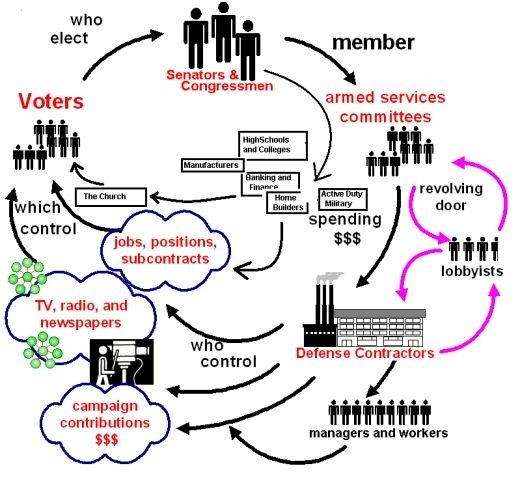


'Modern-day book burners': Portland bookstore forced to evacuate after protesters demand it pulls book critical of Antifa
MOHAMED AL-SAYAGHI / REUTERS
MANDEL NGAN VIA GETTY IMAGES
Semih Terzi, a general within the Turkish army, was executed on the night of the 2016 Turkish coup attempt against Turkish President Recep Tayyip Erdogan. (Photo via the stockholmcf) Ismaeel Naar, Al Arabiya English Friday 31 July 2020 Text size A A A