Tired of being bombarded with constant requests to share content on social media, bestow
ratings, leave comments, and generally “join in on the discussion,” the nation’s Internet users
demanded substantially less interactivity this week.
Speaking with reporters, web users expressed a near unanimous desire to visit a website
and simply look at it, for once, without having every aspect of the user interface tailored to
a set of demographic information culled from their previous browsing history. In addition, citizens
overwhelmingly voiced their wish for a straightforward one-way conduit of information, and specifically
one that did not require any kind of participation on their part.
“Every time I type a web address into my browser, I don’t need to be taken to a fully immersive,
cross-platform, interactive viewing experience,” said San Diego office manager Keith Boscone.
“I don’t want to take a moment to provide my feedback, open a free account, become part of a growing
online community, or see what related links are available at various content partners.”
“All I want is to go to a website, enjoy it for the time I’ve decided to spend there, and
then move on with my life,” he continued. “Is that so much to ask?”
Early versions of the WWW developed a reputation as a versatile and convenient tool for accessing
mission-critical data at the European Laboratory for Particle Physics (CERN). Paradoxically the Web
tools Tim Berners-Lee developed were the most successful and were widely regarded as the best way to
access the CERN phone directory. Please note, that the first successful WWW application was not distribution
of published papers it was a gateway to an existing and important application. Of course, the versatility
of WWW became clearer as the technology spread among high energy physics institutions and then
to the outside world. But is it really an accident that the Web took off as a gateway to existing information
system? I think this is not an accident and that's why WWW served as a launch pad for several scripting
languages, including Perl, JavaScript, PHP and Python.
...HTTP is useful in its own right, for example, as a good file-distribution protocol with a number
of important advantages over ftp. This article gives an example how to speak HTTP and get understood.
... By definition[1], HTTP is a request/response protocol that exchanges messages in a format
similar to that used by Internet mail (MIME). An HTTP transaction is essentially a remote procedure
call. It is usually a blocking call, although HTTP/1.1 provides for asynchronous and batch modes.
HTTP allows intermediaries (caches, proxies) to cut into the response-reply chain.
An operation to execute remotely is expressed in HTTP as an application of
a request method to a resource. Additional parameters, if needed, are communicated via request headers
or a request body. The request body may be an arbitrary octet-stream. The HTTP/1.1 standard defines
methods GET, HEAD, POST, PUT, DELETE, OPTIONS, TRACE, and CONNECT. A
particular server may accept many others. This extensibility is a rather notable feature of HTTP.
The parties can use not only custom methods but custom request and reply headers as well. In addition,
a client and a server may exchange meta-information via "name=value" attribute pairs of the standard
"Content-Type:" header.
Most of the HTTP transactions performed every day are done behind the scenes by browsers, proxies,
robots, and servers. Yet the protocol is so simple that one can easily speak it oneself. The only
requirement is a language or tool that is able to manipulate text strings and establish TCP connections.
Even a simple telnet application may do in a pinch, which is often useful for debugging. Server-side
programming is less demanding: a servlet or a scriptlet does not need to bother with the network
connectivity, authentication, access restrictions, SSL, and other similar chores. Server modules
or FastCGI give a server-side programmer even more tools: load-balancing, persistence, database connectivity,
etc. This article demonstrates how to use Perl scripts to speak and respond HTTP directly.
Dr. Nikolai Bezroukov
Nature of WEB radically changed after Snoden revelation. From a medium for spreading
information and knowledge it instancly transformed into spying yey that follow your activities and even
keystrokes.
I was always suspicious about "cloud" Web mail services starting with Hotmail.The problem is where my emails are being stored and while each single email is exposed while it
transit the Web, the collection of email in your Inbox as well as your address book constitute something
much more dangerous then a single email. Such a collection provides much more revealing information
voluntarily stored by you (is not this stupid ?) in the place over which you've no control (and as such
you should have no expectation of privacy) . I can see why Brazil and Germany are now concerned
about NSA. I can't understand why they are not concerned about stupidity of their citizens opening accounts
and putting confidential information on the Web. Is not this a new mass form of masochism?
As we have all found out, that trust is misplaced, as "cloud" services were systematically
abused. and while we all now need to learn Aesop language (slang is actually almost unpenetratable to
computers, unless they are specifically programmed for particular one) and be more careful, I can understand
why "Fecebook" users should be concerned. Facebook is nothing but a database about their users. So users
data is what Facebook actually sells.
But from the other point of view, Fecebook wanted this "exhibitionism orgy",
and they got what they deserve. See
Big Uncle is Watching You.
In a current NSA-inspired debate about the moral consequences of digital technologies, it is important
to realize that seamless integration of services under Google (and other Internet Oligopolies) umbrella,
where everyone is forced to wear Google's digital straitjacket can be a very bad thing. It essentially
invites snooping, especially government snooping as the less entities government need to deal with,
the more in-depth penetration can be archives. Whether this will be in the name of fighting terrorism,
communist agents, or infiltration of Martians does not matter. If technical means of snooping exist
they will be used. It is duty of concerned citizens who object this practice to make them less effective.
First of all we must fight against this strange "self-exposure" mania under which people
have become enslaved to and endangered by the "cloud" tools they use. Again this nothing more nothing
less then digital masochism. But there is another important aspect of this problem which is different
from the problem of unhealthy
self-revelation zeal that large part of Facebook population demonstrates on the Net.
This second problem is often discussed under the meme
Is Google evil ? and it is connected
with inevitable corruption of Internet by large Internet Oligopolies such as Google, Yahoo, Facebook,
etc. And they become oligopolies because we agree to use them as primary sources, for example Google
for search, independently whether it is good for all types of searches or not. That mean the diversification
is now a duty of concerned Internet users. And if you did not put several search providers like say,
duckduckgo.com in your browser and don't rotate them periodically, you are making a mistake. First of
all you deprive yourself from the possibility to learn strong and weak point of different search engines.
the second Google stores all searches, possibly indefinitely, so you potentially expose yourself to
a larger expend they you thing even if do not log to Google account during searches. See
Alternative Search Engines to Google
As Eugeny Morozov argued in
The
Net Delusion The Dark Side of Internet Freedom “Internet solutionism” exemplified by Google,
is the dangerous romantic utopia of our age. He regards Google-style "cloud uber alles" push
as counter-productive, even dangerous:
...Wouldn’t it be nice if one day, told that Google’s mission is to “organize the world’s information
and make it universally accessible and useful,” we would finally read between the lines and discover
its true meaning: “to monetize all of the world’s information and make it universally inaccessible
and profitable”? With this act of subversive interpretation, we might eventually hit upon the
greatest emancipatory insight of all: Letting Google organize all of the world’s information
makes as much sense as letting Halliburton organize all of the world’s oil.
The reason why the digital debate feels so empty and toothless is simple: framed as a debate over
“the digital” rather than “the political” and “the economic,” it’s conducted on terms that are already
beneficial to technology companies. Unbeknownst to most of us, the seemingly exceptional nature of
commodities in question – from “information” to “networks” to “the Internet” – is coded into our
language. It’s this hidden exceptionalism that allows Silicon Valley to dismiss its critics as Luddites
who, by opposing “technology,” “information” or “the Internet”-- they don’t do plurals in Silicon
Valley, for the nuance risks overwhelming their brains – must also be opposed to “progress.”
Internet started as a network of decentralized servers, and now it probably will eventually
return to it on a new level as the danger of cloud providers exceed their usefulness. In any case now
it looks like anybody who is greedy enough to use "free" (as in "The only free cheese is in the mouse
trap") Gmail instead of getting webmail account
via ISP with your own (let it call vanity, but it's your own :-) website is playing with fire. Even
if they are nothing to hide, if they use Hotmail of Gmail for anything but spam (aka registrations,
newsletters, etc) they are entering a dangerous virtual room with multiple hidden camera that record
and store information including all their emails and address book forever. Important email should probably
now be limited to regular SMTP accounts with client like Thunderbird (which actually is tremendously
better then Gmail Web mail client with its Google+ perversions).
For personal, private information, you need to have your own servers and keep nothing
in the "cloud". The network was originally designed to be "peer-to-peer" and the only hold back has
been the cost of local infrastructure to do it and the availability of local technical talent to keep
those services running. Now cost of hardware is trivial and services are so well known that running
them is not a big problem even at home, especially a pre-configured virtual machines with "business"
cable ISP account ( $29 per month from Cablevision).
Maybe the huge centralized services like Google and Yahoo have really been temporary
anomalies of the adolescence of the Internet and given the breach of trust by governments and by these
large corporations the next step will be return on a new level to Internet decentralized roots. Maybe
local services can still be no less viable then cloud services. Even email, one of the most popular
"in the cloud" services can be split into a small part of pure SMTP delivery (important mails) and bulk
mail which can stay on Webmail (but preferably you private ISP, not those monsters like Google, Yahoo
or Microsoft). That does not exclude using "free" emails of this troika for storing spam :-). In short
we actually don't have to be on Gmail to send or read email. Google search is not the best search engine
for everything. Moreover it is not wise to put all eggs in one basket. Microsoft might be as bad, but
spreading your searches makes perfect sense. TCP connection to small ISP is as good and if you do not
trust ISP you can use you home server with cable provider ISP account.
Where I have concern is if the network itself got partitioned along national borders
as a result of NSA snooping, large portions of the net can become unreachable. That would be a balkanization
we would end up regretting. It would be far better if we take a preemptive action against this abuse
and limit the use of our Gmail, hotmail, Yahoo accounts for "non essential" correspondence, if we spread
our search activities among multiple search engines and have our web pages, if any on personal ISP account.
We need to enforce some level of privacy ourselves and don't behave like lemmings. Years ago there was
similar situation with telephones wiretaps, and before laws preventing abuse of this capability were
eventually passed people often used public phones for important calls they wanted to keep private.
In Australia any expectations of privacy isn't legally recognized by the Supreme Court once people
voluntarily offered data to the third party. And I think Australians are right. Here is a relevant
Slashdot post:
General Counsel of the Office of the Director of National Intelligence Robert S. Litt explained
that our expectation of privacy isn't legally recognized by the Supreme Court once we've offered
it to a third party.
Thus, sifting through third party data
doesn't qualify 'on a constitutional level' as invasive to our personal privacy.This he
brought to an interesting point about volunteered personal data, and social media habits. Our
willingness to give our information to companies and social networking websites is baffling to the
ODNI.
'Why is it that people are willing to expose large quantities of information to private parties
but don't want the Government to have the same information?,' he asked."
... ... ...
While Snowden's leaks have provoked Jimmy Carter into labeling this government a sham,
and void of a functioning democracy, Litt presented how these wide data collection programs are in
fact valued by our government, have legal justification, and all the necessary parameters.
Litt,
echoing the president and his boss James Clapper, explained thusly:
"We do not use our foreign intelligence collection capabilities to steal the trade secrets
of foreign companies in order to give American companies a competitive advantage. We do not indiscriminately
sweep up and store the contents of the communications of Americans, or of the citizenry of any
country. We do not use our intelligence collection for the purpose of repressing the citizens
of any country because of their political, religious or other beliefs. We collect metadata—information
about communications—more broadly than we collect the actual content of communications, because
it is less intrusive than collecting content and in fact can provide us information that helps
us more narrowly focus our collection of content on appropriate targets. But it simply is not
true that the United States Government is listening to everything said by every citizen of any
country."
It's great that the U.S. government behaves better than corporations on privacy—too bad it trusts/subcontracts
corporations to deal with that privacy—but it's an uncomfortable thing to even be in a position of
having to compare the two. This is the point Litt misses, and it's not a fine one.
Technology development create new types of communications as well as new types of government surveillance
mechanisms (you can call them "externalities" of new methods of communication). Those externalities,
especially low cost of mass
surveillance (Wikipedia), unfortunately, bring us closer to the
Electronic police state
(Wikipedia) or
National Security
State whether we want it or not. A crucial element of such a state is that its data gathering, sorting
and correlation are continuous, cover a large number of citizens and all foreigners and those activities
are seldom exposed.
Cloud computing as a technology that presuppose storing the data "offsite" on third party servers
have several security problems, and one of them is that it is way too much "surveillance friendly"
(Misunderstanding
of issues of security and trust). With cloud computing powers that be do not need to do complex
job of recreating TCP/IP conversations on router level to capture, say, all the emails or all your SMS.
You can access Web-based email mailbox directly with all mails in appropriate mailboxes and spam filtered.
Your address book is a bonus ;-). This is huge saving of computational efforts.
It means two things:
In first thing to understand that government is profiling you even if you did nothing wrong
(see
The Government is Profiling You MIT Video). Creation of Internet just put those processes into
overdrive mode.
The modern capability of storage of data provide the capability of storing the following information
about you for several years (five years minimum), if not for a lifetime:
Your emails and, in case you are using Webmail providers, your address book. It is
reasonable to assume that all of them will be automatically analyzed using keyword database and
flagged if some of "suspicious" words are found. See
Total control:
keywords in your posts that might trigger surveillance. Your address book is also swiped,
if you are using "cloud" provider like Gmail, Hotmail, etc. Now you know who is hiding in this
cloud ;-)
Metadata for your phone calls. This metadata is extremely revealing; investigators
mining it might be able to infer whether we have an illness or an addiction, what our religious
affiliations and political activities are, and so on.
Actual content (mp3 file or similar format) of all your Skype phone calls (the saying
is that "there is no free lunch" has now a new meaning here ). This is less important as getting
those calls transcribed is a difficult undertaking.
Metadata of pages that you assessed (visited websites). For a considerable period of
time (over a year) those data in a standard HTTP log format
are extremely revealing as for your political and social views, as well as well as general interests.
Sophisticated log analysis programs are available (so called proxy log analyzers). This reveals
all your downloads, software that you are using and many, many other things. Essentially now you
like a bug under the microscope.
Your purchases on major Internet sites (Amazon, eBay) and all purchases using major credit
cards. This is even more revealing then you web activity, as you put money were your interests
are. Buy books that interest you, and so on. Also extremely revealing as for your political and
social views, as well as well as general interests.
All the content you put on social sites such as Facebook. Here people usually reveal quite
a bit about themselves. As many people have presence simultaneously in Google, Facebook and
LinkedIn, total information includes your education, current qualification and possibly resume.
Address book and calendar on sides such Gmail, Hotmail or
Yahoo mail.
Not only the USA government with its
Prism program
is involved in this activity. British security services are probably even more intrusive. Most governments
probably try to do some subset of the above. Two important conclusions we can get are:
Due to development of technologies and availability of low cost high power computers and
storage profiling is now easy and automatic.
If something is available at los cost, most probably it will be abused.
It puts you essentially in a situation of a bug under microscope on Big Brother. And please understand
that modern storage capabilities are such that it is easy to store several years of at least some of
your communications, especially emails.
The same is true about your
phone calls metadata,
credit card transactions and your activities on major shopping sites such as Amazon, and eBay. But here
you can do almost nothing. Still I think our support of "brick" merchants is long overdue. Phones are
traditional target of government three letter agencies (WSJ)
since the WWII. Smartphones with GPS in addition to land line metadata also provide your current geo
location. I do not think you can do much here.
I think our support of "brick" merchants is long overdue. And paying cash
in the store in not something that you should try to avoid because credit card returns you 1%
of the cost of the purchase. This 1% is actually a privacy tax ;-)
The centralization of searches on Google (and to lesser extent on Bing) are also serious threats
to your privacy. Here diversification between three or more search engines might help a bit. Other then
that and generally limited your time behind the computer I do not think much can be done. Growth of
popularity of Duckduckgo suggests that people are
vary of Google monopolizing the search, but it is unclear how big are the advantages. You can also save
searches as many searches are recurrent and generally you can benefit from using your personal Web proxy
with private cashing DNS server. This way to can "shrink" your radar picture, but that's about it. Search
engines are now an integral part of our civilization whether we want it or not.
Collection of your searches for the last several years can pretty precisely outline sphere of your
interests. And again technical constrains on storage of data no longer exists: how we can talk about
privacy at the age of 3 TB harddrives for $99. There are approximately
314 million
of the US citizens and residents, so storing one gigabyte of information for each citizen requires just
400 petabytes. For comparison
In July 2012 it was revealed that
CERN amassed about 200 petabytes
of data from the more than 800 trillion collisions looking for the
In August 2012, Facebook's
Hadoop clusters include the largest single
HDFS cluster known, with more than
100 PB physical disk space in a single HDFS filesystem
By some estimates info storage capabilities of the US government are around 5 zeta bytes (5*1021)
Facebook has nothing without people
silly enough to exchange privacy for photosharing
The key problem with social sites is that many people voluntarily post excessive amount of personal
data about themselves, including keeping their photo archives online, etc. So while East Germany analog
of the Department of Homeland Security called Ministry for State Security (Stasi)
needed to recruit people to spy about you, now you yourself serves as a informer voluntarily providing
all the tracking information about your activities ;-).
Scientella, palo alto
...Facebook always had a very low opinion of peoples intelligence - and rightly so!
I can tell you Silicon Valley is scared. Facebook's very existence depends upon trusting young
persons, their celebrity wannabee parents and other inconsequential people being prepared to give
up their private information to Facebook.
Google, now that SOCIAL IS DEAD, at least has their day job also, of paid referral advertising
where someone can without divulging their "social" identity, and not linking their accounts, can
look for a product on line and see next to it some useful ads.
But Facebook has nothing without people silly enough to exchange privacy for photosharing.
... ... ...
Steve Fankuchen, Oakland CA
Cook, Brin, Gates, Zuckerberg, et al most certainly have lawyers and public relations hacks
that have taught them the role of "plausible deniability."
Just as in the government, eventually some low or mid-level flunkie will likely be hung out
to dry, when it becomes evident that the institution knew exactly what was going on and did nothing
to oppose it. To believe any of these companies care about their users as anything other than
cash cows is to believe in the tooth fairy.
The amount of personal data which users of site like Facebook put voluntarily on the Web is truly
astonishing. Now anybody using just Google search can get quit substantial information about anybody
who actively using social sites and post messages in discussion he/she particulates under his/her own
name instead of a nickname. Just try to see what is available about you and most probably your jaw would
drop...
Google Toolbar in advanced mode is another common snooping tool about your activities. It send each
URL you visit to Google and you can be sure that from Google several three letter agencies get this
information as well. After all Google has links to them from the very beginning:
This is probably right time for the users of social sites like Facebook, Google search, and Amazon
(that means most of us ;-) to think a little bit more about the risks we are exposing ourselves. We
all should became more aware about the risks involved as well as real implications of the catch phase
Privacy is Dead – Get Over
It.
This is probably right time for the users of social sites like Facebook, Google search,
and Amazon (that means most of us ;-) to think a little bit more about the risks we are exposing
ourselves.
If there is one thing we can take away from the news of recent weeks it is this: the modern
American surveillance state is not really the stuff of paranoid fantasies; it has arrived.
Citizens of foreign countries have accounts at Facebook and mail accounts in Gmail, hotmail and Yahoo
mail are even in less enviable position then the US citizens. They are legitimate prey. No legal protection
for them exists, if they use those services. That means that they voluntarily open all the information
they posted about themselves to the US government in addition to their own government. And the net is
probably more wide then information leaked by NSA contractor Edward Snowden suggests. For any large
company, especially a telecom corporation, operating is the USA it might be dangerous to refuse to cooperate
(Qwest case).
Former Qwest CEO Joseph
Nacchio, convicted of insider trading in April 2007, alleged in appeal documents that the NSA
requested that Qwest participate in its wiretapping program more than six months before September
11, 2001. Nacchio recalls the meeting as occurring on February 27, 2001. Nacchio further claims that
the NSA cancelled a lucrative contract with Qwest as a result of Qwest's refusal to participate in
the wiretapping program.[13]
Nacchio surrendered April 14, 2009 to a federal prison camp in Schuylkill, Pennsylvania to begin
serving a six-year sentence for the insider trading conviction. The United States Supreme Court denied
bail pending appeal the same day.[15]
It is not the case of some special evilness of the US government. It simply is more agile to understand
and capitalize on those new technical opportunities. It is also conveniently located at the center of
Internet universe with most traffic is flowing via US owned or controlled routers (67% or more). But
it goes without saying that several other national governments and a bunch of large corporations also
try to mine this new gold throve of private information on citizens. Probably with less sophistication
and having less financial resources.
In many cases corporations themselves are interested in partnership with the government. Here is
one telling comment:
jrs says on June 8, 2013
Yea in my experience that’s how “public/private partnerships” really work:
Companies DO need protection FROM the government. An ill-conceived piece of legislation
can put a perfectly decent out of business. Building ties with the government is protection.
Government represents a huge market and eventually becomes one of the top customers
for I think most businesses (of course the very fact that a government agency is a main
customer is often kept hush hush even within the company and something you are not supposed
to speak of as an employee even though you are aware of it)
Of course not every company proceeds to step 3 -- being basically an arm of the government
but ..
That means that not only Chinese citizens already operate on the Internet without any real sense
of privacy. Even if you live outside the USA the chances are high that you automatically profiled by
the USA instead of or in addition to your own government. Kind of
neoliberalism in overdrive mode:
looks like we all are already citizens of a global empire (Let's call it " Empire of Peace" ) with the
capital in Washington.
It is reasonable to assume that a massive eavesdropping apparatus now tracks at least an "envelope"
of every electronic communication you made during your lifetime. No need for somebody reporting about
you like in "old" totalitarian state like East Germany with its analog of the Department of Homeland
Security called the Ministry for State Security (Stasi).
So in this new environment, you are like Russians used to say about dissidents who got under KGB surveillance
is always "under the dome". In this sense this is just an old vine in a new bottles. But the global
scope and lifetime storage of huge amount of personal information for each and every citizen is something
new and was made possible the first time in world history by new technologies.
It goes without saying that records about time, sender and receiver of all your phone calls, emails,
Amazon purchases, credit card transactions, and Web activities for the last decade are stored somewhere
in a database and not necessary only government computers. And that means that your social circle (the
set of people you associate with), books and films that you bought, your favorite websites, etc can
be easily deducted from those records.
That brings us to an important question about whether we as consumers should support such ventures
as Facebook and Google++ which profile you and after several years have a huge amount of pretty private
and pretty damaging information about you, information which can get into wrong hands.
The most constructive approach to NSA is to view is a large government bureaucracy that expanded
to the extent that quantity turned into quality.
Any large bureaucracy
is a political coalition with the primary goal of preserving and enhancing of its own power (and
closely related level of financing), no matter what are official declarations. And if breaching your
privacy helps with this noble goal, they will do it. Which is what Bush government did after 9/11. The
question is how much bureaucratic bloat resulting in classic dynamics of organizational self-aggrandizement
and expansionism happened in NSA. We don't know how much we got in exchange for undermining internet
security and US constitution. But we do know the intelligence establishment happily appropriated billions
of dollars, had grown by thousand of employees and got substantial "face lift" and additional power
within the executive branch of government. To the extent that sometimes it looks like a shadow government.
And now they will fight tooth-and nail to protect the fruits of a decade long bureaucratic expansion.
It is an Intelligence Church of sorts and like any religious organization they do not need facts to
support their doctrine and influence.
Typically there is a high level of infighting and many factions within any large hierarchical organization,
typically with cards hold close the west and limited or not awareness about those turf battles of the
outsiders. Basically any hierarchical institution corporate, religious, or military will abuse available
resources for internal political infighting. And with NSA "big data" push this is either happening or
just waiting to happen. This is a danger of any warrantless wiretapping program: it naturally convert
itself into a saga of eroding checks and disappearing balances. And this already happened in the past,
so in a way it is just act two of the same drama (WhoWhatWhy):
After
media
revelations of intelligence abuses by the Nixon administration began to mount in the wake of
Watergate, NSA became the subject of Congressional ire in the form of the United States Senate Select
Committee to Study Governmental Operations with Respect to Intelligence Activities—commonly
known as the “Church Committee” after its chair, Senator Frank Church (D-ID)—established on January
17, 1975. This ad-hoc investigative body found itself unearthing troves of classified records from
the FBI, NSA, CIA and Pentagon that detailed the murky pursuits of each during the first decades
of the Cold War. Under the mantle of defeating communism, internal documents confirmed the executive
branch’s use of said agencies
in some of the most fiendish acts
of human imagination (including refined psychological torture techniques),
particularly by the Central
Intelligence Agency.
The Cold War mindset had incurably infected the nation’s security apparatus, establishing
extralegal subversion efforts at home and
brutish control abroad. It was revealed that the FBI
undertook a war to destroy
homegrown movements such as the Black Liberation Movement (including Martin Luther King, Jr.), and
that NSA had indiscriminately
intercepted the communications of Americans without warrant, even
without the President’s
knowledge. When confronted with such nefarious enterprises, Congress sought to rein in the excesses
of the intelligence community, notably those directed at the American public.
That capability at any time could be turned around on the American people and no American
would have any privacy left, such is the capability to monitor everything. Telephone conversations,
telegrams, it doesn’t matter. There would be no place to hide. If this government ever became
a tyranny, if a dictator ever took charge in this country, the technological capacity that the
intelligence community has given the government could enable it to impose total tyranny, and there
would be no way to fight back, because the most careful effort to combine together in resistance
to the government, no matter how privately it was done, is within the reach of the government
to know. Such is the capability of this technology. I don’t want to see this country ever go across
the bridge. I know the capability that is there to make tyranny total in America, and we must
see to it that this agency and all agencies that possess this technology operate within the law
and under proper supervision, so that we never cross over that abyss. That is the abyss from which
there is no return.
The reforms that followed, as enshrined in the
Foreign Intelligence Surveillance
Act (FISA) of 1978, included the establishment of the
Foreign
Intelligence Surveillance Court (FISC): a specially-designated panel of judges who are allowed
to review evidence before giving NSA a warrant to spy on Americans (only in the case of overseas
communication). Hardly a contentious check or balance, FISC
rejected
zero warrant requests between its inception in 1979 and 2000, only asking that two warrants
be “modified” out of an estimated 13,000.
In spite of FISC’s rubberstamping, following 9/11 the Bush administration began deliberately bypassing
the court, because even its minimal evidentiary standard was too high a burden of proof for the blanket
surveillance they wanted. So began the dragnet monitoring of the American public by
tapping the country’s major
electronic communication chokepoints in collusion with the nation’s largest telecommunications
companies.
When
confronted with the criminal conspiracy undertaken by the Bush administration and telecoms, Congress
confirmed why
it retains the lowest approval rating of any major American institution by “reforming” the statute
to accommodate the massive law breaking. The
2008 FISA Amendments Act
[FAA] entrenched the policy of mass eavesdropping and granted the telecoms retroactive immunity
for their criminality, withdrawing even the negligible individual protections in effect since 1979.
Despite initial opposition, then-presidential candidate Barack Obama
voted for
the act as one of his last deeds in the Senate.
A few brave (and unsuccessful) lawsuits
later, this policy remains the status quo.
Similarly we should naturally expect that the notion of "terrorist" is flexible and in certain cases
can be equal to "any opponent of regime". While I sympathize NYT readers reaction to this incident (see
below), I think it is somewhat naive. They forget that they are living
under neoliberal regime which
like any rule of top 0.01% is afraid of and does not trust its own citizens. So massive surveillance
program is a self-preservation measure which allow to crush or subvert the opposition at early stages.
This is the same situation as existed with Soviet nomenklatura, with the only difference that Soviet
nomenklatura was more modest pushing the USSR as a beacon of progress and bright hope for establishing
democratic governance for all mankind ;-). As
Ron Paul noted:
Many of us are not so surprised.
Some of us were arguing back in 2001 with the introduction of the so-called PATRIOT Act that it
would pave the way for massive US government surveillance—not targeting terrorists but rather
aimed against American citizens. We were told we must accept this temporary measure to provide
government the tools to catch those responsible for 9/11. That was nearly twelve years and at least
four wars ago.
We should know by now that when it comes to government power-grabs, we never go back to the
status quo even when the “crisis” has passed. That part of our freedom and civil liberties once
lost is never regained. How many times did the PATRIOT Act need renewed? How many times did FISA
authority need expanded? Why did we have to pass a law to grant immunity to companies who hand
over our personal information to the government?
And while revealed sources of NSA
Prism program
include Apple, Google, Facebook, Microsoft, Yahoo and others major Internet players, that's probably
just a tip of the iceberg. Ask yourself a question, why Amazon and VISA and MasterCard are not on the
list? According to
The Guardian:
The National Security Agency has obtained direct access to the systems of Google, Facebook,
Apple and other US internet giants, according to a top secret document obtained by the Guardian.
The NSA access is part of a previously undisclosed program called Prism, which allows
officials to collect material including search history, the content of emails, file transfers and
live chats, the document says.
... ... ...
Microsoft – which is currently running an advertising campaign with the slogan "Your privacy is
our priority" – was the first, with collection beginning in December 2007. It was followed by Yahoo
in 2008; Google, Facebook and PalTalk in 2009; YouTube in 2010; Skype and AOL in 2011; and finally
Apple, which joined the program in 2012. The program is continuing to expand, with other providers
due to come online.
Collectively, the companies cover the vast majority of online email, search, video and communications
networks
... ... ...
A chart prepared by the NSA, contained within the top-secret document obtained by the Guardian,
underscores the breadth of the data it is able to obtain: email, video and voice chat, videos,
photos, voice-over-IP (Skype, for example) chats, file transfers, social networking details, and
more.
So while the document does not list Amazon, but I would keep fingers crossed.
To be aware about a situation you need to be able to formulate and answer key questions about it.
The first and the most important question is whether the government is engaged in
cyberstalking of law abiding citizens.
Unfortunately the answer is definite yes, as oligarchy needs total control of prols. As a result National Security
State rise to prominence as a dominant social organization of
neoliberal societies, the societies
which characterized by very high level of inequality.
But there are some additional, albeit less important questions. The answers to them determine utility
or futility of small changes of our own behavior in view of uncovered evidence. Among possible set of
such question I would list the following:
Is the only way to have reasonable privacy with computer is to be physically disconnected
with the network?
Is limiting the usage of large providers like Google, Yahoo and Microsoft and usage of small
ISP for your email and personal Web pages makes you any more secure? After all it is much easier
to collect data from large providers then from hundreds of smaller providers. At the same time your
data are allowing via big routers in major telecom companies no matter whether you are using large
or small ISP.
Should you switch from Webmail back top POP3 account and deliver at the least most important
mail to your PC instead of keeping it stored on the web servers ? Please note that FBI developed
the computer programs "Magic
Lantern" and CIPAV, which they
can remotely install on a computer system (for example, using Microsoft Windows updates program),
in order to monitor a person's computer activity. But here you probably need a court order to install
them.
Is Facebook and similar social sites provides any real value to you and your family? Is
your visibility of the Web is more important to you then your privacy, because two are generally
incompatible. Is all this vanity fair activity worth possible negative consequences (including stalking
of minors by criminals) that you and your family can face?
Should some group of specialists, for example psychiatrists resort back to handwriting on
paper and/or now write client notes in code as an attempt to reassert some level of confidentiality?
Note the PGP is not a panacea; it can be safely used only on non-network connected computers due
to existence of programs like
Magic Lantern
which can retrieve private keys directly from your computer. But transferring files via "air link"
is very inconvenient.
There are also some minor questions about efficiency of "total surveillance approach". Among them:
More people die daily from (1) car accidents and (2) gang violence in one day then people who
died due to 9-11 accident. Should not billions or dollars spent by NSA be utilized by different agencies
for preventing death toll mentioned above?
Even if NSA algorithms are incredibly clever they can't avoid producing large number of false
positives. The question arise how many innocent people are monitored as the result of this externality.
The other part of understand the threat is understanding is what data are collected. The short answer
is all your phone records and Internet activity (RT
USA):
The National Security Agency is collecting information on the Internet habits of millions of innocent
Americans never suspected of criminal involvement, new NSA documents leaked by former intelligence
contractor Edward Snowden suggest.
Britain’s Guardian newspaper reported Monday that
top-secret documents
included in the trove of files supplied by the NSA contractor-turned-leaker Edward Snowden reveal
that the US intelligence community obtains and keeps information on American citizens accumulated
off the Internet without ever issuing a search warrant or opening an investigation into that person.
The information is obtained using a program codenamed Marina, the documents suggest, and is kept
by the government for up to a full year without investigators ever having to explain why the subject
is being surveilled.
“Marina has the ability to look back on the last 365 days' worth of DNI metadata seen by the
Sigint collection system, regardless whether or not it was tasked for collection,” the Guardian’s
James Ball quotes from the documents.
According to a guide for intelligence analysts supplied by Mr. Snowden, “The Marina metadata
application tracks a user's browser experience, gathers contact information/content and develops
summaries of target.”
"This tool offers the ability to export the data in a variety of formats, as well as create
various charts to assist in pattern-of-life development,” it continues.
Ball writes that the program collects “almost anything” a Web user does online, “from
browsing history – such as map searches and websites visited – to account details, email activity,
and even some account passwords.”
Only days earlier,
separate disclosures
attributed to Snowden revealed that the NSA was using a massive collection of metadata to create
complex graphs of social connections for foreign intelligence purposes, although that program
had pulled in intelligence about Americans as well.
After the New York Times broke news of that program, a NSA spokesperson said that “All data
queries must include a foreign intelligence justification, period.” As Snowden documents continue
to surface, however, it’s becoming clear that personal information pertaining to millions of US citizens
is routinely raked in by the NSA and other agencies as the intelligence community collects as much
data as possible.
In June, a top-secret document also attributed to Mr. Snowden revealed that the NSA was collecting
the telephony metadata for millions of Americans from their telecom providers. The government has
defended this practice by saying that the metadata — rough information that does not include the
content of communications — is not protected by the US Constitution’s prohibition against unlawful
search and seizure.
“Metadata can be very revealing,” George Washington University law professor Orin S. Kerr
told the Times this week. “Knowing things like the number someone just dialed or the location
of the person’s cellphone is going to allow them to assemble a picture of what someone is up to.
It’s the digital equivalent of tailing a suspect.”
According to the Guardian’s Ball, Internet metadata picked up by the NSA is routed to the Marina
database, which is kept separate from the servers where telephony metadata is stored.
Only moments after the Guardian wrote of its latest leak on Monday, Jesselyn Radack of the Government
Accountability Project read a statement before the European Parliament’s Committee on Civil Liberties,
Justice and Home Affairs penned by none other than Snowden himself.
“When I began my work, it was with the sole intention of making possible the debate we see
occurring here in this body,” Snowden said.
Snowden, who has been granted temporary asylum in Russia after being charged with espionage in
the US, said through Raddack that “The cost for one in my position of returning public knowledge
to public hands has been persecution and exile.”
There are limits of this "powerful analytical software" used. First of all the revelations constitute
a sever blow if not a knockout for all NSA activities against serious opponents. Now they are forewarned
and that mean forearmed. That simply means that they might start feeding NSA disinformation and that's
a tremendous danger that far outweigh the value of any real information collected.
There is another side of this story. As we mentioned above, even if NSA algorithms are incredibly
clever they can't avoid producing large number of false positives taking into account that they are
drinking from a fire hose. After two year investigation into the post 9/11 intelligence agencies, the
Washington Post came to conclusion that they were collecting far more information than anyone can comprehend
(aka "drowning is a sea of data"):
Every day, collection systems at the National Security Agency intercept and store 1.7 billions
e-mails, phone calls and other types of communications. The NSA sorts a fraction of those into
70 separate databases"
Such volume along creates a classic problem of "signal vs. noise" (infoglut).
...Infoglut raises disturbing questions regarding new operations of power and control
in a world of algorithms." —Jodi Dean, author of Democracy and Other Neoliberal Fantasies
...Andrejevic argues that people prioritize correlation over comprehension - "what" and
facts are more important than "why" and reasons.
Presence of noise in the channel makes signal much more difficult to detect. As Washington Post noted:
Analysts who make sense of document and conversations obtained by foreign and domestic spying
share their judgment by publishing 50,000 intelligence reports each year -- a volume so large
that many are routinely ignored
The enormity of the database exacerbate the problems. That's why NSA is hunting for email on cloud
providers, where they are already filtered from spam, and where processing required is so much less
then for the same information intercepted from the wire. Still even with the direct access to user accounts,
the volume of data, especially graphic info (pictures), sound and video data, is really huge and that
stress the limits of processing capabilities and storage.
Existence of Snowden saga when a single analyst was able to penetrate the system and extract considerable
amount information with impunity suggests that the whole Agency is a mess with a lot of incompetents
at the helm. Which is typical for government agencies and large corporations. Still the level of logs
collection and monitoring proved to be surprisingly weak, as those are indirect signs of other rot.
It looks like the agency does not even know what reports Snowden get into his hands. Unless this is
a very clever inside operation, we need to assume that Edward Snowden stole thousands of documents,
abused his sysadmin position in the NSA, and was never caught. Here is one relevant comment from
The Guardian
carlitoontour
Oh NSA......that´s fine that you cannot find something......what did you tell us, the World
and the US Congress about the "intelligence" of Edward Snowden and the low access he had?
SNOWDEN SUSPECTED OF BYPASSING ELECTRONIC LOGS
WASHINGTON (AP) -- The U.S. government's efforts to determine which highly classified materials
leaker Edward Snowden took from the National Security Agency have been frustrated by Snowden's
sophisticated efforts to cover his digital trail by deleting or bypassing electronic logs,
government officials told The Associated Press. Such logs would have showed what information
Snowden viewed or downloaded.
The government's forensic investigation is wrestling with Snowden's apparent ability
to defeat safeguards established to monitor and deter people looking at information without
proper permission, said the officials, who spoke on condition of anonymity because they
weren't authorized to discuss the sensitive developments publicly.
On the other hand government agencies were never good in making huge and complex software projects
work. and large software projects are a very difficult undertaking in any case. Even in industry 50%
of software projects fail, and anybody who works in the industry knows, that the more complex the project
is the higher are chances that it will be mismanaged and its functionality crippled due to architectural
defects ("a camel is a horse designed by a committee"). It is given that such project will be
over budget. Possibly several times over,
But if money is not a problem such system will eventually be completed ("with enough thrust pigs
can fly"). Still there’s no particular reason to think that corruption (major work was probably
outsourced) and incompetence (on higher management levels and, especially on architectural level as
in "camel is a horse designed by a committee") don't affect the design and functionality of this government
project. Now when this activity come under fire some adjustments might be especially badly thought out
and potentially cripple the existing functionality.
As J. Kirk Wiebe, a NSA insider,noted
"The way the government was going about those digital data flows was poor formed, uninformed.
There seen to be more of a desire to contract out and capture money flow then there was a [desire}
to actually perform the mission".
See the interview of a trio of former National Security Agency whistle-blowers to USA TODAY ( J.
Kirk Wiebe remarks starts at 2:06 and the second half of it continues from 6:10):
In military organizations the problem is seldom with the talent (or lack of thereof) of individual
contributors. The problem is with the bureaucracy that is very effective in preventing people from exercising
their talents at the service of their country. Such system is deformed in such a way that it hamstrings
the men who are serving in it. As a results, more often then not the talents are squandered or misused
by patching holes created by incompetence of higher-up or or just pushed aside in the interdepartmental
warfare.
In a way, incompetence can be defined as the inability to avoid mistakes which, in a "normal"
course of project development could and should be avoided. And that's the nature of military bureaucracy
with its multiple layer of command and compete lack of accountability on higher levels.
In addition, despite the respectable name of the organization many members of technical staff are
amateurs. They never managed to sharpen their technical skills, while at the same time acquiring the
skills necessary to survive the bureaucracy. Many do not have basic academic education and are self-taught
hackers and/or "grow on the job". Typically people at higher level of hierarchy, are simply not experts
in software engineering, but more like typical corporate "PowerPoint" warriors. They can be very shred
managers and accomplished political fighters, but that's it.
This is the same situation that exists in security departments of large multinationals, so we can
extrapolate from that. The word of Admiral Nelson "If the enemy would know what officer corps will confront
them, it will be trembling, like I am". Here is Bill Gross apt recollection of his service as naval
officer (The
Tipping Point) that illustrate the problems:
A few years ago I wrote about the time that our ship (on my watch) was almost cut in half by an
auto-piloted tanker at midnight, but never have I divulged the day that the USS Diachenko came within
one degree of heeling over during a typhoon in the South China Sea. “Engage emergency ballast,” the
Captain roared at yours truly – the one and only chief engineer. Little did he know that Ensign Gross
had slept through his classes at Philadelphia’s damage control school and had no idea what he was
talking about. I could hardly find the oil dipstick on my car back in San Diego, let alone conceive
of emergency ballast procedures in 50 foot seas. And so…the ship rolled to starboard, the ship rolled
to port, the ship heeled at the extreme to 36 degrees (within 1 degree, as I later read in
the ship’s manual, of the ultimate tipping point). One hundred sailors at risk, because of one twenty-three-year-old
mechanically challenged officer, and a Captain who should have known better than to trust him.
Huge part of this work is outsourced to various contractors and this is where corruption really creeps
in. So the system might be not as powerful as many people automatically assume when they hear the abbreviation
of NSA. So in a way when news about such system reaches public it might serve not weakening but strengthening
of the capabilities of the system. Moreover, nobody would question the ability of such system to store
huge amount of raw or semi-processed data including all metadata for your transactions on the Internet.
Also while it is a large agency with a lot of top mathematic talent, NSA is not NASA and motivation
of the people (and probably quality of architectural thinking about software projects involved) is different
despite much better financing. While they do have high quality people, like most US agencies in general,
large bureaucracies usually are unable to utilize their talent. Mediocrities with sharp elbows, political
talent, as well as sociopaths typically rule the show.
That means two things:
The easy part of this is the "total surveillance of electronic communications" project: to
store the "envelope" of each phone message, email, credit card transaction, etc. Analyze and correlated
the set of this envelopes to discover daily activity patterns, their change over time, social circle,
etc. That collection will contain some junk, but generally completely gives up your social circle
and your interests. Such records are pretty compact so the lifespan of your communications stored
is at least five and probably for more then ten years. So assumption of a lifespan storage is the
most realistic one. You can introduce some noise into some of those collection channels (for example,
by using a robot visiting certain sites such as Sport Illustrated, and Washington Post will distort
the picture of your Internet activities) but it is much more difficult to introduce noise into phone
call records and emails.
Several other nations have access to the metadata for the USA originated phone calls (for
providers they serve) via outsourcers of phone billing, such as Israel's Amdocs, the largest phone-billing
services company in the world:
The difficult part is the analysis of the messages body. For example:
Automatic transcribing of phone messages is a very difficult problem. Even the slightest
noise is deadly as we can see from the experience with Dragon (let's say that NSA solved the problem
of adapting to a new voice which Dragon can't solve). Dragon 12 running of dual core 3.8GHz PC
demonstrates the difficulties very well. Even a small amount of noise kills the quality of automatic
transcription.
Analysis of email body for certain keywords easily can be perform automatically, but to
understand the context of usage of "trigger" words is extremely difficult. This task is still
on the cutting edge of modern computer science. From the public document that exists (see
Total control:
keywords in your posts that might trigger surveillance) I have impression that they try to
overreach (which is standard bureaucratic tendency in such cases). That means that such an extraction
might produces too many false positives, and needs to be manually correlated with other data.
Recognition of faces from street and security cameras is even more difficult problem.
Data mining of blogs is difficult for a different reason: not only detecting who is
who requires getting IP from particular provider (this is an easy part), just the total volume
is enormous. Many people create dozens of messages a day. There is a special category of graphomans,
that specialize on participating in various forums and those are people who have high change to
trigger "blind" keyword search. The USA government can afford to have, say, several zetabytes
of storage capacity in NSA-controlled datacenters, but its capabilities are still limited. It
can't replicate all the Internet over time. Videos are especially problematic and are more difficult
to analyze then text or HTML, or XML documents.
Video streams are huge and probably impossible to store. In a way the fact that most
modern computer have face camera is not only creating problem for NSA, it actually create the
problem for Internet as a whole ;-). Indiscriminate interception and storage are out of question:
lovers of "here is what my dog is doing" clips are able to saturate all available storage in no
time.
So even with huge amount of subcontractors they can chase mostly "big fish". Although one nasty question
is why with all those treasure trove of data organized crime is so hard to defeat. Having dataset like
this should generally expose all the members of any gang. Or, say, network of blue collar insider traders.
So in an indirect way the fact that organized crime not only exists and in some cities even flourish
can suggest one of two things:
NSA generally limits availability of those "integrated" data sets to terrorism networks, political
protest, foreign organizations and "suspicious nationals" activities. It is difficult and inefficient
"to cover the whole field" although spying after activities of a foreign corporation can be more
lucrative them spying after a member of terrorist networks ;-). Some sources mention the current
capabilities as around 100K-200K people who can be "electronically followed" simultaneously. It is
reasonably to expect high level of secrecy and that means that data are not shared unless absolutely
necessary (The
Guardian):
The presentation claims Prism was introduced to overcome what the NSA regarded as shortcomings
of Fisa warrants in tracking suspected foreign terrorists. It noted that the US has a "home-field
advantage" due to housing much of the internet's architecture. But the presentation claimed "Fisa
constraints restricted our home-field advantage" because Fisa required individual warrants and
confirmations that both the sender and receiver of a communication were outside the US. "Fisa
was broken because it provided privacy protections to people who were not entitled to them," the
presentation claimed. "
It took a Fisa court order to collect on foreigners overseas who were communicating with other
foreigners overseas simply because the government was collecting off a wire in the United States.
There were too many email accounts to be practical to seek Fisas for all."
... ... ...
A senior administration official said in a statement: "The Guardian and Washington Post articles
refer to collection of communications pursuant to Section 702 of the Foreign Intelligence Surveillance
Act. This law does not allow the targeting of any US citizen or of any person located within the
United States.
"The program is subject to oversight by the Foreign Intelligence Surveillance Court, the Executive
Branch, and Congress. It involves extensive procedures, specifically approved by the court, to
ensure that only non-US persons outside the US are targeted, and that minimize the acquisition,
retention and dissemination of incidentally acquired information about US persons.
Methods based on "beyond the envelope" analysis are not efficient against reasonably sophisticated
opponents, who understand the fact that the communication will be intercepted and possibly
(superficially) analyzed. In a typical "bullet-armor" competition, that opens new impetus for
"bad guys" inventing new and improving old steganography methods. As with interception of talk between
Soviet fighter pilots and their command posts had shown, usage of slang makes the voice data almost
inpenetratable. Another example would be calling Goldman Sacks "a vampire squid", which implies that
your counterpart read
Matt Taibby article or related financial blogs, or to call Facebook "lichiko" which implies knowing
Russian. Person without this context can't make a connection. With such substitutions you need a
huge amount of ( rapidly shifting ) cultural context to understand the meaning of even simple phases.
This context is missing on the other side of the pond. And even specialists can represent certain
problems. For example Jargon
File (and more) is needed to understand the talk of hackers. Fenia,
the language of the thieves is Russia was so distinct from ordinary Russian that it almost qualifies
as a separate language which makes it foreign for outsiders. The same it true about criminal subculture
in other countries (see
Police and criminal
slang ).
Storage of actual data involves certain technical difficulties and first on all physical limitations
of available storage. We probably can talk about several thousand
Petabytes that government can
store. In comparison:
Google processed about
24 petabytes of data per day in 2009
AT&T transfers about
30 petabytes of data through its networks each day
The Internet Archive
contains about 10 petabytes of cultural material as of October 2012
In August 2011, IBM was reported to have built the largest storage array ever, with a capacity
of 120 petabytes
In July 2012 it was revealed that
CERN amassed about 200 petabytes
of data from the more than 800 trillion collisions looking for the
In August 2012, Facebook's
Hadoop clusters include the largest single
HDFS cluster known, with more
than 100 PB physical disk space in a single HDFS filesystem
In May 2013, Microsoft
announce that as part of their migration of Hotmail accounts to the new Outlook.com email system,
they'd migrated over 150 Petabytes of user data in six weeks.
There is also a question of complexity of analysis:
We can assume that simple things are extracted correctly. But more complex things might be
not. There is no question that a map of your phone calls, your Amazon and eBay purchases, credit
card transactions and other straightforward things can be recreated "exactly". Also can be recreated
data that can tell approximately where you were and what you was doings on any particular day. The
map of your phone contacts (people who called you and people who you call) and your emails gives
a pretty good estimate of your social circle. With multiple data sources any individual posting
in blogs can be identified with 90% or better accuracy, no matter what nicknames he/she uses
and whether he/she avoids registration and provide truthful information during it. So in a way there
is no need to do something complex as simple methods provide treasure trove of data.
There are also “junk in, junk out” issues including spam in email, telemarketers calling
your land line, there are always "strange" sites you accidentally visit during your browsing. While
they can be filtered, signal can be filtered with them (why bad guys can not disguise themselves
as telemarketers or porno sites owners?) and then system became useless against bad guys. If not
that noise subtly corrupts the data, noise and data can be really undistinguishable. BTW closed source
security-related software will always be somewhat more problematical then open source, since algorithms
used may be far from perfect and are result more of a "trading horses" between power groups involved
in development, then honest scientific research. Open source software such as CPU emulators can be
used as steganography engine that requires particular processor on the other side for recreation
of the message. And you can chose some really exotic CPU like Knuth Mix.
Mass collection of data represent dangers outside activities of three latter agencies. Data collected
about you by Google, Facebook, etc are also very dangerous. And they are for sell. Errors in algorithms
and bugs in data mining programs can bite some people in a different way then branding them as "terrorists".
Such people have no way of knowing why all of a sudden, for example, they are paying a more for
insurance, why their credit score is so low no matter what they do, etc.
In no way government in the only one who are using the mass of data collected via Google / Facebook
/ Yahoo / Microsoft / Verizon / Optonline / AT&T / Comcast, etc. It also can lead to certain subtle
types of bias if not error. And there are always problems of intentional misuse of data sets having
extremely intimate knowledge about you such as your medical history.
Corporate corruption can lead to those data that are shared with the government can also be shared
for money with private actors. Inept use of this unconstitutionally obtained data is a threat to all
of us.
Then there can be cases when you can be targeted just because you are critical to the particular
area of government policy, for example the US foreign policy. This is "Back in the USSR" situation
in full swing, with its prosecution of dissidents. Labeling you as a "disloyal/suspicious element"
in one of government "terrorism tracking" databases can have drastic result to your career and you never
even realize whats happened. Kind of Internet era
McCarthyism .
Obama claims that the government is aware about this danger and tried not to overstep, but he is
an interested party in this discussion. In a way all governments over the world are pushed into this
shady area by the new technologies that open tremendous opportunities for collecting data and making
correlations.
That's why even if you are doing nothing wrong, it is still important to know your enemy, as well
as avoid getting into some traps. As we already mentioned several times before, one typical trap is
excessive centralization of your email on social sites, including using a single Webmail provider. It
is much safer to have mail delivery to your computer via POP3 and to use Thunderbird or other email
client. If your computer is a laptop, you achieve, say, 80% of portability that Web-based email providers
like Google Gmail offers. That does not mean that you should close your Gmail or Yahoo account. More
important is separating email accounts into "important" and "everything else". "Junk mail" can be stored
on Web-based email providers without any problems. Personal emails is completely another matter.
Email security is a large and complex subject. It is a
typical "bullet vs. armor" type of topic. In this respect the fact the US government were
highly alarmed by Snowden revelations is understandable as this shift the balance from dominance of
"bullet" by stimulating the development of various "armor" style methods to enhance email privacy. It
also undermines/discredits cloud-based email services, especially large one such as Hotmail, Gmail,
and Yahoo mail, which are the most important providers of emails.
You can't hide your correspondents so recreation of network of your email correspondents is a fact
of life that you can do nothing about. But you can make searching emails for keywords and snooping of
the text of your email considerably more difficult. And those methods not necessary means using PGP
(actually from NSA point of view using PGP is warning sign that you has something to hide and that increase
interest to your mailbox; and this is a pretty logical assumption).
First of all using traditional POP3 account now makes much more sense (although on most ISPs undelivered
mail is available via Web interface). In case of email security those who know Linux/Unix have a distinct
advantage. Those OSes provide the ability to have a home server that performs most functions of the
cloud services at a very moderate cost (essentially the cost of web connection, or an ISP Web account;
sometime you need to convert you cable Internet account to "business" to open ports). Open source software
for running Webmail on your own server is readily available and while it has its security holes at least
they are not as evident as those in Gmail, Hotmail and Yahoo mail. And what is the most important you
escape aggregation of your emails on a large provider.
IMHO putting content in attachment, be it gif of a handwritten letter in DOC document, or
MP3 file presents serious technical problems for snoopers. First of all any multimedia attachment, such
a gif of your handwriting (plus a jpeg of your favorite cat ;-), dramatically increase the
necessary storage and thus processing time.
Samsung Note 10.1 and
Microsoft Surface PRO tablets provide opportunity
to add both audio and handwriting files to your letter with minimal effort. If you have those device,
use them. Actually this is one of few areas when tablets are really useful. Sending content as a multimedia
file makes snooping more difficult for several reasons:
While recognition of handwriting is well studied area of computer science, number of mistakes
that are made are considerable. Especially, if you do not write is a straight line.
Captcha provides infinite source
of inspiration here. There are automatic program that allow you to generate captcha graphic, but
this is an overkill outside small specialized areas such as sending new passwords, etc.
For MP3 with your voice there are objective limits of software technologies used in voice
recognition, no matter how powerful are the computers, that are used for decoding. Human ability
to recognize speech despite some level of noise is nothing but simply amazing. Even with slightest
background noise (your favorite song, etc) the message became almost unpenetratable for computers.
That actually is a pretty powerful protection from automatic snooping. Of course if you are designated
as an "object of interest" this does not help, but for commoners this is an almost perfect way to
keep sensitive information more or less private (and generally it is a bad idea to send sensitive
information via email).
Another important privacy enhancing feature of emails is related to a classic "noise vs. useful signal"
problem. In this respect the existence of spam looks like a blessing. In case of mimicry filtering "signal
from noise" became a complex problem. That's why NSA prefers accessing mail at final destination as
we saw from slides published in Guardian. But using local delivery and Thunderbird or any other mail
client make this avenue of snooping easily defeatable. Intercepted on the router, spam can clog
arteries of automatic processing really fast. It also might slightly distort your "network of contacts"
So if you switch off ISP provided spam filter and filter spam locally on your computer, the problem
of "useful signal vs. noise" is offloaded to those who try to snoop your mail. And there are ways to
ensure that they will filter out wrong emails ;-). Here is a one day sample of spam:
Subject: Hello!
Subject: Gold Watches
Subject: Cufflinks
Subject: Join us and Lose 8-12 lbs. in Only 7-10 Days!
Subject: New private social network for Ukrainian available ladies and foreign men.
Subject: Fresh closed social network for Russian attractive girls and foreigners.
Subject: hoy!
Subject: Daily Market Movers Digest
h=Content-Transfer-Encoding:Content-Type:MIME-Version:Subject:To:Message-ID:From:Date; bh=rabQUxPZjHIp1RwoC7c+cj41NudW37VFkMlmNcq4yig=;
Subject: =?utf-8?Q?=E1=B9=BD=E2=80=8D=C7=8F=E2=80=8D=E1=BE=B6=E2=80=8D=C4=A0=E2=80=8D=E1=B9=99=E2=80=8D=E1=BE=B6?=
Subject: IMPORTANT - WellsFargo
Subject: =?Windows-1251?B?z29j8nBv5e3o5SBj6GPyZez7IO7v62Hy+yDvbyBwZefz6/zy4PLz?=
Subject: New private social network for beautiful Ukrainian women and foreign men.
Subject: Fresh closed social network for Russian sexy women and foreign men.
Subject: Cufflinks
Subject: (SECURE)Electronic Account Statement 0558932870_06112013
Subject: (SECURE)Electronic Account Statement 0690671601_06112013
Subject: Returned mail: see transcript for details
Subject: Bothered with censorship restrictions on Social networks?
Subject: Delivery Status Notification (Failure) - [AKO Content Violation - SPAM]Are
Subject: (SECURE)Electronic Account Statement 0355009837_06112013
Subject: You need Ukrainian with large breasts that Madame ready to correspond to intimate topics?
Subject: =?Windows-1251?B?wfPy/CDjb/Lu4iDqIO/wb+Ll8Org7A==?=
Subject: You need a Russian woman with beautiful eyes is ready to correspond to private theme?
Subject: Mail delivery failed: returning message to sender
Subject: Are you bored with censorship limits at Social networks?
Subject: =?windows-1254?B?U0VSVN1G3UtBTEkgWUFOR0lOIEXQ3VTdTd0gSEVNRU4gQkHeVlVSVU4=?=
Subject: Join us and Lose 8-12 lbs. in Only 7-10 Days!
Subject: Important Activation needed
Subject: Hi!
Subject: WebSayt Sadece 35 Azn
Subject: Join us and Lose 8-12 lbs. in Only 7-10 Days!
Note the line "Subject: Mail delivery failed: returning message to sender". That means that
in the spam filter you need to fight with the impersonalization (fake sender) as well. While typically
this is easy based on content of "Received:" headers, there are some complex cases, especially with
bounced mails and "onetime" identities (when the sender each time assumes a different identity at the
same large provider). See also
Using “impersonalization” in your email campaigns.
BTW fake erotic spam provides tremendous steganography
opportunities. Here is a very simplistic example.
Subject: Do you want a Ukrainian girl with large breasts ready to chat with you on intimate
topics?
New closed social network with hot Ukrainian ladies is open. If you want to talk on erotic themes,
with sweet women then this is for you!
I dropped my previous girlfriend. Things deteriorates dramatically here and all my plans are
now on hold.
So I decided to find a lady friend for regular erotic conversations! And I am now completely satisfied
customer.
Does the second paragraph starting with the phrase "I dropped my previous girlfriend..." in the email
below contain real information masked in erotic spam, or the message is a regular junk?
Typical spam filter would filter this message out as spam, especially with such a subject line ;-).
You can also play a practical joke imitating spammer activity. Inform a couple of your friends about
it and then send similar letter from one of your Gmail account to your friends. Enjoy change in advertisements
;-).
In many cases what you want to send via email, can be done more securely using phone. Avoid unnecessary
emails like a plague. And not only because of NSA existence.
Snooping into your mailbox is not limited to three-letter agencies.
I always wondered why Facebook -- a cluelessly designed site which imitates AOL, the hack written
in PHP which provide no, or very little value to users, other then a poorly integrated environment for
personal Web page (simple "vanity fair" pages), blog and email. It is definitely oriented on the most
clueless or at least less sophisticated users and that's probably why it has such a level of popularity.
They boast almost billion customers, although I suspect that half of those customers check their account
only once a month or so. Kind of electronic tombstone to people's vanity...
The interface is second rate and just attests a very mediocre level of software engineering. It is
difficult to imagine that serious guys are using Facebook. And those who do use it, usually are of no
interest to three letter agencies. Due to this ability of the government to mine Facebook might be a
less of a problem then people assume, much less of a problem than mining Hotmail or Gmail.
But that does not mean that Facebook does not have value. Just those entities for whom it provides
tremendous value are not users ;-) Like WikiLeaks founder Julian Assange stated Facebook, Google, and
Yahoo are actually extremely powerful tools for centralized information gathering that can used
by advertisers, merchants, government, financial institutions and other powerful/wealthy players.
Such sites are also very valuable tools for advertisers who try to capitalize of the information
about your Facebook or Google profile, Gmail messages content, network of fiends and activities. And
this is pretty deep pool of information.
"Facebook in particular is the most appalling spying machine that has ever been invented,"
Assange said in the interview, which was videotaped and published on the site. "Here
we have the world's most comprehensive database about people, their relationships, their names, their
addresses, their locations and the communications with each other, their relatives, all sitting within
the United States, all accessible ..."
That's why Google, who also lives and dies by advertising revenue put so much efforts at Google+.
And promotes so heavily +1 button. They sense the opportunity for additional advertising revenue
due to more precise targeting and try to replicate Facebook success on a better technological platform
(Facebook is a hack written in PHP -- and writing in PHP tells a lot about real technological level
of Mark Zuckerberg and friends).
But government is one think, advertisers is another. The magnitude of online information Facebook
has available about each of us for targeted marketing is stunning. In Europe, laws give people
the right to know what data companies have about them, but that is not the case in the United States.
Here is what
Wikipedia
writes about Facebook data mining efforts:
There have been some concerns expressed regarding the use of Facebook as a means of surveillance
and data mining. The Facebook
privacy policy once stated,
"We may use information about you that we collect from other sources, including but not
limited to newspapers and Internet sources such as blogs, instant messaging services and other
users of Facebook, to supplement your profile."[23]
However, the policy was later updated and now states: "We may use information about you that we
collect from other Facebook users to supplement your profile (such as when you are tagged in a photo
or mentioned in a status update). In such cases we generally give you the ability to remove the content
(such as allowing you to remove a photo tag of you) or limit its visibility on your profile."[23]
The terminology regarding the use of collecting information from other sources, such as newspapers,
blogs, and instant messaging services, has been removed.
The possibility of data mining by private individuals unaffiliated with Facebook has been
a concern, as evidenced by the fact that two
Massachusetts
Institute of Technology (MIT) students were able to download, using an automated script, over
70,000 Facebook profiles from four schools (MIT,
NYU, the
University of Oklahoma,
and Harvard University)
as part of a research project on Facebook privacy published on December 14, 2005.[24]
Since then, Facebook has bolstered security protection for users, responding: "We’ve built numerous
defenses to combat phishing and malware, including complex automated systems that work behind the
scenes to detect and flag Facebook accounts that are likely to be compromised (based on anomalous
activity like lots of messages sent in a short period of time, or messages with links that are known
to be bad)."[25]
A second clause that brought criticism from some users allowed Facebook the right to sell users'
data to private companies, stating "We may share your information with third parties, including responsible
companies with which we have a relationship." This concern was addressed by spokesman Chris Hughes,
who said "Simply put, we have never provided our users' information to third party companies, nor
do we intend to."[26]
Facebook eventually removed this clause from its privacy policy.[27]
Previously, third party applications had access to almost all user information. Facebook's privacy
policy previously stated: "Facebook does not screen or approve Platform Developers and cannot control
how such Platform Developers use any personal information."[28]
However, that language has since been removed. Regarding use of user data by third party applications,
the ‘Pre-Approved Third-Party Websites and Applications’ section of the Facebook privacy policy now
states:
In order to provide you with useful social experiences off of Facebook, we occasionally need to
provide General Information about you to pre-approved third party websites and applications that
use Platform at the time you visit them (if you are still logged in to Facebook). Similarly, when
one of your friends visits a pre-approved website or application, it will receive General Information
about you so you and your friend can be connected on that website as well (if you also have an
account with that website). In these cases we require these websites and applications to go through
an approval process, and to enter into separate agreements designed to protect your privacy…You
can disable instant personalization on all pre-approved websites and applications using your Applications
and Websites privacy setting. You can also block a particular pre-approved website or application
by clicking "No Thanks" in the blue bar when you visit that application or website. In addition,
if you log out of Facebook before visiting a pre-approved application or website, it will not
be able to access your information.
In the United Kingdom, the
Trades Union Congress
(TUC) has encouraged employers to allow their staff to access Facebook and other social-networking
sites from work, provided they proceed with caution.[29]
In September 2007, Facebook drew a fresh round of criticism after it began allowing non-members
to search for users, with the intent of opening limited "public profiles" up to search engines such
as Google in the following months.[30]
Facebook's privacy settings, however, allow users to block their profiles from search engines.
Concerns were also raised on the
BBC's Watchdog
programme in October 2007 when Facebook was shown to be an easy way in which to collect an individual's
personal information in order to facilitate identity theft.[31]
However, there is barely any personal information presented to non-friends - if users leave the privacy
controls on their default settings, the only personal information visible to a non-friend is the
user's name, gender, profile picture, networks, and user name.[32]
In addition, a New York
Times article in February 2008 pointed out that Facebook does not actually provide a mechanism
for users to close their accounts, and thus raised the concern that private user data would remain
indefinitely on Facebook's servers.[33]
However, Facebook now gives users the options to deactivate or delete their accounts, according to
the Facebook Privacy Policy. "When you deactivate an account, no user will be able to see it,
but it will not be deleted. We save your profile information (connections, photos, etc.) in case
you later decide to reactivate your account." The policy further states: "When you delete
an account, it is permanently deleted from Facebook."[23]
A third party site,
USocial, was involved in a controversy surrounding the sale of fans and friends. USocial received
a cease-and-desist letter
from Facebook and has stopped selling friends.[34]
Inability to voluntarily terminate accounts
Facebook had allowed users to deactivate their accounts but not actually remove account content
from its servers. A Facebook representative explained to a student from the
University
of British Columbia that users had to clear their own accounts by manually deleting all of the
content including wall posts, friends, and groups. A New York Times article noted the issue, and
also raised a concern that emails and other private user data remain indefinitely on Facebook's servers.[35]
Facebook subsequently began allowing users to permanently delete their accounts in 2010. Facebook's
Privacy Policy now states: "When you delete an account, it is permanently deleted from Facebook."[23]
... ... ...
Quit Facebook Day
Quit Facebook Day was an online event which took place on May 31, 2010 (coinciding with Memorial
Day), in which Facebook users stated that they would quit the social network, due to privacy concerns.[54]
It was estimated that 2% of Facebook users coming from the United States would delete their accounts.[55]
However, only 33,000 users quit the site.[56]
... ... ...
Tracking cookies
Facebook has been criticized heavily for 'tracking' users, even when logged out of the site.
Australian technologist Nik Cubrilovic discovered that when a user logs out of Facebook, the cookies
from that login are still kept in the browser, allowing Facebook to track users on websites that
include "social widgets" distributed by the social network. Facebook has denied the claims, saying
they have 'no interest' in tracking users or their activity. They also promised after the discovery
of the cookies that they would remove them, saying they will no longer have them on the site. A group
of users in the United States have sued Facebook for breaching privacy laws.[citation needed]
Google wants to be a sole intermediary between you and Internet. As Rebecca Solnit pointed out (Google
eats the world):
Google, the company with the motto "Don't be evil", is rapidly becoming an empire. Not
an empire of territory, as was Rome or the Soviet Union, but an empire controlling our access to
data and our data itself. Antitrust lawsuits proliferating around the company demonstrate its quest
for monopoly control over information in the information age.
Its search engine has become indispensable for most of us, and as Google critic and media professor
Siva Vaidhyanathan puts it in his 2012 book The Googlization of Everything,
"[W]e now allow Google to determine what is important, relevant, and true on the Web and in
the world. We trust and believe that Google acts in our best interest. But we have surrendered
control over the values, methods, and processes that make sense of our information ecosystem."
And that's just the search engine. About three-quarters of a billion people use Gmail, which conveniently
gives Google access to the content of their communications (scanned in such a way that they can target
ads at you).
Now with Prism-related revelations, those guys are on the defensive as they sense a threat to their
franchise. And the threat is quite real: if Google, Microsoft, Yahoo all work for NSA, why not feed
them only a proportionate amount of your searches. And why not feed them with "search spam"?
Now with Prism-related revelations, those guys are on the defensive as they sense a threat
to their franchise. And the threat is quite real: if Google, Microsoft, Yahoo all work for NSA,
why not feed them only a proportionate amount of your searches. And why not feed them with "search
spam"?
One third to Google and one third to Bing with the rest to
https://duckduckgo.com/ (Yahoo uses Bing internally).
You can rotate days and hope that the level of integration of searches from multiple providers is a
weak point of the program ;-). After all while Google is still better on some searches, Bing comes close
on typical searches and is superior in searches about Microsoft Windows and similar Microsoft related
themes. It is only fair to diversify providers.
Google’s motto may be ‘don’t be evil’ but people are increasingly unconvinced that it is as good
as it says it is. The Guardian is currently running a poll asking users ‘Does Google ‘do evil’?’
and currently the Guardian reading public seems to think yes it does. This is partially about Google's
attempt to minimize taxes in the UK but there are other concerns that are much more integral to what
Google is about. At its core Google is an information business, so accusations that it is a threat
to privacy strike at what it does rather than just its profits.
Google recently got a slap on the wrist by Germany for its intrusion of privacy through its street
view and received a $189,225 fine. This was followed in April with several European privacy regulators
criticizing the company for how it changed its privacy policy in 2012. Google attempted to simplify
its privacy policy by having one that would operate across its services rather than the 70 different
ones it had. Unfortunately it was not transparent in how it implemented the changes bringing the
ire of the European regulators. This was followed by not implementing their suggested changes leading
to the regulators considering more fines.
Facebook’s inventory of data and its revenue from advertising are small potatoes compared to Google.
Google took in more than 10 times as much, with an estimated $36.5 billion in advertising revenue in
2011, by analyzing what people sent over Gmail and what they searched on the Web, and then using that
data to sell ads. Hundreds of other companies (Yahoo, Microsoft, Amazon to name a few) have also staked
claims on people’s online data by depositing cookies or other tracking mechanisms on people’s browsers.
If you’ve mentioned anxiety in an e-mail, done a Google search for “stress” or started using an online
medical diary that lets you monitor your mood, expect ads for medications and services to treat your
anxiety.
In other words stereotyping rules in data aggregation. Your application for credit could
be declined not on the basis of your own finances or credit history, but
on the
basis of aggregate data — what other people whose likes and dislikes are similar to yours have done.
If guitar players or divorcing couples are more likely to renege on their credit-card bills, then the
fact that you’ve looked at guitar ads or sent an e-mail to a divorce lawyer might cause a data aggregator
to classify you as less credit-worthy. When an Atlanta man returned from his honeymoon, he found that
his credit limit had been lowered to $3,800 from $10,800. The switch was not based on anything he had
done but on aggregate data. A letter from the company told him, “Other customers who have used their
card at establishments where you recently shopped have a poor repayment history with American Express.”
Even though laws allow people to challenge false information in credit reports, there are no laws
that require data aggregators to reveal what they know about you. If I’ve Googled “diabetes” for
my mother or “date rape drugs” for a mystery I’m writing, data aggregators assume those searches reflect
my own health and proclivities. Because no laws regulate what types of data these aggregators can collect,
they make their own rules.
It’s amazing that there are naive people who worry about government intrusion into our privacy
when we already gave away our civil rights to the billionaires in Silicon Valley. The NSA is taking
note of our calls and emails, but anyone – me included! — who uses the internet and social media
has
already sold out our privacy rights to the trillion dollar multinational companies now dominating
our lives and – literally – buying and selling us.
The NSA isn’t our biggest worry when it comes to who is using our calls, emails and records for
purposes we didn’t intend. We are going to pay forever for trusting Google, Facebook. Microsoft,
AOL and all the rest. They and the companies that follow them are the
real threat to liberty and privacy.
The government may be wrong in how it is trying to protect us but at least it isn’t literally
selling us. Google’s and Facebook’s et al highest purpose is to control our lives, what we buy,
sell, like and do for money. Broken as our democracy is we citizens at least still have a voice and
ultimately decide on who runs Congress.
Google
and company answer to no one. They see themselves as an elite and superior to everyone else.
In fact they are part of a business culture that sees itself not only above the law but believes
it’s run by
superior
beings. Google even has its own bus line, closed to the public, so its “genius” employees don’t
have to be bothered mingling with us regular folk. A top internet exec
just ruined the America’s Cup race by making it so exclusive that so far only four groups have
been able to sign up for the next race to be held in San Francisco because all but billionaires are
now excluded because this internet genius changed the rules to favor his kind of elite.
Google and Facebook have done
little-to-nothing to curb human trafficking pleading free speech as the reason their search engines
and social networks have become the new slave ships “carrying” child rape victims to their new masters
internationally. That’s just who and what these internet profiteers are.
Face it: the big tech companies aren’t run by nice people even if they do make it pleasant for
their workers by letting them skateboard in the hallways and offering them free sushi. They aren’t
smarter than anyone else, just lucky to be riding a new tech wave. That wave is cresting.
Lots of us lesser mortals are wondering just what we get from people storing all our private data.
For a start we have a generation hooked on a mediated reality. They look at the world through
a screen.
In other words these profiteers are selling reality back to us, packaged by them into entertainment.
And they want to put a computer on every desk to make sure that no child ever develops an attention
span long enough so that they might actually read a book or look up from whatever tech device they
are holding. These are the billionaires determined to make real life so boring that you won’t be
able to concentrate long enough pee without using an app that makes bodily functions more entertaining.
These guys are also the world’s biggest hypocrites. The New York Times published a story
about how some of the top executives in Silicon Valley send their own children to a school that does
not allow computers. In “A
Silicon Valley School That Doesn’t Compute” (October 22, 2011) the Times revealed that
the leaders who run the computer business demand a computer-free, hands-on approach to education
for their own children.
This new situation makes usage of Web proxy at home a must. Not to protect yourself ( this is still
impossible ), but to control what information you release and to whom. See
Squid. It provides powerful means to analyze your Web traffic as well
as Web site
blocking techniques:
In my experience, Squid’s built-in blocking mechanism or access control is the easiest method
to use for implementing web site blocking policy. All you need to do is modify the Squid configuration
file.
Before you can implement web site blocking policy, you have to make sure that you have already
installed Squid and that it works. You can consult the
Squid web site to get the latest version
of Squid and a guide for installing it.
To deploy the web-site blocking mechanism in Squid, add the following entries to your Squid configuration
file (in my system, it’s called squid.conf and it’s located in the /etc/squid
directory):
acl bad url_regex "/etc/squid/squid-block.acl"
http_access deny bad
The file /etc/squid/squid-block.acl contains web sites or words you want to block.
You can name the file whatever you like. If a site has the URL or word listed in squid-block.acl
file, it won’t be accessible to your users. The entries below are found in squid-block.acl
file used by my clients:
.oracle.com
.playboy.com.br
sex
...
With the squid-block.acl file in action, internet users cannot access the following
sites:
Sites that have addresses ending with .oracle.com
Sites that have addresses ending with .playboy.com.br
Sites containing the word “sex” in its pages
You should beware that by blocking sites containing the word “sex”, you will also block sites
such as Middlesex University, Sussex University, etc. To resolve this problem, you can put those
sites in a special file called squid-noblock.acl:
You must also put the “no-block” rule before the “block” rule in the Squid configuration file:
...
acl special_urls url_regex "/etc/squid/squid-noblock.acl"
http_access allow admin_ips special_urls

acl bad url_regex "/etc/squid/squid-block.acl"
http_access deny bad
...
Sometimes you also need to add a no-block file to allow access to useful sites
After editing the ACL files (squid-block.acl and squid-noblock.acl),
you need to restart Squid. If you install the RPM version, usually there is a script in the
/etc/rc.d/init.d directory to help you manage Squid:
# /etc/rc.d/init.d/squid reload
To test to see if your Squid blocking mechanism has worked, you can use your browser. Just enter
a site whose address is listed on the squid-block.acl file in the URL address.
In the example above, I block .oracle.com, and when I try to access oracle.com, the
browser returns an error page.
Vanity fair posting should probably now be severely limited. Self-exposure entails dangers that can
became evident only in retrospect. The key problem is that nothing that you post is ever erased. Ever.
Limiting your activity in social network to few things that are of real value, or what
is necessary for business or professional development, not just vanity fair staff or, God forbid, shady
activities is now a must.
And remember that those days information about your searches, books that you bought on Amazon, your
friends in Facebook, your connections in LinkedIn, etc are public. If you want to buy a used book without
it getting into your database, go to the major city and buy with cash.
Also getting you own email address and simple web site at any hosting site is easy and does not require
extraordinary technical sophistication. Prices are starting from $3 per month. Storing your data on
Facebook servers might cost you more. See Guide
for selecting Web hosting provider with SSH access for some ideas for programmers and system administrators.
In a way the situation with cloud sites providing feeds to spy on the users is a version of autoimmune
disease: defense systems are attacking other critical systems instead of rogue agents.
As we mentioned before, technological development has their set of externalities. One side effect
of internet technologies and, especially, cloud technologies as well as wide proliferation of smartphones
is that they greatly simplify "total surveillance." Previously total surveillance was a very expensive
proposition, now it became vey cheap. In a way technological genie is out of the bottle. And it is impossible
to put him back. Youtube (funny, it's another site targeted by NSA) contains several informative talks
about this issue. From the
talk:
“This is the current state of affairs. There is no more sense of privacy. Not because it’s
been ripped away from you in some Orwellian way, but because you flushed it down the toilet”.
All-in-all on Internet on one hand provides excellent, unique capability of searching information
(and search sites are really amplifiers of human intelligence) , but on the other put you like a bug
under microscope. Of course, as so many Internet users exists, the time to store all the information
about you is probably less then your lifespan, but considerable part of it can be stored for a long
time (measured in years, not months, or days) and some part is stored forever. In other words both government
and several large companies and first of all Facebook and Google are constantly profiling you. That's
why we can talk about death of privacy.
Add to this a real possibility that malware is installed on your PC (and Google Bar and similar applications
are as close to spyware as one can get) and situation became really interesting.
Looking at the headlines about the government’s documents on how to use social networking and
it’s surprising that anyone
thinks this is a big deal.
Undercover Feds on Facebook?
Gasp! IRS using social networking to piece together a few facts that illustrate you lied about your
taxes? Oooh.
Give me a break. Why wouldn’t the Feds use these tools? They’d be idiots if they didn’t. Repeat
after me:
Privacy is a bit of a joke online and you willingly give it up.
People share everything on social networks (lunch, vacation plans, whereabouts,
drivel no one cares about).
This information is increasingly public.
Let’s face it; folks are broadcasting everything from the breakfast they eat to their bowel movements
to when and where they are on vacation. They use services that track every movement they make
(willingly!) on Foursquare and Google Latitude. Why wouldn’t an FBI agent chasing a perp get into
some idiot’s network so he can track him everywhere? It’s called efficiency people.
Here are some simple measures that might help, although they can't change the situation:
If you are technically savvy think about replacing major cloud providers with small ISP accounts.
Webmail and personal Web site creation activities can be done equally well on that platform with
less risk of total surveillance.
Avoid "vanity fair on social sites and "overexposure".
Don't put all eggs in one "cloud-based" basket. Use two or more email accounts with only
non-essential mails stored "in the cloud".
Use multimedia instead of plain text for your emails whenever possible. More widely your
camera (with which you can make a picture of your handwritten letter) and video information. On Samsung
tablets with stylus, use stylus for writing emails.
Move your sensitive information to removable media and use retro-computing for its processing.
Create you own home DMZ with caching DNS server.
Use IE "InPrivate" browsing mode as you primary browsing mode. Block cookies from Facebook
and, possibly, some other over-snooping" sites of your choice. .
Use "less-snooping" search engine.
Again, none of those measures change the situation dramatically, but each of them slightly increase
the level of your privacy.
Sixty years ago the futurist Arthur C. Clarke
observed
that
any sufficiently advanced technology is indistinguishable from magic. The internet -- how we both communicate with one another and
together preserve the intellectual products of human civilization -- fits Clarke's observation well. In Steve Jobs's words, "
it
just works
," as readily as clicking, tapping, or speaking. And every bit as much aligned with the vicissitudes of magic, when
the internet doesn't work, the reasons are typically so arcane that explanations for it are about as useful as trying to pick apart
a failed spell.
A NEW GUIDE TO LIVING THROUGH CLIMATE CHANGE
The Weekly Planet brings you big ideas and vital information to help you flourish on a changing planet.
Sign Up
THANKS FOR SIGNING UP!
Underpinning our vast and simple-seeming digital networks are technologies that, if they hadn't already been invented, probably
wouldn't unfold the same way again. They are artifacts of a very particular circumstance, and it's unlikely that in an alternate
timeline they would have been designed the same way.
The internet's distinct architecture arose from a distinct constraint and a distinct freedom: First, its academically minded
designers didn't have or expect to raise massive amounts of capital to build the network; and second, they didn't want or expect to
make money from their invention.
The internet's framers thus had no money to simply roll out a uniform centralized network the way that, for example, FedEx
metabolized a capital outlay of
tens
of millions of dollars
to deploy liveried planes, trucks, people, and drop-off boxes, creating a single point-to-point delivery
system. Instead, they settled on the equivalent of rules for how to bolt existing networks together.
Rather than a single centralized network modeled after the legacy telephone system, operated by a government or a few massive
utilities, the internet was designed to allow any device anywhere to interoperate with any other device, allowing any provider able
to bring whatever networking capacity it had to the growing party. And because the network's creators did not mean to monetize, much
less monopolize, any of it, the key was for desirable content to be provided naturally by the network's users, some of whom would
act as content producers or hosts, setting up watering holes for others to frequent.
Unlike the
briefly
ascendant proprietary networks
such as CompuServe, AOL, and
Prodigy
,
content and network would be separated. Indeed, the internet had and has no main menu, no CEO, no public stock offering, no formal
organization at all. There are only engineers who meet every so often to refine its suggested communications protocols that hardware
and software makers, and network builders, are then free to take up as they please.
So the internet was a recipe for mortar, with an invitation for anyone, and everyone, to bring their own bricks. Tim Berners-Lee
took up the invite and invented the protocols for the World Wide Web, an application to run on the internet. If your computer spoke
"web" by running a browser, then it could speak with servers that also spoke web, naturally enough known as websites. Pages on sites
could contain links to all sorts of things that would, by definition, be but a click away, and might in practice be found at servers
anywhere else in the world, hosted by people or organizations not only not affiliated with the linking webpage, but entirely unaware
of its existence. And webpages themselves might be assembled from multiple sources before they displayed as a single unit,
facilitating the rise of ad networks that could be called on by websites to insert surveillance beacons and ads on the fly, as pages
were pulled together at the moment someone sought to view them.
And like the internet's own designers, Berners-Lee
gave
away
his protocols to the world for free -- enabling a design that omitted any form of centralized management or control, since
there was no usage to track by a World Wide Web, Inc., for the purposes of billing. The web, like the internet, is a
collective
hallucination
, a set of independent efforts united by common technological protocols to appear as a seamless, magical whole.
This absence of central control, or even easy central monitoring, has long been celebrated as an instrument of grassroots democracy
and freedom. It's not trivial to censor a network as organic and decentralized as the internet. But more recently, these features
have been understood to facilitate vectors for individual harassment and societal destabilization, with no easy gating points
through which to remove or label malicious work not under the umbrellas of the major social-media platforms, or to quickly identify
their sources. While both assessments have power to them, they each gloss over a key feature of the distributed web and internet:
Their designs naturally create gaps of responsibility for maintaining valuable content that others rely on. Links work seamlessly
until they don't. And as tangible counterparts to online work fade, these gaps represent actual holes in humanity's knowledge.
Before today's internet, the primary way to preserve something for the ages was to consign it to writing -- first on stone, then
parchment, then papyrus, then 20-pound acid-free paper, then a tape drive, floppy disk, or hard-drive platter -- and store the result
in a temple or library: a
building
designed to guard it
against rot, theft, war, and natural disaster. This approach has facilitated preservation of some material
for thousands of years. Ideally, there would be multiple identical copies stored in multiple libraries, so the failure of one
storehouse wouldn't extinguish the knowledge within. And in rare instances in which a document was surreptitiously altered, it could
be compared against copies elsewhere to detect and correct the change.
These buildings didn't run themselves, and they weren't mere warehouses. They were staffed with clergy and then librarians, who
fostered a culture of preservation and its many elaborate practices, so precious documents would be both safeguarded and made
accessible at scale -- certainly physically, and, as important, through careful indexing, so an inquiring mind could be paired with
whatever a library had that might slake that thirst. (As Jorge Luis Borges pointed out,
a
library without an index
becomes paradoxically
less
informative
as it grows.)
At the dawn of the internet age, 25 years ago, it seemed the internet would make for immense improvements to, and perhaps some
relief from, these stewards' long work. The quirkiness of the internet and web's design was the apotheosis of ensuring that the
perfect would not be the enemy of the good. Instead of a careful system of designation of "important" knowledge distinct from
day-to-day mush, and importation of that knowledge into the institutions and cultures of permanent preservation and access
(libraries), there was just the infinitely variegated web, with canonical reference websites like those for academic papers and
newspaper articles juxtaposed with PDFs, blogs, and social-media posts hosted here and there.
Enterprising students designed web crawlers to automatically follow and record every single link they could find, and then follow
every link at the end of that link, and then build a concordance that would allow people to search across a seamless whole, creating
search engines returning the top 10 hits for a word or phrase among, today, more than 100 trillion possible pages. As Google
puts
it
, "The web is like an ever-growing library with billions of books and no central filing system."
Now, I just quoted from Google's corporate website, and I used a hyperlink so you can see my source. Sourcing is the glue that holds
humanity's knowledge together. It's what allows you to learn more about what's only briefly mentioned in an article like this one,
and for others to double-check the facts as I represent them to be. The link I used points to
https://www.google.com/search/howsearchworks/crawling-indexing/
.
Suppose Google were to change what's on that page, or reorganize its website anytime between when I'm writing this article and when
you're reading it, eliminating it entirely. Changing what's there would be an example of content drift; eliminating it entirely is
known as
link
rot
.
It turns out that link rot and content drift are
endemic
to the web
, which is both unsurprising and shockingly risky for a library that has "billions of books and no central filing
system." Imagine if libraries didn't exist and there was only a "sharing economy" for physical books: People could register what
books they happened to have at home, and then others who wanted them could visit and peruse them. It's no surprise that such a
system could fall out of date, with books no longer where they were advertised to be -- especially if someone reported a book being in
someone else's home in 2015, and then an interested reader saw that 2015 report in 2021 and tried to visit the original home
mentioned as holding it. That's what we have right now on the web.
Whether humble home or massive government edifice, hosts of content can and do fail. For example, President Barack Obama signed the
Affordable Care Act in the spring of 2010. In the fall of 2013, congressional Republicans shut down day-to-day government funding in
an attempt to kill Obamacare. Federal agencies, obliged to cease all but essential activities, pulled the plug on websites across
the U.S. government, including access to thousands, perhaps millions, of official government documents, both current and archived,
and of course very few having anything to do with Obamacare. As night follows day, every single link pointing to the affected
documents and sites no longer worked. Here's NASA's website from the time:
In 2010, Justice Samuel Alito wrote a concurring opinion in a case before the Supreme Court, and his opinion linked to a website as
part of the explanation of his reasoning. Shortly after the opinion was released, anyone following the link wouldn't see whatever it
was Alito had in mind when writing the opinion. Instead, they would find this
message
:
"Aren't you glad you didn't cite to this webpage If you had, like Justice Alito did, the original content would have long since
disappeared and someone else might have come along and purchased the domain in order to make a comment about the transience of
linked information in the internet age."
Inspired by cases like these, some colleagues and I joined those investigating the extent of link rot in 2014 and again this past
spring.
The
first
study
, with Kendra Albert and Larry Lessig, focused on documents meant to endure indefinitely: links within scholarly papers, as
found in the
Harvard Law Review
, and judicial opinions of the Supreme Court. We found that 50
percent of the links embedded in Court opinions since 1996, when the first hyperlink was used, no longer worked. And 75 percent of
the links in the
Harvard Law Review
no longer worked.
People tend to overlook the decay of the modern web, when in fact these numbers are extraordinary -- they represent a comprehensive
breakdown in the chain of custody for facts. Libraries exist, and they still have books in them, but they aren't stewarding a huge
percentage of the information that people are linking to, including within formal, legal documents. No one is. The flexibility of
the web -- the very feature that makes it work, that had it eclipse CompuServe and other centrally organized networks -- diffuses
responsibility for this core societal function.
The problem isn't just for academic articles and judicial opinions. With John Bowers and Clare Stanton, and the kind cooperation of
The
New York Times
, I was able to analyze approximately 2 million externally facing links found in articles at nytimes.com since
its inception in 1996. We found that 25 percent of deep links have rotted. (
Deep
links
are links to specific content -- think theatlantic.com/article, as opposed to just theatlantic.com.) The
older
the article
, the less likely it is that the links work. If you go back to 1998, 72 percent of the links are dead. Overall, more
than half of all articles in
The New York Times
that contain deep links have at least one
rotted link.
Our studies are in line with others. As far back as 2001, a team at Princeton University studied the
persistence
of web references in scientific articles
, finding that the raw number of URLs contained in academic articles was increasing but
that many of the links were broken, including 53 percent of those in the articles they had collected from 1994. Thirteen years
later, six researchers created a data set of more than 3.5 million scholarly articles about science, technology, and medicine, and
determined that
one
in five
no longer points to its originally intended source. In 2016, an analysis with the same data set
found
that 75 percent of all references
had drifted.
Of course, there's a keenly related problem of permanency for much of what's online. People communicate in ways that feel ephemeral
and let their guard down commensurately, only to find that a Facebook comment can stick around forever. The upshot is the worst of
both worlds: Some information sticks around when it shouldn't, while other information vanishes when it should remain.
So far, the rise of the web has led to routinely cited sources of information that aren't part of more formal systems; blog entries
or casually placed working papers at some particular web address have no counterparts in the pre-internet era. But surely anything
truly worth keeping for the ages would still be published as a book or an article in a scholarly journal, making it accessible to
today's libraries, and preservable in the same way as before? Alas, no.
Because information is so readily placed online, the incentives for creating paper counterparts, and storing them in the traditional
ways, declined slowly at first and have since plummeted. Paper copies were once considered originals, with any digital complement
being seen as a bonus. But now, both publisher and consumer -- and libraries that act in the long term on behalf of their consumer
patrons -- see digital as the primary vehicle for access, and paper copies are deprecated.
From my vantage point as a law professor, I've seen the last people ready to turn out the lights at the end of the party: the
law-student editors of academic law journals. One of the more stultifying rites of passage for entering law students is to
"subcite," checking the citations within scholarship in progress to make sure they are in the exacting and byzantine form required
by legal-citation standards, and, more directly, to make sure the source itself exists and says what the citing author says it says.
(In a somewhat alarming number of instances, it does not, which is a good reason to entertain the subciting exercise.)
The original practice for, say, the
Harvard Law Review
, was to require a student subciter to
lay eyes on an original paper copy of the cited source, such as a statute or a judicial opinion. The Harvard Law Library would, in
turn, endeavor to keep a physical copy of everything -- ideally every law and case from everywhere -- for just that purpose. The
Law
Review
has since eased up, allowing digital images of printed text to suffice, and that's not entirely unwelcome: It turns out
that the physical law (as distinct from the laws of physics) takes up a lot of space, and Harvard Law School was sending more and
more books out to a remote depository, to be laboriously retrieved when needed.
A few years ago I
helped
lead
an
effort to digitize all of that paper
both as images and as searchable text -- more than 40,000 volumes comprising more than 40
million pages -- which completed the scanning of nearly every published case from every state from the time of that state's inception
up through the end of 2018. (The scanned books have been
sent
to an abandoned limestone mine
in Kentucky, as a hedge against some kind of digital or even physical apocalypse.)
A special quirk allowed us to do that scanning, and to then treat the longevity of the result as seriously as we do that of any
printed material: American case law is not copyrighted, because it's the product of judges. (Indeed, any work by the U.S. government
is
required
by statute
to be in the public domain.) But the Harvard Law School library is no longer collecting the print editions from which
to scan -- it's too expensive. And other printed materials are essentially trapped on paper until copyright law is refined to better
account for digital circumstances.
Into that gap has entered material that's born digital, offered by the same publishers that would previously have been selling on
printed matter. But there's a catch: These officially sanctioned digital manifestations of material have an asterisk next to their
permanence. Whether it's an individual or a library acquiring them, the purchaser is typically buying mere access to the material
for a certain period of time, without the ability to transfer the work into the purchaser's own chosen container. This is true of
many commercially published scholarly journals, for which "subscription" no longer signifies a regular delivery of paper volumes
that, if canceled, simply means no more are forthcoming. Instead, subscription is for ongoing access to the entire corpus of
journals hosted by the publishers themselves. If the subscription arrangement is severed, the entire oeuvre becomes inaccessible.
Libraries in these scenarios are no longer custodians for the ages of anything, whether tangible or intangible, but rather poolers
of funding to pay for fleeting access to knowledge elsewhere.
Similarly, books are now often purchased on Kindles, which are the Hotel Californias of digital devices: They enter but can't be
extracted, except by Amazon. Purchased books can be involuntarily zapped by Amazon, which has been known to do so, refunding the
original purchase price. For example, 10 years ago, a third-party bookseller offered a well-known book in Kindle format on Amazon
for 99 cents a copy, mistakenly thinking it was no longer under copyright. Once the error was noted, Amazon -- in something of a
panic -- reached into every Kindle that had downloaded the book and
deleted
it
. The book was, fittingly enough, George Orwell's
1984
. (
You
don't have
1984
. In fact, you never had
1984
. There is no
such book as
1984
.
)
At the time, the incident was seen as evocative but not truly worrisome; after all, plenty of physical copies of
1984
were
available. Today, as both individual and library book buying shifts from physical to digital, a de-platforming of a Kindle
book -- including a retroactive one -- can carry much more weight.
Deletion isn't the only issue. Not only can information be removed, but it also can be changed. Before the advent of the internet,
it would have been futile to try to change the contents of a book after it had been long published. Librarians do not take kindly to
someone attempting to rip out or mark up a few pages of an "incorrect" book. The closest approximation of post-hoc editing would
have been to influence the contents of a later edition.
Ebooks don't have those limitations, both because of how readily new editions can be created and how simple it is to push "updates"
to existing editions after the fact. Consider the
experience
of
Philip Howard, who sat down to read a printed edition of
War and Peace
in 2010. Halfway through
reading the brick-size tome, he purchased a 99-cent electronic edition for his Nook e-reader:
As I was reading, I came across this sentence: "It was as if a light had
been Nookd in a carved and painted lantern " Thinking this was simply a glitch in the software, I ignored the intrusive word
and continued reading. Some pages later I encountered the rogue word again. With my third encounter I decided to retrieve my
hard cover book and find the original (well, the translated) text.
For the sentence above I discovered this genuine translation: "It was as if a light had been
kindled in a carved and painted lantern "
A search of this Nook version of the book confirmed it: Every instance of the word
kindle
had
been replaced by
nook
, in perhaps an attempt to alter a previously made Kindle version of the
book for Nook use. Here are some screenshots
I
took
at the time:
It is only a matter of time before the retroactive malleability of these forms of publishing becomes a new area of pressure and
regulation for content censorship. If a book contains a passage that someone believes to be defamatory, the aggrieved person can sue
over it -- and receive monetary damages if they're right. Rarely is the book's existence itself called into question, if only because
of the difficulty of putting the cat back into the bag after publishing.
Now it's far easier to make demands for a refinement or an outright change of the offending sentence or paragraph. So long as those
remedies are no longer fanciful, the terms of a settlement can include them, as well as a promise not to advertise that a change has
even been made. And a lawsuit need never be filed; only a demand made, publicly or privately, and not one grounded in a legal claim,
but simply one of outrage and potential publicity. Rereading an old Kindle favorite might then become reading a slightly (if
momentously) tweaked version of that old book, with only a nagging feeling that it isn't quite how one remembers it.
This isn't hypothetical. This month, the best-selling author Elin Hilderbrand published a new novel. The novel, widely praised by
critics, included a snippet of dialogue in which one character makes a wry joke to another about spending the summer in an attic on
Nantucket, "like Anne Frank." Some readers
took
to social media
to criticize this moment between characters as anti-Semitic. The author sought to explain the character's use of
the analogy before offering an apology and saying that she had asked her publisher to remove the passage from digital versions of
the book immediately.
There are sufficient technical and typographical alterations to ebooks after they're published that a publisher itself might not
even have a simple accounting of how often it, or one of its authors, has been importuned to alter what has already been published.
Nearly 25 years ago I helped Wendy Seltzer start a site, now called
Lumen
,
that tracks requests for elisions from institutions
ranging
from
the University of California to the Internet Archive to Wikipedia, Twitter, and Google -- often for claimed copyright
infringements found by clicking through links published there. Lumen thus makes it possible to learn more about what's missing or
changed from, say, a Google web search, because of outside demands or requirements.
For example, thanks to the site's record-keeping both of deletions and of the source and text of demands for removals, the law
professor Eugene Volokh was able to identify a number of removal requests made
with
fraudulent documentation
-- nearly 200 out of 700 "court orders" submitted to Google that he reviewed turned out to have been
apparently Photoshopped from whole cloth. The Texas attorney general has since
sued
a
company for routinely submitting these falsified court orders to Google for the purpose of forcing content removals. Google's
relationship with Lumen is purely voluntary -- YouTube, which, like Google, has the parent company Alphabet, is not currently sending
notices. Removals through other companies -- like book publishers and distributors such as Amazon -- are not publicly available.
The rise of the Kindle points out that even the concept of a link -- a "uniform resource locator," or URL -- is under great stress. Since
Kindle books don't live on the World Wide Web, there's no URL pointing to a particular page or passage of them. The same goes for
content within any number of mobile apps, leaving people to trade screenshots -- or, as
The Atlantic
's
Kaitlyn Tiffany
put
it
, "the gremlins of the internet" -- as a way of conveying content.
Here, courtesy of the law professor
Alexandra
Roberts
, is how a district-court
opinion
pointed
to a TikTok video: "A May 2020 TikTok video featuring the Reversible Octopus Plushies now has over 1.1 million likes and 7.8 million
views. The video can be found at Girlfriends mood #teeturtle #octopus #cute #verycute #animalcrossing #cutie #girlfriend #mood
#inamood #timeofmonth #chocolate #fyp #xyzcba #cbzzyz #t (tiktok.com)."
Which brings us full circle to the fact that long-term writing, including official documents, might often need to point to
short-term, noncanonical sources to establish what they mean to say -- and the means of doing that is disintegrating before our eyes
(or worse, entirely unnoticed). And even long-term, canonical sources such as books and scholarly journals are in fugacious
configurations -- usually to support digital subscription models that require scarcity -- that preclude ready long-term linking, even as
their physical counterparts evaporate.
The project of preserving and building on our intellectual track, including all its meanderings and false starts, is thus falling
victim to the catastrophic success of the digital revolution that should have bolstered it. Tools that could have made humanity's
knowledge production available to all instead have, for completely understandable reasons, militated toward an ever-changing "now,"
where there's no easy way to cite many sources for posterity, and those that are citable are all too mutable.
Again, the stunning success of the improbable, eccentric architecture of our internet came about because of a wise decision to favor
the good over the perfect and the general over the specific. I have admiringly called this the "
Procrastination
Principle
," wherein an elegant network design would not be unduly complicated by attempts to solve every possible problem that
one could imagine materializing in the future. We see the
principle
at work
in Wikipedia, where the initial pitch for it would seem preposterous: "We can generate a consummately thorough and
mostly reliable encyclopedia by allowing anyone in the world to create a new page and anyone else in the world to drop by and revise
it."
It would be natural to immediately ask what would possibly motivate anyone to contribute constructively to such a thing, and what
defenses there might be against edits made ignorantly or in bad faith. If Wikipedia garnered enough activity and usage, wouldn't
some two-bit vendor be motivated to turn every article into a spammy ad for a Rolex watch?
Indeed, Wikipedia suffers from vandalism, and over time, its sustaining community has developed tools and practices for dealing with
it that didn't exist when Wikipedia was created. If they'd been implemented too soon, the extra hurdles to starting and editing
pages might have deterred many of the contributions that got Wikipedia going to begin with. The Procrastination Principle paid off.
Similarly, it wasn't on the web inventor Tim Berners-Lee's mind to vet proposed new websites according to any standard of truth,
reliability, or anything else. People could build and offer whatever they wanted, so long as they had the hardware and
connectivity to set up a web server, and others would be free to visit that site or ignore it as they wished. That websites would
come and go, and that individual pages might be rearranged, was a feature, not a bug. Just as the internet could have been
structured as a big CompuServe, centrally mediated, but wasn't, the web could have had any number of features to better assure
permanence and sourcing. Ted Nelson's Xanadu project contemplated all that and more, including "
two-way
links
" that would alert a site every time someone out there chose to link to it. But Xanadu
never
took off
.
As procrastinators know, later doesn't mean never, and the benefits of the internet and web's flexibility -- including permitting the
building of walled app gardens on top of them that reject the idea of a URL entirely -- now come at great risk and cost to the larger
tectonic enterprise to, in Google's
early
words
, "organize the world's information and make it universally accessible and useful."
Sergey Brin and Larry Page's idea was a noble one -- so noble that for it to be entrusted to a single company, rather than society's
long-honed institutions, such as libraries, would not do it justice. Indeed, when Google's founders first released a
paper
describing
the search engine they had invented, they included an appendix about "advertising and mixed motives," concluding that "the issue of
advertising causes enough mixed incentives that it is crucial to have a competitive search engine that is transparent and in the
academic realm." No such transparent, academic competitive search engine exists in 2021. By making the storage and organization of
information everyone's responsibility and no one's, the internet and web could grow, unprecedentedly expanding access, while making
any and all of it fragile rather than robust in many instances in which we depend on it.
What are we going to do about the crisis we're in? No one is more keenly aware of the problem of the internet's ephemerality than
Brewster Kahle, a technologist who founded the Internet Archive in 1996 as a nonprofit effort to preserve humanity's knowledge,
especially and including the web. Brewster had developed a precursor to the web called WAIS, and then a web-traffic-measurement
platform called Alexa, eventually bought by Amazon. That sale put Brewster in a position personally to help fund the Internet
Archive's initial operations, including the
Wayback
Machine
, specifically designed to collect, save, and make available webpages even after they've gone away. It did this by
picking multiple entry points to start "scraping" pages -- saving their contents rather than merely displaying them in a browser for a
moment -- and then following as many successive links as possible on those pages, and those pages' linked pages.
It is no coincidence that a single civic-minded citizen like Brewster was the one to step up, instead of our existing institutions.
In part that's due to potential legal risks that tend to slow down or deter well-established organizations. The copyright
implications of crawling, storing, and displaying the web were at first unsettled, typically leaving such actions either to parties
who could be low key about it, saving what they scraped only for themselves; to large and powerful commercial parties like search
engines whose business imperatives made showing only the most recent, active pages central to how they work; or to tech-oriented
individuals with a start-up mentality and little to lose. An example of the latter is at work with Clearview AI, where a single
rakish entrepreneur
scraped
billions of images and tags
from social-networking sites such as Facebook, LinkedIn, and Instagram in order to build a
facial-recognition database capable of identifying nearly any photo or video clip of someone.
Brewster is superficially in that category, too, but -- in the spirit of the internet and web's inventors -- is doing what he's doing
because he believes in his work's virtue, not its financial potential. The Wayback Machine's approach is to save as much as possible
as often as possible, and in practice that means a lot of things every so often. That's vital work, and it should be supported much
more, whether with government subsidy or more foundation support. (The Internet Archive was
a
semifinalist
for the MacArthur Foundation's "
100
and Change
" initiative, which awards $100 million individually to worthy causes.)
A complementary approach to "save everything" through independent scraping is for whoever is creating a link to make sure that a
copy is saved at the time the link is made. Researchers at the
Berkman
Klein Center for Internet & Society
, which I co-founded,
designed
such a system
with an open-source package called
Amberlink
.
The internet and the web invite any form of additional building on them, since no one formally approves new additions. Amberlink can
run on some web servers to make it so that what's at the end of a link can be captured when a webpage on an Amberlink-empowered
server first includes that link. Then, when someone clicks on a link on an Amber-tuned site, there's an opportunity to see what the
site had captured at that link, should the original destination no longer be available. (Search engines such as Google have this
feature, too -- you can often
ask
to
see the search engine's "cached" copy of a webpage linked from a search-results page, rather than just following the link to try to
see the site yourself.)
Amber is an example of one website archiving another, unrelated website to which it links. It's also possible for websites to
archive themselves for longevity. In 2020, the Internet Archive announced a
partnership
with
a company called Cloudflare, which is used by popular or controversial websites to be more resilient against denial-of-service
attacks conducted by bad actors that could make the sites unavailable to everyone. Websites that enable an "always online" service
will see their content automatically archived by the Wayback Machine, and if the original host becomes unavailable to Cloudflare,
the Internet Archive's saved copy of the page will be made available instead.
These approaches work generally, but they don't always work specifically. When a judicial opinion, scholarly article, or editorial
column points to a site or page, the author tends to have something very distinct in mind. If that page is changing -- and there's no
way to know if it will change -- then a 2021 citation to a page isn't reliable for the ages if the nearest copy of that page available
is one archived in 2017 or 2024.
Taking inspiration from Brewster's work, and indeed partnering with the Internet Archive, I worked with
researchers
at
Harvard's
Library
Innovation Lab
to start
Perma
.
Perma is an alliance of more than 150 libraries. Authors of enduring documents -- including scholarly papers, newspaper articles, and
judicial opinions -- can ask Perma to convert the links included within them into permanent ones archived at
http://perma.cc
;
participating libraries treat snapshots of what's found at those links as accessions to their collections, and undertake to preserve
them indefinitely.
In turn, the researchers Martin Klein, Shawn Jones, Herbert Van de Sompel, and Michael Nelson have honed a service called
Robustify
to
allow archives of links from whatever source, including Perma, to be incorporated into new "dual-purpose" links so that they can
point to a page that works in the moment, while also offering an archived alternative if the original page fails. That could allow
for a rolling directory of snapshots of links from a variety of archives -- a networked history that is both prudently distributed,
internet-style, while shepherded by the long-standing institutions that have existed for this vital public-interest purpose:
libraries.
A technical infrastructure through which authors and publishers can preserve the links they draw on is a necessary start. But the
problem of digital malleability extends beyond the technical. The law should hesitate before allowing the scope of remedies for
claimed infringements of rights -- whether economic ones such as copyright or more personal, dignitary ones such as defamation -- to
expand naturally as the ease of changing what's already been published increases.
Compensation for harm, or the addition of corrective material, should be favored over quiet retroactive alteration. And publishers
should establish clear and principled policies against undertaking such changes under public pressure that falls short of a legal
finding of infringement. (And, in plenty of cases, publishers should stand up against legal pressure, too.)
The benefit of retroactive correction in some instances -- imagine fixing a typographical error in the proportions of a recipe, or
blocking out someone's phone number shared for the purposes of harassment -- should be contextualized against the prospect of systemic,
chronic demands for revisions by aggrieved people or companies single-mindedly demanding changes that serve to eat away at the
public record. The public's interest in seeing what's changed -- or at least being aware that a change has been made and why -- is as
legitimate as it is diffuse. And because it's diffuse, few people are naturally in a position to speak on its behalf.
For those times when censorship is deemed the right course, meticulous records should be kept of what has been changed. Those
records should be available to the public, the way that Lumen's records of copyright takedowns in Google search are, unless that
very availability defeats the purpose of the elision. For example, to date, Google does not report to Lumen when it removes a
negative entry in a web search about someone who has invoked Europe's "right to be forgotten," lest the public merely consult Lumen
to see the very material that has been found under European law to be an undue drag on someone's reputation (balanced against the
public's right to know).
In those cases, there should be a means of record-keeping that, while unavailable to the public in just a few clicks, should be
available to researchers wanting to understand the dynamics of online censorship. John Bowers, Elaine Sedenberg, and I have
described
how
that might work
, suggesting that libraries can again serve as semi-closed archives of both public and private censorial actions
online. We can build what the Germans used to call a
giftschrank
, a "poison cabinet" containing
dangerous works that nonetheless should be preserved and accessible in certain circumstances. (Art imitates life: There is a "
restricted
section
" in Harry Potter's universe, and an aptly named "
poison
room
" in the television adaptation of
The Magicians
.)
It is really tempting to cover for mistakes by pretending they never happened. Our technology now makes that alarmingly simple, and
we should build in a little less efficiency, a little more inertia that previously provided for itself in ample qualities because of
the nature of printed texts. Even the Supreme Court hasn't been above a
few
retroactive tweaks
to inaccuracies in its edicts. As the law professor Jeffrey Fisher said after our colleague Richard Lazarus
discovered changes, "In Supreme Court opinions, every word matters When they're changing the wording of opinions, they're
basically rewriting the law."
On an immeasurably more modest scale, if this article has a mistake in it, we should all want an author's or editor's note at the
bottom indicating where a correction has been applied and why, rather than that kind of quiet revision. (At least, I want that
before I know just how embarrassing an error it might be, which is why we devise systems based on principle, rather than trying to
navigate in the moment.)
Society can't understand itself if it can't be honest with itself, and it can't be honest with itself if it can only live in the
present moment. It's long overdue to affirm and enact the policies and technologies that will let us see where we've been, including
and especially where we've erred, so we might have a coherent sense of where we are and where we want to go.
Jonathan Zittrain
is a law professor and computer-science professor at Harvard, and a co-founder of its Berkman Klein
Center for Internet & Society.
W3Techs announced that after many years of steady growth in market share, Nginx is now the most popular web server in the world,
edging out Apache HTTP Server.
Back in 2009, Nginx had a market share of 3.7%, Apache had over 73% and Microsoft-IIS had around 20%, but the web server field
today has changed significantly. According to
Netcraft's statistics , now Nginx is
leading with just over one third of the market, at 33.8%. Apache is basically head-to-head at the moment, but declining. The gap
between Apache and Nginx was still 6.6% one year ago.
In addition to, according to the W3Techs' statistics
, the top 3 web servers are Nginx (34.1%), Apache (33.2%), and Cloudflare Server (18.7%). The Cloudflare Server at rank 3 is
particularly interesting in that context, as it is derived from Nginx.
Nginx has dominated the high-traffic part of the market for a long time. It became the most used web server among the
top
1000 sites in 2013, and that hasn't changed since then. It is now used by 47.1% of the top 1000 sites and by 44.6% of the top
10k sites, clearly ahead of the competition. It is gaining market share at the moment mostly from Apache and Microsoft-IIS, but at
the same time it is losing sites to Cloudflare Server and to LiteSpeed Web Server.
Congratulations to Nginx to reaching this milestone. With so many websites and companies relying on its performance and stability,
it certainly has become a very significant part of the internet infrastructure.
The History of Nginx
Originally developed in Russia, the original motivation for creating Nginx wasn't nearly so grand. Back in 2001, Nginx's original
creator Igor Sysoev was trying to solve a problem at work.
His web servers were having trouble keeping up with ever"'increasing numbers of requests. The challenge was referred to at the time
as the C10K problem "" handling 10,000 simultaneous client
connections to clients.
Inspired by the design of Unix and other classic distributed systems, Igor developed an event"'driven architecture that is so
lightweight, scalable, and powerful it's still at the heart of Nginx today.
Nginx is built to offer low memory usage and high concurrency. Rather than creating new processes for each web request, it uses
an asynchronous, event-driven approach where requests are handled in a single thread.
Use Cases
Though Nginx became famous as the fastest web server, the scalable underlying architecture has proved ideal for many web tasks
beyond serving content. Because it can handle a high volume of connections, Nginx is commonly used as a reverse proxy and load balancer
to manage incoming traffic and distribute it to slower upstream servers "" anything from legacy database servers to microservices.
NGINX also is frequently placed between clients and a second web server, to serve as an SSL/TLS terminator or web accelerator
.
Dynamic sites, built using anything from Node.js to PHP, commonly deploy Nginx as a content cache and reverse proxy to reduce
load on application servers and make the most effective use of the underlying hardware. One popular combination, for example, is
to use it to route requests to FastCGI servers which run applications built with various frameworks and programming languages such
as PHP. Here you can find, how
to configure Nginx to work with PHP via PHP-FPM .
Have you ever felt a need to change the
configuration of your website running on an Apache webserver without having root access to server configuration
files (
httpd.conf
)?
This is what the
.htaccess
file
is for.
The
.htaccess
file
provides a way to make configuration changes to your website on a per-directory basis. The file is created in a
specific directory that contains one or more configuration directives that are applied to that directory and its
subdirectories. In shared hosting, you will need to use a
.htaccess
file
to make configuration changes to your server.
The
.htaccess
file
is commonly used when you don't have access to the main server configuration file
httpd.conf
or
virtual host configuration, which only happens if you have purchased shared hosting. You can achieve all of the
above-mentioned use cases by editing the main server configuration file(s) (e.g.,
httpd.conf
)
or virtual host configuration files, so you should not use
.htaccess
when
you have access to those files. Any configuration that you need to put in a
.htaccess
file
can just as effectively be added in a
<Directory>
section
in your main server or virtual host configuration files.
Reasons to avoid using .htaccess
There are two reasons to avoid the use
of
.htaccess
files.
Let's take a closer look at them.
First
: Performance - When
AllowOverride
is
set to allow the use of
.htaccess
files,
httpd
will
look for
.htaccess
files
in every directory starting from the parent directory. This will cause a performance impact, whether you're
using it or not. The
.htaccess
file
is loaded every time a document is requested from a directory.
To have a full view of the directives
that it must apply,
httpd
will
always look for
.htaccess
files
starting with the parent directory until it reaches the target sub-directory. If a file is requested from
directory
/public_html/test_web/content
,
httpd
must
look for the following files:
/.htaccess
/public_html/.htaccess
/public_html/test_web/.htaccess
/public_html/test_web/content/.htaccess
So, four file-system accesses were
performed for each file access from a sub-directory content even if the file is not present.
Second
: Security - granting users
permission to make changes in
.htaccess
files
gives them full control over the server configuration of that particular website or virtual host. Any directive
in the
.htaccess
file
has the same effect as any placed in the
httpd
configuration
file itself, and changes made to this file are live instantly without a need to restart the server. This can
become risky in terms of the security of a webserver and a website.
Enable the .htaccess file
To enable the
.htaccess
file,
you need to have sudo/root privileges on the server.
Open the
httpd
configuration
file of your website:
/etc/httpd/conf/test.conf
You should add the following
configuration directive in the server's virtual host file to allow the
.htaccess
file
in the
DocumentRoot
directory. If the
following lines are not added, the
.htaccess
file
will not work:
</VirtualHost>
<Directory /var/www/test.com/public_html>
    Options Indexes FollowSymLinks
    AllowOverride All
    Require all granted
</Directory>
In the case of shared hosting, this is
already allowed by the hosting service providers. All you need to do is to create a
.htaccess
file
in the
public_html
directory
to which the service provider has given you access and to which you will upload your website files.
Redirect URLs
If your goal is to simply redirect one
URL to another, the
Redirect
directive is
the best option you can use. Whenever a request comes from a client on an old URL, it forwards it to a new URL
at a new location.
If you want to do a complete redirect to
a different domain, you can set the following:
# Redirect to a different domain
Redirect 301 "/service" "https://newdomain.com/service"
If you just want to redirect an old URL
to a new URL on the same host:
# Redirect to a URL on the same domain or host
Redirect 301 "/old_url.html" "/new_url.html"
Load a custom 404 Error page
For a better user experience, load a
custom error page when any of the links on your website point to the wrong location or the document has been
deleted.
To create a custom 404 page, simply
create a web page that will work as a 404 page and then add the following code to your
.htaccess
file:
ErrorDocument 404 /error/pagenotfound.html
You should change
/error/pagenotfound.html
to
the location of your 404 page.
Force the use of HTTPS instead of HTTP for your website
If you want to force your website to use
HTTPS, you need to use the
RewriteEngine
module
in the
.htaccess
file.
First of all, you need to turn on the
RewriteEngine
module
in the
.htaccess
file
and then specify the conditions you want to check. If those conditions are satisfied, then you apply rules to
those conditions.
The following code snippet rewrites all
the requests to HTTPS:
# Turn on the rewrite engine
RewriteEngine On

# Force HTTPS and WWW
RewriteCond %{HTTP_HOST} !^www\.(.*)$ [OR,NC]
RewriteCond %{https} off
RewriteRule ^(.*)$ https://www.test-website.com/$1 [R=301,L]
Let's go through each line.
RewriteEngine on
turns on the
RewriteEngine
module.
This is required; otherwise, conditions and rules won't work.
The first condition checks if
www
is
entered.
[OR, NC]
stands for
no
case
, which means even if the entered URL has a mix of upper or lowercase case letters.
Next, it checks if the HTTPS protocol
was already entered by the user.
%{https} off
means
that HTTPS protocol was not used.
When the
RewriteCond
is
satisfied, we use
RewriteRule
to redirect
the URL to HTTPS. Note that in this case, all URLs will be redirected to HTTPS whenever any request is made.
While it can be difficult sometimes to distinguish between a new Amazon seller and a con
artist luring in partners for their scam, SafetyDetectives argued that the latter could be
filtered out by merely analyzing the reviews on Amazon. Most would be identical or similar but
would often include a description suggesting the business had been around for some time - while
the Amazon clone would only include very new profiles, perhaps hoping no one would notice.
Many of those people whose Amazon accounts are being used to run such scams are totally
unaware of how they're being manipulated; others, desperate to find a product they believe is
completely out of stock (as happened during the mask frenzy of early 2020) will want to believe
in a fraudulent product rather than trust their common sense.
SafetyDetectives has urged them to pay more attention. Still other cases stem from "
customers willing to provide fake reviews in exchange for free products "
While having one's username hijacked on Amazon for nefarious purposes is bad enough, the
amount of information Amazon often asks for or has on file is not difficult to reverse-engineer
into an actual person, raising significant risk of identity theft.
Serial fake-reviewers may receive a wide range of punishments, up to $10,000. The severity
of the punishment depended on which jurisdiction was investigating and whether they were found
to be knowingly selling reviews or if they were 'misled'.
" Big online marketplaces are failing to contain the issue, and in doing so are failing
to ensure the safety of their customers " from the " thriving economy of deception
," SafetyDetectives said in a post on their blog.
Abstract_Bomb 18 minutes ago 18 minutes ago
I am an Amazon Prime member and I can attest to the "fact" that many of the reviews are just
as this article mentions. I have learned to delve a little deeper. Each Amazon member has a
profile that shows reviews left on all products they have purchased and reviewed as well as
simply leaving reviews not verified with a purchase. I have one for my reviews hence knowing
they exist. On the actual review, you simply have to click the reviewer's name and boom, off
you go to their profile page that shows you all the reviews they have left. Many times you
will find a profile with redundant reviews with just a word or two changed. Dead give-a-way.
Myself, I leave true reviews based on my product experience. I leave one to five stars based
on my user experience. Fake reviews are not only on Amazon, but you will find them on many
other popular retail outlets as well as review sites for businesses. Again, easy to sort
through them if you want to take a little time.
Assuming I am in control of the parsing environment and I'm certain it is only to be
converted to HTML (and not any of the many other formats possible); is it ok to embed some
HTML within one's Markdown, in order to side-step around a bug?
Could there be any basic sideffects I (as a newbie) couldn't predict but should be aware
of?
Non-conventional Markdown example: _"<strong>This</strong> is an example sentence."_ -**OP**
Which outputs valid HTML: <em>"<strong>This</strong> is an example sentence."</em>
-<strong>OP</strong>
Resulting in successful content:
" This is an example sentence." - OP
Background (don't have to read):
I noticed that if I include HTML in my Markdown, it appears to get skipped during the
conversion, resulting in it being seamlessly incorporated in the output HTML.
This appears to be a good thing, at least in my case (Using Hugo to build a website with a template theme) where the Markdown
wasn't producing the correct result (leaving a pair of unwanted * s in the HTML:
should have been *italic* but asterisks showing ).
For those wondering - yes, I confirmed my Markdown was correct using other parsers that
handled it fine.
Not only is it okay to do, but it is encouraged. As the rules state:
For any markup that is not covered by Markdown's syntax, you simply use HTML itself.
There's no need to preface it or delimit it to indicate that you're switching from Markdown
to HTML; you just use the tags.
And later:
If you want, you can even use HTML tags instead of Markdown formatting; e.g. if you'd
prefer to use HTML <a> or <img> tags instead of
Markdown's link or image syntax, go right ahead.
Of course, there are a few things to take into consideration. For example block level tags
must be at the document root level (cannot be nested inside blockquotes, lists, etc) and
content inside them does not get parsed as Markdown. However, inline tags can be placed
anywhere and do not restrict Markdown parsing.
The Mozrepl plugin that this module uses no longer works due to key technologies it depends
on being retired from the Mozilla platform in November 2017.
n this web scraping project, we'll need to install Python bindings for Selenium and the
associated WebDriver for the browser we want to automate tasks on.
Let's use pip (package installer for Python) to install Selenium in our development
environment:
pip install selenium
Selenium requires a driver to imitate the actions of a real user as closely as possible.
Since every browser comes with its own unique ways of setting up browser sessions, you'll need
to set up a browser-specific driver for interfacing with Selenium.
So, for your preferred browser, you'll need to download its
supported driver and place it in a folder located on your system's path.
For this Selenium tutorial, we'll use the Chrome driver
.
Writing Selenium scraping logic
Let's now write the logic for scraping web data with Python and Selenium. These are the
steps we'll follow.
1. Importing required modules
Let's import the modules we'll use in this project. We start with the module for launching
or initializing a browser:
from selenium import webdriver
Next, the module for emulating keyboard actions:
from selenium.webdriver.common.keys import Keys
Now the module for searching for items using the specified parameters:
from selenium.webdriver.common.by import By
Then the module for waiting for a web page to load:
from selenium.webdriver.support.ui import WebDriverWait
Importing module that issues instructions to wait for the expected conditions to be present
before the rest of the code is executed:
from selenium.webdriver.support import expected_conditions as EC
2. Initializing the WebDriver
Selenium provides the WebDriver API, which defines the interface for imitating a real user's
actions on a web browser. As earlier mentioned, every browser has its own unique implementation
of the WebDriver, called a driver.
Here is how to create an instance of the Chrome WebDriver, which will let us use all its
useful features:
Note that we specified the path where the Chrome WebDriver is installed on our Windows
machine.
The above code will launch Chrome in a headful mode; that is, just like a normal browser.
And a message will appear on the top section of the browser stating that automated software is
controlling its behavior.
We'll illustrate how to launch a headless browser later in this article.
3. Navigating
to the web page
Next, let's use the driver.get method to navigate to the web page we want to scrape its
data.
If you want to create robust, browser-based regression automation suites and tests, scale
and distribute scripts across many environments, then you want to use Selenium WebDriver, a
collection of language specific bindings to drive a browser - the way it is meant to be
driven.
Selenium IDE
If you want to create quick bug reproduction scripts, create scripts to aid in
automation-aided exploratory testing, then you want to use Selenium IDE; a Chrome and Firefox
add-on that will do simple record-and-playback of interactions with the browser.
The people commenting on this article are such whiners. Basically, the government isn't
giving me what I want therefore it's controlled by Jews and/or Zionists. You guys are whinier
than African-Americans who you claim always have a chip on their shoulder about the 'white
man'. Good thing that whiners commenting on this article are marginalized trash who have zero
political influence and power so continue to cling to your guns and Qanon conspiracy
theories.
Lighttpd is a free and opensource
web server that is specifically designed for speed-critical applications. Unlike Apache and
Nginx , it has a very small footprint (less than 1 MB ) and is very economical with the
server's resources such as CPU utilization.
Distributed under the BSD license, Lighttpd runs natively on Linux/Unix systems but can also
be installed in Microsoft Windows. It's popular for its simplicity, easy set-up, performance,
and module support.
Lighttpd's architecture is optimized to handle a large volume of parallel connections which
is crucial for high-performance web applications. The web server supports FastCGI , CGI , and
SCGI for interfacing programs with the webserver. It also supports web applications written in
a myriad of programming languages with special attention given to PHP , Python , Perl , and
Ruby .
Other features include SSL/TLS support, HTTP compression using the mod_compress module,
virtual hosting, and support for various modules.
Pronounced as Engine-X , Nginx is an
opensource high-performance robust web server which also double-ups as a load balancer ,
reverse proxy, IMAP/POP3 proxy server, and API gateway. Initially developed by Igor Sysoev in
2004, Nginx has grown in popularity to edge out rivals and become one of the most stable and
reliable web servers.
Nginx draws its prominence from its low resource utilization, scalability, and high
concurrency. In fact, when properly tweaked, Nginx can handle up to 500,000 requests per second
with low CPU utilization. For this reason, it's the most ideal web server for hosting
high-traffic websites and beats Apache hands down.
Popular sites running on Nginx include LinkedIn , Adobe , Xerox , Facebook , and Twitter to
mention a few.
Nginx is lean on configurations making it easy to make tweaks and Just like Apache , it
supports multiple protocols, SSL/TLS support, basic HTTP authentication
, virtual
hosting , load balancing, and URL rewriting to mention a few. Currently, Nginx commands a
market share of 31% of all the websites hosted.
"... Jeffrey Wernick is strategic investor in Parler. He is also an early bitcoin adopter, advocate and acquirer. Additionally he is a seed investor and an angel investor. Wernick is a frequently invited lecturer and speaker including at his alma mater, the University of Chicago. ..."
How major social media companies threaten our most basic freedoms.
It is no secret that the dominant social media companies now monetize what is not theirs:
our personal data. In none of the agreements between social media users and these companies is
there a transfer of property. Yes, users (and consumers in general) often agree to relinquish
some privacy in exchange for a service or a good. But privacy and property are completely
different. They should not be conflated.
Privacy is at the core of who we are as free and sovereign individuals. An individual is
composed of many attributes. Some are public and open, others we keep to ourselves. All of them
define who we are.
Apparently, there is great commercial value in understanding our attributes and then using
what is learned. Sometimes this is in our interest, but many times it is not.
In the digital world, companies dissect us and package us for commercial gain without
compensating us -- and too often without our consent. That is not merely an invasion of our
privacy, but in actuality is a theft of our personal property.
In any free society, respect for the individual is predicated upon his or her sovereignty.
Our most important property right is our right to ourselves. If we lose ownership of ourselves,
we become the property of others.
Social media companies, and other platforms that sell or monetize our data without
permission are appropriating aspects of the sovereign individuals who are their users, and it
is a violation of our rights.
https://imasdk.googleapis.com/js/core/bridge3.398.1_en.html#goog_1683085215 Ad ends in 8s
Next Video × Next Video J.d. Vance Remarks On A New Direction For Pro-worker, Pro-family
Conservatism, Tac Gala, 5-2019 Cancel Autoplay is paused
But selling or monetizing your personal information isn't the only way tyrannical tech
seeks to own you.
In 2019, Facebook's Mark Zuckerbe rg explicitly said, "We are a tech company, not a
media company."
He later gave Congress a more nuanced answer:
"I view us as a tech company because the primary thing we do is build technology and
products," Zuckerberg testified. "I agree that we're responsible for the content, but we
don't produce the content. I think when people ask us if we're a media company or a publisher,
my understanding of what they're really getting at is do we feel responsible for the content on
our platform."
"The answer to that, I think, is clearly yes," he continued. "But I don't think that's
incompatible with fundamentally at our core being a technology company."
Zuckerberg's view of his company raises a crucial question: is Facebook a technology company
that promotes free speech and exists as a public forum that should be held exempt from
liability in connection with the content posted on its platform? Or is it a publisher with the
right to edit content at its discretion, whatever the methodology -- but must then assume
responsibility and liability for that content?
To say you assume responsibility for content, and then declare yourself exempt from
liability in connection with it is an absurd contradiction. An assumption of liability is an
indispensable component of statement of responsibility. It is the price one pays for being able
to take credit for something, or to exercise control over it.
As troubled as I am regarding Zuckerberg's hypocri sy, as shown by the contradictions
between his words and Facebook's policies and practices, it is even more troubling to me
that many of my fellow Zuckerberg critics -- both in the technology community and in the
progressive movement–hold a very different conception of free speech than I do. Their
view of the range of speech that should be protected is, unfortunately, much narrower.
Essentially, many of them believe technology should be used to censor content, accord
ing to criteria established by whoever controls the technology company. And today, most of
the technology companies handling our content have decided to develop these criteria in
partnership with those operating on a kind of mob mentality that sees dissent as something that
is dangerous, something to be repressed.
A mere platform or "tech company" would not take it upon itself to do this. But publishers
would and do, usually in the name of being "responsible." Unfortunately, almost all of today's
technology is developed under the auspices of a controlling authority acting as a censor.
This would be acceptable -- if they acknowledged themselves as publishers. But Zuckerberg,
during his congressional testimony, walked that not-even-remotely-fine line for a reason. Many
of today's tech companies, doing the bidding of the various mobs that want to dictate what
speech is allowed, wield the power they have according to their own perspective on what is
right, just, and moral. They anoint themselves as the modern version of Torquemada. Yes, I said
it: It is an Inquisition. These tech companies, and the mobs whose favor they curry, seek a
strategy to dehumanize, delegitimize, and digitally exterminate those with whom they
disagree.
Those in academia are often told they must "publish or perish." If platforms like Google,
Facebook, Twitter and others dared to verbalize what they were doing in the form of an
expression, an appropriate expression might be: "If we decide not to publish you, you will
virtually perish. You will be erased."
These companies really aren't "social media." They are not public forums. An actual public
forum respects the First Amendment, in spirit, and does not monetize content or personal data.
Google, Facebook, Twitter and other tyrannical tech giants are private companies operating
opaquely in the digital domain, exempt from discovery or accountability, gifted by Congress
with a liability exemption that allows them to do whatever they want. Including deplatforming
you.
Rabbi Hillel said, "that which is despicable to you, do not do to your fellow."
If you want the right to speak, to express your ideas and opinions, it would be despicable
to you if someone prevented you from doing so. You would not want someone else to persecute,
dehumanize, deplatform or digitally exterminate you.
Such behavior is abhorrent to the ideal of free speech. It is unfathomable that, in the
twenty-first century, "I wholly disapprove of what you say and will defend to the death your
right to say it," has, somehow mutated into, "I wholly disapprove of what you say and will
digitally exterminate you if you dare try to say it."
A true public forum eschews censorship of any kind. Freedom of expression, and the exchange
of knowledge that goes along with it, can flourish only in an environment where there is no
authoritative entity or controlling party, where one speaks by right, not by permission.
Jeffrey Wernick is strategic investor in Parler. He is also an early bitcoin adopter,
advocate and acquirer. Additionally he is a seed investor and an angel investor. Wernick is a
frequently invited lecturer and speaker including at his alma mater, the University of
Chicago.
It got a lot of hits (mostly from HackerNews ), and
privately quite a few people reached out to me to ask for advice on embedding similar. It even got name-checked in a
Google SRE book
.
Since then, I've learned a few more things about trying to get operational teams to follow best practice by writing and maintaining
runbooks, so this is partly an update of that.
All these experiences have led me to help initiate a
public
Runbooks project to try and collect and publish similar efforts and reduce wasted effort across the industry.
tl;dr
We've set up a public
Runbooks
project to expose our private runbooks to the world.
We're looking for contributions. Do you have any runbooks lying around that could benefit from being honed by many eyes? The GitHub
repo is here if you want to get involved, or contact
me on Twitter .
Back to the lessons learned.
Things I Learned Since
Things I Learned The Logic is Inarguable, the Practice is Hard
I already talked about this in the
previous post , but every subsequent attempt I made to get a practice of writing runbooks going was hard going. No-one ever argues
with the logic of efficiency and saved time, but when it comes to putting the barn up, pretty much everyone is too busy with something
else to help.
In summary, you can't tell people
anything . You have to show them, get them to experience it, or incentivise them to work on it.
Some combination of these four things is required:
Line-management/influence/control to encourage/force the right behaviours
A critical mass of material to demonstrate value
Resources allocated to sustain the effort
A process for maintaining the material and ensuring it remains relevant
With a prevailing wind, you can get away with less in one area, but these are the critical factors that seem to need to be in
place to actually get results.
A Powerful External Force Is Often Needed
Looking at the history of these kind of efforts
, it seems that people need to be forced – against their own natures – into following these best practices that invest current
effort for future operational benefit.
Boeing and checklists ("planes are falling from the sky – no matter how good the pilots!")
Construction and standard project plans ("falling building are unacceptable, we need a set of build patterns to follow and
standards to enforce")
Medicine and 'pre-flight checklists' ("we're getting sued every time a surgeon makes a mistake, how can we reduce these?")
In the case of my previous post, it was frustration for me at being on-call that led me to spend months writing up runbooks. The
main motivation that kept me going was that it would be (as a minimal positive outcome) for my own benefit . This intrinsic
motivation got the ball rolling, and the effort was then sustained and developed by the other three more process-oriented factors.
There's a commonly-seen pattern here:
you need some kind of spontaneous intrinsic motivation to get something going and snowball, and then
a bureaucratic machine behind it to sustain it
If you crack how to do that reliably, then you're going to be pretty good at building businesses.
It Doesn't Always Help
That wasn't the only experience I had trying to spread what I thought was good practice. In other contexts, I learned, the application
of these methods was unhelpful.
In my next job, I worked on a new and centralised fast-changing system in a large org, and tried to write helpful docs to avoid
repeating solving the same issues over and over. Aside from the authority and 'critical mass' problems outlined above, I hit a further
one: the system was changing too fast for the learnings to be that useful. Bugs were being fixed quickly (putting my docs out of
date similarly quickly) and new functionality was being added, leading to substantial wasted effort and reduced benefit.
Discussing this with a friend, I was pointed at a framework that already existed called
Cynefin that had already thought about classifying
these differences of context, and what was an appropriate response to them. Through that lens, my mistake had been to try and impose
what might be best practice in a 'Complicated'/'Clear' context to a context that was 'Chaotic'/'Complex'. 'Chaotic' situations are
too novel or under-explored to be susceptible to standard processes. Fast action and equally fast evaluation of system response is
required to build up practical experience and prepare the way for later stabilisation.
'Why Don't You Just Automate It?'
I get this a lot. It's an argument that gets my goat, for several reasons.
Runbooks are a useful first step to an automated solution
If a runbook is mature and covers its ground well, it serves as an almost perfect design document for any subsequent automation
solution. So it's in itself a useful precursor to automation for any non-trivial problem.
Automation is difficult and expensive
It is never free. It requires maintenance. There are always corner cases that you may not have considered. It's much easier to
write: 'go upstairs' than build a robot that climbs stairs
.
Automation tends to be context-specific
If you have a wide-ranging set of contexts for your problem space, then a runbook provides the flexibility to applied in any of
these contexts when paired with a human mind. For example: your shell script solution will need to reliably cater for all these contexts
to be useful; not every org can use your Ansible recipe; not every network can access the internet.
All my thoughts on this subject so far have been predicated on writing proprietary runbooks that are consumed and maintained within
an organisation.
What I never considered was gaining the critical mass needed by open sourcing runbooks, and asking others to donate theirs so
we can all benefit from each others' experiences.
So we at Container
Solutions have decided to open source the
runbooks
we have built up that are generally applicable to the community. They are growing all the time, and we will continue to add to
them.
Call for Runbooks
We can't do this alone, so are asking for your help!
If you have any runbooks that you can donate to the cause lying around in your wikis, please send them in
If you want to write a new runbook, let us know
If you want to request a runbook on a particular subject, suggest it
It looks like the USSR managed to bite the USA from the grave and infect plenty of people
here who developed a strong allergy to any opinion different from their own. Kind of
political COVID-19 virus.
Performed by you farce of playing Jewish Commissar in a leather jacket in this blog should
probably be stopped.
You have neither IQ nor moral standing to judge others the way you do. And your political
and other preferences are far from being interesting to anybody here.
Here are some recommendations about dealing with trolls from the Peak Prosperity site that
may be helpful:
"Dear community - the trolls desperately need your help.
Here's how they work. They are tasked with muddying the waters of content that their
employers don't like.
They might work for a corporation, a three letter agency, or a foreign government. They
might be prisoners in China, or they might be in a cubicle at Facebook. That doesn't really
matter, but it's interesting to note.
Job #1 one is to cast a variety of shade, or aspersions, against the content. It's
very rare that they do this by using actual countervailing facts or arguments.
More often it's by one of several tactics such as (a) claiming that the public will
somehow be harmed by the material (but not *they* themselves, of course, just 'the public')
or (b) making an ad hominem or personal attack of some sort ("Chris, liked your work 'till
now, but you really lost me here!") or (c) just tossing in links meant to drag you away form
the content or (d) pulling out the old 'show stopper' of calling something "a conspiracy
theory."
Job #2 is to create conversation around their diversions and deflections. I think
this is how they are measured by their controllers. It's how I'd do it. You get a penny for
every time you force someone to respond to you distractive nonsense.
Job #3 is to create traction around their point of view. Voting really helps
because that creates the appearance of traction.
Stilted language, complete lack of data or logical arguments, and very odd 'bios' combine
to give that appearance. Of course, they could be bots too. Hard to say anymore in the
deep-fake world.
At any rate, just something to which I am pretty much immune these days. The big world of
trolling needs a convention so they can discuss best practices and find a way to up their
game. Too obvious these days."
As humans, what are some things that we want that technology might help us to get?
We want to be heard.
We want to satisfy our curiosity.
We want it easy.
We want it now.
In the context of the current discussion, these are just a few observations that are generally true of humanity. We have a deeply
rooted need to share our ideas and experiences, which gives us the ability to connect with other people, to be heard, and to feel
a sense of worth and importance. We are curious about the world around us and how to organize and manipulate it, and we use communication
to share our observations, ask questions, and engage with other people in meaningful dialogues about our quandaries.
The last two bullet points highlight our inherent intolerance to friction. Ideally, we don't want to have to work any harder than
is absolutely necessary to satisfy our curiosity or get any particular job done; we'd rather be doing "something else" or moving
on to the next thing because our time on this planet is so precious and short. Along similar lines, we want things now and tend to
be impatient when actual progress doesn't happen at the speed of our own thought.
One way to describe Twitter is as a microblogging sendee that allows people to communicate with short messages that roughly correspond
to thoughts or ideas. Historically, these tweets were limited to 140 characters in length, although this limit has been expanded
and is liable to change again in the future. In that regard, you could think of Twitter as being akin to a free, high-speed, global
text-messaging sendee. In other words, it's a piece of valuable infrastructure that enables rapid and easy communication. However,
that's not all of the story. Humans are hungry for connection and want to be heard, and Twitter has 335 million monthly active users
worldwide expressing ideas, communicating directly with each other, and satisfying their curiosity.
Besides the macro-level possibilities for marketing and advertising -- which are always lucrative with a user base of that size
-- it's the underlying network dynamics that created the gravity for such a user base to emerge that are truly interesting, and that's
why Twitter is all the rage. While the communication bus that enables users to share short quips at the speed of thought may be a
necessary condition for viral adoption and sustained engagement on the Twitter platform, it's not a sufficient condition. The extra
ingredient that makes it sufficient is that Twitter's asymmetric following model satisfies our curiosity. It is the asymmetric following
model that casts Twitter as more of an interest graph than a social network, and the APIs that provide just enough of a framework
for structure and self-organizing behavior to emerge from the chaos.
"... Adobe has launched "Brackets". It's an amazing IDE. It used to be "Edge Code" before they renamed it. I would check this out before anything else. And it's free so, that's a plus. ..."
I recently started to learn HTML from Code Academy. I have searched around a bit, but I have
not been able to find a good IDE that closely resembles the one used in the Code Academy
course. If anyone has any suggestions please tell me. I'm just looking for an IDE that
resembles the one used in the Code Academy course.
shawty ,
Most devs I know use Sublime Text, me personally I use a variety of tools depending on what
I'm working on.
Which are good however are as always with this type of question subject to opinion.
What's good for me, may not suit you where as something I hate may be the perfect tool for
you.
One bit of advice I will give you though, learn to code raw before you go looking for an
editor that has all the bells and whistles and does stuff for you.
If your just starting out and your learning HTML, one of the worst things IMHO that you
can do is to use an editor that writes the code for you.
I've trained a LOT of developers over the years, and by far the ones that always performed
the worst, where the ones that used automated tools early in their training.
If you learn to write code, using a very minimalist editor then you'll quickly grow to
understand what your writing better rather than thinking, "oh my editor will do this for me,
and I can look it up later"
For me personally I have no problems logging into a Linux server at the command line and
using something like midnight commander to live edit web pages in real time on a live web
site :-)
If I want the bells and whistles, and I'm on windows then Visual Studio is often my tool
of choice, if I'm on Linux at a desktop then often Net beans.
Every application has it's pros and cons the best way to find your perfect tool is to just
try a few and see how you feel, it's like buying a new pair of shoes, unless you try them
you'll never know if their going to fit or not.
Adobe has launched "Brackets". It's an amazing IDE. It used to be "Edge Code" before they
renamed it. I would check this out before anything else. And it's free so, that's a plus.
The granddaddy of HTML tools, with support for modern standards.
There used to be a fork called tidy-html5 which since became the official thing. Here is
its GitHub repository .
Tidy is a console application for Mac OS X, Linux, Windows, UNIX, and more. It corrects
and cleans up HTML and XML documents by fixing markup errors and upgrading legacy code to
modern standards.
For your needs, here is the command line to call Tidy:
tidy inputfile.html
Paul Brit ,
Update 2018: The homebrew/dupes is now deprecated, tidy-html5 may be directly
installed.
brew install tidy-html5
Original reply:
Tidy from OS X doesn't support HTML5 . But there is experimental
branch on Github which does.
To get it:
 brew tap homebrew/dupes
 brew install tidy --HEAD
 brew untap homebrew/dupes
That's it! Have fun!
Boris , 2019-11-16 01:27:35
Error: No available formula with the name "tidy" . brew install
tidy-html5 works. – Pysis Apr 4 '17 at 13:34
"talk-embed-stream-container"> hootowl 11 hours ago remove Share link
Copy The CIA is funded, populated, and controlled by sociopathic
dual-staters and drug cartels. They don't give a damn about Americans or real American
interests.
17 so-called "Intelligence Agencies" are an existential threat, a clear and present
danger to what remains of our constitutional freedoms and prosperity.
Who the hell can possibly control 17 intelligence agencies run by sociopaths and corrupt
politicians (is that redundant)?
hootowl 11 hours ago remove Share link Copy The CIA is funded, populated, and controlled by sociopathic
dual-staters and drug cartels. They don't give a damn about Americans or real American
interests.
17 so-called "Intelligence Agencies" are an existential threat, a clear and present
danger to what remains of our constitutional freedoms and prosperity.
Who the hell can possibly control 17 intelligence agencies run by sociopaths and
corrupt politicians (is that redundant)?
We value diversity and respect for others, and we strive to avoid offending users, so we
don't allow ads or destinations that display shocking content or promote hatred, intolerance,
discrimination, or violence.
Content
that incites hatred against, promotes discrimination of, or disparages an individual or group
on the basis of their race or ethnic origin, religion, disability, age, nationality, veteran
status, sexual orientation, gender, gender identity, or other characteristic that is
associated with systemic discrimination or marginalization
Examples : Content promoting hate groups or hate group paraphernalia; content that
encourages others to believe that a person or group is inhuman, inferior, or worthy of
being hated
Content
that harasses, intimidates, or bullies an individual or group of individuals
Example : Content that singles out someone for abuse or harassment; content that
suggests a tragic event did not happen, or that victims or their families are actors, or
complicit in a cover-up of the event.
Content
that threatens or advocates for physical or mental harm on oneself or others
Examples : Content advocating suicide, anorexia, or other self-harm; promoting or
advocating for harmful health or medical claims or practices; threatening someone with
real-life harm or calling for the attack of another person; promoting, glorifying, or
condoning violence against others; content made by or in support of terrorist groups, or
transnational drug trafficking organizations, or content that promotes terrorist acts,
including recruitment, or that celebrates attacks by transnational drug trafficking or
terrorist organizations.
Content
that seeks to exploit others
Examples : Extortion; blackmail; soliciting or promoting dowries
Promotions
containing violent language, gruesome or disgusting imagery, or graphic images or accounts of
physical trauma
Examples : Crime scene or accident photos, execution videos
Promotions
containing gratuitous portrayals of bodily fluids or waste
Examples : Blood, guts, gore, sexual fluids, human or animal waste
Promotions
containing obscene or profane language
Examples : Swear or curse words, slurs relating to race or sexuality, variations and
misspellings of profane language
Note : If the official name of your product, website, or app includes profane language,
request a
review and provide details of the name. Think about the target audience for your
campaigns, and develop your keywords to fit the user's likely intent when searching.
Promotions
that are likely to shock or scare
Examples : Promotions that suggest you may be in danger, be infected with a disease, or
be the victim of a conspiracy
You have a realistic nickname I would say :-). The level of your detachment from reality is
pretty amusing, not to say more. The feelings your posts incite are pretty eloquently reflected
in the following comment ;-) :
You two idiots show your lack of knowledge and understanding of rural culture now and
southern culture during the civil war. Your elite attitudes were what nearly lost the civil
war for the North during the first part of the war. A lack of understanding of the Souths
strengths at the start of the civil war and rural cultures strengths now.
Your ignorance now is as blatantly stupid as many people during the first Battle of Bull
Run thinking it would be a quick short war. It turned out to be much different.
Don't make the same stupid assumptions twice. If you imagine you can blissfully live on
the coasts and discount the middle parts of the country your very ignorant. Shutting down
travel between the coasts and any economic activity accross middle America would bring
urban areas to heal very quickly.
All of us in flyover country would get along just fine without the coasts.
The tests did not include other browsers like Safari, Brave, Opera, or Vivaldi.
The audit was carried out using rules detailed in
a guideline for "modern secure browsers " that the BSI published last month, in September
2019. The BSI normally uses this guide to advise government agencies and companies from the
private sector on what browsers are safe to use.
The article includes a list of all the minimum requirements required for the BSI to consider
a browser "secure." It also lists the areas where the other browsers failed, such as: Lack of
support for a master password mechanism (Chrome, IE, Edge); No built-in update mechanism (IE),
and No option to block telemetry collection (Chrome, IE, Edge).
The problem with your posts EMichael is that, unfortunately, you are mediocrity who parrots
neoliberal propaganda. You simply do not have enough qualification or life experience to
provide above average analysis.
And it shows.
Due to mediocrity you are organically unable to value views that are opposite to yours.
And a simple fact that such views enrich discussion by providing additional angles of
analysis of the very complex situation, which is the USA political scene.
In your age such defect, if already exists, is incurable. It only can increase due of
Alzheimer's Disease, or other old age maladies.
That's why I agree with Ilsm that you should limit your posts to AngryBear where they will
find a more receptive audience (and where opposite views are censored)
That's definitely the best echo chamber for such personality as your.
"Engaging with [Corvinus] is like punching a waterfall. Nothing happens, nothing changes,
eventually you get tired and leave, and the waterfall keeps flowing as you're walking
away."
Apologies to all for my giving him something to run on about. But that overdone Snopes
article is worth a look to those who enjoy dissecting propaganda.
The release comes two months after Chromium Edge first
debuted on Windows 10 , and a month after it
appeared on macOS . Microsoft is releasing the daily Canary builds initially, and plans to
support the weekly Dev channel "soon."
You can download the installer over at Microsoft's Edge Insider site. " You will find the
experience and feature set on previous versions of Windows to be largely the same as on Windows
10, including forthcoming support for Internet Explorer mode for our enterprise customers
," explains a Microsoft Edge team
blog post .
While most features will be the same, dark mode is missing and Microsoft says there is no
support for AAD sign-in.
"... These people are not omnipotent. Nor are they the best and brightest. ..."
"... HOWEVER - if you know you are being Spied on then You have the advantage. You can misdirect, misinform, decoy etc ..."
"... There is no privacy. Once you venture onto the internet nothing is secret, private, or able to be hidden. Not convinced that Firefox is really any better than others. ..."
"... Mozilla joined up with George Soros to block websites that publish "fake news" or spread "hate" as defined by groups like the ADL, SPLSC, etc ..."
People would be very naive to think that anything done online is "hidden", regardless of
the software, VPN, ad-block, browser, or anything else they use to attempt to block or
obfuscate their activity. All that stuff does is alert the "authorities" that you want to
hide your online activities, which earns you an automatic red flag and more in-depth tracking
and surveillance.
You know I'm right about this.
If you don't want to be tracked, don't use technology that can track you (i.e., anything
Internet- or GPS-connected). It's that simple. And don't be so naive as to think that
switching from one browser to another or adding an adblock is going to protect you from being
tracked.
People need to get real about this. The article is not keeping it real.
As a law abiding citizen, I'm not worried about "the authorities" knowing that I post on
ZeroHedge. The invasive nature of private companies selling my data without compensating me
offends me, and I'm not comfortable with the idea that some kid (or an AI) at Facebook or
Google can activate my camera and read my emotions as I look at a meme or read an
article.
Everyone should strive to stay offline as much as possible, but we should also take all
legal measures to protect our privacy. Of course the government can track you; that doesn't
mean you should make your life an open book to the data pimps.
Everyone has things that they would prefer to keep private. That's why the Fourth
Amendment exists.
Brave browser is a much better option than firefox. Strips away all crap and even pays you
to watch ads if you enable it and its available in your area. Completely changes the model
for how ads and revenue to content creators are set up.
Yes, you can do those things, but just like there are AIs that can detect forgeries, there
are AIs that can detect when you're purposely trying to cover your Internet tracks, so why
bother?
Your profile was developed years ago already. Nothing you do now will change that, except
if you stop all Internet activity and wear a hat, sunglasses and burka every time you go
outdoors. Oh, and never live in the same place for more than a few months.
Most of the smart people have been replaced by H1Bs, wahmen, and minorities. My evidence,
besides inside info, is that Google has not created anything innovative in-house since
Gmail.
One should have NO expectation of privacy especially at work and on work's computers. They
dont just own that hardware, they legally own all that data on the drives.
Don't worry Goolag and social credit system going to be fixed by Zuckerburg Gates or some
other Harvard IBM Eclipse Code busters.. And Air America's Fedx Fred Skull and Bones Smith
already rolled out in China...Yea Mao Yale also.... hey
87,730 Tracker Blocked
640,000 ads blocked
7,248 HTTPS upgrades
10.1 hours saved
Carl Sagan billions and billions wasted on data garbage in garbage out data clustering
STILL CAN'T FIND 21 TRILLION MISSING but have 1980 supermarket data on peanut butter
brand
DON'T BUY FROM YOUTUBE SPONSORS AND WRITE AND TELL THEM THERE BREAKING 4TH AMENDMENT LAWS
Oh yea there is no laws the courts are biggest criminals.. WHERE IS RGB?
The 4th amendment applies to government, not private companies.
Hmm...
The right of the people to be secure in their persons, houses, papers, and effects,
against unreasonable searches and seizures, shall not be violated...
There's no "except by private companies" clause in there.
There is no privacy. Once you venture onto the internet nothing is secret, private, or
able to be hidden. Not convinced that Firefox is really any better than others.
VPN usage can be hidden by using an Obfuscated VPN if you really do no want your ISP to
know you are using a VPN.
But even with a naked VPN your data is encrypted.
Or you can use a double VPN if you are concerned.
Or TOR if data speed is not an issue.
If you test your VPN security and privacy on the various tests sites you will find that
your IP address is gone and replaced. You ought to secure your browser with privacy
extensions to ensure nothing else leaks.
We connect to Chinese and other streaming TV that is blocked in our country. They are
smart enough to know to block a VPN, but dont recognize a double VPN for some reason, or XOR.
And streams at TV quality download to our TV.
Don't believe this BS. VPN providers have known IP addresses. You don't need any special
tricks to know that if you are connecting to a VPN provider's IP you are using a VPN.
There is a lot of horseshit passed around as knowledge by people pimping VPN's. VPN's
provide a brick in the wall of security but aren't the magic pill people pimp them as.
Obfuscation requires compatible software on both ends. It doesn't matter if your VPN
claims to use it. That will only work from your router to the VPN provider - whose IP's are
known.
The push for Firefox is because Firefox is ideologically compliant in blocking websites
that question the globalist degeneration of the free world. Mozilla joined up with George
Soros to block websites that publish "fake news" or spread "hate" as defined by groups like
the ADL, SPLSC, etc . Look up Mozilla's MITI program.
You installed Google software on your device. You now have no privacy, even if Google
appears to not be running, it will have a monitoring program running, recording everything
you do.
I use Vivaldi, which was developed by one of the Opera co-founders. I believe it has
Chrome behind it, but I have both Ad-block and Ghostery. I also have gone deep into the
settings, customizing it exactly the way I want it. Constantly delete all history, cookies,
etc. So I see no ads on ZH whatsoever. I also use a VPN.
Stop being stupid. You installed someone else's software on your device, it can now read
everything - it can even send screen grabs to Google - your privacy is no more.
I used to like Opera, but the Chinese bought the company. That ended my use of Opera. See
my post above on Vivaldi. I used to really like Firefox, but they bug you to log in now. I
don't want a Firefox account and won't ever sign up for one!
Google recently were in the process of rewriting the Chromium engine that Opera and
Vivaldi among others use as a basis of their browsers. Microsoft is also following suit
rewriting Edge with the Chromium engine.
Back to the new Chromium release, Google had written the new engine to remove all Ad
Blocking hooks, that would mean if you were using say Brave along with an ad blocker, your ad
blocker would be disabled.
The browser publishers threw a fit such that Google said they were rethinking that
decision, most publishers said they would not use the new engine as well. I haven't seen any
recent developments since Google made that statement. As a note Firefox does not use the
Chromium engine.
Here is what Google has noted about disabling ad blockers in the latest version:
Google Chrome
Adblock was great when it first came out, but it sold out to the advertisers a long time
ago. Since adblock plus actually allows ads and trackers now, i'm not sure what benefit there
is in using it.
(wsj.com)Out of habit, Nancy Carter, a retired federal employee, turned to
Google for help one August evening. She ended the night wishing she hadn't. Ms. Carter had
pulled into her Falls Church, Va., driveway and saw the garage door was stuck. The 67-year-old
searched Google and found the listing of a local repair service she had used before. She phoned
in a house call. Google's ubiquitous internet platform shapes what's real and what isn't for
more than 2 billion monthly users. Yet Google Maps, triggered by such Google queries as the one
Ms. Carter made, is
overrun with millions of false business addresses and fake names , according to
advertisers, search experts and current and former Google employees.
The ruse lures the unsuspecting to what appear to be Google-suggested local businesses, a
costly and dangerous deception. A man arrived at Ms. Carter's home in an unmarked van and said
he was a company contractor. He wasn't. After working on the garage door, he asked for $728,
nearly twice the cost of previous repairs, Ms. Carter said. He demanded cash or a personal
check, but she refused. "I'm at my house by myself with this guy," she said. "He could have
knocked me over dead." The repairman had hijacked the name of a legitimate business on Google
Maps and listed his own phone number. He returned to Ms. Carter's home again and again,
hounding her for payment of a repair so shoddy it had to be redone. Three years later, Google
still can't seem to stop the proliferation of fictional business listings and aggressive con
artists on its search engine. The scams are profitable for nearly everyone involved, Google
included. Consumers and legitimate businesses end up the losers.
"... The internet, as Yasha Levine showed us in an admirable and unfortunately neglected book last year, was always envisioned by the military industrial complex responsible for its creation as a tool for surveillance. ..."
"... It should come as no surprise that neoliberal capitalism, the only system with even more global reach than the American armed forces (with which big tech is increasingly allied anyway), would turn it to the very purpose for which it was designed. There was never going to be another way. ..."
"... We can insist on disclosure, but nobody is ever going to read through those terms of service documents. We can also attempt to limit the relationship between digital advertising and free social media services, but the latter could not exist without the former. Nor could the unlimited amount of "content" produced by wage slaves or unpaid amateurs. ..."
"... The fact that hundreds of companies know virtually everything about me because I use technologies that are all but unavoidable for anyone who participates in modern life is terrifying. ..."
"... I wonder how many other people now think that the old arrangement -- in which we took photos with real cameras and paid people at department stores to make prints of them and shared them in the privacy of our homes with people we really love, and had beautifully clear conversations on reliable pieces of hardware, and paid for newspapers that offered good wages to their writers and editors thanks to the existence of classified ads -- was so bad. ..."
Nothing in our conversations about the pros and cons of the modern internet seems to me more
naïve than our complaints about privacy.
... ... ...
The problem is that Facebook is not really a bookstore in this analogy -- at least not in
any straightforward sense. To understand what they do you have to imagine a chain for whom
selling books is not really the point; the books, which are rather enticingly free, are only
there to give the store's owners a sense of what you might be interested in, information that
they then sell to other companies that will in turn try to hawk everything from clothing to
medicine to political candidates. If you think the neat blue website pays engineers hundreds of
millions of dollars to let you share dog scrapbooks and spy on your old high-school classmates
out of the goodness of its founders' hearts, you're delusional.
But the issues go well beyond any single platform or website. The internet, as Yasha
Levine showed us in an admirable and unfortunately neglected book last year, was always envisioned by the
military industrial complex responsible for its creation as a tool for surveillance.
It should come as no surprise that neoliberal capitalism, the only system with even more
global reach than the American armed forces (with which big tech is increasingly allied
anyway), would turn it to the very purpose for which it was designed. There was never going to
be another way.
This doesn't necessarily mean that we have to live with the status quo. It is possible to
imagine a future in which the moral hazard of putting all the information available from search
engines and email use into the hands of private corporations disappeared. Instead of Google and
Gmail we could have a massive Library of Congress search engine and a free -- with paid
upgrades available for those who need additional storage -- Postal Service email platform. I
for one would not mind entrusting Uncle Sam with the knowledge that the phrase beginning with
"M" I am most likely to search for information about is "Michigan football recruiting."
The sad truth, though, is that these things have already been tried . Very few people remember now
that the post office once attempted to get into the email business and made various attempts to
keep digital commerce within the purview of the government rather than in the hands of private
corporations. These efforts failed time and again, often due to Silicon Valley lobbying
efforts. (Internal incompetence was also an issue: imagine paying $1.70 per email
in 2002.)
This problem might be solved easily enough if those corporations had no say in the matter,
like the coal companies under the post-war Labour government in Britain. But even if forcibly
nationalizing search, email, and other basic internet services now seems like the ideal
solution, it would involve the most radical use of government power since the New Deal. I doubt
there is a single member of Congress who would even entertain the idea. What does that leave
with us? A box of Band-Aids for some gaping wounds. We can insist on disclosure, but nobody
is ever going to read through those terms of service documents. We can also attempt to limit
the relationship between digital advertising and free social media services, but the latter
could not exist without the former. Nor could the unlimited amount of "content" produced by
wage slaves or unpaid amateurs.
I don't mean to sound unduly cynical. The fact that hundreds of companies know virtually
everything about me because I use technologies that are all but unavoidable for anyone who
participates in modern life is terrifying.
I wonder how many other people now think that the old arrangement -- in which we took
photos with real cameras and paid people at department stores to make prints of them and shared
them in the privacy of our homes with people we really love, and had beautifully clear
conversations on reliable pieces of hardware, and paid for newspapers that offered good wages
to their writers and editors thanks to the existence of classified ads -- was so bad.
In the future we should be more mindful of the power of technology to destroy things we
value. But how many of those things are still left?
Shopware is the next generation of open source e-commerce software. Based on bleeding edge
technologies like Symfony 3, Doctrine 2 and Zend Framework Shopware comes as the
perfect platform for your next e-commerce project. This tutorial will walk you through the
Shopware Community Edition (CE) installation on Ubuntu 18.04 LTS system by using NGINX as a web
server..
Searching for an item ( a dress shirt for example) on Google has really gone downhill in
the last 1-2 years. This is another reason people go straight to Amazon to look for stuff.
And in many cases, the item is much cheaper on Amazon esp if you take advantage of one of
their deals.
Got that right. Between only providing "progressive approved" search results in the first
10 pages to unrelated pages of "do you want to buy" clickbait returns. It has long outlived
its original encyclopedic value.
But then again here I am on ZH with 10 trackers and 20 jumping/ popping ads. Bartender
gimme a beer.
When it comes to Amazon I am not a fan. Because of how it disrupts local economies I
strongly urge people to consider what kind of community and society they want in coming years
before jumping on the Amazon bandwagon.
Amazon excels in creating illusions that fail to hold up under scrutiny. For all the
praise many people and politicians heap upon small business they are often quick to cut the
very throat of the creator of much of our wealth and jobs. In the article below are fifteen
reasons why Amazon is not the answer to a better future for America.
As someone who has been active on the commercial internet since the early 90s and who has
rarely made a purchase of anything besides perishable and certain bespoke items in an actual
store for the past decade I can not recall ever consciously clicking on an internet add and
buying a thing. Not ever.
Sure I have clicked on them and in this day an age what with google, amazon, Facebook et
al maintaining a permanent dossier on everyone per your browsing and your phone listening to
you even when you aren't using it and passing that info on to the aforementioned companies I
have inevitably purchased something that was displayed in an add. Whatever my market share of
the billions upon billions of add revenue is though it's all been wasted.
For those that still have faceberg and the app do this experiment. Talk to some people
about how you want to buy something you have never browsed for before. Talk about it once or
twice around your phone, doesn't need to be active just have it around you then watch adds
for that thing pop up.
Shadow banning (also called stealth banning, ghost banning or comment ghosting[1]) is the act of blocking or partially blocking
a user or their content from an online community such that it will not be readily apparent to the user that they have been banned.
By making a user's contributions invisible or less prominent to other members of the service, the hope may be that in the
absence of reactions to their comments, the problematic or otherwise out-of-favour user will become bored or frustrated and leave
the site.
< More and more "resistance" type Twitteratti get shadowbanned, that is, their posts dont appear in the Twitter feed though they
are visible on their profiles. Find out if you are shadowbanned here:>
Until recently I didn't know the word "shadowbanning", but that was what happened to me several years ago. The managers of
the Indianapolis Star had given their forum to the tender care of a mix of Libertarians, rightwingnuts, and devoted followers
of the Holy Cesspool south of Syria. Gradually I realized nobody was responding to my posts, and only by accident did I learn
those posts were invisible to everybody else. Only when I was logged in could I see them myself.
So that's why I have gone cold turkey on the only Indianapolis newspaper. I'd recommend it only for folks whose parakeets need
a lining for the bottom of the bird's cage. Their editorial page works best for that application.
Yeah I first encountered the phenom during the last days of the 2014 Euromaidan while reposting info on Facebook about sniper
fire coming from opp held rooftops. I couldnt understand why interaction on the subject stopped until someone confirmed via the
chat that none of my posts with the word "Ukraine" appeared in the feed. They must've triggered FBs early filter algorithm. I
have since left the Ministry of Truth..
"... The RussiaGate Narrative has been revealed as a Big Con (a.k.a. Nothing-Burger), but what's dangerously real is the censorship that's being carried out by the for-profit monopolies Facebook and Google on behalf of the status quo's Big Con. ..."
"... The damage to democracy wrought by Facebook and Google is severe: free speech no longer exists except in name, and what individuals see in search and social media feeds is designed to manipulate them without their consent or knowledge--and for a fat profit. Whether Facebook and Google are manipulating users for profit or to buy off Status Quo pressures to start regulating these monopolistic totalitarian regimes or to align what users see with their own virtue-signaling, doesn't matter. ..."
We either take down Facebook and Google and turn them into tightly regulated transparent public utilities available to all or
they will destroy what little is left of American democracy.
The RussiaGate Narrative has been revealed as a Big Con (a.k.a. Nothing-Burger), but what's dangerously real is the censorship
that's being carried out by the for-profit monopolies Facebook and Google on behalf of the status quo's Big Con.
This site got a taste of Facebook-Google-Big-Media's Orwellian Authoritarian-Totalitarian censorship back in 2016 when a shadowy
fake-news site called PropOrNot aggregated every major alt-media site that had published anything remotely skeptical of the coronation
of Hillary Clinton as president and labeled us all shills for Russian propaganda.
Without any investigation of the perps running the site or their fake-news methodology, The Washington Post (Jeff Bezos' plaything)
saw fit to promote the fake-news on Page One as if it were journalistically legitimate. Why would a newspaper that supposedly values
the integrity of its content run with such shameless fake-news propaganda? Because it fit the Post's own political agenda and biases.
This is the essence of Facebook-Google-Big-Media's Orwellian Authoritarian-Totalitarian censorship: sacrifice accepted journalistic
practice, free speech and transparency to promote an absurdly obvious political and social agenda.
If there was any real justice in America, Facebook CEO Mark Zuckerberg and Google CEO Sundar Pichai should be wearing prison jumpsuits
for what Facebook and Google have done to American democracy. Both of these monopolies have manipulated news feeds, search results
and what individuals are shown in complete secret, with zero public oversight or transparency .
The damage to democracy wrought by Facebook and Google is severe: free speech no longer exists except in name, and what individuals
see in search and social media feeds is designed to manipulate them without their consent or knowledge--and for a fat profit. Whether
Facebook and Google are manipulating users for profit or to buy off Status Quo pressures to start regulating these monopolistic totalitarian
regimes or to align what users see with their own virtue-signaling, doesn't matter.
What matters is that no one can possibly know how Facebook and Google have rigged their algorithms and to what purpose. The typical
corporation can buy political influence, but Facebook and Google are manipulating the machinery of democracy itself in three ways:
1. They are secretly censoring alternative media and skeptics of the status quo narratives.
2. They are selling data and ads to anyone interested in manipulating voters and public opinion.
3. They are providing data to the National Security organs of the state which can then use this data to compile dossiers on
"enemies of the people," i.e. skeptics and dissenters who question the "approved" context and narrative.
That's a much more dangerous type of power than buying political influence or manipulating public opinion by openly publishing
biased "commentary."
We all understand how America's traditional Corporate Media undermines democracy: recall how every time Bernie Sanders won a Democratic
primary in 2016, The New York Times and The Washington Post "reported" the news in small typeface in a sidebar, while every Hillary
Clinton primary win was trumpeted in large headlines at the top of page one.
But this sort of manipulation is visible; what Google and Facebook do is invisible. What their algorithms do is invisible, and
the shadow banning and other forms of invisible censorship cannot be easily traced.
A few of us can trace shadow banning because we have access to our site's server data. Please consider the data of Google searches
and direct links from Facebook to oftwominds.com from November 2016 and November 2018:
Nov. 2016: Google Searches: 36,779
Nov. 2016: links from Facebook: 9,888
Nov. 2018: Google Searches: 12,671
Nov. 2018: links from Facebook: 859
Oftwominds.com has been around since 2005 and consistently draws around 250,000 page views monthly (via oftwominds.com and my
mirror site on blogspot, which is owned/operated by Google. Interestingly, traffic to that site has been less affected by shadow
banning ; Coincidence? You decide....).
Given the consistency of my visitor traffic over the years, it's "interesting" how drastically the site's traffic with Google
and Facebook has declined in a mere two years. How is this shadow banning not Orwellian Authoritarian-Totalitarian censorship? It's
akin to China's Orwellian Social Credit system but for private profit .
It wouldn't surprise me to find my photo airbrushed out of group photos on Facebook and Google just as the Soviet propaganda organs
did when someone fell out of favor in the 1930s.
Fortunately, oftwominds.com isn't dependent on Facebook or Google for its traffic; other content creators who were skeptical of
RussiaGate are not so fortunate. One of the implicit goals of shadow banning and filters is to destroy the income of dissenting sites
without the content creators knowing why their income plummeted.
Strip dissenters of their income and you strip them of the ability to dissent. Yea for "free speech" controlled by for-profit
monopolies!
Where's the "level playing field" of free speech? As long as Facebook and Google are free to censor and filter in secret, there
is no free speech in America. All we have is a simulacrum of free speech in which parroting "approved" narratives is promoted and
dissent is censored/banned--but without anyone noticing or even being able to tell what's been filtered, censored or banned.
So when are we going to tackle privately held monopolies which are selling user data to the highest bidder, obliterating free
speech in secret and manipulating news feeds and search to promote hidden agendas? I've argued (see links below) that the solution
is very simple:
1. Regulate Facebook and Google as public utilities. Ban them from collecting and selling user data to anyone, including federal
agencies.
2. Allow a modest profit to each firm via display adverts that are shown equally to every user.
3. Require any and all search/content filters and algorithms be made public, i.e. published daily.
4. Any executive or employee of these corporations who violates these statutes will face criminal felony charges and be exposed
to civil liability lawsuits from users or content providers who were shadow-banned or their right to free speech was proscribed
or limited by filters or algorithms.
There is no intrinsic right for privately held corporations to establish monopolies that can manipulate and filter free speech
in secret to maximize profits and secret influence. We either take down Facebook and Google and turn them into tightly regulated
transparent public utilities available to all or they will destroy what little is left of American democracy.
I recently addressed these invisible (but oh-so profitable) mechanisms in a series of essays:
AMP HTML AMP HTML is HTML with some restrictions for reliable performance. AMP HTML is basically HTML extended with custom
AMP properties. The simplest AMP HTML file looks like this:
Though most tags in an AMP HTML page are regular HTML tags, some HTML tags are replaced with AMP-specific tags (see also
HTML Tags in the AMP spec ). These custom elements,
called AMP HTML components, make common patterns easy to implement in a performant way.
AMP pages are discovered by search engines and other platforms through the <link rel=""> HTML tag. You can choose
to have a non-AMP version and an AMP version of your page, or just an AMP version. Learn more in
Make Your Page Discoverable .
"... Alphabet Inc. Chief Executive Officer Larry Page didn't get board approval when he awarded a $150 million stock grant to Andy Rubin, the creator of the Android mobile software who was under investigation by the company for sexual harassment at the time, according to a lawsuit. ..."
"... The new allegations shed light on Page's power to compensate top executives and could add fuel to criticism that the company's board isn't strong enough to keep management accountable to shareholders. ..."
"... Alphabet initially required shareholders' lawyers to conceal information in the complaint about the $150 million stock award to Rubin, on grounds it was confidential, according to Renne. Alphabet then rescinded its demand. Google declined to comment on that decision. ..."
Alphabet Inc. Chief Executive Officer
Larry Page didn't get board approval when he awarded
a $150 million stock grant to Andy Rubin, the creator of the Android mobile software who was under investigation by the company for
sexual harassment at the time, according to a lawsuit.
Page later got "rubber stamp" approval for the equity compensation package from a board leadership committee eight days after
he granted it in August 2014, according to a revised investor complaint made public on Monday in California state court in San Jose.
Rubin used the grant as "leverage" to secure a $90 million severance agreement when he left the company almost three months later,
according to the complaint.
The new allegations shed light on Page's power to compensate top executives and could add fuel to criticism that the company's
board isn't strong enough to keep management accountable to shareholders. It could also pull Page deeper into the controversy around
how Google has handled sexual harassment complaints. The Alphabet co-founder has generally stayed behind the scenes, while Google
CEO Sundar Pichai has been left to deal with criticism of the company's culture.
Investors claim the board failed in its duties by allowing harassment to occur, approving big payouts and keeping the details
private. The complaint targets the company's top executives and committee members, including co-founder
Sergey Brin , venture capitalist John Doerr, investor
Ram Shriram and Alphabet Chief Legal Officer David Drummond, among others.
"It's confirmation of the fact that there were these large payouts" to Google executives and that the company's "own internal
investigation had shown there was misconduct and harassment," Louise Renne, a lead lawyer for the plaintiffs, said Monday by phone.
"Nonetheless, rather than being just being terminated, they were terminated with hefty reimbursement and gifts," Renne said.
A lawyer for Rubin said the complaint mischaracterizes his departure from Google.
"Andy acknowledges having had a consensual relationship with a Google employee," attorney Ellen Stross said in an email. "However,
Andy strongly denies any misconduct, and we look forward to telling his story in court."
The $90 million severance package was first detailed by the New York Times in October 2018, and sparked a
firestorm of criticism from both inside and outside the company. Soon after, thousands of Google employees walked out to protest
how the company handles sexual harassment complaints. Since then, Google has changed its policies, including ending the practice
of barring employees from suing the company and shunting them into private arbitration. People fired for sexual harassment haven't
gotten severance payments in the past two years, Google has said.
"There are serious consequences for anyone who behaves inappropriately at Google," a spokeswoman for Google said in an emailed
statement. "In recent years, we've made many changes to our workplace and taken an increasingly hard line on inappropriate conduct
by people in positions of authority."
Alphabet initially required shareholders' lawyers to conceal information in the complaint about the $150 million stock award to
Rubin, on grounds it was confidential, according to Renne. Alphabet then rescinded its demand. Google declined to comment on that
decision.
"My hope is this is a step toward transparency," Renne said, referring to Alphabet's decision to not fight the information being
unsealed. "The reason we brought this shareholder lawsuit was to have some transparency governing corporate affairs, as well as the
behavior being completely inappropriate conduct toward women," she said.
One allegation unsealed Monday is that Amit Singhal, a top Google executive who left the company in 2016, was allowed to resign
after accusations that he sexually harassed a female employee were found credible and he was given an exit package worth between
$35 million and $45 million. Singhal would go on to work for Uber Technologies Inc., but
resigned from the ride-hailing company after Recode
reported that he hadn't told Uber
about the reasons he left Google. Singhal, who has denied the harassment claims, didn't immediately respond to a request for comment.
The case is Martin v. Page, 19-cv-343672, California Superior Court, Santa Clara County (San Jose).
Asked whether they have confidence in CEO Sundar Pichai and his management team to
"effectively lead in the future," 74 percent of employees responded "positive," as opposed to
"neutral" or "negative," in late 2018, down from 92 percent "positive" the year before. The
18-point drop left employee confidence at its lowest point in at least six years. The results
of the survey, known internally as Googlegeist, also showed a decline in employees'
satisfaction with their compensation, with 54 percent saying they were satisfied, compared with
64 percent the prior year.
The drop in employee sentiment helps explain why internal debate around compensation, pay
equity, and trust in executives has heated up in recent weeks -- and why an HR presentation
from 2016 went viral inside the company three years later.
The presentation, first reported by Bloomberg and
reviewed by WIRED, dates from July 2016, about a year after Google started an internal effort
to curb
spending . In the slide deck, Google's human-resources department presents potential ways
to cut the company's $20 billion compensation budget. Ideas include: promoting fewer people,
hiring proportionately more low-level employees, and conducting an audit to make sure Google is
paying benefits "(only) for the right people." In some cases, HR suggested ways to implement
changes while drawing little attention, or tips on how to sell the changes to Google employees.
Some of the suggestions were implemented, like eliminating the annual employee holiday gift;
most were not.
Another, more radical proposal floated inside the company around the same time didn't appear
in the deck. That suggested converting some full-time employees to contractors to save money. A
person familiar with the situation said this proposal was not implemented. In July,
Bloomberg
reported that, for the first time, more than 50 percent of Google's workforce were temps,
contractors, and vendors.
Documentation is very important. I started a new SysAdmin gig a couple of months ago and the
people here did a good job of documentation. A lot is documented about the systems themselves
and what sort of maintenance contracts we have and that sort of thing. All this is good
stuff.
But: What is not documented is the relationships and dependencies between the various
sites at this company (at least on the Unix side of the house). They are spread out all over
the place: Canada, India, Texas, Louisiana, D.C.
The problem comes in because the administration for DNS and Sendmail was done without documentation.
Then, the time came
to upgrade DNS . Management got wind of this problem and decided that this was a problem of
some urgency. Nevermind that their main DNS and mailserver was running an un-patched copy of
Solaris with the RPC portmapper open to the world -- this problem needed to be fixed
now .
The first time through, I discovered that they were depending on internal MX records in DNS
to do mail routing. Uh wrong ! So, I prepared to take out the
internal MX records. However, this meant that I had to change the sendmail configuration. Since
they were running an old, unpatched copy of that, I decided to upgrade sendmail as well. I set
up a mailertable and tried to get all the internal MX records into it. In the process, I
discovered some relatively unknown machines running SMTP. You'd think they'd want to get rid of
them if no one knew about them, eh? But no, the political climate (and some special people)
guaranteed that they would stay.
I was able to clean up DNS a bit as a result of this upgrade. I had to; the new bind was far
more sensitive about configuration problems than the older bind.
After extensive testing, I put the changes in place. It took longer than expected -- things
always do -- but it got done.
Oops! There was no checklist of things to make sure that everything was done right
(and this was a rush project, so there was no time to create one), so 6000 users lost their
mail for about 12 hours.
Of course, a bigger deal was made of it than was necessary. It was a big deal, but really,
no one believed the specter of lost sales of a nuclear power plant because email was down.
Finally, though, all the problems were fixed. What were the lessons I learned?
Document everything. For your sake and the sake of the person who comes after you.
Especially document dependencies. People shouldn't be able to claim grief if you had no way
of knowing about it. If it isn't documented, it doesn't exist.
Make sure you have management's support. You'll need these guys saying I gave him the
go ahead if something goes wrong.
Try to get as much information about the changes as you can. Test the information you
have. Test it again.
Get someone else to review what you are doing if you can. You might miss something.
In T119403#1826003 , @brion wrote: What sort of outcomes are
you looking for in such a meeting? Are you looking to meet with engineers about technical
issues, or managers to ask about formally committing WMF resources?
There are a number of large users -- NASA, NATO, Pfizer, oil companies, Medical providers
and medical researchers, various government agencies as well as the numerous "less serious"
game-based wikis. The list goes on.
Even if the content isn't released in the public domain (e.g. it is kept "in house"), it
trains people to use the MediaWiki software and allows them to share there knowledge where it
is appreciated, even when that knowledge isn't notable enough for a project with
Wikipedia's aspirations.
The problem, as I see it, is one of direction and vision. Should WMF developers continue to
only be concerned with those who have knowledge to share that the Wikipedia communities allow,
or should their efforts enable people to share less note-worthy knowledge that -- while it
doesn't meet the bar set for Wikipedia -- is still part of the sum of all human knowledge that
it is WMF's vision to ensure everyone has access to.
It's true, some organisations will set up wikis that are not publicly accessible. Even the
WMF has some non-public wikis. The Wiki, though, is an amazing tool for publishing knowledge
and people have seen the potential (through Wikipedia) of this idea of providing a knowledge
sharing tool where " anyone can edit ."
Without engaging those people who use MediaWiki outside of the WMF, the WMF is missing out
on a huge amount of feedback on the software and interesting uses for it that the Foundation
hasn't thought of.
There's a virtuous cycle that the
Foundation is missing out on.
A
reverse proxy is a server that takes the requests (http/https) & then transfers or
distributes them to backend server. Backend server can be an application server like Tomcat,
wildfly or Jenkins etc or it can even be another web server like Apache.
But why do we even need a reverse proxy in front of app or web server at all, we need it
cause,
1- It hides point of origin, thus making our backend server more secure & less
suseptable to attacks,
2- Since reverse proxy is first point of contact for all requests, it can help
encrypt/decrypt the request. This takes the load off from backend server,
3- It can also be used for caching of content, which again reduces the load from other
servers,
We will need a backend server, it can be any app server or even a webserver. But remember,
if you are using a web server that is also on the same server as nginx reverse proxy, make sure
that the other web server is not using same tcp port as nginx reverse proxy i.e. 80 &
443.
For the purpose of this tutorial, I will using a tomcat server hosted at a different server
on IP 192.168.1.110 , working at port 8080 (refer to our tutorial here for detailed Apache
Tomcat installation). As mentioned above, you can opt for different application server or web
server.
We need to add some repos for installing nginx on CentOS & we have created a detailed
ARTICLE HERE
for nginx installation on CentOS/RHEL.
Now start the services & enable it for boot,
# systemctl start nginx
# systemctl enable nginx
At this point, we can open the web-browser & enter the server IP of nginx, to see a
default webpage & make sure the nginx is working with no issues.
Configuration
Now that nginx is installed & working we will move ahead with the Nginx reverse proxy
configuration part. But first we will remove the default configuration for the nginx, it can be
done with the following command,
# rm /etc/nginx/conf.d/default.conf
Alternatively, we can also remove the content inside the above mentioned file & make the
configuration for Nginx reverse proxy there, but I prefer to use separate file for each site
configured. So let's create a new conf file for our nginx reverse proxy,
# vi /etc/nginx/conf.d/test-proxy.conf
& make the following entries to the file,
server {
listen 80;
listen [::]:80;
server_name test-reverse-proxy.com;
location / {
proxy_pass http://192.168.1.110:8080/;
}
}
Now save file & exit. Here in the configuration, we are telling the about the
server_name & than under 'location' section, we are providing the backend server i.e. our
Apache tomcat server. Now to implement the changes made, we will restart the nginx service but
before that we must check if the configuration made are correct or not,
# ngnix -t
or we can also provide the complete path for configuration file,
# nginx -t -c /etc/nginx/conf.d/test-proxy.conf
Once the check returns with zero errors, we can restart the nginx service,
# systemctl restart nginx
Note :- Also make sure that your backend server is working properly before moving onto next
step.
Testing
Now the next & final step is to check if the nginx reverse proxy is working fine or not.
So open a web browser & enter the nginx server address/URL. Now when the page finishes
loading, we should be seeing the apache tomcat page & not the default nginx page,which we
saw earlier.
That's it, our nginx reverse proxy is now ready & working fine. We now end this
tutorial, please feel free to send any questions or queries you have regarding this
tutorial.
(techcrunch.com)
78
BeauHD
on Monday October 15, 2018 @06:00PM
from the
interesting-narrative
dept.
An anonymous reader quotes a report from TechCrunch:
Morgan Knutson, a UI designer who seven years ago,
spent eight months at Google working on its recently shuttered social networking product Google+ and who, in
light of the shutdown, decided to
share on Twitter
his personal experience with
how "awful the project and exec team was
." It's a fairly long read, but among his most notable complaints
is that former Google SVP Vic Gundotra, who oversaw Google+, ruled by fear and never bothered to talk with
Knutson, whose desk was "directly next to Vic's glass-walled office. He would walk by my desk dozens of times
during the day. He could see my screen from his desk. During the 8 months I was there, culminating in me
leading the redesign of his product, Vic didn't say a word to me. No hello. No goodbye, or thanks for staying
late. No handshake. No eye contact."
He also says Gundotra essentially bribed other teams within Google to incorporate Google+'s features into their
products by promising them handsome financial rewards for doing so atop their yearly bonuses. "You read that
correctly, "tweeted Knutson. "A f*ck ton of money to ruin the product you were building with bloated garbage
that no one wanted." Gundotra is today the cofounder and CEO of
AliveCor
,
maker of a
device
that captures a "medical grade"
E.K.G. within 30 seconds; AliveCor has gone on to raise $30 million from investors, including the Mayo Clinic.
Asked about Knutson's characterization of him, Gundotra suggested the rant was "absurd" but otherwise declined
to comment.
Knutson goes on to paint "a picture of a political, haphazard, wasteful and ultimately
disappointing division where it was never quite clear who should be working on what or why," reports
TechCrunch.
Former Google+ UI Designer Suggests Inept Management Played Role In Demise
More
|
Reply
Login
Former Google+ UI Designer Suggests Inept Management Played Role In Demise
Comments
Filter:
All
Insightful
Informative
Interesting
Funny
›
former Google SVP Vic Gundotra, who oversaw Google+
While running Goog+, Mr. Gundrota implemented a policy of requiring everyone to use their
"real name". Funny thing about that. Mr. Gundrota's real name is not Vic. Like many Indians
who come to the U.S., he adopted a more "American" first name. So, the guy demanding that
you you must use your real name, is using a fake name.
But wait, the lulz are just getting started.
Goog+ AUTOMATICALLY got linked to your G-Mail, YouTube, Goog Docs, everything.
So if, for some reason, Goog thought you were using a fake name (all hail the Mighty
Algorithm) -- because of your Youtube name, or because you have an "obviously fake" name
like
Jake Butt
[wikipedia.org]-- your Goog+ account got permanently suspended. With the
standard Google appeal / recourse of "fuck you, no humans here".
This also took out your G-Mail account (and all your mail), and your YouTube account, and
your Goog Docs...
Anyone who was even mildly curious about Goog+ dropped it like a toxic hotshit and never
looked back.
I myself actively avoided it for this very reason - why risk my google account when there
were reports of it being disabled for no good reason and no room for appeal with the only
benefit of using a nascent social media platform?
Yup, it was Google's real name policy and their policy of neutron bomb non-recourse to
any errors on their side that caused me never even to consider learning the first thing
about Google+.
And this from a position where I figure Google was already 100% under my
personal privacy kimono, so I estimated my exposure to marginal privacy loss at close to
zero. (For every other social media service, I either block cookies entirely, or use the
service on a thin, sporadic basis at most.) So basically, Google+ was t
I copied my misspelling from an AC post I was replying too, who managed
not
to
copy it correctly from a previous post where he had actually already quoted the
correct spelling. It's properly Vic Gundotra.
Just what is it about AC that shaves
off 30 IQ points, as a general starting point?
He would have been more at home at Facebook. He
was basically just trying to build another Facebook.
It's sad because it was so much wasted potential. The concept of circles for
sharing your posts was excellent. You had a lot more control over your feed and
content than Facebook got you. But they managed to screw it up.
Goog+ AUTOMATICALLY got linked to your G-Mail, YouTube, Goog Docs, everything.
This is because Google+ was actually two different things: A unified Google login and
a social media network. I'm told that people at Google had been thinking about the idea
of a single login to all Google products for a while, so when the social media thing got
started, it became that single login, too. People (quite reasonably) misinterpreted it as
an attempt to force them into using Google+, but it was really a separate thing. I think
if the notion of a unified Google login had been pitched a year or
The real-name policy is what drove many of the people I know off the platform.
The
policy basically made G+ another Facebook; if that's the case, why not use use Facebook?
Some of us don't like using our real names online, for a variety of reasons. I think
even my reason, that I just like using a different name, is perfectly valid. Anyone can
find my real name if they really want to. But it was the principle. Others used
pseudonyms because they didn't feel safe using their real names online. For those people,
Lack of pages for businesses and celebrities at the initial roll-out was a significant
factor. It would have been better to delay the launch and have everything ready at the
start.
I dunno, but there were a lot of people furious about that. Possibly they were self
important and wondered why they weren't allowed on. But this is standard procedure for
many new products - roll them out slowly, try it out in a beta test, etc.
The thing I
hated was linking it to other Google services. I liked Google+, but then one day I found
out I had a Youtube account that I did not want and could not get rid of. Even today
Youtube automatically logs me in if I am logged in to Google+.
I feel like the next hundred comments could each mention a different issue that played
"a role" in google+'s demise.
I'll start: Invite-only rollout.
Yep. Being feature-incomplete compared to Facebook at the time didn't help either. It was
essentially Twitter with screwy privacy settings and a crappy UI.
That's a good question but I suspect the answer is "never" and the real story hidden beneath
this facade of incompetence is whatever crimes Gundotra was committing that he was afraid
this guy would find out about if he got involved too much in decision making.
This guy might be right, but he's also a huge narcissist. This guy thinks he shits gold
He's a designer, it kind of comes with the territory, necessarily - if you don't believe
in your designs you're not really putting your effort into it.
It has been widely reported for at least a couple of weeks at least that Google is pulling
the plug on Google +. I don't know how long the grace period will be, but you might want to
prepare yourself for it going away soon.
You know, when I worked in the industry back in the day (late 70' through the 80's) it
wasn't so toxic. But then, we didn't really have UI/UX designers
:-)
I hate to second guess people in bad situations, but from my reading through his few hundred
tweets earlier today I would say a few points jumped out to me as him doing the wrong thing at
the time:
1) Should not have agreed to design review meeting the next morning. If a deadline
is totally unrealistic, don't agree to it man. Tell them you need to delay It by whatever makes
sense. If they hate you already they will not hate you any more or less because you push back.
2) When report of grandmother dying comes in, drop everything and send a message out noting
you need a reschedule and why. If they say no, well wouldn't it be great to go to HR with a
complaint that a manager would not let you attend to a dying nana? Regardless urgent family
matters ALWAYS come first for anyone you care about.
3) When meeting was called off the next morning do not whine about that to whoever. Just
roll with it. It would have been irrelevant anyway if the first two points I made had been
followed. As it was it led to an HR complaint and since it made you look weak the people that
hated him tried to take advantage and treated him even worse after.
4) If you are put under a manager you know "will not end well", GET OUT ASAP. Maybe finish
up some important task you have but start figuring out your exit immediately, because you will
be exiting anyway and better to do it while you have endured minimal stress.
Again, I know I was not in the situation at the time, but there is no situation I've ever
been in where point 1 or 2 could not be followed all the time without repercussion. You should
always always push back on very unreasonable things and not just pretend you can meet them,
even if sometimes you can. Anyone worth working for can understand reasonable pushback, so if
they can't you needed a new job anyway.
How about a snap or reality. Alphabet aka Google, got caught with the grubby little fingers
in the Democracy cookie jar, trying to bake election results by tainting searching, to
generate their preferred flavour of corruption cookie. This put people off social mediaering
with Google, simply tainted their brand as a pack of shit stains corrupting society. Now add
in their fuckery with YouTube and well, didn't Google finnaly realise they are the people's
bitch and not the other way around but Google+ is dead
Yup. Reading through his story, it really seems like he put quite a lot on himself that he
did not need to.
I generally don't doubt him at all about the shitty people he interacted
with, but it really sounds like he sort of shot himself in the foot a number of times.
There's no reason why he should have felt obligated to listen to his crappy manager's
statement on not bothering to come back to work, for example. I'm pretty sure he could have
pushed back on that and won without too much difficulty. It's ve
I like Google+. I felt they really botched the roll-out when they had lots of excitement, but
didn't have features for businesses and such. They had one shot at taking out Facebook, and
they completely messed it up. I don't see anyone else having enough credibility to convince
people to move to another platform, no matter how better it may be.
They have gone through the transition from a small, cool, outwardly facing start up to a huge
bureaucratic, inwardly facing monster. Happens to all successful companies.
The Damore memo
incident is a good indicator of this. Not because I care about Damore but because it gave a
rare insight into the thinking and priorities of Google's CEO.
Alphabet was a good idea as a way to try to escape it. Not sure whether it will succeed.
My own company is going through this right now, having been bought by an investment
firm a couple years ago.
I handed in my notice the day my old boss announced the company had been sold to an
investment firm.
Most of the people I worked with were gone within a year, and the doors closed about a
year after that. I am pretty easy going, but I won't work for an investment company, or
an accountant.
So you're telling me...a company with the resources of Alphabet/Google were unable to put
together a viable social platform but
Second Life
[secondlife.com] is still a thing?
"... I used the Chrome browser for about seven years. It's a great browser -- fast, snappy, good looking, responsive. Unfortunately, it's controlled by Google, an organization that can no longer be trusted. ..."
"... I went back to Firefox. I don't trust Google and their ad ecosystem. Firefox has its problems, but it doesn't have a multi-billiondollar neoliberal fascist enterprise backing it. ..."
IE 9 was the first non sucky IE browser and MS was forced to follow webstandards all thinks to Chrome's marketshare (...)
All they know is Firefox was slow, and their worksites looked funny which is why it never took more than 15% marketshare.
What a load of bullshit history revisionism being modded up by moderators sucking Google's cock. Firefox peaked at
well over 30% [statcounter.com],
people were leaving IE in droves taking it from 95%+ to the low 60s before Chrome even existed. Mozilla and Firefox did all the hard
work of getting sites to work in something other than IE6 and the decline continued even though Microsoft much improved standards
compliance in IE7 and IE8. Yes, Chrome was good but it came long after writing MS specific HTML/CSS was dead.
which is why Google left Gecko
That never happened, Google chose Webkit from the very beginning. Perhaps because they found it better in the first place, but
it's not like they built something around Gecko and then abandoned it. Don't get me wrong, Chrome was a good product that took users
from Firefox and sent IE from a decline into a free fall. But it was way too late to the party to get any credit for breaking IE's
monopoly and forcing Microsoft into standards compliance. Except for all the money Google funneled into Mozilla in return for search
results of course, but Chrome basically walked in open doors Firefox had already knocked down.
I used the Chrome browser for about seven years. It's a great browser -- fast, snappy, good looking, responsive. Unfortunately,
it's controlled by Google, an organization that can no longer be trusted.
This sent me back into the welcoming arms of Firefox
(and yes, my search engine is DuckDuckGo).
We're talking about chromium, and the fact that it in fact does not use system hardware or software decoders. And with semi-recent
changes Google made to chomium code, you can no longer just drop in the decoders into appropriate folder to make it work. ›
Webkit was a much needed improvement. Also IE 6 websites still dominated many many years after 2000 in 2007/2008 when the first
iPhone came out.
Webkit was better and designed to be abstract and multi-platform unlike gecko which was why Chrome switched from gecko to webkit
while it was still in alpha. Without Chrome and mobile app support IE 6 would still be here. I was one of those Firefox rebels
but it was a geek thing 10 years ago. If I recall it had just 10 to 15% of the market and I had to keep IE around for some websites.
Grandma would see this site not render in Firefox and blame the browser and go back to IE which made webdevelopers scream in
frustration.
Though webkit and it's blink cousin are default in all devices and platforms I think it's a good thing we the web returned
to where it should be and is now an open standard. Thanks Google, Apple, and the Konqueror project for making this possible.
KHTML was chosen as the basis for WebKit due to being lightweight (140k LoC). After Apple seized control the number of lines
of code quickly grew to 14 million (!) This was expected to be better than if Microsoft got control of the project (NaN LoC estimate).
I went back to Firefox. I don't trust Google and their ad ecosystem. Firefox has its problems, but it doesn't have a multi-billiondollar neoliberal fascist enterprise backing it.
I went back to Firefox. I don't trust Google and their ad ecosystem.
Firefox has its problems, but it doesn't have a multi-billiondollar neoliberal fascist enterprise backing it.
LOL....LOL....LOL
Apparently you don't understand where Mozilla gets all their money.
Almost 100% of Mozilla's revenue (currently about $350 Million a year) comes from . . . . . . . GOOGLE!
And Mozilla is just as "neoliberal fascist" as Google. (Forced their CEO to resign because he gave some money to a political
campaign they don't like).
Dumbed down anti-user interface. Arrogant background processes that spawn countless instances and take over your computer.
Drive-by unwanted trojan installs as Google greases the palms of every freeware dev to sneak a Chrome install into their app installer.
But worst of all now are the "Only works in Chrome" websites:
Tell that to my RAM usage monitor. I finally had enough headaches with Chrome's memory usage that I gave Firefox a fair shot
for several weeks (I gave up due to a thousand small lacks of attention to detail), and now am giving Safari a fair shot for a
few weeks.
At this point, I plan to stay with Safari. Though it isn't as full-featured, the current version feels snappier, uses less
memory, and does enough of the stuff that I care about to have won me over from Chrome. ›
Shared Hosting : They have three shared hosting plans:
Hatchling plan : This plan starts at $2.75 per month. It supports 1 domain name,
unlimited disk space and storage and unlimited subdomains.
Baby plan : This plan starts at $5.95 per month. It supports unlimited storage, bandwidth
and domain names.
Business plan : This plan starts at $5.95 per month. It supports unlimited storage,
bandwidth and domain names. It comes with a free dedicated IP, SSL and toll-free number.
Ease of Signup : Easy signup process.
Payment Methods : Credit Card, PayPal.
Hidden Fees and Clauses : You cannot use more than 25 percent of their system resources
for longer than 90 seconds at a time. Shared and reseller hosting accounts cannot have more
than 250,000 inodes. Accounts with over 100,000 inodes are automatically removed from their
backup system.
Upsells : Lots of upsells.
Account Activation : It can take up to 24 – 48 hours for accounts to be fully
activated.
Control Panel and Dashboard Experience : cPanel.
Installation of Apps and CMSs (WordPress, Joomla, etc.) : They make it easy to install
popular apps and CMSs in a few steps using QuickInstall.
I signed up for Host Gator recommended by a
friend and regret it soooooooo much.
1. Their customer service is TERRIBLE. None of their chat agents do actually have IT / industry
knowledge. They simply send you pages to read and can never answer simple questions, like "what
is my CNAME?" They will keep asking you if you want to upgrade to this and that, but without
answering your first question. It is obvious that they only hire inexperienced people to read
from a manual. It is also impossible to talk to a supervisor
2. I have not been able to set up a site with them, but logging into their customer portal is
already terribly slow.
From sign up to trying to connect my domain, it took me 10 hours of chat (and waiting for
chat response) and at the end it still cannot be connected.
Wish me luck on cancelling the service and getting my money back..
Hostgator is a joke
Don't even know where to begin. I was hosting a software with them
and they are SLOW, UNRELIABLE, TERRIBLE HOSTS. Their agents have NO clue what they are talking
about, and will tell you that your site is slow because of your code. Just can't stress enough
how passionately I hate this company, I've lost likely thousands of dollars because of them.
A2 Hosting recognizes the need for SSH access to manage your website efficiently. Even
better, SSH is included in all their hosting plans. You also don't have to ask for it
separately; you will get all the login credentials you need in the welcome email.
Free SSL • 100% SSD drives • Choice of Datacenter (USA / Europe / Asia)
• Unlimited RAID-10 Storage • 5 Databases • 1 Domain, 5 Sub-Domains, 25
Parked Domains (b2evolution can manage all 25 with a single install) • 25 Email
Addresses• Free site transfer • Easy install & configuration of b2evolution
at signup (many other scripts also available) • 24/7/365 US-Based Guru Crew Support
• Green
A2 hosting is also fast! Contrary to many other hosting companies, they make a point
of not overloading their servers. They also give you choice of datacenter, choice of PHP
version as well as MariaDB support for best performance.
There are not many bad points to mention about A2 Hosting, because they are generally a
solid and reliable hosting provider that can help individuals, small, medium and even large
companies with competitive hosting solutions and prices. The support, reliability and features
offered are all above average, and the unique rollback tool in CPanel is definitely a massive
plus point for those who have a keen interest in website backups and being able to easily and
efficiently restore their website to a previous time.
HostGator has been around since 2002, originally founded by Brent Oxley before being
acquired a decade later by Endurance International Group (EIG) who also owns Bluehost , Justhost , iPage , Fatcow , among others.
Just a genera advice from a native Russian speaker, i still suggest you first trying
dedicated language-specialized engine like ProMT/Stylus (my link of www.translate.ru) before
stohastic engines like Google/Bing
The latter have much better vocabularies but are deaf on nuances and are affected by
holywars on hot topics (to the extend of calling white black), so they better serve to clear
places that dedicated engine failed at.
Granted, the dry official style of diplomatic notes is perhaps not one where the nuancing of
live language matters. It is also funny how both engines failed at legalese "Case of Teh
Skripals", though in different ways.
~~~~~~~~~~~~~~~~~~~~~~~~~
Questions of the Russian Side to France on the "business by Skripalya" fabricated by Great
Britain against Russia
618-31-03-2018
On March 31 the Embassy of the Russian Federation in Paris sent to foreign policy department
of France a note with the list of questions to the French party on the "business by Skripalya"
fabricated against Russia:
1. On what basis France was involved in technical cooperation in investigation of incident by
Great Britain in Salisbury?
2. Whether France sent the formal notice to OPCW on connection to technical cooperation in
investigation of incident in Salisbury?
3. What proofs were transferred to France by Great Britain within rendering technical
cooperation?
4. Whether there were French experts at a biomaterial intake at Sergey and Yulia Skripaley?
5. Whether research by the French experts of biomaterials of Sergey and Yulia Skripaley, if
yes, that in what laboratory was conducted?
6. On the basis of what signs the French experts drew a conclusion on use of fighting toxic
agent like "Beginner" (on the British terminology) or its analogs?
7. What expert knowledge France in the field of studying of fighting toxic agents of this type
or its analogs has?
8. On the basis of what signs (markers) the French experts established "the Russian character"
of an origin of the substance applied in Salisbury?
9. Whether there are for France control approved samples of fighting Beginner toxic agent (on
the British terminology) or its analogs?
10. Whether samples of fighting toxic agent of this type or its analogs in France, if yes, that
in what purposes were developed?
skripki is the Russian word for violin, it has plural form
It is a bit of mystery why "of Skripals" = Skripalyev was deconstructed as the same as "of
violins" = skripok. However, Google translate has the following method: remove grammatical
endings and what remains, translate verbatim, if multiple possibilities exist, pick one at
random. If everything fails, leave a word untranslated. This leads to such feats of
translatory:
Bishops flood blood about their expensive fury
In the original, "flood" is a verb, 3rd person singular, present tense, so it has to be
bloods that flood, not the bishops who are many. Bloods flood someone = that someone is very
irritated. So bishops were very irritated, and the reason was "expensive fury". Fury
(pronounced foo-ry) is plural of fura, a horse driven cart for transporting bulky stuff, say,
hay, but in popular slang it means a car, the topic of an article with cited title was a
reaction of higher clergy to papal order not to use luxury vehicles. For some reason Google
did not find the word in its dictionary. Last comment: "their" was a lucky guess by Google,
because the original is randomly translated as her, his, mine, their, our, yours -- what it
really means is belonging to the subject.
Those companies are way too connected with intelligence agencies (some of then are
essentially an extension of intelligence agencies) and as such they will be saved in any case.
That means that chances that it will be dot com bubble burst No.2 exist. but how high they are is
unclear.
Trump is after Amazon, Congress is after Facebook, and Apple and Google have their problems
too. Should the world's top tech firms be worried?
rump is going after Amazon; Congress is after Facebook; Google is too big, and Apple is
short of new products. Is it any surprise that sentiment toward the tech industry giants is
turning sour? The consequences of such a readjustment, however, may be dire.
Trump lashes out at Amazon and sends stocks tumbling
Read more
The past two weeks have been difficult for the tech sector by every measure. Tech stocks
have largely driven the year's stock market decline, the largest quarterly drop since 2015.
Facebook saw more than $50bn shaved off its value after the Observer revealed that Cambridge
Analytica had harvested millions of people's user data for political profiling. Now users are
deleting accounts, and regulators may seek to limit how the company monetizes data, threatening
Facebook's business model.
On Monday, the Federal Trade Commission confirmed it was investigating the company's data
practices. Additionally, Facebook said it would send a top executive to London to appear in
front of UK lawmakers, but it would not send the chief executive, Mark Zuckerberg, who is
increasingly seen as isolated and aloof.
Shares of Facebook have declined more than 17% from the close on Friday 16 March to the
close on Thursday before the Easter break.
Amazon, meanwhile, long the target of President Trump's ire, saw more than $30bn, or 5%,
shaved off its $693bn market capitalization after it was reported that the president was
"obsessed" with the company and that he "wondered aloud if there may be any way to go after
Amazon with antitrust or competition law".
Shares of Apple, and Google's parent company Alphabet, are also down, dropping on concerns
that tech firms now face tighter regulation across the board.
For Apple, there's an additional concern that following poor sales of its $1,000 iPhone X.
For Google, there's the prospect not only of tighter regulation on how it sells user date to
advertisers, but also the fear of losing an important Android software patent case with the
Oracle.
Big tech's critics may be forgiven a moment of schadenfreude. But for shareholders and
pension plans, the tarnishing of tech could have serious consequences.
Apple, Amazon and Alphabet make up 10% of the S&P 500 with a combined market
capitalization market cap of $2.3tn. Add Microsoft and Facebook, with a combined market value
of $1.1tn, and the big five make up 15% of the index.
Overall, technology makes up 25% of the S&P. If tech pops, the thinking goes, so pops
the market.
"We're one week into a sell-off after a multi-year run-up," says Eric Kuby of North Star
Investment Management. "The big picture is that over the past five years a group of mega cap
tech stocks like Nvidia, Netflix, Facebook have gone up anywhere from 260% to 1,800%."
The post office is a service for citizens. It operates at a loss. Being able to send a letter
across the country in two days for fifty cents is a service our government provides. Amazon
is abusing that service. It's whole business model requires government support.
Amazon's spending power is garnered simply from its massively overalued stock price. If that
falls, down goes Amazon. Facebook is entirely dependent on the postive opinion of active
users. If users stop using, down goes Facebook's stock price, and so goes the company. It's
extremely fragile. Apple has a short product cycle. If people lose interest in its newest
versions, its stock price can tank in one year or so. Google and Microsoft seem quite solid,
but are likely overvalued. (Tesla will most likwly go bankrupt, along with many others.) If
these stocks continue to lose value, rwtirement funds will get scary, and we could enter
recession again almost immediately. Since companies such as Amazon have already degraded the
eatablished infrastructure of the economy, there may be no actual recovery. We will need to
change drastically in some way. It seems that thw wheels are already turning, and this is
where we are going now - with Trump as our leader.
'Deutsche Bank analyst Lloyd Walmsley said: "We do not think attacking Amazon will be
popular."'
Lloyd Walmsley hasn't spent much time in Seattle, apparently. The activities of Amazon and
Google (but especially Amazon) have all contributed to traffic problems, rising rents and
property prices, and gentrification (among other things) that are all making Seattle a less
affordable, less attractive place to live. That's why Amazon is looking to establish a
'second headquarters' in another city: they've upset too many people here to be able to
expand further in this area without at least encountering significant resistance. People here
used to refer to Microsoft as 'the evil empire'; now we use it to refer to Amazon. And when
it comes to their original business, books, I and most people I know actively avoid buying
from Amazon, choosing instead to shop at the area's many independent book stores.
Dear Guardian,
why do you still sport the FB, Twitter, Google+, Instagramm, Pinterest etc. buttons below
every single article? Why do you have to do their dirty work? I don't do that on my webpages,
you don't need to do neither. Please stop it.
Not being a Trump supporter, however there is a lot of sense in some of the comments coming
from Trump,. Whether he carries through with them , is another subject.
His comment on Amazon:- " Unlike others, they pay little or no taxes to state or local
governments, use our postal system as their delivery boy (causing tremendous loss to the US)
and putting many thousands of retailers out of business."
Who can argue against that? Furthermore, the retailers would have paid some
tax!
Talk about elephants in the room. What about the elephants who were let out of the room
to run amuck ? Should it not have been the case of being wise before the event , rather than
after the event?
A quasi-battle of the billionaires. With Bezos, there's the immediate political element in
Bezos' ownership of the clearly anti-Trump Washington Post, which has gone so far as to
become lax in editorial oversight (eg, misspelling and even occasional incomplete articles
published in an obvious rush to be first to trash POTUS), but there are other issues.
Amazon's impact on physical retail is well-documented, and not so long ago (ie, before Trump
"attacked" Amazon"), it was sometimes lamented by those on the American left, and Trump is
correct in that critique, provided one believes it is valid in the first place. Amazon does
have a lot of data on its customers, including immense expenditure information on huge
numbers of people. What kinds of constraints are there in place to protect this data, aside
from lawyer-enriching class action suits? Beyond that, there's also online defense
procurement, worth hundreds of billions in revenue to Amazon in the years to come, that was
included in the modified NDAA last year. Maybe that is on Trump's mind, maybe not, but it
should probably be on everyone's mind. Maybe the Sherman Antitrust Act needs to be
reinvigorated. It would seem that even Trump's foes should be willing to admit that he gets
some things right, but that now seems unacceptable. I mean, look at the almost knee-jerk
defense of NAFTA, which way back when used to be criticized by Democrats and unions, but now
must be lionized.
If Amazon can get cheaper shipping than anyone else and enable manufactuers to sell direct,
they can sell more than anyone else as long as consumers only buy according to total price.
This means two things. One, all retailers as well as distributors may be put out of business.
Two, the success of Amazon may rely almost entirely on shipping costs. American consumers
also will need to forego the shopping experience, but if they may do so if they're sarisfied
with remaining in their residences, workplaces, and cars most of the time. This is the case
in many places. People visit Starbucks drive thrus and eat and drink in their cars. If Amazon
owns the food stores such as Whole Foods and Starbucks, it's a done deal. Except for one
thing. If this happens, the economy will collapse. That may have already happened. Bezos is
no rocket scientist.
The fraud was not so much the selling of user data. I mean who did not know that that was
going on?
The big fraud is the ads. Advertisers paying fortunes for nothing.
About 20 years ago both the US military and infrastructure (power, rail, water, agri)
companies all published articles about the coming brain drain. All the smart people were
getting old and dying and the there were no young smart people coming up the ranks. This was
both in engineering and in management.
Well now we are here. They are all dead. And the machines are being run by people who
simply hope they keep running.
When advertisers starting buying ads with clicks and impressions as measures of success I
cried foul. Sales is the measure of success. It is the only measure of success that matters.
And yet everyone moved to clicks and impressions.
This allowed for the fraud of fake clicks and impressions, which is all that the major
social media players sell these days.
In the old days, you presented the public with commercial A with 800 number B, and
commercial C with a different 800 number D.
Based on which 800 # people were calling to order product you knew which commercial was
more effective.
This A/B testing through to sales was thrown overboard by the "smart", young guys coming
out of school. They new better than the old guys in this new Internet age. Then the companies
started getting defrauded by the billions and still are. I look at both the "smart" guys and
the mega-tech corps as in on the fraud.
One day Proctor & Gamble woke up and redirected around $100 million per year of their
digital ad spend in a blanket attempt to measure digital ad effectiveness. After about 2
years it looks like digital ads were generating no revenue while the money redirected into
more conventional (older) sales strategies generated a 10% increase in sales. Oh those damn
foolish old codgers, what do they know?
And that is what scares me the most. The old codgers really are gone, and the "smart",
young guys running the companies have absolutely no idea what they are doing.
(qz.com)BeauHD on Saturday February 10, 2018
@09:54PM from the fallacy-of-merit dept. An anonymous reader shares an excerpt from a report
written by Scott E. Page, who explains why
hiring the "best" people produces the least creative results : The burgeoning of teams
-- most academic research is now done in teams, as is most investing and even most songwriting
(at least for the good songs) -- tracks the growing complexity of our world. We used to build
roads from A to B. Now we construct transportation infrastructure with environmental, social,
economic, and political impacts. The complexity of modern problems often precludes any one
person from fully understanding them. The multidimensional or layered character of complex
problems also undermines the principle of meritocracy: The idea that the "best person" should
be hired. There is no best person. When putting together an oncological research team, a
biotech company such as Gilead or Genentech would not construct a multiple-choice test and hire
the top scorers, or hire people whose resumes score highest according to some performance
criteria. Instead, they would seek diversity. They would build a team of people who bring
diverse knowledge bases, tools and analytic skills. That team would more likely than not
include mathematicians (though not logicians such as Griffeath). And the mathematicians would
likely study dynamical systems and differential equations.
Believers in a meritocracy might grant that teams ought to be diverse but then argue that
meritocratic principles should apply within each category. Thus the team should consist of the
"best" mathematicians, the "best" oncologists, and the "best" biostatisticians from within the
pool. That position suffers from a similar flaw. Even with a knowledge domain, no test or
criteria applied to individuals will produce the best team. Each of these domains possesses
such depth and breadth, that no test can exist. When building a forest, you do not select the
best trees as they tend to make similar classifications. You want diversity. Programmers
achieve that diversity by training each tree on different data, a technique known as bagging.
They also boost the forest 'cognitively' by training trees on the hardest cases -- those that
the current forest gets wrong. This ensures even more diversity and accurate forests.
(bloomberg.com)BeauHD on Thursday March 15, 2018
@03:00AM from the bottomless-pit dept. Zorro shares a report from Bloomberg that details Amazon's
rapid growth in the last three years: Amazon makes no sense. It's the most befuddling,
illogically sprawling, and -- to a growing sea of competitors -- flat-out terrifying company in
the world. It sells soap and produces televised soap operas. It sells complex computing
horsepower to the U.S. government and will dispatch a courier to deliver cold medicine on
Christmas Eve. It's the third-most-valuable company on Earth, with smaller annual profits than
Southwest Airlines Co., which as of this writing ranks 426th. Chief Executive Officer Jeff
Bezos is the world's richest person, his fortune built on labor conditions that critics say
resemble a Dickens novel with robots, yet he has enough mainstream appeal to play himself in a
Super Bowl commercial. Amazon was born in cyberspace, but it occupies warehouses, grocery
stores, and other physical real estate equivalent to 90 Empire State Buildings, with a little
left over. The company has grown so large and difficult to comprehend that it's worth taking
stock of why and how it's left
corporate America so thoroughly freaked out . Executives at the biggest U.S. companies
mentioned Amazon thousands of times during investor calls last year, according to transcripts
-- more than President Trump and almost as often as taxes. Other companies become verbs because
of their products: to Google or to Xerox. Amazon became a verb because of the damage it can
inflict on other companies. To be Amazoned means to have your business crushed because the
company got into your industry. And fear of being Amazoned has become such a defining feature
of commerce, it's easy to forget the phenomenon has arisen mostly in about three years.
Levine's investigative reporting on the connection between the Silicon Valley tech giants and the military-intelligence community
has been
praised
by high-level
NSA whistleblower Thomas Drake, and many others. [See my interviews of Drake here:
"Google has partnered with the United States Department of Defense to help the agency develop artificial intelligence for analyzing
drone footage, a move that set off a firestorm among employees of the technology giant when they learned of Google's involvement."
--
Gizmodo / March
6, 2018
Gizmodo's report on Google's work for the Pentagon has been making headlines all day. It's also thrown the normally placid halls
of Google's Mountain View HQ into chaos. Seems that Googlers can't believe that their awesome company would get involved in something
as heinous as helping the Pentagon increase its drone targeting capability.
But the fact that Google helps the military build more efficient systems of surveillance and death shouldn't be surprising, especially
not to Google employees. The truth is that Google has spent the last 15 years selling souped-up versions of its information technology
to military and intelligence agencies, local police departments, and military contractors of all size and specialization -- including
outfits that sell predictive policing tech deployed in cities across America today.
As I outline in my book
Surveillance Valley
, it started in 2003 with customized Google search solutions for data hosted by the CIA and NSA. The company's military contracting
work then began to expand in a major way after 2004, when Google cofounder Sergey Brin pushed for buying Keyhole, a mapping startup
backed by the CIA and the NGA, a sister agency to the NSA that handles spy satellite intelligence.
Spooks loved Keyhole because of the "video game-like" simplicity of its virtual maps. They also appreciated the ability to layer
visual information over other intelligence. The sky was the limit. Troop movements, weapons caches, real-time weather and ocean conditions,
intercepted emails and phone call intel, cell phone locations -- whatever intel you had with a physical location could be thrown
onto a map and visualized. Keyhole gave an intelligence analyst, a commander in the field, or an air force pilot up in the air the
kind of capability that we now take for granted: using digital mapping services on our computers and mobile phones to look up restaurants,
cafes, museums, traffic conditions, and subway routes. "We could do these mashups and expose existing legacy data sources in a matter
of hours, rather than weeks, months, or years," an NGA official gushed about Keyhole -- the company that we now know as Google Earth.
Military commanders weren't the only ones who liked Keyhole's ability to mash up data. So did Google cofounder Sergey Brin.
The purchase of Keyhole was a major milestone for Google, marking the moment the company stopped being a purely consumer-facing
Internet company and began integrating with the US government. While Google's public relations team did its best to keep the company
wrapped in a false aura of geeky altruism, company executives pursued an aggressive strategy to become the Lockheed Martin of the
Internet Age. "We're functionally more than tripling the team each year," a Google exec who ran Google Federal, the company's military
sales division, said in 2008.
It was true. With insiders plying their trade, Google's expansion into the world of military and intelligence contracting took
off.
"In 2007, it partnered with Lockheed Martin to design a visual intelligence system for the NGA that displayed US military
bases in Iraq and marked out Sunni and Shiite neighborhoods in Baghdad -- important information for a region that had experienced
a bloody sectarian insurgency and ethnic cleansing campaign between the two groups."
"In 2008, Google won a contract to run the servers and search technology that powered the CIA's Intellipedia, an intelligence
database modeled after Wikipedia that was collaboratively edited by the NSA, CIA, FBI, and other federal agencies."
"In 2010, as a sign of just how deeply Google had integrated with US intelligence agencies, it won a no-bid exclusive $27
million contract to provide the NGA with "geospatial visualization services," effectively making the Internet giant the "eyes"
of America's defense and intelligence apparatus."
"In 2008, Google entered into a three-way partnership with the NGA and a quasi-government company called GeoEye to launch
a spy satellite called GeoEye-1. The new satellite, which was funded in large part by the NGA, delivered extremely high-resolution
images for the exclusive use of NGA and Google."
A few years ago it started working with PredPol, a California-based predictive policing startup. "PredPol did more than simply
license Google's technology to render the mapping sys- tem embedded in its product but also worked with Google to develop customized
functionality, including 'building additional bells and whistles and even additional tools for law enforcement.'"
More from the book:
"Google has been tightlipped about the details and scope of its contracting business. It does not list this revenue in a separate
column in quarterly earnings reports to investors, nor does it provide the sum to reporters. But an analysis of the federal contracting
database maintained by the US government, combined with information gleaned from Freedom of Information Act requests and published
periodic reports on the company's military work, reveals that Google has been doing brisk business selling Google Search, Google
Earth, and Google Enterprise (now known as G Suite) products to just about every major military and intelligence agency: navy,
army, air force, Coast Guard, DARPA, NSA, FBI, DEA, CIA, NGA, and the State Department. Sometimes Google sells directly to the
government, but it also works with established contractors like Lockheed Martin, Raytheon, Northrop Grumman, and SAIC (Science
Applications International Corporation), a California-based intelligence mega-contractor that has so many former NSA employees
working for it that it is known in the business as 'NSA West.'"
Once the epel-repository has been enabled on the system, awstat can be installed by
running,
$ yum install awstat
When awstat is installed, it creates a file for apache at '/etc/httpd/conf.d/awstat.conf'
with some configurations. These configurations are good to be used incase web server
&awstat are configured on the same machine but if awstat is on different machine than the
webserver, then some changes are to be made to the file.
Configuring Apache for
Awstat
To configure awstat for a remote web server, open /etc/httpd/conf.d/awstat.conf, &
update the parameter 'Allow from' with the IP address of the web server
$ vi /etc/httpd/conf.d/awstat.conf
<Directory "/usr/share/awstats/wwwroot">
Options None
AllowOverride None
<IfModulemod_authz_core.c>
# Apache 2.4
Require local
</IfModule>
<IfModule !mod_authz_core.c>
# Apache 2.2
Order allow,deny
Allow from 127.0.0.1
Allow from 192.168.1.100
</IfModule>
</Directory>
Save the file & restart the apache services to implement the changes,
$ systemctl restart httpd
Configuring AWSTAT
For every website that we add to awstat, a different configuration file needs to be created
with the website information . An example file is created in folder '/etc/awstats' by the name
'awstats.localhost.localdomain.conf', we can make copies of it & configure our website with
this,
$ cd /etc/awstats
$ cp awstats.localhost.localdomain.conf awstats.linuxtechlab.com.conf
Now open the file & edit the following three parameters to match your website,
To test/check the awstat page, open web-browser & enter the following URL in the address
bar,
https://linuxtechlab.com/awstats/awstats.pl?config=linuxtechlab.com
... ... ...
Note- we can also schedule a cron job to update the awstat on regular basis.
An example for the crontab
"... By Wolf Richter, a San Francisco based executive, entrepreneur, start up specialist, and author, with extensive international work experience. Originally published at Wolf Street ..."
By Wolf Richter, a San Francisco based executive, entrepreneur, start up specialist, and
author, with extensive international work experience. Originally published at Wolf
Street
When Microsoft released its super-duper Windows 10 in July 2015, it aggressively pushed
people with Windows 7 and 8 to "upgrade" for free to what has turned out to be highly
functional and slickly presented
corporate spyware . Since then, Windows 10 has been the default system pre-installed on
most desktops and laptops sold in North America. It worked: According to StatCounter, Windows
10 now runs on 49% of all PCs (desktop and laptops) in North America.
All Windows versions combined, including Windows 10, run on 74% of PCs in North America,
with Apple's operating systems running on 21%, Chrome OS on 3%, and Linux on 1.6%.
Part of the goal of Microsoft's push to get people to install Windows 10 was to get them to
use Edge, the browser that comes with Windows 10, so that Microsoft could more seamlessly track
what these people are doing on the Internet. But people are spurning Edge.
This is clear on my own site , where
42% of all sessions currently take place on mobile devices (smartphones 28% and tablets 14%).
Laptops and desktops garner 58%. Edge doesn't play a visible role on mobile devices. But given
how widespread Windows 10 has become, Edge should be a dominant browser on PCs.
Microsoft lost the Browser War a long time ago – against Google. Edge was supposed to
reverse that fate. But Microsoft is now getting totally crushed, despite all its efforts with
Windows 10 and Edge.
This is confirmed more broadly by StatCounter: Edge has a share of just 3.8% on PCs,
smartphones, and tablets in North America, despite the aggressive methods with which it has
been pushed since July 2015.
Even Internet Explorer (IE) – which Microsoft stopped supporting and updating, and
which by now has so deteriorated that it crashes constantly and thus
has become essentially useless – still has a share of 6.1%.
So for PCs, smartphones, and tablets in North America, these are the current results of the
Browser War, according to StatCounter:
Chrome (Google): 49.8% Safari (Apple): 29.2% Internet
Explorer 6.1% Firefox (Mozilla): 5.9% Edge 3.8%.
All other browsers combined make up the remaining 5.2%.
After Edge hit the market, its share inched up to 1% by September 2015, to 2% by March 2016,
and to 3.8% by September 2017. It has remained stuck at this inconsequential level at the
bottom of the heap, far below the major browsers.
Since July 2015:
This chart shows the developments in the Browser War in North America since January 2014
(data from StatCounter). Edge is the red line at the very bottom that is going nowhere:
... ... ...
Ironically, the big winner in all this is Chrome – and the corporation behind it,
Alphabet. "Ironically" because Alphabet considers browsing and personal data that it can obtain
via Chrome a valuable asset to be horded and monetized endlessly via its advertising empire.
And it designed Chrome specifically to facilitate this. So switching from Edge to Chrome isn't
doing much to protect your data. It just changes the location where it is stored, analyzed, and
monetized. But so be it. People have gotten used to the simple fact that they have become the
product.
Thing about Chrome is that you can adjust settings and set up extensions – both
official and those outside Chrome Web Store – to essentially neuter the browser in
regards to both data gathering and advertising.
Firefox as well but it is not as fast as Chrome. I think a lot of users are hip to
this.
The latest version of FFX is pretty swidtsh for me. When I used Chrome for a while, I
didn't find it much faster, and the annoyance it brought with google interaction was just not
worth it.
I've never used Edge as I refused to 'upgrade' to Windows 10 so a question of other
commentators here – anybody used this browser that can account for these abysmal
figures? It must be a bit of a shocker if it cannot even beat a browser so old that it
probably has code for the Mosaic browser buried in it.
It's slightly faster than IE and has got a very minimalist "digital" interface because
MSFT moved the functionalities to hidden menus -- which make it harder to set up to avoid
data gathering, etc. What is does have is a native "share" function built in for social
networks, which is something that Chrome could use but is just a data gathering tool for
MSFT. Have a look at the Wikipedia for more:
I was surprised to see Firefox not doing better, I've been using it for years. Very
occasionally I will use Chrome if FF can't display a certain page.
I don't get why anyone would use either of the top two, but then I also don't get why so
many intelligent people still bank with Chase, BoA, Wells Fargo, etc.
On the other hand, I do use Windows 10, but only after going thru some contortions to
protect my privacy. It can be done but MS is not making it easy. You have to do some research
to get rid of the spyware, and there are some third-party apps that can help.
As Vlade said, Firefox 57 makes it competitive for speed. If you left FF somewhere along
the way because it had gotten too slow, consider giving 57 a chance.
It's a shame so many people are stuck using Chrome, a browser with a UI that makes
browsing awful if you have more than a few tabs open. It also ships with a built-in
ad-blocker, although many sites detect these now and refuse to load if you don't disable it.
(Was nice while it lasted.)
I've been using Opera for a decade now. Recent versions are based on Chromium, just like
Chrome, so Opera works everywhere Chrome does. (Some sites still stupidly use user-agent
strings to check for compatibility, but you can launch Firefox or Chrome for those rare
cases.)
I've tried Chrome out on a desktop computer and a few times when I've needed internet
access on my Android phone – neither experience impressed me in the least. The generic
browser that came with my phone works considerably better than Chrome (not least because it
lets me simply look at a damn map rather than trying to get me to install the Google
application!) and the desktop version (on a Windows 10 machine) seemed definitely worse than
Firefox and no better functionally than IE. I still use IE on my Windows 7 desktop but I do
very little online work with it. That computer exists for the purpose of gaming, word
processing, spreadsheets and rudimentary photo+video editing. 99% of my internet browsing is
done on a Macbook (OS 10.12) using Firefox. The only problem I have with that is that it
always crashes when I attempt to quit the program. It doesn't really interfere with work,
it's just weird. Incidentally the crash happens even if I reboot the computer, start Firefox,
open any webpage (even the most basic) and then try to quit so it's not a case of overloading
the computer.
A big issue for browser adoption that you don't know about unless you make websites:
Browser testing. Designers won't test on a browser with low market share, so there's a
chance websites won't look as good or work as well on them.
At this point, most designers will test first on Chrome, then on Safari, and then on
Firefox. Then maybe maybe they'll test on IE, though there is so much hatred for Microsoft
because of the horrors of IE 6 (don't ask, but I'd guess that billions of dollars worth of
productivity hours were lost worldwide designing around its flaws) that many will refuse.
That's FOUR browsers to have to test on. Now you say I have to test on a fifth? And why
shouldn't that fifth browser be the default Android browser that many mobile users are still
on?
I remember refusing to upgrade to windows 10 for a very long time then I got concerned
about security and I actually paid to upgrade I really regret it and cant decide if i should
try to go back to 8.
Microsoft catches a lot of flak for being insecure but in reality it is 3rd parties that
create the security holes. Edge makes your browsing more secure by only supporting HTML5 and
blocking other technologies like ActiveX and VBScript. It also sandboxes your browser so that
a web page doesn't have direct control or access to the rest of the computer. Unfortunately,
this means that many websites "don't work" on Edge but people blame the browser rather than
the website.
"... I use Bing and only resort to google for difficult searches, say 7% of the time. Also using the trackmenot extension which keeps bing and google from tracking your searches. ..."
"... I use DDG for regular searches myself since several years; it's usually good enough not to bother with the Goolag. ..."
I use Bing and only resort to google for difficult searches, say 7% of the time. Also using
the trackmenot extension which keeps bing and google from tracking your searches.
On a Google search for only "Unz" I get clean and untainted results. No warnings or
cautions from ADL or anyone else.
Perhaps the problem is that if DuckDuckGo becomes the next Google, ADL, Soros, & their
friends will go after DuckDuckGo for promoting "hate speech". To keep away SJWs, DuckDuckGo
would resort to similar measures.
We shouldn't forget at one time Twitter was the "free speech wing of the free speech
party." Today, after "abuse" allegations, it has "trust & safety council".
Progressivism is like a virus. It is attracted to healthy organizations & networks and
forces them to act according to progressive values.
"... The initiative described in this article reminds me of how the World Bank pushed hard for emerging economies to develop capital markets, for the greater good of America's investment bankers. ..."
"... By Burcu Kilic, an expert on legal, economic and political issues. Originally published at openDemocracy ..."
"... Today, the big tech race is for data extractivism from those yet to be 'connected' in the world – tech companies will use all their power to achieve a global regime in which small nations cannot regulate either data extraction or localisation. ..."
"... One suspects big money will be thrown at this by the leading tech giants. ..."
"... Out of idle curiosity, how could you accurately deduce my country of origin from my name? ..."
December 14, 2017 by Yves Smith Yves here. Notice that Costa
Rica is served up as an example in this article. Way back in 1997, American Express had
designated Costa Rica as one of the countries it identified as sufficiently high income so as
to be a target for a local currency card offered via a franchise agreement with a domestic
institution (often but not always a bank). 20 years later, the Switzerland of Central America
still has limited Internet connectivity, yet is precisely the sort of place that tech titans
like Google would like to dominate.
The initiative described in this article reminds me of how the World Bank pushed hard
for emerging economies to develop capital markets, for the greater good of America's investment
bankers.
By Burcu Kilic, an expert on legal, economic and political issues. Originally published
at
openDemocracy
Today, the big tech race is for data extractivism from those yet to be 'connected' in
the world – tech companies will use all their power to achieve a global regime in which
small nations cannot regulate either data extraction or localisation.
To avoid a 'failure ministerial," some countries see the solution as pushing governments to
open a mandate to start conversations that might lead to a negotiation on binding rules for
e-commerce and a declaration of the gathering as the "digital ministerial". Argentina's MC11
chair, Susana Malcorra, is actively pushing for member states to embrace e-commerce at the WTO,
claiming that it is necessary to " bridge the gap between the
haves and have-nots ".
It is not very clear what kind of gaps Malcorra is trying to bridge. It surely isn't the
"connectivity gap" or "digital divide" that is growing between developed and developing
countries, seriously impeding digital learning and knowledge in developing countries. In fact,
half of humanity is not even connected to the internet, let alone positioned to develop
competitive markets or bargain at a multilateral level. Negotiating binding e-commerce rules at
the WTO would only widen that gap.
Dangerously, the "South Vision" of digital trade in the global trade arena is being shaped
by a recent alliance of governments and well-known tech-sector lobbyists, in a group called
'Friends of E-Commerce for Development' (FED), including Argentina, Chile, Colombia, Costa
Rica, Kenya, Mexico, Nigeria, Pakistan, Sri Lanka, Uruguay, and, most recently, China. FED
claims that e-commerce is a tool to drive growth, narrow the digital divide, and generate
digital solutions for developing and least developed countries.
However, none of the countries in the group (apart from China) is leading or even remotely
ready to be in a position to negotiate and push for binding rules on digital trade that will be
favorable to them, as their economies are still far away from the technology revolution. For
instance, it is perplexing that one of the most fervent defenders of FED's position is Costa
Rica. The country's economy is based on the export of bananas, coffee, tropical
fruits, and low-tech medical instruments, and almost half of its population
is offline . Most of the countries in FED are far from being powerful enough to shift
negotiations in favor of small players.
U.S.-based tech giants and Chinese Alibaba – so-called GAFA-A – dominate, by
far, the future of the digital playing field, including issues such as identification and
digital payments, connectivity, and the next generation of logistics solutions. In fact, there
is a no-holds-barred ongoing race among these tech giants to consolidate their market share in
developing economies, from the race to grow the advertising market to the race to increase
online payments.
An e-commerce agenda that claims unprecedented development for the Global South is a Trojan
horse move. Beginning negotiations on such topics at this stage – before governments are
prepared to understand what is at stake – could lead to devastating results, accelerating
liberalization and the consolidation of the power of tech giants to the detriment of local
industries, consumers, and citizens. Aware of the increased disparities between North and
South, and the data dominance of a tiny group of GAFA-A companies, a group of African nations
issued a statement opposing the digital ambitions of the host for MC11. But the political
landscape is more complex, with China, the EU, and Russia now supporting the idea of a
"digital" mandate .
Repeating the Same Mistakes?
The relationships of most countries with tech companies are as imbalanced as their
relationships with Big Pharma, and there are many parallels to note. Not so long ago, the
countries of the Global South faced Big Pharma power in pharmaceutical markets in a similar
way. Some developing countries had the same enthusiasm when they negotiated intellectual
property rules for the protection of innovation and research and development costs. In reality,
those countries were nothing more than users and consumers of that innovation, not the owners
or creators. The lessons of negotiating trade issues that lie at the core of public interest
issues – in that case, access to medicines – were costly. Human lives and
fundamental rights of those who use online services should not be forgotten when addressing the
increasingly worrying and unequal relationships with tech power.
The threat before our eyes is similarly complex and equally harmful to the way our societies
will be shaped in the coming years. In the past, the Big Pharma race was for patent
exclusivity, to eliminate local generic production and keep drug prices high. Today, the Big
Tech race is for data extractivism from those who have yet to be connected in the world, and
tech companies will use all the power they hold to achieve a global regime in which small
nations cannot regulate either data extraction or data localization.
Big Tech is one of the most concentrated and resourceful industries of all time. The
bargaining power of developing countries is minimal. Developing countries will basically be
granting the right to cultivate small parcels of a land controlled by data lords -- under their
rules, their mandate, and their will -- with practically no public oversight. The stakes are
high. At the core of it is the race to conquer the markets of digital payments and the battle
to become the platform where data flows, splitting the territory as old empires did in the
past. As
the Economist claimed on May 6, 2017: "Conflicts over control of oil have scarred
the world for decades. No one yet worries that wars will be fought over data. But the data
economy has the same potential for confrontation."
If countries from the Global South want to prepare for data wars, they should start thinking
about how to reduce the control of Big Tech over -- how we communicate, shop, and learn the
news -- , again, over our societies. The solution lies not in making rules for data
liberalization, but in devising ways to use the law to reduce Big Tech's power and protect
consumers and citizens. Finding the balance would take some time and we are going to take that
time to find the right balance, we are not ready to lock the future yet.
One suspects big money will be thrown at this by the leading tech giants. To paraphrase
from a comment I made recently regarding a similar topic : "with markets in the developed
world pretty much sewn up by the tripartite tech overlords (google, fb and amazon), the next
3 billion users for their products/services are going to come from developing world". With
this dynamic in mind, and the "constant growth" mantra humming incessantly in the background,
it's easy to see how high stakes a game this is for the tech giants and how no resources will
be spared to stymie any efforts at establishing a regulatory oversight framework that will
protect the digital rights of citizens in the global south.
Multilateral fora like the WTO are de facto enablers for the marauding frontal attacks of
transnational corporations, and it's disheartening to see that some developing nations have
already nailed the digital futures of their citizens to the mast of the tech giants by
joining this alliance. What's more, this signing away of their liberty will be sold to the
citizenry as the best way to usher them into the brightest of all digital futures.
One suspects big money will be thrown at this by the leading tech giants.
Vast sums of money are already being thrown at bringing Africa online, for better
or worse. Thus, the R&D aimed at providing wireless Internet via giant
drones/balloons/satellites by Google, Facebook, etc.
You're African. Possibly South African by your user name, which may explain why you're a
little behind the curve, because the action is already happening, but more to the north --
and particularly in East Africa.
The big corporations -- and the tech giants are competing with the banking/credit card
giants -- have noted how mobile technology leapt over the dearth of last century's telephony
tech, land lines, and in turn enabled the highest adoption rates of cellphone banking in the
world. (Particularly in East Africa, as I say.) The payoffs for big corporations are massive
-- de facto cashless societies where the corporations control the payment systems
–and the politicians are mostly cheap.
In Nigeria, the government has launched a Mastercard-branded national ID card that's also
a payment card, in one swoop handing Mastercard more than 170 million potential customers,
and their personal and biometric data.
In Kenya, the sums transferred by mobile money operator M-Pesa are more than 25 percent of
that country's GDP.
You can see that bringing Africa online is technically a big, decade-long project. But
also that the potential payoffs are vast. Though I also suspect China may come out ahead --
they're investing far more in Africa and in some areas their technology -- drones, for
instance -- is already superior to what the Europeans and the American companies have.
Hoisted from a comment I made here recently: "Here in South Africa and through its Free
Basics programme, facebook is jumping into bed with unsuspecting ISPs (I say unsuspecting
because fb will soon be muscling in on their territory and becoming an ISP itself by
provisioning bandwidth directly from its floating satellites) and circumventing net
neutrality "
I'm also keenly aware of the developments in Kenya re: safaricom and Mpesa and how that
has led to traditional banking via bank accounts being largely leapfrogged for those moving
from being unbanked to active economic citizens requiring money transfer facilities. Given
the huge succes of Mpesa, I wouldn't be surprised if a multinational tech behemoth (chinese
or american) were to make a play for acquiring safaricom and positioning it as a triple-play
ISP, money transfer/banking services and digital content provider (harvesting data about
users habits on an unprecedented scale across multiple areas of their lives), first in Kenya
then expanded throughout east, central and west africa. I must add that your statement about
Nigeria puts Mark Zuckerberg's visit there a few months back into context somewhat, perhaps a
reconnaissance mission of sorts.
Out of idle curiosity, how could you accurately deduce my country of origin from my
name?
As you also write: "with markets in the developed world pretty much sewn up by the
tripartite tech overlords (google, fb and amazon), the next 3 billion users for their
products/services are going to come from developing world."
Absolutely true. This cannot be stressed enough. The tech giants know this and the race is
on.
Anyone having problems with the margins being broken by the long link may want to download
the free and standards-compliant Firefox browser, which nowadays has its built-in feature
called Reader View. This strips extraneous sidebars, fancy formatting and ads etc out of a web
page and presents the text and its inline photographs in a comfortably narrow column with
comfortably large size font - unaffected by the weirdness of long links that don't wrap. It's a
beautiful way to read a long article and it works great on MoA, including the comments.
The thought here is that one could gripe all through the thread or one could fix it for
one's own comfort, and tolerate the fact that it happens sometimes.
There is that ancient teaching that says we could cover the entire world surface with
leather to make it comfortable to walk on, or we could line the soles of our feet instead. And
not blame the world for its ups and downs.
~~
Just to bring it all back on topic, in a way trying to cover the world with leather is what
the Israelis are doing, blaming others for the fact that they don't own the land they covet,
and deciding that, rather than go find somewhere of their own, they would just take some from
someone else.
"... Growth becomes the overriding motivation -- something treasured for its own sake, not for anything it brings to the world. Facebook and Google can point to a greater utility that comes from being the central repository of all people, all information, but such market dominance has obvious drawbacks, and not just the lack of competition. As we've seen, the extreme concentration of wealth and power is a threat to our democracy by making some people and companies unaccountable. ..."
"... Out of curiosity, the other day I searched "cellphones" on Google. Before finding even a mildly questioning article about cellphones, I paged down through ads for phones and lists of phones for sale, guides to buying phones and maps with directions to stores that sell phones, some 20 results in total. Somewhere, a pair of idealistic former graduate students must be saying: "See! I told you so!" ..."
Growth becomes the overriding motivation -- something treasured for its own sake, not
for anything it brings to the world. Facebook and Google can point to a greater utility that
comes from being the central repository of all people, all information, but such market
dominance has obvious drawbacks, and not just the lack of competition. As we've seen, the
extreme concentration of wealth and power is a threat to our democracy by making some people
and companies unaccountable.
In addition to their power, tech companies have a tool that other powerful industries
don't: the generally benign feelings of the public. To oppose Silicon Valley can appear to be
opposing progress, even if progress has been defined as online monopolies; propaganda that
distorts elections; driverless cars and trucks that threaten to erase the jobs of millions of
people; the Uberization of work life, where each of us must fend for ourselves in a pitiless
market.
As is becoming obvious, these companies do deserve the benefit of the doubt. We need
greater regulation, even if it impedes the introduction of new services. If we can't stop
their proposals -- if we can't say that driverless cars may not be a worthy goal, to give
just one example -- then are we in control of our society? We need to break up these online
monopolies because if a few people make the decisions about how we communicate, shop, learn
the news, again, do we control our own society?
Out of curiosity, the other day I searched "cellphones" on Google. Before finding even a
mildly questioning article about cellphones, I paged down through ads for phones and lists of
phones for sale, guides to buying phones and maps with directions to stores that sell phones,
some 20 results in total. Somewhere, a pair of idealistic former graduate students must be
saying: "See! I told you so!"
"... I must admit I read the description for REQUEST_FILENAME in apache2.2 several times before noticing that it was just the answer too used to read too fast! Thanks to this old post that made me re-read slower ! ..."
This means : if the requested file is not a real file, and isn't a directory, and isn't a
symlink, then redirect to index.php.
I was really surprised to discover that it doesn't work. Though, everybody seems to use
this syntax ! I checked my apache version : Apache/2.2.9 (Debian), nothing special with this
one I guess.
To understand what Apache was doing with my rewrites, I activated the rewrite log
:
So apaches verifies only '/toto.htm' and not the whole path for "%{REQUEST_FILENAME}"? I
thought though it was the whole path let's verify in the doc.
From http://httpd.apache.org/docs/2.0/mod/mod_rewrite.html
, by habit (cause I used apache 2.0 a lot more than apache 2.2 from now on) :
REQUEST_FILENAME : The full local filesystem path to the file or script matching the
request.
REQUEST_FILENAME : The full local filesystem path to the file or script matching the
request, if this has already been determined by the server at the time REQUEST_FILENAME is
referenced. Otherwise, such as when used in virtual host context, the same value as
REQUEST_URI.
Ow.
REQUEST_URI : The resource requested in the HTTP request line. (In the example above,
this would be "/index.html".)
Ok, I understand, I use virtual hosts (like everybody, uh?), so the real syntax for my
needs is :
This works even if it doubles the "/" between each variable (one / at the end of
DOCUMENT_ROOT, and another at the beginning of REQUEST_FILENAME).
Here's the rewrite log showing that it works :
[blah blah blah] (2) init rewrite engine
with requested uri /toto.htm
[blah blah blah] (3) applying pattern '^/(.*)$' to uri '/toto.htm'
[blah blah blah] (4) RewriteCond: input='/path/to/documentroot//toto.htm' pattern='!-f'
=> not-matched
[blah blah blah] (1) pass through /toto.htm
Now I can disable this log if I want to keep space on my disk.
I must admit I read the description for REQUEST_FILENAME in apache2.2 several times before
noticing that it was just the answer too used to read too fast! Thanks to
this old post that made me re-read slower !
SAN FRANCISCO -- Google will invest $1 billion over the next five years in nonprofit
organizations helping people adjust to the changing nature of work, the largest philanthropic
pledge to date from the Internet giant.
The announcement of the
national digital skills initiative, made by Google CEO Sundar Pichai in Pittsburgh, Pa.
Thursday, is a tacit acknowledgment from one of the world's most valuable companies that it
bears some responsibility for rapid advances in technology that are radically reshaping
industries and eliminating jobs in the U.S. and around the world.
Pichai's pitstop in an old industrial hub that has reinvented itself as a technology and
robotics center is the first on a "Grow with Google Tour." The tour that will crisscross the
country will work with libraries and community organizations to provide career advice and
training. It heads next to Indianapolis in November.
"The nature of work is fundamentally changing. And that is shifting the link between
education, training and opportunity," Pichai said in prepared remarks at Google's offices in
Pittsburgh. "One-third of jobs in 2020 will require skills that aren't common today. It's a big
problem."
Google will make grants in its three core areas: education, economic opportunity and
inclusion. Already in the last few months, it has handed out $100 million of the $1 billion to
nonprofits, according to Pichai.
The largest single grant -- $10 million, the largest Google's ever made -- is going to
Goodwill, which is creating the Goodwill Digital Career Accelerator. Over the next three years
Goodwill, a major player in workforce development, aims to provide 1 million people with access
to digital skills and career opportunities. Pichai says 1,000 Google employees will be
available for career coaching.
In all, Google employees will donate 1 million volunteer hours to assist organizations like
Goodwill trying to close the gap between the education and skills of the American workforce and
the new demands of the 21st century workplace, Pichai said.
The announcements, which drew praise from state and local politicians including Pennsylvania
governor Tom Wolf, come as Google scrambles to respond to revelations that accounts linked to
the Russian government used its advertising system to interfere with the presidential
election.
Google is embroiled in a growing number of other controversies, from a Labor Department
investigation and a lawsuit by former employees alleging systemic pay discrimination, to the
proliferation of misinformation in search results and extremist content on YouTube. As the
controversies have multiplied, so too have calls for Washington to regulate Google because of
its massive scale and global reach.
"This isn't the first time we've seen massive, market-creating and labor market-disrupting
companies try to address growing public pressure and possible regulatory limits in this way.
But it often has been individual corporate titans who've gotten into philanthropy -- Andrew
Carnegie, John D. Rockefeller -- as a way to rehabilitate their own images, tarnished by
anxiety about the size of their companies and treatment of workers," said Margaret O'Mara, a
history professor at the University of Washington.
"What's interesting here is what this signals about how Google's future business ambitions.
It is betting that its next era will be one not of search and apps but of devices and labor
market interventions."
Google's not alone fending off critics. A recent headline in tech news outlet TechCrunch
read: "Dear Silicon Valley: America's fallen out of love with you."
The tech industry, once a shiny symbol of American innovation and pride, has found itself on
the defensive after the election of Donald Trump, which telegraphed the deepening
disillusionment of everyday Americans who have watched the gains of the economic recovery pass
them by.
While whole communities in the nation's heartland have fallen into economic decline, the
tech industry, clustered in vibrant coastal hubs like San Francisco and New York, has grown
wealthy off new developments that are disrupting how Americans live and work.
The pace of that innovation is quickening. For years tech companies could not deliver on
promises of hyper-intelligent machines capable of performing human tasks. Now the technology is
catching up to the aspirations.
In recent years, Google and other companies have made long strides, from self-driving cars
that whisk you to your destination to digital assistants who answer your questions. This new
wave of automation that aids consumers in their everyday lives has a dark side: It's killing
off traditional jobs and stranding workers, still struggling after the recession, who are
unprepared for the shift.
Google, says O'Mara, will have "undeniably disruptive impacts on the jobs people do and the
skills they need for them."
In the 1960s when computer-aided automation worried the nation, presidential and
congressional commissions and government agencies tackled the challenge.
"Now it's the private sector. And even though $1 billion sounds like a lot, it is a small
number compared to government education programs or, for that matter, the balance sheets of
large tech companies," O'Mara said.
When Pichai came to the United States from his native India 24 years ago, it was the first
time he had been on a plane. Pittsburgh was the first city he saw. Though Pittsburgh was moored
to its early 20th century roots as a steel town, Carnegie Mellon University was already
propelling the city into the future.
"As a new arrival, I was homesick but struck by something new: the sense of optimism," he
said. "I remain a technology optimist."
Pichai envisions that transformation for Pittsburg as a blueprint for the country to make
the transition to a new industrial era. On Thursday, Pichai detailed other programs Google is
undertaking.
- Grow with Google is a free online program to help Americans secure the skills they need to
get a job or grow their business. Job seekers, business owners and teachers can learn the
basics of working with tech, from spreadsheets to email, get training and certificates through
google.com/grow. Google says it has rolled it out to 27,000 middle and high school students and
now plans to expand it to community colleges and vocational programs.
- In January, Google will launch an IT certificate program developed with online education
provider Coursera that includes hands-on labs to prepare people for jobs in eight to 12 months
and then connects graduates with potential employers. Google will sponsor 2,600 full
scholarships through nonprofit organizations.
- Working with Udacity, Google is creating the Google Developer Scholarship Challenge. The
top 10% of applicants who enroll in Google developer courses will receive scholarships.
- Google will give away 20,000 vouchers to get G Suite
certification.
"We don't have all the answers. The people closest to the problem are usually the people
closest to the solution," Pichai said. "We want to help them reach it sooner."
"... "A lie's true power cannot be accurately measured by the number of people who believe its deception when it is told, it must be measured by the number of people who will go out after hearing it trying to convince others of its truth." ..."
"... – Dennis Sharpe ..."
"... no one really watches RT ..."
"... Nielsen measures national linear TV audiences using a sample, a panel that is recruited to represent all US TV households and continuously updated to maintain its relevance. The current sample size is 35,000 homes containing about 100,000 persons. ..."
"... to hear her aides tell it, she had practically called in the airstrikes herself ..."
"... But there were plenty of signs that the triumph would be short-lived, that the vacuum left by Colonel Qaddafi's death invited violence and division. ..."
"... In fact, on the same August day that Mr. Sullivan had compiled his laudatory memo, the State Department's top Middle East hand, Jeffrey D. Feltman, had sent a lengthy email with an utterly different tone about what he had seen on his own visit to Libya. ..."
"... The country's interim leaders seemed shockingly disengaged, he wrote. Mahmoud Jibril, the acting prime minister, who had helped persuade Mrs. Clinton to back the opposition, was commuting from Qatar, making only "cameo" appearances. A leading rebel general had been assassinated, underscoring the hazard of "revenge killings." Islamists were moving aggressively to seize power, and members of the anti-Qaddafi coalition, notably Qatar, were financing them. ..."
"... The speed with which we have been proven disastrously wrong, however, is breathtaking. So is the sweeping scope of unintended consequences that have flowed from this intervention. Not even those who opposed it imagined how far-reaching its effects would be. This is likely to go down in history as the most ill-conceived intervention of the Obama era. ..."
"... Recent reports from Libya, issued to coincide with the third anniversary of Khadafy's overthrow and murder, suggest that the state has ceased to exist. There is no central government. According to Amnesty International, "Armed groups and militias are running amok, launching indiscriminate attacks on civilian areas and committing widespread abuses, including war crimes, with complete impunity." Egypt, Qatar, the United Arab Emirates, al Qaeda, and the Islamic State back guerrilla factions. The unfortunate United Nations envoy, Bernardino Leon, says he can hardly begin to mediate "because the protagonists are hundreds of militias." Full-scale civil war is a real possibility, so the worst may be yet to come. ..."
"... This could and should have been predicted. Removing a long-established regime is dangerous unless a clear alternative is ready. It produces a power vacuum. Rivals fight for places in the new order. By suddenly decapitating Libya, the United States and its NATO allies made conflict, anarchy, and terror all but inevitable. ..."
Uncle Volodya says, "It is not a shame to be deceived. But it is to stay in the
deception"
"A lie's true power cannot be accurately measured by the number of people who believe
its deception when it is told, it must be measured by the number of people who will go out
after hearing it trying to convince others of its truth."
– Dennis Sharpe
The blog seems to have attracted a troll. I suppose I should be surprised it took so long,
but that always seemed to me to be a bit arrogant – we are, after all, quite a small
niche blog, just coming up on two million hits.
Oh, we had a fellow some time back who called himself A.J. He liked to start arguments and
progressively turn them ruder and ruder. But he had no political grasp at all, and preferred
social topics – specifically those which centered on race. His technique was to claim to
live in a city where there was a large X demographic (his favourite targets were blacks and
Mexicans), so as to give himself irrefutable local knowledge and gravitas. He stepped on his
dick, eventually, when I found one of his comments on another blog and in which he claimed to
live an hour outside Chicago. But he had just fired off a comment here in which he claimed to
live in a majority-Mexican town.
What majority-Mexican town lies within an hour's drive circle of Chicago? Correct: none.
And we have Karl Haushofer, a contrarian Finn with a deeply-repressed grudge against Russia
which compels him to post comments whenever something terrible happens in or to Russia. But
Karl's not really a troll. You can reason with him, and if you rebut his criticism with a solid
reference, he will either reconsider or drop the issue; as well, he's rarely gratuitously rude.
And he's frequently a good source of breaking news.
I'm hesitant to apply the label "troll" at all, frankly, as I detest it when I offer a
rebuttal on any other news site – such as The Guardian , for example –
complete with current and pertinent references whose substance contradicts a particularly
pigheaded falsehood, only to receive, "How are things at Savushkina Street these days, comrade?
Go away, Russian troll" by way of a reply. It speaks to intellectual bankruptcy and the utter
lack of a convincing argument, yes; but it is frustrating all the same because it refuses to
recognize that the opponent has a convincing argument.
Still. Let's see what the readers think. I already know what the regulars here think, but
I'm appealing here to a wider audience. Allow me to introduce 'Matt'.
That's not his real name, something he stipulated to up front. On Reddit he goes by the
moniker "DownwithAssad", and some entire blocks of his commentary are copied and pasted from
there. There's certainly no requirement to use your real name here, although some of us do. But
a refusal to do so coupled with every sign of immovable ideology and deliberate evasion adds up
to a suspicious profile, I'd have to say.
'Matt's' background story is that he is a college student majoring in computer sciences at a
Canadian university or college, and that he is a Venezuelan from a middle-class family. I
suppose that's technically possible; although applicants from China dominate the foreign-student demographic in Canada by
a wide margin – constituting fully a third of the entire group – Venezuela is
on the board, way down, with a little over 2000 students in 2014. That would likely make
Spanish his mother tongue, and he confirms this is so, and English as a second language for
him.
However, a scan of his comments suggests he has a command of English, both colloquial and
standard, far in excess of what could be expected of a foreign student. When he first showed up
here – I'm a little fuzzy on exactly when, although I could look it up, but let's say a
month or two ago – he was a little tentative, and favoured changing his address slightly,
using random letter groups, each time he commented, as you would do if you expected to have
your identity tagged and blocked. When that didn't happen, he became more confident and dropped
that practice.
I note from a recent comment 'Matt' left – in rebuttal to a suggestion by a commenter
that his far-too-frequent comments are cluttering up the blog and ruining it for readers
– that one of his opponents' comments are far more frequent than his own. Let's just put
paid to that erroneous statement right now; that's what the stats page is for. And it says that
of the 1000 most-recent comments, more than a quarter of them have come from 'Matt' –
227, far ahead of his closest competitor, Moscow Exile, with 113. And since protests seem only
to encourage his extreme behavior rather than curb it, I must deduce that ruining the blog is
his aim. Does that sound like a troll to you?
Equally so is his slipperiness. You can't pin him down on anything – although he has
no problem citing blog news or fringe authors as a reference to back up his credo (pure
American exceptionalism and intervention, complete with targeted assassinations for world
leaders who will not roll over and show their belly to the global master) he casually dismisses
any such references used by opponents as 'well-known sources of disinformation". If you cite an
above-reproach reference by a usually reliable source, he will claim that he wasn't really
talking about that at all, accuse you of 'twisting his words', and send you off on another
round of chasing your own tail.
Or admonish you, "You're being dishonest". One of his favourite hobby-horses is RT, which he
claims is an all-propaganda-all-the-time network controlled directly and exclusively by the
Kremlin. But all to no avail, I'm afraid – it is steadily declining in viewership, and
the only people who really watch it are Putin and his dog. That's exaggerating, of course, but
the picture he paints is of a dictators-R-us paean to state suppression of alternative thought.
Is that true?
You tell me. the American media would
certainly have you believe it is , claiming that no one really watches RT just a
paragraph or so after acknowledging that its YouTube videos far surpass the reach achieved by
all other outlets. It claims the Nielsen ratings demonstrate that RT's numbers equate to
numbers of people who can receive it, not those who watch it.
Is there any reason to take Nielsen ratings' claim seriously? Again, you
tell me .
Nielsen measures national linear TV audiences using a sample, a panel that is recruited
to represent all US TV households and continuously updated to maintain its relevance. The
current sample size is 35,000 homes containing about 100,000 persons.
Or how about
this , Mr. Computer-Science? The mocking western media executives who claim nobody really
watches RT only sample those who watch it on television. How many people watch YouTube videos
on television? Show of hands?
And that's just an example. Other favourites are the contention – straight-faced, I
must assume – that benevolent America only wants to free the hapless North Korean people
from slavery. Have we ever heard that rationale before from Washington's distribution networks?
We need to do regime change to free the enslaved people from the grip of an awful dictator? We
sure have – in Libya, for one, and one of the biggest cheerleaders for The Awful
Dictator's forcible removal was none other than Hillary Rodham Clinton, the poor bride left at
the Presidential altar by the evil Russians, who somehow engineered the rise of Donald Trump
while ensuring Clinton won the popular vote, just to camouflage their sinister hand. In fact
Mrs. Clinton made Libyan regime change such a pet project, some insiders joked " to hear
her aides tell it, she had practically called in the airstrikes herself ."
But there were plenty of signs that the triumph would be short-lived, that the vacuum
left by Colonel Qaddafi's death invited violence and division.
In fact, on the same August day that Mr. Sullivan had compiled his laudatory memo, the
State Department's top Middle East hand, Jeffrey D. Feltman, had sent a lengthy email with an
utterly different tone about what he had seen on his own visit to Libya.
The country's interim leaders seemed shockingly disengaged, he wrote. Mahmoud Jibril,
the acting prime minister, who had helped persuade Mrs. Clinton to back the opposition, was
commuting from Qatar, making only "cameo" appearances. A leading rebel general had been
assassinated, underscoring the hazard of "revenge killings." Islamists were moving aggressively
to seize power, and members of the anti-Qaddafi coalition, notably Qatar, were financing
them.
The speed with which we have been proven disastrously wrong, however, is breathtaking.
So is the sweeping scope of unintended consequences that have flowed from this intervention.
Not even those who opposed it imagined how far-reaching its effects would be. This is likely to
go down in history as the most ill-conceived intervention of the Obama era.
Recent reports from Libya, issued to coincide with the third anniversary of Khadafy's
overthrow and murder, suggest that the state has ceased to exist. There is no central
government. According to Amnesty International, "Armed groups and militias are running amok,
launching indiscriminate attacks on civilian areas and committing widespread abuses, including
war crimes, with complete impunity." Egypt, Qatar, the United Arab Emirates, al Qaeda, and the
Islamic State back guerrilla factions. The unfortunate United Nations envoy, Bernardino Leon,
says he can hardly begin to mediate "because the protagonists are hundreds of militias."
Full-scale civil war is a real possibility, so the worst may be yet to come.
This could and should have been predicted. Removing a long-established regime is
dangerous unless a clear alternative is ready. It produces a power vacuum. Rivals fight for
places in the new order. By suddenly decapitating Libya, the United States and its NATO allies
made conflict, anarchy, and terror all but inevitable.
We can deduce two possible realities from this debacle; one, the USA sucks at regime change,
but can't stop trying it because it's so much fun – nothing else gives the same giddy air
of 'doing something'. Or two, ruining Libya under the auspices of regime change was the aim all
along, and all the freeing-the-people-from-slavery bullshit was just that –
window-dressing, to bring the rubes along and create the impression of massive popular support.
Who doesn't like to play Whack The Dictator?
But a key plank of 'Matt's' platform can be seen in the second sentence of the excerpt:
"unintended consequences". When the west breaks somebody else's toys, it didn't mean to. It was
an accident. When the western media says something that flat-out isn't true, it was such a
charmingly well-intentioned mistake that you just have to love them the more for their
essential humanity -to err is human. When Russia says something that isn't true, it is both an
evil and deliberate lie meant to advance its malignant influence, and eye-popping
propaganda.
Ditto his descriptions of the 'internet research center' on Savushkina Street, which he
maintains is a 'troll factory' dedicated to eradicating benevolent western influence from the
planet. I did a post on this
back in the spring of 2015 , and the fingering of this building as the cave of an army of
paid trolls originated in a story by Novaya Gazeta , the spunky little Russian
newspaper that always tells the truth even when nobody in Russia tells the truth because honest
journalists have all been murdered or imprisoned. The photographs which were supposedly
'smuggled out', featuring actual operatives working at the Savushkina Street troll factory,
depict zombie-like figures sitting in front of outsize CRT-type screens which went out in the
early 80's. Apparently the Russian state does not rate the importance of its troll army highly
enough to buy it modern flatscreen computers, which abound in Russia just as they do everywhere
else.
Even if it were true that the Kremlin is running a state-sponsored campaign to discredit
western philosophy, what of it? It could hardly prevail against the counter-operation
to spread American propaganda western values manned by the US military, could
it?
And what is left to say about the ridiculous tale, staunchly adhered to by US Democrats and
their fans everywhere, that Russia used Wikileaks to hack the American election? Well, just as
an aside, it reminds me of another exchange with 'Matt', in which I inquired why he would take
the alleged word of 'American intelligence professionals' when the veteran intelligence
professionals who probably taught them everything they know
say it is a crock and the data transfer rate precludes it having been a hack via the
internet. He somewhat primly replied that he would trust the word of current intelligence
professionals, thank you very much. No doubts entertained here.
I would just note, in closing, that 'Matt' seems to have unlimited time to reply to anybody
and everybody on the blog; he seems to be quite a night owl, and perhaps a native-Spanish
speaker who speaks English like a well-educated native is just so clever that he can pick up a
computer science major while simultaneously blogging pretty much any time. A natural
multitasker.
Anyway, that's pretty much all the time I have. At present, 'Matt' is having a field day on
the blog, using his monopoly on commenting to hammer home his ideological talking points.
Complaints are starting to come in about his irritating presence, and I suppose that's all
good, too; all part of the effort.
So this could go one of two ways. I could switch the blog to an entirely-moderated comment
forum, in which you might not see your comment appear for a whole day or so, since I typically
work 8 hours a day. I could then go through the laborious process of filtering out his comments
one by one, plus any replies to them so that those replies are not left orphaned and hanging
out in the wind with no apparent context.
Or you could all stop replying.
The conversation, in more or less real time, unmoderated, could continue to flow around
'Matt' like water flows around a rock, until he gets tired of talking to himself and goes away.
Because any and all influence he has relies on opponents replying to him, being dragged into
unrelated argument and letting him control the narrative. We've seen this before, and it didn't
work. Why is it working now? Because you're letting it. Moreover, you're abetting it.
Try resisting, no matter how juicy and provocative the bait. Because that's what he's doing
– provoking you. For some, he appeals to their confidence that they know the subject
inside out, then dances away with mockery that you don't know what you're talking about and the
whole thing is just too ridiculous and boring for him to pursue further; 'pure comedy gold', as
he's fond of saying. In other cases he dangles enticing subjects by taking a position he knows
is unsupportable and easily refuted – he can always modify his position later, and will
– the important thing is to get you into the conversation.
Before anyone proposes it, I can't just ban or block him. Even relative simpletons are quite
capable of using an anonymizer which mutates their address slightly each time they comment, and
evades a block. There probably are more sophisticated ways, but I'm not a computer-science
major and don't know them, and frankly, I do not have the time for that kind of effort, the
same as I don't have time for comment-by-comment policing.
Excellent, Ron, and thank you very much! Who knew?? It seems that manipulation of comment
forums is a real science, with the most advanced techniques introduced by the nations which
worship free speech. On paper, anyway.
Good to see you again, although I also enjoy your email postings.
Might be time for another 'news' mail soon always a pleasure and you do very well, turning up
the professional forum spook is evidence prima facie you're getting under the skin of evil
–
This is particular dirty campaign to implicate Trump and delegitimize his victory is a part of
color revolution against Trump.
The other noble purpose is to find a scapegoat for the
current problems, especially in Democratic Party, and to preserve Clinton neoliberals rule over
the party for a few more futile years.
Notable quotes:
"... Congress is investigating 3,000 suspicious ads which were run on Facebook. These were claimed to have been bought by "Russia" to influence the U.S. presidential election in favor of Trump. ..."
"... The mini-ads were bought to promote click-bait pages and sites. These pages and sites were created and then promoted to sell further advertisement. The media though, has still not understood the issue. ..."
"... A few thousand users will come and look at a page. Some will 'like' the puppy pictures or the rant against LGBT and further spread the page. Some will click the promoted Google ads. Money then flows into the pockets of the page creator. One can automatize, rinse and repeat this scheme forever. Each such page is a small effort for a small revenue. But the scheme is highly scale-able and parts of it can be automatized. ..."
"... This is, in essence, the same business model traditional media publishers use. One creates "news" and controversies to attract readers. The attention of the readers is then sold to advertisers. The business is no longer a limited to a few rich oligarchic. One no longer needs reporters or a printing press to join in. Anyone can now take part in it. ..."
"... We learned after the election that some youths in Macedonia created whole "news"-websites filled with highly attractive but fake partisan stories. They were not interested in the veracity or political direction of their content. Their only interest was to attract viewers. They made thousands of dollars by selling advertisements on their sites: ..."
"... The teen said his monthly revenue was in the four figures, a considerable sum in a country where the average monthly pay is 360 euros ($383). As he navigated his site's statistics, he dropped nuggets of journalism advice. ..."
"... After the mystery of "Russian" $3 ads for "adorable puppies" pages on Facebook has been solved, Congress and the New York Times will have to move on. There next subject is probably the "Russian influence campaign" on Youtube. ..."
"... Russian Car Crash Compilations have for years attracted millions of viewers. The "Russians" want to increase road rage on U.S. highways. This again will - according to expert Clinton Watts - "amplify divisive political issues across the political spectrum". ..."
"... "Russian interference" in Western faux democracies is just more Fake News that distracts from the real issues. And all those real issues come down to this: the need to reign in the oligarchs. This is very easy to do via progressive taxation (with no loopholes). ..."
"... The two words that the establishment fears most: Progressive Taxation . ..."
"... Great article. I especially like the tactful way that modern clickbait farming is obliquely tied to the MSM business model. Facebook and Google have a lot to answer for. ..."
"... Russia gate, since it is unnecessarily mentally exhausting and intellectually futile, it is namely pure provocation and as such it should be ignored and not proliferated even in its criticism making a fakes news a real news by sole fact of mentioning it on the respectable independent sites. ..."
"... The whole digital media and ad business that have built the Google and Facebook media juggernauts is all a giant scam. Smart advertisers like P&G are recognizing it for what it is and will slowly pullback. It is only a matter of time before others catch on and these companies will bleed ad revenues. ..."
Congress is investigating 3,000 suspicious ads which were run on Facebook. These were
claimed to have been bought by "Russia" to influence the U.S. presidential election in favor of
Trump.
It now turns out that these Facebook ads had nothing to do with the election. The mini-ads
were bought to promote click-bait pages and sites. These pages and sites were created and then
promoted to sell further advertisement. The media though, has still not understood the
issue.
Providing new evidence of Russian interference in the 2016 election, Facebook disclosed on
Wednesday that it had identified more than $100,000 worth of divisive ads on hot-button
issues purchased by a shadowy Russian company linked to the Kremlin.
...
The disclosure adds to the evidence of the broad scope of the Russian influence campaign,
which American intelligence agencies concluded was designed to damage Hillary Clinton and
boost Donald J. Trump during the election.
Like any Congress investigation the current one concerned with Facebook ads is leaking like
a sieve. What oozes out makes little sense.
If "Russia" aimed to make Congress and U.S. media a laughing stock it surely achieved
that.
Today the NYT says that the ads
were posted "in disguise" by "the Russians" to promote variously themed Facebook pages:
There was "Defend the 2nd," a Facebook page for gun-rights supporters, festooned with
firearms and tough rhetoric. There was a rainbow-hued page for gay rights activists, "LGBT
United." There was even a Facebook group for animal lovers with memes of adorable puppies
that spread across the site with the help of paid ads
No one has explained how these pages are supposed to be connected to a Russian "influence"
campaign. It is unexplained how these are supposed to connected to the 2016 election. That is
simply asserted because Facebook said, for unknown reasons, that these ads may have come from
some Russian agency. How Facebook has determined that is not known.
With each detail that leaks from the "Russian ads" investigation the propaganda framework of
"election manipulation" falls further apart:
Late Monday, Facebook said in a post that about 10 million people had seen the ads in
question. About 44 percent of the ads were seen before the 2016 election and the rest after,
the company said
The original story propagandized that "Russia" intended to influence the election in favor
of Trump. But why then was the majority of the ads in questions run later after November 9? And
how would an animal-lovers page with adorable puppy pictures help to achieve Trumps election
victory?
Roughly 25% of the ads were never shown to anyone. That's because advertising auctions are
designed so that ads reach people based on relevance, and certain ads may not reach anyone as
a result.
...
For 50% of the ads, less than $3 was spent; for 99% of the ads, less than $1,000 was spent.
Of the 3,000 ads Facebook originally claimed were "Russian" only 2,200 were ever viewed.
Most of the advertisements were mini-ads which, for the price of a coffee, promoted private
pages related to hobbies and a wide spectrum of controversial issues. The majority of the ads
ran after the election.
All that "adds to the evidence of the broad scope of the Russian influence campaign ...
designed to damage Hillary Clinton and boost Donald J. Trump during the election"?
No.
But the NYT still finds "experts" who believe in the "Russian influence" nonsense and find
the most stupid reasons to justify their claims:
Clinton Watts, a former F.B.I. agent now at the Foreign Policy Research Institute in
Philadelphia, said Russia had been entrepreneurial in trying to develop diverse channels of
influence. Some, like the dogs page, may have been created without a specific goal and held
in reserve for future use.
Puppy pictures for "future use"? Nonsense. Lunacy! The pages described and the ads leading to them are typical click-bait, not a political
influence op.
The for-profit scheme runs as follows: One builds pages with "hot" stuff that attracts lots of viewers. One creates ad-space on
these pages and fills it with Google ads. One promotes the spiked pages by buying $3 Facebook
mini-ads for them.
A few thousand users will come and look at a page. Some will 'like' the puppy pictures or
the rant against LGBT and further spread the page. Some will click the promoted Google ads.
Money then flows into the pockets of the page creator. One can automatize, rinse and repeat this scheme forever. Each such page is a small effort
for a small revenue. But the scheme is highly scale-able and parts of it can be
automatized.
This is, in essence, the same business model traditional media publishers use. One creates
"news" and controversies to attract readers. The attention of the readers is then sold to
advertisers. The business is no longer a limited to a few rich oligarchic. One no longer needs
reporters or a printing press to join in. Anyone can now take part in it.
We learned after
the election that some youths in Macedonia created whole "news"-websites filled with highly
attractive but fake partisan stories. They were not interested in the veracity or political
direction of their content. Their only interest was to attract viewers. They made thousands of
dollars by selling advertisements on their sites:
The teen said his monthly revenue was in the four figures, a considerable sum in a country
where the average monthly pay is 360 euros ($383). As he navigated his site's statistics, he
dropped nuggets of journalism advice.
"You have to write what people want to see, not what you want to show," he said, scrolling
through The Political Insider's stories as a large banner read "ARREST HILLARY NOW."
The 3,000 Facebook ads Congress is investigating are part of a similar scheme. The mini-ads
promoted pages with hot button issues and click-bait puppy pictures. These pages were
themselves created to generate ad-clicks and revenue. As Facebook claims that "Russia" is
behind them, we will likely find some Russian teens who simply repeated the scheme their
Macedonian friends were running on.
With its "Russian influence" scare campaign the NYT follows the same business model. It is
producing fake news which attracts viewers and readers who's attention is then sold to
advertisers. Facebook is also profiting from this. Its current piecemeal release of vague
information keeps its name in the news.
After the mystery of "Russian" $3 ads for "adorable puppies" pages on Facebook has been
solved, Congress and the New York Times will have to move on. There next subject is probably
the "Russian influence campaign" on Youtube.
Russian Car Crash
Compilations have for years attracted millions of viewers. The "Russians" want to increase
road rage on U.S. highways. This again will - according to expert Clinton Watts - "amplify
divisive political issues across the political spectrum".
The car crash compilations, like the puppy pages, are another sign that Russia is waging war
against the people of the United States!
You don't believe that? You should. Trust your experienced politician!
This gets more chilling daily : now we learn Russia targeted Americans on Facebook by
"demographics, geography, gender & interests," across websites & devices, reached
millions, kept going after Nov. An attack on all Americans, not just HRC campaign washingtonpost.com/business/econo
It indeed gets more chilling. It's fall. It also generates ad revenue.
Posted by b on October 3, 2017 at 02:09 PM |
Permalink
"Russian interference" in Western faux democracies is just more Fake News that distracts from
the real issues. And all those real issues come down to this: the need to reign in the
oligarchs.
This is very easy to do via progressive taxation (with no loopholes).
<> <> <> <> <> <> <> <> <>
The two words that the establishment fears most: Progressive Taxation .
You're presenting a very good concept/meme to understand: Fake news is click bait for
gain.
The same can be said for any sensationalism or shocking event - like the Kurdish
referendum, like the Catalonia referendum, like the Vegas shooting - or like confrontational
or dogmatic comments in threads about those events.
Everywhere we turn someone is trying to game us for some kind of gain. What matters is to
step back from the front lines where our sense is accosted and offended, to step back from
the automatic reflex, and to remember that someone triggered that reflex, deliberately, for
their gain, not ours.
We have to reside in reason and equanimity, because the moment we indulge in our righteous
anger or our strong convictions, the odds are extremely good that someone is playing us.
It's a wicked world, but in fact we live in an age when we can see its meta
characteristics like never before.
Jesus Christ, every friggin day we hear about Russians and then the next the lies falls
apart, STILL the stupid dumb liberal media keep coming up with new conspiracies spread them
as fact, and then try justify them even when they get debunked!
These people are indeed lunatic.
What we see is the biggest psyop., propaganda disinformation campaig ever in the western
media, far more powerful than "nuclear Iraq" of 2003.
Still, and this should be a warning, majority of people in EU/US believe this
nonsense.
I lol'd. But seriously the next step is a false flag implicating Russia. They're getting
nowhere assassinating Russian diplomats and shooting down Russian aircraft, both military and
civilian. Even overthrowing governments who are Russia-friendly hasn't seem to provoke a
response.
But I consider the domestic Russia buzz to be performance art, and I imagine it's become
even grating to some of its participants. How could it not be, unless everyone is heavily
medicated(a lot certainly are)? Anyway it's by design that the western media and the
political classes they serve need a script, they're incapable of discussing actual issues.
Independence has been made quaint.
The line between politics and product marketing has gone.
But no matter if "the Russians" influenced the US election or not - after all that is what
most countries do to each other - the FBI is correct that to be able to target audiences
according to demographics and individual traits is a powerful tool.
The newspapers had a clear agenda. An editorial in The New York Times, headlined In the
Terror by Radio, was used to censure the relatively new medium of radio, which was becoming
a serious competitor in providing news and advertising. "Radio is new but it has adult
responsibilities. It has not mastered itself or the material it uses," said the editorial
leader comment on November 1 1938. In an excellent piece in Slate magazine in 2013,
Jefferson Pooley (associate professor of media and communication at Muhlenberg College) and
Michael J Socolow (associate professor of communication and journalism at the University of
Maine) looked at the continuing popularity of the myth of mass panic and they took to task
NPR's Radiolab programme about the incident and the Radiolab assertion that "The United
States experienced a kind of mass hysteria that we've never seen before." Pooley and
Socolow wrote: "How did the story of panicked listeners begin? Blame America's newspapers.
... AND IT'S NOT A GOOD IDEA TO COPY ORSON WELLES . . . In February 1949, Leonardo Paez and
Eduardo Alcaraz produced a Spanish-language version of Welles's 1938 script for Radio Quito
in Ecuador. The broadcast set off panic. Quito police and fire brigades rushed out of town
to fight the supposed alien invasion force. After it was revealed that the broadcast was
fiction, the panic transformed into a riot. The riot resulted in at least seven deaths,
including those of Paez's girlfriend and nephew. The offices Radio Quito, and El Comercio,
a local newspaper that had participated in the hoax by publishing false reports of
unidentified flying objects in the days preceding the broadcast, were both burned to the
ground.
Jackrabbit 2
No - the two words the Capital system fears the most are SURPLUS VALUE , the control of the
'profit principle' for social not private ends .
Jesus Christ, every friggin day we hear about Russians and then the next the lies falls
apart, STILL the stupid dumb liberal media keep coming up with new conspiracies spread them
as fact, and then try justify them even when they get debunked!
These people are indeed lunatic.
somebody | Oct 3, 2017 3:11:44 PM | 9 The American panic was a myth, the Equadorian panic in 1949 not so much. I listened to this
Radiolab podcast about same ... the details of how they pulled it off in a one-radio station
country pre-internet are interesting and valuable (they widely advertised a very popular music
program which was then "interrupted" by the hoax to ensure near-universal audience (including
the police and other authorities). Very very fews were "in on the joke" and it wasn't a
joke.
whole page on WooW:
http://www.radiolab.org/story/91622-war-of-the-worlds/
Great article.
I especially like the tactful way that modern clickbait farming is obliquely tied to the MSM
business model.
Facebook and Google have a lot to answer for.
"Lankford shocked the world this week by revealing that "Russian Internet trolls" were
stoking the NFL kneeling debate. ... Conservative outlets like Breitbart and Newsmax and
Fox played up the "Russians stoked the kneeling controversy" angle because it was in their
interest to suggest that domestic support for kneeling protests is less than what it
appears....
The Post reported that Lankford's office had cited one of "Boston Antifa's"
tweets. But the example offered read suspiciously like a young net-savvy American goofing
on antifa stereotypes "More gender inclusivity with NFL fans and gluten free options at
stadiums We're liking the new NFL #NewNFL #TakeAKnee #TakeTheKnee." ...
The group was most
likely a pair of yahoos from Oregon named Alexis Esteb and Brandon Krebs. "
Pity Rolling Stone got caught up in that fake college rape allegation, they have actually
done some solid reporting. Every MSM outlet has had multiple fake stories, so should RS be
shunned for life for one bad story?
It is time that sane part of independent media understood that there is no more need to
rationally respond to psychotic delusions of Deep State puppets in Russia gate, since it is
unnecessarily mentally exhausting and intellectually futile, it is namely pure provocation
and as such it should be ignored and not proliferated even in its criticism making a fakes
news a real news by sole fact of mentioning it on the respectable independent sites.
There are only two effective responses to provocation namely silence or violence, anything
else plays the book of provocateurs.
Now they're seriously undermining their claims of intentionality ... as well as their wildly
inflated claims effect on outcome or even effective "undermining" ... again, compared to
Citizens United and the long-count of 2000 ... negligible....
And still insisting that Hillary Clinton is Russia's Darth Vader against whom unlimited
resources are marshalled because she must be stopped ... even though she damn near won... and
the reasons she lost seems unrelated to such vagaries as the DNC e-mails or facebook
campaigns (unless you believe she had a god-given right to each and every vote)
Why do you think this is important enough to make the effort to write another blog entry B?
Everyone who wants to know that this is all fantasy knows by now.
'Congress is investigating 3,000 suspicious ads which were run on Facebook. These were
claimed to have been bought by "Russia" to influence the U.S. presidential election in favor
of Trump.
This is the same US congress that regularly marches off to Israel to receive orders
This isn't about the "truth" (or lies) wrt Russian involvement, it's about the
increasingly rapid failure of the Government/Establishment's narrative ...
Increasingly they can't even keep their accusations "alive" for more than a few days ...
and some of their accusations (like the one here, that some "Russian" sites were created and
not used, but to be held for use at some future date) become fairly ridiculous ... and the
"remedy" to "Russians" creating clickbait sites for some future nefarious use, I think can
only be banning all Russians from creating sites ... or maybe using facebook altogether ...
all with no evidence of evil-doers actually doing evil...
It's rather like Jared Kushner's now THIRD previously undisclosed private e-mail account
... fool me once versus how disorganized/dumb/arrogant/crooked is this guy?
Sorry to be off topic but yesterday the Saker of the Vineyard published a couple of articles
about Catalonia. The first was a diatribe, a nasty hatchet job on the Catalan people which
included the following referring to the Catalan people:
"The Problems they have because with their corruption, inefficiency, mismanagement,
inability and sometimes the simplest stupidity, are always the fault of others (read
Spaniards here) which gives them "carte blanche" to keep going on with it."
"... They (the independistas) are NATIONAL SOCIALIST (aka NAZI) in their Ideology"
Then Saker published an article by Peter Koenig that was reasonable and what we have come
to expect. Then he forbade all comments on either of the two articles. My comment was banned,
which simply said in my opinion from working for fourteen years in Spain that the Catalans
were extremely efficient in comparison with their Madrid counterparts.
I must admit that I became a fan of watching those Russian car crashes that were captured by
the cams many russian drivers keep on their dash boards. Some of these were very funny. I was
not aware that made me a victim of Putin propaganda. In any case, they are not that
interesting anymore once they were commercialized. That was about 10 years ago.
The whole digital media and ad business that have built the Google and Facebook media
juggernauts is all a giant scam. Smart advertisers like P&G are recognizing it for what
it is and will slowly pullback. It is only a matter of time before others catch on and these
companies will bleed ad revenues.
OT - more from comedy central - daily USA press briefing from today...
"QUESTION: On Iran, would you and the State Department say, as Secretary Mattis said
today, that staying in the JCPOA would be in the U.S. national interest?
MS NAUERT: Yeah.
QUESTION: Is this a position you share?
MS NAUERT: So I'm certainly familiar with what Secretary Mattis said on Capitol Hill
today. Secretary Mattis, of course, one of many people who is providing expertise and counsel
to the President on the issue of Iran and the JCPOA. The President is getting lots of
information on that. We have about 12 days or so, I think, to make our determination for the
next JCPOA guideline.
The administration looks at JCPOA as – the fault in the JCPOA as not looking at the
totality of Iran's bad behavior. Secretary Tillerson talked about that at length at the UN
General Assembly. So did the President as well. We know that Iran is responsible for terror
attacks. We know that Iran arms the Houthi rebels in Yemen, which leads to a more miserable
failed state, awful situation in Yemen, for example. We know what they're doing in Syria.
Where you find the Iranian Government, you can often find terrible things happening in the
world. This administration is very clear about highlighting that and will look at Iran in
sort of its totality of all of its bad behaviors, not just the nuclear deal.
I don't want to get ahead of the discussions that are ongoing with this – within the
administration, as it pertains to Iran. The President has said he's made he's decision, and
so I don't want to speak on behalf of the President, and he'll just have to make that
determination when he's ready to do so."
"... The latest allegation against Google? Jon von Tetzchner, creator of the web browser Opera, says the search giant deliberately undermined his new browser, Vivaldi ..."
"... Speaking at the Oslo Freedom Forum, the Icelandic programmer criticized big tech companies' attitude toward personal data, calling for a ban on location tracking on Facebook and Google. Two days later, he suddenly found Vivaldi's Google AdWords campaigns had been suspended. "Was this just a coincidence?" he writes. "Or was it deliberate, a way of sending us a message?" ..."
In a blogpost titled, "
My friends at
Google: it is time to return to not being evil ," von Tetzchner accuses the US firm of blocking
Vivaldi's access to Google AdWords, the advertisements that run alongside search results, without
warning or proper explanation. According to Von Tetzchner, the problem started in late May.
Speaking at the Oslo Freedom Forum, the Icelandic programmer criticized big tech companies'
attitude toward personal data, calling for a ban on location tracking on Facebook and Google. Two
days later, he suddenly found Vivaldi's Google AdWords campaigns had been suspended. "Was this just
a coincidence?" he writes. "Or was it deliberate, a way of sending us a message?"
He concludes: "Timing spoke volumes." Von Tetzchner got in touch with Google to try and resolve
the issue. The result? What he calls "a clarification masqueraded in the form of vague terms and
conditions." The particular issue was the end-user license agreement (EULA), the legal contract between
a software manufacturer and a user. Google wanted Vivaldi to add one to its website. So it did.
But Google had further complaints. According to emails shown to WIRED, Google wanted Vivaldi to
add an EULA "within the frame of every download button." The addition was small -- a link below the
button directing people to "terms" -- but on the web, where every pixel matters, this was a potential
competitive disadvantage.
Most gallingly, Chrome, Google's own web browser, didn't display a EULA on its landing pages.
Google also asked Vivaldi to add detailed information to help people uninstall it, with another link,
also under the button.
"... As I recall it -- and although it has been six years, this episode was seared into my memory -- a cached version remained shortly after the post was unpublished, but it was soon scrubbed from Google search results. That was unusual; websites captured by Google's crawler did not tend to vanish that quickly. ..."
From her report: I published a story headlined, "Stick Google Plus Buttons
On Your Pages, Or Your Search Traffic Suffers," that included bits of conversation from the meeting.
(An internet marketing group scraped the story after it was published and a version can
still be found here .) Google promptly flipped out.
This was in 2011, around the same time that
a congressional antitrust committee was looking into whether the company was abusing its powers.
Google never challenged the accuracy of the reporting. Instead, a Google spokesperson told me that
I needed to unpublish the story because the meeting had been confidential, and the information discussed
there had been subject to a non-disclosure agreement between Google and Forbes. (I had signed no
such agreement, hadn't been told the meeting was confidential, and had identified myself as a journalist.)
It escalated quickly from there. I was told by my higher-ups at Forbes that Google representatives
called them saying that the article was problematic and had to come down. The implication was that
it might have consequences for Forbes, a troubling possibility given how much traffic came through
Google searches and Google News. [...] Given that I'd gone to the Google PR team before publishing,
and it was already out in the world, I felt it made more sense to keep the story up. Ultimately,
though, after continued pressure from my bosses, I took the piece down -- a decision I will always
regret. Forbes declined comment about this.
As I recall
it -- and although it has been six years, this episode was seared into my memory -- a cached version
remained shortly after the post was unpublished, but it was soon scrubbed from Google search results.
That was unusual; websites captured by Google's crawler did not tend to vanish that quickly.
If you've got the means to print money (or to simply post it and jockey it plus or minus on
electronic score boards) and you can maintain it as the world's standard instrument of trade,
you'll have people lined up to get some. And what the hell, it's just numbers on paper. It's
backed by "faith and credit".
Everything Wiki is CIA approved. They do have a sense of humor and a sense of irony. One
can often find the relevant details buried within the deep layers of bullshit.
from the how-things-work-there dept. "Millionaire" online businesses selling on ecommerce
site Ebay have jumped 50 percent in key international markets Britain and Germany in the last four
years, despite currency swings that have slowed growth outside the United States.
From a report:
Fresh data published on Tuesday by Ebay shows the number of million euro businesses selling
on Ebay grew to 1,095 from 731 in Germany last year since 2013 while million pound-plus businesses
rose to 663 from 443 in Britain over the same time period.
Two examples in the north of England are MusicMagpie.co.uk, which buys used CDs, DVDs and
electronics from consumers for resale on Ebay in more than 140 countries, and cycling accessory
seller MaxGear, now a 3.5 million pound ($4.51 million) a year business. While the company founded
22 years ago started out as an online auction site for consumers to trade second-hand goods, 80
percent of merchandise now sold via Ebay is new, largely fixed-price items, the company reported
in the first quarter of 2017.
You are a typical retired "frustrated underachiever". Nothing new here and your replies fits the
pattern perfectly well.
You probably should not comment things that you have no formal training. I do believe that
you are unable to define such terms as "neocon", "Bolshevism", "Trotskyism" and "jingoism" without
looking into the dictionary. Judging from your comments this is above your IQ.
Of cause, such twerps as you are always lucking in Internet forums, so you are just accepted
here as the necessary evil. But you do no belong here. No way. Neither in economic or political
discussions.
You can add nothing to the discussion. Actually you political position is the position of a
typical neocons and as such is as close to betrayal of American Republic as one can get.
If the American people had their way, all our "Neocon overlords" would be in federal prison
or Guantanamo Bay, and all their assets seized to pay down the heinous 20 trillion debt their
lies and wars have created.
Because interests of neocons are not interests of the 300 million of US population. That's
why people elected Trump with all his warts.
If is sleazy idiots like you who get us into the current mess.
And please tell your daughters that you betrayed them as well -- you endanger them and their
children, if they have any.
Of course for retired idiots like you nuclear holocaust does not matter. But it does matter
for other people. Is it so difficult to understand?
"A reminder to all: please don't feed the trolls."
I respectfully disagree.
While EMichael posts are usually useless trolling and his political views are standard neocon/neolib
views with emphasis of "political correctness" as often happens with retied mediocre high school
teachers, replies to them from other members of this forum are often excellent and for me have
a great value (I remember ilism, cm, drdick, anne (on china), RC AKA Darryl, Ron (on identity
politics) among others).
So while he by himself is toxic (and deteriorated in comparison with his posts in 2016), he
often ads value to the discussion provoking other members for replies, which otherwise would never
materialize.
Yes he is a troll, but is a somewhat useful troll, sometimes serving the role of opponent for
other members of the forum.
As soon as DuckDuckGo shows ads and you have Javascript enabled your privacy evaporate the same
way it evaporated in Google, unless you use VPN. But even in this case there are ways to "bound" your
PC to you via non IP based methods.
There are other search engines, browsers, email services, etc. besides those operated by the
giants. DuckDuckGo, protonmail, and the Opera browser (with free built-in VPN!) work well for
me.
The problem is, if these other services ever do get popular enough, the tech giants will either
block them by getting their stooges appointed to Federal agencies and regulating them out of existence,
or buy them.
I've been running from ISP acquisitions for years, as the little guys get bought out I have
to find an even littler one.
Luckily I've found a local ISP, GWI, that I've used for years now. They actually came out against
the new regulations that would allow them to gather and sell their customers' data. Such anathema
will probably wind up with their CEO publicly flayed for going against all that is good and holy
according to the Five Horsemen.
"... It is impossible to deny that Facebook, Google and Amazon have stymied innovation on a broad scale. To begin with, the platforms of Google and Facebook are the point of access to all media for the majority of Americans. ..."
"... According to the Bureau of Labor Statistics, newspaper publishers lost over half their employees between 2001 and 2016. Billions of dollars have been reallocated from creators of content to owners of monopoly platforms. ..."
"... In 2015 two Obama economic advisers, Peter Orszag and Jason Furman, published a paper arguing that the rise in "supernormal returns on capital" at firms with limited competition is leading to a rise in economic inequality. ..."
"... There are a few obvious regulations to start with. Monopoly is made by acquisition - Google buying AdMob and DoubleClick, Facebook buying Instagram and WhatsApp, Amazon buying, to name just a few, Audible, Twitch, Zappos and Alexa. At a minimum, these companies should not be allowed to acquire other major firms, like Spotify or Snapchat. ..."
"... The second alternative is to regulate a company like Google as a public utility, requiring it to license out patents, for a nominal fee, for its search algorithms, advertising exchanges and other key innovations. ..."
"... Removing the safe harbor provision would also force social networks to pay for the content posted on their sites. A simple example: One million downloads of a song on iTunes would yield the performer and his record label about $900,000. One million streams of that same song on YouTube would earn them about $900. ..."
"... Woodrow Wilson was right when he said in 1913, "If monopoly persists, monopoly will always sit at the helm of the government." We ignore his words at our peril. ..."
In just 10 years, the world's five largest companies by market capitalization have all changed,
save for one: Microsoft. Exxon Mobil, General Electric, Citigroup and Shell Oil are out and Apple,
Alphabet (the parent company of Google), Amazon and Facebook have taken their place.
They're all tech companies, and each dominates its corner of the industry: Google has an 88 percent
market share in search advertising, Facebook (and its subsidiaries Instagram, WhatsApp and Messenger)
owns 77 percent of mobile social traffic and Amazon has a 74 percent share in the e-book market.
In classic economic terms, all three are monopolies.
We have been transported back to the early 20th century, when arguments about "the curse of bigness"
were advanced by President Woodrow Wilson's counselor, Louis Brandeis, before Wilson appointed him
to the Supreme Court. Brandeis wanted to eliminate monopolies, because (in the words of his biographer
Melvin Urofsky) "in a democratic society the existence of large centers of private power is dangerous
to the continuing vitality of a free people." We need look no further than the conduct of the largest
banks in the 2008 financial crisis or the role that Facebook and Google play in the "fake news" business
to know that Brandeis was right.
While Brandeis generally opposed regulation - which, he worried, inevitably led to the corruption
of the regulator - and instead advocated breaking up "bigness," he made an exception for "natural"
monopolies, like telephone, water and power companies and railroads, where it made sense to have
one or a few companies in control of an industry.
DenisPombriant
April 26, 2017
You don't need to look as far back as Brandise or as far forward as Google to see the pernicious
effects of monopoly. Just look at airlines...
fortress
April 26, 2017
I have no awareness of how google harms me, I use Bing for searches, and yes they are an octopus,
but with efficiencies of scale that...
SR
April 26, 2017
"True, the internet never had the same problems of interoperability."...but not for want of trying.
The old Microsoft Network-MSN-was a...
Could it be that these companies - and Google in particular - have become natural monopolies by
supplying an entire market's demand for a service, at a price lower than what would be offered by
two competing firms? And if so, is it time to regulate them like public utilities?
Consider a historical analogy: the early days of telecommunications.
In 1895 a photograph of the business district of a large city might have shown 20 phone wires
attached to most buildings. Each wire was owned by a different phone company, and none of them worked
with the others. Without network effects, the networks themselves were almost useless.
The solution was for a single company, American Telephone and Telegraph, to consolidate the industry
by buying up all the small operators and creating a single network - a natural monopoly. The government
permitted it, but then regulated this monopoly through the Federal Communications Commission.
AT&T (also known as the Bell System) had its rates regulated, and was required to spend a fixed
percentage of its profits on research and development. In 1925 AT&T set up Bell Labs as a separate
subsidiary with the mandate to develop the next generation of communications technology, but also
to do basic research in physics and other sciences. Over the next 50 years, the basics of the digital
age - the transistor, the microchip, the solar cell, the microwave, the laser, cellular telephony
- all came out of Bell Labs, along with eight Nobel Prizes.
In a 1956 consent decree in which the Justice Department allowed AT&T to maintain its phone monopoly,
the government extracted a huge concession: All past patents were licensed (to any American company)
royalty-free, and all future patents were to be licensed for a small fee. These licenses led to the
creation of Texas Instruments, Motorola, Fairchild Semiconductor and many other start-ups.
Changes at the Top
The five largest companies in 2006
Exxon Mobil $540 General Electric 463 Microsoft 355 Citigroup 331 Bank of America 290
BILLION MARKET CAP
and now
Apple $794 Alphabet (Google) 593 Microsoft 506 Amazon 429 Facebook 414
All figures in 2017 dollars; 2017 companies as of April 20. Source: S&P Dow Jones Indices By The
New York Times
True, the internet never had the same problems of interoperability. And Google's route to dominance
is different from the Bell System's. Nevertheless it still has all of the characteristics of a public
utility.
We are going to have to decide fairly soon whether Google, Facebook and Amazon are the kinds of
natural monopolies that need to be regulated, or whether we allow the status quo to continue, pretending
that unfettered monoliths don't inflict damage on our privacy and democracy.
It is impossible to deny that Facebook, Google and Amazon have stymied innovation on a broad
scale. To begin with, the platforms of Google and Facebook are the point of access to all media for
the majority of Americans. While profits at Google, Facebook and Amazon have soared, revenues
in media businesses like newspaper publishing or the music business have, since 2001, fallen by 70
percent.
According to the Bureau of Labor Statistics, newspaper publishers lost over half their employees
between 2001 and 2016. Billions of dollars have been reallocated from creators of content to owners
of monopoly platforms. All content creators dependent on advertising must negotiate with Google
or Facebook as aggregator, the sole lifeline between themselves and the vast internet cloud.
It's not just newspapers that are hurting. In 2015 two Obama economic advisers, Peter Orszag
and Jason Furman, published a paper arguing that the rise in "supernormal returns on capital" at
firms with limited competition is leading to a rise in economic inequality. The M.I.T. economists
Scott Stern and Jorge Guzman explained that in the presence of these giant firms, "it has become
increasingly advantageous to be an incumbent, and less advantageous to be a new entrant."
There are a few obvious regulations to start with. Monopoly is made by acquisition - Google
buying AdMob and DoubleClick, Facebook buying Instagram and WhatsApp, Amazon buying, to name just
a few, Audible, Twitch, Zappos and Alexa. At a minimum, these companies should not be allowed to
acquire other major firms, like Spotify or Snapchat.
The second alternative is to regulate a company like Google as a public utility, requiring
it to license out patents, for a nominal fee, for its search algorithms, advertising exchanges and
other key innovations.
The third alternative is to remove the "safe harbor" clause in the 1998 Digital Millennium Copyright
Act, which allows companies like Facebook and Google's YouTube to free ride on the content produced
by others. The reason there are 40,000 Islamic State videos on YouTube, many with ads that yield
revenue for those who posted them, is that YouTube does not have to take responsibility for the content
on its network. Facebook, Google and Twitter claim that policing their networks would be too onerous.
But that's preposterous: They already police their networks for pornography, and quite well.
Removing the safe harbor provision would also force social networks to pay for the content
posted on their sites. A simple example: One million downloads of a song on iTunes would yield the
performer and his record label about $900,000. One million streams of that same song on YouTube would
earn them about $900.
I'm under no delusion that, with libertarian tech moguls like Peter Thiel in President Trump's
inner circle, antitrust regulation of the internet monopolies will be a priority. Ultimately we may
have to wait four years, at which time the monopolies will be so dominant that the only remedy will
be to break them up. Force Google to sell DoubleClick. Force Facebook to sell WhatsApp and Instagram.
Woodrow Wilson was right when he said in 1913, "If monopoly persists, monopoly will always
sit at the helm of the government." We ignore his words at our peril.
[Mar 06, 2017] Reposting junk articles from MSM (what can be called "pure propaganda") is pretty destructive and lower "implicit rating" of the contributor himself.
Or "karma" in Internet forum terminology.
You are right in a sense that even in Web format you can filter junk by using some find of filtering
software similar to email filtering that "moves" low quality contributors to junk folder.
While we can't actually separate politics from economics (and should not as only "political economy"
exists in reality, and there are normative, moral aspects of economics) better contributors are able
to separate junk MSM articles from more valid contributions, which still happen regularly.
In other words: tell me who you quote and I will tell you who you are.
A web server is a Server side application designed to process HTTP
requests between client and server. HTTP is the basic and very widely
used network protocol. We all would be familiar with Apache HTTP
Server.
Apache HTTP Server played an important role in designing
what web is today. It alone has a market share of
38%
.
Microsoft IIS comes second in the list having a market share of
34%
.
Nginx
and
Google's GWS
comes at number 3 and 4 having a market share of
15%
and
2%
respectively.
Last day I came across a web server named
Caddy
.
When I tried to inquire it's features and deployed it to testing, I
must say it is amazing. A web server which is portable and do not need
any configuration file. I though it is a very cool project and wanted
to share it with you. Here we have given Caddy a try!
What is Caddy?
Caddy
is an alternative web server easy to
configure and use.
Matt Holt
– The Project leader of
Caddy claims that Caddy is a general-purpose web server, claims to be
designed for human and it is probably the only of its kind.
Features of Caddy
Speedy HTTP requests using HTTP/2.
Capable Web Server with least configuration and hassle free
deployment.
TLS encryption ensure, encryption between communicating
applications and user over Internet. You may use your own keys and
certificates.
Easy to deploy/use. Just one single file and no dependency on
any platform.
No installation required.
Portable Executables.
Run on multiple CPUs/Cores.
Advanced WebSockets technology – interactive communication
session between browser and server.
Server Markdown documents on the fly.
Full support for latest IPv6.
Creates log in custom format.
Serve FastCGI, Reverse Proxy, Rewrite and Redirects, Clean URL,
Gzip compression, Directory Browsing, Virtual Hosts and Headers.
Available for All known Platform – Windows, Linux, BSD, Mac,
Android.
What make caddy Different?
Caddy aims at serving web as it should be in the year 2017 and
not traditional style.
It is designed not only to serve HTTP request but also human.
Loaded with Latest features – HTTP/2, IPv6, Markdown,
WebSockets, FastCGI, templates and other out-of-box features.
Run the executables without the need of Installing it.
Detailed documentation with least technical description.
Developed keeping in mind the need and ease of Designers,
Developers and Bloggers.
Support Virtual Host – Define as many sites as you want.
Suited for you – no matter if your site is static or dynamic.
If you are human it is for you.
You focus on what to achieve and not how to achieve.
Availability of support for most number of platforms – Windows,
Linux, Mac, Android, BSD.
Usually, you have one Caddy file per site.
Set up in less than 1 minute, even if you are not that much
computer friendly.
Offers access to Google Search, Google Site Search, Google News.
It is fast and clean with custom colors and no ads, stray URLs or clutter included.
Allows navigation of search result pages from omniprompt.
Supports fetching of number of results in a go, users can start at the nth result.
Users can disable automatic spelling correction and search exact keywords.
Supports limiting of search by attributes such as duration, country/domain specific search
(default: .com ), language preference.
Supports Google search keywords in the form filetype:mime , site:somesite.com and many
others.
Permits non-stop searches: start new searches at omniprompt without exiting.
Supports HTTPS proxy services.
Ships in with a man page which includes examples, shell completion scripts for Bash, Zsh
and Fish.
Users can optionally open first search result in a web browser.
How To Install Googler in Linux
Users of Ubuntu Linux and its derivatives such as Linux Mint , Xubuntu can install it via this
PPA by executing the commands below:
Important: If in case above installation instructions fails to install Googler, then you need
to install it from source using latest version as shown.
Other distributions can install Googler from source using following instructions.
First download the latest version of Googler (at the time writing the latest version is v2.9).
$ cd Downloads
$ wget -c https://github.com/jarun/googler/archive/v2.9.tar.gz
$ tar -xvf v2.9.tar.gz
$ cd googler-2.9
$ sudo make install
$ cd auto-completion/bash/
$ sudo cp googler-completion.bash /etc/bash_completion.d/
How to Use Googler in Linux Terminal
The following are some examples showing how Googler works in Linux, the basic command below
will show information about tecmint.com:
$ googler tecmint.com
Let's take a trip back in time to the early, simpler days of the web. A time when most of us used
low-powered PCs or dumb terminals, often over slow dial-up connections. We generally visited web
pages using command-line, text-only browsers like the venerable
Lynx .
Jump forward to these days of web browsers like Firefox, Chrome, and Safari. You'd think that
browsing the web at the command line would have gone the way of the <blink> tag. You'd be wrong.
Web browsers that run in a terminal window are alive and kicking. They're niche, but still get the
job done.
Why browse the web from the command line?
There are any number of reasons for browsing the web from the command line. You might be a command
line junkie who wants to do everything from the terminal or you might have a slow internet connection.
You might want to test a website's accessibility, avoid tracking scripts and annoying advertising.
Or, you might just want to read an article or blog post without distractions.
With that out of the way, let's take a look at three browsers for the command line.
Links2
Links2 bills itself as the graphical
version of the venerable
Links . It's
a lot like its predecessor in that it gives you the option to run either in text-only mode or graphical
mode.
When you start it by typing links2 at the command line and go to a website,
the result is something like this:
Reading an Opensource.com article with Links2.
But when you run links2 -g then visit a site, the result is something like
this:
Reading an Opensource.com article with Links2 in graphical mode.
That's not the only trick that Links2 can do. The browser can display frames and tables, and supports
basic JavaScript. You can also use your mouse to follow hyperlinks whether you're in text or graphical
mode.
ELinks
Like Links2, ELinks is a fork of
the Links browser. And like Links2, ELinks can display tables and frames. While it supports using
a mouse to follow hyperlinks, ELinks lacks support for Javascript.
One feature that makes ELinks stand out from other command line browsers is its menu system. Press
ESC on your keyboard display a set of menus that let you enter and save URLs, add
bookmarks, set up the browser, and more.
Using the menus in ELinks.
ELinks lacks a graphical mode, but it does have a nifty feature that lets you view images on a
web page. Either click the placeholder for the image or highlight it and press v on
your keyboard. ELinks opens the image with an application like ImageMagick or GraphicsMagick.
Displaying an image from a web page.
w3m
When I first fired up w3m , it
reminded me of a cross between the classic text-based browser
Lynx and the
UNIX/Linux text viewer
more . While it might not
have as many features as the other browsers I discuss in this article, w3m gets the job done.
You can navigate web pages using a mouse, and the browser will render tables and even accept cookies.
Like ELinks2, w3m lets you view images on a page using an external program. The browser doesn't do
JavaScript, though.
As far as the important job of rendering web pages, w3m does a better job than Links2 or ELinks
even with complex pages. The rendering is clean and colorful.
Viewing a web page with w3m.
w3m doesn't use the same keyboard shortcuts as other command line browsers, so get ready to learn
some new ones. You can do that by pressing H while running w3m.
Have a favorite command line web browser? Feel free to share it with our community by leaving
a comment.
(theverge.com)
101
Posted by msmash
on Wednesday December 21, 2016 @01:40PM
from
the
company-policies
dept.
An anonymous reader writes:
A Google product manager has
filed a lawsuit
against the company for its confidentiality policies on the
grounds they violate California labor laws. California labor laws give
employees the right to discuss workplace issues with law enforcement,
regulators, the media, and other employees. Google is accused of firing the
employee for exercising his rights, then smearing his reputation in an internal
email sent to the rest of the company. These policies are put in place to
allegedly prevent the leaking of potentially damaging information to regulators
or law enforcement. They in turn prohibit employees from speaking out about
illegal activity within the company, even to its own lawyers, and encourage
them to report other employees suspected of leaking information. The Verge has
obtained a copy of the complaint, linked below in full. "Google's motto is
'don't be evil.' Google's illegal confidentiality agreements and policies fail
this test," the lawsuit reads. One policy allegedly even prevents employees
from writing a novel about working for a large Silicon Valley corporation --
like, for instance, Dave Eggers' dystopian novel, The Circle -- without first
getting final draft approval from Google. The Information confirmed that this
lawsuit was filed by the same individual, known in the suit only as "John Doe,"
who filed a complaint with the National Labor Relations Board earlier this year
over many of the same confidentiality policies.
(opera.com)
59
Posted by msmash
on Monday December 05, 2016 @09:40AM
from the
strange-features
dept.
Earlier this month, Opera announced a new interesting feature with Opera 43
developer that predicts the website you're about to go to. The company
explains:
There are two ways we can predict what page the user will soon
load. When the current page tells us so, and when we can determine from the
users actions that they are about to load something. Pages can use the tag, and
for instance Google uses that for search results if they are pretty sure of
what you will load next. When someone writes in the address bar they are
humanly slow. Sometimes it is obvious what they will write after just 1-2
characters but they will just keep writing or arrowing through suggestions for
millions or billions of wasted clock cycles. We expect this feature to
results in an average of 1 second faster loads from the address bar
.
The company insists that this feature saves time and energy without
compromising the security. What's your thought?
(softpedia.com)
207
Posted by msmash
on Monday December 19, 2016 @12:25PM
from the
expectations-vs-reality
dept.
Microsoft is pushing hard for Windows 10 to become the operating system of
choice for everyone across the world, but this isn't happening just yet, as
Windows 7 keeps dominating the desktop market. From a report on Softpedia:
The Firefox Hardware Report published recently by Mozilla shows that Windows 7
is the number one browser for users running the company's browser,
with a share of 44.86 percent
, followed by Windows 10 with 25.67 percent.
Seeing Windows 7 dominating the desktop OS charts is not surprising, but on the
other hand, it's living proof that Microsoft will really have a hard time
moving users to Windows 10 before 2020 when it reaches end of support.
Microsoft's Windows 10, however, already improved substantially since its
launch in 2015, mostly thanks to the free upgrade offer targeting Windows 7 and
8.1 users, but this still isn't enough to become the number one choice for PC
users.
(arstechnica.com)
152
Posted by
BeauHD
on Wednesday December 21, 2016 @09:45PM
from
the
play-catch-up
dept.
An anonymous reader quotes a report from Ars Technica:
With Firefox 50,
Mozilla has rolled out the
first major piece
of its new multi-process architecture. Edge, Internet
Explorer, Chrome, and Safari all have a multiple process design that separates
their rendering engine -- the part of the browser that reads and interprets
HTML, CSS, and JavaScript -- from the browser frame. They do this for stability
reasons (if the rendering process crashes, it doesn't kill the entire browser)
and security reasons (the rendering process can be run in a low-privilege
sandbox, so exploitable flaws in the rendering engine are harder to take
advantage of). Moreover, these browsers can all create multiple rendering
engine processes and use different processes for different tabs. This means
that the scope of a crash is narrowed even further, typically to a single tab.
Internet Explorer and Chrome both implemented this long ago, in 2009. Firefox,
however, has not offered a similar design. Although work on a multi-process
browser was started in 2009, under the codename
Electrolysis
, that work was
suspended between 2011 and 2013 as priorities within the organization shifted.
In response, Mozilla started switching to a
new extension system
in 2015 that opened the door to a multi-process
design. The first stage of Firefox's move to multi-process involves separating
the browser shell from a single rendering process that's used by every tab.
In Firefox 48
, that feature was enabled for a small number of users who
used no extensions. Firefox 49 was rolled out to include users running a
limited selection of extensions. Now, in Firefox 50, a
separate renderer process is used for most users and most extensions
.
Developers are now able to mark their extensions as explicitly multi-process
compatible. Firefox 51 will extend this even further to cover all extensions,
except those that are explicitly marked as incompatible. Mozilla says that,
even with the limited changes made in Firefox 50, responsiveness of the browser
has improved by 400 percent due to the separation between the renderer and the
browser shell. During page loads, responsiveness will increase to 700 percent.
(bleepingcomputer.com)
98
Posted by EditorDavid
on Saturday December 03, 2016 @12:39PM
from the
Flash-in-the-can
dept.
An anonymous reader quotes Bleeping Computer:
Chrome 55, released earlier
this week, now
blocks all Adobe Flash content by default
, according to a plan set in
motion by Google engineers
earlier this year
... While some of the initial implementation details of
the "HTML5 By Default" plan changed since then, Flash has been phased out in
favor of HTML5 as the primary technology for playing multimedia content in
Chrome.
Google's plan is to turn off Flash and use HTML5 for all sites
. Where HTML5
isn't supported, Chrome will prompt users and ask them if they want to run
Flash to view multimedia content. The user's option would be remembered for
subsequent visits, but there's also an option in the browser's settings
section, under Settings > Content Settings > Flash > Manage Exceptions, where
users can add the websites they want to allow Flash to run by default.
Exceptions will also be made automatically for your more frequently-visited
sites -- which, for many users, will include YouTube. And Chrome will continue
to
ship
with Flash -- as well as an option to re-enable Flash on all
sites.
(arstechnica.com)
90
Posted by msmash
on Friday December 02, 2016 @04:20PM
from the
empire-strikes-back
dept.
20-year-old Lan Cai was in a car crash this summer, after she was plowed into
by a drunk driver and broke two bones in her lower back. She didn't know how to
navigate her car insurance and prove damages, so she reached out for legal
help.
Things didn't go as one would have liked, initially, as
ArsTechnica
documents:
The help she got, Cai said, was less than satisfactory. Lawyers
from the Tuan A. Khuu law firm ignored her contacts, and at one point they came
into her bedroom while Cai was sleeping in her underwear. "Seriously, it's
super unprofessional!" she wrote on Facebook. (The firm maintains it was
invited in by Cai's mother.) She also took to Yelp to warn others about her bad
experience. The posts led to a threatening e-mail from Tuan Khuu attorney Keith
Nguyen. Nguyen and his associates went ahead and filed that lawsuit, demanding
the young woman pay up between $100,000 and $200,000 -- more than 100 times
what she had in her bank account. Nguyen said he didn't feel bad at all about
suing Cai. Cai didn't remove her review, though. Instead she fought back
against the Khuu firm, all thanks to attorney Michael Fleming, who took her
case pro bono. Fleming filed a motion arguing that, first and foremost, Cai's
social media complaints were true. Second, she couldn't do much to damage the
reputation of a firm that already had multiple poor reviews. He argued the
lawsuit was a clear SLAPP (strategic Lawsuit Against Public Participation).
Ultimately, the judge agreed with Fleming, ordering the Khuu firm to pay
$26,831.55 in attorneys' fees.
(technologyreview.com)
220
Posted by msmash
on Wednesday November 30, 2016 @11:45AM
from
the
inside-look
dept.
Reader
Joe_NoOne
writes:
Like
TV, social media now increasingly entertains us, and even more so than
television it amplifies our existing beliefs and habits. It makes us feel more
than think, and it comforts more than challenges. The result is a deeply
fragmented society, driven by emotions, and radicalized by lack of contact and
challenge from outside. This is why Oxford Dictionaries designated "post-truth"
as the word of 2016: an adjective "relating to circumstances in which objective
facts are less influential in shaping public opinion than emotional appeals."
Traditional television still entails some degree of surprise. What you see on
television news is still picked by human curators, and even though it must be
entertaining to qualify as worthy of expensive production, it is still likely
to challenge some of our opinions (emotions, that is). Social media, in
contrast,
uses algorithms to encourage comfort and complaisance, since its entire
business model is built upon maximizing the time users spend inside of it
.
Who would like to hang around in a place where everyone seems to be negative,
mean, and disapproving? The outcome is a proliferation of emotions, a
radicalization of those emotions, and a fragmented society.
This is way more dangerous for the idea of democracy founded on the
notion of informed participation. Now what can be done? Certainly the
explanation for Trump's rise cannot be reduced to a technology- or
media-centered argument. The phenomenon is rooted in more than that; media or
technology cannot create; they can merely twist, divert, or disrupt. Without
the growing inequality, shrinking middle class, jobs threatened by
globalization, etc. there would be no Trump or Berlusconi or Brexit. But we
need to stop thinking that any evolution of technology is natural and
inevitable and therefore good. For one thing, we need more text than videos in
order to remain rational animals. Typography, as Postman describes, is in
essence much more capable of communicating complex messages that provoke
thinking. This means we should write and read more, link more often, and watch
less television and fewer videos -- and spend less time on Facebook, Instagram,
and YouTube.
"... "Google was the rich kid who, after having discovered he wasn't invited to the party, built his own party in retaliation," Whittaker wrote. "The fact that no one came to Google's party became the elephant in the room." ..."
"... Isn't it inevitable that Google will end up like Microsoft. A brain-dead dinosaur employing sycophantic middle class bores, who are simply working towards a safe haven of retirement. In the end Google will be passed by. It's not a design-led innovator like Apple: it's a boring, grey utilitarian, Soviet-like beast. Google Apps are cheap - but very nasty - Gmail is a terrible UI - and great designers will never work for this anti-design/pro-algorithms empire. ..."
"... All of Google's products are TERRIBLE except for Gmail, and even that is inferior to Outlook on the web now. ..."
"... I used Google Apps for years, and Google just doesn't listen to customers. The engineers that ran the company needed some corporate intervention. I just think Larry Page tried to turn Google into a different company, rather than just focusing the great ideas into actually great products. ..."
"... It seems the tech titans all have this pendulum thing going on. Google appears to be beginning its swing in the "evil" direction. ..."
"... You claim old Google empowered intelligent people to be innovative, with the belief their creations would prove viable in the marketplace. You then go on to name Gmail and Chrome as the accomplishments of that endeavour. Are you ****** serious? ..."
"... When you arrived at Google it had already turned the internet into a giant spamsense depository with the majority of screen real estate consumed by Google's ads. The downhill spiral did not begin with Google+, but it may end there. On a lighter note, you are now free. Launch a start-up and fill the gaping hole which will be left by the fall of the former giant. ..."
"... Great post. Appreciate the insights the warning about what happens when bottom-up entrepreneurship loses out to top-down corporate dictums. ..."
"... The ability to actually consume shared content in an efficient and productive manner is still as broken as ever. They never addressed the issue in Buzz and still haven't with G+ despite people ranting at them for this functionality forever. ..."
"... Sounds like Google have stopped focusing on what problem they're solving and moving onto trying to influence consumer behaviour - always a much more difficult trick to pull off. Great article - well done for sharing in such a humble and ethical manner. Best of luck for the future. ..."
Whittaker, who joined Google in 2009 and left last month, described a corporate culture clearly
divided into two eras: "Before Google+," and "After."
"After" is pretty terrible, in his view.
Google (GOOG,
Fortune 500) once gave its engineers the time and resources to be creative. That experimental
approach yielded several home-run hits like Chrome and Gmail. But Google fell behind in one key area:
competing with Facebook.
That turned into corporate priority No. 1 when Larry Page took over as the company's CEO. "Social"
became Google's battle cry, and anything that didn't support Google+ was viewed as a distraction.
"Suddenly, 20% meant half-assed," wrote Whittaker, referring to Google's famous policy of letting
employees spend a fifth of their time on projects other than their core job. "The trappings of entrepreneurship
were dismantled."
Whittaker is not the first ex-Googler to express that line of criticism. Several high-level employees
have left after complaining that the "start-up spirit" of Google has been replaced by a more mature
but staid culture focused on the bottom line.
The interesting thing about Whittaker's take is that it was posted not on his personal blog, but
on an official blog of Microsoft (MSFT,
Fortune 500), Google's arch nemesis.
Spokesmen from Microsoft and Google declined to comment.
The battle between Microsoft and Google has heated up recently, as the Federal Trade Commission
and the European Commission begin to investigate Google for potential antitrust violations. Microsoft,
with its Bing search engine, has doubled its share of the search market since its June 2010 founding,
but has been unsuccessful at taking market share away from Google.
Microsoft is increasingly willing to call out Google for what it sees as illicit behavior. A year
ago, the software company released a long list of gripes about Google's
monopolistic actions, and last month it said Google was
violating Internet Explorer users' privacy.
Despite his misgivings about what Google cast aside to make Google+ a reality, Whittaker thinks
that the social network was worth a shot. If it had worked -- if Google had dramatically changed
the social Web for the better -- it would have been a heroic gamble.
But it didn't. It's too early to write Google+ off, but the site is developing a reputation as
a ghost town. Google says
90 million people have signed up, but analysts and anecdotal evidence show that fairly few have
turned into heavy users.
"Google was the rich kid who, after having discovered he wasn't invited to the party, built
his own party in retaliation," Whittaker wrote. "The fact that no one came to Google's party became
the elephant in the room."
Ian Smith:
Isn't it inevitable that Google will end up like Microsoft. A brain-dead dinosaur employing
sycophantic middle class bores, who are simply working towards a safe haven of retirement. In
the end Google will be passed by. It's not a design-led innovator like Apple: it's a boring, grey
utilitarian, Soviet-like beast. Google Apps are cheap - but very nasty - Gmail is a terrible UI
- and great designers will never work for this anti-design/pro-algorithms empire.
Steve
I have to be honest with you. All of Google's products are TERRIBLE except for Gmail, and
even that is inferior to Outlook on the web now.
I used Google Apps for years, and Google just doesn't listen to customers. The engineers
that ran the company needed some corporate intervention. I just think Larry Page tried to turn
Google into a different company, rather than just focusing the great ideas into actually great
products.
Matt:
It seems the tech titans all have this pendulum thing going on. Google appears to be beginning
its swing in the "evil" direction. Apple seems like they're nearing the peak of "evil".
And Microsoft seems like they're back in the middle, trying to swing up to the "good"
side. So, if you look at it from that perspective, Microsoft is the obvious choice.
Good luck!
VVR:
The stark truth in this insightful piece is the stuff you have not written..
Atleast you had a choice in leaving google. But we as users don't.
I have years of email in Gmail and docs and youtube etc. I can't switch.
"Creepy" is not the word that comes to mind when Ads for Sauna, online textbooks, etc
suddenly begin to track you, no matter which website you visit.
You know you have lost when this happens..
David:
A fascinating insight, I think this reflects what a lot of people are seeing of Google from
the outside. It seems everybody but Page can see that Google+ is - whilst technically brilliant
- totally superfluous; your daughter is on the money. Also apparent from the outside is the desperation
that surrounds Google+ - Page needs to face facts, hold his hands up and walk away from Social
before they loose more staff like you, more users and all the magic that made Google so great.
Best of luck with your new career at Microsoft, I hope they foster and encourage you as the
Google of old did.
Raymond Traylor:
I understand Facebook is a threat to Google search but beating Facebook at their core competency
was doomed to fail. Just like Bing to Google. I was so disappointed in Google following Facebook's
evil ways of wanting to know everything about me I've stopped using their services one at a time,
starting with Android.
I am willing to pay for a lot of Google's free service to avoid advertising and harvesting
my private data.
root
You claim old Google empowered intelligent people to be innovative, with the belief their
creations would prove viable in the marketplace. You then go on to name Gmail and Chrome as the
accomplishments of that endeavour. Are you ****** serious?
Re-branding web based email is no more innovative than purchasing users for your social networking
site, like Facebook did. Same for Chrome, or would you argue Google acquiring VOIP companies to
then provide a mediocre service called Google Voice was also innovative?
When you arrived at Google it had already turned the internet into a giant spamsense depository
with the majority of screen real estate consumed by Google's ads. The downhill spiral did not
begin with Google+, but it may end there. On a lighter note, you are now free. Launch a start-up
and fill the gaping hole which will be left by the fall of the former giant.
RBLevin:
Great post. Appreciate the insights the warning about what happens when bottom-up entrepreneurship
loses out to top-down corporate dictums.
Re: sharing, while I agree sharing isn't broken (heck, it worked when all we had was email),
it certainly needs more improvement. I can't stand Facebook. Hate the UI, don't care for the culture.
Twitter is too noisy and, also, the UI sucks. I'm one of those who actually thinks Google+ got
21st century BBSing right.
But if that's at the cost of everything else that made Google great, then it's a high price
to pay.
BTW, you can say a lot of these same things about similar moves Microsoft has made over the
years, where the top brass decided they knew better, and screwed over developers and their investments
in mountains of code.
So, whether it happens in an HR context or a customer context, it still sucks as a practice.
bound2run:
I have made a concerted effort to move away from Google products after their recent March 1st
privacy policy change. I must say the Bing is working just fine for me. Gmail will be a bit tougher
but I am making strides. Now I just need to dump my Android phone and I will be "creepy-free"
... for the time being.
Phil Ashman:
The ability to actually consume shared content in an efficient and productive manner is
still as broken as ever. They never addressed the issue in Buzz and still haven't with G+ despite
people ranting at them for this functionality forever.
Funny that I should read your post today as I wrote the following comment on another persons
post a couple days back over Vic's recent interview where someone brought up the lack of a G+
API:
"But if it were a social network.......then they are doing a pretty piss poor job of managing
the G+ interface and productive consumption of the stream. It would be nice if there was at least
an API so some 3rd party clients could assist with the filtering of the noise, but in reality
the issue is in the distribution of the stream. What really burns me is that it wouldn't be that
hard for them to create something like subscribable circles.
Unfortunately the reality is that they just don't care about whether the G+ stream is productive
for you at the moment as their primary concern isn't for you to productively share and discuss
your interests with the world, but to simply provide a way for you to tell Google what you like
so they can target you with advertising. As a result, the social part of Google+ really isn't
anything to shout about at the moment."
You've just confirmed my fear about how the company's focus has changed.
Alice Wonder:
Thanks for this. I love many of the things Google has done. Summer of code, WebM, Google Earth,
free web fonts, etc.
I really was disappointed with Google+. I waited for an invite, and when I finally got one,
I started to use it. Then the google main search page started to include google+ notifications,
and the JS crashed my browser. Repeatedly. I had to clear my cache and delete my cookies just
so google wouln't know it was me and crash search with a notification. They fixed that issue quickly
but I did not understand why they would risk their flagship product (search) to promote google
plus. The search page really should be a simple form.
And google plus not allowing aliases? Do I want a company that is tracking everything I do
centrally to have my real name with that tracking? No. Hence I do not use google+ anymore, and
am switching to a different search engine and doing as little as I can with google.
I really don't like to dislike google because of all they have done that was cool, it is really
sad for me to see this happening.
Mike Whitehead
Sounds like Google have stopped focusing on what problem they're solving and moving onto
trying to influence consumer behaviour - always a much more difficult trick to pull off. Great
article - well done for sharing in such a humble and ethical manner. Best of luck for the future.
jmacdonald 14 Mar 2012 4:07 AM great write-up
personally i think that google and facebook have misread the sociological trend against the
toleration of adverts, to such an extent that if indeed google are following the 'facebook know
everything and we do too' route, i suspect both companies may enter into issues as the advertising
CPMs fall and we're left with us wretched consumers who find ways around experiences that we don't
want
more on this stuff here: www.jonathanmacdonald.com
and here: www.jonathanmacdonald.com
for anyone that cares about that kinda angle
Mahboob Ihsan:
Google products are useful but probably they could have done more to improve the GUI, Standardization
and Usability. You can continue to earn business in short term enjoying your strategic advantage
as long as you don't have competitors. But as soon as you have just one competitor offering quality
products at same cost, your strategic advantage is gone and you have to compete through technology,
cost and quality. Google has been spreading its business wings to so many areas, probably with
the single point focus of short term business gains. Google should have learnt from Apple that
your every new offering should be better (in user's eye) than the previous one.
Victor Ramirez:
Thanks for the thoughtful blog post. Anybody who has objectively observed Google's behavior
and activity over the past few years has known that Google is going in this direction. I think
that people have to recognize that Google, while very technically smart, is an advertising company
first and foremost. Their motto says the right things about being good and organizing the world's
information, but we all know what Google is honestly interested in. The thing that Google is searching
for, more than almost anything else, is about getting more data about people so they can get people
better ads they'll be more likely to click on so they make more money. Right now, Google is facing
what might be considered an existential threat from Facebook because they are the company that
is best able to get social data right now. Facebook is getting so much social data that odds are
that they're long-term vision is to some point seriously competing in search using this social
data that they have. Between Facebook's huge user-base and momentum amongst businesses (just look
at how many Super Bowl ads featured Facebook pages being promoted for instance, look at the sheer
number of companies listed at www.buyfacebookfansreviews.com that do nothing other than promote
Facebook business pages, and look at the biggest factor out there - the fact that Facebook's IPO
is set to dominate 2012) I think that Facebook has the first legitimate shot of creating a combination
of quality results and user experience to actually challenge Google's dominance, and that's pretty
exciting to watch. The fact that Google is working on Google+ so much and making that such a centerpiece
of their efforts only goes to illustrate how critical this all is and how seriously they take
this challenge from Facebook into their core business. I think Facebook eventually enters the
search market and really disrupts it and it will be interesting to see how Google eventually acts
from a position of weakness.
Keith Watanabe:
they're just like any company that gets big. you end up losing visibility into things, believe
that you require the middle management layer to coordinate, then start getting into the battlegrounds
of turf wars because the people hired have hidden agendas and start bringing in their army of
yes men to take control as they attempt to climb up the corporate ladder. however, the large war
chest accumulated and the dominance in a market make such a company believe in their own invulnerability.
but that's when you're the most vulnerable because you get sloppy, forget to stop and see the
small things that slip through the cracks, forget your roots and lose your way and soul. humility
is really your only constant savior.
btw, more than likely Facebook will become the same way. And any other companies who grow big.
People tend to forget about the days they were struggling and start focusing on why they are so
great. You lose that hunger, that desire to do better because you don't have to worry about eating
pinches of salt on a few nibbles of rice. This is how civilization just is. If you want to move
beyond that, humans need to change this structure of massive growth -> vanity -> decadence
-> back to poverty.
Anon:
This perceived shift of focus happens at every company when you go from being an idealistic
student to becoming an adult that has to pay the bills. When you reach such a large scale
with so much at stake, it is easy to stop innovating. It is easy to get a mix of people who don't
share the same vision when you have to hire on a lot of staff. Stock prices put an emphasis on
perpetual monetization. Let's keep in mind that Facebook only recently IPO'd and in the debate
for personal privacy, all the players are potentially "evil" and none of them are being held to
account by any public policy.
The shutdown of Google Labs was a sad day. Later the shutdown of Google Health I thought was
also sad as it was an example of a free service already in existence, akin to what Ontario has
wasted over $1 billion on for E-Health. Surely these closures are a sign that the intellectual
capital in the founders has been exhausted. They took their core competencies to the maximum level
quickly, which means all the organic growth in those areas is mostly already realized.
There needs to be some torch passing or greater empowerment in the lower ranks when things
like this happen. Take a look at RIM. Take a look at many other workplaces. It isn't an isolated
incident. There are constantly pressures between where you think your business should go, where
investors tell you to go, and where the industry itself is actually headed. This guy is apparently
very troubled that his name is attached to G+ development and he is trying to distance himself
from his own failure. Probably the absence of Google Labs puts a particular emphasis on the failure
of G+ as one of the only new service projects to be delivered recently.
After so much time any company realizes that new ideas can only really come with new people
or from outside influences. As an attempt to grow their business services via advertising, the
idea that they needed to compete with Facebook to continue to grow wasn't entirely wrong. It was
just poorly executed, too late, and at the expense of potentially focusing their efforts on doing
something else under Google Labs that would have been more known as from them (Android was an
acquisition, not organically grown internally). There is no revolution yet, because Facebook and
Google have not replaced any of each others services with a better alternative
The complaints in the final paragraph of the blog regarding privacy are all complaints about
how much Google wants to be Facebook. Thing is that Google+ just like all the aforementioned
services are opt-in services with a clear ToS declared when you do so, even if you already have
a Google account for other services. The transparency of their privacy policy is on par
if not better than most other competing service providers. The only time it draws criticism is
when some changes have been made to say that if you use multiple services, they may have access
to the same pool of information internally. It's a contract and it was forced to be acknowledged
when it changed. When advertising does happen it is much more obvious to me that it is advertising
via a Google service, than when Facebook decides to tell me who likes what. Not to give either
the green light here; but the evolution is one of integrating your network into the suggestions,
and again, it isn't isolated to any one agency.
One way to raise and enforce objections to potential mishandling of information is to develop
a blanket minimum-requirement on privacy policy to apply to all businesses, regarding the handling
of customer information. We are blind if we think Google+ and Facebook are the only businesses
using data in these ways. This blanket minimum requirement could be voluntarily adopted via 3rd
party certification, or it could be government enforced; but the point is that someone other than
the business itself would formulate it, and it must be openly available to debate and public scrutiny/revision.
It is a sort of "User License Agreement" for information about us. If James Whittaker left to
partake in something along these lines, it sure would make his blog entry more credible, unless
Microsoft is focused so much more greatly on innovation than the profit motive.
It is also important for customers and the general public not to get locked into any
kind of brand loyalty. One problem is Facebook is a closed proprietary system with no
way to forward or export the data contained within it to any comparable system. Google is a mish-mash
of some open and some closed systems. In order for us as customers to be able to voice our opinions
in a way that such service providers would hear, we must be provided alternatives and service
portability.
As an example of changing service providers, there has been an exodus of business customers
away from using Google Maps as they began charging money to businesses that want to use the data
to develop on top of it. I think that this is just the reality of a situation when you have operating
costs for a service that you need to recoup; but there is a royalty-free alternative like Open
Street Map (which Apple has recently ripped off by using Open Street Map data without attribution).
Google won't see the same meteoric growth ever again. It probably is a less fun place
for a social media development staffer to work at from 2010 to present, than it was from 2004
- 2010 (but I'm betting still preferable to FoxConn or anything anywhere near Balmer).
Linda R. Tindall :
Thank you for your honest comments Mr. Whittaker. And yes, Google is not like it was before..
It is Scary, Google may destroy anyone online business overnight!
Google penalize webmasters if they don't like a Website for any reason. They can put out anyone
they want out of business. How does Google judge a webmaster's?
Google's business isn't anymore the search engine. Google's business is selling and displaying
ads.
GOOGLE becomes now the Big Brother of the WWW. I think it is scary that Google has so much
power. Just by making changes, they can ruin people's lives.
As it turned out, sharing was not broken. Sharing was working fine and dandy, Google just wasn't
part of it. People were sharing all around us and seemed quite happy. A user exodus from Facebook
never materialized. I couldn't even get my own teenage daughter to look at Google+ twice, "social
isn't a product," she told me after I gave her a demo, "social is people and the people are on Facebook."
Google was the rich kid who, after having discovered he wasn't invited to the party, built his
own party in retaliation. The fact that no one came to Google's party became the elephant in the
room.
"... Newspapers exist to process and assess the rival claims of experts – politicians, governments, corporations, the professoriate, pollsters, authors, whistleblowers, filmmakers, and denizens of the blogosphere. When its own claims to authority are misplaced – a spectacular example having been the Monday before the election, when newspapers were still expecting a Clinton victory – the print press and its kith and kin correct themselves (the next day) and investigate the prior beliefs that led them to error. A free and competitive press resembles the other great self-correcting systems that have evolved over centuries – democracy, markets, and science. ..."
"... And as for social media, the new highly-decentralized content producers, to the extent they are originators of new information, the claims made there are slowly becoming subject to the same checking and assessment routines as are claims advanced in other realms. (No, the Pope did not endorse Donald Trump.) As for intelligence services, in which the experts' job is to know more than is public, it is the newspapers that make them less secret. More than any other institution in democratic industrial societies, newspapers produce a provisional version of the truth. So the condition of newspapers should concern us all ..."
"... In What If the Newspaper Industry Made a Colossal Mistake? , in Politico , Jack Shafer speculated recently the newspaper companies had "wasted hundreds of millions of dollars" by building out web operations instead of investing in their print editions, "where the vast majority of their readers still reside and where the overwhelming majority of advertising and subscription revenue still come from." As perspicacious a press critic as is writing today, Shafer was reporting on an essay by a pair of University of Texas professors, H. Iris Chyi and Ori Tenenboim, in Journalism Practice . ..."
"... More serious has been the lack of thinking-out-loud about the future of those print editions. No one needs to be told that smart phones have replaced newspapers, radio, and television as the tip of the spear of news. It appears that Facebook and Twitter have supplanted cable television and radio talk shows as the dominant forum for political discussion. ..."
"... The immense prestige associated with newspapers arose from the fact that for centuries they were reliable money machines, thanks to their semi-monopoly on readers' attention. ..."
"... In a world in which the gas pump starts talking to you when you pick up the hose and video commercials are everywhere online, the virtues of print are many-sided, for readers and advertisers alike. In Why Print Still Rules , Shafer laid out the case for print's superiority as a medium – "an amazingly sophisticated technology for showing you what's important, and showing you a lot of it." It's finite. It attracts a paying crowd, which is why advertisers are willing to pay more – much more – for space. ..."
"... The WSJ costs $525 a year for six days, including a first-rate weekend edition. The Times charges $980 a year for seven days a week, including a Sunday edition that contains much more content than most readers need. (Its ads bring in a ton of money.) That's why the WSJ decision to cut back to from four to two daily sections is significant: it acknowledges the reduced but still very powerful claim of print on consumers' ever-more stretched budget of time. It puts more pressure on the Times's luxury brand. ..."
The Other
Infrastructure, Economic Principals : Bridges, roads, airports, the electricity grid, pipelines,
food and fuel and water systems: all of these are underfunded to some degree. So are the myriad new
arrangements, from satellites and ocean buoys to emission scrubbers and ocean barriers, required
to keep abreast and cope with climate change. Which wheels will begin to get the grease in coming
months? We'll see.
At the moment I am even more interested in the well-being of social information systems Last week
The Wall Street Journal announced it would reduce its print edition from four sections to
two, bringing it into line with the Financial Times . Should that be an occasion for concern?
On the contrary, let me try to convince you that it is welcome news.
Although newspapers still carry crossword puzzles, comics, agony aunts, and churn out all manner
of fashion magazines, they are mainly in the business of producing provisionally reliable knowledge.
What's that? I have in mind propositions on which every honest and knowledgeable person can agree.
Not so much big judgement, such whether climate change is occurring or whether Vladimir Putin
is a despot, but rather ascertainable facts, beginning with what parties to various debates are saying
about themselves and each other and about their pasts. These are the foundations on which big judgements
are based
A case in point: almost all of what the world knows about Donald Trump, that is, that we consider
that we really know, we owe to The New York Times , The Wall Street Journal
, The Washington Post , the Financial Times , and various newspaper-like organizations,
Bloomberg News, Politico , and the Guardian in particular. The Associated Press, Reuters
and the BBC contributed a little less; magazines still less; the rest of radio and television, hardly
anything at all, with the notable exception of Fox News anchor Megyn Kelly's lead off question in
the first presidential debate . Someone will prepare a list of the fifty or a hundred of the
best stories of the last year, I expect. I'll only mention a few memorable examples:
The Post's coverage of the Trump Foundation; the Times' many investigations,
including those of his tax strategies and his practices as a young landlord; a Politico
roundtable of five Trump biographers; the WSJ's pursuit of the George Washington bridge
closing, coverage that changed the course of the campaign; and the FT's continuing emphasis
on the foreign policy implications of the America election. The same thing could be said about
newspapers' coverage of Hillary Clinton.
Newspapers exist to process and assess the rival claims of experts – politicians, governments,
corporations, the professoriate, pollsters, authors, whistleblowers, filmmakers, and denizens of
the blogosphere. When its own claims to authority are misplaced – a spectacular example having been
the Monday before the election, when newspapers were still expecting a Clinton victory – the print
press and its kith and kin correct themselves (the next day) and investigate the prior beliefs that
led them to error. A free and competitive press resembles the other great self-correcting systems
that have evolved over centuries – democracy, markets, and science.
And as for social media, the new highly-decentralized content producers, to the extent they are
originators of new information, the claims made there are slowly becoming subject to the same checking
and assessment routines as are claims advanced in other realms. (No, the Pope did not endorse Donald
Trump.) As for intelligence services, in which the experts' job is to know more than is public, it
is the newspapers that make them less secret. More than any other institution in democratic industrial
societies, newspapers produce a provisional version of the truth. So the condition of newspapers
should concern us all.
In
What If the Newspaper Industry Made a Colossal Mistake? , in Politico , Jack Shafer speculated
recently the newspaper companies had "wasted hundreds of millions of dollars" by building out web
operations instead of investing in their print editions, "where the vast majority of their readers
still reside and where the overwhelming majority of advertising and subscription revenue still come
from." As perspicacious a press critic as is writing today, Shafer was reporting on an essay by a
pair of University of Texas professors, H. Iris Chyi and Ori Tenenboim, in Journalism Practice
.
Chyi and Tenenboim overstated their case, I think. Those dollars invested in web operations weren't
wasted; they had to be spent. Most newspapers, all but the WSJ , made the mistake of making
their content free on the Web for several years. Only gradually did they come round to the approach
the Journal had pioneered: a paywall, with some sort of a metering technology designed to
encourage online subscriptions.
More serious has been the lack of thinking-out-loud about the future of those print editions.
No one needs to be told that smart phones have replaced newspapers, radio, and television as the
tip of the spear of news. It appears that Facebook and Twitter have supplanted cable television and
radio talk shows as the dominant forum for political discussion. But newspapers haven't gone away;
indeed, by establishing beachheads for the content they produce on social media platforms, they have
become more influential than ever.
The immense prestige associated with newspapers arose from the fact that for centuries they were
reliable money machines, thanks to their semi-monopoly on readers' attention. It is no longer news
that the revenue model has turned upside down, Advertisers used to pay two thirds or more of the
cost of publishing a successful newspaper; today it is more like a third, if that. Attention was
slowly eroded away by radio, broadcast and pay television, until the invention of search-based advertising
in 2002 turned decline into a seeming rout. The basic business model is still the same, as Tim Wu
explains in
The Attention Merchants; The Epic Scramble to Get Inside Our Heads (Knopf, 2016): "free diversion
in exchange for a moment of your consideration, sold in turn to the highest-bidding advertiser."
It's the technology that has changed.
In a world in which the gas pump starts talking to you when you pick up the hose and video commercials
are everywhere online, the virtues of print are many-sided, for readers and advertisers alike. In
Why Print Still Rules , Shafer laid out the case for print's superiority as a medium – "an amazingly
sophisticated technology for showing you what's important, and showing you a lot of it." It's finite.
It attracts a paying crowd, which is why advertisers are willing to pay more – much more – for space.
The fancy newspapers are in good shape to refurbish their printed editions. Three of the four
have new owners with deep pockets. Rupert Murdoch, a maverick Australian, now a US citizen, bought
the WSJ in 2007; Amazon's Jeff Bezos, thought to be the second richest American, after Bill
Gates, bought the WPost in 2013; the Japanese newspaper group around Nikkei bought
the FT in 2015. The NYT is the shakiest of the four, but there seems little doubt that
the cousins of the Sulzberger/Ochs clan will find a suitable partner, the oft-expressed enmity of
President-elect Trump notwithstanding.
Pricing, meanwhile, is all over the map, as is the appropriate size of the paper edition itself.
The FT delivers two sections of tightly-written no-jump news over five days and a great weekend
edition for $406 a year. The WSJ costs $525 a year for six days, including a first-rate weekend
edition. The Times charges $980 a year for seven days a week, including a Sunday edition that
contains much more content than most readers need. (Its ads bring in a ton of money.) That's why
the WSJ decision to cut back to from four to two daily sections is significant: it acknowledges
the reduced but still very powerful claim of print on consumers' ever-more stretched budget of time.
It puts more pressure on the Times's luxury brand.
It's the regional papers that worry me, as much for their roles as distributors of news as producers
of it. When the Times , WSJ and FT are placed on the stoop in the morning, my
old paper, The Boston Globe , is not among them. At around $770 a year, it simply costs too
much, especially considering the meager local content it provides. Assume that the "right" price
for a year of a fancy paper today is somewhere between the FT and the WSJ , at around
$500 a year. At around half as much, or even $300, a print edition of the Globe would be highly
attractive. My hunch is that circulation would again begin to increase, and, in the process, shore
up the metropolitan area's home-delivery network. Instead I buy digital versions of the Globe
(for $208) and the Post (for $149). Want to know what a year of the print Post costs?
So does the copy editor. But I stopped looking after interrogating the web page for five minutes.
Newspapers are notorious for gulling their subscribers. Not even the FT is straightforward
about it.
Like the other leading papers – the Chicago Tribune , Los Angeles Times , Philadelphia
Inquirer , and Baltimore Sun – the Globe was sold for a song to a non-newspaper
owner in the course of the panic that followed the advent of search advertising in 2002. These publishers
no longer seem to see themselves as part of an industry that was quite tight-knit before the fall.
That's another disadvantage with which the big national dailies must cope. For many years, newspaperfolk
considered that their businesses were mostly exempt from the laws of supply and demand. Price cuts
play a big part in the lore of its past. Today, the future of the industry depends on the recognition
that price/performance is everything.
"... The days of old Google hiring smart people and empowering them to invent the future was gone. The new Google knew beyond doubt what the future should look like. Employees had gotten it wrong and corporate intervention would set it right again. ..."
"... Had Google been right, the effort would have been heroic and clearly many of us wanted to be part of that outcome. I bought into it. I worked on Google+ as a development director and shipped a bunch of code. But the world never changed; sharing never changed. It's arguable that we made Facebook better, but all I had to show for it was higher review scores. ..."
It wasn't an easy decision to leave Google. During my time there I became fairly passionate about
the company. I keynoted four Google Developer Day events, two Google Test Automation Conferences
and was a prolific contributor to the Google testing blog. Recruiters often asked me to help sell
high priority candidates on the company. No one had to ask me twice to promote Google and no one
was more surprised than me when I could no longer do so. In fact, my last three months working for
Google was a whirlwind of desperation, trying in vain to get my passion back.
The Google I was passionate about was a technology company that empowered its employees to innovate.
The Google I left was an advertising company with a single corporate-mandated focus.
Technically I suppose Google has always been an advertising company,
but for the better part of the last three years, it didn't feel like one. Google was
an ad company only in the sense that a good TV show is an ad company: having great content attracts
advertisers.
Under Eric Schmidt ads were always in the background. Google was run like an innovation factory,
empowering employees to be entrepreneurial through founder's awards, peer bonuses and 20% time. Our
advertising revenue gave us the headroom to think, innovate and create. Forums like App Engine, Google
Labs and open source served as staging grounds for our inventions. The fact that all this was paid
for by a cash machine stuffed full of advertising loot was lost on most of us. Maybe the engineers
who actually worked on ads felt it, but the rest of us were convinced that Google was a technology
company first and foremost; a company that hired smart people and placed a big bet on their ability
to innovate.
From this innovation machine came strategically important products like Gmail and Chrome, products
that were the result of entrepreneurship at the lowest levels of the company. Of course, such runaway
innovative spirit creates some duds, and Google has had their share of those, but Google has always
known how to fail fast and learn from it.
In such an environment you don't have to be part of some executive's inner circle to succeed.
You don't have to get lucky and land on a sexy project to have a great career. Anyone with ideas
or the skills to contribute could get involved. I had any number of opportunities to leave Google
during this period, but it was hard to imagine a better place to work.
But that was then, as the saying goes, and this is now.
It turns out that there was one place where the Google innovation machine faltered and that one
place mattered a lot: competing with Facebook. Informal efforts produced a couple of antisocial dogs
in Wave and Buzz. Orkut never caught on outside Brazil. Like the proverbial hare confident enough
in its lead to risk a brief nap, Google awoke from its social dreaming to find its front runner status
in ads threatened.
Google could still put ads in front of more people than Facebook, but Facebook knows so much more
about those people. Advertisers and publishers cherish this kind of personal information, so much
so that they are willing to put the Facebook brand before their own.
Exhibit A: www.facebook.com/nike,
a company with the power and clout of Nike putting their own brand after Facebook's? No company
has ever done that for Google and Google took it personally.
Larry Page himself assumed command to right this wrong. Social became
state-owned, a corporate mandate called Google+. It was an ominous name invoking the
feeling that Google alone wasn't enough. Search had to be social. Android had to be social. You Tube,
once joyous in their independence, had to be … well, you get the point. Even worse was that innovation
had to be social. Ideas that failed to put Google+ at the center of the
universe were a distraction.
Suddenly, 20% meant half-assed. Google Labs was shut down. App Engine
fees were raised. APIs that had been free for years were deprecated or provided for
a fee. As the trappings of entrepreneurship were dismantled, derisive talk of the "old Google" and
its feeble attempts at competing with Facebook surfaced to justify a "new Google" that promised "more
wood behind fewer arrows."
The days of old Google hiring smart people and empowering them to invent the future was
gone. The new Google knew beyond doubt what the future should look like. Employees had gotten
it wrong and corporate intervention would set it right again.
Officially, Google declared that "sharing is broken on the web" and nothing but the full force
of our collective minds around Google+ could fix it. You have to admire a company willing to sacrifice
sacred cows and rally its talent behind a threat to its business.
Had Google been right, the effort
would have been heroic and clearly many of us wanted to be part of that outcome. I bought into it.
I worked on Google+ as a development director and shipped a bunch of code. But the world never changed;
sharing never changed. It's arguable that we made Facebook better, but all I had to show for it was
higher review scores.
BitTorrent is one of the most popular mechanisms for peer-to-peer (P2P) file
sharing. For the most part BitTorrent client applications have been standalone tools,
but now, thanks to open source startup AllPeers, Firefox users can take advantage
of BitTorrent inside of their browsers.
"With AllPeers you just click on a link for a torrent and it's just like downloading
a normal file; you can download it right in the browser," Matthew Gertner, Allpeer
CTO, told
InternetNews.com
. "With a feature called Social BitTorrent, which
is totally unique to AllPeers, when I start to download files from a Torrent, I
can use the same drag and share feature to share with others. It's the path of least
resistance for sharing files."
AllPeers has been providing P2P file sharing for over two years already, though
until now the company was limited to its own private network for peers. With the
BitTorrent capability, the technology has now expanded the number of files available
to its users.
The BitTorrent capabilities are not, however, as full or complete as many standalone
BitTorrent clients. AllPeers does not allow its users to create their own torrent
trackers, instead making them rely on existing torrent tracker files.
Instead of one file download, the BitTorrent protocol separates the file into
multiple chunks, which are then shared and downloaded via multiple sources. The
system is also set up so that while users are downloading a file, they are sharing
it at the same time by uploading chunks they've already downloaded to others in
the torrent swarm. In order to share the files through a torrent, a "tracker" file
is needed.
The reason AllPeers doesn't allow for the torrent tracker creation, Gertner said,
has to do with both legal and technical reasons. Essentially AllPeers is afraid
of the potential legal risk it might be exposed to if one of its users created a
torrent tracker for a file they were not legally allowed to share.
It's the same reason AllPeers doesn't include a torrent search capability.
"We didn't want that [search], either, because they might not be authorized and
we didn't want to be a source for that," Gertner said.
That being the case, AllPeers users do have their own friend networks that Gertner
expects will also become discovery networks for torrents. It is the social aspect
that Gertner expects will set AllPeers apart from its peers.
Among those peers is the Opera browser which
has integrated BitTorrent
capability
for two years. Gertner noted that, while the AllPeers client is free
like Opera is, it's open source, which Opera is not.
He added that when they began development of AllPeers, they had no contact with
Mozilla whatsoever. That's turned into a partnership of sorts, that has AllPeers
distributing a customized version of Firefox that includes the AllPeers extension
that users can load themselves.
"We're doing some new things that have a potentially positive effect on Firefox's
market share," Gertner said. "As AllPeers grows its user base, people will want
their friends to use Firefox so they can connect."
Though AllPeers is all about Mozilla, it does recognize the fact there are other
browsers out there, namely Microsoft's Internet Explorer.
"We still see a lot of potential to grow in the Firefox community," Gertner said.
"But I'm sure one day we'll have an IE version." Gertner said he even knows how
he would build one.
An AllPeers for IE extension would be based on Mozilla's XULrunner, which is
a standalone version of the Mozilla Framework, which could then interface with IE.
Though AllPeers is open source it isn't run as a non-profit. The goal is to make
money eventually. "Right now we're venture financed," Gertner said. "The goal is
to build the business model after we build our user base. We're not immediately
trying to monetize."
"This book was a pleasurable, gripping, interesting read...It is academically
focused with lots of bibliographic notes and references, yet it is clearly written
for the general reader too. This skills of a journalist shine through: collect,
curate and create a clearly understandable text from a seething mass of ideas."
(Darren Ingram Darren Ingram Media )
General readers, media and publishing professionals, journalism students
"[A] hard-hitting examination of the future of news and reporting - and a
'must' for social issues and journalism collections alike." (California Bookwatch,
The Journalism Shelf Midwest Book Review )
"The book is essential reading for many journalists today who must prepare
themselves for the digital dilemmas of tomorrow." (Geoff Ward All Voices
)
"The book is optimistic without being sentimental, thought-provoking without
being pretentious and realistic without being harsh, which makes it comforting
for someone with a keen interest in seeing journalism prevail and hopefully
eye-opening for those who wish to better understand it." (Madeleine Maccar
Chicago Center for Literature and Photography )
"Commendably well written and annotated, this volume will be valuable to
anyone interested in journalism, mass communication, or digital media. Summing
up : Highly recommended." (R.A. Logan CHOICE )
"Brock's writing is crisp, concise, and clear and his research extensive.
The book is impeccably edited and presented in a very reader-friendly fashion...As
reference material, Out of Print is an essential addition to any media-related
collection. To members of the journalism field who've endured years of angst
over the future of their profession, it's so much more. Brock's analysis is
too well-reasoned and supported to be easily dismissed as blind optimism, lighting
a beacon of hope to those interested in seeing journalism right itself from
its current state of upheaval." (Rich Rezler ForeWord Reviews )
"[A]rgues that the experimentation and inventiveness of the new news media
are cause for greater optimism than the red ink on the balance sheets of media
companies.Seeking to reassure the doom-mongers, he delves back into the history
of journalism and demonstrates the shaky beginnings and rapid innovation that
powered news journalism for three centuries before the maturation and slow decline
of the business in the 20th century. His précis of the history is fascinating
and elegantly done." (Emily Bell New Statesman )
"A brief survey of journalism's history and evolution leads toward modern
transformations that are forcing people to rethink how journalism can be accomplished,
both ethically and profitably... Out of Print is a 'must-read' for anyone
in today's journalism or periodical industries, and is worthy of the highest
recommendation for public or college library Media Studies shelves." (Library
Bookwatch, The Journalism Shelf Midwest Book Review )
"[P]rovides an insightful and detailed analysis of journalism through history
and reviews the effects of the digital age on journalism's current state, as
well as its potential future... By working through the history of journalism
starting from its uncertain beginnings with the development of the postal service
in the 15th century, Brock emphasizes the fact that journalism has never been
fixed, but has continued to develop and evolve in a fluid manner and has undergone
radical periods of change before the development of the internet in the 1990s...
Although arguably an overly positive analysis of journalism today, Brock's stance
is refreshing and the book is a pleasure to read."
( WAN-IFRA )
"A good overview of the problems--and some of the opportunities--facing those
in the world of media. While the book paints a picture of where the newspaper
industry has gone wrong, which is a sad story that tends to dominate the media
(surprise!), it also makes the oft-overlooked point that print media is just
one stage in the evolution of journalism. Therefore, it's possible to come away
from this book, which is ostensibly about the death of a great industry, feeling
upbeat and even excited about the possibilities for the next stage of media's
evolution. What exactly that will be is uncertain, but it's clear--from the
book and just by surveying the current media landscape--that it will be a lot
less centralized, more democratic and, likely, much less profitable for those
in charge than in print media's heyday. Which is probably a good thing." (Phil
Stott)
"[Brock's] particularly good at analyzing the changes which have taken place,
such as digital technology, and showing that they should force a complete rethink
of journalism rather than attempts to adapt old ways to fit new technology.
The chapter on 'Rethinking Journalism Again' is a thought-provoking look at
what is changing and how it should be regarded both within the industry and
as a consumer." (Sue Magee The Bookbag )
"[A] comprehensive look at the history of the news. getAbstract recommends
[Brock's] historical overview to those in and out the news business who believe
that a free society prospers when journalism does." (getAbstract Inc.
)
" Out of Print does what 'think books' about contemporary journalism
do best: It addresses a larger public who might not know about the problems
facing journalism but also offers an academic discussion rooted in a conversation
about the past, present, and future of journalism. Brock's work makes a significant
contribution in the field." (Nikki Usher International Journal of Communication
)
"[A]n unsentimental look at the fall of the 'golden age' of newspapers as
much as it is an optimistic take on the future of the news business...Brock's
frank, level headed take on business models, ethics, and other tenets of journalism
is approachable and refreshing." (Karen Fratti Media Bistro, 10,000 Words
)
"Its greatest virtue, by far, is in seeing the changes in journalism throughout
history as a ceaseless process. Brock refuses to fall into the trap of technological
determinism. He accepts that technological developments lead to change but rightly
understands that, even between the inventions which have influenced how news
is gathered and transmitted, journalism has always been in a state of flux."
(Roy Greenslade The Guardian )
"All journalists and certainly journalism students should read this book.
And bloggers and technologists interested in the media biz should, too." (Hope
Leman Critical Margins )
Top Customer Reviews
5.0 out of 5 stars
Lessons in digital disruption By
John Gibbs on September 5, 2013 Format: Kindle Edition Many busy people
take journalism for granted, but the disruption of journalism should be a matter
of urgent concern to democratic societies because the free flow, integrity and
independence of journalism is essential to citizens who vote, according to journalism
professor George Brock in this book. The book aims to explain why the news media
is undergoing radical alteration, and what the result ought to be and might
be.
The book provides an entertaining overview of the history of journalism,
from its messy and opinionated beginnings featuring sensational and unreliable
news stories through to the Leveson Inquiry in 2011 and 2012 into the culture,
practices and ethics of the British press following the News International phone
hacking scandal. In a 2000-page final report, Justice Leveson made a range of
recommendations which would improve the protection of privacy in the UK and
restrain the excesses of the press.
However, it is not the Leveson recommendations which provide the greatest
threat to the press; rather, it is the digital disruption brought about by the
Internet. Shrinking subscriber bases and advertising revenue have resulted in
the crumbing of the established business model. Experiments have been made with
paywalls and meters, but so far no-one has established a clearly viable new
business model.
Read more ›
Comment 7 of 8 people found this helpful. Was this review
helpful to you?
Yes
No Sending feedback... Thank you for your feedback. Sorry,
we failed to record your vote. Please try again
Report abuse 5.0 out of 5 stars
Journalism: Past, Present and Future By
Shalom Freedman
HALL OF FAME on December 26, 2013 Format: Paperback This is a book which
in a sense is written in the hope of revitalizing Journalism. It provides a
history of the business and tries to contend with the general pessimism which
has come to the profession in recent years with the contracting of Print Media
and the ascension of Digita formats of expression. It points out that the centralized
powerful Print world many think of as the only face of Journalism is a relatively
recent development in its history. The Golden Era of Journalism which began
in the 1890's Brock suggests had already begun to fade somewhat in the fifties
of the twentieth century. Brock tells the story of the Digital Transformation
the drastic loss in Advertising revenues , the contraction in personnel and
outlets which came to the Print world once the Computer began taking over. He
indicates however that News as we think of it was not necessarily the primary
business of that grab-bag creation the Newspaper. All in all he provides in
this age of Abundance of Information a great deal of information and clear thought
about Jounalism its idea and ideals. He suggests that much of its future is
open to experimentation and that new developments will come which will help
strengthen the free flow of ideas, the objective reporting of reality, the investigating
of and keeping honest government and business officials. This is a book for
the General Reader but it should be of course of first interest to all who practice
and would practice the trade of Journalism.
Comment 1 of 1 people found this helpful. Was this review
helpful to you?
Yes
No Sending feedback... Thank you for your feedback. Sorry,
we failed to record your vote. Please try again
Report abuse 3.0 out of 5 stars
Clear-Eyed Dissection of the Contemporary Newspaper Industry (with a British
focus) By
Dr. Laurence Raw on January 17, 2014 Format: Paperback OUT OF PRINT takes
a long, hard look at the British newspaper industry - its past, present and
future. The author, a former journalist with many years of experience - for
example, at the London SUNDAY TIMES - looks at the way in which newspapers acquired
a position of considerable primacy in British cultures from the mid-eighteenth
to the late twentieth centuries, a position that is now under threat through
digitization. Brock is well aware of how the internet has changed the ways in
which readers consume news - looking for outlets other than that of the newspapers
and exercising freedom of choice, as well as making the news themselves through
blogs. On the other hand, he believes that there is a future for the printed
newspaper - perhaps the circulation figures will not be as substantial as they
were in the past, but Brock understands how many readers prefer paper to the
screen, even if they own an IPad or a smartphone. Ultimately OUT OF PRINT calls
for the newspaper industry to become more flexible, to reject its antediluvian
practices of the past, both in terms of news-gathering and distribution, and
adapt itself to changing practices. A combination of the tried and tested, the
reliable and the trustworthy, allied to new, innovative methods of delivering
the news, both in print and online, seems like the formula for future success.
Perhaps the book is a little too parochial in focus (there is too much on the
Leverson inquiry, and not enough on developments within the American newspaper
industry), but it is nonetheless well written and highly accessible.
FireFury03 writes: The BBC is
reporting that the
American Registry for Internet Numbers (ARIN) ran out of spare IP addresses yesterday. "Companies
in North America should now accelerate their move to the latest version of the net's addressing
system. Now Africa is the only region with any significant blocks of the older version 4 internet
addresses available." A British networking company that supplies schools has done an analysis
on how concerned IT managers should
be. This comes almost exactly 3 years after Europe ran out.
When a National Security Agency contractor revealed top-secret details this month on the government's
collection of Americans' phone and Internet records, one select group of intelligence veterans
breathed a sigh of relief.
Thomas Drake, William Binney and J. Kirk Wiebe belong to a select fraternity: the NSA officials
who paved the way.
For years, the three whistle-blowers had told anyone who would listen that the NSA collects
huge swaths of communications data from U.S. citizens. They had spent decades in the top ranks
of the agency, designing and managing the very data-collection systems they say have been turned
against Americans. When they became convinced that fundamental constitutional rights were being
violated, they complained first to their superiors, then to federal investigators, congressional
oversight committees and, finally, to the news media.
To the intelligence community, the trio are villains who compromised what the government classifies
as some of its most secret, crucial and successful initiatives. They have been investigated as
criminals and forced to give up careers, reputations and friendships built over a lifetime.
Today, they feel vindicated.
Thomas Drake:
He's an American who has been exposed to some incredible information regarding the deepest
secrets of the United States government. And we are seeing the initial outlines and contours
of a very systemic, very broad, a Leviathan surveillance state and much of it is in violation
of the fundamental basis for our own country — in fact, the very reason we even had our own
American Revolution. And the Fourth Amendment for all intents and purposes was revoked after
9/11. ...
Q: What did you learn from the document — the Verizon warrant issued by the Foreign Intelligence
Surveillance Court — that Snowden leaked?
Drake:
It's an extraordinary order. I mean, it's the first time we've publicly seen an actual,
secret, surveillance-court order. I don't really want to call it "foreign intelligence" (court)
anymore, because I think it's just become a surveillance court, OK? And we are all foreigners
now. By virtue of that order, every single phone record that Verizon has is turned over each
and every day to NSA.
There is no probable cause. There is no indication of any kind of counterterrorism investigation
or operation. It's simply: "Give us the data." ...
There's really two other factors here in the order that you could get at. One is that the
FBI requesting the data. And two, the order directs Verizon to pass all that data to NSA, not
the FBI.
Binney:
But when it comes to these data, the massive data information collecting on U.S. citizens
and everything in the world they can, I guess the real problem comes with trust. That's really
the issue. The government is asking for us to trust them.
It's not just the trust that you have to have in the government. It's the trust you have
to have in the government employees, (that) they won't go in the database — they can see if
their wife is cheating with the neighbor or something like that. You have to have all the trust
of all the contractors who are parts of a contracting company who are looking at maybe other
competitive bids or other competitors outside their — in their same area of business. And they
might want to use that data for industrial intelligence gathering and use that against other
companies in other countries even. So they can even go into a base and do some industrial espionage.
So there is a lot of trust all around and the government, most importantly, the government
has no way to check anything that those people are doing.
At the outset of Glenn Greenwald's communications with the "anonymous leaker" later identified
as 29-year-old former NSA employee
Edward Snowden, Greenwald
– a journalist, blogger and former lawyer – and the film-maker Laura Poitras, with whom he is collaborating,
are told to use a PGP ("pretty good
privacy") encryption package.
Only then will materials be sent to him since, as Snowden puts it, encryption is "not just for spies
and philanderers". Eventually Greenwald receives word that a Federal Express package has been sent
and will arrive in a couple of days. He doesn't know what it will contain – a computer program or
the secret and incriminating US government documents themselves – but nothing comes on the scheduled
day of delivery. FedEx says that the package is being held in customs for "reasons unknown". Ten
days later it is finally delivered. "I tore open the envelope and found two USB thumb drives" and
instructions for using the programs, Greenwald writes.
His account reminded me of the time, nearly a decade ago, when I was researching Britain's road
to war in Iraq, and went through a similar experience. I was waiting for an overnight FedEx envelope
to reach me in New York, sent from my London chambers; it contained materials that might relate to
deliberations between George Bush and Tony Blair (materials of the kind that seem to be holding up
the Chilcot inquiry).
A day passed, then another, then two more. Eventually, I was told I could pick up the envelope at
a FedEx office, but warned that it had been tampered with, which turned out to something of an understatement:
there was no envelope for me to tear open, as the tearing had already occurred and all the contents
had been removed. FedEx offered no explanation.
As Greenwald notes, experiences such as this, which signal that you may be being watched, can
have a chilling effect, but you just find other ways to carry on. FedEx (and its like) are avoided,
and steps are taken to make sure that anything significant or sensitive is communicated by other
means. In any event, and no doubt like many others, I proceed on the basis that all my communications
– personal and professional – are capable of being monitored by numerous governments, including my
own. Whether they are is another matter, as is the question of what happens with material obtained
by such surveillance – a point that this book touches on but never really addresses. Greenwald's
argument is that it's not so much what happens with the material that matters, but the mere fact
of its being gathered. Even so, his point is a powerful one.
This is the great importance of the astonishing revelations made by Snowden, as facilitated by
Greenwald and Poitras, with help from various news media, including the Guardian. Not only does it
confirm what many have suspected – that surveillance is happening – but it also makes clear that
it's happening on an almost unimaginably vast scale. One might have expected a certain targeting
of individuals and groups, but we now know that data is hovered up indiscriminately. We have learned
that over the last decade the NSA has collected records on every phone call made by every American
(it gathers the who, what and when of the calls, known as metadata, but not the content), as well
as email data. We have learned that this happens with the cooperation of the private sector, with
all that implies for their future as consorts in global surveillance. We have learned, too, that
the NSA reviews the contents of the emails and internet communications of people outside the US,
and has tapped the phones of foreign leaders (such
as German chancellor Angel Merkel), and that it works with foreign intelligence services (including
Britain's GCHQ), so as to be able to get around domestic legal difficulties. Our suspicions have
been confirmed that the use of global surveillance is not limited to the "war on terror", but is
marshalled towards the diplomatic and even economic advantage of the US, a point Greenwald teases
out using the PowerPoint materials relied on by the agencies themselves. Such actions have been made
possible thanks to creative and dodgy interpretations of legislation (not least the Patriot Act implemented
just after 9/11). These activities began under President Bush, and they have been taken forward by
President Obama. It would be a generous understatement to refer to British "cooperation" in these
matters, although Greenwald's intended audience seems to be mostly in the US, and he goes light on
the British until it comes to the treatment of his partner, David Miranda, who was detained in the
UK under anti-terror legislation.
When the revelations first came out, in the summer of 2013, Snowden explained that he "had the
capability without any warrant to search for, seize, and read your communications". That meant "anyone's
communications at any time", he added, justifying the public disclosure on the grounds that this
"power to change people's fates" was "a serious violation of the law". Snowden's actions, and the
claims he has made, have catalysed an important debate in the US, within Congress (where views have
not necessarily followed party lines) and among academics and commentators. Views are polarised among
reasonable individuals, such as
New Yorker legal writer Jeff Toobin ("no proof of any systematic, deliberate violations of law"),
and the
New York Review of Books's David Cole ("secret and legally dubious activities at home and abroad"),
and in the US federal courts. In Britain, by contrast, the debate has been more limited, with most
newspapers avoiding serious engagement and leaving the Guardian to address
the detail, scale and significance
of the revelations. Media enterprises that one might have expected to rail at the powers of Big
Government have remained conspicuously restrained – behaviour that is likely, over the long term,
to increase the power of the surveillance state over that of the individual.
With
the arrival of secret courts in Britain, drawing on the experience of the US, it feels as if
we may be at a tipping point. Such reluctance on the part of our fourth estate has given the UK parliament
a relatively free rein, leaving the Intelligence and Security Committee to plod along, a somewhat
pitiful contrast to its US counterparts.
The big issue at stake here is privacy, and the relationship between the individual and the state,
and it goes far beyond issues of legality (although Snowden's fear of arrest, and perhaps also Greenwald's,
seems rather real). It is in the nature of government that information will be collected, and that
some of it should remain confidential. "Privacy is a core condition of being a free person," Greenwald
rightly proclaims, allowing us a realm "where we can act, think, speak, write, experiment and choose
how to be away from the judgmental eyes of others".
Snowden's revelations challenge us to reflect on the ideal balance between the power of the state
to know and the right of the individual to go about her or his business unencumbered, and this in
turn raises fundamental questions about the power of the media, on which Greenwald has strong views,
usually (but not always) fairly articulated. He makes the case for Snowden, and it's a compelling
one. One concern with WikiLeaks
acting independently was the apparently random nature of its disclosures, without any obvious filtering
on the basis of public interest or the possible exposure to risk of certain individuals. What is
striking about this story, and the complex interplay between Snowden, Greenwald, Poitras and the
Guardian, is that the approach was different, as the justification for the leaks seems to have been
at the forefront of all their minds. In his recent book
Secrets and Leaks Rahul Sagar identified a set of necessary conditions for leaks. Is
there clear evidence of abuse of authority? Will the release threaten public safety? Is the scale
of the release limited? Many people, though not all, see these as having been met in the Snowden
case.
Britain needs a proper debate about the power of the state to collect information of the kind
that Snowden has told us about, including its purpose and limits. The technological revolution of
the past two decades has left UK law stranded, with parliament seemingly unable (and perhaps unwilling)
to get a proper grip on the legal framework that is needed to restrain our political governors and
the intelligence services, not least in their dance with the US. "The greatest threat is that we
shall become like those who seek to destroy us", the legendary US diplomat George Kennan warned in
1947. In response, revelations can be made, Greenwald's book published, and a
Pulitzer prize awarded. Long may it go on.
• Philippe Sands QC is professor of law at University College London. To order No Place to
Hide for £15 with free UK p&p call Guardian book service on 0330 333 6846 or go to
guardianbookshop.co.uk
No Place to Hide: Edward Snowden, the NSA and the Surveillance State
Glenn Greenwald and the Guardian have been the only source for this information in the UK,
which is a disgusting state is affairs. The timidity of our media is striking, embarrassing and
scary.
Information needs to be collected by security agencies within reason. Indiscriminate harvesting
is information corrupts democracy indescribably.
Incumbent powers can, and will, use private information to quell legitimate protest and debate,
and protect their own interests at the expense of justice for their own citizens, and the innocent
citizens of foreign countries. They will use it to bribe public servants and corrupt democracy.
Innocent information can still be used against you. It is a failure of intellect and imagination
to doubt this, and proclaim the old, untrue mantra, "nothing to hide, nothing to fear".
This cannot be disputed, and so those who continue to defend the actions of our governments
are either blind, ignorant or working in tandem.
Thank you Ed Snowden, Glenn Greenwald and the Guardian.
Keep this story alive. It's almost the only one that matters.
mirageseekr, 23 May 2014 11:45am
While I agree that personal privacy is important and needed I think the bigger concern is
what happens to democracy when people in authority can be blackmailed. The important
thing about Snowden was that he confirmed what Tice and Binney have been saying all along and
just lacked the actual evidence.
What I see with some of the rulings from the courts and laws from congress is puppets on
a string. They know their argument fails to hold water and yet the feverishly stand by and
defend it. The only reasonable answer for that is someone has the goods on them and is using it,
just as Russ Tice has been saying for years. So the major question and one I hope Snowden and
Greenwald have the answer to is, who is the puppet master?
Our societies have only the charade of democracy. Now the proverbial curtain has been pulled
back and we must look to see the truth. Tice has said he saw the orders for surveillance of Obama
and Supreme court justices as well as top brass. So who is it exactly that this very expensive
system paid for by our tax dollars is used for. We know the "terrorism" is a lie or possibly a
distraction for workers they may worry about having a conscious. They claim it is not for industrial
espionage, but I am willing to bet some people have made lots of money from having access to information
that was stolen. To me the tin foil hat club had it right all along. The people calling the shots
are the Council on Foreign Relations, The Trilateral Commission, and Bilderbergs. And if that
is true then we have a few global elite of un-elected people determining economies, wars, policy
for us all and doing it in violation of sovereignty laws. I wish The Guardian would report more
on the military state the USA has become, daily the police beat and kill people here. The DHS
has been loading up on ammunition that is not used for target ranges and is against the Geneva
convention, the TSA, just ordered weapons and ammunition. The State Department just got a few
tons of explosives even the post office has a SWAT team. We have allowed them to build a standing
army within our country in direct violation of our constitution. The FEMA camps are up and running
and NDAA ensures you can be quietly taken away in the night with absolutely no rights and no charges
and even gives them the right to kill Americans. This is not a partisan issue, the bill passed
84-15. So how much more will it take for Americans to realize that the only difference between
the US right now and Nazi Germany is that they haven't started loading the trains yet. The US
also learned from the Germans mistakes, they will most likely not go house to house with weapons
at first. It will be some false flag to make the population willingly go. Maybe it will be like
the drills they have had (one in Denver) where they took the schoolchildren to the football arena
for a FEMA/DHS "drill" except they forgot to make any mention to the parents about it. The puppet
masters need to be exposed now, there is not much more time to wait to see how this is going to
work out.
MiltonWiltmellow, 23 May 2014 11:48am
Recommend: 52
Snowden's revelations challenge us to reflect on the ideal balance between the power of the
state to know and the right of the individual to go about her or his business unencumbered, and
this in turn raises fundamental questions about the power of the media, on which Greenwald has
strong views, usually (but not always) fairly articulated.
These sorts of understatements represent a sort of passive acceptance. (e.g., "Let's debate
about the tigers dragging our children to the jungle where it devours them. Tiger's have legitimate
needs too. Maybe if we stake goats, the tigers will devour the goats instead of our children ...
" )
The entire relationship between State and individual changes when the State takes it upon
itself to monitor the everyday activities of its citizens.
This isn't an academic question which august authorities like yourself can debate among themselves
for the next ten or twenty years.
This is a fucking tiger in the nursery.
Either the citizen has basic human rights (the right to freely interact with others) or the
citizen turns into a subject -- a potential threat to State security and thus a suspect.
The question isn't "how much secret surveillance should be allowed" but rather "how can this
secret surveillance be stopped?
AhBrightWings -> MiltonWiltmellow, 23 May 2014 12:41pm
Brilliant Milton. Couldn't agree more, and love your metaphor. Just because it's crouched under
the dust-ruffle doesn't mean it isn't there. If you've watched footage of tigers hunting, they
often freeze for long periods of time to lull their prey into a fall sense of well-being.
As you said so well: This is a fucking tiger in the nursery.
LostintheUSMiltonWiltmellow, 23 May 2014 1:26pm
Recommend: 16
And it is not just about reading our emails, etc. Or listening into phone calls. I mentioned
an obscure book to my husband (in the same room) that has been out of print for 34 years one day
while working on my computer and a short while later there was an ad for that book that popped
up on gmail.
Think about that.
And NONE of this is about "protecting" us. The Boston Marathon bombers were all over the radar
for their previous activities and the NSA was paying them no mind. This web is to protect the
oligarchy from us peasants. We are living in 17th century France...the aristocracy pay no
taxes and we are being taxed and worked to death.
Levi Genes -> LostintheUS, 24 May 2014 11:44am
The Boston Marathon bombers were all over the radar for their previous activities and the
NSA was paying them no mind. This web is to protect the oligarchy from us peasants.
It's much more violently proactive than simple 'protections' from potential opposition.
The reason they appear now on the 'radar' is because the so-called Boston 'bombers' were deeply
run by the FBI for the same nefarious reasons as are all other patsies in the parade of US false
flag operations: deflection from public investigation identifying the actual terrorist perpetrators
/ plausible deniability for the public to bite on to facilitate the desired effect of implemented
programs of public terror. The evidence of state sponsored terror is there if one chooses to look.
The recent, violent murder in Florida of an associate / witness to that FBI operation by an
FBI agent / interrogator, tasked with insuring that associate / witness's compliance to the prescriptive,
government narrative of the Boston event as force fed to the public by compliant / co-opted mass
media, is but yet another thinly but effectively veiled, social conditioning manipulation of public
consciousness reinforcing the enabling myth of just who is the actual threat to public peace and
safety.
Boston was an exercise in social conditioning to martial law where no civil rights exist. They
shut the city down in contrived pretext and stormed through whatever private domain they chose
as a show of force in exercise of police state power over all constitutionally based constraints.
All on a desperate, audacious and unthinkable lie.
You will do exactly what you're told to do, when you're told to do it, by heavily
armed masked men in black, storming through your house without your invitation, ostensibly in
pursuit of and protecting you from the terrible phantoms created by their masters.
Bagdad, Boston, London, Kiev, no matter. Same game of violent control from the same power cabal
while draining the hard earned wealth and civil power of the masses by the same boom/ bust / state
terrorist means. All of it, an horrific extension of covert enablement by forced public pacification
to Operation Gladio and its drive to global dominion.
NATO / NWO intent is defined by its break-away elitist culture of absolute authoritarianism
by absolute systemic corruption in absolute secrecy. Snowden and his journalist associates are
providing a glimpse of its all encompassing scope. Our individual response, or lack thereof, will
determine our fate as either citizens with rights based in moral principles and economic equity,
or as mere commodities for use as needed by hidden powers.
A stark choice, as the presumptive enemies of the state that we in fact are.
guest88888epinoa, 24 May 2014 3:29am
Baubles handed out - nothing changed.
Agreed. Ultimately, despite their good intentions, I feel as though both Greenwald and Snowden
aren't pushing the case against dragnet surveillance hard enough. We don't need a debate. This
is fascism pure and simple, and they are spying on us because they fear the day that we revolt
against their putrid austerity and the general failure of capitalism.
The Grauniad of course possesses no perspective whatsoever. Seriously Mr. Sands, we need a
debate? You find out the majority of the world is being spied on and violated, and you are actually
think that a few cosmetic changes will make a difference?
There will be no debate, and you know it. But I suppose that while you are wealthy and
safe from economic deprivation, who cares if the NSA tramples on the freedoms of common people,
all in defense of the ultra-rich, right?
KilgoreTrout2012, 23 May 2014 12:14pm
"NSA has collected records on every phone call made by every American (it gathers the who,
what and when of the calls, known as metadata, but not the content), as well as email data."
I don't buy it's just metadata, since the US and are allies have the technology to do so, the
content is also being "saved". Most likely US "content" is collected in Great Britain to give
the NSA plausible deniability that they are not collecting content. And the US probably has Great
Britain's "content".
The NSA may not have the technology to truly read all that data today but someday it will all
be collated, analyzed, and used to put each citizen into national security classifications. Your
travel, jobs prospects, etc. will be limited based on where you fall in their assessments.
guest88888 -> KilgoreTrout2012, 24 May 2014 3:34am
I don't buy it's just metadata,
Of course I agree with you sentiment that the US and its cronies are lying through their teeth
about everything, but I want to point out that metadata collection is far more intrusive than
just regular wiretapping.
Greenwald gave a great example. To paraphrase:
If I call an AIDS clinic, and you monitor the content of my call, I may never bring up the
actual disease in most of my conversations. I might say, let's meet at this time, or book an appointment,
or make small talk etc.
But, if you have the metadata, you can know that I've been calling an AIDS clinic repeatedly.
You can know where I'm calling from. You can find out where I've been getting meds (from the pharmacy).
In short, you can rapidly figure out if I have AIDS, what I'm doing about it, even how I may
have got it. Much easier with metadata than simple wire-tappping.
Not that much analysis needed, since you need much less data.
AhBrightWings, 23 May 2014 12:35pm
Recommend: 16
Not sure I agree that the debate has been "more limited" in Great Britain. The Guardian is,
after all, a British publication and it has had ten times (conservatively) more coverage than
any other journal I know of, and continued congratulations for doing so.
The problem in the US is that we can't get any traction on the revelations that kicks over
into judicial action to end this crime spree. Congress is ossified, the populace is mummified,
and so we march on, becoming the United States of Zombieland, where the only signs of sentient
life are in the MIC and its many tentacles and claws.
Snowden's sacrifice and Greenwald's work only have value if people wake up and use what we've
learned. The mystery is what we are all waiting for. The trajectory from UPS hold-ups to being
held-up in a cell is shorter--when things truly take a dire turn (and we may get lucky and they
may not, I fully concede that)--than many want to concede. The rise of every despot and tyrant
has illustrated that arc well. Why do we think we'll be the exception to that pattern?
Our exceptionalism appears to have blinded us in more ways than one.
Theodore McIntire, 23 May 2014 12:54pm
In addition to revealing how invasive and law/truth twisting big governments / organizations
(of any orientation and denomination) are likely to behave, the Snowden revelations also showed
how much the media and public are/were disengaged from reality and blindly trusting of big governments
/ organizations.
Except for those poor souls who live in fear or live off the fear of others... They are very afraid
and angry about the Snowden revelations and any other disruptions to their fear based animal herd
behavior.
CraigSummers, 23 May 2014 1:32pm
Mr. Sands
I find it interesting that you don't mention even once in your review the potential ramifications
of compromising US intelligence. This is an extremely important consideration in the debate (at
least to some concerned citizens). In addition, the released information goes far beyond civil
liberties in many instances. One can certainly question the motives of Greenwald. Greenwald has
a body of written work from Salon, the Guardian and others which indicate he was not motivated
entirely by a debate about "privacy" and civil liberties.
The release of information that the NSA spied on universities in Hong Kong coincided with Snowden's
arrival in the special administrative region of the People's Republic of China. This was hardly
a coincidence - and shows the level of planning used by Snowden before illegally stealing tens
of thousands of top secret documents.
".......The big issue at stake here is privacy, and the relationship between the individual
and the state, and it goes far beyond issues of legality (although Snowden's fear of arrest.......seems
rather real)...."
Jesus, ya think?
Leondeinos -> CraigSummers, 23 May 2014 4:26pm
The ramifications are simply that the NSA has been caught in its full incompetence and arrogance.
Snowden did the world a great favor. Greenwald's book is a good read that does expose and explore
those ramifications for the world.
The version of the Defense Intelligence Agency's assessment of damage done by Edward Snowden's
leaks released by the US (here on the Guardian website) contains no information about the potential
ramifications of compromising US intelligence. This "redacted" version consists 12 pages of blanks
out of a total of 39 pages in the original. What you see is what you get. A year after Snowden's
revelations, it is a pathetic, contemptible defence of a vast waste of money, people, and diplomatic
reputation by the US government.
Microsoft Group Program Manager Rob Mauceri has today revealed that Internet Explorer 10 will
be bringing its bells and whistles over to Windows 7 in mid-November. The catch is that the release
planned for next month is (still) a preview as the Redmond company wants to "collect developer and
customer feedback" before rolling out a final version.
Internet Explorer 10 integrates Adobe Flash Player and comes with improved JavaScript performance,
better HTML5 support, the Enhanced Protected Mode, plus other tweaks and fixes. IE10 can be experienced
in full on Windows 8 which arrives on October 26.
As the “single most powerful tool for population control,” the CIA’s “Facebook program” has dramatically
reduced the agency’s costs — at least according to the latest “report” from the satirical mag
The Onion.
Perhaps inspired by a recent
interview
with WikiLeaks founder Julian Assange, who called Facebook “the most appalling spy machine that
has ever been invented,” The Onion‘s
video fires a number of arrows in Facebook’s direction — with hilarious results.
In the video, Facebook founder Mark Zuckerberg is dubbed “The Overlord” and is shown receiving
a “medal of intelligence commendation” for his work with the CIA’s Facebook program.
The Onion also takes a jab at FarmVille (which is responsible for “pacifying”
as much as 85 million people after unemployment rates rose), Twitter (which is called useless as
far as data gathering goes), and Foursquare (which is said to have been created by Al Qaeda).
Check out the video below and tell us in the comments what you think.
AMERICANS today spend almost as much on bandwidth — the capacity to move information — as we do
on energy. A family of four likely spends several hundred dollars a month on cellphones, cable television
and Internet connections, which is about what we spend on gas and heating oil.
Just as the industrial revolution depended on oil and other energy sources, the information revolution
is fueled by bandwidth. If we aren’t careful, we’re going to repeat the history of the oil industry
by creating a bandwidth cartel.
Like energy, bandwidth is an essential economic input. You can’t run an engine without gas, or
a cellphone without bandwidth. Both are also resources controlled by a tight group of producers,
whether oil companies and Middle Eastern nations or communications companies like AT&T, Comcast and
Vodafone. That’s why, as with energy, we need to develop alternative sources of bandwidth.
Wired connections to the home — cable and telephone lines — are the major way that Americans move
information. In the United States and in most of the world, a monopoly or duopoly controls the pipes
that supply homes with information. These companies, primarily phone and cable companies, have a
natural interest in controlling supply to maintain price levels and extract
maximum profit from their investments — similar to how OPEC sets production quotas to guarantee high
prices.
But just as with oil, there are alternatives. Amsterdam and some cities in Utah have deployed
their own fiber to carry bandwidth as a public utility. A future possibility is to buy your own fiber,
the way you might buy a solar panel for your home.
Encouraging competition is another path, though not an easy one: most of the much-hyped
competitors from earlier this decade, like businesses that would provide broadband Internet over
power lines, are dead or moribund. But alternatives are important. Relying on monopoly producers
for the transmission of information is a dangerous path.
After physical wires, the other major way to move information is through the airwaves, a natural
resource with enormous potential. But that potential is untapped because of a false scarcity created
by bad government policy.
Our current approach is a command and control system dating from the 1920s. The federal government
dictates exactly what licensees of the airwaves may do with their part of the spectrum. These Soviet-style
rules create waste that is worthy of Brezhnev.
Many “owners” of spectrum either hardly use the stuff or use it in highly inefficient ways. At
any given moment, more than 90 percent of the nation’s airwaves are empty.
The solution is to relax the overregulation of the airwaves and allow use of the wasted spaces.
Anyone, so long as he or she complies with a few basic rules to avoid interference, could try to
build a better Wi-Fi and become a broadband billionaire. These wireless entrepreneurs could one day
liberate us from wires, cables and rising prices.
Such technologies would not work perfectly right away, but over time clever entrepreneurs would
find a way, if we gave them the chance. The Federal Communications Commission promised this kind
of reform nearly a decade ago, but it continues to drag its heels.
In an information economy, the supply and price of bandwidth matters, in the way that oil prices
matter: not just for gas stations, but for the whole economy.
And that’s why there is a pressing need to explore all alternative supplies of bandwidth before
it is too late. Americans are as addicted to bandwidth as they are to oil. The first step is facing
the problem.
Tim Wu is a professor at Columbia Law School and the co-author of “Who Controls the Internet?”
"According to an article on New York Times, Microsoft researchers have discovered
tens of thousands of junk Web pages, created only to lure search-engine users to advertisements.
While most of us have run across them from time to time, the company researchers have found the pages
are deliberately generated in vast numbers by a small group of shadowy operators. By following the
money trail, Microsoft researchers were able to track the flow from big-name advertisers to search
engine spammers. Many use Google's blogspot.com to set up spam doorway pages. 'The practice has proved
to be a vexing problem for the major search companies, which struggle to prevent both spammers and
companies specializing in improving legitimate clients' Web traffic -- a field known as search-engine
optimization -- from undermining their page-ranking systems. Surprisingly, the researchers noted
that the vast bulk of the junk listings was created from just two Web hosting companies and that
as many as 68 percent of the advertisements sampled were placed by just three advertising syndicators.'
The report is available at Microsoft Strider Search Ranger project page."
Elsop Webmaster Resource Center
is a comprehensive site of software, site mappers, link validators, trade associations, computer
law, webmaster humor, training, site develpment services, and more.
internet.com from Mecklermedia can
help you search the list of Internet Service Providers, give you data on all the browsers available,
compare features of web server and Internet apps. Great "Guide to Electronic Commerce".
Web Design Group's Web
Authoring FAQ (also known as the comp.infosystems.www.authoring.html FAQ) has valuable info on
editors, HTML tags and special characters, HTML tips, search engine submissions, and other common
HTML issues. A great starter site for all HTML authors.
htmlpp is a simple HTML pretty printer, based on nsgmls
and SGMLS.pm. The code is pretty alpha, but gives attractive results for many
HTML docs. Some things, like nested tables, are rendered only passably. Other
deeply-nested structures may render badly as well.
Note that this pretty-printer is oldish, and alpha, and unlikely to be
developed any further. It's not a bad illustration of some of the
possibilities for SGML technology in web authoring. Perhaps someone will take
up the challenge, and build the "right" tool!
Since htmlpp gets its input from nsgmls, invalid
documents should not be expected to work. However, a side effect of this
approach is that minor errors and inconsistencies are actually fixed.
Attribute values are always quoted in the pretty printed version. Characters
like "<", ">" and "&" are converted into the appropriate SGML entities in
attribute values and in document text. End tags are inserted automatically --
which will surprise you if you thought it was legal to imbed <pre> elements
inside <p> elements, for example.
use LWP::Simple;
use HTML::Parse;
use HTML::Entities;
use Text::Wrap;
use Getopt::Long;
[July 14, 2001]
Clean up your Web pages with HTML TIDY is a free utility to fix mistakes
made while editing HTML and to automatically tidy up sloppy editing into nicely
layed out markup.
It also works great on the atrociously hard to read markup
generated by specialized HTML editors and conversion tools, and can help you
identify where you need to pay further attention on making your pages more
accessible to people with disabilities.
Pretty HTML is an easy-to-use program that formats your HTML
Web pages. After processing, your HTML code is neatly arranged, commented,
spaced, and indented, making it much easier to read and maintain. You can also
use Pretty HTML to compress your Web pages by eliminating unnecessary spaces
and carriage returns. Process your Web pages one at a time or batch-format
entire folders in a single operation. Pretty HTML offers a number of options
to ensure that the HTML formatting is done to your liking. To play it extra
safe, you can have the program make backup copies of your originals. Excellent
online help is included.
rpl is a UNIX text replacement utility. It will replace
strings with new strings in multiple text files. It can scan
directories recursively and replace strings in all files
found. Includes source, build script, and man page. Should
work on most flavors of Unix.
replacer.pl
(Perl) A utility to replace all instances of a given text
string with a new text string in all the files in a
single directory.
Treesed -- Freeware
Treesed, a Perl program, is a search/replace tool for lists of files. It can
search for patterns in a list of files, or even a tree of directories with
files.
Treesed searches for pattern1. If pattern2 is supplied pattern1 is replaced
by pattern2. If pattern2 is not supplied treesed just searches. A list of files
can be supplied with the -files parameter. Treesed is also capable of
search/replace in files in subdirectories if you supply the -tree parameter. All
files in the current directory and subdirectories are processed. Always a backup
is made of the original file, with a random numeric suffix.
Search and Replace Search and Replace 98 From: Andromeda HTML Workshop Version: 2.21 Date: July
19, 1998 File size: 263.2K Downloads: 835 License: Free Search and Replace 98 is a text search-and-replace
tool that can work on single files or an entire directory of HTML pages. Search and Replace 98 can
read files of up to 512K in size.
BK ReplaceEm BK ReplaceEm From: BK Computer Programming pop Version: 1.7 Date: January 5, 1998
File size: 457K Downloads: 8,538 Freeware string-replacing utility. At its core, BK ReplaceEm is
a text search and replace program. However, unlike the search and replace functionality of a standard
text editor, BK ReplaceEm is designed to operate on multiple text files at once. And you need not
only perform one search and replace operation per file--you can set up a list of operations to perform.
You can perform different operations on multiple file groups. You can also specify a backup file
for each file processed, just in case the replace operation doesn't meet your expectations. This
latest version adds whole-word search support and other enhancements. The file-processing engine
has been completely rewritten in this version.
The problem with /usr/ucb/mail shell escapes is going stay with us for quite a while: I have found
that many web sites run CGI helper scripts that send data from the network into /usr/ucb/mail, without
censoring of, for example, newline characters embedded in the data.
WebMaker is a GUI HTML Editor for Unix. Main features include a nice GUI interface, menus, toolbar
and dialogs for tag editing, multiple windows support, HTML 4.0 support, color syntax highlighting,
preview with external browser, ability to filter editor content through any external program that supports
stdin/stdout and KDE integration.
The Last but not LeastTechnology is dominated by
two types of people: those who understand what they do not manage and those who manage what they do not understand ~Archibald Putt.
Ph.D
FAIR USE NOTICEThis site contains
copyrighted material the use of which has not always been specifically
authorized by the copyright owner. We are making such material available
to advance understanding of computer science, IT technology, economic, scientific, and social
issues. We believe this constitutes a 'fair use' of any such
copyrighted material as provided by section 107 of the US Copyright Law according to which
such material can be distributed without profit exclusively for research and educational purposes.
This is a Spartan WHYFF (We Help You For Free)
site written by people for whom English is not a native language. Grammar and spelling errors should
be expected. The site contain some broken links as it develops like a living tree...
You can use PayPal to to buy a cup of coffee for authors
of this site
Disclaimer:
The statements, views and opinions presented on this web page are those of the author (or
referenced source) and are
not endorsed by, nor do they necessarily reflect, the opinions of the Softpanorama society.We do not warrant the correctness
of the information provided or its fitness for any purpose. The site uses AdSense so you need to be aware of Google privacy policy. You you do not want to be
tracked by Google please disable Javascript for this site. This site is perfectly usable without
Javascript.

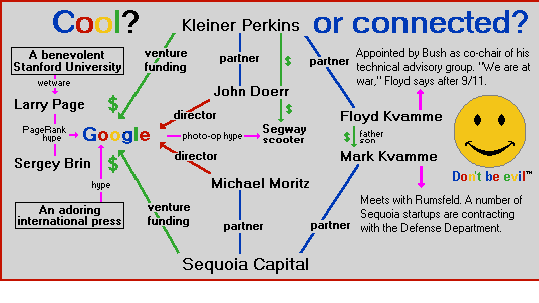



 Content
that incites hatred against, promotes discrimination of, or disparages an individual or group
on the basis of their race or ethnic origin, religion, disability, age, nationality, veteran
status, sexual orientation, gender, gender identity, or other characteristic that is
associated with systemic discrimination or marginalization
Content
that incites hatred against, promotes discrimination of, or disparages an individual or group
on the basis of their race or ethnic origin, religion, disability, age, nationality, veteran
status, sexual orientation, gender, gender identity, or other characteristic that is
associated with systemic discrimination or marginalization


 Samsung Galaxy S9 May Feature iPhone X Face ID Rival
 © Jefferson Graham, USA TODAY Google CEO Sundar Pichai addresses media at the
MadebyGoogle event at the SF Jazz Center in San Francisco.
© Jefferson Graham, USA TODAY Google CEO Sundar Pichai addresses media at the
MadebyGoogle event at the SF Jazz Center in San Francisco.